University of Central Florida University of Central Florida
STARS
STARS
Electronic Theses and Dissertations, 2004-20192008
An Exploration Of How Pre-service Early Childhood Teachers Use
An Exploration Of How Pre-service Early Childhood Teachers Use
Educative Curriculum Materials To Support Their Science
Educative Curriculum Materials To Support Their Science
Teaching
Teaching
Deirdre Englehart
University of Central Florida
Part of the Curriculum and Instruction Commons Find similar works at: https://stars.library.ucf.edu/etd University of Central Florida Libraries http://library.ucf.edu
This Doctoral Dissertation (Open Access) is brought to you for free and open access by STARS. It has been accepted for inclusion in Electronic Theses and Dissertations, 2004-2019 by an authorized administrator of STARS. For more information, please contact [email protected].
STARS Citation STARS Citation
Englehart, Deirdre, "An Exploration Of How Pre-service Early Childhood Teachers Use Educative
Curriculum Materials To Support Their Science Teaching" (2008). Electronic Theses and Dissertations, 2004-2019. 3528.
AN EXPLORATION OF HOW PRE-SERVICE EARLY CHILDHOOD TEACHERS USE EDUCATIVE CURRICULUM MATERIALS TO SUPPORT THEIR
SCIENCE TEACHING PRACTICES
by
DEIRDRE ENGLEHART B.S. University of Central Florida, 1986 M.A. University of Central Florida, 1996
A dissertation submitted in partial fulfillment of the requirement for the degree of Doctor of Education
in the Department of Educational Studies in the College of Education
at the University of Central Florida Orlando, Florida
Spring Term 2008
ABSTRACT
Research indicates that a proportion of elementary teachers are not comfortable teaching science to young children. These teachers are unaware of the best methods of approaching science and don’t have the science background knowledge to support teaching through inquiry methods. This case study explores the role educative curriculum materials play in supporting pre-service early childhood education teachers’ knowledge with science content and teaching practices. Specifically, I examine how educative materials impact pre-service teacher’s content knowledge in science and their pedagogical content knowledge related to inquiry methods.
Three pre-service early childhood teachers participated in this research. The teachers were initially interviewed about teaching science based upon three instruments: Views of Science Inquiry, Views of the Nature of Science and the Science Teachers Efficacy Beliefs Inventory. Each subject was observed teaching science in their internship site: the first lessons taught were guided or approved by their teachers and the next lessons were conducted using the support of educative curriculum materials. Finally, the initial instruments were once again administered along with an interview to obtain changes in teacher’s knowledge, beliefs and understandings of science and science teaching.
Results from this research indicate that educative curriculum was supportive of teachers in a variety of ways. Most importantly, this curriculum helped teachers to target more aspects of scientific inquiry during their science lessons than lessons without the use of educative
curriculum. The important considerations regarding the effectiveness of the educative curriculum for these pre-service teachers were their underlying beliefs about how science should be taught, their uses of the curriculum materials and reflective practices regarding their own teaching.
Results specifically related to early childhood educators include the level of inquiry implemented with young children and how children communicate their findings. Young children need support in their participation of inquiry learning. Successful implementation of guided inquiry practices occurred in this research. Also, the teachers in this research found insightful ways that directly supported young children in their communication of ideas. Implications for further research are also discussed. Educative materials could further support pre-service early childhood teachers if additional supports were used including accessible curricular rationales, support in classroom management and the specific use of guided inquiry.
To my mother and father who taught me how to walk and run but most importantly how to love. To Pat who helped me to reach beyond my limits and to Leigh who taught me to climb
ACKNOWLEDGMENTS
I would like to thank my advisor, Dr. David Boote, for his support and guidance
throughout the dissertation process. He has continually provided guidance and direction for me and believed in my abilities. I would also like to thank my dissertation committee: Dean Sandra Robinson, Dr. Michael Hynes, Dr. Michael O’Malley and Dr. Robert Everett. Their expertise and feedback helped to make this dissertation possible.
I would also like to thank a number of friends and colleagues. Roz Velentaar and Elizabeth Hatley dedicated their time to providing thoughtful feedback on drafts of this dissertation, which helped me to know I was on the right track. I would also like to thank Dr. Judith Levin, who was always willing to listen and provide guidance for me when I was unclear of how to proceed and Dr. Lynn Hartle who continually supported me during my doctoral program.
This dissertation would not have been possible without the support and love of my
family. My family’s patience, understanding and support helped me to achieve this goal. I would especially like to thank Leigh, Rebecca and Ian for supporting me through the many hours of work and my sometimes difficult disposition.
TABLE OF CONTENTS
CHAPTER 1 INTRODUCTION... 1
Definitions... 3
Educative Curriculum Materials... 6
Study Overview... 6
Structure of Dissertation... 7
CHAPTER 2 LITERATURE REVIEW... 9
Expectations for Teachers of Science... 10
Standards for Teacher Preparation... 10
Research Related to Elementary and Early Childhood Teachers... 12
Elementary Science Teachers... 12
Educating Young Children... 16
Influences That Impact Science Teaching... 18
Self-Efficacy Beliefs... 18
Teacher’s Science Content Knowledge... 19
Pedagogical Strategies... 21
Pedagogical Content Knowledge... 22
Teaching Inquiry... 26
The Nature of Science... 30
Influence of Teaching Materials... 32
The Uses of Curriculum Materials... 33
Educative Curriculum... 35
Research Questions... 37
Study Contributions... 38
CHAPTER 3 METHODS... 40
Study Overview... 40
Case Study Design... 41
Research Participants... 42
Educative Curriculum Materials/CASES... 45
CASES Curriculum Units... 49
Data Analysis... 54
Composing the Case Study Reports... 57
CHAPTER 4 CASE STUDY: PIPPA... 59
Teacher Profile... 59
Initial Interview and Instruments... 61
STEBI-B Instrument... 61
Views of Nature of Science... 62
Views of Scientific Inquiry Elementary School Version (VOSI-E)... 64
Overview of Pre-CASES and CASES Units... 66
Pre-CASES Lessons... 66
Summary of Pre-CASES Lessons and Reflections... 68
CASES Lessons... 71
Summary of CASES Lessons and Reflections... 77
Use of the CASES Curriculum Materials... 80
Final Interview and Instruments... 83
STEBI- B Instrument... 83
Views of Nature of Science (VNOS-E)... 85
Views of Scientific Inquiry Elementary School Version (VOSI-E)... 88
Overall Summary... 90
CHAPTER 5 CASE STUDY: ALEXIS... 96
Teacher Profile... 96
Initial Interview and Instruments... 98
STEBI-B Instrument... 98
Views of Nature of Science... 99
Views of Scientific Inquiry Elementary School Version (VOSI-E)... 101
Overview of Pre-CASES and CASES Units... 103
Pre-CASES Lessons... 103
Summary of Pre-CASES Lessons and Reflections... 105
CASES Lessons... 111
Summary of CASES Lessons and Reflections... 113
Use of the CASES Curriculum Materials... 117
STEBI B Instrument... 119
Views of Nature of Science (VNOS-E)... 120
Views of Scientific Inquiry Elementary School Version (VOSI-E)... 122
Overall Summary... 122
CHAPTER 6 CASE STUDY: DENICE... 129
Teacher Profile... 129
Initial Interview and Instruments... 130
STEBI-B Instrument... 130
Views of Nature of Science... 131
Views of Scientific Inquiry Elementary School Version (VOSI-E)... 133
Overview of Pre-CASES and CASES Units... 134
Pre-CASES Lessons... 135
Summary of Pre-CASES Lessons and Reflections... 139
CASES Lessons... 142
Summary of CASES Lessons and Reflections... 147
Use of the CASES Curriculum Materials... 150
Final Interview and Instruments... 152
STEBI B Instrument... 152
Views of Nature of Science (VNOS-E)... 154
Views of Scientific Inquiry Elementary School Version (VOSI-E)... 156
Overall Summary... 157
CHAPTER 7 DISCUSSIONS AND IMPLICATIONS... 162
Significant Findings... 162
Educative Curriculum Materials Support Scientific Inquiry Practices... 163
Influences on Teacher Practice... 164
Educative Materials Refinements... 166
Research Question One... 168
Impact and Uses of Educative Curriculum Materials... 168
Science Content Knowledge... 170
Influences on The Nature of Science... 171
Research Question Two... 174
Scientific Inquiry... 180
Additional Findings... 189
Use of Curriculum Materials... 190
Classroom Management... 191
Significance of Science Teaching... 192
Study Limitations... 192
Implications for Future Research... 193
Conclusions... 195
APPENDIX A: PROTOCOL FOR SCIENCE TEACHING INTERVIEWS (PRE-INTERVIEW).... 198
APPENDIX B: VNOS – FORM D... 200
APPENDIX C: VIEWS OF SCIENTIFIC INQUIRY ELEMENT SCHOOL VERSION (VOSI-E).. 203
APPENDIX D: SCIENCE TEACHING EFFICACY BELIEF INSTRUMENT: STEBI – B FORM. 206 APPENDIX E: TEACHER OBSERVATION FORM... 212
APPENDIX F: FIELD SUPERVISOR OBSERVATION INSTRUMENT... 214
APPENDIX G: GUIDELINES FOR PRE-SERVICE TEACHING REFLECTIONS OF SCIENCE TEACHING... 217
APPENDIX H: INTRODUCTION TO THE CASES WEBSITE... 220
APPENDIX I: CASES IMPLEMENTATION INTERVIEW... 223
APPENDIX J: PROTOCOL FOR POST SCIENCE TEACHING INTERVIEWS... 225
APPENDIX K: CODING CHART FOR CASE STUDY WRITE-UPS... 228
APPENDIX L: IRB APPROVAL LETTER... 230
LIST OF TABLES
Table 1 - Teaching Context of Research Participants... 44
Table 2 - Educative Support Features in CASES Curriculum... 48
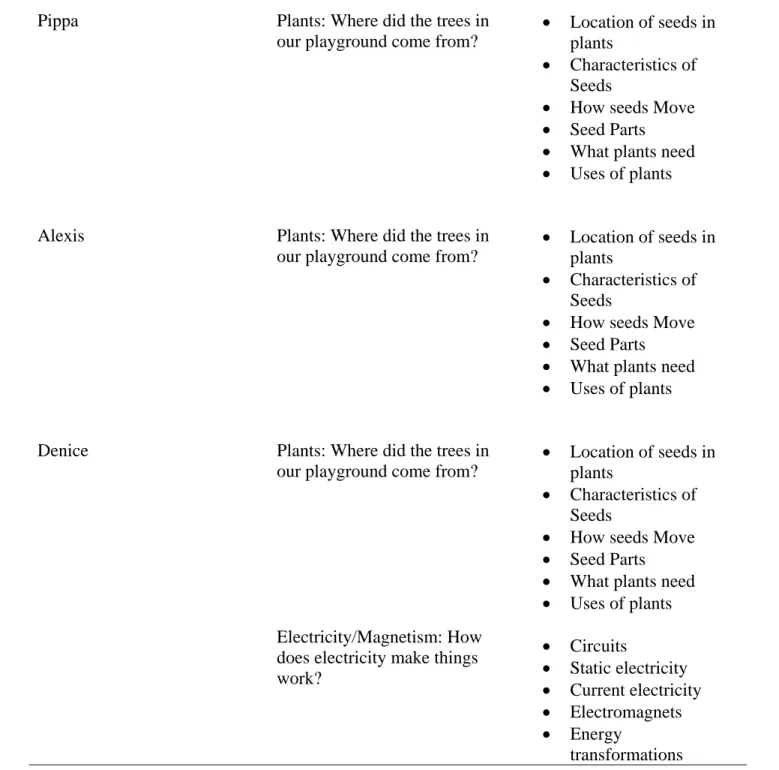
Table 3 - CASES Curriculum Units Used... 50
Table 4 - Data Collection Tools... 53
Table 5 - Pippa's Pre-CASES Lessons... 67
Table 6 - Pippa's CASES Lessons... 73
Table 7 - Pippa's STEBI-B Results... 85
Table 8 - Alexis's Pre CASES Lessons... 104
Table 9 - Alexis CASES Lessons... 113
Table 10 - Alexis' STEBI-B Results... 120
Table 11 - Denice's Pre-CASES Lessons... 136
Table 12 - Denice's CASES Lessons... 143
CHAPTER 1 INTRODUCTION
Teaching is a complex endeavor: it involves a person’s individual philosophy and beliefs about teaching and the ability to implement those beliefs in their practice. Numerous factors influence a teacher’s ability to teach including internal and external factors. Internal influences can include personal beliefs and experiences in school and in specific content as well as the teacher’s own confidence, and knowledge of teaching. External factors also influence teaching and can include such things as curriculum standards, teaching guides, school climate, available resources, student population, etc.
Beyond the issues outlined above, elementary and early childhood teachers face
additional challenges because they are considered curriculum generalists. They teach all aspects of the curriculum and usually do not have a strong focus in one particular content area such as science. When specifically looking at the teaching of science, research indicates that most teachers do not have the background or experiences grounded in inquiry to teach with that
method (Davis, Petish, and Smithey, 2006). Inquiry is the method for teaching science advocated by the National Research Council and is described as the activities of students in which they develop knowledge and understanding of scientific ideas. Specifically, scientific inquiry is defined as "the diverse ways in which scientists study the natural world and propose explanations based on the evidence derived from their work. Scientific inquiry also refers to the activities through which students develop knowledge and understanding of scientific ideas, as well as an understanding of how scientists study the natural world" (National Research Council [NRC], 1996, p. 23). This is accomplished through the process of observing, posing questions, examining background information, planning investigations, reviewing, analyzing and
interpreting data to propose answers and explanations and communicating results. Many teachers do not have a strong content knowledge in teaching science and so their approach to teaching is not one that emphasizes a constructivist perspective that is aligned with inquiry (Ekborg, 2005; Harlen and Holroyd, 1995; Weiss, Banilower, McMahon, and Smith, 2001).
Other factors influence the teaching of science. Appleton (1999) found that a teacher’s ability to integrate science into the classroom was affected by collegial support, self-confidence in science, and the priority science is given, along with available resources to teach science. Weiss et al. (2001) indicated that teachers’ perceptions concerning their qualifications for teaching science directly relate to the amount of time that they spend teaching science. Enochs and Riggs (1990) argue that teacher beliefs are a part of the foundation of behaviors: “Behavior is enacted when people not only expect specific behavior to result in desirable outcomes
(outcome expectancy) but they also believe in their own ability to perform the behavior (self-efficacy)” (p. 2). Lastly, many teachers do not have a strong understanding of the nature of science and therefore, may have difficulty understanding the process of inquiry and teaching science through inquiry (Abd-El-Khalick, Lederman, Bell and Schwartz. 2001).
Teachers need to have general pedagogical knowledge or ability to teach effectively as well as content knowledge on the topic and specific pedagogical content knowledge or the ability to help students understand content in different subjects, to successfully teach science as outlined by the National Science Education Standards (NRC, 1996). Weiss, et al. (2001) indicates that 80 percent of current teachers felt they had a number of general instructional strategies that support them in teaching. These strategies, considered to be general pedagogical strategies are not always present for pre-service teachers (Mulholland and Wallace, 2005). More specific pedagogical
content knowledge in teaching science requires that teachers have specific skills and
understandings of inquiry as well as science content knowledge, to teach science in that way. Lastly, although many teachers face challenges in the struggle to meet the goals of teaching science, pre-service teachers and beginning teachers challenges may be compounded because they may feel alienated from the study of science, the differences in teaching science versus other content areas and the impact of their novice status on their teaching (Mulholland and Wallace, 2003). This study will focus on how educative curriculum materials can potentially support pre-service early childhood teachers in meeting some of the challenges of teaching science in the primary grades.
Definitions
The following terms are definitions associated with this study. Terms are defined here to clarify specific meanings of terminology addressed in this dissertation.
Constructivism refers to a specific epistemology or theory of learning that involves the construction of meaning from experiences. This theory believes that children construct their understandings of content through experiences and through the processing of those experiences. “Each of us makes sense of our world by synthesizing new experiences into what we have previously come to understand” (Brooks and Brooks, 1999, p. 4).
Educative Curriculum is curriculum developed to support teachers in their content knowledge and in their teaching of science. This curriculum has features that educate and
support teachers throughout the curriculum and enhances teacher knowledge while being used to teach young children. Davis and Krajcik (2005) define educative curriculum materials as
decision making but also help them develop more general knowledge that they can apply flexibly in new situations”(p. 3).
Nature of Science refers to the beliefs and understandings of science. Although difficult to get all concerned parties to agree on a definition, many aspects of the nature of science are considered apparent.
Scientific knowledge is tentative and subject to change
Scientific knowledge is empirically based or based on observations of the natural world Scientific knowledge is theory laden
Scientific knowledge is partly the product of human inference, creativity and creativity as it involves the creation of models and explanations
Scientific knowledge is socially and culturally embedded
Additionally, scientific knowledge distinguishes between observations and inference, considers the relationship between theories and laws and does not include a single recipe-like method. (Abd-El-Khalick, 2004)
Pedagogical Content Knowledge (PCK) includes the various ways teachers make the specific content of a subject comprehensible to students. Teachers must have an understanding of the content they are teaching and they must have appropriate teaching strategies to teach so students understand. Shulman (1996) refers to PCK as the ways of representing and formulating the subject so it is understandable.
Pedagogical Knowledge generally refers to general strategies of instruction used by teachers. Pedagogy is the art of being a teacher and pedagogical knowledge includes the style or methods of teaching. Gee, Boberg, and Gabel (1996) emphasize the use of social interaction in
learning, building instruction on prior knowledge, problem solving and higher level learning as important components of pedagogical knowledge.
Scientific Inquiry refers to the many different ways that scientists study the natural world and propose explanations based on evidence in their work. In the classroom, inquiry refers to the activities that students do to develop knowledge and understandings of scientific ideas and how scientists study the world. Inquiry involves making observations, posing questions,
examining books and other sources of information, planning investigations, reviewing what is already known, using tools to gather, analyze and interpret data, proposing answers and communicating results. (NRC, 1996, p. 23).
Science Content Knowledge refers to the knowledge and understanding of science content. The content areas identified by the National Science Education Standards (NRC, 1996) include: Science as Inquiry, Earth and Space Science, Physical Science, Life Science, Science and Technology, Science in Personal and Social Perspectives and History and Nature of Science. Ekborg (2005) believes a conceptual understanding is necessary for teachers in science. This belief moves beyond memorization of facts to include the knowledge necessary to discuss debate and make decisions related to issues in society.
Self –Efficacy is defined as a person’s beliefs about their abilities to perform tasks or activities. Self-efficacy beliefs influence behavior and willingness to persist in activities (Bandura, 1994). Bandura believes teachers with a high self-efficacy will persist longer in teaching science and will provide a better approach to developing conceptual understanding in students.
Educative Curriculum Materials
Curriculum is one avenue being explored to support teacher learning in the area of science. Ball and Cohen (1996) believe that if curriculum materials paid closer attention to the process of curriculum enactment, they could contribute to professional practice. Educative curriculum materials could, therefore, support teachers in teaching science in ways that are aligned with teaching standards in science. Davis and Krajcik (2005) explain teacher learning in light of educative curriculum which involves an integration of content, teaching and learning. Teacher learning supports teachers in applying their knowledge to make instructional decisions, in understanding the discourse of teaching and becoming engaged in a variety of teaching practices. Educative curriculum has the potential to support teachers in developing their content knowledge and in supporting their efforts to teach through inquiry.
Study Overview
This case study investigation explores the role educative curriculum materials play in supporting pre-service early childhood education teachers’ knowledge with science content and teaching practices. Specifically, I examine how educative materials impact pre-service teachers’ content knowledge in science and their pedagogical content knowledge related to inquiry
methods of teaching.
The research regarding the use of educative curriculum is small but has shown some impact on teaching. Educative curriculum materials have been used with teachers in previous research but not specifically with early childhood teachers nor have pre-service teachers been the targets of research. This research will look specifically at early childhood pre-service teachers.
Three service early childhood education teachers participated in this study. Each pre-service teacher taught a science unit from the Curriculum Access System for Elementary Science
(CASES) web site. Data were collected over the course of a number of months to develop case studies of each pre-service teacher’s science knowledge and practice.
Structure of Dissertation
This dissertation is divided into seven chapters. Chapter One introduces the study and defines related terminology in an effort to relate to how this research addresses issues related to the teaching of science.
Chapter Two looks at the related literature on the topics of science teaching, current efforts to support elementary teachers in teaching science and how scientific inquiry is related to the topic. This chapter includes the related research on educative curriculum and how this previous research relates to the research in this dissertation. These areas are reviewed to situate this dissertation research within the context of science education today.
The third chapter in this research addresses the methodology used to guide the research. This chapter includes the design, analysis and results of the study. The dissertation uses a case study methodology including some research instruments to achieve an overall view of the teaching beliefs and practices of science teaching for three pre-service teachers.
The next three chapters, Chapters Four, Five and Six share the results of three pre-service teachers who participated in this study in the form of individual cases. The purpose of these chapters is to take an in-depth look at each individual teacher to understand their background and feelings toward the teaching of science and to understand how educative curriculum supported their efforts to learn pedagogical knowledge and pedagogical content knowledge. These chapters include specific information regarding how each individual teacher used the CASES educative curriculum supporting them in their teaching of science.
The last chapter summarizes notable findings from the dissertation and discusses the findings in light of previous research. This chapter considers the value of educative curriculum in supporting pre-service teachers in developing their ability to teach science using inquiry
methods. This chapter also considers the implications of educative curriculum for pre-service teachers.
CHAPTER 2 LITERATURE REVIEW
The purpose of this study is to explore how educative curriculum materials support pre-service early childhood teachers in meeting some of the challenges inherent in all teaching and specific to the teaching of science. This section provides the framework that situates this work within the broader context of science education. Initially, I will look at the standards for teaching preparation in teaching science. This section discusses the expectations that are outlined for science teachers.
The next section considers the research related to elementary and early childhood
educators in general and in regards to teaching science. Elementary and early childhood teachers do not have a strong focus on science in their education and therefore may not have strong content knowledge compared to middle and high school educators that specifically focus on science. Other factors related to teaching are also discussed in this section.
The third section of the literature review involves the influences that impact teaching and specifically science teaching. Self-efficacy will be explored in consideration of each teacher’s own beliefs and actions related to teaching science and the influence of the efficacy beliefs and their persistence in teaching science. Science teachers content knowledge will explain how content knowledge is needed to be successful in teaching science. General pedagogical skills will be considered as many new teachers are developing strategies to support their classroom
practices. Pedagogical content knowledge will also be explored to understand the teaching strategies employed that are specific to teaching science. Next, the focus will be scientific inquiry and its importance in reform efforts for teaching science including the nature of science.
The foundation of this research considers teachers and the influences on their teaching practices. This foundation will lead us to the next focus which concerns how teachers use curriculum to support their teaching and the specific use of educative curriculum materials. It is significant in understanding how teachers use curriculum materials and the role that educative curriculum materials can play in developing teacher’s content knowledge and use of inquiry in the classroom. Educative curriculum materials have the potential to support pre-service teachers in meeting the goals outlined in the science standards for teachers.
Expectations for Teachers of Science
The national organizations for science teachers have outlined important criteria that teachers should know and be able to do regarding the teaching of science. This is the first area that we examine in this literature review. It allows us to consider what the standards are for teacher preparation.
Standards for Teacher Preparation
Teachers play a key role in science education. The National Science Education Standards, developed from the National Research Council, emphasize this fact when they say, “Science teaching is a complex activity that lays at the heart of the vision of science education presented in the standards” (NRC, 1996, p. 27). They further state, “Students are greatly influenced by how they are taught” (NRC, 1996, p, 28) and that the actions of teachers are influenced by their perceptions of science, and how it should be taught. The National Science Teachers Association (NSTA, 2003) has also developed standards for Science Teacher Preparation. These standards have been developed to form the foundation which teacher candidates should demonstrate in science teacher preparation programs. The National Science Education Standards also include their own Science Teaching Standards to describe what teachers of science should understand
and do regarding teaching science. Together, these standards are instrumental in guiding teacher education programs in supporting pre-service teachers as they move towards becoming teachers.
The National Science Teachers Association (NSTA, 2003) has identified ten standards for Science Teacher Preparation. They include: content, nature of science, inquiry, issues, general skills of teaching, curriculum, science in the community, assessment, safety and welfare and professional growth. The National Research Council (NRC, 1996) National Science
Education Standards include:
Standard A: Teachers of science plan an inquiry-based science program for their students. Standard B: Teachers of science guide and facilitate learning.
Standard C: Teachers of science engage in ongoing assessment of their teaching and of student learning.
Standard D: Teachers of science design and manage learning environments that provide students with the time, space, and resources needed for learning science.
Standard E: Teachers of science develop communities of science learners that reflect the intellectual rigor of scientific inquiry and the attitudes and social values conducive to science learning.
Standard F: Teachers of science actively participate in the ongoing planning and development of the school science program. (NRC, 1996, p. 29-52)
The standards from the NRC and the NSTA demonstrate some overlap in what is considered important for teachers to know and be able to do to impact students learning in science. Both standards for teachers indicate the importance of teaching using inquiry. They also stress the importance of curriculum and in teaching as related to planning, implementing and assessing science.
The Science Teaching Standards are aligned with the reform movement in science education. They advocate for a new emphasis in teaching science, involving focus on
individuals, their strengths and needs. Selecting and adapting curriculum to meet the needs of individual and small groups and using inquiry to enhance children’s scientific understandings (NRC, 1996, p. 32). Scientific inquiry, being the heart of the reform efforts, is emphasized in both standards documents.
Of particular importance is that teacher preparation programs influence future teacher’s ideas about teaching science and how teachers will teach in their future classrooms. Appleton and Kindt (2002) researched beginning teacher’s ability to teach science and factors that
influenced their teaching. Their findings indicate that beginning teachers need collegial support to enhance their science teaching. They also emphasized that if schools and districts advocate for the importance of teaching science, the teachers themselves are more likely to recognize its importance. Other factors they identified include: teachers should begin with safe and familiar science activities that they have experienced previously and that teachers need to have available resources to teach science effectively.
Research Related to Elementary and Early Childhood Teachers
Elementary and Early Childhood teachers are unique in that they teach all curriculum areas instead of focusing on one specific content area. This is one consideration in looking at the unique challenges in teaching science at this level. This section takes a broad look at elementary and early childhood teachers and issues related to teaching at this level.
Elementary Science Teachers
Teachers tend to teach in ways that are comfortable to them, which generally involves a replay of their past experiences. Everett, Luera and Otto (2006) indicate that teaching is the only
profession where people have been involved in observations for years prior to their professional studies in the field. Plevyak (2007) explains that most experiences the pre-service PreK-3 teachers have had in science involved direct instruction. More specifically these previous experiences did not involve the learner in science and did not promote higher-order thinking skills.
Porlan and del Pozo (2004) found that teachers view their responsibilities of teaching in different ways. They identified three specific tendencies in the teacher’s conception of teaching and learning science including a traditional model, a technical model and an alternative model. Their findings indicate that “a traditional conception of science teaching and a theory of learning by appropriation of meanings (blank mind) predominate” (p. 42). The traditional model of
teaching is not aligned with the teaching practices of inquiry as the standards advocate, and seeks to replace erroneous understandings with correct meanings through a direct transmission of knowledge. This view is in opposition of inquiry and the alternative model of teaching, which recognizes the complexities of teaching, the importance of student participation, and the process of learning. The technical model emphasizes a procedural approach to teaching. Objectives are outlined along with procedures to follow, and if they are followed, learning occurs. The
alternative model identified by Porlan and del Pozo is most closely aligned with inquiry and construction of knowledge. This model recognizes the importance of student involvement in learning, with an emphasis on conceptual change and the process of construction.
Regarding teaching practices, Appleton (1999) found that a teacher’s confidence level in teaching science related to the frequency of teaching science and the science teaching practices. Confidence level can influence the science topics selected and whether science is taught at all. Teacher efficacy refers to teacher’s beliefs about their abilities to promote student learning.
Teachers’ self-efficacy beliefs influence the amount of time that teachers spend teaching science. Enochs and Riggs (1990) indicate that teachers may not believe they have the ability to teach science or they may believe that external variables influence a teacher’s ability to teach science effectively.
Additional research by Lotter, Harwood and Bonner (2006) explores core teaching conceptions which influence teachers’ beliefs and practices in science. Their findings indicate that teachers with different levels of the core teaching conceptions will teach in different ways including the level of inquiry teaching. The first core conception is science and the beliefs that science is a process versus a collection of facts. Teachers, whose core teaching conceptions are more aligned with inquiry, believe in science as a process. The second core belief involves teachers’ beliefs about the purpose of education. The inquiry end of the spectrum shows teachers who believe the purpose of education is to develop problem solving skills while the contrary believes the purpose is to amass information. The third core conception has to do with students and teacher’s beliefs about them. More inquiry based beliefs include that students have an expanded ability to learn as opposed to a limited ability to learn. The last core conception identified by Lotter, et al. is effective teaching. In the inquiry end of the spectrum, teachers believe that we should encourage independent thought while at the opposite end, teachers believe that effective teaching involves the transmission of knowledge.
Generally speaking, elementary teachers are not only responsible for teaching science, but also language arts, mathematics and social studies and therefore are often considered generalists instead of specialists. Weiss, et al. (2001) indicated that less than one-third of elementary teachers felt well-qualified to teach science. Mulholland and Wallace (2005) followed an elementary teacher through her undergraduate teacher education program and into
her teaching career. They concluded that teaching practices were developed in the ten years of the study but they also felt that elementary teachers’ expertise in teaching science is not the same as it is for a secondary teacher whose sole focus of teaching is on science. Cobern and Loving (2002) also emphasized that elementary teachers are more like the lay public regarding their scientific understandings than they are like secondary science teachers or scientists.
Teachers initially develop general strategies that help them in teaching which are considered pedagogical skills. Weiss et al. (2001), in a survey of practicing teachers, indicates that the majority of the teachers felt they had a number of general instructional strategies that support them in teaching. These strategies include teaching heterogeneous groups, listening and asking questions that gauge understanding, facilitating cooperative learning groups and engaging students in hands-on work. Gee, et al. (1996) identified pedagogical teaching strategies that included facilitating social interactions in learning science, building instruction on children’s prior conceptions, problem solving and higher level learning, and allowing children to structure their own learning.
These strategies along with other general pedagogical strategies are not always present for pre-service teachers (Mulholland and Wallace, 2003; 2005). Davis and Petish (2005) state that most prospective elementary teachers, because they are novice teachers, do not have the general pedagogical knowledge that veteran teachers have acquired through years of experience. These strategies directly affect how they teach science in their classroom. Mulholland and Wallace (2005) indicated that in the early years of teaching, beginning teachers often experience conflicts in their beliefs about teaching compared to actual classroom practices. Even teachers, who held strong beliefs about how to teach science, may have difficulty implementing strategies they viewed as important. The emerging pattern indicated that when teachers held to their beliefs
about inquiry-based teaching, they became more successful in teaching science when science pedagogical content knowledge, or knowledge of how to teach science, became more
established.
Educating Young Children
While most of the same challenges are present for Early Childhood Educators as they are for Elementary teachers, the field of early childhood education is separate. Teachers who earn a degree in early childhood education earn their degree with a specific focus on child development and how it influences teaching practices. The National Association for the Education of Young Children has developed a position statement specifically for educators of children from birth through age eight. In the book; Developmentally Appropriate Practice in Early Childhood
Programs, NAEYC has outlined guidelines to consider regarding the education of young children (Bredekamp and Copple, 1997). “Education practices are most effective when they are attuned to the way children develop and learn - that is, when they are developmentally appropriate”
(Bredekamp and Copple, p. 5). The position statement from NAEYC argues that
developmentally appropriate practices (DAP) are based on three kinds of information: “what is known about child development and learning; what is known about the strengths, interests, and needs of each individual child in the group; and knowledge of the social and cultural contexts in which children live” (Bredekamp and Copple, p. 9). Yoon and Onchwari (2007) see the
connection between DAP and constructivism. They emphasize the basic premise of
constructivism is how each child interacts with their environment in a unique way and therefore constructs his or her unique understandings of the world. As educators, we need to consider the individual needs of students and this can be accomplished through constructivist practices such as scientific inquiry.
Even when developmentally appropriate practices were first introduced many teachers had a difficult time implementing them based upon their own beliefs and other factors. Now, in an era of extreme accountability, teachers may have even more difficulties implementing them. Gado (2005) believes that early childhood teachers need more training and professional
development in order to implement inquiry. Buchanan, Bidner, White, and Charlesworth (1998) find that teacher characteristics including their perceived beliefs about their influence and control in the classroom and their area of certification impacted their beliefs and practices. “Teachers who believe they have more influence on their practice than others do (e.g., parents or principals) are more likely to use developmentally appropriate practices” p. 463. Buchanan, et al. found that classroom characteristics; such as class size, grade level, number of children with free/reduced lunch predicted teacher beliefs and practices regarding DAP.
Educational accountability is an influencing factor in teachers’ developmentally appropriate practices. Goldstein (2007) mentions the ‘accountability shovedown’ in which the student mastery and accountability have affected classrooms all the way into kindergarten. Goldstein further identified a number of factors directly related to accountability that influence teacher’s DAP. The first area is the changing climate of classrooms. An overall intensification driven by higher standards and expectations has caused daily schedules to be fuller and
instructional pace to be quicker in order to cover the standards. This has limited teacher’s freedom to choose what to teach. Expectations of achievements from upper grades have caused many teachers to use direct instruction and to emphasize academic skills instead of approaches considered more appropriate. “The implementation of state-mandated learning standards has intensified their teaching day, constrained their use of professional judgment, and limited their choice, flexibility and freedom” (Goldstein, p. 51).
Regarding the teaching of science, Bredekamp and Copple (1997) believe that science is a major part of the early childhood curriculum because it is based on children’s natural interest. Science also affords opportunities for children to develop thinking skills. “Science projects are experimental and exploratory and encourage every child’s active engagement in the scientific process.” (Bredekamp and Copple, p. 174). Therefore, scientific inquiry is aligned with developmentally appropriate practices. Gado (2005) found that many early childhood teachers did not agree with a traditional approach to teaching science, nor did they advocate scientific inquiry. They suggest these findings indicate that teachers need more training on the processes and strategies of inquiry. This training could potentially support early childhood teachers in the use of scientific inquiry in classrooms.
Influences That Impact Science Teaching
There are a wide range of factors that influence individual teachers in their teaching of science. Self-efficacy is a concept based upon a teacher’s personal beliefs about their ability to teach science and can be influential in classroom practice. Other related factors include: teachers content knowledge, pedagogical content knowledge, understanding of inquiry, and the nature of science. This section explores these concepts and how they impact the teaching of science. Self-Efficacy Beliefs
Teachers’ self-efficacy beliefs influence what they teach and how they teach in the classroom. Weiss, et al. (2001) indicated that teachers’ perceptions concerning their
qualifications for teaching science directly relate to the amount of time that they spend teaching science. Enochs and Riggs (1990) indicate that teacher beliefs are a part of the foundation of behaviors. “Behavior is enacted when people not only expect specific behavior to result in desirable outcomes (outcome expectancy) but they also believe in their own ability to perform
the behavior (self-efficacy)” (p. 2). Bandura (1994) indicated four main sources of influence on self-efficacy. The first source of influence on self-efficacy is mastery experiences. When
teachers or students feel success, they build their efficacy beliefs. Perseverance is part of mastery experiences because the challenges along the way help them to continue in their efforts and build successes. A second source of influence is observation of social models. When it is apparent that others can succeed, teachers can believe in their own ability. Observing proficient models can support teachers through the demonstration of needed skills. The third source of self-efficacy belief is based upon social persuasion or ways that teachers are verbally persuaded that they have the abilities needed to accomplish a task. Here it is important to provide situations that bring success. The last source of self-efficacy beliefs is based on a person’s emotional states and his/her influence. Overall, teachers need to have realistic self-efficacy in teaching science. They should have support in teaching as they build their own confidence in their abilities. Ginns and Watters (1999) made a number of assertions based on their research that followed pre-service teachers into their classroom experiences. These assertions are similar to Bandura’s (1994) sources of self-efficacy beliefs. They found that teachers should have successful experiences in their teacher education program, that science coursework must provide authentic practices and experiences and that experienced teachers and other educators must provide positive feedback to reinforce beginning teacher’s beliefs about their ability to teach science.
Teacher’s Science Content Knowledge
Pre-service elementary teachers may not have a strong background in the content to teach science effectively. Davis and Petish (2005) indicate that elementary teachers have less science subject matter knowledge than secondary teachers. Pre-service teachers need strong science content knowledge to teach for conceptual understanding. “It is argued that knowledge of science
is necessary in order to be able to participate in discussion, debate, and decision-making about science related issues in society, such as environmental issues” (Ekborg, 2005, p. 1671). Ekborg further emphasizes that having conceptual understanding of science topics is more important than algorithms or formulas. In the study conducted by Ekborg, it was determined that teachers did not develop the content knowledge to make decisions based upon sound science and that they may not be able to help future students develop conceptual understandings in science.
Science content knowledge, as defined by Gee, et al. (1996) includes: science as
interdisciplinary in nature, science as inquiry and the subjects’ scientific conceptions. Regarding integration, Gee et al. refers to the integration of science content with other content areas but also includes the emphasis on the integration of different science content. Science inquiry is related to content and considers that science is doing and not just a collection of facts. Lastly, science content includes an understanding of specific science content. Petish (2004) further explains that content knowledge is the knowledge needed to teach a science curriculum unit effectively.
Davis, et al. (2006) found that most teachers have unsophisticated understandings of science. Harlen and Holroyd (1995) found that teachers felt more confident in their ability to help students develop science skills and processes than in helping them develop an
understanding of specific science content. About 1/3 of the teachers in their study indicated they would need a significant amount of help to teach Living Things and the Processes of Life and Earth and Space topics and even fewer teachers were confident in teaching Energy and Forces. This confidence level directly related to how teachers taught in the classroom. The study also reinforced the idea that teachers who are uncomfortable with the content of science often make up for it by teaching less science or by teaching science topics within their comfort zone, often
relying on prescriptive texts and kits and an emphasis on expository teaching with less discussion.
Content knowledge is needed in order for teachers to implement inquiry practices. The National Research Council [NRC] (2000) indicates that for teachers to teach using inquiry, they need to understand the important content ideas in science. The content standards for science should be understood along with evidence for the content, “how we know what we know” (NRC, p. 92). Jarvis, McKeon and Taylor (2005) worked with pre-service teachers to address
misconceptions and incorrect scientific ideas. They found the pre-service teachers to have a number of common misunderstandings along with incomplete or confused terms. One emphasis for pre-service teachers should be the development of strong background knowledge in science content to support more conceptually based science and scientific inquiry in the classroom. Pedagogical Strategies
Pedagogical knowledge refers to general strategies for teaching. Pedagogy is the art of being a teacher and pedagogical knowledge includes the style or methods of teaching. Gee et al. (1996) emphasize the use of social interaction in learning, building instruction on prior
knowledge, problem solving and higher level learning as important components of pedagogical knowledge. Hudson (2004) has also identified different aspects of pedagogical knowledge that support new teachers in teaching science. Some skills include planning, timetabling, preparation, implementation, classroom management strategies and questioning skills.
One challenge for teachers is to create a classroom learning environment that is productive and manageable. Davis, et al. (2006) states that although new teachers want their classrooms to be student-centered, the concerns they have about classroom management may work against that goal and lead them into engaging in less reform-oriented practices. Additional
information from the same research showed that even teachers who began with a student-centered environment to support science teaching may maintain less hands-on activities over time because of management issues. Peers, Diezmann and Watters (2003) also find that
classroom management was a concern for seasoned teachers who are trying to implement inquiry and science reform practices. They find that the noise level during group work increased and that management of behavioral problems was more difficult during the science time.
Teachers need support in the development of their pedagogical skills in order to implement scientific inquiry in the classroom. The active nature of science requires skillful teaching practices to maintain focus and control in the classroom. These pedagogical strategies are not always present for pre-service teachers and develop through time and experience in the classroom (Mulholland and Wallace, 2003; 2005). Davis and Petish (2005) state that most prospective elementary teachers, because they are novice teachers, do not have the general pedagogical knowledge, that veteran teachers have acquired through years of experience. These strategies directly affect how they teach science in their classroom.
Pedagogical Content Knowledge
Research on teaching abilities has expanded to include more than just general teaching practices to support classroom learning. Shulman (1996) identifies three categories of content knowledge including subject matter content knowledge, pedagogical content knowledge and curricular knowledge. Content knowledge refers to the amount and organization of knowledge, which goes beyond knowledge of facts and concepts into an understanding of the structures of the subject matter. Pedagogical content knowledge deals with the subject matter knowledge for teaching. PCK includes the ways of representing and formulating the subject so it is
designed for teaching different subjects or topics at various grade levels. In this area, teachers must consider the curricular alternatives that are appropriate for instruction when teaching specific subjects of the curriculum. These types of knowledge affect teacher practice and their ability to implement inquiry. Gee et al. (1996) also adds the use of appropriate technology in teaching a given concept as a part of pedagogical content knowledge.
When we look at the overall goals for the teaching of science, they are more than knowing science content and teaching strategies. Science teachers make decisions related to classroom instruction regularly and often unconsciously in the classroom. Lee, Brown, Luft and Roehrig (2007) believe these decisions are based upon a teacher’s pedagogical content
knowledge. “This type of knowledge allows teachers to reason pedagogically and to make decisions pertaining to practice that ensures students will develop an understanding of science” (p. 52). As such, teachers, who are able to integrate a deep understanding of the content of science while they use their understandings of how to teach the science content through science specific teaching strategies, develop their abilities related to pedagogical content knowledge. The combination of factors and the teachers’ ability to integrate his/her personal knowledge of the different aspects together create PCK (Dickerson, Dawkins and Len, 2007).
“Pedagogical Content Knowledge (PCK) is teachers’ understanding and enactment of how to help a group of students understand specific subject matter using multiple instructional strategies, representations, and assessments while working within the contextual, cultural, and social limitations in the learning environment” (Park and Oliver, 2007, p.3). Park and Oliver also identify five components for PCK for science teaching from previous work on the topic. The components include: orientation to science teaching, knowledge of students’ understanding in
science, knowledge of science curriculum, knowledge of instructional strategies and representations for teaching science and knowledge of assessments of science learning.
The first component of PCK identified by Park and Oliver (2007) is orientations to teaching science address the teachers’ beliefs about the purpose and goals for teaching science and include nine orientations: process, academic rigor, didactic, conceptual change, activity-driven, discovery, project-based science, inquiry and guided inquiry. When considering
knowledge of students’ understanding in science, the second component of PCK, teachers need to know and understand students’ conceptions of science topics, learning difficulties, motivation, learning style and developmental level. The next area is knowledge of science curriculum, which includes how teachers identify core concepts of the curriculum, modify activities and eliminate aspects not deemed central to the understanding of the concept. The fourth aspect from Park and Oliver is knowledge of instructional strategies and representations for learning. This component consists of subject and topic specific strategies. The subject specific strategies are approaches to instruction including the learning cycle, conceptual change strategies and inquiry instruction. Topic specific strategies include specific strategies that correlate with the science topic at hand. The last domain identified as part of PCK is knowledge of assessment of science learning. This domain considers how we assess students including the activities, approaches and specific instruments we use (Park and Oliver).
Further development of two of the five domains of pedagogical content knowledge was conducted by Lee et al. (2007). They took two categories of the five domains and created a rubric for each that would allow researchers to distinguish a level of pedagogical content knowledge. The two aspects were: knowledge of student learning in science and knowledge of instructional strategies. The proficient level for knowledge of student learning in science
included prior knowledge, variations in student approaches to learning and student difficulties with specific science concepts. At the proficient level, the teacher draws upon student prior knowledge and constructs lessons to build on the knowledge; the teacher acknowledges various approaches to learning and provides students opportunities to learn in different ways; and the teacher considers learning difficulties during the process of planning lessons and addresses the difficulties in the lessons. For pedagogical content knowledge related to knowledge of
instructional strategies two elements were considered: scientific inquiry (science-specific
strategies) and representations. The proficient level for these areas of knowledge of instructional strategies include that the teacher adopts scientific inquiry for teaching lessons and incorporates most (four or five) of the essential features of inquiry into lessons, and the teacher’s uses
representations that are pedagogically effective, scientifically accurate and linked to student’s prior knowledge.
The idea of pedagogical content knowledge has continued to be explored in the field of science education. Davis and Krajcik (2004; 2005) have related the idea of pedagogical content knowledge to inquiry because of the reform efforts and the focus on inquiry. They refer to this as pedagogical content knowledge for scientific inquiry. They have expanded the definition of pedagogical content knowledge to include: knowledge of the orientations to scientific inquiry; understanding of the instructional strategies and tools for supporting inquiry; knowledge of children’s understandings and misunderstandings associated with inquiry; knowledge of appropriate curriculum for inquiry and knowledge of assessment techniques for inquiry. The PCK for scientific inquiry is similar with the identified domains from Park and Oliver (2007), the difference being the specific focus on scientific inquiry instead of general science teaching.
These ideas regarding pedagogical content knowledge for inquiry are aligned with research from Petish (2004). Petish looked at how lesson plans were organized to include features of inquiry and how instructional strategies specifically supported different inquiry practices. She also looked at pedagogical content knowledge in light of curricular rationales or reasons for engaging students in inquiry practices. Lastly, she emphasized that a teacher’s pedagogical content knowledge was increased when they were aware of students’ alternative ideas in science topics. Petish used the CASES educative curriculum materials as a model curriculum that had the supports for teachers and for teaching inquiry.
Pedagogical content knowledge learning occurs over time and through experiences in teaching science. Lee et al. (2007) emphasize that the development of PCK is acquired through years of teaching experience. They also believe that experiences such as professional
development support a growing understanding of PCK. “The development of pedagogical content knowledge by teachers mirrors what we know about learning by students; it can be fully developed only through continuous experience. But experience is not sufficient. Teachers must also have opportunities to engage in analysis of the individual components of pedagogical content knowledge- science, learning and pedagogy - and make connections between them” (NRC, 1996, p. 63).
Teaching Inquiry
Inquiry is a teaching method aligned with research that focuses on how children learn, and is a central component of the Content Standards for Science. According to the National Research Council [NRC] (2000) inquiry “encompasses not only an ability to engage in inquiry but an understanding of inquiry and of how inquiry results in scientific knowledge” (p. 13). Inquiry is advocated as an important practice in teaching science. It has benefits for children
because it is aligned with how people learn. Inquiry learning is a dynamic and interactive process where children bring their current ideas, and through interactions with the environment, with teachers and other students, they can reorganize, redefine or replace their initial explanations. The National Research Council (1996; 2000) has identified five essential features of inquiry. These features include: engaging in scientifically oriented questions, gathering evidence, developing explanations based on evidence, evaluating explanations in light of alternative explanations and communicating and justifying proposed explanations. Additionally, NRC (2000) has identified levels of inquiry regarding the essential features. These levels take into account the amount of learner self-direction and the amount of direction from the teacher or materials. “Sometimes inquiries are labeled as either ‘full’ or ‘partial’. These labels refer to the proportion of a sequence of learning experiences that is inquiry based” (NRC, 2000, p. 28). Some inquiry activities will not be considered full inquiry because they will be missing some of the essential features of inquiry and will, therefore, be considered partial inquiries. “The degree to which teachers structure what students do is sometimes referred to as ‘guided’ versus ‘open’ inquiry (NRC, 2000, p. 29). These distinctions are made according to the degree of control or responsibility the students have in regard to asking questions, developing investigations and communicating their findings. Guided inquiry indicates that the teacher has more control in the structure of the lessons and in open inquiry the students gain more control in the overall
inquiries.
Many early childhood educators are not equipped to teach through inquiry, as suggested by the National Science Education Standards. Davis et al. (2006) discuss that to teach inquiry-oriented science, teachers must have strong understandings of inquiry and abilities to teach inquiry. Their analysis of findings emphasized that many pre-service teachers have
unsophisticated understandings of inquiry which would not facilitate teaching with this approach. The National Research Council emphasizes the need to prepare teachers for inquiry-based
teaching. “For students to understand inquiry and use it to learn science, their teachers need to be well-versed in inquiry and inquiry based methods (2000, p. 87). They further emphasize that most teachers have not experienced science through inquiry or conducted scientific inquiry themselves.
Weiss et al.(2001), indicates that from survey results of elementary teachers, 65 percent of teachers reported a moderate or substantial need to learn more regarding how to use inquiry-oriented teaching strategies and 63 percent of teachers surveyed indicated they need support in understanding students’ thinking in science. These pedagogical gaps relate to areas specific to the teaching of science.
Previous experiences with inquiry supported teachers in implementing inquiry.
Windschitl (2003) found that when pre-service teachers participated in inquiry activities, their conceptions of inquiry changed, but the decisive factor for implementing inquiry in the
classroom was related to previous undergraduate or professional experiences with science research. The inquiry experiences alone did not impact a teacher’s classroom practice. These findings are similar to Plevyak (2007), who indicates that even with inquiry experiences, pre-service teachers need support and guidance to teach through inquiry. Windschitl emphasizes that a teacher’s conceptual understanding of inquiry relates to their perceptions of potential problems related to inquiry. Teachers who viewed inquiry as a procedural exercise viewed it as
unproblematic but teachers, who saw inquiry as a complex process, had a more realistic view of the issues and complications involved in inquiry.
Teachers may believe that inquiry is synonymous with hands-on activities, believing that if children are actively involved in using and manipulating materials, they are involved in inquiry. Crawford (1999b) explores the further construction of knowledge in inquiry by emphasizing that the “Interactions of the students and teacher are the foci of the tugging and pushing of ideas students bring to each lesson” (p. 6). She emphasized the socially construction of knowledge through interactions and through the thinking and discussing of ideas. The NRC (2000) has identified the idea that hands-on activities guarantees inquiry teaching and learning are occurring as a myth about inquiry. It explains that interactions with materials in hands on activities are beneficial, but do not guarantee the mental engagement in the features of inquiry (p. 36).
Another factor akin to teachers abilities related to inquiry is that without strong
experiences with inquiry, teachers are unsure who is in control of the learning process. Plevyak (2007) finds that even after pre-service early childhood teachers had experienced inquiry methods they were unsure how to make the shift from a more traditional teaching approach where the instructor was in control to a more student centered approach. Plevyak also includes the following three areas of concern that pre-service teachers indicated regarding the use of inquiry. The first concern is the time factor and a teacher’s ability to cover the science content that is required in a limited amount of time. A second concern of the pre-service teachers is classroom management. Student teachers felt that they may lose control of children in inquiry situations. The last area of concern was that young children would not be developmentally ready for inquiry. Students felt that “inquiry-based education would be over the heads of primary students” (Plevyak, p. 9).
Research from Crawford (2007), indicates that even when teachers may hold beliefs that inquiry-based approaches support thinking and conceptual understanding in science, they may still have other beliefs regarding the transmission of knowledge and the coverage of content that are at odds with inquiry. “Evidence from this study strongly suggests the most critical factor influencing a prospective teacher’s intentions and abilities to teach science as inquiry, is the prospective teacher’s complex set of personal beliefs about teaching and views of science” (p. 636).
Crawford (1999b) worked with one pre-service teacher to learn about her ability to implement inquiry in her classroom. She found that the pre-service teacher was able to
implement inquiry but Crawford recommended support in the process including the following: examining pre-service teachers’ beliefs about science and teaching science, engaging pre-service teachers in authentic investigations, and providing models of teaching about scientific inquiry.
The National Research Council [NRC] (2000) further indicates that teachers must understand content in science to teach through inquiry. “Teachers need to understand the important content ideas in science – as outlined, for example, in the standards” (p. 92). This includes how the facts, principles, laws and formulas from their own science content courses are linked to the standards. Lastly, they need to know the evidence behind the content they teach such as how we know what we know. So teachers need to understand scientific inquiry, experience it and have a strong background in science content to be able to implement inquiry practices.
The Nature of Science
One goal of the National Science Education Standards is scientific literacy. An important aspect of this goal is to understand the nature of science. “Science is a way of knowing that is
characterized by empirical criteria, logical argument, and skeptical review. Students should develop an understanding of what science is, what science is not, what science can and cannot do, and how science contributes to culture” (NRC, 1996, p. 2). For students to develop an understanding of the nature of science, teachers also must attain the same understandings.
Research indicates that most students and teachers do not have the desired understandings regarding the nature of science (Abd-El-Khalick, et al., 2001). The Nature of Science is
described as the epistemology of science or science as a way of knowing. Abd-El-Khalick et al. explain that although the nature of science is related to science processes, it goes beyond activities related to the collection and interpretation of data that lead to conclusions. The nature of science moves beyond the science processes and inquiry to a deeper understanding of how science works. There are six aspects of the nature of science that are relevant to elementary aged students. Those ideas show that scientific knowledge is: durable and tentative; empirically based; subjective or theory laden; partly the product of human inference, imagination and creativity; socially and culturally embedded; and utilizes observation and inference (Akerson and Hanuscin, 2007). The six areas emphasize that science is more than just a body of knowledge. The nature of science is intertwined with the science inquiry and should support teacher’s understandings of how and why we teach through the process of inquiry. By assessing teachers’ nature of science understandings and increasing them, student views can potentially be impacted (Abd-El-Khalick et al., 2001).
In research with college students, Abd-El-Khalick (2004) found that most participants held naïve views or demonstrated inaccurate understandings of the nature of science. A variety of views regarding specific terminology became apparent such as “theory”, “creativity” and “prove”. The multiplicity of meanings gave insight into perceptions of how scientists are
involved in science. A second finding from this research indicated that the majority of participants had a fragmented framework of the nature of science. Participants may not have been able to provide examples to support their ideas or may have provided inaccurate ones in their explanations of how scientists do their work. The scientific method was one misconception that may have developed in early years and persisted in this study. Textbooks may contribute to the emphasis on one method of conducting science by the emphasis of this method and its use in science projects and fairs. Another understanding that seemed to be persistently inaccurate was the absolute status of scientific knowledge. Again, the use of textbooks and textbook assessments are indicative of the belief in the one correct answer or the right conclusion that can be found in ‘cookbook’ type activities (Abd-El-Khalick, 2005).
Researchers have questioned how teachers and students come to understand the nature of science. Schwartz and Crawford (2005) indicate that naïve views of the nature of science and related misconceptions can be attributed to the learners’ lack of experiences with scientific inquiry and authentic scientific contexts for learning. Recommendations emphasize the need for students and teachers to engage in scientific inquiry investigations and activities during science instruction. Further, it is also imperative to process those experiences through reflections and discussions to support the construction of ideas related to the nature of science. Akerson, Hanson and Cullen (2007) support these findings but further emphasize the need for explicit instruction on the nature of science through the same formats rather than believing that involvement alone in scientific inquiry is sufficient to change views.
Influence of Teaching Materials
Curriculum materials are an important factor in how science is taught. Teacher’s access to curriculum materials and how they use them are key factors in their teaching of science. This