R E S E A R C H A R T I C L E
Open Access
Factors affecting effective community
participation in maternal and newborn
health programme planning,
implementation and quality of care
interventions
Lisa Howard-Grabman
1*, Andrea Solnes Miltenburg
2, Cicely Marston
3and Anayda Portela
4Abstract
Background:Community participation in in health programme planning, implementation and quality
improvement was recently recommended in guidelines to improve use of skilled care during pregnancy, childbirth and the postnatal period for women and newborns. How to implement community participation effectively remains unclear. In this article we explore different factors.
Methods:We conducted a secondary analysis, using the Supporting the Use of Research Evidence framework, of effectiveness studies identified through systematic literature reviews of two community participation interventions; quality improvement of maternity care services; and maternal and newborn health programme planning and implementation.
Results:Community participation ranged from outreach educational activities to communities being full partners in decision-making. In general, implementation considerations were underreported. Key facilitators of community participation included supportive policy and funding environments where communities see women’s health as a collective responsibility; linkages with a functioning health system e.g. via stakeholder committees; intercultural sensitivity; and a focus on interventions to strengthen community capacity to support health. Levels of participation and participatory approaches often changed over the life of programmes as community and health services capacity to interact developed.
Conclusion:Implementation requires careful consideration of the context: previous experience with participation, who will be involved, gender norms, and the timeframe for implementation. Relevant stakeholders must be actively involved, particularly those often excluded from decision making. Current limited evidence suggests that the vision of community participation as a process and the presence of a focus to strengthen community capacity to participate and to improve health may be a key factor for long term success;
Keywords:Community participation, Maternal and newborn health, Quality improvement, Health programme planning and implementation
* Correspondence:[email protected]
1Training Resources Group, Inc., 4301 Wilson Boulevard, Suite 400, Arlington, VA 22203, USA
Full list of author information is available at the end of the article
Background
Community participation in health is:‘a process whereby people, both individually and in groups, exercise their right to play an active and direct role in the development of appropriate health services, in ensuring the conditions for sustained better health and in supporting the em-powerment of community to help development’p.10 [1]. Involving communities in assessing their own needs and in developing strategies to meet those needs can increase intervention ownership and sustainability, while respon-siveness to community needs in planning and imple-mentation of health programmes can help improve health equity, service delivery, and uptake of care [2–4]. Various reviews and World Health Organization (WHO) Guidelines have highlighted the importance of commu-nity participation for improved health [5–9].
The WHO commissioned systematic reviews of health promotion interventions involving community participa-tion. We performed a secondary analysis on two of them here [10]: 1) quality improvement of maternity care ser-vices where community members participate in pro-cesses to review the quality of health services either as informants or as partners with health providers in plan-ning and implementation to improve quality; and 2) ma-ternal and newborn health programme planning and implementation, where community members are in-volved in planning, designing, implementing and moni-toring strategies and interventions. Based on these reviews, community participation in quality improve-ment and in health programme planning and implemen-tation is now recommended by WHO to improve use of skilled care during pregnancy, childbirth and the postna-tal period for women and newborns, increase the timely use of facility care for obstetric and newborn complica-tions and improve maternal and newborn health [10]. In addition to the available evidence on the impact of par-ticipation, it is also important to understand which factors influence implementation of community partici-pation interventions for maternal and newborn health. This article addresses this question, exploring stake-holder perspectives and experiences of the two commu-nity participation interventions, and identifying barriers and facilitators to successful implementation.
Methods
We analysed the studies included in systematic reviews of published and unpublished grey literature used to in-form WHO health promotion guidelines for maternal and newborn health [10]. The methods for the review are described in the WHO document.
The systematic reviews included articles published be-tween 2000 and 2012 initially identified from a system-atic mapping of maternal health research in low- and middle-income countries [11]. Studies included RCTs as
well as any other study design that included at least one data collection point prior to the intervention and one during or after the intervention. Studies reporting quali-tative data were included. The systematic reviews them-selves are not the topic of this paper.
We extracted data from 16 studies that could shed light on factors influencing implementation using an adapted ‘SURE (Supporting the Use of Research Evi-dence) framework’[12]. The framework includes a com-prehensive list of barriers and facilitators to implementing health systems interventions including stakeholder knowledge and attitudes, health service de-livery factors, and social and political considerations. Starting from the categories within the broad SURE framework the authors identified further, specific themes of interest from the primary empirical data presented in the included articles and from the author discussion and conclusions from those articles.
Results
Description of included studies
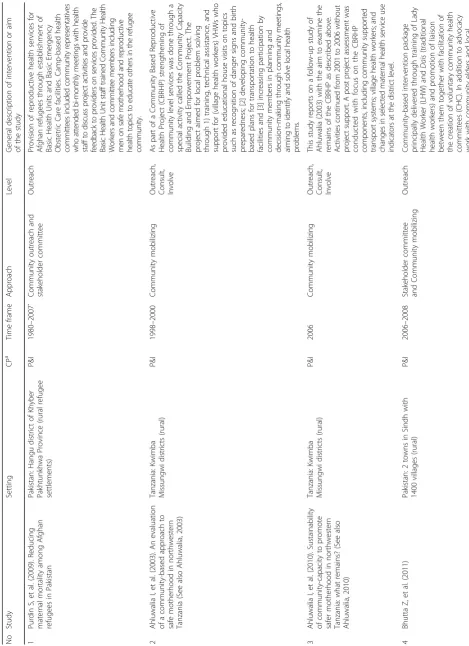
Table 1 shows characteristics of included studies. 16 pa-pers reported on 13 separate programmes: seven in Asia (India N= 1; Bangladesh N= 1; Pakistan N= 2; Nepal N = 1; China N = 1, Indonesia N = 1), three in East Africa (Tanzania N = 1; Uganda N = 1; Kenya N = 1) and three in Latin America (Peru N = 2; Honduras N= 1). Implementation approaches for community par-ticipation varied. They included forming stakeholder committees [13–21], mobilizing communities to take ac-tion [14, 22–25], community based monitoring of health outcomes or services [17–19, 25, 26], community out-reach activities to increase awareness of health issues [13, 16, 27] and facilitating stakeholder dialogues [19, 28]. Many of the studies were complex, multiple intervention programmes that combined community participation with health system strengthening and some also combined multiple approaches to participation. There was no con-sistent definition of ‘community’and some studies did not define‘community’at all.
Table
Collaborate (most villages), Shared Leadership (some villages)
lower levels than men in many of the studies, [13, 14, 17, 18], however, one study focused exclusively on women’s participation [27].
Implementation barriers and facilitators
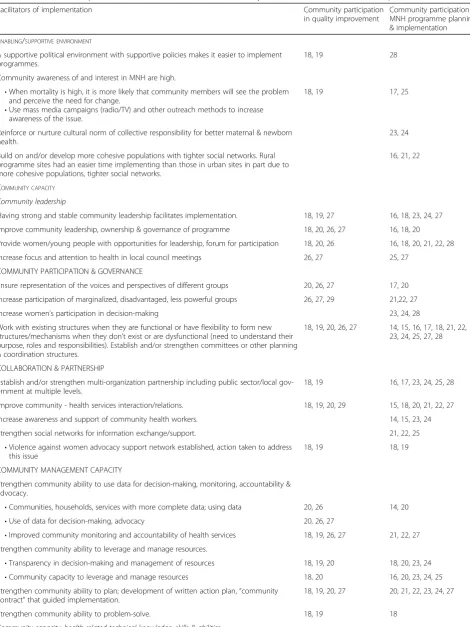
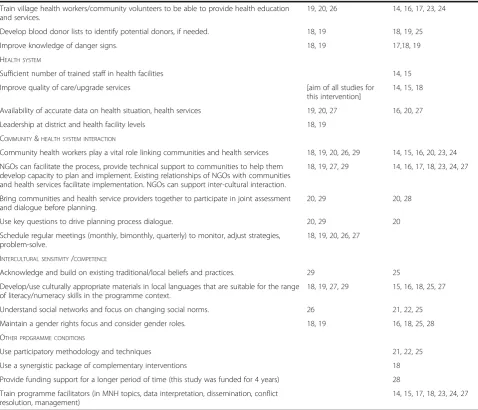
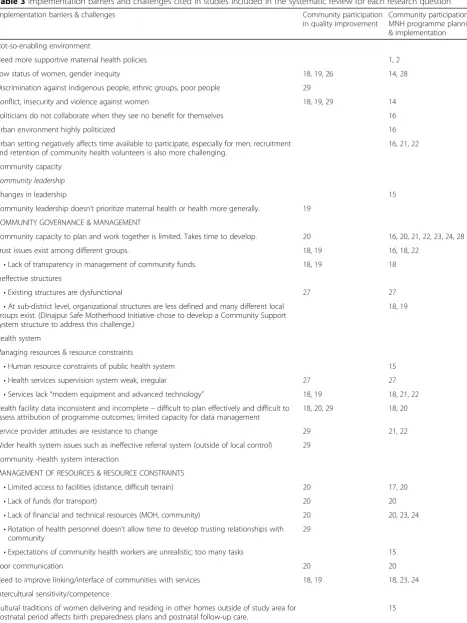
Tables 2 and 3 present barriers and facilitators to suc-cessful implementation across the two distinct interventions.
We identified five categories of implementation bar-riers and facilitators reported by the studies: 1) the extent to which there was an enabling and supportive environment or not; 2) the nature of community cap-acity; 3) health system factors; 4) features of the interface between community and health services; and, 5) intercultural competence and sensitivity of the programmes.
The findings across the two interventions were very similar so in this analysis we discuss them together. However, Tables 2 and 3 provide the reader with spe-cific details about which factors were reported in each study.
Enabling and not-so-enabling environments
The Millennium Development Goals triggered support-ive maternal and newborn health policies and political commitment at the highest levels of government in many countries which changed the overall context for these programmes. Community participation interven-tions in Bangladesh, India, Peru, China, and Indonesia were implemented in the context of new government schemes and approaches to upgrade services and make them more accessible and affordable [16–18, 24, 25, 27]. For example, through the National Rural Health Mis-sion, the Indian government introduced subsidies and incentives to make services more accessible and afford-able for pregnant women and their families [25]. In China, a rural health insurance scheme was introduced which allowed local officials to decide on which services would be covered. This, in turn, created opportunities for programme participants to advocate for more access-ible services for women [27]. At the district and village levels, NGOs involved in establishing health committees with the India Local Initiatives Programme characterised the urban environment as highly politicized with dis-putes that interrupted progress. The study also reported that politicians did not collaborate with the programme when they saw no benefit for themselves [15].
Cultural norms of collective responsibility helped com-munities to plan and work together to address barriers to accessing quality care. In Indonesia, the SIAGA social mobilization project intentionally built on the traditional value of collective help (gotong royong) as the foundation for their “alert community” campaign. This aimed at motivating people to establish life-saving systems in their
villages (transport, emergency funds, blood) [24]. In Tanzania, one study showed how community members initially perceived women’s health as the responsibility of individuals and were not inclined to work together to address barriers to service use [22, 23]. As the programme evolved, however, the study authors report that community awareness grew: both about the nature of the challenges and how they could help by working together. Over time, the members of the community began to value collective responsibility and action [22, 23]. The communities where this shift in norms occurred were also reportedly more likely to sustain their efforts to im-prove health and maintain mechanisms such as transport systems compared with those that remained focused on individual responsibility [23].
Community capacity
Table 2Facilitators of implementation cited in studies included in the systematic review for each research question
Facilitators of implementation Community participation
in quality improvement
Community participation in MNH programme planning & implementation
ENABLING/SUPPORTIVE ENVIRONMENT
A supportive political environment with supportive policies makes it easier to implement programmes.
18, 19 28
Community awareness of and interest in MNH are high.
•When mortality is high, it is more likely that community members will see the problem and perceive the need for change.
•Use mass media campaigns (radio/TV) and other outreach methods to increase awareness of the issue.
18, 19 17, 25
Reinforce or nurture cultural norm of collective responsibility for better maternal & newborn health.
23, 24
Build on and/or develop more cohesive populations with tighter social networks. Rural programme sites had an easier time implementing than those in urban sites in part due to more cohesive populations, tighter social networks.
16, 21, 22
COMMUNITY CAPACITY
Community leadership
Having strong and stable community leadership facilitates implementation. 18, 19, 27 16, 18, 23, 24, 27
Improve community leadership, ownership & governance of programme 18, 20, 26, 27 16, 18, 20
Provide women/young people with opportunities for leadership, forum for participation 18, 20, 26 16, 18, 20, 21, 22, 28
Increase focus and attention to health in local council meetings 26, 27 25, 27
COMMUNITY PARTICIPATION & GOVERNANCE
Ensure representation of the voices and perspectives of different groups 20, 26, 27 17, 20
Increase participation of marginalized, disadvantaged, less powerful groups 26, 27, 29 21,22, 27
Increase women’s participation in decision-making 23, 24, 28
Work with existing structures when they are functional or have flexibility to form new structures/mechanisms when they don’t exist or are dysfunctional (need to understand their purpose, roles and responsibilities). Establish and/or strengthen committees or other planning & coordination structures.
18, 19, 20, 26, 27 14, 15, 16, 17, 18, 21, 22, 23, 24, 25, 27, 28
COLLABORATION & PARTNERSHIP
Establish and/or strengthen multi-organization partnership including public sector/local gov-ernment at multiple levels.
18, 19 16, 17, 23, 24, 25, 28
Improve community - health services interaction/relations. 18, 19, 20, 29 15, 18, 20, 21, 22, 27
Increase awareness and support of community health workers. 14, 15, 23, 24
Strengthen social networks for information exchange/support. 21, 22, 25
•Violence against women advocacy support network established, action taken to address this issue
18, 19 18, 19
COMMUNITY MANAGEMENT CAPACITY
Strengthen community ability to use data for decision-making, monitoring, accountability & advocacy.
•Communities, households, services with more complete data; using data 20, 26 14, 20
•Use of data for decision-making, advocacy 20, 26, 27
•Improved community monitoring and accountability of health services 18, 19, 26, 27 21, 22, 27
Strengthen community ability to leverage and manage resources.
•Transparency in decision-making and management of resources 18, 19, 20 18, 20, 23, 24
•Community capacity to leverage and manage resources 18, 20 16, 20, 23, 24, 25
Strengthen community ability to plan; development of written action plan,“community contract”that guided implementation.
18, 19, 20, 27 20, 21, 22, 23, 24, 27
Strengthen community ability to problem-solve. 18, 19 18
A key factor influencing implementation in most studies included whether interventions helped com-munities address the issues that affected them. Some programmes were designed with this aim in mind; for example, the youth participation programme in Nepal and the Gender and Health Equity Network in China helped groups of socially marginalised people learn how to influence decision-making on health policy making and practice [20, 21, 27]. In Uganda, the programme “encouraged communities to be more in-volved with the state of health service provision and strengthened their capacity to hold their local health providers to account for performance” [26]. In other studies this type of process occurred not by design, but serendipity: the community mobilization study in
India, for instance, relied on the programme’s com-munity organizers to act as intermediaries between communities and health services as part of the inter-vention which in turn increased community willing-ness and ability to hold health workers accountable for services [25]. Studies that did not include ele-ments of community capacity development ran into implementation challenges. For example, several stud-ies describe how community, facility and government stakeholders needed time to develop ways of planning and working together which did not always fit programme timelines [15, 19–23, 27]. Sometimes communities had limited understanding of how to in-terpret and manage health data, which hindered ef-fectiveness of community based monitoring [17–19]. Table 2Facilitators of implementation cited in studies included in the systematic review for each research question(Continued)
Train village health workers/community volunteers to be able to provide health education and services.
19, 20, 26 14, 16, 17, 23, 24
Develop blood donor lists to identify potential donors, if needed. 18, 19 18, 19, 25
Improve knowledge of danger signs. 18, 19 17,18, 19
HEALTH SYSTEM
Sufficient number of trained staff in health facilities 14, 15
Improve quality of care/upgrade services [aim of all studies for
this intervention]
14, 15, 18
Availability of accurate data on health situation, health services 19, 20, 27 16, 20, 27
Leadership at district and health facility levels 18, 19
COMMUNITY&HEALTH SYSTEM INTERACTION
Community health workers play a vital role linking communities and health services 18, 19, 20, 26, 29 14, 15, 16, 20, 23, 24
NGOs can facilitate the process, provide technical support to communities to help them develop capacity to plan and implement. Existing relationships of NGOs with communities and health services facilitate implementation. NGOs can support inter-cultural interaction.
18, 19, 27, 29 14, 16, 17, 18, 23, 24, 27
Bring communities and health service providers together to participate in joint assessment and dialogue before planning.
20, 29 20, 28
Use key questions to drive planning process dialogue. 20, 29 20
Schedule regular meetings (monthly, bimonthly, quarterly) to monitor, adjust strategies, problem-solve.
18, 19, 20, 26, 27
INTERCULTURAL SENSITIVITY/COMPETENCE
Acknowledge and build on existing traditional/local beliefs and practices. 29 25
Develop/use culturally appropriate materials in local languages that are suitable for the range of literacy/numeracy skills in the programme context.
18, 19, 27, 29 15, 16, 18, 25, 27
Understand social networks and focus on changing social norms. 26 21, 22, 25
Maintain a gender rights focus and consider gender roles. 18, 19 16, 18, 25, 28
OTHER PROGRAMME CONDITIONS
Use participatory methodology and techniques 21, 22, 25
Use a synergistic package of complementary interventions 18
Provide funding support for a longer period of time (this study was funded for 4 years) 28
Train programme facilitators (in MNH topics, data interpretation, dissemination, conflict resolution, management)
14, 15, 17, 18, 23, 24, 27
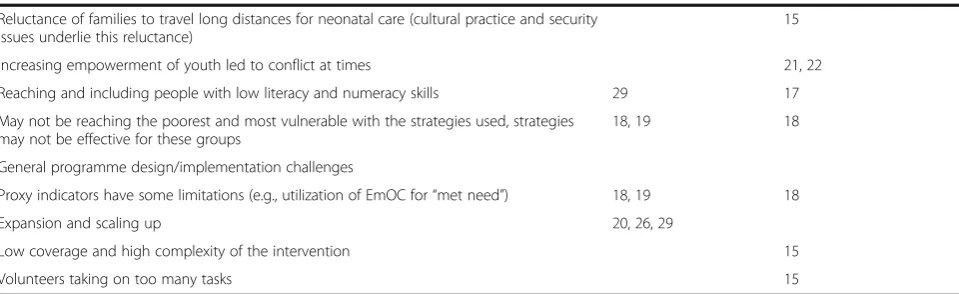
Table 3Implementation barriers and challenges cited in studies included in the systematic review for each research question
Implementation barriers & challenges Community participation
in quality improvement
Community participation in MNH programme planning & implementation
Not-so-enabling environment
Need more supportive maternal health policies 1, 2
Low status of women, gender inequity 18, 19, 26 14, 28
Discrimination against indigenous people, ethnic groups, poor people 29
Conflict, insecurity and violence against women 18, 19, 29 14
Politicians do not collaborate when they see no benefit for themselves 16
Urban environment highly politicized 16
Urban setting negatively affects time available to participate, especially for men; recruitment and retention of community health volunteers is also more challenging.
16, 21, 22
Community capacity
Community leadership
Changes in leadership 15
Community leadership doesn’t prioritize maternal health or health more generally. 19
COMMUNITY GOVERNANCE & MANAGEMENT
Community capacity to plan and work together is limited. Takes time to develop. 20 16, 20, 21, 22, 23, 24, 28
Trust issues exist among different groups. 18, 19 16, 18, 22
•Lack of transparency in management of community funds. 18, 19 18
Ineffective structures
•Existing structures are dysfunctional 27 27
•At sub-district level, organizational structures are less defined and many different local groups exist. (Dinajpur Safe Motherhood Initiative chose to develop a Community Support System structure to address this challenge.)
18, 19
Health system
Managing resources & resource constraints
•Human resource constraints of public health system 15
•Health services supervision system weak, irregular 27 27
•Services lack“modern equipment and advanced technology” 18, 19 18, 21, 22
Health facility data inconsistent and incomplete–difficult to plan effectively and difficult to assess attribution of programme outcomes; limited capacity for data management
18, 20, 29 18, 20
Service provider attitudes are resistance to change 29 21, 22
Wider health system issues such as ineffective referral system (outside of local control) 29
Community -health system interaction
MANAGEMENT OF RESOURCES & RESOURCE CONSTRAINTS
•Limited access to facilities (distance, difficult terrain) 20 17, 20
•Lack of funds (for transport) 20 20
•Lack of financial and technical resources (MOH, community) 20 20, 23, 24
•Rotation of health personnel doesn’t allow time to develop trusting relationships with community
29
•Expectations of community health workers are unrealistic; too many tasks 15
Poor communication 20 20
Need to improve linking/interface of communities with services 18, 19 18, 23, 24
Intercultural sensitivity/competence
Cultural traditions of women delivering and residing in other homes outside of study area for postnatal period affects birth preparedness plans and postnatal follow-up care.
Health system factors
Limitations within health systems were highlighted in many studies. For instance, five studies highlighted the im-portance to health facilities of having accurate data on population health, health services and case studies of ma-ternal deaths and “near-misses” to improve quality and planning within services, as well as to share with the broader community to raise awareness about health prior-ities and to monitor progress over time [15, 17–19, 25, 26]. Yet, incomplete and inconsistent data at health facil-ities made it difficult to plan effectively, and also made it hard for programmes to assess the effects of changes they had made [17, 19, 28]. Resource constraints also presented challenges to effective implementation [14, 14, 17, 18, 20, 21]. Two studies reported that having trained staff in health facilities and upgrading the quality of care helped facilitate work with communities [13, 14]. A persistent challenge in many health programmes that was also evi-dent in the studies reviewed here was a weak, irregular and ineffective supervision system for healthcare staff [26]. Barbey (2001) indicates that health system leadership at the district and facility levels is key to quality improve-ment efforts [17].
Interface between community and health services
Communities and health services may face challenges in coming together to plan and implement programmes. Some communities had limited access to facilities be-cause of distance, difficult terrain and lack of funds for transport, while health service providers may face prob-lems trying to reach communities and supervise com-munity health workers [16, 18, 19]. Poor communication and lack of financial and technical resources on both sides (public health sector and community) can limit communities’ and service providers’ ability to meet,
which can limit the effectiveness of such partnerships in improving healthcare [19, 22, 23].
Several studies reported that joint assessments be-tween healthcare providers and members of the commu-nity helped improve quality by providing valuable information to feed into priority setting and identify op-portunities and challenges [19, 27, 28]. Community health workers, volunteers, and NGOs play important roles in linking communities with health systems by fa-cilitating dialogue, providing health education and ser-vices through community outreach, collecting health and community data, and by drawing on existing rela-tionships which help them understand the local context and priorities [13–15, 17–19, 22, 23, 25, 28]. Sometimes, however, volunteers were expected to take on too many tasks and thus could not complete all of them well [14]. Barbey et al. (2001) advise that facilitators be well-trained in facilitation, coaching and training skills [17].
Intercultural competence and sensitivity of the programmes Culturally-appropriate materials in local languages are needed that are suitable for a range of literacy and nu-meracy skills for programmes where community mem-bers participate in analysis of health data as a basis for decision-making and action [14, 15, 17, 18, 24, 28]. Pro-grammes in Indonesia, India and Nepal highlighted the importance of programme personnel understanding and working to mobilize social networks in culturally-sensitive ways to bring about changes in social norms [20, 21, 24, 25]. A gender roles analysis study in China advocated a gender rights focus as a way to help raise community awareness about inequities in women’s ac-cess to services and other opportunities, making the case for women’s participation in bottom up planning pro-cesses in resource-poor settings where women’s status is Table 3Implementation barriers and challenges cited in studies included in the systematic review for each research question (Continued)
Reluctance of families to travel long distances for neonatal care (cultural practice and security issues underlie this reluctance)
15
Increasing empowerment of youth led to conflict at times 21, 22
Reaching and including people with low literacy and numeracy skills 29 17
May not be reaching the poorest and most vulnerable with the strategies used, strategies may not be effective for these groups
18, 19 18
General programme design/implementation challenges
Proxy indicators have some limitations (e.g., utilization of EmOC for“met need”) 18, 19 18
Expansion and scaling up 20, 26, 29
Low coverage and high complexity of the intervention 15
Volunteers taking on too many tasks 15
low to better inform decision-makers about women’s needs and views [27].
Women’s low status appears to have influenced how community priorities were set, how decisions were made at the household level, and also influenced women’s level of participation. Gender inequity manifested in different ways in different places. For instance, in Peru, Quechua women were discriminated against and treated poorly by health services staff. Ongoing local conflict also affected their sense of security and limited access to health facil-ities [16]. Similarly, in India husbands were reluctant to participate in maternal health interventions, describing maternal health as a “women’s issue.” Study authors re-ported,“It was clear that efforts to make husbands more supportive questioned deep-rooted norms and beliefs, and met with considerable resistance; consequently, hus-bands were slow to change their views.” [27]. The stud-ies in Bangladesh showed how women suffered from violence in multiple settings: at home, in communities and in health services [17, 18].
Benefits and harms
Reported benefits of community involvement in moni-toring health data and quality included increased ac-countability of the health system to the community. Studies also reported reduced absenteeism [25, 26], re-duced drug stock-outs [19, 26], rere-duced waiting time [26], better examination procedures [26], improved facil-ity infrastructure and equipment [19, 25, 27] and re-duced use of untrained providers [25] as well as generally improved quality of care [17, 18]. Other cited benefits included policies and actions that reflected and addressed women’s needs [27].
At community level reported benefits included im-proved abilities of individuals, groups and communities in governance of programmes [15, 17, 19, 25, 26], man-agement, planning and using data for group decision-making [13, 19–23, 25, 26], obtaining and managing re-sources [15, 17, 19–24], facilitating group processes to include new voices [20–23, 25–28], monitoring and evaluation, conflict management, and problem-solving [17, 18, 20, 21, 24–26]. In addition, participation inter-ventions helped community members improve their knowledge and skills about maternal and newborn health, which enabled them to carry out specific health related tasks or functions [13, 14, 17, 18, 22, 23]. Two studies suggested that community capacity development can also help sustain improvements in health [20, 23].
Most studies did not report on specific harms. In a study from Peru, the authors noted that it was important to attend to both the personal needs of community members as well as ensure adequate medical quality [28]. In addition, increased empowerment of young
people in Nepal sometimes led to conflict when it chal-lenged existing social norms [20, 21].
Stakeholder perspectives and experiences
The quality improvement studies provided very lim-ited information on stakeholder perspectives. Stake-holder dialogue in developing culturally-acceptable childbirth services in Peru was reported to have helped create mutual understanding between commu-nities and service providers and the new services de-veloped as a result were hailed as a success locally
[28]. A study in India [25] using community
mobilization and monitoring noted: “Community leaders reported that as a result of direct interaction with government officials on problems faced by health providers and the women themselves, there was more openness among officials to resolving is-sues and a greater willingness to accept feedback from the community” p14 [25]. Women in the same study said there was more community support for pregnancy-related care. Interventions at family level found approaching mothers-in-law helpful, as they were more receptive to community organizers than husbands [25].
any stakeholder perspectives or experiences, including whether or not the intervention was acceptable to them.
Discussion
Linking implementation factors to health outcomes
The designs of the original studies, along with the complex-ity of the integrated multi-component interventions and the different approaches to community participation, make it difficult to link specific implementation strategies to spe-cific outcomes [7, 8]. The studies themselves attribute the following positive outcomes to participation strategies: in-creased community awareness of danger signs and compli-cations [15, 16, 24]; an increase in appropriate care-seeking [12, 14–23, 25, 26, 30]; improved transport to services, ei-ther through financial support being made available after community meetings, or because of increased awareness through educational materials, or broader programme ac-tivities [15, 16, 20–24]; and creating a process for com-munity members to use health data to identify and address barriers to survival [15–19, 23, 25].
Rifkin argues that approaching community participation as a process rather than an intervention influences how the effect of community participation should be evaluated [7]. Process evaluations were not usually documented in the studies included here, a finding which is in line with previous reviews [8, 9]. For studies where communities played more active roles, particularly in planning and implementing health programmes [19–21, 25–27], rather than more passive roles as recipients of community out-reach [13, 14, 16], development of community capacity to address programme challenges and barriers and increase programme ownership was a key factor, whether or not this was an intended programme goal. Strengthened abil-ities of community members and groups to plan and im-plement programme-related activities acquired through experience and training can be applied beyond the programme, enhancing community participation in broader civil society in the immediate and longer term [22, 23, 25, 26]. However, the Nepal youth study suggests that strengthening a community’s capacity to work to-gether effectively without paying careful attention to de-veloping specific health-related knowledge and skills may not result in the desired improvement of specific health outcomes, at least in the short term (presumably in a con-text in which community level health related knowledge and skills are not well developed) [26, 27]. Strengthened capacity can lead to shifts in the balance of power through partnerships or coalitions between different groups (for example through stakeholder committees) or increased skills, education and confidence of members who become empowered to tackle their own problems (for example through community-based monitoring and increased accountability) [5, 31–34].
Limitations
Our findings are limited by the following: a relatively small number of studies met the inclusion criteria for the original WHO reviews of effectiveness; there is little detail in these studies about stakeholder perspectives and the context and conditions in which programmes were implemented. Most studies did not report on their definition of ‘community’and it is unclear whether they had operational definitions or were working with impli-cit understandings such as a rough geographical defin-ition. The way community is defined has programmatic implications in terms of organization, leadership, repre-sentation, governance and decision-making processes, particularly when programme implementers choose to work with existing structures and organizations and so clearly influences the process of community participa-tion. Lack of clear definitions of who comprises‘ commu-nity’ suggests a lack of focus in the implementation, which could be problematic – for instance if the inter-vention amplifies already-heard voices at the expense of marginalised groups.
Across studies there was limited discussion about why the programmes chose the approaches they imple-mented and the extent to which these approaches seemed to work, or needed to be adjusted during the programme. Authors provided very little information on the process of participation, what motivated different community members to participate, and how their par-ticipation contributed to successful outcomes. They also did not discuss certain key details that could inform im-plementation of programmes in the future, for instance, which theoretical or pedagogical approach(es) they used, the particular roles that community and programme team members played in the learning process or how these roles may or may not have changed over time as community capacity grew and environmental conditions
changed. Most authors did not report on how
programme team members developed their own capacity to design, facilitate and support these processes and how relationships and personalities influenced effectiveness during implementation.
processes work in different contexts and conditions, but such evaluation methods require adequate resources and staff to be done thoroughly.
Conclusion
While the conclusions from the secondary analysis pre-sented here are necessarily tentative, a key element of suc-cessful health programme interventions through community participation appears to be the extent to which community, facility and government stakeholders develop their capacity to work effectively together to design, manage, and monitor health programmes as well as their health-related knowledge and skills. We identified the following factors to consider when supporting community participation programmes:
Enabling or not-so-enabling environment–the
extent to which political will, community awareness and sentiment, policies and available resources are supportive of maternal and newborn health and community participation;
Community leadership and governancecharacterized
by stability and strength of local leadership, the extent to which marginalized voices are represented in decision-making and whether and how to work with existing structures;
Community management capacityto leverage and
manage resources, use data for decision-making and for planning, monitoring, and accountability;
Community and health system capacity to interact
including the roles and relationships that
community health workers, NGOs and others can play to link communities and health systems, and the use of regularly scheduled effective processes that use key questions to drive constructive dialogue; and,
Intercultural sensitivity/competencethat
acknowledges, respects and builds on existing local beliefs and practices, considers gender rights and roles, understands social networks and norms, uses local languages and materials accessible to the range of literacy and numeracy skills within the
programme context.
While some facilitating and inhibiting factors identified in this secondary analysis may be beyond the control or influ-ence of a particular programme, it may be helpful for programme designers and implementers to be aware of them and the possible implications they may have for im-plementation and results. For example, working in a setting in which there is a very low level of trust among members of the community is likely to require a great deal more time and effort spent on building trust before meaningful en-gagement in joint programme planning can take place.
Better understanding of how best to support community participation processes to improve maternal and newborn health is essential, particularly methods of investigating adequately the effects of different programmes in what are inevitably complex and dynamic social settings.
Abbreviations
ANC:Antenatal care; MDSR: Maternal death surveillance and response; MNH: Maternal and newborn health; SURE : Supporting the Use of Research Evidence; WHO: World Health Organization
Acknowledgements
This paper draws from an initial report produced by Lisa Howard-Grabman for the World Health Organization. We would like to gratefully acknowledge the contributions of the participants of the WHO Technical Consultation on Health Promotion Interventions for Maternal and Newborn Health that took place between 15 and 17 of July 2014 at WHO headquarters in Geneva, for discussing the preliminary outcomes of the systematic reviews and for their contributions to the first version of the report.
Funding
The study was funded by the WHO Department of Maternal, Newborn, Child, and Adolescent Health through a grant received from the Norwegian Agency for Development Cooperation.
Availability of data and materials
The dataset supporting the conclusions of this article is included within the article and its additional file.
Authors’contributions
LHG performed the analysis and developed the initial reports. LHG, ASM, CM and AP drafted the article. All authors approved the final version. Anayda Portela is a staff member of the World Health Organization and is responsible for the views expressed in this article which do not necessarily represent the decisions, policy or views of the World Health Organization.
Ethics approval and consent to participate
Not applicable.
Consent for publication
Not applicable.
Competing interests
The authors declare that they have no competing interests.
Publisher’s Note
Springer Nature remains neutral with regard to jurisdictional claims in published maps and institutional affiliations.
Author details
1Training Resources Group, Inc., 4301 Wilson Boulevard, Suite 400, Arlington, VA 22203, USA.2Institute of Health and Society, Department of Community Medicine and Global Health, Faculty of Medicine, University of Oslo, P.O. Box 1072 Blindern, 0316 Oslo, Norway.3Faculty of Public Health and Policy, London School of Hygiene & Tropical Medicine, 15-17 Tavistock Place, London WC1H 9SH, UK.4World Health Organization Department of Maternal, Newborn, Child and Adolescent Health, 20 Avenue Appia, 1211 Geneva, Switzerland.
Received: 29 November 2016 Accepted: 4 August 2017
References
2. Draper AK, Hewitt G, Rifkin S. Chasing the dragon: developing indicators for the assessment of community participation in health programmes. Soc Sci Med. 2010;71(6):1102–9.
3. Zakus JD, Lysack CL. Revisiting community participation. Health Policy Plan. 1998;13(1):1–12.
4. Marston C, Renedo A, McGowan CR, Portela A. Effects of community participation on improving uptake of skilled care for maternal and newborn health: a systematic review. PLoS One. 2013;8(2):e55012.
5. Rosato M, Laverack G, Grabman LH, Tripathy P, Nair N, Mwansambo C, et al. Community participation: lessons for maternal, newborn, and child health. Lancet. 2008;372(9642):962–71.
6. Rifkin SB. Lessons from community participation in health programmes: a review of the post Alma-Ata experience. Int Health. 2009;1(1):31–6. 7. Rifkin SB. Examining the links between community participation and health
outcomes: a review of the literature. Health Policy Plan. 2014; 29:ii98-ii106. 8. George AS, Mehra V, Scott K, Sriram V. Community participation in health systems research: a systematic review assessing the state of research, the nature of interventions involved and the features of engagement with communities. PLoS One. 2015;10(10):1–25.
9. O’Mara-Eves A, Brunton G, McDaid D, Oliver S, Kavanagh J, Jamal F, et al. Community engagement to reduce inequalities in health: a systematic review, meta-analysis and economic analysis. Public Heal Res. 2013;1(4):1–526. 10. World Health Organization. WHO recommendations on health promotion
interventions for maternal and newborn health. Geneva: WHO. 2015:2015. 11. MASCOT. Study group. Systematic review draft protocol: Health system and
community-based interventions for improving maternal health and for reducing maternal health inequalities in low- and middle-income countries: a two-stage mixed-methods research synthesis. 2014.
12. The SURE Collaboration. SURE Guides for Preparing and Using Evidence-Based Policy Briefs: identifying and addressing barriers to implementing policy options. [Internet]. 2011. Available from: epoc.cochrane.org/sites/ epoc.cochrane.org/files/public/uploads/SUREGuides-v2.1/Collectedfiles/sure_ guides.html.
13. Purdin S, Khan T, Saucier R. Reducing maternal mortality among afghan refugees in Pakistan. Int J Gynaecol Obstet. 2009;105(1):82–5. 14. Bhutta ZA, Soofi S, Cousens S, Mohammad S, Memon ZA, Ali I, et al.
Improvement of perinatal and newborn care in rural Pakistan through community-based strategies: a cluster-randomised effectiveness trial. Lancet. 2011;377(9763):403–12.
15. Paxman JM, Sayeed A, Buxbaum A, Huber SC, Stover C. The India local initiatives program: a model for expanding reproductive and child health services. Stud Fam Plan. 2005;36(3):203–20.
16. Harkins T, Drasbek C, Arroyo J, McQuestion M. The health benefits of social mobilization: experiences with community-based integrated Management of Childhood Illness in Chao, Peru and San Luis. Honduras Promot Educ. 2008;15(2):15–20.
17. Barbey A, Faisel AJ. Myeya J. Stavrou V, Psych MC, et al. Dinajpur SafeMother Initiative Final Evaluation Report. CARE: Mh ADD; 2001.
18. Hossain J, Ross SR. The effect of addressing demand for as well as supply of emergency obstetric care in Dinajpur. Bangladesh IJOG. 2006;92(3):320–8. 19. Kaseje D, Olayo R, Musita C, Oindo CO, Wafula C, Muga R. Evidence-based
dialogue with communities for district health systems' performance improvement. Glob Public Health. 2010;5(6):595–610.
20. Malhotra A, Mathur S, Pande R, Roca E. Nepal: the distributional impact of participatory approaches on reproductive health for disadvantaged groups. In: Gwatkin DR, Wagstaff A, Yazbeck AS, editors. Reaching the poor with health, nutrition, and population services: what works, what doesn't, and why. Washington: The World Bank; 2005.
21. Mathur S, Mehta M, Malhotra A. Youth reproductive health in Nepal. 2004. International Center for Research on Woman.
22. Ahluwalia IB, Schmid T, Kouletio M, Kanenda O. An evaluation of a community-based approach to safe motherhood in northwestern Tanzania. Int J Gynecol Obstet. 2003;82(2):231–40.
23. Ahluwalia IB, Robinson D, Vallely L, Gieseker KE, Kabakama A. Sustainability of community-capacity to promote safer motherhood in northwestern Tanzania: what remains? Glob Health Promot. 2010;17(1):39–49. 24. Sood S, Chandra U, Palmer A, Molyneux I. SIAGA behavior change
campaign in Indonesia SIAGA behavior change campaign in Indonesia. Matern Neonatal Heal. 2004;
25. Sinha D. Empowering communities to make pregnancy safer: an intervention in rural Andhra Pradesh. Population Council: New Delhi; 2008.
26. Bjorkman M, Svendsson J. Power to the people: evidence from a randomized field experiment on community based monitoring in Uganda. Q J Econ. 2009;124(2):735–69.
27. Kaufman J, Liu Y, Fang J. Improving reproductive health in rural China through participatory planning. Glob Public Health. 2012;7(8):856–68. 28. Gabrysch S, Lema C, Bedriñana E, Bautista MA, Malca R, Campbell OMR.
Cultural adaptation of birthing services in rural Ayacucho, Peru. Bull World Health Organ. 2009;87(9):724–9.
29. WHO. Working with individuals, families and communities to improve maternal and newborn health. Geneva: WHO; 2010.
30. World Health Organization. WHO recommendation on community mobilization through facilitated participatory learning and action cycles with women’s groups for maternal and newborn health. WHO. 2014:2014. 31. Laverack G, Labonte R. A planning framework for community
empowerment goals within health promotion. Health Policy Plan. 2000; 15(3):255–62.
32. Gibbon M, Labonte R, Laverack G. Evaluating community capacity. Heal Soc Care Community. 2002;10(6):485–91.
33. Crisp. Four approaches to capacity building in health: consequences for measurement and accountability. Health Promot Int 2000;15(2):99–107. 34. Hawe P. Working invisibly: health workers talk about capacity-building in
health promotion. Health Promot Int. 1998;13(4):285–95. 35. De Savigny D, Adam T, WHO. Systems Thinking for Health Systems
Strengthening. Geneva: WHO; 2009.
36. Dooris. Healthy settings: challenges to generating evidence of effectiveness. Health Promot Int 2005; 21(1):55–65.
37. Britt H. Patsalidis M. Complexity-Aware Monitoring. USAID: Discusion Note; 2013.
38. Butterfoss FD. Process evaluation for community participation. Annu Rev Public Health. 2006;27:323–40.
• We accept pre-submission inquiries
• Our selector tool helps you to find the most relevant journal
• We provide round the clock customer support
• Convenient online submission
• Thorough peer review
• Inclusion in PubMed and all major indexing services
• Maximum visibility for your research
Submit your manuscript at www.biomedcentral.com/submit