International Journal of Research
Available at https://edupediapublications.org/journals
e-ISSN: 2348-6848 p-ISSN: 2348-795X Volume 04 Issue 06
May 2017
Available online: https://edupediapublications.org/journals/index.php/IJR/ P a g e | 2090
An Overview on Multi-Generational Workforce With Reference
To Banking Industry
Shilpa Tyagi
Research scholar Manav Rachna university
Abstract
The banking industry has been going through rapid transformation because of progressive
economic changes, changing demographics and quick paced technological advancements.
Banks in India have been facing multitudinous difficulties, for example, administrative risks,
up gradation of innovation, intense competition, workforce challenges and operational risk.
Workforce challenge assumes a vital job among different difficulties. The surviving literature
review demonstrates that few studies have identified various workforce difficulties of banks.
Be that as it may, their impact has not been quantified for effective risk mitigation. Such studies
are more observatory than investigational. The present investigation aims to identify the real
workforce difficulties of banks through an organized methodology that includes literature
review, center gathering discussion, assimilation of consultancy reports and conducting risk
perception study. The extent of the present investigation is limited to Indian public and private
part banks. According to literature review, the significant workforce challenges identified are
absence of required skills, execution the executives, inadequate recruitment and vocation
planning and increasing staff cost. The workforce challenges are identified using factor
analysis and a reasonable model is proposed for mitigation of key difficulties.
Keywords: Factor analysis, Indian banking system, risk mitigation framework, workforce challenges, workforce challenges assessment.
International Journal of Research
Available at https://edupediapublications.org/journals
e-ISSN: 2348-6848 p-ISSN: 2348-795X Volume 04 Issue 06
May 2017
Available online: https://edupediapublications.org/journals/index.php/IJR/ P a g e | 2091 BANKS are the life blood of any financial framework. The idea of banking began during the
inception of cash. The Indian banking framework has experienced three distinct stages. The
first stage that began in 1786 laid the foundation for the formation and advancement of the
Indian banking system1. The second period of banking evolution somewhere in the range of
1969 and 1991, witnessed significant change in policy changes, extension and regulation of
banking services. Fourteen noteworthy banks were nationalized in 1969 and another six in
1980. The real milestone during this stage was the creation of Credit Guarantee Corporation
and license issued by RBI to setup regional rustic banks.
The third stage that began during post-liberalization in 1991 changed traditional banking into
innovation empowered banking framework by the introduction of ATM services, mobile
banking, electronic banking services and center banking. The increasing emphasis on
globalization of Indian economy has opened up new roads and difficulties for Indian banks.
Indian banks are facing significant difficulties concerning declining resource quality of public
segment banks, inadequate capital sufficiency, high transaction cost, innovation upgradation,
resource liability the board and workforce challenges2– 7. The idea of workforce challenges,
its impact and severity varies according to the sorts of banks and the region where it works.
The result of the investigation would facilitate banks to effectively address the workforce
challenges which will in turn improve the satisfaction and productivity of representatives. The
present article is organized as pursues: The first section covers the examination motivation.
Next an overview of the present worker quality of the Indian banking framework is introduced.
This is trailed by a brief literature review about the unique situation. At that point the procedure
of this investigation is provided trailed by an analysis of the information. The
highlights/observations of the analysis are then discussed. An innovative calculated structure
for mitigation of banking workforce challenges is proposed, trailed by concluding observations.
EMPLOYEE STRENGTH IN THE INDIAN BANKING SYSTEM
The Indian banking framework has been experiencing an increase in worker intake in the course
of the most recent five decades. The industry has been one of the biggest recruiters and is relied
upon to create in excess of 20 lakh occupations in the following 5– 10 years8 . New banks are
International Journal of Research
Available at https://edupediapublications.org/journals
e-ISSN: 2348-6848 p-ISSN: 2348-795X Volume 04 Issue 06
May 2017
Available online: https://edupediapublications.org/journals/index.php/IJR/ P a g e | 2092 deals executives and other banking professionals to connect with the rustic population. While
there are sufficient development opportunities, the part is relied upon to confront significant
workforce challenges. The significant achievement of a bank relies upon satisfaction of
workers who are the real partners of business9 . The pattern analysis of worker quality in Indian
public part
LITERATURE REVIEW
Banking framework and issues pertaining to the workforce. Dynamism in Indian banking can
be attributed to difficulties, for example, upward direction of interest rates, demanding clients,
financial inclusion, technological headways, competition for human ability and
efficient-utilization of a bank's resources10. An examination led in Nigeria demonstrates that there are
interrelationships among worker's guilds, representatives and bosses in commercial banks11.
The examination endeavored to find out the causes and outcomes of staff conservation in the
banking segment and furthermore to identify the various work laws, resolutions and main
administrative occupations in the banking industry will confront the risk of automation in the
following 20 years, where repetitive and highly organized employments are required to
decline12. An investigation on Indian banking HRD framework demonstrated a deficiency of
comprehensive understanding of difficulties that hit various parts of Indian banking13. This
article ascertains various difficulties looked by the Indian banking industry and prescribes
changes to be made as for human asset improvement. In an environment that calls for strategic
changes, implications can be drawn for studies addressing issues like investment in HR,
reaction to changes in HR practices and feasible solutions to oversee change. An investigation
on human asset issues in banks emphasizes the requirement for banks to be multi-faceted, like
appraisal of skill requirement, identifying and bridging the holes, identifying the ability, putting
the available ability to optimum pool, attracting crisp ability, retention of ability and change
management3 . SBI Chairperson Arundhati Bhattacharya mentioned the difficulties in giving
business sector related salaries14. The bank is trying to hire individuals at lower levels directly
from grounds and on contract. This obviates their ability to have a profession with the bank
and in this way may not be that attractive. A few studies emphasized on identification of
workforce challenges which is a result of the working environment uncertainty towards
International Journal of Research
Available at https://edupediapublications.org/journals
e-ISSN: 2348-6848 p-ISSN: 2348-795X Volume 04 Issue 06
May 2017
Available online: https://edupediapublications.org/journals/index.php/IJR/ P a g e | 2093 positive for both worker and business; anyway empirical studies around it are not sufficiently
tended to and ensuing mitigation is not proposed. The hole in existing studies is tended to in
this article. The third objective of the investigation is to recommend a mitigation system for
high impact factor which is derived from factor analysis. To outline mitigation estimates
literature was reviewed all around and measures handling similar difficulties are checked. It is
perceived that a few measures can be utilized to mitigate a few difficulties. Finally, in the wake
of identifying and assessing the impact of components, with the dimension of impact severity,
an integrated methodology is pursued to recommend a gotten it done with workforce
challenges.
OBJECTIVES
In seeking to explore the workforce challenges of the Indian banking sector, the major
objectives of the investigation are:
(1) To identify the various elements of workforce difficulties of the Indian commercial
banking framework;
(2) To survey the workforce difficulties and its impact on the Indian commercial banking
framework and
(3) To recommend a model for mitigation of workforce challenges.
RESEARCH METHODOLOGY
In request to identify factors challenging the workforce in the Indian banking framework,
exploratory research design technique is utilized. First, a lot of key variables were identified
through literature review in the Indian banking framework. Further to finalize factors
challenging the workforce, semi-organized primary discussion in the type of an open finished
questionnaire was administered to 25 bank officials (normal experience of over 5 years
including bank directors, hiring officials and human asset officials who administer the bank
workforce were considered for the discussion).
International Journal of Research
Available at https://edupediapublications.org/journals
e-ISSN: 2348-6848 p-ISSN: 2348-795X Volume 04 Issue 06
May 2017
Available online: https://edupediapublications.org/journals/index.php/IJR/ P a g e | 2094 Factor analysis is a multivariate technique which emphasizes on information reduction and
information summarization. The aim is to identify the underlying inert variables leading to
challenging components of workforce. The most appropriate technique available in
multivariate information analysis is Exploratory Factor Analysis (EFA). The aim of EFA is to
determine the dormant structure of a particular dataset by discovering regular variables. The
Kaiser-Meyer-Olkin (KMO) index estimates the sampling ampleness. Any estimation of KMO
more noteworthy than 0.6 is considered to be great. artlett's trial of sphericity tests the general
significance of the considerable number of correlations. From the yield, KMO measure is 0.788
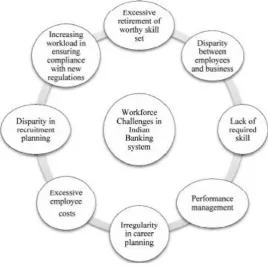
Figure 1. Workforce challenges of Indian banking system.
Which is in the significant zone and more than 0.6. Bartlett's trial of sphericity is additionally
satisfied with practically less p esteem which is evident. To make the analysis progressively
compressive, inferences were drawn dependent on the eight watched variables: The mean and
standard. The five independent groups of variables could be explained by the existence of two
independent inert variables, every one of which is responsible for the variability of one bunch
International Journal of Research
Available at https://edupediapublications.org/journals
e-ISSN: 2348-6848 p-ISSN: 2348-795X Volume 04 Issue 06
May 2017
Available online: https://edupediapublications.org/journals/index.php/IJR/ P a g e | 2095 in the information, the correlation esteems among variables are systematically low. In
multivariate information analysis the relationship between watched variables is typically
described using the standardized variance/covariance matrix. As watched, the estimation of the
variances in the correlation matrix is 1 for every one of the variables the explanation behind
this is the variables have been standardized. In the analysis, the normal variance is partitioned
from its unique variance and blunder variance, with the goal that just the regular variance is
available in the factor structure. This implies the level of explained variance ought to be
accounted for as far as normal variance. In a typical genuine situation, likely involving a lot
increasingly inert variables, few watched variables for each inactive variable and low
communality, the visual inspection of the correlation matrix would be pointless. The eigen
esteems associated with the diminished correlation matrix are appeared Table 4. As watched,
none of the eigen esteems is negative. An obscure number of idle variables may explain the
relationship between the eight watched variables. Variables 1 and 2 have loadings of 0.577 and
0.463; this proposes that factor one is a combination of disparity among worker and business
and absence of required skills; this factor can be named as skill hole (note 8). Excessive
retirement of commendable skill set will have factor loading of 0.757 as one factor named as
scarcity of skilled human asset. Irregularity in vocation planning and execution the board with
factor loading of 0.504 and 0.553 jointly make a factor called worker execution. Increasing
remaining burden in compliance with new business, excessive worker cost and disparity in
recruitment planning will shape a bunch known as excessive burden and cost to bank. The
extraction of two components represents 77.3% of the regular variance (note 9). The scree plot
demonstrates the eigen esteems on the Y-axis the quantity of variables (segments) on the
X-axis. The point where the slant of the bend is plainly leveling off (the elbow) indicates the
quantity of elements that ought to be produced by the analysis (Figure 3). As found in the chart
the first two factor loadings show more prominent variance and the rest are close. This indicates
the first three components have a noteworthy impact and the differentiable rest are bunched.
At the point when the scree plot was drawn, an ideal slant with unmistakably leveling off bend
was obtained indicating that the analysis was done consummately. In view of factor analysis it
was presumed that the two noteworthy workforce challenges involved in the banking division
are selection issue and commendable skill requirement. Studies of the RBI information on
International Journal of Research
Available at https://edupediapublications.org/journals
e-ISSN: 2348-6848 p-ISSN: 2348-795X Volume 04 Issue 06
May 2017
Available online: https://edupediapublications.org/journals/index.php/IJR/ P a g e | 2096 consistently because of multiple reasons, viz. absence of required skills, issues with workforce
selection, disparity in vocation planning, among others2,9,15. In this background, the following
section proposes an innovative applied system for mitigation of banking difficulties.
CONCLUSION
Workforces are significant resources for any banking business. The workforce issue is
progressively articulated in this division since banking businesses generally depend on
representatives' skills and persistence. At the point when the human asset of banking business
is under enormous weight, the banking business additionally endures exponentially. Banks are
dependably vigilant to capture such issues. In this examination, real workforce challenges are
identified and quantified. The significant difficulties are absence of required skills, irregularity
in vocation planning, workforce compliance to business regulations, execution the board,
irregularity in profession planning and high worker cost among others. The quantification of
every one of these components was dissected using exploratory factor analysis. The outcomes
indicate that banking area is seriously impacted because of workforce challenges. The
quantification demonstrates that absence of required skills and irregularity in profession
planning are the dominating variables to be handled. This investigation additionally facilitates
with an applied structure for mitigating difficulties in the Indian banking framework. Since
changes in the banking business is a motivation for the policy creators, controllers and
specialists in this part, it is important for them to intervene to address any imperfections. To
summarize, the system exhibited in the article endeavors to catch key aspects and dynamics of
difficulties of keeps money with reference to its representatives.
REFERENCE
1. Chand, S., Indian Banking System: 3 Phases of Indian Banking System, 2015.
2. Kawad, N. and Patidar, S., Challenges and HR Issues in Indian Banking Sector. Int. J.
Appl. Manag. Business Util., 2014, 2, 266– 269.
3. Dinkar, R., Human Resource Issues at Regional Rural Banks. Econ. Polit. Wkly, 2017,
International Journal of Research
Available at https://edupediapublications.org/journals
e-ISSN: 2348-6848 p-ISSN: 2348-795X Volume 04 Issue 06
May 2017
Available online: https://edupediapublications.org/journals/index.php/IJR/ P a g e | 2097 4. Pasha, A. and Srivenkataramanan, T., Non-performing assets of Indian Commercial
Banks. Dharna – Int. J. M P Birla Inst. Manage., 2014, 8, 3–10.
5. Henry, G. and Hank, J., The Role of HR in Addressing the Challenges of an Aging
Workforce. Society of Human Resource Management, 2014, 1–4.
6. Ciutiene, R. and Railaite, R., Age management as a means of reducing the challenges of
workforce aging. Eng. Econ., 2015, 26, 391–397.
7. Roy, N. C., Rao, N. and Nelpati, V., An appraisal and forecasting of NPAs in Indian
Banking Industry. Al-Barkaat J. Finance, 2015, 7, 29–40.
8. Thammaiah, C. S., Banking sector may create 20 lakh new jobs in next 5–10 years.
Business Line, 2014.
9. Singh, R., Human resource management in the Indian Banking sector. J. Human Resour.