ABSTRACT
BOBEN, RAISA ROSE. Study of the Jet Diffusion Flames Exposed to Moderate-Strength Gradient Magnetic Field. (Under the direction of Dr. Kevin M. Lyons).
The behavior of laminar jet propane diffusion flames in the presence of moderate-strength
permanent magnets has been investigated and the results of this experimental study are presented.
It has been previously recognized that the gradient magnetic field can influence laminar diffusion
flames because of paramagnetic and diamagnetic components of the reaction zone of the flame.
Using a magnet assembly of moderate-strength neodymium iron boron magnets mounted on an
iron yoke, a non-uniform magnetic field was applied to the laminar flame. Propane/air flames with
different flow velocities were produced by a 0.81 mm burner port and subjected to gradient
magnetic field.
The experimental results show that the flame showed significant increase in local
temperature under the influence of a decreasing magnetic gradient field. Compared with the case
without magnetic fields applied, the flame temperature increases by an average of 40 K. In an
increasing magnetic gradient field, the local temperature is expected to be decreased, but it was
found to increase slightly relative to zero magnetic field case. It was found to be lower than the
decreasing gradient field condition. It appears that the impact of the magnetic field is independent
of the burner tip position in the magnetic gradient.
Because the magnetic force is expected to induce greater entertainment of oxidizer towards
the flame, dimensionless parameters like magnetic Froude number and magnetic Grashof number
were studied to determine when the magnetic field will impact the diffusion flame. At relatively
low Reynolds numbers, a region of magnetic influence on flames was found over which the flames
© Copyright 2018 by Raisa Rose Boben
Study of the Jet Diffusion Flames Exposed to Moderate-Strength Gradient Magnetic Field
by
Raisa Rose Boben
A thesis submitted to the Graduate Faculty of North Carolina State University
in partial fulfillment of the requirements for the degree of
Master of Science
Mechanical Engineering
Raleigh, North Carolina
2018
APPROVED BY:
_______________________________ _______________________________ Dr. Tarek Echekki Dr. Alexei Saveliev
_______________________________ Dr. Kevin Lyons
ii
DEDICATION
First and foremost, I would like to dedicate this thesis to the God, the Almighty, for his
showers of blessings throughout my research work to complete the research successfully. I want
iii
BIOGRAPHY
The author was born and raised in India. She graduated with a bachelor’s degree in
Mechanical and Automation Engineering from Indira Gandhi Institute of Technology, Delhi in the
year 2014. She worked as a Design Engineer in the Powertrain department of General Motors
Technical Center India, Bengaluru for two years. She started her study at NC State University in
2016 for Master of Science in Mechanical Engineering, where she joined the Lyons Research
iv
ACKNOWLEDGMENTS
I would like to thank Dr. Kevin M. Lyons, my advisor, for guiding me throughout my graduate
education. This work would have been impossible without the suggestions and advice that I
received from him.
I would like to thank all my friends and lab mates who helped me overcome difficulties at every
step in this project and supported me in running the experiments.
I would also like to thank my family who have given me a lot of support over the last two years.
The research reported in this paper has been partially supported by the U.S. Army Research Office
v
TABLE OF CONTENTS
LIST OF TABLES ... vii
LIST OF FIGURES ... viii
1. INTRODUCTION ... 1
1.1 Applications of Magnetic Field ... 1
1.2 Paramagnetism & Diamagnetism ... 2
1.3 Theory of Diffusion Flames ... 3
1.4 Flow Characterization Parameters ... 5
1.4.1 Reynolds Number ... 5
1.4.2 Grashof Number ... 6
1.4.3 Magnetic Grashof Number ... 6
1.4.4 Froude’s Number ... 6
1.4.5 Magnetic Froude Number ... 7
1.5 Motivation and Research Goal ... 8
2. LITERATURE SUMMARY ... 9
3. EXPERIMENTAL APPROACH... 17
3.1 Experimental Set-up... 17
3.2 Burner System ... 18
3.3 Fuel Supply ... 19
3.4 Magnet Design ... 19
3.5 Temperature Measurements ... 21
3.6 Tests Performed ... 22
4. RESULTS AND DISCUSSION ... 24
4.1 Case A: No Applied Magnetic Field (NAMF) ... 24
4.2 Case B: Increasing Gradient Field ... 26
4.3 Case C: Decreasing Gradient Field ... 27
4.4 Flame Gas Flow Behavior Characterization ... 28
4.5 Important Observations ... 29
5. CONCLUSION AND FUTURE WORK ... 33
vi
5.2 Future Work ... 34
REFERENCES ... 36
APPENDICES ... 39
APPENDIX A: Nomenclature ... 40
vii
LIST OF TABLES
Table 3.1: Test Matrix... 23
Table 4.1: Axial local temperature variation in the absence of gradient magnetic field………….. 25 Table 4.2: Axial local temperature in case of increasing gradient magnetic field ... 26
Table 4.3: Axial local temperature in case of decreasing gradient magnetic field ... 27
Table 4.4: Baseline Parameters for studying the flame behavior in the decreasing field [7] ... 28
Table 4.5: Parameters characterizing flame behavior in a decreasing gradient magnetic field .... 29
viii
LIST OF FIGURES
Figure 1.1: Non-Reacting Laminar Fuel Jet Issuing Into Ambient Air [5] ... 3
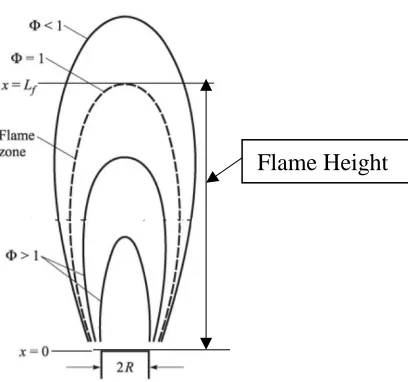
Figure 1.2: Laminar Diffusion Flame Structure ... 5
Figure 2.1: Direction of Entrainment of Air to Flame Under Decreasing Magnetic Field (A)…...13
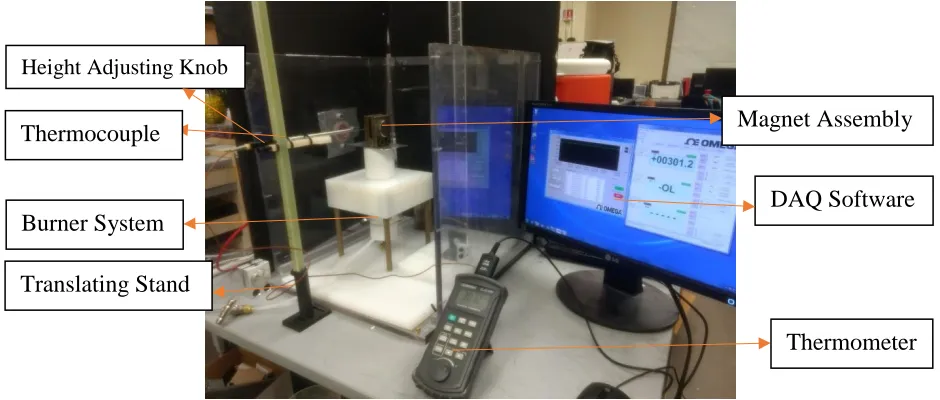
Figure 3.1: Experimental Setup ..………..17
Figure 3.2: Burner CAD Diagram …...……….…18
Figure 3.3: Fuel Supply Line Schematic …………...……….19
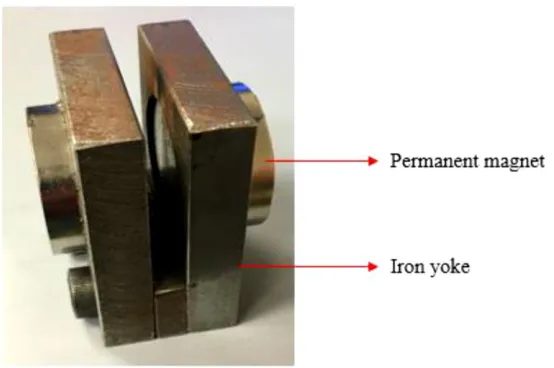
Figure 3.4: Iron Yoke with Magnets ... 20
Figure 3.5: Actual Magnetic Field Strength Variation ... 20
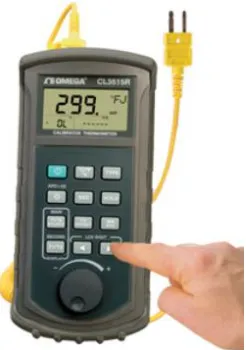
Figure 3.6: Digital Temperature Reader ... 22
Figure 4.1: Variation of Measured and Corrected Local Temperature with Flow Velocity When No Applied Magnetic Field ……...……….………...……….25
Figure 4.2: Variation of Measured and Corrected Local Temperature with Flow Velocity Under Increasing Magnetic Field Gradient ……...………...……..26
Figure 4.3: Variation of Measured and Corrected Local Temperature with Flow Velocity Under Increasing Magnetic Field Gradient ..………...…..27
1
INTRODUCTION
1.1 Applications of Magnetic Field
The energy associated with the magnetic influence on flame behavior is generally several
orders of magnitude smaller than the kinetic energy of molecules at room temperature.
Nevertheless, recent studies have shown that an inhomogeneous magnetic field provide a means
to control combustion behavior. Gaseous combustion comprises of not only a chemical reaction,
but also of physical processes of heat transfer and mass diffusion. These processes can be
manipulated using magnetic forces applied on paramagnetic gas flows to the flame. This potential
ability of magnetic control of gas flow and combustion is a new research area and needs further
data to investigate it in detail.
Applications of controlling the behavior of gas flows and combustion by magnetic fields
can be important in many aspects of research and practical applications. Most research has recently
been carried out to gain an understanding of its mechanism, to apply it to industrial situations and
to bio-magnetics to support chemical reactions and physical processes in cells and tissues. If the
behavior of oxygen and other radicals can be controlled by magnetic fields, a new type of cancer
therapy might be contrived.
From the view point of industrial application of magnetic effects on combustion, increasing
combustion temperature and controlling combustion processes will be widely useful. Natural gas,
is widely used for heating, cooking, electricity generation and transportation. Over the past
century, the need to reduce emissions by developing micro-power devices to enhance combustion
efficiency of fuels has become crucial. A possible means to achieve this could be the application
2 interactions of magnetic fields and electrically conducting fluids. However, this interaction is not
limited to electrically charged particles, but magnetic field can affect even gases that exhibit
paramagnetic and diamagnetic behavior.
1.2 Paramagnetism & Diamagnetism
Magnetic fields are known to affect flame behavior and gas flows because of the
paramagnetic and diamagnetic nature of the constituent gases. Paramagnetism is a form of
magnetism whereby certain materials are weakly attracted by an externally applied magnetic field,
and form internal, induced magnetic fields in the direction of the applied magnetic field. In contrast
with this behavior, diamagnetic materials are repelled by magnetic fields and form induced
magnetic fields in the direction opposite to that of the applied magnetic field. [1] Paramagnetism
is due to the presence of unpaired electrons in the material. Due to their spin, unpaired electrons
have a magnetic dipole moment and act like tiny magnets. An external magnetic field causes the
electrons' spins to align parallel to the field, and thus paramagnetic materials are drawn toward the
direction of increasing magnetic field strength. Paramagnetic materials include aluminum, oxygen,
titanium, and iron oxide. On the contrary, if the electrons are already paired, the atoms oppose the
applied field, and this induces a net dipole moment that causes the atoms to move in the direction
of decreasing magnetic field strength. Nitrogen, CO2, and most hydrocarbon fuels are examples of
diamagnetic materials and experience a weak repulsion to the applied magnetic field.
The magnetic susceptibility, the ratio of the magnetization to the magnetic field strength
[2], is the parameter that characterizes this behavior. Since the magnetic forces associated with the
dipole moments in a paramagnetic material must compete with the randomizing effects of
temperature, the magnetic susceptibility for a paramagnetic material is a function of temperature.
3 permanent dipole moments, the associated paramagnetic forces are typically orders of magnitude
larger and the diamagnetic behavior for these materials is thus negligible [3]. The magnetic
susceptibility for a diamagnetic material is not a strong function of temperature and is negative in
sign while a paramagnetic material has a positive magnetic susceptibility.
1.3 Theory of Diffusion Flames
A diffusion flame is used as a test subject to study the effect of magnetic field, since it
simulates combustion characteristics found in various industrial applications. A diffusion flame is
a flame in which fuel and oxidizer come together in a reaction zone through molecular and
turbulent diffusion. The fuel may be in the form of a condensed medium (either solid or liquid) or
in the gaseous form of a gaseous fuel jet, and the oxidizer may be a flowing gas stream or the
quiescent atmosphere. It is the diffusion rate of the fresh mixture in to the flame zone which
sustains combustion and hence the name. These processes can be altered by the magnetic forces,
as is evident from earlier studies. The distinctive characteristic of a diffusion flame is that the
burning rate is determined by the rate at which the fuel and oxidizer are brought together in proper
4 nearly isobaric flames in which most of the reaction occurs in a narrow zone that can be
approximated as a surface [4]. The description of a non-reacting fuel jet issuing into an infinite
reservoir of air helps in better understanding the diffusion flame. Figure 1.1 [5] shows the various
regions of a laminar fuel jet issuing from a burner of radius “r” in to quiescent air. In a region
between the potential core and jet edge, fuel properties such as the velocity and the fuel
concentration decrease monotonically till they become zero at the jet edge.
The focus of the proposed study is to understand the interaction of laminar diffusion flame
and magnetic forces originating from the gradient magnetic field. In diffusion flames, one of the
key parameters needed to continue combustion is the convective air flow induced by buoyancy,
which affects the heat and mass transport processes. An application of magnetic field enhances
this air flow to the flame reaction zone, as quiescent air being paramagnetic would be drawn
towards higher magnetic field strengths.
In diffusion flames, hydrocarbon fuels, nitrogen, carbon dioxide are diamagnetic; oxygen
is the principal paramagnetic gas. As the paramagnetic susceptibility of oxygen is orders of
magnitude larger, the diamagnetic behavior is considered as negligible. A gas containing more O2,
such as air, tends to move towards the stronger magnetic field and a gas with less O2 such as fuel
or combustion gas tends to move towards the weaker magnetic field. Based on this, it may be
possible to utilize a magnetic field to control the flow field of combustion region to improve
combustion characteristics. A key parameter to characterize the laminar diffusion flame behavior
5 the vertical distance between the burner surface and the point along the flame axis where the fuel
is consumed in stoichiometric proportions [5].
1.4 Flow Characterization Parameters
Fujita et al. [6] identified a parameter like the Grashof Number that could be used to
identify when magnetically induced convection would occur. They found that increase in the
magnetic field intensity and the oxygen concentration caused a decrease in flame “redness”,
indicating an increase in local temperature. Dimensionless numbers such as Reynolds number,
Grashof number and Froude number can be used to define regimes where non-uniform magnetic
fields impact flame behavior. They are evaluated at average local temperature and atmospheric
pressure to study hot gas flow conditions.
1.4.1 Reynolds Number
Reynolds number of the hot gases is determined by eqn. 1. It is ratio of the momentum
forces to the viscous forces and is used to characterize the fuel flow as being laminar or turbulent.
Rⅇ =vFIYF,stoicLf v
Figure 1.2: Laminar Diffusion Flame Structure
6
1.4.2 Grashof Number
The Grashof number (Gr) is a dimensionless number in fluid dynamics and heat transfer
which approximates the ratio of the buoyancy to viscous force acting on a fluid. It frequently arises
in the study of situations involving natural convection and is analogous to the Reynolds number.
Gr = gβ(Tf− T0)d3⁄v2
1.4.3 Magnetic Grashof Number
Fujita et. al [6] defined a magnetic Grashof number analogous to the gravitational field, the
criterion to maintain a steady flame with magnetic field. The magnetic Grashof number was
defined as the ratio of magnetic-buoyancy forces to viscous forces [7]. Thus, Grm shows a
buoyancy-like force caused by differences between the magnetic forces acting on the combustion
gas and surrounding air.
Grm =(χf− χox)B dB
dzL3f μ0ρv2 ≅
χoxBdB dzL3f μ0ρv2
Fujita, et al., [6] concluded that in a manner like buoyancy induced flow because of the
acceleration due to gravity, the presence of magnetic force should induce flow for a value of Grm
in the order of 102-103. For flames with Grm greater than the critical value, flames were observed
to burn brighter, and the tips of the flames were observed to close with increasing magnetic field
intensity. Both of these observations were attributed to the increased motion due to the application
of upward decreasing magnetic field.
1.4.4 Froude’s Number
For diffusion flames in gravitational flow field, depending on the magnitude of Froude
number, these flames may be either buoyancy controlled (Fr <<1) or momentum controlled
7 Fr = (vFIYF,stoic)
2
αLf
Here, the mean buoyant acceleration is determined as [7]
α ≅ 0.6g (Tf Tox− 1)
1.4.5 Magnetic Froude Number
Magnetic Froude number is defined to compare the magnitude of the magnetically
generated buoyancy forces to the momentum forces. Magnetic field acts along the length of the
flame and so the flame height is kept as the characteristic dimension. By using this analogy, Fujita
et. al established that if Frm < 0.1, then the behavior of the flame should be dominated by the
magnetic field interaction [6].
Frm= ρμ0(vFIYF) 2
( χf− χox)BdBdzLf
ρμ0(vFIYF)2 χoxBdBdzLf
It can also be written in terms of Re and Grm of the flame as:
Frm = Rⅇ2 Grm
In this manner, it is again reasonable to compare the magnetically induced behavior to that
associated with a gravitationally generated buoyancy induced flow. To define regimes where the
non-uniform magnetic field impacts flame behavior, we can determine a ratio of the body forces
associated with gravity to those associated with magnetic force by examining the ratio of Frm to
the traditionally defined Fr [7]:
Ngm = Frm
Fr =
−ρμ0a
8
1.5 Motivation and Research Goal
In this study, a laminar diffusion propane flame produced using 0.81 mm burner port in
the presence of an increasing and decreasing magnetic field is used to gain insight into the
magneto-combustion behavior. Previous studies had suggested the use of prohibitively high
magnetic fields of about 5 Tesla for this effect to be noticeable. However, recent studies have
indicated that fields of the order of 1 Tesla could exhibit similar interaction [13, 16, 22]. Most
research on effect of magnetic field is performed using electromagnets to study the flame behavior
within an air coflow. The use of electromagnets is a major drawback of these investigations
because they require significant energy to produce the magnetic fields. Also, the direct impact of
these gradient fields on the flames and the hydrocarbon fuel is greatly diminished due to the
paramagnetic nature of the co-flowing air that forms a shield around the diamagnetic combustion
products. The motivation for this study is to look at the effects produced by magnetic field of
moderate-strength. The aim is to study if such fields can alter combustion behavior. The benefits
of using permanent magnets also includes negating the need for external energy sources to produce
high magnetic field strengths. At present, magnetic control of combustion and gas flow is a new
scope of research and further experimental study is required to establish the mechanism for this
interaction. The specific objectives of study are:
a.) To design an experimental set-up to measure the local temperature in order to study the
influence of magnetic forces to promote combustion compared to the normal buoyancy forces
induced by gravity in diffusion flames.
b.) To identify dimensionless parameters that can be used to predict the regimes where
9
LITERATURE SUMMARY
A large assembly of research has recently been carried out to study the effects of magnetic
field on the behavior of flames to understand its mechanism. The effect was first recognized in
1847, when Michael Faraday [9] held a flame of a wax taper with the magnetic field and observed
its tendency to move into an equatorial position. He also observed that the flames were more
luminous when placed with the magnetic field. He theorized that the changes were due to the
presence of “magnetic” and “diamagnetic” gases in the flames.
Over the past 30 years, there has been a renewed interest in the impact of magnetic field
on combustion behavior. Hayashi [10] investigated magnetic field effects on the emission
intensities of intermediate species in premixed flames. He found that magnetic field is seen to
increase the combustion efficiency through the increase in the population of OH* radicals. He
thought that this change in combustion process in terms of the magnetically induced change of
singlet-triplet conversion rate agreed with the radical pair theory [11].
Ueno et al. [12] measured combustion velocities of gasoline and alcohol with platinum
catalysis as an analogy to cellular respirations in biological systems. They found the increase in
the applied magnetic field gradient caused a sinusoidal response in gasoline combustion velocity.
In alcohol, it was found that the combustion rates exhibited a minimum at a specific field strength.
They attributed this effect to radical reactions through hydrogen-bonded species on the surface of
platinum catalyst. However, the detailed mechanisms for this phenomenon were still unknown.
Combustion consists of many radical reactions. As in the case of chemical reactions in solution,
the magnetic field changes the singlet-triplet (S-T) conversion rates of intermediate radical pairs
through hyperfine interactions. Aoki, T. [13] rejected the radical pair theory for gaseous
10 inversing the spins of excited states by S-T conversions. Ueno, S. and Harada, K. [14] continued
his investigations by examining the behavior of candle flames. It was noted that the presence of an
increasing magnetic gradient caused the flame to deflect in the direction of decreasing magnetic
field strength. They came up with two reasons for this behavior; first, the charged particles in flame
plasma made a current loop that tended to reduce the external magnetic field. Thus, flames escape
from magnetic field of higher intensity. Second, paramagnetic O2 gases could be gathered by a
gradient magnetic field and create a magnetically induced pressure to press back other diamagnetic
gases and particles. To clarify this behavior, Ueno, S. and Harada, K. [15] expanded their research
to study flames and jets of gas flow. Since the gas flow was also impacted by the magnetic field,
the first hypothesis of charged particle theory was rejected. He also concluded that the presence of
a strong magnetic gradient did not concentrate oxygen but aligned or trapped the molecules to
make a “wall of oxygen” under the influence of magnetic gradient like an “air curtain” that pressed
back flames and other gases. Ueno, S. [16] devised a new experiment to study the strength of this
wall of oxygen. He used a candle placed between two columnar electromagnets that extinguished
the flame shortly after application of the field and there was no increase in air pressure. He used
an incense smoke to trace the curved surface of this magnetic air curtain. It indicated that instead
of concentrating the O2 molecules and dispersing the N2 molecules, air was trapped in the region
of highest gradient strength.
In 1990, Ueno, S. and Iwasaka, M. [17] studied the properties of air curtain and observed
that the flow of CO2 gas wasn’t blocked by magnetic field in N2 atmosphere, which emphasizes
the importance of O2 as a paramagnetic gas in the formation of a magnetic curtain. They further
classified this effect in to three regimes depending on the flow velocities. In the first and third
11 curtain, while in the second regime with medium flow velocities, the gas flow was blocked. This
mechanism of magnetic curtain was also simulated numerically to explain the behavior of gas
flows using collision of O2 molecules model.
Aoki, T. [13] was the first one to investigate the effect of an inhomogeneous magnetic field
under increasing, decreasing and uniform magnetic field gradients. In case of an upward
decreasing field generated by electromagnets, he found that the presence of a magnetic field caused
an increase in the flame temperature, emission intensities of radicals OH*, CH8 and C2* transitions
and a bluing tendency of the flames. The author used a simplified diffusion model to explain the
increase in flame temperature and flame dimensions in a diffusion flame; that they were mainly
because of the effect of magnetic force. This magnetic force acting on the paramagnetic species
changes the gas flow which affects the mixing and diffusion process conditions that increase the
combustion velocity. Therefore, it is the changes in the actual physical processes that change the
combustion state and not the chemical reaction itself.
On the other hand, the upward-increasing magnetic fields [18] increased the flame
dimensions, they decreased radical emissions, temperatures and the bluing tendency. These
phenomena were contrary to those observed in previous studies. The upward-increasing magnetic
fields caused inverse burning where the positions of blue and yellow-orange regions were reversed,
and the highest temperature of the flame appeared at the flame surfaces distant from the flame top.
He also investigated butane combustion under a uniform magnetic field encircled by magnetic
field [19]. He observed no effect on combustion state, except for some changes that can be ascribed
to the magnetic gradient produced by pole fringes. This exists for most of the magnets and is
unavoidable. He showed that the velocities of electrons and ions produced by the combustion
12 the effect of Lorentz forces on the deformation of the flame was insufficient to cause any
appreciable changes in flame within the magnetic field. Yamada [20] supported this, as the amount
of ionic species is negligibly small, and the influence of the Lorentz force can be ignored in
ordinary flames.
This explanation of magnetic force theory was also supported by Wakayama, N.I. [21]
when she conducted experiments on O2, N2, mixture of the two and air. The behavior of gas flow
can be explained by the difference between the magnetic force acting on the gas group and the air
surrounding it.
F = (χ − χ0)H∂H ∂R
She explained that the air was attracted to the magnetic field which displaced the nitrogen
gas from a magnetic field of relatively high intensity. This explanation also applies to the escape
of flames from a high magnetic field gradient or magnetic quenching of flames observed by Ueno,
S. [16]. Thus, the study demonstrates that it is the magnetic susceptibility of gas groups which
exerts a net magnetic force that blocks gas flow, rejecting the “wall of oxygen” theory as suggested
earlier.
Later, Wakayama, N. I. [22,23] studied methane premixed, partially-premixed and
diffusion flames within the magnetic field gradients. The results of these experiments brought to
light a distinct thought process for interaction of flames with magnetic fields. It was observed that
a decreasing magnetic field along the flame caused its shape to be more elongated and slender,
while an increasing magnetic field produced shorter and thicker flames. It was also observed that
the temperature and luminosity of the flame increased with increasing gradient strength. These
observations were attributed to the paramagnetic nature of oxygen and the diamagnetic properties
13 in diffusion flames. First, when fuel gas flows in the direction of decreasing field strength, the
paramagnetic nature of oxygen increases the diffusion rate of air to the reaction zone and
diamagnetic reaction products reject out efficiently. Accordingly, the burning velocity increases
with increasing strength. Secondly, magnetic convection of air is also magnetically promoted
because the gradient of temperatures causes the gradient of magnetic susceptibilities. The latter
effect is less than the former one, comparing the difference of the magnetic susceptibilities in both
cases.
However, no significant changes were observed for partially premixed flames and no
effects on premixed flames, in either increasing or decreasing magnetic fields. Also, when the
flames were moved to a homogenous field, the flames did not appear to be affected. Again in 2000,
Mizutani, Y. [23] found that premixed flames were hardly affected by a uniform magnetic field as
intense as 5T. He also concluded that the direct effects of the magnetic field on the chemical
kinetics of flame propagations are negligible. This suggested the convection of oxygen into the
regions of increasing strength was the most dominant factor in affecting the combustion behavior.
Hence, a diffusion flame is best suited to study the effect of a non-uniform magnetic field,
as this combustion reaction occurs in the interface where the oxidizer and air react in stoichiometric
14 proportions. Diffusion flames are mainly governed by physical processes of mixing and diffusion
of fuel gas and oxidizer. The rate of combustion is altered by magnetic field modifying the
transport phenomena of oxidizer to the reaction zones of such flames. Wakayama, N.I. and Sugie,
M. [24] suggested two kinds of air flow that promoted combustion in methane diffusion flames
within 2 cm gap of electromagnets. Air was magnetically attracted along the steepest gradient
(solid lines) and supplied to flame front. This makes flame front velocity three orders larger than
the diffusion rate by natural physical processes. Furthermore, magnetic convective air flow
occurred along y axis (dotted lines) feeding oxidizer to the leading edge of the flame because
magnetic susceptibility of air is proportional to P02
T2. Accordingly, the direction of magnetic force
in decreasing magnetic field facilitates this combined movement of involved species to promote
combustion in diffusion flames.
Yamada et al. [20] performed numerical analysis of OH radical distributions in H2/O2
diffusion flames. It was observed that the magnetic gradient induced changes in the repartition of
OH density in the flame. The effect is due to the enhancement of the entrainment gas flow around
the flame base. This increases the mass density and then the magnetic susceptibility of oxygen in
the peripheral region of the flame. To explore the possibility of combustion control by magnetic
force, they [25] performed experiments using a co-axial type burner set between permanent
magnets. Using spectroscopic techniques, they measured radial migration of OH towards the
central axis of the flame as predicted numerically. Numerical simulations based on gas dynamics
and magnetism showed that the magnetic force acts on the mean velocity of gas mixture and not
on the diffusion velocity of OH radicals. Hence, the magnetic effect is essentially due to magnetic
15 Baker et al. [7] studied the characteristics of slotted laminar jet diffusion flames in the
presence of upward decreasing magnetic field, using an assembly of prisms in permanent magnets.
The magnetic field decreased the flame height, prevented the flame from attaching to the prisms,
increased the intensity of the flame, reduced the flow rate for which visible soot inception occurred,
and increased the flow rate below which the flame extinguished. They provided a power-law fit
between the experimental data and dimensionless parameters, which shows an inverse relation
between magnetic body force and flame height.
Khaldi, F. [26] investigated the phenomenon of thermos-magnetic convection due to the
dependence of the O2 magnetic susceptibility on temperature. They redefined the Rayleigh number
as the results showed that heat transfer driven by a magneto-gravity buoyancy is like that driven
by gravity alone. Gillon, P. [27] did extensive research on lift-off height of methane co-flow
diffusion flames. Flame lift-off is referred to as the phenomenon in which the fuel mass flow rate
exceeds a critical value and the flame and burner become separated. When the mass flow rate
increases further, the lift-off height increases until the flame becomes flat and then blows out. The
flame is said to be stabilized where the flame propagation speed with respect to the fuel/oxidizer
matches the local flow velocity.
Under the influence of an upward decreasing magnetic field, Gilard, V. [28] observed a
reduction in lift-off height. Magnetic force acting downwards on paramagnetic oxygen molecules
decreases the air velocity locally. This modification of external air mixing layer, enhances the
radial diffusion of methane and drops the stoichiometric line moving the flame front to a lower
position.
Kumar, M. et al. [29] used Digital Speckle Pattern Interferometry to study the behavior of
16 increased under an decreasing magnetic gradient and decreased under an
upward-increasing magnetic gradient, while a negligible effect on temperature was noted in a uniform
17
EXPERIMENTAL APPROACH
In this chapter, the various components of the experimental setup used in this study are
described. The components are designed and fabricated in a way to produce a laminar propane/air
diffusion flame which is convenient for accurate temperature measurements. The experiments
were carried out in the presence of magnetic gradient field created by a permanent magnet placed
around the burner system and the results are compared to a case of zero magnetic field created
using false magnets. All the components were made using non-magnetic materials to avoid any
unwarranted attractions by the application of the magnetic field on the setup used.
1.6 Experimental Set-up
The whole experimental device is installed at the Reacting Flow and Turbulent Jets
laboratory in the MAE department of NC State University. A picture of the experimental setup is
shown in Figure 3.1. The experimental setup is placed where the surrounding air remains relatively
static, is mainly composed of the propane-air diffusion burner, yoke with the magnets, flow meter
along with provisions for local temperature measurements.
Figure 3.1: Experimental Setup Thermocouple
couple
Translating Stand Burner System
Magnet Assembly
couple
DAQ Software
18
1.7 Burner System
The burner system is required to produce laminar flow conditions for the fuel gas issuing
into ambient air and to maintain a stable flame environment for temperature measurement required
for this system. The fuel flow rate was regulated using a metering valve to ensure accurate results
reproducible over multiple tests under similar conditions. A schematic representation of the burner
is shown in Figure 3.2. The burner consists of a cylindrical base set on a stand through which a
series of PVC fittings have been configured. The burner setup consists of fuel supply system and
the diffusion burner. The fuel jet, having an outer diameter of 1.57 mm is made of stainless steel
and extends from the bottom of the apparatus through the center of the PVC fittings and ending
outside the concentric PVC casing.
Fuel gas of propane was fed into the inner tube of 0.81 mm inner diameter is selected for
this investigation. Due to a burner length of 125 mm, the gas flow is assumed to be fully developed
at the exit of the burner, with a Poiseuille-type velocity distribution. This stainless steel (type 316)
burner produces nearly conical flame and can be vertically translated to different positions within
the magnetic field.
19
1.8 Fuel Supply
The main purpose of fuel supply system is to supply the combustion gases to the burner in
controlled proportions. This supply system consists of compressed gas cylinders, flow meters,
valves and tubing, and can supply the fuel gases, oxidizer and others such as purge gases, both to
a premixed and a diffusion burner configuration, present in the lab. The line supplying gases issues
99.0% pure CP grade propane (C3H8) was supplied from the cylinder to the diffusion burner. It
flows through a Yor-Lok precision flow adjustment needle valve to govern the passage of the fuel
gases and was monitored using volumetric flow meter (OMEGA, FMA-A2309) having a range of
0-10 SLPM. The readings were estimated to be accurate within 5%. This range is sufficient for
experiments to be performed over a wide range of jet velocities. A schematic of the laboratory fuel
supply line is shown in Figure 3.3. Propane is injected at ambient temperature (i.e. 292.7 K)
1.9 Magnet Design
In this investigation, N52 grade permanent magnets (DX8C-N52) having a diameter of
37.6 mm and a depth of 19.05 mm is used to generate the gradient magnetic field. Two magnets,
each of which could produce a pull force of 52.3 Kg towards a steel plate are used in the current
investigation. Placing two of these magnets in an iron yoke completes a path for the magnetic flux
which enables a magnetic field whose strength is stronger than the individual strength of the
magnets, to be formed between the poles of the magnet. Plain Iron Yoke design was selected on
20 of a sufficiently high field and a reasonably big air gap and is fabricated. The yoke with the
magnets is shown in Figure 3.4.
The magnetic field induction was measured along the vertical z-axis position using a gauss
meter with a transverse probe where the uncertainty of measurement was 1% and is shown in
Figure 3.4. The influence of magnetic field along the flame length is studied and hence the field
distribution in the vertical direction is emphasized
21 Figure 3.4 also shows the specific locations of study employed in this experiment. The
burner nose is positioned to be in two vertical positions A and B so that the flame experiences an
increasing gradient magnetic field when the burner is set at position A and a decreasing gradient
magnetic field when it is set at position B. The measurements of these cases were compared to a
case of no applied magnetic field (NAMF).
An active cooling arrangement for the magnets was deemed unnecessary as the duration of
the individual experimental runs were short which ensured that the temperature of the yoke and
the magnets did not reach the Curie temperature. The individual experiments were sufficiently
spaced out to ensure this condition. A series analysis of the strength of the magnets after each
successive test revealed no significant loss of magnetic strength and thus the assumption that the
magnetic field strength remained constant throughout the investigation is supported.
1.10 Temperature Measurements
The most critical element to this study is to identify the effect of non-uniform magnetic
fields on the combustion processes occurring in the diffusion flame. The local temperature was
monitored with a high-temperature Type K thermocouple probe, enclosed in a protection tube.
Type K thermocouple has been chosen since it can accommodate temperatures up to 1523 K. The
temperature is measured at the highest point on flame tip along the z axis for a given configuration.
The thermocouple translation mechanism facilitates this movement for the different axial positions
22 The thermocouple is connected to the digital temperature reader (CL3515R), which is a
portable thermometer with a 4-digit LCD. It is designed to be used with an external K Type
thermocouple as temperature sensors. It has an accuracy of ± (0.05% rdg + 0.5 K) -223 to 1645 K.
It includes a DAQ (Data Acquisition) software to record the measurements and export the data in
excel format.
1.11 Tests Performed
A set of experiments were carried out to determine the temperature distribution as a
function of propane flow velocity within the flame. A propane/air diffusion flame was established
for various fuel flow rates and the measured local temperatures were corrected for radiation losses.
The measurements were carried for three different cases; increasing magnetic field gradient,
decreasing magnetic field gradient and when no magnetic field was applied. The temperatures
were measured at the flame tip for each of the above cases. This represents the peak local
temperature value along the central axis of the flame length. The thermocouple was positioned
along the flames’ central axis and gradually positioned at the flame tip on the z axis. For a
23 initial volumetric flow rate [4] so, the propane flow rate is varied to produce a flame whose height
is within the influence of the magnetic field.
The fluid flow behavior under the application of non-uniform magnetic field is
characterized using various dimensionless parameters, as discussed earlier. To gauge whether the
magnetic field enhances the combustion processes occurring in the flame, we use the experimental
data for flame height obtained by previous research conducted in the lab by Ramnath, V. [30]. He
studied the effect of gradient magnetic field on flame structure. For an increasing gradient field
from the burner lip, it was observed that, an increasing field increased the height of the flame and
this effect was more pronounced at higher flow rates. A decrease in the flame height was observed
in the presence of a decreasing gradient field. The variation of the local temperature is studied
using the same apparatus as Ramnath, V. under the same flow conditions. The tabulated data for
flame height [30] and local temperatures measured are used to experimentally examine the
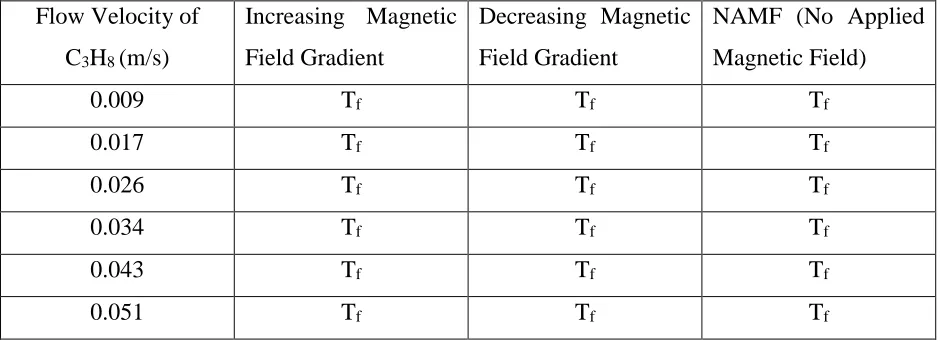
dimensionless parameters. The test matrix is given in Table 3.1.
Table 3.1: Test Matrix Flow Velocity of
C3H8 (m/s)
Increasing Magnetic
Field Gradient
Decreasing Magnetic
Field Gradient
NAMF (No Applied
Magnetic Field)
0.009 Tf Tf Tf
0.017 Tf Tf Tf
0.026 Tf Tf Tf
0.034 Tf Tf Tf
0.043 Tf Tf Tf
24
RESULTS AND DISCUSSION
The behavior of laminar jet diffusion flames in the presence of gradient magnetic fields has
been investigated for different flow velocities of fuel and the results of this experimental study are
presented. The local temperature test was to determine the variation of temperature at flame tip
location with respect to propane flow rate. This chapter deals with the experimental run conditions,
the data obtained, and the analysis of the relevant non-dimensional numbers used to characterize
the flow regimes of flame gases under the effect of magnetic field.
Using a yoke to hold the magnets in place gives rise to two different impacts – a dynamic
impact on the flow field and a magnetic impact. In this investigation, we consider only the
magnetic impact on the flow field. To extract only the impact of the magnetic force on flames from
the buoyance force generated due to the presence of the yoke, a yoke made of aluminum possessing
the exact geometry of the magnetic yoke is fabricated and all the baseline investigations are done
in the presence of the aluminum yoke. This aluminum yoke is called the “false magnet”. The results
are comprehended in a manner to provide a better understanding of the flame-magnetic field
interaction.
1.12 Case A: No Applied Magnetic Field (NAMF)
The variation in local temperature as function of flow velocity is measured at the flame tip
for the case of no applied magnetic field. This is done using aluminum yoke instead of the magnetic
yoke. The results are collected for flow velocities varying from 0.009 m/s to 0.051 m/s.
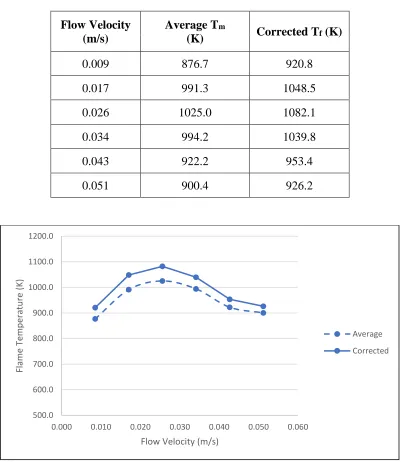
The values represent the average of ten measurements at each flow velocity with an
25 temperature is corrected for radiation losses. This shows that local temperatures are underestimated
by approximately 43.5 K due to radiation losses from the thermocouple tip.
Table 4.1: Axial local temperature variation in the absence of gradient magnetic field
Flow Velocity (m/s)
Average Tm
(K) Corrected Tf (K)
0.009 876.7 920.8
0.017 991.3 1048.5
0.026 1025.0 1082.1
0.034 994.2 1039.8
0.043 922.2 953.4
0.051 900.4 926.2
Figure 4.1: Variation of measured and corrected local temperature with flow velocity when no applied magnetic field
500.0 600.0 700.0 800.0 900.0 1000.0 1100.0 1200.0
0.000 0.010 0.020 0.030 0.040 0.050 0.060
Flam e Te m p era tu re (K )
Flow Velocity (m/s)
Average
26
1.13 Case B: Increasing Gradient Field
The variation in highest local temperature with flow velocities in the presence of a gradient
magnetic field whose strength was increasing from the burner lip is studied and is shown in Figure
4.2. It is observed that the local temperatures are underestimated by approximately 52 K due to
radiation losses from the thermocouple tip.
Table 4.2: Axial local temperature in case of increasing gradient magnetic field
Flow Velocity (m/s) Average Tm (K) Corrected Tf (K)
0.009 948.0 1005.2
0.017 1028.7 1093.6
0.026 1037.2 1096.3
0.034 1031.6 1083.9
0.043 1023.8 1070.2
0.051 957.8 990.6
Figure 4.2: Variation of measured and corrected local temperature with flow velocity under increasing magnetic field gradient
500.0 600.0 700.0 800.0 900.0 1000.0 1100.0 1200.0
0.000 0.010 0.020 0.030 0.040 0.050 0.060
Flam e Te m p era tu re (K )
Flow Velocity (m/s)
Average
27
1.14 Case C: Decreasing Gradient Field
The variation in local temperature in the presence of a gradient magnetic field whose
strength was decreasing from the burner lip is studied and is shown in Figure 4.3. It is observed
that the local temperatures are underestimated by approximately 52 K due to radiation losses from
the thermocouple tip.
Table 4.3: Axial local temperature in case of decreasing gradient magnetic field
Flow Velocity (m/s) Average Tm (K) Corrected Tf (K)
0.009 912.9 963.5
0.017 986.9 1043.4
0.026 1038.5 1097.6
0.034 1053.9 1110.6
0.043 1068.3 1122.3
0.051 974.6 1009.9
Figure 4.3: Variation of measured and corrected local temperature with flow velocity under decreasing magnetic field gradient
500.0 600.0 700.0 800.0 900.0 1000.0 1100.0 1200.0
0.000 0.010 0.020 0.030 0.040 0.050 0.060
Flam e Te m p era tu re (K )
Flow Velocity (m/s)
Average
28
1.15 Flame Gas Flow Behavior Characterization
The flame gas flow behavior is characterized with the help of previously defined magnetic
Froude number, magnetic Grashof number and the ratio of gravitationally induced buoyancy forces
to the magnetically induced body forces. They are identified as the key parameters to determine
the regime where the magnetic field will affect the diffusion flame behavior. To examine the
physical processes responsible for the observed flame behavior, the magnitude of these
dimensionless numbers is compared for the different flow velocities of propane gas. Table 4.4
shows the baseline parameters used to perform these calculations.
Table 4.4: Baseline Parameters for studying the flame behavior in the decreasing field [7]
Parameter Symbol Value
Mean Buoyant Acceleration (m/s2) 23.73
Mass Diffusivity (m2/s) D 7.62 × 10⁻⁵
Ratio of actual Initial Momentum to that
of Uniform Flow I 1.0
Ambient Temperature (K) T 297.2
Fuel Mass Fraction YF,stoic 0.0601
Permeability of free space (kg.m/s2A2) μ
ο 1.26 × 10⁻⁶
Magnetic Susceptibility of Oxygen χox 2.0 × 10⁻⁶
Density of fuel (kg/m3) 0.4
As can also be seen from Figure 4.3, the application of a non-uniform decreasing magnetic
field produced the most significant increase in the local temperature. Thus, in this condition the
interaction of flame with magnetic field enhanced the combustion processes occurring in the flame.
To examine the extent of this interaction, the dimensionless parameters characterizing the forces
acting on the diffusion flame are tabulated for the case of a vertically decreasing gradient field.
29 to determine if the buoyancy force associated with the magnetic field increases the oxygen
transport to the diffusion flames.
Table 4.5: Parameters characterizing flame behavior in a decreasing gradient magnetic field
Flow velocity
(m/s)
Tf
(K) (m
2/s)
Lf (m) [30]
(m/s2)
Dimensionless numbers to characterize flame behavior
Re Fr Frm Grm Ngm
0.009 963.48 1.79E-05 0.00604 13.20 0.17 3.30E-06 1.07E-06 2.81E+04 0.32
0.017 1043.37 2.00E-05 0.01027 14.78 0.26 6.94E-06 2.52E-06 1.11E+05 0.36
0.026 1097.62 2.14E-05 0.01474 15.85 0.35 1.01E-05 3.94E-06 2.84E+05 0.39
0.034 1110.61 2.19E-05 0.02359 16.11 0.55 1.11E-05 4.38E-06 1.12E+06 0.40
0.043 1122.31 2.23E-05 0.03436 16.34 0.79 1.17E-05 4.70E-06 3.32E+06 0.40
0.051 1009.89 1.96E-05 0.04421 14.11 1.16 1.52E-05 5.26E-06 9.16E+06 0.35
1.16 Important Observations
The values of the local temperatures under the influence of an increasing and decreasing
gradient magnetic field and no applied magnetic field for the 0.81 mm burner can be found in
Table 4.6.
Table 4.6: Local temperature variation with and without magnetic gradient field
Flow Velocity (m/s) NAMF (K) Increasing Field (K) Decreasing Field (K)
0.009 920.8 1005.2 963.5
0.017 1048.5 1093.6 1043.4
0.026 1082.1 1096.3 1097.6
0.034 1039.8 1083.9 1110.6
0.043 953.4 1070.2 1122.3
30 Figure 4.4 shows the impact of the gradient magnetic field on local temperature as a
function of flow velocity.
Figure 4.4: Comparison of corrected local temperature for three different cases with flow velocity
We can see from figure 4.4 that the trend of local temperature with the variation of fuel
flow velocity can be roughly divided into three regions.
• Region I: This is distinguished by an increasing behavior in the local temperature
at the flame tip when the propane flow velocity is increased in all the three cases.
It is noted that in this region the local temperature peaks for case B when flame is
under increasing magnetic gradient field.
• Region II: This region represents a change in the trend of local temperature vs.
propane flow velocity for each case. For the last cases when a gradient magnetic
field is applied the rate of temperature rise slows down to almost approaching a flat
line. However, for the case A: NAMF, the temperature starts to drop sharply after
peaking to 1082.1 K at 0.26 m/s.
500.0 600.0 700.0 800.0 900.0 1000.0 1100.0 1200.0
0.000 0.010 0.020 0.030 0.040 0.050 0.060
Flam e Te m p era tu re (K )
Flow Velocity (m/s)
Case A: NAMF
Case B: Increasing Field
31
• Region III: This region expresses similar behavior for all the three cases, where the
local temperature starts decreasing with any more increase in the propane flow
velocity. It is in this region we observe the highest increase in the local temperature
of all the three cases reaching up to 1122.3 K at 0.043 m/s, which is +40 K increase
compared to the peak temperature in case A: NAMF. The local temperature behaves
in a manner that is most favorable for the combustion of propane/air diffusion flame
in case C when the flame is inside a decreasing magnetic gradient field.
It is well observed that the application of decreasing magnetic gradient field is
accompanied by an increase in temperature. These results are consistent with earlier studies. In
case C, by subjecting the flame to a decreasing magnetic gradient field, oxygen from the
surrounding gas is drawn towards the flame via the magnetic force exerted. Thus, better utilization
of the oxidizer implies better combustion. This aids enhanced burning conditions by replenishing
reactants and removing hot product gases from the flame zone and thus leading to higher
temperatures.
A reverse effect is expected in the case B, when the increasing magnetic gradient field is
applied as the magnetic forces are in the direction that quenches the combustion processes in
diffusion flame. Although the peak temperature in this case B was lower than that compared to
case C, the local temperatures measured are still higher than the corresponding values for the case
A of NAMF. This behavior was not consistent with previously published theory for magnetic
promotion of combustion [29]. However, similar anomaly was observed by Gillon, P. [31] where
he observed that the magnetic action on the flame lift-off height is independent of the burner
32 The experimentally examined Reynolds number indicates that the flame gases were
laminar in nature and the Froude number shows that they were buoyancy controlled as Fr << 1. As
stated earlier, since the magnetic Froude number is in the order of 10-6, the behavior of the flame
should be dominated by the magnetic field interaction. By examining another important parameter,
i.e. the ratio of the body forces associated with gravity to those associated with the application of
decreasing gradient magnetic field, it was observed that the buoyancy of flames in this experiment
is, dominated by gravitational force, since Ngm < 1. It should be noted that the value of Ngm
increased up to 0.4 with an increase in flow velocity and thus we observed a higher local
temperature in this region. Further, the values of magnetic Grashof number suggest a magnetic
field influence on the propane/air diffusion flame. Thus, an examination of Frm, Grm and Ngm
shows that the flames examined in this study span a range over which the flames transition from
buoyancy-controlled to magnetic-field controlled.
33
CONCLUSION AND FUTURE WORK
1.17 Conclusion
This study examined the behavior of the propane jet diffusion flames exposed to low
strength gradient magnetic field. Based upon the results of this investigation, the following
conclusions have been drawn:
1. The experimental data can be cast into three regions and is found to exhibit similar
behavior within the regions for all the three conditions examined. When the propane flow
velocity is low (region I), the local temperature shows an increasing behavior. As the
velocity is increased (region II), the rise of local temperature slows down until it peaks
and starts to decrease when the velocity is further increased (region III).
2. When the laminar propane/air diffusion flame corresponding to flow rates 0.009 m/s –
0.051 m/s were studied, a non-uniform upward decreasing magnetic field was observed
to have the most significant impact on combustion processes in the flame. For this
condition, compared to flames with no applied magnetic field, the local temperature
increased by an average of 40 K. Here, the magnetic force enhanced the supply of
paramagnetic oxygen to the bottom and efficiently pushed the diamagnetic gases out the
reaction zone. This behavior was consistent with previously published results.
3. In the case of increasing magnetic field, reverse effects were expected but the local
temperature showed a slight increase, by 15 degrees, relative to the case with no applied
magnetic field but this was still lower than the case of decreasing magnetic field. This
anomaly in flame behavior indicates a more complex interaction with magnetic field or
34 burner tip is positioned for this case, there is still a possibility of decreasing magnetic
gradient acting on the flame length from the upper half of the magnet assembly.
4. The tabulated data of dimensionless numbers clearly indicates that the momentum forces
are small for the investigated Reynolds number flow. In addition, the Froude number
calculations being very less than unity, it can be said that these flames are buoyancy
controlled. The experimentally observed magnetic Froude number were of the order of
10-6. This would indicate that buoyancy in flames are caused by the magnetic force
relative to inertial effects in a diffusion flame.
5. Further, the values of magnetic Grashof number suggest that a low strength magnetic
gradient field of 0.75 T can impact combustion in propane diffusion flames. Thus, an
examination of Frm, Grm and Ngm shows that the flames examined in this study span a
range over which the flames transition from gravity-controlled to magnetic-field
controlled. This observation can be attributed to the increased motion of air to the
reaction zone due to the application of decreasing magnetic gradient field.
1.18 Future Work
There is scope for much work that can be conducted further in this area of research to fully
understand the complex nature of the interactions between magnetism and combustion. The
following suggestions might be useful in delving further in this area.
1. To study the effect of different strengths of magnetic field to identify the transition
in flame behavior on the application of varying external field. This can be done by
employing compact permanent magnets of higher field strength compared to the
35 2. The current investigation area was limited to the size of the magnet assembly
employed. This can be expanded to extend the experiments as the current
investigation was limited by the maximum flow velocity required to maintain the
flame top inside the magnet assembly.
3. The study of flame-field interaction was altered by the intrusion of thermocouple
tip that can manipulate the temperature at the flame tip location. Although the
radiation loses were considered and corrected temperatures were calculated, to
improve the accuracy of investigation, it would be helpful to use a non-contact type
temperature measurement system.
4. To establish its commercial and industrial application, further design improvements
can be performed. To ensure the temperature measurements are accurate and
magnetic field are unaltered by the heating of the magnets, an active cooling
arrangement for the magnets and thermocouple will ensure continuous working of
the setup.
5. The current investigation can be taken further to study the behavior of flame in each
of the three regions individually with respect to different base parameters like
burner tip diameter, maximum field strength, co-flow air velocity and using
different fuels etc.
6. It would be helpful to look into the effect of the flow rate on the soot produced by
the diffusion flame under the effect of magnetic gradient flame to gauge whether
the concentration of soot will be altered. Thus, enhancing the combustion processes
to burn the fuel supplied more completely relative to when there is no applied
36
REFERENCES
[1] Miessler, G. L. and Tarr, D. A. (2010) Inorganic Chemistry 3rd ed., Pearson/Prentice Hall
publisher, ISBN 0-13-035471-6
[2] R.E. Rosenwieg, Ferrohydrodynamics, Cambridge University Press, New York, 1985
[3] E.A. Boudreaux, L.N. Mulay, Theory and Applications of Molecular Paramagnetism,
Wiley, New York, 1976
I. Glassman and R. A. Yetter, Combustion, Elsevier, 2008
[4] S. Turns, An Introduction to Combustion: Concepts and Applications, 2nd Edition,
Mc-Graw Hill, 2000
[5] O. Fujita, K. Ito, T. Chida, S. Nagai, Y. Takeshita, “Determination of Magnetic Field
Effects on a Jet Diffusion Flame in a Microgravity Environment”, Twenty-Seventh
Symposium International on Combustion, The Combustion Institute, Pittsburgh, 1998, pp.
2573
[6] J. Baker, M. E. Calvert, “A Study of the Slotted Laminar Jet Diffusion Flames in the
Presence of Non-Uniform Magnetic Fields,” Combustion and Flame, Vol. 133, 2003, pp.
345-357
[7] G. Legros, T. Gomez, M. Fessard, T. Gouache, T. Ader, P. Guibert, P. Sagaut, J.L. Torero,
“Magnetically Induced Flame Flickering” Proc. Combust. Inst., 33 (2011), pp. 1095-1103
[8] M. Faraday, "On the Diamagnetic Conditions of Flame and Gases," The London,
Edinburgh and Dublin Philosophical Magazine and Journal of Science, vol. 31, no. 210,
pp. 401-421, 1847
[9] H Hayashi, (1982). The external magnetic field effect on the emission intensity of the A
2Σ+ → X2Π (0-0) transition of the OH radical in flames. Chemical Physics Letters.87
[10] H Hayashi, Y. Sakaguchi and S. Nagakura, Chem. Letters (1980) 1149; Y. Sakaguchi and
S. Nagakura, A. Minoh and H. Hayashi, Chem. Phys Letters 82 (1981) 213
[11] S. Ueno, H. Esaki and K. Harada, "Combustion Processes in Strong DC Magnetic Fields,"
IEEE Transactions on Magnetics, vol. 5, pp. 2077-2079, 1985
[12] T. Aoki, "Radicals' Emissions and Butane Diffusion Flames Exposed to
37 [13] S. Ueno and K. Harada, “Experimental Difficulties in Observing the Effects of Magnetic
Fields on Biological and Chemical Processes”, IEEE Transactions on Magnetics, Vol.
MAG-22, No.5, September 1986, pp. 868-873
[14] S. Ueno and K. Harada, “Effects of Magnetic Fields on Flames and Gas Flow”, IEEE
Transactions on Magnetics, Vol. MAG-23, No.5, September 1987, pp.2752-2754
[15] S. Ueno, “Quenching of Flames by Magnetic Fields”, Journal of Applied Physics, Vol. 65,
No. 3, February 1989, pp. 1243-1245
[16] S. Ueno and M. Iwasaka, “Properties of Magnetic Curtain Produced by Magnetic fields”,
Journal of Applied Physics, Vol. 67, No. 9, May 1990, pp. 5901-5903
[17] T. Aoki, “Radical Emissions and Anomalous Reverse Flames Appearing in Upward –
Increasing Magnetic Fields”, Japanese Journal of Applied Physics, Vol. 29, 1990, pp.
181-190
[18] T. Aoki, “Radical Emissions and Butane Diffusion Flames Exposed to Uniform Magnetic
Fields Encircled by Magnetic Gradient Fields”, Japanese Journal of Applied Physics, Vol.
29, No. 5, 1990, pp. 952-957
[19] E. Yamada, M. Shinoda, H. Yamashita, H. Yamashita and K. Kitagawa, “Numerical
analysis of a hydrogen-oxygen diffusion flame in vertical or horizontal gradient of
magnetic field”, Combustion Science and Technology, 174:9, 149-164
[20] N. I. Wakayama, “Behavior of Gas Flow under Gradient Magnetic Fields”, Journal of
Applied Physics, Vol. 69, No. 4, Feb. 1991, pp. 2734-2736
[21] N. I. Wakayama, “Effect of a Gradient Magnetic Field on the Combustion of Methane in
Air”, Chemical Physics Letters, Vol. 188, No. 3, Jan. 1992, pp. 279-281
[22] N. I. Wakayama, “Magnetic Promotion of Combustion in Diffusion Flames”, Combustion
and Flame, Vol. 93, 1993, pp. 207-214
[23] Y. Mizuatani, M. Fuchihata, and Y. Ohkura., “Premixed Laminar Flames in a Uniform
Magnetic Field”, Combustion and Flame, Vol. 125, 2001, pp. 1071-1073
[24] N. I. Wakayama and Masaaki. Sugie, “Magnetic Promotion of Combustion in Diffusion
Flames”, Physica B, Vol. 216, 1996, pp. 403-405
[25] E. Yamada, M. Shinoda, H. Yamashita, K. Kitagawa and N. Araj, “Magnetic Effect on OH
radical distributions in a Hydrohen-Oxygen Diffusion Flame”, International Joint Power
38 [26] F. Khaldi, J. Noudem , P. Gillon, “On the similarity between gravity and magneto-gravity
convection within a non-electroconducting fluid in a differentially heated rectangular
cavity”,International Journal of Heat and Mass Transfer 48 (2005) 1350–1360
[27] Gillon, P., Blanchard, J.N. & Gilard, V., “Magnetic field influence on coflow laminar
diffusion flames”, Russ. J. Phys. Chem. B (2010) 4: 279
[28] V. Gilard, P. Gillon and C. J. N. Blanchard, "Effects of magnetic Field on the Stabilization
of a Lifted Diffusion Flame," in Proceedings of the European Combustion Meeting, 2009
[29] Manoj Kumar, Shilpi Agarwal, Varun Kumar, Gufran S. Khan, and Chandra Shakher,
"Experimental investigation on butane diffusion flames under the influence of magnetic
field by using digital speckle pattern interferometry," Appl. Opt. 54, 2450-2460 (2015)
[30] Vikram Ramnath, “Investigation of the Impact of Low Strength Gradient Magnetic Fields
on Jet Diffusion Flames”, Theses and Dissertations, NC State University Repository, 2017
[31] P. Gillon, J. N. Blanchard & V. Gilard (2010), “Methane/Air-Lifted Flames in Magnetic
Gradients”, Combustion Science and Technology, 182:1112
[32] S. Sasaki, H. Masuda, M. Higano, N. Hishinuma, “Simultaneous measurements of specific
heat and total hemispherical emissivity of chromel and alumel by a transient calorimetric
technique”, International Journal of Thermophysics, 1994, Volume 15, Number 3, Page
547
[33] F. P. Incropera, D. P. Dewitt, Introduction to Heat Transfer, 3rd Edition, John Wiley and
Sons, New York, 1996, pp. 478-479
39
40
APPENDIX A: Nomenclature
Mean Buoyant Acceleration
AMF Applied Magnetic Field
B Magnetic Induction
D Mass Diffusivity
Fr Froude Number
Frm Magnetic Froude Number
g Acceleration due to gravity
Gr Grashof Number
Grm Magnetic Grashof Number
I Ratio of the actual initial momentum to that for uniform flow
Lf Flame Height
NAMF No Applied Magnetic Field
Ngm Ratio of Buoyancy to Magnetic Forces
Re Reynolds Number
T Temperature
u Mean Burner Port Exit Velocity
Yf Fuel Mass Fraction
z Distance Above Burner Port Exit
μ0 Permeability of Free Space
𝜈 Kinematic Viscosity
𝜌 Density
Magnetic Susceptibility
Subscripts
f Flame
F Fuel
OX Oxidizer
![Figure 1.1: Non-reacting laminar fuel jet issuing into ambient air [5]](https://thumb-us.123doks.com/thumbv2/123dok_us/1733955.1221564/13.612.216.406.447.624/figure-non-reacting-laminar-fuel-jet-issuing-ambient.webp)