Restructuring Tagged Corpora with Morpheme Adjustment Rules
Abstract
Toshihisa Tashiro
Noriyoshi Uratani
Tsuyoshi Morimoto
A T R I n t e r p r e t i n g T e l e c o m m u n i c a t i o n s R e s e a r c h L a b o r ~ t o r i e s 2-2 t I i k a r i d a i , S e i k a - c h o , S o r a k u - g u n , K y o t o 619-02, J A P A N
{ t a s h i r o , u r a t a n i , m o r i m o t o } ~ i t l . a t r . c o . j p
A part-of-speech tagged corpus is a very hnportant knowledge source for natural language processing researchers. 'Poday, several part-of-speech tagged corpora are readily available for research use. [Iowever, because there is wide diversity of morphological information systems (word-segmentation~ part-of-speech system, etc.), it is ditficult to use tagged corpora with an incompatible morphological infm'mation system. This paper proposes a me,hod of converting tagged corpora frOlll olte lllorphellle s y s t e m to allother,
1
I n t r o d u c t i o n
Recently, mm,y natural language processing re- searchers have concentrated on corpus-based ap- proaches. Linguistic corpora can be classified as word-segmented corpora, part-of-speech tagged cor- pora, and parsed corpora, tlecause a part-of-speech tagged corpus is the most important corpus, much corpus-based natural language processing research has been performed using part-of-speech tagged cor- pora.
Ilowever, building a large part-of-speech tagged corpus is very dillicult. It is even more difficult to build a corpus for languages without explicit word boundary characters, such as Japanese. q'herefore, researchers always complain of the scarcity of data in the corpus.
To solve this data scarcity problem, previous works proposed methods of increasing the productivity of the labor required for building a part-of-speech tagged corpus. [1].
'.l'his paper proposes another method of acquir- ing large part-of-speech tagged corpora: restructur- ing tagged corpora by using morpheme adjustment rules. This method assures good use of the sharable part-of-speech tagged corpora that are already awdl- able such as the ATR Dialog Database (ADD) [2;
3].
Ideally, these corpora could be used by all re- searchers and research groups without any modifica- tions, llowever, actual part-of-speech tagged corpora have the following problems:
• Diversity of orthography:
A word can be spelled in various ways. In Japanese, there are three types of character sets: kanji (i~.~"-), hiragana ( ~ to ~ ~ ) , and katakana (:~J # :~J ¢ ) . Also, people can use these character sets at their discretion.
• Diversity of word segmentation:
Because the Japanese language has no word boundary characters(i.e, blank spaces), there
are no standards of word segmentation. A sin- gle word in a certain corpus may be considered nmltiple words in other corpora, and vice versa. • Diw;rsity of part-of speech systems:
There are no standards for part-of-speech sys- tems. It is true that a detailed part-of-speech system can help the application of part-of-speech information, lint the labor required ['or lmilding corpora will continue to increase. This problem is language-independent.
Diversities of word-segmentation and part-of- speech systems are fatal problems. The simplest way to solve these problems is to perform a morphological analysis on the raw text in the corpus, with no regard to the word-segmentation and part-of-speech i n f e r mation. Uowever, making a high-quality morphologi- cal analyzer demands much time and care. Addition- ally, it is wasteful to ignore the word-segmentation and part-of-speech i,fformation that h~s been ac- quired with much effort.
In restructuring tagged corpora with nmrpheme ad- justmel,t rules, tim word-segrnentation and part-of- speech inlbrmation of the original corpus is rewrittm,, making good use of the original corpus information. "riffs method is characterized by reduced manual ef- fort.
In the next section, the method of rest, rueturing tagged corpora is described in detail. Section 3 re- ports the result of an experiment in rewriting the corpus using this method.
2
R e s t r u c t u r i n g Tagged C o l
p o r a
Restructuring tagged corpora involves the following three steps:
• preparation of training set
2.1
P r e p a r a t i o n of T r a i n i n g Set
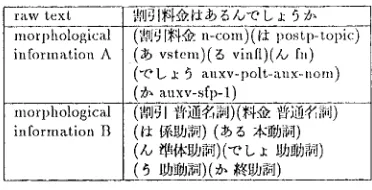
First, sentences for the training set are chosen from the corpus to be rewritten. New word-segmentation and part-of-speech information (morphological infor- mation) is given to the sentences by a morphologi- cal analyzer or by hand. Consequently, the training set has two sets of morphological information for the same raw text. Figure I shows an example of the training set.
A large number of training sentences is desirable, but preparing many sentences requires much time and effort. A vmst nmnber of sentences would be required to extend coverage to content words (such as nouns, w'A)s, ete), but flmctionaI words (such as particles, auxiliary verbs, ere) can be covered with a smaller number of sentences.
ntw text '~!,'q]O I f I ~ & .5/~'(" L ~ 5 Z}~ morphological ('/~qJg [N~- n-com)(tJ: postp-topic) information A (aS vste,n)(~ vinlt)(,G f,,)
(-OL~ 5 auxv-Imlt-aux-nom) (Z~ auxv-sfp-1)
information
B
(t-± NItJJ~J) (~7o 2b:N~,i])
(,t, ~,:i¢l~JJ~l)(et. x
~JJ~OJa,~l)
(5 I~NjDJ)(fi,
$gtl)377~])
Figure 1: An Example of the 'Fraining Set
2.2
E x t r a c t i o n of M o r p h e m e A d j u s t -
m e n t
R u l e s
The method of extracting morpheme ad.iustment rules from the training set involves finding correspon- dence between rewriting units and extracting rules for unknown words:
2.2.1. C o r r e s p o i M e n e e s of R e w r i t i n g U n i t s In languages without explicit word boundary char- acters, such as Japanese, a single word in a certain morphological information system may be divided into multiple words (one-to-many correspondence) in other morphological information systems, multi- pie words may be unified (many-to-one correspon- dence), or the segmentation of multiple words may be changed (many-to-many correspondence). Figure 2 shows these correspondences.
We developed an algorithm to find these correspon- dences (Appendix A). By using this algorithm, mor- pheme rewriting rules (Figure 3) can be extracted. 2.2.2 R u l e s lot" U n k n o w n W o r d s
Rewriting rules such as those shown in Figure 3 can rewrite only the words that appeared in the train- ing set,. If the training set is small, the coverage of the rules will be limited. Ilowever, because this n~orpheme adjnstment is a method of rewriting part- of-speech tagged corpora, the treatment of unknown
o n e - t o - o n e ]
[image:2.612.112.298.252.347.2]"I[l~ (NOUN)" o "JIl~sl~ (NOUN)" |one-to-many]
" ~ (V|,qRB)" ~ "~ (V-ST~M) .... ~ (~Nt~L)"
[many-to-oriel
"~.,~
(NOUN)" "~115~ (NOUN)"
<~ " ~ / ] ] ~(NOUN)"
[hi ~tny-to-lnally]"m (PAR'FICIA,~)" "v, ;5 (VERB)" ~# "-Cv, (AUXV-STEM) .... -5 ([NFL)"
Figure 2: Various correspondences
~* x:~', (auxvstem-aspc) ~ (vinfl) (t.~tl)Ji~]) +~ ~_" (postp-oblg)
Z.-[ ~ - (~i~i]) ¢>_-_:: (n-digit) -I" (digit-sul/ix-zyuu) -- (n-digit)
l?ignre 3: An Example of Extracted Rules
words is easier than with an ordinary morphological anaIyzer, because that our method can make good use of the part-of-speech information of the origi- nal corpus. Rules for unknown words without word- segmentation changes between two morphological in- formation systems can be extracted automatically from one-to-one correspondence rules in the rewrit- ing rules.
Rules tbr unknown words with word-segmentation changes can also be extracted automatically by us- ing information concerning the length of the word's characters. For examph'., when a single verb with two characters in a certaiu morphological information sys- tem corresponds to two words (verb-stem with one character and verb-inflection with one character) in another morphological information system, the fol- lowing rewriting rule is extracted.
2(verb)--~ l(verb-stem) l(verb-inflection) Figure 4 shows sample rules for unknown words. The heuristic knowledge of character sets that an ordinary Japanese morphological analyzer uses (such as "katakana words are usually proper nom,s", "verb iMleetion words are spelled using hiragana", etc.) are also available in this nlorpheme adjustment ted> nique.
¢ r
2.3
R e w r i t i n g of T a g g e d C o r p o r a
2.3.1 A p p l i c a t i o n of R e w r i t i n g I h n n s By applyi,~g the rewriting rules described in the last subsection to the tagged corpus, a lattice structure
~ll)j~/il <* FADN +ftll)j;~ ,~> POSTP-OBLG
2(~j~,~) l(:/~l~)JffO}il,q) o a(VSTEM) I(VINFL) "2(tdIJlgl~,il) ¢> I(POSTP-OPTN) I(POSTP-CONTR)
Figure 4: An Exarnple of gules for Unknown Words
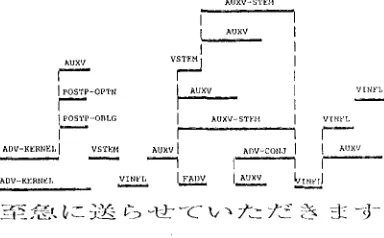
I>OSTP-oP'rN AOXV-ST£M
r - - - f i
ADV-REItNEL] VSTEM A U X V ] AUXV-STEbl I AUXV
I I
~ V - K E . . , : * , wN~.,~ l~Dv. l~j._l.
Figure 5: An Exanlple of the Lattice Formed by the Morpheme Adjuster
~IJXV- STEI~
I
[ AUXV
I
~UX'! V ~ . ~
c - -
I POSTP-OPTN I AU)fV VINFL
i ' - - I
} PO$~'P"OBLG I AUXV- STIc:l i V (NFI,
I ~ f C---
ADV-KERNZI, [ VSTEM AUXV i ADV-COR3 I AU X"r
- - 1 I' F - -
-_x,-,~ , ~ f ~ 2 9 - _
l"igure 6: An Example of the l,attice Formed by an Ordinary Morphological Analyzer
(Figure 5) is formed because of I, he ainlliguity in rewriting rules. 1
l{owew;r, this ambiguity is not as great as the aml>i- guity that occurs in ordinary morphological analysis because our method makes good use of the inform;v- tion of the original corpus. Figure 6 shows the lattice structure formed when using the ordinary morpholog- ical analysis on the same raw text. Note that the size of this lattice is greater i.hail the size oF the lattice made by our method.
2 . 3 . 2 L a t t i e e S e a r c h
The last step in restructuring tagged corpora can be
considered a lattice search l)rol)lenl. [U this step, all of the following knowledge sources for anlhiguil, y reso- lution used in ordinary morphological analysis is also available in our method:
• connection m a t r i x
• heuristic preferences (longest word preference, minimum phrase preference, etc.)
• stochastic preferences (word n-gram, IIMM, etc.) By using these knowledge sources, the most plausi- ble candidate is chosen. In effect, the original corpus is converted to a new eorptls that uses a different morphological information system.
3
E x p e r i m e n t
3.1
Experimental Condition
The targets in our experiment are a morl~hological information system for the A'I?II, l)ialog Database[2;
l'])hls ambiguity mainly conies from l.he difl;Jrence iii part- oLspeech granularity between the two morphological infornla- [,ion systenls,
3] and a morphological infornlation system lbr the unification-based Japanese grammar used in A'I'R's spoken language parser[4]. 'l.'hese two morphological information systenls haw; the following characteris- tics.
• The A T R Dialog 13at.abase was developed as ma- terial for analyzing the characteristics of spoken- style Japanese. '['herefore, the part-of-speech granularity is coarse. Additionally, because the word-.segmentation is based on a morphological and etymological criterion, compound nouns ~md compound words that fluiction as a single aux- iliary w~rb (e.g. "-C ~ zj ") are divided into sev- eral shorter word units. Ou the other hand, be- cause this database giw;s little consideration to mechanical processing, stems and inflections oF inflectional words are not segmented.
• The nnification-based Japanese gramnmr has a medium-grained part-.of-speech (pre-ternlinal) system to make it both c[tleient and easy to maintain[5]. Because the objective of the gram-
Ynar is t o e x t r a c t t h e s y n t a c t i c s t r u c t u r e s e l J a p a n e s e sentences automatically and elIiciently, COml~OUnd words that funel.iml as a single word are usually recognized as a single word. On the other hand, steins amt ilHlectious of inllectional
w o r d s a r e s e g l [ l e l l t e d for e o l l v e l l i e n c e ()l' nlechall.-
ieal processiug.
The above descriptions show that these nl¢~rl~hologi- cal infl)rulation syst.ems differ. The objectiw~ of this experiment is to examine whether our method can adjust the differences between the two niorphological information systems to ~i considerable extent.
Firsl;, we chose 1,000 sentences fronl the A;I'li, Dialog Database as the training set and provided the morphological information (word-segmentation
and lmrl.-of'-speech) of the unification-based Japanese
g r a l l i l n a r . \%Te p r e p a r e d 350 s e i i t e l i C e s as t h e Lest selb,
separate from the training set. 'Phe t,'st sentences
were also giw~n the lnorphological infornlal, ion. We extracted 1,5;18 r.orrespondeiiees el' rewrithlg unil.s (i.e. rewi'il.hlg rilies) alid <128 rules For Uliknown words. ']']lc.se rllles can l)e used for the ]Ji direetioila] rewril.ing experiuienl..
As the kliowh~dge sOtll'<:e in searching lattices, word
bigrauis and part-ol-sl)eech I)igralns were trained wil;h the training set. To perform the hi-directional rewrit- ing experinlent, these bigralns were trained in both i n o r p h o l o g i e a l i n f o r n i a l ; i o n s y s t e n l s .
'['O eOl'ilpare o/lr niethod with ordinary niorpholog- ical analysis, we dew, loped a sinlple stocha.<~tic iiior-
phological analyzer that uses the santo bigrams as the knowledge sourc~,s 2. Ilecause this morphological ana- lyzer has been developed for the comparative exper- iment, it. catlnot inanage unknown words. 'Fherelbre, the rewriting test was performed by using not only the
"2 Of Cotlrse, the ordinary nlorphologlcal analyzer can rewrite the corpus Iilllch n i t r e accurately by tlshlg richer knowledge
[image:3.612.93.285.190.309.2]Morphological Unification-Based ATR Dialog Information Japanese Gralnlnar Datal)euse Training Set
sentences 1,000 1,000
(words) (I0,510) (10,723)
Test Set (Full)
s e n t e n c e s
(words) Test Set (Sub)
sentences (words) Vocabulary
350 (3,804)
148 (904)
350 (4,060) ....
148 (949)
1,284 1,168
POS System 75
Word Bigram ' 41325
POS Bigram 503
26 4,292
262
Table 1: Experimental Condition
test sentences, but also the training sentences (close experiment) and the sentences having no imknown words (a subset of the test set).
Table 1 shows the experinlental conditions ill de- tail.
3.2
Rewriting of Morphological Infor-
mation
The experiment was performed bi-directionally be- tween the morphological information system of the ATt~ Dialog Database (ADD) and the morphologi- cal information system of unification-based Japanese grammar.
3.2.1 F r o m U n i f i c a t i o n - B a s e d G r a n m x a r to A D D
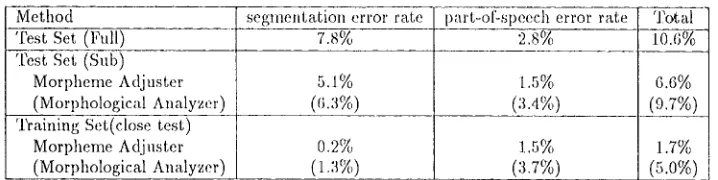
This experiment rewrites from a medimn-graiued morphological information system to a coarse-grained morphological information system. Table :1.2.1 shows the result of this rewriting. The segmentation er- ror rate and part-of-speech error rate were calculated using the same definition in [1]. Table 2 shows the result.
The error rates seem to be rather large, but it should be noted that only simple knowledge sources are used both ill our method (the morpheme adjuster) and by the morphological analyzer. Also, it is signif- icant that our targets are spoken-style Japanese sen- tences. Ordinary morphological analyzers can ana- lyze written-style Japanese sentences with a less than 50_/o error rate, by using richer knowledge sources[I]. However, previous work reported that the error rate for automatic morphological analysis of the ADD text is more than 15%[6].
hi comparing the two methods, the part-of-speech error rates of our method are clearly better than those of the morphological analyzer. This shows that our method can make good use of tile original part-of- speech information.
3.2.2 F r o m A D D to U n l f i c a t l o n - B a s e d J a p a n e s e G r a m m a r
This experiment is more difficult because this rewrit- ing is from the coarse-grained morphological infor- nlation system to the medium-grained morphological information systeln. Table 3 shows the result.
The part-of-speech error rates of our method are better in this rewriting experiment, too.
4
C o n c l u s i o n
This paper proposed restructuring of tagged corpora by using morpheme adjustment rifles. The even- tuaI goal of this work is to make precious knowledge sources truly sharable among many researchers. Tile results of tile experiment seem promising.
Our rnorpbenle adjustment method has some re- semblaace to Brill's part-of-speech tagging method[7]. Brill's simple part-of-speech tagger call be considered a morpheme adjnster that adjusts differences between initial (default) tags and correct ta~s.
As Brill applied his part-of-speech tagging tech- nique to tbe syntactic bracketing technique[8], we believe that our method can be applied to the ad- justment of parsed corpora. In the work of Grish- man et al.[9], tree rewriting rules to adjust differences between Tree Bank and their grammar were proba- bly prepared manually. By applying our method to parsed corpora, such rewriting rules call be extracted automatically.
Acknowledgments
The attthors would llke t.o thank Dr. Yasnhlro Yamazaki, Pres- ident of ATI/ interpreting Telecommunications Lalmrat.orles, for his collstant supl)ot't and encouragement..
R e f e r e n c e s
[1] Maruyama, ll., Oglno, S., l[idano, M., "The Mega-Word Tagged-Corpus Project," TMI-93, pp.15-23, 1990
[2] Ehara, T., Ogtlra, a . and Morimoto, T, "ATR, Dialogue Database," ICSLP-90, pp.1093-1096, 1990.
[3] Sagisaka, Y., Uratani, N., "ATI~ Spoken Language Datahase," The Journal ,ff Ihe Acoustical Society of Japan, Vol. ,18, 12, l)p. ggs-S82, 1992. (in a*qmnese)
[,1] Nagata, M. and Morimoto, T.: "A Unification-Based .]apanese Pm'ser for Speech-to-Speech "['ranslatlon," IEICE Trans. Inf. ,¢.~ Syst., VoI.F76-D, No.l, pp.51-61, 1993.
[5] Nagata, M. "An Empirical Study on lq.ule Granularity and Unification Interleaving. - Toward an Etlleient Unification- Based Parsing System," in Proe. of COLING-92, 1992.
[6] Kita, K., Ogura, K., Morlmoto, T., Yano, Y., "Autotnatl- tally Extract.tug Frozen Patterns fronl Corpora Using Cost Ch'iterla.", IPSJ "['rans. Vol.34, No.9,pp.1937-19,13, 1993.(in Japanese)
[7] Brill, E.,: "A Simple I/.ule-Based Part of Speech Tagger," Proceedings of the Third Conference on Applied Nal.m'al Language Processing, 1992.
[8] Brill, E., "Aut.omatic Grammar Induction and Parsing Free Text: Transformation-Based Error-l)riven Parsing," ACt93, 1993.
[9] Ralph Grishman, Catherine Maeleod and Jolm Sterling "Evaluating Parsing Strategies Using Standardized Parse Files," Proceedings of the Ttfird Conference on Applied Nat- m'al Language Processing, pp.156-161,1992.
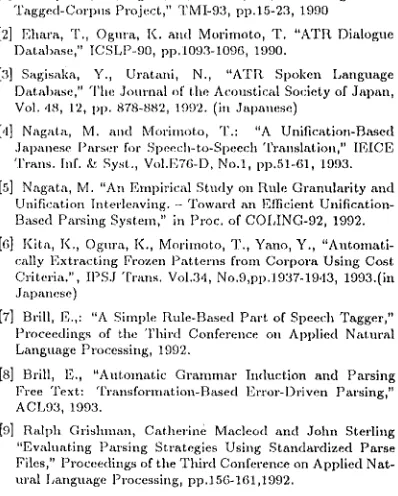
[image:4.612.103.312.70.238.2] [image:4.612.326.525.456.704.2]Method segmentation error rate
'rest Set (Full) 7.8% 2.8%
Test Set (Sub)
Morpheme Adjuster 5,1% 1.5%
(Morphological Analyzer)
(<3%)
(3.4%)
Training Set(close test)
Morpheme Adjuster 0,2% 1.5%
(1Viorphologieal Analyzer) (1.3%) (3.7%)
Table 2: From Unification-B~sed Cranmmr to ADD
Method segmentatioli error rate l)art-of-speeeh error i:ate
Test Set (l?ull) 8,2% 6 . 9 %
Test Set, (Sub)
Morpheme Adjuster 4.2% 3.1%
(Morl)hologieal Analyzer) (8,5%) (6.8%)
Training Set (close test)
Morpheme Adjuster 0.5% 3.3%
(Morphological Analyzer) (0.5%) (6.3%)
Imrt-ol'speech error rate ']?~al
10.(3%
6,6% (9.7%)
1.7%
(5.0%)
Total
t5.t%
7.3%
(lr,.3%)
3.8%
0~.~_ ,)_
Tabh.' 3: l;'rom ADD to Unification-I]ased (]ramruar
A p p e n d i x
A . T h e R u l e E x t r a c t i o n A l g o r i t h m
type
~ord = r e c o r d
symbol :string; {ex. " ~ " } p a r t - o f - s p e e c h :string; {ex. "NOUN"} end
wordlist = r e c o r d
elem : array[I..MAXLENGTI[] of word last : integer
end
procedure F I N D _ C D R R E S P O N D E N C E S (h ,B : uordlist) ; {The arguments of this procedure are
two kinds of m o r p h o l o g i c a l information of the same sentence .
For example :
h : ( ~ , v s t e m ) ( ~ vinfl)
( ~ auxv-stem) ( I~ auxv-infl)
(7"< auxv-t ense)
( / c li)lg#Jil"] )
The OUTptrr subroutine outputs the correspon- dences such as:
Because the total "LENGTHs" of two arguments are the same, this algorit}bm is guaranteed to he completed n o r m a l l y . }
vat
lhs,rhs : wor(11ist ;
cur a, cur_}): integer; {cursors} b e g i n
cur_a := l; cur_b := J;
]hs.last := I; rhs.last := 1; {Initialize} lhs. elem [lhs. hast] : = A. s]em [cur a] ; lhs.last := lhs.last+l;
rhs.elem[rhs.last] :: B . e l e m [ c u r b]; rhs.last := rhs.last+l;
while ( A.last > ctrr a ) do b e g i n
if LENGTII(Ihs) = LEN(;TH(rhs) then begin OUTPUT(Ihs, rhs);
cur_a := cm' a+i; cur b := cur b+t; Initialize (lhs, rhs) ;
lhs.elemElhs.last] := A.elem[cur_a]; lhs.last := lhs.last+1;
rhs.elem[rhs.last] := B.elem[cur_b];
rhs.].ast := rhs.last4.1;
end
else if LENGTH(Ihs) > LENGTH(rhs) then beg: cur b := cur b+l;
rhs.elem[rhs.last] := B.elem[cur_b]; rhs.last := rhs.last+l;
end else begin
c%hr a : = cur a+l ;
lhs.elem[lhs.last] := A.elem[cur a]; ],hs,last := lhs.last+l;
end
end ;
f u n c t i o n LENGTH(A: uordlJst);
{This function returns the total length of word]ist. When d m arg is "((~)
g~ v s t e m ) ( O vinfl))", this f u n c t i o n returns 3.} v~r
length, count : integer; begin
length = O;
:[or count := 1 to h.last do
length := length+lA.elem[count].symboll;
[image:5.612.121.480.76.166.2]