Latte-style Coffee Beverages by Choice Based Conjoint Analysis. (Under the direction of Dr. MaryAnne Drake).
Dairy products are ubiquitous in food and beverage applications. Two studies were
designed around two different dairy products (80% whey protein concentrate and milk). The
first study was designed to determine the impact of bleaching with benzoyl peroxide (BP) or
hydrogen peroxide (HP) has on the flavor and functionality of 80% whey protein concentrate
(WPC80). Eighty percent whey protein concentrate is utilized for its nutritional value and
high functionality. Liquid whey used to make WPC80 largely comes from colored Cheddar
cheese manufacture and must be bleached. Norbixin is the carotenoid of interest in whey
bleaching. Norbixin recovery was higher for HP bleached WPC80 than BP bleached WPC80
(P<0.05). The HP WPC80 was higher in lipid oxidation and protein degradation volatiles as
well as cardboard and fatty flavors (P <0.05). The BP WPC80 gelled when heated for 10
min; HP WPC80 gelled when heated for 20 min at pH 7. Overall HP bleaching caused more
lipid oxidation products and subsequent off flavors than BP bleaching. However, heat
stability of WPC80 was enhanced by HP bleaching compared to control or BP bleached
WPC80 which may be a function of denaturation of sulfur containing amino acids.
One of the most important product applications of milk is in coffee beverages, where
it is utilized as a lightener and flavor source for latte-style coffee beverages. A latte-style
coffee beverage is any beverage made with espresso, a milk or a milk-type lighter, and may
have additional flavor. The objective of this study was to determine what factors were most
milk-type, fat content, sweetener-type, and additional flavor. Consumer responses (n=721)
from the conjoint survey showed that the most important attributes in determining latte
beverage purchase intent were location and milk-type, followed by fat content, sweetener,
and additional flavor. Segmentation of respondents based upon patterns in utility scores
showed three distinct groups. Segment 1 (n = 185) was influenced by milk-type and
sweetener-type. Segment 2 (n = 200) was influenced by a coffee house. Segment 3
(n=336) was calorie and health conscious. Self-defined lactose intolerant (n = 117)
by
Suzanne Marie Jervis
A thesis submitted to the Graduate Faculty of North Carolina State University
in partial fulfillment of the requirements for the degree of
Master of Science
Food Science
Raleigh, North Carolina
2011
APPROVED BY:
_______________________________ ______________________________
Dr. MaryAnne Drake Dr. Timothy Sanders
Committee Chair
BIOGRAPHY
Suzanne Marie Jervis was born on August 26th, 1980 to Robert Joseph Gavula and Barbara Marie Gavula. Suzanne grew up in the Pittsburgh Pennsylvania area but moved
around quite frequently throughout Pennsylvania and Connecticut. Suzanne attended the
University of Pittsburgh in the fall of 1998 and earned a Bachelors of Science degree in
Chemistry with a minor in Education. Suzanne went on for an additional year to earn her
Secondary Education Teaching Certificate from the University of Pittsburgh. During that
same year Suzanne married Matthew Gabriel Jervis on June 14th, 2003.
Suzanne and Matthew both began working as teachers for Caesar Rodney School
District in Wyoming DE. Suzanne taught high school Chemistry, Physical Science, and
started the AP Chemistry program. Suzanne taught at Caesar Rodney for three years before
accepting a position as a Chemistry Teacher at Upper Darby High School in Upper Darby
Pennsylvania. After completion of one year at Upper Darby Suzanne left that position for
family reasons, and moved to Pittsburgh where she began working as a Research Scientist for
H.J. Heinz Company. After completion of one year with the company Suzanne and family
relocated to Raleigh North Carolina for a job opportunity for Matthew. Shortly thereafter,
Suzanne began working for Nomacorc LLC as a Sensory Analyst. During that time, the
2007 recession hit and Suzanne was let go from her position. Suzanne took that opportunity
to go back to school and earn a Masters in Food Science degree which had been a goal of
hers since her experience at Heinz.
Suzanne began her Masters career at North Carolina State University under the
continue on to earn a PhD in Food Science with specific focus on Sensory and Consumer
ACKNOWLEDGMENTS
I would first like to thank Dr. MaryAnne Drake for giving me this opportunity after
knowing me for a short while and taking a chance on a person who had been out of school
for a long time. This has been an invaluable experience and a life altering one as well. I am
forever grateful. I would also like to thank Evan Miracle who works tireless hours helping
me and all of the graduate students to understand how to collect our data as well as interpret.
My successful completion of this degree would not be possible without his help. I would
also like to thank Dr. Timothy Sanders and Dr. Allen Foegeding for being my committee
members and always being willing to answer my questions.
To my lab mates, you are wonderful young people who kept me feeling young, and
old at times too. Thank you for collaborating with me on projects, ideas, innovations; you
will all be great successes some day.
And most importantly to my loving husband, this accomplishment would not be
possible if you were not willing to sacrifice so much to make it happen. I love you with all
of my heart and I’m ready and willing to make the same sacrifices for your Masters. You are
TABLE OF CONTENTS
List of Tables . . . vi
List of Figures . . . viii
Chapter 1. The Impact of Iron on the Bleaching Efficacy of Hydrogen Peroxide in Liquid Whey Systems . . . 1
Abstract . . . 3
Introduction . . . 4
Mechanisms of Bleaching . . . 6
Benzoyl Peroxide and Hydrogen Peroxide . . . 7
Iron . . . 9
The Fenton Reaction . . . 10
Fenton Controversy . . . 11
Sources of Fe(II) in Fenton-type Reactions: Metalloproteins. . . 15
Sources of Fe(II) in Fenton-type Reactions: Lactoperoxidase . . 18
Off Flavor Development . . . 20
Fenton Reaction and Functionality . . . 23
Future Work . . . 25
Conclusion . . . 26
References . . . 28
Chapter 2. Impact of Bleaching Whey on Sensory and Functional Properties of 80% Whey Protein Concentrate . . . 44
Abstract . . . 46
Introduction . . . 47
Materials and Methods . . . 49
Results . . . 63
Discussion . . . 65
Conclusions . . . 72
References . . . 73
Chapter 3. Determining the Drivers of Choice of Latte-style Coffee Beverages by Choice Based Conjoint Analysis . . . 90
Abstract . . . 92
Practical Implications . . . 92
Introduction . . . 93
Materials and Methods . . . 97
Results and Discussion . . . 101
Conclusions . . . 110
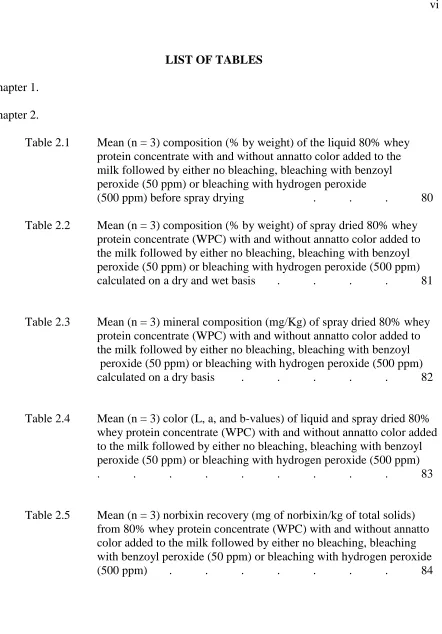
LIST OF TABLES
Chapter 1.
Chapter 2.
Table 2.1 Mean (n = 3) composition (% by weight) of the liquid 80% whey
protein concentrate with and without annatto color added to the milk followed by either no bleaching, bleaching with benzoyl peroxide (50 ppm) or bleaching with hydrogen peroxide
(500 ppm) before spray drying . . . 80
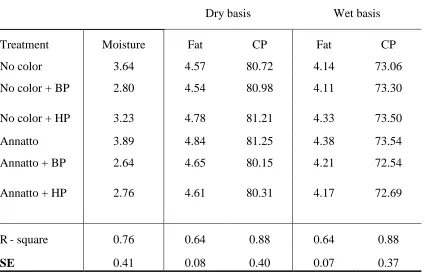
Table 2.2 Mean (n = 3) composition (% by weight) of spray dried 80% whey
protein concentrate (WPC) with and without annatto color added to the milk followed by either no bleaching, bleaching with benzoyl peroxide (50 ppm) or bleaching with hydrogen peroxide (500 ppm)
calculated on a dry and wet basis . . . . 81
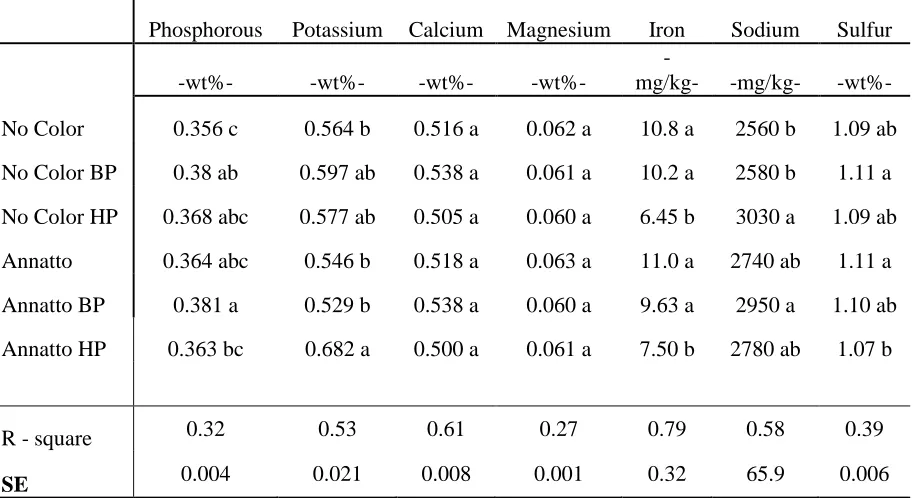
Table 2.3 Mean (n = 3) mineral composition (mg/Kg) of spray dried 80% whey
protein concentrate (WPC) with and without annatto color added to the milk followed by either no bleaching, bleaching with benzoyl peroxide (50 ppm) or bleaching with hydrogen peroxide (500 ppm)
calculated on a dry basis . . . 82
Table 2.4 Mean (n = 3) color (L, a, and b-values) of liquid and spray dried 80% whey protein concentrate (WPC) with and without annatto color added to the milk followed by either no bleaching, bleaching with benzoyl peroxide (50 ppm) or bleaching with hydrogen peroxide (500 ppm)
. . . 83
Table 2.5 Mean (n = 3) norbixin recovery (mg of norbixin/kg of total solids)
from 80% whey protein concentrate (WPC) with and without annatto color added to the milk followed by either no bleaching, bleaching with benzoyl peroxide (50 ppm) or bleaching with hydrogen peroxide
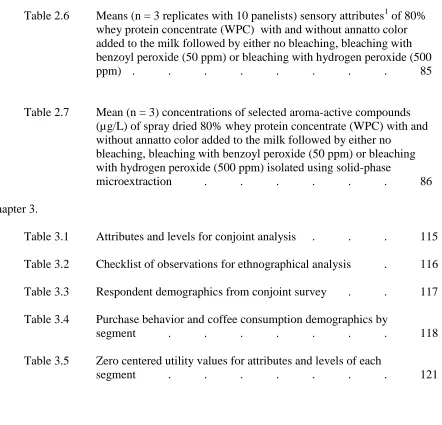
Table 2.6 Means (n = 3 replicates with 10 panelists) sensory attributes1 of 80% whey protein concentrate (WPC) with and without annatto color added to the milk followed by either no bleaching, bleaching with benzoyl peroxide (50 ppm) or bleaching with hydrogen peroxide (500
ppm) . . . 85
Table 2.7 Mean (n = 3) concentrations of selected aroma-active compounds
(µg/L) of spray dried 80% whey protein concentrate (WPC) with and without annatto color added to the milk followed by either no
bleaching, bleaching with benzoyl peroxide (50 ppm) or bleaching with hydrogen peroxide (500 ppm) isolated using solid-phase
microextraction . . . 86
Chapter 3.
Table 3.1 Attributes and levels for conjoint analysis . . . 115
Table 3.2 Checklist of observations for ethnographical analysis . 116
Table 3.3 Respondent demographics from conjoint survey . . 117
Table 3.4 Purchase behavior and coffee consumption demographics by
segment . . . 118
Table 3.5 Zero centered utility values for attributes and levels of each
LIST OF FIGURES
Chapter 1.
Figure 1.1 Hydrogen abstraction, β-scission, and addition radical reactions 36
Figure 1.2 Molecular structure of benzoyl peroxide . . . 37
Figure 1.3 Molecular structure of lactoferrin with iron binding site . 38
Figure 1.4 Pathways in the lactoperoxidase-catalyzed reaction mechanism 39
Figure 1.5 Lactoperoxidase mechanism from activation to reactivation 40
Figure 1.6 Inactivation of lactoperoxidase system with excess hydrogen
peroxide . . . 41
Figure 1.7 Proposed structure of Compound I . . . . 42
Figure 1.8 General mechanism of transition metals catalyzing
hydroperoxides decomposition . . . 43
Chapter 2.
Figure 2.1 Percent solubility of WPC80 at pH 7 and 10% (w/v) solids heated
for 0, 10, 20, and 30 min at 90oC. WPC were manufactured with and without annatto color added to the milk followed by either no bleaching, bleaching with benzoyl peroxide (50 ppm) or bleaching
with hydrogen peroxide (500 ppm) . . . . 87
Figure 2.2 Percent solubility of WPC80 at pH 4.6 and 10% (w/v) solids
heated for 0, 10, 20, and 30 min at 90oC. WPC were manufactured) with and without annatto color added to the milk followed by either no bleaching, bleaching with benzoyl peroxide (50 ppm) or
bleaching with hydrogen peroxide (500 ppm) . . 88
.
Figure 2.3 Principal component biplot of sensory attributes and selected lipid oxidation volatile components of 80% whey (WPC) with and without annatto color added to the milk followed by either no bleaching, bleaching with benzoyl peroxide (50 ppm) or bleaching
with hydrogen peroxide (500 ppm) . . . . 89
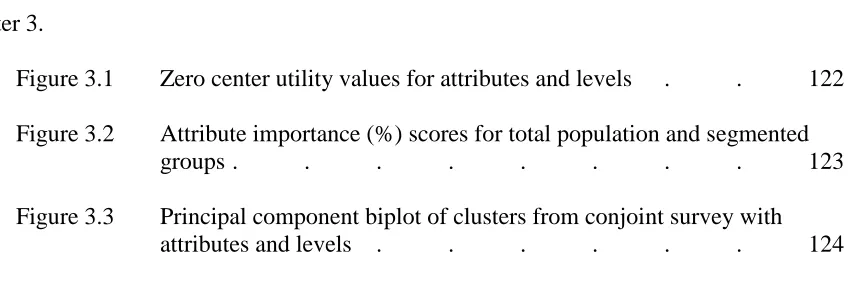
Chapter 3.
Figure 3.1 Zero center utility values for attributes and levels . . 122
Figure 3.2 Attribute importance (%) scores for total population and segmented
groups . . . 123
Figure 3.3 Principal component biplot of clusters from conjoint survey with
The Impact of Iron on the Bleaching Efficacy of Hydrogen Peroxide in Liquid Whey Systems
Suzanne M. Jervis1, MaryAnne Drake12
1
Department of Food, Bioprocessing and Nutrition Sciences
Southeast Dairy Foods Research Center
North Carolina State University
Raleigh, NC 27695
Corresponding Author:
2
MaryAnne Drake
236-E Schaub Hall
400 Dan Allen Dr
Raleigh, NC 27695
TEL: (919) 513-4598; FAX: (919) 515-7124; EMAIL: [email protected]
Short version of title: Iron Reactions in Bleached Whey Systems
Concise Reviews and Hypotheses in Food Science
* Use of names, names of ingredients, and identification of specific models of equipment is
for scientific clarity and does not constitute any endorsement of product by authors, North
Abstract
Whey is a value added product that is utilized in many food and beverage applications for
its nutritional and functional properties. One of the primary sources of whey is from colored
Cheddar cheese manufacture which contains the pigment annatto resulting in a characteristic
yellow colored Cheddar cheese. The color translates through to the liquid whey and must be
bleached. Hydrogen peroxide and benzoyl peroxide are two commercially approved
chemical bleaching agents for liquid whey. Concerns regarding bleaching efficacy,
off-flavor development and functionality changes have been previously reported for whey
bleached with hydrogen peroxide and benzoyl peroxide. It is very important for the dairy
industry to understand how bleaching can impact flavor and functionality of dried
ingredients. Understanding the mechanism of bleaching for benzoyl peroxide and hydrogen
peroxide will aid in this effort. Currently, the precise mechanisms of off-flavor development
and functionality changes are not entirely understood. Iron reactions in a bleached liquid
whey system may play a key role. Reactions between iron and hydrogen peroxide have been
widely studied since the reaction between these two relatively stable species can cause great
destruction in biological and chemical systems. The actual mechanism of the reaction of iron
with hydrogen peroxide has been of great controversy in the chemistry and biological
community. The precise mechanism for a given reaction can vary greatly based upon the
concentration of reactants, temperature, pH, and addition of biological material. In this
review some hypotheses for the mechanisms of iron reactions that may occur in fluid whey
which may impact bleaching efficacy, off-flavor development, and changes in functionality
Keywords
Iron, Fenton Reaction, Whey, Hydrogen Peroxide, Lactoperoxidase
Introduction
Whey is a value added product that has found widespread use in the functional and
nutritionally fortified food and beverage market due to its high protein content and functional
properties. The appealing functional properties of whey protein include solubility, water
binding ability, gelation, foaming, buffering, and emulsification (Davis and Foegeding 2007).
Whey is the liquid by-product of the cheese making process which contains all of the lactose,
minerals, and proteins that do not end up in the final cheese product. The principal whey
proteins are β-lactoglobulin and α-lactalbumin which account for approximately 80% of the
total whey proteins. The other proteins, (in order of decreasing concentration), include
bovine serum albumin, immunoglobulins, proteose peptones, soluble caseins, and a variety of
minor proteins (lactoferrin, lactoperoxidase, etc) (Schmidt 1983). Whey can be further
processed and spray dried into whey protein concentrates (WPC) which can range from
35-89% protein and whey protein isolates which contain 90% of greater protein (USDEC 2008).
Whey from Cheddar cheese production is one of the most common fluid whey
sources. Cheddar cheese is largely colored with annatto which is a GRAS pigment from the
tropical shrub bixaorellana, used to give the Cheddar cheese its characteristic yellow color.
Annatto is comprised of two carotenoid pigments, oil soluble bixin and water soluble
norbixin. Norbixin is the pigment of interest in coloring Cheddar cheese and it is also the
pigment of interest in whey bleaching as the yellow color translates through to the drained
peroxide (BP), two commercially approved chemical bleaching agents. BP has GRAS status
and has no usage limit but is generally not added above 0.01% or 100 ppm. HP also has
GRAS status with a maximum usage level in annatto colored whey of 0.05% or 500 ppm
(Kang and others 2010). Differences in the bleaching efficacy of BP and HP in liquid whey
systems has been previously reported (Croissant and others 2009; Listiyani and others 2011a;
Jervis and others in press). It is important for the dairy industry to maximize bleaching
efficacy with minimal effects on the flavor and protein integrity. Whey proteins ideally
should have a bland flavor to enhance their ability to be used in a variety of food and
beverage products (Drake and others 2009). When whey is bleached, off-flavors can
develop and there may be changes in functionality of spray dried finished products. Flavor
development from the processing of liquid whey translates into the spray dried product and
these flavors can carry through to ingredient applications (Drake 2006; Drake and others
2009; Wright and others 2009). Croissant and others (2009) reported that HP bleached liquid
whey and WPC70 from HP bleached whey had higher concentrations of lipid oxidation
compounds compared to BP bleached liquid whey and WPC70 from BP bleached whey.
Jervis and others (in press) reported distinct volatile and sensory profiles for WPC80 from
unbleached, HP bleached, and BP bleached whey. Listiyani and others (2011a) likewise
confirmed that volatile and sensory profiles of unbleached, HP bleached and BP bleached
WPC34 were distinct.
Bleaching may affect flavor, but is also important in functionality. Grindrod and
Nickerson (1966) reported that skim milk had decreased whey protein nitrogen and increased
concentration resulted in an increase in NPN. Cooney and Morr (1971) reported that proteose peptones were the most susceptible to alteration by HP followed by
immunoglobulins, β-lactoglobulin and bovine serum albumin; α-lactalbumin was the least
susceptible to HP. BP bleached Blue cheese milk was previously reported to have altered
electrophoretic patterns of the whey proteins (Washam et al., 1974). This effect was
amplified when the cheesemilk was heated.
It is of key importance for the dairy industry to gain the highest bleaching efficacy
with minimal off-flavor development and protein conformational changes. Understanding
the mechanisms of bleaching and the factors that can affect bleaching and subsequent
reactions is of great importance.
Mechanisms of Bleaching
Chemical peroxide bleaching occurs when a radical formed by the breaking of a
peroxide bond attacks a conjugated double bond of a color forming compound known as a
chromophore rendering the compound colorless (Kang and others 2010; Dannacher 2006).
Typically the chromophores to be destroyed consist of extended conjugated π systems
(Dannacher 2006). Radicals can attack bonds in one of three ways; hydrogen abstraction,
β-scission, and addition however only hydrogen abstraction and addition will directly result in
a loss of color (Figure 1) (Sanchez and Myers 2000).
BP and HP are peroxides characterized by the weak O-O peroxide bond. The
reactivity of peroxides proceeds in most cases by the hemolytic cleavage of the O-O bond
producing free radicals (Sanchez and Myers 2000; Benassi and others 1993). The breaking
the peroxide bond dissociates/decomposes it results in the formation of two peroxide
radicals. In order to compare the reactivity of different peroxides it is important to know the
bond dissociation energy (BDE) of the O-O bond. The kinetic stability of the radical is also
important however the BDE represents the basic chemical behavior of peroxides (Benassi
and others 1993).
Benzoyl Peroxide and Hydrogen Peroxide
BP is classified as a diacyl peroxide (ROOR’) with the molecular structure as shown
in Figure 2. Diacyl peroxides have low O-O bond dissociation energy and are among the
best radical-forming compounds. Benassi and others (1993) reported diacyl peroxides to
have a higher bond dissociation energy for R-O when R is a phenyl group. This results in
breakage of the O-O peroxide bond instead of the R-O bond yielding two benzoyl radical
molecules. Because of the low bond dissociation energy, not as much thermal energy is
required to degrade BP into two BP radicals. Diacyl peroxides are ideal agents for bleaching
because of the lesser amount of energy needed for bond dissociation (Klenk and others
2005). BP can therefore have bleaching efficacy at lower temperatures than other peroxides
with higher BDE given no other outside factors for stimulating peroxide bond dissociation
(catalysis by metal ions). The bond dissociation energy of the O-O bond has been estimated
for diacyl peroxides as 36.9kcal/mol at 298K (Bach and others 1996). Diacyl peroxides
decompose faster in polar solvents than non-polar solvents (Sanchez and Myers 2000).
Whey is a polar solvent composed of water, sugar, and mineral salts. As such fluid whey is
decomposition of diacyl peroxides can also be catalyzed by metal ions such as copper, iron,
cobalt, and manganese (Sanchez and Myers 2000).
HP is relatively stable at room temperature and can be used as the generating species
for other peroxides (Sanchez and Myers 2000; Benassi and others 1993). HP can decompose
into hydroxyl radicals HO. and hydroperoxide radicals HOO.. Similar to lipid oxidation, the
hydroxyl radical will attack the carotenoid double bond, which is responsible for the color,
and cause it to break by hydroxyl radical addition or removal of a hydrogen bonded to the
carbon in the double bond resulting in a loss of color (Carlsen and others 2005). The bond
dissociation energy of the O-O bond has been reported as 50.5 kcal/mol at 298K (Bach and
others 1996). A comparison of BDE suggests BP to be less stable at room temperature
(298K) than HP. BP can generate free radicals at 20oC (Sanchez and Myers 2000). Bleaching in whey is conducted under a wide range of temperatures (Listiyani and others
2011a; Listiyani and others in press; Jervis and others in press; Croissant and others 2009).
Listiyani and others (2011b) reported HP bleached liquid whey reduced more norbixin
pigment at 68oC than at 4oC. There was no reported difference in BP bleaching efficacy with varying temperature; BP showed higher bleaching efficacy than HP at both temperatures. As
there was no difference in bleaching efficacy of BP at 4oC versus 68oC, this suggests that there is enough free energy in whey at typical bleaching temperatures for BP to degrade into
benzoyl radicals which can then participate in bleaching-type reactions. HP had a significant
increase in bleaching efficacy with increased temperature which may be because of the
increased BDE of the O-O bond requiring the addition of thermal energy for degradation to
Benassi and others 1993). HP bleaching has been reported to suffer from low reaction rates
at low temperatures as a consequence of the high activation energy required to facilitate
oxidation (Dannacher 2006).
Increased bleaching efficacy of HP at elevated temperatures has been previously
reported for textile systems however the increase in bleaching temperature resulted in a loss
of fabric quality (Maekawa and others, 2007; Dannacher 2006). Bleaching occurred in
alkaline solution (pH 10). There appears to be sufficient thermal energy at all bleaching
temperatures to decompose BP into free radicals; HP may require more thermal energy or
addition of catalysts for complete degradation. Both BP and HP can have catalyzed
decomposition by metal cations. However catalysis may not factor into the decomposition of
BP as the increased availability of thermal energy appears sufficient for BP degradation into
radicals. Metal catalysis may only be significant in regards to HP. HP has been reported to
significantly reduce norbixin pigment in liquid whey, WPC70, WPC34, and WPC80,
however, HP was not as efficient of a bleaching agent as BP (Jervis and others, pending;
Listiyani and others 2011a; Croissant and others 2009). This inefficiency of HP bleaching
may be due to insufficient thermal energy for radical production, or possibly the hydroxyl
radical not being selective enough in its attack of the carotenoid double bond. HP does have
bleaching activity in whey systems and the bleaching activity of the hydroxyl radicals formed
from HP degradation may be a result of iron catalyzed reactions.
Iron
Iron is a highly catalytic transition metal and can catalyze the decomposition of HP
oxygen gas at 298K but the reaction is relatively slow. Production of radicals requires the
addition of thermal energy or catalytic action by metal cations. When HP decomposes into
water and oxygen it is inactivated, however, when the HP is oxidized via transition metal
catalysts like iron, radicals can be formed which can result in increased bleaching efficacy.
The rate of oxidation reactions will increase as the HP concentration increases and/or
catalysis by transition metals (Kohler and Jenzer 1988). It is possible that Fenton-reactions
in whey are aiding in the bleaching efficacy of HP.
The Fenton Reaction
The Fenton reaction has been classically defined as the reaction of ferrous iron with HP
to form ferric iron, hydroxide ions and hydroxyl radicals.
Fe2+ + H2O2 Fe3+ + OH- + HO .
(1)
Fenton reactions are used as one of the most effective ways of reducing organic pollutants in
water specifically because of the reactivity of the hydroxyl radical for all types of organic
substrates. Fenton reactions reduce organic pollutants by degrading the organic substrates
through redox reactions (Pariente and others 2008). The Fenton reaction has also been
proposed to be one of the responsible pathways for HP effectiveness as an antimicrobial
agent (Barbusinski 2009; Liochev 1999). The antimicrobial effectiveness of HP is due to HP
reacting with free iron in a bacterial cell creating free radicals which then can damage DNA
and other cellular organs resulting in cell death. The Fenton reaction has been implicated in
decreasing the shelf-life of wine through uncontrolled oxidation (Elias and Waterhouse
H.J.H. Fenton first described the oxidation of organic substrates by iron(II) and HP in
1894 when he observed the oxidation of tartaric acid by HP in the presence of iron to form a
violet colored complex (Dunford 2002, Fenton 1894). Since then the precise mechanism of
the Fenton reaction has been under controversial discussion (Barbusinski 2009; Dunford
2002; Koppenol 2001; Liochev and Fridovich 2002). Because of this controversy, the
Fenton reaction is commonly referred to as Fenton Chemistry as the precise reaction
mechanism has not been agreed upon by the scientific community. What is agreed upon is
that the powerful oxidative capacity of iron(II) and HP is dependent mainly upon HP
concentration, Fe2+/HP ratio, pH and reaction time (Barbusinski 2009). Regardless of the exact mechanism, HP and Fe2+ must be present, so they are referred to as Fenton reagents. There are two reaction pathways that have been proposed for the mechanism of Fenton
chemistry, a radical and a non-radical pathway. In all cases where HP is the bleaching agent
in a whey system, the HP will be in excess and iron will be the limiting reagent. As such the
excess HP will affect the type of Fenton chemistry permissible. It is important to note that
all scientists agree that in Fenton chemistry when HP is in excess compared to iron(II),
oxygen production and iron(II) regeneration are observed (Deguillaume and others 2005).
Understanding the Fenton mechanisms possible in bleached whey systems will aid in the
understanding of HP activation and subsequent bleaching efficacy.
Fenton Controversy
Two years after Fenton’s death the hydroxyl radical mechanism was proposed for the
first time by Haber and Willstätter in 1931 (Barbusinski 2009). They proposed that hydroxyl
radicals could be produced by one electron reduction of HP by HO2 .
radicals could abstract electrons from hydrocarbons and initiate radical chain reactions. This
was later shown to be a very slow reaction and a year later Haber and Weiss suggested
hydroxyl radical reduction by one electron reduction of HP by iron(II) (Barbusinski 2009).
The Haber Weiss mechanism was modified in 1951 by Barb and others as the following:
Fe2+ + H2O2 Fe3+ + .
OH + HO- (2)
.
OH + H2O2 HO2 .
+ H2O (3)
HO2 .
+ Fe3+ Fe2+ + O2 + H+ (4)
HO2 .
+ Fe2+ Fe3+ + HO2- (5)
HO. + Fe2+ Fe3+ + HO- (6)
Reactions 2 – 4 are cycling steps leading to the evolution of O2 which as mentioned
previously is a necessary step when HP is in excess for Fenton chemistry to occur. Step 4
can serve as a regeneration step for iron(II), also necessary for Fenton chemistry when HP is
in excess and is considered the rate determining step (Medalia and Kolthoff 1949). Steps 5
and 6 are termination steps (Barbusinski 2009). According to the mechanism proposed by
Barb and others (1951), the hydroxyl radical is generated and is responsible for the oxidative
reactivity of the Fenton reaction. This mechanism is commonly referred to as the radical
pathway or mechanism of the Fenton reaction. The radical pathway has been proposed as the
mechanism for the Fenton reaction in wine (Elias and Waterhouse 2010). Fukuzawa and
Fujii (1992) reported a radical Fenton pathway for the lipid peroxidation of linoleic acid.
Pariente and others (2008) reported the partial degradation of benzoic acid as a result of
or oxidized slowly by HP are readily oxidized by HP when iron is present via a Fenton
reaction pathway (Medalia and Kolthoff 1949). In this five step sequence, the hydroxyl
radical is formed and can participate in bleaching by breaking the conjugated π bonds of
norbixin. The oxygen gas formed may also participate in lipid oxidation adding to off-flavor
formation.
In 1932 the ferryl ion species FeO2+ was proposed by Bray and Gorin as one step in the ferrous ion catalyzed decomposition of HP (Dunford 2002). They connected ferrous and
ferric iron through equilibrium, (like O2 gas production and Fe+2 regeneration, explanation of
Fe+3 generation is an agreed upon condition for Fenton reactions to occur), and proposed the following mechanism which allowed for the formation of O2 when HP was in excess.
Fe2+ + H2O2 FeO2+ + H2O (7)
FeO2+ + H2O2 Fe2+ + H2O + O2 (8)
This reaction mechanism was corroborated by experiments conducted by Cahill and Taube
(1952) who reported that the formation of iron(IV) was favored in the reaction of iron(II) and
HP. Kremer (1999) concluded that it is difficult to accept the existence of a free radical
mechanism because the mechanism does not recognize the formation of any other iron
species other than iron(II) and iron(III). Buda and others (2003) reported that a ferryl-oxo
complex can be produced as a primary intermediate with HP which supports a non-radical
mechanism of the Fenton reaction. The ferryl ion mechanism has been referred to as the
non-radical mechanism for the Fenton reaction. Buda and others (2003) proposed the
Initiation: Fe2+ + H2O2 FeO2+ + H2O
O2 Production: FeO2+ + H2O2 Fe2+ + O2 + H2O
Degradation: FeO2+ + Fe2+ + H2O 2Fe3+ + 2HO-
In the first step of this reaction mechanism, the ferryl ion is produced as an intermediate. In
the second step O2 is produced and the third step represents a possible catalyst termination
reaction. Any non-radical mechanism where [HP] >> [Fe2+] has to account for O2
production. Buda and others concluded that oxygen production can be understood in terms
of the FeO2+ reaction mechanism and therefore does not constitute evidence for hydroxyl radical intermediates. The ferryl ion is a strong oxidant and may be able to oxidize the
conjugated double bond system of norbixin resulting in a loss of color.
During cheese whey bleaching, HP can be added up to 500ppm, a low concentration
of HP is not a factor and therefore reaction kinetics of HP generation is a non-issue. The
reduction potential of the hydroxyl radical is 2.3V and the high reactivity explains the ability
of different iron species and HP to initiate oxidation in a variety of systems (Carlsen and
others 2005). One of the questions raised by Bossman and others (1998) is whether or not
hydroxyl radical production via the radical mechanism is too slow to compete with direct
electron transfer (non-radical mechanism) between the substrate and the higher valent iron
species (most likely Fe4+). Increasing the rate of this reaction would mean increasing the concentration of Fe+2 as HP is already in excess. UV visible irradiation accelerates both the Fenton reaction (HP/Fe2+) and Fenton-like reactions (HP/Fe3+) however whey is
manufactured in a closed system to prevent light catalyzed oxidation reactions so UV
role as a source of Fe+2. Metalloproteins can serve as ligands to iron(III) which can undergo an efficient inner sphere electron transfer to reduced iron(III) to iron(II) and in the process
create hydroxyl radicals with HP. Lactoperoxidase (LPO) may serve as a source of iron(II).
In the ground state LPO binds one iron(III) ion that can be readily oxidized to iron(II) in the
presence of HP which is the first step in activating the enzyme. In order for Fenton-type
reactions to occur regardless of the Fenton-type pathway, it must be determined if Fe+2 is present and able to react with HP. In a bleached whey system the HP will be added directly
therefore it is only important to discuss how iron(II) will enter the system.
Sources of Fe(II) in Fenton-type Reactions I. Metalloproteins
In milk there exists a family of iron binding proteins, collectively called the
transferrin group, comprised of lactoferrin, serum transferrin and ovotransferrin. They are
also known as metalloproteins because of their metal binding ability. These proteins are all
glycoproteins with a molecular weight of around 80 kDa (670-690 amino acid residues) and
exhibit 50-70% pairwise sequence identity (Baker and others 2002). The proteins have key
structural features responsible for their ability to tightly and reversibly bind iron and other
divalent and trivalent cations. Lactoferrin (Lf) is comprised of two lobes, the N-terminal and
the C-terminal which are comprised of 40% of the same amino acid sequence. Each lobe
contains a trivalent binding site with a carbonate ion, and four amino acid ligands (Tyrosine
92, Tyrosine 192, Aspartic acid 60, and Histadine 253) with reversible binding ability (Figure
3) (Baker 1994). The -3 charge contributed by the two tyrosines (Tyr) and one aspartic acid
by the adjacent positive charge on the protein. In transferrins the positive charge comes from
the arginine (Arg) side chain and from the N-terminus of the alpha helix. Both the open (no
bound Fe) and the closed (bound Fe) structures of Lf and Tf are found in milk (Baker and
others 2002). The transferrin (Tf) group is capable of binding divalent cations but cannot
bind them as tightly as trivalent cations (Baker and others 2002). Iron is naturally found in
the trivalent state when bound to transferrin proteins. The binding affinity of iron to Lf or Tf
is high enough that in the presence of Lf or Tf the concentration of free iron cannot exceed
10-18M which prevents precipitation of iron as insoluble hydroxides (Baldwin and others 1984). The iron must therefore be reduced and released by Lf or Tf so that it can participate
in Fenton reactions and subsequent bleaching reactions. Iron release can be accomplished in
a number of different ways:
1) Decreasing the pH: Will result in protonation of the carbonate ions and weakening
of the iron binding site. Human Lf has been shown to retain iron at pH values
between 3-4 whereas Tf releases iron at pH values ranging 5-6 (Mazurier and
Spik 1980). Similar pH ranges were reported for bovine Lf and Tf as they are
structurally similar (Baker 1994). Drained liquid whey typically has a pH ≥ 6,
therefore pH release of iron is not a viable option by Lf or Tf.
2) Mutagenesis changes to Aspartic acid, Histadine and Tyrosine ligands: This will
have a deleterious effect to iron binding capacity resulting in iron release or
bound iron(III) that is more easily reduced resulting in its subsequent release
(Nicholson and others 1997; Faber and others 1996; Ward and others 1996). The
1983; Perlmutter and Brunner 1972; Cooney and Morr 1971; Grindrod and
Nickerson 1966). Hydroxyl radicals may be able to damage the binding sites of
metalloproteins. Heating of milk at temperatures 60 – 800C for five minutes was shown to have degradation effects on Lf which may result in a more easily
reduced iron (Brisson and others 2007b). Hydroxyl radical action or heat
degradation of Lf can degrade the binding site which may result in more easily
oxidizable iron which can then participate in Fenton-type reactions and
subsequent bleaching of norbixin.
3) Reducing agents or enzymes: Reducing agents or enzymes present in whey can
reduce iron(III) to iron(II). Ascorbate is able to reduce iron(III) to iron(II) and is
used to catalyze the Fenton reaction in certain antioxidant assays (Caillet and
others 2007). Free thiols can catalyze iron(III) reduction in milk. Lactoferrin
does not have free thiol groups however β-lactalbumin does. Brisson and others
(2007b) reported that free thiol groups can be exposed in whey heated above
80oC. Upon heating, β-lac may expose free thiols that can reduce the iron in Lf (Barbusinski 2009 and Brisson and others 2007a). This elevated temperature is
not plausible in standard liquid whey processing. LPO and other native enzymes
are also associated with iron(III) reduction (Damodaran 2008; Burkitt 2003;
Vercellotti and others 1992).
4) Superoxide radicals O2-: Superoxide radical formation is possible in whey
systems in the presence of HP by radical generation from transition metals,
release iron from ferritin in meat by reducing iron(III) to iron(II) (Thomas and
others 1985).
II. Lactoperoxidase
The lactoperoxidase system is a naturally occurring antibacterial system in milk
involving the enzyme lactoperoxidase (LPO), thiocyanate (SCN-), and HP (Seifu and others 2005). LPO and SCN- are naturally found in milk, HP is added exogenously. LPO is activated by small concentrations of HP (<0.5mM) which then catalyzes the oxidation of
thiocyanate generating hypothiocyanate, which is a strong oxidizing agent with antimicrobial
properties (Kang and others 2010). The strong oxidizing capacity of hypothiocyanate makes
it capable of reacting with carotenoids leading to destruction of conjugation and subsequent
color loss of norbixin (Kang and others 2010). Bovine LPO consists of a single polypeptide
chain containing 612 amino acid residues (Cals and others 1991) with a molecular weight of
approximately 78 kDa (Björck 1990). LPO contains one heme group with the iron content of
LPO being 0.07% corresponding to one iron per LPO molecule (Paul and Ohlsson 1985).
LPO is very heat stable and survives normal milk pasteurization temperatures (Marks and
others 2001). De Wit and van Hooydonk (1996) reported that complete inactivation of LPO
in cow milk requires 15s exposure at 78oC. Maximum LPO activity in milk is at pH 6 which corresponds to the pH of whey at draining from Cheddar cheese making (pH 6.1-6.2) (Kang
and others 2010; Kumar and Bhatia 1999). LPO is also the second most abundant enzyme in
milk after xanthine oxidase (de Wit and van Hooydonk 1996).
The activation of LPO in its resting state to its ground state involves the reaction of iron(III)
Fe3+ + H2O2 Fe2+ + HO2 .
(9)
As soon as HP is added to liquid whey in the presence of SCN- from the diet of the cows, LPO is activated resulting in the formation of iron(II) bound to the enzyme which may then
facilitate Fenton-type reactions with the excess HP (Figure 4) (Seifu and others 2005). The
activation of the enzyme involves the formation of ferrous iron which can catalyze the radical
pathway of the Fenton reaction. The LPO system generates hypothiocyanate and ferrous iron
allowing for bleaching efficacy from hypothiocyanate as well as Fenton-type reactions that
may further participate in bleaching efficacy and possible side reactions (e.g. lipid oxidation).
Hydroxyl radical generation is a site-specific reaction which occurs at or near the active
center of LPO where scavenger molecules may not be able to penetrate. The hydroxyl
radical can then react with LPO leading to oxidative cleavage of the porphyrin ring structure
of LPO which will liberate the bound iron (Jenzer and others 1987). The LPO basic reaction
scheme is represented in Figure 5. Where Compounds I and II are the different
configurations of the enzyme during the reaction process. When HP is in excess ( >0.5mM)
a third intermediate compound III can be formed (Figure 6). Formation of Compound III
results in the irreversible inactivation of LPO. In low levels of HP (<0.5mM) Compound III
is not formed and Compound II is able to cycle back and reform LPO through the loss of a
hydrogen atom and the reduction of iron(IV) to iron(III) (Figure 5) (Seifu and others 2005;
Kohler and Jenser 1989). The identity of Compound I has been proposed as shown in Figure
7. This proposed structure has an oxyferryl center allowing for non-radical initiation of
Fenton reactions. This oxidation state of iron allows for non-radical catalyzed Fenton
If HP is added in sufficient amounts to activate the LPO, LPO can form the
hypothiocyanate ion and bleach norbixin. At concentrations of HP sufficient enough to
achieve activation, the LPO will regenerate itself resulting in a bleaching mechanism that is
cyclical (Kohler and Jenser 1989). At this lower concentration of HP (<0.5mM) Compound
III will not be formed and the LPO system can regenerate (Seifu and others 2005; Kohler and
Jenser 1989). The lower concentration of HP will result in Fenton-type reactions which may
be radical or non-radical mechanisms. Bleaching may result from a combined oxidizing
effect of hypothiocyanate and the ferryl ion in Compound I (Figure 7). It is unclear at this
point how effective the LPO system would be as a whey bleaching agent of norbixin and
what species are responsible for bleaching, however it is clear that current HP bleaching is
resulting in the formation of off-flavors and protein degradation compounds that may be the
result of multiple iron induced reactions (Listiyani and others in press; Jervis and others in
press).
Off-flavor development
Off-flavors in dairy products can be a result of lipid oxidation and/or protein degradation
products. As lipids oxidize they form hydroperoxides which are susceptible to further
oxidation or decomposition to secondary products such as aldehydes, ketones, acids and
alcohols. These compounds adversely affect flavor, aroma, taste, nutritional value and overall
quality. Light temperature, enzymes, metals, metalloproteins and microorganisms can all
catalyze lipid oxidation (Vercelotti and others 1992). Thermal lipid oxidation by atmospheric
oxygen with free radical intermediates of oils and fats involves catalysis by trace transition
very sensitive to catalysis by trace metals or small concentrations of modified metalloproteins
(Carlsen and others 2005). Complexes of iron(II) and other transition metals, are capable of
reducing lipid hydroperoxides (Figure 8) (Barbusinski 2009; Liochev 1999). The lipid
hydroperoxides are cleaved oxidatively by a transition metal to produce peroxy radicals or
reductively to yield alkoxyl radicals. Alkoxyl radicals can further cleave to yield aldehydes
and other secondary oxidation products that can result in off-flavors. Aldehydes can
subsequently modify proteins through formation of Schiff’s bases and for unsaturated
aldehydes through crosslinking (Carlsen and others 2005). Below are four proposed
mechanisms for iron reactions with hydroperoxides:
Fe2+ + LOOH Fe3+ + LO. + OH- (10)
Fe2+ + LOOH FeO2+ + LOH (11)
Fe3+ + LOOH FeO2+ + LO. + H+ (12)
Fe3+ + LOOH FeO3+ + LOH (13)
Reactions 11 and 12 form the ferryl ion which can catalyze non-radical Fenton reactions
resulting in more off-flavor development.
The oxidation of linoleic acid (LA) was studied based upon HP induced lipid
peroxidation. Fukuzawa and Fujii (1992) reported that LA without hydroperoxides present
had lipid peroxidation strongly induced by HP and iron(II) and proposed the radical Fenton
mechanism as most likely responsible for the peroxidation of LA. Aldehydes and alcohols
have been found to be products of the oxidation of glycerol by the Fenton reaction (Medalia
and Kolthoff 1949). Croissant and others (2009) reported that WPC70 had higher cardboard
Volatile analysis confirmed that fluid whey bleached with HP had higher concentrations of
DMDS, DMST, heptanal, hexanal, octanal, and pentanal compared to control and BP treated
whey. Listiyani and others (2011a) reported WPC34 from HP bleached whey was higher in
cardboard flavor and had higher amounts of pentanal, octanal, and DMDS compared to
WPC34 control and WPC34 from BP treated whey. Jervis and others (in press) reported
higher concentrations of aldehydes for WPC80 from HP bleached whey compared to WPC80
from BP bleached whey and unbleached whey. Metalloproteins and LPO appear to provide
the necessary iron(II) as well as other radicals and/or strong oxidants which can attack the
electron dense double bonds of the hydrocarbon backbone of lipids. Off flavors from HP
bleaching can also occur when there is not sufficient catalytic activity or thermal energy for
radical production. The decomposition of HP into water and oxygen gas is kinetically
favored although a slow reaction (Dannacher 2006). Oxygen gas can stimulate lipid
oxidation. This pathway is favored only when a catalyst is not present. As iron is always
present in milk due to the feed source of the cows, catalytic decomposition of HP is going to
be a factor in lipid oxidation. It has been previously reported that bleaching action in
alkaline solution of laundry was due to the superoxide radical and not the hydroxyl or
perhydroxyl radical (Dannacher 2006). In whey, the hydroxyl radical could be involved in
lipid oxidation and protein degradation reactions while the superoxide radical is responsible
for bleaching, or another oxidizing species. It is of great importance to determine what
species are causing bleaching, and what species are causing lipid oxidation so that counter
efforts can be explored to maximize bleaching efficacy and minimize off-flavor
Fenton Reaction and Functionality
One of the biggest obstacles in whey protein processing is protein denaturation which
can lead to functionality changes. Properties of whipping, foaming, and emulsification
depend upon the ability of the proteins to unfold and orient at the water-air interface. It is
reasonable to assume that processing factors that minimize protein aggregation result in a
product with more acceptable whipping, foaming, and emulsification properties (Schmidt
1983). The Fenton reaction plays a major role in the oxidation of membrane lipids and the
oxidation of amino acids (Barbusinski 2009). Vercelotti and others (1992) reported free
radical oxidation propagated through lipid hydroperoxides and other catalysts initiated
reactions responsible for functionality changes of several proteins in muscle foods. The
exact mechanism remains unclear however most studies implicate the highly reactive
hydroxyl radical (Caillet and others 2007). Amino acids and proteins can be targets for
hydroxyl radical damage and these radicals may be important in the deterioration of proteins
(Zs-Nagy and Floyd 1984). The hydroxyl radical has also been reported to damage DNA
which was hypothesized to be the result of reaction by iron ions associated with the DNA and
not by free iron (Liochev 1999). Iron binding proteins like Lf and Tf could be damaged
when HP is present.
HP has been reported to have selectivity towards oxidizing sulfur containing amino
acids. Schmidt (1983) reported that WPC from HP treated whey had altered methionine and
cystine/cysteine concentrations. Perlmutter and Brunner (1972) reported that no changes in
composition or physical properties were observed for a model system of β-lactoglobulin in a
the model system was treated with HP and heat, all protein sulfhydryls were destroyed
partially at 0.01% HP and totally at 0.1% HP. Methionine residues were reduced by 7% at
0.01%HP and 45% at 0.1% HP. Cooney and Morr (1971) reported that the biggest effect on
protein alteration of WPC was peroxide concentration followed by reaction time; pH had
little effect. The selectivity of HP towards denaturing sulfur containing amino acids may
account for the sulfur based off-flavors in whey proteins resulting from dimethyl sufide
(DMS), dimethyl disulfide (DMDS), dimethyl trisulfide (DMTS), and methional (Wright and
others 2006). Schmidt (1983) concluded that it is likely that HP will affect gelation
properties of WPC because of the importance of disulfides to gel formation. Organic
sulfides are readily oxidized by peroxyacids, hydroperoxides, and HP, all of which are more
reactive than diacyl peroxides (once decomposition has occurred), suggesting BP lacks the
necessary activation energy to break the S-S bond of an organic sulfur compound, like amino
acids (Benassi and others 1993). Perlmutter and Brunner (1972) reported turbidity and
acrylamide gel electropherograms indicated that HP treatment of β-lac inhibited protein
aggregation. Jervis and others (in press) reported that WPC80 from HP treated whey had a
higher heat stability temperature than control or WPC80 from BP treated whey. The high
heat stability temperature may be a result of HP damaging sulfur containing amino acids
preventing the formation of disulfide bonds at lower temperatures and delaying gelation until
a longer heat treatment resulted in enough exposed sulfhydryl groups which could then form
Future Work
Experiments need to be conducted to determine the bleaching mechanism of HP as
well as what damage, if any, is being done to the whey proteins. Amino acid analysis of
liquid whey before and after bleaching can be utilized to determine what amino acids are
susceptible to damage from HP bleaching. This technique would be useful in tracking the
degradation of methionine and cystine. Amino acid analysis on the final spray dried product
would also need to be conducted to determine the amplified effects after concentrating and
spray drying. Unbleached controls would be utilized to determine the effects of
concentration and spray drying on amino acid degradation in the absence of a bleaching
agent.
Fenton chemical reactions can be tracked using Ferrozine which is a compound that
reacts only with Fe+2 to form a pink-colored complex which can absorb visible light with a maximum at 562 nm and a molar absorptivity of 28,000, and has the added advantage of
stability over a wide pH range (Zs-Nagy and Floyd, 1984). After bleaching, reduction of iron
and subsequent ability to participate in Fenton reactions could be tracked
spectrophotometrically. Increases in Fe+2 concentrations throughout bleaching would provide evidence for iron availability to facilitate redox reactions. Fe+3 concentrations could also be monitored using spectrophotometric methods (Tarafder and Thakur, 2005; Zs-Nagy
and Floyd, 1984).
The role of LPO and Lf could be determined by monitoring bleaching efficacy of HP
treated liquid whey from LPO and Lf free milk. The isoelectric points of LPO and Lf are
chromatography or other chromatographic methods (Baker and Baker 2005; deWit and van
Hooydonk 1996; Carlström and Vesterberg 1967). This would enable researchers to see the
compounding effect each of these components has on the total bleaching efficacy of HP. It
would also be advantageous to determine if the hydroxyl radical is indeed responsible for
bleaching efficacy and/or protein degradation as it has been hypothesized that the superoxide
radical is responsible for HP bleaching efficacy of laundry and not the hydroxyl radical
(Dannacher 2006). This could be determined using different radical scavengers that are
selective towards the different radicals (Dannacher 2006). Determining the radical species of
interest will help researchers determine the HP bleaching mechanism, and hopefully find
ways to optimize bleaching efficacy while minimizing undesirable side-reactions.
The overall reactivity of HP as a bleaching agent needs to be determined by
measuring bleaching efficacy as a function of concentration of HP, pH and temperature, to
further pinpoint the bleaching mechanism of HP and its limitations.
Conclusion
Suitable bleaching methods that produce a concentrated whey product free of color
and low in off-flavors with minimal protein degradation, will continue to be a priority for the
dairy industry. BP bleaching is the best option at present for a chemical bleaching agent
however current exporting issues with benzoic acid residue will continue to hinder its use.
HP bleaching needs to be optimized for maximum bleaching efficacy with minimal protein
damage and off-flavor development. Understanding the mechanism of bleaching will help
the dairy industry to design bleaching parameters that account for the thermal stability of HP
iron reactions. Understanding the bleaching mechanism of HP, specifically the responsible
species, will also aid in the mapping of lipid oxidation and protein degradation pathways.
Identification of responsible species may lead to minimization of undesired side reactions.
Acknowledgements
Funding was provided in part by the Dairy Research Institute (Rosemont, IL).
Special thanks to Dr. Debra Clare from North Carolina State University for her thoughtful
comments. Use of trade names does not imply endorsement nor lack of endorsement by
References
Bach, RD, Ayala, PY, Schlegel, HB. 1996. A reassessment of the bond dissociation energies
of peroxides. An ab Initio study. J Am Chem Soc 118:12758-12765.
Baker, EN, Baker, HM, Kidd, RD. 2002. Lactoferrin and transferrin: functional variations on
a common structural framework. Biochem Cell Biol 80:27-34.
Baker, EN, Baker HM. 2005. Molecular structure, binding properties and dynamics of
lactoferrin. Cell Mol Life Sci 62:2531-2539.
Baker, EN. 1994. Structure and reactivity of transferrins. Adv Inorg Chem 41:389-463.
Baldwin, DA, Jenny, ER, Aisen, P. 1984. The effect of human serum transferrin and milk
lactoferrin on hydroxyl radical formation from superoxide and hydrogen peroxide. J
Biol Chem 259(21):13391-13394.
Barb, WG, Baxendale, JH, George, P, Hargrave, KR. 1951. Reactions of ferrous and ferric
ions with hydrogen peroxide. I. The ferrous ion reaction. Trans Faraday Soc
47:462-500.
Barbusinski, K. 2009. Fenton reaction-controversy concerning the chemistry. Ecological
Chemistry and Engineering 16:347-358.
Benassi, R, Folli, U, Sbardellati, S, Taddei, F. 1993. Conformation properties and hemolytic
bond cleavage of organic peroxides. I. An empirical approach based upon molecular
mechanics and ab Initio calculations. J of Comp Chem 14(4):379-391.
Björck, L. 1990. Antimicrobial agents in milk-future possibilities. In: Proceedings of the
Brisson, G, Britten, M, Pouliot, Y. 2007a. Heat-induced aggregation of bovine lactoferrin at
neutral pH: Effect of iron saturation. Int Dairy J 17:617-624.
Brisson, G, Britten, M, Pouliot, Y. 2007b. Effect of iron saturation on the recovery of
lactoferrin in rennet whey coming from heat-treated skim milk. J Dairy Sci
90:2655-2664.
Buda, F, Ensing, B, Gribnau, MCM, Jan Bearends, E. 2003. O2 evolution in the Fenton
reaction. Chem Eur J 9:3436-3444.
Burkitt, MJ. 2003. Chemical, biological and medical controversies surrounding the Fenton
reaction. Prog React Kinet Mech 28:75-103.
Cahill, AE, Taube, H. 1952. The use of heavy oxygen in the study of reactions of hydrogen
peroxide. J Am Chem Soc 74:2312-2318.
Caillet, S, Yu, H, Lessard, S, Lamoureux, G, Ajdukovic, D, Lacroix, M. 2007. Fenton
reaction applied for screening natural antioxidants. Food Chem 100:542-552.
Cals, MM, Mailliart, P, Brignon, G, Anglade, P, Dumas, BR. 1991. Primary structure of
bovine lactoperoxidase, a fourth member of a mammalian heme peroxidases family.
Eur J Biochem 198:733-739.
Carlsen, CU, Moller, JKS, Skibsted, LH. 2005. Heme-iron in lipid oxidation. Coordin Chem
Rev 249:485-498.
Carlström, A, Vesterberg, O. 1967. Isoelectric focusing and separation of the subcomponents
of lactoperoxidase. Acta Chem Scand 21(1):271-278.
Cooney, CM, Morr, CV. 1972. Hydrogen peroxide alteration of whey proteins in whey and
Croissant, AE, Kang EJ, Campbell, RE, Bastian, E, Drake, MA. 2009. The effect of
bleaching agent on the flavor of liquid whey and whey protein concentrate. J Dairy
Sci 92:5917-5927.
Damodaran, S. 2008. Lipids. Pages 194– 195 in Fennema’s Food Chemistry. 4th ed. S.
Damodaran, K. L. Parkin, and O. R. Fennema, ed. CRC Press, Boca Raton, FL.
Dannacher, J.J. 2006. Catalytic bleach: Most valuable applications for smart oxidation
chemistry.
J Mol Catal A-Chem 251:159-176.
Davis, JP, Foegeding, EA. 2007. Comparisons of the foaming and interfacial properties of
whey protein isolate and egg white proteins colloids and surfaces Colloids and
Surfaces B 54(2):200-210.
de Wit, JN, van Hooydonk, ACM. 1996. Structure, functions and applications of
lactoperoxidase in natural antimicrobial systems. Neth Milk Dairy J 50:227-244.
Deguillaume, L, Leriche, M, Chaumerliac, N. 2005. Impact of radical versus non-radical
pathway in the Fenton chemistry on the iron redox cycle in clouds. Chemosphere
60:718-724.
Drake, MA. 2006. Flavor and Flavor Carry-Through of Whey Proteins in Beverages. Pages
292-300 in The Wonders of Whey…Catch the Power. Proceedings of the 4th
International Whey Conference. American Dairy Products Institute. Elmhurst, IL.
Drake, MA, Miracle, RE, Wright, JM. 2009. Sensory properties of dairy proteins. Pages
429-448 in Milk Proteins: From Expression to Food. A. Thompson, M. Boland, and H.
Dunford, HB. 2002. Oxidations of iron(II)/(III) by hydrogen peroxide: from aquo to enzyme.
Coordin Chem Rev 233-234:311-318.
Elias, RJ, Waterhouse, AL. 2010. Controlling the Fenton reaction in wine. J Agric Food
Chem 58:1699-1707.
Everse, J. 1998. The structure of heme proteins compounds I and II: some misconceptions: a
review article. Free Radical Bio Med 24(7/8):1338-1346.
Faber, HR, Bland, T, Day, CL, Norris, GE, Tweedie, JW, Baker, EN. 1996. Altered domain
closure and iron binding in transferrins: the crystal structure of the Asp60 Ser mutant
of the amino-terminal half molecule of human lactoferrin. J Mol Biol 256:352-363.
Fenton, HJH. 1894. Oxidation of tartaric acid in the presence of iron. J Chem Soc
65:899-910.
Fukuzawa, K, Fujii, T. 1992. Peroxide dependent and independent lipid peroxidation:
site-specific mechanisms of initiation by chelated iron and inihibition by α-tocopherol.
Lipids 27(3):227-233.
Grindrod, J, Nickerson, TA, 1967. Changes in milk proteins treated with hydrogen peroxide.
J Diary Sci 50:142-146.
Jenzer, H, Kohler, H, Broger, C. 1987. The role of hydroxyl radicals in irreversible
inactivation of lactoperoxidase by excess H2O2. A spin-trapping/ESR and absorption
spectroscopy study. Arch Biochem Biophys 258(1):381-390.
Jervis, SJ, Campbell, RE, Wohciechowski, K, Drake, MA, Barbano, DM. Impact of
bleaching whey on sensory and functional properties of 80% whey protein
Kang, EJ, Campbell, RE, Bastian, E, Drake, MA. 2010. Invited review: Annatto usage and
bleaching in dairy foods. J Dairy Sci 93:3891-3901.
Kohler, H, Jenzer, H. 1988. Interaction of lactoperoxidase with hydrogen peroxide.
Formation of enzyme intermediates and generation of free radicals. Free Radical Bio
Med 6:323-339.
Koppenol, WH. 2001. The Haber-Weiss cycle – 70 years later. Redox Rep 6:229-234.
Kremer, ML. 1999. Mechanism of the Fenton reaction. Evidence for a new intermediate.
Phys Chem Chem Phys 1:3595-3607.
Kumar, R, Bhatia, KL. 1999. Standardization of method for lactoperoxidase assay in milk.
Lait 79:269-274.
Liochev, SI. 1999. The mechanism of “Fenton-like’ reactions and their importance for
biological systems. A biologist’s view. In: metal ions in biological systems vol 36.
CRC Press Taylor & Francis, New York. p 1-39.
Listiyani, MAD, Campbell, RE, Miracle, RE, Dean, LO, Drake, MA. 2011a. Influence of
bleaching on flavor of 34% whey protein concentrate and residual benzoic acid
concentration in dried whey proteins. J Dairy Sci In Press.
Listiyani, MAD, Campbell, RE, Barbano, DM, Gerard, PD, Drake, MA. 2011b. Impact of fat
separation, temperature, and bleaching agent on bleaching of liquid Cheddar whey. J.
Dairy Sci In Press.
Maekawa, M, Hashimoto, A, Tahara, M. 2007. Effects of pH in hydrogen peroxide bleaching
of cotton fabrics with ferrous sulfate. Text Res J 77(4):222-226.
system in pasteurized milk. J Appl Microbiol 91:735-741.
Mazurier, J, Spik, G. 1980. Comparative study of the iron binding properties of human
transferrins. I. Complete and sequential iron saturated and desaturation of the
lactotransferrin. Biochim Biophys Acta 629:399-408.
Medalia, AI, Kolthoff, IM. 1949. Redox recipies. Reaction between ferrous iron and
peroxides. General considerations. J Polym Sci 4:377-398.
Nicholson, H, Anderson, BF, Bland, T, Shewry, SC, Tweedie, JW, Baker, EN. 1997.
Mutagenesis of the histidine ligand in human lactoferrin: iron binding properties and
crystal structure of the histidine-253 methionine mutant. Biochemistry 36:341-346.
Pariente, MI, Martinez, F, Melero, JA, Botas, JA, Velegraki, T, Xekoukoulotakis, NP,
Mantzavinos, D. 2008. Heterogeneous photo-Fenton oxidation of benzoic acid in
water: Effect of operation conditions, reaction by-products and coupling with
biological treatment. Appl Cata B-Environ 85:24-32.
Paul, KG, Ohlsson, PI. 1985. The chemical structure of lactoperoxidase. In: The
Lactoperoxidase System, Chemistry and Biological Significance, Marcel Dekker Inc.,
New York p 15-29.
Perlmutter, RM, Brunner, JR. 1972. Effect of hydrogen peroxide and heat on some
characteristics of β-lactoglobulin. J Dairy Sci 55(8):1064-1068.
Sanchez, J., and Myers, T.N. 2000. Peroxides and peroxide compounds, organic peroxides.
Schmidt, RH. 1983. Effect of processing on whey protein functionality. J Dairy Sci
67:2723-2733.
Seifu, E, Buys, EM, Donkin, EF. 2005. Significance of the lactoperoxidase system in the
dairy industry and its potential applications: a review. Trends Food Sci Tech
16:137-154.
Tarafder, PK, Thakur, R. 2005. Surfactant-mediated extraction of iron and its
Spectrophotometric determination in rocks, minerals, soils, stream sediments and
water samples. Microchem J 80:39-43.
Thomas, CE, Morehouse, LA, Aust, SD. 1985. Ferritin and superoxide-dependent lipid
oxidation. J Biol Chem 260:3275-3280.
USDEC. 2008. Whey Products. United States Dairy Export Council. Online. Available:
http://www.usdec.org/Products/content.cfm?ItemNumber=82498&navItemNumber=8
2257 Accessed January 21, 2011.
Vercellotti, JR, St. Angelo, AJ, Spanier, AM. 1992. Lipid oxidation in foods, an overview.
In: Lipid oxidation in food. A.J. St. Angelo ed. Am. Chem. Soc., Washington, D.C. p
1-11.
Ward, PP, Zhou, X, Conneely, OM, 1996. Cooperative interactions between the amino- and
carboxyl-terminal lobes contribute to the unique iron-binding stability of lactoferrin. J
Biol Chem 271:12790-12794.
Wright BJ, Zevchak, SE, Wright, JM, Drake, MA. 2009. The impact of agglomeration and
storage on flavor and flavor stability of whey protein concentrate 80 and whey protein
Wright, J.W., M.E. Carunchia-Whetstine, R.E. Miracle, and M.A. Drake. 2006.
Characterization of Cabbage Off-flavor in Whey Protein Isolate. J. Food Sci.
71:C86-C90.
Zs.-Nagy, I, Floyd, RA. 1984. Hydroxyl free radical reactions with amino acids and proteins
studied by electron spin resonance spectroscopy and spin-trapping. Biochimica et
Figure 1. Hydrogen abstraction (top), β-scission (middle), and addition radical reactions
Figure 3. Canonical iron binding site, found in both lobes of all Lfs, shown here for the
N-lobe of human Lf. The CO32– ion, which binds in bidentate mode to the Fe3+ ion, is at the
N-terminus of an α-helix, and interacts also with an arginine residue (here Arg121). Two basic
residues at the back of the iron site (here Arg210 and Lys301) are more commonly both
Figure 4. Pathways in the lactoperoxidase-catalyzed reaction mechanism. The normal
peroxidatic cycle includes compound I. Insufficient 2-electron donors lead to compound II,
and excess of H2O2 results in the formation of compound III (de Wit & van Hooydonk,
LPO + H2O2 Compound I + H2O
Compound I Compound II
Compound II LPO
Figure 5. Lactoperoxidase mechanism from activation to reactivation (Kohler and Jenzer
Compound II + H2O2 Compound III
Figure 6. Inactivation of lactoperoxidase system with excess hydrogen peroxide (Kohler and
Mn+ + ROOH M(n+1) + RO. + HO-
Figure 8. General mechanism of transition metals catalyzing hydroperoxides decomposition
Impact of Bleaching Whey on Sensory and Functional Properties of 80% Whey Protein Concentrate*
Suzanne Jervis1, Rachel Campbell1, Karen Wojciechowski2, MaryAnne Drake1*, and David M. Barbano2 1
Department of Food, Bioprocessing and Nutritional Sciences
Southeast Dairy Foods Research Center,
North Carolina State University, Raleigh NC 27695
2
Northeast Dairy Foods Research Center
Department of Food Science,
Cornell University, Ithaca, NY 14853
*Corresponding author:
MaryAnne Drake, North Carolina State University
* Use of names, names of ingredients, and identification of specific models of equipment is
for scientific clarity and does not constitute any endorsement of product by authors, Cornell
University North Carolina State University, the Northeast Dairy Foods Research Center or