
ABSTRACT
BAO, HAN. Development of a Data-driven Framework for Mesh-Model Optimization in System-level Thermal-Hydraulic Simulation. (Under the direction of Dr. Nam T. Dinh).
Over the past decades, several computer codes were developed for simulation and analysis of thermal-hydraulics of reactor cores, reactor coolant systems, and containment behaviors in nuclear reactors under operating, abnormal transient and accident conditions. However, the simulation errors and uncertainties still inevitably exist even while these codes have been extensively assessed and used to support design, licensing, and safety analysis of the plants. Main difficulty comes from the complexity of these multi-phase physical phenomena in the transient scenarios, the inevitable simulation error sources and user effects.
In this work, a data-driven framework (Optimal Mesh/Model Information System, OMIS) for the optimization of mesh and model in system-level thermal-hydraulic simulation is formulated and demonstrated. OMIS framework is developed to estimate simulation error and suggest optimal selection of coarse mesh size and models for low-fidelity simulation, such as coarse-mesh Computational Fluid Dynamics-like (CFD-like) codes, to achieve computationally-effective accuracy comparable to that of high-fidelity simulation, such as high-resolution CFD. It takes advantages of computational efficiency of coarse-mesh simulation codes and regression capability of machine learning algorithms. Instead of expensive computation using fine-mesh as in CFD methods, a cluster of case running with different coarse mesh sizes are performed to obtain the error database between low-fidelity and high-fidelity data. The error database is used to train a machine learning model and find the essential relationship between local simulation error and local physical features, then generate insight and help correct low-fidelity simulations for similar physical conditions. Based on the idea of TDMI (Total Data-Model Integration), the specific closure models, local mesh sizes and numerical solvers are treated as an integrated model. Data obtained from this integrated model is used to construct a library that identifies and stores the local similarities in different physical conditions. This library is self-improvable and automatically updated as new qualified data is available. OMIS framework is completed as a six-step procedure; each step is independent and accomplished with methods and algorithms in the state of the art. A mixed convection case study was designed and performed to illustrate the entire framework.
Development of a Data-driven Framework for Mesh-Model Optimization in System-level Thermal-Hydraulic Simulation
by Han Bao
A dissertation submitted to the Graduate Faculty of North Carolina State University
in partial fulfillment of the requirements for the degree of
Doctor of Philosophy
Nuclear Engineering
Raleigh, North Carolina 2018
APPROVED BY:
_______________________________ _______________________________ Dr. Nam T. Dinh Dr. Igor A. Bolotnov
Committee Chair
_______________________________ _______________________________ Dr. Maria Avramova Dr. Hong Luo
_______________________________
ii DEDICATION
iii BIOGRAPHY
The author, Han Bao, was born in February 1988 in China, Hubei province. His first name "晗 Han" means the dawn of the day in Chinese, which implies a bright morning is coming, followed by good wishes.
iv ACKNOWLEDGMENTS
Firstly, I would like to express my most sincere thanks to Dr. Nam T. Dinh for his enlightenment, guidance and support all through my Ph.D. study in the past five years. His insight on the challenges and opportunities of nuclear energy, his vision on the future development and application of data-driven approaches in thermal-hydraulic analysis, his exploration of applying the state of the art techniques on the management of nuclear power plants are the lights that guide me in my Ph.D. research and the future career. His aspiring character and responsible work attitude worth my life to learn.
I would like to thank Dr. Jeffrey W. Lane and Dr. Robert W. Youngblood for their instructive advice on the development of the proposed framework in this dissertation. I would like to thank Prof. Igor A. Bolotnov, Prof. Maria Avramova and Prof. Hong Luo for providing insightful discussions and suggestions to improve my research. Thank you all for the support and service in my dissertation committee.
I also would like to give my gratitude to Dr. Hongbin Zhang, Dr. Haihua Zhao and Dr. Ling Zou for their expert advice during my internships at Idaho National Laboratory. I really appreciate them sharing valuable experience on research and career. I would like to thank Dr. Olumuyiwa Omotowa for his helpful suggestions on how to initiate and carry on a Ph.D. work. I would like to thank my friends and colleagues at NC State, Guojing Hou, Jinyong Feng, Linyu Lin, Yang Liu, Chih-wei Chang, Yangmo Zhu, Jun Fang, Yuwei Zhu, Hao-Ping Chang, Mengnan Li, Yuqiao Fan, Botros Hanna, Paridhi Athe, Joomyung Lee, Xu Han and many others. There would be no such wonderful work and fun without you in the past five years.
Finally, I would like to give my ultimate thanks and love to my wife, my parents and my family. It is them who give me the power and courage to accomplish this long march. Thank you all for accompanying me.
v TABLE OF CONTENTS
LIST OF TABLES ... viii
LIST OF FIGURES ... ix
ACRONYMS ... xii
NOMENCLATURE ... xiii
CHAPTER 1. INTRODUCTION ... 1
1.1. Motivation ... 1
1.2. Overview of Traditional Model Validation Frameworks ... 3
1.3. Overview of Data-driven Applications based on Total Data-Model Integration ... 6
1.4. Dissertation Overview ... 8
1.4.1. Objectives of Dissertation ... 9
1.4.2. Technical Approach ... 9
1.4.3. Dissertation Structure... 9
1.5. Terminology and Definitions of Related Concepts ... 10
CHAPTER 2. TECHNICAL BACKGROUND ... 15
2.1. Introduction ... 15
2.2. Error Analysis of Thermal-Hydraulic Codes ... 15
2.2.1. Uncertainty and Error Sources from Verification and Validation Perspective ... 15
2.2.2. Scaling Issues in Thermal-hydraulic Application ... 19
2.2.3. Error Analysis of CFD-like Codes ... 20
2.3. Data-driven Modeling Application on Fluid Dynamics ... 21
2.4. Scope of This Work... 23
2.4.1. Validation of Coarse-mesh CFD-like Codes ... 23
2.4.2. Development of A Data-driven Scale-invariant Approach ... 24
2.4.3. Supplement to Evaluation Model Development and Assessment Process ... 27
2.5. Chapter Summary ... 28
CHAPTER 3. REVIEW OF COARSE-MESH SIMULATION TOOL: GOTHIC ... 29
3.1. Introduction ... 29
3.2. GOTHIC Structure on Thermal-Hydraulic Modeling and Simulation ... 30
3.2.1. Conservation Equations ... 30
vi
3.2.3. Relationship between Mesh and Key Closure Models ... 42
3.3. Qualitative Assessment of Thermal-Hydraulic Simulation using GOTHIC ... 43
3.3.1. Natural convection with Heat Source in A Cavity ... 43
3.3.2. Mixed convection with Hot Air Injection ... 45
3.4. Chapter Summary ... 47
CHAPTER 4. MACHINE LEARNING ALGORITHMS ... 49
4.1. Introduction ... 49
4.2. Feedforward Neural Network (FNN) ... 50
4.3. Deep Neural Network (DNN) ... 53
4.4. Chapter Summary ... 54
CHAPTER 5. METHODOLOGY OF THE PROPOSED DATA-DRIVEN FRAMEWORK .. 55
5.1. Introduction ... 55
5.2. Mathematical Basis and Practical Consideration ... 55
5.3. Basic Assumptions and Hypotheses ... 57
5.4. Framework Formulation ... 58
5.4.1. Step 1: Simulation Target Analysis ... 60
5.4.2. Step 2: Predictive Capability Development ... 61
5.4.3. Step 3: Physical Feature Group Optimization ... 67
5.4.4. Step 4: Machine Learning Algorithm Determination ... 71
5.4.5. Step 5: Training Database Construction ... 72
5.4.6. Step 6: Mesh/Model Suggestion ... 75
5.5. Chapter Summary ... 75
CHAPTER 6. CASE STUDIES OF THE PROPOSED DATA-DRIVEN FRAMEWORK ... 78
6.1. Introduction ... 78
6.2. Case Study: Extrapolation of Global Parameter ... 79
6.2.1. Formulation ... 79
6.2.2. Implementation ... 80
6.2.3. Lessons Learned... 95
6.3. Discussion on Application ... 97
6.3.1. Extrapolation of Geometry (Aspect Ratio) ... 97
vii
6.3.3. Extrapolation of Dimension ... 105
6.3.4. Lessons Learned... 107
6.4. Chapter Summary ... 108
CHAPTER 7. INTEGRATION OF PROPOSED DATA-DRIVEN FRAMEWORK WITH EVALUATION MODEL DEVELOPMENT AND ASSESSMENT PROCESS ... 111
7.1. Introduction ... 111
7.2. Overview of Evaluation Model Development and Assessment Process (EMDAP) .... 111
7.3. OMIS: A Potential Data-driven Supplement for Scalability Assessment in EMDAP . 114 7.4. Chapter Summary ... 116
CHAPTER 8. CONCLUSIONS ... 118
8.1. Summary Remarks ... 118
8.2. Contributions ... 120
8.3. Future Works ... 122
viii LIST OF TABLES
Table 1. Example of Different Global and Local Physical Conditions ... 25
Table 2. Different Heat Transfer Correlations applied in Forced Convection Case ... 46
Table 3. Target Case and Data Warehouse of Case Study ... 79
Table 4. Database Inputs and Outputs of Case Study ... 84
Table 5. Test Matrix with Different Training Case and Testing Case for Case Study ... 86
Table 6. MSEs of Predictions for the Test Case in Case Study ... 86
Table 7. Importance Classification of Each PF in Case Study ... 88
Table 8. Predictive Capability of Different PF Groups on Test Case ... 89
Table 9. The Optimal PF Group for Case Study ... 89
Table 10. Performance of FNN Candidates for Test Case ... 90
Table 11. Mean of KDE distance and MSEs of Prediction of Tests... 92
Table 12. Mean of KDE distance of Training Database Candidates ... 93
Table 13. Optimal Training Database and Target Case ... 93
Table 14. Optimal PH Group, FNN structure and Training Database ... 94
Table 15. Predicted Error of Outlet Temperature with Different Mesh Sizes ... 95
Table 16. Comparison of Original GOTHIC Simulation Error, Predicted Error by OMIS and Prediction Error of Outlet Temperature ... 96
Table 17. Geometry and Injection Conditions of Datasets in Extrapolation of Geometry ... 98
Table 18. Physics Coverage Conditions in Extrapolation of Geometry Case Study ... 99
Table 19. Tests in Extrapolation of Geometry Case Study ... 99
Table 20. Boundary and Injection Conditions of Datasets in Extrapolation of Boundary Condition Case Study ... 102
Table 21. Prediction Results of the Extrapolation of Boundary Condition Case Study ... 105
Table 22. Boundary and Injection Conditions of Datasets in Extrapolation of Boundary Condition Case Study ... 106
ix LIST OF FIGURES
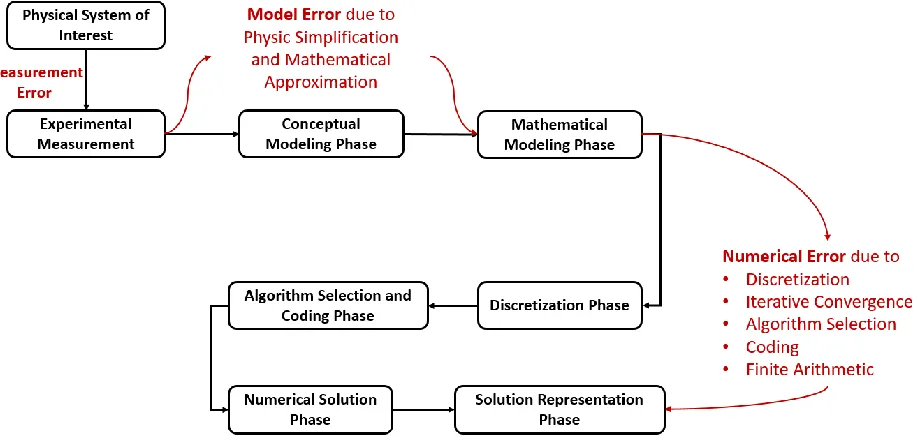
Figure 1. Main Error Sources during Phases for a Computational Simulation from
Traditional V&V Perspective of Simulation Codes ... 18
Figure 2. Review of Machine Learning Applications on Thermal-Hydraulic Modeling ... 24
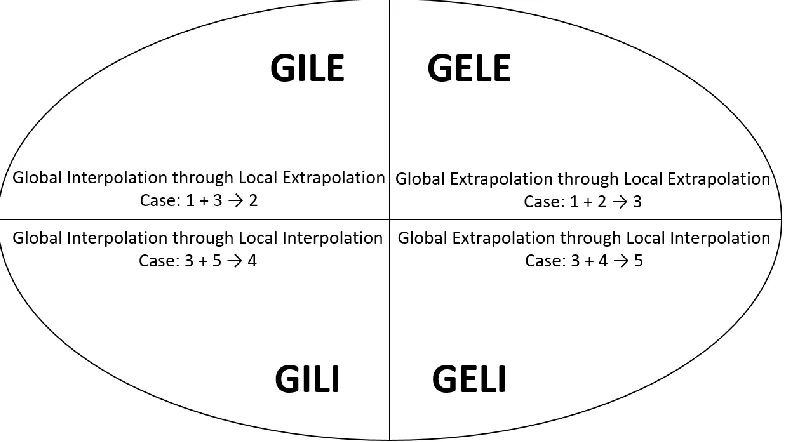
Figure 3. Illustration of Physics Coverage Condition Considering Global and Local Physics ... 26
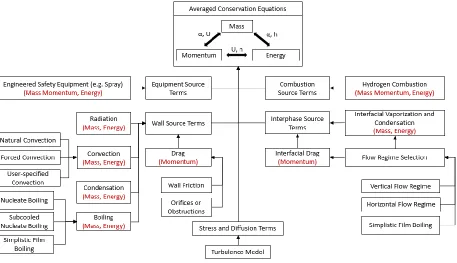
Figure 4. GOTHIC Structure on Thermal-Hydraulic Modeling and Simulation ... 30
Figure 5. Heat Transfer Selection Logic in GOTHIC... 33
Figure 6. Schematic of the Calculation of Boundary Energy Source Terms ... 35
Figure 7. Schematic of the Calculation of Boundary Momentum Source Terms ... 37
Figure 8. Calculation of Wall Distance in GOTHIC ... 40
Figure 9. Schematic of Calculation of Stress and Diffusion Terms in GOTHIC ... 41
Figure 10. Relationship between Mesh size and Closure Models ... 42
Figure 11. The Illustration of 2D Model for the GOTHIC Simulation of Natural Convection ... 43
Figure 12. Time-Averaged Non-dimensional Temperature Profiles with Different Meshes ... 44
Figure 13. Time-Averaged Non-dimensional Temperature Profiles with Same Mesh Size using 2D and 3D GOTHIC Models ... 45
Figure 14. The Illustration of GOTHIC Model for Mixed Convection ... 45
Figure 15. Comparison of Temperature Distribution with Different Mesh Sizes and Same Heat Transfer Model ... 46
Figure 16. Comparison of Temperature Distribution with Different Heat Transfer Models and Same Mesh Size ... 47
Figure 17. Schematic of How to train Neuron Networks (Demuth, Beale 2002) ... 50
Figure 18. Illustration of Neural Model with with R Inputs (Demuth, Beale 2002) ... 51
Figure 19. Illustration of a One-layer Network (Demuth, Beale 2002) ... 52
Figure 20. Schematic of a Three-layer Network with R Input Elements... 53
Figure 21. Central Idea of OMIS: Local Data Training for Error Estimation ... 56
Figure 22. Diagram of the Optimal Mesh/Model Information System (OMIS) Framework ... 59
Figure 23. Diagram of Step 2: Procedure of Predictive Capability Development ... 61
Figure 24. Identification and classification of Physical Feature ... 62
x
Figure 26. The Calculations of Error between Fine-Mesh Data and Coarse-Mesh Data ... 65
Figure 27. Schematic of OMIS Approach: Training Flow and Testing Flow ... 67
Figure 28. Diagram of Step 3: Procedure of PF Group Optimization ... 68
Figure 29. Diagram of Step 4: Procedure of ML Algorithm Determination ... 72
Figure 30. Diagram of Step 5: Procedure of Training Database Construction ... 73
Figure 31. The Illustration of GOTHIC 2D Model for Mixed Convection Case Study ... 80
Figure 32. The Illustration of Physics Decomposition for Mixed Convection in Case Study... 80
Figure 33. Identification and classification of Physical Features in Case Study ... 82
Figure 34. Illustration of 2D GOTHIC Model with Coarse Meshes and 2D Star CCM+ Model with Fine mesh ... 83
Figure 35. Physical Feature Coverage of Target Case in Case Study ... 84
Figure 36. PDFs of KDE Distance for Different Conditions in Test Matrix for Case Study ... 85
Figure 37. Comparisons between Original GOTHIC Simulation Results and Modified Results by ML Prediction ... 87
Figure 38. Importance Estimation of PFs on Different Local FOMs ... 87
Figure 39. Predictive Performance using 4-HL 20-neuron FNN ... 91
Figure 40. Relationship between Mean of KDE distance and MSEs of Prediction ... 92
Figure 41. PDFs of KDE Distance for Different Conditions in Test Matrix ... 94
Figure 42. Illustration of Outlet Temperature Calculation in Each Coarse-mesh Simulation ... 95
Figure 43. Comparisons between GOTHIC Simulation Results and Corrected Results by OMIS framework for the Simulation of Target Case with 1/30 m as Mesh Size ... 96
Figure 44. Three Cavity Models with Different Aspect Ratios ... 98
Figure 45. Physical Feature Coverage of “Rectangular” Cases in “Square” Cases ... 99
Figure 46. Comparisons between Original GOTHIC Simulation Results and Corrected Results based on OMIS Prediction of Test 1 to Test 3 ... 100
Figure 47. Comparisons between Original GOTHIC Simulation Results and Corrected Results based on OMIS Prediction of Test 4 ... 101
Figure 48. Two Cavity Models with Different Boundary Conditions ... 102
xi Figure 50. Distribution of Prediction Error of Temperature using Different Mesh Sizes with
Heat Flux Equal to 120 W/m2 ... 103
Figure 51. Distribution of Prediction Error of Temperature using Different Mesh Sizes with Heat Flux Equal to (a) 100 W/m2 (b) 150 W/m2 (c) 200 W/m2 ... 104 Figure 52. Comparisons between Original GOTHIC Simulation Results and Corrected
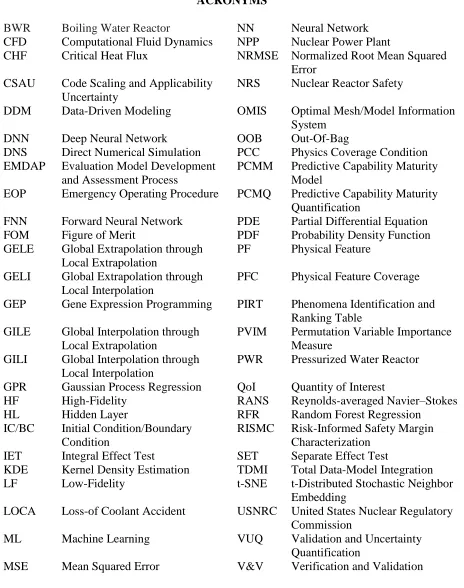
xii ACRONYMS
BWR Boiling Water Reactor NN Neural Network
CFD Computational Fluid Dynamics NPP Nuclear Power Plant
CHF Critical Heat Flux NRMSE Normalized Root Mean Squared
Error CSAU Code Scaling and Applicability
Uncertainty
NRS Nuclear Reactor Safety
DDM Data-Driven Modeling OMIS Optimal Mesh/Model Information System
DNN Deep Neural Network OOB Out-Of-Bag
DNS Direct Numerical Simulation PCC Physics Coverage Condition EMDAP Evaluation Model Development
and Assessment Process
PCMM Predictive Capability Maturity Model
EOP Emergency Operating Procedure PCMQ Predictive Capability Maturity Quantification
FNN Forward Neural Network PDE Partial Differential Equation
FOM Figure of Merit PDF Probability Density Function
GELE Global Extrapolation through Local Extrapolation
PF Physical Feature GELI Global Extrapolation through
Local Interpolation
PFC Physical Feature Coverage GEP Gene Expression Programming PIRT Phenomena Identification and
Ranking Table GILE Global Interpolation through
Local Extrapolation
PVIM Permutation Variable Importance Measure
GILI Global Interpolation through Local Interpolation
PWR Pressurized Water Reactor GPR Gaussian Process Regression QoI Quantity of Interest
HF High-Fidelity RANS Reynolds-averaged Navier–Stokes
HL Hidden Layer RFR Random Forest Regression
IC/BC Initial Condition/Boundary Condition
RISMC Risk-Informed Safety Margin Characterization
IET Integral Effect Test SET Separate Effect Test
KDE Kernel Density Estimation TDMI Total Data-Model Integration
LF Low-Fidelity t-SNE t-Distributed Stochastic Neighbor
Embedding
LOCA Loss-of Coolant Accident USNRC United States Nuclear Regulatory Commission
ML Machine Learning VUQ Validation and Uncertainty
Quantification
xiii NOMENCLATURE
Arabic Greek Symbols
𝑑𝐸𝑢 Euclidean distance 𝜆𝐿𝐹 model information (model forms and parameters) used in LF simulation
𝑑𝐾𝐷𝐸 KDE distance 𝛿𝐿𝐹 coarse mesh size used in LF
simulation
𝑑𝑀𝑎 Mahalanobis distance 𝜀 simulation error
𝐹𝐿𝐹 a set of governing equations and
constitutive equations in LF simulation
𝜖 measurement error 𝑝𝐾𝐷𝐸 KDE probability 𝜀𝑚𝑜𝑑𝑒𝑙 model error
𝑅𝐿𝐹
⃗⃗⃗⃗⃗⃗ solution of the LF simulation 𝜀𝑚𝑒𝑠ℎ mesh error
𝑅𝑇
⃗⃗⃗⃗⃗ true solution 𝜎 standard deviation
𝑅𝑒𝐷 Reynolds number in a pipe with
diameter D Subscripts
t time
𝑉 simulation variable HF High-Fidelity
1 CHAPTER 1. INTRODUCTION
1.1. Motivation
Quantification of Nuclear Power Plant (NPP) safety risk requires a systematic and yet practical approach to identification of accident scenarios, assessment of their likelihood and consequences. Instrumental to this goal is Risk-Informed Safety Margin Characterization (RISMC) framework [1], whose realization requires computationally robust and affordable methods for sufficiently accurate simulation of complex multi-dimensional physical phenomena, such as turbulence, heat transfer and multi-phase flow. Thermal-hydraulics is considered as one of the key disciplines essential for progress in nuclear science, making reference to NPP design and Nuclear Reactor Safety (NRS). Over the past decades, a number of computer codes were developed for simulation and analysis of thermal-hydraulics of reactor cores, reactor coolant systems, and containment behaviors in NPP under operating, abnormal transient and accident conditions. However, the simulation errors and uncertainties still inevitably exist even while these codes have been extensively assessed and used to support design, licensing, and safety analysis of the plants.
2 much local information is lost when the time and geometry (including volume and area) averaging approaches are applied on the local instantaneous two-fluid models. The second type is Computational Fluid Dynamics (CFD) code that has become commonly used for computer codes that numerically solve the transport equations of fluid mechanics (continuity, momentum and energy) using a local instantaneous formulation. These CFD codes (e.g., STAR-CCM+, OpenFOAM) consider the influence of turbulence using different turbulent models. Thermal-hydraulic analysis using CFD codes is computationally expensive since million cells might be needed even for modeling of a single NPP component.
Different from standard system codes (with much loss of local information) and standard CFD codes (with huge computational cost) for system-level thermal-hydraulic modeling and simulation of NPPs, this dissertation defines the third type as coarse-mesh CFD-like code. These codes with 3D simulation capability and full treatment of momentum transport terms ensure computational efficiency using coarse mesh size and the sub-grid phenomena in the boundary layer that can be captured by adequate constitutive correlations (e.g., wall functions and turbulence models). In contrast to standard CFD codes, these codes, such as GOTHIC [3], do not have a body-fitted coordinate capability: the subdivision of a volume into a multi-dimensional grid is based on orthogonal co-ordinates, and the code uses boundary-layer correlations for heat, mass and momentum exchanges between the fluid and the structures, rather than attempting to model the boundary layers specifically. Therefore, these codes have natural advantages compared with standard system codes and CFD codes to achieve sufficient accuracy for long-term multiple-component system simulation. These CFD-like codes have been extensively used for containment thermal-hydraulic analysis. [4-6]
3 applied models, correlations and assumptions is one of the main error sources. Another one is called “mesh error” that indicates the information loss of conservative and constitutive equations during the application of time and space averaging approaches. The local instantaneous Partial Differential Equations (PDEs) for mass, momentum and energy balance are space averaged to obtain the finite volume equations. Simulation results represent the averaged values of parameters over specified regions, which ignores the local gradient information. Other numerical errors have less influence on the modeling and simulation compared to model error and mesh error.
Since both main error sources are tightly connected with local mesh size, the nodalization of control volumes determines whether the user can get a relatively good simulation result or not. The finite mesh/volume approach, particularly in the coarse scheme of NPP simulations, could fail in not capturing the expected local behaviors of the fluids (sharp gradients of variables) due to limited resolution. On the other hand, a finer nodalization could introduce an improper extending of boundary-layer empirical correlation. All these factors make the selection of mesh size and model information (model parameter and model form) be an important but tricky task in the system-level thermal-hydraulic modeling and simulation using these CFD-like codes. In the current applications, the mesh size and models are selected based on previous modeling experience, this kind of “educated guess” may lead to an error for the new physical conditions. Therefore, a smart guide is urgently needed to provide advice on the optimal selections of coarse mesh size and models.
1.2. Overview of Traditional Model Validation Frameworks
4 these codes have been recognized as a mandatory part before their application on safety analysis and licensing due to the lack of physical knowledge and the lack of confidence on the code capability. Historically, United States Nuclear Regulatory Commission (USNRC) published rules for Loss-of Coolant Accident (LOCA) analysis in 10CFR 50.46 and Appendix K in 1974, which established the initial licensing procedures with a conservative approach. However, the conservative approach brought in some problems: (1) the conservatism proved in scaled-down tests may be not still valid in the full-scale plants; (2) the conservative approach is not suitable for Emergency Operating Procedure (EOP) studies. [8]
• Code Scaling and Applicability Uncertainty (CSAU)
5
• Evaluation Model Development and Assessment Process (EMDAP)
In 2005, USNRC issued another important document Regulatory Guide (RG) 1.203 to provide an acceptable Evaluation Model Development and Assessment Process (EMDAP) for the best estimate calculations of NPP transient and accident analysis. [10] EMDAP aimed to evaluate the adequacy of the applied codes and provide guidance for the following experiment and analytical tool development. The basic principles of EMDAP were developed based on the CSAU methodology, while EMDAP has formal and explicit descriptions for the concepts, definitions and processes, including the PIRT, assessment base, evaluation model, scaling analysis. After the logical and comprehensive validation, the decision process was executed to evaluate whether the code meets the adequacy standard and can be used for plant scenario analysis. However, the acceptance criteria were not clearly defined. One significant difference between EMDAP and CSAU is that the scalability of SET/IET facilities and code/model scalability were evaluated separately in different elements of EMDAP. Scalability analysis was executed for both of data and code. Same as CSAU, the system analysis and scaling analysis in EMDAP are highly heuristic and difficult to implement.
Mesh effect on code/model scalability was not fully considered in CSAU and EMDAP. They both recognized the existence of mesh sensitivity and required a mesh sensitivity study to make sure important FOM (e.g., PCT) are not significantly impacted. They assumed that a "constant" uncertainty was introduced between the scaled tests and plant application by applying the same modeling guidelines and consistent nodalization for both. However, the fact that mesh size could be one of the key model parameters and have an effect on code/model applicability was not fully considered since the mesh sensitivity was performed before the code/model scalability analysis. More discussions on EMDAP is in Chapter 7.
• Predictive Capability Maturity Model (PCMM)
6 assurance, (4) Code verification, (5) Solution verification, (6) Separate effects model validation, (7) Integral effect model validation, (8) Uncertainty quantification and sensitivity analysis. These eight elements act as decision attributes and form the basis for the decision regarding the maturity of a computer simulation code for the intended use. Then a qualitative assessment for each attribute was performed according to a PCMM matrix and characterized each attribute with different levels of maturity. Lastly, the achieved levels of maturity were compared with the level standards for the final decision making on validation adequacy. One significant benefit of PCMM is that code verification and model validation are explicitly distinguished by a formal definition for credibility assessment. However, the scaling effects were not clearly discussed which limited the PCMM capability in validating complex systems with multiple scales and physics. Recently, a validation framework called Predictive Capability Maturity Quantification (PCMQ) has been developed to support PCMM for maturity estimation of CASL (Consortium for Advanced Simulation of Light Water Reactors) challenging problem and application. [12] It provided a reason-based conceptual approach for structural knowledge representation, evidence incorporation and confidence assessment for implementation of PCMM for the intended applications. Maturity quantification is obtained using different techniques, like Fuzzy logic and Bayesian network that are well known for their ability to integrate subjective information (based on expert knowledge and judgment) with objective data (evidence). [13]
7 instead of having to converting the data into separate physical models where a great deal of information has to be abandoned. For conditions where directly applicable data is absent, the information can be predicted based on the near-by conditions included in the database. Uncertainty due to the lack of data can be reduced as new data becomes available. HF data refers to the data that have been adequately validated and has a potential to be used to reduce the simulation uncertainty from Low-Fidelity (LF) modeling and simulation.
Nowadays, the explosive development of Machine Learning (ML) algorithms and massive data available from numerical simulations make the idea of TDMI realistic and feasible. There have already been several efforts to apply ML algorithms on fluid dynamics since the beginning of this century. According to a classification of machine learning frameworks for thermal fluid simulation introduced by Chang et al. [15], current efforts mainly belong to Type I or Type II ML. Type I ML aims at developing new closure models assuming that conservation equations and closure models are scale separable. Type II ML concentrates on reducing the uncertainty of LF simulation by “learning” from HF data. Both of them requires a throughout understanding of the physical system and sufficient prior knowledge on closure models. These limitations make current data-driven approaches for specific local closure laws not applicable to the complex system-level thermal-hydraulic modeling and simulation of plants. The complexity of prior knowledge extremely increases when all the components, processes and involved phenomena in reactor systems should be considered together. A data-driven approach with less knowledge required is urgently needed for complex situations, especially when a great amount of HF data and computation capability are available. Based on the concept of TDMI, a Validation and Uncertainty Quantification (VUQ) framework for Eulerian-Eulerian two-fluid-model based multiphase CFD solver has been formulated. [16] The proposed framework applies Bayesian method to inversely quantify the uncertainty of the solver predictions with the support of multiple experimental data. However, the numerical error introduced in the discretization of the Partial Differential Equations (PDEs) is not considered. Besides, the statistical methods applied in the framework also introduce additional uncertainty which is difficult to be estimated.
8 based on the framework of EMDAP and the methodology of CSAU by combining data-driven and risked-informed concepts. REMDAP aims to shift from current expert-determined validation approach to a data-driven approach including the data-driven closure development, data-driven uncertainty quantification, and PCMQ with Bayesian Network.
Industry also shows interest and provide requirements for the development and demonstration of this data-driven methodology for the validation of Risk-Informed Safety Margin Characterization (RISMC) models for nuclear power plant safety analysis. [18] In order to increase the likelihood of industry acceptance and adoption of a data-driven code framework, following validation requirements that should be satisfied as a foundation have been proposed:
1. Testing/training priorities. The framework should focus first on areas where significant value can be added with a new approach. The model should be considered acceptable for the application if additional information would not affect the performance of this particular computational model.
2. Avoidance of overfitting. Due to the existence of data bias and noise, high-complexity machine learning models may overfit the data into some artificial trends. It should be considered by developers whether the data-driven model fully captures the underlying physics in a sufficient and necessary level of fidelity. The balance between accuracy and computational efficiency should be paid attention.
3. Model evaluation. Evaluations on data-driven models should be cross-benchmarked to traditional methods and clear visual representations should be used to demonstrate compliance.
4. Uncertainty quantification. For the regions where validation data of models is not available, the uncertainty in model/code output should be considered and quantified.
1.4. Dissertation Overview
9 characteristic lengths, such as CFD-like codes or coarse-mesh Reynolds-averaged Navier–Stokes (RANS) methods with wall functions.
1.4.1. Objectives of Dissertation
The objective of this work is to develop and demonstrate a data-driven framework to, 1. Estimate the local simulation error using Machine Learning (ML) algorithms;
2. Give advice on the optimal selection of coarse mesh size and models for low-fidelity simulations (e.g., system codes, CFD-like codes or Coarse-Grid CFD codes) to achieve accuracy comparable to that of high-fidelity data (e.g., DNS or high-resolution CFD).
In addition to improve the coarse-mesh simulations, this work also aims to develop a technical basis for the validation and uncertainty quantification of CFD-like codes in system thermal-hydraulic modeling and simulation
1.4.2. Technical Approach
The technical approach to develop and demonstrate the proposed framework includes, 1. Review pros and cons of current traditional and data-driven V&V frameworks if applied to the coarse-mesh CFD-like codes for system thermal-hydraulic modeling and simulation;
2. Considering a multi-disciplinary nature of the proposed development, review the required knowledge and efforts from multidisciplinary fields including system thermal-hydraulic modeling and simulation, statistics, machine learning, and V&V;
3. Investigate necessary technical capabilities and develop a methodology including basic concepts, basic assumptions and hypotheses, and the data-driven optimization framework. Each step of the proposed framework should be sufficiently explicit to be implemented;
4. Construct test matrix and synthetic cases to demonstrate how to apply the framework to a system thermal-hydraulic simulation;
5. Summarize lessons learned from the synthetic cases and plan future work to improve the framework.
1.4.3. Dissertation Structure
10 Chapter 2 introduces technical background of the proposed OMIS framework including error analysis of current thermal-hydraulic codes, literature review on data-driven applications on fluid dynamics, and the scope of this work.
Chapter 3 reviews the LF simulation tool, GOTHIC, which is a coarse-mesh CFD-like software initially developed for containment hydraulic analysis. The structure on thermal-hydraulic modeling is described including conservation equations, source terms, and closure models involved. The relationship between mesh and key closure models are discussed. In addition, a qualitative assessment of thermal-hydraulic simulation using GOTHIC is performed including mesh and model sensitivity study.
Chapter 4 reviews the ML algorithms applied in this work: one-layer Forward Neural Network (FNN) and Deep Neural Network (DNN).
Chapter 5 describes methodology of the proposed OMIS framework. Mathematical basis, practical consideration, basic assumptions and hypotheses are introduced. Each step of the framework is explicitly described with the applied methods, algorithms and equations.
Chapter 6 discusses the case study on mixed convection simulation in a cavity. Different global extrapolation conditions are designed to illustrate the proposed data-driven framework and approach. Lessons learned from case study are also recorded for the improvement of the framework in the future.
Chapter 7 represents the effort to integrate OMIS framework and EMDAP. The data-driven OMIS framework has a potential to be a supplement to make the implement of EMDAP feasible and practical.
Chapter 8 summarizes the remarks and the contributions of this work. 1.5. Terminology and Definitions of Related Concepts
• Data Convergence:
11
• Data-Driven Modeling (DDM)
The concept of DDM is based on analyzing the data about a system, in particular finding connections between the system state variables (input, internal and output variables) without explicit knowledge of the physical behavior of the system. DDM focuses on computational intelligence and Machine Learning (ML) algorithms that can be used to build models for complementing or replacing physics-based models. This concept is proposed opposite to the concept of conventional theory-driven modeling.
• High-Fidelity (HF) Data and Low-Fidelity (LF) Simulation:
The concept of fidelity represents the degree to which the models or simulations is close to their real world referents or to other simulations in such terms as accuracy, scope, resolution, level of detail, level of abstraction and repeatability. In thermal-hydraulic analysis, experimental data and numerical simulation result using validated code or DNS (Direct Numerical Simulation) can be considered as the High-Fidelity (HF) data for model or code validation.
HF data is regarded as the sufficiently accurate data considering the true physics is unknown. HF data can be the experimental data, DNS simulation result or numerical data from validated thermal-hydraulic simulation codes with fine mesh and HF models. LF simulation implies the un-validated simulations using system-level thermal hydraulic codes with coarse mesh and simplified physical models with low fidelity. HF does not only indicate fine mesh, but also the HF models and algorithms applied in the codes. The application of OMIS framework is trying to minimize the difference between HF data and LF simulation results on the FOMs in system-level thermal hydraulic simulations, so that the LF simulations are computationally cheaper than HF simulations of finer-mesh CFD and meanwhile have higher accuracy than the no-guide one-shot use of system-level thermal hydraulic codes.
• Coarse-mesh CFD-like Codes:
12 containment. Most of these containment-specific codes applies porous media approach. The main characteristics of those codes are,
CFD-like: As these codes (e.g., GOTHIC) are developed for the simulation of large containment compartments, coarse numerical grids are applied to divide the large control volumes into several coarse-mesh cells. GOTHIC includes a full treatment of the momentum transport terms in multi-dimensional models, with optional models for turbulent shear, and for turbulent mass and energy diffusion. The hydraulic model of GOTHIC is based on a network of computational volumes (1D, 2D and 3D) connected by flow paths. In contrast to standard CFD codes, those codes do not have a body-fitted coordinates capability: the subdivision of a volume into a multi-dimensional grid is based on orthogonal co-ordinates, and the code uses boundary-layer correlations for heat, mass and momentum exchanges between the fluid and the structures, rather than attempting to model the boundary layers specifically.
• Mesh Error vs. Discretization Error
The discretization error is proposed from the classic Verification and Validation (V&V) point of view for the solving of Partial Differential Equations (PDEs), which assumes that when mesh size goes to zero the solution of PDEs converges. However, due to the correlation-based design in the simplified boundary-layer treatment, GOTHIC is not expected to converge when mesh size goes to zero due to very fine mesh may not satisfy the applicability of these empirical correlations. GOTHIC applies finite volume technique with cell volume and surface porosities for complex geometries. The local instantaneous PDEs for mass, momentum and energy are time and space averaged to obtain the finite volume equations. Results from GOTHIC represent the averaged values of parameters over specified regions, not the exact value at the central points of the regions. Therefore, mesh error indicates the information loss of conservative and constitutive equations during the application of time and space averaging approaches. Other numerical errors in the system code due to iterative convergence, algorithm selection, coding error and finite arithmetic also exist in GOTHIC, but have less influence on the modeling and simulation compared to model error and mesh error.
• Scale Invariant
13 full-scale applications. There are two kinds of scale-invariant approaches: (1) Full-scale (or physics-conserved) experiment, which is (presumably) independent on the facility scale, (2) DNS modeling where the local information is solved accurately with very fine mesh. Reduced-order models e.g., LES (Large Eddy Simulation), RANS models and system codes are not scale-invariant approaches.
• Scaling Uncertainty
The empirical models used in system codes are generally developed from the experiments where the IC/BC (Initial Condition/Boundary Condition) and geometry were not the typical NPP operating conditions, so many of them do not have the scalability to the nuclear reactor applications. Besides, some tuning constants, such as flow resistance coefficients, heat transfer fouling factors were used in the validation process to satisfy better agreement between the test data and the simulation. However, in fact, these tuning constants are not scalable for the extrapolation conditions although they could cover up the distortions in some specific conditions. The extending use of developed models from a scaled test to a NPP application requires a great deal of evaluation and calibration. The effect of scaling on the model error/uncertainty calibrated from the data from scaled experiments greatly influences the accuracy of simulation and leads to an unknown error/uncertainty. The uncertainty due to scaling effect is called scaling uncertainty.
• Physics Coverage Condition
14
• Physical Feature Coverage (PFC)
15
CHAPTER 2. TECHNICAL BACKGROUND
2.1. Introduction
This chapter describes the technical background of the proposed data-driven methodology including error analysis of current thermal-hydraulic codes in Section 2.2, literature review on data-driven applications on fluid dynamics in Section 2.3, and the scope of this work in Section 2.4.
2.2. Error Analysis of Thermal-Hydraulic Codes
These coarse-mesh correlation-base CFD-like codes include a full treatment of the momentum transport terms in multi-dimensional models, with optional models for turbulent shear, and for turbulent mass and energy diffusion. The hydraulic model is based on a network of computational volumes (1D, 2D and 3D) connected by flow paths. This makes these codes become the first choice to achieve sufficient accuracy for long-term multiple-component system simulation. However, there are many challenges in their VUQ process. Those codes are based on equations for two-phase flow which are typically resolved in Eulerian coordinates. The two-phase flow field is described by mass, momentum, and energy conservation equations for the liquid and vapor phases separately and mass conservation equations for some noncondensable gases present in the mixture. Depending on the number of balance equations, different sets of constitutive equations are required to close the equation system. These constitutive equations need to describe the physical phenomena in a wide span of scale, ranging from down-scaled integral system experiments up to full size reactor geometry. Before applying these CFD-like codes into OMIS framework, it is necessary to understand: (I) error sources in traditional V&V perspective, (II) scaling issues in thermal-hydraulic applications and (III) error sources in the applications of these CFD-like codes.
2.2.1. Uncertainty and Error Sources from Verification and Validation Perspective
16 verification is the identification and quantification of error in the computational solution through the assessment of coding reliability (as code verification) and the numerical accuracy of computational model (as solution verification). Validation is defined as “the process of determining the degree to which a model is an accurate representation of the real physics”. [19] The fundamental strategy of validation is the identification and quantification of error and uncertainty in the simulation results by comparison with experiments. Although the huge amounts of financial and human resources spent on the process of V&V, the results predicted by the code are still affected by errors and uncertainties whose sources can be attributed to several reasons as model deficiencies due to physics simplification, approximations in the numerical solution, system nodalization, and the imperfect knowledge of Initial Condition/Boundary Condition (IC/BC). The interchangeable use of the terms “uncertainty” and “error” in many texts and articles leads to a great deal of misinterpretation and confusion of fundamental concepts and simulation analysis.
The concept of uncertainty fundamentally represents whether the source is stochastic in nature or lack of knowledge in nature. During the past decades, the risk assessment community, primarily the Nuclear Reactor Safety (NRS) community, has developed the most workable and effective categorization of uncertainties: aleatory and epistemic uncertainties. Aleatory uncertainty is defined as “the inherent variation associated with the physical system or the environment such as the variation in thermodynamic properties due to manufacture”. [19] Common sources of aleatory uncertainty include system parameters, IC/BCs that may vary randomly from component to component and/or system to system. Epistemic uncertainty represents the potential deficiency in the modeling due to lack of knowledge. In the risk assessment community, it is common to refer to epistemic uncertainty simply as uncertainty and aleatory uncertainty as variability. “Epistemic uncertainty is a property of the modeler or observer, whereas aleatory uncertainty is a property of the system being modeled or observed”. [19] One of the main epistemic uncertainties in the thermal-hydraulic modeling and simulation is IC/BC uncertainty, which stems from the imperfect knowledge of the initial status of system component and boundary conditions imposed on the system.
17 and in experimental measurements of engineering and scientific quantities, the true value is never known. Therefore, the definition and accuracy of the true value determines whether the usefulness of the concept of error in practical applications. Sometimes experimental data and numerical simulation result using validated code or DNS can be considered as the HF data for model or code validation. [20] According to the different phases for a computational simulation [21], the sources of errors can be separated into three parts: measurement error, model error and numerical error as shown in Figure 1. If we consider experimental data as the true value of physics of interest, the model error and numerical error can be regarded as the main error sources during the modeling and simulation.
18 equations. Algorithm selection and coding phase focuses on selecting appropriate numerical algorithm and convert the modeling and simulation procedure into a computer code. In this phase, error can be defined as the difference between the exact solution of discrete equation and the exact solution of mathematical model. Numerical solution phase focuses on computing the individual numerical solutions, only discrete values and discrete solutions exist with finite precision. The finite arithmetic on digital computers may lead to round-off errors. Solution representation phase concerns the representation and interpretation of both the individual and collective computational solutions. The collective results are ultimately used by decision makers while the individual results are typically used by engineers, physicists and numerical analysts.
Figure 1. Main Error Sources during Phases for a Computational Simulation from Traditional V&V Perspective of Simulation Codes
As was discussed above, the main uncertainty and error sources in traditional system-level thermal-hydraulic modeling and simulation are (1) IC/BC uncertainty; (2) Model error due to physical simplification and mathematical approximation; (3) Those numerical errors due to discretization, iterative convergence, algorithm selection, coding error and finite arithmetic.
19 effect greatly influences on the selection of model form/parameter and system nodalization (mesh size), which are the main sources of uncertainties and errors in thermal-hydraulic modeling and simulation. Here error is defined as a recognizable inaccuracy in any phase or activity of modeling and simulation that is not due to lack of knowledge. Technically, there are some ways to obtain simulations that are more accurate by using smaller mesh sizes when solving PDEs or using more completed but accurate closure models for the systems. However, the accuracy can be considered acceptable or allowed to remain due to practical constraints such as computation cost or convenient modeling, especially in the analysis for the entire NPP systems.
2.2.2. Scaling Issues in Thermal-hydraulic Application
Scaling is the process of assessing the similarity of phenomena occurred/observed in reduced-scale test facility and the full-scale nuclear reactor application since it is impractical to perform experiments with the same size, pressure and power of the full-scale plants. Normally, the prediction of prototype-scale processes is performed using models developed based on scaled experiments. These scaled experiments are designed by decomposition and down scaling the full scale applications into easy-handling scaled tests with respect to the understanding of one or more of the phenomena involved in the real applications. Scaling issues indicates the difficulties and complexities stemming from the applicability of the data measured in the scaled experiments to the conditions expected in the prototype. The scaling issues arise from the impossibility of obtaining transient data from the prototype system under off-nominal conditions. Solving the scaling issues implies developing approaches, procedures, and data suitable for predicting the prototype’s performance utilizing small-scale models or data. [23]
20 codes are not scale-invariant approaches. That is where scaling distortion exists, which refers to any discrepancy between the scaled parameter and the referenced plant parameters.
Although scaling distortion exists, computer codes including the three types mentioned before are widely used in NPP safety analysis because of cost and time effectiveness. The empirical models used in system codes are generally developed from the experiments where the IC/BC and geometry were not the typical NPP operating conditions, so many of them do not have the scalability to the nuclear reactor applications. Besides, some tuning constants, such as flow resistance coefficients, heat transfer fouling factors were used in the validation process to satisfy better agreement between the test data and the simulation. However, in fact, these tuning constants are not scalable for the extrapolation conditions although they could cover up the distortions in some specific conditions. The ghost of scalability issues also haunts in the applications of CFD and CFD-like codes. There are several physical models (turbulence models, wall laws) and numerical schemes in these codes, the extending use of which from a scaled test to a NPP application requires a great deal of evaluation and calibration. The effect of scaling on the model error/uncertainty calibrated from the data from scaled experiments greatly influences the accuracy of simulation and leads to an unknown error/uncertainty. The uncertainty due to scaling effect is called scaling uncertainty.
The data-driven framework proposed in this dissertation is expected to have the scalability to improve/correct the scale-distorted approaches that connect scaled data to the real full-scale applications and reduce the uncertainty of scaling.
2.2.3. Error Analysis of CFD-like Codes
21 For the thermal-hydraulic simulations using these codes, the key local phenomena in near-wall region are friction, turbulence and heat transfer. Respective correlations are applied for the simulation where characteristic lengths are introduced as one of the key parameters. The calculation of characteristic length is default executed using the local mesh size. Therefore, if users do not set the characteristic lengths by themselves, the mesh size they apply greatly affects the performance of the empirical correlations in the local near-wall cells. Here the mesh size is treated as one of the model parameters that determine whether the correlations are applied in their applicable ranges or not. This is one of the reasons why mesh size greatly affects the modeling and simulation results. Another major error source is also related to mesh size; here we call it “mesh error” to distinguish it with discretization error. The discretization error is proposed from the classic V&V point of view for the solving of PDEs, which assumes that when mesh size goes to zero the solution of PDEs converges. However, due to the correlation-based design in the simplified boundary-layer treatment, these CFD-like codes (e.g., GOTHIC) are not expected to converge when mesh size goes to zero due to very fine mesh may not satisfy the applicability of these empirical correlations. Taking GOTHIC as example, it applies finite volume technique with cell volume and surface porosities for complex geometries. The local instantaneous PDEs for mass, momentum and energy are time and space averaged to obtain the finite volume equations. Results from GOTHIC represent the averaged values of parameters over specified regions, not the exact value at the central points of the regions. Therefore, mesh error indicates the information loss of conservative and constitutive equations during the application of time and space averaging approaches. Other numerical errors in the system code due to iterative convergence, algorithm selection, coding error and finite arithmetic also exist in GOTHIC, but have less influence on the modeling and simulation compared to model error and mesh error.
2.3. Data-driven Modeling Application on Fluid Dynamics
23 Most of these approaches focused on how to deal with model form uncertainty of RANS turbulence modeling without considering the numerical error due to discretization. Hanna and Dinh investigated the feasibility of a Coarse Grid CFD (CG-CFD) approach by utilizing ML algorithms to produce a surrogate model that predicts the CG-CFD local errors to correct the variables of interest. [34] This work focused on the correction of discretization error of CG-CFD without considering the model errors that may be introduced in CFD applications on thermal-hydraulic analysis. According to a classification of machine learning frameworks for thermal fluid simulation [15], the CG-CFD approach belongs to Type V ML which does not have requirement for prior knowledge. Type V ML fully relies on ML algorithms to discover the underlying physics directly from data.
2.4. Scope of This Work
The significance of this work stems from the application of data-driven modeling approach based on the concept of TDMI. The work scope mainly focuses on three parts:
2.4.1. Validation of Coarse-mesh CFD-like Codes
All these data-driven approaches reviewed in Section 2.3 are not designed for CFD-like or coarse-mesh CFD codes. These efforts analyzed model error and mesh error separately with another fixed, the logic of which is impractical to the coarse-mesh methods where mesh size is treated as a model parameter and mesh convergence is not expected. To overcome this difficulty in the V&V and application of CFD-like codes, OMIS is developed to deal with these two error sources together, as shown in Figure 2. OMIS framework is considered as a Type V ML framework since it treats the physical models, coarse mesh sizes and numerical solvers as an integrated model, which can be considered as a surrogate of governing equations and closure correlations of LF code. The development of this integrated model does not need relevant prior knowledge, and purely depends on existing data. Besides, compared to current data-driven efforts, OMIS framework is successfully applied in thermal-hydraulic modeling and simulations, not only in adiabatic fluid dynamics where previous efforts were focused on.
24 and various PFs, the prediction of simulation error takes all the error sources into accounts and has a promising accuracy even for extrapolative conditions where validation data is not available. This scalability by exploring the local physics is discussed in following section.
Figure 2. Review of Machine Learning Applications on Thermal-Hydraulic Modeling 2.4.2. Development of A Data-driven Scale-invariant Approach
Over the past few decades, many concepts of nuclear reactor have been proposed with different components, geometries and powers. The respective global physical conditions might be an “extrapolation” to previous simulations, which seems to bring large uncertainty into the demonstration simulations. The relevant thermal-hydraulic experiments with a wide range of scale and structures have to be designed for respective code development and validation, the data generated from previous simulations have to be abandoned in the corner. However, no matter how much the extrapolation of global physics is, local physics such as the interaction between liquid, vapor and heat structure may not change. This makes it possible that local physical parameters or variables in the local cells are similar even the global physical condition totally changes.
25 how Re number or geometry changes, the local physics is always turbulence if the Re number is big enough.
According to the identification of global physics and local physics, four different physics coverage conditions are classified as Global Interpolation through Local Interpolation (GILI), Global Interpolation through Local Extrapolation (GILE), Global Extrapolation through Local Interpolation (GELI) and Global Extrapolation through Local Extrapolation (GELE).
For instance, there are several cases for single-phase fully developed flow in a pipe of diameter D: the local physical conditions and the values of 𝑅𝑒𝐷 which represent the global physical conditions are listed in Table 1. Assume some of cases as existing data and others as target simulation, then four different physics coverage conditions are specified with both of global and local physics taken into consideration, as shown in Figure 3. GILI condition represents the situation where the both global and local physical conditions of target case (Case 4) are identified as an interpolation of existing cases (Case 3 and 5). In this situation, the physics of target case is globally and locally “covered” by existing cases, the model developed using the sufficient data from Case 3 and 5 is reliable to predict the condition of Case 4. However, in GILE condition, even if the global physical condition of target case (Case 2) is covered by existing cases (Case 1 and 3), the data from existing cases is not able to inform the prediction of target case since the local physics are totally different. As proved in reality, the models developed from experiments of laminar flow or turbulent flow are not applicable for the transition prediction. GELE condition has the same problem, the models developed from the experiments of laminar flow is not applicable for the turbulence prediction. In these two conditions, the existing data does not contain the instructive information of the target so that it is useless no matter how much the data is used for model development.
Table 1. Example of Different Global and Local Physical Conditions Case Global Physical Condition Local Physics
1 𝑅𝑒𝐷 = 102 Laminar Flow
2 𝑅𝑒𝐷 = 2.5 × 10³ Laminar–Turbulent Transition
3 𝑅𝑒𝐷 = 1 × 10⁴
Turbulent Flow
4 𝑅𝑒𝐷 = 2 × 10⁴
26 Figure 3. Illustration of Physics Coverage Condition Considering Global and Local Physics
GELI condition indicates the situation where the global physical condition of target case (Case 5) is identified as an extrapolation of existing cases (Case 3 and 4) but the local physics are similar, turbulent flow. The values of some representative parameters (e.g., local velocity gradients) are even interpolative in the existing cases. Unlike in GILE or GELE conditions, the local similarity in GELI condition provides the feasibility to take great benefits from the existing data to estimate the target case. Instead of endlessly evaluating the applicable ranges of models and scaling uncertainty, exploring the similarity of local physics opens another door to overcome the problems in global extrapolations. Based on the idea of TDMI, the specific physical models, local mesh sizes and numerical solvers are treated as an integrated model, where the interactions among different physical or numerical models are also taken into consideration. Data obtained from this integrated model can be used to construct a library that identifies and stores the local similarities in different physical conditions. This library is self-improvable and automatically updated as new qualified data is available. Once the library is built, ML algorithms are applied to find natural patterns in data that generate insight and help make better predictions.
27 physical conditions such as a set of characteristic non-dimensional parameters, or different IC/BCs, or different geometries/structures, or dimensions. The interpolation of local physics implies two definitions:
1. From the perspective of traditional knowledge on physics: the existing cases (no matter experimental or numerical tests) and target case are designed for the local physics with similar length scales and time scales, such as the turbulence example discussed above;
2. From the perspective of data characteristics: the underlying local physics of these cases is assumed to be represented by a set of Physical Features (PFs), and the PF data of target case is mostly covered or similar to the PF data of existing cases. This similarity is depending on the identification of PFs, data quality and quantity.
Targeting on the “GELI” condition, OMIS framework is developed as a TDMI approach that deals with data, physical model and coarse-mesh simulation in an integrated manner using ML algorithms. By concentrating on the similarity of local physics, OMIS framework has a potential scalability to the globally extrapolative conditions. The application of ML algorithms realizes the data-driven concept of OMIS by using computational methods to "learn" information directly from data without assuming a predetermined equation as a model. These algorithms adaptively improve their performance as the size of training data increases. The key outcomes of OMIS framework are (1) quantitatively measuring the PF similarity of existing data and target data, and (2) identifying the relationship between these local PFs and local simulation error for future predictions. After all, OMIS is promising to develop a data-driven scale-invariant approach to deal with scaling issues and provide evidence for the generation of validation data.
2.4.3. Supplement to Evaluation Model Development and Assessment Process
28 explore the local physics, OMIS framework has the potential to bridge the scale gap and work as a supplement to the implementation of EMDAP considering the industry requirements on validation of RISMC models. Mode details are discussed in Chapter 7.
2.5. Chapter Summary
This chapter introduces the technical background of OMIS framework. In Section 2.2, uncertainty and error sources in system-level thermal-hydraulic modeling and simulation are discussed from traditional Verification and Validation (V&V) perspective, followed by the overview of scaling issues and user effects in thermal-hydraulic applications. It implies that the traditional V&V frameworks are not applicable to these coarse-mesh CFD-like codes, whose mesh error and model error are tightly connected since mesh size is treated as one of the key model parameters. By performing a brief discussion on the error analysis of these codes, it is found that mesh convergence is not available due to the integral form of conservation equations. Therefore, a smart guide is urgently needed to provide advice on the optimal selections of coarse mesh size and models before the application of these codes.
29 CHAPTER 3. REVIEW OF COARSE-MESH SIMULATION TOOL: GOTHIC 3.1. Introduction
This chapter reviews the Low-Fidelity (LF) simulation tool, GOTHIC, which is a coarse-mesh CFD-like software initially developed for containment thermal-hydraulic analysis. The structure on thermal-hydraulic modeling is described in Section 3.2 including conservation equations, source terms, and closure models involved. The relationship between mesh and key closure models are discussed. Section 3.3 describes a qualitative assessment of thermal-hydraulic simulation using GOTHIC including mesh and model sensitivity study.
GOTHIC allows users to build models for solving complex thermal hydraulics problems involving multiphase flow of steam, water drops, liquid water and non-condensing gases with interface heat and mass transport. Fluid regions can be represented by lumped parameter nodes, 1D, 2D and 3D grids. Physical models are included for interphase drag and heat and mass transfer to model boiling, evaporation and condensation in a wide range of flow regimes including single phase, bubbly and film/drop flows. Each phase is tracked with its own set of mass, energy and momentum balance equations to allow modeling thermal nonequilibrium, phase slip and counter current flows. The vapor phase is made up of steam and any number of non-condensing gas components. [3]
As a coarse-mesh thermal-hydraulic analysis software for modeling and simulation of containment processes, GOTHIC code has been evaluated, validated, and applied in deterministic safety analysis. In particular, GOTHIC code has been successfully employed for analysis of containment thermal-hydraulic during loss of coolant accidents (LOCAs). [5]
30 3.2. GOTHIC Structure on Thermal-Hydraulic Modeling and Simulation
GOTHIC structure on thermal-hydraulic modeling and simulation contains conservation equations, source terms and closure models as shown in Figure 4. The conservation equations build the physics basis for the multiphase thermal-hydraulic analysis. The source terms in these averaged conservation equations respectively represent the mass/momentum/energy sources from external environment (thermal boundaries, plant equipment or chemical reactions) or due to phase change. In order to solve those source terms, several closure models are introduced and coupled.
Figure 4. GOTHIC Structure on Thermal-Hydraulic Modeling and Simulation 3.2.1. Conservation Equations
31 𝜕 𝜕𝑡∫ 𝜃𝛼𝜑𝜌𝜑𝜁𝑑𝑉 𝑉 = − ∫ Ψ𝛼𝜑𝜌𝜑𝜁𝑢⃗⃗⃗⃗⃗ ∙ 𝑛⃗ 𝑑𝐴𝜑 𝐴 + ∫ Ψ𝛼𝜑𝜌𝜑𝐷𝜑𝑐∇⃗⃗ ( 𝜌𝜑𝜁 𝜌𝜑 ) ∙ 𝑛⃗ 𝑑𝐴 𝐴𝑓 (1)
Storage Convection Diffusion
+ ∫ 𝑠𝜑𝜁𝑐 𝑑𝐴 𝐴𝑤 +𝑆𝜑𝜁𝑐 +𝐸𝜑𝜁𝑐 +𝐶𝜑𝜁𝑐 Boundary (Wall) Source Interface Source Equipment Source Combustion Source
The subscript φ refers to the phase and takes on the values v (vapor), l (liquid). The subscript ζ refers to a component of the vapor (ζ = s for the steam component, ζ= n for a single component of the noncondensing gas mixture, and ζ = g for the noncondensing gas mixture). GOTHIC applies porous media approach, θ is the volume porosity and is Ψ the area porosity factor. The porosity factors range from 0 to 1 with a value of 1 for a completely unobstructed volume or area. α is the volume fraction, ρ is the density, u is the velocity, is outward normal to the surface 𝑑𝐴. 𝐴𝑓 is that portion of the total surface area in contact with adjacent fluid volumes.
𝐷𝑐 is the mass diffusion coefficient, including turbulence effects only. 𝑠𝑐 is the mass source per unit area generated at, or passing through, bounding wall 𝐴𝑤. 𝑆𝑐 is the mass source due to
interaction with other phases (e.g., evaporation, condensation, drop entrainment deposition), 𝐸𝑐 is the mass source from engineered safety equipment and 𝐶𝑐 is the mass source from hydrogen combustion. Momentum conservation is expressed as below,
𝜕 𝜕𝑡∫ 𝜃𝛼𝜑𝜌𝜑𝑢⃗⃗⃗⃗⃗ 𝑑𝑉𝜑 𝑉 = − ∫ Ψ𝛼𝜑𝜌𝜑𝑢⃗⃗⃗⃗⃗ (𝑢𝜑 ⃗⃗⃗⃗⃗ ∙ 𝑛⃗ )𝑑𝐴𝜑 𝐴 + ∫ Ψ𝛼𝜑𝜎𝜑∙ 𝑛⃗ 𝑑𝐴 𝐴𝑓 + ∫ 𝜃𝑔 𝛼𝜑𝜌𝜑𝑑𝑉 𝑉 (2)
Storage Convection Surface Stress Body Force
+ ∫ 𝑠⃗⃗⃗⃗⃗ 𝑑𝐴𝜑𝑚 𝐴𝑤
+𝑆⃗⃗⃗⃗⃗ 𝜑𝑚 +𝐸⃗⃗⃗⃗⃗⃗ 𝜑𝑚
Boundary (Wall) Source Interface Source Equipment Source
![Figure 19. Illustration of a One-layer Network [49]](https://thumb-us.123doks.com/thumbv2/123dok_us/1340767.1167013/68.612.245.368.181.324/figure-illustration-layer-network.webp)