Improved Fuzzy and Illuminate Normalization
Based Color Cat Algorithm
Navdeep Kaur, Er.Gurpreet Kaur
Student, Dept. of CSE., Global Institutes, Amritsar, India
Assistant Professor, Dept. of CSE., Global Institutes, Amritsar, India
ABSTRACT: Color constancy is ability to accredit the color of an object independent of color of light source. The use of illuminate normalization is ignored in color cat but its use may reduce the uneven illuminate issue of color constancy. The color cat algorithm may introduce low intensity image, so adaptive color enhancement algorithms are required to be integrated with existing techniques. The fuzzy logic based noise reduction is also used to give better results.
KEYWORDS: Color constancy, Color constancy approaches, Color constancy algorithms
I. INTRODUCTION
COLOR of any object or image is derived from three components basically i.e. amount of light and color reflected by an object, the sensitivity of cone cells present in our eye and illuminant spectra. Among these three components illuminant spectra is instable in nature or is least stable. Illuminant changes as the amount of light present in our surroundings changes i.e. it varies in early morning, noon time ,at evening as well as night time .Thus as the illuminant varies it results in variation of color of an object i.e. as light varies in the same manner color of object also varies and in technical language we can say that color of an object is directly proportional to amount of light present around an object. The human visual system solves this problem due to the so-called color constancy property. This property allows humans to identify the color of an object independently of the color of the light source.
Human eye can identify all colors easily but for machine oriented applications it is needed applications like image retrieval, image classification, color object recognition and object tracking and many more.
Average intensity of the scene under neutral light is world scene.
A scene consists of number of illuminant objects and light falling on these objects varies and its reflectance property also varies. useful point of departure is to consider the case where the illumination is uniform across the scene, so that it may be characterized by its spectral power distribution, E(λ).
2. COLOR CONSTANCY ALGORITHMS
i. RETINEX BASED WHITE PATCH ALGORITHM
Retinex is one of the prior color constancy method developed and weigh that precipitous change in chromacity is simulated by a modification in reflectance model. This tacit that illuminant smoothly varies throughout the image and does not change between abutting or nearby locations. Assorted implementations have been proposed using this theory. One algorithm called white patch algorithm which is used for assuming white patches on an image which are formed because of maximum response of RGB channels are also part of retinex theory. Hence, retinex theory was a in essence step towards color constancy based on a single light source.
light source color. So, it is very efficient algorithm which helps us to estimate the light source color of a scene. Since, the grey world algorithm is sensitive to large uniformly colored surfaces.
iii. GAMUT MAPPING ALGORITHM
This algorithm is based on pixel based color constancy approach and assumption of human vision system. Since, one can analyze only a limited number of colors for a given source in real world images. But, any variation of color results into new colors. The limited set of colors under given illuminant is represented as canonical gamut C which is computed under a given light source by observing many surfaces.
iv. GREY EDGE ALGORITHM
Most of the methods develop earlier are based on single uniform source of light and from pixel value we have to estimate light source which is not feasible always. As, image may effected by multiple sources of light. Thus grey edge algorithm deals with such images which are affected by multiple sources of light. Pixel based methods are extended to incorporate with derivative information of edges and high order statistics, Thus results in grey edge algorithm. This algorithm is programmed to create edge based color constancy as most or we can say maximum detail of image is reflected by images only. It is based on assumption that average edge difference in a scene is achromatic. In this algorithm light source colors are replaced from average color derivative in the image respectively.
v. COLOR CAT
It performs well than the entire color constancy algorithm by combining the outflank dimensions of two color constancy methods. This paper has introduced a new, bolted and precise learning based method based on color histogram is proposed and its results are very efficient than all other algorithms. The method is called Color Cat (CC) and it surpass most of the other methods in conditions of accuracy and computation cost hence combining the scoop properties of the two main color constancy method groups [2].
1. I = Get Image( )
2. H = I.CalcuteHistogram(n) 3. h’= Mh
4. x = h’ 5. r = x( - )+ 6. b = r + 7. g = 1-r-b 8. e = (r , g , b)
Since the chromaticity different parts of the particular ground-truth light valuations use a substantial correlation, one of these might be reconstructed through the different fairly accurately therefore lessening the volume of valuations had to identify the particular light through 2 to 1. In this manner, the especial number of probable chromaticities is delineating by way of single line since revealed. By knowing the two parameters i.e. the value of and slope-intercept the value can be reconstructed [2].
II. RELATED WORK
S. bianco et. al. [2009] has introduced automatic color constancy algorithm selection and combination in which he had tried to investigate how illuminant estimation techniques can be helpful in improving low level, intrinsic properties of an image. Decision forest is used in this algorithm to select appropriate and perform its operations accordingly.
Ching – Chih Wang .et .al [2006] had discussed about a novel automatic white balance method for digital still cameras in which he had focused on automatic white balance which is important function and helps to adjust the image as if it is taken under canonical light. This algorithm uses dynamic threshold for detection of white point and is more efficient than other algorithm.
Vlad C. Cardei et. al. [2002] has thrown light on uses of neural network in chromaticity and had described multi layer neural network which is able to recover the illumination chromacity of any image which is describing a scene. This method is very applicable to object recognition where color description which is independent in nature is required to great extent.
Catarine Barata et. al. [2013] had focused on improving dermoscopy image classification using color constancy. Robustnees of dermoscopy image as well as normalization of its values are done before training and testing of it in any system. In this paper, basically four algorithms are investigated i.e. Gray world, Max RGB, Shades of Grey and General Gray world.
S. Bianco et. al. [2007] has discussed that a single algorithm cannot solve the problem of chromaticity and these function perform properly hen prior assumptions are properly satisfied and after comparing performance of the method over large data sets, Wilcox on sign test is only taken of all the obtained experimental results. It is confirmed that best and work algorithm does not exist in reality but varies from image to image.
Mohammad Mehdi Faghih et al. [2014] has investigated that a single algorithm cannot be considered as universal algorithm to solve all the problems because in each and every image data varies. Some are taken under single light source and some under multiple light source. This introduces a new algorithm is based on automatic determination of Gray framework parameters and is using neural networks also.
Joost Van De Weijer et. al. [2011] has discussed about high level visual information to improve the estimation of light. An appropriate algorithm is selected according to the need of image. Various algorithms considered are grass green, The road grey, Sky blue with help of prior knowledge of the world. To analyze the semantic content of an image, probabilistic latent semantic analysis is applied for the given data. The output image is considered as mixture of semantic classes, such as road, sky, grass and building. The description of class is based on texture, position, as well as information of color.
Martin save et al. [2012] has given a novel color constancy algorithm. Are mixture of existing algorithm in which he had focused on well known and state of art color constancy. In this waited some approach is use to select and combine an algorithm. Basically four methods are used in weights estimation. Firstly weight is divided uniformly then learning sets are used to train the weights then linear combination is used and finally optimum combination is made.
III. PROPOSED METHODOLOGY
Fig:-1.4 Flowchart of proposed methodology
A. Description of the Proposed Algorithm:
Step 1:- Take an image as input in jpeg format.
Step 2:- Evaluate the values of red, green and blue color present in an image. After some processing the amount of red, green and blue color will be shown which is reflecting some information of an image.
Step 3:-After calculating the color channel evaluate its normalized value in which amount of light is not considered. Step 4:- After calculating the normalized values of an image, its color cat value is evaluated.
Step 5:-After calculating color cat values now normalized the values of pixels according to the color cat value in which amount of light present is negligible.
Step 6:-In this step illuminant channel is applied using various algorithm. Algorithm is used according to the scene of an image. A particular algorithm is not applied because illuminant depends on amount of light and sources of light. These algorithms are used to maintain proper intensity of an image and while maintaining intensity value sometimes noise gets added in it.
Step 7:- As when we manipulate or process some image ,then we normally consider round off value, thus noise get added, to remove that unwanted noise fuzzy logic is used.
Step 8:- After performing all these operation all the values of pixels are restored and the output is displayed on the screen.
IV.SIMULATION RESULTS
a)
Input image
b)
Grey edge using
first order
c)
Color cat
d)
Proposed method
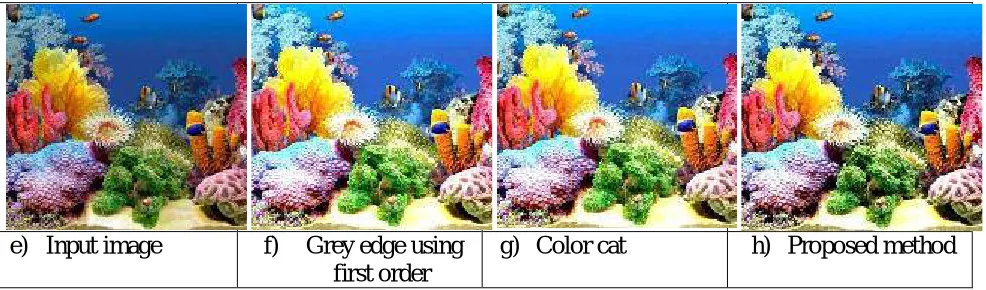
Fig 1.5 Output of existing and proposed method
e)
Input image
f)
Grey edge using
first order
g)
Color cat
h)
Proposed method
Fig 1.6 Output of existing and proposed method
In these images first image i.e. a) is considered as input image. Next image is obtained after performing the operation of grey edge i.e. first order in which only four pixels are considered and all operations are performed using these four pixels only. Next image is obtained using color cat whose output is much better as compared to all other techniques but the data present in the image is not up to the mark. This image id further enhanced using proposed technique whose output is much better than all the existing methods.
7. PERFORMANCE ANALYSIS
This section include the comparison between existing and proposed techniques in graphical form and further it is cleared from the reading tables which are made after applying algorithms to the set of images which are from real world.
Some well known parameters are considered to evaluate the performance of the proposed methodology.
1) MEAN SQUARE ERROR
Fig:-1.7 shows the graphical result of mean square error in which various colors in bar graph shows the output of the existing and proposed techniques.
2) PEAK SIGNAL TO NOISE RATIO
Peak signal to noise ratio’s value must be increased and its value must be higher as much as possible. Higher the result better will be the output of an image. This table 2 shows the better result of the image.
IMAGE NAME
GRAY edge 1st order
COLOR CAT
PROPOSED
Image 1 0.0352 0.0314 0.0203
Image 2 0.0423 0.0397 0.0263
Image 3 0.0254 0.0221 0.0156
Image 4 0.0270 0.0237 0.1318
Image 5 0.0401 0.0357 0.0250
Image 6 0.0655 0.0553 0.0363
Image 7 0.0398 0.0356 0.0271
Image 8 0.0091 0.0082 0.0064
Image 9 0.0417 0.0391 0.0249
Image 10 0.0191 0.0176 0.0134
Image 11 0.0180 0.0158 0.0112
Image 12 0.0065 0.0052 0.0042
Image 13 0.0192 0.0180 0.0161
Fig:-1.8 shows the graphical result of peak signal to noise ratio in which various colors in bar graph shows the output of the existing and proposed techniques
3) ROOT MEAN SQUARE ERROR
This is one of the important parameter in which we have to reduce the value of mean square error as much as possible. In the proposed algorithm value of mean square error is very much reduced thus gives better results when compared with all the existing methods. All the readings are shown in the table 3.
Image name
Gray edge 1st order
Color cat Proposed
Image name GRAY
Edge 1st order
COLOR CAT
Proposed
Image 1 0.1875 0.1771 0.1425 Image 2 0.0257 0.1993 0.1620 Image 3 0.1592 0.1486 0.1249 Image 4 0.1643 0.1539 0.1318 Image 5 0.2003 0.1889 0.1581 Image 6 0.2560 0.2351 0.1906 Image 7 0.1995 0.1886 0.1647 Image 8 0.0955 0.0908 0.0801 Image 9 0.2041 0.1978 0.1578 Image 10 0.1381 0.1327 0.1159 Image 11 0.1343 0.1257 0.1060 Image 12 0.0804 0.0723 0.0648 Image 13 0.1386 0.1341 0.1270 Image 14 0.1939 0.1880 0.1710
Fig 1.9 shows root mean square error in graphical form in which various colors of bar graph are used to represent the result of various parameters. Proposed method shows better result than all the existing techniques.
Fig Root mean square error graph
V. CONCLUSION AND FUTURE WORK
REFERENCES
1. S. Bianco, G.Ciacca, C.Cusana. “Automatic color constancy algorithm selection and combination” In Elsevier, August 2009.
2. Ching Chin Weng , Homer Chen and Chiou Shann Fuh “A Novel Automatic White Balance Method For Digital Still Camera. In Elsevier Vo1 12 2006.
3. Vlad C. Cardei “Estimating the scene illumination chromaticity by using a neural network.” In International Journal of Advanced Research in Computer and Communication Engineering(IJARCCE), Vol.19,july 2002.
4. S.Bianco “Review on color constancy algorithm” In International Journal of Advanced Research in Computer and Communication Engineering(IJARCCE),.December 2007.
5. Mohhammad mehdi faghih ,Zeynab khosravinia and mohsen “A new color constancy algorithm based on automatic determination of grat framework parameters using neural network”Sadhand , Vol. 39part 2, pp.267-281.April 2014
6. Joost van de weijer,Cordelia Schmid ,Jakob Verbeek “Using high level visual information for color constancy.” Vol.19,july 2011.