Visual selective attention: The effect of stimulus onset, perceptual load,
and working memory demand on distractor interference
Eleftheria Kotsopoulos
BA BSocSci (Hons)
Submitted in partial fulfillment of the requirements of the degree of
Doctor of Psychology (Clinical Neuropsychology)
School of Psychology
Victoria University
Melbourne, Australia
ABSTRACT
DECLARATION
I, Eleftheria Kotsopoulos, declare that the Doctor of Psychology (Clinical Neuropsychology) thesis entitled “Visual selective attention: The effect of stimulus onset, perceptual load, and working memory demand on distractor interference” is no more than 40,000 words in length including quotes and exclusive of tables, figures, appendices, bibliography, references and footnotes. This thesis contains no material that has been submitted previously, in whole or in part, for the award of any other academic degree or diploma. Except where otherwise indicated, this thesis is my own work.
DEDICATION
ACKNOWLEDGEMENTS
I would like to express my gratitude to the following people for contributing to the undertaking and completion of this thesis.
My participants, for volunteering their valuable time to complete my experiments and for all their patience during the seemingly never-ending computer tasks!
My two supervisors: Dr Ada Kritikos for the initial conception of this project and for all the continued guidance, counsel and support from afar; and Dr Alexia Pavlis for agreeing to take me on as a student midway through the thesis and for all her assistance when it was needed most.
To my friends, thank you for providing much needed distraction and well-timed respite from my thesis. I am forever indebted to you all for your understanding and forgiveness, particularly when plans were cancelled at the last minute.
To my dearest friend Sami Yamin, thank you for generously spending time discussing theoretical conceptualizations and statistical analyses; you were a wonderful sounding board. Your infectious laughter and eternal optimism helped me get through the most trying of times – I am forever grateful.
TABLE OF CONTENTS
ABSTRACT ... ii
DEDICATION ... v
ACKNOWLEDGEMENTS ... vi
TABLE OF CONTENTS ... vii
LIST OF TABLES ... xi
LIST OF FIGURES ... xii
LIST OF APPENDICES ... xiii
INTRODUCTION ... 1
1.1 Early and Late Selection Theories of Attention ... 4
1.1.1. Early Selection Theories ... 4
1.1.2. Late Selection Theories... 7
1.2. Efficiency of Visual Search ... 13
1.3. The Locus of Visual Selective Attention ... 16
1.3.1. Manipulation of Perceptual Load and Distractor Interference ... 18
1.4. Attentional Capture and Abrupt Visual Onset ... 27
1.5. Temporal Order of Distractor-Target Presentation ... 35
1.6. Attention and Working Memory ... 45
1.6.1. Working Memory and Attentional Capture ... 49
1.6.2. Cognitive Control Theory of Selective Visual Attention ... 53
1.6.3. Working Memory and Visual Search Efficiency ... 55
1.6.4. Neural Substrates of Working Memory ... 60
1.7. Rationale for the Current Study ... 63
1.7.1. Aims and Hypotheses ... 65
EXPERIMENT 1 ... 66
2.1 Experiment 1A ... 66
2.1.1.2. Design ... 67
2.1.1.3. Apparatus ... 67
2.1.1.4. Stimuli ... 68
2.1.1.5. Procedure ... 69
2.1.2 Results 1A ... 74
2.1.2.1 Analysis of Reaction Times ... 74
2.1.2.2 Analysis of Errors ... 75
2.2 Experiment 1B... 76
2.2.1 Method ... 78
2.2.1.1 Participants... 78
2.2.1.2 Design ... 79
2.2.1.3. Stimuli and Procedure ... 79
2.2.2 Results 1B ... 82
2.2.2.1. Analysis of Reaction Times ... 82
2.2.2.2 Analysis of Errors ... 84
EXPERIMENT 2 ... 86
3.1 Experiment 2A ... 86
3.1.1 Method ... 86
3.1.1.1 Participants... 86
3.1.1.2 Design ... 87
3.1.1.3 Stimuli ... 87
3.1.1.4. Procedure ... 88
3.1.2 Results 2A ... 91
3.1.2.1 Analysis of Reaction Times ... 92
3.1.2.2 Analysis of Errors ... 93
3.2 Experiment 2B ... 94
3.2.1.3. Design ... 96
3.2.1.4. Procedure ... 98
3.2.2 Results 2B ... 99
3.2.2.1 Analysis of Reaction Times ... 100
3.2.2.2 Analysis of Errors ... 103
DISCUSSION ... 105
4.1 Experiment 1 Perceptual Load and Distractor Interference in a Go/No-Go Visual Attention Task .. 105
4.1.1. Experiment 1A ... 106
4.1.1.1. Distractor Interference when Distractor and Targets Items arePresented Simultaneously ... 106
4.1.1.2. Perceptual Load Modulates Reaction Times: Faster Reaction Times in Low Perceptual Load than High Perceptual Load Visual Displays... 107
4.1.2. Experiment 1B ... 109
4.1.2.1. Simultaneous Presentation of Distractor and Target Items Slows Reaction Times and Reduces Accuracy... ... 110
4.1.2.2. Distractor Processing When Perceptual Load is Low: Reaction Times and Accuracy ... 111
4.1.2.3. Distractor Processing when Perceptual Load is High: Reaction Times and Accuracy ... 114
4.1.2.4. High Perceptual Load and Distractor Interference ... 118
4.1.2.5. Temporal Separation of Irrelevant and Relevant Information: The Time Course of Distractor Interference... ... 120
4.1.2.6. The Temporal Separation of Distractor and Target Items in a Visual Display Influences Distractor Interference... ... 120
4.1.2.7. Temporal Separation of Distractors and Target: Distractor Interference when Perceptual Load is Low... ... 121
4.1.2.8. Temporal Separation of Distractors and Target: Distractor Interference when Perceptual Load is High... ... 125
4.2. Experiment 2 Cognitive Load Theory of Visual Attention ... 127
4.2.2. Experiment 2B The Relationship Between Working Memory Load and Perceptual Load on
Distractor Interference... ... 130
4.2.2.1. Working Memory Load Modulates Distractor Interference ... 131
4.2.2.2. Distractor Interference in High Perceptual Load Visual Displays when Working Memory Load is Varied... ... 134
4.2.2.3. Working Memory Load and Perceptual Load: Evidence for Reduced Distractor Processing .... 136
4.2.2.4. The Operationalization of Working Memory ... 137
4.3. General Discussion, Limitations, and Future Directions ... 141
REFERENCES ... 147
LIST OF TABLES
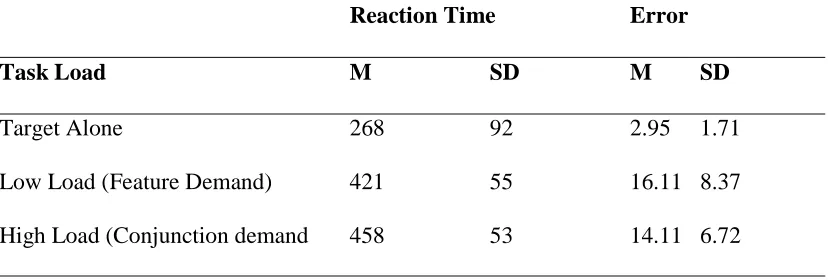
Table 1:Means and Standard Deviations of Reaction Times and Means and Standard Deviations of Errors as a Function of Task Load in Experiment 1A……….76
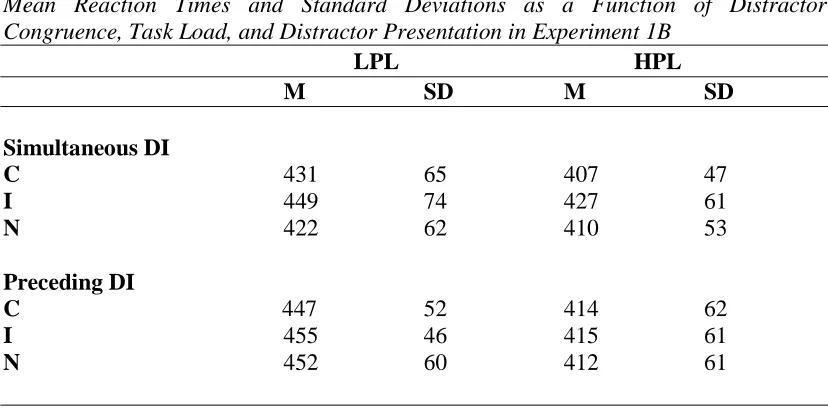
Table 2: Mean Reaction Times and Standard Deviations as a Function of Distractor Congruence, Task Load, and Distractor Presentation in Experiment 1B………..84
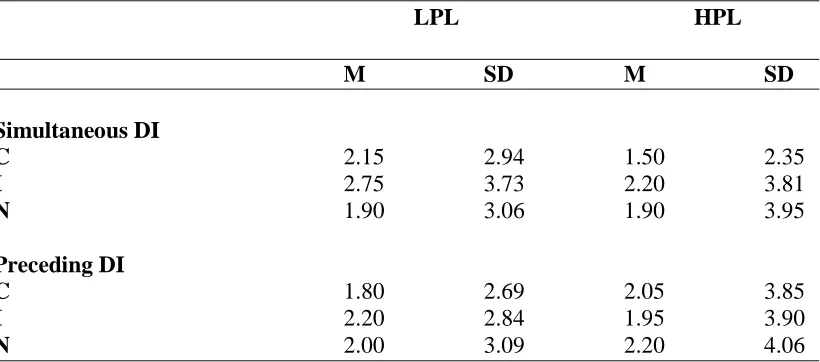
Table 3: Means and Standard Deviations of Errors as a Function of Distractor Congruence, Task Load, and Distractor Presentation in Experiment 1B………...85
Table 4: Means and Standard Deviations of Reaction Times and Means and Standard Deviations of Errors as a Function of Distractor Compatibility and Task Load in Experiment 2A………94
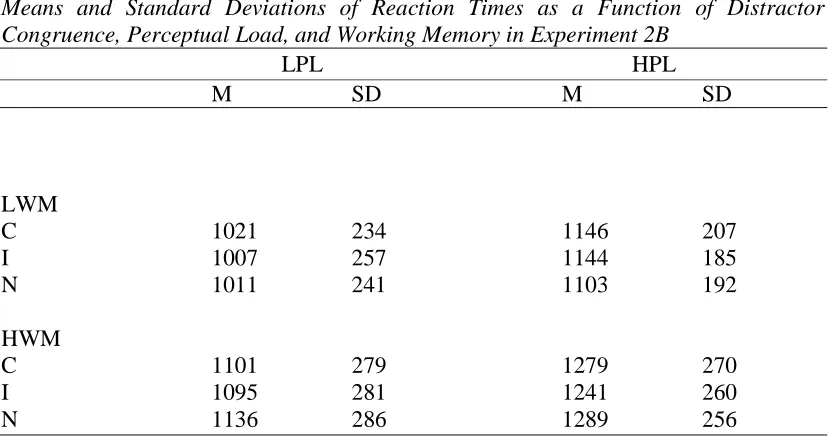
Table 5: Means and Standard Deviations of Reaction Times as a function of Distractor Congruence, Perceptual Load, and Working Memory in Experiment 2B………103
LIST OF FIGURES
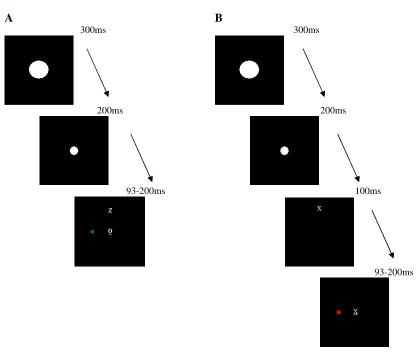
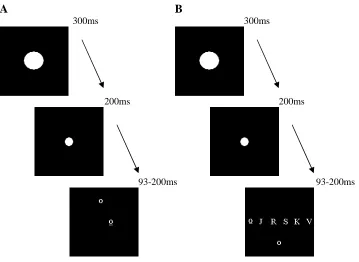
Figure 1. Sample experimental sequences for Experiment 1A: A Target alone condition
B Target presented with additional item and incongruent distractor item. Two cues
were presented to assist participants focus at the centre of the screen prior to the onset of the target alone (A) or the target with additional item and distractor (B)...70
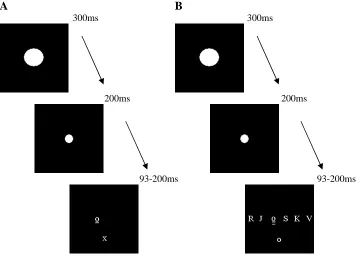
Figure 2. Example of experimental sequence for Experiment 1B: A Target, additional item, and Neutral distractor presented simultaneously B Congruent distractor presented between 93-200ms in advance of the target letter and additional item…………...…..80
Figure 3. Example of experimental trial sequence for Experiment 2A: A Low
perceptual load condition; the target appeared along the central horizontal axis with one distractor letter above it. B High perceptual load condition; the target appeared among six non-targets letters along the central horizontal axis and one distractor letter below it...89
LIST OF APPENDICES
Appendix A Recruitment notice………...167
Appendix B Participant Information and Consent Form………..169
Appendix C Diagram of the Response Control Pad……….172
Appendix D Results for Experiment 1A………..174
Appendix D1: Reaction Time data indicating mean reaction times, standard deviations, and t-statistics for Experiment 1A………..175
Appendix D2: Accuracy data indicating mean number of errors, standard deviations, and t-statistics for Experiment 1A………..176
Appendix E: Results for Experiment 1B……….177
Appendix E1: Reaction Time data indicating mean reaction times, standard deviations, F-statistics, and within-subjects contrasts for Experiment 1B………178
Appendix E2: Reaction Time data indicating t-statistics for pairwise comparisons……….181
Appendix E3: Accuracy data indicating mean number of errors, standard deviations, F-statistics, and within subjects contrasts for Experiment 1B………183
Appendix F: Results for Experiment 2A………..186
Appendix F1: Reaction Time data indicating mean reaction times, standard deviations, F-statistics, and within-subjects contrasts for Experiment 2A………187
Appendix F2: Reaction Time data indicating mean reaction times, standard deviations and t-statistics for pairwise comparisons………....188
Appendix F3: Accuracy data indicating mean number of errors, standard deviations, F-statistics, and within subjects contrasts for Experiment 2A……….190
Appendix F4: Accuracy data indicating mean number or errors, standard deviations, and t-statistics for pairwise comparisons………...192
Appendix G: Results for Experiment 2B……….194
Appendix G1: Reaction Time data indicating mean reaction times, standard deviations, F-statistics, and within-subjects contrasts for Experiment 2B……….195
Appendix G3: Accuracy data indicating mean number of errors, standard deviations, F-statistics, and within subjects contrasts for
experiment 2B………...201 Appendix G4: Accuracy data indicating mean number or errors,
INTRODUCTION
We are constantly bombarded with many sights and sounds simultaneously and sequentially, yet we are able to select and process relevant (target) information while ignoring irrelevant (distractor) information. Whilst selective attention mediates goal-directed attention through selection of information relevant to goal objects, irrelevant stimuli (distractors) may alter responses to goal-relevant objects (Keulan, Adam, Fischer, Kuipers, & Jolles, 2002). In an experimental setting, the visual selective attention system is typically examined using visual reaction time tasks in which participants are required to focus on a relevant target while ignoring other irrelevant items. Evidence of distractor processing is reflected in increased response latency and reduced accuracy (Driver, 2001; Eriksen & Eriksen, 1974; Lavie & Tsal, 1994). This effect is termed distractor interference and indicates that information not directly relevant to the goals of the intact visuo-motor system is processed and capable of altering responses to goal relevant information.
suggest that all information is processed in an automatic fashion but that relevant information is responded to at a much later stage following semantic analysis (Deutsch & Deutsch, 1963). Lavie (1995) proposed a compromise between these two views stating that the perceptual load of the visual display determined the extent of distractor processing; late selection occurred when perceptual load was low whereas early selection occurred when perceptual load was high.
In a typical distractor interference paradigm, both relevant and irrelevant information is presented simultaneously which results in slower reaction times and decreased accuracy. A handful of studies have also investigated distractor interference when distractors and targets are temporally separated (Flowers & Wilcox, 1982; Kahneman, Treisman, & Burkell, 1983; Watson & Humphreys, 1997). The systematic manipulation of stimulus presentation and target-distractor compatibility provides a useful approach for isolating interactions occurring at various stages of processing visual information (Taylor, 1977). Furthermore, temporally separating the presentation of distractors and targets may provide greater information about the internal representation of objects, on subsequent goal-directed responses over time. Indeed, research has shown that the advance presentation of distractors attenuates interference (Kritikos et al., 2008). This suggests that processing a distractor but inhibiting a response to it may alter a subsequent response to the target (Chelazzi, Miller, Duncan, & Desimone, 1993 ).
Desimone & Duncan, 1995; Duncan & Humphreys, 1989). These studies have examined this relationship using a dual-task paradigm. The ability to complete more than one task efficiently and accurately is determined by the availability of working memory, suggesting that attention and working memory may share the same limited-capacity processes (Oh & Kim, 2004). This is particularly evident when higher-order cognitive processes are required, such as the manipulation of information in working memory while completing a visual attention task (Han & Kim, 2004).
1.1 Early and Late Selection Theories of Attention
Selective attention implies that information is gated / filtered before it is processed fully to aid goal-directed actions. There has been considerable debate, however, about how early this gating mechanism comes into place, and thus how early irrelevant information is rejected from further processing. Early selection theories assume that the attentional filter occurs soon after presentation of the information. In contrast, late selection theories postulate that goal-irrelevant information is filtered out only after all information has undergone semantic analysis.
1.1.1. Early Selection Theories
information is selected for further processing. Information is identified only after it passes through the filter into the limited capacity channel, where information is processed in a serial manner. According to Broadbent’s framework, irrelevant information that does not pass through the filter is only processed in a very preliminary manner or not at all and thus does not impact upon responses.
visual attention, it also revealed that the internal representation of visually presented information assisted information being selected at an early stage.
Bjork and Murray (1977) also used a partial report cuing procedure to determine the locus of visual processing. Participants were initially shown a premask matrix which indicated the location of stimuli to be remembered and then a stimulus matrix which included the presentation of one or two letters. This was subsequently replaced by a postmask matrix that remained displayed until participants reported the cued letter which was either a B or R. They found that detection of the target was strongly influenced by the additional letter that was presented with the target. Specifically, participants were faster and more accurate when both the target and the additional item were incongruent (e.g. B with P) compared with when they were congruent (e.g. B and B). They suggested that prior to the commencement of the trial, target items were represented in the perceptual and memory systems (internal representation) to assist with response selection. However, interference effects occur as a result of feature specific interference between the relevant and irrelevant items in the display. Thus, competition between items occurs at an early level of feature extraction.
neutral in different sessions), for either 100ms or 200ms which was then followed by the visual array. Each letter in the visual display was unique, with one exception; on redundant-target trials, two of the letters were identical (one in the cued location and the other in one of the seven uncued positions). Yantis and Johnston found that when cues were both completely and partially reliable (100% and 80% valid, respectively), participants were able to efficiently focus their attention to a nonfoveal spatial location and prevent interference from irrelevant items. Furthermore, focussed attention was possible when a cue was presented 100ms in advance of the target and was equally effective with both central and peripheral cues. Yantis and Johnston proposed that providing a cue prior to the presentation of the target allowed selection to occur at an early stage with very minimal distractor processing.
In summary, early selection theories of attention indicate that irrelevant information can be excluded from perceptual processing because relevant information is selected at an early stage. Specifically, the role of internal representations and the timing of stimuli presentation are highlighted as modulating the extent of distractor interference.
1.1.2. Late Selection Theories
each signal is compared against a fluctuating reference standard and weighted according to importance or relevance to the individual; in a visual search task this is related to task requirements. Selection of the most relevant stimuli is dependent on both the importance of the message and the degree to which an individual’s overall attention is focussed. Information that falls below the reference standard is given a lower priority and is less likely to be acted on. Furthermore, signals which are similar to signals of highest priority are mistakenly perceived when they are presented together (Deutsch & Deutsch). Thus, all information is processed and compared together at a later stage to determine the appropriate response.
subsequently adapted these findings to the visual attention system. She showed that basic physical properties of stimuli, such as colour or location, were selected at an early stage but that irrelevant information was attenuated rather than filtered out entirely. She suggested that irrelevant information underwent some level of semantic analysis and consequently produced slower response times. Treisman’s results showed that the extent of distractor interference could be determined by the relative meaningfulness of the stimuli. This idea was examined further by Eriksen and Eriksen (1974) who manipulated the compatibility of relevant and irrelevant stimuli to determine the extent of distractor interference.
on both sides by other letters. The two identical flanking letters could either be from the same (compatible) response set as the target letter (e.g. KHK) or from the different (incompatible) response set (e.g. SHS).
Participants responded to two sets of letters by moving a lever either to the left or right upon identification of the target letter and were asked to inhibit responses until they were able to discriminate which letter was in the target position. Eriksen and Eriksen (1974) showed that when two letters, H and K, were assigned to the same lever response and another letter, S, was assigned to another lever response, a target H produced slower reaction times in displays like SHS compared to displays such as KHK. They called this the flanker compatibility effect. Distractor letters (interference) of the opposite response set slowed reaction times significantly more than same response set distractor letters. Consequently, Eriksen and Eriksen suggested that all information was processed to some extent, but that relevant information was discriminated from irrelevant information at the stage of response selection.
when these factors were manipulated. Importantly, he demonstrated that visual angle was the only manipulation that contributed to the size of the flanker compatibility effect. However, this was contingent on the target-distractor relationship; that is, whether the target and distractor letter were compatible or incompatible. Such results highlighted that completely irrelevant visual information was not fully excluded from semantic processing, even when it was detrimental to completing a task. Furthermore, semantic processing of unattended stimuli in these visual conditions provided strong evidence that individuals were not able to restrict their attention to one part of the visual array (van der Heijden, 1981). The flanker compatibility effect suggested that selective visual attention occurred at a late stage of processing, only after all items were perceived (Miller). Miller concluded that early selection could not completely exclude unattended information from semantic analysis.
the primed object because, presumably, the object has been perceived. However, Tipper demonstrated slower reaction times when participants responded to an item which had been presented as a distractor on a preceding trial (Tipper, 2001). Specifically, when the to-be-ignored object in the prime display was identical to the object in the probe display, participants were slower to name the red prime object. Tipper proposed that while all information in a visual field underwent processing, selection of relevant information was possible due to an inhibitory mechanism. This effect was termed ‘negative priming’. This inhibition mechanism was able to suppress the activation levels of the internal representation of a distractor (Allport, Tipper, & Chmiel, 1985; Tipper, 1985). Negative priming was subsequently found under a number of experimental conditions (Allport et al; Tipper & Cranston, 1985; Tipper & Driver, 1988; Tipper, MacQueen, & Brehaut, 1988) which provided strong support that unattended visual objects underwent full perceptual processing, but were actively inhibited to ensure that relevant items were acted on appropriately (Tipper, 1985).
out irrelevant information, while in late selection theories, interference effects were viewed as a consequence of the full processing of all information. Thus, each position was able to accommodate distractor interference effects and how these influenced visual selective attention.
1.2. Efficiency of Visual Search
Treisman and Gelade (1980) demonstrated that when participants searched for a target in a visual display defined only by a conjunction of properties, such as a green T amongst green Xs and brown Ts, reaction times increased based on the number of other items in the display (such as non-target letters or distractor letters). When participants searched for a target defined by a unique feature, for example, a blue S amongst green Xs and brown Ts, search time was independent of the number of distractors. Detection of a conjunction of features was slowed compared with single features, indicating attention is focussed serially on each object in the display. Treisman and Gelade suggested that distinctive features automatically pop out in a visual search task and therefore the rest of the visual array does not need to be searched, resulting in faster reaction times.
light of these results, they proposed the guided search model, which stated that conjunction search could be guided by parallel processes which were able to separate relevant from irrelevant display items. The efficiency of visual search was based on the guidance provided by the parallel processes; visual search occurs automatically by continuously updating information from parallel to serial processes.
Similar results by Treisman and Sato (1990) led to the alternative proposal of the feature inhibition hypothesis. This formulation posited that during conjunction search, each single feature was independently examined and contributed additively to the search process. Furthermore, emerging properties of specific features could be ‘sensed’ and a conjunction of features could be coded early (Pomeranzt, Sager, & Stoever, 1977). Each dimension was processed separately and the target could be identified quickly when presented among irrelevant information due to the distinctiveness of the feature. In addition, feature distinctiveness allowed information to be inhibited and rejected quickly, suggesting parallel processing. Inhibition was more effective the greater the distinctiveness of the feature, and this also determined how easily distractors which shared that feature could be rejected.
that both feature and conjunction search tasks produce similar search slopes when features are highly discriminable, suggesting that object identification could occur in parallel, similar to detection of basic features (Nakayama & Silverman, 1986b; Treisman & Sato, 1990; Wolfe et al., 1989). These experiments highlight the need for further research in order to understand the mechanisms of efficient information processing.
1.3. The Locus of Visual Selective Attention
1.3.1. Manipulation of Perceptual Load and Distractor Interference
The perceptual load theory proposes that when lower demands are placed on the perceptual system, all stimuli (both relevant and irrelevant) are processed automatically regardless of their task relevance, until attentional capacity is exhausted. By contrast, high perceptual load prevents (or reduces) perception of distracting task-irrelevant information because the available attentional capacity is consumed only by the relevant items. In situations of low perceptual load, irrelevant information produces interference because attentional selection occurs in the later stages of visual processing (Lavie, 1995). Lavie and colleagues conducted a series of experiments to test whether perceptual load modulates distractor interference in visual selective attention tasks (Lavie, 1995; Lavie & Cox, 1997; Lavie & de Fockert, 2003; Lavie & Fox, 2000).
In the low perceptual load condition, reactions times to the target were faster when presented with a compatible versus a neutral distractor. Reaction times to the target were slower when presented with an incongruent versus a neutral distractor. These results suggested that the compatible distractors produced facilitation effects while incompatible distractors produced interference effects. Evidence of distractor processing, as demonstrated through compatibility effects, was found only under conditions of low perceptual load and was eliminated under conditions of high perceptual load. That is, no significant differences in reaction times were found across distractor type in the high perceptual load condition. The overall slower reaction times in the high perceptual load condition suggested that increased demands on attentional capacity affected how efficiently low-priority items could be blocked from perceptual processing. Furthermore, the results suggested a potential trade-off between speed and accuracy, whereby slower reaction times was related to greater accuracy when perceptual load was high. Conversely, response accuracy was significantly reduced in the low perceptual load condition when targets were presented with incompatible distractors. Relevant to this series of experiments, Lavie showed that by manipulating perceptual load, distractor processing can be eliminated under high perceptual load conditions due to reduced attentional capacity.
FIT allows the comparison of two different processing loads on attentional resources. Lavie used a go/no-go procedure in which participants made a response to the target letter only when an additional item was presented with it. The additional items consisted of a square and circle which could be either blue or red. In the feature demand condition participants were required to make their response to the target letter (H or U) when the colour of the additional item was blue and to withhold response when it was red, regardless of whether the shape was a circle or a square. Thus, analysis of only one feature was required. In the conjunction demand condition, participants were required to process the specific conjunction of colour and shape of the additional items prior to making a response to the target letter, for example, they were instructed to respond to the target letter H only when a blue square or red circle (depending on the instructional manipulation) was presented.
distractor letter. Conversely, reaction times to the target in the high perceptual load condition were significantly slower when a compatible distractor was presented compared to a neutral distractor. Lavie argued that in the conjunction demand condition, the very same display imposes a greater demand on attentional capacity, leaving considerably less attentional capacity for the irrelevant distractor. This results in reduced interference effects which consequently eliminated the flanker compatibility effect (Lavie, 1995).
excluded from processing only when more than four nontargets were presented with the target letter. These results suggest that efficient distractor rejection could only occur when perceptual capacity was exhausted, that is, under high load conditions, and that under low load conditions, spare attentional capacity resulted in distractor processing (Lavie & Cox, 1997).
perceptual load displays. Specifically, when attention was cued, moving the flankers away from the target was sufficient to eliminate the flanker effect regardless of categorical overlap. Paquet and Craig suggested that distractor distinctiveness may also play a role in capturing attention and consequently produced interference effects. Although distractors did not automatically capture attention, interference effects were likely to occur in situations where distractors were placed physically near the target, when far flankers and the target belonged to the same category (that is, both letters or both numbers), and when attention was not directed to the location of the target prior to its appearance (e.g. Yantis & Johnston, 1990).
however there was very little evidence of flanker processing. This suggested that when participants were provided with a valid cue, selective attention was possible even under conditions of low perceptual load. Consistent with Yantis and Johnston, they found reduced distractor processing under ideal cueing conditions in low perceptual load displays. These results also highlighted the possibility that top-down attentional mechanisms may play a role in determining efficient selective attention.
trial changed from low load to high load; there was always a reliable flanker compatibility effect. Under conditions of low perceptual load, processing appeared to be more stimulus driven, due to the target and distractor standing out against a homogenous background and consequently, when elements were highly salient (Theeuwes, 2004). However, under high load conditions, expectancy appeared to play a greater role in determining the extent of processing irrelevant information. Overall, they suggested that perceptual load was not the only factor which determined selective attention, but rather, top-down processes (that is, expectancy) may also play an important role in modulating the distractor effect of irrelevant flankers (Theeuwes et al).
targets were presented as onsets even in low-load displays and distractor offsets captured attention when the target also appeared as an onset. These results suggested that perceptual load was not the primary determinant of selective processing. Rather, the level of distractor processing was determined by distractor salience. They argued that the typical perceptual load effect may have occurred simply because the distractor in a high-perceptual load display was less likely to capture attention and not because capacity had been fully utilized (Eltiti et al).
produced by abrupt visual onsets and will then review studies which have manipulated stimulus onset asynchrony of distractors and targets.
1.4. Attentional Capture and Abrupt Visual Onset
processes with little resolution to this debate (Folk & Remington, 1998; Folk et al., 1992; Johnson, Hutchinson, & Neill, 2001; Jonides & Yantis, 1988; Theeuwes, 1996; Yantis & Jonides, 1984; Yantis & Jonides, 1990).
Using this paradigm, the influence of top-down set can be examined by manipulating the relationship between the features of the target and distractor singletons. For example, Folk and colleagues (Folk et al., 1992) presented participants with target displays consisting of either a single, abrupt onset character (onset target) which appeared in one of four boxes, or one red character in one box and three white characters in each of the other boxes (colour target). Target displays were preceded by a distractor display consisting of the abrupt onset of four small circles surrounding one box (onset distractor) or a set of red circles surrounding one box and three sets of white circles surrounding the other three boxes (colour distractor). They found location congruence effects consistent with attentional capture only when targets and distractors shared a feature, such as when both were defined by onsets or defined by colour. Conversely, there were no location congruence effects when onset colour distractors were paired with colour (onset) targets.
colleagues (1983) who argued that when the visual display consisted of both a target and an irrelevant singleton distractor, both of these objects would ‘pop out’. Thus, an increase in reaction times associated with the presence of an irrelevant distractor occurred as a consequence of the system determining where attention should be allocated. In visual displays with no distractors, the target would ‘pop out’ leading to efficient allocation of attention to the desired location.
Conversely, Theeuwes (1992, 1996) argued against the “filtering cost” interpretation of irrelevant singleton effects. Instead, he proposed that early preattentive processing was driven by bottom-up factors such as salience. Specifically, attention was captured by the most salient singleton in the display, irrespective of whether the feature of the singleton was relevant to the task. If that singleton was the target, a response was made. If it was not the target, attention was directed to the next most salient singleton. Theeuwes (1992) found that the presence of an irrelevant singleton in one location significantly increased reaction times when looking for a target singleton in the other location. Attention was captured by the most salient singleton in the display regardless of whether the property defining that singleton was relevant. Moreover, top-down control could not override the stimulus-driven capture that arose due to the appearance of a more salient stimulus attribute and therefore, selection occurred in a purely bottom-up, stimulus-driven manner.
visual display consisted of either seven or nine coloured shapes placed around the fixation point on an imaginary circle. The nontarget shapes were circles presented in the same colour as the target shape, which was a diamond. In the no-distractor condition, the green diamond target shape appeared among green circles. In the distractor condition, one of the circles was presented in red. In the compatible distractor condition, the letter inside the diamond (target) matched the letter inside the red circle distractor (e.g. an R in the green diamond and an R in the red circle or an L in the green diamond and an L in the red circle). In the incompatible distractor condition, the letter inside the diamond was different from the letter inside the red circle distractor (e.g. an L in the green diamond and R in the red circle or an R in the green diamond and L in the green circle). On half the trials, the response associated with the character at the distractor location was identical to that required by the target. On the remaining trials, it was associated with the opposite response from the target.
This conceptualisation of visual selective attention was recently modified by Theeuwes and associates (Theeuwes, Atchley, & Kramer, 2000). They proposed that during early preattentive processing, selection was driven in a bottom-up manner and therefore attention was captured by the most salient singleton present in the visual field. However, once attention had been captured by the singleton distractor, attentive processing exerted top-down activation that allowed attention to be redirected to the appropriate stimulus. Consistent with other models of visual attention (e.g. Treisman & Sato, 1990), Theeuwes et al. proposed that visual search was the result of an interplay between goal-directed and stimulus driven factors which had a different time course.
previous results (Theeuwes, 1992; 1996), Theeuwes et al. found that an irrelevant salient distractor interfered with search for a relevant target singleton.
Specifically, early SOAs (50 and 100ms) produced a reliable interference effect while later SOAs (150, 200, 250, and 300ms) did not. This suggested that when the distractor and target were presented in close succession, that is, within 50ms and 100ms of each other, there was a clear distractor interference effect (Theeuwes et al., 2000). Furthermore, top-down control could not be exerted in such a short timeframe and could not prevent attentional capture by the salient distractor. When, however, the singleton distractor was presented between 150ms and 300ms prior to the target singleton, top-down control processes could be exerted and attentional capture by the distractor was eliminated (Theeuwes et al).
inside the distractor was identical to the letter inside the target singleton (and therefore congruent with the response) compared to when the letter inside the distractor was incongruent to the letter inside the target singleton. The results provided further support that attention was captured by the irrelevant singleton and had an effect on the speed of response to the target (Theeuwes et al). Overall, their findings suggested that visual attention could be guided by both bottom-up and top-down processes and that each process has a different time-course. Thus, early preattentive parallel processing may not accessible to top-down control, however once an item was selected, top-down processing assisted attention to be redeployed from the distractor to the target.
In summary, the ability of the visual system to effectively focus attention on relevant information and reject irrelevant information from processing may be dependent on a combination of bottom-up and top-down processes. Recently, Theeuwes and colleagues (Theeuwes et al., 2000) proposed that these two mechanisms had a different time course. Bottom-up mechanisms were responsible for selection of information in the early stages of attention, while top-down factors assisted attention to be redeployed from irrelevant to relevant information at a later stage. These studies provide an alternative explanation to the perceptual load theory about the nature of distractor processing. In addition, they provide information about the locus of visual attention and highlight the importance of investigating the temporal nature of selective attention.
simultaneously. In daily life, however, we receive inputs both simultaneously and consecutively. A major aim of this thesis is to examine temporal separation between visual inputs. In the next section, perceptual load is set aside briefly to discuss temporal order of targets and distractors, before returning to integrate temporal order, perceptual, and top-down / bottom-up factors in distractor processing.
1.5. Temporal Order of Distractor-Target Presentation
selected, particularly new information, and how it is prioritized over old information (Donk, 2006).
Using a classic distractor interference paradigm, Kahneman, Treisman, and Burkell (1983) proposed that new information can be prioritized over old. They showed reduced distractor interference when distractors were displayed prior to target onset. In their Experiment 5, participants were presented a single word together with 0, 1, 2, or 3 distractors (nonsense shapes which could be red, yellow, green, or pink) and asked to read the word aloud; manipulating the number of distractors enabled the examination of filtering costs which were determined by a change in reaction times. This experimental design allowed them to distinguish between visual objects (in this case, words) and visual events (defined as a change, appearance, or disappearance of visual objects).
(similar to the Continuous condition), however distractor offset occurred immediately before target onset. Finally, in the Removed Early condition, distractor offset occurred 300ms after the warning signal and was followed by a blank interval of 500ms; subsequently, target onset occurred with no distractors.
Kahneman and colleagues (1983) speculated that distractor interference could be modulated by the relationship between two objects or events, and the extent of perceptual processing of each. They introduced the term ‘object file’ to describe a temporary perceptual representation of the features present in a particular object. They argued that both the success and failure of selective attention – including filtering costs – could be explained by the effects of attention on object files. Kahneman and colleagues proposed that filtering costs occurred either when a new object file needed to be created or when some change in the status of a previously registered object needed to be recorded. They found reduced interference when a pre-existing file required updating (Interrupted and Removed conditions) than when a new file needed to be created (Simultaneous conditions), and no interference when files were simply being maintained (Continuous condition).
distractors (and therefore perceptual load of the visual display) also determines the amount of distractor processing, particularly when distractor offset occurs immediately prior to distractor onset.
Flankers produce either facilitation or interference effects depending on the temporal separation of distractor and target letters (Eriksen & Schultz, 1979; Taylor, 1977). Watson and Humphreys (1997) used a novel colour-form conjunction search task to demonstrate that previewing a set of elements produces faster reaction times compared with viewing distractors and a target letter simultaneously. They introduced a temporal interval (a gap) between the distractors from each colour and presented the target with the second set of distractors (the search display). There were three conditions: a standard colour-form conjunction baseline (blue Hs vs. blue As); a standard single-feature baseline (blue H vs. blue As); and a gap conjunction condition (green Hs followed by blue As and, on target-present trials, a blue H). In the standard conjunction search condition, the search display was presented until a response was made to either the presence or absence of the blue letter H target. The single feature baseline condition was identical to the conjunction search condition except that no green distractors were present in the display. For the gap conjunction condition, following the fixation cross, the green distractors were first displayed for 1000ms, after which the blue items were added to the display.
conjunction search condition. In the gap condition, search became as efficient as if only the second set of items had been presented alone: this was termed the gap effect. Thus, participants were able to exclude the initial distractors from search and prioritize selection of the new items. By manipulating the temporal interval (gap) between distractors and targets (Experiment 3), they found that the minimum interval required to allow old distractors to be separated from new stimuli was 400ms; few gains in performance were found beyond that time interval (Watson & Humphreys).
(Watson & Humphreys). Watson and Humphreys proposed that the mechanism involved in marking was specific for prioritising new objects and filtering out old ones. These results suggest that distractor interference is modulated by temporal presentation between relevant and irrelevant information; distractor interference can be reduced or eliminated when distractors are presented in advance of targets.
According to Jiang and colleagues (2002b), selective attention could be allocated to any behaviourally relevant group, once temporal segregation had occurred. In their experiment 4, Jiang et al. reversed the roles of old and new items, such that the old items were behaviourally important while the new items were irrelevant. Jiang and associates found that participants were able to prioritize the old items and ignore new items when they were temporally separated but that this was also influenced by which temporal group contained information that was behaviourally relevant to the task. While this view dismisses the role of inhibitory mechanisms in assisting visual attention (e.g. Watson & Humphreys, 1997), it still highlights the importance of examining SOA and its effects on distractor processing.
Overall, these experiments demonstrate that the extent of distractor processing can be modulated by the onset of visual stimuli. Search for visual information when it is presented simultaneously produces interference (i.e. increased reaction times), while the advance presentation can greatly reduce or eliminate interference. Temporal separation is, therefore, an important experimental manipulation which may help determine the mechanisms involved in visual selective attention.
randomly and at one of four locations, either to the left or right, or above or below the centre of the computer screen. Under certain trial conditions the target appeared with a single distractor letter that was either an x or an o. The distractor was always incompatible to the target and always appeared equiprobably at one of four locations. Participants were required to respond to the target letter as quickly as possible without compromising accuracy, and to ignore the distractors. The experiment consisted of seven conditions; target alone, preceding-200, preceding-400, preceding-600, simultaneous-200, simultaneously-400, and simultaneous-600. Consistent with Kahneman and colleagues (1983), interference was greatest when distractors and targets were presented simultaneously and was significant though attenuated when the distractor preceded the target by 200ms. Further, interference could be eliminated when distractors were presented 400ms prior to the presentation of the target which suggested that by this time, processing of the distractor was completed; performance in this condition was comparable to the target alone condition. Reaction times were faster overall when the distractor preceded the target by 600ms. They proposed that by 600ms, the distractor was fully processed and capable of facilitating target processing by acting as an orienting cue. These findings suggested that the impact of distractors changed over time and that brief intervals between distractors and targets produced the greatest interference due to residual processing of the distractor (Kritikos et al).
conditions: target alone, preceding congruent, preceding incongruent, preceding neutral, simultaneous congruent, simultaneous incongruent, simultaneous neutral. Consistent with their previous experiment, performance was slower in the simultaneous condition than the preceding condition. Distractor interference was evident though attenuated when the distractor preceded the target compared with the simultaneous presentation of distractor and target. In the simultaneous condition, incongruent distractors were associated with the greatest reaction times, followed by neutral and congruent distractors. Within the 93-200ms interval between distractor and target presentation, the same compatibility effects were evident. Kritikos and colleagues demonstrated that the same (or similar) processes occurred in the preceding condition as they did in the simultaneous condition and that they occurred within the first 200ms. They postulated that the internal representation of the distractor consisted of an ongoing process and that interference occurred because the internal representation of the distractor formed the basis for comparison with the target.
these processes, thereby resulting in different patterns of interference or facilitation effects (Flowers & Wilcox, 1982). Despite these generalised findings of efficient search when distractor and target presentation are separated in time, there is very little consensus regarding the processes involved which reduce or eliminate distractor processing. A number of researchers have begun to investigate the possibility that an inhibitory mechanism is responsible for effective selective attention (Watson & Humphreys). This is thought to involve the generation of an inhibitory template which enables the search task to be performed as though the previously presented distractor was never presented. This memory representation, a feature of working memory, may be able to assist selective attention by preventing distractor interference through a process of maintaining the prioritization of relevant information (de Fockert et al., 2001).
1.6. Attention and Working Memory
Duncan, 1995; Lavie & de Fockert, 2005, 2006; Lavie, Hirst, de Fockert, & Viding, 2004).
Working memory is defined as a limited capacity system which maintains and stores information, temporarily, and orchestrates processes involved with perception, long term memory, and action (Baddeley, 2003; Jonides, Lacey, & Nee, 2005). It has been argued that working memory capacity is limited because of an individual’s ability to use controlled processing (Engle, Kane, & Tuholski, 1998). Controlled processing involves the activation and maintenance of goal (task) relevant information in addition to the active inhibition of irrelevant information that actively compete for attention (Tuholski, Engle, & Bayliss, 2001). In addition, a number of models of cognition (e.g. ACT-R, Anderson, 1993; EPIC, Meyer & Kieras, 1997) have suggested that when higher level cognitive processes are utilised, such as during a high working memory load task, working memory allows a rapidly accessible and easily updated memory system.
in working memory; Folk and colleagues’ (1992) contingent involuntary attentional capture model which proposes that attentional set (i.e. task goals) enables attention to be automatically oriented to a particular stimulus; Wolfe’s (Wolfe, 1994; Wolfe et al., 1989) guided search model, and Treisman’s feature integration/inhibition model (Treisman & Sato, 1990) which also propose that search occurs based on the spreading of activation in the master map, through connections between feature maps and location maps. Thus, attention and working memory appear to overlap in their information processing goals (Awh et al., 2006). However, in order to understand the interactions between working memory and visual attention, it is important to determine which type of working memory and visual attention is being examined (Awh et al). The dual-task paradigm uses both a visual search task and working memory task to examine the interactions between these constructs. This may help to clarify whether working memory is implicated in visual attention and how such processes may prevent distractor processing.
display (such as a triangle amongst squares and circles), is possible because the representation of the target is pre-activated in working memory; sensory inputs have a competitive advantage when they match internal representations. This memory representation – the attentional template (Duncan & Humphreys, 1989) can be viewed as one aspect of working memory (Baddeley, 1986) which is able to specify any required property depending on task requirements. Duncan and Humphreys proposed three components which assist selective visual attention: a parallel stage of perceptual description which produces a representation of the input across the visual field, a process of selection which matches input descriptions against an internal representation of the information needed in current behaviour, and entry of selected information into visual short-term memory.
segments, and finally to perform a memory test. Although the memory and search tasks were designed to involve two different task sets, the two tasks could overlap in terms of stimulus content: the line segments of the search task were each placed inside a shape that could match the to-be-remembered item in shape, colour, or both. Relative to a neutral baseline condition in which no shapes matched the memory item, search was more efficient when the memory cue matched the shape containing the target, and less efficient when the cued stimulus contained a distractor. Furthermore, increased distractor interference occurred even when the memory-matching shape never coincided with the search target, which suggested that attention was captured even though it was detrimental to the task. Soto and colleagues suggested that information held in working memory guided the early parts of the search process in an automatic fashion. That is, an early involuntary top-down process directed attention to information in working memory, which consequently biased attention in favour of activated internal representations (Desimone & Duncan, 1995; Szabo, Almeida, Deco, & Stetter, 2004).
1.6.1. Working Memory and Attentional Capture
content-based memory-driven attentional capture. In their experiment, each trial commenced with the presentation of a disk, and in the memory conditions, participants were asked to remember the colour of the disk. This was followed by a visual search display which consisted of a number of disks and a diamond-shaped target. The target was not always the only unique item in the display, such that one of the distractors could also carry a unique colour; a singleton distractor (Pashler, 1988). Importantly, the singleton distractor, when presented, could carry the same colour as the to-be remembered item. The trial ended with a memory test, in which the participants were asked to choose the remembered colour from three presented colours. Performance in the memory condition was compared with a no-memory condition, in which participants were instructed to simply look at the initial coloured disk, without the need to remember it. They found that singletons captured attention, despite being detrimental to the task, but especially so under conditions of increased memory load. Thus, the additional memory task drained the cognitive control mechanism required to reject irrelevant distracting information (Olivers et al).
search task) and a dual-task condition (a visual search task in addition to a working memory task). During the visual search task, participants searched for a circle among diamonds and were asked to respond to the orientation of a line within it. The presentation of an irrelevant colour singleton was varied across trials and attentional capture was determined by slower reaction times to the target when the singleton appeared. In the dual-task condition, working memory was manipulated by asking participants to rehearse either a set of six digits (experiment 1) or four digits in exact order (experiment 2) in order to decide whether a memory probe following the visual search task was present or absent in the memory set of that trial (experiment 1) or in order to recall a digit that followed the probe digit in the memory set (experiment 2).
de Fockert and colleagues (de Fockert, Rees, Frith & Lavie, 2001) also used a dual-task paradigm to demonstrate that manipulating working memory load could modulate distractor processing in a selective attention task. In their visual selective attention task, participants were asked to categorize famous written names as either politicians or pop stars while ignoring distractor faces which could either be congruent with the target name, incongruent with the target name, or anonymous. In the low working memory load task, participants were required to remember either a fixed order of digits, while in the high working memory load task, they were provided with a different order of digits on each trial. Participants were presented with the memory set which was followed by two, three, or four attention displays. Following the final attention display, a memory probe was presented and participants were required to report the digit that followed this probe in the memory set.
being sensitive to load and distractor interference (from the irrelevant faces). Collectively, these results supported their hypothesis that the availability of working memory is essential for top-down attentional control towards relevant information (de Fockert et al; see also de Fockert, Rees, Frith, & Lavie, 2004).
The preceding literature review highlights the relationship between working memory and selective attention. Firstly, working memory content aids efficient selective attention because attention is biased towards information in the internal template. Furthermore, the extent of distractor interference in a visual attention task is determined by the availability of cognitive resources.
1.6.2. Cognitive Control Theory of Selective Visual Attention
dissociated purely by the extent of interference effects found in tasks consisting of different loads; while high perceptual load reduces distractor processing, high working memory load increases distractor processing (Lavie et al).
2500ms (in the high working memory load condition), which was followed by the memory probe.
Slower reaction times were found during the high working memory load conditions than the low working memory load conditions, suggesting that working memory load was effectively manipulated (Lavie et al., 2004). In the selective attention task, they found slower reaction times in high perceptual load conditions compared with low perceptual load displays. The level of distractor interference also changed as a result of working memory load. Specifically, significantly greater distractor interference effects were found in the high working memory load compared to the low working memory load condition. In contrast, significantly less distractor interference effects were found in the high perceptual load condition compared to the low perceptual load condition. Thus, Lavie et al. suggested that the ability to reduce distractor interference was possible only when perceptual load was high and working memory load was low. These findings provided support for their theory that two dissociable mechanisms are responsible for efficient selective attention: a perceptual selection mechanism which assists distractor rejection when perceptual load is high and an active control mechanism which ensures that attention is allocated accordingly, even when working memory load is low (Lavie et al).
1.6.3. Working Memory and Visual Search Efficiency
& Duncan, 1995; Duncan & Humphreys, 1989). The majority of these claim that visual attention is influenced by object representations stored in working memory which can be used as either reference points or a guide to the most relevant information. However, Woodman, Vogel, and Luck (2001) proposed that the constant transfer of such information into working memory was a highly inefficient process and that another mechanism must be implicated in visual search efficiency. They investigated the role of working memory in visual attention by using a dual-task paradigm. Participants were presented with four, eight, or twelve black objects (outline of squares), in groups of four. The target object had a gap on either the top or the bottom, while the nontargets had a gap on either the left or right side. The memory array consisted of four coloured squares placed around a central fixation cross. In the dual-task condition, participants were initially presented with a memory array, followed by a visual search task, and then a memory-test display. Participants were asked to respond whether the memory test display was identical to the memory array that was initially presented, or whether one of the squares was a different colour. In the single-task condition, only the visual search task was administered.
search processes or a delay in post-search processes such as response selection (see Jolicoeur & Dell’Acqua, 1999). While accuracy during the search task was very high, accuracy in the memory task was reduced particularly in the dual-task condition, which suggested that memory capacity was exceeded. Woodman and associates suggested that information stored in visual working memory did not disrupt visual search, even when visual working memory was filled to capacity. In contrast to other theories, these results suggested that during visual search, targets were not stored in working memory and that objects could be attended to purely at a perceptual level without being automatically entered into working memory (Woodman et al).
These findings demonstrate that working memory load influences the ability to complete an additional task both efficiently and accurately. While some theorists believe that working memory content assists visual search (Desimone & Duncan, 1995), others claim that increased working memory load reduces accuracy (Woodman et al., 2001).
the working memory task. In the spatial working memory task, visual search performance was affected by the spatial working memory task, and spatial working memory load impaired the visual search process. Oh and Kim suggested that the same limited-capacity mechanisms appeared to be shared by both the visual search process and spatial working memory storage. In contrast, the nonspatial working memory task did not appear to interfere with visual search efficiency and the search process did not interfere with the maintenance of nonspatial information in working memory. Taken together, these results suggested that spatial and nonspatial working memory loads interacted differently with the visual search process.
progressively more impaired and vice versa. Woodman and Luck proposed that maintaining spatial representations in working memory may interfere with visual search which supported the hypothesis for the existence of separate working memory systems. In addition, these separate working memory systems may be linked to the dorsal and ventral pathways in the posterior visual cortex which are specialized in processing ‘where’ and ‘what’ information, respectively (Woodman & Luck).
A number of studies have suggested that visual search efficiency is determined by the nature of the working memory task (D’Esposito & Postle, 1998; Han & Kim; 2004; Owen, Evans, & Petrides, 1996; Petrides, 1989). Previous experimental designs have used dual-task paradigms in which participants were asked to complete a visual attention task in addition to a memory task with either a recognition format (Lavie et al., 2004) or a memory test array (Oh & Kim, 2004). However, these studies typically examined the temporary storage of information. In contrast, Han and Kim (2004) argued that working memory encompassed more than just the temporary storage of information (i.e. object representation). They suggested that working memory included a number of different processes such as multiple-task coordination, distractor interference prevention, memory updating, set-shifting, and manipulation/transposition of information (see also D’Esposito Postle, Ballard, & Lease, 1999).
Woodman et al. (2001). During the maintenance condition, participants were required to remember either a number or a letter, while during the manipulation condition, they were either asked to count backwards by three’s from a specified number or to reorder letters into alphabetical sequence. Performance in the single-task condition was compared to performance in the dual-task condition. Results showed that the ‘manipulation’ working memory task produced significantly steeper search slopes in the dual-task condition compared to the single-task condition. This suggested that performing a working memory task which required the use of higher-order processes impaired efficiency of visual search. In contrast, the simple ‘maintenance’ working memory task did not appear to affect visual search efficiency; the search slopes in both the single- and dual-task conditions were nearly identical. These results indicated that visual search efficiency was not impaired when simple maintenance of information in verbal working memory was required. Thus, Han and Kim proposed that while higher-order processes are implicated in working memory tasks which require the manipulation of information, these same processes may be inactive when simple maintenance of information is only required. These studies highlight that the nature of the working memory task may determine the extent of efficient visual attention and distractor interference.
1.6.4. Neural Substrates of Working Memory