University of Windsor University of Windsor
Scholarship at UWindsor
Scholarship at UWindsor
Electronic Theses and Dissertations Theses, Dissertations, and Major Papers
1-1-2005
The impact of weight -related teasing on binge eating and mood.
The impact of weight -related teasing on binge eating and mood.
Cheryl D. Aubie
University of Windsor
Follow this and additional works at: https://scholar.uwindsor.ca/etd
Recommended Citation Recommended Citation
Aubie, Cheryl D., "The impact of weight -related teasing on binge eating and mood." (2005). Electronic Theses and Dissertations. 7201.
https://scholar.uwindsor.ca/etd/7201
NOTE TO USERS
This reproduction is the best copy available.
BINGE EATING AND MOOD
by
Cheryl D. Aubie
A Doctoral Dissertation
Submitted to the Faculty of Graduate Studies and Research through the Department of Psychology
in Partial Fulfilment of the Requirements for the Degree of Doctor of Philosophy at the
University of Windsor
Windsor, Ontario, Canada
1*1
Library and Archives CanadaPublished Heritage Branch
Bibliotheque et Archives Canada
Direction du
Patrimoine de I'edition
395 Wellington Street Ottawa ON K1A 0N4 Canada
395, rue Wellington Ottawa ON K1A 0N4 Canada
Your file Votre reference ISBN: 978-0-494-35073-7 Our file Notre reference ISBN: 978-0-494-35073-7
NOTICE:
The author has granted a non exclusive license allowing Library and Archives Canada to reproduce, publish, archive, preserve, conserve, communicate to the public by
telecommunication or on the Internet, loan, distribute and sell theses
worldwide, for commercial or non commercial purposes, in microform, paper, electronic and/or any other formats.
AVIS:
L'auteur a accorde une licence non exclusive permettant a la Bibliotheque et Archives Canada de reproduire, publier, archiver,
sauvegarder, conserver, transmettre au public par telecommunication ou par I'lnternet, preter, distribuer et vendre des theses partout dans le monde, a des fins commerciales ou autres, sur support microforme, papier, electronique et/ou autres formats.
The author retains copyright ownership and moral rights in this thesis. Neither the thesis
nor substantial extracts from it may be printed or otherwise reproduced without the author's permission.
L'auteur conserve la propriete du droit d'auteur et des droits moraux qui protege cette these. Ni la these ni des extraits substantiels de celle-ci ne doivent etre imprimes ou autrement reproduits sans son autorisation.
In compliance with the Canadian Privacy Act some supporting forms may have been removed from this thesis.
While these forms may be included in the document page count,
their removal does not represent any loss of content from the
Conformement a la loi canadienne sur la protection de la vie privee, quelques formulaires secondaires ont ete enleves de cette these.
Weight-related teasing has been thought to induce both negative mood and binge eating
(Neumark-Sztainer et al., 2002). Two consecutive studies were designed to
experimentally investigate the impact of weight-related teasing on mood and eating
behaviour. Participants were female university students, some of whom reported binge
eating at least once per week, while others reported no binge eating behaviour at all. In
order to mask the true purpose of the study, participants were invited to participate in a
study examining the impact of memory on taste perception. In Study 1, 26 binge eaters
and 62 non-binge eaters were randomly assigned to read a vignette that involved either a
female who was teased about her weight, or a similar, vignette that contained no teasing
content. After reading the vignette, participants completed various measures including a
measure o f negative affect. Participants also completed a taste test which involved
sampling three types of small, homemade cookies. Participants were told to sample as
many cookies as needed to complete their taste ratings. The results showed that
participants who were exposed to the weight-related teasing vignette, regardless of binge
status, reported feeling more negative affect than those who read the neutral vignette.
Further, binge eaters who read the weight-related teasing vignette ate significantly more
cookies than participants in all other groups. Thus, weight-related teasing induced
negative affect, but negative affect translated into increased eating only for those who
reported binge eating at least once a week. Study 2 was designed to further explore the
specific impact o f weight-related teasing on eating and mood in binge eaters and a
impact o f teasing that was upsetting to binge eaters was specifically due to the weight-
related content. Thus, Study 2 expanded upon these findings with the addition o f a third
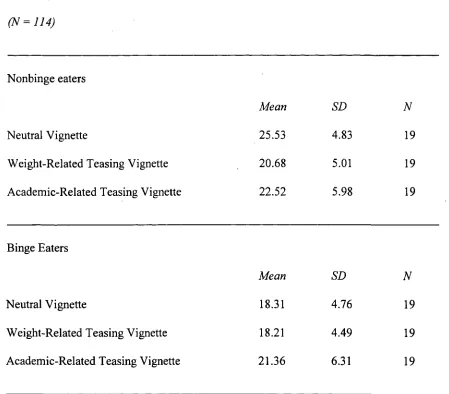
vignette, one describing teasing about academic performance. Study 2 used a similar
methodology to expand and replicate the findings of Study 1, with three types of
chocolate candies replacing cookies as the foods presented in the taste test. The results of
Study 2 showed that participants who were exposed to either teasing vignette reported
feeling more negative affect than those who read the neutral vignette. With respect to
eating behaviour, binge eaters ate significantly more candies in the weight-related teasing
condition as compared to those in all other conditions. While all participants experienced
higher levels of negative affect after reading about teasing, binge eaters who read about
weight-related teasing ate more candies than all other groups. These results suggest that,
for binge eaters, exposure to weight-related teasing has an impact on eating above and
beyond exposure to other types of teasing. The present research suggested that the '
relationship between weight-related teasing and binge eating may not be simply mediated
through negative affect, as was originally suggested. Alternatively, the role of personal
characteristics such as sensitivity to social rejection, the importance of shape and weight
to self-worth, and motivation to escape aversive self-awareness are explored in relation to
ACKNOWLEDGMENTS
First and foremost, I would like to thank my dissertation committee for their time,
effort, and support of this project. I am particularly indebted to my dissertation advisor,
Dr. Josee Jarry for her enthusiasm and support of my efforts as a researcher over the past
three years. I would also like to express my gratitude to Dr. Barry Taub, Dr. Cheryl
Thomas and Dr. Kevin Gorey for their valued insights and notable contributions to this
project.
I am also very grateful for my fellow members of the Eating Disorders and
Anxiety Research Group and Dr. Alan Scoboria, whose contributions and support have
been invaluable. Special thanks are extended to the senior members o f EDARG, Kelty
Berardi, Sara Robillard, and Rob Ferguson, who have been involved in the
conceptualization o f these studies from their inception.
I would also like to acknowledge the staff of the psychology participant pool as
well as the more than 200 women participated in this research.
Finally, I would like to acknowledge my friends and family who have been a
constant source of support and encouragement and have instilled the belief in me that I
could accomplish anything I set my mind on. Last but not least, special thanks are
extended to my husband, Andy Frink. Not only has he been a source o f love and support
since I first expressed interest in graduate school, but he also contributed his time, effort,
TABLE OF CONTENTS
Page
ABSTRACT... iii
ACKNOWLEDGEMENTS ...v
LIST OF TABLES ... x
LIST OF FIG U RES... xi
LIST OF APPENDICES ... xii
INTRODUCTION... 1
Definition of Binge E a tin g ...1
Binge Eating and the Classification of Eating D isorders... 3
Characteristics Associated with Binge Eating ...5
Etiology of Binge E ating... 6
Sociocultural Pressure... :... 7
Self-Esteem ... 8
Restraint M o d el...9
Affect Regulation M o d els... 10
Escape T h eo ry ... 12
Empirical Evidence for Affect Regulation T h e o ry ... 13
Weight-Related Teasing and Binge E a tin g ... 16
Goals o f the Present Research... 21
Study 1 Hypotheses...23
METHOD - STUDY 1 ... 25
Participants...25
Materials ...28
Food Stimuli ...28
Social Interaction Vignettes ... 28
Binge Scale (B S )... 30
Perception of Teasing Scale (POTS) ...30
Revised Restraint Scale (RRS)... ... 31
Body Mass Index... 32
State Self-Esteem Scale (SSES)... 32
Procedure ...33
Design ... 36
RESULTS - STUDY 1 ... 37
Approach to Data A nalyses... 37
Descriptive Information and Scoring of the Measures ... 37
Eating Behaviour...37
Binge Scale ... 40
PANAS ... 40
P O T S ...41
Revised Restraint S cale... 41
Manipulation C h ec k ... 42
Primary Analyses ... 42
Weight-Related Teasing... 42
The Effects of Weight-Related Teasing on Negative M o o d ... 43
The Effects of Weight-Related Teasing on Eating B ehaviour...43
DISCUSSION-STUDY 1 ... 48
Future Research D irections... 49
Limitations o f Study 1 ... 50
INTRODUCTION TO STUDY 2 ...53
Study 2 H ypotheses... 55
METHOD - STUDY 2 ...58
Participants... 58
Materials ... 62
Food Stimuli ... 62
v iii
Study 1 M easures... 63
Eating Disorders Examination- Questionnaire (ED E -Q )... 63
Procedure ...:...64
t Experimental D esign...67
RESULTS - STUDY 2 ... 69
Approach to Data A nalyses... 69
Descriptive Information and Scoring o f the Measures ... 69
Eating Behaviour...69
Binge Scale ... 73
PANAS ... 73
P O T S ...74
Revised Restraint Scale... 74
SSES ... 74
Semester o f Participation ... 75
Time of Participation ...75
Credibility o f Cover S tory...75
Identification with Protagonist... 77
Primary Analyses ... 79
Weight-Related History ... 79
The Effects o f Weight-Related Teasing on Negative M o o d ... 79
The Effects of Weight-Related Teasing on Eating B ehaviour... 80
Weight-Related Teasing vs. Neutral (Binge Eaters O n ly )... 84
Weight-Related Teasing vs. Academic-Related Teasing (Binge Eaters Only) ... 86
Academic-Related Teasing vs. Neutral (Binge Eaters O nly) 86 State Self-Esteem ...86
DISCUSSION - STUDY 2 ... 93
Review of Results ... 93
GENERAL DISCUSSION... 97
Escape Theory and Binge Eating ... 99
Page
Table 1. Characteristics of Psychology Participant Pool by Semester of Testing
Study 1 ... 26
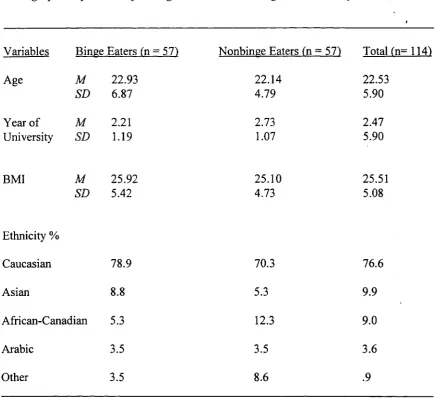
Table 2. Demographic Information for Binge Eaters and Non-Binge Eaters - Study 1 .. 38
Table 3. Means, Standard Deviations, and Ranges of All Study 1 V ariables...39
Table 4. Summary of Hypotheses, Statistical Procedures, and Results - Study 1 ... 46
Table 5. Characteristics of Psychology Participant Pool by Semester of Testing
Study 2 ... 59
Table 6. Demographic Information for Binge Eaters and Non-Binge Eaters - Study 2 .. 70
Table 7. Means, Standard Deviations, and Ranges of All Variables for
Binge Eater Group ... 71
Table 8. Means, Standard Deviations, and Ranges of All Variables for
Non-Binge Eater Group ... 72
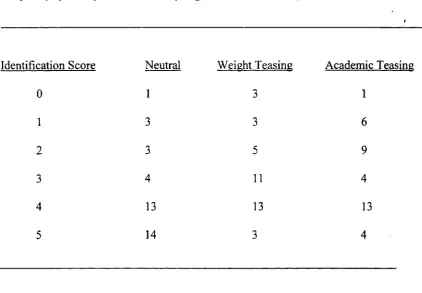
Table 9. Frequency of Identification Scores by Vignette R ea d ... 78
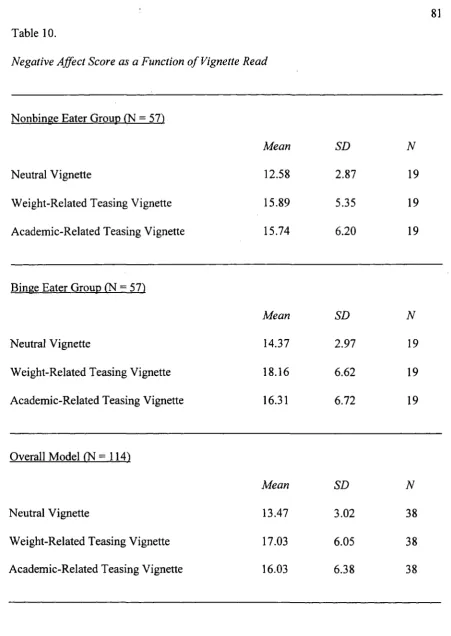
Table 10. Negative Affect Score as a Function of Vignette Read ... 81
Table 11. Main Effect of Binge Status as a Function of Number of Candies E a te n 82
Table 12. Main Effect of Vignette Read as a Function o f Number of Candies Eaten .... 83
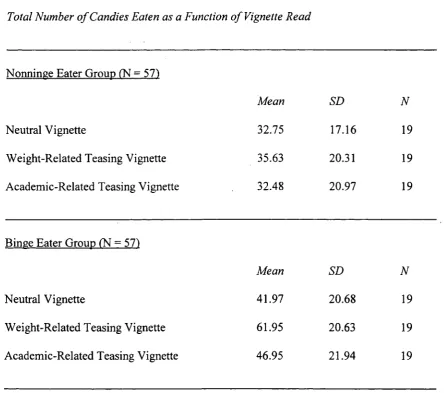
Table 13. Total Number o f Candies Eaten as a Function o f Vignette R e a d ... 85
Table 14. State Self-Esteem Scores as a Function of Binge Status ...88
Table 15. State Self-Esteem Social Evaluation as a Function of Binge Status and
Vignette R e a d ... 89
xii
LIST OF APPENDICES
A Cookie Recipes ... 128
i B Social Interaction Vignettes - Study 1 ... 130
C Positive and Negative Affect Schedule (PA N A S)... 131
D Binge Scale (B S )... 132
E Perception of Teasing Scale (POTS).. ... 134
F Revised Restraint Scale (RRS) ... 136
G State Self-Esteem Scale (SSES)... 137
H Contact S crip t... 138
I Consent Form - Study 1 ... 139
J Letter of Information - Study 1 ... 141
K Instruction Script - Study 1 ... 142
L Vignette Identification Q uestion... 143
M Demographic Questionnaire ... 144
N Cookie Taste Rating F o rm ... 145
0 Debriefing - Study 1 ... 147
P Weight/Height Consent F o rm ... 149
Q Social Interaction Vignettes - Study 2 ... 150
R Eating Disorders Examination- Questionnaire (ED E-Q )... 152
S Consent Form - Study 2 ... 155
T Letter of Information - Study 2 ... 158
W Debriefing - Study 2 ... 163
X Post Experiment Questions - Study 2 ... ... 166
1
Introduction
It is not uncommon for people to have difficulties controlling the urge to overeat. t
Disturbances in human eating behaviour have been described for centuries.
Uncontrollable hunger and binge eating were first described by ancient Greek and Roman
physicians centuries ago (Kinoy, 1994) and with the phenomenon of binge eating
receiving a great deal of attention in since the 1950's (Stunkard, 1959). Today, in Western
cultures, a significant portion of the population reports experiencing a daily struggle to
restrict and control their food intake. Dieting and limiting caloric intake has nearly
become a cultural norm in North America. The struggle to lose weight is often
accompanied by food cravings and the urge to overeat (Polivy, Heatherton, & Herman,
1988). However, in the more severe of these cases, the urge to overeat seems almost
overwhelming and impossible to control. Under these circumstances, overeating may
actually be a symptom o f an eating disorder (Fairbum & Wilson, 1993).
Definition o f Binge Eating
Binge eating is commonly thought of as consuming a large amount of food in a
specified amount o f time. The notion of binge eating is one that is not restricted to the
field of clinical psychology and research. However, the lay understanding of the term
“binge eating” may be a contributing factor to the confusion about its definition. In both
clinical psychology and research, a binge is defined by a two-part criterion. The first part
frame, under similar circumstances. In addition to this requirement, the binge episode
must be accompanied by a sense of lack of control over eating. That is, the individual
must feel that they cannot control what or how much they are eating.
The requirement that a binge episode involves eating a large amount of food is
consistent with both laboratory findings and self-reported caloric intake during binges in
patients with bulimia nervosa (Walsh & Gamer, 1997). Nevertheless, some researchers
have challenged this definitional requirement, suggesting that the amount of food
consumed during a binge is not the defining feature of the binge. Studies have shown that
approximately one third of patients, who otherwise satisfy the criteria for bulimia nervosa,
reported consuming a relatively small number of calories during a binge (Fairbum &
Wilson, 1993). It is possible that what constitutes a binge is subjective, and determined by
factors other than caloric content. For example, in individuals with eating disorders, the
mere consumption of a food deemed “forbidden” may be subjectively labeled as a binge
episode, even if this forbidden food is not consumed in large amounts (Rosen, Leitenberg,
Fisher, & Khazam, 1986). Currently, there are no data showing fundamental differences
in binges, or their association with comorbid psychopathology, as a function o f the
quantity of food consumed (Fairbum & Wilson, 1993). Because of the lack of consensus
on this issue, research studies differ somewhat in their definition of binges, with some
accepting the Eating Disorder Examination’s (Fairbum & Cooper, 1993) definition of
subjective overeating (amount o f food eaten is not “large” but viewed by subject as
The second part of the DSM-IV (APA, 2000) binge criterion is a subjective sense
of lack of control over eating. This criterion was introduced to address some of the
t concerns about the content validity of the concept of binge eating (Devlin, Goldfein, &
Dobrow, 2003). More specifically, it has been questioned whether the symptom of binge
eating itself adequately distinguishes those with truly disordered eating from the larger
group of individuals who periodically engage in overeating. In order to increase
diagnostic specificity, the DSM-IV Work Group included loss of control in the diagnostic
criteria for binge episodes, both in the context of bulimia nervosa (BN) and binge eating
disorder (BED; Devlin et al., 2003). Using both the regularly occurring consumption of
large amounts of food and the loss of control during a binge episode substantially reduces
the number of individuals who meet the criteria for binge eating episodes, contrasting
these individuals from occasional overeaters (Devlin et al., 2003).
Binge Eating and the Classification o f Eating Disorders
Eating disorders are complex psychiatric and medical conditions where
individuals suffer from persistent disturbances in their eating (APA, 2000). Eating
disorders are found predominantly among young women in Western countries, with
anorexia nervosa (AN) and bulimia nervosa (BN) being the most well-defined eating
disorders (Kinoy, 2002). In a large sample of Canadians, the lifetime prevalence of AN
was found to be 0.56% for females and 0.16% for males; the lifetime prevalence of BN
was found to be 1.1% for females and 0.1% for males (Garfmkel, Lin, & Goering, 1995).
In addition to the full syndrome of eating disorders, one in four adolescent females in
(Garfinkel et al., 1995), and can have a devastating impact on the emotional, social and
physical lives of sufferers and their families.
Currently, binge eating can be a symptom of each of the eating disorders included
in the DSM-IV. It is the central characteristic of bulimia nervosa and binge eating
disorder. Further, in the most recent versions of the DSM, binge eating has also been
included as part o f a subtype of anorexia nervosa, reflecting the most current research
findings about this disorder (APA, 1994).
Binge eating is a prevalent problem among females and is not confined to any one
eating disorder (APA, 2000). Prevalence rates vary considerably among different
populations. Weekly binge eating episodes have been reported in 1.5%-10% of female
college students and approximately 1.1% of college aged males (Fairbum & Wilson,
1993; Katzman, Wolchik, & Braver, 1984). Prevalence rates of binge eating for those
enrolled in weight loss programs is markedly higher, with rates o f 18%-35% being
reported (Ramacciotti et al., 2000).
The fact that binge eating is currently included as a diagnostic criterion in all
eating disorders, and its prevalence is significantly high among young women, enhances
the need for a better understanding of this behaviour.
In the first published paper describing the syndrome o f BN, Russell (1979)
indicated that episodes of overeating constituted the key feature of this eating disorder.
Following this emphasis on overeating or binge eating, as the central feature of BN, each
characteristic of this disorder (Wilson, 1993). Binge eating episodes in those diagnosed
with bulimia nervosa are typically followed by recurrent, inappropriate compensatory
t behaviour aimed at preventing weight gain. Typically these compensatory behaviours
include self-induced vomiting, the misuse of laxatives/diuretics, fasting, and/or excessive
exercise (APA, 1994).
However, Stunkard’s (1959) early clinical descriptions of binge eating suggested
that a distinct subgroup of obese individuals who engaged in patterns of binge eating did
not engage in compensatory behaviours to prevent weight gain. The phenomenon of binge
eating in the absence of inappropriate compensatory behaviours has been the focus of a
great deal of research in the past decade. For the first time, the fourth edition of the DSM
(APA, 1994) acknowledged this subset of binge eaters who do not use compensatory
measures and included BED as both a criteria set requiring further study, and a specific
example of eating disorder not otherwise specified (EDNOS). The inclusion of this
provisional diagnosis in the DSM-IV has resulted in a dramatic increase in scientific
interest in binge eating behaviour (Striegel-Moore & Franko, 2003).
Characteristics Associated with Binge Eating
Regardless o f the disorder under which an individual’s binge eating is categorized,
those who engage in binge eating are more likely (than nonbinge eaters) to exhibit body
image dissatisfaction and other associated psychopathology (Mitchell & Mussell, 1995).
More specifically, individuals who engage in binge eating also tend to have elevated rates
of comorbid Axis I psychopathology compared to controls. The rate of comorbid affective
Research has also demonstrated that binge eating severity correlates with the
severity o f psychiatric symptomatology (Mitchell & Mussell, 1995). For example, the
larger the amount of food, and the more the individual experiences lack of control over
their eating during a binge, the more severe the individual’s associated psychiatric
symptoms. Comorbidity studies of binge eating and Axis II disorders have identified
higher rates of Axis II disorders in binge eaters than in nonbinge eating controls.
Significant group differences have been found for both avoidant personality disorder (9%
vs. 0%) and borderline personality disorder (16% vs. 1%) (Yanovski, Nelson, Dubbert, &
Spitzer, 1993). This associated psychopathology has also been used to differentiate
between binge eaters and their nonbinge eating, obese counterparts. More specifically,
obese nonbinge eaters have been found to have a lesser degree of psychopathology
(Yanovski, 2003).
In addition to the increased likelihood of having a comorbid psychological
disorder, those who engage in binge eating without the use of inappropriate compensatory
weight loss methods are also at a much-increased risk of obesity. Binge eating disorder is
highly associated with weight gain and obesity, as evidenced by findings from clinic,
community and population-based studies, with more than 30% of binge eaters falling into
the obese weight range (Fairbum & Brownell, 2002; Mitchell & Mussell, 1995).
Etiology o f Binge Eating
The etiology o f binge eating has received a great deal of attention and speculation.
theories have been proposed. Determining the etiology of binge eating is difficult not only
because o f the lack of agreement among clinicians and researchers, but also because of the
t likelihood that the etiology of binge eating differs within the context o f each eating
disorder. Moreover, there is currently no consensus as to whether binge eating has one
specific etiological foundation. Binge eating is a complex behavioural pattern and
accounting for it with a single cause may be misleading (Polivy & Herman, 1993).
However, it does appear that there are a few consistent psychological and sociocultural
factors that play a role in binge eating.
Sociocultural Pressure
Over the past several decades, a great deal of the literature on eating disorders has
focused on the sociocultural pressure to be thin, and the corresponding impact this thin
ideal has had on the prevalence of eating disorders (Thompson, Coovert, & Stormer,
1999). The cultural message implicit in nearly all facets of Western society has placed
increasing demands on young women to be attractive and thin. Sociocultural notions of
beauty in Western cultures equate thinness with beauty, femininity and happiness
(Striegel-Moore & Smolak, 2000). The repeated exposure to these messages has led to a
widespread acceptance and internalization of the thin ideal (Cash, 1995). The body shape
that many young women seek does not come naturally to most and failure to obtain this
goal is nearly inevitable. Thus, the internalization o f this thin ideal has also been
accompanied by a high degree of body-image dissatisfaction (Brown, Cash, & Lewis,
1989). Body dissatisfaction and wanting to be thinner has contributed to the increasing
context o f the restraint model in the section below.
Self-Esteem
Although there are many psychological characteristics that may contribute to the
development of binge eating, self-esteem is one that has received a great deal of attention.
Self-esteem has been implicated in dieting in two ways. First, it has been suggested that
having low self-esteem makes an individual vulnerable to the sociocultural pressure to be
thin and thus more likely to diet (Polivy & Herman, 1993). A significant relationship has
been found between self-esteem and chronic dieting status and between self-esteem and
body dissatisfaction (Heatherton & Polivy, 1992). Button and colleagues (1996)
conducted a longitudinal study showing that low self-esteem in 11-12 year old females
was found to predict the onset of eating disorder symptoms five years later. Low self
esteem is thought to result in body image dissatisfaction which disposes individuals to be
more vulnerable to accepting the thin ideal. Accepting and striving to achieve the thin
ideal, in turn, increases the likelihood that the individual will diet, and possibly break
their diet by binge eating. Alternatively, those who decide to diet and encounter failure to
lose weight due to binge eating and loss of control over eating experience decreased self
esteem with each successive dieting failure (van den Berg, Thompson, Obremski-
Brandon, & Coovert, 2002). Thus, low self-esteem could be either a precondition of
dieting, or it could be an outcome o f unsuccessful dieting and binge eating (Polivy &
Herman, 1993). Although it is currently unknown whether self-esteem is a precursor or a
self-esteem (Polivy et al., 1988).
Self-esteem and the thin ideal have been acknowledged to play significant roles in
t the etiology of binge eating. However, it is likely that the mechanisms behind binge eating
are more dynamic than self-esteem or degree of internalization of the thin ideal. Thus, the
current literature discussing etiological mechanisms has focused primarily on two
principal explanatory models, the restraint model and the affect regulation model. Both
these models focus on antecedent factors of binge eating but consider somewhat different
timelines for these binge antecedents.
Restraint Model
The restraint model of binge eating encompasses several psychological factors and
has been acknowledged as one of the most widely accepted etiological models of binge
eating (Polivy & Herman, 1985). This model proposes that the current sociocultural
pressure to be thin is a pathway to binge eating. As described above, the internalization of
the thin ideal often leads to chronic body dissatisfaction, which, in turn, leads to dieting.
Chronic dieting has been cited as a contributing factor in the development of binge eating
(Abraham & Beumont, 1982; Heatherton & Polivy, 1992; Polivy & Herman, 1985;
Polivy, 1999). To date, most research conducted on dieting has been with females,
however, increasingly males are engaging on this behaviour as well (McCabe &
Ricciardelli, 2003). Women who strongly believe in the importance o f having an ideal
body shape restrict their food intake in unrealistic ways in order to achieve their goal of
weight loss. However, the goal of weight loss is rarely achieved, as restraining food intake
(Heatherton, Polivy, & Herman, 1990; Herman & Polivy, 1990). Additional evidence
suggesting a link between restrained eating and binge is a study showing that a majority of
BN patients appear to have dieted prior to their first binge episode (Mitchell et al., 1999).
Moreover, dieters also report that overeating or binge eating episodes typically result from
cravings brought on by restricting food intake (Telch & Agras, 1993). In these instances,
the diet appears to precede the binge episode.
A different pattern emerges among individuals who suffer from BED. For
example, clinically-based research on BED suggests that unlike their counterparts with
BN, a significant portion of individuals with BED report that their first binge episodes
occurred before their first diet and that dieting is a result of, rather than a precursor to,
binge eating (Spitzer et al., 1993; Spurrell, Wilfley, Tanofsky, & Brownell, 1997). In one
study, only 8.7% of individuals with BED reported having been on a low-calorie diet prior
to the onset of binge eating (Wilson, Nonas, & Rosenblum, 1993). Spurrell and her
colleagues (1997) noted that differences between those who binge first and those who diet
first suggests that the restraint model cannot explain binge eating in a significant group of
those who binge eat.
Affect Regulation Models
The dietary restraint model has been predominant in guiding research and clinical
work. However, more recent evidence suggests that the restraint model needs to be
complimented by an understanding of affect-driven eating (Telch & Agras, 1996). Thus,
alternative theories is on mood and negative experiences as the key antecedents to binge
eating. The affect regulation model posits that heightened emotional disturbance increases
the likelihood that a person will binge (Abraham & Beumont, 1982; Baucom, 1981;
Greeno, 2000; Paxton & Diggens, 1997). Specifically, individuals binge eat when they
experience distress because binge eating temporarily decreases their negative emotions,
provides comfort, and distracts them from their negative affect. Thus, the relationship
between negative affect and binge eating implies that the negative mood is a proximal
antecedent of binging (Telch & Agras, 1996). Several variations of the overarching affect
regulation theory have been proposed to explain the specific mechanism behind binge
eaters’ tendency to eat in response to emotional distress (Heatherton & Baumeister, 1991).
The comfort hypothesis proposes that the affective regulatory purpose of binge
eating is to provide comfort or consolation to distressed dieters or obese individuals who
are usually dieting (Polivy, 1999). According to this theory, those who engage in binge
eating find a great deal of comfort in food and eating. In nonbingers, eating does not
provide enough comfort to offset the typical appetite suppressing effects that are activated
by stress (Polivy, 1999). In other words, under high distress, the nervous system typically
acts to suppress appetite, leaving the distressed individual with a lack o f hunger.
However, in those who find comfort in eating (i.e., binge eaters), being distressed acts as a
signal to desire eating, in hopes that the act of (binge) eating will provide some comfort
(Polivy, 1999).
Rather than simply providing comfort, it has also been suggested that eating may
benefits from eating to find it useful as form of distraction from distress. For bingers,
eating may be sufficiently engrossing to keep attention focused away from distressing
circumstances. Thus, under times of increased negative affect, these individuals may
engage in binge eating so as not to think about the source of their affective distress
(Polivy & Herman, 1988).
Escape Theory
In addition to being a comfort and a distraction, binge eating may also be used as
an escape from aversive self-awareness (Heatherton & Baumeister, 1991). Escape theory
is based on the notion that binge eaters are individuals who tend to have high personal
expectations related to their body weight and shape. Their self-image is strongly tied to
their appearance and they tend to strongly subscribe to the socioculturally transmitted thin
ideal (Polivy et al., 1988). Thus, according to escape theory, in addition to having a strong
desire for a thin, attractive physique, binge eaters also have a stronger than usual desire to
be perceived favourably by others (Heatherton & Baumeister, 1991). Binge eaters are
thought to have high levels of self-awareness that are reflected in the belief that other
people pay close and critical attention to their behaviour. These three attitudinal aspects of
binge eaters combine, resulting in negative self-assessment and negative affect, or more
specifically depression (Heatherton & Baumeister, 1991). Under these circumstances,
individuals are motivated to reduce their level of self-awareness in order to escape these
negative experiences. This is thought to be accomplished by binge eating, during which
13
(Heatherton & Baumeister, 1991). Thoughts about the self are extinguished and replaced
by the physical sensations associated with eating.
i
Empirical Evidence fo r Affect Regulation Theories
To date, there is no consensus on whether binge eating for affect regulation is
motivated by comfort, distraction or escape from awareness. It is also possible that there
are individual differences in the motivations for binge eating. However, a great deal of
research has suggested that negative affect certainly appears to be an antecedent of binge
eating.
In an early study of bulimic patients, Abraham and Beamont (1982) found that
nearly all participants reported that their binge episodes were usually preceded by
anxious, tense, and dysphoric mood states. Self-monitoring records found that bulimic
participants reported more negative mood in the hours prior to a binge compared to their
moods prior to a meal or snack (Deaver, Miltenberger, Smyth, Meidinger, & Crosby,
2003). Studies using handheld computers to obtain momentary ecological assessment of
mood have found that binge eaters report more negative affect on binge versus nonbinge
days (Wegner, 2002), in addition to feeling less in control of their eating on binge days
(Greeno, 2000). Dysphoric mood states were reported as the most common precipitant of
binge eating in patients with binge eating disorder. Higher levels of binge eating in BED
participants is associated with the desire to eat when experiencing negative moods (Telch
& Agras, 1996). Stickney and colleagues (1999) found that college women who binged
reported feeling down or sad, upset, empty, hopeless, stressed, and overwhelmed prior to
binge eating. These results support the affect regulation model of binge eating.
Participants who experienced negative affect before binge eating episodes reported that
their affect became less negative during binges, and then, once again, became more
negative after binging. These results are consistent with those of others who have
demonstrated that binge eating temporarily decreases negative affect experienced before
binge episodes (Deaver et al., 2003; Greeno, 2000; Telch & Agras, 1996).
Laboratory studies, primarily using female undergraduate students, have examined
the influence of affective states on eating in dieters and have provided an analogue model
for understanding the role o f affective states on binge eating. Baucom and Aiken (1981)
manipulated distress in a laboratory experiment via perceived failure on a series of
concept formation problems and found that after a depressed mood was induced, dieters
ate more than nondieters. When the dieters were not depressed, however, they ate less
than their nondieting counterparts. Cattanach, Malley and Rodin (1988) found that female
undergraduates who demonstrated more eating pathology reported an increased desire to
binge in response to a series of four laboratory-induced stressors compared to a group of
low-disordered eaters. In this study, participants were asked to participate in four
psychologically stressful tasks. These tasks involved: 1) listening to a vignette about
interpersonal conflict and imagining herself in the situation, 2) performing an audiovisual
conflict task, 3) preparing and delivering a brief speech to an audience, and 4) listening to
a vignette about feeling socially isolated. Eating disordered participants reported feeling a
significantly greater desire to binge during the interpersonal conflict vignette and the
15
rejection, or disappointment are likely related to binge episodes (Cattanach, 1988).
Schotte, Cools, and McNally (1990) also tested the effects of negative affect on
t eating in restrained or unrestrained eaters in a laboratory setting. In this study, participants
were classified as being restrained eaters if they scored above the median on the Revised
Restraint Scale. Their results indicated that exposure to a frightening film, as compared to
a neutral film, was associated with increases in anxiety, sadness and anger. Restrained
eaters who were exposed to the frightening film ate more than restrained eaters who saw
the neutral film and unrestrained eaters who were exposed to either film. These results
provide evidence that negative affect may trigger overeating in restrained, but not in
unrestrained eaters.
Telch and Agras (1996) used guided imagery to induce negative mood in binge
eaters and found that negative emotional states were associated with loss of control over
eating and labeling an eating episode as a binge in a group of binge eaters. However, the
prediction that binge eaters who were exposed to the negative mood induction would eat
more than all other groups was not confirmed. The authors suggested that the laboratory
setting may not adequately imitate factors influencing participants eating in their natural
environment (Telch & Agras, 1996). However, it is possible that the mood induction
procedure may not have adequately imitated factors that were sufficiently emotionally
evocative to induce a mood negative enough to trigger binge eating.
In addition to laboratory studies of binge eating, studies using statistical
procedures such as path analysis have also been employed to help clarify the possible
dissatisfaction interact to form a psychosocial model of binge eating (Womble et al.,
2001). The results of this study indicated that the etiology of binge eating is likely more
multifaceted than the original affect regulation and restraint theories proposed. Thus, it
appears that additional factors need to be explored in order to more fully comprehend the
mechanisms behind binge eating behaviour.
Weight-Related Teasing and Binge Eating
Teasing has been recognized both anecdotally and in the research literature as a
potentially negative experience. Womble and colleagues (2001) found that a history of
teasing played a role in a psychosocial model of binge eating. However, the role of teasing
in binge eating models must be explored in more depth.
The goal of teasing is to inflict psychological distress upon a target. Although
teasing can be used in the context of affectionate joking, it can also be used to demean
and embarrass. In instances where teasing is meant to be hurtful, the perpetrator can shirk
responsibility by claiming that he or she was “only kidding”, thus disavowing himself or
herself from the hurtful effects o f the teasing (Kowalski, 2000). Thus, teasing is defined
as a “personal communication from an agent to a target that includes four components:
aggression, humour, ambiguity, and identity confrontation” (Kowalski, 2004, p. 332). In
the research literature, teasing has been widely used to refer to three behaviours, prosocial
teasing, cruel teasing and bullying. However, for the purposes of this research, teasing
refers primarily to antisocial teasing, which includes both cruel teasing and bullying,
Teasing in general has been shown to have a variety of negative impacts. Research
shows that teasing can be hurtful and can be interpreted as veiled criticism or as an
t indication of interpersonal rejections and social exclusion (Kowalski, 2000). Several
studies have found that appearance-related teasing is especially distressing and can have a
profound effect on the victims’ feelings. In an investigation into the effects of teasing,
Kowalski (2000) asked participants to write a description of an especially powerful and
memorable experience of being teased. Kowalski (2000) tested a random sample of
university students and found that more than 45% of the participants described an incident
of being teased about their appearance, an overwhelming majority in this particular study.
These results not only indicated that appearance-related teasing was frequently
experienced by the participants but also that being teased about appearance was a
memorable event years later (Kowalski, 2000).
Physical appearance represents a readily observable feature, and is therefore an
easy target for teasing. Physical appearance is also a primary factor influencing
perceptions of social approval and acceptance. For a perpetrator who desires to hurt his or
her victim, a key means o f doing this is to imply through teasing about appearance, that
the person is not socially acceptable (Kowalski, 2000). Further, teasing about physical
characteristics can be especially hurtful and exclusionary because o f the target’s inability
to control these features. Thus, teasing about one’s physical appearance is particularly
likely to induce hurt feelings and negative self-evaluations (Kowalski, 2000).
The consequences of appearance-related teasing may be more long-term and
surveyed reported that being teased by others was a factor in shaping their body image
(Thompson, Heinberg, Altabe, & Tantleff-Dunn, 1999). Cash (1995) found that 72% of
women had been teased about their appearance in the last five years, with 71% of these
women reporting that they believed the teasing to have affected their body image.
Moreover, a recent study by Eisenberg, Neumark-Sztainer and Story (2003) found that
weight-related teasing was also related to depressions and thoughts (and attempts) of
suicide among adolescents.
There is extensive evidence indicating that teasing is associated with body
dissatisfaction. One of the first studies in this area found that teasing frequency and the
degree of distress the teasing produced were associated with higher levels of body
dissatisfaction, eating disturbance, depression and lower self-esteem (Fabian &
Thompson, 1989). Several studies have examined the impact of weight-related teasing by
asking female university students to recall experiences of being teased and relating these
retrospective accounts to current levels of body dissatisfaction (Cash, 1995; Thompson &
Psaltis, 1988). In each of these studies, measures of teasing were significantly associated
with current levels o f body image. The findings were further replicated in additional
samples o f university females and in a sample of obese adult women (Grilo, Wilfley,
Brownell, & Rodin, 1994; Paxton, Schutz, Wertheim, & Muir, 1999). In a 3-year
longitudinal study, Catterin and Thompson (1994) found that teasing predicted increases
in body dissatisfaction. Further, being overweight also served as a significant predictor for
modeling to examine the relationships between teasing, weight status, body image and
eating disturbance. Teasing was found to be significantly associated with both body
dissatisfaction and eating disturbances. However, this study suggested that in addition to
the direct role that teasing plays in this complex relationship between variables, it also
acts as a mediator between weight status and body image. Thus, level of obesity was not
directly related to body image; instead, its effect was mediated by teasing. In particular,
only those individuals who were overweight and experienced weight-related teasing
suffered from negative body image (Thompson, Coovert et al., 1995).
Weight status has been acknowledged as a significant factor in the frequency of
teasing. Although the literature indicates that a large percentage of individuals experience
appearance-related teasing, overweight individuals appear to be more vulnerable to being
teased about their physical appearance (Neumark-Sztainer et al., 2002). In an interview
study of 50 overweight adolescent girls, all but two described being teased and
stigmatized about their weight (Sherwood & Neumark-Sztainer, 2001). Adolescent girls
who are teased about their weight are more likely to display psychological, body image,
and/or eating disturbances. Numerous studies have examined peer influence on eating and
body image (Muir, Wertheim, & Paxton, 1999; Thompson, Heinberg, Altabe, & Tantleff-
Dunn, 1999). High school girls who reported higher levels of dieting reported being
teased more often by peers about their weight and shape, and reported that this
appearance-related feedback influenced their decision to diet (Paxton et al., 1999).
Neumark-Sztainer and her colleagues (2002) also found a strong association between
about their weight were significantly more likely to engage in eating disordered
behaviour. Brown, Cash, and Lewis (1989) found that females who engaged in the binge-
purge cycle were more likely than controls to report being teased or rejected about their
appearance. Being teased or criticized about one’s weight and/or shape by family
members has also been significantly correlated with body dissatisfaction, investment in
thinness, weight management behaviour and eating disturbance (Levine, Smolak, &
Hayden, 1994). Overall, this body of research indicates that weight-related teasing has a
damaging impact on the victims.
The evidence so far supports the role of teasing in the development of disordered
eating and body image disturbance. However, the majority of research on teasing has
relied on retrospective self-report methodology, the validity o f which has been questioned
(Neumark-Sztainer et al., 2002). Perceived teasing certainly is a subjective variable. It is
possible that the prevalence of weight-related teasing is either higher than reported and
goes unrecognized, or that the prevalence is lower but is magnified in the experience of
the victims of this teasing (Neumark-Sztainer et al., 2002). Most importantly, present
disordered eating and body image disparagement may lead to over-reporting of past
weight and shape related teasing.
To date, no reported study has manipulated weight-related teasing using a
randomized experimental design. Given what is known about the impact o f weight-related
teasing, there are certainly ethical implications of providing negative verbal feedback to
participants regarding physical appearance. Thus, researchers have relied on using
21
university students to write two narratives related to teasing, one where they were the
perpetrator of the teasing and one where they were the victim of teasing. This study
i revealed that 45% of the incidents recounted by victims focused on being teased about
their physical appearance, indicating its salience in the memories of the victims of teasing.
Furman and Thompson (2002) constructed a series of vignettes describing either positive
or negative social interactions that focused on either appearance issues or abilities.
Participants were asked to rate their mood and body satisfaction after reading the vignette.
The results indicated that participants with high levels of body dissatisfaction had the
most negative changes in mood and body image after reading the negative appearance-
related scenarios.
Furman and Thompson (2002) experimentally examined the influence of teasing
on an individual’s mood and body dissatisfaction by using a vicarious exposure strategy.
Undergraduate females read vignettes that involved a female receiving a comment from
another person regarding either some aspect of her appearance or her abilities. The results
of this study revealed that a mood disturbance was elicited in those participants who read
the vignettes about teasing, indicating that, as a negative mood induction variable, teasing
vignettes demonstrate some success.
Goals o f the Present Research
Currently, there is a general consensus in the literature that weight-related teasing
plays a role in the development of body image dissatisfaction and is implicated in binge
eating (Cash, 1995; Grilo et al., 1994; Neumark-Sztainer et al., 2002; Womble et al.,
example, Womble and colleagues (2001) reported a statistical link between weight-related
teasing and binge eating in females, with negative affect playing a mediating role in the
relationship of these two variables. However, to date, no published studies have directly
tested the influence of weight-related teasing on binge eating using an experimental
design. As described in previous sections, past experimental research has been successful
in finding differences in the amount eaten between binge eaters and nonbinge eaters in
response to some negative mood induction procedures (Baucom, 1981; Cattanach, 1988;
Schotte et al., 1990). In each of these studies, the mood induction procedures differed
somewhat, with none o f them using teasing to elicit negative mood in participants.
The present research was designed to build upon these previous findings using
teasing as a mood induction technique in a sample of binge eaters and nonbinge eaters.
Like Furman and Thompson’s (2002) study, the present research used vicarious exposure
to teasing using vignettes. Moreover, this research expands upon studies examining
differences in eating between binge eaters and a nonbingeing comparison group in a
laboratory setting. The classic taste test format (Herman, Fitzgerald, & Polivy, 2003) was
used to determine the impact of weight-related teasing on mood and eating.
This research was completed in two stages. Study 1 was a preliminary test of the
idea that weight-related teasing impacts eating behaviour in binge eaters. This first study
explored the impact of weight-related teasing on mood and eating by exposing
participants to a vignette describing weight-related teasing or a similar, neutral vignette.
23
effects of weight-related teasing on eating and mood by differentiating it from academic-
related teasing.
Study 1 Hypotheses
Study 1 served as an exploratory investigation of the impact of weight-related
teasing on both mood and eating. Three primary predictions were hypothesized for this
study.
1.) It was predicted that binge eaters would score higher on the weight-related
teasing subscales of the Perception of Teasing Scale (POTS) as compared to nonbinge
eaters. Higher scores on this measure are indicative of a more extensive frequency and
impact of weight-related teasing. Previous research indicates that weight-related teasing
plays a role in the onset of eating disturbances and those who experience high levels of
distress after being teased about their weight have been found to be more likely to engage
in pathological patterns of eating, such as binge eating (Sherwood & Neumark-Sztainer,
2001).
2.) As indication of the efficacy of using a teasing vignette to induce negative
mood, it was predicted that participants who read the weight-related teasing vignette
would report higher levels of negative affect as compared to those who read the neutral
vignette.
3.) With respect to food consumption/eating, it was predicted that, overall, binge
eaters would eat more than the nonbingeing comparison group. It was also predicted that
there would be an interaction between binge status (binge eater or nonbinge eater) and the
read the weight-related teasing vignette would eat more than binge eaters who read the
Method - Study 1
Participants
* Eighty-eight females enrolled in undergraduate psychology courses at the
University of Windsor participated in the study. All participants received course credit for
their participation in the study. Participants were recruited from the psychology
participant pool over three academic semesters, beginning in February 2003 (see Table 1
for characteristics of the participant pool sample).
Psychology students who chose to enroll in the participant pool were asked to
respond to several screening questions. The two screening questions used in this study
were as follows: (1) During the last 6 months, have there been times when you felt you
have eaten what other people would regard as an unusually large amount of food given
the circumstances (e.g. a quart of ice cream)? YES or NO, and (2) During the times when
you ate an unusually large amount of food, did you experience a loss o f control (feel that
you couldn’t stop eating or control what or how much you were eating)? YES or NO.
Lists of potential participants were generated by the staff o f the psychology
participant pool on the basis of students’ responses to the above two screening questions.
Random lists of females who responded affirmatively to both screening questions were
generated (typically 20 names per list), as were similar random lists of females who
responded negatively to both screening questions. Potential participants’ responses to
these initial screening questions did not result in assignment to the comparison or binge
eater group, but rather served as screening measure to help the investigator more
Table 1.
Characteristics o f Psychology Participant Pool by Semester o f Testing - Study 1_______
Winter 2003
Total number of students enrolled in participant pool 1446
Total number of females enrolled in participant pool 1137
Number of females answering “YES” to binge screening questions 164
Number of females answering “NO” to binge screening questions 973
Number of “YES” females supplied by participant pool 30
Number of “NO” females supplied by participant pool 30
Binge eaters who took part in study 10
Nonbinge eaters who took part in study 14
* Remaining 36 females whose names were supplied by the participant pool either could
not be contacted, were not interested in participating or had already earned all possible
bonus points.
Fall 2003
Total number o f students enrolled in participant pool 1510
Number of females enrolled in participant pool 1247
Number of females answering “YES” to binge screening questions 204
Number o f females answering “NO” to binge screening questions 1043
Number o f “YES” females supplied by participant pool 20
Number of “NO” females supplied by participant pool 70
27
Nonbinge eaters who took part in study 41
* Remaining 45 females whose names were supplied by the participant pool either could
t
not be contacted, were not interested in participating, had already participated in this
study, or had already earned all possible bonus points.
Winter 2004
Total number of students enrolled in participant pool 1636
Number of females enrolled in participant pool 1323
Number of females answering “YES” to binge screening questions 99
Number o f females answering “NO” to binge screening questions 1224
Number o f “YES” females supplied by participant pool 30
Number of “NO” females supplied by participant pool 0
Binge eaters who took part in study 12
Nonbinge eaters who took part in study 7
* Remaining 11 females whose names were supplied by the participant pool either could
not be contacted, were not interested in participating, had already participated in this
participants’ responses to two specific questions on the Binge Scale. Participants who
reported binge eating “at least once or twice a week” or more and reported feeling at least
“somewhat out of control” on the Binge Scale were assigned to the binge group. The
comparison group was comprised of individuals who reported that they do not binge eat at
least once a week and do not experience loss of control over their eating.
Once participants’ binge eating symptoms were determined, 26 participants met
the criteria for the binge eater group, and the remaining 62 participants were placed in the
comparison group. Participants were given final binge group assignment (binge eater or
nonbinge eater) once they had completed all study questionnaires and their responses to
the Binge Scale could be inspected.
Materials
Food Stimuli
Three flavors of cookies - oatmeal raisin, chocolate chip, and double chocolate -
were used as the food stimuli in this study. All cookies were home baked by the
experimenter, using the same recipes for all participants (see Appendix A for recipes). As
per the typical procedure (McFarlane, Polivy, & Herman, 1998), cookies were
standardized in size by using a melon bailer to measure out the cookie dough before
baking. Each plate consisted o f a pile of 35 small cookies, for a total of 105 cookies
presented to each participant. Each plate o f cookies was counted and weighed with a
standard digital postal scale both before and after being presented to the participant.
Social Interaction Vignettes
29
experiences teasing on account of her weight, and one parallel neutral vignette that did
not include any teasing content. An attempt was made to create a realistic social
t
interaction involving peer teasing. The weight-related teasing vignette included
components of the weight teasing subscale of the Perception of Teasing Scale (POTS)
(Thompson, Cattarin, Fowler, & Fisher, 1995). See Appendix B for vignettes.
Positive and Negative Affect Schedule (PANAS)
The PANAS (Watson, Clark, & Tellegen, 1988) was used to assess negative affect
after reading the social interaction vignettes. This scale is one of the most widely used
affect measurement scales (Schumukle, Egloff, & Bums, 2002). The PANAS is a 20-
item self-report measure that is divided into 2 subscales, measuring positive and negative
affect, respectively. Respondents indicate the extent to which they are experiencing
several different emotions using a 5 point Likert scale. Sample items from the Positive
Affect subscale include: “interested”, “enthusiastic” and “determined”. Sample adjectives
from the Negative Affect subscale include: “distressed,” “irritable,” and “jittery.” Both
subscales are coded so that higher scores reflect greater affect levels (either positive or
negative). External validity investigations indicate that correlations between the Negative
Affect subscale and various other measures of distress and psychopathology ranged from
.51 to .94, indicating that the PANAS is a good measure of negative affect (Watson et al.,
1988). The PANAS can be used to assess affect across several different time instructions.
In the present study, participants were asked to respond to how they felt at that moment.
Internal consistency reliability for the two subscales using the “Moment” time instructions
See Appendix C for PANAS.
Binge Scale
The Binge Scale was used to assess both behaviour and attitudes associated with
binge eating, such as frequency of binge eating, and feelings associated with binge eating
(Hawkins & Clement, 1980). This is a nine-item self-report scale that uses a multiple
choice format and includes questions such as, “How often do you binge? A) Seldom, B)
Once or twice a month, C) Once a week, or D) Almost every day”, and “Which most
accurately describe your feelings after a binge? A) Not depressed at all, B) Mildly
depressed, C) moderately depressed, or D) Very depressed.” The binge scale has been
reported as having good internal consistency (Fairbum & Wilson, 1993), good construct
validity and has been demonstrated to have one month test-retest reliability greater than
0.88 (Hawkins & Clement, 1980). See Appendix D for Binge Scale.
Perception o f Teasing Scale (POTS)
This 11-item self-report scale measures history of weight and competence teasing
(Thompson, Cattarin et al., 1995). This scale was specifically designed with the impact of
teasing on body dissatisfaction and is an extension of the Physical Appearance Related
Teasing Scale (Thompson, Fabian, Moulton, Dunn, & et al., 1991). The POTS is divided
into four subscales, with two measuring the frequency of teasing (Weight Teasing-
Frequency and Competency Teasing-Frequency), and two measuring the effect or
emotional impact of the teasing (Weight Teasing-Effect and Competency Teasing-Effect).
The two teasing Frequency subscales are rated using a 5 point Likert-type scale which
frequency subscales include: “People made jokes about you being heavy” (Weight
Teasing-Frequency), and “People laughed at you because you didn’t understand
something” (Competency Teasing-Frequency). Following each teasing frequency item,
respondents are asked to rate “How upset were you?” on a 5 point Likert-type scale that
uses the endpoints “Not Upset” and “Very Upset.” The two teasing effect subscales are
calculated using the responses to these questions. Internal consistency ratios for this scale
were found to be acceptable and the POTS has been shown to be have good criterion
validity when correlated with other measures of body dissatisfaction, body image anxiety,
and eating disturbance (r scores ranging from .30-.48). Test-retest reliabilities for the four
subscales were reported as follows: Weight Teasing-Frequency (r = .90), Weight Teasing-
Effect (r - .85), Competency Teasing-Frequency (r = .82), and Competency Teasing-
Effect (r = .66; see Appendix E for POTS).
Revised Restraint Scale (RRS)
The Revised Restraint Scale was used to measure dietary restraint (Polivy,
Herman, & Warsh, 1978). In this particular study, the RRS was included to determine if
there were systematic differences in restraint status between the experimental groups. It
consists o f 12 items that assess diet and weight history and concern with food and eating
(Heatherton, Herman, Polivy, King, & et al., 1988). This self-report measure was used to
divide participants into restrained and unrestrained eaters. It consists o f two subscales:
Weight fluctuation and Concern for Dieting. Sample items of the Concern for dieting
subscale include “How often are you dieting?” and “Do you have feelings of guilty after
fluctuation of 5 lbs. affect the way you live your life?” Individuals with scores of 14 and
below were classified as “unrestrained” eaters and those who scored 15 and above were
classified as “restrained” eaters, as is conventional in research using female
undergraduates (Herman et al., 2003). The Revised Restraint Scale has been demonstrated
to have high test-retest reliability and internal consistency, .95 and .82, respectively
(Allison, Kalinsky, & Gorman, 1992). See Appendix F for Revised Restraint Scale.
Body Mass Index (BMI)
Similarly to the Revised Restraint Scale, participants’ body mass index was
measured to determine if there were systematic differences in height and weight between
the experimental groups. BMI is calculated by dividing weight (in kilograms) by height
(in metres) squared. BMI is generally considered the preferred index of relative body
weight as a reflection of adiposity (Kraemer, Berkowitz, & Hammer, 1990).
State Self-Esteem Scale (SSES)
The SSES is a 20-item Likert-type self-report scale designed for measuring
temporary changes in individual self-esteem (Heatherton & Polivy, 1991). There are three
self-esteem factors in this scale: Academic Performance, Social Evaluation, and
Appearance. A sample item from the Academic Performance subscale is: “I feel that I
have less scholastic ability right now than others.” The Social Evaluation subscale
includes items such as, “I feel that others respect and admire me.” Finally, sample items
from the Appearance subscale include: “I am pleased with my appearance right now,” and
“I am dissatisfied with my weight.” The SSES has been demonstrated as having
33
Coefficient Alpha for the scale equals .92 (Heatherton & Polivy, 1991). See Appendix G
for SSES.
t
Procedure
Upon being contacted, participants were asked to participate in a taste test study
investigating the effects of recalling certain memories on taste ratings (see Appendix H
for contact script). This cover story was used to mask the true purpose of the study.
Participants were instructed to eat a moderate amount of food between one and three
hours before their appointment, to help assure some uniformity and a relatively neutral
state of hunger.
All participants were run individually by the same investigator, a doctoral
candidate in clinical psychology between the hours of 12 and 6 p.m., as is standard
procedure in “taste test” style eating studies (McFarlane et al., 1998). Upon arrival in the
lab, participants were asked to read and sign the consent form (Appendix I) and were
given a copy o f the letter o f information (Appendix J) for their records. Participants were
reminded that the purpose of the study was to investigate the manner in which memories
affect individual’s perceptions of taste. Participants were informed that they would be
taste-testing three kinds of cookies. After consenting to participate, participants were
randomly assigned to the weight-related teasing or neutral condition and were given the
corresponding vignette to read. Participants were instructed to read the vignette carefully
and were asked to identify with the character in the vignette as much as possible (see
Appendix K for complete study instructions). At this time, the investigator left the room
reading the vignette, the participants were asked to rate how strongly they identified with
the main character in the vignette (see Appendix L).
Following reading the vignette, participants were told that the cookies for the taste
test were still warming and they were asked whether they would mind completing a
questionnaire for another student doing a study while they wait for the cookies. At this
time, the PANAS was administered, along with several demographic questions (Appendix
M). The cover story at this point was intended to mask the importance of the mood
variable in case o f possible expectancy effects.
Once these two questionnaires were completed, the experimenter entered the room
once again, this time carrying a tray with the three plates of cookies and a glass of water.
Participants were given the cookie taste rating form (Appendix N) and were informed
they would be sampling three flavours of cookies - oatmeal raisin, chocolate chip and
double chocolate chip. The cookies were presented to the participant as either cookie “A,”
“B,” or “C,” the order of which was randomly determined. All cookies were home baked
by the experimenter, using the same recipes for all participants. Cookies were
standardized in size by using a melon bailer to measure out the cookie dough before
baking. Each plate consisted of a pile of 35 small cookies, for a total of 105 cookies
presented to each participant. Each plate of cookies was weighed before being presented
to the participant.
Participants were given the entire instructions for the taste test before the
experimenter left the participant alone in the room to complete this phase o f the study.