ABSTRACT
THIGPEN II, BENNY. Implementing Professional Learning Communities: The Challenge of Changing Culture. (Under the direction of Dr. Kenneth H. Brinson, Jnr.).
The purpose of this research is to provide an overview of one district‘s efforts to implement the Professional Learning Communities at Work© model of professional learning
communities in a particular school district in the Southeastern United States. The research effort should provide insights to the difficulties faced when school principals begin the implementation of professional learning communities within their schools. Using case study methodology and in depthinterviews with principals whoimplemented professional learning communities, the researcher enlightens future administrators to the hazards of the
implementation journey and makes administrators aware of the organizational, conceptual and tacit knowledge needed to successfully begin implementation.
Principals play a crucial role in any improvement efforts at the school level. Developing a professional learning communitywithin a school is a powerful staff development approach and potent strategy for school change and improvement. It builds the capacity of the teaching staff, which should lead to improved student achievement for students. Nonetheless, principals must be aware of pitfalls and how to support the change effort. Principal's leadership and understanding of the concept of professional learning communities and how to lead organizational change is crucial to success. This research effort notes some of the difficulties faced when school leaders attempt to move forward with the
implementation of professional learning communities at their schools. It includes
Implementing Professional Learning Communities: The Challenge of Changing Culture
by
Benny Thigpen, II
A dissertation submitted to the Graduate Faculty of North Carolina State University
in partial fulfillment of the requirements for the degree of
Doctor of Education
Educational Leadership and Supervision
Raleigh, North Carolina 2011
APPROVED BY:
_______________________________ ______________________________ Dr. Kenneth H. Brinson, Jnr. Dr. Kevin Brady
Committee Chair
________________________________ _____________________________
DEDICATION
Although my mother died when I was sixteen years old, there was time enough in the short time that I spent with her for her to impart two important beliefs. Her first belief was in the primacy of being educated. She always wanted me to understand that education was the means to a better tomorrow and it was the most worthy pursuit. Although I was not a great student when she passed when I was sixteen, I remained persistent, and became a better and better student the longer I stayed with it. My mother‘s second belief was that it was ok and sometimes necessary to march to the beat of a different drummer. She always did and
somewhat enjoyed the march. Through the early years of adolescence and adulthood most of us spend our time trying to be like everyone else. Later we discover that we can only be what we truly are, and what we are is truly ok, even if it means we do indeed march to a different drumbeat. Those lessons have stuck with me from the age of sixteen to forty-seven. They are lessons I hope my children fully understand as they become adults.
For Kacey and Trey, I simply hope they understand the two conceptual
BIOGRAPHY
Benny Thigpen II was born June 23, 1964 to Mrs. Ella Rose Mercer Thigpen and Benny Gene Thigpen of Beulaville, North Carolina. His mother, Ella Rose Mercer Thigpen, was an attorney in Kenansville, N.C. for the family law firm, Mercer, Thigpen & Mercer. Mrs. Thigpen was a graduate of the University of North Carolina at Chapel Hill Law School and the first female inducted into the law fraternity at the University of North Carolina At Chapel Hill. Benny Gene Thigpen, his father, was a high school teacher at Jacksonville Senior High School in Jacksonville, N.C. His father taught marketing and business education courses for 34 years with North Carolina Public Schools and also farmed row crops and raised cattle as a second job.Ben has one sibling, Rose Thigpen-Williams who is a clinical psychologist in Jacksonville, North Carolina. Both Ben and his sister Rose now reside minutes from their father.
While at home after graduation, and waiting for the selection process to become a wildlife office which began in May, Mr. Thigpen began substitute teaching business courses for a teacher on maternity leave at his former high school in February of 1987. He filled in until the end of the school year in June. At that point, he decided to become a teacher. He enrolled at East Carolina University to pursue teacher certification and a Master‘s Degree in English Education.
In 1989, with the certification in hand and after an internship at Aurora High School beginning an Honors English Program, Mr. Thigpen returned to East Duplin High School as an English teacher and coach. He was a successful classroom teacher and coach. Mr. Thigpen‘s English I students consistently scored well and his athletics teams were very successful and Mr. Thigpen greatly enjoyed his career as a teacher and coach. In 1995, he married Michelle Simpson, who was also a teacher. Mr. Thigpen continued to teach and coach until November of 1999, when he approached Dr. Tommy Benson, the Superintendent of Duplin County schools, about the possibility of becoming an administrator. Dr. Benson employed Mr. Thigpen within two months as assistant principal at Wallace-Rose Hill High School. Mr. Thigpen applied and was accepted as one of the seventy-seven Class Seven North Carolina Principal Fellows. He began his full-time enrollment as a Principal Fellow at N. C. State in August of 2000. He completed his Master of School Administration Program at North Carolina State University in 2002 and became the assistant principal at East Duplin High School. After one year as an assistant principal, Mr. Thigpen was named the Principal of Chinquapin Elementary School. For the next two years, from 2003 until 2005,
students at or above grade level. It was Duplin County‘s first and only Honor School of Excellence to this point. In 2003, Mr. Thigpen also enrolled at North Carolina State
University to begin his doctoral program. In 2005, Mr. Thigpen was named the principal of East Duplin High School. While at East Duplin, Mr. Thigpen began first computerized credit recovery/remediation system in Duplin County Schools via Nova NET, began the
development of Personalized Education Plans and made efforts for the alignment of school improvement efforts with district level goals via extensive sharing, monitoring and using performance data to drive instructional decision making.
Mr. Thigpen has always used a team-based approach to leadership and believed in systematic approaches to management and leadership. East Duplin High School is also where Mr. Thigpen began the implementation of Professional Learning Communities and having remediation and acceleration built into the school day. This practice is now in place in all Duplin County High Schools and all high schools have experienced significant
In 2008, Mr. Thigpen was hired as the Secondary Director for Duplin County Schools and is currently in this position. Mr. Thigpen and his wife Michelle, who is a North Carolina State MSA Program Graduate and principal, have two children. Kacey was the North
ACKNOWLEGEMENTS
I would like to acknowledge those who have contributed to my growth and those who have been colleagues along this journey. First, I must acknowledge the faculty and staff of the Educational Leadership Department at North Carolina State University. They have been outstanding. From the first day I walked into the door and met Dr. Richard Haley, the entire department has worked to support my efforts. I appreciate greatly the experience to learn from Dr. Mike Ward, Dr. Peter Hessling, Dr. Bonnie Fusarelli, Dr. Kevin Brady, Dr. Paul Bitting, Dr. Kenneth Brinson and Dr. Robert Serow. The entire faculty has provided great opportunities to learn and to lead for my wife and I, as we both are graduates of the
Educational Leadership Program at North Carolina State.
I want to especially thank Dr. Kenneth Brinson. He has been my guide with this journey through the dissertation. He has been frank, insightful and positive throughout the whole experience. Without his help and direction, I would not have made it to this point. I appreciate greatly his patience, persistence and admire greatly his practical approach to the task. Thank you for your insightful guidance on this journey.
I also want to thank the many and countless fellow school administrators I have come into contact with over the years. Many of them have been my greatest inspiration and have provided the greatest insight. We continue to learn together throughout this journey. I thank each of you and I truly hope one day I can repay your support and contribution to my
TABLE OF CONTENTS
LIST OF TABLES ... xii
LIST OF FIGURES ... xiii
Chapter 1: INTRODUCTION... 1
THE CRITICAL ROLE OF THE PRINCIPAL ... 1
PROFESSIONAL LEARNING COMMUNITIES FOR IMPROVED RESULTS ... 3
THE CONCEPT OF PROFESSIONAL LEARNING COMMUNITIES ... 5
DEFINING A PROFESSIONAL LEARNING COMMUNITY ... 9
IMPLEMENTATION AND SCHOOL CULTURE ... 12
ADAPTIVE CHALLENGES AND TECHNICAL PROBLEMS ... 17
STATEMENT OF PURPOSE ... 20
DEFINTION OF TERMS ... 25
RESEARCH QUESTION(S) ... 27
LIMITATIONS OF THE STUDY... 29
SUMMARY OF CHAPTER ... 30
Chapter 2: REVIEW OF THE LITERATURE ... 32
INTRODUCTION ... 32
THE CONCEPTUAL BEGINNING OF TEAMING AND TQM‘S CONTRIBUTION... 33
THE CONCEPT OF TEACHER ISOLATION ... 38
THE LEARNING ORGANIZATION AND SENGE‘S INFLUENCE... 41
PROFESSIONAL LEARNING COMMUNITIES AT WORK© ... 46
MODELS OF PROFESSIONAL LEARNING COMMUNITIES OUTSIDE DUFOUR‘S MODEL ... 52
SUPPORT FROM LEADING EDUCATIONAL ORGANIZATIONS ... 60
SUMMARY OF INFORMATION OF PLCS AND SIMILAR ENTITIES ... 62
CULTURAL CHANGE, TRUST AND LEADERSHIP ... 63
THE CURRENT LITERATURE BASE ... 65
SUMMARY OF CHAPTER ... 66
Chapter 3: RESEARCH METHODOLOGY ... 68
INTRODUCTION ... 68
THEORETICAL FRAMEWORK ... 69
ADAPTIVE CHALLENGES AND TECHNICAL PROBLEMS ... 70
DISTINGUISHING ADAPTIVE AND TECHNICAL ... 71
BEHAVIORS THAT ASSIST ... 74
QUALITATIVE RESEARCH ... 76
CASESTUDYRESEARCH ... 78
PHENOMENOLOGY ... 79
SAMPLING ... 81
RESEARCH PROTOCOL... 82
INTERVIEW FOCUS ... 84
INTERVIEW METHODS AND PROCEDURES ... 86
INTERVIEWS AND INTERVIEW QUESTIONS ... 87
ETHICAL CONSIDERATIONS ... 89
SUBJECTIVITY STATEMENT ... 90
INTERNAL, EXTERNAL, CONSTRUCT VALIDITY AND RELIABILITY ... 93
DATA ANALYSIS ... 96
DATA ANALYSIS WITH A PHENOMENOLOGICAL LENS ... 98
THE PRINCIPAL‘S PERSPECTIVE... 100
SUMMARY OF CHAPTER ... 101
Chapter 4: DEMOGRAPHICS AND BACKGROUND INFORMATION ... 104
GEOGRAPHICS AND DEMOGRAPHICS ... 104
ACADEMIC PERFORMANCE ... 108
IMPLEMENTATION PROCESSES ... 110
PROCESS AND EXPECTATIONS ... 114
STAFF IMPLEMENTATION SURVEY ... 115
NORTH CAROLINA TEACHER WORKING CONDITIONS SURVEY ... 119
THE RESEARCHER‘S INTRODUCTION ... 121
MICHELLE‘S STORY ... 125
THE DISTRICT‘S STORY ... 128
SUMMARY OF CHAPTER ... 129
Chapter 5: THE DATA ... 131
HOW DID YOU FIRST LEARN OF PLCS ? ... 132
DID YOU SPEND PERSONAL TIME LEARNING ABOUT PLCS ? ... 133
WHAT WERE YOUR INITIAL LIKES/DISLIKES ? ... 134
WAS IT WISE TO ADOPT PLCS AS A DISTRICT ? ... 137
HOW DID YOUR TEACHERS RESPOND TO PLCS ? ... 140
WHAT TRAINING DID YOU HAVE ON LEADING CHANGE ? ... 144
DID ADOPTING PLCS CHANGE YOUR LEADERSHIP STYLE ? ... 154
HOW IMPORTANT IS TRUST IF IMPLEMENTING PLCS ? ... 156
WHAT ADVICE WOULD YOU GIVE AN ASPIRING PRINCIPAL ? ... 160
WHAT SHOULD THE DISTRICT DO TO SUPPORT ? ... 164
Chapter 6: FINDINGS AND RECCOMENDATIONS ... 179
BIG IDEAS ... 179
OTHER CONCLUSIONS ... 187
FINAL REFLECTIONS ... 190
IMPLICATIONS FOR FURTHER STUDY ... 194
References: ... 199
APPENDIX ... 206
Appendix A - INTERVIEW ... 207
Appendix B –PRINCIPAL‘S LETTER FOR PERMISSION ... 210
Appendix C –INFORMED CONSENT ... 211
LIST OF TABLES
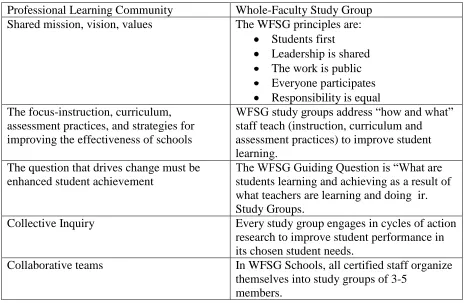
Table 1.1 Professional Learning Communities versus WFSG‘s...58
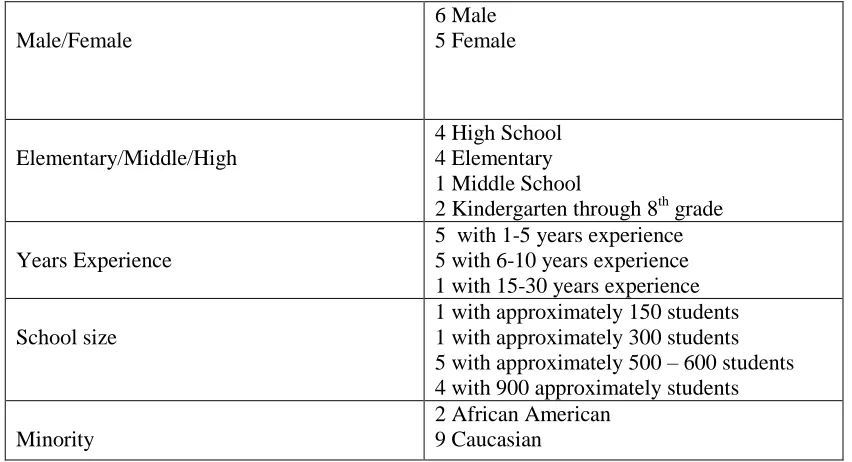
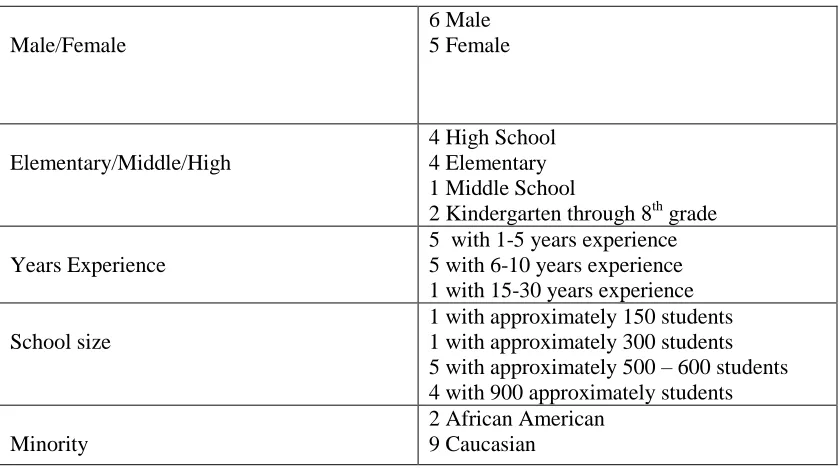
Table 3.1 Demographics of Administrators Interviewed ...87
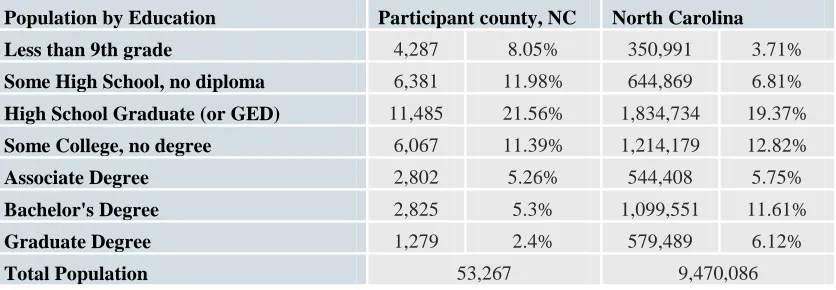
Table 4.1 District Education Information ...105
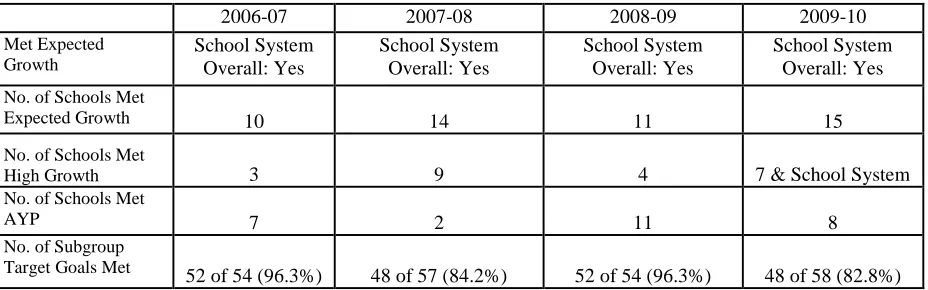
Table 4.2 District AYP and ABC Results ...109
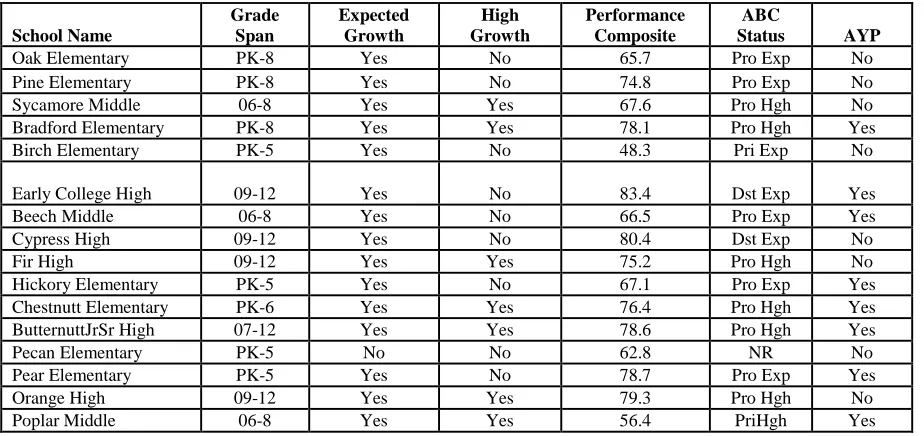
Table 4.3 District Academic Results...110
Table 4.4 Implementation Activity ...113
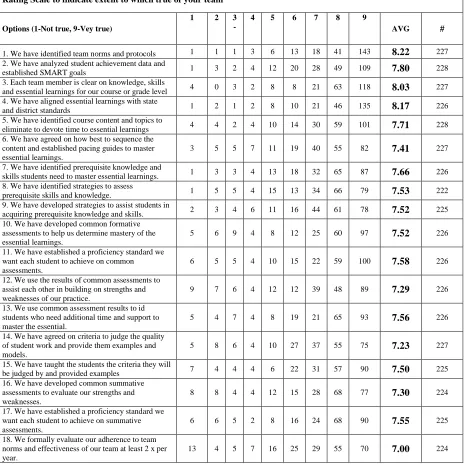
Table 4.5 Staff Survey of Implementation ...118
Table 4.6 North Carolina Teacher Working Conditions Survey ...120
LIST OF FIGURES
Figure 1.1 Adaptive Challenges versus Technical Problems ...18
Figure 3.1 Adaptive Challenges versus Technical Problems ...71
Figure 3.2 Diagram of Leadership Needed for PLC Development ...73
Chapter One INTRODUCTION
Much has been written about the difficulty of change in organizations. There is also a great deal of literature that focuses on leadership and how leaders bring about or lead change efforts in their organizations. Most of this literature notes the difficulties, challenges and paradigm shifts that must occur to actuate change. Facilitating change in schools is difficult. Ted Sizer, after more than a decade of efforts to reform schools via the Essential Schools movement notes, ―I was aware of that it would be hard, but I was not aware of how hard it would be‖ (Sizer, 1996, p.1). Many others have noted the difficultly of change within the context of schools and that it maybe even more difficult in schools than in other
organizations (McCall, 1994; Kotter, 1996, DuFour, et al, 2010). DuFour (1998) notes that―change is a formidable task that is certain to be accompanied by pain and conflict (DuFour, 1998, p.50,). Fullan (1993) notes similar ideas, ―Conflict is essential to any successful change effort‖ (p.27).
The Critical Role of the Principal
or change effort is critical. Goodlad (1984) argued that schools have been unable to address their own problems in many reform efforts because principals lack the needed leadership skills for success. Not only is the principal be required to have knowledge of the needed reform, but must also have knowledge of the dynamics of change within an organization. This knowledge, in addition to the required skills in management, budgeting, instructional leadership, public relations and the daily decision making skills required of a principal is a vast span of knowledge the principal is required to have a command of to be successful.
In addition to the skills needed for implementation of a successful reform effort and the knowledge of bringing about change within an organization, the principal plays an
and enable them to insure change does not occur if they do not desire the change. (Swisss, 1997) But, principals and middle level managers are also influential in bringing about change when the change is desired. The research of Marzano (2003) indicates that principals and their leadership ―could be considered the single most important aspect of school reform (Marzano, 2003, p.172). McCall echoes Marzano‘s results to state, ―I believe the 120,000 principals of our schools are the most influential gatekeepers in our society. They have the opportunity to influence the lives of our young people in K through 12 for more hours a week than any other agency except the family or (for some) the mass media‖ (McCall, 1994). DuFour also notes the principal‘s influence in bringing about change by citing, ―the general agreement in education research has been the best hope for school improvement is to be found in the principal‘s office‖ (DuFour, 1998).More recently, Van Natter (2008) notes the ―centrality‖ of the principal‘s influence on climate, change within the school building and how important a role principals play in change efforts.
Professional Learning Communities for Improved Results
indicator of a school‘s success is often frustrating for teachers and administrators.
Nonetheless, most educational experts argue that accountability is not going awayin the near future and successful school leaders have to embrace the age of accountability for years to come. With that being said, the end purpose of the accountability effort is to improve student achievement, which if achievement measures are reliable and valid, measure at least to some extent student learning.
One of the means for garnering improved student achievement results is professional learning communities (DuFour, 1998: Toole, 2002: Hord, 2007, Schmoker, 2007: DuFour, 2010).Because of that, there is a growing interest in creating professional learning
communities within our schools as means to improved achievement. In addition to improved achievement, professional learning communities tout improved collegiality among staff and a reduction in teacher/staff isolation, improved professional practice, and an improved school culture. Many educational writers, researchers and school leaders support professional learning communities as the most promising means to improved results for students. Numerous researchers (Crow, Hausman& Scribner, 2002; DuFour & Eaker, 1998; DuFour, Eaker, & DuFour. 2005; Hord, 1997, 2004; Toole & Louis, 2002) argue that nurturing a culture that supports staff in becoming a professional learning community is the most promising avenue for sustained, substantial school improvement. A few studies have
demonstrated that schools with strong professional learning communities produce important outcomes for students and school professionals (Crow et al., 2002; Toole & Louis, 2002). Toole and Louis (2002) suggest that cross-cultural research findings indicate that
professional learning community is seen as a powerful staff development approach and potent strategy for school change and improvement (Hord, 1997, 2004). The impetus of developing professional learning communities is to insure that school improvement efforts require that, at the school level, staff work collaboratively to solve educational problems through the development of a robust community of learners who will to take responsibility for, and be committed to, achieving student outcomes (Blasé &Blase, 2003).
The Concept of Professional Learning Communities
Despite the growing interest in creating professional learning communities, there are a variety of conceptions of what a professional learning community is. Some would argue the term ―professional learning community‖ is self-descriptive and each of the words,
community, but few actually have all the elements in place and are truly a professional learning community‖ (Williams, 2009, personal interview).
The definition of what a professional learning community is and what actions, dialogue and practices exist among teachers varies from school to school. This variance makes
comprehending and defining the concept of what a professional learning community is more difficult for school leaders and teachers. While one school may label itself a professional learning community and exhibit only a few characteristics of a professional learning community depending on the definition of what a professional learning community is, another school across town may never claim the professional learning community label, and actually be doing more that is truly akin to what a professional learning community is. In short, what exists in the school leader or school‘s conception of what a professional learning community is may vary from school to school.
This variance of conception, coupled with the fact that principals are the gatekeepers to change at the school level may cause quite a perplexing conundrum for the district or school principal seeking to implement professional learning communities. The variance in
level.
Where some principals may regard the concept of professional learning communities as simply providing time for teachers to meet to discuss common assessments and instructional practices and promote a more collegial atmosphere within the school, others who have a more comprehensive or rigorous view may have greater expectations for their staff and outcomes provided by professional learning communities. Nonetheless, if Toole and Louis (2002) are correct in their conclusion that the research is clear, ―professional learning communities can generally lead to improved school functioning in most settings,‖ (p. 274) then taking advantage of their potential usefulness as a means of improvement must come from an understanding of the complexity of the concept of professional learning
communities. The understanding of what professional learning communities are and how to define them must be clearly understood by the principal and district leadership before embarking on the journey to create one. The principal‘s conception or vision of what a professional learning community is influences the type of learning community that develops and evolves within the school or district. Most importantly, the principal's conceptualization, descriptors and understandings of what the components are in a professional learning
community isimpacts implementation. These conceptualizations or "mental models" as Senge (1990) would describe them impacts what type of learning community evolves. As Stephen Covey (1996) often notes, "all things are created twice" and the mental model will precede the actual creation of the entity itself.
regards to the development of professional learning communities. The development of professional learning communities is in the North Carolina Teacher Evaluation Instrument, the North Carolina Principal Evaluation Instrument as well as included in the North Carolina Standards for Superintendents (NCDPI, 2009). So, it is apparent that the North Carolina Department of Public Instruction is knowledgeable concerning the impact and positive results professional learning communities can bring, yet as a state department, they have yet to offer any staff development or training with principals, teachers or superintendents concerning the development of professional learning communities.
Furthermore, the principal already carries a great deal of legal responsibility in his role and has the opportunity to influence the direction and progress of the school. This influence coupled with the responsibility to conduct teacher evaluations gives school administrators
even more latitude in developing an impetus to implementing professional learning communities. More specifically, the North CarolinaTeacher Evaluation Instrument includes
participation in professional learning communities as an element of the teacher evaluation. "Teachers are expected to work collaboratively with other school personnel to create a professional learning community" in Standard One of the five standards for North Carolina teachers (NCDPI, 2009, p.13). This fact coupled with the formal and informal influence the principal typically hasan influence the daily practices and protocols of teachers in an effort to
establish professional learning communities. A key question for the future would be when the formal power of the principal is supported by an apparent state level initiative to develop
Defining a Professional Learning Community
For the purposes of this research, defining a professional learning community is crucial. In general, the term professional learning community describes a collegial group of teachers and administrators who are united in their commitment to student learning‖(Hord,
2007).They engage in regular, consistent and focused dialogue to improve instructional practice, school processes and are bound by a collective vision that guides their work as they learn together and learn collaboratively from each other‘s practice (Hord, 2008). In most professional learning communities, staff may visit and review other classrooms, and
participate in decision-making (Hord, 1997b). The benefits to the staff and students include a reduced isolation of teachers, better-informed and committed teachers and academic gains for students. Hord (1997b) notes, "As an organizational arrangement, the professional learning community is seen as a powerful staff-development approach and a potent strategy for school change and improvement" (Hord, 13, 2008). DuFour (1998) defines professional learning communities by giving characteristics of what a professional learning community is. DuFour (1998) notes characteristics that professional learning communities have:
1.They have shared mission, vision, and values and what separates a learning community from an ordinary school is the collective commitment to the guiding principles that articulate what the people in a school believe and seek to create.
3. They have collaborative teams that share a common purpose as the basic structure of the professional learning community. And, these collaborative teams build the school‘s capacity to learn via collaborative team learning. They learn from one another creating momentum to fuel continued
improvement.
4. They improve practice via an action orientation and via experimentation. The communities are action-oriented and members turn aspirations into action and visions into reality. Not only do they act, they are unwilling to tolerate
inaction. They recognize that learning must be accompanied by doing and acting upon what is learned.
5. They seek continuous improvement. Professional learning communities share a discomfort with the status quo and maintain a constant search for improved results. This seek for improvement causes the professional learning
community to ask itself the following questions: i.What is our fundamental purpose? ii.What do we hope to achieve?
iii.What are our strategies for becoming better?
iv.What criteria will we use to assess our improvement efforts? 6. Professional learning communities have a results orientation. The above
characteristics noted in items 1 through 5 must be assessed by results instead of intentions.
(DuFour, 2008, p. 17)
DuFour‘s description of the characteristics of a professional learning community gives insight to the ideas, conceptions and fundamental thinking that lies behind what a
Agreeing upon the definition of what a professional learning community is and having a clear picture and understanding of what becoming a professional learning
community involves is the first critical step for a school or district that intends to implement professional learning communities as a means of improvement. VanNatter (2008) notes the importance of clarity with goals when engaging in implementation at the school level. Williamson (2008) adds ―teachers need to see the value of the collective learning to make it a part of their daily routine.‖ Change should occur concurrently with the change in vision (Williamson, 2008, p.38). Clarke (2009) denotes in her research that the teachers did not fully grasp the concept of the PLC model (p.84). Thus, the importance of clarity and understanding byadministrators and teacher‘s conceptual understanding of professional learning communities cannot be overemphasized. Ideally, this understanding grows collectively. The initiative whether at the school or district level must first begin with developing a clear, concise conceptual picture of the entity and that image must be well understood by all stakeholders involved in the venture. Vagueness about the concept and the accompanying protocols and practices may lead to further misapplications and
misunderstandings of what is to be done by building level administrators and teachers hoping to become professional learning communities.Clarke (2010) notes that teachers rarely fully grasp the concept of professional learning communities and so any inconsistencies can lead to misperceptions. Williamson (2008) further notes the importance of teachers‘
if professional learning communities are to develop within the school.
Implementation and School Culture
Williamson (2009) notes, ―The culture of the school displays what the faculty and staff value. The manner in which they spend their time reveals what is important to them. (p.39)‖ Implementing professional learning communities would be a significant change for any school and an investment in time. This change and investment of time would impact
school‘s culture. Many authors (Schlechty, 1997; DuFour, 1998; Sarason, 1996) have noted the complexity of creating cultural change in schools and the impact of school culture on school reform efforts. DuFour (1998) indicates that ―changes in structure are tangible and can be announced with flourish,‖ but, ―Cultural changes are less visible, more amorphous, and much more difficult to make‖ (p.133). Phil Schlechty (1997) notes that ―structural change that is not supported by cultural change will eventually be overwhelmed by the culture, for it is in the culture that any organization finds meaning and stability‖ (Schlechty, p. 136). Whether a school is seenas a successful school that is doing well at increasing student learning or whether the school is seen as a failing school due to measures on student‘s achievement results, most note the culture of the school plays an important part. Many believe that culture may be the most important aspect and job of the leader (Schein, 2004).
has underneath it an undercurrent of thoughts, values, beliefs and ideas about learning teaching and their role in that effort, and that culture almost silently pervades and guides the day to day efforts at a school. Numerous studies of school change have identified the organizational culture as critical to the successful improvement of teaching and learning (Fullan, 1998; Rossman, Corbett, and Firestone 1988). Peterson and Deal (1999) also note ―In study after study, where the culture did not support and encourage reformthat
improvement did not occur (p.5). More recently, Van Natter (2008) echoes the
aforementioned quite succinctly by simply stating, ―Re-culturing is the name of the game.‖ Most school improvement efforts note culture is a key factor in school improvement. School culture can foster school effectiveness and productivity (Purkey and Smith, 1983; Levine and Lezotte, 1990). Sarason (1996) notes, ―To put it as succinctly as possible, if you want to change and improve the climate and outcomes of schooling both for students and teachers, there are features of the school culture that have to be changed, and if they are not changed, your well-intentioned efforts will be defeated‖ (p. 340). Edgar Schein (1985), an organizational psychologist, states the case for cultural leadership even more forcefully. He states, ―there is a possibility underemphasized in leadership research, that the only thing of real importance that leaders do is create and manage culture and the unique talent of leaders is their ability to work with culture‖ (p. 2).
protocols and procedures in order to transform itself. It is a major undertaking that involves much work and a clear understanding of the concepts of professional learning communities by all the staff as well as the principal. But it also involves managing and leading the school‘s culture. As Williamson (2008) notes, ―It is ridiculous to believe that by merely placing adults in a room together that they will collaborate and learn from each other. It is only when they get to know and trust their colleagues that they can truly focus on agreed upon goals and all aim for the same targets.‖
The challenge to become an authentic learning community is no small undertaking and requires a great deal of time, effort, patience and leadership. Even under the best conditions, the change effort evokes some resistance. Moore (2010) notes that the principal has to actively encourage participation in PLCs and the leadership skillof the principal affectsthe degree of implementation of professional learning communities. And, the leader(s) face at some degree conflict when implementing the change. Moreover, schools that have negative or toxic cultures resist change efforts to a greater extent and provide principals seeking to implement professional learning communities even greater challenges. Douglass Reeves (2009) provides insights for leaders seeking to implement changes:
In truth, any change will meet resistance, because change is loss. In fact, meaningful change is a particular kind of loss. Are the following states familiar to you: Denial, Anger, Bargaining, Depression, Acceptance. These are of course, the stages of grief described by Dr. Elisabeth Kubler-Ross (1969). Even the most productive and essential changes represent the death of past practice; therefore, for people to have genuine enthusiasm for change, we must believe they have enthusiasm for death and loss---a premise that
demands challenge.
DuFour‘s (2008) guidance is consistent with the other authors‘ ideas on culture. DuFour notes ―educators who cultivate PLCs must engage in an intentional process to impact the culture of their schools and districts. When they are successful, their organizations will undergo profound cultural shifts (p.21).‖ But, DuFour (2010) plainly notes that ―the culture of your organization will be shaped, to a large extent, by the behavior you are willing to tolerate. An unwillingness to confront
inappropriate or incongruent behavior sends the message to everyone in the organization that the behavior is acceptable‖ (p. 205).
An unwillingness to confront inappropriate or incongruent behavior also reduces levels of trust teachers express in their principals (Bryk& Schneider, 2004).Williamson (2008) notes the importance of cultural challenges of
implementation with professional learning communities and advises district support of implementation. She further notes ―until the potential influence culture has on a school is realized and understood, change cannot occur‖ (p. 37, 2008). Professional learning communities are not the norm and often misunderstood (Hord, 2007). And, school leaders must be explicit in their implementation efforts to accurately describe and communicate their vision of what professional learning communities are and what behaviors are required for participation in an authentic professional learning community.
administrator is attempting to improve the culture of the school to one that indeed insures every student achieves academically and interventions are in place to insure they do. This will require teachers to learn new ways of operating on a day-to-day basis and week-to-week basis. It will also require that teachers learn and improve their professional capacity as educators.
The main effort of professional learning communities is to increase student achievement by improving the capacity of the staff. Improving student achievement by building the professional capacity of the staff is a strategy supported by several prominent educational researchers. Michael Fullan notes in Change Forces: Probing the depths of educational reform, ―the critical need for investments in teacher learning has been made clear
again and again in efforts at educational change. Those who have worked to improve schools have found every aspect of school reform—the creation of more challenging curriculum, the use of more thoughtful assessments, the implementation of decentralized management, the invention of new model schools and programs—depends on highly skilled teachers working in tandem with families‖ (Fullan, 2007). Linda Darling-Hammond further states that, ―In the final analysis, there are no policies that can improve schools if the people in them are not armed with the knowledge and skills they need‖ (Darling-Hammond, p. 63, 2009).
The implementation of professional learning communities is a deep change that reaches the very core of what teachers do each day. It asks them to begin to change that and also asks teachers to expose themselves and their professional weaknesses in order to
Adaptive Challenges versus Technical Problems
Ronald Heifetz and Marty Linsky (2002), as many other writers, note the necessity of conflict in creating change within an organization. Linsky and Heifetz explain ―The deeper the change and the greater the amount of new learning required, the more resistance there will be and, thus, the greater the danger to those who lead‖ (Heifetz and Linsky, 2002, p.14). But, Heifetz and Linsky distinguishchange and problems that accompany change into two distinct categories. Both note that leaders should be aware of the two categories of problems that accompany change. Those two areas are adaptive challenges and the technical problems. Technical problems are defined by Heifetz and Linsky ―as having the necessary know-how and procedures‖ (p.13) and adaptive challenges are ―the whole host of problems that are not amenable to authoritative expertise or standard operating procedures. (p.13)‖
We call these adaptive challenges because they require experiments, new discoveries, and adjustments from numerous places in the organization or community. Without learning new ways---changing attitude, values, and behaviors---people cannot make the adaptive leap necessary to thrive in the new environment. The sustainability of change depends on having the people with the problem internalize the change itself.‖
(Heifetz and Linsky, 2002, p.13)
community life, business, or the nonprofit sector---is that people, especially those in positions of authority, treat adaptive challenges like technical problems. (p.14)
Distinguishing Technical from Adaptive Challenges
What’s the Work? Who does the Work? Technical Apply current know-how Authorities
Adaptive Learn new ways The people with the problem
(Heifetz and Linsky, 2002, Leadership on the Line, p. 14)
Figure 1.1: Adaptive Challenges versus Technical Problems
Later in their text Heifetz and Linsky (2002) offer suggestions for leaders
implementing changes in organizations. They suggest leaders negotiate adaptive issues by first distinguishing between the adaptive issues and the technical problems by placing the work where it belongs. ―To meet adaptive challenges, people must change their hearts as well as their behaviors‖ (p.127). The ―solutions are achieved when ―the people with the problem‖ go through a process to become ―the people with the solution‖ (127).
Heifetz and Linsky (2002) suggest four types of interventions are necessary by leaders whose organizations face adaptive challenges. ―Leaders must 1.) Make observations, 2.) Ask questions, 3.) Offer Interpretations and 4) Encourage taking action‖ (p. 134). In essence, Heifetz and Linsky‘s strategies involve giving the work back to people who are responsible for it to avoid becoming the target of the frustrations of adaptive challenges.
conflict, not become it. You need to let people do the work that only they can do.‖
(Heifetz and Linsky, 2002, p. 122)
Learning to understand people‘s reaction to change is critical for successful implementation of change. Principals charged with implementing professional learning communities face reactions noted by Heifetz. Moreover, a principal with an understanding of the distinction between adaptive challenges and technical problems and how to respond to each is more likely to have a successful implementation process with professional learning communities. The voices of the community of learners must involve the voices from all stakeholder groups. It is indeed a tenuous balance for a school administrator to distinguish between the adaptive and technical issue. Williamson (2008) provides insight by noting the importance of the leader ―encouraging teachers to be open, direct and honest during
implementation‖ and further noting that ―a key role of the administrator will be to evaluate routines and systems currently in place at the school to determine what needs to change to allow relationships and collaboration to develop.
Teachers will have to be empowered to take ownership of this change process. Numerous theorists note that collaborative environments ―are not
accomplished without teachers (Burnett, 2002, Hord, 2004). The school level administrator may initiate change, but one should not expect a single
individual to sustain change. The principal must take the lead in the formation of teams within the buildings and informing the staff of the expectations (for those teams) (Hord, 2004).
Williamson (2008, p.32)
While creating a learning community is a desirable end for schools and offers
difficult task. It involves a wide span of skills for school administrators who embark on the journey. Principals have great influence on the quality of professional learning communities that emerge at their schools or if they emerge at all. The quality and skill of the leader in some sense determines the emergence of professional learning communities and the degree of implementation success or failure within a school.
Statement of Purpose
The purpose of this research is to in part identify those difficulties school leaders face when charged with the challenge to implementing professional learning communities within their schools. This research first seeks to identify the conceptual understanding(s) of
learning communities. It also provides insight for future implementation efforts and information needed by principals for successful implementation.
This research endeavor is a case study that is somewhat phenomenological in nature. Case studies are excellent methods to examine the ―how‖ and ―why‖ questions involved in implementation of professional learning communities (Yin, 2009). The focus of this research effort is to examine how best to support building level principals as they seek to implement professional learning communities in their schools. Yin (2009) notes that ―how‖ and ―why‖ questions are ―more explanatory and likely to lead to the use of case studies, histories, and experiments as the preferred research method‖ (Yin, p.9). Case studies are excellent means of research when the relevant behaviors cannot be manipulated. This is the case with this effort in that building level principals moved forward with the implementation of
professional learning communities at their own pace, via their own implementation plan or lack thereof, and with their own ends in mind when implementing professional learning communities at their schools. Nonetheless, the implementation of professional learning communities is the implementation of a concept that affects conditions that encompass conditions outside professional learning communities themselves. The implementation of professional learning communities connects to and is affected by school culture, leadership and a variety of other conditions. Case study methodology allows for this phenomenon.
A case study is an empirical inquiry that
The boundaries between phenomenon and context are not clearly evident. (Yin, 2008, p. 18)
This research effort has a phenomenological lens to it. "A phenomenological study describes the meaning of the lived experiences for several individuals about a concept or the phenomenon" (Creswell, p. 51). In this research, the purpose is to understand what
principals felt ―the essence‖ of their successful or unsuccessful efforts were with
implementation as well as gain an understanding of impediments to implementation. The purpose of this research is to describe and understand their experiences and the meanings they have assigned to that experience.
phenomenon, general or universal meanings are derived… and the essences or structures of the experience" are described (Moustakas, 1994, p. 13).
Hopefully the research and the experience of these administrators who have sought to implement professional learning communities in their schools sheds light for future efforts of future school administrators who attempt to move forward in implementing professional learning communities as a means of improvement. It should also be noted that the new North Carolina Teacher Evaluation Instrument (2009) produced by
McREL(http://www.ncpublicschools.org/docs/profdev/training/teacher/teacher-eval.pdf) for the North Carolina Department of Public Instruction advocates the development and
participation in professional learning communities for North Carolina Teachers. This new evaluation tool has five standards whereby teachers are to be evaluated on:
Standard I: Teachers Demonstrate Leadership
Standard II: Teachers Establish a Respectful Environment for a Diverse Population of students
Standard III: Teachers know the Content They Teach
Standard IV: Teachers Facilitate Learning for Their Students Standard V: Teachers Reflect Upon Their Practice
(The North Carolina Teacher Evaluation Process, 2009)
new instrument‘s standards and most prominently in the initial statement under the teacher leadership standard. That standard states:
―Teachers work collaboratively with school personnel to create a professional learning community. They analyze anduse local, state, and national data to develop goals and strategies in the school improvement plan that enhances studentlearning and teacher working conditions.‖
(The North Carolina Teacher Evaluation Process, 2009)
This aspect or influence on implementation is also examined from the perspective of the principal to determine if it is seen as an effective tool to encourage participation in
professional learning communities. It is apparent that school officials and leadership see the potential value of professional learning communities because of the inclusion of professional learning communities concepts in the North Carolina Teacher Evaluation Instrument. In addition, teachers wanting to garner an accomplished or distinguished in the area of teacher leadership would ―assume a leadership role in a professional learning community‖ and
―collaborate with colleagues to improve the quality of learning at the school‖ (North Carolina Teacher Evaluation Process, 2009).A larger question may be the ability of a state agency to legislate cultural change via professional learning communities. This aspect is also explored with this research effort. This example itself provides an example of organizational change reacting to a legislative change.
learning communities. The researcher gives an overview of the implementation plan within this particular school district and allows principals and to reflect upon the implementation plan and these insights hopefully prove beneficial for the implementation efforts in other districts and in future implementation ventures.
The ultimate purpose or research question of this effort is while it has been suggested professional learning communities hold the best promise for sustaining school improvement efforts (Crow et al., 2002; DuFour & Eaker, 1998; DuFour, Eaker, & DuFour, 2005; Hord, 1997, 2004; Toole & Louis, 2002), the efforts associated with creating a professional learning community at the school level lacks results if a key figure in developing and nurturing the growth of professional learning communities lacks clarity on what a school as professional learning community is, and what their role requires for successful
implementation. Moreover, principals with an understanding of adaptive challenges and technical problems should be better equipped to successfully navigate implementation of professional learning communities in their schools. Through interviews and dialogue with principals, questions, concerns and problems encountered while beginning to implement professional learning communities should prove illuminative for future implementation efforts with professional learning communities.
Definition of Terms
Culture-the everyday activity, behavior, protocols, a school exhibits as well as the underlying thoughts, values, beliefs that silently pervade the everyday behaviors at the school.(Deal & Peterson, 1995)
Critical Friends Group(s) (CFG)-school based professional community to allow teachers the opportunity to discuss teaching and student learning collectively to improve practice. Common Assessments-assessments created by professional learning community team where by all members of a subject area or grade level team 1) agree on the essential knowledge students must learn for a particular course or grade, 2) predetermine the manner of the assessment and the grading rubric and time the assessment will be given and 3) review the assessment after given and analyze the data for ways to improve teaching methods for the future as well as remediate students prior to summative assessments.(DuFour, 1998, 2002, 2004, 2008)
End of course (EOC’s) test -a North Carolina‘s accountability test delivered at the end of high school (grades 9-12) courses.
End of grade (EOG’s) test-a North Carolina accountability test delivered at the end of
elementary (grades 3-5) and middle school (grades 6-8) courses in reading, math and science. Kaizen-a concept from Total Quality Management involving the idea of continuous
improvement.(Sallis, 2002)
Mental models-term made popular by Peter Senge in The Fifth Discipline which described "deeply ingrained assumptions, generalizations, or even pictures of images that influence how we understand the world and how we take action." (Senge, 1990, p. 8)
Professional Learning Community (PLC)-a collegial group of teachers and administrators who are united in their commitment to student learning. They engage in regular, consistent and focused dialogue to improve instructional practice, school processes and are bound by a collective vision that guides their work as they learn together and learn collaboratively from each other‘s practice.(Hord, 2008, p. 12).
Phenomenology-qualitative method of inquiry based on the premise that reality consists of objects and events as they are understood in human consciousness. Based on the work of Edmund Husserl in early 1900‘s.
SMART Goals- Goal setting strategy for schools and professional learning community teams. SMART is an acronym that stands for specific, measurable, attainable, results-based, and time bound. The SMART analogy also can be found in early Total Quality Management literature. A popular text, The Power of SMART Goals by Jan O‘Neill, Anne Conzemius, Carol Commodore and Carol Pulsfus is used to train many PLCs at Work© teams on goal setting. (O‘Neill &
Conzemius, 2006)
Team Norms-Rules and protocols that will guide PLC team meetings that are established collaboratively by the group at the beginning of the school year. Usually established in written form by the team and turned in to the principal at the beginning of the year.
Technical problems-Term defined by Ronald Heifetz and Marty Linsky as problems faced by organizations or communities whereby current know how and knowledge can be applied to solve the problem. (Linsky & Heifetz, 2002)
Total Quality Management(TQM)-Management philosophy that is attributed to W. Edwards Deming that focused on quality as the chief objective of the enterprise. Quality is achieved through examining processes and upstream efforts to create a quality end product. Quality teams examine and continuously improved processes and protocols while they seek to continually exceed expectations. (Sallis, 2002)
Total Quality Education (TQE)-Edward Sallis published Total Quality Management in Education in 1993. The work by Sallis attempted to take the philosophies of Deming‘s TQM concepts and apply them to education. Total Quality Education was also published by Michael Smoker in Phi Delta Kappa in 1993. Smoker also advocated the adoption of Deming principles within education. (Sallis, 2002)
Whole Faculty Study Groups (WFSG)-a collaborative professional group that focus on student learning and includes every member of the staff in collaborative action research and reflection on one‘s professional practice to improve upon their capacity as teachers.
Research Questions
questions for this effort are:
1. What are principal‘s conceptions of, or definitions of professional learning communities?
2. What are principal‘s perceptions of a school‘s culture that hinder or enhance the implementation of professional learning communities, and how can they be better equipped to address these perceived
challenges?
3. How do professional learning communities being part of the North Carolina Teacher Evaluation Instrument, the North Carolina Principal Evaluation Instrument, and Standards for North Carolina
Superintendents affect implementation efforts?
Toole and Louis (2002) argue that efforts to create a professional learning community will lack results if a key figure in developing and nurturing the growth of professional learning communities lacks clarity on what a school as professional learning community is, and what their role requires for successful implementation. Toole and Louis (2002) further add this is an ―area ripe for additional research.‖
efforts with professional learning communities. "A phenomenological study describes the meaning of the lived experiences for several individuals about a concept or phenomenon" (Creswell, p. 51). From individual descriptions of a phenomenon, ―general or universal meanings are derived…and the essences or structures of the experience" are described
(Moustakas, 1994, p.13). In essence, a phenomenological study attempts to look for the most fundamental features of a problem and attempts to discover and describe the lived experience as explained by the actor, or the person who has lived the phenomenon.
In this research my purpose is to understand the fundamental features of what a few principals feel are issues they face when they are charged with implementing professional learning communities within their schools. Hopefully this research proves illuminative should other researchers extend the research base by focusing on the principal's role with the implementation of professional learning communities.
Limitations of the Study
This is a case study of the implementation of professional learning communities by one school district in rural Eastern North Carolina. It involves interviews and analysis as it relates to the implementation endeavor with selected principals in this particular district. Therefore, the analysis of interview data represents the ideas of only these select individuals. Because of my position in the district, I have responsibility for the shape of the
participants interviewed but have no supervisory authority over these individuals. I include some personal insights and reflections but monitor my own subjectivity and remain aware of my biases through the use of journals and notes. I bracket my subjectivity to truly reflect the concerns, successes, failures, problems and phenomena encountered via interviews with principals implementing professional learning communities. It is my desire to simply tell a story about the implementation of professional learning communities within this district as this endeavor unfolds and, in doing so, contribute to the educational literature on professional learning communities.
Summary of Chapter One
The purpose of this study is to gain a more complete understanding of leadership role of principals and how critical it would be to implementing professional learning
communities. Professional Learning Communities are seen as a viable means to improved results for students yet implementation of professional learning community components create conflict in some degree for principals who seek to implement PLCs because PLCsimpact a school's culture. As Heifetz and Linsky (2002) point out, specific interventions are necessary by leaders who face adaptive challenges: 1.) Making
Chapter Two
REVIEW OF RELATED LITERATURE
Introduction
A review of the existing literature can provide the researcher with an idea of the knowledge that exists concerning their area of research interest. It also provides the
researcher with an idea of what knowledge has been uncovered and what questions have been unaddressed.
For the purposes of this study, I show what knowledge and information currently exists concerning developing professional learning communities. The first section reviews
information on the conceptual beginnings of professional learning communities. This section introduces readers to the development of professional learning communities via a discussion of the basic concepts of Total Quality Management and how the development of TQM contributed to the professional learning communities concept. The second section of the literature review highlights voices noting the phenomenon of teacher isolation and how those voices play into the development of professional learning communities. The third section of the literature review discusses the idea of ―learning organizations‖ and how this conceptual development adds to the professional learning communities‘ concept. Finally, the fourth and fifth sections reviews the DuFour model of professional learning communities, Professional Learning Communities at Work©,and conceptualizations of professional learning
The Conceptual Beginnings of Teaming and TQM‘s Contribution
It is hard to be certain when the actual coining of the term ―Professional Learning
Community‖ occurred. Perhaps the concept professional learning communities preceded the actual practice of developing professional learning communities within school buildings and school districts. Nonetheless, despite the uncertainty of the conceptual beginnings or the labeling of the concept as ―professional learning communities,‖ professional learning
communities themselves or at least the term is becoming more in vogue today than they have been in the past. In North Carolina, participating in professional learning communities became part of the new teacher evaluation process in 2009-10 (NCDPI, 2009). In addition, schools and school districts have and will spend thousands of dollars for training and staff development on how to implement professional learning communities.
similar type was further along the way in other professions outside education.
W. Edwards Deming contributions to the development of Total Quality Management have had some influence in creating the concept of professional learning communities. While his contributions to education could be debated, Deming‘s contribution to manufacturing is not. ―Deming may have had the most influence of anyone in the
manufacturing industry‖ (Sallis, 2002, p.6). His ideas along with those of Jung and Crosby are pervasive enough in business, management and industry that those three are considered pioneers of the Total Quality Movement (Swiss, 2002, p. 504). Deming‘s ideas about TQM practices and controlling variance that were used to rebuild Japan after World War II and also used in the United States soon lent themselves to consideration in education circles. The philosophy of Deming can be summarized as follows:
Dr. W. Edwards Deming taught that by adopting appropriate principles of management, organizations could increase quality and simultaneously reduce costs (by reducing waste, rework, staff attrition and litigation while increasing customer loyalty). The key is to practice continual improvement and think of manufacturing as a system, not as bits and pieces
(Dr. Deming's Management Training. Accessed: 2009-06-18.)
More importantly for the development of professional learning communities, Deming‘s ideas on quality, quality circles and controlling variance are embedded in some sense in
professional learning community practices. Most overtly embedded in professional learning communities are Deming‘s ideas on quality teams and quality circles.
that eighty-five percent of the problems faced are due to systematic problems and not worker incompetence. Deming also believed that front line workers, engaged in a collaborative effort, could address the systematic flaws. With that effort must come measures and controlling variance, but the bottom line was that the front line worker knew and could see and solve the problem much faster than the executive in the corporate office. As Stephen Covey (1996) puts it in his 4 Disciplines of Execution, which builds on many of the Deming principles, ―the front line is the bottom line‖ (Covey, 2002, 4 Disciplines of Execution).
Deming‘s work in industry in the 1950‘s and 60‘s influenced work in education, although at a later date than they began to influence business and industry. Deming returned to the United States in 1960 virtually unnoticed after his efforts in rebuilding and
restructuring industry and manufacturing in Japan (Swiss, 2002, p.504). Deming‘s ideas in business and industry and manufacturing were slow to take hold in industry. It wasn‘t until 1981, when Deming was asked to help rebuild and restructure Ford Motor Company that his concepts of Total Quality Management began to grow popular in the United States
manufacturing (Sallis, 1993, p.8). As his ideas became popular in business and
manufacturing throughout the eighties, analogies to TQM principles in business began to be considered in education circles. Edward Sallis published Total Quality Management in Education in 1993. The work by Sallis attempted to take the philosophies of Deming‘s TQM
concepts and apply them to education. Sallis argued that the quality movement ―had a lot to teach education‖ (ii).
TQM. There are those in education who believe that TQM properly applied to it can complete a similar transformation. However, TQM does not and will not bring results overnight; neither is it a panacea for all the problems that beset education. Rather it is an important set of tools that can be employed in the management of educational institutions.
(Sallis, 1993, p.3)
Sallis notes the need for education to develop a quality oriented culture, much like we see in manufacturing and industry (p.10) but also notes the ―reluctance in some areas of education to embrace what many traditionalists see as industrial management methodologies‖ (1993, p.10). Additionally, Sallis notes ―TQM is hard work, It takes time to develop a quality culture‖ (1993, p. 30). As with TQM, there are levels of development. TQM or TQE proponents note the stages to be formation, growth, maturity and a last stage that can lead to decline and decay or renewal and revitalization (Sallis, 1993, p.57). With TQM or TQE, the leader facilitates the growth of the vision and team building. He or she provides process tools, reflection upon processes and protocols and in the evaluation of processes and procedures to evaluate their effectiveness in contributing to quality (p. 67, 1993, Sallis).
Michael Schmoker, a tremendously popular education writer today, himself published a work that attempted to translate TQM principles from the world of business and industry and practice them in field of education. Schmoker‘s earliest work, Total Quality Education was published by Phi Delta Kappa in 1993, and advocates the adoption of Deming principles within education. Schmoker agreed with Deming‘s 85-15 rule: That 85% of the
responsibility for quality lies within the system. Only 15% of quality hinges on individuals working within that system.
educating our children with the resources we already have; but if we want to provide a world-class education for our least-advantaged children it will require additional resources….but Deming‘s methods would ensure the elimination of the feckless remedial and other special programs, which are so costly and wasteful of resources.
(Schmoker, 1993, p.6)
The popularity of Total Quality Education faced the same fate many education reforms have faced over the years. There was an initial surge for TQE practices but the popularity was relatively short lived. Moreover, the move for TQE was fairly quiet compared to the Professional Learning Community movement today. Only a few TQE texts were ever
published. Nonetheless, the Professional Learning Community movement of today has some distinct connections to the Total Quality Movement in Education in the early 1990‘s. Many of the early components or practices of Total Quality Education are present in the PLC concepts and practices today. The most prominent being the following belief:
―An ethos prevails that we tend to resist: the notion that ordinary employees, not just managers and engineers, are the richest repository of improvement; and that every process and product can be made better if we let them help us and continually train them to improve themselves.‖
(Schmoker, 1993, p.7)
This is the main carry over from Deming‘s TQM concepts to the TQE practices. It is also the premise behind the development of professional learning communities. Many of the tools, processes and practices utilized by professional learning communities today are
Deming‘s TQM tools were to improve manufacturing efforts. Where TQM tools in business in industry were to control variance and serve teams to insure they developed quality
statistical measures to lessen variance to aid production, the tools for professional learning communities attempt to give teams indicators of how well they were doing in achieving educational outcomes for all students. The tools, protocols and processes give teams in both fields means and methodology to continue to systematically improve. The birthplace of these ideas and concepts had their beginnings with Deming and Total Quality Management.
The Concept of Teacher Isolation
Much has been written about the solitary nature of the teaching profession. When this phenomenon is examined in view of TQM and business practices and protocols, we see much incongruence about how we have designed the professional nature of teaching. The isolated nature of the teaching profession is incongruent with improvement concepts from Deming, TQM and other business improvement models such as SixSigma, ISO9000, GXP, business process reengineering and the like.
Dan Lortie wrote a significant text that provided insight into the teaching profession in 1975. In Schoolteacher: A Sociological Study, Lortie noted the extreme isolation that prevailed in the teaching profession.Lortie‘s voice was heard by others and the phenomenon of teacher isolation was noted by other researchers.
Unlike other professions, no one would ever monitor the quality of their work or, very importantly, its impact on student learning. Teachers saw that the system readily accommodated even their least effective colleagues, despite the dire consequences this had for generations of students (Marzano, Marzano, & Pickering, 2003; Sanders & Horn, 1994).
The devastating implications of such privacy and isolation were seldom uttered, but were nonetheless quite clear: differences in teaching did not matter much; outcomes were irrelevant until recently.
Teachers were carefully protected from ever having to examine even the most obvious evidence that challenged these assumptions, such as student work or achievement data. Parents and communities never saw this evidence either, as the system managed to ―buffer‖ them from the realities of schooling or from any close outside inspection (Elmore, 2000).
This isolation reflected a profound indifference to instruction and gave teachers tacit, near-total autonomy—permission to teach as well or poorly as they wished. Curriculum anarchy prevailed. Some teachers taught writing, but most did not. Some classes finished the math text, while others did not even cover half of it (Berliner, 1984; Little, 1990; Marzano, Marzano, & Pickering, 2003). None of this was monitored or corrected.
(Schmoker, ―No Turning Back,‖ Uncommon Ground, 2005, p138,)
This idea of the isolated nature of the teaching profession plays a great part into the development of the professional learning community concept. To improve practice, TQM management principles would advocate a team based, collaborative problem solving effort by teams of workers. This is certainly juxtaposed to the individualized nature of a teacher‘s practice that Lortie and others make note of.
as ‗step-by-step improvement‘ where by each element of a process or practice is examined and evaluated in hopes of improving the process or practice. ―The philosophy of TQM is large-scale inspirational and all embracing, but its practical implementation is small-scale, highly practical and incremental. Drastic intervention is not the means of change in TQM. Grandiose schemes are not the way forward, because they flounder for lack of resources, and their demise can breed cynicism and discontent‖ (Sallis, 25). The essence ofkaizen is a small project that seeks to build success and confidence, and develop a base for further ventures in improvement. The TQM means of improvement would be incongruent with the nature of the teaching profession that Lortie describes. Lortie describes a profession whereby teachers are isolated and improvement is basically a result of one‘s own efforts.
More recently, Jon Saphier notes the ―dysfunctional systems‖ embedded in teacher preparation and the practice of teaching. Saphier‘s John Adams’ Promise: How to Have Good Schools for All Our Children, Not Just for Some(2005) further notes that, ―Everything
hinges on the teaching expertise of the individual teachers‖ (Saphier, 10). Saphier believes systems to improve our current educational system must 1) build teacher expertise and make practice public, 2) build strong organizational cultures and 3) provide higher salaries and differentiated pathways for teachers. Saphier‘s ideas resonate with many because he