ABSTRACT
MCELHANNON, LAURA MICHELLE. Optimization of Water and Nutrient Supply during Stock Plant Production and Propagation of Vegetative Cuttings. (Under the direction of John M. Dole and Brian E. Whipker.)
Adventitious root formation is a complex physiological process affected by
anatomical, physiological, and environmental factors and by their interactions. Factors
typically manipulated to improve rooting include stock plant cultural practices, storage and
shipping conditions, propagation environment, growth regulator applications, and mineral
nutrition.
We investigated the potential interaction between storage duration (simulated
shipping) and propagation environment on the rooting response of zonal geranium, New
Guinea impatiens, and poinsettia. In addition, we investigated whether low cost tent or
reemay propagation environments could replace the commonly used mist and fog systems for
these three major floriculture species. Of the species tested, zonal geranium cuttings are the
most sensitive to storage (simulated shipping) and should be propagated first upon receipt of
cuttings. Zonal geranium cuttings stored for 0 d or propagated under mist had the most roots
and the highest shoot and root dry weights. New Guinea impatiens may be safely stored in
their shipping container overnight if they cannot be propagated on the day of arrival. All
tested propagation environments produced similar root counts and chlorophyll fluorescence
measurements in New Guinea impatiens cuttings, indicating they can be propagated in any
environment. Poinsettia cuttings can be propagated under mist, fog, or tent environments,
but should not be propagated under reemay due to reduced survival, root counts, fresh
The effects of water soluble fertilizer application rates and timing during propagation
on the adventitious rooting responseof zonal geraniumand petunia cuttings were
investigated. Adventitious root development in zonal geranium cuttings occurred faster and
resulted in more fully rooted cuttings with less chlorosis, necrosis, and/or leaf abscission
when provided with 50-100 mg·L-1 N throughout propagation. Petunia cuttings had less
chlorosis, necrosis, and/or leaf abscission when provided with 50-100 mg·L-1 N during the
root growth stage. Soluble carbohydrate levels in the leaf, with the exception of sucrose in
petunia, accumulated during rooting. Nutrient concentrations, with the exception of boron
(B) and zinc (Zn) in zonal geranium cuttings, declined as rooting stage progressed due to
dilution. Higher concentrations of magnesium (Mg) during root initiation and early root
expression, B during root expression and root growth, and Zn during all stages of
adventitious rooting suggest that these nutrients are essential to adventitious rooting in zonal
geranium cuttings.
We characterized the adventitious rooting response of zonal geraniumcuttings
provided a complete nutrient solution or nutrient solutions with either 10% or 0% of B,
calcium (Ca), or B & Ca, but including all the other nutrients at the same level as the
complete solution. Adventitious rooting was not affected by Fe deficiency, but was affected
by B and/or Ca deficiency. Cuttings deficient in B and/or Ca were less likely to survive
propagation, rooted slower, and had lower root and shoot dry weights than non-deficient
cuttings. Our results indicate that B and Ca are essential to the adventitious rooting of zonal
© Copyright 2014 Laura Michelle McElhannon
Optimization of Water and Nutrient Supply during Stock Plant Production and Propagation of Vegetative Cuttings
by
Laura Michelle McElhannon
A dissertation submitted to the Graduate Faculty of North Carolina State University
in partial fulfillment of the requirements for the degree of
Doctor of Philosophy
Horticultural Science
Raleigh, North Carolina
2014
APPROVED BY:
_______________________________ ______________________________
John Dole, Ph.D. Brian Whipker, Ph.D.
BIOGRAPHY
Laura Michelle McElhannon was born in Spokane, Washington to Jerry and Debra
Moore on July 9, 1982. She grew up in Jonesboro, Georgia and graduated from Jonesboro
High School in May 2000. Michelle graduated from the University of Georgia in 2004 with
a Bachelor of Science in Agriculture. She married Charles Rembert McElhannon in June
2006 and they had their son, Liam Charles, in September 2007. Michelle began graduate
studies in the Horticulture Department at Auburn University in January 2006 under the
direction of Dr. Luther Waters Jr., Professor. She graduated with her Master’s of Science
degree in August 2008. Currently, Michelle is completing the requirements for PhD degree
in the Department of Horticultural Science at North Carolina State University under the
ACKNOWLEDGMENTS
I would like to thank Drs. John Dole and Brian Whipker for their support and
guidance. Thank you for having the patience and the confidence in me to see me through this
process. Appreciation is also extended to my other committee members, Drs. Chad Jordan
and Helen Kraus. Donna Wright and Dr. Williamson, thank you for sharing your knowledge
and expertise with me. Gratitude is expressed to the floriculture technicians, graduate
students, and student workers who have assisted me over the years. Rachel McLaughlin,
thank you for all your help in the graduate program.
Finally I would like to thank my family. I could not have completed this if it were
TABLE OF CONTENTS
LIST OF TABLES ... vii
LIST OF FIGURES ... ix
Chapter 1. Literature Review ...1
Introduction ...2
Physiology of Adventitious Root Formation...3
Factors Affecting Adventitious Root Formation ...5
Propagation Systems ...12
Nutritional Control of Adventitious Rooting in Vegetative Cuttings ...18
Nutrients Known to Affect Adventitious Rooting ...25
Nutrient Ranges ...32
Objectives...35
Literature Cited ...36
Chapter 2. Storage duration (simulated shipping) and propagation environment influence propagation success of vegetative annuals ...50
Introduction ...53
Materials and Methods ...55
Results ...58
Discussion...64
Literature Cited ...67
Chapter 3. Timing of macronutrient supply during propagation of petunia and zonal geranium ...85
Materials and Methods ...91
Expt. 1 Zonal geranium ...91
Expt. 2 Petunia ...94
Results ...95
Expt. 1 Zonal geranium ...95
Expt. 2 Petunia ...97
Discussion...98
Literature Cited ...102
Chapter 4. Effect of boron, calcium, and iron deficiencies on adventitious rooting in zonal geranium cuttings ...115
Introduction ...117
Materials and Methods ...119
Expt. 1 Iron deficiency ...119
Expt. 2 Boron deficiency...123
Expt. 3 Calcium deficiency ...123
Expt. 4 Boron and calcium deficiency ...124
Results ...124
Expt. 1 Iron deficiency ...124
Expt. 2 Boron deficiency...126
Expt. 3 Calcium deficiency ...129
Expt. 4 Boron and calcium deficiency ...132
Discussion...136
LIST OF TABLES
Chapter 2
Table 1 Effect of cultivar × storage duration × propagation environment on root count of ‘Prestige Red’ (PR) and ‘White Star’ (WS) poinsettias after 28 d in propagation in a range of propagation environments preceded by 0, 2, or 4 d storage ...71
Chapter 3
Table 1 Pelargonium × hortorum 'Tango Dark Red' treatments expressed as
N rate (mg·L-1) ...107
Table 2 Petunia × hybrida 'Sanguna Burgundy' treatments expressed as N rate
(mg·L-1) ...108
Table 3 Pelargonium × hortorum 'Tango Dark Red' visual quality, root rating,
root number, and magnesium (Mg) concentration as affected by
nutrient treatments ...109
Table 4 Pelargonium × hortorum 'Tango Dark Red' visual quality, SPAD
rating, root rating, root number, macronutrient (N, P, K, Ca, Mg, and S) concentration (% dry weight), and micronutrient (B, Cu, Fe, Mn,
Mo, and Zn) concentration (mg·kg-1) as affected by rooting stage in
time ...110
Table 5 Carbohydrate measurements of Pelargonium × hortorum 'Tango Dark
Red' cuttings as affected by rooting stage in time ...111
Table 6 Petunia × hybrida 'Sanguna Burgundy' SPAD rating, root rating, root
number, macronutrient (N, P, K, Ca, Mg, and S) concentration (% dry weight), and micronutrient (B, Cu, Fe, Mn, Mo, and Zn) concentration
(mg·kg-1) as affected by rooting stage in time ...112
Table 7 Carbohydrate measurements of Petunia × hybrida 'Sanguna Burgundy'
Chapter 4
Table 1 Pelargonium× hortorum 'Tango Neon Purple' visual quality ratings,
SPAD ratings, root ratings, and root counts as affected by nutrient regime (complete nutrient solution or nutrient solutions with either 10% or 0% Fe, but including all other nutrients at the same level as
the complete solution) and rooting stage in time during expt. 1 ...144
Table 2 Pelargonium× hortorum 'Tango Neon Purple' SPAD ratings, root ratings, and root counts as affected by nutrient regime (complete nutrient solution or nutrient solutions with either 10% or 0% B, but including all other nutrients at the same level as the complete solution) and rooting stage in time during expt. 2 ...145
Table 3 Pelargonium × hortorum 'Tango Neon Purple' shoot dry weight, root
dry weight, and average root length as affected by nutrient regime (complete nutrient solution or nutrient solutions with either 10% or 0% B, Ca, or B and Ca, but including all other nutrients at the same level as the complete solution) during expt. 2-4 ...146
Table 4 Pelargonium × hortorum 'Tango Neon Purple' SPAD ratings, root
ratings, and root counts as affected by nutrient regime (complete nutrient solution or nutrient solutions with either 10% or 0% Ca, but including all other nutrients at the same level as the complete solution) and rooting stage in time during expt. 3 ...147
Table 5 Pelargonium × hortorum 'Tango Neon Purple' SPAD ratings, root
ratings, and root counts as affected by nutrient regime (complete nutrient solution or nutrient solutions with either 10% or 0% B and Ca, but including all other nutrients at the same level as the complete
LIST OF FIGURES
Chapter 2
Fig. 1 Effect of cultivar × propagation environment on root count and root dry weight of ‘Fanfare Orchid’, ‘Sonic Hot Rose on Gold’, ‘Super Sonic Red’, and ‘Super Sonic White’ New Guinea impatiens after 21 d in propagation in a range of propagation environments preceded by 0, 2, or 4 d storage ...72
Fig. 2 Effect of cultivar × storage duration on root dry weight of ‘Fanfare Orchid’, ‘Sonic Hot Rose on Gold’, ‘Super Sonic Red’, and ‘Super Sonic White’ New Guinea impatiens after 21 d in propagation in a range of propagation environments preceded by 0, 2, or 4 d storage ...73
Fig. 3 Effect of storage duration and propagation environment on root count of zonal geraniums after 21 d in propagation in a range of propagation environments preceded by 0, 2, or 4 d storage ...74
Fig. 4 Effect of storage duration and propagation environment on root dry weight of zonal geraniums after 21 d in propagation in a range of
propagation environments preceded by 0, 2, or 4 d storage ...75
Fig. 5 Effect of cultivar × storage duration on fresh weight of ‘Fanfare Orchid’, ‘Sonic Hot Rose on Gold’, ‘Super Sonic Red’, and ‘Super Sonic White’ New Guinea impatiens during 0, 2, or 4 d storage followed by 21 d of propagation ...76
Fig. 6 Effect of cultivar, storage duration, and propagation environment on fresh weight of ‘Prestige Red’ and ‘White Star’ poinsettias during 0, 2, or 4 d storage followed by 28 d of propagation ...77
Fig. 7 Effect of cultivar × storage duration on shoot dry weight of ‘Fanfare Orchid’, ‘Sonic Hot Rose on Gold’, ‘Super Sonic Red’, and ‘Super Sonic White’ New Guinea impatiens after 21 d in propagation in a range of propagation environments preceded by 0, 2, or 4 d storage ...78
Fig. 9 Effect of cultivar × storage duration on shoot dry weight of ‘Charleston’, ‘Designer Dark Red’, ‘Rocky Mountain Violet’, and ‘Tango Dark Red’ zonal geraniums after 21 d in propagation in a range of propagation environments preceded by 0, 2, or 4 d storage ...80
Fig. 10 Effect of storage duration × propagation environment on quality of
poinsettias after 0, 2, or 4 d storage followed by 28 d of propagation...81
Fig. 11 Effect of cultivar × storage duration on quality of ‘Charleston’,
‘Designer Dark Red’, ‘Rocky Mountain Violet’, and ‘Tango Dark Red’ zonal geraniums after 0, 2, or 4 d storage followed by 21 d of
propagation ...82
Fig. 12 Effect of cultivar × storage duration on SPAD chlorophyll index in ‘Charleston’, ‘Designer Dark Red’, ‘Rocky Mountain Violet’, and ‘Tango Dark Red’ zonal geraniums during 2 or 4 d of storage and
during 7 d of propagation ...83
Fig. 13 Effect of cultivar × storage duration on SPAD chlorophyll index in ‘Charleston’, ‘Designer Dark Red’, ‘Rocky Mountain Violet’, and ‘Tango Dark Red’ zonal geraniums during 21 d of propagation and
during 0, 2, or 4 d storage followed by 21 d of propagation ...84
Chapter 3
Fig. 1 Effect of nutrient treatment × rooting stage in time on visual quality in
Petunia × hybrida 'Sanguna Burgundy ...114
Chapter 4
Fig. 1 Effect of nutrient regime (complete nutrient solution or nutrient
solutions with either 10% or 0% Fe, but including all other nutrients at the same level as the complete solution) × rooting stage in time on
macronutrient concentration in Pelargonium × hortorum 'Tango Dark
Red' during expt. 1 ...149
Fig. 2 Effect of nutrient regime (complete nutrient solution or nutrient
solutions with either 10% or 0% Fe, but including all other nutrients at the same level as the complete solution) × rooting stage in time on
micronutrient concentration in Pelargonium × hortorum 'Tango Dark
Fig. 3 Effect of nutrient regime (complete nutrient solution or nutrient solutions with either 10% or 0% B, but including all other nutrients at the same level as the complete solution) × rooting stage in time on
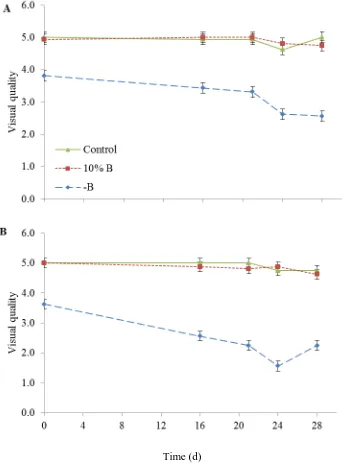
visual quality during expt. 2, harvest 1 and harvest 2 in Pelargonium
× hortorum 'Tango Neon Purple' ...151
Fig. 4 Effect of nutrient regime (complete nutrient solution or nutrient
solutions with either 10% or 0% B, but including all other nutrients at the same level as the complete solution) × rooting stage in time on
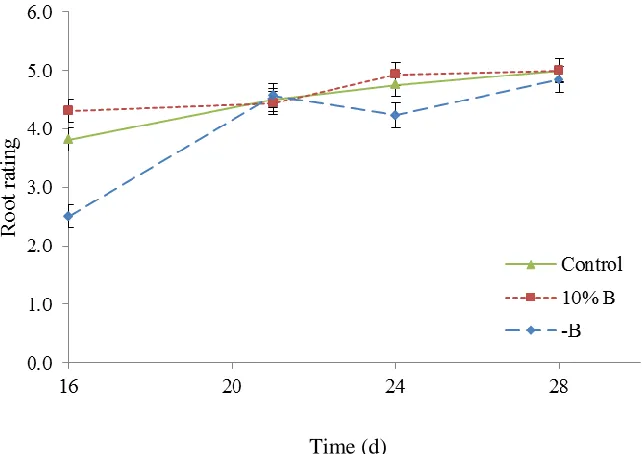
root ratings during expt. 2, harvest 1 in Pelargonium × hortorum
'Tango Neon Purple' ...152
Fig. 5 Effect of nutrient regime (complete nutrient solution or nutrient solutions with either 10% or 0% B, but including all other nutrients at the same level as the complete solution) × rooting stage in time on
macronutrient concentration in Pelargonium × hortorum 'Tango Neon
Purple' during expt. 2, harvest 1 ...153
Fig. 6 Effect of nutrient regime (complete nutrient solution or nutrient solutions with either 10% or 0% B, but including all other nutrients at the same level as the complete solution) × rooting stage in time on
macronutrient concentration in Pelargonium × hortorum 'Tango Neon
Purple' during expt. 2, harvest 2 ...154
Fig. 7 Effect of nutrient regime (complete nutrient solution or nutrient solutions with either 10% or 0% B, but including all other nutrients at the same level as the complete solution) × rooting stage in time on
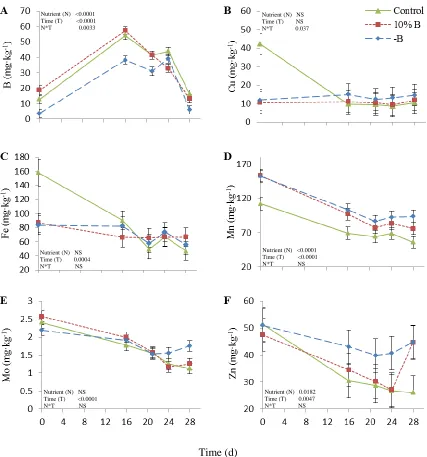
micronutrient concentration in Pelargonium × hortorum 'Tango Neon
Purple' during expt. 2, harvest 1 ...155
Fig. 8 Effect of nutrient regime (complete nutrient solution or nutrient solutions with either 10% or 0% B, but including all other nutrients at the same level as the complete solution) × rooting stage in time on
micronutrient concentration in Pelargonium × hortorum 'Tango Neon
Purple' during expt. 2, harvest 2 ...156
Fig. 9 Effect of nutrient regime (complete nutrient solution or nutrient
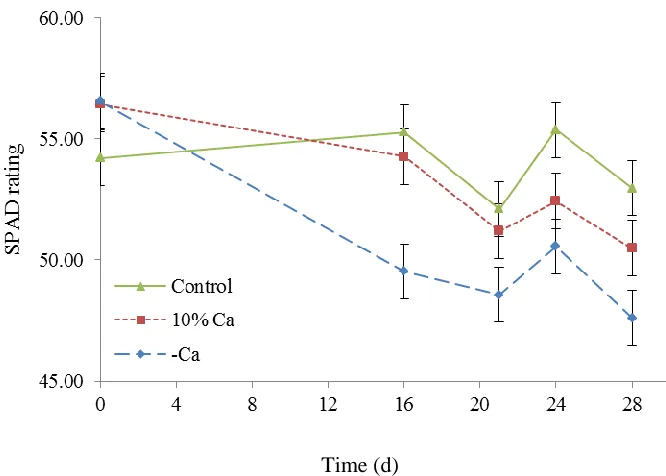
solutions with either 10% or 0% Ca, but including all other nutrients at the same level as the complete solution) × rooting stage in time on
SPAD ratings during expt. 3, harvest 1 in Pelargonium × hortorum
Fig. 10 Effect of nutrient regime (complete nutrient solution or nutrient solution with 10% Ca, but including all other nutrients at the same level as the complete solution) × rooting stage in time on root count
during expt. 3, harvest 2 in Pelargonium × hortorum 'Tango Neon
Purple' ...158
Fig. 11 Effect of nutrient regime (complete nutrient solution or nutrient
solutions with either 10% or 0% Ca, but including all other nutrients at the same level as the complete solution) × rooting stage in time on
macronutrient concentration in Pelargonium × hortorum 'Tango Neon
Purple' during expt. 3, harvest 1 ...159
Fig. 12 Effect of nutrient regime (complete nutrient solution or nutrient solution with 10% Ca, but including all other nutrients at the same level as the complete solution) × rooting stage in time on
macronutrient concentration in Pelargonium × hortorum 'Tango Neon
Purple' during expt. 3, harvest 2 ...160
Fig. 13 Effect of nutrient regime (complete nutrient solution or nutrient
solutions with either 10% or 0% Ca, but including all other nutrients at the same level as the complete solution) × rooting stage in time on
micronutrient concentration in Pelargonium × hortorum 'Tango Neon
Purple' during expt. 3, harvest 1 ...161
Fig. 14 Effect of nutrient regime (complete nutrient solution or nutrient solution with 10% Ca, but including all other nutrients at the same level as the complete solution) × rooting stage in time on micronutrient
concentration in Pelargonium × hortorum 'Tango Neon Purple' during
expt. 3, harvest 2 ...162
Fig. 15 Effect of nutrient regime (complete nutrient solution or nutrient solutions with either 10% or 0% B and Ca, but including all other nutrients at the same level as the complete solution) × rooting stage in time on visual quality during expt. 4, harvest 1 and harvest 2 in
Pelargonium × hortorum 'Tango Neon Purple'...163
Fig. 16 Effect of nutrient regime (complete nutrient solution or nutrient solutions with either 10% or 0% B and Ca, but including all other nutrients at the same level as the complete solution) × rooting stage in
time on macronutrient concentration in Pelargonium × hortorum
Fig. 17 Effect of nutrient regime (complete nutrient solution or nutrient solution with 10% B and Ca, but including all other nutrients at the same level as the complete solution) × rooting stage in time on
macronutrient concentration in Pelargonium × hortorum 'Tango Neon
Purple' during expt. 4, harvest 2 ...165
Fig. 18 Effect of nutrient regime (complete nutrient solution or nutrient solutions with either 10% or 0% B and Ca, but including all other nutrients at the same level as the complete solution) × rooting stage in
time on micronutrient concentration in Pelargonium × hortorum
'Tango Neon Purple' during expt. 4, harvest 1 ...166
Fig. 19 Effect of nutrient regime (complete nutrient solution or nutrient solution with 10% B and Ca, but including all other nutrients at the same level as the complete solution) × rooting stage in time on
micronutrient concentration in Pelargonium × hortorum 'Tango Neon
Purple' during ext. 4, harvest 2 ...167
Appendix A
Fig. 1 Cutting visual quality rating of 5 = no damage from chlorosis, necrosis, and/or leaf abscission. ...169
Fig. 2 Cutting visual quality rating of 4 = 1% to 25% combined damage from chlorosis, necrosis, and/or leaf abscission ...169
Fig. 3 Cutting visual quality rating of 3 = 26% to 50% combined damage
from chlorosis, necrosis, and/or leaf abscission...170
Fig. 4 Cutting visual quality rating of 2 = 51% to 75% combined damage
from chlorosis, necrosis, and/or leaf abscission...170
Appendix B
Fig. 1 Adventitious root formation rating of 0=no callus or visible root
activity...171
Fig. 3 Adventitious root formation rating of 2 = organized subcutaneous root initials (primordia) ...172
Fig. 4 Adventitious root formation rating of 3 = primordia elongation and
visible root emergence beyond the epidermis... ...173
Fig. 5 Adventitious root formation rating of 4 =emerged primary
roots >5 mm ...174
Chapter 1
Trade in floricultural products is increasing globally (Sheela, 2008). Consumer
demand has encouraged an increase in floriculture breeding efforts to produce new hybrids
and cultivars each year (Dole and Hamrick, 2006; Gibson, 2003). Increasingly, these new
introductions are released as vegetative cuttings rather than seed (Leatherwood et al., 2006).
Vegetative cuttings provide genetic stability and uniform growth and development allowing
for synchronization of plant production and increased automation (Druege, 2009).
Growers in the United States use vegetative cuttings shipped from around the world for
production of finished plants. Purchasing cuttings from offshore production facilities
requires less greenhouse space and eliminates the need to maintain stock plants. Unrooted
cuttings for North American production are imported primarily from Central America and
Mexico where favorable climates, high irradiance, low land costs, and inexpensive hand
labor are plentiful (Dole and Hamrick, 2006; Druege, 2009; Faust and Enfield, 2010;
Rudnicki et al., 1991). Imports of unrooted cuttings to the United States doubled from 498
million in 2000 to nearly 1 billion cuttings in 2010. The United States imported $80.8
million in unrooted cuttings in 2013 (Foreign Agricultural Service, 2014) and produced $366
million in propagative floriculture material in 2012 from the 15 states the USDA reports. In
the same year hanging baskets, finished flats, and pots of three cutting propagated species,
zonal geraniums (Pelargonium x hortorum L.H. Bailey), poinsettias (Euphorbia pulcherrima
Willd. ex Klotzsch), and New Guinea impatiens (Impatiens hawkeri W. Bull), had a 15-state
wholesale value of $307 million (United States Department of Agriculture National
The success of rooting stations and finished plant producers is highly dependent on
the import of high-quality cuttings (Purer and Mayak, 1988). However, cutting quality may
be diminished by stress exposure during storage, shipping, or propagation resulting in
monetary losses to growers (Doyle et al., 2003). Healthy, unrooted cuttings should have the
ability to initiate and continue growth of initiated roots (Purer and Mayak, 1988). Losses
occur when cuttings do not form roots or form poor quality roots. Poor or slow rooting often
necessitates increased amounts of fungicides to protect cuttings, increasing production costs
(De Klerk et al., 1999).
Physiology of Adventitious Root Formation
Adventitious root formation is the primary regenerative process required for
vegetative cutting propagation (Altamura, 1996; De Klerk et al., 1999). Adventitious root
meristems are formed post-embryonically from differentiated cells in nonroot plant organs
(Casson and Lindsey, 2003). The formation of adventitious roots requires that a cell, or
group of cells, initiate a new developmental program. Adventitious roots may form naturally
from direct organogenesis or they may form following wounding (Altamura, 1996; De Klerk,
2000; Hamann, 1998). Preformed, or latent, root initials develop naturally on attached stems
of some species and may be outwardly visible or below the epidermis. These initials remain
dormant until cuttings are excised and placed in a favorable rooting environment (Geiss et
al., 2009; Hartmann et al., 2002).
Wound induced roots are produced as a regenerative response to injury or excision
separation from the resources of the mother plant (Ahkami et al., 2009; Druege, 2009).
Excised shoot cuttings need to quickly form new roots to restore water and nutrient uptake
(Druege, 2009). Excision causes wounded outer cells to die forming a necrotic plate and
sealing the cut surface. Cells behind the necrotic plate begin dividing forming callus from a
layer of parenchyma cells. Callus formation and adventitious root formation are independent
events in easy-to-root species (Hartmann et al., 2002).
Stages. “Adventitious root formation is an organized developmental process
involving discrete biochemical, physiological, and histological events” (Davies and
Hartmann, 1988). It is generally divided into three consecutive, but interdependent,
developmental stages: induction, initiation, and expression. Rooting stages are classified
based on histological (Lovell and White, 1986) and biochemical (Gaspar, 1981) changes and
may be physiologically identified by reactions to added hormones (De Klerk et al., 1995).
The inductive stage is the period of biochemical and molecular events preceding the
initiation of cell division (De Klerk et al., 1999; Gaspar et al., 1997; Hartmann et al., 2002;
Scagel, 1999). Only changes at the biochemical and molecular level are perceptible (De
Klerk, 2000). An increase in peroxidase activity in the phloem and xylem ray cells of the
vascular bundles can be used to predict induction (Gaspar et al., 1997). The initiation stage
consists of cell dedifferentiation and division leading to the formation of the internal root
meristem and the subsequent development of these root initials into organized primordia.
The expression stage includes the internal growth of root primordia, formation of vascular
tissue between the root primordia and cutting vascular tissues, and root emergence
Swelling of the stem base is often the first visible sign of rooting (Eliasson, 1978). After
emerging from the stem epidermis, adventitious roots behave like normal roots, producing
new laterals (Geiss, 2009). The overall success of rooting relies on the optimal progress of
each rooting stage (Bellamine et al., 1998; De Klerk et al., 1999; Hartmann et al., 2002;
Kevers et al., 1997;Scagel, 1999; Schwambach et al., 2005).
The length of time required for root initiation and emergence varies widely from
species to species and is affected by the season and cutting type (Hartmann et al., 2002;
Lovell and White, 1986). Stangler (1956) microscopically observed root initials after 3 days
in chrysanthemum [Chrysanthemum morifolium (Ramat.) Hemsl.], 5 days in carnation
(Dianthus caryophyllus L.), and 7 days in rose (Rosa dilecta Rehder). Visible root emergence varied from 10 days in chrysanthemum to 3 weeks in carnation and rose.
Histological examinations of apple (Malus domestica Baumg.) microcuttings by De Klerk et
al. (1995) showed the appearance of cells with swollen nuclei and dense cytoplasm after 24
h, first cell divisions after 48 h, and the formation of meristemoids of 30 cells after 96 h.
Factors Affecting Adventitious Root Formation
Adventitious root formation is a complex physiological process affected by
anatomical, physiological, and environmental factors and by their interactions (Agullo-Anton
et al., 2010; Ahkami et al., 2009). Conclusive information on the genetic and biochemical
control of adventitious rooting is lacking (Falasca et al., 2004). Factors typically
conditions, propagation environment, growth regulator applications, and mineral nutrition
(Geiss, 2009; Haissig, 1986).
Stock plant. Stock plants have both short-term and long-term impacts on the rooting ability of cuttings. The moisture, nutrient, light, and temperature levels experienced by the
cutting prior to excision have short-term effects while the physiological condition of the
cutting has long-term effects on rooting. Variations in rooting ability are attributed to factors
between shoots within a stock plant and factors within a single shoot. There may be
substantial differences in rooting ability between lateral shoots within a stock plant, with
cuttings from the upper shoots having the highest rooting ability. Within a single shoot is an
age gradient resulting in variation in leaf size, leaf water potential, carbon and nutrient
balance, leaf senescence, internode length and diameter, lignification, and respiration. The
effect of age gradients means that no two cuttings are physiologically identical and therefore
cannot have the same rooting ability (Leakey, 2004).
Preconditioning techniques have long been used on stock plants to improve rooting
potential. Preconditioning techniques include light exclusion, modifying environmental
conditions, hedging, rejuvenation by micropropagation, grafting, girdling, and treatment with
chemical growth regulators (Hartmann et al., 2002; Howard, 1994).
Cold-chain management. The handling of cuttings prior to insertion into the
propagation environment partially determines the level of stress that the cutting experiences
(Leakey, 2004). Cuttings grown on site are quickly placed in the propagation environment
after excision (Hamilton et al., 2002), while cuttings grown off site undergo postharvest dark
environment. Excised cuttings are commonly stored prior to shipping to allow producers to
control supply during periods of excess production or high demand (Druege, 2009). Storage
and shipping may be detrimental to cutting quality. Excision and placement in darkness
induces guard cell closure, decreasing gas exchange and ability to maintain proper leaf
temperature (Behrens, 1988; Bredmose and Nielson, 2009; Pospisilova, 2003). Prolonged
storage or shipping may reduce cutting survival and adventitious rooting due to increased
respiration, dehydration, light exclusion, pathogens, and/or ethylene accumulation (Druege,
2009; Hamilton et al., 2002; Hartmann et al., 2002).
Temperature control is the most effective means of preventing damage to cuttings
during storage and shipping (Arteca et al., 1996). Stored cuttings are maintained in darkness
at low temperatures, commonly 10ºC, near 100% relative humidity to reduce primary
metabolic processes (Agullo-Anton, 2010; Behrens, 1988; Druege, 2009; Rudnicki et al.,
1991). In many species cutting quality decreases with increasing storage time and storage at
sub-optimal temperatures may result in discoloration or water soaking of tissue, accelerated
senescence, desiccation, chlorosis, increased disease susceptibility, and loss of vigor (Faust
and Enfield, 2010; Lopez and Runkle, 2008). Low temperature storage of many
temperate-zone species, such as azalea (Rhododendron hybrids), carnation, or chrysanthemum, does not
have negative effects (Rudnicki et al., 1991) and may even have positive effects.
Agullo-Anton et al. (2010) demonstrated an increase in early rooting and the amount and length of
adventitious roots in non-auxin treated cuttings of carnation with cold storage for up to 4
(2010) suggests that cold storage could promote root induction factors and the establishment
of new carbohydrate sinks in the stem base.
Although shipping temperatures should be kept at 10ºC for most crops (Styer, 2009),
temperature control is costly and not practical in all situations (Arteca et al., 1996). Low
temperatures result in chilling injury and tissue necrosis in sensitive cuttings such as New
Guinea impatiens, lantana (Lantana camara L.), Begonia species, and coleus[Solenostemon
scutellarioides (L.) Codd]. High temperatures have equally deleterious effects (Styer, 2009). Dark storage of cuttings at high temperatures allows for the continuation of primary
metabolic processes, which can deplete carbohydrates (Purer and Mayak, 1988). Ethylene
production is stimulated by excision, shipping, and storage induced stress at temperatures
above 15ºC and increases with increasing temperature. Ethylene damage results in yellowing
of lower leaves, leaf abscission, tip abortion, and possibly slower rooting (Styer, 2009). In
addition, chlorotic leaves promote Botrytis susceptibility within the shipping containers
(Arteca et al., 1996).
Low temperature storage reduced quality in zonal geranium and New Guinea
impatiens cuttings. Visual quality, leaf weight, and chlorophyll content of zonal geranium
cuttings declined in storage as temperature increased from 10° to 25°C. Photosynthesis,
respiration, carbohydrates, starch, and protein levels declined after 5 days of storage at 25°C
(Arteca et al., 1996). Chlorophyll fluorescence and visual quality decreased by 65 and 80%
in ‘Harmony White’ and by 76 and 80% in ‘Harmony Magenta’, respectively, New Guinea
While temperatures are controlled in storage, high temperature extremes and delays in
shipping are common in transit (Faust et al., 2010; Hamilton et al., 2002). Air and ground
transportation to rooting stations may take up to 3 days (Faust and Enfield, 2010), exposing
cuttings to darkness, transit vibration, water stress, and temperature extremes (Arteca et al.,
1996). Delays in transit may cause additional decay in quality and variability in rooting
performance (Doyle et al., 2003; Faust and Enfield, 2010). Simulated shipping of coleus at
22ºC for up to 7 days showed a negative correlation between days of shipping and cutting
quality, rooting response, and chlorophyll content (Hamilton et al., 2002).
Rooting environment. Optimal environmental conditions result in greater propagation success, even in difficult to root species (Harrison-Murray et al., 1988; Mateja et al., 2007).
A properly managed rooting environment minimizes the physiological shock caused by
excision, maximizes the number of rooted cuttings, and reduces rooting variation (Jinks,
1995; Leakey, 2004; Loach, 1988a). The metabolic and developmental processes of rooting
are affected by irradiance, water, air temperature, and leaf temperature (Grange and Loach,
1984; Loach, 1988b; Newton and Jones, 1993). Commercial growers alter the rooting
environment to best suit the needs of the unrooted cutting (Hartmann et al., 2002).
The water status of cuttings is one of the most, if not the most important
environmental factor affecting adventitious root formation (Andersen, 1986). Although
propagation by stem cuttings is one of the most effective propagation techniques, cuttings are
prone to dehydration stress prior to root formation (Leakey, 2004). Even a mild water deficit
that is visually undetectable may delay or inhibit rooting and typically results in cuttings with
environmental factor to manage in the rooting environment (Leakey, 2004; Mateja et al.,
2007).
Cutting water status represents a balance between transpirational water loss and water
uptake (Hartmann et al., 2002). Although the water supply from the roots to the leaves has
been interrupted, the leaves continue to lose water through transpiration (Williams, 2006).
Cuttings need to replace lost water to maintain adequate turgor for root formation. The
cutting base and any foliage bathed in the propagation media are the primary entry points for
water (Hartmann et al., 2002; Loach, 1988b). Wetter propagation media increases water
uptake by cuttings, but excessively wet media can cause anaerobic conditions to develop
(Grange and Loach, 1983; Hartmann et al., 2002). Water uptake initially declines when
cuttings are inserted into the media due to blockage of the xylem vessels from embolisms
and/or collapse of tracheids. Once roots are formed, contact between the propagation media
water and the cutting is restored (Hartmann et al., 2002).
Nutrition and carbohydrates. Optimal nutrition is necessary for successful adventitious root formation and influences quality and production time (Hartmann et al.,
2002; Rowe and Cregg, 2002). Stock plants and cuttings require nutrients in the correct
form, amount, location, and time to encourage root formation and prevent growth limitations
(Haissig, 1986; Santos et al., 2008; van Iersel et al., 1998). However, fertilization of cuttings
during propagation is challenging; small substrate volumes leach quickly and have little
buffering capacity, possibly leading to a rapid change in media pH (Styer and Koranski,
1997). In addition, sinks in growing shoot tissues compete with the stem base and roots for
Adventitious root formation is an energy consuming process and requires energy
reserves and macromolecule carbon skeletons for organic compounds. Low carbohydrate
levels restrict the rate and extent of adventitious root formation (Druege et al., 2004).
Carbohydrates may also influence metabolism, osmoregulation (Hasissig, 1986), and interact
in a regulatory role with plant hormone signaling (Nordsrom and Eliasson, 1984). For root
formation to occur, carbohydrates need to be produced faster than they are used in respiration
to maintain a sufficient supply to the area of root regeneration (Haissig, 1986; Hamilton et
al., 2002; Veierskov, 1988). Leaf carbohydrate levels may be negligible after storage and
shipping and must be replenished by photosynthesis before carbohydrates can be supplied to
the cutting base for adventitious root formation (Druege et al., 2004). However, some studies
argue that sufficient carbohydrates for adventitious rooting are maintained during dark
storage at cold temperatures (Agullo-Anton et al., 2010). The degree of carbohydrate loss
differs among tissues and preconditioning of the stock plant (Agullo-Anton et al., 2010;
Druege et al., 2004).
Research on carbohydrates in petunia (Petunia × hybrida E.Vilm.) cuttings indicates
a greater role of carbohydrates in root growth rather than in root initiation. Sucrose is the
most important mobile carbon source in photosynthetically active tissues. Sucrose began to
accumulate in the base of petunia cuttings 24 hours post excision, but prior to root initiation
(Ahkami et al., 2009). Temporal course studies support the shoot as a strong source. Shoot
dry matter accumulated in petunia during the first week of propagation (Klopotek et al.,
2012). While some of the basipetaly translocated sucrose was used to provide energy for
Source leaf sucrose increased from 144 hours post excision onwards, coinciding with the
development of root primordia and indicating an increased requirement for sucrose during
the later stages of adventitious root formation (Ahkami et al., 2009).
Propagation Systems
An ideal propagation system should reduce physiological stresses to the tissues while
promoting meristematic activity in the stem (Leakey, 2004). This can be achieved by
maintaining an atmosphere with a low water vapor pressure deficit between the surrounding
air and the leaves; acceptable temperatures for meristematic activity at the cutting base, while
avoiding heat stress to the leaves; and light at levels sufficient for photosynthesis and
carbohydrate production (Andersen, 1986; Hartmann et al., 2002; Leakey, 2004; Newton and
Jones, 1993). A low water vapor pressure deficit can be maintained by reducing leaf
temperature and/or by maintaining high relative humidity (Hartmann et al., 2002; Jinks,
1995; Mateja et al., 2007; Mudge et al., 1995).
Several propagation systems are used to manipulate the rooting environment
including intermittent mist, fog, and high-humidity enclosures (Dole and Bilderback, 2006).
These systems vary in their ease of use and ability to accurately control the propagation
environment (Loach, 1988a). Cutting management practices differ for each propagation
system and growers may face a learning curve when switching systems (Blythe, 2007).
Rooting a wide variety of crops or rooting stages in the same propagation space ads to the
Mist Systems. Mist systems have been used in propagation since the 1930s, but were uncommon until the 1950s (Preece, 2003). Currently, intermittent mist is the most common
propagation system used to root cuttings in the floriculture industry and provides propagators
with superior control over the rooting environment. Mist nozzles produce small droplets of
water which provide a uniform film over the cuttings (Dole and Bilderback, 2006; Williams,
2006) and evaporative cooling, maintaining cutting turgidity and reducing transpiration
(Hartmann et al., 2002; Santos and Fisher, 2009).
Advantages of intermittent mist include high humidity, replacement of water lost by
transpiration, moist rooting medium, automation, and potential reduction in fungal diseases,
as some species cannot germinate on wet leaves. However, mist nozzles may clog and mist
systems may cause or encourage over saturation of the media, algae growth, leaching of
foliar and media nutrients, disease spread due to water splashing, and a reduction in rooting
medium temperature (Blythe, 2007; Leatherwood et al., 2006). Most issues can be avoided
by properly monitoring and adjusting the mist system (Leatherwood et al., 2006). Cuttings
can be fertilized while under mist to avoid nutrient deficiencies (Zhang and Graves, 1995).
Mist should be reduced as cutting form roots and during periods of low light (Dole and
Bilderback, 2006).
The environment around mist systems may be open or closed. Fluctuation in ambient
humidity is common in open-bench mist systems. Enclosed mist uses polyethylene-covered
structures to reduce these fluctuations and provide more consistency in the wetting of foliage.
Mist systems are typically automated by static control, with mist on for a specified period or
the mist interval manually based on cutting water status; however, this is uncommon as
forgetting to re-adjust the mist during high irradiance conditions can result in cutting damage
or loss. More commonly, the misting intervals are chosen to satisfy extreme mid-day
conditions, resulting in excessive water use during cloudy weather, mornings, and evenings.
Dynamic control systems are now commonly used and rely on plant or environmental signals
to determine cutting water status (Geneve et al., 1999)
Fog Systems. Fog systems have been available to the greenhouse industry for evaporative cooling since 1980. A high-pressure pumping system generates water droplets
less than 10 microns. These droplets are passed into the air as vapor, remaining suspended
and cooling upon evaporation instead of condensing and wetting leaf surfaces. The air is
nearly saturated with water vapor, creating near 100% humidity and surrounding the
propagation benches in a visible fog (Hartmann et al., 2002; Williams, 2006). Evaporation is
limited, reducing transpirational water loss and amount of water applied. Although a dense
fog is visible, it does not provide shade (Press, 1983).
High-humidity enclosures. High-humidity enclosures fall into two categories: raised tent enclosures and direct contact enclosures (Dole and Bilderback, 2006; Loach, 1988a).
Both are quick to construct, simple, low cost, and suitable for use in areas without ready
access to electricity or piped water (Leatherwood et al., 2006; Loach, 1988a). High-humidity
enclosures vary in size from a single plastic covered greenhouse bed to an entire hoop house.
Humidity is maintained in the enclosure by applying a minimal amount of water using spray
Polyethylene covered tent enclosures are effective for rooting cuttings of many
woody ornamental species (Hartmann et al., 2002). Tent enclosures are constructed by
building a bow or box shaped framework over greenhouse benches and covering with a thin
layer of polyethylene film (Hartmann et al., 2002; Leatherwood et al., 2006; Williams, 2006).
Box shaped designs may allow condensation to form on the tent ceiling, causing sagging of
the tent and moisture to drip on the cuttings (Williams, 2006). A properly functioning tent
enclosure maintains near 100% humidity when filled to capacity, reducing transpiration and
eliminating the need for constant water application (Dole and Bilderback, 2006; Gouin,
1980). However, cuttings may be misted throughout the day should the humidity fall
(Hartmann et al., 2002; Leatherwood et al., 2006);
Tent enclosures are easily constructed within existing greenhouses, more flexible than
other rooting environments, require minimum care, allow for direct sticking of cuttings, and
eliminate over watering, algae growth on floors, and control system malfunctions (Dole and
Bilderback, 2006; Gouin, 1980; Williams, 2006). Clear polyethylene is used in winter;
however, heat buildup often necessitates the use of white polyethylene, shading, and/or
ventilation in the summer (Williams, 2006).
Direct contact enclosures have been used for nearly a century and are the simplest
rooting environments to construct. Muslin canopies have been in use since 1920 to provide
shade and increase humidity around cuttings (Preece, 2003). Cutting are stuck, either in
propagation or final containers, watered-in, and covered with a thin layer of polyethylene
film (1 or 2 mil), spun-bound polyester fabric (such as reemay), or polypropylene sheeting to
cuttings and tucked around the edges (Dole and Bilderback, 2006; Gouin, 1980; Williams,
2006). White copolymer therma-blankets may be used outdoors to extend outdoor woody
ornamental propagation in summer months (Gouin, 1980).
Direct contact enclosures rely on the condensation formed on the inside of the
material to provide moisture for the leaves, maintain high humidity, and control temperatures
(Andersen, 1986; Grange and Loach, 1983; Hartmann et al., 2002). Although contact
polyethylene systems generally provide sufficient humidity for rooting without additional
mist (Hartmann et al., 2002), perforated polyethylene and spun bound polyester can be
dampened throughout the day (Dole and Bilderback, 2006). Contact enclosures allow direct
stuck cuttings in the final container to be grown in place and do not require dedicated
propagation space. However, monitoring cutting for progress and diseases can be difficult.
The material can be completely removed once sufficient roots have developed (Dole and
Bilderback, 2006; Hartmann et al., 2002; Leatherwood et al., 2006).
Subirrigation. Subirrigation may be used alone or in conjunction with mist and fog. Zhang and Graves (1995) demonstrated a simple subirrigation system that could be used
successfully for both woody and herbaceous cuttings. Cuttings of ‘Charm’ chrysanthemum
and coleus were propagated in perforated trays filled with perlite and placed in either larger,
non-perforated flats and irrigated twice a week to a 2 cm depth or on a greenhouse bench and
irrigated by mist. All cuttings rooted in both environments and dry weights were similar.
Wilt was greatest in subirrigated chrysanthemum, but did not reduce the number of rooted
cuttings or contribute to any visual differences between environments. However, Rowe and
herbaceous cuttings require higher humidity than what is provided by subirrigation alone to
avoid desiccation.
Comparison of propagation systems. All propagation systems have the potential to
be effective, but vary in their cost, ease of use, and sophistication (Leakey, 2004). While
mist and fog systems are the most common rooting environments and can be used to lower
temperatures during periods of high heat, they require more setup and initial expense than
simple enclosures (Hartmann et al., 2002; Leatherwood et al., 2006). Fog nozzles use
significantly less water than mist nozzles, causing less media saturation, foliar nutrient
leaching, and reduction in media temperatures than mist. Compared to mist, fog systems
have fewer disease problems, less stress to cuttings, and allow for closer spacing, but have
higher initial and ongoing maintenance costs (Hartmann et al., 2002; Leatherwood et al.,
2006; Press, 1983). Mist and fog propagation systems may be an inefficient use of water and
electricity (Geneve et al., 1999) and inappropriate for smaller facilities (Newton and Jones,
1993).
The ideal propagation system may vary by season and location. Loach (1977)
investigated the rooting of three woody ornamentals during propagation under mist and
contact polythene. Neither mist nor contact polythene were consistently superior. Rooting
was best under contact polythene during the lower radiation conditions of winter, but poor
under the high radiation conditions of summer.
Mudge et al. (1995) compared the propagation of three tropical shrub species in
shaded contact polyethylene enclosures to open propagation with and without intermittent
authors speculated the warm air trapped within the enclosure during suboptimal night
temperatures might have improved rooting. Under enclosures, the air is permanently close to
full saturation and a leaf-air vapor pressure difference will always exist when leaf
temperatures rise above air temperatures. This accounts for the poor performance of cuttings
under unshaded polythene during summer conditions (Loach, 1977). Heat buildup within
enclosures makes them best suited for propagation of crops that grow best in warm, humid
conditions (Blythe, 2007).
Loach (1988a) reported rooting percentage on eight woody ornamental species.
Rooting was highest in summer under the contact enclosure and in winter under the tent
enclosure. During summer, cuttings in the contact enclosure gained water and maintained
turgor during propagation while cuttings in the tent enclosure lost water. Although vapor
pressure surrounding the cuttings was found to be similar in both systems, leaves were cooler
under contact polyethylene due to direct contact with the polyethylene sheet and the
evaporation of leaf condensation.
Nutritional Control of Adventitious Rooting in Vegetative Cuttings
Nutrient requirements for stock plants.Proper stock plant fertility is essential for the rapid growth of cuttings (Wang, 1990). Stock plants must have adequate nutrient reserves to
supply cuttings with essential elements until they form new roots (Fonteno and Dole, 2006).
Conditioning of the stock plant by the control of nutrition has been shown to improve
more of an effect on the rooting of cuttings than potassium or phosphorus levels (Gibson,
2006).
Fertilization strategies for stock plants and the subsequent rooting of excised cuttings
were studied in chrysanthemum, zonal geranium, and New Guinea impatiens with
contradictory results (Druege et al., 1998; Ganmore-Neuman and Hagiladi, 1990; Gibson,
2003). Roeber and Reuther (1982) supplied chrysanthemum stock plants with 56, 112, or
168 mg∙L-1 N. Nitrogen rates of 168 mg∙L-1 reduced root initiation and development in
cuttings. However, chrysanthemum stock plants fertilized with 60, 150, or 400 mg∙L-1
nitrogen (N) showed a positive correlation between higher N tissue concentrations and the
number and length of roots in later studies by Druege et al. (2000). Fertilization of New
Guinea impatiens stock plants with 300 mg∙L-1 N resulted in 17% more cuttings and 19%
more roots than fertilization with 100 or 200 mg∙L-1 N (Gibson, 2003). Cutting length and
leaf area increased 7 and 15%, respectively, when fertilized with 200 to 300 mg∙L-1 N versus
those fertilized with 100 mg∙L-1 N.
In addition to studies on N levels in stock plants, the effect of N form as
nitrate-nitrogen (NO3-N) or ammoniacal-nitrogen (NH4-N) has been investigated and found to be
important (Gibson, 2003). Too much ammoniacal nitrogen has the potential to produce
cutting which are soft and do not ship well (Gibson, 2006). Ganmore-Neuman and Hagiladi
(1990 and 1992) investigated the effects of NH4-N:NO3-N ratio, N rates, and natural sunlight
versus shade on stock plant production and subsequent rooting of excised cuttings of zonal
geranium. Fertilizing stock plants with a 70:30 NH4-N:NO3-N ratio had a negative effect on
affected rooting percentage and quality. Stock plants fertilized with 50 mg∙L-1 produced
fewer cuttings. Increasing N concentration and NO3-N percentage reduced root fresh weight
and the stock plant root:shoot ratio. These results suggest that zonal geranium stock plants
should be fertilized with 100 to 200 mg∙L-1 N at a ratio of 60:40 NH4-N:NO3-N.
Bierman et al. (1989) came to similar conclusions while investigating the role of
NH4-N:NO3-N ratios in leaf edge burn of poinsettia. Cutting production in plants provided
ratios of 1:2 or 2:1 was almost 40% greater than production in plants provided with a ratio of
0:1. Similar outcomes were reported in a study by Rose (1992). Stock plants fertilized with
NH4-N:NO3-N ratios of 1:2 and 2:1 at 200 mg∙L-1 produced more cuttings with greater shoot
and root dry weights and increased shoot length than stock plants fertilized with NH4-N:NO3
-N ratio of 0:1. This indicates both nitrogen forms are required for maximum cutting
production in poinsettias.
Nutrient requirements during rooting. Nutrient requirements vary during the different rooting stages thus the role of nutrients must be considered for each stage in the
rooting process (Bellamine et al., 1998; Blazich, 1988). Whilefew studies have ventured to
elucidate the effects of specific nutrients on each of the three stages (Blazich, 1988;
Schwambach et al., 2005), better coordination of fertilization to developmental stage
requirements has the potential to increase uptake efficiency and reduce waste (Santos, 2009).
The effects of nutrients during the early stages of adventitious root formation are
poorly understood (Svenson and Davies, 1995). Haissig (1986) suggests root primordia
initiation and development is influenced by applying specific nutrients during rooting.
zinc (Zn) are thought to be involved in root induction and may individually or interactively
influence root development (Alam and Chong, 2006; Blazich, 1988; Santos, 2009; Svenson
and Davies, 1995). Svenson and Davies (1995) found both macronutrient and micronutrient
tissue concentrations changed in cuttings of poinsettia during adventitious root formation.
Tissue concentrations of iron (Fe), copper (Cu), and molybdenum (Mo) increased in the basal
region of poinsettia cuttings at the time of primordia emergence, suggesting these nutrients
are important to root initiation. Fe, Cu, Mo, Mg, Mn, B, and Zn increased in cutting bases
during root primordial elongation and root emergence, indicating their importance to root
expression.
According to Hartmann et al. (2002), nutrients applied to cuttings during propagation
do not affect initiation and only encourage root development after initiation. Good and
Tukey (1967) reported N was required for root elongation in chrysanthemum cuttings, but
not required for root initiation. Although opinions vary as to the improvement of rooting
with fertilizer applications during root initiation, fertilization during root growth and
development is an accepted practice (Blazich, 1988;Rowe and Cregg, 2002).
Santos (2009) demonstrated macronutrient fertilizer utilization in petunia during
adventitious root formation. Fertilizer requirements of petunia vary with the developmental
stage. Fertilization of cuttings with a complete fertilizer (macronutrients and micronutrients)
during the first week of propagation (initiation and root emergence) significantly increased
total dry weight of finished cuttings, versus micronutrient only fertilization. Continued use
of a complete fertilizer after week 1 increased the shoot: root ratio compared to interrupted
that received only micronutrients during the first two weeks, followed by either complete
fertilizer or micronutrients only during week 3. Rooting stage and root length were
unaffected by fertilization. Root dry weight of finished cuttings was greatest for cuttings that
received complete fertilizer during the first week, followed by interrupted supply as
compared to cuttings that received only micronutrient fertilizer during the first week or
complete fertilizer for the entire 3 week period.
Nutrient loss during propagation. Nutrient deficiencies during adventitious rooting may be caused by foliar leaching, dilution, or low initial tissue nutrient content (Good and
Tukey, 1966; Good and Tukey, 1967; Svenson and Davies, 1995). The frequent application
of water to leaves by mist often results in the foliar leaching of nutrients and may influence
later growth (Carney and Whitcomb, 1983; Good and Tukey, 1966; Hartmann et al., 2002;
Morton and Boodley, 1969). Research by Baggott and Joiner (1974) determined that
Japanese privet (Ligustrum japonicum Thunb.) and chrysanthemumcuttings under mist had
lower concentrations of nutrients than non-misted cuttings.
Soilless substrates have a limited capacity to retain nutrients. Water application
greater than one container capacity, as is common mist irrigation during the first week of
propagation, leached the substrate pre-plant nutrient charge. Therefore,fertilizer applications
during root formation and at root emergence may be required to recharge leached nutrients in
the substrate (Santos, 2009; Tukey et al., 1958). However, petunia tissue concentrations of
N, P, and K during propagation declined even under constant fertigation (Santos, 2009).
In addition to leaching, nutrients may be diluted by redistribution for new growth or
1969). Remobilization of phloem-mobile nutrients from mature leaves to areas of new
growth is necessary during propagation when a sufficient supply is not available through the
roots (Marschner, 1995). Good and Tukey (1966) attributed nutrient deficiency symptoms
and decreased nutrient content in carnation and chrysanthemum cuttings under mist to
nutrient leaching and a dilution caused by gains in dry weight.
Nutrient delivery during propagation. Nutrients are applied during propagation to replenish leached nutrients, provide nutrition for new growth, and maintain nutrient levels
within recommended ranges (Santos and Fisher, 2009; Wott and Tukey, 1969). Nutrients are
supplied in propagation by a combination of substrate pre-plant nutrient charge incorporated
in the root substrate, controlled-release fertilizers, fertilizer applications after roots have
emerged, subirrigation, and/ or foliar application (Hartmann et al., 2002; Rowe and Cregg,
2002; Santos, 2009). Incorporating controlled-release fertilizer into the rooting substrate did
not affect adventitious rooting percentage and had a minor effect on root number and dry
weight in three herbaceous perennials (Rowe and Cregg, 2002).
Foliar fertilization with water-soluble fertilizers through the mist system may aid in
the uptake of nutrients prior to root emergence and replace nutrients lost due to leaching by
supplying nutrients for direct foliar uptake (Good and Tukey, 1966; Morton and Boodley,
1969; Santos and Fisher, 2009; Tukey et al., 1958; Wott and Tukey, 1967). Good and Tukey
(1967) recommended nutrient mist to support new leaf and root growth. In studies by Wott
and Tukey (1965 and 1967), cuttings of many species propagated under nutrient mist
developed root systems with more and longer roots and grew at a faster rate after propagation
(1969) on chrysanthemum cuttings confirm that nutrient mist was the most effective method
of P application until a well-developed root system existed. Cuttings of chrysanthemum and
poinsettia propagated under nutrient mist had greater terminal growth, fresh weight, dry
weight, and rooting and flowered earlier than cuttings propagated under mist without
nutrients (Morton and Boodley, 1969).
Nutrients can be taken up by both the stem and foliage of cuttings, but nutrient
applications to the foliage produced more consistent results than applications to the stem
(Wott and Tukey, 1969). Foliar nutrient applications in petunia cuttings increased total
growth, but only root growth was increased by stem applications (Santos and Fisher, 2009).
Foliar nutrient applications supplied nutrients faster and with greater consistency than root
applications; however, the supply of foliar applied nutrients was more temporary than the
supply of root applied nutrients (Marschner, 1995).
Nutrient application by overhead mist emitters is not common in floriculture and not
suggested for short-term crops, due to possible algae growth and clogging of emitters by
precipitated salts (Gibson, 2006; Hartmann et al., 2002). Santos (2009) concluded that while
early nutrition supply by mist positively affected petunia growth, nutrient concentrations
increased nutrient runoff and algae growth, requiring an irrigation system that captures and
reuses leachate and sanitizes water for algae control.
Unrooted cutting with lower than typical tissue nutrient cuttings, due to stock plant
nutrition or assimilation during shipping or storage, may fall below sufficiency ranges during
propagation. Tissue concentrations of N, P, and K in petunia declined even with constant
Nutrients Known to Affect Adventitious Rooting
Nitrogen. Nitrogen has a strong effect on adventitious root formation and subsequent
transplant growth (Blazich, 1988; Druege et al., 2004; Zandstra and Liptay, 1999). Nitrogen
is required by plants for nucleic acid, protein, and enzyme synthesis; carbohydrate
availability; osmoregulation; and hormonal interactions (Hartmann et al., 2002; Marschner,
1995). In addition, nitrogenous compounds may act as potent signals affecting the root:
shoot allocation of carbohydrates and nutrients (Scheible et al., 1997; Druege et al., 2000).
The influence of N nutrition in adventitious root formation is likely related to carbohydrate
content and metabolism (Blazich, 1988; Druege et al., 2000).
Adventitious root formation relies on a sufficient supply of carbohydrates to the area
of root formation (Ahkami et al., 2009). N nutrition has long been linked to carbohydrate
distribution in crops (Krause and Kraybill, 1918). Previous studies have shown that high
total nonstructural carbohydrate (TNC) concentration prior to and during rooting increases
rooting (Rowe, 1996). A high carbon to N ratio was shown to increase rooting of stem
cuttings of tomato by Krause and Kraybill (1918). However, higher N levels increased
number of roots and root length, but reduced carbohydrates, in poinsettia cuttings (Zerche
and Druege, 2009). Research in chrysanthemum (Druege et al., 2000) suggests that the roles
of carbohydrates in adventitious rooting should be examined in individual tissues (Haissig,
1986). Increased N levels prior to harvest resulted in lower starch and fructan concentrations
et al., 2000). Nitrogen deficiency in zonal geranium cuttings is associated with high starch
concentrations in the leaf lamina and basal stems (Druege et al., 2004).
Nitrogen is typically supplied in fertilizers as nitrate N (NO3-), ammoniacal nitrogen
(NH4+), and/or urea, which must be converted into NH4 to be assimilated by plants. Nitrate
has to be reduced to ammonia (NH3) to be incorporated into organic structures. The
proportion of nitrate reduced in the root is affected by temperature, plant age, and the uptake
rate of the accompanying cation. Nitrate reduction in the roots is high when Ca is the
accompanying cation, but low when K is the accompanying cation (Marschner, 1995). Ca as
the accompanying cation to nitrate results in greater root dry weight compared to K as the
accompanying cation to nitrate, which results in greater shoot dry weight (Styer and
Koranski, 1997).
Nitrogen form preference may vary by developmental stage in some species
(McElhannon and Mills, 1978). Vegetative growth is promoted when more than 25% of N is
supplied as NH4. Root growth is promoted over shoot growth when more than 75% of N is
supplied as NO3, resulting in compact plants with shorter internodes, smaller but thicker
leaves, and thicker stems (Styer and Koranski, 1997). However, Nelson et al. (2002) argues
that nitrogen form does not dictate plant size. According to Nelson, differences in growth
between transplants produced with high NO3 or high NH4 fertilizers should be attributed to
the phosphorous supply, not the nitrogen form. Fertilizers high in NO3 contain low levels of
P, resulting in reduced plant height.
Adventitious root formation in chrysanthemum, zonal geranium, and poinsettia
Zerche et al., 2008). Research by Zerche and Druege (2009) indicates that increasing N
concentration in cuttings enhanced adventitious rooting in ‘Cortez Red’ poinsettia. Root
number, individual root length, and total root length correlated positively with increasing
tissue N concentration in both stored and unstored cuttings. The number of roots was
reduced when tissue N concentration were below 30 mg∙g-1 dry mass. Nitrogen deficient
zonal geranium cuttings had lower root number and fresh mass than non-deficient cuttings
(Druege et al., 2004) and in vitro root formation increased in explants with increasing N
concentrations in the substrate (Welander, 1978). Pre-rooting N concentrations in
chrysanthemum cuttings increased internal N concentration and were positively correlated
with adventitious root number and length, independently of carbohydrate levels (Druege et
al., 2000). However, increasing internal N concentration during propagation also has
potential to decrease root: shoot dry weight ratio, which is undesirable in rooted cuttings
(Levin et al., 1989).
Phosphorus. Phosphorus (P) is required by plants for nucleic acid and protein synthesis, respiration, photosynthesis, phospholipid synthesis, enzyme reactions,
carbohydrate metabolism, and cell division and expansion (Marschner, 1995). Sufficient P
nutrition is critical for root development, rapid shoot growth, and flower quality; however,
high levels may increase stem elongation and inhibit the uptake of Cu, Fe, Zn, and B
(Gibson, 2006; Styer and Koranski, 1997).
Low phosphorous (15 to 20% of N level) reduced plant height, improved tone, and
increased rooting in a study of bedding plant plugs at North Carolina State University