Environmental Evidence
Transdisciplinary working to shape systematic reviews and interpret the findings: a
commentary
--Manuscript
Draft--Manuscript Number: ENEV-D-17-00013R3
Full Title: Transdisciplinary working to shape systematic reviews and interpret the findings: a commentary
Article Type: Commentary
Funding Information: Alliance for Health Policy and Systems Research
(2013/323807-0; PO-No. 200770388)
Prof Sandy Oliver
Department for International Development, UK Government (6617, 7135)
Prof Sandy Oliver
Department for International Development, UK Government (5242)
Prof Paul Garner
National Institute for Health Research (NIHR) Collaboration for Leadership in Applied Health Research and Care (CLAHRC) North Thames at Bart’s Health NHS Trust
Prof Sandy Oliver
Abstract: Important policy questions tend to span a range of academic disciplines, and the relevant research is often carried out in a variety of social, economic and geographic contexts. In efforts to synthesise research to help inform decisions arising from the policy questions, systematic reviews need conceptual frameworks and ways of thinking that combine knowledge drawn from different academic traditions and contexts; in other words, transdisciplinary research. This paper considers how transdisciplinary working can be achieved with: conceptual frameworks that span traditional academic boundaries; methods for shaping review questions and conceptual frameworks; and methods for interpreting the relevance of findings to different contexts. It also discusses the practical challenges and ultimate benefits of transdisciplinary working for
systematic reviews.
Corresponding Author: Sandy Oliver
Professor of Public Policy UNITED KINGDOM
Corresponding Author Secondary Information:
Corresponding Author's Institution: Professor of Public Policy
Corresponding Author's Secondary Institution:
First Author: Sandy Oliver
First Author Secondary Information:
Order of Authors: Sandy Oliver
Paul Garner
Peter Heywood
Janet Jull
Kelly Dickson
Mukdarut Bangpan
Ruth Garside
Order of Authors Secondary Information:
Background
Policy dilemmas cross conventional academic boundaries. The academic response to the challenge of informing decision-making in such a context has been two-fold: providing ready access to relevant scientific evidence with systematic reviews, or research syntheses, that include studies from
different social, economic and geographic contexts, and draw on multiple academic disciplines; and building teams of academics and other stakeholders to address policy dilemmas by working in unconventional ways (see Box 1 for definitions). Indeed, most policy dilemmas raise many scientific questions across a range of disciplines (Whitty 2015). Early systematic reviews in environmental science were largely academic endeavours and in these circumstances the validity of the work can be undermined by lack of consensus about review questions, specifically the choice of outcomes and analysis of contextual variables (Stewart et al 2005). Since then, involving stakeholders in the
production of systematic reviews has been seen as critical (Haddaway et al 2017). In addition a few systematic reviewers have broadened their analysis to address both impact and explanations and meaning of impact (Pullin et al 2013), both change and reasons for change (Leisher et al 2016), and to develop a theory of change (Althor et al 2016). These much needed methodological advances have important implications for delivery of services. In the health sector these implications are well illustrated by systematic reviews addressing the problems of patients offered an effective, but long and demanding, treatment for tuberculosis (TB). These reviews expose differences between the world of research, and the wider world that research is meant to serve (See Box 2)
Insert Boxes 1 and 2 about here.
Currently, the content of systematic reviews is largely evaluations of programmes, sometimes adapted by researchers in the field specifically to enable rigorous evaluation, with studies stripped of their organisational and socio-political context during the review process. Consequently the
synthesised findings of these primary studies, with high internal validity, offer persuasive evidence of impact for policy decision-making. Yet, the partial picture this evidence presents largely ignores the policy context which risks evidence-informed policy decisions subsequently stalling with
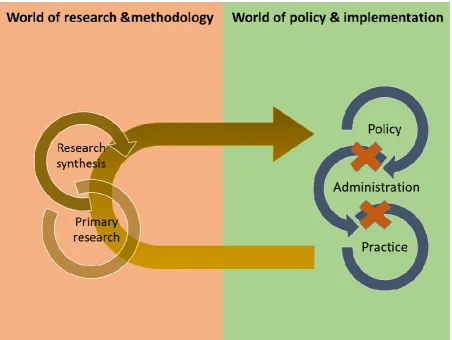
programmes failing to deliver better policy outcomes. This situation is illustrated in figure 1. Figure 1 about here
If systematic reviews are to address real world problems that are situated in complex systems, there is a need for systematic review designs that span academic disciplines; new ways of working to construct those designs; and methods to interpret the findings. This need is for transdisciplinary research methods – ways of working that cut across and beyond academic disciplines.
This paper offers some solutions to the challenge facing systematic reviews in environmental science, namely the need for a ‘balance… between a reductionist approach that simplifies the question but may limit both the quantity of information available and the applicability of its conclusions, and a holistic approach in which the question contains so much complexity that no studies have attempted to address it’ (Stewart et al 2005). In doing so it also draws on other sectors where systematic reviews were introduced to policy decision making earlier.
Transdisciplinary methods
Here we offer three different transdisciplinary methods for producing systematic reviews: combining concepts from across and beyond academic disciplines in conceptual frameworks for systematic reviews; communication methods for working with people from across and beyond academic disciplines; and models for structuring findings to take into account contextual influences.
Manuscript Click here to download Manuscript Manuscript v4 clean.docx
Click here to view linked References
Conceptual frameworks to span boundaries
As systematic reviews are increasingly commissioned by policy organisations, rather than initiated by curious and reflective practitioners, the scope of individual questions addressed has broadened. For instance, a review investigating the impact of agricultural interventions on the nutritional status of children included studies from social science, agriculture, psychology, nutrition, economics and physiology (Masset et al 2011). The review was structured by a theory of change conceptual
framework with components that included participation in educational programmes and adoption of technology, leading to changes in diet from home produce or to enhanced household income and food purchases; and from this on to improved nutritional uptake and health status. The theory of change was used instead of a traditional systematic review (SR) ‘PI/ECO’ (population, intervention/ exposure, comparison, outcomes) structure to define components of and drive the review. The approach made a large and complex review manageable and coherent, while accommodating the individual packets of evidence which were quite different in terms of question, research evidence, discipline and context.
In contrast, when policy questions seek to develop understanding rather than assess the measures of effects of an intervention, conceptual frameworks may be the output of a review, rather than used as the driver. For a review analysing qualitative studies about protected terrestrial areas, such as national parks and forests, and human well-being (Pullin et al 2013), the resulting conceptual framework combined dimensions of well-being (health, social capital, economic capital and environmental capital) and governance (regulation, enforcement, participatory management and empowerment) against a backdrop of human rights. The result was a conceptual framework to present a set of coherent findings from very disparate studies spanning economics, education, epidemiology, environmental science, anthropology, law, history, and public health.
Although use of conceptual models is hardly new, they may be underused. A recent mapping review of over 1000 studies examining the links between conservation activities and human health and wellbeing found very few well-articulated, detailed theories of change, despite the sometimes long and complex chains of possible interactions that were being researched (McKinnon et al 2016).
Communication methods for shaping review questions and conceptual frameworks
The construction of review questions and use of conceptual frameworks in systematic reviews requires collaborative teams that span academic and social systems and that think critically and creatively together by managing conflict well (Haddaway et al 2017; Larsen and Nilsson 2017). Although there is widespread support for involving stakeholders when conducting systematic reviews (Cottrell et al 2014), current guidance is directed more towards who to engage than how to work with them creatively to shape the review. Insights about such social interactions emerged from insider research (Robson et al 2002; Edwards 2002) and reflective practice addressing the early stages of the systematic review process when refining questions and framing reviews addressing broad issues (Oliver et al, 2017). From this insider research and reflective practice, we now recognise the parallels between shaping reviews and two other forms of creative thinking processes:
qualitative analysis and non-directive counselling (Oliver et al 2017). While the former examines observations for patterns and meaning to make sense of data, the latter refrains from interpretation or explanation but encourages others to talk freely and discover patterns and meaning themselves to make sense of their own experience. Originally developed to help individuals address personal problems (Rogers 1942), its core element of active (or reflective) listening has been subsequently developed and applied to support creative problem solving by groups (Isaksen1983). The non-directive counselling approach has been helpful in supporting interdisciplinary review teams (inclusive of stakeholders) to solve the problem of shaping a conceptual framework for their review
that will accommodate the interests of the review funder and the framings of existing relevant studies (Oliver et al 2017). As a stepwise process for qualitative analysis and non-directive counselling has been clarified, shared and incorporated into text books and training programmes (Box 3), we see an opportunity to clarify and practice their application for shaping systematic reviews.
However, the active listening that is at the heart of non-directive counselling brings risks. Systematic reviewers working closely with stakeholders who are bringing direct experience and strong interests risk losing their critical distance. Moreover, examining, comparing and reconciling the ideas,
opinions and perspectives of different stakeholders through mutual challenge and constructive conflict (Amason et al 1995) may be particularly difficult to attain when there is an imbalance in power or money, as in commissioned systematic reviews.
Box 3 about here
Models for structuring findings to take into account contextual influences
Considering the needs of multiple stakeholders is not only for the beginning of a review: there are also opportunities towards the end when interpreting emerging findings. Typically users of systematic reviews want to know how relevant the findings are to their own situation, or the populations for which they make decisions. The principle of globalising the evidence, but localising the decision (Eisenberg 2002) can be helped by careful description of the characteristics of the included studies, or carefully delineating the factors that might be important in contextualising the evidence, and then making sure this is systematically extracted and summarised. For example, subgroups may be distinguished by their place of residence, religion, occupation, gender,
Race/ethnicity, education, socioeconomic status, and social networks and capital (Evans and Brown 2003). This approach, with its mnemonic PROGRESS, for capturing social determinants of health, has been integrated into guidance for pre-specifying subgroup analyses in systematic reviews (Welch et al 2012; O’Neill et al 2014). The method is well suited to public health because it provides a
framework for epidemiological analyses.
However, the PROGRESS determinants of health ignore the inner layers of individual risk factors (such as genetics, physical impairment or lifestyle factors) that feature in biology and behavioural science. They also ignore the outer layers of ecological or geological factors central to environmental science. No mention is made of intersectional theory of sociology about social identities overlapping or intersecting (Collins 2015), perhaps because multiplying subgroup analyses reduces statistical power in epidemiology (Burke et al 2015). Lastly, PROGRESS ignores any dynamics arising from: interactions between the multiple layers; the life course (age); life transitions (moving home, employment, school or leaving prison, hospital or a significant relationship); historical changes (conflicts, mass migrations, (post)colonialism); or geological or climate changes (natural disasters). A more flexible approach to investigating contextual influences or inequalities may be found in the work of Bronfenbrenner (1979; 1995) who conceptualised children’s lives as being shaped by environmental factors acting and interacting in a set of nested structures, from within families (at the micro level) to within their historical context (at the macro level). This has been applied to systematic reviews of research (Ang 2014) and policy (Ang and Oliver 2015) addressing children’s rights in post-conflict areas. The potential for applying frameworks such as Bronfenbrenner’s to different systematic reviews is suggested by the various adaptations of similar ecological frameworks that can be found for primary research elsewhere, such as: environmental science (Coutts and Hahn 2015); migration studies (Nkulu Kalengayi et al 2012); and violence (Krug et al
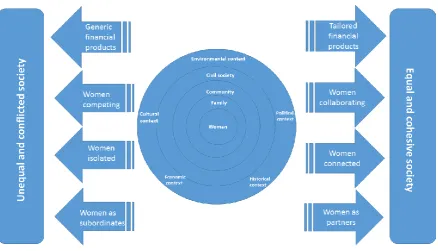
2002). We illustrate that potential in figure 2 by visually summarising the findings of a systematic review of qualitative studies of microfinance (Peters et al 2016).
Figure 2 about here
Ecological models not only offer a framework to make sense of review findings but, as they provide a way to navigate the complexity of people’s life circumstances, they also provide a framework for identifying stakeholders who can help with shaping the review or interpreting the findings. An ecological framework can be immensely beneficial when researching context-sensitive topic areas such as children, gender and the broader social, cultural and natural environments.
Practical challenges and ultimate benefits
Transdisciplinary working when conducting systematic reviews is not easy. The challenges manifest when working with contrasting paradigms, and epistemological, ontological and methodological differences. Our own experience tells us it requires time and effort to adapt to unfamiliar information resources, terminology, communication styles and research methods. Guidance is available from a systematic review which found that transdisciplinary research is enhanced by team leaders with good ideas and vision, contacts, good interpersonal skills, humility, familiarity with the disciplines and the opportunity to choose their team members and keep them all on board, and by team members with maturity, flexibility and personal commitment (Choi and Pak 2007). Grounding the unfamiliar in social and cultural contexts recognizable to the particular review team can
encourage respect for different ideologies and paradigms, and a better understanding and appreciation of disciplinary diversity. Transdisciplinary research is also helped by the physical proximity of team members, the internet and email as a supporting platform, and an institutionally conducive environment. Constructive working practices include: developing a common goal and shared vision; having clarity about, and rotation of, roles; good communication and constructive comments among team members, and importantly, a collaborative ethos of openness and sharing in learning with and from distinct disciplines.
Ideally such teams synthesise more complete evidence, more coherently, and align reviews more closely with stakeholder interests, leading to more compelling evidence. For these reasons,
commissioned systematic reviews, which tend to be both complex and time-pressured, require that care be taken not only in drafting substantive content of terms of reference for the conduct of the systematic review, but also in selecting a team of reviewers well motivated to take on
transdisciplinary reviews. A track record in project management, a typical requirement in requests for proposals, does little to reveal the capacity of the leader for the critical tasks of forming a team, holding it together, and resolving different points of view. Further, transdisciplinary reviews attract different stakeholders who may be driven by disparate motivations. Generally, academics tend to be comfortable ‘producing knowledge’, partly because they are rewarded by the academic structures in which they are situated for doing so. Non-academics, on the other hand, are rewarded for ‘getting things done’ and seeking practical results and impacts, which may lead to different approaches and motivations in larger and more diverse teams. Once again, the ability of a team leader to manage any resulting tension in teams with academic and non-academic members, is critical to the
successful outcome of the review. Indeed, producing knowledge combined with getting things done underpin good transdisciplinary research, which is commonly assessed in terms of relevance, credibility, legitimacy and effectiveness in problem solving or social change (Belcher et al 2016). Despite these challenges, transdisciplinary working, with academics and other stakeholders, has led to growing numbers of systematic reviews that address policy questions. Transdisciplinary working has also made possible the adaptation of review methods for new fields and the sharing of
knowledge between experienced reviewers and novice teams who bring subject expertise to build reviewing capacity and produce learning which is empowering and reflects both the local and global.
Conclusions
Systematic methods for answering important questions from existing literature are well developed. These questions need to be complemented by clearer methods that emphasise the thinking and debate for developing the questions, shaping reviews and interpreting emerging findings. Such work requires crossing academic and policy boundaries, and exploring how concepts, definitions and language differ. Communication methods analogous to collective qualitative analysis or non-directive counselling look promising for refining questions and constructing conceptual frameworks collectively. Ecological models look promising for understanding the context of research findings and addressing the big questions about social change.
References
Althor G, McKinnon M, Cheng SH, Klein C, Watson J (2016) Does the social equitability of community and incentive based conservation interventions in non-OECD countries, affect human well-being? A systematic review protocol. Environmental Evidence 5:26.
Ang L. Early Childhood and Peace Building in the Asia-Pacific Region: A Literature Review to Inform a Regional Research Agenda, UNICEF Publication, 2014. Accessed 1 April 2017
https://www.arnec.net/wp-content/uploads/2015/04/Peace-Bldg-Report-ref.pdf
Ang L, Oliver S. A Systematic Policy Review of Early Childhood Development and Peacebuilding in fourteen Conflict-affected and Post-conflict countries. UNICEF and UCL Institute of Education: University College London, 2015. Accessed 1 April 2017
Amason AC, Hochwarter WA., Thompson, KR, & Harrison, AW. Conflict: An important dimension in successful management teams. Organizational Dynamics, 1995; 24, 20-35.
Belcher BM, Rasussen KE, Keshaw MR, Zornes DA. Defining and assessing research quality in a transdisciplinary context. Research Evaluation 2016; 25: 1–17.
Bronfenbrenner U. The Ecology of Human Development. Cambridge, MA: Harvard University Press, 1979.
Bronfenbrenner U. ‘Developmental Ecology through Space and Time. A Future Perspective’ in P. Moen & G. H. Elder, Jr., (Eds.), Examining lives in context: Perspectives on the ecology of human development (pp. 619-647). Washington, DC: American Psychological Association, 1995.
Burke JF, Sussman JB, Kent DM, Hayward RA. Three simple rules to ensure reasonably credible subgroup analyses BMJ 2015; 351: h5651.
Choi BC, Pak AW. Multidisciplinarity, interdisciplinarity and transdisciplinarity in health research, services, education and policy: 1. Definitions, objectives, and evidence of effectiveness. Clin Invest Med 2006; 29 (6) 351 – 364.
Choi BC, Pak AW. Multidisciplinarity, interdisciplinarity, and transdisciplinarity in health research, services, education and policy: 2. Promotors, barriers, and strategies of enhancement. Clin Invest Med. 2007; 30 (6): E224-E232.
Collins PH. Intersectionality’s Definitional Dilemmas. Annual Review of Sociology 2015; 41:1–20.
Cottrell E, Whitlock E, Kato E, Uhl S, Belinson S, Chang C, Hoomans T, Meltzer D, Noorani H, Robinson K, Schoelles K, Motu’apuaka M, Anderson J, Paynter R, Guise JM. Defining the Benefits of
Stakeholder Engagement in Systematic Reviews. Research White Paper. (Prepared by the Scientific Resource Center under Contract No. 290-2012-00004-C.) AHRQ Publication No. 14-EHC006-EF. Rockville, MD: Agency for Healthcare Research and Quality. March 2014.
www.effectivehealthcare.ahrq.gov/reports/final.cfm.
Coutts C, Hahn M. Green Infrastructure, Ecosystem Services, and Human Health Int. J. Environ. Res. Public Health 2015; 12(8), 9768-9798; doi:10.3390/ijerph120809768
Edwards B. Deep insider research. Qualitative Research Journal 2002; 2(1), 71-84.
Eisenberg JM. Globalize the evidence, localize the decision: evidence-based medicine and international diversity. Health Affairs 2002; 21(3): 1-17.
Evans T, Brown H. Road traffic crashes: operationalizing equity in the context of health sector reform. Injury Control Safety Promotion 2003; 10(1-2), 11-12.
Isaksen SG. Toward a Model for the Facilitation of Creative Problem Solving. The Journal of Creative Behavior 1983, 17: 18–31. doi: 10.1002/j.2162-6057.1983.tb00971.x
Karumbi J, Garner P. Directly observed therapy for treating tuberculosis. Cochrane Database of Systematic Reviews 2015; Issue 5. Art. No.: CD003343. DOI: 10.1002/14651858.CD003343.pub4. Krug EG, Dahlberg LL, Mercy JA, Zwi AB, and Lozano R. (Eds) World Report on Violence and Health Geneva: World Health Organisation, 2002.
Larsen RK, Nilsson AE (2017) Knowledge production and environmental conflict: managing systematic reviews and maps for constructive outcomes. Environmental Evidence 6:17 https://doi.org/10.1186/s13750-017-0095-x
Nkulu Kalengayi FK, Hurtig AK, Ahlm C, Ahlberg BM. “It is a challenge to do it the right way”: an interpretive description of caregivers’ experiences in caring for migrant patients in Northern Sweden. BMC Health Services Research 2012; 12 (433) DOI: 10.1186/1472-6963-12-433
Leisher C, Temsah G, Booker F, Day M, Samberg L, Prosnitz D, Agarwal B, Matthews E, Roe D, Russell D, Sunderland T, Wilkie D. (2016) Does the gender composition of forest and fishery management groups affect resource governance and conservation outcomes? A systematic map. Environmental Evidence 5: 6 DOI 10.1186/s13750-016-0057-8.
Liu Q, Abba K, Alejandria MM, Sinclair D, Balanag VM, Lansang MAD. Reminder systems to improve patient adherence to tuberculosis clinic appointments for diagnosis and treatment. Cochrane Database of Systematic Reviews 2014, Issue 11. Art. No.: CD006594. DOI:
10.1002/14651858.CD006594.pub3.
Lutge EE, Wiysonge CS, Knight SE, Volmink J, Sinclair D. Incentives and enablers to improve adherence in tuberculosis. Cochrane Database of Systematic Reviews 2015, Issue 7. Art. No.: CD007952. DOI: 10.1002/14651858.CD007952.pub2.
McKinnon MC, Cheng SH, Garside R, Masuda YJ, Miller DC. et al What are the effects of nature conservation on human well-being? A systematic map of empirical evidence from developing countries. Environmental Evidence 2016; 5(8): DOI: 10.1186/s13750-016-0058-7.
Masset E, Haddad L, Cornelius A, Isaza-Castro J. A systematic review of agricultural interventions that aim to improve nutritional status of children. London: EPPI-Centre, Social Science Research Unit, Institute of Education, University of London, 2011.
Oliver S, Bangpan M, Dickson K (2017) Producing policy relevant systematic reviews: navigating the policy-research interface. Evidence and Policy.
http://www.ingentaconnect.com/content/tpp/ep/pre-prints/content-ppevidpol1600048r2
O'Neill (Petkovic) J, Tabish H, Welch V, Petticrew M, Pottie K, & Clarke M. Applying an equity lens to interventions: using PROGRESS ensures consideration of socially stratifying factors to illuminate inequities in health. Journal of Clinical Epidemiology 2014; 67, 56-64.
Peters MDJ, Lockwood C, Munn Z, Moola S, Mishra RK. People’s views and experiences of participating in microfinance interventions: A systematic review of qualitative evidence. London: EPPI-Centre, Social Science Research Unit, UCL Institute of Education, University College London, 2016.
Pullin AS, Bangpan M, Dalrymple S, Dickson K, Haddaway N, Healey J, Hauari H, Hockley N, Jones J, Knight T, Vigurs C, Oliver S. 2013. Human well-being impacts of terrestrial protected areas? Environmental Evidence 2013, 2:19 doi:10.1186/2047-2382-2-19
http://www.environmentalevidencejournal.org/content/2/1/19
Robson C. Real World Research: A Resource for Social Scientists and Practitioner-Researchers, Massachussetts: Blackwell Publishers, 2002.
Rogers CR. Counseling and psychotherapy. Boston, MA: Houghton Mifflin, 1942. Rogers J. Coaching skills. Milton Keynes: Open University Press, 2004.
Stewart G, Coles CF, Pullin AS (2005) Applying evidence-based practice in conservation management: Lessons from the first systematic review and dissemination projects. Biological Conservation 126 (2005) 270–278.
Welch V, Petticrew M, Tugwell P, Moher D, O'Neill J, Waters E, et al. PRISMA-Equity 2012 Extension: Reporting Guidelines for Systematic Reviews with a Focus on Health Equity. PLoS Med 2012; 9(10): e1001333. doi:10.1371/journal.pmed.100133.
Declarations
Ethics approval and consent to participate
This is a commentary on prior research published elsewhere. The ethics approval and consent procedures are reported alongside any prior research with human participants.
Consent for publication
Not applicable.
Availability of data and material
This is a commentary on prior research which is cited in full.
Competing interests
The authors declare that they have no competing interests
Funding
Much of the research underpinning this commentary (conducted by SO, KD and MB) was funded by the World Health Organization through the Alliance for Health Policy and Systems Research
(research grant no. 2013/323807-0; PO-No. 200770388).
Authors SO, KD and MB have also drawn on their work supported by the UK Department for International Development (Grants: 6617, 7135). PG and PH are supported by UK aid from the UK Government for the benefit of developing countries (Grant: 5242).
SO was (in part) supported by the National Institute for Health Research (NIHR) Collaboration for Leadership in Applied Health Research and Care (CLAHRC) North Thames at Bart’s Health NHS Trust. The views expressed are those of the authors and not necessarily those of the NHS, the NIHR or the Department of Health.
Authors' contributions
This paper combines six strands of thinking. PG, PH and SO analysed the limitations of practitioner focused systematic reviews within multilevel, adaptive systems. JJ and SO analysed current
frameworks for equity analysis. KD, MB and SO conducted the research addressing how systematic reviewers and their stakeholder partners navigate the policy-research interface. MF and SO analysed the intellectual steps in shaping evidence gaps. LA and SO developed the multi-level ecological model that informed the early childhood development and policy-related systematic review. SO and RG applied these arguments about transdisciplinary research to environmental science.
Acknowledgements
We are grateful to the anonymous peer reviewers for their thoughtful comments and constructive suggestions on an earlier version of the manuscript.
Authors' information (optional)
Box 1: Definitions of key terms that describe the process and products of systematically reviewing policy-relevant research
Systematic reviews of research inspect research reports using explicit, accountable and rigorous research methods (Gough et al 2017).
Research synthesis aims to integrate the findings of different studies to answer the review question leading to knowledge that is greater than the sum of the individual studies (Gough et al 2017).
Policy relevant: Systematic reviews can be considered relevant to policy (and policy makers) when they present findings clearly for policy audiences to: illuminate policy problems; challenge or develop policy assumptions; or offer evidence about the impact or implementation of policy options; and take into account diversity of people and contexts (Oliver and Dickson 2016). Transdisciplinary research integrates the natural, social and health sciences in a humanities context, and in so doing transcends each of their traditional boundaries. It does so by scientists and other stakeholders working together beyond their traditional roles to transcend traditional boundaries to investigate systems in a holistic way (Choi and Pak 2009).
Stakeholders in systematic reviews include any person, organisation or social group that may influence or be influenced by the process of preparing or using systematic reviews or by the decisions informed by their findings.
Box 2: The mismatch between the worlds of research and implementation: an example from health
The proposed solution of ‘directly observed therapy’ (DOT), a practice that involves healthcare practitioners observing patients taking their treatment, is not well supported by systematic review evidence regarding distinct approaches to implementation of directly observed therapy (Karumbi and Garner 2015), including incentives and enablers (Lutge et al 2015), or reminders (Lui et al 2014). Whilst these reviews, drawing on randomised controlled trials, provided some useful inputs to specific technical recommendations being made by the World Health Organization at the time, in broader policy terms they offer disappointing findings to national policy makers frustrated by the “real world” where: conflicts disrupting health systems; practitioners favouring patients they considered most deprived and therefore most deserving; and patients finding the timing of the treatment and incentive (a midday meal) inconvenient (Lutge et al 2015). Moreover, many of these reviews considered DOT without a comparator, and reviewed individual interventions alone, rather than typical packages of interventions, is insufficient (Lui et al 2014). This example highlights the importance and need to consider the ‘financial and logistical barriers to care; approaches that motivate patients and staff; and defaulter follow-up’ (Karumbi and Garner 2015); in programmes of care and the systematic reviews that inform them.
Box 3: Thinking and communication processes analogous to developing a question or conceptual framework for systematic reviewing (Oliver et al, 2017).
Qualitative analysis
Analysing primary data or reports of qualitative research involves asking questions (Strauss and Corbin 1998) or synthesising qualitative studies (Noblit and Hare 1988) with questions:
that sensitise the researchers to the landscape of interest – what is
going on here, who is involved, how do they define the situation,
what does it mean to them, are their definitions and meanings the
same or different, what are they all doing (the same or differently)
and why?
that explore recurring themes as stakeholders talk;
about processes, variation, connections (or assumptions) about key
concepts, changes over time and pertinent structural influence; about exceptions or contradictions; and
about where to look for evidence and how to recognise it in different
contexts.
Non-directive counselling
Questions focused on learning and implications for action (Egan 1990; Rogers 2004) involve:
asking open ended questions to encourage talk and reflection on
specific examples;
adopting the stakeholders’ own language;
asking future oriented questions about how stakeholders would use
the evidence;
provoking thinking, demanding clarification and challenging
assumptions;
summarising responses to confirm understanding, invite correction
and introduce language that links with wider understandings; interrupting repetition or vague assertions;
moving the conversation on; and
getting to the crux of the matter and articulating the main focus.
Figure 1: Typical limitations of knowledge transfer between worlds of policy and research: Research-based information about the effects of services flows from where it is collected (bottom right), typically from practice arenas where data are framed by research tools and analysed to maximise the internal validity of primary studies (bottom left), and then synthesised to emphasise average effects with an assessment of the degree of heterogeneity of studies and judgements about generalisability of findings. Subsequently summaries of syntheses are presented to panels, such as guideline groups, making policy decisions (top right). Information flow from policies to guide research base practice are interrupted during implementation efforts where evidence maximising external validity is required for systems issues, to complement evidence addressing practice issues (middle right).
Figure 2: An ecological model of women’s engagement with microfinance programmes. To complement evidence presented along a causal pathway or programme theory of change, which focuses primarily on the programme design and internal validity of evidence at each causal link, evidence can be presented within an ecological framework representing participants’ social context to facilitate analysis of external validity for implementation decisions (Adapted from a ‘pathways to peace’ framework (Ang and Oliver 2015) by the EPPI-Centre to present the key contextual issues influencing the outcomes of microfinance programmes (Peters et al 2016).