SYNTHESIS, CHARACTERIZATION, QUANTITATIVE STRUCTURE-ACTIVITY RELATIONSHIP,
DOCKING, ANTIBACTERIAL ACTIVITY, AND BRINE SHRIMP LETHAL STUDIES ON
L-PHENYLALANINE SCHIFF BASES
JAYAPRAKASH R
1,2, SAROJ KUMAR SHA
3, HEMALATHA S
3, EASWARAMOORTHY D
1*
1Department of Chemistry, B. S. AbdurRahman University, Vandalur, Chennai, Tamil Nadu, India. 2Department of Chemistry, Jerusalem
College of Engineering, Pallikaranai, Chennai, Tamil Nadu, India. 3School of Life Sciences, B. S. Abdur Rahman University, Vandalur, Chennai, Tamil Nadu, India. Email: [email protected]
Received: 10 August 2016, Revised and Accepted: 05 September 2016 ABSTRACT
Objective: Aim of this work is to synthesize and characterization of the hydroxyl group the hydroxyl group substituted L-phenylalanine Schiff bases to compare their predicted quantitative structure-activity relationship (QSAR) and molecular docking against Escherichia coli protein ZipA (1s1j) outcomes with the antibacterial activity and brine shrimp lethal assay (BSLA) results.
Methods: The Schiff bases of L-Phenylalanine were synthesized by the simple condensation reaction using methanol, water in 2:1 ratio at reflux and were characterized by spectral techniques. QSAR parameters of the Schiff bases were predicted using java-based online and offline tools. Molecular docking carried through online mcule server and CLC Drug Discovery Workbench 3. Antibacterial activity and toxicity studies were conducted using broth dilution and brine shrimp lethal assay methods, respectively.
Results: The Schiff bases fulfilled the QSAR drug-likeness parameters and showed the docking score between −6.8 and −6.0 Kcal/mol which are
higher than amoxilicillin and gentamicin like standard drugs. They also possess good inhibition for urinary tract infection causing E. coli bacteria,
and minimum inhibitory concentrations (MIC) exists between 3.25 and 5.25 µg/ml. The brine shrimp lethal concentration for 50% mortality [LC50])
between 58.73 and 135.6 µg/ml.
Conclusion: Para, meta and 2,4 hydroxyl substituted Schiff bases exhibited good inhibition against Gram-negative E. coli bacteria at low concentration and the MIC exists below the LC50 value. The Schiff base showed high drug score, high docking score, and low toxicity than other Schiff base. Docking score, high inhibition, low clogP, low MIC
Keywords: L-phenylalanine, Schiff base, Quantitative structure-activity relationship, Docking, Antibacterial, Lethal concentration for 50% mortality.
INTRODUCTION
Development of new antibiotic drug with high resistivity and control over the disease-causing in medicine and agriculture field is a
well-documented problem [1]. It was found that the Schiff bases are the
key intermediates for the synthesis of numerous bioactive medicinal compounds from the primary amine. medicinal activities so far.
They possess antimalarial possess antimalarial [2], anticancer [3], antimicrobial [4,5], antioxidant [6], and analgesic [7] characters. The
Schiff bases are used as a reactant for the preparation of a number of bioactive heterocyclic compounds such as benzoxazines, formazones,
2-azetidinones, and 4-thiazolidinones [8]. Apart from the various
Schiff base molecules, recently amino acid Schiff bases and their metal complexes have received great attention owing to their biological
importance [9]. The metal complexes of amino acid Schiff bases and their antimicrobial activities [10-19] were reported earlier. But the quantitative (QSAR) properties [20], docking, and toxicity assay of the
different hydroxyl group substituted Schiff bases of the Schiff bases of L-phenylalanine were not reported in detail so far. Therefore, this research studied the QSAR parameters of the Schiff bases using offline
and online tools such as Data-Warrior, tomcat, molsoft [21,22], and molinspiration [21,22] to reduce the wastage of chemical and time.
Similarly, this research used cell division protein ZipA (PDB id-1s1j) of Escherichia coli for the molecular docking instead of cell wall protein. ZipA is bitopic cytoplasmic membrane protein with a short periplasmic N-terminal region of an E. coli [23]. Based on the literature survey,
we derived five Schiff bases from L-phenylalanine using 2-hydroxy
(1a), 3-methoxy, 2-hydroxy (1b), 4-hydroxy (1c), 3-hydroxy (1d), and 2,4-dihydroxy (1e) benzaldehydes in 2:1 ratio methanol, water solvent, and the compounds were characterized by Fourier transform infrared (FTIR),1H-nuclear magnetic resonance (NMR), and 13C-NMR spectral
studies. We also performed molecular docking to realize how various positions of substituted hydroxyl group in Schiff bases binding with cell division ZipA protein of E. coli and compared with standard antibiotics such as amoxicillin and gentamicin. Docking study of cell division ZipA protein was carried out using online mcule 1-click docking server
instead of auto dock Vina software [24] and the poses with the negative
docking scores were recorded for the submitted smiles notation. Docking poses were studied using the CLC drug designing workbench 3 tool. The Schiff bases were carried for experimental antibacterial activity against E. coli [25] pathogen and Brine Shrimp [26,27] toxicity
study for the serially diluted solutions. Finally, the computational outcomes were compared with experimental results.
METHODS
L-phenylalanine, 2-hydroxy benzaldehyde, 3-methoxysalicylaldehyde, 4-hydroxy benzaldehyde, and 2, 4-dihydroxy benzaldehyde were purchased from Sigma-Aldrich, USA. 3-hydroxy benzaldehyde was purchased from HiMedia, Mumbai. The solvents and all other chemicals were purchased from SRL chemicals, India. Melting points were measured by an open capillary method using Sunsim electric melting point apparatus. The FTIR spectra of Schiff bases were
obtained by Jasco-6300 FTIR spectrometer.1H-NMR and 13C-NMR
Research Article
spectra were recorded using a Bruker NMR400 spectrometer in dimethyl sulfoxide (DMSO) solvent. The tools used for the virtual
screening are Java based tools such as Data molinspiration are the Java-based virtual screening tools. Structures were drawn using ChemDraw software. Docking tools such as mcule 1-click docking and CLC drug discovery workbench 3 were used. Similarly, cell division protein ZipA, PDB id-1s1j, UniProt name-ZIPA_ECOLI, and resolution-2,180 were
used for the docking study.
E. coli ATCC 8739 was obtained from Biomaterial Contributor Network,
USA. The Artemia cyst eggs were purchased from Aquamarine (Guindy, Chennai, India) and sea water was collected at Besant Nagar beach, Chennai, India.
EXPERIMENTAL
General procedure for the synthesis of L-phenylalanine Schiff
bases (compounds 1a-1e)
Schiff bases of L-phenylalanine were prepared using 2:1 methanol and
water instead of ethanol [13] in 100 ml R.B flask. 10 ml of 0.001 mol
hydroxyl group substituted aromatic aldehyde dissolved methanolic
solution was added dropwise to 5 ml of 0.001 mol L-phenylalanine hot
water solutions. Then, the reaction mixture was refluxed for 3 h and the R.B flask was covered with silver foil. The reaction was monitored
by thin layer chromatography using 8.5:1:0.5 t-butanol, water, and
acetic acid elution system. Then, the reaction mixture was cooled to room temperature. After 12 hrs, the solid formed was filtered off, washed with hot methanol-water mixture. The solid Schiff base was
recrystallized from 20 ml of 1:1 methanol, water mixture and stored in
a vacuum desiccator over anhydrous calcium chloride.
(S, E)-2-(2-hydroxybenzylideneamino) -3-phenylpropanoic acid (1a)
Light yellow solid; yield-72%; mp-163°C (Bushra et al. 160-162°C);
M.F: C16H15NO3; molecular weight (MW): 269.3; FTIR (υ, cm−1):
OH(COOH)-3580-2420, OH-3580-2420, CO-1680, CH=N-1620,1H NMR
(500 MHz, DMSO-d6) δ13.3 (s,1H), 8.48 (s, 1H), 7.89 (s, 1H), 7.67-7.41
(m, 4H), 7.41-7.23 (m, 2H), 7.09 (dd, J = 7.5, 1.8 Hz, 1H), 6.97 (td, J = 7.5, 1.9 Hz, 1H), 6.85-6.60 (m, 1H), 4.35 (d, J = 11.1 Hz, 1H), 3.48 (t, J = 11.8 Hz, 1H), 2.94 (d, J = 12.4 Hz, 1H).13C NMR (125 MHz, DMSO)
δ 172.61, 164.59, 154.87, 137.07, 132.71, 131.09, 128.96, 128.79, 127.51,127.00,125.4, 123.59, 119.54, 116.99, 76.16, 40.03.
(S, E) -2-(2-hydroxy-3-methoxybenzylideneamino) -3-
154.88, 150.88, 149.75, 137.07, 128.96, 128.79, 127.61, 127.00, 125.8, 119.33, 117.89, 113.22, 76.16, 56.45, 40.03.
(S, E)-2-(4-hydroxybenzylideneamino) -3-phenylpropanoic acid 128.96, 128.79, 128.27, 127.00, 114.12, 76.16, 40.03.
(S, E)-2-(3-hydroxybenzylideneamino) -3-phenylpropanoic acid
157.44, 137.07, 134.63, 129.99, 128.96, 128.79, 128.61, 128.44, 127.00, 125.97, 116.73, 114.09, 76.16, 40.03.
(S, E)-2-(2,4-dihydroxybenzylideneamino) -3-phenylpropanoic acid (1e)
Dull yellow solid; yield-75%; mp-220°C; M. F: C16H15NO4 M. Wt: 285.29;
FTIR (υ, cm−1): OH- 3600, CO (COOH)-3570, Ar-CH-3071, CH=N-1632,
C-O-1276;1H NMR (500 MHz, DMSO-d
6) δ 14.72 (s, 1H), 9.83 (s, 1H),
9.61 (s, 1H), 8.05 (s, 1H), 7.78 (d, J = 7.0 Hz, 2H), 7.43 (t, J = 7.4 Hz, 2H), 7.39-7.18 (m, 1H), 7.05 (d, J = 7.5 Hz, 1H), 6.59 (dd, J = 7.5, 1.8 Hz, 1H), 6.32 (d, J = 1.8 Hz, 1H), 4.88 (d, J = 8.7 Hz, 1H), 3.10-2.81 (m, 2H);13C
NMR (125 MHz, DMSO) δ 172.61, 164.16, 162.50, 154.87, 137.07, 132.66, 128.96, 128.79, 128.55, 128.11, 127.00, 119.48, 110.78, 103.26, 76.16, 40.03.
QSAR properties of Schiff bases
Computer-aided drug innovation methods have played a major role in the development of therapeutically essential small molecules for the past decades. QSAR properties were determined for a particular synthesized new molecule for biological studies, and these properties can identify the molecule, whether it can act as a drug or not for further research. Many of the potential drugs were failed to reach the clinic because of absorption, distribution, metabolism, excretion-Tox liability problems. Hence, the structure-based design is now fairly repetitive because the important properties like molecular formula, the number of hydrogen bond acceptors and donors, mol logP, mol logs, molecular weight, polar surface area, molecular volume, and comparative drug-likeness scores were calculated to avoid the wastage of biological materials. These QSAR properties were calculated using Molinspiration and Molsoft predicting tools. The activity of all molecules and standard drugs was thoroughly examined under four criteria of effective drug activity in the areas of nuclear receptor ligand activity, ion kinase inhibition activity, channel modulation, and G protein coupled receptors ligand activity. Similarly, the preliminary computational drug-likenesses of the molecules are calculated by the methodology established by offline Data-Warrior software and tomcat online software. The partition coefficient (logP) value of Schiff bases was predicted using ChemSketch and compared with molinspiration tool values. All the synthesized molecules were found to fulfill the solubility requirements (logP) and showed drug
character in tomcat tool. On analyzing with Lipinski’s rules of Five, compounds showed mi logP ≤5; n rot b ≤5 (except 1b), MW ≤500, nOHNH ≤5, n ON ≤10 and all the synthesized Schiff bases satisfied
the rules.
Molecular docking
Docking is the formation of non-covalent protein-ligand complexes in drug design. The specified structure of a protein and a ligand, the task is predicting the structure of the binder complex. A docking technique evaluates the forces involved in the protein-ligand recognition such as van der walls bonding through hydrogen, electrostatic and place
of the legend appropriately in the active site [28]. After conducting
an adequate literature review, E. coli cell division, ZipA protein was selected as the target for this study, which is not reported so for. The crystal structure of the above target was obtained from mcule 1-click docking server. Ligand structures were done by drawing the structures using ChemSketch and converted to word based smiles notation. Docking simulations were performed with simple and fast mcule 1-click docking server. By evaluating the affinity of the compounds, four different docking scores were shown by the software for 1a, 1b, 1c, 1d, and 1e. Docking study gave comparatively good affinity with the particular E. coli cell division target at the binding site of X-26.0168, Y-14.1613 and Z-3.9038. All mcule docking images were viewed by CLC
Antibacterial assay
The Schiff bases were tested for their inhibitory character on the growth of E. coli, thus bacteria can achieve resistance to antibiotics through
morphological and biochemical alterations [29]. The antimicrobial
activity was tested by broth dilution method using serially diluted
solutions of 25, 12.5, 6.25 µg/ml, respectively. The presence of
hydroxyl groups in the Schiff base ligand plays an important role for its
antimicrobial activity [30], and likewise the presence of imine group
which imports in exposing the mechanism of transformation reaction
in biological systems [31]. The Schiff bases showed inhibition against
the growth of E. coli under the identical experimental conditions. The increase in biological activity of the Schiff bases may be due to the effect of the chelation on the normal cell process. Furthermore, the method of action of the Schiff bases may involve the formation of a hydrogen bond
through the imine nitrogen (>C=N) with the energetic interiors of cell constituents, resulting in interference with the normal cell process [32]. After incubation at 37°C for 24 hrs, the antibacterial activity of the Schiff
bases was determined by measuring the inhibition of the zone diameter
in mm scale and minimum inhibitory concentrations (MICs) in µg/ml
unit from the triplicated trials.
Toxicity study by brine shrimp lethal assay (BSLA) test
Brine shrimp larvae were hatched and toxicity study [33] was carried
out for the 1a-e Schiff bases. 1 g of the Artemia cyst egg was added in 1
l of sea water and kept under aeration. A 60 Watts tungsten lamp was focused on the beaker for 30 hrs. After the hatching process matured,
nauplii were taken for toxicity study. Toxicity test was carried out
for the serially diluted Schiff base solutions of 10, 50, 100, 200, and 250 µg/ml. Test samples were diluted in 0.5 ml DMSO, and stirred well up to the clear solution. The solutions were made up to 100 ml of sea water in a 100 ml standard flask. Each trial was carried using 10 ml of test solution with 10 numbers of freshly hatched nauplii. Test solutions
were kept for 24 hrs and it was focused by a 25 Watts tungsten lamp at room temperature. After 24 hrs, numbers of live nauplii were counted and percentage of mortality was tabulated. The same test triplicated for
each concentration. From the data, regression graph is plotted between logarithmic values of concentrations and percentages of mortality. The synthesized schiff bases exposed exposed considerable cytotoxic
activity against Brine Shrimp nauplii, and lethal concentration for 50%
mortality (LC50) value of Schiff bases was calculated from the regression
equations. DMSO was used as a negative control to validate the test
method. Statistical evaluations were performed using Microsoft Excel,
2010.
RESULTS AND DISCUSSION
Synthesis and characterization
The designated compounds (1a-e) were synthesized by the addition of equimolar quantities of the hydroxyl group substituted five different aromatic aldehydes to L-phenylalanine in 2:1 methanol, water at reflux condition for 3 hrs according to Scheme 1. The reaction system was covered with silver foil to avoid the amino acid oxidation, the impurity formation and to get Schiff bases with high purity. Water is used as a solvent to dissolve the unreacted amino acid. The Schiff bases 1a-1e
were obtained in good yields (70-75%) with purity after crystallization.
The FTIR spectra of compounds 1a-e have shown strong and broad
absorption bands in the range of 3400-2945 cm−1 due to stretching
vibration of the −OH group of the carboxylic acid and the phenolic groups. The characteristic peak of the −NH2 primary amine stretching
and the vibration disappeared in the IR spectrum, and these compounds
displayed at 1620-1632 cm−1 was due to the imine group (−CH=N−) stretching vibration. Proton NMR spectrum of 1a to 1e showed singlet chemical shift at 13.3 (Bushra et al.), 11.56 (Laila et al.), 11.24 (Laila et al.), 11.68 (Laila et al.), 14.72 (Bushra et al.) ppm for carboxylic group carbon and are the chemical shifts are in coincidence with the reported
journal values. Imine group proton identified between 8.41 ppm and 7.97 ppm (Bushra et al., Laila et al.). Similarly, carbon NMR showed the
chemical shift at 172 ppm for carboxyl group and Imine, carbon showed carbon peak between 159 and 154 for 1a to 1e Schiff bases.
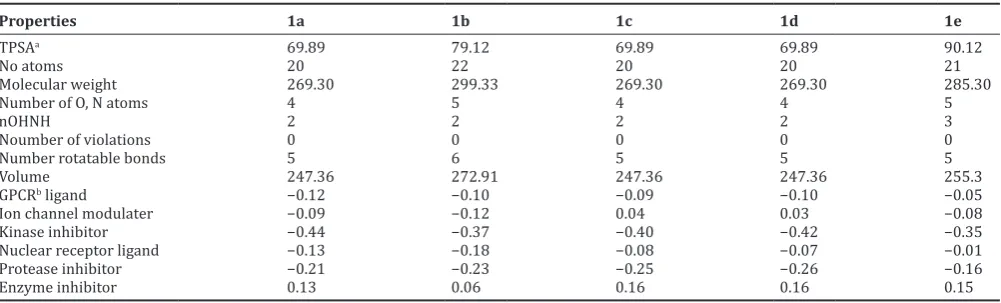
Table 1: Molinspiration predicted QSAR properties of Schiff bases 1a-e
Properties 1a 1b 1c 1d 1e
TPSAa 69.89 79.12 69.89 69.89 90.12
No atoms 20 22 20 20 21
Molecular weight 269.30 299.33 269.30 269.30 285.30
Number of O, N atoms 4 5 4 4 5
nOHNH 2 2 2 2 3
Noumber of violations 0 0 0 0 0
Number rotatable bonds 5 6 5 5 5
Volume 247.36 272.91 247.36 247.36 255.3
GPCRb ligand −0.12 −0.10 −0.09 −0.10 −0.05
Ion channel modulater −0.09 −0.12 0.04 0.03 −0.08
Kinase inhibitor −0.44 −0.37 −0.40 −0.42 −0.35
Nuclear receptor ligand −0.13 −0.18 −0.08 −0.07 −0.01
Protease inhibitor −0.21 −0.23 −0.25 −0.26 −0.16
Enzyme inhibitor 0.13 0.06 0.16 0.16 0.15
aTotal polar surface area, bGuanine nucleotide-binding protein-coupled receptor. QSAR: Quantitative structure-activity relationship
Compound id R1 R2 R3 % of yield
1a OH H H 72
1b OH OCH3 H 70
1c H H OH 72
1d H OH H 70
1e OH H OH 75
Structures of the Schiff bases were characterized thoroughly and were carried for the preliminary QSAR properties prediction for drug-likeness. We reviewed widely about the molecule based tools such as molecular descriptors and QSAR tools. Initially, the molecules were virtually screened through Molinspiration online tool and the predicted values are shown in Table 1.
All the synthesized molecules were used for the partition coefficient prediction (clogP) using computational software such as Molinspiration, Molsoft, Chemsketch, Data-warrior, and pasilla Tomcat tools. The predicted clogP and drug likeness values are shown in Table 2, and the result demonstrated the substituent effect on the Schiff bases.
Data-warrior result showed the same drug score (−0.9911) due to the standard 3000 molecules were referred for the prediction. However,
molsoft showed different position effect because it used the maximum
of 15,000 compounds for prediction. Similarly, clogP values are in
decreasing order from 1a to 1e. When compare the drug score of the
starting materials such as 2-hydroxy benzaldehyde (−1.81), 2-hydroxy 3-methoxy benzaldehyde (−1.68), 3-hydroxy benzaldehyde (−1.41), 4-hydroxy benzaldehyde (−1.44), 2, 4-dihydroxy benzaldehyde (−0.98), Schiff bases showed the enhanced drug score. Out of five compounds, 1e (−0.01) has shown higher and more resemblances to commercial drug. Our synthesized compounds were passed in pasilla tomcat
drug-likeness test, and all the virtual screening tools were supported our Schiff bases.
Finally, computer aided, molecular docking was done for the Schiff bases and compared with standard antibiotics Amoxicillin and Gentamicin against cell division protein ZipA. It is observed that the Schiff bases showed more binding affinity than amoxicillin and shown in Table 3. New mechanism arrived from the docking study result that is molecules may also control the division of E. coli pathogen. The binding affinity of the chiral Schiff bases with the cell division protein are shown in Figs. 1 and 2.
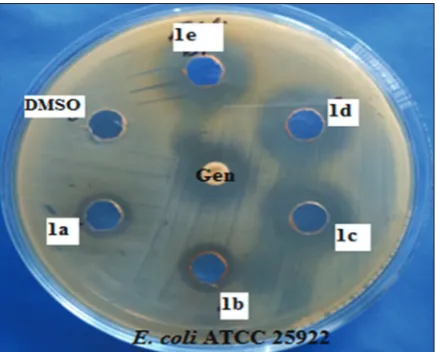
All the synthesized Schiff bases are active against human disease causing pathogen E. coli at low concentrations and shown in Fig. 3. The serially diluted solutions and their inhibitions in mm are shown in Table 4. The result clearly showed that the antimicrobial character of the hydroxyl group substituted Schiff bases. Apart from the five Schiff bases, three Schiff bases 1c-e have shown the higher zone of inhibition than standard and the synthesized Schiff bases may have lower side effects than gentamicin due to the protected amine group. Schiff bases 1c-e showed the higher zone of inhibition for the various
concentrations. 12.5 µg/ml concentrations of 1a-e Schiff bases showed the zone of inhibition in the order of 8 mm, 5 mm, 13 mm, 13 mm and
15 mm, respectively, which is shown in Fig. 3. The MIC of Schiff bases
are exist from 3.25 µg/ml to 5.25 µg/ml. 1e showed the higher zone of inhibition (25 mm) at low concentration (3.25 µg/ml).
After the preliminary trials against the pathogen, toxicity study has done on the Schiff bases by brine shrimp lethal assay method for the future study. Serially diluted solutions and their mortality percentages were calculated and shown in Table 5. It was correlated with the logarithmic values of concentrations by regression method. From the regression equation, LC50 was calculated for the Schiff bases and observed that the toxicity of the compounds decreased with increasing clogP values. 1c, 1d-e Schiff bases showed higher LC50 (Table 5) value due to lower clogP value. LC50 values of the Schiff bases 1a-e were displayed 58.73, 83.93,
Table 2: Chemsketch, molinspire, data warrior, molsoft, tomcat tools predicted clogP and drug score of 1a-e
Serial
number Compound ID c logPChemsketch molinspiration Drug score/drug-LikenessData warrior Molsoft tomcat
1 1a 3.46±0.43 1.29 −0.9911 −0.57 Drug
2 1b 3.24±0.41 0.90 −0.8817 −0.39 Drug
3 1c 3.33±0.45 0.88 −0.9911 −0.43 Drug
4 1d 3.28±0.44 0.85 −0.9911 −0.48 Drug
5 1e 3.22±0.44 0.79 −0.9911 −0.01 Drug
Fig. 1: Three-dimensional (3D) mcule docking images of Schiff bases and standard against protein 1s1j. (a). 3D docking image of
1e, (b). 3D docking image of amoxicillin
a b
Fig. 2: Three-dimensional (3D) CLC work bench docking images with target protein 1s1j. (a). 3D docking image of 1a, (b). 3D docking image of 1b, (c). 3D docking image of 1c, (d). 3D docking image of 1d, (e). 3D docking image of 1e, (f). 3D docking image of amoxicillin
a
d e f
121.5, 121.5, and 135.6 µg/ml after the triplicated trials. This result
increasing order and predicted clogP values are almost equal.
This research further revealed that the anti-bacterial MIC of Schiff bases were in increasing order from 1e<1c<1d<1a<1b and almost coincident with docking score and drug score. LC50 values are 1e<1d<1c<1b<1a are coincident with solubility partition coefficient slope, and all the
Table 3: Mcule 1-click docking scores of 1a-e and antibiotics against cell division protein ZipA
Serial
Number Substituent position in benzaldehyde (Shiff base) Docking scores in kcal/mol1 2 3 4 Best score kcal/mol
1 2-hydroxyl (1a) −6.4 −6.1 −5.8 −5.6 −6.4
2 2-hydroxy, 3-methoxy (1b) −6.0 −6.0 −5.7 −5.3 −6.0
3 4-hydroxy (1c) −6.4 −6.3 −5.8 −5.4 −6.4
4 3-hydroxy (1d) −6.6 −5.9 −5.2 −5.2 −6.6
5 2, 4-hydroxy (1e) −6.8 −6.3 −5.8 −5.6 −6.8
6 Amoxicillin −5.8 −5.7 −5.4 −5.4 −5.8
7 Gentamicin −5.1 −4.8 −4.8 −4.3 −5.1
Schiff bases are fulfilling Lipinski rules of five. From the results and discussion, di hydroxyl group substituted 1e Schiff base showed stable result against the urinary tract infection causing E. coli and low toxicity.
CONCLUSION
The chiral Schiff bases (1a-e) were synthesized from the nutritional reputed analgesic and antidepressant supplement L-phenylalanine with hydroxyl group by the simple aqueous reaction. This research successfully completed the QSAR, docking, antibacterial, and toxicity study for the Schiff bases. Furthermore, this research confirmed that, the three (1c-e) Schiff bases showed enhanced antibacterial activity, particularly against human urinary tract infections causing bacterial strain E. coli when compared with gentamicin drug. QSAR parameters
of our molecules satisfied with experimental results. Out of five Schiff
bases, 1e showed excellent inhibition against the urinary tract infection causing E. coli, and further oral study will be carried for the efficacy in future.
ACKNOWLEDGMENTS
The authors are grateful to Jerusalem College of Engineering for providing the research facilities. Authors also thank Department of Chemistry, B.S.A.R University for providing analytical facilities (FTIR). The authors wish to thank Life Science Department, B.S.A.R University for biological activity screening. Author extend his gratitude to SRM University for the NMR facility.
REFERENCES
1. Tiwari S, Mujalda V, Sharma V, Saxena P, Shrivastava M, Synthesis and evaluation of Schiff’s base of 4-quinazolinone analogues as antimicrobial agents. Asian J Pharm Clin Res 2012;5(1):98-100. 2. Li Y, Yang ZS, Zhang H, Cao BJ, Wang FD, Zhang Y, et al. Artemisinin
derivatives bearing Munich base group synthesis and antimalarial activity. Bioorg Med Chem 2003;11:4363-7.
3. Desai SB, Desai PB, Desai KR. Synthesis of some Schiff base thiazolidinones and azetidinones derived from 2, 6 diaminobenzo [1, 2-d: 4, 5-d] bisthiazole and their anticancer activities. Heterocycl Commun 2001;7(1):83-90.
4. Panneerselvam P, Rather BA, Ravi Sankar Reddy D, Ramesh Kumar N. Synthesis and anti- microbial screening of some Schiff bases of 3-amino-6, 8- dibromo-2- phenyl quinazoline-4(3H)-ones. Eur J Med Chem 2009;44(5):2328-33.
5. Wadher SJ, Puranik MP, Karande NA, Yeole PG. Synthesis and biological evaluation of Schiff base of depsone and their derivative as antimicrobial agent. Int J Pharm Technol Res 2009;1(1):22-3. 6. Kumar PP, Rani BL. Synthesis and characterization of new Schiff bases
containing pyridine moiety and their derivatives as antioxidant agents. J Chem Technol Res 2011;3:155-60.
7. Gupta JK, Biplab D, Saravanan VS, Correlation between the pKa and pharmacological properties of some imidazolin-5 (4H)-ones, their precursors and Schiff’s bases. Indian J Chem 2006;45B:2580-2. 8. Shah SN, Baseer MA. Synthesis and antimicrobial studies of some
novel Schiff bases. Asian J Pharm Clin Res 2012;5(3):228-32.
9. Mahmoud WH, Mohamed GG, El-Dessouky MM. Synthesis, characterization and in vitro biological activity of mixed transition metal complexes of lornoxicam with 1, 10-phenanthroline. Int J Electrochem Sci, 2014;9:1415-38.
10. Al-Jeboori FH, Al-Shimiesawi TA, Oun MA, Abd-ul-Ridha A,
Table 4: Diameter of inhibition zone (in mm)
E. coli Concentration
(µg/ml) 6.25 12.5 25 MIC in µg/ml*
1a (mm) 5±0.2 8±0.1 13±00 4.25±00
1b (mm) 3±0.1 5±0.2 10±0.1 5.25±00
1c (mm) 8±0.1 13±0.2 21±0.2 3.5±00
1d (mm) 8±0.2 13±0.2 21±0.2 4.2±00
1e (mm) 10±00 15±00 25±0.1 3.25±0.2
Control DMSO - - -
-Gentamicin (mm) 7±00 12±00 15±0.1
-*MIC: Minimum inhibitory concentration, DMSO: Dimethyl sulfoxide,
E. coli: Escherichia coli
Table 5: Brine shrimp lethal assay and LC50
Compound
ID(%) Concentrations in µg/ml10 50 100 200 250 LCµg/ml50 in
1a of mortality 0 26.6 56.6 80 100 58.73
1b of mortality 0 33.33 46.66 70 86.66 83.93
1c of mortality 0 20 30 63.33 80 121.5
1d of mortality 0 20 30 63.33 80 121.5
1e of mortality 0 10 26.66 63.33 80 135.6
LC50: Lethal concentration for 50% mortality
Abdulla AY. Synthesis and characterization of amino acid (phenylalanine) Schiff bases and their metal complexes, J Chem Pharm Res 2014;6(8):44-53.
11. Al-Salami BK, Mohammed AH, Askar KA. Synthesis and characterization of new Schiff bases derived from 2- hydroxybenzaldehye and amino acids and their vanadyl complexes. Res J Pharm Biol Chem Sci 2014;5(4):1457-72.
12. Singh HL, Singh J. Synthesis, spectroscopic, molecular structure, and antibacterial studies of dibutyltin (IV) Schiff base complexes derived from phenylalanine, isoleucine, and glycine. Bioinorg. Chem Appl 2014;2014(716578):1-12.
13. Abdel Rahman LH, Abu-Dief AM, Hashem NA, Seleem AA. Recent advances in synthesis, characterization and biological activity of Nano sized Schiff base amino acid m (II) complexes. Int J Nano Chem 2015;1(2):79-95.
14. Amira AJ, Miaa AA. Schiff base complexes of Fe (III) derived from amino acids. Res J Chem Sci 2014;4(8):25-32.
15. Joseyphus RS, Shiju C, Joseph J, Dhanaraj CJ, Bright KC. Synthesis and characterization of Schiff base metal complexes derived from imidazole-2-carboxaldehyde with L-phenylalanine. Pharm Chem 2015;7(6):265-70.
16. Sakiyan I, Logoglu E, Arslan S, Sari N, Sakiyan N. Antimicrobial activities of n-(2-hydroxy-1-naphthalide-ne)-aminoacid (glycine,alanine,phenylalanine, histidine, tryptophane) Schiff bases and their manganese (III) complexes. Biometals 2004;17(2):115-20. 17. Neelakantan MA1, Rusalraj F, Dharmaraja J, Johnsonraja S,
Jeyakumar T, Sankaranarayana Pillai M. Spectral characterization, cyclic voltammetry, morphology, biological activities and DNA cleaving studies of amino acid Schiff base metal(II) complexes. Spectrochim Acta A Mol Biomol Spectrosc 2008;71(4):1599-609. 18. Bennie RB, David ST, Joel C, Abraham SD, Seethalakshmi M, Pillai SI,
Studies on binding affinities of phenylalanine based Schiff base metal complexes on bovine serum albumin, Pharm Chem 2014;6(5):343-52. 19. Jayaprakash R, Saroj KS, Hemalatha S, Easwaramoorthy D. QSAR,
brine shrimp lethal assay and antimicrobial studies on synthesized l-tryptophan-2,4-dihydroxy benzaldehyde. Int J Chem Technol Res 2016;9(6):48-54.
20. Bhagavathi. S, Prakash. A, Wadhwa.G. An insight to virtual ligand screening methods for structure-based drug design and methods to predict protein structure and function in lung cancer: Approaches and progress. J Crit Rev 2014;1(1): 10-24.
21. Dosanjh N, Sharma A, Bhardwaj SV, Randhawa V, Singh H. Insilco
structure based drug designing of a potent inhibitor for human notchl - A therapeutic target for lymphoblastic leukemia. Int J Sci Nat 2011;2(4):705-12.
22. Lalitha P, Sivakamasundari S, Calculation of molecular lipophilicity and drug-likeness for few heterocycles Orient. J Chem 2010;26(1):135-41. 23. Pazos M, Natale P, Vicente M. A specific role for the ZipA protein
in cell division: Stabilization of the FtsZ protein. J Biol Chem 2013;288(5):3219-26.
24. Muthukala B, Sivakumari K, Ashok K. In silico docking of quercetin compound against the Hela cell line proteins. Int J Curr Pharm Res 2015;7(1):13-6.
25. Al-Mudhafar MM. Synthesis, characterization and preliminary antimicrobial evaluation of new Schiff bases of ampicillin and amoxicillin derived from Isatin derivatives. Int J Pharm Pharm Sci 2016;8(5):113-6.
26. Rahman MH, Alam MB, Hossain MS, Jha MK, Islam A. Antioxidant, analgesic and toxic potentiality of methanolic extract of Stephania japonica (thunb.) miers. Leaf. Asian J Pharm Clin Res 2011;4(3):38-41. 27. Khor E, Wong N. Potential antioxidant and cytotoxic properties of
secondary metabolite extracts from Carica papaya fruits and seeds. Int J Pharm Pharm Sci 2014;6(7):220-4.
28. Weber IT, Harrison RW, Kubinyi H, Folkers G, Martin YC. Molecular Mechanics Calculations on Protein-Ligand Complexes. Vol. 2. London: Kluwer Academic Publishers; 1998. p. 115-27.
29. Cakir S, Bicer E, Odabas M, Albayrak C. Electrochemical and spectroscopic study of 4- (Phenyldiazenyl)-2-{[tris- (hydroxymethyl) methyl] amino methylene} cyclohexa-3,5-dien-1(2H)-one: Mechanism of the Azo and imine electro-reduction. J Braz Chem Soc 2005;4:711-7.
30. Zidan AS. Mixed ligand complexes of nickel (II)
dialkyldithiophosphates with 2- acetylpyridine semicarbazone and 2-acetylpyridine benzoylhydrazone. Phosphorus Sulfur Silicon Relat Elem 2003;178:567-82.
31. Sari N, Arslan S, Logoglu E, Sakiyan I, Antibacterial activities of some new aminoacid Schiff bases, GU J Sci 2003;16:283-88.
32. Dharmaraj N, Viswanathamurthi P, Natarajan K. Ruthenium (II) complexes containing bidentate Schiff bases and their antifungal activity. Trans Met Chem 2001;26:105-9.
33. Hoque N, Sohrab MH, Debnath T, Rana MS. Antioxidant, antibacterial and cytotoxic activities of various extracts of Thysanolaena maxima