ABSTRACT
MA, WENQI. An Application of Quantitative Methods for Motor Ability Level
Classification, Performance Prediction and Training Protocol Selection. (Under the direction of Dr. David B. Kaber.)
Over the past four decades, the application of automation technology in industrial
operations has expanded dramatically, primarily due to the development of advanced computer
technology. However, manual work is still required in manufacturing, especially in assembly
processes. To achieve high production rates, assembly operators are required to develop
specialized motor skills. Numerous research studies have been conducted to define training
protocols for novice operators to support individual motor skill development to maximum
achievable levels. The effectiveness of these training approaches has also been validated in
prior laboratory research. However, in real-world applications, such as manual assembly on a
production line, it is more commonly expected that operators are trained to a uniform
performance level (i.e., “normal” or 100% performance) rather than each operator achieving
his/her highest skill level in order to prevent bottlenecks or work-in-process inventory
accumulation in production operations. Therefore, there is a need to identify appropriate
methods to classify novice operators based on their initial motor performance and to assign
them to suitable training protocols facilitating different levels of skill development towards
100% performance.
The objective of this research was to develop an algorithm for classification of operator
motor ability on the basis of baseline performance in a simple motor-control test. The research
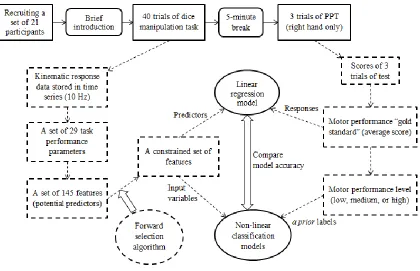
The study followed a two-phase experimental approach. In the first phase, a batch of
21 right-handed participants was recruited for the computer-based motor test performance
along with completion of a standardized psychomotor test (in physical form). The results of
the standardized test (Purdue Pegboard) were used as a “gold standard” to validate the
computer-based motor test for automatically assessing participant motor ability. A
statistics-based model was then developed to classify participant motor ability level using as inputs a set
of features based on kinematic parameters generated through the computerized motor test. The
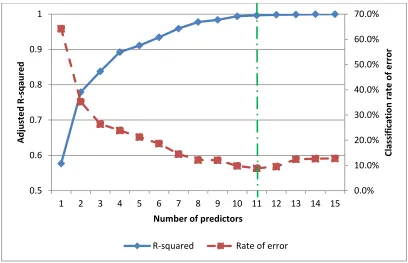
finalized model achieved a classification accuracy of ~98% using a 75/25 cross validation
approach.
In the second phase, a different batch of 36 right-handed participants was recruited to
perform the same computer-based motor test. Performance results were input to the
classification model to predict motor ability level. Based on the classification results (“high”,
“medium” and “low” ability level), each participant received one-of-three pre-designed
haptic-VR training protocols, including consistent haptic guidance in motor movements, resistive
haptic forces counter to movements, and random haptic disturbances. Prior research has
demonstrated varying effects of these methods on training performance with some superiority
of haptic disturbances. Results revealed participants identified as “medium” or “low” were
able to achieve levels of motor performance comparable to “high” participants through 1-hour
training with a VR-based 2D pattern assembly task. Results further validated the accuracy of
the motor ability classification algorithm.
The findings of this study verified a quantitative motor skill classification algorithm
operator training for real-world manual assembly operations and to ensure that a group of
© Copyright 2014 by Wenqi Ma
An Application of Quantitative Methods for Motor Ability Level Classification, Performance Prediction and Training Protocol Selection
by Wenqi Ma
A dissertation submitted to the Graduate Faculty of North Carolina State University
in partial fulfillment of the requirements for the degree of
Doctor of Philosophy
Industrial Engineering
Raleigh, North Carolina
2014
APPROVED BY:
_______________________________ ______________________________
David B. Kaber Yuan-Shin Lee
Committee Chair
________________________________ ________________________________
DEDICATION
BIOGRAPHY
Wenqi Ma obtained her Bachelor’s degree in Industrial Engineering and Technology
Management from University of Hong Kong in 2010. In the same year, she travelled to U.S.
to study Human Factors and Ergonomics at North Carolina State University under the
supervision of Dr. David B. Kaber. Her research interests include rehabilitation engineering,
ACKNOWLEDGMENTS
I would like to firstly express my appreciation to my supervisor, Dr. David Kaber, for
his continuous direction and guidance during the past four years. Dr. Kaber has always been
generous in providing professional advice and cheerful encouragement. With the inspiring and
precious research experience of working with him, I was able to conquer those challenges in
completing my study.
Secondly, my sincere gratitude goes to my committee members, Dr. Nam, Dr. Lee, Dr.
Bloomfield and Dr. Currie, who have offered time and effort in supporting me with this
dissertation. I would like to thank all my committee members for helping me improve my
research with professional suggestions.
Also, I am very grateful to my family. To my dear parents, thank you for your love and
caring, which have been the greatest motivation for me to overcome any difficulties and
achieve a better self. To my beloved husband, thank you for giving me your unconditional
support and companionship. It is your enthusiasm that has always cheered me up when facing
frustrations.
In addition, I would like to express my gratitude to my esteemed coworkers, Dr.
Michael Clamann and Dr. Wooram Jeon. Michael helped me improve my writing and Wooram
helped me develop the computer programs applied in this research. I deeply thank both of them
Last but not least, I would like to thank the National Science Foundation for supporting
my Ph.D. program through a grant to NCSU Ergonomics Lab (IIS-0905505). In addition, I
TABLE OF CONTENTS
LIST OF TABLES...ix
LIST OF FIGURES...x
LIST OF ACRONYMS...xi
CHAPTER 1: INTRODUCTION ... 1
1.1. Manual assembly training methods ... 1
1.1.1. Manual assembly requirements and conventional training ... 1
1.1.2. Review of AR technology applied in assembly training ... 3
1.1.3. Application of VR technology in assembly training ... 5
1.2. Manual assembly learning process ... 9
1.3. Challenge of applying lean concepts to a manual assembly production line ... 12
1.4. Research motivation... 14
CHAPTER 2: LITERATURE REVIEW ... 16
2.1. Motor skill training protocols ... 16
2.1.1. VR-based training systems with haptic guidance ... 16
2.1.2. Robotic-based training systems with haptic guidance ... 21
2.1.3. Training systems with haptic disturbances ... 24
2.2. Motor skill assessment ... 25
2.2.1. Clinical-based techniques ... 26
2.2.2. Robot-aided techniques ... 28
2.2.3. Systems with more dimensions ... 29
2.2.4. VR-based systems ... 31
2.3. Motor performance prediction ... 36
2.3.1. Theoretical potential to make performance prediction ... 36
2.3.2. Real-time performance prediction ... 41
2.4. Quantitative classification approaches ... 43
2.4.1. Design of task ... 43
2.4.2. Feature selection algorithms ... 45
2.4.3. Classification algorithms ... 48
CHAPTER 3: PROBLEM STATEMENT... 55
3.2. Research objective ... 58
3.3. Research hypotheses ... 58
CHAPTER 4: PHASE I EXPERIMENT METHODOLOGY ... 60
4.1. Participants ... 60
4.2. Equipment and apparatus ... 60
4.3. Experimental tasks ... 61
4.3.1. Dice manipulation task ... 61
4.3.2. PPT ... 64
4.4. Procedures ... 64
4.5. Construction of model... 65
4.5.1. Task performance parameters ... 65
4.5.2. Feature generation ... 67
4.5.3. Motor ability level... 67
4.5.4. Construction of linear regression model ... 68
4.5.5. Development of non-linear algorithms ... 71
4.5.6. 75/25 cross validation method ... 76
CHAPTER 5: PHASE I DATA ANALYSIS AND RESULTS ... 79
5.1. Linear model ... 79
5.2. Non-linear algorithms ... 81
CHAPTER 6: PHASE II EXPERIMENT METHODOLOGY ... 83
6.1. Participants ... 83
6.2. Equipment and apparatus ... 84
6.3. Experimental tasks ... 84
6.3.1. Dice manipulation task ... 84
6.3.2. Basic Block Design (BD) task ... 84
6.3.3. BD task with haptic features ... 85
6.4. Procedures ... 86
6.5. Independent variables ... 88
6.5.1. CG condition ... 88
6.5.2. RF condition... 88
6.5.3. HD condition ... 89
6.7. Model application ... 91
6.7.1. Comparison of dice manipulation task, BD task, and physical assembly task ... 91
6.7.2. Training conditions assignment ... 95
6.7.3. Statistical methods of analysis and expected outcomes ... 96
CHAPTER 7: PHASE II DATA ANALYSIS AND RESULTS ... 100
7.1. Descriptive statistics ... 100
7.2. Within-group comparison between baseline and final tests ... 100
7.3. Between-group comparison of baseline and final test performance ... 102
7.4. Analysis of learning percentages in BD training ... 103
CHAPTER 8: DISCUSSION ... 105
8.1. Validation of dice manipulation task for assessing motor ability ... 105
8.2. Non-linear classification models ... 106
8.3. Selection of haptic-VR training protocols ... 109
CHAPTER 9: CONCLUSIONS ... 113
9.1. Limitations of present study... 113
9.2. Future work ... 115
9.3. Research applications... 117
REFERENCES...119
APPENDICES...130
Appendix A ... 131
Appendix B ... 132
Appendix C ... 134
Appendix D ... 136
LIST OF TABLES
Table 2.1. Summary of reviewed studies and algorithms ... 53
Table 2.2. Comparison of reviewed classification algorithms ... 54
Table 4.1. Levels of dice manipulation task difficulty ... 64
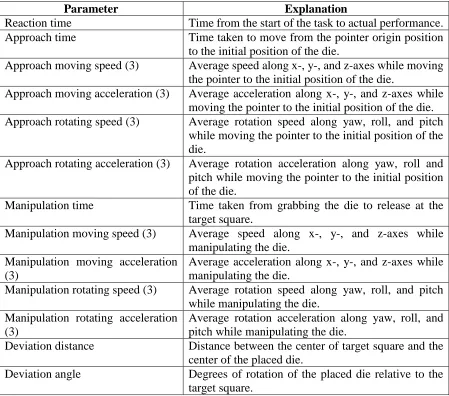
Table 4.2. Summary of task performance parameters ... 66
Table 5.1. Summary of predictors in the final linear model ... 80
Table 5.2. Summary of classification accuracy for various algorithms ... 82
Table 5.3. Summary of input variables in final ordinal SVM model ... 82
Table 7.1. Summary of group mean (SD) statistics in BD completion time (sec.) ... 100
Table 7.2. Summary of paired t-test results ... 102
Table 7.3. Summary of one-way ANOVA and Tukey's HSD results ... 103
Table 7.4. Summary of group mean (SD) in learning percentage (%) ... 104
LIST OF FIGURES
Figure 2.1. Classification of participants in target-hitting task (Huegel, 2009) ... 44
Figure 4.1. Dice manipulation task ... 62
Figure 4.2. Unfolded virtual die ... 62
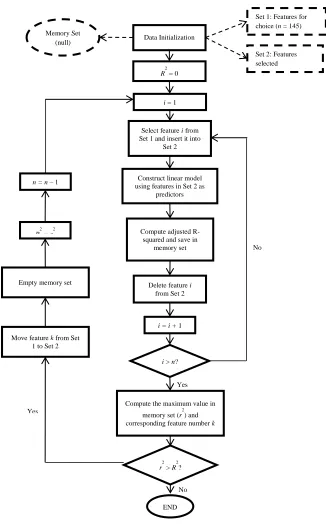
Figure 4.3. Forward selection algorithm for developing linear model ... 70
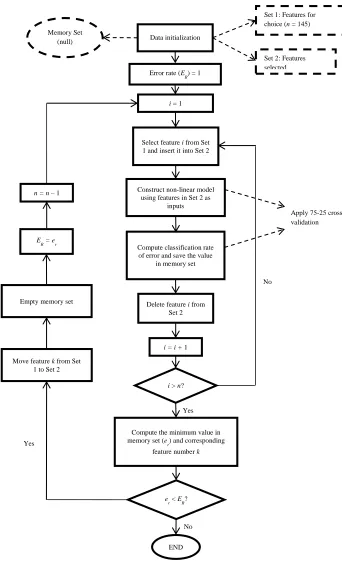
Figure 4.4. Forward selection algorithm for developing non-linear models ... 73
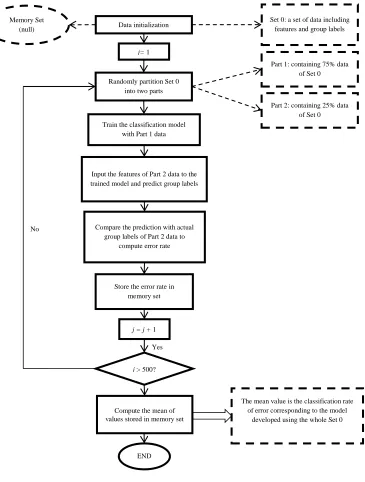
Figure 4.5. 75/25 cross validation approach ... 77
Figure 4.6. Phase I experiment procedures and data flow ... 78
Figure 5.1. Change of adjusted R2 and error rate of linear model along with number of predictors... 80
Figure 6.1. Virtual block design task ... 85
Figure 6.2. Motion flow chart for dice manipulation task ... 93
Figure 6.3. Motion flow chart for block design task... 94
Figure 6.4. Motion flow chart for iPhone assembly task (based on online video, “iPhone 4: The entire assembly process,” 2010) ... 95
Figure 6.5. Phase II experiment procedures and data flow ... 99
Figure 7.1. Comparison of performance in baseline and final BD tests ... 101
Figure 7.2. BD training performance ... 104
LIST OF ACRONYMS
2D 2-dimensional
3D 3-dimensional
AIC Akaike Information Criterion AMAT Arm Motor Ability Test
AMPS Assessment of Motor and Process Skills ANOVA Analysis of variance
AR Augmented reality
ARAT Action Research Arm Test
BD Block Design
BN Bayesian Networks
CLR Cumulative Logistic Regression C-SVM Cost-sensitive SVM
DOF Degrees of freedom DTW Dynamic Time Warping
FIM Functional independence measure FMA Fugl-Meyer Assessment
HMM Hidden Markov Model
HSD Honestly Significant Difference ICC Intra-class correlation
KNN k-Nearest-Neighbor NHPT Nine-Hole Peg Test PC Personal computer PPT Purdue Pegboard Test RBF Radial Basis Function RMS Root Mean Square SD Standard Deviation
SEM Structural Equation Modeling
SHAP Southampton Hand Assessment Procedure SVM Support Vector Machine
CHAPTER 1: INTRODUCTION
Due to technological developments since the advent of the personal computers (PC),
reliance on the human workforce has significantly decreased. However, despite the advances
in automation and information technology, human work is still necessary in many domains,
e.g. surgical operations, rehabilitation training, military operations, etc. As a result of high
flexibility, adaptability and creativity of humans, manual work is also heavily relied on in
manufacturing, especially in assembly production (e.g., iPhone assembly). Human labor
allows processes to accommodate increasing requirements for customized product production.
Currently, manual assembly is still the most viable method for producing a variety of products
in small to medium batches (Ehrhardt et al., 1994; Alzuheri et al., 2010; Hamrol et al., 2011;
Howie et al., 2011).
Assembly operations play a crucial role in the quality and cost of products, as well as
in the degree of flexibility of manufacturing enterprises. If human operators assigned to
assembly tasks fail to perform effectively, the productivity and efficiency of an entire process
can be compromised (Vazquez & Resnick, 1997). However, due to limitations in human
physical and cognitive capabilities, manual assembly systems usually suffer from many
deficiencies. To overcome such limitations, proper training of assembly line operators is
crucial prior to deploying them on a production line.
1.1. Manual assembly training methods
1.1.1. Manual assembly requirements and conventional training
Manual assembly tasks usually require the manipulation and joining of parts to form a
cable into a connector, factors to be considered include reaching for and grasping the cable,
moving the cable towards the connector (aiming), determining the relative positions of the
cable and connector, and inserting the cable accurately at a predetermined position (Bound et
al., 1999; Duan et al., 2010). These factors mainly require a good level of human motor skill.
If an assembly task involves a set of subparts, which must be put together in some specific
sequence, then higher order cognitive processing must occur as well. Such cognitive work
often includes understanding and memorizing procedural information, planning, recalling, and
decision making (Duan et al., 2010). Therefore, a typical industrial assembly task requires both
long-term memory and procedural knowledge of the way the task should be performed as well
as the fine motor knowledge about precise movements and forces to be applied (Gutiérrez et
al., 2010). Manual assembly training thus needs to take into account the transfer of both types
of task knowledge (physical & cognitive) to novice operators for an efficient approach.
Training methods and equipment designed for manual assembly work efficiency have
dramatically improved in recent years. Traditionally, assembly skills were transferred to novice
operators through instruction manuals or tutorial videos (Gutiérrez et al., 2010;
Srimathveeravalli et al., 2006). These learning methods are usually complemented by the help
of an expert worker to demonstrate the assembly procedures (Gutiérrez et al., 2010). Even in
today’s small-size production companies, this approach is still common due to ease of
implementation. However, in some cases, such training methods are not efficient due to limited
work time schedules, expert availability or cost constraints. In addition to cognitive
as fine motor control. These skills are typically acquired or improved through hands-on
practice.
With technological advances in computer hardware and user interfaces, virtual reality
(VR)-based training systems and educational software have been developed as complements
or alternatives to traditional training methods (Srimathveeravalli et al., 2006; Woll et al., 2011).
These systems provide innovative ways of delivering assembly training programs, which allow
for hands-on practice within a simulated environment. The following section provides a review
of augmented reality (AR) technology followed by a detailed discussion of virtual reality (VR)
training systems.
1.1.2. Review of AR technology applied in assembly training
Feiner et al. (1993) described AR training technologies as presenting virtual worlds
that enrich rather than replace real-world training methods. AR trainers allow a user to see
computer graphics or virtual objects superimposed on a real-world environment, thus
enhancing a user’s perception with additional information for training. Pathomaree &
Charoenseang (2005) proposed an AR system for assembly training. The system was integrated
with a haptic device to provide users with force feedback while interacting with a virtual world
model displayed based on markers in a real-world scene. The system was able to enhance user
perception and reduce assembly task completion times. Step-by-step assembly solutions were
presented to users and suggestions were provided to correct assembly actions in case of
inappropriate performance. Experiments were conducted to compare assembly task completion
AR system significantly reduced completion times for both 2-dimensional (2D) and
3-dimensional (3D) assembly tasks.
Woll et al. (2011) developed an automotive mechanic task learning software, called
eLearning, in the form of a serious game for mechanic apprentices. The objective of the
software was to motivate assembly mechanics to learn specific knowledge (e.g., part lists and
process steps) and train specific abilities (e.g., precise motor control and spatial thinking) to
achieve car power generator assembly. AR technology was employed to support user
experiences of spatial aspects of the task and to support transition of theoretical knowledge
into practical skills. Using the AR-based system, users could intuitively interact with virtual
components of the virtual assembly as with real assembly components in the real world. Most
interestingly, the entire system was presented via a smartphone. The system was evaluated and
well received by actual mechanics.
Training results obtained with those systems developed using AR technology are
mostly positive. Compared with traditional methods, users can realize practical training and
develop cognitive and motor skills. Expert operators are not needed for demonstrations when
using AR since most systems have been designed to provide assembly procedures or solutions
in real time. However, the application of these systems requires integrated practice with real
machines or assembly parts. This is not always feasible due to accessibility and availability
factors. In addition, training with real machines may damage delicate AR components and
1.1.3. Application of VR technology in assembly training
To overcome the drawbacks of AR systems, VR technologies have been developed to
provide users with a better understanding of machine and assembly procedures using 3D virtual
environments (VE). Such VEs are generated by computers and updated in real time. Users
interact with virtual objects through various input and output devices.
Bound et al. (1999) investigated the potential for the training of manual assembly skills
using VR and AR technologies as well as conventional training media. Experiments were
conducted to compare the immediate impact of a given format of media on task performance
with operator training and post-training performance. Task completion time for assembling a
water pump was evaluated for participants receiving information from one of five training
formats (conventional 2D engineering drawings, desktop VR using a monitor and 2D mouse,
desktop VR using stereoscopic glasses to provide 3D images along with a 2D mouse,
immersive VR using a head-mounted display, or a context-free AR condition). Results
suggested that both VR and AR conditions significantly outperformed the 2D engineering
drawing condition in reducing assembly time. Performance under the three VR conditions was
comparable, indicating that VR technologies did not differ much for the particular application.
However, the VR technology was limited in terms of no haptic feedback, which can play an
important role in learning manipulations as part of assembly tasks. The AR technology, on the
other hand, provided users with tactile feedback through manipulation of real assembly objects.
This difference among the training conditions may account for the superior performance of the
AR condition. Despite the VR technology not outperforming the AR technology, Bound et al.
manipulation objects without the use of real objects. Hence, users could be trained to assemble
a product before the product was physically manufactured. In terms of training applications,
VR may be more flexible than AR in that virtual worlds can be separated from the real world.
To make VR a better approximation of physical reality for manual task training, the
sense of touch and kinesthetics must be addressed. Such design requirements can be fulfilled
through the use of haptic devices, which allow VR users to perceive tactile feedback in VEs.
The training effects of VR systems for assembly tasks have been demonstrated to be effective
in numerous laboratory research and industry applications (Bound et al., 1999; Edwards et al.,
2004; Bhatti et al., 2008; Vo et al., 2009; Gutiérrez et al., 2010). The addition of haptic devices
to such systems may further reveal the benefits of VR for assembly skill training.
Adams et al. (2001) conducted an experiment to investigate the benefits of force
feedback in VR training of a real task. Three groups of participants received different levels of
training before completing a manual assembly task with a LEGO biplane model. A VR system
was developed to present a simulation that emulated the real task in a VE. A haptic device was
used to simulate tactile feedback generated when interacting with the virtual objects. The
participants either received VR training with haptic feedback, VR training without force
feedback, or no VR training. Analysis of completion times for the real task (post-training)
revealed that participants trained with force feedback performed significantly better than those
receiving no training. Although not statistically significant due to the relatively small sample
size, the average completion times for participants trained with force feedback were shorter
than those trained without. The haptic feedback proved to contribute to the VR assembly
Pugmire et al. (2007) developed the “Pick-n-Place” training system, a VR assembly
and disassembly application. The application was able to read and display CAD models as well
as texture-mapped polygon models to provide realistic environments, such as an assembly bay.
Assembly constraints could also be defined to specify how parts could be mated. With this
system, users were able to visually inspect the components of an assembly, grab them, and try
to connect them. Collision detection was used to help determine interpenetration of parts
accompanied with a “thud” sound generated from a stereo sound system. If parts could not fit
together or were obstructing one another, both visual and auditory cues were provided to help
users adjust their assembly strategy. This research suggests that multimodal systems are a
suitable option for providing users with a good sense of a virtual training environment and
facilitating assembly skill training.
While a number of computer-based VR systems have been proposed, developed and
applied in manufacturing companies, many have not been found to be effective in transferring
task sequence knowledge. This outcome is likely due to limitations in realistic representation
of real-world tasks or the absence of haptic control devices in such systems. To address this
problem and enlarge the knowledge area that can be trained through VR systems, Bhatti et al.
(2008) proposed a complete haptic-enabled interactive and immersive VR system to support
the learning process of general assembly operators. The prototype system was expected to
imitate real physical training scenarios by supporting comprehensive user interactions. Within
the designed training environment, users could perform assembly operations with physical
Given the system’s physically interactive and immersive nature, it facilitated both sequence
learning and procedural skill development.
Gutiérrez et al. (2010) said that common VR training systems could only simulate
single manual assembly or disassembly operations with rigid components and failed to
consider manipulation of tools, which should not be neglected in procedural tasks. On the basis
of this contention, they developed a multimodal training system for industrial maintenance and
assembly tasks using VR technology. The system was aimed at providing efficient assembly
skill transfer by allowing trainees to practice the assembly/disassembly tasks in real time. Users
could interact with the virtual scenario in a multimodal way combining haptics, gestures and
visual feedback. The system also supported procedural task learning with four strategies to
guide users during the training process. Each strategy required different degrees of trainee
interaction, from more guided and passive strategies to less guided and active ones. The
proposed system outperformed other systems (e.g., the Pick-n-Place system developed by
Pugmire et al. (2007)) in terms of flexibility to adapt to task demands and users preferences –
flexibility in the available training protocols, flexibility in support of haptic devices, and
flexibility in available training protocols.
In summary, during the past decade, VR technology has been applied for manual
assembly training and the application has largely improved through development of
multi-modal systems, including haptic interfaces. All previous research and applications in industry
have demonstrated that VR is a powerful tool for training human operators to perform tasks
which would otherwise be expensive to duplicate or dangerous for novice operators in the real
flexibility and variety. In addition to receiving information about assembly sequences and
procedures, operators can practice with virtual objects generated in VEs. With the use of a
haptic device, VR users are provided with tactile feedback in manipulation and assembly tasks.
In addition to providing users with a feeling of physical reality through the simulated reality,
the visual, auditory and haptic cues as part of the VR can also serve as guidance in assisting
trainees in understanding instructions and completing tasks with correct actions. In addition,
with VR systems, user performance is easily recorded and analyzed for assessing the
effectiveness of training strategies. Considering the advantages of VR systems demonstrated
by previous research, the present study will examine VR as a tool for facilitating assembly
motor skill training.
1.2. Manual assembly learning process
The flexibility of VR systems allows researchers to effectively design various tasks for
delivering manual assembly training. For successful completion of most assembly work, both
cognitive and motor skills must be addressed during training. Therefore, it is crucial to
understand the human learning process in acquiring assembly skills such that corresponding
tasks can be properly designed and provide efficient training for assembly operators.
One of the most widely-accepted theories of human skill learning is Fitts’ learning
model (Fitts, 1954). The model includes three phases: a cognitive phase, an associative phase,
and an autonomous phase. In the first stage, operators learn the basic procedures and properties
phase are “chunked” into sequences of actions. Finally, the “chunked” sequences gradually
combine into a smooth pattern of activity.
Philbin et al. (1998) suggested that in any training situation, the tasks to be trained must
be decomposed into components of cognitive, perceptual and motor demands. These demands
must be met during the training process. The cognitive portion primarily consists of the
construction of an internal model of the task within trainee memory. During assembly training,
this is the stage where trainees gradually develop their cognitive skills. Operators learn the
properties of each part and how each particular piece fits within the final model. They then
develop their strategies for building the entire assembly. For traditional assembly training,
operators need to construct the correct sequence of actions through understanding of
engineering drawings and instruction manuals. This part of learning is primarily cognitive in
nature and usually requires a long period of time to complete. Using VR systems to train
assembly tasks supports both the cognitive and associative stages where plans are developed
during task completion. In this way, using VR systems for task training can largely reduce the
time needed for the first two stages of learning (Bound et al., 1999).
As previously mentioned, in addition to cognitive skills, operators also need to learn
motor behaviors during training of an assembly task. The motor demands of assembly concern
dexterous manipulation of parts. Operators must learn how to handle the parts, move them to
desired positions, rotate them to correct orientations, and mate them according to requirements;
that is, acquire motor skills. With respect to Philbin et al. (1998) model, the perceptual aspect
together. This phase helps promote trainee comprehension of the task environment (Adams et
al., 2001).
An assembly task requires operators to repeat the same set of procedures. This
characteristic requires development of cognitive skills very early in training. During initial
trials, operators are likely to make mistakes due to unfamiliarity with assembly plans or
sequences. However, in later iterations of the task, after developing some familiarity with the
procedures and having constructed an internal task model in memory, operators are able to
work without hesitation and without faults. After reaching this stage of learning, training
performance is mainly focused on motor demands. However, motor demands can be difficult
to address if there are any limitations in cognitive skill proficiency. Related to this, poor motor
control skill development can lead to delays in training progress, dropping of parts and damage
to assemblies during training, as well as actual assembly quality problems (e.g., misaligned
pieces) in real operations following training.
In summary, current VR systems developed for assembly task training have proven
effective in reducing training completion times. This success actually is the result of effectively
reducing the time needed to address cognitive skill development. However, the more important
component of assembly training, motor demands, can be more difficult to address. Instead of
designing tasks that cover both cognitive and motor skill training at relatively similar levels, it
is may be beneficial to construct a series of tasks that focus more on motor skill development.
In this way, the effectiveness of training to fulfill motor demands can be evaluated without
needed to complete training tasks, more variables must be recorded during training to assess
user motor skill development in real time.
1.3. Challenge of applying lean concepts to a manual assembly production line
As discussed in the preceding sections, numerous VR systems have been developed to
support efficient training protocols so that trainees can acquire assembly skills within the
minimum amount of time. In addition, some research has investigated the design of training
tasks to assist operators to achieve their highest skill level. However, such an approach does
not consider the broader perspective of evaluating the performance level of a group of operators
for assembly line work. For production operations, there is a need to train assembly operators
to a uniform performance level. Consistent performance across operators on an assembly line
is a common assumption in process design and scheduling. However, this assumption is
typically violated by actual imbalances in operator performance levels creating bottlenecks in
production and reducing overall line productivity.
Along with the development of automation technology, the concept of “lean
production” has been introduced to the automated manufacturing production line. The lean
concept targets improvement of production rates through elimination of waste generated during
production processes, such as material redundancy, work-in-process transportation, operator
idling, etc. To achieve this target, the most common method is to maximize production
resource utilization through production planning, scheduling of operator workload
assignments, working station design, and operator task training. In the ideal situation, a
distributed evenly among workstations, thus reducing idle time. Therefore, all operators will
have an equal amount of work while simultaneously achieving the specified production rate of
the line (Altuger & Chassapis, 2010; Low Shye Nee et al., 2012).
Recently, the lean concept has also been introduced into the manual production area.
However, variability in human operator performance may make achieving the application of
lean production challenging (Altuger & Chassapis, 2010; Hamrol et al., 2011). To solve this
problem, many algorithms and mathematical models have been developed to optimize operator
work scheduling and production plans. One common assumption of these methods is that
operators are viewed as interchangeable, i.e., all operators have comparable skill levels in
completing production tasks. However, it is more likely that this is not reality for a physical
production line (Zee & Slomp, 2005). There are typically individual differences among
operators that may have substantial effects on production outcomes. Hence, production control
practices implemented based on lean theories are likely to fail in practice without taking into
account worker differences in terms of skill, working speed, etc. (Zee & Slomp, 2005; Altuger
& Chassapis, 2010).
In summary, as opposed to training workers to the highest possible skill level, in
real-world implementation of a production line, it is more commonly expected that all workers
operate at comparable level of performance to achieve a uniform production rate. To address
this requirement, individual differences in novice operator abilities must be considered during
1.4. Research motivation
While previous studies have developed and tested numerous protocols for manual
assembly skill training, few have made considerations of individual differences in skill levels
and the influence that may occur in training effectiveness. Moreover, the simple target of
training a group of operators to their own best ability level using the same protocol is not in
accordance with the requirements of standard performance on a production line. Therefore, it
is necessary to develop advanced methods by which to classify novice operator skill levels and
assign them to appropriate training protocols, integrating contemporary training technologies,
based on baseline performance levels. It is expected such methods can be developed and
applied in real manual assembly training for production lines (e.g., iPhone assembly) to
facilitate operator performance and increase overall production rates.
To achieve these objectives, several issues need to be addressed. First, as discussed
above, in manual assembly task training, cognitive demands may be easier to satisfy due to the
repetitive nature of assembly work. However, more effort may be required for operators to
develop motor skills in order to achieve an assembly task. On this basis, motor skill training
will be the main focus of the present research. Secondly, in order to establish an operator’s
motor skill level, an appropriate assessment approach should be developed, including motor
performance tests. Thirdly, since standardized tasks used to assess motor skills differ from
assembly training tasks, it is necessary to verify that performance measures obtained in
relatively simplistic motor tests can be used to predict performance in complex skilled motor
classification algorithm is needed to identify the skill levels of specific operators such that
corresponding training protocols can be assigned.
In the next section, a literature review is presented covering four issues relevant to the
present research, including motor skill training protocols, motor skill assessment, motor
performance prediction, and quantitative skill classification approaches. With the knowledge
obtained from related studies, the structure of this research is developed through a problem
CHAPTER 2: LITERATURE REVIEW
2.1. Motor skill training protocols
2.1.1. VR-based training systems with haptic guidance
Singer (1980) defined motor skill as “the ability to execute a movement in an optimal
fashion, or an activity of a person involving a single or a group of movements performed with
a high degree of precision and accuracy”. To assist training of operator motor skills, a variety
of approaches have been suggested and developed. Todorov et al. (1997) said that the
acquisition of new motor skills can be enhanced by using VEs with augmented feedback on
operator actions. To assess this claim, they designed a system to teach difficult multi-joint
movement in a table tennis environment. The system presented trainees with a fairly realistic
computer animation of the environment and a virtual ball. Trainees were asked to attempt to
learn the movement by matching the movement pattern of an expert teacher’s paddle also
presented in the environment. This training system provided operators with augmented
feedback, specifically a minimum set of movement details most relevant to the training task.
Experiments were conducted to validate the effectiveness of the system and to promote motor
skill acquisition. Results indicated that participants receiving VE training performed
significantly better than those receiving real-task practice. The expert teacher’s trajectory
provided during VE training served as an effective basis for developing performance in the
real-world task. However, practice with only the VE was not sufficient for transfer to the real
task. Experiment results also demonstrated that when a critical component of the VE training
The augmented feedback provided in the system of Todorov et al. (1997) focused on
visual cues. Similarly, some other work has explored the usefulness of visual cues in motor
skill training (Massimino & Sheridan, 1994). With the development of haptic devices,
researchers have also explored haptic cues for motor skill training. Feygin et al. (2002)
investigated the use of haptic guidance for perceptual-motor skill training. They argued that
haptic training might be especially helpful for learning motor tasks since training with a haptic
device occurs in physical space, relative to the body. They provided haptic feedback to
facilitate kinesthetic perception and memory formation. To validate their theory, experiments
were designed to compare haptic training with visual training and combination training
involving both haptic and visual information. The findings from the experiment indicated
effectiveness of haptic guidance for training performance, especially in temporal aspects of the
task. In general, Feygin et al. (2002) study provided support for the role of haptics in motor
skill training with VEs. However, one drawback of haptic training was identified; that is,
learning occurred passively during training. The authors suggested that more development of
haptic training paradigms was needed to promote operator conscious construction of strategies
to accomplish motor tasks instead of unconsciously developing movement patterns through
passive haptic feedback.
Wang et al. (2006) developed a haptic-enabled Chinese handwriting training system to
study the learning and transfer of motor skill. Based on the characteristics of human motor skill
learning, four design rules were proposed for training systems. Considering Fitts’ three-stage
learning process model and previous experiment results (Fitts & Posner, 1967; Solis et al.,
and associative stages of learning in which haptic training could accelerate and improve an
operator’ progress. Conversely, once an operator reaches the autonomous stage, additional
haptic feedback could lead to detrimental effects to task performance. To facilitate developing
active strategies during training, the second rule was that error information should be provided
to form an active learning environment. In order to assist operators in remembering motor
patterns required by a motor task, the third rule was that approaches should be developed to
enhance kinesthetic memory. Last but not least, to improve the fidelity and stability of haptic
training environments and provide better sensory feedback, the fourth rule was that haptic
information should be combined with other sensory modalities, such as visual and audio
feedback. Experiment results validated the proposed training rules and the force feedback
provided by the haptic device proved to be effective for training novices in Chinese
handwriting skill.
With the continuing development of VR systems design and haptic device technology,
a number of haptic training programs have been proposed and explored. Even some training
tasks that seem to be quite simple and straightforward have been found to provide efficient
training and to improve participant motor skill (Petrofsky & Petrofsky, 2004). However,
compared to training tasks that merely require operators to perform 3D movements or follow
trajectory patterns, assembly tasks also require operators to develop dexterous motor control
skills in positioning and mating subassemblies. Edwards et al. (2004) conducted an experiment
to explore whether the inclusion of force feedback or auditory cues could improve
manipulation performance and subjective usability ratings for an assembly task presented in
assembly training when force feedback was provided. However, contradictory to subjective
ratings and expectation, users provided with force feedback actually showed decreased
performance with a greater number of collisions of parts. Also, when auditory cues and force
feedback were presented together, the performance and usability ratings did not improve, as
compared to conditions with only one type of cue. The study results provided an example of
detrimental effects of force feedback in haptic training. It should also be noted that the
techniques and haptic devices used in this study had many limitations due to technological
constraints. These constraints might have diminished the efficacy of the haptic cues. With
proper task design and updated haptic devices, haptic training techniques should be further
investigated.
As has been discussed thus far, by incorporating haptic feedback in a VE, users can
better perceive interaction with virtual objects. However, at the same time, the existence of
haptic controls and cues may increase the complexity of a VE and training task performance
for users. To assess the performance benefits of haptic-based interaction in virtual assembly,
Vo et al. (2009) evaluated user performance in completing similar assembly tasks when
provided with only visual feedback or with both visual and haptic cues. A set of experiments
was designed and conducted to determine whether completion times and user accuracy would
be influenced by force rendering and to distinguish the assembly tasks that would be most
affected by haptic feedback. When compared to visual-only methods, statistical analyses
revealed that haptics-based interaction was beneficial for improving performance by reducing
times for object weight discrimination, permitting higher placement accuracy when positioning
for virtual assembly training was demonstrated to benefit performance in some aspects of user
behavior. The Vo et al. (2009) study provided additional support for further development and
research on haptic-based interaction in VR training simulations.
Howard & Vance (2007) investigated the feasibility of using a desktop haptic VE as a
design tool for evaluating assembly operations. The application involved several software
packages to explore the benefits and limitations of combining haptics with physical models.
One or two-handed force feedback was presented with various haptic devices, including a
Phantom from SensAble Technologies, Inc. Test results validated the system’s feasibility for
simulating assembly operations for engineering evaluation. With similar technology, Nam &
Jang (2010) developed a virtual assembly training system in which a Phantom Desktop was
used for tool position sensing and force feedback. With the proposed training system, users
could touch and move virtual components and use a virtual electric screwdriver. The VE
facilitated training of assembly procedures for a product. These studies support application of
the Phantom haptic device in developing a virtual assembly training system.
In summary of the above studies, a better understanding of haptic feedback in virtual
assembly and updated hardware and software to support haptic-based interaction has led to
development of VR assembly training systems integrating haptic devices and use in laboratory
research and operator training. The addition of haptic feedback benefits VR training systems
by reducing operator learning time, improving task performance, increasing dexterity, and
increasing perceptions of realism and the sense of presence in a task simulation (Adams et al.,
2.1.2. Robotic-based training systems with haptic guidance
In addition to VR-based motor skill training protocols, robotic-based systems have
been developed. Krebs et al. (2003) proposed a concept of performance-based progressive
robot-assisted motor control therapy. This research was focused on identifying optimal therapy
protocols for stroke patients to maximize recovery. In this approach, patients were asked to
perform a reaching task with a virtual spring pulling their hand towards a target. Guidance was
provided during training with the amount of guidance determined by the spring coefficient and
patient performance in speed, time and muscle activation level. Although this study did not
yield a statistically reliable result on the effectiveness of the new proposed therapy due to a
small sample size, therapists noted that the therapy method benefited patients in terms of
reducing arm spasticity and increasing muscle tone.
Similar to the work of Krebs et al. (2003), Reinkensmeyer et al. (2004) conducted a
robot-assisted rehabilitation study for gait training. In this research, human motor control
adaptation to dynamic environments was modeled as an error corrective learning process. The
control gains of the guidance robot were adjusted at each trial based on the degree of patient
movement error. Experiment results supported the hypothesis that robotic device assistance of
naturalistic movements leads to better functional recovery. Assistance in movement (as
needed) also proved to be more effective than providing constant assistance with a fixed gain.
O’Malley & Gupta (2003) designed a Fitts’ type targeting task to evaluate human
performance under passive robotic assistance as well as shared control (active assistance). In
this research, the shared control mode was designed with reference to the study of Steele et al.,
to the state of the environment, the shared control architecture allows users to effectively
“share” control of the interface with an automatic controller or virtual agent. The agent is
placed in the perceptual space of the human through use of a haptic display. In this way, both
the human and virtual controller exchange power over the control interface and the human may
override the virtual controller of the system, if necessary. As compared to passive assistance,
shared control was proposed to be an active haptic guidance scheme for training. A shared
controller dynamically intervened, through an automatic feedback controller acting upon the
system, to modify the system dynamics during guidance (O’Malley et al., 2006). Experiment
results demonstrated that active assistance under shared control led to improved human
performance of the task comparable to passive assistance. Yet shared control had greater
effects in terms of transfer of the skills acquired during training to a real working environment.
On the basis of this research, Li & Patoglu et al. (2009) conducted an experiment on a
haptic guidance system designed as a fixed-gain error-reducing shared controller with
assistance applied to the dynamics of the manual control task during training. After a
month-long training protocol, they showed that use of fixed-gain haptic guidance had a detrimental
effect on operator performance in a target-hitting task. This result was independent of the
duration of exposure to the shared controller. According to the hypothesis stated by Li and
Patoglu et al. (2009), such a negative effect was mainly due to the fact that the control gain
was fixed, thus leading participants to become dependent on the guidance during task
completion.
In an attempt to improve the effectiveness of haptic training systems and further test
(2009) introduced a progressive shared control guidance scheme. The scheme was to reduce
the dependence of participants on haptic guidance by adjusting control gains based on
individual participant performance. Experiments were conducted to compare participant
performance in completing a virtual target-hitting task with various types of haptic guidance.
Results indicated the proposed progressive shared control scheme performed significantly
better than fixed-gain haptic guidance schemes. The superior performance of the progressive
shared control group over other haptic guidance groups was attributed to the
performance-based progressive control algorithm that reduced dynamic interference and dependence of
operators on the haptic guidance and promoted acquisition of motor skills for the task. It was
suggested that this scheme could be generalized for haptic guidance based training in a wide
range of complex tasks.
Although progressive haptic guidance has shown superior performance in facilitating
motor skill learning during training, when compared with other schemes, it has failed to
demonstrate superior retention performance. In fact, results of many studies have suggested
that haptic guidance might not be the best approach for improving motor skill learning with
some studies even showing detrimental results. In those studies that demonstrated positive
effects of haptic guidance during motor skill training, learning transfer effects have not been
observed due to a lack of experiments involving retention tests. This problem with haptic
guidance research can also be found in some research results on augmented feedback in VEs.
In studies by Schmidt (1991) and Schmidt and Wulf (1997) it was suggested that when
concurrent augmented feedback was provided to VR users too frequently or continuously,
performance during training yet degraded operator performance when the feedback was not
available after training (learning evaluation).
2.1.3. Training systems with haptic disturbances
Some training schemes have been proposed to solve the problem of operator
dependence on haptic guidance. Bettini et al. (2001) suggested the implementation of “dead
zones” where haptic guidance would become available intermittently only in case large or
unsafe operator errors occurred. It was expected that the addition of dead zones would reduce
operator dependence on the guidance. However, from the perspective of training, this kind of
assistance only provides a safe medium for practice. It lacks the intent of promoting operator
learning.
Another type of training scheme was proposed to gradually reduce the amount of haptic
guidance during training. Bell & Kozlowski (2002) proposed a performance-based adaptive
haptic guidance scheme. The adaptive guidance was designed to augment self-regulation in
learning and was tailored to meet differing needs of individual trainees. Individual learning
progress was monitored and assessed by a computer. Based on this evaluation, trainees were
provided with a scaled amount of haptic guidance. An experiment revealed that the adaptive
guidance had a pervasive and substantial impact on the self-learning process and the sequence
of trainee study and practice. The proposed adaptive guidance scheme yielded significant
improvements in acquiring basic and strategic knowledge and developing performance skills.
More recently, a new approach to haptic-based training was proposed by Lee & Choi
(2010) and labeled as haptic disturbances. Their hypothesis was that disturbing the movement
of motor learning. Haptic disturbances pose a learner with more challenging conditions for
motor task execution and this might increase the capacity of the learner to perform the task.
Two types of haptic disturbances were explored in this research: repulsive haptic disturbances
using feedback forces and noise-like haptic disturbances using random feed-forward forces.
The effects of the two methods were experimentally assessed and compared with a
conventional visual-only method and progressive haptic guidance. Experiment results revealed
that during training the progressive haptic guidance produced the best performance. However,
in immediate and delayed retention tests, noise-like haptic disturbances led to the best
performance. The results of this study indicate a high potential for application of haptic
disturbances in developing motor skill training protocols, expediting the motor learning
process, and promoting long-term motor skill learning.
2.2. Motor skill assessment
In order to predict operator motor performance in assembly work, it is necessary to
develop methods of motor skill assessment to be applied during training. In conventional
protocols used in clinical therapy and rehabilitation, performance is typically measured using
gross score scales or subjective observations of clinicians. The development of computer-based
training systems has allowed researchers to record participant performance in real time with
objective and quantitative measurements. Such systems support more reliable and accurate
determination of an individual’s skill level and can be used to measure performance
While computer-based systems have been researched for operator strategy and motor
function training, the design of training tasks and performance assessment methods also needs
to be researched. In many previous studies of assembly training protocols, the most common
objective measure has been task completion time, which is easy to obtain and straightforward
to interpret. However, to evaluate a user’s complete motor function, there is a need for more
measurements than completion time.
2.2.1. Clinical-based techniques
To assess an individual’s hand and arm control, the most common method has been to
use clinically-based scales. Examples include standardized tests of hand function proposed by
Jebsen et al. (1969), the Action Research Arm Test (ARAT) proposed by Lyle (1981), etc.
Although these testing methods have been validated by numerous studies and datasets, the
application procedures require clinicians and sometimes subjective observation and judgment.
Moreover, the outcomes are usually simple and scalar scores. Therefore, to obtain more
detailed and comprehensive information about upper limb function, a number of researchers
have explored more quantitative and objective approaches using various technologies.
During the development of constraint-induced therapy, Taub et al. (1993) proposed the
Arm Motor Ability Test (AMAT) to assess the effectiveness of an intervention for improving
daily living activities among patients. In contrast to other arm ability measures, AMAT was
able to assess functional ability, quality of movement and time of performance. The reliability,
validity and sensitivity of such tests were evaluated by Kopp et al. (1997) using a previously
established test, the Motricity Index (Demeurisse et al., 1980), as a criterion. The AMAT
(1997) also found that the correlation of AMAT measures with upper limb motor impairment
measured by the Motricity Index was fair at best. However, due to limitation of the Motricity
Index procedure and assumptions, this result was not considered to be conclusive. Hence, Chae
et al. (2003) investigated the concurrent validity of AMAT in measuring motor impairment
using another criterion, specifically the Fugl-Meyer Assessment (FMA; Fugl-Meyer et al.,
1975). Scores of the AMAT & FMA were highly correlated and demonstrated the criterion
validity of the AMAT. However, it was also pointed out that AMAT measurements were time
consuming and led to significant fatigue for patients. Chae et al. (2003) suggested that the
number of testing items in AMAT should be reduced to facilitate clinical implementation.
Light et al. (2002) developed another assessment procedure, the Southampton Hand
Assessment Procedure (SHAP) to obtain contextual results on hand function in a clinical
environment. The reliability and validity of the proposed assessment procedure was tested
against standard medical outcome measurement techniques. Experimental results established
the statistical integrity of the SHAP. Compared to existing procedures, the SHAP was superior
in terms of allowing clinicians to obtain more information that comprehensively described the
prehensile range of the hand. In addition, the SHAP’s outcome measure was a contextual rating
of functionality that enabled the clinician to initially determine a patient disability, and
subsequently monitor their performance throughout a course of treatment or rehabilitation.
While the AMAT and SHAP both proved to be powerful in assessing motor ability, it
should be noted that these techniques are still clinical-based testing procedures and require
expert decision making in ratings of patient ability. Thus, both methods still do not completely
2.2.2. Robot-aided techniques
Krebs et al. (1998) applied robotics and automation technology to assist and quantify
the extent of neuro-rehabilitation. The prototype robotic system, MIT-MANUS, could move,
guide or perturb the movement of a user’s upper limb and record motions and mechanical
quantities such as the position, velocity and forces applied to the robot. The recorded kinematic
and force data profile was later analyzed and validated by standard assessment results
generated from the functional independence measure (FIM; Trombly, 1995) as well as the
upper limb subsection of the FMA scales. The kinematic data further explained the standard
assessment with improved objectivity, repeatability, precision and ease of application. Krebs
et al. (1999) also used the MIT-MANUS system to identify the apparent sub-movements
composing continuous arm motion in an unloaded task. Kinematic analysis was applied for
detailed description of primitive sub-movements. The precise mathematical characterization
of sub-movement kinematics provided key information for objectively and reliably
deconvolving continuous arm movements into component sub-movements. Following these
studies, Krebs et al. (2000) presented an overview of their studies in robot-aided stoke
neuro-rehabilitation and recovery. It was stressed that while conventional clinical scales could help
assess the impact in the neuro-recovery process, the coarse nature of such scales required
extensive and time-consuming trials, and often failed to reveal detailed and important
information for optimizing therapy. Alternatively, robot-based motor assessment scales offer
the potential benefit of using kinematic measurements to obtain greater insight into the process
Reinkensmeyer et al. (2000) developed a rehabilitation system called the “ARM Guide” to
assess tone, spasticity and lack of coordination for patients after chronic brain injury.
More recently, Zollo et al. (2011) studied quantitative measurement of arm motor
control during a robot-aided rehabilitation session. Training tasks consisted of three games of
point-to-point movements from the center of a circle to targets at the periphery. Robotic
machines (InMotion2 and InMotion3, based on the MIT-MANUS system) were used to aid the
therapy and collect kinematic and force data on patient performance. The data was then used
to compute performance indices to measure temporal, spatial and force features of motor skill
ability. Five quantitative indicators were extracted, including aiming angle, length ratio, jerk
index, useful force, and useful work. A traditional clinical impairment assessment was
conducted based on clinical scales to provide a validation reference. Linear regression analysis
results revealed that arm functions measured by the robotic machines were reliable in assessing
functional capability.
The above studies have demonstrated the usefulness of kinematic data analysis
generated from robotic-aided systems for objectively assessing upper limb motor function.
However, robotics applications are usually constrained to specific movements and kinematic
data have been limited to three dimensions.
2.2.3. Systems with more dimensions
Spyers-Ashby et al. (1999) used a multidimensional movement analysis system to
record limb tremor over 6 degrees of freedom (DOF). In this study, an electromagnetic sensor
(3Space Fastrak; Polhemus, Inc.), was used to collect and quantify the tremor data over three
multi-dimensional biomechanical device to investigate the excitability of muscle stretch reflexes in
order to quantify spasticity. These devices and technologies have enlarged the range of
kinematic data obtained on motor performance. However, access to some research devices is
limited to experimental studies. Clinical applications require systems that are easier to
implement and are more flexible in use (Amirabdollahian et al., 2005).
Still other studies have been conducted on test protocols for motor skill assessment
using VR systems. Bardorfer et al. (2001) presented an objective test for evaluating the
functional capability of the upper limbs in patients with neurological diseases. The
methodology involved creating a VE, using a computer display for visual information and a
Phantom haptic device with three active DOFs and six measurement DOFs. The haptic
interface was used as a kinematic measuring device and for providing tactile feedback to
patients. The test task was designed as a labyrinth puzzle that required patients to move a haptic
pointer through the labyrinth as quickly as possible with as few contacts with 3D walls as
possible. Various degrees of task complexity were achieved by changing the labyrinth track
width and length and wall friction. The preliminary experiment demonstrated the suitability of
the new method for upper limb capability assessment, as it provided objective, repeatable and
quantitative results. The potential benefits of using this method were identified as high
resolution measurements of motor skill and long term stability of measures. In addition, with
the haptic device, random force perturbations could be used to trigger and assess patient
responses to disturbances. In this case, a patient would perform tracking a predefined trajectory