EXAMINING THE ROLE OF ONLINE MOTIVATIONS IN CONSUMER ONLINE SHOPPING INTENTION USING TECHNOLOGY ACCEPTANCE
MODEL
MAHDI SHADKAM TORBATI
A thesis submitted in fulfilment of the requirements for the award of degree of
Doctor of philosophy
International Business School Universiti Teknologi Malaysia
DEDICATION
ACKNOWLEDGEMENT
I wish to express my sincere appreciation to many people who provided support, direction, and assistance toward the completion of this PhD dissertation. Without their words of encouragement and contributions, this dissertation would not have been finished smoothly.
First and foremost, I am grateful to my supervisor, Professor Dr. Mohd. Hassan Mohd. Osman, for his intellectual inspiration, guidance, support, instruction, and encouragement during this research. I owe his more than I can adequately express and offer his my warmest appreciation and deepest thanks. Moreover, my sincere thanks go to Associate Professor Dr. James O'Hara for his specific and detailed comments and advices.
I would like to extend my sincere regards to Universiti Teknologi Malaysia (UTM) for giving me International Doctoral Fellowship (IDF). Acknowledgement also goes to all who helped me during the data collection and to the respondents of this research.
ABSTRACT
ABSTRAK
TABLE OF CONTENTS
CHAPTER TITLE PAGE
DECLARATION ii
DEDICATION iii
ACKNOWLEDGEMENT iv
ABSTRACT v
ABSTRAK vi
TABLE OF CONTENTS vii
LIST OF TABLES xii
LIST OF FIGURES xiii
LIST OF APPENDIX xiv
1 INTRODUCTION 1
1.1 Introduction 1
1.2 Problem Statement 4
1.3 Purpose of Study 7
1.4 Conceptual Framework 9
1.5 Highlight of Methodology 10
1.6 Assumptions and Limitation 10
1.7 Definition of Terms 11
1.8 Contribution of Study 12
1.9 Summary and Organization 13
2 LITERATURE REVIEW 16
2.1 Introduction 16
2.2 Consumer Behaviour 16
2.3 Theories of Consumer Behavior 19
2.3.3 Technology Acceptance Model (TAM) 25
2.4 Motivation 28
2.5 Theories of Motivation 29
2.5.1 Maslow‘s Hierarchy of Needs 29
2.5.2 McClelland‘s Achievement Motivation Theory 31
2.5.3 Vroom‘s Expectancy Theory 32
2.5.4 Herzberg‘s Theory 32
2.6 Criticisms of Motivational Theories 33
2.7 Online Shopping 33
2.8 Online Shopping vs. Offline Shopping 36
2.9 Online Consumers Behavior 38
2.10E-commerce and the Technology Acceptance Model 43
2.11Online Shopping Motivations 54
2.11.1 Utilitarian Motivations in Online Shopping 56 2.11.2 Hedonic Motivations in Online Shopping 56 2.11.3 Motivational Differences in Online Shopping 57 2.11.4 Characteristic of Online Shopping Motivations 58
2.12Focus of This Research 63
2.12.1 Convenience 64
2.12.2 Social Media 66
2.12.3 Personalization 69
2.12.4 Information Density 71
2.12.5 Perceived Enjoyment 74
2.12.6 Website Attributes 75
2.13E-commerce in Malaysia 77
2.14Summary 83
3 THEORETICAL FRAMEWORK 85
3.1 Introduction 85
3.2 Theoretical Framework 85
3.3 Development of Hypotheses 87
3.3.1 Convenience 87
3.3.2 Social Media 88
3.3.4 Information Density 91
3.3.5 Perceived Enjoyment 93
3.3.6 Website Attributes 94
3.3.7 TAM Constructs and Online Shopping Intention 95
3.4 Summary 97
4 METHODOLOGY 98
4.1 Introduction 98
4.2 Research Paradigm 98
4.3 Research Process 100
4.4 Research Design 101
4.5 Instrument Development 103
4.5.1 Scale 106
4.6 Pre-test 107
4.7 Population and Sampling Plan 109
4.8 Sample Size 112
4.9 Data Collection Procedures 113
4.10Screening the Data 114
4.11Data Analysis 115
4.11.1 An Overview 115
4.11.2 Exploratory Factor Analysis (EFA) 118 4.11.3 Confirmatory Factor Analysis (CFA) 118
4.11.4 Model-Fitness Criteria 120
4.11.5 Validity and Reliability 122
4.11.5.1 Theoretical Meaningfulness of Concepts 123 4.11.5.2 Observational Meaningfulness of Concepts 123
4.11.5.3 Reliability 123
4.11.5.4 Convergent Validity 124
4.11.5.5 Discriminant Validity 125
4.11.6 Structural Equation Modeling (SEM) 125 4.11.7 Measurement Model and Structural Model 126
5 RESULTS 129
5.1 Introduction 129
5.2 Demographic Characteristics 129
5.3 Non-Response Bias 131
5.4 Assessment of the Normality 133
5.5 Exploratory Factor Analysis 135
5.5.1 EFA for Online Shopping Motivations 136
5.5.2 EFA for the TAM Construct 138
5.6 Confirmatory Factor Analysis 138
5.6.1 CFA for Online Shopping Motivations 139
5.6.2 CFA for Measurement Model 141
5.7 Reliability and Validity 143
5.7.1 Reliability Test 143
5.7.2 Validity Test 144
5.7.2.1Content Validity 144
5.7.2.2Convergent Validity 144
5.7.2.3Discriminant Validity 146
5.8 Analysis and Results of Structural Model 148
5.9 Summary 154
6 DISCUSSION AND CONCLUSION 155
6.1 Introduction 155
6.2 An Overview of the Research 156
6.3 Discussion of the Findings 156
6.3.1 Convenience 157
6.3.2 Social Media 158
6.3.3 Personalization 160
6.3.4 Information Density 161
6.3.5 Perceived Enjoyment 163
6.3.6 Website Attributes 164
6.3.7 TAM Construct 165
6.4 Contribution of Study 167
6.4.1 Theoretical Contributions 167
6.4.3 Managerial Contributions 171
6.5 Limitations 175
6.6 Future Study 177
6.7 Summary 178
REFERENCES 179
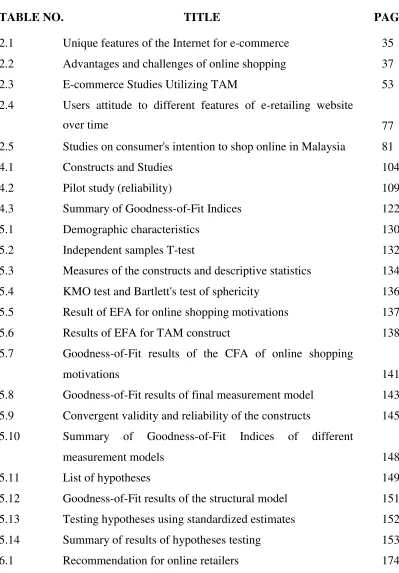
LIST OF TABLES
TABLE NO. TITLE PAGE
2.1 Unique features of the Internet for e-commerce 35 2.2 Advantages and challenges of online shopping 37
2.3 E-commerce Studies Utilizing TAM 53
2.4 Users attitude to different features of e-retailing website
over time 77
2.5 Studies on consumer's intention to shop online in Malaysia 81
4.1 Constructs and Studies 104
4.2 Pilot study (reliability) 109
4.3 Summary of Goodness-of-Fit Indices 122
5.1 Demographic characteristics 130
5.2 Independent samples T-test 132
5.3 Measures of the constructs and descriptive statistics 134 5.4 KMO test and Bartlett's test of sphericity 136 5.5 Result of EFA for online shopping motivations 137
5.6 Results of EFA for TAM construct 138
5.7 Goodness-of-Fit results of the CFA of online shopping
motivations 141
5.8 Goodness-of-Fit results of final measurement model 143 5.9 Convergent validity and reliability of the constructs 145 5.10 Summary of Goodness-of-Fit Indices of different
measurement models 148
5.11 List of hypotheses 149
5.12 Goodness-of-Fit results of the structural model 151 5.13 Testing hypotheses using standardized estimates 152
5.14 Summary of results of hypotheses testing 153
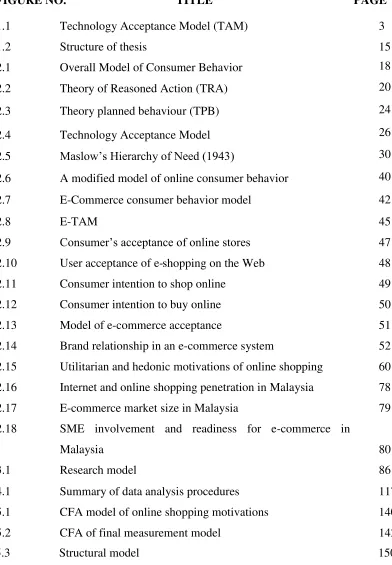
LIST OF FIGURES
FIGURE NO. TITLE PAGE
1.1 Technology Acceptance Model (TAM) 3
1.2 Structure of thesis 15
2.1 Overall Model of Consumer Behavior 18
2.2 Theory of Reasoned Action (TRA) 20
2.3 Theory planned behaviour (TPB) 24
2.4 Technology Acceptance Model 26
2.5 Maslow‘s Hierarchy of Need (1943) 30
2.6 A modified model of online consumer behavior 40
2.7 E-Commerce consumer behavior model 42
2.8 E-TAM 45
2.9
Consumer‘s acceptance of online stores 47
2.10 User acceptance of e-shopping on the Web 48
2.11 Consumer intention to shop online 49
2.12 Consumer intention to buy online 50
2.13 Model of e-commerce acceptance 51
2.14 Brand relationship in an e-commerce system 52
2.15 Utilitarian and hedonic motivations of online shopping 60 2.16 Internet and online shopping penetration in Malaysia 78
2.17 E-commerce market size in Malaysia 79
2.18 SME involvement and readiness for e-commerce in
Malaysia 80
3.1 Research model 86
4.1 Summary of data analysis procedures 117
5.1 CFA model of online shopping motivations 140
5.2 CFA of final measurement model 142
LIST OF APPENDIX
APPENDIX TITLE PAGE
A Examining the role of online motivations in
CHAPTER 1
INTRODUCTION
1.1 Introduction
The number of people accessing the Internet continues to grow rapidly. According to the latest statistical research by Miniwatts Marketing Group, the amount of Internet users around the world in 2000 was about 360 million people. In the period of 2000 to 2015, the number of users has increased extremely; at the end of December 2014, with a 753 percent growth it has more than 3.08 billion users (Miniwatts, 2015). In comparison to other electronic media technologies, the Internet has grown considerably in a short time. As Idugboe (2012) illustrates, it took radio 38 years, television 13 years, but Internet just four years, to reach 50 million users. It might seem strange to think that people survey the Web more than watching TV, but the Forrester research indicates the start of a big shift. The study shows for the first time in 2010, people in the United States spent the time watching TV same as browsing the Internet (Anderson et al., 2010).
technological advancement and increasing the number of Internet users, Malaysian consumers‘ are interested to do online shopping. It is estimated that, in 2014 Malaysia's online shopping market will be RM 5 billion where as it was only RM 1.8 billion in 2010 (Rahman et al., 2013). This uprising of online shopping over brick-and-mortar (physical) shopping is likely to continue as it gives some services over them like –time saving, convenience, availability and variety of products and services, etc. It seems that by the end of the 21st century, the number of online purchasers can increase to all
Internet users (Laudon and Traver, 2010). Consequently, with the steady growth of online retail sales and online consumers, most traditional retailers recognize that the Internet has become an efficient and powerful business channel that must be taken into consideration (Liu, 2012).
Customers‘ decision to shop online chiefly depends on individual assessment of the value of products and/or services (Shih, 2004). In e-commerce, customers will adopt online shopping when they perceive that they are receiving a better deal (Torkzadeh and Dhillon, 2002). Compared to brick-and-mortar stores, online stores have many advantages. Online stores save consumers time and are more convenient – both walking and waiting in traffic or line is not needed. They are almost available whenever and wherever. They provide up-to-date, useful and free rich information about products and services. They also present sophisticated online tools to assist customers in order to compare and make buying decisions between a variety of products and services (Chen, 2009).
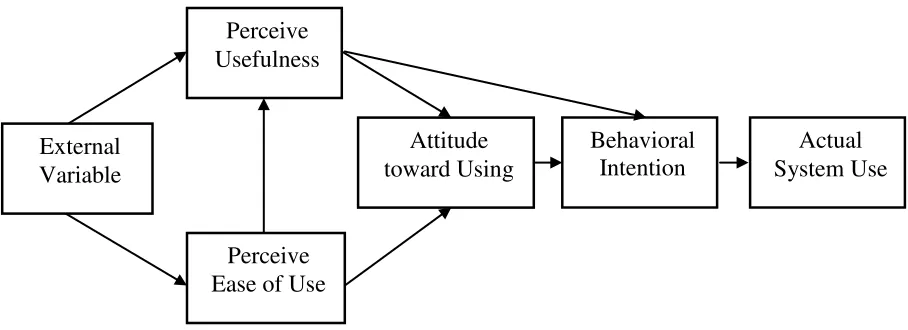
The technology acceptance model (TAM) that was developed by Davis (1989) has been the most widely used model in investigating the adoption of technologies (see Figure 1.1). Davis proposed that perceptions of users regarding ―usefulness‖ and ―ease of use‖ of a technology shape their intention to adopt. Perceived usefulness (PU) is defined as ―the degree to which a person believes that using a particular system would enhance his or her job performance‖ while perceived ease of use (PEOU) refers to ―the degree to which a person believes that using a particular system would be free of effort‖ (Davis, 1989). The model has been tested in many empirical studies (e.g., Gefen et al., 2003; Henderson and Divett, 2003; Li et al., 2012; McCloskey, 2006; Qiu and Li, 2008; Zhang et al., 2006), found to be highly valid and reliable (Smith, 2007), and is widely referenced (He, 2011). This model also has been used in various studies to analyze the acceptance of online shopping (e.g., Cheema et al., 2013; Li et al., 2012; Qiu and Li, 2008; Yoon and Kim, 2007). In addition to perceived ease of use and perceived usefulness, other factors were also proposed in these studies as influencing the intention to shop online.
Figure 1.1 Technology Acceptance Model (TAM)
While there are many studies (e.g., Beneke et al., 2010; Chung, 2001; Ghasemaghaei et al., 2009) that consider to the effective factors in consumer intention to online shopping, there is a gap in this research area. Almost there is limited empirical study that explored the role of online shopping motivations in consumer behavior. According to Parsons and Conroy (2006), motivational factors are significant to retailers for two reasons. First, they can attract users into a store (or
Perceive Usefulness
Behavioral Intention Attitude
toward Using
Perceive Ease of Use
Actual System Use External
online store website). Second, they can improve the value of the object of the functional motives, and thus operate as a source of sustainable competitive advantage, perhaps leading to long-lasting relationships with shoppers. Hence, this study based on the TAM theory, investigates motivational factors that may enhance consumer intention to online shopping.
1.2 Problem Statement
The development of the Internet has changed almost every aspect of the social and economic world. It has especially changed how people buy and consume products. The commercial presence on the Internet is growing daily, and merchants are trying hard to adapt to the new online business environment. It is a very competitive market in the online environment (Liao et al., 2012), and in this condition, companies should develop their strategy based on the new aggressive marketplace. However, despite the continued growth in e-commerce and the potential for further growth in online shopping (Cheema et al., 2013), companies have reported problems in attracting new customers and retaining existing ones (Ahmad et al., 2010; Smith, 2007), and face challenges in converting online visitors to real purchasers (Hsu et al., 2012; Wang and Hao, 2011). Research indicates most consumers prefer to shop from physical stores (Hudson, 2012), and result of Google survey shows more than 50 percent of online store visitors who place items in their shopping carts do not buy online (Google, 2009). According to literature, most important reasons are delivery time (Clemes et al., 2014), risk (Kim et al., 2008), and lack of the ability to see, touch or experience a product (Lee et al., 2010) in online shopping. On the other hand, research show some shopping motivations can reduce the effect of disincentive factors, and increase consumer intention to shop online (Bagdoniene and Zemblyte, 2009).
research by ACCCIM (2012) shows more than 72 percent of small and medium enterprises (SMEs) in Malaysia are not doing e-commerce yet, although 48 percent of them have a plan to start. Starting a new business in online environment involves some uncertainty and taking a few risks and most retailers express the primary concern of them is unsuccessfully in attracting consumers (Chwo-Ming et al., 2013). Therefore, retaining existing online customers and attracting new ones by understanding consumers‘ shopping motivations will be one of the critical factors to success of companies in online market (Liu et al., 2012).
The increasing significance of e-commerce has attracted the concentration of marketing researchers to develop their study in online environment. Considerable research has been devoted to understanding consumer behavior in this new consumption area. Some researchers have focused on those individual factors (e.g., personal shopping orientations, demographics, culture) that lead individuals to adopt online shopping (Akour et al., 2006; Burkolter and Kluge, 2011; Citrin et al., 2000; Jayawardhena, 2004; Kwek et al., 2010). Other research focused on the impact of online retailer related attributes (e.g., vendor type, web site design, marketing strategies, site usability, and service quality) on consumers‗ online shopping behavior (Dholakia and Zhao, 2010; Ganesh et al., 2010; Park et al., 2012). Several researches explored the impact of product category on consumer shopping behavior in this new environment (Cleveland et al., 2011; Moon et al., 2008; Román, 2010; Verhagen, 2010). Another stream of research attempted to examine motives and incentives in online shopping (Bagdoniene and Zemblyte, 2009; Beneke et al., 2010; Ganesh et al., 2010; Kim et al., 2010; Yim et al., 2013). A review of the relevant research revealed several gaps that merit further consideration.
the likelihood to act. As a result, consumers' intention also can be changed over time (Tat et al., 2010). Thus, in the online environment consumer behavior and intention to shop online are dynamic and should monitor repeatedly based on technology advancement (Nguyen and Mutum, 2012).
Second, various research has found that shopping motivations influence shopping behavior (Arnold and Reynolds, 2003; Kang and Park-Poaps, 2010; Thilmany et al., 2008; Wagner, 2007) and are one of the important predicators of consumer behavior and intention to shop online (Bagdoniene and Zemblyte, 2009; Beldonaa et al., 2005; Ganesh et al., 2010; Kim et al., 2010; Koo et al., 2008; To et al., 2007; Yim et al., 2013). However, because the Internet is a fast-changing environment and online shopping motivations will likewise change, updating of differences in characteristic of online shopping motivations and consumers' stances and behavior towards this phenomenon, will continually need to be done.
Third, previous studies mention culture has a significant effect on consumer behavior (Benjamin, 2010; Moon et al., 2008). In this respect, although studies regarding the outcomes of online shopping motivations are emerging in the literature, it should not be assumed that findings derived using the western data could be generalized to other regions of the world such as Asia, particularly Malaysia. Considering that Internet shopping is still at the development stage in Malaysia, not much information is known about consumer attitude toward online shopping and the factors that affect customer online purchase intention in the online environment (Kwek et al., 2010). Research related to online purchasing is still in its infancy stage, particularly studies on group of current Malaysian online shoppers (Tat et al., 2010). In this case, little information is known about Malaysian Internet users' motivational factors with respect to online shopping (Kwek et al., 2010).
Suki et al., 2008; Sulaiman et al., 2005; Wei et al., 2010). In this case, results of these studies cannot apply to general population.
Fifth, scholars usually have used behavioral theories such as Theory of Reasoned Action (TRA), Theory of Planned behavior (TPB), and Technology Acceptance Model (TAM) for analyzing consumer behavior and shopping intention (Dholakia and Zhao, 2009; Fiore et al., 2005; George, 2004; Hansen, 2008; Hausman and Siekpe, 2009; Hsu et al., 2006; Jin et al., 2009; Liang and Turban, 2011; Lopez-Bonilla, 2008; Pavlou and Fygenson, 2006; Su, 2011; Sun et al., 2010). Some researchers also use motivational theories for studing consumer decision-making process (Beldonaa et al., 2005; Henson et al., 2010; Lunardo and Mbengue, 2009). In this case, Technology Acceptance Model is usually used as the backbone of research on intention to shop online (Li and Huang, 2010); this may be because online shopping profoundly depends on information technology. TAM states that intention to use an information system can be measured by two variables: the perceived usefulness of the system and the perceived ease of use of the system (Davis, 1989). When using a system is not useful and free of effort, then it probably will not be acceptable by the users (Smith, 2007). Previous research on the TAM (Cheema et al., 2013; Johar and Awalluddin, 2011; Li and Huang, 2010; Qiu and Li, 2008; Zhang et al., 2006) show that the usefulness and the ease of use of the company‗s e-commerce systems could determine how well business can attract and keep consumers. However, a dedicated and more comprehensive model is essential to extend TAM to predict user intention to online shopping in Malaysia.
1.3 Purpose of Study
First is to develop a more inclusive conceptual model that gives a broader view of consumer intention to shop online. The research model is constructed on a theoretical foundation and it focuses more on online shopping motivations. The research model is then utilized to study the impact of some motivational factors on online consumer shopping intention. These motivational factors are convenience, social media, personalization, information density, website attributes, and perceived enjoyment. These factors were chosen because of three reasons:
Results of previous studies show effect of these factors on consumers' intention
to shop online can be changed over time and through different cultures (Adolphs and Winkelmann, 2010; Akour et al., 2006; Ballantine, 2005; Chang et al., 2005; Chen et al., 2010; Childers et al., 2002; Chung, 2001; Clemes et al., 2014; Demangeot and Broderick, 2007; Eri et al., 2011; Ferber, 1977; Gehrke and Turban, 1999; Hajli, 2012; Jiang et al., 2013; Jones et al., 2003; Kim et al., 2007; Wang et al., 2012).
These factors deeply depend on advancement of information technology;
fast-changing of technology can likewise change the effect of them on consumer intention to shop online.
In recent studies, based on the literature reviewed, these factors are main motivational factors in consumers‗ intention to purchase online (Adolphs and Winkelmann, 2010; Chen et al., 2010; Chiu et al., 2014; Jiang et al., 2013; Pappas et al., 2014; Utz et al., 2012; Wang et al., 2012).
These factors are summarized and presented in the research model after a substantial literature review. The model is expected to systematically understand consumer intention to shop online.
To investigate the relationship between online shopping motivations and
consumer intention to shop online,
To examine the relationship between convenience, social media, personalization,
and information density and consumer perceived usefulness of online shopping, To examine the relationship between website attributes and consumer perceived
ease of use of online shopping,
To determine the relationship between perceived usefulness and perceived ease
of use, and consumer intention to shop online.
1.4 Conceptual Framework
The conceptual framework is the groundwork on which the research project is based. It is a logically provided, described and elaborated network of associations among the variables deemed relevant to the study (Sekaran and Bougie, 2010). The main objective of this study is to examine the factors that may increase the customer intention to shop online. For providing an understanding of consumer intentions to purchase online, this study constructs a framework, based on previous studies on consumer intention to use new technologies and services. In this framework online shopping is defined as the use of the Internet by consumer due to buying products and services from online stores.
adoption of online shopping intention under the influence of motivational factors, this study has extended the technology acceptance model by online shopping motivations.
1.5 Highlight of Methodology
The research objectives of this study were addressed through a quantitative approach. Primary data for this research was collected with an online survey questionnaire. Questionnaire items were adapted from previous valid research in order to increase validity of study. The survey method was chosen to ensure provision of the amount of data required for the quantitative approach of Structural Equation Modeling (SEM). With a web-based survey, data can be collected spontaneously, inexpensively (Cooper and Schindler, 2008) and in a short period of time (Porter, 2004). Data is analyzed using descriptive and inferential statistics; Statistical Package for the Social Science (SPSS™ 18.0) is used for that purpose. The proposed research model is tested with a multivariate data analysis technique of Structural Equation Modeling using AMOS 20.
1.6 Assumptions and Limitation
This study is conducted based on the following assumptions that this study cannot verify:
The respondents answer the questions to the best of their abilities and trustfully. Online survey respondents are assumed to remember their previous online
purchase experiences.
User‗s intentional behavior to shop online leads to the actual use.
The geographic setting is limited to Malaysia in order to promote a more
homogeneous sample, and limited the influence of other extraneous variables such as national culture and diverse economies. So, when applying the results from this study to other countries population, cautions are recommended.
This study examined some important motivational factors expected to be related
to intention to online shopping. In this regard, this research does not cover all motivational factors and other influential variables.
It is noticeable that the research results may not represent the same user
behavioral intention toward other online systems (e.g., online banking). The survey participants must be able to read and write English.
1.7 Definition of Terms
The following definitions describe the meaning of terms used in this study.
Technology Acceptance Model (TAM): A model that asserts beliefs around perceived ease of use and perceived usefulness determine the usage of information technology (Davis, 1989).
Online Shopping: The selection and purchase of goods and services over the Internet from online stores (Laudon and Traver, 2010).
Shopping Motivations: In a shopping context, motivation can be described as the driving force within consumers that makes them shop (Jamal et al., 2006).
Convenience: The consumer‘s perceived benefit from the speed, accessibility, availability, and less physical effort in online shopping (Beauchamp, 2007).
Personalization: Offering unique products and corresponding services according to each customer‘s individual information, status, taste, shopping behavior and preference (Zhang, 2011).
Information Density: The consumer‗s perceived benefit from the wide range
of searchable, comparable, and up-to-date information from products/services on the Internet (Laudon and Traver, 2010).
Website Attributes: The attributes that are measured by information richness, design features, functionality, usability and visibility of an e-commerce websites (Hausman and Siekpe, 2009; Skadberg and Kimmel, 2004).
Perceived Enjoyment: The extent to which the activity of interacting with the consumer e-commerce websites is perceived to be interesting, enjoyable, and attractive (Qiu and Li, 2008; Urubail, 2007).
Perceived Usefulness: The extent to which a consumers believes that using online shopping will help them to enhance the shopping performance (Hausman and Siekpe, 2009).
Perceived Ease of Use: The degree to which a consumer believes that using online shopping will be free of effort (Shih, 2004). Intention to shop online: A consumer‘s intention to purchase products/services online (Hausman and Siekpe, 2009).
1.8 Contribution of Study
The findings of the research can contribute in the following manner:
factors and intention shop online. This study also tries to examine online shopping motivational factors along with the technology acceptance model. This combination has aided in understanding the relationship between the constructs of the technology acceptance model and online shopping motivations. This research is an initial step in this direction and provides an important foundation for the upcoming research on consumer's intention to shop online in Malaysia.
Second, this study integrates perceived usefulness and perceived ease of use – two important factors in information systems adoption – and online shopping motivations into one unified research model, and empirically tests the causal relationships proposed by the research model. The findings offer a more comprehensive understanding of consumer intention to online shopping by identifying the compound effects of some of important motivational factors. The result is expected to clarify and explain the inconsistent conclusions from previous research in this field.
Third, many business companies are interested in the study on the effective elements of online consumer behavior, which can enable them to attract more consumers (Lee, Eze et al., 2011). Thus, from the practical point of view, this study can help e-retailers in better understanding online shopping motivations that drive consumers to purchase online. This approach aids companies to apply better e-commerce strategies that may enable them to improve their market. Generally, this study improves our knowledge on what factors drive consumers to shop online, how they work, and what their implications are for customers and online retailers.
1.9 Summary and Organization
still relatively new. Previous literature has identified the need to gain a better understanding surrounding the influence of online shopping motivations to consumers‘ intention to shop online (Chung and Park, 2009; Rohm and Swaminathan, 2004; To et al., 2007; Yun, 2011). Therefore, this study built on previous work in the areas.
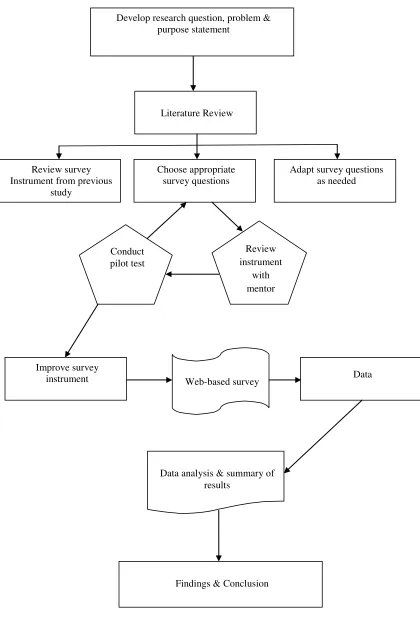
Figure 1.2 Structure of thesis Develop research question, problem &
purpose statement
Literature Review
Adapt survey questions as needed Choose appropriate
survey questions Review survey
Instrument from previous study
Conduct pilot test
Review instrument
with mentor
Web-based survey Data
Improve survey instrument
Data analysis & summary of results
REFERENCES
ACCCIM. (2012). Report of 2012 SMEs survey. The Associated Chinese Chambers
of Commerce and Industry of Malaysia (ACCCIM),
from:http://www.acccim.org.my/file/2012%20SME_EN.pdf
Adelaar, T., Chang, S., Lancendorfer, K. M., Lee, B., and Morimoto, M. (2003). Effects of media formats on emotions and impulse buying intent. Journal of Information Technology. 18(4), 247-266.
Adolphs, C., and Winkelmann, A. (2010). Personalization research in e-commerce.
Journal Of Electronic Commerce Research. 11(4), 326-341
Adomavicius, G., and Tuzhilin, A. (2005). Toward the next generation of recommender systems: A survey of the state-of-the-art and possible extensions. Knowledge and Data Engineering, IEEE Transactions on. 17(6), 734-749.
Afzal, W. (2011). The intention to buy and sell online: A model depicting the role of individual, technological, and informational factors along with the
moderating function of cultural traits. Emporia State University.
Agarwal, R., and Pradeep, Y. (2013). Bridging the gap between traditional and online shopping methods for Indian customers through digital interactive experience.Advances in Computing, Communications and Informatics (ICACCI), 2013 International Conference on. 1184-1189.
Agarwal, V., and Ganesh, L. (2014). E-shopping: An Extended Technology Innovation. Journal of Research in Marketing. 2(1), 119-126.
Ahmad, N., Omar, A., and T.Ramayah. (2010). Consumer lifestyles and online shopping continuance intention. Business Strategy Series. 11(4), 221-234. Ahn, T., Ryu, S., and Han, I. (2005). The impact of the online and offline features on
the user acceptance of Internet shopping malls. Electronic Commerce Research and Applications. 3(4), 405-420.
Ajzen, I., and Fishbein, M. (1980). Understanding attitudes and predicting social behaviour.
Akour, I., Alshare, K., Miller, D., and Dwairi, M. (2006). An exploratory analysis of culture, perceived ease of use, perceived usefulness, and internet acceptance The case of Jordan. Journal of Internet Commerce. 5(3), 83-108.
Al-Maghrabi, T., and Dennis, C. (2011). What drives consumers' continuance intention to e-shopping?: Conceptual framework and managerial implications in the case of Saudi Arabia. International Journal of Retail & Distribution Management. 39(12), 899-926.
Alam, S. S., Bakar, Z., Ismail, H. B., and Ahsan, M. (2008). Young consumers online shopping: an empirical study. Journal of Internet Business(5).
Alreck, P. L., DiBartolo, G. R., Diriker, M., Dover, H. F., Passyn, K. A., and Settle, R. B. (2011). Time pressure, time saving and online shopping: exploring a contradiction. Journal of Applied Business Research (JABR). 25(5).
Amoroso, D. L., and Mukahi, T. (2013). An examination of consumers‘ high and low trust as constructs for predicting online shopping behavior. Journal of Electronic Commerce in Organizations (JECO). 11(1), 1-17.
Anderson, J. C., and Gerbing, D. W. (1988). Structural equation modeling in practice: a review and recommended two-step approach. Psychological Bulletin. 103, 411–423.
Anderson, M., Sims, J., Price, J., and Brusa, J. (2011). Turning “Like” to “Buy”
social media emerges as a commerce channel. Booz & Company Inc.
Arbuckle, J. L. (2005). Amos 6.0 user's guide. Spring House, PA: AMOS Development Corporation.
Ardissono, L., Goy, A., Petrone, G., and Segnan, M. (2002). Personalization in business-to-customer interaction. Communications of the ACM. 45(5), 52-53. Ariff, M. S. M., Yun, L. O., Zakuan, N., and Ismail, K. (2013). The impacts of
service quality and customer satisfaction on customer loyalty in internet banking. Procedia-Social and Behavioral Sciences. 81, 469-473.
Armstrong, J. S., and Overton, T. S. (1977). Estimating nonresponse bias in mail surveys. Journal of marketing research, 396-402.
Ashley, G. C., and Reiter-Palmon, R. (2012). Self-Awareness and the Evolution of Leaders: The Need for a Better Measure of Self-Awareness. Journal of Behavioral and Applied Management. 14(1), 2-17.
Atorough, P. (2013). Consumer behaviour in online shopping – understanding the role of regulatory focus. Ph.D. Robert Gordon University.
Awad, N. F., and Krishnan, M. (2006). The personalization privacy paradox: an empirical evaluation of information transparency and the willingness to be profiled online for personalization. MIS Quarterly, 13-28.
Babbie, E. R. (2012). The practice of social research. Wadsworth Publishing Company.
Bagdoniene, L., and Zemblyte, J. (2009). Online Shopping Motivation Factors And Their Effect On Lithuanian Consumers. Economics & Management. 14, 367-374.
Bagozzi, R. P. (1980). Causal models in marketing. New York: Wiley
Bagozzi, R. P., and Yi, Y. (1988). On the evaluation of structural equation models.
Journal of the Academy of Marketing Science. 16(1), 74-94.
Bai, B., Law, R., and Wen, I. (2008). The impact of website quality on customer satisfaction and purchase intentions: Evidence from Chinese online visitors.
International Journal of Hospitality Management. 27(3), 391-402.
Ballantine, P. W. (2005). Effects of interactivity and product information on consumer satisfaction in an online retail setting. International Journal of Retail & Distribution Management. 33(6), 461-471.
Bandura, A. (1997). Self-efficacy: The exercise of control. Macmillan.
Bart, Y., Shankar, V., Sultan, F., and Urban, G. L. (2005). Are the drivers and role of online trust the same for all web sites and consumers? A large-scale exploratory empirical study. Journal of Marketing. 69(4), 133-152.
Bausch, S., and McGiboney, M. (2008). Nielsen Online Holiday Survey. from http://www.nielsen-online.com/pr/pr_081218.pdf
Beauchamp, M. B. (2007). The need for retail shopping convenience: an empirical examination of its antecedents and consequences in mexican-american
Beauchamp, M. B., and Ponder, N. (2010). Perceptions of retail convenience for in-store and online shoppers. Marketing Management Journal. 20(1).
Becker, G. S. (1976). The economic approach to human behavior. University of Chicago Press.
Beldonaa, S., Morrisonb, A. M., and O‘Leary, J. (2005). Online shopping motivations and pleasure travel products: a correspondence analysis. Tourism Management. 26, 561–570.
Bellenger, D. N., and Korgaonkar, P. K. (1980). Profiling the recreational shopper.
Journal of Retailing. 56(3), 77-92.
Beneke, J., Scheffer, M.-K., and Du, W. (2010). Beyond Price – An Exploration into the Factors That Drive Young Adults to Purchase Online. International Journal of Marketing Studies. 2(2), 212-222.
Benjamin, H. (2010). investigation of consumer motivations towards buying fashion.
Ph.D diss. University of Manchester
Bennett, R. (2009). Impulsive donation decisions during online browsing of charity websites. Journal of Consumer Behaviour(8), 116-134.
Bentler, P. M. (1995). EQS structural equations program manual. Multivariate Software.
Berg, B. L., and Lune, H. (2004). Qualitative research methods for the social sciences. (Vol. 5): Pearson Boston.
Bessière, K., Kiesler, S., Kraut, R., and Boneva, B. S. (2008). Effects of Internet use and social resources on changes in depression. Information, Communication & Society. 11(1), 47-70.
Betsch, T., and Haberstroh, S. (2014). The routines of decision making. Psychology Press.
Bettman, J. R. (1979). An information processing theory of consumer choice. Blythe, J. (2008). Consumer behavior. London, UK: Thomson Learning.
Bollen, K. A., and Curran, P. J. (2006). Latent curve model: A structual equation perspective. New York: Wiley.
Bono, J. (2012). The Influence of Web Site Aesthetics on Impulse Purchase Behavior within Online Retailing Environments PhD diss. Graduate School of Computer and Information Sciences, Nova Southeastern University.
Bridges, E., and Florsheim, R. (2008). Hedonic and utilitarian shopping goals: the online experience. Journal of Business Research. 61(4), 309-314.
Broekhuizen, T. (2006). Understanding channel purchase intentions: measuring online and offline shopping value perceptions. Labyrinth Publications Ridderkerk.
Bryman, A. (2012). Social research methods. Oxford university press.
Burke, R. R. (2002). Technology and the customer interface: what consumers want in the physical and virtual store. Journal of the Academy of Marketing Science. 30(4), 411-432.
Burkolter, D., and Kluge, A. (2011). Online consumer behavior and its relationship with socio-demographics, shopping orientations, need for emotion, and fashion leadership. Journal of Business and Media Psychology. 2, 20-28. Byrne, B. M. (2010). Structural equation modeling with AMOS: Basic concepts,
applications, and programming. Psychology Press.
Carmines, E. G., and Zeller, R. A. (1979). Reliability and validity assessment. (Vol. 17): Sage Publications.
Çelik, H. E., and Yilmaz, V. (2011). Extending the technology acceptance model for adoption of e-shopping by consumers in Turkey. Journal of Electronic Commerce Research. 12(2), 152-164.
Chan, H., Lee, R., Dillon, T., and Chang, E. (2001). E-Commerce: Fundamentals and Applications. New York: Wiley & Sons Ltd.
Chang, C. C., and Chin, Y. C. (2011). Comparing consumer complaint responses to online and offline environment. Internet Research. 21(2), 124-137.
Chang, M. K., Cheung, W., and Lai, V. (2005). Literature derived reference models for the adoption of online shopping. Information & Management. 42(4), 543-559.
Chang, M. K., Cheung, W., and Tang, M. (2013). Building trust online: Interactions among trust building mechanisms. Information & Management. 50(7), 439-445.
Cheema, U., Rizwan, M., Jalal, R., Durrani, F., and Sohail, N. (2013). The Trend of Online Shopping in 21st Century: Impact of Enjoyment in TAM Model.
Asian Journal of Empirical Research. 3(2), 131-141.
Chellappa, R. K., and Sin, R. G. (2005). Personalization versus privacy: An empirical examination of the online consumer‘s dilemma. Information Technology and Management. 6(2-3), 181-202.
Chen, L. (2009). Online Consumer Behavior: An Empirical Study Based On Theory Of Planned Behavior. PhD diss. The Graduate College at the University of Nebraska
Chen, L., Gillenson, M. L., and Sherrell, D. L. (2004). Consumer acceptance of virtual stores: A theoretical model and critical success factors for virtual stores. ACM SIGMIS Database. 35(2), 8-31.
Chen, L. D., Gillenson, M. L., and Sherrell, D. L. (2002). Enticing online consumers: an extended technology acceptance perspective. Information & Management.
39(8), 705-719.
Chen, Q., Clifford, S. J., and Wells, W. D. (2002). Attitude toward the site II: New information. Journal of Advertising Research. 42(2), 33-45.
Chen, Y.-H., Hsu, I., and Lin, C.-C. (2010). Website attributes that increase consumer purchase intention: A conjoint analysis. Journal of Business Research. 63(9), 1007-1014.
Chen, Y., Fay, S., and Wang, Q. (2011). The Role of Marketing in Social Media: How Online Consumer Reviews Evolve. Journal of Interactive Marketing.
25(2), 85-94.
Cheong, H. J., and Morrison, M. A. (2008). Consumers‘ reliance on product information and recommendations found in UGC. Journal of Interactive Advertising. 8(2), 38-49.
Cheung, C. M., Lee, M. K., and Rabjohn, N. (2008). The impact of electronic word-of-mouth: The adoption of online opinions in online customer communities.
Internet Research. 18(3), 229-247.
Chevalier, J. A., and Mayzlin, D. (2006). The effect of word of mouth on sales: Online book reviews. Journal of Marketing Research. 43(3), 345-354.
Chin, W. W. (2001). PLS-Graph user‘s guide. CT Bauer College of Business, University of Houston, USA.
Chin, W. W., Marcolin, B. L., and Newsted, P. R. (2003). A partial least squares latent variable modeling approach for measuring interaction effects: Results from a Monte Carlo simulation study and an electronic-mail emotion/adoption study. Information Systems Research. 14(2), 189-217. Chiu, C.-M., Wang, E. T. G., Fang, Y.-H., and Huang, H.-Y. (2012). Understanding
customers‘ repeat purchase intentions in B2C e-commerce: the roles of utilitarian value, hedonic value and perceived risk. Info Systems Journal.
24(1), 85–114.
Chiu, C. M., Chang, C. C., Cheng, H. L., and Fang, Y. H. (2009). Determinants of customer repurchase intention in online shopping. Online Information Review. 33(4), 761-784.
Chiu, C. M., Wang, E. T., Fang, Y. H., and Huang, H. Y. (2014). Understanding customers' repeat purchase intentions in B2C e-commerce: the roles of utilitarian value, hedonic value and perceived risk. Information Systems Journal. 24(1), 85-114.
Cho, H., and Fiorito, S. S. (2009). Acceptance of online customization for apparel shopping. International Journal of Retail & Distribution Management. 37(5), 389 - 407.
Cho, V., and Lau, C. (2013). A study of customization for online business. In Human Interface and the Management of Information. Information and Interaction
for Learning, Culture, Collaboration and Business (pp. 443-449): Springer. Choi, J. (2006). A motivational theory of charismatic leadership: Envisioning,
empathy, and empowerment. Journal of Leadership & Organizational Studies. 13(1), 24-43.
Chong, S. (2007). Factors influencing the extent of deployment of electronic commerce for small-and medium-sized enterprises. Journal of Electronic Commerce in Organizations. 5(1), 1-29.
Chung, E. (2001). Factors influencing purchace decisions of online apparel shoppers. PhD diss. University of California.
Chwo-Ming, J. Y., Lin, H.-W., and Chiu, H.-Y. (2013). Channel Strategies of Foreign Sales Subsidiaries: The Case of firms from Developing Countries Operating in Developed Countries. Advances in International Marketing. 24, 127-160.
Citrin, A. V., Sprott, D. E., Silverman, S. N., and Stem, D. E. (2000). Adoption of Internet shopping: The role of consumer innovativeness. Industrial Management & Data Systems. 100(7), 394-400.
Clemes, M. D., Gan, C., and Zhang, J. (2014). An empirical analysis of online shopping adoption in Beijing, China. Journal of Retailing and Consumer Services. 21(3), 364-375.
Cleveland, M., Papadopoulos, N., and Laroche, M. (2011). Identity, Demographics, and Consumer Behaviour: International Market Segmentation across Product Categories. International Marketing Review. 28(3), 244 - 266.
Constantinides, E. (2004). Influencing the online consumer‘s behavior: the Web experience. Emerald Group Publishing Limited. 14(2), 111-126.
Cooper, D. R., and Schindler, P. S. (2008). Business research methods. (10th ed.). Boston: MA: McGraw-Hill.
Creswell, J. W. (2013). Research design: Qualitative, quantitative, and mixed methods approaches. Sage Publications.
Cyr, D. (2014). Return visits: a review of how Web site design can engender visitor loyalty. Journal of Information Technology.
Cyr, D., Hassanein, K., Head, M., and Ivanov, A. (2007). The role of social presence in establishing loyalty in e-service environments. Interacting with Computers
19, 43–56.
Darley, W. K., Blankson, C., and Luethge, D. J. (2010). Toward an Integrated Framework for Online Consumer Behavior and Decision Making Process: A Review. Psychology & Marketing. 27(2), 94–116
Davern, M., Te'eni, D., and Moon, J. Y. (2001). Information environments and human behavior over time: From Initial Preferences to Mature Usage. PhD diss. Stern School Business, New York University.
Davis, F. D. (1986). A technology acceptance model for empirically testing new end user information systems: Theory and results. Doctoral diss. Cambridge. Davis, F. D. (1989). Perceived usefulness, perceived ease of use, and user acceptance
Davis, F. D., Bagozzi, R. P., and Warshaw, P. R. (1989). User acceptance of computer technology: A comparison of two theoretical models. Management Science. 35(8), 982-1003.
Delafrooz, N., Paim, L. H., and Khatibi, A. (2011). Understanding consumer‘s internet purchase intention in Malaysia. African Journal of Business Management. 5(3), 2837-2846.
Demangeot, C., and Broderick, A. J. (2007). Conceptualizing consumer behavior in online shopping environments. International Journal of Retail & Distribution Management. 35(2), 878-894.
Dennis, C., Merrilees, B., Jayawardhena, C., and Wright, L. T. (2009). E-consumer behavior. European Journal of Marketing. 43(9/10), 1121-1139.
Denscombe, M. (2010). The Good Research Guide: For Small-Scale Social Research Projects: For small-scale social research projects. McGraw-Hill International.
Devaraj, S., Fan, M., and Kohli, R. (2002). Antecedents of B2C channel satisfaction and preference: Validating e-Commerce metrics. Information Systems Research. 13(3), 316-333.
Dholakia, R. R., and Zhao, M. (2009). Retail web site interactivity: How does it influence customer satisfaction and behavioral intentions? International Journal of Retail & Distribution Management. 37(821-838).
Dholakia, R. R., and Zhao, M. (2010). Effects of online store attributes on customer satisfaction and repurchase intentions. International Journal of Retail & Distribution Management. 38(7), 482-496.
Diefenbach, S., and Hassenzahl, M. (2008). Give me a reason: Hedonic product choice and justification. CHI '08 extended abstracts on Human factors in computing systems. Florence, Italy: 3051-3056.
Dillman, D. (2011). Mail and Internet surveys: The tailored design method--2007 Update with new Internet, visual, and mixed-mode guide. (4th ed.). New York: John Wiley & Sons.
Dittmar, H., Long, K., and Meek, R. (2004). Buying on the Internet: Gender differences in on-line and conventional buying motivations. Sex Roles. 50(5-6), 423-444.
Doob, L. W. (1947). The behavior of attitudes. Psychological Review. 54(3), 135. Duffy, B., Smith, K., Terhanian, G., and Bremer, J. (2005). Comparing data from
online and face-to-face surveys. International Journal of Market Research.
47(6), 615-639.
Easet, R. (2008). Consumer Behavior: Applications in Marketing. London: Sage Publication Ltd.
Easey, M. (2009). Fashion marketing. New York: John Wiley & Sons.
Echezuria, A. R. (2012). Brand Engagement: An Analysis on Motivation.
Association of Marketing Theory and Practice Proceedings, 1-9.
Ekström, K. M., Ekström, M. P., and Shanahan, H. (2001). Families in the transforming Russian society. Observations from visits to families in Novgorod the Great. European Advances in Consumer Research. 5, 145-154. Eliason, E., Buening, M., and Marsden, P. (2011). Social Commerce IQ™: Retail.
From:http://www.8thbridge.com/wpcontent/uploads/2011/09/Social_Commer ce_IQ_Retail1.pdf
Elmorshidy, A. (2013). Applying The Technology Acceptance And Service Quality Models To Live Customer Support Chat For E-Commerce Websites. Journal of Applied Business Research (JABR). 29(2), 589-596.
Eri, Y., Islam, M. A., and Daud, K. A. K. (2011). Factors that Influence Customers‘ Buying Intention on Shopping Online. International Journal of Marketing Studies. 3(1), p128.
Faber, R. J., Lee, M., and Nan, X. (2009). Advertising and the consumer information environment online. American Behavioral Scientist. 48(4), 447-466.
Fang, X., Justin Zhan, Nicholas Koceja, Kenneth Williams, and Justin Brewton (2011). Integrating Online Social Networks for Enhancing Reputation Systems of E-Commerce IEEE International Conference on Intelligence and Security Informatics (ISI). 384 - 389.
Featherman, M. S. (2002). Evaluative criteria and user acceptance of Internet-based financial transaction processing systems. Dissertation Abstracts International. 63(3).
Ferber, R. (1977). Research by convenience. Journal of Consumer Research. 4(1), 57-58.
Field, A. (2009). Discovering statistics using SPSS. Thousand Oaks, CA: SAGE Publications.
Fiore, A. M., Kim, J., and Lee, H. H. (2005). Effect of Image Interactivity Technology on Consumer Responses toward the Online Retailer. Journal of Interactive Marketing. 19(3), 38-53.
Flanagin, A. J., and Metzger, M. J. (2000). Perceptions of Internet information credibility. Journalism & Mass Communication Quarterly. 77(3), 515-540. Flanagin, A. J., Metzger, M. J., Pure, R., Markov, A., and Hartsell, E. (2014).
Mitigating risk in ecommerce transactions: perceptions of information credibility and the role of user-generated ratings in product quality and purchase intention. Electronic Commerce Research. 14(1), 1-23.
Flavián-Blanco, C., Gurrea-Sarasa, R., and Orús-Sanclemente, C. (2011). Analyzing the emotional outcomes of the online search behavior with search engines.
Computers in Human Behavior. 27(1), 540-551.
Flavián, C., Guinalíu, M., and Gurrea, R. (2006). The role played by perceived usability, satisfaction and consumer trust on website loyalty. Information & Management. 43(1), 1-14.
Fornell, C., and Larcker, D. F. (1981). Evaluating structural equation models with unobservable variables and measurement error. Journal of Marketing Research. 18(1), 39-50.
Forsythe, S., Liu, C., Shannon, D., and Gardner, L. C. (2006). Development of a scale to measure the perceived benefits and risks of online shopping. Journal of Interactive Marketing. 20(2), 55-75.
Franke, N., Schreier, M., and Kaiser, U. (2010). The ―I designed it myself‖ effect in mass customization. Management Science. 56(1), 125-140.
Freedman, L. (2011). Perfecting the Product Page: Guidelines for Decision-Making. e-tailing group.
Funk, T. (2013). Advanced Social Media Marketing: How to lead, lunch, and manage a successful social media program. Apress.
Ganesh, J., Reynolds, K. E., Luckett, M., and Pomirleanu, N. (2010). Online shopper motivations, and e-store attributes: an examination of online patronage behavior and shopper typologies. Journal of Retailing. 86(1), 106-115.
Gatautis, R., Kazakeviciute, A., and Tarutis, M. (2014). Controllable factors impact on consumer online behaviour. Economics and Management. 19(1), 63-71. Gatignon, H. (2003). Statistical analysis of management data. Springer.
Gefen, D. (2000). E-commerce: The role of familiarity and trust. OMEGA. 28(6), 725-737.
Gefen, D., Karahanna, E., and Straub, D. W. (2003). Trust and TAM in online shopping: An integrated model. MIS Quarterly. 27(1), 51-90.
Gefen, D., Straub, D. W., and Boudreau, M.-C. (2000). Structural equation modeling and regression: Guidelines for research practice.
Gehrke, D., and Turban, E. (1999). Determinants of Successful Website Design: Relative Importance and Recommendations for Effectiveness.32nd Hawaii International Conference on System Sciences. 42-55.
Gehrt, K. C., Onzo, N., Fujita, K., and Rajan, N. R. (2007). The emergence of internet shopping in Japan: identification of shopping orientation-defined segment. Journal of Marketing Theory and Practice. 15(2), 167-177.
Geng, Z., and Xi, C. (2010). Research on Online Products Competition: Perspectives Customization and Network Effects.International Conference on Computer Application and System Modeling (ICCASM). 183-188.
George, J. F. (2004). The Theory of Planned Behavior and Internet Purchasing.
Internet Research. 14(3), 198-212.
Gerbing, D. W., and Hamilton, J. G. (1996). Viability of exploratory factor analysis as a precursor to confirmatory factor analysis. Structural Equation Modeling: A Multidisciplinary Journal. 3(1), 62-72.
Ghasemaghaei, M., Ranjbarian, B., and Monadjemi, S. A. (2009). Effective Factors on Iranian Consumers Behavior in Internet Shopping: A Soft Computing Approach. Journal of Computer Science. 5(3), 172-176.
Giuliani, J. (2009). Dotomis Riding Personalized Media Beyond Behavioral Targeting. Retrieved September 15, 2009, from AdExchanger.com
Goode, M. M. H., and Harris, L. C. (2007). Online Behavioral Intentions: An Empirical Investigation of Antecedents and Moderators. European Journal of Marketing. 41(5), 512-536.
Google. (2009). Make your website work: Ten ways to convert visitors into buyers. From http://static.googleusercontent.com/media/www.google.co.uk/fa/uk/ intl/en/landing/conversion/make_your_website_work.pdf
Goswami, A., Chittar, N., and Sung, C. H. (2011). A study on the impact of product images on user clicks for online shopping.Proceedings of the 20th international conference companion on World wide web. 45-46.
Gravetter, F., and Forzano, L. (2010). Research Methods for the Behavioral Sciences. Cengage Learning.
Guba, E. G., and Lincoln, Y. S. (1994). Competing paradigms in qualitative research.
Handbook of qualitative research. 2, 163-194.
Guo, S., Wang, M., and Leskovec, J. (2011). The role of social networks in online shopping: information passing, price of trust, and consumer choice.Proceedings of the 12th ACM conference on Electronic commerce. 157-166.
Ha, C. L. (1998). The theory of Reasoned Action brand loyalty. Journal of Brand and Product Management. 7(1), 51-61.
Ha, S., and Stoel, L. (2009). Consumer e-shopping acceptance: Antecedents in a technology acceptance model. Journal of Business Research. 65(2), 565-571. Ha, S., and Stoel, L. (2012). Online apparel retailing: roles of e-shopping quality and
experiential e-shopping motives. Journal of Service Management. 23(2), 197-215.
Ha, S. H. (2002). Helping online customers decide through web personalization.
IEEE Intelligent Systems. 17(6), 34-43.
Habibu, S., and Ho, S. (2010). RM1bil initiative to promote high-speed broadband
usage. The Star Retrieved November 5th 2010,
Hair, J. F., Black, W. C., Babin, B. J., Anderson, R. E., and Tatham, R. L. (2010).
Multivariate data analysis: A global perspective. New Jersey: Pearson Education.
Hajli, M. (2012). An Integrated Model for E-commerce Adoption at the Customer Level with the Impact of Social Commerce. International Journal of Information Science and Management (IJISM), 77-97.
Han, J., and Han, D. (2001). A framework for analyzing customer value of internet business. Journal of Information Technology Theory and Application (JITTA). 3(5), 4.
Han, L., and Jin, Y. (2009). A review of technology acceptance model in the e-commerce environment.Management of e-Commerce and e-Government, 2009. ICMECG'09. International Conference on. 28-31.
Hanna, N., and Wozniak, R. (2001). Consumer behavior: An applied approach. Upper Saddle River, NJ: Prentice Hall.
Hansen, T. (2008). Consumer Values, the theory of planned behavior and online grocery shopping. International Journal of Consumer Studies(32), 128–137. Haque, A., and Khatibi, A. (2007). The impact of internet marketing on customer
satisfaction. A study Malaysian perspective. Journal of Mobile Communication. 1(1), 29-35.
Haque, A., Sadeghzadeh, J., and Khatibi, A. (2011). Identifying potentiality online sales in Malaysia: a study on customer relationships online shopping. Journal of Applied Business Research (JABR). 22(4).
Harn, A. C. P., Khatibi, A., and Ismail, H. (2006). E-Commerce: A study on online shopping in Malaysia. Journal of Social Sciences. 15(5), 232-242.
Harris, L., and Dennis, C. (2011). Engaging customers on Facebook: Challenges for e-retailers. Journal of Consumer Behaviour. 10(6), 338-346.
Hassanein, K., and Head, M. (2007). Manipulating perceived social presence through the web interface and its impact on attitude towards online shopping.
International Journal of Human-Computer Studies. 65(8), 689-708.
Hausman, A. V., and Siekpe, J. S. (2009). The effect of web interface features on consumer online purchase intentions. Journal of Business Research. 62(1), 5-13.
He, F. (2009). Decision Factors For The Adoption Of Finance And Other E-Commerce Activities. Ph.D diss. Department of Management In the Graduate School, Southern Illinois University Carbondale.
He, F., and Mykytyn, P. (2007). Decision factors for the adoption of an online payment system by customers. International Journal of E-Business Research.
3(4), 1-32.
He, Y. (2011). Relationships Between Factors Associated With User Technology Acceptance Of An Online E-Business Application PhD diss. School of Business and Technology, Capella University.
Heijden, H. V. D. (2000). e-TAM: A revision of the Technology Acceptance Model to explain website revisits. Research Memorandum. 29.
Heinonen, K. (2011). Consumer activity in social media: Managerial approaches to consumers‘ social media behavior. Journal of Consumer Behaviour. 10, 356– 364.
Hensel, K., and Deis, M. H. (2010). Using social media to increase advertising and improve marketing. The Entrepreneurial Executive. 15, 87-97.
Henson, S., Cranfield, J., and Herath, D. (2010). Understanding consumer receptivity towards foods and non‐prescription pills containing phytosterols as a means to offset the risk of cardiovascular disease: an application of protection motivation theory. International Journal of Consumer Studies. 34(1), 28-37. Hernández, B., Jimenez, J., and Martin, M. J. (2011). Age, gender and income: do
they really moderate online shopping behavior? Online Information Review.
35(1), 113-133.
Hernández, B., Jiménez, J., and Martín, M. J. (2010). Customer behavior in electronic commerce: The moderating effect of e-purchasing experience.
Journal of Business Research. 63(9-10), 964-971.
Hershberger, S. L. (2003). The growth of structural equation modeling. Structural Equation Modeling. 10(1), 35-46.
Hill, S., Provost, F., and Volinsky, C. (2006). Network-based marketing: Identifying likely adopters via consumer networks. Statistical Science, 256-276.
Hill, T. M. (2010). Marketing of Hospitality and Tourism Services. New Delhi, India: Tata McGraw Hill Education.
Ho, R., and Vogel, D. (2014). The impact of social networking functionalities on online shopping: an examination of the web's relative advantage.
International Journal of Business Information Systems. 16(1), 25-41.
Ho, S. Y., Bodoff, D., and Tam, K. Y. (2011). Timing of adaptive web personalization and its effects on online consumer behavior. Information Systems Research. 22(3), 660-679.
Hoffman, D. L., and Novak, T. P. (2012). Toward a Deeper Understanding of Social Media. Journal of Interactive Marketing. 26, 69–70.
Holland, C. P., and Mandry, G. D. (2013). Online Search and Buying Behaviour in Consumer Markets.System Sciences (HICSS), 2013 46th Hawaii International Conference on. 2918-2927.
Hong, S. J., Thong, J. Y. L., and Tam, K. Y. (2006). Understanding continued information technology usage behavior: a comparison of three models in the context of mobile internet. Decision Support Systems. 43(3), 1819–1834. Hong, W., Thong, J. Y., and Tam, K. Y. (2004). The effects of information format
and shopping task on consumers' online shopping behavior: A cognitive fit perspective. Journal of Management Information Systems. 21(3), 149-184. Howard, J. A., and Sheth, J. N. (1969). The theory of buyer behavior. (Vol. 14). New
York: Wiley
Hoyer, W. D., and MacInnis, D. J. (2008). Consumer Behaviour. Mason: South Western.
Hsu, C.-L., Chang, K.-C., and Chen, M.-C. (2012). The impact of website quality on customer satisfaction and purchase intention: perceived playfulness and perceived flow as mediators. Information Systems and e-Business Management. 10(4), 549-570.
Hsu, C.-L., and Lin, J. C.-C. (2008). Acceptance of blog usage: The roles of technology acceptance, social influence and knowledge sharing motivation.
Information & Management. 45, 65–74.
Hsu, C.-L., Lin, J. C.-C., and Chiang, H.-S. (2013). The effects of blogger recommendations on customers‘ online shopping intentions. Internet Research. 23(1), 69-88.
Hsu, M.-H., Chuang, L.-W., and Hsu, C.-S. (2014). Understanding online shopping intention: the roles of four types of trust and their antecedents. Internet Research. 24(3), 4-4.
Hsu, M.-H., Yen, C.-H., Chiu, C.-M., and Chang, C.-M. (2006). A longitudinal investigation of continued online shopping behavior: An extension of the theory of planned behavior. International Journal of Human-Computer Studies. 64(9), 889-904.
Hudson, K. (2012). Online Shopping vs Offline Shopping Retrieved October 17, 2012 from http://www.demacmedia.com/infographic/infographic-wednesday-online-shopping-vs-offline-shopping/
Hui, Y., and Hong, Z. (2010). Principles of Cross-selling Page Design Based on Consumer Online Purchasing Behaviors-Take C to C E-commerce Website as an Example Marketing Science Innovations And Economic Development
54(5), 56-64
IMRG. (2009). E-retail industry annual report. Interactive Media by Retail Group. Internet World Stats (2012). From: http://www.internetworldstats.com/ Iyengar, R., Han, S., and Gupta, S. (2009). Do friends influence purchases in a social
network. (Vol. 9): Harvard Business School.
Jackson, D. L. (2003). Revisiting sample size and number of parameter estimates: Some support for the N: q hypothesis. Structural Equation Modeling. 10(1), 128-141.
Jain, V., Sharma, A., and Subramanian, L. (2012). Road traffic congestion in the developing world.Proceedings of the 2nd ACM Symposium on Computing for Development. 11.
Jan, A. U., and Contreras, V. (2011). Technology acceptance model for the use of information technology in universities. Computers in Human Behavior.
27(2), 845-851.
Jankowicz, A. D. (2005). Business research projects. London: Thomson Learning. Jayawardhena, C. (2004). Personal values‘ influence on e-shopping attitude and
behavior. Internet Research. 14(2), 127-138.
Jennings, G. (2001). Tourism research. John Wiley and sons Australia, Ltd.
Jiang, Z., Chan, J., Tan, B. C. Y., and Chua, W. S. (2010). Effects of Interactivity on Website Involvement and Purchase Intention. Journal of the Association for Information Systems. 11(1), 34-59.
Jianhong, H., and Hua, L. (2011). A Research on Consumers‘ Adopting Motives of E-Commerce.International Conference on Management Science and Industrial Engineering (MSIE) Harbin 158-161.
Jin, Y., Chen, F., and Lingling, M. (2009). A Two-Stage Decision-Making Model of Online Consumer Behavior: Perspective of Image Theory.International Symposium on Information Engineering and Electronic Commerce. 428-432 Johar, M. G. M., and Awalluddin, J. A. A. (2011). The role of technology acceptance model in explaining effect on e-commerce application system. International Journal of Managing Information Technology. 3(3), 1-14.
Jones, C., and Kim, S. (2010). Influences of retail brand trust, off-line patronage, clothing involvement and website quality on online apparel shopping intention. International Journal of Consumer Studies. 34, 627-637.
Jones, M. A., Mothersbaugh, D. L., and Beatty, S. E. (2003). The Effects of Locational Convenience on Customer Repurchase Intentions Across Service Types. Journal of Services Marketing. 17(6), 701-712.
Jose-Cabezudo, R. S., Gutierrez-Cillan, J., and Gutierrez-Arranz, A. M. (2008). The Moderating Role of User Motivation in Internet Access and Individuals‘ Responses to a Website. Internet Research. 18(4), 393-404.
Kacen, J. J., Hess, J. D., and Kevin Chiang, W.-Y. (2013). Bricks or clicks? Consumer attitudes toward traditional stores and online stores. Global Economics and Management