Study of M-commerce and its Usability Factor with respect
to Transaction and Entertainment in the Four Age Groups
Prabha Kiran
Prabha Kiran, BE, MBA , Research Scholar, School of Management Studies, Vels University , Pallavaram, Chennai. email: [email protected]
Abstract
Mobile Commerce is any transaction, involving the transfer of ownership or rights to use goods and services, which is initiated and/or completed by using mobile access to computer-mediated networks with the help of an electronic device. Mobile phones have a higher penetration rate than the Internet in India and majority of the population are ready to embrace m-commerce in a big way. Through this paper four very important aspects of M-commerce are studied and an exploratory research is conducted across various age groups through a questionnaire. This research brings to light the major findings related to these four important factors of M-commerce and helps the marketers an insight into the consumers needs. Recommendations findings of the research are listed which focuses on these factors.
Key
words:
M-commerce,communication, transaction,
Today’s communications market is moving quickly toward the promise of communications, commerce, and content available anytime, anywhere, and on any
device. Service providers are no longer simply network operators, but are evolving to become providers of rich, interactive media, productivity services, and retail experiences. Consumer expectations have also evolved to where the term wireless no longer implies just voice service, but rather represents a complex infrastructure to which one connects—in real time, from any place—to be informed, entertained, or engaged in visual or audio communication, or to buy goods and services. The constant exchange of value among the multitude of constituents is the pulse of this infrastructure, the underlying and measurable component of which is wireless commerce. This suggests that service providers are not only challenged with a need to quickly deploy new services, but also to measure and account for those services while honoring a new ecosystem comprised of diverse stakeholders and new and complex value chains.
most directly impact the subscriber experience are, in fact, the ones that have the greatest influence on a service provider’s success or failure. To be successful, service providers must build a flexible and integrated wireless commerce back-end that can be delivered with a subscriber-centric framework. The back-end must support the rapid deployment of new services, while the subscriber-centric framework ensures a high-quality, integrated, and consistent user experience carried through systems including billing, customer care, prepaid, roaming, clearing, and self-care services. Statements of problem
Analyzing the four factors namely “Mobile Commerce: Usability- transaction and entertainment among the four age groups 20-30, 30-40, 40-50 and 50-60”
Scope of study
•It will help in analyzing the factors that drive people in accepting mobile commerce as the means of transaction.
•It will also facilitate the telecom companies in making m-commerce more favorable and user-friendly. •People’s need can be addressed in a
better way, as their need and
requirements will be clearly analyzed.
Objectives of the research
Finding people’s perception on the following factors
•Usability: Transaction, Entertainment
Hypothesis
•Ho1: Usability of M-Commerce for transaction purpose is equal among four age groups.
•Ha1: Usability of M-Commerce for transaction purpose is not equal among four age groups.
•Ho2: Usability of M-Commerce for entertainment purpose is equal among 4 age groups.
•Ha2: Usability of M-Commerce for entertainment purpose is not equal among 4 age groups.
ANOVA is use for analysis purpose.
Statement of the Problem
People’s perception on M-Commerce Usability and Adaptability is studied
Respondents Profile:
Age Gender Occupation Professional
Qualification
Male Female Students Working Home maker
Educated Not educated
20-30 6 4 10 - - 10 -
30-40 7 5 - 8 4 12 -
40-50 7 3 - 10 - 10 -
50-60 8 2 - 8 2 8 2
Total number of respondents
42
Transaction
Mostly Used Service
Daily Use
Satisfaction level Opinion about expensiveness of service
Factors for adopting service
Factors Restricting to adopt other Services
1.Ticket Purchase
1-25
26-50 51-75 76-100 >100
a)Highly satisfied, b)Satisfied,
c)Neutral,
d)Dissatisfied, e)Highly Dissatisfied
a)Highly expensive,
b)Expensive,
c)Neutral, d)Cheap, e)Very cheap
a)None,
b)Brand image,
c)Free trial, d)Discount ,
e)Low cost, f)Incentive,
g)Interest,
h)Family friends recommendation
a)None, b)Customer knowledge, c)Pricing, d)Technology,
e)Community usage,
f)Security challenge, g)Customer trust 2.Small
Payment
1-25 Neutral Neutral Free trial Customer trust
3.Banking Services
1-25 Neutral Neutral Discount Security challenge
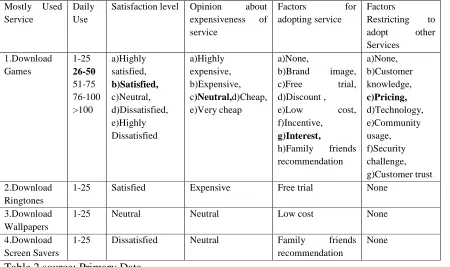
Table 1. source: Primary Data Entertainment
Mostly Used Service
Daily Use
Satisfaction level Opinion about expensiveness of service
Factors for adopting service
Factors
Restricting to adopt other Services 1.Download
Games
1-25
26-50
51-75 76-100 >100
a)Highly satisfied,
b)Satisfied,
c)Neutral, d)Dissatisfied, e)Highly Dissatisfied
a)Highly expensive, b)Expensive, c)Neutral,d)Cheap, e)Very cheap
a)None,
b)Brand image, c)Free trial, d)Discount , e)Low cost, f)Incentive,
g)Interest,
h)Family friends recommendation
a)None, b)Customer knowledge,
c)Pricing,
d)Technology, e)Community usage, f)Security challenge, g)Customer trust 2.Download
Ringtones
1-25 Satisfied Expensive Free trial None
3.Download Wallpapers
1-25 Neutral Neutral Low cost None
4.Download Screen Savers
1-25 Dissatisfied Neutral Family friends recommendation
None
Age group-: 30-40 Transaction
Mostly Used Service
Daily Use
Satisfaction level Opinion about expensiveness of service
Factors for adopting service
Factors
Restricting to adopt other Services 1.Ticket Purchase 1-25 26-50 51-75 76-100 >100 a)Highly satisfied, b)Satisfied, c)Neutral, d)Dissatisfied, e)Highly Dissatisfied a)Highly expensive, b)Expensive, c)Neutral, d)Cheap, e)Very cheap a)None,
b)Brand image, c)Free trial, d)Discount ,
e)Low cost,
f)Incentive, g)Interest,
h)Family friends recommendation a)None, b)Customer knowledge, c)Pricing, d)Technology, e)Community usage, f)Security challenge, g)Customer trust 2.Small Payment
26-50 Satisfied Expensive Discount Security challenge 3.Banking
Services
1-25 Neutral Neutral Free trial Security challenge
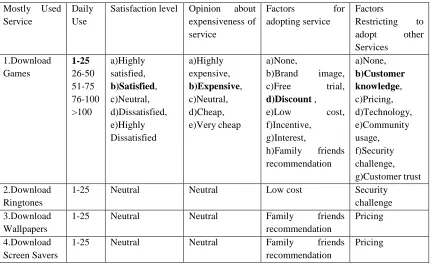
Table 3 source: Primary Data Entertainment
Mostly Used Service
Daily Use
Satisfaction level Opinion about expensiveness of service
Factors for adopting service
Factors
Restricting to adopt other Services 1.Download Games 1-25 26-50 51-75 76-100 >100 a)Highly satisfied, b)Satisfied, c)Neutral, d)Dissatisfied, e)Highly Dissatisfied a)Highly expensive, b)Expensive, c)Neutral, d)Cheap, e)Very cheap a)None,
b)Brand image, c)Free trial,
d)Discount ,
e)Low cost, f)Incentive, g)Interest,
h)Family friends recommendation a)None, b)Customer knowledge, c)Pricing, d)Technology, e)Community usage, f)Security challenge, g)Customer trust 2.Download Ringtones
1-25 Neutral Neutral Low cost Security challenge 3.Download
Wallpapers
1-25 Neutral Neutral Family friends recommendation
Pricing
4.Download Screen Savers
1-25 Neutral Neutral Family friends recommendation
Pricing
Age group-: 40-50 Transaction
Mostly Used Service
Daily Use
Satisfaction level Opinion about expensiveness of service
Factors for adopting service
Factors
Restricting to adopt other Services 1.Ticket Purchase 1-25 26-50 51-75 76-100 >100 a)Highly satisfied, b)Satisfied, c)Neutral, d)Dissatisfied, e)Highly Dissatisfied a)Highly expensive, b)Expensive, c)Neutral, d)Cheap, e)Very cheap a)None,
b)Brand image, c)Free trial, d)Discount ,
e)Low cost,
f)Incentive, g)Interest,
h)Family friends recommendation a)None, b)Customer knowledge, c)Pricing, d)Technology, e)Community usage, f)Security challenge, g)Customer trust 2.Small Payment
1-25 Neutral Expensive Family friend recommendation
Security challenge 3.Banking
Services
1-25 Satisfied Expensive Family friend recommendation
Customer trust
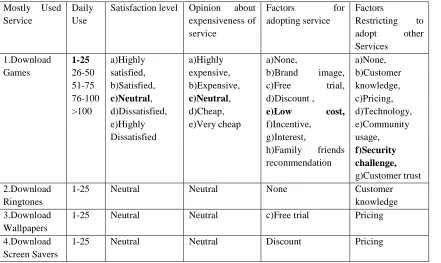
Table 5 source: Primary Data Entertainment
Mostly Used Service
Daily Use
Satisfaction level Opinion about expensiveness of service
Factors for adopting service
Factors
Restricting to adopt other Services 1.Download Games 1-25 26-50 51-75 76-100 >100 a)Highly satisfied, b)Satisfied, c)Neutral, d)Dissatisfied, e)Highly Dissatisfied a)Highly expensive, b)Expensive, c)Neutral, d)Cheap, e)Very cheap a)None,
b)Brand image, c)Free trial, d)Discount ,
e)Low cost,
f)Incentive, g)Interest,
h)Family friends recommendation a)None, b)Customer knowledge, c)Pricing, d)Technology, e)Community usage, f)Security challenge, g)Customer trust 2.Download Ringtones
1-25 Neutral Neutral None Customer knowledge 3.Download
Wallpapers
1-25 Neutral Neutral c)Free trial Pricing
4.Download Screen Savers
Table 6 source: Primary Data Age group -: 50-60
Transaction Mostly Used Service Daily Use
Satisfaction level Opinion about expensiveness of service
Factors for adopting service
Factors
Restricting to adopt other Services 1.Ticket Purchase 1-25 26-50 51-75 76-100 >100 a)Highly satisfied, b)Satisfied, c)Neutral, d)Dissatisfied, e)Highly Dissatisfied a)Highly expensive, b)Expensive, c)Neutral, d)Cheap, e)Very cheap a)None,
b)Brand image, c)Free trial, d)Discount ,
e)Low cost, f)Incentive,
g)Interest,
h)Family friends recommendation a)None, b)Customer knowledge, c)Pricing, d)Technology, e)Community usage, f)Security challenge, g)Customer trust 2.Small Payment
1-25 Neutral Expensive Low cost Security challenge 3.Banking
Services
1-25 Neutral Neutral Low cost Customer knowledge
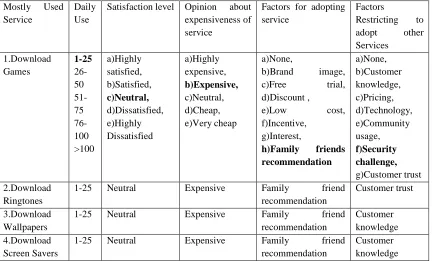
Table 7 source: Primary Data Entertainment
Mostly Used Service
Daily Use
Satisfaction level Opinion about expensiveness of service
Factors for adopting service
Factors
Restricting to adopt other Services 1.Download Games 1-25 26-50 51-75 76-100 >100 a)Highly satisfied, b)Satisfied, c)Neutral, d)Dissatisfied, e)Highly Dissatisfied a)Highly expensive, b)Expensive, c)Neutral, d)Cheap, e)Very cheap a)None,
b)Brand image, c)Free trial, d)Discount ,
e)Low cost, f)Incentive,
g)Interest,
h)Family friends recommendation a)None, b)Customer knowledge, c)Pricing, d)Technology, e)Community usage, f)Security challenge, g)Customer trust 2.Download Ringtones
1-25 Neutral Expensive Family friend recommendation
Customer trust
3.Download Wallpapers
1-25 Neutral Expensive Family friend recommendation
Customer knowledge 4.Download
Screen Savers
1-25 Neutral Expensive Family friend recommendation
Table 8 source: Primary Data
The responses were put into a proper tabular form and ANOVA was used for analyzing the factors w.r.t age groups.
Analysis of variance – F test for the four factors Usability:
1. Transaction Age group/
Likert scale
20-30 30-40 40-50 50-60
1 0 1 2 3
2 1 0 1 2
3 2 3 3 0
4 4 6 3 3
5 3 2 1 2
Hypothesis
Ho1: Usability of M-Commerce for transaction purpose is equal among four age groups.
Ha1: Usability of M-Commerce for transaction purpose is not equal among four age groups.
ANOVA Table
Source of variance Sum of square D.F Mean square
Between 0.6 3 0.2
Within 53.9 16 3.37
F= Variance between samples/ Variance within samples = 0.2/3.37 = 0.593 For v1=3 and v2 =16 Table value of F at 5% level of significance = 3.24
The calculated value of F is less than the table value and hence the difference in the mean value of the is not significant i.e. hypothesis is accepted.
2. Entertainment Age group/
Likert scale
20-30 30-40 40-50 50-60
1 1 2 3 3
2 3 2 0 4
4 2 5 2 1
5 0 3 1 1
Hypothesis
Ho2: Usability of M-Commerce for entertainment purpose is equal among 4 age groups.
Ha2: Usability of M-Commerce for entertainment purpose is not equal among 4 age groups.
ANOVA Table
Source of variance Sum of square D.F Mean square
Between 0.6 3 0.2
Within 40.3 16 2.518
F= Variance between samples/ Variance within samples = 0.079
For v1=3 and v2 =16 Table value of F at 5% level of significance = 3.24
The calculated value of F is less than the table value and hence the difference in the mean value of the is not significant i.e. hypothesis is accepted.
Summary of Findings
Findings from the analysis:
1) Usability of M-Commerce for transaction purpose is equal among four age groups.
2) Usability of M-Commerce for entertainment purpose is equal among four age groups.
3) Since 13 out of 40 respondents have shown a neutral response regarding leaning to use M-Commerce i.e. almost 14% of them. But there is an
almost equal numbers which have shown interest and have agreed that they are very much keen on learning to use M-Commerce and that number stands at 11 out of 40 i.e. 28%.
a. Hence it shows that people are divided over the fact that people want to learn to use M- commerce or not.
The mobile service providers hence need to make sure that they keep the views of these respondents also
Conclusion
The major limitations of m-commerce, as viewed today, are small screens on wireless devices, limited processing power, modest memory, restricted power consumption, poor voice quality, low-speed data transmission, non-ubiquitous coverage, unproven security, scarce bandwidth, and possible health hazards.
Suggestions
•Telephone companies can either fund startups or offer project specific funding assistance.
•Promote content bundled along with the connectivity, thereby extending the market for content to include even non-connected users
•With electricity continuing to be a pressing challenge in many parts of rural India, mobile forms the ideal device to access the common man living in the remote villages of India.
•The entire gamut of banking services is yet to be offered on the mobile phone, which will significantly fuel the growth and success of m-commerce in India.
•While most banks are yet to develop their m-payment gateway, the need for a robust m-payment gateway on the lines of the e-payment gateway. •Banks must also come forward and
take a bold step towards reducing the
cost of transactions on mobile phones.
•Industry players need to come together to establish industry standards for m-commerce transactions and as 'opinion builders', media has a well defined role to play.
•In creating the curiosity and confidence in the mindsets of the consumers to trial and experience so that m-commerce becomes a 'cannot do without it' or 'must have' service. •The government should also consider,
extending financial support to application developers, easing the tax laws for service providers engaged in m-commerce and offering special tax rates for m-commerce transactions.
•Advertisers need a mobile-friendly site - Of people who react to seeing a mobile ad: 42 percent click on the mobile ad; 35 percent visit the advertiser’s site; 32 percent search for more information on their phone; 49 percent make a purchase and 27 percent call the business.
•71 percent of Smartphone users that see TV, press or online ad, do a mobile search for more information
References
K. Bødker, M. K. Pedersen, J. Nørbjerg, J. Simonsen and M. T. Vendelø, Bautahöj, Denmark, August, IRIS Association.
Alphonse, J. (2004). Re-creating the Norwegian Model for Selling Mobile Content in Malaysia. Proceedings of the 27th Conference on Information Systems Research Seminar in Scandinavia (IRIS). P. Flensburg and C. Ihlström, Falkenberg, Sweden, August 14-17, IRIS Association.
Andersson, M., Y. Wridell and Y. Lindgren (2004). A Qualitative Interview Study Investigating the Role of Transport Information Systems in Road Haulage Firms.
Journals
Proceedings of the 27th Information Systems Research Seminar in Scandinavia (IRIS 27), 105-122. P. Flensburg and C. Ihlström, Falkenberg, Sweden, August 14-17, IRIS Association.
Andreasson, N., J. Axelsson and J. Kuschel (2002). Sharing of mobile tools: An ethnographic workplace study in a car repair shop.
Websites and Links
http://www.gs1.org/docs/mobile/GS1_Mobil e_Com_Whitepaper, viewed on 06/04/2012 ftp://ftp.cordis.europa.eu/pub/ist/docs/3g-rz-mob-action-may29.pdf, viewed on 18/04/2012
http://www.hipc.org/hipc2003/HiPC03Poste rs/m-commerce, viewed on 04/05/2012 http://en.wikipedia.org/wiki/Mobile_comme rce, viewed on 12/05/2012
http://seminarprojects.com/tag/m-commerce-pdf, viewed on 20/05/2012 http://www.verisign.com/in/static/037241.pd f, viewed on 26/05/2012
http://www.isg.rhul.ac.uk/~scarlet/document s/Secure%20m-commerce%20ECEJ.pdf, viewed on 28/05/2012