Journal of
RANGE MANAGEMENT Vozum~~L
d’Yber
’
President’s Address _______.______.________-_--__--_---__.____________________-___---_- Wm. D. Hurst 83 Range Resources of Iceland ____ I. Thorsteinsson, G. Olafsson, and G. M. Van Dyne 86 Optimum Stand Selection for Juniper Control on
Southwestern Woodland Ranges ______________________---_----___-_--- Donald A. Jameson 94 Cow-Calf Response to Stocking Rates and Grazing Systems on Native RangeRE
Merwyn M. Kothmann, Gary W. Mathis, and Wm. J. Waldrip 100 Sheep Behavior Under Unherded Conditions on Mountain
Summer Ranges ________________________---_---_---_._________________________________ James E. Bowns 105 Control of Larkspur with Herbicides Plus Nitrogen
Fertilizer __________.._.____._________ Wayne Binns, Lynn F. James and A. Earl Johnson 110 Efficiency of Combining Improvement Practices that
Increase Steer Gain@” ____________________---__. M. C. Shoop and E. H. McIlvain 113 Mesquite Twig Girdler: A Possible Means of Mesquite Control
Darrell N. Ueckert, Kenith L. Polk, and Charles R. Ward 116 Seed Dispersal in Relation to Rodent Activities in Seral Big Sagebrush Communities
Joseph H. La Tourrette, James A. Young, and Raymond A. Evans 118 Botanical and Chemical Composition of Esophageal and Rumen Fistula
Samples of Sheep __._________________________ R. W. Rice, D. R. Cundy, and P. R. Weyerts 121 Nutritive Value of Forage and Diets of Sheep and Cattle from
Oregon Subclover-Grass Mixtures ______________.____.__.________________.____ Thomas E. Bedell 125 In Vitro Digestibility of Native Grass Hay
J. F. Karn, D. C. Clanton, and L. R. Rittenhouse 134 Correlation of Weather and Fuel Variables to Mesquite
Damage by Fire ____ _.________ ______ .__.__._.__ _ Carlton M. Britton and Henry A. Wright 136 Longevity of Buffel Grass Seed Sown in an Arid Australian Range R. E. Winkworth 141 Spraying Tar-weed Infestations on Ranges Newly Seeded to Grass _.._ A. C. Hull, Jr. 145 Establishment of Subclover in Relation to Nodulation, Time of Seeding, and Cli-
matic Variations Milton B. Jones, Patrick W. Lawler, and Alfred H. Murphy 147 Grass Mixtures for Seeding Sagebrush Lands ___._.._.__._..__._. _ _.._.__ __._________ A. C. Hull, Jr. 150 Light Delays Germination of Alkali Sacaton ______.._.__.___ __________.____.________--__ 0. D. Knipe 152 Nature of Phytomer Growth in Blue Grama ______ J. Stubbendieck and D. F. Burzlaff 154 Technical Notes
Thermal Regulation of Water Uptake by Germinating
Honey Mesquite Seeds __.___.___.._.____._.__._.__ ______._ C. J. Scifres and J. H. Brock 157 Measurement of Seasonal Air Temperature Near Soil
Surfaces _________________________ __.__.__._____._.______ _ .____ ___ .____.. ____________________ William B. Fowler 158 Effect of Astragalus tenellus on Sheep _________________.____.__._____._ ___________ Lynn F. James 161 Management Notes
Timing Use of Cool- and Warm-Season Grasses on
Pine RangesRE __ _.___. __.. H. A. Pearson, Jr., J. F. Mann, and D. A. Howard 162
Book Reviews ______________________--__---____.____.________________________--__-___---_---_________________.____._ 163 Information for Authors ____________________---_-___---_____-____---_____________.________..___._.___.__ Inside Back Cover
RE = Con Resumen en Espafiol
Cover
Photo-A
View of Icelandic Highland Range
at 600 M Above Sea Level.President’s Address1
WM.
D. HURST
Albuquerqur, h’ew Mexico.
On an occasion such as this, one feels that he should have a report of zome significance to convey to those who have placed the trust of leader- ship in his hands. My year as Presi- dent has, I am certain, been much more productive for me than it has been for the Society. For me, it has been extremely rewarding in many ways: friendships acquired, acquaintances renewed, and a re- affirmation of my confidence in the Society gained through seeing a
number of the Sections in action and meeting the dedicated people who make them go. In addition, a brief insight into the multiplicity of opportunities and problems as- sociated with the protection, main- tenance, development, and use of rangeland ecosystems, along with an opportunity to’ work, plan, and, yes, worry with our Executive Secre- tary and the Board of Directors on Society affairs, has been a rich ex- perience.
Despite the absence of startling accomplishments, it is my hope that the Society for Range Manage- ment is better off today than it was
‘24th Annual Meeting, Society for Range Illanagement, l&no, Nevada, February 16, 1971.
a year ago. Without hesitation, I can report that many men and women, both at the Section and Society level, have worked hard to make it stronger and more effec- tive. One of my most gratifying rewards has been to experience first- hand the contributions made to the organization by so, many dedi- cated people. But despite these noteworthy efforts, all is not well with our organization. We are con- fronted with problems, and serious ones, which we must squarely face. If we don’t, our good work-the dedicated effort I spoke of earlier- will have gone for naught.
With this background, I wo’uld like to report to you on the state of the Society for Range Management as I see it, and then outline some actio’ns that we must, in my opinion, take if we are to retain the Society as a viable voice in the use, de- velopment, and management of that unique, complex, and ex- tremely important 47% of the earth’s land area known as “range- land.”
On the positive side, the Society has made substantial gains in be- coming identified with the scientific community as an organization which can speak with authority on rangeland ecosystems, their man- agement and use. This recognition has been achieved through a planned and deliberate association with the scientific community through the National Academy of Sciences-National Research Coun- cil, the American Association for the Advancement of Science, the American Institute of Biological Sciences, and other similar organira- tions. In addition, working relation- ships have been reinforced with many sister societies such as The Wildlife Society, Society of Ameri- can Foresters, the American Society of Agronomy, American Forage
83
and Grassland Council, the Soil Conservation Society of America, and others. This year-1971-w look forward to playing a positive role in the National Watershed Congress and the Natural Resources Council of America. The Society’s image and stature have been strengthened through these assod- ations. Members who have repre- aented SRM with these organiza- tions have displayed a high degree of professionalism and dignity. I can report with pride that the counsel and the skills within the Society for Range Management are eagerly sought and respected by the scientific community. This is a tribute to our organization and to the people who have represented it in contacts with the groups I have mentioned, and with many others.
The work of the Sciential Com- mittees of the Society, while still largely in the embryonic stage, holds promise of being one of our organization’s most significant con- tributions. The 16 subcommittees are compiling information in 16 unique areas, all inextricably tied to the range ecosystem. I hasten to add, also, that these important and unique facets of biological sci- ence are not, to my knowledge, re- ceiving attention by any o’ther group. Who, for example, is assembling known information on rangeland entomology, on range- land ecotypes, rangeland livestock and wildlife, rangeland biometeor- ology, on rangeland hydrology, on rangeland roadsides, on rangeland recreation, and o’n native haylands? A moment of serious thought will
tell us that we do not have a ready reference for such information if indeed we have the information available at all. A review of the
16 subcommittees will, more effec- tively than anything else, give us an appreciation of the unique as- pects of the rangeland ecosystem and bring us to the stark realiza- tion that in the field of range sci- ence there is a challenge that in
84
HURST
heeded. While we can take some comfort in knowing that the job has been recognized and capable people are working upon it, we must realize there is much more to accomplish. Most importantly, I hope we recognize the fact that people who make up the member- ship of the Society are eminently qualified to do this job. In fact, I believe that only the talents of the range ecologist are capable of doing it properly.
During the past four or five years, a quiet but determined evo- lution has ben underway in the Society. This evolution has been prompted by a realization that the range ecosystem is complex, unique, and affects the peoples of the world in many ways. No longer is the forage fro’m these lands that is consumed by meat and wool pro- ducing animals considered the only product of the system, although it is and always will be an extremely important one. The role that rangelands play in maintaining and controlling the atmospheric balance, while not yet fully under- stood, is recognized as being sig- nificant. The range ecosystem’s influence upon water quality and quantity, its value as a home for wild animals and birds, its contribu- tion to landscape quality, and its potential for providing outdoor recreation folr an ever increasing number of people have been more fully recognized by the Society. This is all to the good and as it should be. It is evidence of matur- ing. Concurrently with this evolu- tion within the Society there has de- veloped a concern on the part of large masses of people over the quality of the world in which they live. This, too, is good. How- ever, along with this recognition and coacern have emerged many self-styled experts who purport knowledge and attempt to exert leadership in fields alien to their training and their competence. The dangers and disconcerting aspect of this latter movement is that, to a large degree, people are listening
to the alarmists and accepting their philosophy as fact. This has proven not only dangerous but frustrating to many professionals who have not yet marshalled their forces or their thinking to meet the challenge of the day.
In recognition of this, the Society has taken and is taking a number of positive actions. The objectives of the organization have been broadened-not changed but broad- ened-to form a firm foundation for the many dimensions of the range ecosystem-dimensions which, although they have always been present, are termed “new” because we are just beginning to under- stand their importance.
Another most significant advance- ment in placing the Society in a position to assume its leadership role in the present and future world is the development of a set of “Statements of Principle.” These Statements, which have been worked on during the past year by the Planning Committee and which cover a number of subjects, are de- signed to provide us-individually and collectively-with sound guide- lines for conduct and procedure in presenting the cause of rangeland and range management to the gen- eral public. These statements have been presented to the Board and to the Advisory Council, and they will soon be made available to every individual member. They will provide a platform from which the Society can “speak out” on majolr natural resource activi- ties, as many have urged us to do, and provide each member a posi- tion of principle from which he can speak on current issues with the full support and commitment of the Society.
Another development of signifi- cance is the change in name of the Society. As a result of your vote this past November, our organiza- tion is now the Society for Range Management. This removes the geographical limitations that many associated with the word “Ameri- can.”
With these positive and solid accomplishments and advancements -and there are many more-the Society must, within the next year or two, face up to several crucial problems if it is, to endure and grow. I want to tell you what these are because you are the people who have within you the capabilities and the power to correct them.
Our organization has been stead- ily losing membership over the past few years. On May 9, 1970, after the delinquent members were sus- pended, we had a net paid member- ship of 3,596, compared to a net paid membership of over 3,800 in 1967; currently there are over 4,000 members on the roster but quite a few of these have not paid their 197 1 dues and, regrettably, will be dropped from the rolls in another few weeks. Along with this mem- bership decline there is, of course, a decrease in revenue. These twin problems, while undoubtedly symp- toms of deeper and more profound trouble, are terribly worrisome. To put it to you bluntly, our organiza- tion cannot effectively operate on its present revenues nor can it main- tain its stature on a declining mem- bership. Immediate improvement must be made in both areas. There is a vast reservoir of potential mem- bers. They must be ferreted out, converted to the values of mem- bership, and signed up. With an increased membership, revenues will improve, since the bulk of the Society’s income is derived from membership dues. Assuming we can substantially increase member- ship, it seems unlikely, however, that, on existing dues, we can main- tain our organization at a desirable level of performance and profi- ciency in the face of continuing inflation in al
Today, we are
1 areas of operating
operation. on a shoe- string and a very thin one at that. During the current year, the operat- ing budget was trimmed to the bone. Many worthy projects were eliminated because of lack of funds.
i terns
Even such as
THE PRESIDENT’S ADDRESS 85
bership directory were postponed to achieve a balanced budget. The staff is underpaid, and Board mem- bers are presently footing many of the expenses incurred in connection with Society affairs. Our annual dues of $15 per year for regular membership are below the average of comparable societies. With the constant increase in the cost of doing business, we must soon make the hard decision of whether we operate at half efficiency or pay the cost of operating a top flight organization. I have no doubt that we would choose the latter course if the choice beco,mes ours to make. I am fearful, however, that it would be shortsighted to place our hopes for the future on member- ship and dues increases alone. As mentioned earlier, the membership decline is probably symptomatic of deeper and more profound trouble. I would now like to’ explore this possibility with you.
As a basic assumption, I sub- mit that the Society for Range Management has not, as an orga- nization, fully sensed its real mission in life and, consequently, has not risen to the olccasion as it can and should.
Rather than recognizing ourselves as a group of the foremost range ecologists in the world today, we have clung tenaciously to the image of the cowboy. This image isn’t selling in today’s world. We have shied away from such terms as eco- system, environmentalist, energy fix- ation, nutrient cycling and energy flow-thinking, I am sure, that these “four bit” words and phrases would be unbecoming to our image as the “rugged Westerner.” In rejecting a public image of the range ecologist (and note I say “rejecting a public image of the range ecologist” be- cause inwardly I’m certain we recognize our abilities and train-
ing), we have permitted a vacuum
which has been filled by the pseudo or self-styled ecologist.
This failure of the genuine pro- fessional to assume his rightful role in society has resulted in a sub-
stantial way, I believe, in the some- times false and unwarranted con- clusions which are sweeping the world today-sometimes with an aura of hysteria. Plant manipula- tion in almost every form is frowned upon; chemicals, regardless of how applied o,r for what purpose, are a curse; livestock grazing is looked upon with disdain. Resource de- velopment in many forms is taboo. The self-styled ecologist has taken the play away from the experts because the folrmer has accurately sensed the attitude and the concerns of the populace while the trained ecologists have not.
The remarks I have made are not intended to mask or depreciate the serious ecological problems faced by mankind today. We all recog- nize their existence. When one billion people are added to the earth in a 15-year period-1965 to 1980 (350 million of these are already in existence)-it is inevitable
that the environment of the earth will be seriously and abruptly altered. Never before has the earth received such an impact in such a short period of time. Profound adjustments will be required. The entire earth’s surface, including the seas, will be affected-and this 50 percent increase in the earth’s population by 1980, only 10 short years away, will place a tremendous burden upon that vast acreage known as “rangeland.” No, I am not attempting to hide olr de- preciate the problems. I am sug- gesting that the range scientist is not adequately fulfilling his role in coping with this mammoth challenge in the rangelands of the world.
The Society for Range Manage- ment has within its membership the greatest concentration of ecologists in the world today, and, of at least equal importance, we have within our membership a significant con- centration of people who1 can apply ecological knowledge to the land. Through their training and experi- ence, these men and women are admirably qualified to provide the
leadership and direction for man- aging and using for the lasting benefits of man almost one-half of the earth’s land area. As men- tioaed earlier, many in the scientific community recognize this talent, but the public does not. Of greater concern is our own reluctance to assume this role. This reluctance and failure to recognize our abili- ties is, in my opinion, the root of the Society’s troubles. The “real ecologists” must stand up and be recognized. The opportunity is ours-indeed, the responsibility is ours-to assume a position of leader- ship as environmentalists-yes, as ecologists-because we have the in- disputable qualification to do so. If we are to assume this role, we must recognize that we are today working primarily with complex systems and computers and not just with horses and ropes. We can use the Western image as a “hitch- ing post.” We should not, how- ever, use it as a “guide post.”
Our Society’s Articles of Incor- poration and Bylaws are capable of accommodating this new approach -that some of our members have accepted it is evidenced by the re- search now underway and the revo- lutionary change in many univer- sity curricula. Having just some of our members in this role is, how- ever, not acceptable o,r adequate. We must all move in this direction and with vigor, de termination, and enthusiasm. If we do, and thereby assume our rightful role of leader- ship in the management of the rangeland ecosystem, I predict that the Society for Range Management will grow to an unprecedented size a nd that our symptomatic prob- lems of memb’ership and finances will vanish from the scene.
Range Resources of Iceland
I. THORSTEINSSON, G. OLAFSSON, AND G. M. VAN DYNE1
Agricultural Research Institute, Reykjavik, Iceland; and Natural Resource Ecology Laboratory, Colorado State University, Fort Collins, Colorado.
Highlight
Animal agriculture in Iceland is second only to fisheries. At least half the forage consumed by large herbivorous animals comes from rangelands. During the period June to September most of the sheep and large numbers of un- broken horses graze on mountain ranges where they roam freely in large grazing districts or commons. There is urgent need for land reclamation and range improvement. Only 25% of the country is covered with vegetation, much of which does not provide adequate protection against soil erosion and has low carrying capacity. With increasing population and demands upon rangelands for food production, an aggressive program of rangeland improve- ment and management, supported by adequate research, is essential.
Iceland is located in the North Atlantic ocean, barely south of the Polar Circle. Its area is 103,000 km2. The country was settled by Norwegians and their Celtic slaves. The first settlers arrived in 874 A.D. and, with the exception of a few Irish monks, men had not pre- viously inhabited the island. The present population of about 200,000 inhabitants is located in the coastal areas, while the Highlands are un- inhabited. About 40% of the popu- lation lives in the capital Reykjavik.
The principal industries of the country are fishing, agriculture, and various manufacturing and service industries. At present about 14% of the population is supported by agriculture. There are approxi- mately 5,300 farms in the coantry, most of which are combined dairy and sheep farms. Grass is the main crop in Iceland as the short grow- ing season limits even the growth of grains such as barley and oats. The present area of cultivated pastures is about 100,000 ha.
Prior to settlement there were probably no such herbivores in Ice- land as rodents, large mammals, nor important insects. Geese prob- ably were the only important native herbivores.
The livestock which the settlers brought with them were the first large herbivores in Iceland. The
1 Consultant to Icelandic Agricultural
Research Institute, July-August, 1967; July, 1970.
natural rangelands have been the main source of grazing for live- s tack. For many centuries after settlement possibilities for haymak- ing were limited. The Lowland ranges were used for grazing year- long while the Highland range- lands (above 300 to 400 m) were grazed only in the summer.
During recent decades feeding and management of the livestock has greatly improved. Most live- stock are now fed indoors for six to seven months during the winter. Dairy cows graze in the summer almost entirely on cultivated pas- tures, and sheep and horses graze the native rangeland. Due to in- creased number of sheep, the use of cultivated pastures has not re- sulted in reduced grazing pressure on the rangelands during the sum- mer, although it is becoming a more common practice that the lambs are fattened on cultivated pastures two to four weeks prior to slaughtering (Palsson and Sveins- son, 1952; Palsson and Gunnarsson, 196 1). In the perio,d June to Sep- tember most of the sheep and a great number of the unbroken horses graze on mountain ranges where they roam freely in large grazing districts or commons.
Physical Characteristics Climate
The climate in Iceland is cold temperate, moist, and oceanic and is characterized by frequent and
86
changing winds. The summers are cool and the winters are relatively warm. There are, holwever, con- siderable differences regionally. Table 1 shows the mean tempera- ture and precipitation of the grow- ing season (May to September) and the winter for 1940 to 1960 at six Lowland stations and for 1966 to 1969 at one Highland station (see also Fig. 1). The data show that, in particular, the winters are colder in north than south Iceland and that the precipitation is greatest in south Iceland. Although the short and cold summers are the main limiting factors for plant gro’wth in most parts of the co’untry, there is evidence to suggest that in some parts the low precipitation is equally limiting. The severe con- ditions for plant growth are illus- trated by the temperatures at a 600 m elevation Highland weather sta- tion.
Since the time of settlement there have been occasional serious cold spells, which have lasted over a period of years. The coldest of these have been caused by drift ice which sometimes is carried from the Arctic to the northern coastline of Iceland by currents and winds. In this century, however, this has rarely happened, and the glaciers have been continuously receding in arctic and subarctic regions. In Ice- land air temperatures have been a little higher during the past decade than the normals from 1901 to 1930.
Geology
ICELANDIC
RANGES
87
Table 1. Mean temperatures in OC and mean precipitation in mm for six selected Lowland weather stations, 1931 to 1969, and one Highland station, 1966 to 1969 (see also Fig. l).l
Soils
Weather stations
Stykkisholmur, W Akureyri, N Hallormssta ur, E Vik i M@dal, S Sbmsstadir, S Reykjavik, SW Hveravellira
* From Vedrhttan, 1954.
Temperature Precipitation
May- Oct.- May- Oct.-
Sept. Apr. Annual Sept. Apr. Annual
8.5 1.1 4.2 237 521 758
8.9 0.4 3.9 157 317 474
8.8 0.8 4.1 212 452 664
9.5 2.9 5.7 904 1352 2256
9.6 1.8 5.0 374 727 1101
9.4 1.8 5.0 269 536 805
4.2 -5.8 -1.6 289 398 687
A
simple yet practical classifica- tion of Icelandic soils, is into dryland soils (well-drained) and wetland soils (poorly-drained) (Hel- gason, 1966; Johannesson, 1960).z A Highland station at 600 m above sea level.
into water-permeable rocks. Acid is 2,119 m. The Highlands (above rocks occur in Iceland, but they are 300 to 400 m) are a more-or-less of minor significance as a contribu- slightly undulating plateau with tor to the formation of soil ma- single mountains and ridges pro- terials (Johannesson, 1970). truding up to 1,000 m above the In the Palagonite formation vol- surroundings. The great majority canic activity has been continuous of farms are located below 200 m up to the present time. Since the elevation along the coast and in settlement of the country at least the numerous valleys that extend 30 volcanoes have erupted, and the into the Highlands. Approximately number of recorded eruptions has 11 y0 of the country is covered with been about 150. Altogether the glaciers, most of which are in the number of postglacial volcanoes in southern part where the precipita- Iceland is close to ZOO. Icelandic tion is highest.
volcanism is predominantly effu- sive, producing more lava than ash. In some eruptions, however, great masses of pumice both of alkaline and acid composition are ejected, greatly affecting the formation and character of Icelandic soils over large areas. Hot springs are com- mon in Iceland as often is the case in volcanic areas.
The well-drained soils are gen- erally loessial material derived from frost weathering of the bedrock or from material which has been blown out in explosive eruptions. These soils are rather uniform in character all over the country. They are rockfree and clayfree and are mainly silty loams. Accordingly, they are friable and erode easily, and their water-holding capacity and fertility is low. Alternately, they are easy to cultivate. Owing to the origin of the soils, low pre- cipi tation, and short frost free period, very little leaching occurs,
and profile formation is hardly noticeable.
The poorly-drained soils (peat bogs), which are characteristic of arctic and subarctic regions, are of organic origin. In Iceland, how- ever, their mineral content is rela- tively high due to inputs of vol- canic ash and soil material trans-
Topography
Iceland is mountainous yet does not extend to high elevations (Table 2). The highest mountain
Table 2. Altitudinal distribution (o/o) in Iceland.
Elevation (m)
Area (km2)
Percent of Iceland
O-200 27,000 26
200-600 37,500 36
600-800 18,000 17
Above 800 21,500 21
88 THORSTEINSSON ET AL.
ported into the bogs from erosion. These soila cover about 407” of vegetated land in Iceland.
The pH of the well-drained soils ranges from 5.5 to G.5 and of the poorly-drained soils from 4.5 to 5.5 (Jhhannesson, 1960). Hummocks caused by frost heaving are char- acteristic for almost all soil types in Iceland, while they are most prominent on poorly-drained soils.
The Vegetation Previous Vegetation and
Soil Erosion
When the first settlers arrived probably about GO% 01 Iceland’s surface was covered with vegetation (Einarsson, 1962; Thorsteinsson et al., 1969). Some 12,000 years had passed since the end of the last glaciation period and during that time the vegetation had developed without human or herbivore in- fluence. It can be expected to have been largely in balance with the prevailing growth conditions (Thor- steinsson, 1963; Thorsteinsson and Steindbrsson, 1967). Pollen analy- sis studies (Einarsson, 1962, 1963) have revealed that the vegetation at
the time of settlement was greatly different from the present. This is also indicated by old sagas dating to the 10th and 11th century. On large areas in the lowlands the well-
drained soils were then dominated by low growing birch (Bet~lla pu- hcscens) with luxuriant under- growth of forbs, grassa, and browse (Fig. 2). The poorly-drained soils were dominated by sedges with scattered birches.
TVith settlement through com- bined effects of uncontrolled grar- ing of livestock, cutting, burning, and other means of removing the trees, in only 300 to 400 years the forests were reduced to their pres- ent level, now covering only about 1% of the country (Hjarnason, 1942: Einar,son, 1962; Thorarins- son, 19Gl).
The destruction of the tree cover and intensive land use rexdted in the start of soil erosion surpassed in intensity only in a few countries of the world (Fig. 3). The low-growing vegetation which succeeded the trees in dominance was, in many instances, unable to bind and pro- tect the loose soils against the ever-blowing winds in Iceland. This was especially the case in the High- lands.
ICELANDIC
RANGES
89Table 3. The most common range plant species in Iceland.
Dwarf shrubs
Bet&a sp. Vaccinium sp. Empetrum sp. Salix sp. Calluna vulgaris Arctostaphylos uva-ursi
Sedges
Carex goodenoughii C. Bigelowii C. lyngbyei C. rostrata C. rariflora
Grasses and grasslike plants
Festuca sp. Agrostis sp. Poa sp.
Deschampsia sp. Juncus sp.
Kobresia myosuroides Eriophorum sp. Equisetum sp.
last ice age, while the rest have im- migrated mainly from Europe (Steindorsson, 1964). The main rea- son for the low number of species is the isolation from other countries and the unfavorable climate.
The floristic limits between the Lowlands and the Highlands are between 300 and 400 m, varying from one part of the country to another, while the height limits of fairly continuous vegetation are 700 to 800 m. The number of species decreases very rapidly with increas- ing elevation as shown by the fol- lowing numbers: between 300 and 600 m above sea level 252 species of fanerogams have been found, above 600 m 186 species, above 800 m 90 species, and above 1,000 m 38 species. The proportion of trees and annuals decreases with eleva- tion while low-growing browse and arctic species increase (Table 4). Thus, in the course of nearly 1,100
years, an area corresponding to 30 to 40y0 of the total area of the country which formerly was vege- tated has become denuded through erosion. Wind has been the most effective erosive force, al though considerable water erosion has also taken place (Lig, 1955).
Annual loss of vegetation and soil still exceeds what is being re- gained by natural regeneration and through resource management efforts (Fridriksson, 1960). Only recently have Icelanders come to’ realize the destructive effects of overgrazing the vegetation and have started to take measures to insure that vegetation is used ac- cording to its carrying capacity.
Present Vegetation
The catastrophic effects of the settlement on the vegetation de- scribed here were not only confined to erosion. They also resulted in great changes in the botanical com- position of many of the most exten- sive plant communities.
The most striking feature of the present vegetation is the abscence of trees. Well-drained soils are mainly dominated by low-growing shrubs, sedges and moss, with low palatability. Palatable forbs and grasses which formerly were abun- dant have gradually been decreas- ing mainly due to the overgrazing, and the forbs are now rare on open rangelands.
The present botanical composi- tion of the well-drained soils prob- ably is, to a large degree, a result of a retrogressive trend mainly
caused by overgrazing and does not reflect current climate conditions (Table 3). Unfortunately, relict areas for comparison are very un common in Iceland.
The poorly-drained soils, cover- ing about 40% of total area of the vegetated land, are mainly domi- nated by sedges. The botanical composition of these areas probably has not changed much during re- cent centuries as the dominant sedges are unpalatable and have not been grazed heavily. This vege- tation therefore probably resembles climax conditions (Campbell, 1957).
Extensive areas, especially in the Highlands, are covered with moss heath (Rhacomitrium) of very low productivity. This vegetation is found on areas with unfavorable growth conditions or it occurs as successional vegetation on formerly eroded land.
Another characteristic of the Ice- landic flora is its paucity in spe- cies. Presently there are only about 450 species of fanerogams which can be considered to be adapted or “natives.” Nearly 50% of these are expected to have survived the
The Animal Component
Settlers brought livestock into the country mainly from Norway and the British Isles. The breeds have been kept almost pure since and import of livestock is now forbidden by law, supposedly to prevent intro- duction of disease. The numbers of cattle, sheep, horses, and wild reindeer in Iceland in 1968 were as follows: 52,000, 820,000, 35,000, and 2,700.
The cattle are mainly of dairy type; there are less than 500 beef cattle in the country. The dairy cows are small with an average live weight of about 400 kg. The bulls, on the other hand, can weigh over 1,000 kg.
Table 4. Number of plant species and the distribution of life-forms (by Raunkiaer) at different elevations in the Icelandic Highlands (Steindorsson, 1964).
Elevation Number Percentage by life-form+ (4 of species Ph Ch H G H.H Th A E
300- 600 239 1 19 51 13 9 7 54 46
600- 800 186 1 21 58 12 5 3 63 37
800-l 000 90 32 58 8 2 81 19
Above 1000 38 49 46 5 97 3
90 THORSTEINSSON ET AL.
Table 5. The average annual milk yield (kg) per recorded cow in Ice- land (4% butterfat).1
Table 7. Average annual yield (kg/ha, dry matter) (i.e., peak community bio- mass; 1961 to 1966) and the carrying capacity (ha/ewe/month) (May to Sep- tember) of some common plant communities in Iceland (Thorsteinsson and Olafsson, unpubl. data).
Year Yield
1900 2000
1910 2200
1920 2400
1930 2500
1940 2600
1950 2800
1960 3200
1965 3400
1968 3600
l From Arb6k Landbbnadarins, 1950-1965.
Plant community Herbs Woody sp. Total Carrying capacity1
Moss heath 120 140 260 1.9
Dwarf shrub heath 190 1020 1210 0.7
Grassland 880 230 1110 0.3
Bogs 1050 70 1120 1.2
Snowpatch communities 460 390 850 0.5
l A 50 kg ewe with a lambing percentage of 130.
The ability of the cows to con- sume hay is great, and it is not uncommon that a cow eats 10 to 15 kg good quality hay per day. In recent decades the use of concen- trates has increased greatly, and due to this and work in animal breeding the average milk yield has increased steadily (Table 5). Dairy production is mainly in south, southwest, and north Ice- land.
The Icelandic horses are of the pony type. The height at the withers is about 140 cm and the average weight 370 to 390 kg. For centuries the horse was the only means of transport in Iceland as few roads were built until this cen- tury. Due to decrease in the num- ber of farms and mechanization of agriculture, the number of horses has greatly decreased.
Sheep raising, which is co,mmon throughout the country, is mainly for mutton production while the wool is of minor importance. The ewes weigh about 50 to 60 kg and the rams about 100 kg. Improved winter feeding, management, and breeding work has not resulted in the expected increase in lamb car- cass weight. This is in part due to prolonged overgrazing of the sum- mer rangelands. The production per ewe has, however, increased, especially the last 20 years (Table 6). This is due to higher fertility which is now 1.3 lamb per ewe.
Carrying Capacity and Present Use of the Rangelands
The most extensive plant com-
Table 6. Average annual meat pro- duction (kg) per ewe and lamb carcass weight (kg), 1949 to 1969.1
munities on well-drained soils are moss heath and different dwarf shrub heaths. The latter may give fairly high total annual yields, but in general they lack species pre- ferred by the livestock under sum- mer grazing, i.e., grasses and certain forbs. Grass-do’minated plant com- munities have declined the last few decades due to overgrazing, and they are now uncommon on open rangelands. The poorly-drained soils (bogs and marshes) also give high yields, but unless drained they are seldom grazed except in winter and early spring.
Meat prod. Carcass
Year per ewe weight
1949 13.7 13.5
1954 16.7 14.1
1959 15.7 14.1
1964 17.4 14.4
1969 17.0 14.0
1 Personal communication with A. G. P&ursson.
Table 7 shows the annual herb- age production of some common plant colmmunities in Iceland, giv- ing averages of samples from 1961 to 1966. The table also shows the carrying capacity of these communi- ties in the period May to Septem- ber. In calculating this it is con- sidered “proper use” when 40y0 of the weight of the most palatable species has been removed at the end of the grazing season.
Yield
The carrying capacity of the Highland rangelands, which pro- vide summer grazing for most of the sheep, varies from 0.5 to 1.6 ha/ewe/ month. There is less information available on the Lowland range- lands, but their carrying capacity is somewhat higher.
The Highlands of Iceland are divided into grazing commons by drift fences and natural barriers to livestolck movement such as rivers, glaciers, and steep moun- tains. Each common is utilized by animals from a particular group of farms in the Lowland. In the past the number of animals in a given common has only rarely been regu- lated, and the sheep and horses are not herded in the commons.
ICELANDIC RANGES
based on range survey informat<on.
to ground level before the vegeta- tion of the poorly-drained soils are grazed to any extent. Combined grazing of cattle and sheep could secure more even grazing, as the coarse herbage of the poorly- drained soils would probably be well suited for cattle grazing. But
there are less than 500 beef cattle in Iceland.
Range Management and Research
Range Improvement
It is evident that there is urgent need for land reclamation and range improvement in Iceland. Only 25y0 of the country is covered with vegetation, much of which does noIt provide adequate protec- tion against soil erosion and has low carrying capacity.
Grazing restrictions have not, until recently, been common in Iceland, as the problem of over- grazing was noIt recognized. How- ever, in areas which have been pro- tected for reclamation purposes or as parks, the vegetation has gradu- ally changed in botanical composi- tion and density. Palatable grasses
and forbs as well as the native birch and willows have increased, clearly indicating the nature of the climax or potential natural vege- tation. These changes are slow, however, compared to those in countries with more favorable growth conditions.
Poorly-drained soils cover ap- proximately 8 to 10% of the total area of the country. The vegetation on these soils is of little value for grazing due to unpalatable species and wet surface. When drained, however, the botanical compolsition changes from sedge dominance to grassland in the course of 2 toI 4 years and results in rangelands with high carrying capacity and ex- cellent land for cultivation. The annual land drainage in Iceland has amounted to approximately 5,000 hectares each of the last five years. This might prove to be the most economic way to reduce the grazing pressure on the more erod- ible land.
Prolonged overgrazing has left the soil impoverished, and fertiliza- tion of the rangelands results in rapid, extensive changes of the vegetation in much the same direc-
91
tion as does protection. Grasses be- come dominant and plant density increases. Generally, an annual ap- plication of 70 kg nitrogen and 70 kg phosphate per hectare for two successive years has proved suffi- cient for a satisfactory change in the botanical composition (Thor- steinsson and Sigurbjornsson, 1961). As yet it is somewhat uncertain how stable these changes are, and if it is possible to maintain without further fertilization the new com- position and increased herbage yield under proped grazing. Aerial application of fertilizers on range- lands was initiated some years ago by the Icelandic Soil Conservation Service. This method is especially suitable for the hummocky surface in Iceland and much of the High- lands due to their inaccessibility to machinery.
In plant communities where woody species dominate, fertiliza- tion alone has not been sufficient to markedly change the botanical composition. In such cases applica- tion of mixture of 2,4-D and 2,4,5-T has been very efficient in killing the woody species (Thorsteinsson and Gudnasoa, 1964).
92
spite of fertilization, most intro- duced species disappear in the course of 3 to 5 years and are re- placed by lower yielding Icelandic native plants.
Different means for improving distribution of the livestock, such as increased fencing, distribution of salt on the range, herding, etc., are being used in limited areas.
Range Research in Iceland The deterioration of vegetation and subsequent soil erosion in Ice- land was to a great part a result of lack of knowledge regarding the carrying capacity of the rangelands and harmful effects of overgrazing. Lack of research and information on land reclamation and range ren- ovation has also resulted in many costly failures.
In 1957 the Agricultural Re- search Institute in Reykjavik initi- ated a small-scale study of the range resources in Iceland. The main pur- pose was to try to determine the carrying capacity of the native rangelands and to test methods for range improvement and renovation (Jbhannesson and Thorsteinsson, i957).
In 1961 these studies were ex- panded, to about a 5 man year effort in the past decade, and the program now has the following catego,ries:
Vegetation classification and mapping with aerial photo- graphs-about 6,000 km2 per year (see Fig. 1).
Standardized measurements of cover composition and woody vs. nonwoody plant yield-about
100 locations per year.
Plant preference of esophageally fistulated grazing sheep (Thor- steinsson, 1964; Thorsteinsson and Olafsson, 1965a)-average about 50 diet samples per year. Chemical composition and di- gestibility of individual range plants and sheep diets (Thor- steinsson and Olafsson, 1965b,
1969)-average about 60 clip samples and 50 diet samples per year.
THORSTETNSSON
ET AL.
5.
Range improvement studies- about 20 fertilizer study sites per year and 4 herbicide trials (Tho,rsteinsson and Gudnason, 1964).The mapping study is the first attempt to measure the area of vegetated land in Iceland and to study its character by quantitative methods (Fig. 1). In the period since the program started about 60,000 km2 of the Highland range, or more than half of the country, have been mapped. Since 1966 ten sheets of the vegetation map, at the scale 1:40,000, have been pub- lished annually (Icelandic Agricul- tural Research Institute, 1966- 1970). Results of these surveys are presented, even before publication of the map sheets, to farmers and agricultural advisors. The stocking rates throughout the country are being adjusted to the results of the surveys. It is hoped that within a few years controlled grazing will replace the present uncontrolled use of the rangelands (see Fig. 4).
Additional research includes: studies on population dynamics and diets o,f reindeer; effect of elevation on yield, phenology, chemical com- position, and in vitro digestibility of several range plants; and de- termination of chemical composi- tion and digestibility of native hays.
Knowledge gained in range sur- vey and dietary studies had an un- expected benefit following the vol- canic eruption of Mt. Hekla in 1970. Volcanic ash covered parts of several grazing commons. This ash is high in fluorine which is in- jurious to sheep tooth and bone de- velopment. Samples of the known preferred plants were collected for fluorine determinations. Knowing the allowable limit of fluorine con- centrations, the concentration of fluorine in samples of preferred plants, the extent of the ash fall, and the relative carrying capacity of the different plant colmmunities, it was possible to calculate, prior to stocking of the range, the reduction in grazing capacity by common area caused by this catastrophic event.
Conclusions
Recent calculations show an un- expected importance of rangelands in Iceland. At least one half of the forage consumed by large herbi- vorous animals comes from range- lands. Animal agriculture is of known importance in Iceland, sec- ond only to fisheries. Yet levels of support for research and improve- ment of rangeland are not com- mensurate with the value of the resource to the nation. This is particularly distressing when it has been considered that about half of the rangelands are overused, one fourth properly used, and one fourth perhaps underused.
Even more critical is the fact that more land and soil is being lost than is being replaced. With in- creasing population size and with increasing demands upon the range- land for food production, imbal- ance between accumulation of research information, rangeland im- provement and conservation, and importance of rangeland use must be considered.
Literature Cited
AR&K LANDB~~NADARINS. 1950 to 1965. Yearbook Agr. Reykjavik.
ARSRIT SK~GR~KTARF~~LAGS f SLANDS. Yearbook Forest. Sot. Iceland. 1942: S-40.
CAMPBELL, F. B. 1957. Report No. 592 to the government of Iceland on soil conservation and pasture management. Food Agr. Organ., Rome. 44 p.
EINARSSON, TH. 1962. Vitnisburdur frjbgreiningar urn grbdur, vedurfar og landnhm B Islandi (Pollen analy- sis studies on vegetation, climate, and settlement in Iceland). Saga 1962: 442-469. (English summary).
EINARSSON, TH. 1963. Pollen analy- sis on the vegetation and climate history of Iceland in late postglacial times. In A. L&e and D. L&e [ed.] North Atlantic biota and their his- tory. Pergamon Press, Oxford. p. 355-367.
FRIDRIKSSON, S., B. SIGURB J~~RNSSON, AND I. THORSTEINSSON. 1963, Arss- k+-sla urn rannsoknir a grodri arid 1961. (Annu. Rep. Plant Sci. Dep. of Agr. Res. Inst.) Freyr 3:42-51. (English summary).
GR~DURKORT AF ISLANDI 1966-l 970. Vegetation map of Iceland. Men- ningarsjodur. (Culture fund). 45 bliid (45 sheets).
HELGASON, B. 1960. Nogle track af jordbundens egenskaper i Island. (Some properties of Icelandic soils). Nordisk Jordbrugsforskning 4:287- 290.
J~HANNESSON, B. 1960. The Soils of Iceland. Rit Atvinnudeildar. Univ. Res. Inst. Agr. Rep. 13: 140 p. J~HANNESSON, B., AND I. THORSTEINSSON.
1957. Grodurkort og lfsing Gnu- pverjaafrettar (An ecological survey of an alpine rangeland in South Iceland with maps). Rit Atvin- nudeildar. Univ. Res. Inst. ecol. maps 1. (English summary).
LAG, J. 1955. Litt om innvirkning av vinderosion og eoliske sedimenter p$ jordsmonnet i Island (The effects of wind erosion and eolian sediments on soil formation in Iceland). Norsk geografisk tidssdrift. Oslo 15: 20-28. PALSSON, H. AND R. SVEINSSON. 1952.
Fitun slaturlamba a raektudu landi (Fattening of lambs for slaughter on cultivated pastures). Univ. Res. Inst. Agr. Rep. 5: 32 p. (English sum- mary).
PALSSON, H. AND P. GUNNARSSON. 1961. Botun slaturlamba a raektudu landi (Fattening of lambs for slaughter on forage and kale). Rit Atvinnudeildar.
ICELANDIC
RANGES
Univ. Res. Inst. Agr. Rep. 15: 114 p. (English summary).
STEIND~~RSSON, S. 1961. Grodur a Islandi (The Vegetation of Iceland). Almenna bokafelagid, Reykjavik. 1: 186 p.
THORARINSSON, S. 1944. Tefrokrono- logiske studier p5 Island. (Tephro- chronological studies in Iceland). Geogr. Ann. Stockh. 26: l-27. (English summary).
THORARINSSON, S. 1961. Uppblastur a fslandi i ljosi bskulagarannsokna (Wind erosion in Iceland; a tephro- chronological study). Arsrit Skogr. f&l. Islands. Yearbook Forest. Sot. Iceland 1961: 17-54. (English sum- mary).
THORSTEINSSON, I. 1963. Rannsoknir a Bhrifum beitar a grodurfar Land- mannaafrettar (Studies on the effects of grazing on the vegetation of an alpine range). Natttirufraedingurinn 33: 187-203. (English summary). THORSTEINSSON, I. AND A. GUDNASON.
1964. Kvistlendi breytt i graslendi (The effects of herbicides and fertilization on rangeland vegetation in Iceland). Freyr 5-6: 78-89. (English summary).
THORSTEINSSON, I. 1964. Pliintuval saudfjar (Studies on the plant pref- erence of sheep). Freyr 11:194-201. (English summary).
THORSTEINSSON, I., J. JONSSON, S. SIGURDSSON, AND TH. EINARSSON.
1969. Grodureyding og landgraedsla (Soil erosion and land reclamation). Hid Isl. Natttirufraedifel. og Bskul- fdssamband Islands. Sot. Natur. Hist. Icelandic Youth Counsel. 8 p.
93
THORSTEINSSON, I., AND G. OLAFSSON. 1965a. Plontuval saudfjar og melt- anleiki beitarplantna (Plant pref- erence of sheep and digestibility of the diet). Freyr 10-I 1: 157-163. (English summary).
THORSTEINSSON, I., AND G. OLAFSSON.
1965b. Efnamagn og meltanleiki nokkurra Jthagaplantna (The chem- ical content and in vitro digesti- bility of some common range plants: I). Sk+-sla Ranns. st. Landb. Agr. Res. Inst. Rep. 17: 26 p.
THORSTEINSSON, I., AND G. OLAFSSON. 1967. Fjarbeit i skoglendi og tithaga (Plant preference of sheep in open rangeland and reforested area). Arsrit Skogr~ktarfelags Islands. Year- book Forest. Sot. Iceland. 1967: 6- 14.
THORSTEINSSON, I., AND G. OLAFSSON. 1969. Efnamagn og meltanleiki nokkurra tithaga plantna II (The chemical content and in vitro di- gestibility of some common range plants: II). J. Agr. Res. Inst. Ice- land 1:26-43. (English summary). THORSTEINSSON, I., AND B. SIGURB J~~RNS-
SON 1961. Aburdarathuganir a Biskupstungnaafretti (Studies on effects of fertilizer treatments on Highland ranges in Iceland). Arbok Landbbnadarins. Yearbook Agr. 1: 28-46. (English summary).
THORSTEINSSON, I., AND S. STEIND~RSSON. 1967. Islenzk beitliind (Icelandic rangelands). Rit Landbunadardeil- dar. Agr. Res. Inst. Rep. 19: 40 p. (English summary).
VED~~TTAN. 196 1. (Icelandic Weather Bureau) Reykjavik.
FIRST CALL FOR PAPERS
25th Annual Meeting, SRM, Washington, D. C. (SILVER ANNIVERSARY)
The Silver Anniversary meeting of the Society will be a notable event. It is designed to provide for appropriate reports and papers addressed to the occasion, but also to give scientists, technicians, ranchers, teachers, and adminis- trators an opportunity to report new work and, if possible, the relationship of such data to the meeting theme, “Range- land Resources and Society’s Needs-a look ahead to the 21st Century.” Volunteer papers of approximately 15 minutes duration in the following topical areas of range- lands-economics, ecosystems, education, improvement, nutrition, physiology, planning, recreation, wildlife (birds), wildlife (mammals), forest range, and new uses of range
plants-from all contributors, Society members and non- members, will be considered. Accepted papers by students -graduate, undergraduate, or high school-will be sched- uled in similar topical areas of the planned concurrent sessions.
Procedure-Those wishing to present papers at the meet- ing in our Nation’s capital should submit the following: (1) title of paper, (2) a preliminary abstract of not more than 200 words, and (3) a supporting statement indicating the significance of the offered paper. The statement also should specify the method of presentation-reading, charts, slides, special requirements, etc.
Deadline No. I-One (1) copy of the above documents must be sent to the Program Committee by June 4, 1971.
Send them to David G. Wilson, Program Chairman, SRM, Bureau of Land Management (390), Department of the Interior, Washington, D. C. 20240.
Optimum Stand Selection for
Juniper Control on Southwestern
Woodland Ranges1
DONALD A. JAMESON Associate Professor of Range Science, College of Forestry and Natural Resources,
Colorado State University, Fort Collins.
Highlight
The optimum time for a land improvement investment when both cost and benefits are changing is when the rate of change of benefits equals the rate of change of costs. This principle can be applied to selecting optimum weed- tree stands for control operations where stands are present in a variety of age classes. If the cost of the control method is fixed, older stands with zero rate of tree cover change represent optimal treatment areas, but if the cost of the control method increases with stand age, young stands represent optimal treatment situations.
A common land management decision involves (1) a situation which will continue to worsen (as evidenced by decreasing productivity or usefulness as time progresses), (2) a corresponding return to some higher level of productivity or usefulness fol- lowing application of appropriate management practices, and (3) a cost schedule of management practices which often shows that costs will increase as application of the management practice is de- layed. The decision to institute new management practices may be made for economic or non- economic reasons; the optimum time of application of the management practice is, in any case, that which results in the greatest benefit:cost ratio. If several stages of developing situations are present at the same time on different management units, the same concepts apply in selection of the optimal management units for treatment.
These principles are readily seen in certain rangelands of southwestern United States. In- creases of juniper trees (Junifmxs spp.) and pinyon
(Pinus edulis Engelm. and P. monophylla Torr.
and Frem.) have led to declining forage produc- tion and increased ranch operating costs (Arnold et al., 1964; Cotner and Kelso, 1963). Although tree increases are general on pinyon-juniper ranges, a given management unit usually has severa .l stages of stand development represented. The decision for the land manager, therefore, is to select those
lReceived August 23, 1969; accepted for publication April 25, 1970.
2Data for this study were collected while the author was employed by the Rocky Mountain Forest and Range Ex- periment Station, Flagstaff, Arizona.
tree stands which can be optimally controlled with a given arsenal of control methods. This arsenal includes cabling (a long cable drawn between two large tractors), bulldozing, and individual tree burning. Methods for controlling these weed-tree species have been developed (Arnold et al., 1964; Cotner, 1963; Jameson, 1966; Johnsen, 1966), but no quantitative procedure is generally used to se- lect optimal areas for treatment.
A general procedure using discount theory for calculating the optimum time to practice pinyon- juniper control was developed by Cotner (1963). This procedure requires knowledge of (1) the rate of forage decline due to increases of tree growth, (2) the rate of forage increases following control, and (3) the rate of change of treatment costs.
Computational Methods
Rate of Forage Decline
Tree cover changes of stands.
Direct evaluation of forage decline due to in- creases in growth of pinyon and juniper would require repeated sampling for forage production over many years. No such data were available, so existing tree growth data and tree-forage relation- ships were used in a computer simulation pro- cedure which minimized the needed data. In 1940 a series of plots in the southwestern pinyon- juniper type was established. Two plots of about one-fourth acre each were established at each of 14 locations. Each plot was sampled with 20 ran- domly located 50-ft transects, using the line inter- cept method of Canfield (1941). With this tech- nique the intercept of tree canopy along a line is the measure of tree cover. In 1953 these plots were remeasured and an additional 12 plots were mea- sured at seven other locations. The plots ranged from Reserve, New Mexico, on the east, to Peach Spring, Arizona, on the west.
All the plots were remeasured in 1966. Some of the original plots were destroyed by juniper control operations and in these cases the 1953 and 1966 data were unusable. The plots that were first mea- sured in 1953, of course, had data only for 1953 and 1966. Eighteen of the plots had data from only one time period; the other plots had data from both time periods. Stands with few trees had low growth rates as did overmature stands; cover in- creases were greatest for stands with 10 to 35% canopy intercept. There was no apparent relation between cover changes and any site characteristics. More detailed description of the plots were given in Arnold et al. (1964).
The relationship that is needed for planning juniper control operations is tree cover and time. Change in tree cover was divided by the number of
OPTIMUM STAND SELECTION
95
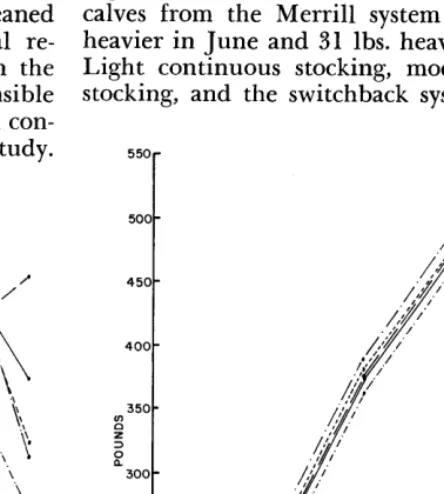
FIG. 1. Average canopy-time and herbage production-time re- lationships for three sites of the southwestern pinyon-juniper
type*
years between measurements to calculate the change in tree cover per year:
AC = C i+t - Ci
t (1)
where AC is the annual cover change; Ci is cover at the first measurement time, Ci+t is the cover at the second measurement time, and t is the number of years between measurements.
The data on cover changes fell into three popu- lations as follows:
Percent tree cover Annual cover change (AC)
(Cl) Mean Standard deviation
<1 0.1227 0.0879
1-3 .2493 .1173
>3 .4197 .3767
Pseudo-random numbers were converted to nor- mally distributed populations with means and standard deviations the same as the appropriate population of annual cover change. The annual cover change for each year was then added to exist- ing cover to build up cover-time data for a 250- year period. For any year n, the tree cover was, therefore
c, = i
ACi (2)id
Many synthetic cover-time tables were developed to examine the effects of different random samples. An average of 10 of the synthetic stands is pre- sented in Figure 1; many other runs were used to determine the effects of changing various input parameters such as mean annual tree cover change.
Growth patterns of individual trees and individual tree treatments.
Although costs of some broadcast methods of treatment can be adequately related to a whole-
sale expression of the stand growth such as percent cover, individual tree treatments such as bulldozing and individual tree burning require an accounting of individual trees. Such individual tree data were available for this study (Jameson, 1965). The data consisted of over 500 individual tree heights and crown diameters taken in 1938, 1948, and
1958 at a study plot located 25 miles north of Flag- staff, Arizona. The data represent only one loca- tion rather than being spread across the pinyon- juniper type as was the case of the tree cover data, but important aspects of stand changes could none- theless be evaluated.
One-foot size classes of trees were considered to be states in a Markov chain problem, and transi- tion probabilities from states of year “i” to states of year “i + 1” were computed. For any year i the distribution of tree size classes is
Xi = Xi-1
P
(3)
where x is a vector of tree sizes and
P
is the transi- tion probability matrix. Synthetic stands for 250- year periods were generated; stands of 20 to 180 trees per acre were included to examine the effect of tree density.Relationship of forage production and trees. As tree canopy increases forage production de- creases (Arnold et al., 1964). If mid‘grasses are originally present they will be replaced by blue grama (Bouteloua gracilis (H.B.K.) Lag. ex Steud), probably because of competition for moisture be- tween the midgrasses and trees. If the original grass stand is primarily blue grama, the rate of loss of grass production is less because the effect of trees on blue grama is primarily due to the tree litter and much less to competition for moisture (Jameson, 1966, 1970). Some soils of the pinyon- juniper type, specifically the Springerville series, will not support a stand of blue grama when an appreciable tree stand is present. The loss rate for forage production is greater on these soils than for other soils (Jameson and Dodd, 1969).
Herbage production and tree cover data from 186 plots collected earlier (Arnold et al., 1964) were stratified into three groups according to the grass and soil combinations as follows: (1) Mixed midgrass and shortgrass (blue grama) on Springer- ville series soils, (2) mixed midgrass and shortgrass on other than Springerville series soils, and (3) areas of primarily shortgrass. Overstory-under- story relationships were computed using the model:
Y = H + A(1 - e-bx)M (4)