Electronic Thesis and Dissertation Repository
4-23-2019 2:00 PM
The Effects of Linguistic Labels on Object Categorization and
The Effects of Linguistic Labels on Object Categorization and
Perception
Perception
Xuan PanThe University of Western Ontario
Supervisor Debra Jared
The University of Western Ontario Graduate Program in Psychology
A thesis submitted in partial fulfillment of the requirements for the degree in Doctor of Philosophy
© Xuan Pan 2019
Follow this and additional works at: https://ir.lib.uwo.ca/etd
Part of the Cognition and Perception Commons, Cognitive Psychology Commons, and the
Psycholinguistics and Neurolinguistics Commons
Recommended Citation Recommended Citation
Pan, Xuan, "The Effects of Linguistic Labels on Object Categorization and Perception" (2019). Electronic Thesis and Dissertation Repository. 6162.
https://ir.lib.uwo.ca/etd/6162
This Dissertation/Thesis is brought to you for free and open access by Scholarship@Western. It has been accepted for inclusion in Electronic Thesis and Dissertation Repository by an authorized administrator of
ii
The linguistic relativity hypothesis (Whorf, 1956) claims that speakers of different languages perceive and conceptualize the world differently. Language-thought interaction is likely to be more complex in bilinguals because they have two languages that could influence their cognitive and perceptual processes. Lupyan’s (2012) Label-feedback Hypothesis proposes a mechanism underpinning language-thought interactions, arguing that linguistic labels affect our conceptual and perceptual representations through top-down feedback. This thesis tested the Label-feedback Hypothesis by capitalizing on an interesting feature of Chinese. In English, most nouns do not provide linguistic clues to their categories (an exception is sunflower), whereas in Chinese, some nouns provide explicit category information
morphologically (e.g., ostrich and robin have the morpheme bird embedded in their Chinese names), while some nouns do not (e.g., penguin and pigeon). In Chapter 2, I investigated the effects of Chinese word structure on bilinguals’ categorization processes in either a Chinese or English-speaking environment with ERP. Chinese-English bilinguals and English
robin-iii
names affects people’s object perception. The influences of L1 word structure on object perception diminish as bilinguals live in the L2 country for a longer time.
Keywords
iv
First and foremost, I would like to express my deep and sincere gratitude to my supervisor, Dr. Debra Jared, for giving me the opportunity to do research and providing invaluable support and guidance throughout this research. Without her generous help and
encouragement, this thesis would not have been completed. I would also like to thank my advisory committee, Dr. Steve Lupker and Dr. Paul Minda, for their invaluable feedback for my thesis.
To my past and present lab mates: Eriko Matsuki, Nick Anderegg, Taylor Sguazzin, and Maz Mohamed. Thank you for your academic support and help. To the RAs I have worked with, thank you for your help on the data collection, I couldn’t have finished the research without your help.
Finally, my great appreciation goes to my parents and my husband, for their support and love
throughout my life. 感谢我的爸爸潘清和妈妈夏惠林,以及老公池子安,谢谢你们一直
v
Abstract ... ii
Acknowledgments ... iv
Table of Contents ... v
List of Tables ... viii
List of Figures ... x
List of Appendices ... xii
1 General Introduction ... 1
1.1 The Interaction between Language and Thought ... 1
1.1.1 The Label-feedback Hypothesis ... 3
1.1.1.1 The Role of Labelling in Categorization ... 5
1.1.1.2 The Role of Labelling in Object Perception ... 7
1.2 Bilingualism and Bilingual Mental Models ... 10
1.2.1 Bilingual Interactive Activation Plus Model ... 10
1.2.2 The Revised Hierarchical Model ... 12
1.2.3 Distributed Conceptual Feature Model ... 13
1.2.4 Shared (Distributed) Asymmetrical Model ... 14
1.3 Research Questions ... 18
1.3.1 How Does Word Structure Affect Object Categorization in Bilinguals? ... 19
1.3.2 How Does Word Structure Affect Object Perception in Bilinguals? ... 19
1.4 References ... 21
2 The Effects of Word Structure on Object Categorization ... 32
2.1 Rationale for the Present Study ... 35
2.2 Pilot Study 1 ... 37
vi
2.2.3 Data Analyses and Results ... 39
2.3 Pilot Study 2 ... 41
2.3.1 Participants ... 41
2.3.2 Procedure ... 41
2.3.3 Data Analyses and Results ... 42
2.4 Experiment 1 ... 44
2.4.1 Method ... 45
2.4.1.1 Participants ... 45
2.4.1.2 Materials ... 46
2.4.1.3 Procedure ... 46
2.4.1.4 EEG Recording and Preprocessing ... 47
2.4.2 Results ... 48
2.4.2.1 Behavioural Analyses ... 48
2.4.2.2 ERP Analyses... 56
2.4.3 Discussion ... 65
2.5 Experiment 2 ... 71
2.5.1 Method ... 73
2.5.1.1 Participants ... 73
2.5.1.2 Materials ... 74
2.5.1.3 Procedure ... 74
2.5.1.4 EEG recording and preprocessing ... 75
2.5.2 Results ... 75
2.5.2.1 Behavioural analyses ... 75
vii
2.6 Summary ... 85
2.7 References ... 87
3 The effects of word structure on object perception ... 94
3.1 Rationale for the Present Study ... 95
3.2 Method ... 97
3.2.1 Participants ... 97
3.2.2 Materials ... 98
3.2.3 Procedure ... 99
3.2.4 EEG recording and preprocessing ... 100
3.3 Results ... 100
3.3.1 N1/vMMN (140-180 ms) ... 102
3.3.2 P1 (100-140 ms, Standards only) ... 105
3.4 Discussion ... 107
3.5 References ... 113
4 General Discussion ... 115
4.1 Summary of the Current Findings ... 117
4.2 Theoretical Implications ... 119
4.3 Limitations and Future Directions ... 122
4.4 Conclusions ... 125
4.5 References ... 125
viii
Table 2.1. Mean Typicality Ratings in Pilot Study 1 (Original set of 108 items) ... 39
Table 2.2. Model for Comparisons of Typicality Ratings in the Potential List of 108 Items . 40
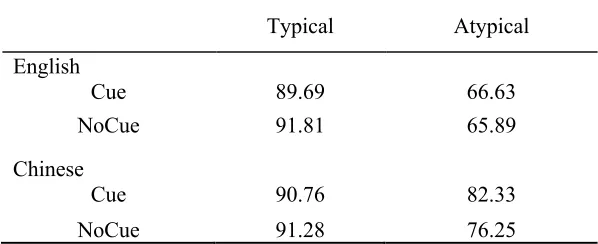
Table 2.3. Mean Percentage Naming Agreement in Pilot Study 2 ... 42
Table 2.4. Mean Typicality Ratings for the Reduced Set of 84 Items ... 43
Table 2.5. Model for Comparisons of Typicality Ratings in the Final List of 84 Items. ... 43
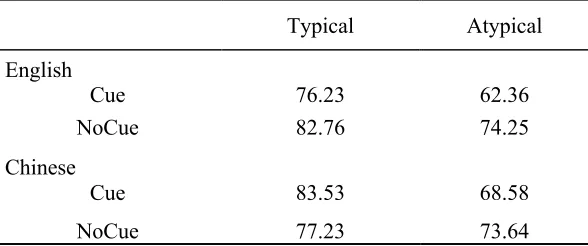
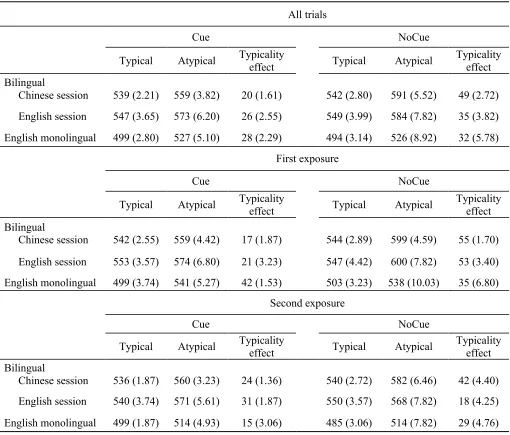
Table 2.6. Mean Response Times (in ms) and Percentage Error Rates (between brackets) in Experiment 1. ... 49
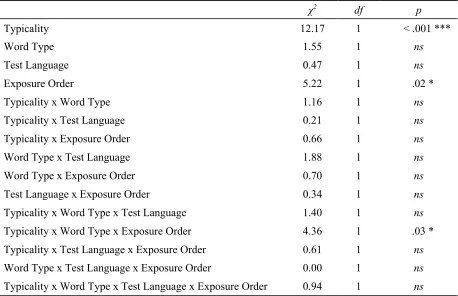
Table 2.7. Analysis of Variance Table for Model 1 (RTs in the two sessions that were
completed by bilinguals). ... 50
Table 2.8. Analysis of Variance Table for Model 2 (RTs from the first exposure in the two sessions that were completed by bilinguals). ... 51
Table 2.9. Analysis of Variance Table for Model 3 (RTs from the second exposure in the two sessions that were completed by bilinguals). ... 52
Table 2.10. Analysis of Variance Table for Model 4 (RTs in the English sessions). ... 53
Table 2.11. Analysis of Variance Table for Model 5 (RTs from the first exposure in the English sessions). ... 54
Table 2.12. Analysis of Variance Table for Model 6 (RTs from the second exposure in the English sessions). ... 54
Table 2.13. Analysis of Variance Table for Model 7 (N300 mean amplitudes in the two sessions that were completed by bilinguals). ... 61
Table 2.14. Analysis of Variance Table for Model 8 (N300 mean amplitudes in the English sessions). ... 62
Table 2.15. Analysis of Variance Table for Model 9 (ELC mean amplitudes in the two sessions that were completed by bilinguals). ... 63
ix
Table 2.18. Analysis of Variance Table for Model 11 (RTs). ... 77
Table 2.19. Analysis of Variance Table for Model 12 (N400 mean amplitudes). ... 78
Table 3.1. Analysis of Variance Table for Model 13 (vMMN in short-stay bilinguals and English monolinguals). ... 103
Table 3.2. Analysis of Variance Table for Model 14 (vMMN in long-stay bilinguals and English monolinguals). ... 104
Table 3.3. Analysis of Variance Table for Model 15 (P1 mean amplitudes, standards only in short-stay bilinguals and English monolinguals). ... 105
x
Figure 1.1. The Label-feedback Hypothesis (Lupyan, 2012). ... 4
Figure 1.2. The Revised Hierarchical Model (Kroll & Stewart, 1994). ... 12
Figure 1.3. The Shared (Distributed) Asymmetrical Model (Dong, Gui, & MacWhinney, 2005). ... 15
Figure 2.1. Experimental procedure in Experiment 1. ... 47
Figure 2.2. Electrode montage for Experiment 1 and Experiment 2. Circles indicate
electrodes included in the analysis. ... 57
Figure 2.3. Grand average waveforms in microvolts (μV) and voltage maps of the typicality effect (Atypical - Typical) in N300 and ELC components for bilinguals in the Mandarin session in Experiment 1. ... 58
Figure 2.4. Grand average waveforms in microvolts (μV) and voltage maps of the typicality effect (Atypical - Typical) in N300 and ELC components for bilinguals in the English session in Experiment 1. ... 59
Figure 2.5. Grand average waveforms in microvolts (μV) and voltage maps of the typicality effect (Atypical - Typical) in N300 and ELC components for the English monolinguals in Experiment 1. ... 60
Figure 2.6. Experimental procedure in Experiment 2. ... 75
Figure 2.7. Grand average waveforms in microvolts (μV) and voltage maps of the typicality effect (Atypical - Typical) in the N400 component for Mandarin-English bilinguals in
Experiment 2. ... 79
Figure 2.8. Grand average waveforms in microvolts (μV) and voltage maps of the typicality effect (Atypical - Typical) in the N400 component for English monolinguals in Experiment 2... 80
Figure 3.1. Experimental procedure in Study 2. ... 100
Figure 3.2. Electrode montage for Study 2. Circles indicate electrodes included in the
xi
xii
Appendix A: List of Critical Stimuli in Experiment 1, Chapter 2. ... 130
Appendix B: List of Critical Stimuli in Experiment 2, Chapter 2. ... 137
Appendix C: Ethical Approval for the Studies in Chapter 2 and Chapter 3 ... 142
Appendix D: Language Questionnaire used for English monolinguals in Chapter 2 and Chapter 3 ... 143
1
General Introduction
1.1
The Interaction between Language and Thought
The interaction between language and thought has been discussed for a long time in cognitive psychology. Speaking one or more specific languages has been shown to have an effect on the way we think about reality (see Wolff & Holmes, 2011, for a review). One illustration of the language-thought interaction was provided by Bloom (1981). In his study, he found that Mandarin Chinese speakers had difficulty with counterfactual reasoning. He argued that this was because Mandarin Chinese is a language that has no distinct lexical or grammatical device for counterfactual sentences (e.g., if dogs had no ears, they could not hear), leading its speakers construct schemas specific to counterfactual speech and thought less directly and with more cognitive effort than speakers of languages that do have counterfactual sentences.
Whorf (1940, 1956) suggested that the language(s) one speaks shapes the way one thinks, known as the famous linguistic relativity hypothesis (LRH):
“The linguistic relativity principle […] means, in informal terms, that users of markedly different grammars are pointed by their grammars toward different types of observations and different evaluations of externally similar acts of observation, and hence are not equivalent as observers but must arrive at somewhat different views of the world.” (Whorf, 1940, 1956)
linguistic determinism claim is that language determines thought. That is, the language we speak constrains our minds and prevents us from being able to think certain thoughts. If a language has no word for a certain concept, then its speakers would not be able to understand the concept. For example, according to the linguistic determinism, Mandarin Chinese speakers would not be able to think counterfactually, because Mandarin Chinese has no grammatical device for counterfactual sentences. This misinterpretation of
Whorf’s LRH, or the so-called strong version of LRH, has been widely criticized (e.g., Cardini, 2010; Heider, 1972; January & Kako, 2007; Li & Gleitman, 2002; Pavlenko, 2014; Tse & Altarriba, 2008).
1.1.1
The Label-feedback Hypothesis
More recently, Lupyan (2008, 2012) has proposed a hypothesis that attempts to explain the cognitive mechanisms underpinning language-thought interactions. His label-feedback hypothesis applies insights from interactive models (e.g., McClelland &
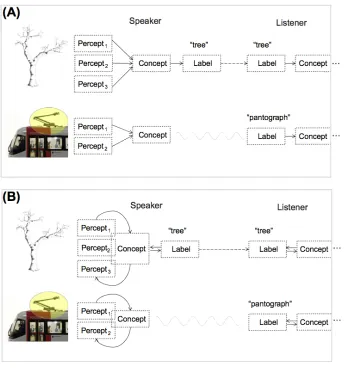
Rumelhart, 1981) to the issue of linguistic relativity. It proposes that language is highly interconnected with other cognitive processes, and influences other functional networks in a top-down fashion (see Figure 1.1). According to the label-feedback hypothesis, a word label is not simply a means of accessing a concept; rather, its activation affects the representation and perception of the concept. As shown in Figure 1.1 (B), the
bidirectional information flow between a concept, the label, and perceptual
representations means that the label can provide feedback to the level of conceptual representations and perception, thus, the activation of the label can change the nature of the concept itself. The concept associated with a verbal label may be systematically different than the ostensibly same concept which is not associated with a label. Furthermore, the influence of verbal label is not limited to novel concepts, the
Figure 1.1. The Label-feedback Hypothesis (Lupyan, 2012). (A): A schematic view of the standard account in which a word label is simply a means of accessing a concept. Multiple perceptual exemplars of a concept map onto a common conceptual
representation. The concept is further mapped onto a word label, which enables a speaker to activate the same concept in a listener using the label. The one-way connections between representational layers prevent the word label to have an influence on the conceptual representations. (B): A schematic view of the label-feedback hypothesis. All representational layers are recurrently connected, which allows the word label to affect the conceptual representations through feedback.
affect what we see. Third, named concepts should be activated differently under the on-line influence of the label compared to the same concepts activated by nonverbal means, or when the labels are prevented from affecting the concept. According to the label-feedback hypothesis, the activation of an object’s verbal label results in the activation of the most typical or diagnostic features of the category (e.g., the label “car” activates the feature “has wheels” more strongly than the feature “is black”). This top-down activation from verbal labels to features produces a transient “perceptual warping” in which
category members that share those features are drawn closer together and non-members are pushed away. In this dissertation, I focused on perceptual features for objects, but there could be feedback from verbal labels to other types of features as well, such as functional features for tools. While the label-feedback hypothesis proposes that the activation of a label has an on-line influence on the representation of the labeled concept and ongoing cognitive processing, it is also possible that through our daily usage of language, the feedback from labels gradually changes the organization of our conceptual representations. Category members become more strongly associated with the most diagnostic features of the category through the feedback from our daily usage of category labels, with the result that category members are represented closer together, and non-members are represented further away from each other.
1.1.1.1
The Role of Labelling in Categorization
There is ample evidence that supports the effect of labelling on categorization. Studies of category learning provide evidence that learning is augmented by language. Categories are learned more effectively when the categories are accompanied by their labels, in infants and toddlers (Fulkerson & Waxman, 2007; Robinson, Best, Deng, & Sloutsky, 2012; Waxman & Markow, 1995), older children (Casasola, 2005; Fulkerson & Waxman, 2007), and adults (Lupyan & Casasanto, 2015; Lupyan et al., 2007). Labels are not only helpful in the case of learning new categories, labels continue to aid
associated cues, such as nonlinguistic sounds (Boutonnet & Lupyan, 2015; Edmiston & Lupyan, 2015; Lupyan & Thompson-Schill, 2012), and numbers or symbols (Gervits, Johanson, & Papafragou, 2016). For example, in Lupyan et al.'s study (2007),
participants learned to categorize “aliens” as those to be approached or those to be
avoided with nonsense category labels or other non-linguistic cues present or not. Results showed that learning named categories was easier than learning unnamed categories, and this facilitation effect could not be achieved by providing other non-linguistic cues. Similarly, Lupyan (2008) presented participants with pictures of common objects such as chairs and tables, and then asked them to label some of them with their basic-level name (e.g., “chair”), and to provide a nonverbal response to others (e.g., indicating whether they liked that particular chair or not). In the subsequent recognition memory test, participants had substantially worse memory on the objects they had labeled. This was explained by proposing that labeling resulted in the activation of prototypical features and thus made the representations of stimuli more categorical.
Just as adding linguistic experience can enhance categorization, studies have also suggested that interfering with linguistic related tasks can impair categorization processes (Davidoff & Roberson, 2004; Lupyan, 2009). Individuals with anomic aphasia (a mild type of aphasia where an individual has word retrieval failures and cannot express the words they want to say) showed impaired categorization processes (Lupyan & Mirman, 2013). Additionally, in Perry and Lupyan's study (2014), participants performed a novel perceptual categorization task in which categories could be distinguished by either a uni- or bi-dimensional criterion. They found that participants tend to rely more on complex rules (bi-dimensional solution) when implicit labeling was interfered with using cathodal stimulation over Wernicke’s area. Conversely, participants tend to rely more on a uni-dimensional solution when explicit labeling of the two categories was provided when they were doing the task. This was explained by proposing that labeling facilitated selective representation of the most useful features for categorization.
recognition experiments. On each trial participants heard a cue, either a verbal cue such as “dog” or a non-verbal cue such as a dog bark. Following the cue, participants saw a picture that either matched the cue at the basic level (e.g. a picture of a dog) or did not match (e.g. a picture of a car). Participants had to indicate whether the cue matched the image. The results showed that hearing words led to faster categorization of subsequently presented pictures than hearing non-verbal cues. Additionally, the advantage of verbal cues over non-verbal cues was larger for the more typical, compared with less typical exemplars. The researchers argued that this observation was consistent with the claim of the label-feedback hypothesis that labels activate a representation that emphasizes category-diagnostic features and abstracts over more idiosyncratic features, in other words, typical exemplars of a category. All these studies have suggested that verbal labels have an important role in category formation and object categorization.
1.1.1.2
The Role of Labelling in Object Perception
The label-feedback hypothesis also accounts for the enhanced categorical
perception resulting from different ways that languages label objects. Many recent studies have provided evidence in support of this hypothesis in the domains of colour perception (Athanasopoulos, 2009; Athanasopoulos, Dering, Wiggett, Kuipers, & Thierry, 2010; Forder & Lupyan, 2017; Hu et al., 2014; Roberson, 2012; Roberson & Davidoff, 2000; Thierry et al., 2009; Winawer et al., 2007), sound pitch perception (Dolscheid, Shayan, Majid, & Casasanto, 2013), time and spatial perception (Boroditsky, 2001; Boroditsky, Fuhrman, & McCormick, 2011; Casasanto & Boroditsky, 2008; Choi & Hattrup, 2012; Fuhrman et al., 2011; Lai & Boroditsky, 2013; Y. Li et al., 2018), and object perception (Boutonnet, Athanasopoulos, & Thierry, 2012; Boutonnet, Dering, Viñas-Guasch, & Thierry, 2013; Jouravlev, Taikh, & Jared, 2018; Masuda et al., 2017). The evidence that provides support for the language and perception interaction comes from both
In a visual oddball paradigm, participants identify infrequent visual target stimuli within a continuous flow of rapidly presented stimuli. The critical stimuli in this design are nontarget stimuli. Within the critical stimuli, a standard stimulus is presented with a high local probability (e.g., 80%), and a deviant stimulus is presented with a low local probability (e.g., 15%). The presentation of a deviant stimulus in a sequence of standards is known to evoke a visual mismatch negativity (vMMN) response in an early time window (usually peaking at around 150 to 250 ms, see Czigler, 2014; Pazo-Alvarez, Cadaveira, & Amenedo, 2003, for reviews). The finding has been interpreted as indicating that the vMMN is purely perceptual, because it was believed that specific lexical information is unlikely to be available in this early time window (Strijkers, Holcomb, & Costa, 2011; Thierry, 2016). The vMMN is assessed by comparing the average amplitude of the waveform for the deviant in the time window of interest to that for the standard. To ensure that these comparisons reflect deviancy and not inherent perceptual differences between the standards and deviants, studies typically
counterbalance stimuli such that a stimulus that is a standard in one block of trials is the deviant in a second block, and data are averaged across the two blocks. The magnitude of vMMN has been broadly used as an index of perceived difference/similarity between objects.
In a more recent study, Boutonnet et al. (2013) investigated the effects of labeling on object perception using a visual oddball paradigm. English has two words refer to a cup and a mug, while Spanish only uses one label taza for these two objects. Pictures of cups and mugs were used as standards and deviants in the oddball detection task. Results showed that the vMMN effect was larger in English compared to Spanish participants, suggesting that English speakers perceived a greater difference between the two objects than Spanish speakers. According to the label-feedback hypothesis (Lupyan, 2012), when the standard and deviant objects share a verbal label (e.g., taza for Spanish speakers), the perceptual features that are activated by top-down feedback from the label are largely overlapped for the standard and deviant objects, causing them to be perceived more similarly.
More recently, Jouravlev et al. (2018) used a visual oddball paradigm to investigate the perception of objects that share a common verbal label but belong to different conceptual categories. In their Experiment 1, pictures of orange as a fruit and orange as a colour were used as critical stimuli. Pictures of an apple and colour red were used as controls. In Experiment 2, pictures of bat as an animal and as a baseball bat were used as critical stimuli. Pictures of a bird and a hockey stick were used as controls. Results showed that native English speakers had a larger vMMN effect for controls than critical stimuli pairs, suggesting that English speakers perceived two objects as more similar if they share a label even when the two objects are very dissimilar and from different conceptual categories.
language and thought in a bilingual’s mind. The issue of language-thought interaction in bilinguals has become increasingly important.
1.2
Bilingualism and Bilingual Mental Models
It is estimated that more than half of the world’s population are bilinguals (Grosjean & Li, 2013). Grosjean (1989) suggested that bilinguals are not simply “two monolinguals in one”. Over the past decades, researchers have investigated whether bilinguals selectively active only the language in use or whether activation is nonselective. Most of the existing studies provided supporting evidence for the
nonselective activation view: bilinguals activate information from both of their languages simultaneously even when they are using only one of their languages. The activation of the language not in use either facilitates or interferes with the processing of the target language that is used at the moment (e.g., Dijkstra, Van Heuven, & Grainger, 1998; Grainger & Dijkstra, 1992; Jared & Kroll, 2001; Kroll & Stewart, 1994; Misra, Guo, Bobb, & Kroll, 2012; Nakayama, Sears, Hino, & Lupker, 2013; Wu & Thierry, 2010). This cross-language interaction in bilinguals’ everyday life can change the ways
bilingual’s languages are processed and the way concepts are represented in their minds. The interaction of bilinguals’ two languages has led bilingual researchers to hypothesize about how bilinguals might represent their two languages in memory. The question of whether bilingual’s two languages are represented in two separated language-specific stores or just one integrated, language-independent store has been one of the central issues in the bilingual literature. There have been several models of bilinguals that have proposed ideas about lexical representations (labels) in each language and their
relationship to conceptual representations.
1.2.1
Bilingual Interactive Activation Plus Model
identification subsystem and a task/decision subsystem. In the word identification system, there are four levels of representation: sublexical orthography and phonology,
orthography and phonology of whole words, language nodes indicating language membership, and word semantics. The model is interactive in the sense that
representations at a particular level can activate and inhibit representations at adjacent higher or lower levels. In visual word recognition, the sublexical representations activate corresponding whole-word lexical representations, which then activate relevant semantic representations as well as language nodes that indicate membership in a particular language. All of the information from the word identification subsystem is then used in the task/decision subsystem to carry out the remainder of the task at hand (e.g., word identification), such as which action must be executed.
1.2.2
The Revised Hierarchical Model
The Revised Hierarchical Model (RHM; Kroll & Stewart, 1994) is a model of bilingual memory. This model distinguishes between the lexical level and the conceptual level, and focuses on the mapping between lexical and conceptual stores. The RHM assumes that bilinguals organize their languages in two separate lexicons with one shared conceptual system. Importantly, the RHM proposes asymmetrical connections between bilingual memory representations. At the lexical level, the connection from L2 to L1 is stronger than that from L1 to L2 because L2 to L1 is the direction in which second language learners first acquire the translations of new L2 words. The link between a shared concept and the L1 lexicon is stronger than the link between a shared concept and the L2 lexicon (see Figure 1.2). The RHM assumes that when a person first learns a second language, there is already a strong link between the L1 lexicon and conceptual representations. L2 words are attached to the system by lexical links with L1. As
bilinguals become more proficient in L2, direct conceptual links are also acquired, but are still weaker than the link between L1 lexicon and the shared concept. Based on the
asymmetrical connections, the RHM proposes different pathways for L2-L1 translation and L1-L2 translation: a direct lexical link from L2 to L1, but an indirect conceptual link from L1 to L2, by way of the concept.
Figure 1.2. The Revised Hierarchical Model (Kroll & Stewart, 1994).
L1 L2
concepts
lexical links
conceptual links conceptual
Many studies have supported the idea that there are asymmetrical connections between L1 and L2. A frequently used task is to give participants a word in one language and ask them to translate it into their other language. An asymmetrical translation effect is typically found in which translation from L2 to L1 is faster than translation from L1 to L2 (Chen, Cheung, & Lau, 1997; Cheung & Chen, 1998; Kroll & Stewart, 1994;
Sánchez-Casas, Suárez-Buratti, & Igoa, 1992). In addition, conceptual factors (e.g., concreteness of a word) were found to affect translations from L1 to L2, but not L2 to L1 (Kroll & Stewart, 1994; Sholl, Sankaranarayanan, & Kroll, 1995), supporting the
assumption that L2 to L1 translation goes through a direct lexical link, but L1 to L2 translation encompasses an indirect conceptual link. The RHM proposed detailed
assumptions regarding to the mapping between lexical and conceptual stores in bilingual memory. However, this model does not provide any insight into the nature of bilingual conceptual representations. Recently, Dijkstra et al. (2018) proposed a new
computational model: Multilink which integrated basic assumptions of both the BIA+ and RHM. Multilink has been shown to successfully simulate bilingual word recognition and word translation (Dijkstra et al., 2018). However, all these models (RHM, BIA+, and Multilink) put aside the nature of conceptual representations. Concepts are represented in a “black box” in these models.
1.2.3
Distributed Conceptual Feature Model
The Distributed Conceptual Feature (DCF) model (De Groot, 1992) is another model of bilingual memory. Unlike the RHM, this model focuses on the nature of bilingual conceptual representations and elaborates on how translations that are not entirely equivalent in meaning may be represented in the conceptual store. The DCF model proposes that concepts are represented by sets of semantic features. In this
barks, etc.). On the other hand, translation equivalents would exhibit more language specific features if the concepts are dissimilar in two languages (e.g., “dragon” in English has some English specific features, like has wings, that are not shared by “龙” in
Chinese). The DCF model also assumes that translation pairs that are concrete words and cognate words may share more semantic features than pairs that are abstract words and noncognate words. Therefore, concrete and cognate words are more likely to be very similar in meaning across languages, whereas abstract words are more likely to activate language specific information.
Evidence for this model generally comes from studies that show a concreteness effect in bilingual word recognition and translation (De Groot, 1992; Heredia, 1995; Van Hell & Groot, 1998). Bilinguals are assumed to recognize and translate concrete words faster than abstract words because access to shared conceptual information is more available for concrete words than abstract words. The DCF model provides some insights into the question of how concepts are represented in bilingual’s mind, and shows how translations that are not entirely equivalent in meaning might be represented in bilingual’s mind. However, it lacks a developmental account as to how bilinguals develop
conceptual representations as they become more proficient in L2 and more often exposed to an L2-speaking environment.
1.2.4
Shared (Distributed) Asymmetrical Model
The Shared (Distributed) Asymmetrical (SDA) model (Dong, Gui, &
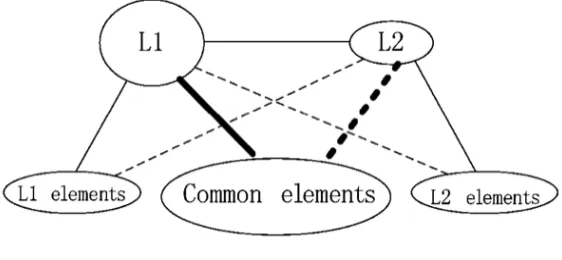
MacWhinney, 2005) is a more recent model about bilingual conceptual representations. Like the DCF model, the SDA model assumes that concepts are represented by sets of semantic elements. Translation equivalent words are assumed to have links to both common elements that are shared across different languages and language-specific
elements. For example, the word dragon and the Chinese translation 龙may share
semantic elements change as bilinguals become more proficient in L2. The model assumes that when first acquiring a second language, the L2 learner starts by assuming the representation of an L2 word has all the elements of its translation equivalent in L1. As the bilingual becomes more proficient in L2, the link between L2 words and L1-specific elements is gradually eliminated as the link between L2 words and L2-L1-specific elements is added and gradually strengthened. The acquisition of L2-specific elements can also result in bilinguals developing connections between L1 words and L2-specific elements (see Figure 1.3).
Figure 1.3. The Shared (Distributed) Asymmetrical Model (Dong, Gui, & MacWhinney, 2005). The symbols L1 and L2 stand for particular L1 and L2 words. L1 and L2 elements stand for semantic elements that are specific to one language. Common elements stand for semantic elements that are shared across languages.
Supporting evidence for the SDA model comes from Dong et al.'s study (2005). In this study, participants were asked to rate the semantic similarity of culturally-loaded word pairs (e.g., red and bride are highly related in Chinese culture but not in Western culture). Chinese-English bilinguals with different English proficiency were tested, as well as Chinese and English monolinguals. The results showed that when tested in English, the rating patterns of highly proficient bilinguals resembled English
from Chinese monolinguals more than low proficiency bilinguals, suggesting that highly proficient bilinguals developed new links between L1 words and L2-specific elements, and thus performed less like Chinese monolinguals.
To summarize, there are several strong models of bilingual language processing and bilingual memory. They have described how the lexicon and concepts are
represented in a bilingual’s mind, and how lexical and conceptual representations are linked. Each model has received supporting evidence from various studies. The DCF and SDA models (DeGroot, 1992; Dong et al., 2005) are most like the model assumed in the label-feedback hypothesis except that they have two lexical stores instead of one.
However, the proponents of these bilingual models did not make any hypotheses concerning how lexical representations might influence the organization of semantic features. As mentioned before, the label-feedback hypothesis assumes that a word label is not simply a means of accessing a concept; but it can affect the representation of the concept through activating the most typical features of the concept. Although this idea was originally developed in monolinguals, it can provide some new insights into
bilinguals too. A bilingual’s conceptual organization can be different from monolinguals in each language due to the influence from both of their languages. Studies investigating naming patterns of common household objects in bilinguals and monolinguals have suggested that bilinguals describe existing categories differently from monolinguals in both their first and second languages. (Ameel, Malt, Storms, & Van Assche, 2009; Ameel, Storms, Malt, & Sloman, 2005; Malt, Li, Pavlenko, Zhu, & Ameel, 2015; Malt & Sloman, 2003; Pavlenko & Malt, 2011). For example, in Pavlenko and Malt’s study (2011), Russian-English bilinguals were asked to name images of 60 common drinking containers, in which some containers were categorized differently between Russian and English monolinguals. For example, English cup is used more broadly than its Russian translation chashka. Two containers that both are called cup in English can be labelled differently in Russian: one is called stakan and the other is called chashka.The results showed that early bilinguals’ naming patterns for their two languages were more similar to each other compared to the naming patterns observed in monolinguals in each
argued that early bilinguals’ lexical conceptual representations have converged across languages resulting from the combination of two inputs in their childhood environment. In another study, Ameel et al. (2009) found evidence for converging category centers and boundaries for Dutch-French bilinguals. Participants rated the typicality of various items from two categories (bottles vs. dishes). The results showed that category centers
(prototypes of one category) in the bilingual’s two languages were situated closer to each other than were the corresponding monolingual category centers. The researchers
concluded that category representations in a bilingual’s mind are highly influenced by convergence, that is, the category structure in a bilingual’s mind is largely distinct from that of monolinguals in either language. The category structure changes with language input, but the changes are longer term that the temporary perceptual warping assumed by Lupyan (2012).
Some other studies on colour representation and colour perception have also demonstrated the complexity of language-thought interaction in bilinguals. In a study on colour representation, Athanasopoulos (2009) showed that advanced Greek-English bilinguals shifted their colour prototypes to form a new representation of colour
Language-thought interaction in bilinguals is a compelling question that needs to be investigated more thoroughly.
1.3
Research Questions
The main objective of my dissertation is therefore to better understand the language-thought interaction in a bilingual’s mind, at the same time testing the label-feedback hypothesis from a new perspective. While verbal labels are known to play an important role in conceptual representations and perception, the influence of the
characteristics of the verbal label itself, like the structure of a verbal label, has received less attention. Words can be constructed in different ways. For example, compound words are formed by combining two individual words together (e.g., watermelon). In Mandarin Chinese, most nouns are compound words, and they provide explicit category information morphologically. Most of the items within one category share a common root morpheme which provides explicit cues to their super-ordinate categories. For example, most bird names share the morpheme “鸟” in Mandarin, which means bird (e.g., robin,
知更鸟, woodpecker, 啄木鸟, ostrich, 鸵鸟, etc.). On the other hand, in English, most
nouns do not provide linguistic cues as to their categories. For example, most bird names in English do not have the category name “bird” in them (e.g., robin, woodpecker, ostrich, etc.), although a few do (e.g., bluebird). The category cue embedded in objects’ Chinese names provides category information both orthographically and phonologically. The category morpheme is pronounced when spoken, just like the English word bluebird.
My dissertation investigated the influences of word structure on object
categorization and object perception by capitalizing on the differences in the way that nouns are constructed in Mandarin Chinese and English. In Chapter 2, I used event-related potentials (ERPs) to examine the effects of word structure on object
1.3.1
How Does Word Structure Affect Object Categorization in
Bilinguals?
In Chapter 2, I investigated how word structure affects object categorization in bilinguals. Past research has provided much evidence that verbal labels have an important role in category formation and categorization processes (e.g., Edmiston & Lupyan, 2015; Lupyan & Casasanto, 2015; Lupyan & Thompson-Schill, 2012). Associating a label with a category could facilitate the acquisition of the category (e.g., Lupyan et al., 2007). The involvement of category labels in categorization processes could result in enhanced categorization performance, but poorer ability to make within-category distinctions (e.g., Lupyan, 2008). However, to my knowledge, most research has focused on the advantage of verbal labels over no label present or other non-verbal cues in categorization. Few studies paid attention to the potential effects of word structure on categorization
processes. In addition, most of the previous studies focused on monolingual groups. The question of how word structure affects object categorization in bilinguals is still
unknown.
In Experiment 1, I used ERPs to examine the effects of Chinese word structure on bilinguals’ categorization processes in either a Chinese or English-speaking environment. Of interest was whether category information in an object’s Chinese name facilitated categorization of the object in both Chinese and English-speaking environments. In Experiment 2, I used ERPs to further examine the effects of Chinese word structure on bilinguals’ categorization processes when bilinguals were put into a strong English monolingual mode. Of interest was whether category information in an object’s Chinese name facilitated categorization of the object in a pure English-speaking environment where no clue showed that Chinese was involved.
1.3.2
How Does Word Structure Affect Object Perception in Bilinguals?
could penetrate perceptual processes such that a category label affects categorical perception. Other studies using this paradigm have shown that sharing a verbal label in two objects enhanced perceived similarity of the two objects (e.g., Boutonnet et al., 2013; Jouravlev et al., 2018). When a label is activated, top-down processing would highlight the typical or diagnostic features for the labelled category, minimizing within-category differences, thus enhancing the perceived similarity of two objects sharing the same name. However, like studies investigating the effects of labels on categorization, most research on the language-perception interaction has focused on the effect of two objects sharing an identical label, but does not take word structure into account. Therefore, in the second study of my dissertation, I further investigated the effects of word structure on object perception in Chinese and English speakers by using ERPs. Specifically, of interest was whether sharing a category level cue in typical and atypical exemplars’ verbal labels enhances the perceived similarity of the objects. Furthermore, research has shown that immersion in an L2-speaking environment makes bilinguals less sensitive to the linguistic distinctions that exist only in their L1 (e.g., Athanasopoulos, 2009;
Athanasopoulos et al., 2010). Thus, in the second study of my dissertation, I also tested Chinese-English bilinguals who have lived in Canada for a relatively long time, to see if the experience of immersing in a second language-speaking environment diminishes the influences from bilinguals’ first language on object perception.
To summarize, a full understanding of language-thought interaction must not just take into account the difference between cognitive processes accompanied by a verbal label vs. no verbal label present, but also take into account the effect of characteristics of a label itself. In addition, the language-thought interaction in the minds of bilinguals still needs further investigation. It could be different from and more complex than language-thought interaction in monolinguals. The aim of the present review was to identify
1.4
References
Ameel, E., Malt, B. C., Storms, G., & Van Assche, F. (2009). Semantic convergence in the bilingual lexicon. Journal of Memory and Language, 60(2), 270–290.
Ameel, E., Storms, G., Malt, B. C., & Sloman, S. A. (2005). How bilinguals solve the naming problem. Journal of Memory and Language, 53(1), 60–80.
Ando, E., Jared, D., Nakayama, M., & Hino, Y. (2014). Cross-script phonological priming with Japanese Kanji primes and English targets. Journal of Cognitive Psychology, 26(8), 853–870.
Ando, E., Matsuki, K., Sheridan, H., & Jared, D. (2015). The locus of Katakana–English masked phonological priming effects. Bilingualism: Language and Cognition, 18(1), 101–117.
Athanasopoulos, P. (2009). Cognitive representation of colour in bilinguals: The case of Greek blues. Bilingualism: Language and Cognition, 12(1), 83–95.
Athanasopoulos, P., Dering, B., Wiggett, A., Kuipers, J. R., & Thierry, G. (2010). Perceptual shift in bilingualism: Brain potentials reveal plasticity in pre-attentive colour perception. Cognition, 116(3), 437–443.
Beauvillain, C., & Grainger, J. (1987). Accessing interlexical homographs: Some limitations of a language-selective access. Journal of Memory and Language, 26(6), 658–672.
Bijeljac-babic, R., Biardeau, A., & Grainger, J. (1997). Masked orthographic priming in bilingual word recognition. Memory & Cognition, 25(4), 447–457.
Bloom, A. H. (1981). The linguistic shaping of thoughts: A study in the impact of language on thinking in China and the West. New York: Psychology Press.
Boroditsky, L., Fuhrman, O., & McCormick, K. (2011). Do English and Mandarin speakers think about time differently? Cognition, 118(1), 123–129.
Boutonnet, B., Athanasopoulos, P., & Thierry, G. (2012). Unconscious effects of grammatical gender during object categorisation. Brain Research, 1479, 72–79.
Boutonnet, B., Dering, B., Viñas-Guasch, N., & Thierry, G. (2013). Seeing objects through the language glass. Journal of Cognitive Neuroscience, 25(10), 1702– 1710.
Boutonnet, B., & Lupyan, G. (2015). Words jump-start vision: A label advantage in object recognition. Journal of Neuroscience, 35(25), 9329–9335.
Brown, R. W., & Lenneberg, E. H. (1954). A study in language and cognition. The Journal of Abnormal and Social Psychology, 49(3), 454–462.
Brysbaert, M., Van Dyck, G., & Van de Poel, M. (1999). Visual word recognition in bilinguals: Evidence from masked phonological priming. Journal of Experimental Psychology: Human Perception and Performance, 25(1), 137–148.
Cardini, F. E. (2010). Evidence against Whorfian effects in motion conceptualisation. Journal of Pragmatics, 42(5), 1442–1459.
Casasanto, D., & Boroditsky, L. (2008). Time in the mind: Using space to think about time. Cognition, 106(2), 579–593.
Casasola, M. (2005). Can language do the driving? The effect of linguistic input on infants’ categorization of support spatial relations. Developmental Psychology, 41(1), 183–192.
Chen, H. C., Cheung, H., & Lau, S. (1997). Examining and reexamining the structure of Chinese-English bilingual memory. Psychological Research, 60(4), 270–283.
1013.
Choi, S., & Hattrup, K. (2012). Relative contribution of perception/cognition and language on spatial categorization. Cognitive Science, 36(1), 102–129.
Costa, A., Strijkers, K., Martin, C., & Thierry, G. (2009). The time course of word retrieval revealed by event-related brain potentials during overt speech. Proceedings of the National Academy of Sciences, 106(50), 21442–21446.
Czigler, I. (2014). Visual mismatch negativity and categorization. Brain Topography, 27(4), 590–598.
Davidoff, J., & Roberson, D. (2004). Preserved thematic and impaired taxonomic
categorisation: A case study. Language and Cognitive Processes, 19(1), 137–174.
De Groot, A. M. B. (1992). Bilingual lexical representation: A closer look at conceptual representations. In R. Frost & L. Katz (Eds.), Orthography, phonology,
morphology, and meaning (Vol. 94, pp. 389–412). Amsterdam: Elsevier.
De Groot, A. M. B., Delmaar, P., & Lupker, S. J. (2000). The processing of interlexical homographs in translation recognition and lexical decision: Support for non-selective access to bilingual memory. The Quarterly Journal of Experimental Psychology, 53(2), 397–428.
Dijkstra, T., & Van Heuven, W. (2002). The architecture of the bilingual word
recognition system: From identification to decision. Bilingualism: Language and Cognition, 5(3), 175–197.
Dijkstra, T., Jaarsveld, H. V., & Brinke, S. T. (1998). Interlingual homograph
recognition: Effects of task demands and language intermixing. Bilingualism: Language and Cognition, 1(1), 51–66.
Dijkstra, T., Wahl, A., Buytenhuijs, F., Halem, N. V., Al-Jibouri, Z., Korte, M. D., & Rekké, S. (2018). Multilink: a computational model for bilingual word
recognition and word translation. Bilingualism: Language and Cognition, 1–23.
Dolscheid, S., Shayan, S., Majid, A., & Casasanto, D. (2013). The thickness of musical pitch: Psychophysical evidence for linguistic relativity. Psychological Science, 24(5), 613–621.
Dong, Y., Gui, S., & MacWhinney, B. (2005). Shared and separate meanings in the bilingual mental lexicon. Bilingualism: Language and Cognition, 8(3), 221–238.
Edmiston, P., & Lupyan, G. (2015). What makes words special? Words as unmotivated cues. Cognition, 143, 93–100.
Forder, L., & Lupyan, G. (2017). Hearing words changes color perception: Facilitation of color discrimination by verbal and visual cues. PsyArXiv Preprints. Retrieved from https://psyarxiv.com/f83au/
Friedman, W. J. (2004). Time in autobiographical memory. Social Cognition, 22(5), 591– 605.
Fuhrman, O., McCormick, K., Chen, E., Jiang, H., Shu, D., Mao, S., & Boroditsky, L. (2011). How linguistic and cultural forces shape conceptions of time: English and Mandarin time in 3D. Cognitive Science, 35(7), 1305–1328.
Fulkerson, A. L., & Waxman, S. R. (2007). Words (but not tones) facilitate object
categorization: Evidence from 6- and 12-month-olds. Cognition, 105(1), 218–228.
Gervits, F., Johanson, M., & Papafragou, A. (2016). Intentionality and the role of labels in categorization. Retrieved from
https://mindmodeling.org/cogsci2016/papers/0206/paper0206.pdf
Grainger, J., & Dijkstra, T. (1992). On the representation and use of language
Grosjean, F. (1989). Neurolinguists, beware! The bilingual is not two monolinguals in one person. Brain and Language, 36(1), 3–15.
Grosjean, F., & Li, P. (2013). The psycholinguistics of bilingualism. Chichester, UK: Wiley-Blackwell.
Haigh, C. A., & Jared, D. (2007). The activation of phonological representations by bilinguals while reading silently: Evidence from interlingual homophones. Journal of Experimental Psychology: Learning, Memory, and Cognition, 33(4), 623–644.
Hannah, R. (2009). Time in antiquity. London/New York: Routledge.
Heider, E. R. (1972). Universals in color naming and memory. Journal of Experimental Psychology, 93(1), 10–20.
Heredia, R. (1995). Concreteness effects in high frequency words: A test of the revised hierarchical and the mixed models of bilingual memory representations.
(Unpublished doctoral dissertation). University of California, Santa Cruz.
Hoijer, H. (1954). Language in culture; conference on the interrelations of language and other aspects of culture. Chicago: University of Chicago Press.
Hu, Z., Hanley, J. R., Zhang, R., Liu, Q., & Roberson, D. (2014). A conflict-based model of color categorical perception: Evidence from a priming study. Psychonomic Bulletin & Review, 21(5), 1214–1223.
January, D., & Kako, E. (2007). Re-evaluating evidence for linguistic relativity: Reply to Boroditsky (2001). Cognition, 104(2), 417–426.
Jared, D., & Kroll, J. F. (2001). Do bilinguals activate phonological representations in one or both of their languages when naming words? Journal of Memory and Language, 44(1), 2–31.
interlingual homograph naming. Bilingualism: Language and Cognition, 5(3), 225–239.
Jouravlev, O., & Jared, D. (2014). Reading Russian–English homographs in sentence contexts: Evidence from ERPs. Bilingualism: Language and Cognition, 17(1), 153–168.
Jouravlev, O., Lupker, S. J., & Jared, D. (2014). Cross-language phonological activation: Evidence from masked onset priming and ERPs. Brain and Language, 134, 11– 22.
Jouravlev, O., Taikh, A., & Jared, D. (2018). Effects of lexical ambiguity on perception: A test of the label feedback hypothesis using a visual oddball paradigm. Journal of Experimental Psychology: Human Perception and Performance, 44(12), 1842– 1855.
Kroll, J. F., & Stewart, E. (1994). Category interference in translation and picture naming: Evidence for asymmetric connections between bilingual memory representations. Journal of Memory and Language, 33(2), 149–174.
Lai, V. T., & Boroditsky, L. (2013). The immediate and chronic influence of spatio-temporal metaphors on the mental representations of time in English, Mandarin, and Mandarin-English speakers. Frontiers in Psychology, 4, 142
Lemhöfer, K., & Dijkstra, T. (2004). Recognizing cognates and interlingual homographs: Effects of code similarity in language-specific and generalized lexical decision. Memory & Cognition, 32(4), 533–550.
Lenneberg, E. H. (1953). Cognition in ethnolinguistics. Language, 29(4), 463–471.
Li, P., Abarbanell, L., Gleitman, L., & Papafragou, A. (2011). Spatial reasoning in Tenejapan Mayans. Cognition, 120(1), 33–53.
Li, Y., Jones, M., & Thierry, G. (2018). Timeline blurring in fluent Chinese-English bilinguals. Brain Research, 1701, 93–102.
Lupyan, G. (2008). From chair to “chair”: A representational shift account of object labeling effects on memory. Journal of Experimental Psychology: General, 137(2), 348–369.
Lupyan, G. (2009). Extracommunicative functions of language: Verbal interference causes selective categorization impairments. Psychonomic Bulletin & Review, 16(4), 711–718.
Lupyan, G. (2012). What do words do? Toward a theory of language-augmented thought. In B. H. Ross (Ed.), The psychology of learning and motivation (Vol. 57, pp. 255– 297). Waltham, MA: Academic Press.
Lupyan, G., & Casasanto, D. (2015). Meaningless words promote meaningful categorization. Language and Cognition, 7(2), 167–193.
Lupyan, G., & Mirman, D. (2013). Linking language and categorization: Evidence from aphasia. Cortex, 49(5), 1187–1194.
Lupyan, G., Rakison, D. H., & McClelland, J. L. (2007). Language is not just for talking: Redundant labels facilitate learning of novel categories. Psychological Science, 18(12), 1077–1083.
Lupyan, G., & Thompson-Schill, S. L. (2012). The evocative power of words: Activation of concepts by verbal and nonverbal means. Journal of Experimental Psychology: General, 141(1), 170–186.
MacLaury, R. E. (1997). Color and cognition in Mesoamerica: Constructing categories as vantages. Austin: University of Texas Press.
Malt, B. C., & Sloman, S. A. (2003). Linguistic diversity and object naming by non-native speakers of English. Bilingualism: Language and Cognition, 6(1), 47–67.
Masuda, T., Ishii, K., Miwa, K., Rashid, M., Lee, H., & Mahdi, R. (2017). One label or two? Linguistic influences on the similarity judgment of objects between English and Japanese speakers. Frontiers in Psychology, 8, 1637.
McClelland, J. L., & Rumelhart, D. E. (1981). An interactive activation model of context effects in letter perception: I. An account of basic findings. Psychological Review, 88(5), 375–407.
Misra, M., Guo, T., Bobb, S. C., & Kroll, J. F. (2012). When bilinguals choose a single word to speak: Electrophysiological evidence for inhibition of the native
language. Journal of Memory and Language, 67(1), 224–237.
Nakayama, M., Sears, C. R., Hino, Y., & Lupker, S. J. (2013). Masked translation priming with Japanese–English bilinguals: Interactions between cognate status, target frequency and L2 proficiency. Journal of Cognitive Psychology, 25(8), 949–981.
Paramei, G. V. (2007). Russian “blues”: Controversies of basicness. In R. E. MacLaury, G. V. Paramei, & D. Dedrick (Eds.), Anthropology of color: Interdisciplinary multilevel modeling. (pp. 75–106). Amsterdam/Philadelphia: John Benjamins Publishing Company.
Pavlenko, A. (2014). The bilingual mind: And what it tells us about language and thought. Cambridge/New York: Cambridge University Press.
Pavlenko, A., & Malt, B. C. (2011). Kitchen Russian: Cross-linguistic differences and first-language object naming by Russian–English bilinguals. Bilingualism: Language and Cognition, 14(1), 19–45.
Perry, L. K., & Lupyan, G. (2014). The role of language in multi-dimensional
categorization: Evidence from transcranial direct current stimulation and exposure to verbal labels. Brain and Language, 135, 66–72.
Roberson, D. (2012). Culture, categories and color: Do we see the world through t(a)ined lenses? In M. J. Gelfand, C. I. Chiu, & Y. Y. Hong (Eds.), Advances in culture and psychology (Vol. 2, pp. 3–52). Oxford/New York: Oxford University Press.
Roberson, D., & Davidoff, J. (2000). The categorical perception of colors and facial expressions: The effect of verbal interference. Memory & Cognition, 28(6), 977– 986.
Robinson, C. W., Best, C. A., Deng, W. S., & Sloutsky, V. (2012). The role of words in cognitive tasks: What, when, and how? Frontiers in Psychology, 3.
Sánchez-Casas, R. M., Suárez-Buratti, B., & Igoa, J. M. (1992, September). Are bilingual lexical representations interconnected? Paper presented at the fifth conference of the European Society for Cognitive Psychology, Paris.
Sholl, A., Sankaranarayanan, A., & Kroll, J. F. (1995). Transfer between picture naming and translation: A test of asymmetries in bilingual memory. Psychological Science, 6(1), 45–49.
Strijkers, K., Costa, A., & Thierry, G. (2010). Tracking lexical access in speech production: Electrophysiological correlates of word frequency and cognate effects. Cerebral Cortex, 20(4), 912–928.
Strijkers, K., Holcomb, P. J., & Costa, A. (2011). Conscious intention to speak proactively facilitates lexical access during overt object naming. Journal of Memory and Language, 65(4), 345–362.
Thierry, G. (2016). Neurolinguistic relativity: How language flexes human perception and cognition. Language Learning, 66(3), 690–713.
Unconscious effects of language-specific terminology on preattentive color perception. Proceedings of the National Academy of Sciences, 106(11), 4567– 4570.
Tse, C. S., & Altarriba, J. (2008). Evidence against linguistic relativity in Chinese and English: A case study of spatial and temporal metaphors. Journal of Cognition and Culture, 8(3-4), 335–357.
Van Hell, J. G., & Groot, A. M. B. D. (1998). Conceptual representation in bilingual memory: Effects of concreteness and cognate status in word association. Bilingualism: Language and Cognition, 1(3), 193–211.
Van, I. W., & Brysbaert, M. (2002). Visual word recognition in bilinguals: Phonological priming from the second to the first language. Journal of Experimental
Psychology. Human Perception and Performance, 28(3), 616–627.
Waxman, S. R., & Markow, D. B. (1995). Words as invitations to form categories: Evidence from 12- to 13-month-old infants. Cognitive Psychology, 29(3), 257– 302.
Whorf, B. L. (1940). Science and linguistics. Technology Review, 42(227-31), 247–248.
Whorf, B. L. (1956). Language, thought, and reality: Selected writings of Benjamin Lee Whorf. Edited by J. Carroll, S. Levinson, and P. Lee. Cambridge, MA: MIT Press.
Winawer, J., Witthoft, N., Frank, M. C., Wu, L., Wade, A. R., & Boroditsky, L. (2007). Russian blues reveal effects of language on color discrimination. Proceedings of the National Academy of Sciences, 104(19), 7780–7785.
Wolff, P., & Holmes, K. J. (2011). Linguistic relativity. WIREs Cognitive Science, 2(3), 253–265.
2
The Effects of Word Structure on Object Categorization
Linguistic labels have been shown to have an important role in categorization processes (e.g., Edmiston & Lupyan, 2015; Lupyan & Casasanto, 2015; Lupyan & Thompson-Schill, 2012). However, to my knowledge, most of the existing studies have focused on the advantage of verbal labels over other non-verbal cues. Few studies have considered whether the characteristics of the verbal label itself, like the structure of a verbal label, could have an influence on categorization. A possible way of exploring this question is to use cross-linguistic differences in verbal labels. Words expressing the same concept can be constructed in different ways in different languages.
A study by Liu et al. (2010) investigated the effects of a verbal label on categorization by capitalizing on differences in the way that words are constructed in Chinese and English. In English, most nouns do not provide linguistic clues to their categories (exceptions are sunflower and bluebird), whereas in Chinese, most nouns provide explicit category information morphologically (e.g., the morpheme 鸟bird in the
noun 鸵鸟ostrich). Images of objects that have category level cues in their Chinese
names were used as critical stimuli. Native speakers of Chinese and English were
presented with category labels followed by images of typical and atypical exemplars and non-category exemplars of a category. Participants were asked to judge the membership of the pictures while their EEG brainwaves were recorded. Generally, atypical items are categorized with more difficulty than typical items, which is called the typicality effect (Rosch, 1975; Rosch, 1973). Previous studies investigating the typicality effect with ERPs have found that the typicality effects in pictorial stimuli are marked by the negative N300 component (Hamm, Johnson, & Kirk, 2002; Hauk et al., 2007; Kiefer, 2001; McPherson & Holcomb, 1999). In addition, other studies have suggested that N400 and a late positive component are also involved in the typicality effect (Federmeier & Kutas, 2001; Ganis, Kutas, & Sereno, 1996; Hamm et al., 2002; West & Holcomb, 2002).
such differences. The authors argued that the absence of a typicality effect in Chinese speakers demonstrated that the category cue provided in nouns facilitated the
categorization process for these speakers and reduced the influence of typicality, even though the stimuli were pictures, not words. Liu et al. (2013) further tested this effect by using functional magnetic resonance imaging (fMRI). The results were consistent with their previous study in that English speakers showed a typicality effect in the left inferior frontal gyrus and the bilateral medial frontal gyrus while Chinese speakers showed no such effects, presumably as a result of facilitation from the category level cue in the pictured object’s Chinese name. Liu et al. argued that these results suggested that languages change the way people access semantic information. When categorizing atypical exemplars, English speakers needed additional semantic processing to make the right decision, while Chinese speakers were able to bypass the additional semantic processing because of the category information in objects’ Chinese names. However, Liu et al. neither specify what is involved in the additional semantic processing, nor did they propose a mechanism for their findings.
The label-feedback hypothesis (Lupyan, 2008, 2012) provides a mechanism to account for Liu et al.’s (2010) findings. The key assumption of the hypothesis is that the activation of an object’s verbal label can send feedback to perceptual features associated with the label, especially the most typical or diagnostic features of the object category. There are two ways to understand the findings based on the label-feedback hypothesis. First, participants’ ongoing categorization processing could be influenced by the feedback from the on-line activation of the category label and the object label in the categorization task. More specifically, in Liu et al.’s study (2010), participants first saw a category label which was followed by an object picture. They made judgements as to whether the object picture was an exemplar of the category. Based on the label-feedback hypothesis, the category label would have activated a range of typical features of the category. For example, the category label bird would have activated features like has wings, has feathers, etc. Then the target picture is presumed to quickly activate its
an ostrich picture would activate the label ostrich, which would then activate features like has wings, cannot fly, runs fast, etc. It would be easier to categorize a typical object than an atypical one, because the features activated from the category label overlapped more with the features activated for a typical exemplar than an atypical one. For example, the features activated from the label bird overlapped more with features activated for a robin than features activated for an ostrich. If an object’s Chinese name has the category cue embedded, then this explicit category clue would facilitate the activation of the most diagnostic features of the category, even when the object is an atypical exemplar of the
category. For example, the morpheme 鸟 (bird) embedded in the Chinese label 鸵鸟
(ostrich) would make the diagnostic features of the category bird more available, like has wings, has feathers. Therefore, the perceptual features that were activated from a
category label would have more overlap with the features activated from the feedback from a label with category cue than a label without cue, thus producing a faster response and less negative N300 and N400.
This explanation assumes that the verbal label of the target object is activated quickly when the picture is presented and then the activation of the object label
Chinese names become more strongly associated with the most diagnostic features of the category, resulting in them being stored closer together in the center of the category space, while members that do not have a category cue in their Chinese names are stored in the periphery of the category space. For example, every time bilinguals use the
Chinese label 鸵鸟 (ostrich) to refer to an ostrich in their daily lives, the category cue鸟
(bird) embedded in the label would send feedback to the conceptual representations, resulting in the diagnostic features of the category bird being activated to a stronger degree, making it share more features with a typical bird (e.g., robin). Through years of
influences from the Chinese label 鸵鸟 (ostrich), the conceptual representation of an ostrich in Chinese speakers would be stored closer with typical birds (e.g., robin) in the center of the bird category, thus making it easier to categorize an ostrich as a bird. On the contrary, the atypical bird penguin does not have a category cue in its Chinese name; the diagnostic features of the category bird would not get booster activation every time the label was used. As a result, the conceptual representation of a penguin would be stored at the periphery of the category bird, further away from typical birds, making it difficult to categorize a penguin as a bird, thus producing a slower response and more negative N300 and N400.
In summary, Liu et al.’s studies (2010, 2013) have suggested that our
categorization processes are affected by the languages we use. They are not only affected by whether or not an object has a verbal label, but also by characteristics of the verbal labels. As aforementioned, Lupyan and Thompson-Schill (2012) suggested that labels affected the most typical category members more than the less typical instances, but this claim ignores different structures of word labels. On the other hand, studies by Liu et al. (2010, 2013) have suggested that labels could have a key role in categorizing atypical items if the label contains an explicit category cue.