Original Research Article
Modulatory effect of Kolin Plus
TM, a polyherbal formulation on
muscle growth development in choline deficient diet model of
broilers: a genomic analysis using microarray
Prashanth D’Souza
1, Saravanakumar Marimuthu
1*, Arigesavan Kaninathan
1,
Ramasamy Selvam
2INTRODUCTION
Nutrition plays a critical role in capitalizing the productivity of livestock farming, as it can regulate the systemic energy homeostasis by controlling metabolic processes in the body.1,2 Diets with the proper balance of energy, protein, minerals, vitamins and essential fatty
acids are vital to achieving the optimum growth performance in broiler chickens.3 Moreover, skeletal muscle, an exquisitely sensitive tissue, plays a pivotal role in the growth of animals due to its significant mass that largely contributes to the whole-body energy balance, and is also capable of increasing its mass in response to nutrient enriched feed supplementation.4,5
ABSTRACT
Background: The present study was conducted to elucidate the genes and its associated pathways delineating the growth-promoting potential of polyherbal formulation (PHF), Kolin PlusTM using microarray in Cobb 430 broiler chickens.
Methods: Microarray was performed for four groups, namely, normal diet (ND) as G1, choline chloride deficient (CCD) diet as G2, choline chloride (CCL, 400 g/ton) as G3 and PHF (400 g/ton) as G4. Breast muscle samples were collected, and the growth-related gene expression profile was measured using the Agilent microarray platform.
Results: Totally 2900 differentially expressed genes (DEGs) in muscle tissue sample was revealed using hierarchical clustering based on the similarity of their expression profiles, which further allows the user to pick out groups of similar genes. Among them, 1000, 364 and 481 genes were significantly upregulated and 244, 485 and 326 genes were significantly downregulated between ND and CCD, CCL and CCD, PHF and CCD respectively. Furthermore, some of the focused genes (CSRP3, SOX10, BCO1, CALB1, LMOD2, KLF15, CTHRC1, PHGDH, UTS2R, and ANKRD2) were significantly (p<0.05) modulated by PHF (400 g/ton) supplementation in birds fed with CCD diet. These genes play an essential role in protein translation, energy metabolism, and muscle growth promotion.
Conclusions: It may be concluded that supplementation of PHF at 400 g/ton of feed could positively influence the certain focused genes associated with muscle growth promotion, which favours the productive phenotypic response in broiler chickens fed with CCD diet.
Keywords: Choline chloride, Muscle growth, Broilers, Polyherbal formulation, Microarray, Differentially expressed genes
1
Animal Health Science, R&D Centre, Natural Remedies Private Limited, Veerasandra Industrial Area, Bengaluru, India
2Technocommercial, Marketing, Natural Remedies Private Limited, Veerasandra Industrial Area, Bengaluru, India
Received: 30 October 2019
Revised: 14 November 2019
Accepted: 16 November 2019
*Correspondence:
Mr. Saravanakumar Marimuthu, E-mail: [email protected]
Copyright: © the author(s), publisher and licensee Medip Academy. This is an open-access article distributed under the terms of the Creative Commons Attribution Non-Commercial License, which permits unrestricted non-commercial use, distribution, and reproduction in any medium, provided the original work is properly cited.
However, only part of the nutrient requirement is met by feedstuff, therefore it is necessary to include additional nutrients in feed formulation.
Among the other additives, choline is one of the important water-soluble vitamin-like compounds as it can improve the production performance in broiler chickens.6 Choline is a quaternary ammonium salt and an essential component of membrane phospholipids that contributes to the structural integrity and porosity of cell membranes.7 In addition, choline and its derived metabolites such as acetylcholine and sphingomyelin serves as a precursor for neurotransmission and signal transduction mechanism, respectively.8 Furthermore, choline is oxidized to betaine, an essential intracellular organic osmoregulator involved in methylation reaction, and regulation of gene expression through transcription factor activation in chickens.9 Specifically, the biosynthesis of phospholipids plays an important role in the cell cycle as the membrane expansion is required for the doubling of cells during mitosis.10 Evidence from several studies shows that the fatty acid component of phospholipids regulates the skeletal muscle mass and function.11 Moreover, consumption of alpha-linolenic acid enriched diet improved the muscle morphology and function, including enlarged myofibres in the dystrophic hamsters.12 Furthermore, the young chicks need more choline to prevent the growth retardation and perosis due to its inability to synthesize at a sufficient rate. Therefore, the choline or conjugated choline could be considered as an essential component to be added in broiler ration for better growth performance. We had earlier demonstrated the performance-enhanced effects of polyherbal formulation (PHF), Kolin PlusTM in broiler chickens fed with choline chloride deficient (CCD) diet.13
To the best of our knowledge, there are no scientific reports unravelling the genes and pathways influenced by choline deficiency in broiler chickens. In the current study, we used gene expression profiling by microarray to test our hypothesis that the increase in muscle growth due to supplementation of PHF is accompanied by regulation of differentially expressed genes (DEGs) in broiler chickens. Moreover, DEGs related to growth and development was identified in skeletal muscle of broiler chickens using microarray analysis.14 Therefore, the present study was planned to delineate the various underlying genes and pathways related to muscle growth in the tissue samples using microarray technology and two separate bioinformatics analysis systems, namely, Database for Annotation, Visualization and Integrated Discovery (DAVID) Bioinformatics Resources 6.7 and Gene Ontology (GO).
METHODS
Polyherbal formulation
Kolin PlusTM is a proprietary PHF developed by M/s.
Natural Remedies Private Limited, Bengaluru, India, containing Acacia nilotica and Curcuma longa plant parts.
Ethical approval and experimental design
The approval was taken from the Institutional Ethics Committee (AHS/PR/01/2016) and all the animal experiments were performed at the poultry research station recognised by the Department of Scientific and Industrial Research, India; DSIR Reg. No.: TU/IV-RD/2000/2016 (situated in Tamil Nadu, India) for a period of 43 days. All birds were reared for 43 days under recommended managerial conditions according to manual of Cobb 430 broiler management. The detailed procedures related to groups allocation and methods used for rearing the broilers were reported previously.13 Briefly, 900 one-day-old Cobb 430 broiler chicks were randomly assigned to six groups (5 replicates/group; 30 birds/replicate) consisting of a normal diet (ND) group as G1, CCD diet group as G2, choline chloride (CCL, 400 g/ton) group as G3 and three treatments of PHF (200, 400 and 500 g/ton) as G4, G5 and G6 respectively. CCD diet was employed to induce choline deficiency in CCD, CCL and PHF groups using 75% soya bean meal (SBM) and 25% soy protein isolate as a source of protein. However, PHF at 400 g/ton (G5) showed optimum performance when compared to other groups, which indicates that it could effectively replace the role of CCL in broiler chickens. Based on the outcome of the phenotypic response, four groups [ND, CCD, CCL (400 g/ton) and PHF (400 g/ton)] were selected for microarray hybridization, microarray data collection and analysis.
Isolation of RNA from muscle tissue
RNA was isolated from breast muscle tissues of selected broilers using TRIzol reagent (Invitrogen, USA) in a frozen state. The quantity and purity of RNA were determined by NanoDrop ND-2000 spectrophotometer at 260/230 and 260/280 nm ratio (NanoDrop Technologies, Wilmington, Delaware). As the RNA quality was essential for microarray experiments, the integrity of total RNA was assessed with an Agilent Bioanalyzer 2100 (Agilent Technologies, Palo Alto, CA, USA). RNA samples with RIN values of 6 or higher, were selected and used for further analysis.
cRNA preparation and probe labelling
RNeasy® Mini Kit (Qiagen Inc., Valencia, CA), and the concentration and quality of labelled cRNA probes were determined using a Nano-drop (ND-1000) spectrophotometer (NanoDrop Technologies, Wilmington, Delaware). The labelling efficiency was determined using the yield and specific activity. The specific activity less than 6 and total yield less than 600ng of cRNA were considered as failed and repeated till the QC parameters were optimal.
Microarray hybridization
In the current study, three biological pooled samples per group (2 samples per pool in equimolar concentrations) made from each tissue was considered to evaluate the gene expression variation between the control and treatment groups. The chicken gene expression array was designed using 28078 target mRNA sequences downloaded from NCBI’s blast database. The array was designed in 4x44 K format with 45220 features. Of these 43803 features were available for custom probes and 1417 features were filled by Agilent control probes. Around 43154 probes were designed using Agilent’s E-array portal and were included in the E-array and the blank features were filled by replicates.
Six hundred nanograms of labelled cRNA was fragmented at 60C for 30 minutes in a fragmentation mixture containing 5 µl Agilent Blocking Agent (10x), 1 µl fragmentation buffer and 25 µl nuclease-free water, and the fragmentation was stopped by adding of 2x hybridization buffer. Then the final hybridization mixture for the 4x44 K Whole chicken genome microarrays (8 arrays/slide; total volume 50 µl–each 25 µl) was prepared by adding cRNA from fragmentation mixture to Agilent hybridization buffer (2x Lot # 6282962), (2xGE, HI-RPM). The sample was spun down for 1 minute at room temperature (RT) and immediately loaded onto the Agilent gasket slide. Hybridization on microarray slides (Agilent) was then carried out at 65 °C for 16 hrs using an Agilent sureHyb chamber and an Agilent hybridization oven. Slides were washed in Gene Expression wash buffer I (Agilent) at RT for one minute and in Gene Expression wash buffer II (Agilent, pre-warmed to 37 °C) for one more minute. Then all the slides were dried and arranged into an appropriate slide holder for scanning.
Microarray data collection and analysis
Raw data text files were created using the Agilent’s Feature Extraction software, containing the probe sequences (60 base pair length), the chromosome coordinates, gene profile, systematic name, description for the genes and the raw signal intensity for the probes. The reproducibility of the data derived from microarray analysis was determined after normalizing the raw data files using 75th percentile shift method. To execute the normalization of intra-array signal intensity, processed
signal (dye normalized background subtracted signal intensity) was log-transformed and then 75th percentile value was calculated separately for each array. In each breast muscle sample, the log-transformed intensity values for each probe was subtracted by the calculated 75th percentile value of the respective array and expression values were obtained.
Identification and hierarchical clustering of DEGs
The log-transformed normalized data were further interrogated for the DEGs. The cut-off criteria for selecting the DEGs was ±0.6 and the student t-test was applied to generate the p value (<0.05) for the similar fold change between the treatment and control samples in replicates.
Bioinformatics
The DEGs were studied with pathway and function analysis tools to correlate with already existing biological pathways using multiple public databases. To understand the dynamics of gene expression, we appliedDAVID 6.7 online analysis tool which provides typical batch annotation and GO term enrichment analysis to emphasize the biologically important GO terms associated with muscle growth and development.
RESULTS
Phenotypic traits
All chicks were healthy during the entire course of the experiment. The phenotypic response was significantly worsened in chickens fed with CCD diet as compared to ND (bodyweight- 2,051 g vs 2,134 g; feed conversion ratio- 1.71 vs 1.67). However, supplementation of PHF (400 g/ton) improved the performance parameters when compared to CCD group (bodyweight- 2,135 g vs 2,051 g; feed conversion ratio- 1.64 vs 1.71) and CCL (400 g/ton) group (bodyweight- 2,135 g vs 2,092 g; feed conversion ratio- 1.64 vs 1.68).13
Identification of DEGs
Figure 1: Heat map represents the up regulated genes of PHF and CCL and down regulated genes of CCD.
PHF (polyherbal formulation) as KP; Choline chloride as CCL; choline chloride deficient as CCD; Muscle as M.
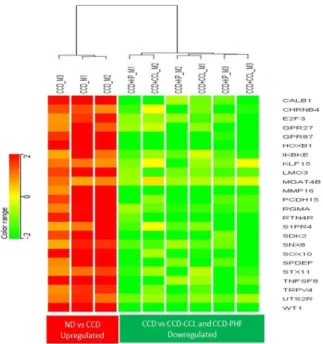
Figure 2: Heat map represents the up regulated genes of CCD and down regulated genes of PHF and CCL.
PHF (polyherbal formulation) as KP; Choline chloride as CCL; choline chloride deficient as CCD; Muscle as M.
Biological function clustering
GO terms were annotated for all the DEGs whose expression were significantly enriched by CCL/PHF supplementation by performing the functional analysis (biological processes). Cellular component, biological process and molecular function are the three main components used for GO annotation. However, biological processes may arguably be the more relevant aspect of GO in relation to this study, therefore, only functional clusters belonging to this component have been
presented. CCD and supplementation of PHF induced a wide range of biological events in muscle tissues, including muscle contraction and development, plasma membrane development, growth and tissue development, neurogenesis and synapse function, neurotransmission, metabolic pathway and cell adhesion, and lipid metabolism. The reduced expression of genes from muscle tissues in the CCD group (vs ND group) was comparatively upregulated in PHF and CCL supplemented groups (Figure 1). Similarly, upregulated genes from muscle tissues in the CCD group (vs ND) were downregulated in PHF and CCL supplemented groups (Figure 2). These genes seem to play an essential role in protein translation, energy metabolism, and muscle growth promotion. Furthermore, the fold change of some focused DEGs genes relevant to muscle development were represented in Table 1.
Table 1: Representation of selected gene expression fold change.
Genes
Fold change
ND vs CCD
PHF vs CCD
CCL vs CCD CALB1 2.895 -1.698 -2.392
SOX10 2.213 -2.148 -2.084
KLF15 0.999 -1.329 -0.290
UTS2R 1.281 -1.295 -0.797
CSRP3 -4.748 2.345 3.271
BCO1 -0.789 0.952 0.854
LMOD2 -1.849 1.568 1.774
CTHRC1 -1.482 2.549 1.060
PHGDH -2.515 1.927 1.379
ANKRD2 -1.798 1.579 2.264
Gene fold change are provided in terms of log base 2 and are expressed as mean of 3 replicates.
DISCUSSION
Agricultural scientists and farmers have long been concerned with the improvement to the muscle mass of meat-producing livestock.15,16 Poultry is one of the fastest-growing livestock sectors in developing countries. In poultry farming, growth performance plays a critical role in deciding the profitability. There is always a need for a product to improve the performance without disturbing birds health.17 However, the inability to synthesize adequate quantity of choline leads to nutrient deficiency mediated growth retardation, fatty liver and perosis in young growing chicks.13,18 Moreover, synthetic choline chloride encountered several drawbacks such as less bioavailability and hygroscopicity. Due to the threat of using synthetic products, there is always a search for herbal replacer.
yield were improved by PHF supplementation. The productivity of farm animals is directly related to the cellular and molecular mechanisms regulating skeletal muscle growth and development.5 Here, we hypothesised that the modulation of certain gene expression would influence muscle growth and differentiation. Hence, the current study was carried out to delineate the effects of PHF on growth-related genes in the muscle of the broilers fed with CCD diet. Genetic analyses were used to complement morphological changes and better understand the physiological events during muscle development. Microarray techniques have made it possible to relate the physiological state of the cell to different gene expression profile for studying large scale analysis of DNA sequences on a small surface.
CCD diet upregulated the SOX10, CALB1, KLF15 and UTS2R genes as compared to the ND group. Upon dietary supplementation of PHF and CCL to birds significantly downregulated the SOX10, CALB1, KLF15 and UTS2R genes when compared to the CCD group. Sry-related HMg-Box gene 10 (SOX10) regulates the embryonic developmental process and provides the survival cues for skeletal muscle progenitor cells as well.19 Schmidt et al suggested that upregulation of SOX subgroup E (SOX9 and SOX10) proteins serve as inhibitors of skeletal muscle development and its decreased expression was noticed in late embryogenesis or during myogenic differentiation in the C2C12 system.20 Our findings are in good agreement with previous reports that modulation of SOX10 gene expression may interfere with the expression of transcription factors required for myogenic differentiation.19,20 Calbindin 1 protein encoded by CALB1 gene belongs to calcium-binding protein superfamily that includes calmodulin and troponin C.In addition to that CALB1 gene is strongly associated with the degeneration of skeletal muscle in chickens.21 Moreover, Mehedint et al reported that mice fed with choline-deficient diet and choline-rich diet caused increased and decreased expression of CALB1 gene respectively.22 Kruppel like Factor 15 (KLF15) regulates the skeletal muscle lipid utilization and physiologic performance in response to nutrient deprivation.23 As the CCD birds were deficient in choline, the upregulation of KLF15 has occurred to compensate for the lipid utilization. Higher expression of KLF15 gene leads to activation of muscle atrophy-related proteins, which in turn promotes the loss of skeletal muscle mass in mice.24 Urotensin 2 Receptor(UTS2R) gene actively involved in the regulation of skeletal muscle fat accumulation and fatty acid metabolism in cattle.25 Pan et al also demonstrated that upregulation of UTS2 expression in skeletal muscle tissue was accompanied by reduced skeletal muscle weight and leads to muscle atrophy in mice.26 The above literature substantiates our findings that dietary supplementation of PHF and CCL might contribute to the rapid growth of breast muscle and development through modulating the expression of
SOX10, CALB1, KLF15 and UTS2R genes in broilers fed with CCD diet.
CCD diet downregulated the CSRP3, BCO1, CTHRC1, LMOD2, PHGDH and ANKRD2 genes as compared to the ND group. At the same time, high-level expression of CSRP3, BCO1, LMOD2, CTHRC1, PHGDH and ANKRD2 genes was noticed in birds fed with PHF and CCL diet. Cysteine and glycine rich protein (CSRP3) is a microtubule-related protein which was upregulated in the breast muscles of broilers.27 Overexpression of CSRP3 in C2C12 cells enhanced the myogenic differentiation, whereas inhibition of CSRP3 gene expression blocked the myogenic differentiation of myoblast into skeletal muscle.28 Beta-carotene oxygenase 1 (BCO1) is a cytoplasmic protein that acts as a carotenoid-cleaving enzyme in the β-carotene metabolism and converts it into retinoid.29 Genetic disruption of BCO1 expression due to nutrient-deficient diet promotes the β-carotene accumulation leading to vitamin A deficiency and affecting the myoblast differentiation in broilers.30 Collagen triple helix repeat containing 1 (CTHRC1) protein is expressed in neonatal smooth muscle cells and its upregulation correlates with muscle growth.31 Duarte et al also observed that overexpression of CTHRC1 gene in skeletal muscle.32 Muscle-specific isoform of leiomodin (LMOD2) gene is associated with actin-myosin binding and muscle contraction. LMOD2 deficient mice showed disrupted sarcomeres assemblyand up-regulation of LMOD2 expression results in elongation of sarcomere assembly in myocytes.33 Kong et al reported that upregulation of LMOD2 gene responsible for skeletal muscle growth in broiler chickens.34 Phosphoglycerate dehydrogenase (PHGDH) is a key metabolic enzyme in denovo serine biosynthesis.35 Brown et al suggested that increased expression of PHGDH genes enhanced the skeletal muscle growth in ractopamine treated pigs.36 Furthermore, upregulation of PHGDH gene was correlated with higher muscle content in broilers.37 Ankyrin Repeat Domain 2 (ANKRD2) prominently expressed in skeletal than cardiac muscle, which played an intriguing role in skeletal muscle plasticity.38 Accumulating evidence revealed that ANKRD2 gene expression is downregulated in patients with muscular dystrophy.39 Furthermore, Chaillou et al reported that increased expression of ANKRD2 gene is responsible for the muscle growth and development in mice.40 Thus, increased expression of CSRP3, BCO1, LMOD2, CTHRC1, PHGDH and ANKRD2 gene substantiate its involvement in muscle mass and weight gain of broilers fed with PHF and CCL diet.
CONCLUSION
to promote the muscle gain, whichis ultimately reflected from better growth performance in CCD diet fed broiler chickens. The phytoconstituents present in the PHF could be the reason for improved growth performance. Thus, it can be concluded that PHF can replace synthetic choline chloride as evident by the upregulation of muscle growth promoting genes in broilers.
ACKNOWLEDGEMENTS
Authors would like to thank the Genotypic Technology Private Limited, Bangalore, India for conducting the microarray analysis.
Funding: No funding sources Conflict of interest: None declared
Ethical approval: The study was approved by the institutional ethics committee
REFERENCES
1. Wanapat M, Cherdthong A, Phesatcha K, Kang S. Dietary sources and their effects on animal production and environmental sustainability. Anim Nutr. 2015;1:96-103.
2. Arai T. The development of animal nutrition and metabolism and the challenges of our time. Front Vet Sci. 2014;1:23.
3. Infante-Rodriguez F, Salinas-Chavira J, Montano-Gomez MF, Manriquez-Nunez OM, Gonzalez-Vizcarra VM, Guevara-Florentino OF, et al. Effect of diets with different energy concentrations on growth performance, carcass characteristics and meat chemical composition of broiler chickens in dry tropics. Springer Plus. 2016;5:1937.
4. Foure A, Bendahan D. Is branched-chain amino acids supplementation an efficient nutritional strategy to alleviate skeletal muscle damage? A systematic review. Nutrients. 2017;9:1047.
5. Sanz-Paris A, Camprubi-Robles M, Lopez-Pedrosa JM, Pereira SL, Rueda R, Ballesteros-Pomar MD, et al. Role of oral nutritional supplements enriched with β-hydroxy- β-methylbutyrate in maintaining muscle function and improving clinical outcomes in various clinical settings. J Nutr Health Aging. 2018;22:664-75.
6. Jahanian R, Ashnagar M. Effects of dietary supplementation of choline and carnitine on growth performance, meat oxidative stability and carcass composition of broiler chickens fed diets with different metabolisable energy levels. Br Poult Sci. 2018;59:470-6.
7. Michel V, Yuan Z, Ramsubir S, Bakovic M. Choline transport for phospholipid synthesis. Exp Biol Med. 2006;231:490-504.
8. Boutté Y. Lipids at the crossroad: Shaping biological membranes heterogeneity defines trafficking pathways. PLoS Biol. 2018;16:e2005188.
9. Abobaker H, Hu Y, Hou Z, Sun Q, Idriss AA, Omer NA, et al. Dietary betaine supplementation increases adrenal expression of steroidogenic acute regulatory protein and yolk deposition of corticosterone in laying hens. Poult Sci. 2017;96:4389-98.
10. Lagace TA, Ridgway ND. The role of phospholipids in the biological activity and structure of the endoplasmic reticulum. Biochim Biophys Acta. 2013;1833:2499-510.
11. Heden TD, Neufer PD, Funai K. Looking beyond structure: membrane phospholipids of skeletal muscle mitochondria. Trends Endocrinol Metab. 2016;27:553-62.
12. Fiaccavento R, Carotenuto F, Vecchini A, Binaglia L, Forte G, Capucci E, et al. An omega-3 fatty acid-enriched diet prevents skeletal muscle lesions in a hamster model of dystrophy. Am J Pathol. 2010;177:2176-84.
13. Selvam R, Saravanakumar M, Suresh S, Chandrasekeran CV, Prashanth DS. Evaluation of polyherbal formulation and synthetic choline chloride on choline deficiency model in broilers: implications on zootechnical parameters, serum biochemistry and liver histopathology. Asian-Australas J Anim Sci. 2018;31:1795-806.
14. Bottje WG, Kong BW, Song JJ, Lee JY, Hargis BM, Lassiter K, et al. Gene expression in breast muscle associated with feed efficiency in a single male broiler line using a chicken 44K microarray. II. Differentially expressed focus genes. Poult Sci. 2012;91:2576-87.
15. Joo ST, Kim GD, Hwang YH, Ryu YC. Control of fresh meat quality through manipulation of muscle fiber characteristics. Meat Sci. 2013;95:828-36. 16. Ismail I, Joo ST. Poultry meat quality in relation to
muscle growth and muscle fiber characteristics. Korean J Food Sci Anim Resour. 2017;37:873-83. 17. Kalia S, Bharti VK, Gogoi D, Giri A, Kumar B.
Studies on the growth performance of different broiler strains at high altitude and evaluation of probiotic effect on their survivability. Sci Rep. 2017;7:460-74.
18. Corbin KD, Zeisel SH. Choline metabolism provides novel insights into non-alcoholic fatty liver disease and its progression. Curr Opin gastroenterol. 2012;28:159.
19. Van Ho AT, Hayashi S, Bröhl D, Auradé F, Rattenbach R, Relaix F. Neural crest cell lineage restricts skeletal muscle progenitor cell differentiation through Neuregulin1-ErbB3 signaling. Dev cell. 2011;21:273-87.
20. Schmidt K, Glaser G, Wernig A, Wegner M, Rosorius O. Sox8 is a specific marker for muscle satellite cells and inhibits myogenesis. J Biol Chem. 2003;278:29769-75.
22. Mehedint MG, Niculescu MD, Craciunescu CN, Zeisel SH. Choline deficiency alters global histone methylation and epigenetic marking at the Re1 site of the calbindin 1 gene. FASEB J. 2010;24:184-95. 23. Haldar SM, Jeyaraj D, Anand P, Zhu H, Lu Y,
Prosdocimo DA, et al. Kruppel-like factor 15 regulates skeletal muscle lipid flux and exercise adaptation. Proc Natl Acad Sci U S A 2012;109:6739-44.
24. Hirata Y, Nomura K, Senga Y, Imamura M, Takeda SI, Okada Y, et al. Hyper- glycemia Promotes Muscle Atrophy through the WWP1/KLF15 Pathway. JCI Insight. 2019;4:124952.
25. Jiang Z, Michal JJ, Tobey DJ, Wang Z, MacNeil MD, Magnuson NS. Comparative understanding of UTS2 and UTS2R genes for their involvement in type 2 diabetes mellitus. Int J Biol Sci. 2008;4:96-102.
26. Pan YJ, Zhou SJ, Feng J, Bai Q, La-Ta A, Zhang AH. Urotensin II induces mice skeletal muscle atrophy associated with enhanced autophagy and inhibited irisin precursor (Fibronectin Type III Domain Containing 5) expression in chronic renal failure. Kidney Blood Press Res. 2019;44:1-7. 27. Kong BW, Song JJ, Lee JY, Hargis BM, Wing T,
Lassiter K, et al. Gene expression in breast muscle associated with feed efficiency in a single male broiler line using a chicken 44K oligo microarray. I. Top differentially expressed genes. Poult Sci. 2011;90:2535-47.
28. Janot M, Audfray A, Loriol C, Germot A, Maftah A, Dupuy F. Glycogenome expression dynamics during mouse C2C12 myoblast differentiation suggests a sequential reorganization of membrane glycoconjugates. BMC genomics. 2009;10:483. 29. Amengual J, Widjaja-Adhi MAK,
Rodriguez-Santiago S, Hessel S, Golczak M, Palczewski K, et al. Two carotenoid oxygenases contribute to mammalian provitamin A metabolism. J Biol Chem. 2013;288:34081-96.
30. Praud C, Al Ahmadieh S, Voldoire E, Le Vern Y, Godet E, Couroussé N, et al. Beta-carotene preferentially regulates chicken myoblast proliferation withdrawal and differentiation commitment via BCO1 activity and retinoic acid production. Exp Cell Res. 2017;358:140-6.
31. Wang C, Li Z, Shao F, Yang X, Feng X, Shi S, et al. High expression of Collagen Triple Helix Repeat Containing 1 (CTHRC1) facilitates progression of oesophageal squamous cell carcinoma through MAPK/MEK/ERK/FRA-1 activation. J Exp Clin Cancer Res. 2017;36:84.
32. Duarte CW, Stohn JP, Wang Q, Emery IF, Prueser A, Lindner V. Elevated plasma levels of the pituitary hormone CTHRC1 in individuals with red hair but not in patients with solid tumors. PloS One. 2014;9:e100449.
33. Chereau D, Boczkowska M, Skwarek-Maruszewska A, Fujiwara I, Hayes DB, Rebowski G, et al. Leiomodin is an actin filament nucleator in muscle cells. Science. 2008;320:239-43.
34. Kong BW, Hudson N, Seo D, Lee S, Khatri B, Lassiter K, et al. RNA sequencing for global gene expression associated with muscle growth in a single male modern broiler line compared to a foundational Barred Plymouth Rock chicken line. BMC Genomics. 2017;18:82.
35. Reid, MA, Allen AE, Liu S, Liberti MV, Liu P, Liu X, et al. Serine synthesis through PHGDH coordinates nucleotide levels by maintaining central carbon metabolism. Nat Commun. 2018;9:5442. 36. Brown DM, Williams H, Ryan KJ, Wilson TL,
Daniel ZC, Mareko MH, et al. Mitochondrial phosphoenolpyruvate carboxykinase (PEPCK-M) and serine biosynthetic pathway genes are co-ordinately increased during anabolic agent-induced skeletal muscle growth. Sci Rep. 2016;6:28693. 37. Albooshoke SN, Bakhtiarizadeh MR. Divergent
gene expression through PI3K/akt signalling pathway cause different models of hypertrophy growth in chicken. Ital J Anim Sci. 2019;18:1161-73.
38. Mohamed JS, Lopez MA, Cox GA, Boriek AM. Anisotropic regulation of ANKRD2 gene expression in skeletal muscle by mechanical stretch. FASEB J. 2010;24:3330-40.
39. Belgrano A, Rakicevic L, Mittempergher L, Campanaro S, Martinelli VC, Mouly V, et al. Multi-tasking role of the mechanosensing protein ANKRD2 in the signaling network of striated muscle. PLoS One. 2011;60:e25519
40. Chaillou T, Jackson JR, England JH, Kirby TJ, Richards-White J, Esser KA, et al. Identification of a conserved set of upregulated genes in mouse skeletal muscle hypertrophy and regrowth. J Appl Physiol. 2014;118:86-97.
Cite this article as: D’Souza P, Marimuthu S,