ISSN-L: 2501 - 1235 Available on-line at: www.oapub.org/edu
Copyright © The Author(s). All Rights Reserved.
doi: 10.5281/zenodo.2467513 Volume 5 │ Issue 2 │ 2018
EVALUATION OF PRİMARY SCHOOL TEACHER'S GAME AND
PHYSICAL ACTIVITIES CLASSROOM EXPECTATIONS
Ahmet Yıkılmaz
Physical Education and Sport Department, Iğdır University, Iğdır, Turkey
Abstract:
For most of the scientists, the best way of knowing the child is in the game. Children gain many skills while playing. Generally, children learn behaviors such as learning, making effective decisions, doing business together, honesty, sharing, respecting others, loving friends, helping others. The child follows the skills of transitioning to adulthood through play and makes it practical and perfection. The aim of this study is to reveal the expectations of elementary school teachers from the lessons of games and physical activities. Primary school teachers in the study; games and physical activities lessons were tried to be determined. Open-ended questions developed by the researcher as a means of data collection in the research were presented to the classroom teachers. Using the interview method as a qualitative research method in the research, the data obtained from 20 elementary school teachers working in schools affiliated to Iğdır Provincial Directorate of National Education in the academic year of 2017-2018 were analyzed by content analysis method. As a result of the research; it resulted that the classes are crowded, the physical environment is inadequate, and that the teachers who attend the courses have had problems in their undergraduate education due to lack of education about this course and that these should be solved. The class teachers who participated in the research reached the lesson that the physical education teachers should participate and that they should be provided in-service training within the scope of this course.
Keywords: primary school teacher, game and physical activities, expectation
1. Introduction
concept of play is one of the most satisfying resources which continue with developing and developing with some changes (Tuğrul, 2010).
Primary education programs renovated in 2005, prepared in accordance with the constructivist approach, began to be implemented in schools in Turkey. With the amendment made in 2012, primary schools were separated from secondary schools for 4 years. In this arrangement, five-hour physical education play and physical activities lesson were put into the program in each class. According to the program, the main objective of this course is to prepare students for the next level of education by developing basic skills, concepts and strategies related to active and healthy life skills, concepts and strategies along with play and physical activities (MEB, 2012).
The child recognizes his environment with play and thus maintains his relations with his peers. Thus, a team goes to solve the needs of the game (Allen et al. 2017). Game activities are a need of the child. The child expresses himself more easily thanks to the play. Everything acquired in the game process provides permanence. Therefore, any gains given to the child should be given by way of play (Sel, 1974). Game is the most important element in adopting the right behaviors patterns in the social life that prepares the child for life, gives direction (Alıncak and Tuzcuoğulları, 2016: Abakay and Alıncak, 2016). Game activities are an effective tool for dealing with negative events in the environment, according to psychoanalytic theory (Barnett, 2013). According to other learning techniques, game teaching technique is more effective on children. For this reason, the game is a very important educational tool for the development of the child (Aytekin, 2001; Gazezoğlu, 2007; Alınacak, 2016). Game activities are an activity process that allows children to be satisfied in line with their needs (Lindon, 2001; Ayan et al. 2017; Tuzcuoğulları et al., 2017; Pancar et al; 2018; 2017). In Piaget's Cognitive Development Theory, play is seen as an important tool in developing the child's skills, self-renewing and practicing his skills. According to this theory, the play played by the child is an indication of his cognitive development (Piaget, 1962). According to Montessori, play is one of the most important tools for the development of the child (Kayılı, 2010). Individuals who participate regularly in physical education, play and sport activities are willing to reach a certain level or to increase their performance over their previous performances (Abakay, 2010; Alıncak, 2015; Yılmaz et al., 2017; 2016).
Dansky and Silverman (1973) describe the game as any behavior described as a superiority of integration. (Gunsberg, 1983) asserts that by allowing play activities for children to express themselves, their creative characteristics will emerge clearly and may lead to an increase. The child is acquainted with the game concept in every way (Timmons, 2003). Educational games develop some motoric characteristics and the psychological and social behaviors inherent in the game (Ayan et al., 2015). According to Marsell (2009), play is the most important way to prepare the child for future adulthood.
education in our country is that it is game based as in many countries. According to the Ministry of National Education Preschool Education Program, the child performs learning through play, recognizes the world he / she is playing through, and expresses himself / herself during the play and obtains a number of creative features and skills during the play. (MEB, 2013) People are physically, mentally and spiritually healthy and aim to be happy and one of the most effective ways of accomplishing this goal is physical education, games, sports and physical activity (Zengin et al. 2016; Abakay et al., 2015; Alıncak, 2016). According to Adler (1997) and Stanley (2009), teaching by play is an effective way to increase the academic success of children while providing an enjoyable learning process for children. The effect of the game on the child cannot be discussed without any doubt. In general, the concept of play is not a learning tool for the child; it is obtained by experience in life (Yavaşoğlu, 2005). Today, due to the lack of knowledge in the community about physical activity and play, the importance of physical activity and the link between physical activity and health are not understood (Abakay et al. 2016).
This study was conducted to determine the opinions of the class teachers about the play and physical activity course. For this purpose, answers to the following questions were sought.
Classroom teachers;
1. What are the general thoughts about the course and physical activity course?
2. What are his / her thoughts about associating the game and physical activity
course with other courses?
3. What are the thoughts about the effects of the game on learning?
4. What are the problems encountered in the course of play and physical activity?
5. What are the suggestions for the game and physical activity course?
2. Method
A case study pattern, one of the qualitative research methods, was used in the study. According to quantitative research, qualitative research is a method that provides flexible mobility to the researcher and provides different approaches in data collection methodology, analysis and design of research (Gay, Mills and Airasian, 2006).
The case study is a research design used in cases where the boundaries between the phenomenon and the environment are not clear and there is more than one evidence or data source (Yin, 1984; Yıldırım and Şimşek, 2006).
2.1. Research Group
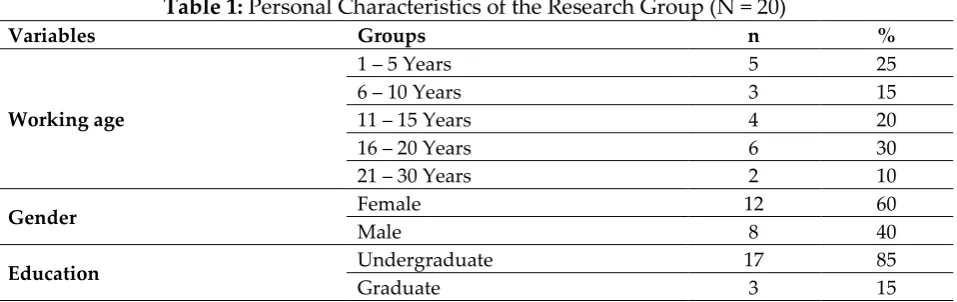
Table 1: Personal Characteristics of the Research Group (N = 20)
Variables Groups n %
Working age
1 – 5 Years 5 25
6 – 10 Years 3 15
11 – 15 Years 4 20
16 – 20 Years 6 30
21 – 30 Years 2 10
Gender Female 12 60
Male 8 40
Education Undergraduate 17 85
Graduate 3 15
Table 1 presents some personal characteristics belonging to the research group. When we look at the tenure of the teachers who participated in the study, 5 (25%) teachers between 1 öğretmen5 years, 3 (15%) teachers between 6 and 10 years, 4 (20%) teachers between 11 and 15 years, 6 (30%) teachers 16 It is seen that between 20 and 20 years, 2 (10%) teachers have worked between 21-30 years. When we look at gender, 12 (60%) teachers are female and 8 (40%) teachers are male. When we look at the education level, it is seen that 17 (85%) teachers have bachelor's degree and 3 (15%) teachers have graduate education.
2.2. Preparıng Open-Ended Questıons and Practising
In order to form the interview form to be used in the research, firstly, they were asked to write an essay about 100 class teachers and their opinions about face to face games and physical activities. As a result of the information obtained from the collected compositions and related literature, a draft form of the interview form was obtained. One of the logical ways used to test the validity of the measurement tool prepared for the research is to consult expert opinion (Büyüköztürk, 2006). The interview form was submitted to the opinions of the experts in the field and the necessary arrangements were made in line with the opinions taken and finalized the interview form consisting of 3 personal characteristics and 5 open-ended questions. Prepared questions are as follows; Classroom teachers;
What are the general thoughts about the course and physical activity course?
What are his / her thoughts about associating the game and physical activity
course with other courses?
What are the thoughts about the effects of the game on learning?
What are the problems encountered in the course of play and physical activity?
What are the suggestions for the game and physical activity course?
3. Analysıs of Data
The data obtained from the interview form used in the research were analyzed with the content analysis method used in qualitative research. In qualitative research, content analysis is used in the creation of theoretical and non-significant themes and, if any, sub-themes are created (Yıldırım & Şimşek, 2006). The data obtained were recorded, grouped, and coded separately. These groupings and coding were presented to the field experts and the final cases were prepared according to the evaluation of the experts. With the analysis of the content, themes were determined for each question and tables were created by calculating the frequency and percentage of the given themes. Descriptive analysis was used to evaluate the data. Finally, reports were made and findings were presented.
4. Fındıngs and Comments
In this section, the findings obtained as a result of interviews with teachers in order to determine the opinions of the classroom teachers who are working in the official schools of the Ministry of National Education about the play and physical activities course are given.
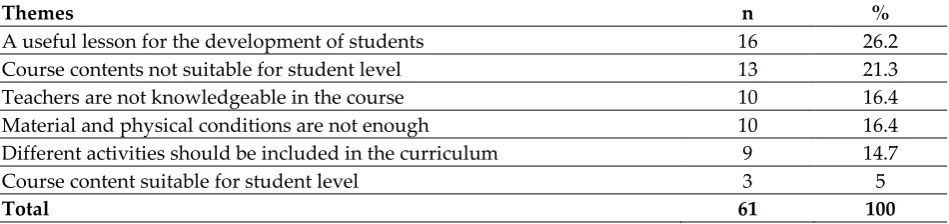
Table 2: The distribution of the opinions of the research group on their thoughts about the course of play and physical activities
Themes n %
A useful lesson for the development of students 16 26.2 Course contents not suitable for student level 13 21.3
Teachers are not knowledgeable in the course 10 16.4
Material and physical conditions are not enough 10 16.4 Different activities should be included in the curriculum 9 14.7
Course content suitable for student level 3 5
Total 61 100
Table 3: The distribution of the opinions of the research group related to the game and physical activities course
Themes n %
Yes I associate 14 70
Sometimes I associate 4 20
No I'm not associating 2 10
Total 20 100
In Table 3, the distribution of opinions of the research group related to the game and physical activities course is given. 3 themes emerged in the distribution of the participants' views on how they relate the play and physical activity lessons to other courses. According to this; 14 teachers (70%) associate, 4 teachers (20%) sometimes associate, 2 teachers (8%) stated that they do not associate.
Table 4: The distribution of the opinions of the research group on the effect of the game on learning
Themes n %
Learning becomes easier and faster 18 26.9
Developing intelligence 16 23.9
Developing the child's imagination 13 19.4
Increasing attention and motivation 11 16.4
Increasing thinking ability 9 13.4
Total 67 100
Table 4 presents the distribution of opinions of the research group about the effects of the game on learning in general. 5 themes emerged from the participants' views on the impact of the game on learning. Participants showed more than one theme. Among these themes, learning is easier and faster (26.9%), improving intelligence (23.9%), developing child's imagination (19.4%), increasing attention and motivation (16.4%), increasing thinking ability (13.4%) themes have come to the fore.
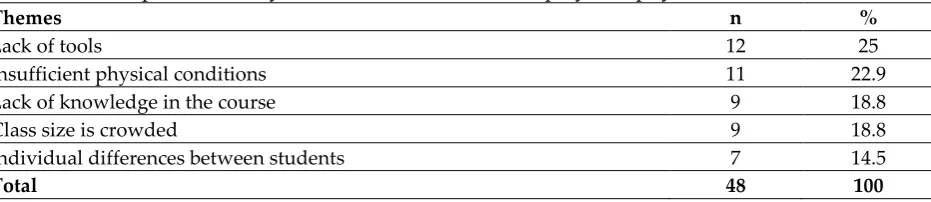
Table 5: The distribution of the opinions of the research group about the problems they encounter in the course of play and physical activities
Themes n %
Lack of tools 12 25
Insufficient physical conditions 11 22.9
Lack of knowledge in the course 9 18.8
Class size is crowded 9 18.8
Individual differences between students 7 14.5
Total 48 100
these themes, according to percentage ranking, lack of equipment (25%), insufficiency of physical conditions (22.9%), lack of knowledge (18.8%), class size (18.8%), individual differences between students (14.5%) themes have come to the fore.
Table 6: The distribution of opinions of the research group on their suggestions about play and physical lesson
Themes n %
Physical and environmental conditions should be corrected 18 23.7
Lack of equipment 18 23.7
In-service training should be given in the field of physical education and game teaching 13 17.1
Games in the curriculum should be diversified 12 15.8
Subject teachers 8 10.5
Grade current rates should be corrected 7 9.2
Total 76 100
Table 6 presents the distribution of opinions of the research group on their suggestions about the play and physical activities course. When the participants' suggestions about the play and physical activities lesson were examined, 6 themes emerged. Participants showed more than one theme. According to the percentage ranking, physical and environmental conditions should be corrected (23.7%), lack of tools (23.7%), in-service training should be provided in the area of physical education and play (17.1%), games in the curriculum should be diversified (15.8%), branch teachers should enter the course (10.5%), class current rates should be corrected (9.2%) themes were seen to come to the fore.
5. Conclusion, Recommendations, and Discussion
In this part of the research, the results obtained from the interviews with the classroom teachers in the official schools attached to the Ministry of National Education about the play and physical activities course are given.
When we look at the opinions of the research group about the game and physical activities course, it is stated that the course is useful in terms of the students' development but the content of the course is not suitable for the student level. In addition, the research group stated that they did not have sufficient knowledge, lack of material and physical conditions were not sufficient. From this point of view, we should say that the curriculum of the course should be reviewed, the materials needed for the course to be made efficient and the physical conditions should be corrected. Alıncak et al., (2015) found similar results to our findings in their study.
It was observed that the majority of the research group (70%) associated the play and physical activity course with other courses. Some of the teachers sometimes stated that they do the association. Based on these thoughts, we can say that teachers associate other lessons effectively to teach other lessons.
attention, motivation and thinking ability. Therefore, it can be said that the game contributed greatly to learning and benefited the personal development of the students. Fırat (2007), in the teaching of foreign language teaching, constantly bringing students to the fore, they are active, by doing, by trying to learn to make them learn, with this method, each student to join the course willingly, the students learn the words easily, remember to keep in mind, and when asked the question stated that they can answer without any difficulty. Ayan et al. (2017) in their study, they have found that individuals who participate in physical education and/or activities regularly have higher emotional intelligence levels. Tural (2005), in mathematics teaching games and activities, behaviour rhythmic counts, natural numbers, addition, subtraction, multiplication (grip and practice) to achieve behavior at the level of traditional teaching has reached the conclusion that more effective.
When we look at the opinions of the research group on the problems they encounter in the play and physical activities course, the lack of tools and physical conditions, the teachers experienced problems due to incomplete information, the class size was crowded and the individual differences between the students were prominent. From this point, we can say that the unfavorable situations caused the course to be unproductive. In their study, Güven and Yıldız (2014) found that classroom teachers did not perform their games and physical activities lessons adequately due to lack of equipment, physical education and lack of knowledge and equipment related to the lessons of physical education and classroom teaching. (Abakay et al., 2015) concluded that the majority of teachers have insufficient program in terms of some features (program, physical conditions, student characteristics, course hours, environmental conditions). In order to be more effective and efficient in physical education course in high school physical education and sports instructors, Alıncak et al., (2016) stated that the tools and materials, physical conditions, increasing the course hours, giving importance to the lesson and making the students more efficient have come to the conclusion that they planned. In the studies conducted for the course of physical and physical activities in order to suit the appropriateness of textbooks, most of the teachers prepared the textbook is not suitable for the level of students, textbooks for some students easy to determine that they think it is difficult for some students (Kazu and Aslan, 2014; Alıncak et al., 2015). In addition, Dalaman, (2010); Alakurt, (2009); generally stated that the inadequacy of the physical conditions of schools is the most important problem.
As a result, class teachers stated that the classes were crowded, the physical environment was inadequate and the teachers entering the classes had problems because they did not get enough education about this course and they should be solved. It was concluded that physical education teachers should enter and the in-service training should be provided within the scope of this course.
References
Abakay, U. (2010). Futbolcu-Antrenör İletişiminin Farklı Statüdeki Futbolcuların Başarı Motivasyonu İle İlişkisi. Doktora Tezi Gazi Üniversitesi, Sağlık Bilimleri Enstitüsü.
Abakay, U., Alıncak, F. (2016). The Evaluation of the Opinions of Physical Education and Sports Teachers about Using Lesson Equipment. Journal of Sport and Exercise Physiology, 2(2):25-30.
Abakay, U., Alıncak, F., Akyel, Y., Yetiş, Ü. (2015). Ortaokul Beden Eğitimi ve Spor Dersine Yönelik Öğretmen Görüşlerinin Değerlendirilmesi. Route Educational and Social Science Journal, 2(4), 1-9.
Abakay, U., Alincak, F., Demir, H. (2016). The Effects of Microteaching Practices on Pre-Service Physical Education and Sport Teachers’ Attitudes towards Teaching Profession. European Journal of Education Studies, 2(9):127-135.
Adler, A. (1997). İnsanı tanıma sanatı (6. Baskı). Çev. K. Şipal. İstanbul: Say Yayıncılık. Alakurt, Y. (2009). İlköğretim 7. Sınıflar Beden Eğitimi Dersi Öğretim Programı
Uygulamalarının İncelenmesi. Yayınlamamış yüksek lisans tezi, Marmara Üniversitesi, Eğitim Bilimleri Enstitüsü, İstanbul.
Alıncak, F. (2016). Attitudes of Secondary School Students İncluding Physical Activity İnvolving Playing Games. European Journal of Physical Education and Sport Science, 2(3), 1-14.
Alıncak, F. (2016). Evaluatıon of Opınıons of Prımary School Teachers on the Method of Educatıon wıth Game, European Journal of Physical Education and Sport Science, 2(3):81-96.
Alıncak, F. (2017). Attitudes of Primary School Teachers towards Playing Games That İnvolve Physical Activity. European Journal of Education Studies, 3(1), 202- 2016.
Alıncak, F., Abakay, U. (2015). Ferdi ve Takım Sporlarıyla Uğraşan Bireylerin Strese Karşı Koyabilme Düzeylerinin Karşılaştırması, Akademik Sosyal Araştırmalar Dergisi, Yıl: 3, Sayı: 16, Eylül 2015, s. 333-345.
Alıncak, F., Doğan, İ., Abakay, U. (2016). Lise Beden Eğitimi ve Spor Dersine Yönelik Öğret-men Görüşlerinin Değerlendirilmesi, Route Educational and Social Science Journal Volume 3(1):309-317.
Alıncak, F., Tuzcuoğulları, T. (2016). The Evaluatıon of Vıolent Content Games For Chıldren's Development, European Journal of Physical Education and Sport Science, 2(5):61-67.
Alıncak, F., Yıkılmaz, A., Uğurlu, M.F. (2017). Evaluatıon of Pre-School Teachers` Opınıons on Teachıng wıth Games, European Journal of Alternative Education Studies, 2(1):83-100.
Altunay, D. (2004). Oyunla Desteklenmiş Matematik Öğretiminin Öğrenci Erişişine Ve Kalıcılığa Etkisi. Yayınlanmamış Yüksek Lisans Tezi, Gazi Üniversitesi, Eğitim Bilimleri Enstitüsü, Ankara.
Ayan, S., Alıncak F., Tuzcuoğulları, Ö.T. (2015). Gaziantep’te Oynanan Bazı Yöresel Oyunların Hentbol Branşının Teknik Çalışmasına Yönelik Eğitsel Oyunlar Olarak Değerlendirilmesi, Uluslararası Türk Eğitim Bilimleri Dergisi, 4, 252-257. Ayan, S., Dündar, H. (2009). Eğitimde Okul Öncesi Yaratıcılığın ve Oyunun Önemi,
Selçuk Üniversitesi Ahmet Keleşoğlu Eğitim Fakültesi Dergisi Sayı 28, Sayfa 63 -74.
Ayan, S., Ergin, M., Alıncak, F. (2017). The Evaluatıon of The Partıcıpatıon Of Game And Physıcal Educatıon Lesson Of The Mıld Severe Degree Mental Retardatıon And Autıstıc Students, European Journal of Special Education Research, 2(2):35-49.
Ayan, S., Soylu, Y., Bozdal, Ö., Alıncak, F. (2017). Investigation of Emotional Intelligence Level of University Students, European Journal of Physical Education and Sport Science, 3 (5).
Aydın, A. (2008). Sembolik Oyun Testi’nin Türkçe’ye Uyarlanması ve Okul Öncesi Dönemdeki Normal, Otistik ve Zihin Engelli Çocukların Sembolik Oyun Davranışlarının İncelenmesi. Doktora Tezi, Marmara Üniversitesi Eğitim Bilimleri Enstitüsü: İstanbul.
Aytekin, H. 2001. Okul Öncesi Eğitim Programları İçinde Oyunun Çocuğun Gelişimine Olan Etkileri. Yüksek Lisans Tezi, Dumlupınar Üniversitesi Sosyal Bilimler Enstitüsü: Kütahya.
Barnett, L.A. (2013). Children’s Perceptions of Their Play: Scale Development and Validation. Child Development Research. Retrieved February 13, 2014, from
http://www.hindawi.com/journals/cdr/2013/284741/
Büyükozturk, S. (2006). Data Analysis for Social Sciences. Ankara: PegemA Publications.
Dalaman, O. (2010). İlköğretim Birinci Kademe Beden Eğitimi Dersi Öğretim Programı Kazanımlarının Gerçekleşme Durumuna İlişkin Öğretmen Görüşleri. Selçuk Üniversitesi, Eğitim Bilimleri Enstitüsü, Konya.
Dansky, J., Silverman, I. (1973). Effects of Play on Associative Fluency in Preschool-Aged Children, Developmental Psychology. 9(1): 38-43.
Fırat, M. (2007). Yabancı Dil Öğretiminde Oyunun Kullanımı, Atatürk Üniversitesi, Sosyal Bilimler Enstitüsü, Yabancı Diller Eğitimi Ana Bilim Dalı, Erzurum.
Gay, L., Mills, G., Airasian, P. (2006). Educational Research: Competencies for Analysis and Application. New York: Prentice Hall.
Gazezoğlu, Ö. (2007). Okul Öncesi Eğitim Kurumlarında Devam Eden 6 Yaş Çocuklarına Öz Bakım Becerilerinin Kazandırılmasında Oyun Yoluyla Öğretimin Etkisi. Yüksek Lisans Tezi, Dokuz Eylül Üniversitesi Eğitim Bilimleri Enstitüsü: İzmir.
Gunsberg, A. (1983). "Creativity and Play," The Underserved: Our Young Gifted Children. Derleyen: M.B. Karnes. Reston VA: The Council for Exceptional Children, s. 144-157.
Gül, M. (2006). Anasınıfına Devam Eden Alt Sosyo Ekonomik Düzeydeki 61-72 Ay Arası Çocuklara Sembolik Oyun Eğitiminin Genel Gelişim Durumlarına Etkisi. Yüksek Lisans Tezi, Gazi Üniversitesi Eğitim Bilimleri Enstitüsü, Ankara.
Güven, Ö., Yıldız, Ö. (2014). Sınıf Öğretmenlerinin Oyun ve Fizikî Etkinlikler Dersinden Beklentileri, Kastamonu Eğitim Dergisi, 22(2): 525-538.
Kalaycıoğlu, H. (2011). Resim-Kelime Oyunlarının ve Cinsiyetin Dört Yaş Çocukların İngilizce Kelime Performansına Etkisi: Deneysel bir Araştırma Kelime Performansına Etkisi. Yüksek Lisans Tezi, Orta Doğu Teknik Üniversitesi Sosyal Bilimler Enstitüsü: Ankara.
Kayılı, G. (2010). Montessori Yönteminin Anaokulu Çocuklarının İlköğretime Hazır Bulunuşluklarına Etkisinin İncelenmesi. Yüksek Lisans Tezi, Selçuk Üniversitesi, Konya.
Kazu, H., Aslan, S. (2014). Oyun Ve Fiziki Etkinlikler Dersinin Birinci Sınıf Öğretmenlerinin Görüşlerine Göre Değerlendirilmesi (Elazığ İli Örneği), Fırat Üniversitesi Sosyal Bilimler Dergisi, 24(1):49-63
Lindon, J. (2001). Understanding children’s play. Cheltenham: Nelson Thornes. Marsell, M. (2009). Çocuk Ve Zihin Terapisi (1. Baskı). İstanbul: Ekinoks Yayıncılık.
Milli Eğitim Bakanlığı (2013). Okul Öncesi Eğitim Programı.
http://tegm.meb.gov.tr/dosya/okuloncesi/ooproram.pdf adresinden 20 Şubat 2014 tarihinde edinilmiştir.
Özdenk, Ç. (2007). 6 Yaş Grubu Öğrencilerin Psiko-motor Gelişimlerinin Sağlanmasında Oyunun Yeri ve Önemi. Yüksek Lisans Tezi, Fırat Üniversitesi Sosyal Bilimler Enstitüsü: Elazığ
Pancar, Z., Bozdal, Ö., Biçer, M., & Akcan, F. (2017). Acute effect of anaerobic exercise on dynamic balance of sedentary young boys. European Journal of Physical Education and Sport Science. 3(12), 229-237.
Piaget, J. (1962). Play, Dreams and Imitation. New York, NY: Norton. Sel, R. (1987). Eğitsel Oyun, Ankara: Öğretmen Yayınları.
Stanley, M. (2009). Çocuk ve beceri (1. Baskı). İstanbul: Ekinoks Yayıncılık.
Timmons, L. (2003). A right to play? Examining childhood and a child’s right to
recreation. http://www.stfx.ca/people/svincent/socianth391/timmonsliam.html.
(Erişim tarihi: 05.09.2012)
Tuğrul, B. (2010). Oyun temelli öğrenme. İçinde R. Zembat (Ed.), Okul öncesinde özel öğretim yöntemleri, Ankara: Anı Yayıncılık. s. 35-76.
Tural, H. (2005). İlköğretim matematik öğretiminde oyun ve etkinliklerle öğretimin erişi ve tutuma etkisi. Yayımlanmamış Yüksek Lisans Tezi, Dokuz Eylül Üniversitesi, Eğitim Bilimleri Enstitüsü, İzmir.
Tuzcuoğullari, Ö.T., Pancar, Z., & Bozdal, Ö. (2017). A Research on the Role of Relatıve Age Effectıveness in Sports Termınatıon. European Journal of Physical Education and Sport Science. 3(2), 461-469.
Yavaşoğlu, G. (2005). “Çocuk-Mekan-Oyun İlişkisinin İlköğretim Binalarında İncelenmesi”, Yüksek Lisans Tezi, MSGSÜ, İstanbul.
Yıldırım, A., Şimşek, H. (2006). Qualitative Research Methods in Social Sciences. Ankara: Seckin Publications.
Yılmaz, A.K., Kabadayı, M., Mayda, M.H., & Birinci, M.C. (2016). Examination of I sokinetic Strength Rates of Knee Joint (H/Q) in Football Players. Journal of Social Science Research, 10(4), 2248-2253.
Yılmaz, A.K., Kabadayı, M., Mayda, M.H., Birinci, M.C., & Özdal, M. (2017). The effects of isokinetic knee strength on the promptness of soccer players. European Journal of Physical Education and Sport Science. 3(11), 114-123.
Yin, R.K. (1984). Case study research: Design and methods. In Yıldırım, A., & Şimşek, H. (2006). Qualitative Research Methods in Social Sciences, Ankara: Seckin Publications.
Creative Commons licensing terms