ISSN-L: 2501 - 1235 Available on-line at: www.oapub.org/edu
Copyright © The Author(s). All Rights Reserved.
doi: 10.5281/zenodo.3247882 Volume 5 │ Issue 10 │ 2019
EVALUATION OF ACUTE EFFECTS OF COMBINED
STRETCHING METHODS ON FLEXIBILITY, AGILITY AND
SPEED AMONG CRICKET PLAYERS
Sarika1,
Waghmare Sumedhkumar Balajirao2,
Shweta Shenoy3i
1PhD, Assistant Professor, MYAS –GNDU,
Department of Sports Sciences and Medicine, Guru Nanak Dev University,
Amritsar, Punjab, India
2M.P.T. (Sports), MYAS-GNDU,
Department of Sports Sciences and Medicine, Guru Nanak Dev University,
Amritsar, Punjab, India
3PhD, Dean & Head, Professor, MYAS –GNDU,
Department of Sports Sciences and Medicine, Guru Nanak Dev University, Amritsar, Punjab, India
Abstract:
Purpose of the study was to investigate the acute effects of combination of stretching
methods on the cricket players even though cricket is the most popular team sport worldwide. The main objectives of the study were to find out the acute effects of combined stretching methods on the flexibility, speed & agility. Methodology: 60 male cricket players (age: 20.13333±1.334999 years; body height: 172.1833± 6.466559 cm; BMI: 22.20667± 1.927076 kg/m2) were randomly allocated in three groups i.e. Group A = 20
combined static dynamic stretching (CSD), Group B = 20 combined dynamic static stretching (CDS) and Group C = 20 routine stretching (control) group. Subjects of Group A & B performed warm up (5min jogging) followed by CSD and CDS stretching protocol of 30 sec of stretch and 20 sec of rest interval with 5 repetition respectively. The pre and post evaluation of Flexibility, Speed & Agility were done by the V Sit and reach,20 meter dash test & Illinois Agility test respectively Result: The result of the study revealed that all three parameter showed significant difference in both Group A=CSD and Group B=CDS when compared with Group C=Routine stretching (P<0.001).
Conclusion: The study concluded that cricket players performed well after combined
stretching methods i.e., combined static dynamic and combined dynamic static than routine stretching concerning to flexibility, speed & agility.
Keywords: combined stretching methods, cricket, flexibility, speed, agility
1. Introduction
“Cricket is a game steeped in tradition, in which it is often how you play the game that is
as important as winning.” (P. Edwards, 1992)
Cricket is a popular sport played in many countries, majorly including England, India, Australia, New Zealand and South Africa. There are several versions of cricket; Test format, One day and Twenty-twenty (T20). Test format, which includes long consecutive days, and another is T20 format in which the match played over a duration of nearly three hours, has grown in popularity in recent years. (Petersen et al., 2010; 2011) In T20 cricket and one day cricket players requires approximately 50-100% more maximal sprints per hours when compared to Test cricket. So, the pace of cricket is efficient for players and expectation of the player have all increased over time. In addition, there are very different physical demands involved in different types of cricket, which has meant a cricketer need high performance level in the field. Depending on the different formats of cricket and demand of players varies accordingly in format. So, overall In the context of modern-day cricket, batsmen attempt more quick singles for balls hit into the infield and attempt to complete more run for balls hit into the outfield (Duffield and Drinkwater, 2008) So speed in cricket are often centred about crucial match situations such as running between the wickets for batsmen and delivery during fast bowling so, speed is most crucial for fielder (Bartlett, 2003). So, conclusively player should be specialize in particular fielding positions, often need performance related skills which is important in cricket like flexibility, agility is needed in the infield, as fielder are closer to the batsmen and have less time to react whereas the outfielder require a strong throwing arm to field the balls back to the infield (Bartlett, 2003).Such paradoxical demands highlight the challenges but equally provide a fertile context for researchers interested in cricket batting skill, and coaches designing skill development programmes. (Jarvis et al., 2009, Lockie et al., 2011; 2013b).
“Stretching is a major part preparation of all games it overcame muscle size with
mechanics.” (Edwin, 1955 Brainy quotes). It is important to realize that warm-up and
Movement requires a certain amount of joint and connective tissue mobility. In many sports, exceptional flexibility will be required in order to achieve good results. Flexibility becomes of particular importance in fields of sport requiring a broad ROM. (Ylinen et al., 2008). Preparation for performances such as flexibility, speed, agility and others should involve both long and short-term training programs. Long-term preparation may include a well-developed fitness training program, whereas short-term preparation should include a warm-up (Amiri-Khorasani et al., 2010). One part of a warm-up includes stretching, which is often performed prior to physical exercises (Amiri-Khorasani et al., 2010, 2011).
Static stretching (SS) involves moving the joint to the point in which there is considerable resistance from muscle tension. The stretch is maintained at this point until reduction of tension takes place and then the joint is returned so far that the stretch is released. SS may also be repeated several times. Stretching by definition is essentially passive, because the joint has to be held in a stretched position for a relatively long time (Ylinen et al., 2008).
Dynamic stretching (DS) implies that the muscle is stretched by moving a joint in the direction that muscle will be stretched and immediately returned in the direction that the stretch will lessen. This may be repeated several times while gradually increasing the ROM, so that the targeted tissues become gradually elongated (Ylinen et al., 2008).
Combined stretching methods, overall researchers have reported that DS should replace SS because of an SS induced decrease in performance. Although they have reported positive effects of DS, they suggested players should perform SS and DS together, for a better adaptation.
2. Aim & Objectives
1) To study the acute effects of combined stretching methods on flexibility in cricketers.
2) To examined the acute effects of combined stretching methods on speed in cricketers.
3) To find out the acute effects of combined stretching methods on agility in cricketers.
3. Materials and Procedure
The Sample of 60 cricket players was selected and randomly allocated into 3 groups:
Group A=20 CSD (age 20.35±1.69, body height 175.35±5.82, weight 66.95±6.22, BMI 21.62±1.30),
Group C=20 Routine stretching (control) (age 19.85±1.14 body height 170.80±6.44, weight; 65.50±5.69 BMI 22.43±1.28) with mean ±S.D. of three group.
The procedure was explained to the player and duly signed informed consent was taken from each player. The study was approved by the Institutional Ethical Committee, Guru Nanak Dev University, Amritsar.
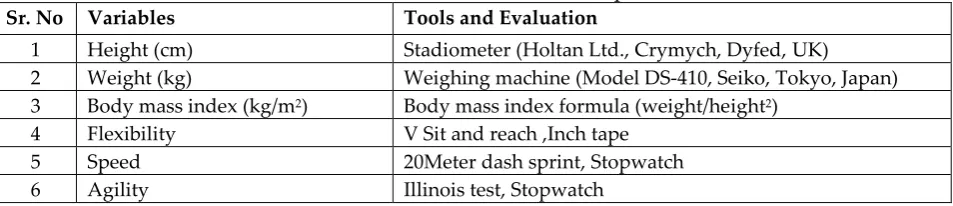
The Variables with their respective tools and evaluation were as followed:
Table 3.1: Table of Variables and their respective tools
Sr. No Variables Tools and Evaluation
1 Height (cm) Stadiometer (Holtan Ltd., Crymych, Dyfed, UK)
2 Weight (kg) Weighing machine (Model DS-410, Seiko, Tokyo, Japan) 3 Body mass index (kg/m2) Body mass index formula (weight/height2)
4 Flexibility V Sit and reach ,Inch tape
5 Speed 20Meter dash sprint, Stopwatch
6 Agility Illinois test, Stopwatch
The data was collected during the month of July to October, 2018 from Khalsa Cricket club, Khalsa University in Amritsar. It was ensured that the subjects were not suffering from any musculoskeletal disorders.
3.1 Stretching Interventions
Muscles which were stretched: gastrocnemius, hamstrings, hip flexor, hip extensor, quadriceps, adductors.
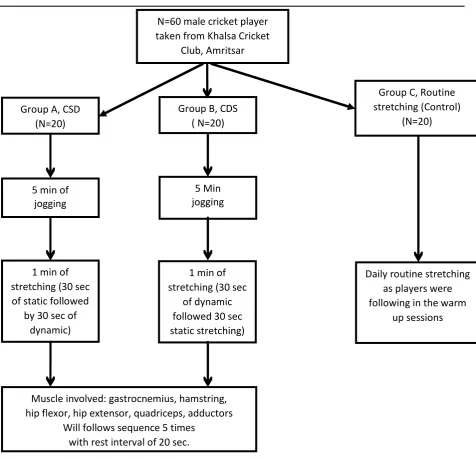
In Group A, general warm up i.e., jogging at normal pace for 5min and then the combination of static followed by dynamic stretching the subject were performed the static stretching of above muscles were for 30sec and followed by dynamic stretching for 30 sec for 5 times with 20 sec of interval rest.
Group B, in the combination of dynamic stretching followed by static stretching the subject were performed the dynamic stretching of above muscles were for 30sec and followed by static stretching for 30 sec for 5 times with 20 sec of interval rest and the same stretching protocol as above mentioned duration for other leg with 1 week of stretching protocol.
Figure 3.1: Methodological overview: schematic representation of procedure for combined stretching and routine stretching groups
4. Results
4.1 Data Analysis
The data collected was entered in EXCEL sheet and statistical analysis was done using SPSS (21.0) package (SPSS Inc. Chicago˂0.05 USA). Parametric testing was used to compare groups since the quantitative dependent variables were reasonably normally distributed. Independent t-tests were used to compare quantitative outcomes between the two independent groups. The effects of combined stretching methods on flexibility, speed and agility was determined using one-way repeated-measures analysis of variance (ANOVA). When justified, paired t-tests were performed to confirm significant changes within each condition. The post-hoc analysis is adjustment was then carried out to confirm the significant differences. A significance level of p ≤ 0.05 was accepted.
N=60 male cricket player taken from Khalsa Cricket
Club, Amritsar
Group A, CSD (N=20)
Group B, CDS ( N=20)
Group C, Routine stretching (Control)
(N=20)
5 min of jogging
5 Min jogging
1 min of stretching (30 sec of static followed
by 30 sec of dynamic)
1 min of stretching (30 sec
of dynamic followed 30 sec static stretching)
Daily routine stretching as players were following in the warm
up sessions
Muscle involved: gastrocnemius, hamstring, hip flexor, hip extensor, quadriceps, adductors
Table 4.1: Demographic details (Mean ± S.D.) of cricketer players
Table 4.1 shows the demographic data of Group A (CSD stretching group), Group B (CDS stretching group) and Group C (Routine stretching group) of cricket players.
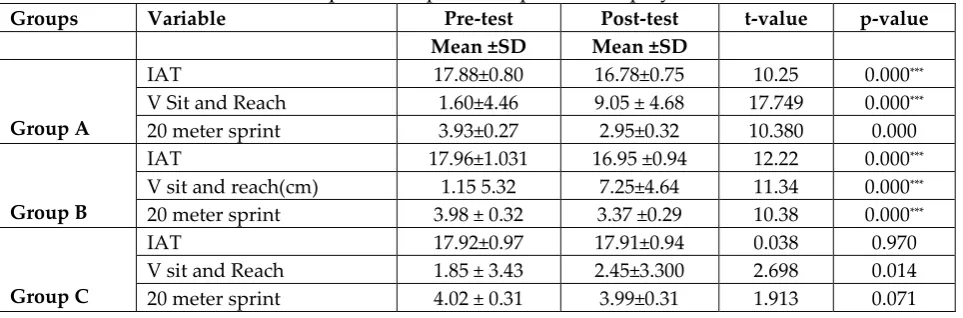
Table 4.2: Intragroup Comparison between pre and post-test values of Agility (IAT), Flexibility (V sit and reach) and Speed (20 M Dash sprint test)
in Group A, Group B, Group C cricket players
Groups Variable Pre-test Post-test t-value p-value
Mean ±SD Mean ±SD
Group A
IAT 17.88±0.80 16.78±0.75 10.25 0.000***
V Sit and Reach 1.60±4.46 9.05 ± 4.68 17.749 0.000***
20 meter sprint 3.93±0.27 2.95±0.32 10.380 0.000
Group B
IAT 17.96±1.031 16.95 ±0.94 12.22 0.000***
V sit and reach(cm) 1.15 5.32 7.25±4.64 11.34 0.000***
20 meter sprint 3.98 ± 0.32 3.37 ±0.29 10.38 0.000***
Group C
IAT 17.92±0.97 17.91±0.94 0.038 0.970
V sit and Reach 1.85 ± 3.43 2.45±3.300 2.698 0.014 20 meter sprint 4.02 ± 0.31 3.99±0.31 1.913 0.071 NS- No Significant
***p< 0.001(very highly significant) **p<0.01 (highly significant)
*p<0.05 (significant)
Table 4.2 shows that Intra group comparison on Agility (IAT), Flexibility (V sit and reach) and Speed (20 M Dash sprint test) of cricket players in Group A (CSD), Group B (CDS) and Group C (control) by using paired sample T test demonstrated the distribution of mean values and S.D. of pretest & posttest, where Group A & Group B observed with Significant differences (p ˂0.001).
Table 4.3: Multiple comparisons by using one way ANOVA on Agility (IAT), Flexibility (V sit and reach) and Speed (20 M Dash sprint test) alteration in Post-performance of cricket players
in CSD stretching (Group A), CDS stretching (Group B) & control group (Group C)
Descriptive Stat and ANOVA Mean SD F P Value Result
IAT Group A 16.78 0.76
9.539 0.000 Significant
Group B 16.95 0.95
Group C 17.91 0.94
Sit & Reach
Group A 9.05 4.63
12.963 0.000 Significant
Group B 7.25 4.64
Group C 2.45 3.30
Variables Sample size (N=60)
Group A (CSD) (n1 =20)
Group B (CDS) (n2 =20)
Group C (Control) (n3 =20)
Age (yrs) 20.35 ±1.69 20.20±1.15 19.85±1.14
Body height (cm) 175.35±5.82 170.40±6.38 170.80±6.44
Body weight (kg) 66.95±6.22 65.40±7.29 65.50±5.69
20 Meter Sprint Group A 2.95 0.39
48.156 0.000 Significant
Group B 3.37 0.30
Group C 3.99 0.31
Table 4.3 shows intra group comparison by using one way ANOVA of post values between CSD GROUP (group A), CDS GROUP (group B) and control group (group C) of cricket players in variable i.e., Illinois agility test (IAT), V sit and reach and 20 meter dash test.
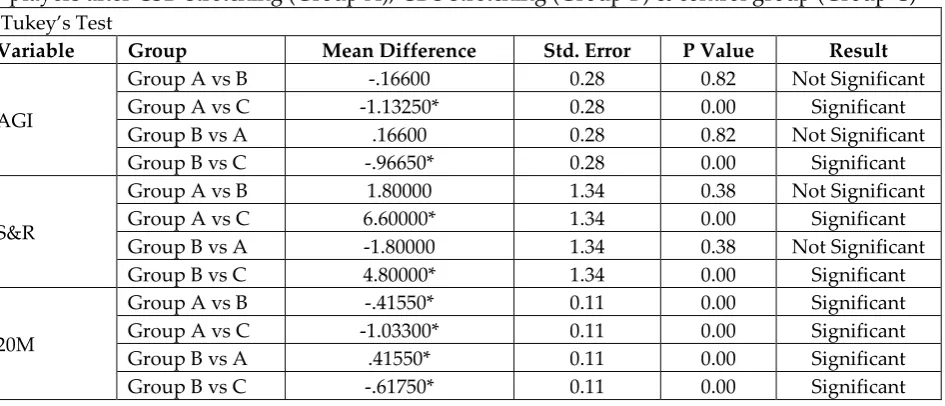
Table 4.4: Multiple comparisons by using POST HOC ANOVA on Agility (IAT), Flexibility (V sit and reach) and Speed (20 M Dash sprint test) alteration in post-performance of cricket players after CSD stretching (Group A), CDS stretching (Group B) & control group (Group C)
Tukey’s Test
Variable Group Mean Difference Std. Error P Value Result
AGI
Group A vs B -.16600 0.28 0.82 Not Significant
Group A vs C -1.13250* 0.28 0.00 Significant
Group B vs A .16600 0.28 0.82 Not Significant
Group B vs C -.96650* 0.28 0.00 Significant
S&R
Group A vs B 1.80000 1.34 0.38 Not Significant
Group A vs C 6.60000* 1.34 0.00 Significant
Group B vs A -1.80000 1.34 0.38 Not Significant
Group B vs C 4.80000* 1.34 0.00 Significant
20M
Group A vs B -.41550* 0.11 0.00 Significant
Group A vs C -1.03300* 0.11 0.00 Significant
Group B vs A .41550* 0.11 0.00 Significant
Group B vs C -.61750* 0.11 0.00 Significant
NS- No Significant
***p< 0.001(very highly significant) **p<0.01 (highly significant)
*p<0.05 (significant)
Table 4.4 shows intergroup comparison by using post Hoc ANOVA depicts significant improvement on speed, agility, flexibility in CSD, CDS and control group in cricket players.
5. Discussion
The study has made an effort to examine the acute effects of combined stretching methods on flexibility, Speed, & agility in cricket players. The present finding showed significant improvement after combined stretching method than routine stretching.
A. Flexibility
group) (p <0.001) Group B (CDS) with Group C (Control group) (P <0.001) on V sit and reach in cricketer players. Thus present study suggests the use of combined stretching methods have effect on flexibility when compare to control.
The results were consistent with O'Sullivan et al., (2009) who concluded that Warm-up significantly increased hamstring flexibility it reduced after 15 minutes, but flexibility remained significantly greater than at baseline. The short-term effect of warm-up and static stretching on hamstring flexibility was greater in those with reduced flexibility post-injury. The results of the present study were similar with by Amiri-Khorasani et al., (2011) which showed the significant difference between the combined stretching compared with static and no-stretching protocols on soccer players. Perrier et al., (2011) Samukawa et al., (2011) which also indicated that dynamic stretching can produce equal or greater results in flexibility.
B. Speed
The sprint time showed statistically significant improvement with Post Hoc Analysis when Group A (CSD) compared with Group C (Control group) (p<0.001) and Group B (CDS) compared with Group C (Control group) (P <0.001) and also Group A (CSD) compared with Group B (CDS) (P<0.001) with mean difference (-0.41550) in this study. Group A CSD showed greater effect than Group B CDS and Group C regular warm up in 20 M dash sprint test in cricketer. Thus this study showed use of combined stretching methods has effects on speed.
The present study were in agreement with Amiri-Khorasani et al., (2016) who found that there was a significant difference between the combined stretching compared with static and no-stretching protocols on soccer players. The physiological basis for speed is that, Post Active Potentiation (PAP) and optimal muscle temperature, caused a better force production, which in turn caused a faster acceleration and speed. This resulted in a higher force production than that by performing only Static Stretching (SS). Pojskić H. et al., (2015) compared the effects of different warm-up interventions on jump, sprint and agility performance in collegiate soccer players. There was a significant difference in speed; study suggested to elicit PAP by increasing the rate of cross-bridge formation, which enabled greater muscle force and power production. Samson et al (2012, indicated that when a sport specific warm-up was included, there was an 0.94% improvement in 20 meter sprint time with both the dynamic and static stretch groups. The additional warm up time may have led to a further increase in muscle temperature, nerve conduction velocity, and muscle enzymatic cycling, along with a decrease in muscle viscosity (Bishop, 2003).
C. Agility
Cricket as a fast ball sport is characterised by ever-changing uncertainties, and hence unique as well as partially known situations must be evaluated simultaneously with agile yet appropriate and accurate execution of reaction performance (Soumendra et al., 2014). In the present study significant improvements were seen when Group A (CSD) was compared with Group C (Control group) (p <0.001) and when Group B (CDS) was compared with Group C (Control group) (p <0.001) were found in Illinois test for agility in cricket players. Thus, present study shows use of combined stretching methods have beneficial effects on agility than regular warm up. Results of present study were consistent with Chatzopoulos et al., (2014) which found that the DS protocol compared to SS performed significantly better in agility and movement time. And also, DS protocol compared to No Stretching performed significantly better in agility. Study suggested that post-activation potentiation (PAP) may be a contributing factor for the better performance of the DS protocol. The results of present study were revealed with Mcmillian et al., (2006): repeated measures analysis of variance revealed better performance scores after the Dynamic Warm Up (DWU) and this study indicate a relative performance enhancement with the DWU, the utility of warm up routines that use static stretching as a stand-alone activity should be reassessed. The study implies two neuromuscular phenomena possibly activated by the DWU could potentially enhance power and agility performance. (PAP; an increase in muscle twitch force and rate of force development following a conditioning contractile activity) could theoretically improve power and agility performance, though the optimal parameters to exploit PAP are unknown. Vaghela and Parmar (2013) found decrease in time taken to complete the agility drill for the players performing dynamic stretching (DS) as compared to no stretch and static stretching of the hamstrings and calf muscles and Study concluded that dynamic stretching enhances performance of tennis players. The phenomenon of DS enhancing performance has been linked to the rehearsal of specific movement patterns, helping proprioception and preactivation, allowing as optimum switch from the eccentric to the concentric muscle contraction required to generate high running speeds.
6. Recommendation
a) Future recommendation will be to conduct the study in such way that batsmen and bowler should get the specific effects of combined stretching methods.
b) Future study can be carried out for longer duration to see the long-term effect of combined stretching methods.
7. Conclusion
The study concluded that combined stretching methods i.e., combined static dynamic and combined dynamic static both enhance flexibility, speed & agility than routine stretching during warm up sessions. So, the study suggested to coaches, strength & conditioning trainer, fitness trainer & players to use combined stretching methods to improve the performance. Hence the study opens new vision toward combined stretching methods for not only better performance but also to prevent injuries.
Acknowledgement
First and foremost, I would like to express my thankfulness to Three Jewel of Buddhism, Waheguru Ji and my family members because of which I was able to cover the long journey. I am highly thankful to all faculty members of Department of Sports Medicine and Physiotherapy, Guru Nanak Dev University, Amritsar, Punjab, India. Also, I express my gratitude to all players and coaches without them this study could not have been reach level.
References
Amiri-Khorasani, M., Calleja-Gonzalez, J., & Mogharabi-Manzari, M. (2016). Acute effect of different combined stretching methods on acceleration and speed in soccer players. Journal of Human Kinetics, 50(1), 179-186.
Amiri-Khorasani, M., Osman, N. A. A., & Yusof, A. (2011). Acute effect of static and dynamic stretching on hip dynamic range of motion during instep kicking in professional soccer players. The Journal of Strength & Conditioning Research, 25(6), 1647-1652.
Amiri-Khorasani, M., Sahebozamani, M., Tabrizi, K. G., & Yusof, A. B. (2010). Acute effect of different stretching methods on Illinois agility test in soccer players. The
Journal of Strength & Conditioning Research, 24(10), 2698-2704.
Bartlett, R. M. (2003). The science and medicine of cricket: an overview and update. Journal of Sports Sciences, 21(9), 733-752.
Bishop D., (2003). Warm up I. Sports medicine. May 1, 33(6), 439-54.
Chatzopoulos, D., Galazoulas, C., Patikas, D., & Kotzamanidis, C. (2014). Acute effects of static and dynamic stretching on balance, agility, reaction time and movement time. Journal of Sports Science & Medicine, 13(2), 403.
Duffield, R., & Drinkwater, E. J. (2008). Time–motion analysis of test and one-day international cricket centuries. Journal of Sports Sciences, 26(5), 457-464.
Edwin Moses quotes https://www.brainyquote.com/quotes/edwin_moses_261313
Knudson, D. V. (2008). Warm-up and flexibility. Chandler TJ, Brown LE. Conditioning for
Strength and Human Performance. Philadelphia, PA: Lippincott-Williams & Wilkins.
Lockie, R. G., Murphy, A. J., Knight, T. J., & de Jonge, X. A. J. (2011). Factors that differentiate acceleration ability in field sport athletes. The Journal of Strength &
Conditioning Research, 25(10), 2704-2714.
Lockie, R. G., Murphy, A. J., Schultz, A. B., Jeffries, M. D., & Callaghan, S. J. (2013). Influence of sprint acceleration stance kinetics on velocity and step kinematics in field sport athletes. The Journal of Strength & Conditioning Research, 27(9), 2494-2503.
McMillian, D. J., Moore, J. H., Hatler, B. S., & Taylor, D. C. (2006). Dynamic vs. static-stretching warm up: the effect on power and agility performance. The Journal of
Strength & Conditioning Research, 20(3), 492-499.
O'Sullivan, K., Murray, E., & Sainsbury, D. (2009). The effect of warm-up, static stretching and dynamic stretching on hamstring flexibility in previously injured subjects. BMC musculoskeletal disorders, 10(1), 37.
P. Edwards M. A., (1992), Royal navy cricket book
https://www.teachpe.com/gcse/cricket.pdf.
Panjabi, M. M. (2003). Clinical spinal instability and low back pain. Journal of
Electromyography and Kinesiology, 13(4), 371-379.
Perrier, E. T., Pavol, M. J., & Hoffman, M. A. (2011). The acute effects of a warm-up including static or dynamic stretching on countermovement jump height, reaction time, and flexibility. The Journal of Strength & Conditioning Research, 25(7), 1925-1931.
Petersen, C. J., Pyne, D., Dawson, B., Portus, M., & Kellett, A. (2010). Movement patterns in cricket vary by both position and game format. Journal of Sports
Sciences, 28(1), 45-52.
Petersen, C. J., Pyne, D. B., Dawson, B. T., Kellett, A. D., & Portus, M. R. (2011). Comparison of training and game demands of national level cricketers. The
Journal of Strength & Conditioning Research, 25(5), 1306-1311.
Pojskić, H., Pagaduan, J. C., Babajić, F., Užičanin, E., Muratović, M., & Tomljanović, M. (2015). Acute effects of prolonged intermittent low-intensity isometric warm-up schemes on jump, sprint, and agility performance in collegiate soccer players. Biology of Sport, 32(2), 129.
Samson, M., Button, D. C., Chaouachi, A., & Behm, D. G. (2012). Effects of dynamic and static stretching within general and activity specific warm-up protocols. Journal of
Sports Science & Medicine, 11(2), 279.
Samukawa, M., Hattori, M., Sugama, N., & Takeda, N. (2011). The effects of dynamic stretching on plantar flexor muscle-tendon tissue properties. Manual
Therapy, 16(6), 618-622.
Tillin, N. A., & Bishop, D. (2009). Factors modulating post-activation potentiation and its effect on performance of subsequent explosive activities. Sports
Medicine, 39(2), 147-166.
Turki, O., Chaouachi, A., Behm, D. G., Chtara, H., Chtara, M., Bishop, D., ... & Amri, M. (2012). The effect of warm-ups incorporating different volumes of dynamic stretching on 10-and 20-m sprint performance in highly trained male athletes. The Journal of Strength & Conditioning Research, 26(1), 63-72.
Vaghela, V., & Parmar, D. (2013). Effects of static and dynamic stretching on agility performance in tennis players. Int J Sci Res, 4(8), 581-84.
Creative Commons licensing terms