66
Research on Computer Digital Signal Processing Network based on the RBF Neural
Network
Wenfu Zhang
Department of Electronic and Information Technology Jiangmen Polytechnic, Jiangmen 529090, China
ABSTRACT: This article focuses on the genetic algorithm to improve computer assisted voice digital signal processing technology, focusing on the effect of genetic algorithms in terms of speaker recognition, proposed a set of related technologies using genetic algorithm to improve computer-aided optimization of voice processing solutions. The genetic algorithm (GA) for speech processing plays an important role in vector quantization techniques used in the design process codebook into local optimum problem, and for poorly performing computer-aided speech processing problems RBF network plays a very important role obtained in the clustering process, combined with improved adaptive genetic algorithm to optimize the design of the network training algorithms. Experimental results show a good effect on genetic algorithm optimized generated.
Keywords: Digital Signal Processing, RBF Neural Network, Computer, Genetic Algorithm
Received: 17 April 2017, Revised 20 May 2017, Accepted 27 May 2017
© 2017 DLINE. All Rights Reserved
1. Introduction
allocation of threaded tasks, the use of general-purpose computer can achieve time processing of signals. Software for real-time signal processing is based on an important development direction of general-purpose computer signal processing simulation system [5]. In this paper, a general purpose computer system for real-time signal processing by the application of the block processing technology, the use of double buffering to meet the real-time transmission of data and the use of multi-threaded multi-task parallel processing, is given based on a common computer simulation of real-time signal processing design system, and block processing, with double buffering and multithreading in the implementation process of the key points in-depth analysis.
Neural network is an approximate mathematical model of biological neurons. It has the advantages of large-scale parallel processing, distributed storage, adaptive learning and strong nonlinear approximation ability, and has been widely used in industrial process control, nonlinear modeling and other fields. At present, the neural network with error back propagation (BP) and radial basis function (RBF) neural network are usually used in feed forward artificial neural networks [6]. BP network is widely used and intuitive, and can approximate any nonlinear function with any precision, but it has the local optimal problem, and the training speed is slow and the efficiency is low. The RBF network is a local approximation of the feed-forward network, in terms of approximation ability, learning speed and other aspects are better than the BP network, and there is no local optimization problem [7]. In this paper, the RBF neural network is used to construct the network model of double input and single output, and the high precision nonlinear correction and cold end compensation of thermocouple temperature measurement are realized.
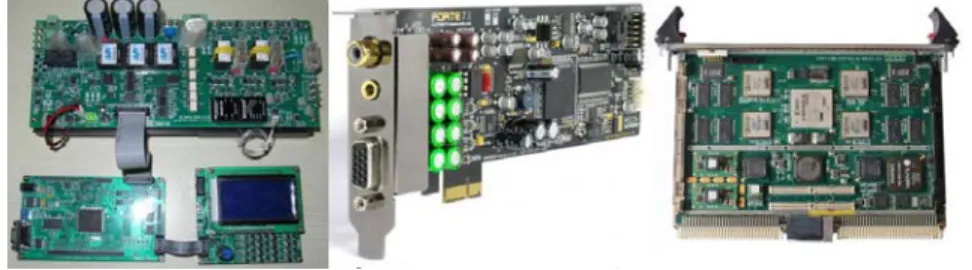
Because of several commonly used RBF network training methods (Newton method, Gauss-Newton method and LM method) it is difficult to find the global optimal network center and width value. It cannot automatically determine the node number of hidden layer, in order to achieve the approximation accuracy and the hidden layer number, large scale networks etc [8]. In this paper, the genetic algorithm is used in the training process of RBF network. Genetic algorithm is a kind of global parallel, random search algorithm, which has the ability of strong robustness and convergence to the global optimum. Using the neural network training, the network parameters and the number of hidden layer nodes can be optimized simultaneously. The simulation results show that the RBF neural network model with double input and single output and the optimization training of genetic algorithm can obtain very satisfactory results, which provides a new method for digital signal processing (See figure 1).
Figure 1. Digital signal processor control panel
2. Descriptions and Research Status Genetic Algorithm
Genetic Algorithm is an integral part of Evolutionary Computation. Genetic algorithm is a reference biological natural selection and the “selection, crossover and mutation” random search algorithm that genetic machine generated. Its object is to search the individual chromosomes and, in the form of a group of binary string (population). Body color corresponds to a solution ask questions. That exchange of information search strategy groups and groups of individuals between the two main features of the genetic algorithm [9]. More representative of the traditional search methods are analytical method, brute-force method, and random method. Compared to these methods, the transmission method has no knowledge of the search space, parallel to climb peaks adaptability encoding method, the search does not depend on the gradient information and the continuity of the derivative function is defined and there is no other advantages.
68
that are different from the corresponding gene to decide is studied where the gene is the basic unit of heredity with the smallest unit. The application of genetic algorithms in combinatorial optimization studies the growth of organisms through cell division, and cell division is the process of self replication. When cells divide, the genetic material is DNA, which can be passed through to the next generation of cells, so that the newly generated cells inherit the genes of the last generation [11]. In sexual reproduction, parental reproduction of next generation, and the reorganization of a new chromosome through two homologous chromosome crossover, in two chromosomes of a same position to determine a point of intersection, and then after the intersection part of the exchange to generate a new two chromosome. In addition, the replication process, which is the process of cell division may be due to some occasional factors and some errors, so that some of the genetic mutations in DNA, which allows the body to show some new traits. Therefore, because of a variety of different reasons that in the process of genetic chromosome or gene for change [12].
Wallace and Darwin published a paper on the origin of species in July 1, 1858 at the London Academy of forestry and society, so people put their natural selection theory called Darwin Wallace’s theory. Darwin in 1859 published the “origin of species” in this book, which is based on a large number of real investigation of the information system to discuss his theory of evolution. The principle of this kind of theory of evolution is as follows: biology is not the first appearance; it is the prerequisite of the existence of the biological, and then it may appear biological [13]. After a certain period of time, there will be a surplus of life, but their living space and the food they need is limited, so it will inevitably lead to competition, that is, the struggle between biological. In the same population, there will be differences between individual organisms such as strength, height, fat and thin. Some individuals have strong competitiveness, will win in the struggle, so it is more adapt to the environment, and those who fail in the struggle of vulnerable individuals will become more and more adapt to the environment, will gradually be eliminated; so the species are evolving. Species are evolving toward the side of victory in the struggle, and in the future [14]. In the process of the biological struggle it is also the existence of variation, which always be able to adapt to the environment of the characters or features retained, and do not adapt to the environment has gradually been eliminated or changed. In the long historical changes, through constant natural selection and variation, the biological traits or characteristics are optimized the process which is called evolution. Fitness refers to the ability to adapt to each individual on the environment, because each individual is different because of the factors of their living environment are not the same as the ability to adapt, so their fitness will have a difference. The principle of natural selection is the core of Darwin’s theory of evolution over the struggle for survival, reproduction; genetic variation and survival of the fittest in these four aspects are the main content of the principle of natural selection. Species is through natural selection, genetic and variation continues to adapt to the evolution of the direction of the evolution of biological survival. As a result, it has created a lot of living organisms that are more and more able to adapt to the living environment. Through the theory of genetics simulates genetic evolutionary process of organism and on the basis of Mendel and Morgan, the simulated evolutionary algorithm is created[15].
3. RBF Neural Network Genetic Algorithm Optimization
Feed forward neural network, RBF network as usually called, often use a technique called radial basis function (Radial Basis Function, RBF) neural network classifier which has not only have better classification results, but also has shorter training and recognition time. Because of its simple structure, fast convergence, powerful mapping capabilities and the best approximation and the global optimum, RBF neural networks are widely used in pattern recognition, function approximation and classification problems in many fields. Commonly used Gaussian function, reflects the sigmoid functions and quadratic functions and so on [16]. RBF neural network is the use of radial basis function network characteristics as a function of the feed forward constituted. RBF neural network has its own unique features, and it only contains a hidden layer and output characteristics which is its hidden layer unit with radial basis function, and seen RBF neural network is a network of three-fed.
Neural network as a new mathematical modeling method, through the study of historical data, can find the mapping relationship between input and output. Mapping process is the essence of the pattern recognition, the process of excited extraction, and model in the learning process to extract and store up, in the recognition stage, we can determine the results of the identification of the network according to the input. How to identify the accuracy, not only depends on the adequacy of the training data, whether typical, but also with the structure of the network characteristics and algorithms have a direct relationship. BP neural network for modulation recognition, and the recognition results can be roughly classified modulation signal, but the error is relatively large. This is mainly related to the BP network and the BP algorithms own defects [17].
of discontinuous function, can be a wide range of data fusion, capable of high-speed parallel processing of data. RBF neural network to classify the input data, according to the distance between the input vector and the center point of the basis function, to identify the results obtained. This chapter is based on the above characteristics of the RBF network and the RBF neural network pattern recognition method for digital modulation recognition, where it can classify and correlate the modulation parameters. RBF neural network to construct the digital modulation recognition system, can achieve real-time and reliable recognition results.
In this paper, the process of genetic algorithm into the training network, the RBF network for improvement, improves its global optimization capability. By using genetic clustering algorithm to train the network hidden layer, and the principle of least squares gradient descent to train the output layer improves the network performance pattern recognition. After genetic clustering algorithm is introduced training process, training algorithm for RBF network is deployed.
Remark 1. According to k-means clustering algorithm, the fitness function is taken as the reciprocal of the total distortion.
Remark 2. Through genetic manipulation to make convergence, including the selection operation, crossover and mutation operations in three ways.
Remark 3. The resulting clusters for each category are as a hidden layer node.
Remark 4. Determine the weights of the network output layer.
Remark 5. Because the value of the initial population structure of chromosomes and is the cluster category number.
4. Experimental Methods and Results
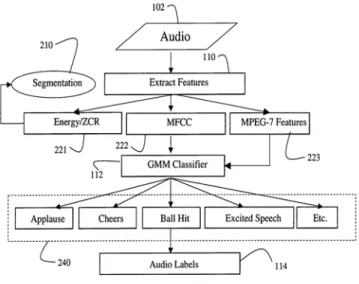
In this experiment, we used the relate sound card and a mono microphone for 50 young men with sound acquisition. Everyone is a “school” pronunciation of the word, 20 times per person, 15 times for the training, and the remaining five times for identification. Experiments using MFCC audio library functions within the collected sound with WAV format files for storage, signal sampling frequency is 44100HZ, a median of 16 samples and SNR is 20dB are collected.Voice input feature extraction, according to the order, include the pre-emphasis, windowing, sub-frame, and end-point detection. In this experiment, the use of pre-emphasis filter 0.95HZ, using the frame length is 256 points. Since MFCC coefficient ratio LPCC Costrel achieve better results at runtime, is more robust and choose a better voice MFCC. This performance characteristic parameter represents the way in the experiment, in order to better speaker on behalf of the respective personality traits. MFCC extraction parameters are shown in Figure 2.
Figure 2. MFCC Parameters
70
adaptive GA-RBF neural network in the experiment succeeded in raising the codebook and network optimization effect the ability to identify, with great advantage.
5. Conclusion
In this paper, the basic ways in today’s computer-aided speech processing were summarized and reviewed and improved genetic algorithm applied to computer-aided speech processing. The speaker recognition technology, for example, discusses the effects of genetic algorithms to improve recognition accuracy rates. In order to test the accuracy and simplicity, it should be readily available to choose a mode of measurement and analysis. Dispersion curves calculated for the experimental design provides an important basis. A dispersion curve, but also to determine the relative speed mode, determine the sampling time delay of the received signal, and so on. Combined with improved adaptive genetic algorithm designed to optimize the network training algorithms. Examples of the computer-aided speaker recognition by voice processing applications through improved genetic algorithm and RBF neural networks were trained and identified.
References
[1] Juang, B.H. (2011). The Past, Present and Future of Speech Processing. IEEE Intelligent Systems. 9, 28-40.
[2] Sackinger, E., Boser., BE., Jackel, LD. (1999). Neurocomputer Board Based on the ANNA Neural Network Chip. 55, 773-780.
[3]Ghasimi, SMD., Idris, A., Chuah, TG., Tey, BT. (2002). Implementation of Pattern Recognition Algorithm based on RBF Neural Network. IEEE Transactions on Pattern Analysis & Machine Intelligence. 8, 4572-4581.
[4] Kim, DS., Kim, HS., Chung, DJ. (2006). Implementation of a Neural Network Processor Based on RISC Architecture for Various Signal Processing Applications, In: International Symposium on Advances in Neural Networks.
[5] Wang, N., Hu, B., Zhang, J., Liu, J., Zhang. X. (2015). Research on Key Problems of Channel Estimation Based on Plural RBF Neural Network. International Journal of Hybrid Information Technology. 8, 57-69.
[6] Yang, F., Paindavoine, M. (2003). Implementation of an RBF neural network on embedded systems: real-time face tracking and identity verification. IEEE Transactions on Neural Networks. 14 (5) 1162-1175.
[7] Lotte, F., Congedo, M., Lécuyer, A. (2007). A review of classification algorithms for EEG-based brain–computer interfaces.
Journal of Neural Engineering. 4 (2) R1.
[8] Er, M.J., Wu, S., Lu, J. (2002). Face recognition with radial basis function (RBF) neural networks, IEEE Ttransactions on Neural networks. 13 (3) 697-710.
[9] Er, M.J., Chen, W., Wu, S. (2005). High-speed face recognition based on discrete cosine transform and RBF neural networks.
IEEE Transactions on Neural Networks. 16 (3) 679-691.
[10] Irwin, G.W., Warwick, K., Hunt, K.J. (1995). Neural network applications in control. Iet. 5, 256-270.
[11] Zhang, J., Walter, G.G., Miao, Y. (1995). Wavelet neural networks for function learning. IEEE Transactions on Signal Processing. 43 (6) 1485-1497.
[12] Lin, W.M., Yang, C.D., Lin, J.H. (2001). A fault classification method by RBF neural network with OLS learning procedure.
IEEE Transactions on Power Delivery. 16 (4) 473-477.
[13] Haddadnia, J., Ahmadi, M., Faez, K. (2003). An efficient feature extraction method with pseudo-Zernike moment in RBF neural network-based human face recognition system. EURASIP Journal on Advances in Signal Processing. 9, 1-12.
[14] Kim, B.S. (1997). Calise A J. Nonlinear flight control using neural networks. Journal of Guidance, Control, and Dynamics. 20 (1) 26-33.
[15] Geman, S., Bienenstock, E., Doursat, R. (1992). Neural networks and the bias/variance dilemma. Neural Computation. 4 (1) 1-58.
[16] Samanta, B., Al-Balushi, K.R., Al-Araimi, S.A. (2003). Artificial neural networks and support vector machines with genetic algorithm for bearing fault detection. Engineering Applications of Artificial Intelligence. 16 (7) 657-665.