Address for correspondence
Dr. Lubna Khondker, Associate Professor Department of Dermatology and Venereology Bangabandhu Sheikh Mujib Medical
University(BSMMU), Dhaka, Bangladesh. Email: [email protected]
Original Article
Efficacy of benzoyl peroxide and clindamycin
combination therapy with benzoyl peroxide alone in
the treatment of acne vulgaris
Introduction
Acne vulgaris is a common dermatological disorder of the pilosebaceous unit presenting usually at puberty.1 It is characterized by the
formation of open and closed comedones
(non-inflammatory lesions), papules, pustules, and nodulocystic lesions (inflammatory lesions) generally affecting the face, arms, and back. The pathogenesis is complex and multifactorial which includes abnormal sebum production, follicular hyperkeratinization, bacterial proliferation and inflammation.2-4 The treatment
goals are directed to reduce activity of the sebaceous glands, normalize follicular proliferation, reduce bacterial colonization and control inflammation.5,6 Owing to the use of
Isabela Kabir, Muhammad Munir Rashid, Lubna Khondker
Bangabandhu Sheikh Mujib Medical University(BSMMU), Dhaka, Bangladesh
Abstract
Objective To assess the efficacy of benzoyl peroxide and clindamycin combination therapy with benzoyl peroxide alone in the treatment of acne vulgaris.Methods A clinical trial was carried out in the Department of Dermatology and Venereology, Bangabandhu Sheikh Mujib Medical University (BSMMU), Dhaka. The study duration was from July 2013 to December 2013. Total sixty patients of clinically diagnosed mild to moderate acne was enrolled and thirty of group A patients were treated by benzoyl peroxide alone and thirty of group B patients were treated by benzoyl peroxide and clindamycin combination therapy.
Results At baseline mean number of comedones in group A and group B was 12.77±4.01 and 11.80±3.93, respectively (p=0.350) and at final follow-up 4.17±4.02 and 3.47±4.00 (p>0.05). At baseline mean number of papules in group A and group B was 17.30±10.29 and 18.57±13.88, respectively (p=0.690) and at final follow-up 7.63±8.08 and 7.73±9.98 (p>0.05). At baseline mean number of pustules in group A and group B was 0.50±1.33 and 0.53±1.28, respectively (p=0.922) and at final follow-up 0.07±0.37 and 0.00 (p>0.05). At baseline mean of total acne score was 30.57±13.62 and 30.90±17.17 in group A and B and at final follow-up it was 11.87±12.04 and 11.20±13.85, respectively in group A and B (p>0.05). Percent reduction of acne severity from baseline to final follow-up was 69.20±23.41 in group A and 74.77±23.30 in group B (p=0.360). At final follow-up 56.7% of group A and 63.3% of group B achieved excellent response and 13.3% of group A and 16.7% of group B achieved good response.
Conclusion It can be concluded that the drug, benzoyl peroxide when used individually, was found to be effective in the treatment of acne, but the combination of the two clindamycin and benzoyl peroxide was found to be superior in efficacy.
Key words
topical and systemic antibiotics for acne vulgaris, the incidence of antibiotic-resistant
Propionibacterium acnes is increasing worldwide. Topical benzoyl peroxide (BPO) is an alternative to antibiotics in the treatment of acne vulgaris.7,8 BPO is a powerful antimicrobial
agent destroying both surface and ductal bacterial organisms and yeasts. Its lipophilic properties permit penetration of the pilosebaceous duct and its efficacy is largely against superficial inflammatory lesions. Once applied to the skin, BPO decomposes to release free oxygen radicals, which have potent bactericidal activity in the sebaceous follicles and anti-inflammatory action. It also has effects on noninflammatory lesions by reducing follicular hyperkeratosis to some degree. They are not associated with antimicrobial resistance and are active against fully sensitive and resistant strains of P. acnes.9-11 To treat mild to
moderate acne, it can be used alone or in combination with topical antibiotics and topical retinoids.12 Clindamycin improves acne by
reducing the levels of P. acnes and decreasing inflammation.13,14 The advantages of this
combination therapy are - keratolytic action of BPO is possibly synergistic with the antibacterial activity of clindamycin.15,16 There
are different treatment options available for patients with acne vulgaris. All approaches have advantage and disadvantages and none is appropriate for every patient.17 For all these
reasons, the clinical efficacy of combination therapy and monotherapy was assessed in patients with acne vulgaris and a new approach using BPO and clindamycin were tried in patients with acne vulgaris.
Methods
A clinical trial was conducted in the department of Dermatology and Venereology, Bangabandhu Sheikh Mujib Medical University, Dhaka. The study duration was from July 2013 to December
2013. Patients of acne vulgaris during the study period were enrolled in the study. Complete history, general physical and dermatological examinations were done for all enrolled patients. For women of reproductive age reproductive history, menstrual history, lactation and pregnancy plan were carefully judged. History and physical findings were recorded in a structured questionnaire. Finally those patients, who matched the inclusion and exclusion criteria were selected for the study. Inclusion criteria of patient selection were patients clinically diagnosed as acne vulgaris who gave informed consent to be included in the study, age ≥12 years of both sexes, patients with non
inflammatory (comedones) lesions and
inflammatory (papules, pustules) lesions on the face. Exclusion criteria were persons having hypersensitivity to clindamycin and BPO, patients suffering from nodulocystic acne, pregnant women and lactating mothers, married women who were taking oral contraceptive pills. Consecutive type of non-probability sampling method was followed.
Data were collected by face to face interview and were recorded in a questionnaire. Information was collected by taking medical history and clinical examination. Baseline laboratory investigations were carried out for purpose of exclusion and monitoring of side effects. Laboratory investigations included complete blood counts, liver function tests, serum creatinine, random blood sugar level, and serum cholesterol and triglyceride level.
index of the disease was calculated and recorded and clinical photographs were taken. The final clinical assessment was done and the severity index was calculated at the end of the third month. Then the patient was followed up at the second month in the post-treatment period to look for any recurrence. A four point scale is used to measure the level of response to treatment, if >75% clear- Excellent response; if 50-75% clear- good response if 25-50% clear fair response; if <25% clear poor response. Safety and tolerability were assessed through evaluations of local facial tolerability and adverse events. On each follow up, clinical evaluation of the patients were undertaken in order to assess the safety of benzoyl peroxide and clindamycin combination therapy and benzoyl peroxide monotherapy in the treatment of acne vulgaris.
Data were analyzed by computer software package and level of significance was measured by using appropriate statistical tests. Statistical significance (p value) was set at 0.05 level and confidence interval at 95% level.
Results
Thirty of group A patients were treated with BPO alone and thirty of group B patients were treated by BPO and clindamycin combination
therapy. Mean (± SD) age of onset of acne was 19.37±4.07 years and 17.42±3.12 years in group A and group B, respectively (p=0.420), Table 1. Mean duration of disease was 16.60±17.21 months and 28.20±38.71 months in group A and group B, respectively (p=0. 139).
Facial lesions were present in 96.7% of group A and 100.0% of group B, neck lesions was present in 6.7 % and shoulder lesions in 3.3% (p>0.05) in each group, Table 2.
At baseline mean number of comedones in group A and group B was 12.77±4.01 and 11.80±3.93, respectively (p=0.350). At 1st follow-up mean number of comedones in group A and group B was 7.80±4.11 and 7.77±4.08, respectively, at 2nd follow-up it was 6.10±4.03 and 5.63±4.16 and at final follow-up 4.17±4.02 and 3.47±4.00 (p>0.05), Table 3.
At baseline mean number of papules in group A and group B was 17.30±10.29 and 18.57±13.88 respectively (p=0. 690). At 1st follow-up, mean number of papules in group A and group B was 12.40±9.46 and 13.10±12.67, respectively, at 2nd follow-up it was 9.97±8.73 and 10.10±11.17 and at final follow-up 7.63±8.08 and 7.73±9.98, respectively (p>0.05), Table 4.
At baseline mean number of pustules in group A
Table 1 Mean and standard deviation of age at first acne appeared (yrs.) and duration of Acne (months). Group
p value* Group A Group B
Age at first acne appeared (yrs.) 19.37±4.07 17.42±3.12 0.420 Duration of acne (months) 16.60±17.21 28.20±38.71 0.139
* unpaired t test was done to measure the level of significance. Data were shown as Mean±SD.
Table 2 Distribution of groups by site of lesion.
Site Group p value*
Group A Group B
Face 29 (96.7) 30 (100.0) 0.313
Neck 2 (6.7) 2 (6.7) 0.999
Shoulder 1 (3.3) 1 (3.3) 0.999
* Chi square test was done to measure the level of significance.
Table 3 Meannumber of comedones at baseline and subsequent follow-ups.
Mean number of comedones Groups p value*
Group A Group B
Baseline 12.77±4.01 11.80±3.93 0.350
1st follow-up 7.80±4.11 7.77±4.08 0.975
2nd follow-up 6.10±4.03 5.63±4.16 0.661
Final follow-up 4.17±4.02 3.47±4.00 0.501
* Unpaired t test was done to measure the level of significance. Data were shown as mean±SD.
Table 4 Meannumber of papules at baseline and subsequent follow-ups.
Mean number of papules Groups p value*
Group A Group B
Baseline 17.30±10.29 18.57±13.88 0.690
1st follow-up 12.40±9.46 13.10±12.67 0.809
2nd follow-up 9.97±8.73 10.10±11.17 0.959
Final follow-up 7.63±8.08 7.73±9.98 0.966
*unpaired t test was done to measure the level of significance. Data were shown as mean±SD.
Table 5 Meannumber of pustules at baseline and subsequent follow-ups.
Pustules Groups p value*
Group A Group B
Baseline 0.50±1.33 0.53±1.28 0.922
1st follow-up 0.30±0.88 0.30±0.75 0.999
2nd follow-up 0.17±0.59 0.10±0.31 0.586
Final follow-up 0.07±0.37 0.00 0.326
*Unpaired t test was done to measure the level of significance. Data were shown as mean±SD.
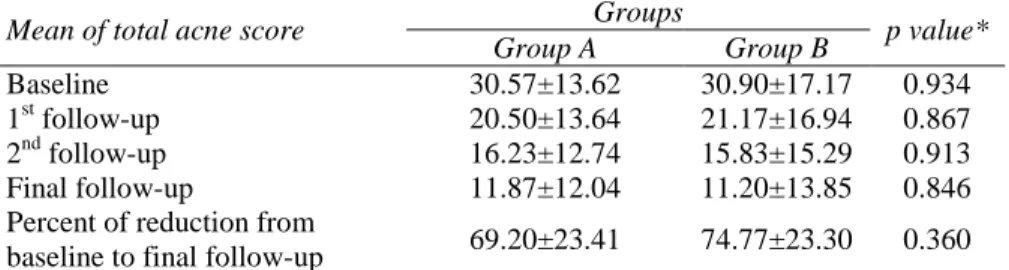
Table 6 Mean of total acne score at different follow-up visits.
Mean of total acne score Groups p value*
Group A Group B
Baseline 30.57±13.62 30.90±17.17 0.934
1st follow-up 20.50±13.64 21.17±16.94 0.867
2nd follow-up 16.23±12.74 15.83±15.29 0.913
Final follow-up 11.87±12.04 11.20±13.85 0.846
Percent of reduction from
baseline to final follow-up 69.20±23.41 74.77±23.30 0.360
* Unpaired t test was done to measure the level of significance. Data were shown as mean±SD.
and group B was 0.50±1.33 and 0.53±1.28, respectively (p=0. 922). At 1st follow-up mean number of pustules in group A and group B was 0.30±0.88 and 0.30±0.75, respectively, at 2nd follow-up, it was 0.17±0.59 and 0.10±0.31 and at final follow up 0.07±0.37 and 0.00, respectively (p>0.05), Table 5.
At baseline mean of total acne score (acne score of comedones, papules and pustules) was
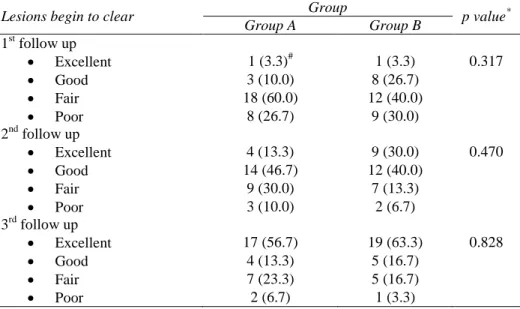
Table 7 Distribution of lesions begin to clear by groups in different follow up
Lesions begin to clear Group p value*
Group A Group B
1st follow up
Excellent 1 (3.3)# 1 (3.3) 0.317
Good 3 (10.0) 8 (26.7)
Fair 18 (60.0) 12 (40.0)
Poor 8 (26.7) 9 (30.0)
2nd follow up
Excellent 4 (13.3) 9 (30.0) 0.470
Good 14 (46.7) 12 (40.0)
Fair 9 (30.0) 7 (13.3)
Poor 3 (10.0) 2 (6.7)
3rd follow up
Excellent 17 (56.7) 19 (63.3) 0.828
Good 4 (13.3) 5 (16.7)
Fair 7 (23.3) 5 (16.7)
Poor 2 (6.7) 1 (3.3)
*Chi square test was done to measure the level of significance
#Figure within parentheses indicates in percentage.
At 1st follow-up, 3.3% of both group got excellent response, 10.0% of group A and 26.7% group B got good response, 60.0% of group A and 40.0% of group B got fair response and 26.7% of group A and 30.0% of group B got poor response (p=0.317). At 2nd follow-up, 13.3% of group A and 30.0% of group B got excellent response, 46.7% of group A and 40.0% of group B got good response, 30.0% of group A and 13.3% of group B got fair response and 10.0% of group A and 6.7% of group B got poor response (p=0.470). At final follow-up, 56.7% of group A and 63.3% of group B achieved excellent response, 13.3% of group A and 16.7% of group B achieved good response, 23.3% of group A and 16.7% of group B achieved fair response and 6.7% of group A and 3.3% of group B achieved poor response (p=0.828), Table 7.
Discussion
In our study, at baseline mean of total acne score was 30.57±13.62 and 30.90±17.17 in group A and B. At 1st follow-up it reduced to 20.50±13.64 and 21.17±16.94, respectively in group A and B, at 2nd follow-up it was
16.23±12.74 and 15.83±15.29 and at final follow-up, it was 11.87±12.04 and 11.20±13.85 respectively in group A and B (p>0.05). Percent reduction of acne severity from baseline to final follow-up was 69.20±23.41 in group A and 74.77±23.30 in group B (p=0.360). Our study showed similarity with the study findings of Cunliffe et al.,18 Eichenfield et al.,3 Leyden et
al.19 and Lookingbill et al.14
Cunliffe et al.18 observed greater reductions in
change from baseline in total P. acnes counts. The total P. acnes count (p=0.002) and the clindamycin-resistant P. acnes count (p=0.018) were significantly reduced after 16 weeks of treatment with combination gel compared with clindamycin monotherapy. These reductions in total P. acnes and clindamycin-resistant P. acnes
counts correlated with reductions in total acne lesions.18
Eichenfield et al.3 conducted a study and
subjects were evaluated at baseline, weeks 2, 4, 8, and 12 or early termination. Assessment of efficacy was evaluated using a six-point Investigator's Static Global Assessment (ISGA) and Subject's Global Assessment (SGA) of acne severity and lesion counts (inflammatory, non-inflammatory, and total). A greater proportion of subjects who used clindamycin phosphate (CLNP) 1.2%-BPO 3% gel (39%) had a two grade improvement in ISGA from baseline to week 12 compared with CLNP 1.2% (25%;
p<0.001), BPO 3% (30%; p=0.016), and vehicle (18%; p<0.001). CLNP 1.2%-BPO 3% was superior to CLNP 1.2% and vehicle alone in the absolute reduction from baseline to week 12 in all three lesion types (p<0.001 all pair-wise comparisons). CLNP 1.2%-BPO 3% was superior to BPO 3% alone in the absolute reduction from baseline to week 12 in inflammatory (p=0.015) and total (p=0.032) lesion counts. CLNP 1.2%-BPO 3% gel provides superior efficacy to improve ISGA score and reduce inflammatory and total lesion counts compared with the individual active ingredients (CLNP 1.2% and BPO 3%) and vehicle.3
Leyden et al.19 conducted a study to determine
the efficacy and safety of a combination benzoyl peroxide plus clindamycin in a gel formulation compared with each of its 2 active constituents in gel vehicle, and gel vehicle given alone in the treatment of acne vulgaris. In the 10-week,
multicenter, double-blind trial, 480 patients with moderate to moderately severe acne were randomized to receive twice-daily treatment with 5% benzoyl peroxide plus 1% clindamycin, 5% benzoyl peroxide, 1% clindamycin, or vehicle. Significantly greater reductions in the number of inflammatory and total lesions were demonstrated in patients using combination therapy compared with those using any of its 3 individual components. Likewise, both physicians' and patients' global evaluations showed significantly greater improvements with the combination therapy than with its individual components. They concluded that the improved efficacy obtained with the combination therapy was similar to that of benzoyl peroxide alone, making this new combination product an alternative antimicrobial therapy for acne vulgaris.19
Lookingbill et al.14 conducted a study to
Conclusion
Benzoyl peroxide when used individually, was found to be effective in the treatment of acne, but the combination of clindamycin and benzoyl peroxide was found to be superior in efficacy and safety. Further multicenter, randomized, double-blind study should be conducted with large sample size.
References
1. Gollnick H, Cunliffe W, Berson D, Dreno B, Finlay A, Leyden JJ et al. Management of Acne. A report from a global alliance to improve outcomes of acne. J Am Acad Dermatol. 2003;49:1-37.
2. Sagransky M, Yentzer BA, Feldman SR. Benzoyl peroxide: a review of its current use in the treatment of acne vulgaris. Expert Opin Pharmacother. 2009;10(15):2555-62.
3. Eichenfield LF, Alió Sáenz AB. Safety and efficacy of clindamycin phosphate 1.2%-benzoyl peroxide 3% fixed-dose combination gel for the treatment of acne vulgaris: a phase 3, multicenter, randomized, double-blind, active- and vehicle-controlled study. J Drugs Dermatol. 2011;10(12):1382-96.
4. Ross JI, Snelling AM, Caenegie E, Coates P, Cunliffe WJ, Bettoli V et al. Antibiotic resistant acne: lessons from Europe. Br J Dermatol. 2003;148:467-78.
5. Weiss J. Current options of topical treatment of acne vulgaris. Pediatr Dermatol. 2007;14:480-8.
6. Savage LJ, Layton AM. Treating Acne Vulgaris: Systemic, Local and Combination Therapy. Expert Rev Clin Pharmacol. 2010;13:563-80.
7. Degitz K, Ochsendorf F. Pharmacotherapy of acne. Pharmacother. 2008;9:955-71
8. Dutil M. Benzoyl peroxide: enhancing antibiotic efficacy in acne management. Skin Therapy Lett. 2010;15(10):5-7.
9. Webster GF, Jeyden JJ, McGinley KJ, McArthur WP. Suppression of polymorphonuclear leucocyte chemotactic factor production in Propionibacterium acnes by subminimal inhibitory concentrations of tetracycline, ampicillin, minocycline, and erythromycin. Antimicrob Agents Chemother.1992;21:770-2.
10. Kubba A, Bajaj AK, Thappa DM, Sharma R, Vedamurthy M, Dhar S. Acne in India: Guidelines for management - IAA consensus document: Topical antibacterials. Indian J Dermatol Venereol Leprol. 2009;75:1-62. 11. Michael H, Gold MD. A New, Once-daily,
Optimized, Fixed Combination of clindamycin Phosphate 1.2% and Low-concentration Benzoyl Peroxide 2.5% Gel for the Treatment of Moderate-to-Severe Acne. J Clin Aesthetic Dermatol. 2009;2(5):44-8.
12. Choudhury S, Chatterjee S, Sarkar DK, Dutta R N. Efficacy and safety of topical nadifloxacin and benzoyl peroxide versus clindamycin and benzoyl peroxide in acne vulgaris: A randomized controlled trial. Indian J Pharmacol. 2011;43:628-31.
13. Bojar RA, Cunliffe WJ, Holland KT. The short-term treatment of acne vulgaris with benzoyl peroxide: effects on the surface and follicular cutaneous microflora. Br J Dermatol. 1995;132:204-8.
14. Lookingbill DP, Chalker DK, Lindholm JS. Treatment of acne with a combination clindamycin/benzoyl peroxide gel compared with clindamycin gel, benzoyl peroxide gel and vehicle gel: combined results of two double-blind investigations. J Am Acad Dermatol. 1997;37:590-5.
15. Tucker R, Walton S. The role of benzoyl peroxide in the management of acne vulgaris. Pharm J. 2007;279:48-53.
16. Kligman AM, Leyden JJ, Stewart R. New uses for benzoyl peroxide: a broad-spectrum antimicrobial agent. Int J Dermatol. 1997;16:413-7.
17. Thiboutot D, Zaenglein A, Weiss J. An aqueous gel fixed combination of clindamycin phosphate 1.2% and benzoyl peroxide 2.5% for the once-daily treatment of moderate-to-severe acne vulgaris: assessment of efficacy and safety in 2,813 patients. J Am Acad Dermatol. 2008;59:792-800.
18. Cunliffe WJ, Holland KT, Bojar R, Levy SF. A randomized, double-blind comparison of a clindamycin phosphate/ benzoyl peroxide gel formulation and a matching clindamycin gel with respect to microbiologic activity and clinical efficacy in the topical treatment of acne vulgaris. Clin Ther. 2002;24:1117-33. 19. Leyden JJ, Hickman JG, Jarratt MT. The