320
THE IMPORTANCE OF ANCESTRAL GREY STEPPE BREED
IN ROMANIA FOR ENSURING BIODIVERSITY CATTLE
IN SOUTH EAST EUROPE
LIVIA VIDU1, VASILE BĂCILĂ1, ION CĂLIN1, ALINA UDROIU1, MARIUS VLADU2
1University of Agricultural Sciences and Veterinary Medicine Bucharest, Faculty of Animal Science, Mărăşti Street no.59, Bucharest, Romania 2University of Craiova, Faculty of Agriculture and Horticulture, Craiova, 200421, Libertăţii street no. 19, Dolj, Romania
Key words: dairy cow, milk, meat, preservation, genetic resources
ABSTRACT
Grey Steppe breed from Romania belongs to the group of Podolia cattle breeds in Europe. These cattle originate from the wild ancestor Bos taurus primigenius, which disappeared in the XVI th century. There are five ecotypes belonging to Grey Steppe
breed adapted to the natural conditions of life (Moldavian ecotype, Bucşan ecotype,
Transylvanian ecotype, Ialomiţean ecotype and Dobrogean ecotype). This breed has had
a major decline in the last two centuries, from 2.607.594 heads in 1860 years to less than 500 heads at present.
This decrease of the herd of cattle Grey Steppe breed was caused by the agricultural policy of the country with an orientation towards intensive agriculture, where they developed specialized breeds for milk and meat. This breed also participated in cross breeding of absorption for forming new breeds. Considering milk production, dairy cows made an average production of 2300 kg milk per normal lactation expressed in mature equivalent, with 4.36% fat and 3.52% protein. There are also cows of this breed which can give 4000-4500 kg milk per normal lactation growth in very good conditions.
Regarding meat production from Grey Steppe breed the daily growth increments
were 600-800 gr. with a 53-55% killing out percentage at slaughter.
This breed can be grown in conditions of extensive or ecologic agriculture, because it has not special needs for feeding and sheltering conditions and disease resistance is high.
INTRODUCTION
Romania is a country with a temperate continental climate, with various relief (mountains, plains, plateaus, delta) with extensive river system (Danube, Black Sea), which provides favorable conditions for cattle. In terms of pedological the soil is fertile, annual average temperatures reach 22-240 C summer and winter at-30C to-50C and the average precipitation per year is 637 mm. The cattle are most numerous and important species in Romania, the economically among all the species of genus Bos.
History of cattle breeding in Romania of today knows more scientific theories. Thus, around 1880 year, in the territory now known as Romania, which was breeding two breeds of cattle: one in the plain and hill area and the other in the mountains.
321
Bos taurus primigenius or Bos Urus is wild form, which resulted gray cattle breed and its varieties and participated in the formation other breeds. He lived as wild until 1627, when the last of the species Bos Urus cow was hunted in a forest in Poland.
From these wild cattle resulted many domestic breeds. Of the domestic breeds, the closest of wild form are Gray cattle and Aurochs of Andalusia (Ulmanski). Grey Steppe breed retains many of the characters Bos Urus with origin in the steppes of Central Asia, where he arrived in Eastern Europe and then spread throughout the eastern. This animal lived in Mongolia, in Southern Russia, Bessarabia, Bulgaria, Romania, Hungary, Transylvania, Podolia Plateau, Galicia, Serbia, Bosnia and southern Italy (Romagnola breed).
MATERIAL AND METHOD
At present we are confronted with an emphasized demographic growth all over the world considering power crisis and raw materials as well as food crisis. The approach of the new concepts on agriculture represents the most important goal which requires urgent solutions as well as changes of mentality. The economic complex function of cattle derives from the fact that they can perform high yields per animal. Thus, milk from a dairy cow ensures per year, per lactation, optimal consumption for 12-14 people, because cow milk made an average milk production of 8-9 times higher than own weight. Also, an animal provides optimum consumption of meat for 6-8 people. The study is based on existing scientific data archives of Grey Steppe breed livestock and currently results in farms where there are animals of this breed.
The research methodology consists of data collection from zootechnical archives and statistical calculation and interpretation of results considering that this breed is endangered in Romania.
RESULTS AND DISCUSSIONS
The dynamics of cattle livestock of Grey Steppe breed. Statistical data from the
period 1860-1897 shows that in Romania there were between 1.832.726 and 2.607.594 cattle, especially Grey Steppe breed (Table 1).
Table 1
Evolution of cattle livestock Grey Steppe breed in Romania *
(by N. Filip, 1900)
Crt.
No Year
Heads
1 1860 2.607.594
2 1873 1.832.726
3 1884 2.376.066
4 1888 2.406.017
5 1890 2.520.380
6 1897 2.138.315
*Romania is composed of regions Wallachia, Moldavia and Dobrogea.
Grey Steppe breed registered a dramatic decrease in the number of the last century because of improved national program that provided formation of new breeds (Romanian Spotted, Brown of Maramures and Transylvania Pinzgau) absorption cross breed between female Grey Steppe and males import of Simmental, Schwyz and Pinzgau of Austria breeds.
322
Table 2 Grey Steppe cattle distribution in Romania in 1897
(by N. Filip, 1900)
Crt.
No The Province
Heads
1 Muntenia 1.234.154
2 Moldova 768.254
3 Dobrogea 135.907
In Romania in 1935, in the cattle breed structure, Grey steppe breed along with Mountain breed had a share of 57.3%, 20 years later, in 1955 the two breeds share fell to 47.3%, and in 1960 to 32%. In 1969, Grey steppe breed held 11.5% of the structure of the breeding flock, and in 1977, only 2.1%. In 1987, Grey steppe breed is only present in the households of population in Tulcea County, although in this period in Romania existed large farms integrated in agricultural cooperatives or state agricultural enterprises.
Grey Steppe breed was bred throughout the present territory of Romania and is divided into five ecotypes, as follows:
1. Moldavian ecotype; 2. „Bucşan” ecotype; 3. Transylvanian ecotype; 4. „Ialomiţean” ecotype; 5. Dobrogean ecotype.
1. The Moldavian ecotype Distribution - This variety was the most important, both
trough number and its qualities. This variety was formed in Moldavia, from where it spread to other regions of Romania, respectively Muntenia, Oltenia and Dobrogea. The most beautiful Moldavian cattle were raised in Botoşani, Dorohoi, Fălciu, Tutova, Roman, Bacău, Vaslui and Iaşi counties.
Morphological characters - Body conformation of these animals was typical for Grey
steppe. The body development was hypermetric with 130-135 cm height, 300-400 kg body weight for cows, 400-500 kg for oxen (castrated males), and 500-600 kg for bulls. Calf weight at birth was on average 30 kg. Body color was grey. Nose, eyelids, tail end and nails were black. Calves at birth had a light red-yellow color, and after 2-3 months of life appears the phenomenon of molting and gradually they reach the characteristic color of the breed.
Productive characters - Fişteag I. (1950) wrote that the main skill of these cattle is
323
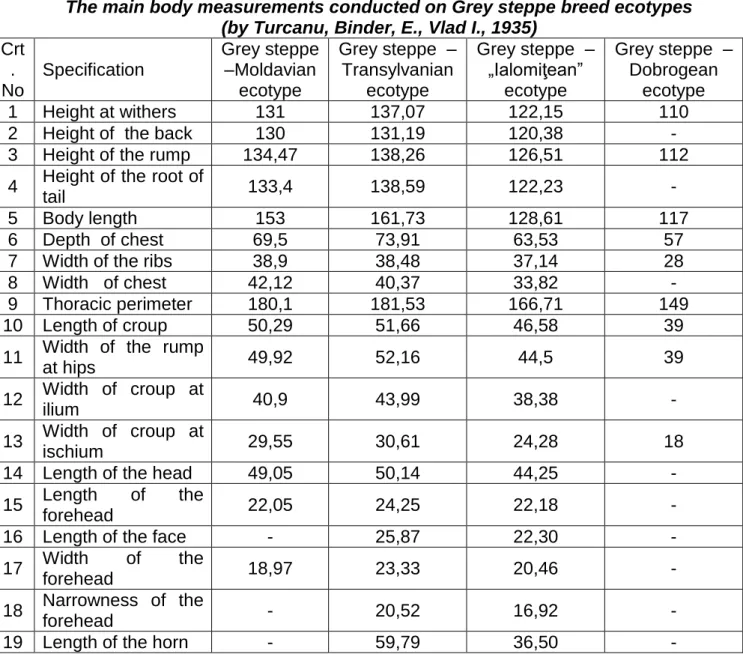
Table 3 The main body measurements conducted on Grey steppe breed ecotypes
(by Turcanu, Binder, E., Vlad I., 1935)
Crt . No Specification Grey steppe –Moldavian ecotype
Grey steppe – Transylvanian
ecotype
Grey steppe – „Ialomiţean”
ecotype
Grey steppe – Dobrogean
ecotype
1 Height at withers 131 137,07 122,15 110
2 Height of the back 130 131,19 120,38 -
3 Height of the rump 134,47 138,26 126,51 112
4 Height of the root of
tail 133,4 138,59 122,23 -
5 Body length 153 161,73 128,61 117
6 Depth of chest 69,5 73,91 63,53 57
7 Width of the ribs 38,9 38,48 37,14 28
8 Width of chest 42,12 40,37 33,82 -
9 Thoracic perimeter 180,1 181,53 166,71 149
10 Length of croup 50,29 51,66 46,58 39
11 Width of the rump
at hips 49,92 52,16 44,5 39
12 Width of croup at
ilium 40,9 43,99 38,38 -
13 Width of croup at
ischium 29,55 30,61 24,28 18
14 Length of the head 49,05 50,14 44,25 -
15 Length of the
forehead 22,05 24,25 22,18 -
16 Length of the face - 25,87 22,30 -
17 Width of the
forehead 18,97 23,33 20,46 -
18 Narrowness of the
forehead - 20,52 16,92 -
19 Length of the horn - 59,79 36,50 -
Regarding milk production, the Moldavian ecotype of Grey steppe breed has achieved during the 1950’s, from cows raised in households, 800-900 kg milk in 210 days
of lactation, with 4 – 5 % fat content. At cows raised on larger farms the quantity of milk
increased to 1500 - 2000 kg. The breed record was established at Animal Science Research Institute from Popăuţi (Botoşani county), this being 4008 kg milk per normal lactation.
In 1900, Filip N. says that in the maximum of the lactation period, the Moldavian cow’s milk production was on average 10 kg per day. At Higher School of Agriculture in Bucharest, grey steppe Moldavian cows produced 12-15 kg milk per day.
Regarding the quality of milk, the fat content in 1900’s was about 4 – 5 %, at some cows reaching up to 6 – 7 % and the butter obtained from Moldavian cows was of high quality and very aromatic.
Filip N. (1900) shows that the Moldavian ecotype of Grey steppe breed is quite late, reaching full body development at age of 5 - 6 years. Regarding the meat production, the Moldavian ecotype of Grey steppe breed behaved well, having good weight at slaughter,
700-800 kg at castrated males, even 1000 kg. Slaughter yield was 50 – 51 % in castrated
324
- 800 g. The best performances in fattening were obtained in males fattened near the alcohol factories, by consuming the secondary products.
2. The „Bucşan” ecotype Distribution - They were spread mainly through the
center of Moldova, but did not have a clearly defined geographical area. Most often, this ecotype is found together with the Moldavian ecotype.
Morphological characters - In terms of body development, "Bucşan" cattle are smaller, not exceeding 130 - 135 cm height, they have short heads, horns and necks, broad forehead, broad and deep body, wiped withers and short legs, well dressed in muscles. The mammary gland is less developed, the udder being covered with hair. The color of the hair is a shade of grey and the black color has a centrifuge tendency. Thus, at bulls the forelegs, sides of the neck, the chest and the abdomen are almost black. These cattle were known also as "porumbe" cattle or "hulube" cattle.
Productive characters - The milk production of cows from "Bucşan" ecotype is close
to that of the Moldavian ecotype cows. Regarding the skills for traction, the oxen of this ecotype are inferior to those from the Moldavian ecotype, as they walk slower, with smaller steps. In meat production terms they achieve higher gains, the body being wider and well dressed in muscles and slaughter yield is better, the proportion of bone in carcass being lower.
3. The Transylvanian ecotype (grey or White of Transylvania) - Distribution.
Until 1880 Grey steppe breed was the only cattle breed in Transylvania. After this year, the distribution area has been reduced as a consequence of the exploitation of imported breeds, respectively Simmental, Schwyz and Pinzgau of Transylvania. Around 1950, Fişteag I. noted that the number of animals from Grey steppe breed was considerably reduced, being still present in Arad, Sălaj, Satu Mare and Cluj counties.
Morphological characters - The animals from the Transylvanian ecotype of Grey
steppe breed had a hypermetrical body development, with height of 140 - 155 cm, weighing 400 - 500 kg and in good fattening conditions reaching up to 600 - 700 kg. They had a large head, long face and huge horns, lyre-shaped reaching especially in males up to 80 - 100 cm. The neck was long, with developed necklace, prominent withers, long back, long and powerful limbs. The color was grey, silverish, and even white.
Productive characters - The productive skills of this ecotype are primarily labor,
production of meat and to in a lesser extent milk production.
4. The „Ialomiţean” ecotype Distribution - The animals of this ecotype were
distributed in the south of Romania, in Bărăgan Plain, in Ialomiţa, Brăila and Vlaşca counties. This ecotype was formed by crossing the Transylvanian ecotype, brought by the people from the mountain, which settled in these areas, with the Moldavian ecotype already present in these areas.
Morphological characters - The animals from the "Ialomiţean" ecotype of Grey steppe breed had intermediate characters of the ecotype from which were formed. In terms of body conformation the animals of this ecotype are more like Transylvanian cattle, but are lighter, more slender and with shorter horns. Compared with Moldavian cattle are more developed and with larger horns.
Productive characters - Oxen from "Ialomiţean" ecotype were used before World War I for farm work. Around the year 1950, this ecotype was almost disappeared. As milk production, cows gave about 7 - 8 kg per day.
5. The Dobrogean ecotype Distribution - This ecotype was formed in Bulgaria on
the Isker River Valley, from where it has spread to southern Dobrogea, but in a small number. The ecotype was subjected to absorption crosses with red breeds, resulting the cattle population Red of Dobrogea.
Morphological characters - This ecotype differs from the other ecotypes of Grey
325
of weight, with a wide body, developed chest, developed necklace, short limbs, short and straight horns, often in crown form or in irregular form. The color is similar to the color of the Bucşan ecotype.
Productive characters - Milk production was higher in this ecotype, reaching a daily
production of 10 - 12 kg, with 3,5 – 4,5% fat content. The animals of this ecotype were not suitable to heavy agricultural work. Meat production was lower, but yield at slaughter was generally good, comparable to that of the Moldavian cattle.
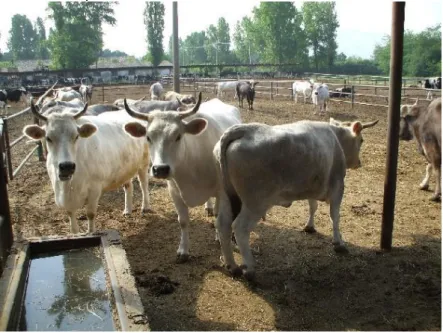
At present, in Romania, Grey Steppe breed (Fig. no. 1) is endangered, being exploited in a small number at S.C.D.C.B. Dancu Iasi and in isolated farms in the Danube Delta and in the eastern Carpathians.
Fig. no. 1 Grey Steppe breed (by Creangă, Ş., 2010)
ACKNOWLEDGMENTS
This research was supported by Project no.120/2012 CONSENS – Translating
stem cell technologies to the conservation of highly endangered species.
REFERENCES
Băcilă V. - Ecological agriculture – alternative of conventionally agriculture, The
extenso papers of the Faculties and Departments of Animal Science Second Joint Meeting Of The Balkan Countries „Balnimalcom 2003”
Binder, E. – Recherches sur la race bovine de steppe, variété transylvanienne du
dèp. Mures, Thèse de doctorat, Bucharest, 1933.
Bodo, I., Kirchberger, K., Reinprecht, V., Ivankovic, A., Ramljak, J., Ligda, Ch., Beri, B., Gera, I., Gyurman, A., Maroti-Agots, A., Radacsi, A., Takacs, E., Ciani, F., Filippini, F., Gaddini, A., Manzone, M., Matassino, D., Băcilă, V., Vidu, L., Bradvarovic, J., Hollo, D., Stojanovic, S., Truzsinsuki, Sz., Soysal, M.I., Chirkova,
O.P., Glazko, T., Glazko, V., Godovanets, L. V., Guziev, I. V., Podoba, B. E. – Podolic
cattle –Characterisation of indigenous and improved breeds, Debrecen University, 2011,
ISBN 978-615-5183,01-0.
Filip, N. – Les animaux domestiques de la Roumanie, 1900.
Ionescu Brăila, Gh. - L'élevage des animaux dans l'agriculture roumaine,
326
Răducuţă, I., A.T. Bogdan, I. Van, D. Rebega, C. Fabian, I. Grosulescu (2012):
The evolution and current state of agricultural land and livestock exploited in organic
farming system in Romania. International Scientific Conference “Common agriculture
policy of European Union 2020 and development of agricultural production in Bulgaria”,
10-11 May 2012, Trakia University, Faculty of Agriculture, Stara Zagora, Bulgaria.
Vidu, L. -The meat chain, Printech, Bucharest, 2006, ISBN 973-718-458-0.
Vladu M., F.O'Sullivan, J. Crosnier, Colă M., Ionescu I., - Manualul crescătorilor