Reciprocal Catecholamine Changes during Opiate Exposure
and Withdrawal
Megan E Fox1, Nathan T Rodeberg1and R Mark Wightman*,1 1
Department of Chemistry and Neuroscience Center, University of North Carolina, Chapel Hill, NC, USA
Dysregulated catecholamine signaling has long been implicated in drug abuse. Although much is known about adaptations following chronic drug administration, little work has investigated how a single drug exposure paired with withdrawal influences catecholamine signalingin vivo. We used fast-scan cyclic voltammetry in freely moving rats to measure real-time catecholamine overflow during acute morphine exposure and naloxone-precipitated withdrawal in two regions associated with the addiction cycle: the dopamine-dense nucleus accumbens (NAc) and norepinephrine-rich ventral bed nucleus of the stria terminalis (vBNST). We compared dopamine transients in the NAc with norepinephrine concentration changes in the vBNST, and correlated release with specific withdrawal-related behaviors. Morphine increased dopamine transients in the NAc, but did not elicit norepinephrine responses in the vBNST. Conversely, dopamine output was decreased during withdrawal, while norepinephrine was released in the vBNST during specific withdrawal symptoms. Both norepinephrine and withdrawal symptoms could be elicited in the absence of morphine by administering naloxone with anα2antagonist. The data support reciprocal roles for dopamine and norepinephrine signaling during drug exposure and withdrawal. The data also support the allostasis model and show that negative-reinforcement may begin working after a single exposure/withdrawal episode.
Neuropsychopharmacology(2017)42,671–681; doi:10.1038/npp.2016.135; published online 17 August 2016
INTRODUCTION
Drug exposure causes lasting neural adaptations that increase the risk for relapse long after drug cessation (Nestler, 2001), and considerable evidence indicates forebrain catecholamine circuits become dysregulated during the development of addiction (Koob and Volkow, 2010). In the allostasis model, drug abuse develops after a shift from positively to negatively reinforced drug use, and adaptations in catecholaminergic signaling may contribute to this phenomenon (Koob and Volkow, 2010). Drugs of abuse have diverse actions on dopaminergic signaling in the ventral tegmental area (VTA) and its afferents (Juarez and Han, 2016), where dopamine is thought to aid in associative memory formation and drive cue-induced drug seeking (Berke and Hyman, 2000; Everitt
and Robbins, 2005; Hyman et al, 2006). Action potentials
from the VTA drive transient dopamine concentration fluctuations in the nucleus accumbens (NAc) (Sombers et al, 2009) that increase following drug administration and
can potentiate a drug’s positively reinforcing properties
(Coveyet al, 2014). However, NAc dopamine may also play
a role in the negatively reinforced component of drug abuse, since dopamine overflow is suppressed during noxious and
aversive stimuli (Park et al, 2015; Roitman et al, 2008;
Twininget al, 2015). Although basal dopamine levels decrease
during withdrawal (Pothos et al, 1991; Weiss et al, 1996),
previous work does not address its effect on phasic dopamine concentrations. Bidirectional changes in dopamine signaling likely contribute to drug use (Koob and Volkow, 2010); therefore, how dopamine signals during both drug exposure and withdrawal is an important area of investigation.
Norepinephrine signaling also plays a role in drug reward
(Olson et al, 2006) and withdrawal aversion (Delfs et al,
2000). Suppression of noradrenergic signaling blocks
stress-induced reinstatement (Erb et al, 2000; Leri et al, 2002;
Shaham et al, 2000), and treatment with the adrenergic
agonist clonidine promotes heroin-abstinence in human
addicts (Kowalczyk et al, 2015). Although few studies
emphasize the noradrenergic component of drug use, norepinephrine in the bed nucleus of the stria terminalis (BNST) has been clearly implicated in drug withdrawal
(Aston-Joneset al, 1999). The ventral BNST (vBNST) receives
dense innervation from the nucleus of the solitary tract (NTS) (Forray and Gysling, 2004), the source of norepinephrine
critical for withdrawal aversion (Delfs et al, 2000), and
chronic morphine treatment increases basal norepinephrine
in the BNST (Fuentealba et al, 2000). However, no work
addresses the effect of acute drug exposure or withdrawal on phasic release. Moreover, stress-dependent adaptations in vBNST noradrenergic signaling arise following
morphine-dependence (Foxet al, 2015; McElligottet al, 2013), yet the
source of this plasticity is unknown.
Many studies focus on chronic drug administration
(Harris and Aston-Jones, 1994; Hemby et al, 1995;
*Correspondence: Professor RM Wightman, Department of Chemistry and Neuroscience Center, University of North Carolina, Venable Hall, South Road, Chapel Hill, NC 27599, USA, Tel: +1 919 9621472, Fax: +1 919 962 2388, E-mail: [email protected]
Received 19 April 2016; revised 28 June 2016; accepted 19 July 2016; accepted article preview online 27 July 2016
Kaufling and Aston-Jones, 2015; Mazei-Robison and Nestler, 2012); however, it is unknown how drug exposure paired with withdrawal alters catecholamine signaling in regions associated with the addiction cycle. Since appetitive and aversive stimuli elicit opposing responses from
catechola-mines (Parket al, 2012; Roitmanet al, 2008; Twininget al,
2015), we hypothesized dopamine and norepinephrine signal reciprocally during drug exposure and withdrawal. We used voltammetry to measure catecholamine release in freely moving animals exposed to morphine and naloxone-precipitated withdrawal. During drug exposure, dopamine signaling increased in the NAc but morphine did not elicit norepinephrine in the vBNST. Conversely, drug withdrawal produced vBNST norepinephrine release that coincided with specific withdrawal symptoms. Finally, vBNST norepinephr-ine release, but not NAc dopamnorepinephr-ine, was attenuated after treatment. These data provide a real-time view of catecho-lamine signaling during drug exposure and withdrawal, and lend insight to how catecholamine circuits may become dysregulated after drug use.
MATERIALS AND METHODS
Additional details are described in Supplementary Methods.
Animal Care
All experiments were performed in accordance with the Institutional Animal Care and Use Committee guidelines of the University of North Carolina at Chapel Hill (UNC).
Sprague-Dawley rats (males, 270–350 g; Charles River,
Wilmington, MA) were given food and water ad libitum
and pair-housed in UNC animal facilities on a 12 : 12-h light : dark cycle until surgery. Animals with misplaced electrodes, as well as animals that exhibited mixed pharma-cological response, were excluded from the study (see Supplementary Figure S1). A total of 14 animals were
included for dopamine measurements (7 morphine–
nalox-one, 7 vehicle–naloxone), and 29 for norepinephrine
measurements (7 morphine–naloxone, 7 vehicle–naloxone,
6 morphine–naloxone +idazoxan, 6 vehicle–
naloxone+ida-zoxan, 3 spontaneous withdrawal). Two separate groups of animals were used to examine the acute effects of morphine
on evoked dopamine (n=4), and idazoxan on dopamine
transients (n=3). All measurements took place during the
light cycle.
Sterotaxic Surgery
Animals were anesthetized with isofluorane (4% induction, 1.5% maintenance) and affixed in a stereotaxic frame (Kopf Instruments). The scalp was removed and holes were drilled
to implant guide cannulas in the right hemisphere (BASi, West Lafayette, IN) above the NAc shell (AP: +1.7 mm, ML: +0.8 mm) or vBNST (AP: 0 mm, ML: +1.2 mm), referenced from bregma and based on the atlas of Paxinos and Watson. An additional guide cannula was implanted in the left hemisphere for insertion of an Ag/AgCl reference electrode on the day of recording. A bipolar stimulating electrode (Plastics One, Roanoke, VA) was targeted to the right VTA/ventral
noradrenergic bundle (VNB; AP −5.2 mm, ML +1.0,
DV −8.2 mm), and a dental cement skull-cap was secured
with jeweler’s screws. Animals were subsequently given
300 mg/kg acetaminophen p.o., singly housed and allowed to recover for 3 days before making measurements. We monitored animal recovery and did not make measurements in any animals appearing to be in pain (eg, ruffled fur, increased irritability).
Voltammetric Catecholamine Measurements
Fast scan cyclic voltammetry measurements of dopamine and norepinephrine were performed in awake animals as
described previously (Park et al, 2013). Briefly, a fresh
carbon-fiber electrode (~100μm active length) was lowered
into the NAc shell or vBNST through the guide cannula with a custom-built micromanipulator. A triangular waveform
(−0.4 to +1.3 V, 400 V/s) was applied to the electrode every
100 ms to oxidize and reduce catecholamines using HDCV for data acquisition and analysis. After electrode placement, we recorded baseline signaling for ~ 10 min before giving 10 mg/kg morphine sulfate s.c. (Sigma-Aldrich, St Louis, MO) or 1 ml/kg vehicle (saline 0.9%). Four hours later, we administered 1 mg/kg naloxone HCl s.c. (Sigma-Aldrich) and scored animals for somatic indices of withdrawal
(Schulteis et al, 1999) over 20 min. In a subset of animals,
5 mg/kg idazoxan was given with naloxone to elicit norepinephrine overflow. One hour after naloxone admin-istration, animals were anesthetized with urethane (1.5 g/kg), and the VTA/VNB was electrically stimulated using constant current isolators (Neurologs, model NL800) to obtain voltammograms for principal component analysis (PCA)
(Rodeberg et al, 2015). We extracted dopamine currents
using PCA and converted current to concentration using an
averaged in vitro calibration factor (10 nA/μM). Only
dopamine transients 43 times the noise in the traces
obtained by PCA were considered to be dopamine transients, and we measured increased dopamine transient frequency during the first hour of morphine administration. In awake animals, voltammetric peaks for norepinephrine release in the vBNST were broader than expected. We suspect contribution from a noradrenergic metabolite during with-drawal because these features were mimicked in anesthetized rats with long stimulations, and were eliminated following
Figure 1 Dopamine efflux in the nucleus accumbens (NAc) varies with morphine exposure and withdrawal. (a) Schematic of electrode placement and
experimental timeline. (b) Representative dopamine (DA) transients at baseline, after morphine, and after naloxone. Principal component analysis identified concentrations marked with asterisks as DA transients. (c) Representative DA transients at baseline, after vehicle, and after naloxone. (d) Transient frequency and (e) average DA transient concentration under morphine or vehicle and subsequent naloxone. Average frequency and concentration of dopamine transients at baseline are indicated by the gray dashed lines. (f) Representative evoked [DA] after treatment in morphine–naloxone or vehicle–naloxone animals and (g) data from all subjects. (h) Representative evoked [DA] in naïve animals at baseline (solid line) and after morphine (hashed line) and (i) data from all subjects. Bar graphs show average±SEM with individual subjects overlaid. **Po0.01, ***Po0.001, two-way repeated measures ANOVA, Bonferroni
post hoc. +,Po0.05, pairedT-test. DS, dorsal striatum.
inhibition of monoamine oxidase with clorgyline. Norepi-nephrine currents were extracted with PCA; however, the
extent to which the metabolite component influencesin vitro
calibration factors is unknown. For this reason, we report extracted norepinephrine currents, but not concentration in
awake animals. When applicable, an averaged in vitro
nA
30 s 30 s
30 s
baseline morphine naloxone
nA baseline
30 s 30 s
30 s
* *
* *
* * *
* *
* *
* *
* * * * *
* * * * *
* *
* * *
vehicle naloxone 50 nM
DA
-0.4 +1.3 -0.4
Applied Potential (V)
-0.4 +1.3 -0.4
Applied Potential (V)
DS
NAc
baseline
morphine
4 hr
naloxone
1 hr
anesthetize
50 nM DA
+1.5
-1.0
+2.0
-1.3 0 0
morphine vehicle 0
5 10 15
morphine +naloxone
vehicle +naloxone
100 nM DA
3
0 1 2
morphine +naloxone
vehicle +naloxone
Evoked [DA] (µM)
morphine-naloxone vehicle-naloxone
Average [DA] per transient (nM)
0 25 50 75 100 125
morphine morphine vehicle +naloxone
vehicle +naloxone
***
**
DA transients/min
- + morphine 0
2 4 6 8
Evoked [DA] (µM)
+morphine 1 µM
DA
+
baseline
calibration factor (6 nA/μM) was used to convert norepi-nephrine current to concentration in anesthetized animals.
vBNST Pharmacology
At the end of awake-animal recordings, we confirmed that the signal in the vBNST was due to norepinephrine and not
dopamine by measuring evoked release after 2 mg/kg s-(−
)-raclopride tartrate (D2 antagonist; Sigma-Aldrich) and
5 mg/kg idaxoxan HCl (α2 antagonist; Sigma Aldrich). Only
signals that responded to idazoxan but not raclopride were classified as norepinephrine release. Signals with mixed pharmacological response were excluded as in Supplementary Figure S1.
Somatic Withdrawal Signs
Behavioral correlates of opiate withdrawal were measured during the first 20 min of precipitated withdrawal and assigned a global withdrawal score as described previously
and in detail in Supplementary Methods (McElligott et al,
2013). We manually assigned time-stamps to each behavior and looked for the presence or absence of dopamine transients or norepinephrine overflow during the withdrawal signs. Somatic withdrawal signs were either considered absent, present, or present with catecholamine signaling.
Statistics
All statistical tests were performed in Graph Pad Prism. Two-way, repeated measures analysis of variance (ANOVA)
with Bonferroni post hocwere used to assess differences in
release event frequency and concentration under varying
drug conditions. An unpaired Welch’s corrected t-test was
used to determine significant differences between evoked norepinephrine concentrations after withdrawal due to significant differences in the variance between morphine-and vehicle-treated groups.
RESULTS
Morphine-Exposure Increases Dopaminergic Transmission in the NAc
Drugs of abuse increase dopaminergic transmission in the
NAc (Cheeret al, 2007; Daberkowet al,2013; Di Chiara and
Imperato, 1988; Phillips et al, 2003; Volkow et al, 2007),
which contributes to their acutely reinforcing properties. We used a dose of morphine that, when paired with precipitated withdrawal, generates rapid dependence in rats (Schulteis et al, 1999). To confirm that morphine elevates dopamine in
the NAc of freely moving rats (Vander Weeleet al, 2014), we
used voltammetry to record dopamine transients in locations exhibiting spontaneous activity ( ~2 transients per minute; schematic of placement and time line in Figure 1a, representative traces and color plots in Figure 1b and c). We found that morphine increased spontaneous dopamine transient frequency in the NAc (10 mg/kg s.c.) relative to
saline (vehicle, 1 ml/kg s.c.) (9.9±1.5vs 2.1±0.5 transients
per minute, morphine vs vehicle, N=7, respectively,
t=4.976,P=0.0016; Figure 1d), but the average
concentra-tion per transient was similar under both condiconcentra-tions
(morphine: 77.3±7 vs vehicle: 72.1±7 nM, N=7,
respec-tively; Figure 1e).
Naloxone-Precipitated Withdrawal Decreases Dopaminergic Transmission in the NAc
We next examined the impact of drug withdrawal by administering naloxone (1 mg/kg s.c.) 4 h after initial
morphine (Fox et al, 2015; McElligott et al, 2013; Schulteis
et al, 1999). We recorded dopamine transients over 20 min during the peak of somatic withdrawal signs and found dopamine transient frequency decreased in animals
under-going withdrawal relative to initial treatment (9.9±1.5 vs
2.3±0.5 transients per minute, morphine vs morphine–
naloxone; 2.1±0.5vs1.1±0.1 transients per minute, vehicle
vsvehicle–naloxone,N=7, respectively; Figure 1d).Post hoc
analysis revealed a significant decrease in dopamine transient
frequency between morphine and morphine–naloxone
(two-way repeated measures ANOVA, morphine treatment
group × naloxone interaction F(1,12)=22.60,P=0.0005;
mor-phine treatment F(1,12)=23.06, P=0.0004; naloxone
treat-ment F(1,12)=40.30, Po0.0001, Bonferroni post hoc,
Po0.001) but not between vehicle and vehicle–naloxone
(P40.05). Moreover, average dopamine transient
concentra-tions decreased during withdrawal that was not solely due to
naloxone (morphine–naloxone: 57.6±4vsvehicle–naloxone:
71.9±8 nM,N=7, respectively. Two-way repeated measures
ANOVA; morphine treatment group × naloxone interaction F(1,12)=9.667, P=0.0090, naloxone F(1,12)=10.3, P=0.0075,
Bonferonnipost hoc,Po0.01; Figure 1e), reflecting decreased
dopaminergic output in the drug-withdrawn group. To determine if decreased dopamine concentrations in
mor-phine–naloxone animals were due to adaptations in releasable
dopamine, we anesthetized the animals after treatment and electrically stimulated the VTA. We found equivalent evoked
dopamine in morphine–naloxone and vehicle–
naloxone-trea-ted animals (1.28±.37 vs 0.96±0.31μM, N=7, respectively,
t=0.6634,P=0.5196; Figure 1f and g). In a separate group of
rats, we assayed the effect of morphine alone on electrically evoked dopamine release. Morphine increased evoked
dopamine concentrations (baseline vs morphine: 2.9±1.5 vs
4.4±0.8μM, N=4, P=0.04, paired T-test; Figure 1h and i).
Acute exposure/withdrawal did not elicit persistent adaptations, in agreement with our previous study showing dopamine tissue content is unchanged in the NAc after repeated morphine/
naloxone treatment (McElligottet al, 2013).
Morphine Withdrawal, but not Exposure, Elicits Norepinephrine in the vBNST
Norepinephrine’s role in drug addiction is often
over-shadowed by dopamine, despite evidence that morphine reward may be contingent on brainstem norepinephrine
synthesis (Olsonet al, 2006). Additionally, opiate-withdrawal
aversion requires forebrain norepinephrine (Delfs et al,
2000), and morphine-dependence alters noradrenergic
sy-naptic function in the vBNST (Fox et al, 2015; McElligott
et al, 2013). We thus measured norepinephrine release in the vBNST during morphine exposure and withdrawal (sche-matic in Figure 2a). Unlike dopamine, norepinephrine concentrations in the vBNST do not fluctuate spontaneously
in animals at rest, and morphine did not elicit
morphine
+2.0
-1.3 nA
0
30 s vBNST
DS
30 s * naloxone baseline
baseline
morphine
4 hr
naloxone
1 hr
anesthetize
NE
0 1 2 3
0.5 nA NE 0.5 nA
morphine +naloxone 0
2 4
6
***
vehicle
morphine vehicle
+naloxone
#NE Events/20 min
morphine +naloxonevehicle
morphine vehicle
+naloxone
NE Amplitude (nA)
*
0.0 0.2 0.4 0.6
morphine +naloxone vehicle+naloxone
Evoked [NE] (µM)
Applied Potential (V)
0.5 nA NE
0.5 nA NE
30 s -0.4
+1.3 -0.4
-0.4 +1.3 -0.4
Applied Potential (V)
nA
30 s 30 s
vehicle naloxone
30 s baseline
+1.5
-1.0 0
morphine-naloxone vehicle-naloxone
Figure 2 Naloxone-precipitated withdrawal produces norepinephrine overflow in the ventral bed nucleus of the stria terminalis (vBNST). (a) Schematic of
electrode placement and experimental timeline. (b, c) Representative norepinephrine (NE) response at baseline, after morphine or vehicle, and after naloxone. NE current is isolated from corresponding color plots using principal component analysis. Asterisk suggests oxidation of metabolite. (d) Total NE release events during morphine/vehicle and subsequent naloxone. ***Po0.001, two-way repeated measures ANOVA with Bonferronipost hoc. (e) Release amplitude during morphine/vehicle and subsequent naloxone. Bars are average ±SEM with individual events overlaid. (f) Representative evoked NE after treatment in morphine–naloxone and vehicle–naloxone animals and (g) data from all subjects. *Po0.05, Welch’s corrected unpairedt-test. DS, dorsal striatum.
norepinephrine overflow in the vBNST (examples in Figure 2b and c). However, we observed broad norepinephrine release events during naloxone-precipitated withdrawal (eg, Figure 2b, d and e) that did not occur without naloxone (Supplementary Figure S2). Norepinephrine release persisted for tens of seconds, in contrast to brief (~1 s) dopamine transients recorded in the NAc, in a manner similar to
previous studies (Parket al, 2012, 2013). Voltammetric peaks
for norepinephrine were also broader than expected, and we suspect contribution from a noradrenergic metabolite during withdrawal (Supplementary Figure S3). Naloxone elicited norepinephrine release in some vehicle-treated animals; however, the occurrence of norepinephrine release events was greater in animals undergoing morphine withdrawal
relative to vehicle–naloxone animals (morphine–naloxone:
3.0±0.5 vs vehicle–naloxone: 0.4±0.2 events per animal,
N=7, respectively; two-way repeated measures ANOVA:
morphine-treatment group F(1,12)=11.57, treatment group ×
naloxone interaction F(1,12)=11.57, naloxone F(1,12)=20.25,
Bonferroni post hoc, Po0.001; Figure 2d). Norepinephrine
release amplitudes did not differ between groups
(morphine-naloxone: 1.1±0.1 nA, N=21 events vs vehicle-naloxone:
1.7±0.5 nA N=3 events; Figure 2e). We next assayed
releasable norepinephrine by electrically stimulating the VNB and found significant attenuation in morphine
withdrawn animals (0.047±0.011 vs0.218±0.053μM,N=7;
t=3.115,P=0.0207; Figure 2f and g). This finding aligns with
our previous study demonstrating reduced norepinephrine tissue content after repeated naloxone-precipitated withdrawal
(McElligott et al, 2013). Moreover, this was not an effect
of morphine alone, as morphine does not alter evoked
norepinephrine in anesthetized animals (McElligott et al,
2013), and animals that underwent spontaneous withdrawal (without naloxone) had similar release compared to vehicle-naloxone animals (Supplementary Figure S2).
Catecholamine Signaling Differs During Expression of Withdrawal-Related Behaviors
Somatic withdrawal signs like teeth-chattering and eye-twitches are a hallmark of opiate withdrawal in rats
(Schulteiset al, 1999). Naloxone treatment produced somatic
withdrawal behaviors and global withdrawal scores similar to
our previous reports (Foxet al, 2015; McElligottet al, 2013),
SM
+2.5
-1.7 nA
0
+2.0
-1.3 nA
0
+2.0
-1.3 nA
0 30 nM
DA
60 s
+1.0
-0.67 nA
0
-0.4 +1.3 -0.4
Applied Potential (V)
*
* * *
SM
60 s -0.4
+1.3 -0.4
Applied Potential (V)
* *
EEP
60 s TC -0.4
+1.3 -0.4
Applied Potential (V)
EEP 60 s -0.4
+1.3 -0.4
Applied Potential (V)
NAc
vBNST
60 s
SM TC
-0.4 +1.3 -0.4
Applied Potential (V)
+2.0
-1.3 nA
0
30 nM DA 30 nM
DA
+1.0
-0.67 nA
0
60 s TC -0.4
+1.3 -0.4
Applied Potential (V)
* * *
*
0.5 nA NE
0.5 nA
NE NE
0.5 nA SM
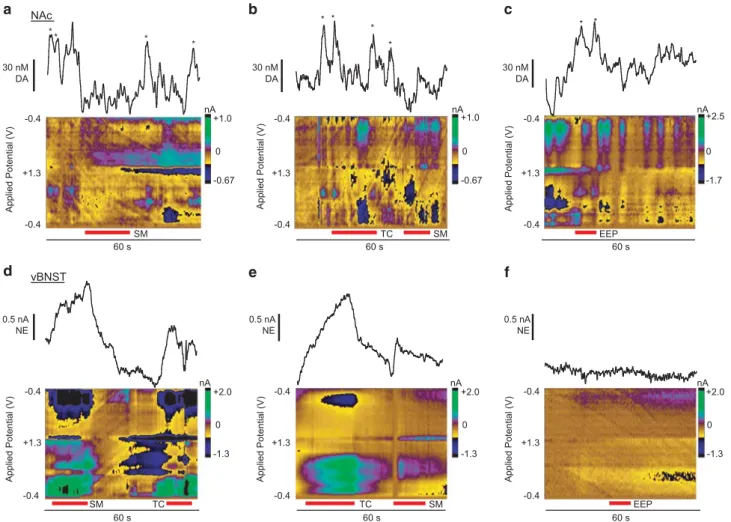
Figure 3 Somatic withdrawal signs produce variable catecholamine release in the nucleus accumbens (NAc) and ventral bed nucleus of the stria terminalis
(vBNST). (a–c) Dopamine (DA) transients during swallowing movements (SM), teeth-chattering (TC), and spontaneous erection/ejaculation/penile grooming (EEP). Asterisks denote DA transients extracted with principal component analysis from the corresponding color plot. (d–f) Norepinephrine (NE) release occurs during SM and TC and is absent during EEP as extracted from the corresponding color plot with principal component analysis. Red bars beneath color plots denote duration of withdrawal behaviors.
and scores were significantly higher in morphine-withdrawn animals (Supplementary Figure S5, two-way ANOVA,
Bonferroni Post hoc: main effect of morphine F(1,12)
=57.65, Po0.0001. DA: morphine–naloxone, 5.7±1.0 vs
vehicle–naloxone, 2.0±0.5; NE: morphine–naloxone,
7.2±0.5 vs vehicle–naloxone, 1.0±0.4 N=7, respectively).
To determine if catecholamine overflow was associated with withdrawal symptoms, we recorded the timing of somatic withdrawal behaviors and looked for concurrent dopamine or norepinephrine release. Morphine withdrawal normalized the frequency of dopamine transients, and in some cases, transients appeared to pause during certain behaviors (eg, swallowing movements, SM; example in Figure 3a). This effect varied between subjects (example of teeth chattering, TC; Figure 3b). Dopamine release was loosely associated with spontaneous erection/ejaculation/penile grooming (EEP) in the three animals exhibiting the behavior (example in Figure 3c).
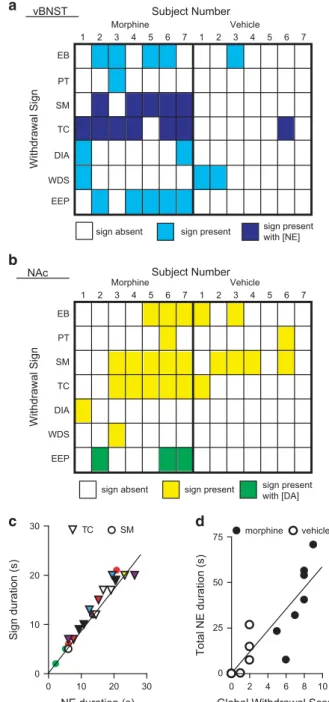
Norepinephrine release occurred with SM and TC in morphine-withdrawn animals (examples in Figure 3d and e), and in one vehicle-naloxone animal, but not during EEP (example in Figure 3f). When we compared the incidence of somatic withdrawal behaviors with catecholamine release, we found that every TC or SM occurred with norepinephrine release (Figure 4a), but was not time-locked to dopamine transients (Figure 4b). For this reason, we chose to further investigate the link between somatic withdrawal behaviors of TC/SM and norepinephrine release. We compared the duration of norepinephrine overflow with the duration of TC and SM and found a linear relationship between TC/SM
duration and norepinephrine release (slope: 0.88±0.05,
r2=0.95; Figure 4c), that is, when SM initiated, we measured
increased norepinephrine; when SM terminated, so did the norepinephrine signal. We next compared the total duration
of norepinephrine release in individual subjects vs their
global withdrawal scores and found a linear correlation
(slope: 5.8±0.9,r2=0.76; Figure 4d).
Systemicα2Antagonism with Naloxone Produced
Withdrawal Signs and Norepinephrine in the Absence of Morphine
To strengthen the relationship between norepinephrine
over-flow and TC/SM, we next administered the α2 antagonist
idazoxan with naloxone to elicit norepinephrine overflow in
drug-naïve animals (example in Figure 5a). Systemic α2
antagonism elicited norepinephrine in vehicle–naloxone
animals, and did not significantly alter the magnitude of norepinephrine release in animals given idazoxan during naloxone-precipitated morphine withdrawal (example in Figure 5b and all data in Figure 5c). Accompanying
norepinephrine release in vehicle–naloxone/idazoxan-treated
animals were increased withdrawal signs (Figure 5d) and global withdrawal scores (Figure 5e). When we compared total norepinephrine duration with global withdrawal scores, there
was not a strong linear relationship (slope: 25.0±2.5,r2=0.31;
Figure 5f). However, when we compared the duration of
overflow only in vehicle–naloxone/idazoxan animals, we
found a linear correlation (slope: 66.6±16.5,r2=0.80).
Finally, to test the effects of increased norepinephrine on dopamine in the NAc, we administered idazoxan to a subset of animals and recorded changes in dopamine transient
concentrations. Idazoxan did not alter the frequency of dopamine transients, but decreased the average magnitude
compared with baseline and vehicle (baseline:73.7±3.6,
vehicle: 68.1±5.7, idazoxan: 43.0±1.3 nM, one-way
Subject Number Morphine Vehicle
Withdrawal Sign
1 2 3 4 5 6 7 1 2 3 4 5 6 7
EEP WDS DIA TC SM PT EB
Morphine Vehicle
Withdrawal Sign
1 2 3 4 5 6 7 1 2 3 4 5 6 7
sign absent sign present sign present with [NE] EEP
WDS DIA TC SM PT EB
Subject Number vBNST
NAc
0 10 20 30 0
10 20
30 TC SM
NE duration (s)
Sign duration (s)
sign absent sign present sign present with [DA]
0 2 4 6 8 10 0
25 50 75
Global Withdrawal Score
Total NE duration (s)
morphine vehicle
Figure 4 Catecholamine signaling coincides with specific withdrawal
behaviors. (a) Heat map illustrating withdrawal signs coinciding with norepinephrine signaling in individual subjects. White, sign absent; light blue, sign present; dark blue, sign occurs with norepinephrine (NE) overflow in the ventral bed nucleus of the stria terminalis (vBNST). (b) Heat map illustrating withdrawal signs coinciding with dopamine (DA) signaling. White, sign absent; yellow, sign present; green, sign occurs with DA transients. (c) Duration of teeth-chattering (TC, triangles) and swallowing movements (SM, circles) as a function of coincident NE overflow. Individual subjects are represented by different colors. (d) Total NE duration in individual subjects over 20 min withdrawal period vs global withdrawal score in morphine– naloxone (black) and vehicle–naloxone (white) animals. Abbreviations: EB, excessive eye blinks; PT, ptosis; SM, swallowing movements; TC, teeth-chattering; DIA, diarrhea; WDS, wet dog shakes; EEP, spontaneous erection/ ejaculation/penile grooming.
repeated measures ANOVA, F(2,8)=43.13, P=0.0020,
Bon-ferronipost hoc, Po0.01; Supplementary Figure S4), similar
to the effects of naloxone-precipitated withdrawal.
DISCUSSION
These findings establish that a single exposure to morphine, followed by precipitated withdrawal, elicits distinct signaling in two forebrain catecholamine circuits. Dopaminergic signaling increased in the NAc during morphine exposure and decreased during withdrawal, but the single exposure did not cause persistent adaptations. Conversely, only precipitated withdrawal elicited norepinephrine release in the vBNST, and this treatment attenuated releasable
norepinephrine. Norepinephrine release tracked two
withdrawal-associated behaviors and both norepinephrine and withdrawal behaviors were induced without morphine
byα2 antagonism. The combination of decreased dopamine
output and recruitment of noradrenergic signaling revealed in this work suggests the negative reinforcement model of
drug use may develop after the first drug exposure and withdrawal episode.
Drugs of abuse increase dopamine overflow in the NAc
(Coveyet al,2014), which helps drive their acutely reinforcing
properties, and a recent study showed intravenous morphine
administration produces similar efflux (Vander Weele et al,
2014). We gave morphine s.c. since i.v. catheters require rats to be singly housed and social-isolation produces a stress profile and noradrenergic dysregulation similar to
morphine-dependent rats (Fox et al, 2015). We found
dopamine transients increased in frequency for a much
longer duration (460 min) than in Vander Weele et al
(2014), which could arise due to differences in baseline stress or the slower time course of drugs delivered s.c. compared with i.v. This dose of morphine produced immobility in rats, aligning with a previous study showing morphine increased immobility and catalepsy similar to the timing of elevated
basal dopamine in the NAc (Sustkova-Fiserova et al, 2014).
After drug administration, animals undergo spontaneous withdrawal dependent on the half-life of the drug. To provide a more distinct time point, we precipitated opiate
Morphine +idazoxan Vehicle +idazoxan
Withdrawal Sign
1 2 3 4 5 6 1 2 3 4 5 6
sign absent sign present sign present +[NE] EEP
WDS DIA TC SM PT EB
0 2 4 6 8 10
Global Withdrawal Score/ 20 min
Subject Number
3
2
1
0
morphine vehicle +naloxone/
idazoxan +naloxone/
idazoxan
morphine vehicle +naloxone/
idazoxan +naloxone/
idazoxan
NE Amplitude (nA)
-0.4 +1.3 -0.4
Applied Potential (V)
+2.0
-1.3 nA
0
200 s 0.5 nA
NE
SM TC
200 s TC TC SM TC vehicle + naloxone/idazoxan morphine + naloxone/idazoxan
TC
0 2 4 6 8 10 0
50 100 150 200 250
Global Withdrawal score
Total NE duration (s)
vehicle+naloxone/idazoxan morphine+naloxone/idazoxan 0.5 nA
NE
-0.4 +1.3 -0.4
Applied Potential (V)
+2.0
-1.3 nA
0
Figure 5 Idazoxan enhances naloxone-precipitated withdrawal signs. (a, b) Representative color plots and extracted norepinephrine (NE) currents in
vehicle (a) and morphine (b) animals treated with naloxone+ 5 mg/kg idazoxan. Duration of withdrawal behaviors (TC, teeth-chattering; SM, swallowing movements) is denoted by the red bars beneath the color plots. (c) Average±SEM amplitude of NE release in morphine (dark blue) and vehicle (light blue) animals during naloxone+idazoxan administration with individual data points overlaid. (d) Heat map illustrating withdrawal signs in individual subjects that coincide with NE overflow. White, sign absent; light blue, sign present; dark blue, sign present with NE overflow. (e) Global withdrawal score in morphine (dark blue) and vehicle (light blue) treated animals given naloxone+idazoxan. (f) Total NE duration in individual subjects (triangles, vehicle+naloxone/idazoxan; circles, morphine+naloxone/idazoxan) over the 20 min withdrawal periodvsglobal withdrawal score. Abbreviations: EB, excessive eye blinks; PT, ptosis; SM, swallowing movements; TC, teeth-chattering; DIA, diarrhea; WDS, wet dog shakes; EEP, spontaneous erection/ejaculation and penile grooming.
withdrawal with naloxone (Schulteis et al, 1999). Naloxone treatment lowered the frequency of dopamine transients to that of baseline/vehicle; however, the average concentration per transient decreased in the drug-withdrawn group. This effect was not solely due to naloxone, because average transient concentrations only decreased in animals exposed to morphine. Furthermore, in some cases dopamine
transients appeared to ‘pause’ during somatic withdrawal
signs. The decrease in dopamine transients during naloxone agrees with studies showing reduced basal dopamine during
withdrawal (Pothoset al, 1991; Weisset al, 1996), and aligns
with previous work showing activation of D2 receptors in the NAc attenuates withdrawal symptoms (Harris and Aston-Jones, 1994). Decreased dopaminergic output supports the allostasis model (Koob and Volkow, 2010) and likely contributes to the withdrawal-induced negative effect.
The role of norepinephrine in drug addiction is often overshadowed by that of dopamine (Weinshenker and Schroeder, 2007), despite evidence that medullary norepi-nephrine synthesis may be crucial for establishing morphine
self-administration (Daviset al, 1975) and conditioned place
preference (Olson et al, 2006). The vBNST receives dense
noradrenergic projections from the NTS (Forray and Gysling, 2004), and thus is a likely downstream target for
norepinephrine’s actions in morphine reward. However, we
did not detect norepinephrine release in the vBNST during morphine, although elevated norepinephrine in the BNST may develop following chronic drug exposure (Fuentealba et al, 2000). Alternatively, NTS norepinephrine may instead modulate drug-reward through its projections to the NAc
(Delfset al, 1998) where it can regulate dopamine efflux, and
presumably the rewarding property of abused drugs through
α1receptors (Mitranoet al, 2012). Norepinephrine signaling
is traditionally implicated in the aversive aspects of
opiate-withdrawal (Aston-Joneset al, 1999). Indeed, direct infusion
of adrenergic antagonists into the BNST suppresses stress-induced reinstatement of drug seeking and conditioned place
preference (Leriet al, 2002; Wanget al, 2001), and 3 days of
morphine withdrawal produces elevated anxiety and
nora-drenergic plasticity in the vBNST (McElligottet al, 2013).
In agreement with its role in opiate withdrawal, we found robust norepinephrine release in the vBNST that coincided with somatic withdrawal behaviors. In particular, norepi-nephrine was linked with SM and the neurons responsible for this reflex are located in the NTS (Kessler and Jean, 1985). Interestingly, releasable norepinephrine concentra-tions were depleted after withdrawal, reflecting signaling adaptations after the first withdrawal episode. This effect is consistent with previous work showing reduced norepi-nephrine tissue content in the vBNST after repeated
morphine withdrawal (McElligott et al, 2013). We also
found norepinephrine release in some vehicle–
naloxone-treated animals. We believe this to be a result of removing endogenous opiate tone, as withdrawal signs were also noted
in some vehicle–naloxone animals (Figure 4a). The
occur-rence of release events and withdrawal signs was much greater in animals undergoing withdrawal relative to control, and evoked release was blunted only in animals that underwent precipitated withdrawal. Additionally, when we
administered theα2antagonist idazoxan with naloxone, both
norepinephrine overflow and withdrawal behaviors were elicited in the absence of morphine, further supporting
norepinephrine’s role in withdrawal aversion. Although we
found a strong link between norepinephrine and TC/SM, other signaling mechanisms are likely involved in the expression of somatic withdrawal behaviors. For example, blockade of mineralocorticoid receptors markedly attenuates
EEP and ptosis (Navarro-Zaragoza et al, 2014), and
inhibition of endocannabinoid catabolic enzymes attenuates
wet dog shakes (Ramesh et al, 2013). Overall, our data
support links between norepinephrine overflow and TC/SM as well as global withdrawal score, and provide mechanistic insight for adrenergic receptor therapy in treating human
addicts (Kowalczyket al, 2015). Moreover, the
norepinephr-ine release during withdrawal uncovered here is the likely origin of adrenergic receptor plasticity in the vBNST
(McElligottet al, 2013).
Dopamine and norepinephrine exhibit opposing responses to rewarding and aversive stimuli. Oral infusion of an appetitive tastant produces enhanced dopamine, whereas aversive tastants such as quinine suppress dopamine
trans-ients and increase norepinephrine signaling (Parket al, 2012;
Roitman et al, 2008). This effect is also seen in animals
undergoing reward learning and its extinction (Park et al,
2013), and during presentation of a painful stimulus (Park et al, 2015). Reciprocal catecholamine signaling has interest-ing implications in the context of the aversive stimulus of
drug withdrawal, due to norepinephrine’s possible influence
on dopaminergic signaling. Glutamatergic inputs from the vBNST exert strong excitatory influence over VTA dopamine neurons (Georges and Aston-Jones, 2002), and
norepine-phrine’s actions through α2A receptors decrease excitatory
transmission in the vBNST (Egli et al, 2004). Moreover,
during acute opiate withdrawal, norepinephrine can act
through β-receptors to increase GABAA inhibition of
VTA-projecting BNST neurons (Dumont and Williams, 2004),
leading to increased inhibition of the VTA. Activation ofβ2
-adrenergic receptors in the vBNST drives stress-induced
reinstatement by releasing CRF in the VTA (Vranjkovicet al,
2014). Although increased VTA CRF can potentiate activity
(Unglesset al, 2003), CRF receptor antagonism in the VTA
blocks the decrease in NAc dopamine transients caused by
aversive quinine infusions (Twininget al, 2015). In this study,
we found decreased dopamine concentrations in the NAc during withdrawal. This suppression of dopamine concentra-tions was further mimicked by elevating norepinephrine with
α2 antagonism. Thus, when animals underwent withdrawal,
elevated norepinephrine concentrations in the vBNST may have suppressed VTA activity, thereby reducing dopamine transient concentrations in the NAc. At the end of the treatment, the suppression was relieved: regardless of an
animal’s exposure to withdrawal, direct stimulation of the
VTA resulted in equivalent dopamine release, similar to
tissue-content findings (McElligottet al, 2013). The reciprocal
actions of dopamine and norepinephrine we report during drug exposure and withdrawal may reflect important feed-back between catecholamine circuits during rewarding and aversive stimuli.
Overall, the increased dopaminergic signaling we observed during morphine exposure supports a rich literature on
dopamine’s role in the rewarding properties of drugs.
Additionally, the enhanced noradrenergic overflow
concur-rent with withdrawal signs underscores norepinephrine’s
importance in mediating opiate-withdrawal aversion. The
combination of decreased dopaminergic output and en-hanced noradrenergic overflow revealed in this work supports the allostasis model, and suggest that negative reinforcement may emerge after the first exposure/with-drawal episode. Taken together, this real-time view of reciprocal catecholamine signaling provides insight as to how catecholamine circuits in the ventral forebrain may become dysregulated after drug exposure and withdrawal. These adaptations may converge with stress or other risk factors to drive the development of addiction in susceptible individuals, and how they progress longitudinally should be a topic of future investigations.
FUNDING AND DISCLOSURE
This work was supported by NIH grant DA10900 to RMW. The authors declare no conflict of interest.
ACKNOWLEDGMENTS
MEF designed the study, collected, and analyzed voltam-metric data. NTR assisted with collection and analysis of dopamine transients. MEF wrote the paper and prepared the figures with contributions from NTR and RMW. We thank Dr Elyse Dankoski for comments on an early version of this manuscript.
REFERENCES
Aston-Jones G, Delfs JM, Druhan J, Zhu YAN (1999). The bed nucleus of the stria terminalis: a target site for noradrenergic actions in opiate withdrawal.Ann NY Acad Sci877: 486–498. Berke JD, Hyman SE (2000). Addiction, dopamine, and the
molecular mechanisms of memory.Neuron25: 515–532. Cheer JF, Wassum KM, Sombers LA, Heien ML, Ariansen JL,
Aragona BJ et al (2007). Phasic dopamine release evoked by abused substances requires cannabinoid receptor activation.
J Neurosci27: 791–795.
Covey DP, Roitman MF, Garris PA (2014). Illicit dopamine transients: reconciling actions of abused drugs.Trends Neurosci37: 200–210. Daberkow DP, Brown HD, Bunner KD, Kraniotis SA, Doellman MA, Ragozzino MEet al(2013). Amphetamine paradoxically augments exocytotic dopamine release and phasic dopamine signals.
J Neurosci33: 452–463.
Davis WM, Smith SG, Khalsa JH (1975). Noradrenergic role in the self-administration of morphine or amphetamine. Pharmacol Biochem Behav3: 477–484.
Delfs JM, Zhu Y, Druhan JP, Aston-Jones G (2000). Noradrenaline in the ventral forebrain is critical for opiate withdrawal-induced aversion.Nature403: 430–434.
Delfs JM, Zhu Y, Druhan JP, Aston-Jones GS (1998). Origin of noradrenergic afferents to the shell subregion of the nucleus accumbens: anterograde and retrograde tract-tracing studies in the rat.Brain Res806: 127–140.
Di Chiara G, Imperato A (1988). Drugs abused by humans preferentially increase synaptic dopamine concentrations in the mesolimbic system of freely moving rats.Proc Natl Acad Sci USA
85: 5274–5278.
Dumont EC, Williams JT (2004). Noradrenaline triggers GABAA inhibition of bed nucleus of the stria terminalis neurons projecting to the ventral tegmental area.J Neurosci24: 8198–8204.
Egli RE, Kash TL, Choo K, Savchenko V, Matthews RT, Blakely RDet al(2004). Norepinephrine modulates glutamatergic
transmission in the bed nucleus of the stria terminalis.
Neuropsychopharmacology30: 657–668.
Erb S, Hitchcott PK, Rajabi H, Mueller D, Shaham Y, Stewart J (2000). Alpha-2 adrenergic receptor agonists block stress-induced reinstatement of cocaine seeking. Neuropsychopharmacology23: 138–150.
Everitt BJ, Robbins TW (2005). Neural systems of reinforcement for drug addiction: from actions to habits to compulsion. Nat Neurosci8: 1481–1489.
Forray MI, Gysling K (2004). Role of noradrenergic projections to the bed nucleus of the stria terminalis in the regulation of the hypothalamic-pituitary-adrenal axis.Brain Res Brain Res Rev47: 145–160.
Fox ME, Studebaker RI, Swofford NJ, Wightman RM (2015). Stress and drug dependence differentially modulate norepinephrine signaling in animals with varied HPA axis function. Neuropsy-chopharm40: 1752–1761.
Fuentealba JA, Forray MI, Gysling K (2000). Chronic morphine treatment and withdrawal increase extracellular levels of nor-epinephrine in the rat bed nucleus of the stria terminalis.
J Neurochem75: 741–748.
Georges F, Aston-Jones G (2002). Activation of ventral tegmental area cells by the bed nucleus of the stria terminalis: a novel excitatory amino acid input to midbrain dopamine neurons.
J Neurosci22: 5173–5187.
Harris GC, Aston-Jones G (1994). Involvement of D2 dopamine receptors in the nucleus accumbens in the opiate withdrawal syndrome.Nature371: 155–157.
Hemby SE, Martin TJ, Co C, Dworkin SI, Smith JE (1995). The effects of intravenous heroin administration on extracellular nucleus accumbens dopamine concentrations as determined by
in vivomicrodialysis.J Pharmacol Exp Ther273: 591–598. Hyman SE, Malenka RC, Nestler EJ (2006). Neural mechanisms of
addiction: the role of reward-related learning and memory.Ann Rev Neurosci29: 565–598.
Juarez B, Han M-H (2016). Diversity of dopaminergic neural circuits in response to drug exposure. Neuropsychopharm
(doi:10.1038/npp.2016.32; e-pub ahead of print).
Kaufling J, Aston-Jones G (2015). Persistent adaptations in afferents to ventral tegmental dopamine neurons after opiate withdrawal.
J Neurosci35: 10290–10303.
Kessler JP, Jean A (1985). Identification of the medullary swallowing regions in the rat.Exp Brain Res57: 256–263. Koob GF, Volkow ND (2010). Neurocircuitry of addiction.
Neuropsychopharm35: 217–238.
Kowalczyk WJ, Phillips KA, Jobes ML, Kennedy AP, Ghitza UE, Agage DA et al(2015). Clonidine maintenance prolongs opioid abstinence and decouples stress from craving in daily life: a randomized controlled trial with ecological momentary assess-ment.Am J Psychiatry172: 760–767.
Leri F, Flores J, Rodaros D, Stewart J (2002). Blockade of stress-induced but not cocaine-stress-induced reinstatement by infusion of noradrenergic antagonists into the bed nucleus of the stria terminalis or the central nucleus of the amygdala. J Neurosci22: 5713–5718.
Mazei-Robison MS, Nestler EJ (2012). Opiate-induced molecular and cellular plasticity of ventral tegmental area and locus coeruleus catecholamine neurons. Cold Spring Harb Perspect Med2: a012070.
McElligott ZA, Fox ME, Walsh PL, Urban DJ, Ferrel MS, Roth BL
et al(2013). Noradrenergic synaptic function in the bed nucleus of the stria terminalis varies in animal models of anxiety and addiction.Neuropsychopharmacology38: 1665–1673.
Mitrano DA, Schroeder JP, Smith Y, Cortright JJ, Bubula N, Vezina Pet al(2012). Alpha-1 adrenergic receptors are localized on presynaptic elements in the nucleus accumbens and regulate mesolimbic dopamine transmission. Neuropsychopharmacology
37: 2161–2172.
Navarro-Zaragoza J, Laorden ML, Milanes MV (2014). Spirono-lactone decreases the somatic signs of opiate withdrawal by blocking the mineralocorticoid receptors (MR). Toxicology326: 36–43.
Nestler EJ (2001). Molecular basis of long-term plasticity underlying addiction.Nat Rev Neurosci2: 119–128.
Olson VG, Heusner CL, Bland RJ, During MJ, Weinshenker D, Palmiter RD (2006). Role of noradrenergic signaling by the nucleus tractus solitarius in mediating opiate reward.Science311: 1017–1020.
Park J, Bucher ES, Budygin EA, Wightman RM (2015). Norepi-nephrine and dopamine transmission in 2 limbic regions differentially respond to acute noxious stimulation. Pain 156: 318–327.
Park J, Bucher ES, Fontillas K, Owesson-White C, Ariansen JL, Carelli RMet al(2013). Opposing catecholamine changes in the bed nucleus of the stria terminalis during intracranial self-stimulation and its extinction.Biol Psychiatry74: 69–76. Park J, Wheeler RA, Fontillas K, Keithley RB, Carelli RM,
Wightman RM (2012). Catecholamines in the bed nucleus of the stria terminalis reciprocally respond to reward and aversion.
Biol Psychiatry71: 327–334.
Phillips PE, Stuber GD, Heien ML, Wightman RM, Carelli RM (2003). Subsecond dopamine release promotes cocaine seeking.
Nature422: 614–618.
Pothos E, Rada P, Mark GP, Hoebel BG (1991). Dopamine microdialysis in the nucleus accumbens during acute and chronic morphine, naloxone-precipitated withdrawal and clonidine treat-ment.Brain Res566: 348–350.
Ramesh D, Gamage TF, Vanuytsel T, Owens RA, Abdullah RA, Niphakis MJ et al (2013). Dual inhibition of endocannabinoid catabolic enzymes produces enhanced antiwithdrawal effects in morphine-dependent mice. Neuropsychopharmacology 38: 1039–1049.
Rodeberg NT, Johnson JA, Cameron CM, Saddoris MP, Carelli RM, Wightman RM (2015). Construction of training sets for valid calibration of in vivo cyclic voltammetric data by principal component analysis.Anal Chem87: 11484–11491.
Roitman MF, Wheeler RA, Wightman RM, Carelli RM (2008). Real-time chemical responses in the nucleus accumbens differ-entiate rewarding and aversive stimuli. Nat Neurosci 11: 1376–1377.
Schulteis G, Heyser CJ, Koob GF (1999). Differential expression of response-disruptive and somatic indices of opiate withdrawal
during the initiation and development of opiate dependence.
Behav Pharmacol10: 235–242.
Shaham Y, Highfield D, Delfs J, Leung S, Stewart J (2000). Clonidine blocks stress-induced reinstatement of heroin seeking in rats: an effect independent of locus coeruleus noradrenergic neurons.Eur J Neurosci12: 292–302.
Sombers LA, Beyene M, Carelli RM, Wightman RM (2009). Synaptic overflow of dopamine in the nucleus accumbens arises from neuronal activity in the ventral tegmental area. J Neurosci
29: 1735–1742.
Sustkova-Fiserova M, Jerabek P, Havlickova T, Kacer P, Krsiak M (2014). Ghrelin receptor antagonism of morphine-induced accumbens dopamine release and behavioral stimulation in rats.
Psychopharmacology (Berl)231: 2899–2908.
Twining RC, Wheeler DS, Ebben AL, Jacobsen AJ, Robble MA, Mantsch JRet al(2015). Aversive stimuli drive drug seeking in a state of low dopamine tone.Biol Psychiatry77: 895–902. Ungless MA, Singh V, Crowder TL, Yaka R, Ron D, Bonci A (2003).
Corticotropin-releasing factor requires CRF binding protein to potentiate NMDA receptors via CRF receptor 2 in dopamine neurons.Neuron39: 401–407.
Vander Weele CM, Porter-Stransky KA, Mabrouk OS, Lovic V, Singer BF, Kennedy RTet al(2014). Rapid dopamine transmis-sion within the nucleus accumbens: dramatic difference between morphine and oxycodone delivery.Eur J Neurosci40: 3041–3054. Volkow ND, Fowler JS, Wang GJ, Swanson JM, Telang F (2007). Dopamine in drug abuse and addiction: results of imaging studies and treatment implications.Arch Neurol64: 1575–1579. Vranjkovic O, Gasser PJ, Gerndt CH, Baker DA, Mantsch JR (2014).
Stress-induced cocaine seeking requires a beta-2 adrenergic receptor-regulated pathway from the ventral bed nucleus of the stria terminalis that regulates CRF actions in the ventral tegmental area.J Neurosci34: 12504–12514.
Wang X, Cen X, Lu L (2001). Noradrenaline in the bed nucleus of the stria terminalis is critical for stress-induced reactivation of morphine-conditioned place preference in rats.Eur J Pharmacol
432: 153–161.
Weinshenker D, Schroeder JP (2007). There and back again: a tale of norepinephrine and drug addiction.Neuropsychopharmacology
32: 1433–1451.
Weiss F, Parsons LH, Schulteis G, Hyytia P, Lorang MT, Bloom FE (1996). Ethanol self-administration restores withdrawal-associated deficiencies in accumbal dopamine and 5-hydroxytryptamine release in dependent rats.J Neurosci16: 3474–3485.
Supplementary Information accompanies the paper on the Neuropsychopharmacology website (http://www.nature.com/npp)