UNPACKING TRANSITIONAL CARE:
FACILITATORS, BARRIERS, AND QUALITY IMPACTS OF A MULTIDISCIPLINARY PROGRAM TO REDUCE 30-DAY READMISSIONS
Rachel M. Machta
A dissertation submitted to the faculty at the University of North Carolina at Chapel Hill in partial fulfillment of the requirements for the degree of Doctor of Philosophy in the Department
of Health Policy and Management in the Gillings School of Global Public Health.
Chapel Hill 2016
ABSTRACT
Rachel M. Machta: Unpacking Transitional Care:
Facilitators, Barriers, and Quality Impacts of a Multidisciplinary Program to Reduce 30-day Readmissions
(Under the direction of Morris Weinberger)
Several provisions in the Affordable Care Act incentivize healthcare systems to move from traditional fee–for-service towards payments rewarding high-quality care. Notably, the Hospital Readmission Reduction Program penalizes hospitals with excess readmissions. This dissertation sought to evaluate the facilitators, barriers and quality impacts of a computer- based transitional care checklist implemented at a large academic medical center.
The evaluation is composed of two parts: 1) a process evaluation to understand program implementation and 2) an impact evaluation to understand program effectiveness. For the process evaluation, we conducted 25 semi-structured interviews with transitional care providers. The impact evaluation was a retrospective cohort analysis of discharges from UNC Hospitals. Patients were eligible for the study if they were discharged between July 2014 and September 2015 and had a 20-30% risk of readmission. We looked at how the overall checklist and the different provider components of the checklist affected unplanned all-cause 30-day readmissions.
statistically significant but modest protective effect of the checklist on readmissions (OR = 0.92; 95% CI, 0.81-1.04). In addition, most provider components were protective against
readmissions, but confidence intervals included one. Odds ratio ranged from 0.87 for the discharging physician component (95% CI=0.75-1.00) to 0.95 for the case management component (95% CI= 0.83-1.09). We predicted having all the components would reduce readmissions approximately 5-8 percentage points if implemented completely.
This study describes the potential of hospitals in real-world settings to reduce
ACKNOWLEDGMENTS
This work was possible because of the support mentorship, and camaraderie of a great number of people. I would like to acknowledge some of them here.
In a committee of people who went out of their way to support my learning and development, no one is more deserving of thanks than Morris Weinberger, my mentor and co-chair. Morris helped me to identify interesting research opportunities and foster relationships beyond the School of Public Health that nourished my interests in applied research. Morris never hesitated to offer a resource, read a draft on the weekend, or find a time to discuss a next step. He accomplishes an impossible number of activities in each day. In his role as Director of the PhD program, Morris provides the compassionate leadership that makes this program so unique. He has taught me what it means to be outstanding mentor and colleague, and I aspire to follow in his big footsteps. While this marks the end of my formal advising from Morris, I know he will continue to play an integral role in my continued growth as a researcher.
I would also like to thank the other members of my committee: Mark Holmes,
Toles was especially valuable in helping to shape and organize the findings of aim 1, and I’m a better researcher for it. Finally I would like to thank Mike Pignone, who provided much of the motivation for this project. His clinical perspectives have been invaluable to providing context and relevance to this work.
In addition to my committee there are many other people who helped with this
dissertation. Megan Roberts, with whom I collaborated on aim 1, taught me much about how to analyze qualitative research and served as a role model for how to be a successful PhD student in our department. It was a pleasure to work together, and I hope we get another opportunity in the future. Erin Burgess, from the hospital’s Quality Improvement department, has a vast knowledge of the Care Transitions Program that was essential to this work. Erin helped me connect with appropriate providers for aim 1, and was instrumental in constructing the dataset for aims 2 and 3. I’d also like to thank Adam Lee from the Carolina Data Warehouse. Creating the dataset was an iterative process, and Adam made sure he didn't withdraw his support until the job was done right.
Many other people have been important to my overall growth as a doctoral student. From the Cecil G. Sheps center I would like to thank Tim Carey, and the other NRSA fellows for providing a supportive community. I am grateful for the privilege of working with and learning from Erin Fraher, and the rest of the Workforce team. Erin has served as a role model of
effective leadership and creative thinking. She has shown me that every question in health service research contains a workforce question. More broadly, I would like to thank the faculty at HPM who have given me the skills and expertise to prepare me for my research career.
Check. There are so many things I could say about these two as we have spent countless hours together inside and outside of the Health Science Library over the past four years. Lara has been a one of a kind friend and helped me complete my coursework after breaking my arm only weeks before our comprehensive exams. Devon kept Lara and I on track and on schedule throughout this program. Also, I am especially grateful to Regina Rutledge with whom I have spent many hours trouble-shooting code, and sharing in the highs and lows of working with administrative data. I am thankful for Nivedita Bhushan and Jayne Jeffries for the study dates, study breaks and encouragement throughout the graduate school experience. Finally, I am grateful for the rest of my HPM cohort for the opportunity to work among smart and interesting individuals in a collaborative environment.
There are many friends near and far that have encouraged me leading up to and during the PhD program. In particular I want to acknowledge my college housemates (Betsy Aronson, Katie DeCarli, Liz Fusco, Maia Kolchin- Miller, Courtney Mario, Arianna Means and Rachel Wood). I have never known a more remarkable group of women, and I am so grateful to have them as my lifelong friends. I would also like to thank Jessica Gillooly with whom I’ve shared the PhD experience with via FaceTime as we embark on parallel graduate school journeys 900 miles apart. Also, my gym family at CrossFit Carrboro who has taught me grit and provided me a place to unwind at the end of each workday. And of course my loving boyfriend, James Polans, who has served as a lifeboat in times of stress, and a generous partner in helping me sort out life after graduate school. Thank you for making this time in my life so happy.
Finally, I’d like to thank my family. It seems most appropriate to begin by
long before I was even born. My parents in turn have been my biggest supporters and I can now see how the environment in which I was raised shapes my current interests. I thank my dad, Jon Machta, for modeling scientific inquiry to me, in a quiet and unassuming manner. I thank my mom, Betsy Brooks, for sharing in detail her experiences as a pediatrician. As long as I can remember, my mom shared stories of culture change in her office and treated me as someone capable of seeing complex issues from multiple perspectives. These conversations helped shape my own ideas about health and healthcare. Last, but certainly not least, I’m grateful to my brother, Ben Machta. Ben’s natural curiosity for the world around him is unmatched. Ben has taught me that science and adventure can be two sides of the same coin. Thank you for always taking my side and sharing your enthusiasm.
TABLE OF CONTENTS
LIST OF TABLES ... xii
LIST OF FIGURES ... xiii
LIST OF ABBREVIATIONS ... xiv
CHAPTER 1. INTRODUCTION ... 1
Specific Aims ... 1
Background ... 3
Significance ... 4
CHAPTER 2. APPROACH ... 7
Aim 1 ... 8
Aim 2 & Aim 3 ... 10
Figures and Tables ... 16
CHAPTER 3. FRONTLINE PERSPECTIVE ON THE IMPLEMENTATION AND DELIVERY OR INPATIENT SERVICES TO REDUCE 30-DAY READMISSIONS ... 20
Overview ... 20
Introduction ... 21
Methods... 23
Results ... 25
Discussion ... 33
Figures and Tables ... 36
Overview ... 39
Introduction ... 40
Methods ... 41
Results ... 47
Discussion ... 49
Figures and Tables ... 52
CHAPTER 5. UNPACKING PROVIDER ROLES IN COMPUTER-BASED TRANSITIONAL CARE CHECKLISTS: WHAT COMPONENTS MATTER MOST? .... 56
Overview ... 56
Introduction ... 57
Methods... 58
Results ... 63
Discussion ... 65
Figures and Tables ... 67
CHAPTER 6. CONCLUSIONS ... 71
APPENDIX 1: STUDY SAMPLE EXCLUSION CRITERIA ... 78
APPENDIX 2.1: READMISSION EXCLUSION CRITERIA: PLANNED PROCEDURE LIST ... 79
APPENDIX 2.2 DISCHARGE CONDITIONS THAT ARE FOR AN ACUTE DIAGNOSIS OR COMPLICATION OF CARE ... 80
APPENDIX 3: FINAL RISK ADJUSTMENT VARIABLES ... 81
LIST OF TABLES
Table 2.1 CTP roles and responsibilities by provider type ... 17
Table 2.2 Risk strata ... 17
Table 2.3 A consolidated framework for implementation research domains and constructs ... 18
Table 2.4 Study sample exclusion criteria and rationale ... 19
Table 3.1 CTP roles and responsibilities by provider type ... 36
Table 3.2 Operational definitions of key constructs among included domains ... 37
Table 3.3 Respondent characteristics ... 38
Table 4. 2 Discharge characteristics, overall and by readmission status ... 54
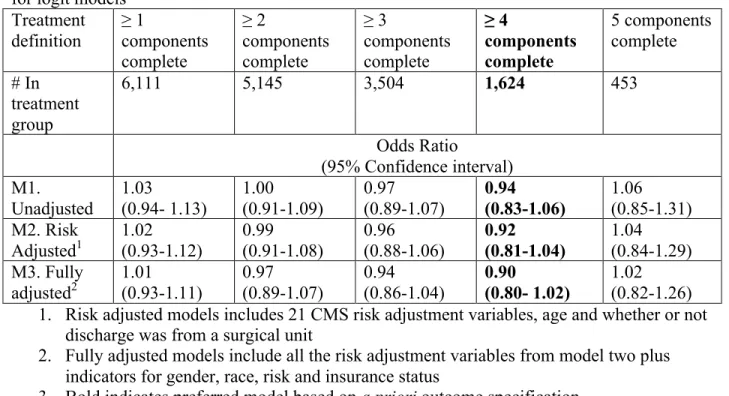
Table 4.3 Odds of readmission under alternative treatment definitions and model specifications for logit models ... 55
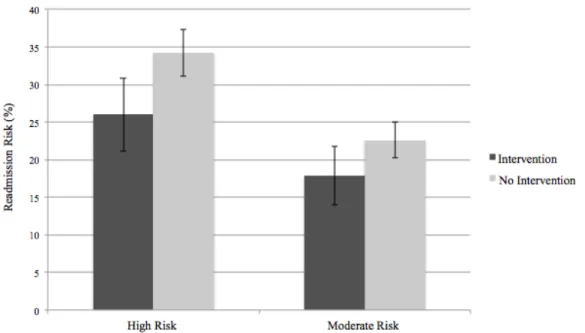
Table 4.4 Average marginal effects of the Care Transitions Program on readmission ... 55
Table 5.1 CTP roles and responsibilities by provider type ... 68
Table 5.2 Discharge characteristics, overall and by readmission status ... 69
Table 5.3 Odds of readmission for main CTP components ... 70
LIST OF FIGURES
Figure 2.1 CTP Rollout ... 16
Figure 2.1 Rollout of the Care Transitions Program and study period ... 16
Figure 2.2 The Donabedian model to assess 30- day readmission ... 16
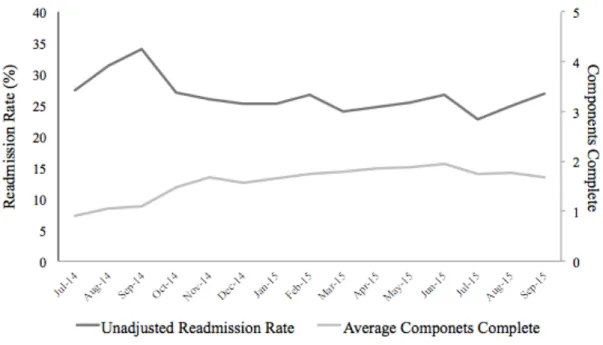
Figure 4.1 Mean readmission and component completion rate by month for study sample ... 52
Figure 5.1 Sample construction ... 67
LIST OF ABBREVIATIONS
ACA Affordable Care Act
AME Average Marginal Effect
CCS Clinical Classifications Software
CFIR Consolidated Framework for Implementation Research
CI Confidence Interval
CMS Centers for Medicare & Medicaid Services CTP Care Transitions Program
DX Diagnosis
EMR Electronic Medical Record HCC Hierarchical Condition Category
HRRP Hospital Readmission Reduction Program ICD International Classification of Diseases IV Instrumental Variable
N Sample Size
OR Odds Ratio
CHAPTER 1. INTRODUCTION Specific Aims
Hospital readmissions are common, costly, and may result in undue patient harm. Nearly one fifth of all Medicare beneficiaries discharged from hospitals are readmitted within 30 days.1 Though some readmissions are unavoidable, evidence suggests that many are potentially preventable.2 To increase value, many health care systems have targeted reducing 30-day
hospital readmission rates. The Affordable Care Act (ACA) authorized the Hospital Readmission Reduction Program (HRRP), which penalizes hospitals with excess readmissions for certain high-volume, high-cost conditions. Initially these conditions were acute myocardial infarction, heart failure and pneumonia; chronic obstructive pulmonary disease and elective hip or knee replacement were added in 2015; and coronary artery bypass graft surgery is slated to begin in 2017. Hospital readmissions are also a metric for many new models of care including
Accountable Care Organizations and bundled-payment initiatives.3,4 Thus, hospitals have strong incentives to initiate strategies to reduce readmissions.
Transitional care has emerged as one prominent strategy to reduce readmissions by increasing health care continuity and enhancing coordination of care. Transitional care
sample sizes and a narrow focus on specific diseases or populations and a poor understanding of necessary program components.6,8
The overall objective of this study is to produce useful evidence for key stakeholders to support patients as they transition from the hospital to the home. The Care Transitions Program at the University of North Carolina (UNC) Hospitals is a multicomponent and multidisciplinary pre-discharge computer-based checklist that has a strong focus on communication among members of the care team and across care settings. My central hypothesis is that Care Transitions Program can reduce 30-day readmission rates in moderate and high-risk patients discharged from the hospital. I tested my central hypothesis by pursuing three specific aims. Aim 1: Identify provider-reported barriers and facilitators to delivering transitional care. I conducted 25 semi-structured interviews with case managers, pharmacists, nurses, and discharging physicians sampled from across units at UNC Hospitals where the Care Transitions Program was active. Interviews explored factors associated with the implementation and delivery of the Care Transitions Program including issues related to workflow, usability, and team-based care.
Aim 2: Determine whether the computer-based transitional care checklists reduce 30-day hospital readmissions. I used logistic regression to examine the overall effectiveness of the care transitions program during the period between July 2014 and September 2015. To deal with possible selection bias I considered an instrumental variable approach. Proposed
instruments included: weekend discharge, recent unit and service line performance, and discharge caseload.
of 5 components organized by provider role: case managers, medication transition specialists, pharmacists, discharging physicians, and bedside nurses. We used a logistic regression approach, harnessing the natural variation in the program implementation to determine different component effectiveness: specifically, comparing individuals with partial checklist to each other.
This research provides important insights and new evidence regarding a current strategy to reduce hospital readmissions. The qualitative research (Chapter 3) is useful for health system looking to improve the delivery of transitional care program. In addition, by examining both the overall effectiveness of the transitional care program (Chapter 4) and the specific components of transitional care (Chapter 5) we provide practical evidence on how to target future programs.
Background
Hospitals today continue to struggle to respond to the HRRP. For example, more hospitals were penalized through the HRRP in 2015 (78%) than in 2013 (64%); and the total penalty increased from $290 million in 2013 to $428 million in 2015.3 Moreover, major teaching hospitals and safety-net hospitals were more likely to incur financial penalties.3 These results suggest that there is a gap in knowledge and/or implementation of effective strategies to lower readmission rates.
and delivery are often not captured in traditional quantitative analysis and are poorly understood.
Past qualitative work on transitional care has principally focused on the patient and caregiver experience. However, less is known about either the experience of the provider or aspects of organizational culture, both of which are critical to the implementation of effective interventions. Only one study that I know of investigated the provider perspective. This study interviewed project leaders, case managers, and transitional care nurses.9 It did not consider the perspective of the broader members of the transitional care team (e.g. pharmacist, and
physicians). Furthermore, the study examined an intervention in a large insurance organization, which might be different in important ways than one provided by a health care system.
Strategies to reduce readmissions vary but often include a dedicated transitions provider, medication reconciliation, patient engagement, and communication with outpatient providers.10,11 Research on the effectiveness of transitional care strategies is mixed. One review concluded that despite some studies with significant findings, “the strategies than an individual hospital can implement to improve transitional care remain largely undefined,”10 another found that only high-intensity interventions that included a home visit within three days of discharge were effective at reducing readmissions,7 and a third stated: “the current evidence base may not be adequate to facilitate change even for highly incentivized hospitals.”8
Significance
1. Hospital readmissions represent an important cost and quality issue.
Readmissions to the hospital represent a significant driver of total healthcare costs.7 Almost 20 percent of Medicare fee-for service patients are re-hospitalized within 30 days, with unplanned readmissions costing Medicare more than $17 billion a year.1 Though most readmissions are unavoidable, many are potentially preventable. Several factors contribute to hospital
readmissions, but experts generally agree that excess readmissions result from fragmented care.12 Significant variation in readmission rates in hospitals and regions across the country suggests that this is an important quality indicator.1
2. Under the Affordable Care Act (ACA), hospitals have new financial incentives to initiate strategies to reduce 30-day readmissions. Historically, the financial burden of
rehospitalizations was borne by payers providing hospitals with few incentives to focus on readmission rates. Starting in 2012, the Centers for Medicare & Medicaid Services (CMS) began to reduce payments to hospitals with excess readmissions for three high volume high cost
conditions: heart failure, acute myocardial infarction, and pneumonia. The numbers of diagnoses affected as well as the severity of the penalties are already increasing. And, other non-federal
payers are following suit.
transitional care has emerged as a health reform priority with several channels in the ACA to promote its expansion.6
4. Despite enthusiasm for transitional care, significant gaps exist in our
understanding. A growing evidence base suggests that transitional care may help reduce excess readmissions.6 Multicomponent strategies are more effectives than single components strategies.7 As a result, there has been a rise in “bundled” interventions and how-to guides on improving care transitions.14 Despite growing prominence of transitional care, many gaps exist in our
CHAPTER 2. APPROACH
Setting. This study was conducted at University of North Carolina (UNC) Hospitals, an 830-bed public academic medical center that comprises NC Memorial Hospital, NC Children’s Hospital, NC Neurosciences Hospital and NC Women’s Hospital. UNC admits more than 37,000 patients a year and its 30-day readmission rate is typical for its peers (12.24% in 2014). UNC Hospitals is part of a larger system of hospitals and providers, together referred to as UNC Healthcare, which includes (but is not limited to) UNC Hospitals and seven affiliate hospitals and hospital systems across the state.
This study includes outcome data from two of UNC Hospitals’ affiliates: REX
Healthcare and Chatham Hospitals. REX is a 660-bed not-for-profit private acute care facility located approximately 25 miles from UNC, and Chatham Hospital is a 25-bed community hospital located approximately 30 miles from UNC.
Prior to April 2014, UNC Hospitals used a well-established, internally developed
electronic medical record (EMR) that was operational in both inpatient and outpatient settings. In April 2014 they switched to a large commercial vendor. During our study period, REX, and Chatham shared that EMR.
completed prior to patient discharge, including: (1) needs assessment by case managers, (2) medication history by medication transition specialists (pharmacy technicians), (3) medication reconciliation and counseling by pharmacists, (4) communication to outpatient provider by physicians, and (5) self-care education using teach-back and scheduling of timely follow up by bedside nurses (Table 2.1).
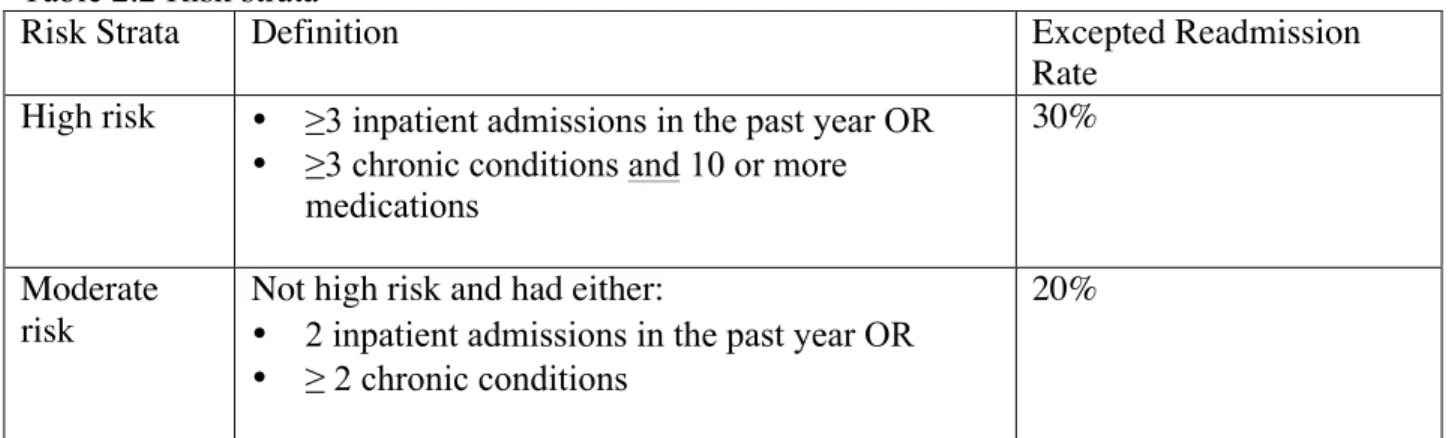
Over a seven-month period, CTP was rolled out across the hospital (including medicine, heart and vascular, and surgery services), instead of specific diseases or payers. CTP targeted all moderate and high-risk patients identified with an algorithm based on the number of admissions in the past year, chronic conditions, and medications. It was estimated that the algorithm would identify approximately 40 discharges per day and that patients would have a 20-30% readmission risk (Table 2.2). CTP was implemented without adding staff, though many staff roles were repurposed from previous quality improvement projects.
CTP was modified over time. Originally, the checklist was paper-based (September 2013 -June 2014). Seven months after the paper checklist was introduced, UNC implemented a new EMR (April 2014), and the checklist became computer-based two months later (June 2014). Ten months later, the original 19-item checklist was streamlined to 13 items based upon early
experience (April 2015). The five components remained the same; however, certain provider roles were simplified (e.g. the case manager items were condensed from four items to two items). A timeline of the events is shown in Figure 2.1
Aim 1
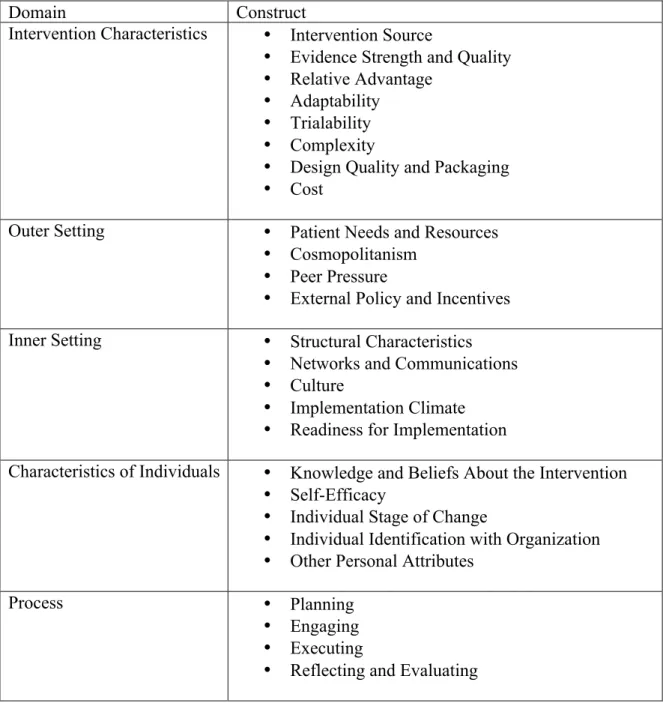
summative, but also formative, outcomes. Using snowball sampling, Damschroder et al. identified existing published theories on implementation science and combined constructs into one unified framework (2009). The CFIR is composed of five major domains: intervention characteristics, outer setting, inner setting, characteristics of the individuals involved, and the process of implementation16 (Table 2.3). These domains and construct examine the conditions under which implementation occurs. Furthermore, they offer a general taxonomy and
conceptualization of key implementation constructs.15
The Care Transitions Framework was adapted from CFIR to address distinctive features of care transitions. Building upon CFIR through an updated literature review and input from a technical expert panel, the Care Transitions Framework is designed to enhance the usability and relevance of CFIR to care transitions.15 The Care Transitions Framework explicitly addresses the iterative and interactive nature of complex system change. It includes two new domains—one for intermediary outcomes related to the implementation and one for outcomes of the interventions themselves.
Participants. We used purposeful sampling to identify CTP providers (case managers, medication transition specialists, pharmacists, discharging clinicians, bedside nurses) and managers (unit managers and department directors who oversaw frontline providers) across
medical and surgical care units. We targeted high- and low-performing units based on recent checklist completion.
performance. Semi-structured interviews lasted 30- 45 minutes. Interviews were digitally recorded, professionally transcribed, de-identified and transferred to Atlas.ti (Berlin, Germany) for analysis.
Data analysis. We used template analysis, a procedure for coding and classifying
fragments of interview transcripts that combines inductive and deductive approaches.17 First, we developed a template of a priori codes based on CFIR. Second, two coders (RMM, MCR) independently applied the initial coding template to five transcripts. Third, the initial coding template was revised and emergent thematic codes were added. Fourth, the revised template was used to code five new transcripts; consensus about the concepts and definitions in the template was reached to ensure inter-rater agreement. Fifth, the remaining transcripts were each coded in Atlas.ti by two coders. Finally, coded fragments were merged, sorted by construct, and analyzed. The full research team developed summaries by reviewing quotations and identifying main themes and exemplar quotes. Code summaries were discussed, combined, and modified until agreement was reached.
Aim 2 & Aim 3
Conceptual model. Aims 2 and 3 rely on a conceptual model proposed by Donabedian that provides a framework for examining health services and quality of care. According to Donabedian’s model, information about the quality of care comes from three domains, (1) structure, which is the context in which care is delivered, (2) process, which are the treatment or service being provided to the patient and (3) outcomes, which are the results of the
2.2 provides a framework for understanding how the Care Transitions Program (aim 2) and its components (aim 3) affect patient outcomes, accounting for relevant patient outcome.
Data sources. The Carolina Data Warehouse (CDW) is the main data source for aims 2 and 3. CDW is a central repository containing: EMR, administrative, demographic, and clinical encounter (e.g. ICD-9/10, service line, and payer information) data for UNC Hospitals. In addition, patient records at the CDW were merged with state vital statistics to provide data on patient death.
Study sample. Patients were included in our study if they met criteria for the CTP program:(1) ≥18 years, (2) discharged from a medicine, heart and vascular, or surgical unit at UNC Hospitals and (3) moderate or high risk (Table 2.2). We also restricted the sample to those admitted on or after July 1, 2014 and discharged on or before September 30, 2015 (Figure 2.1).
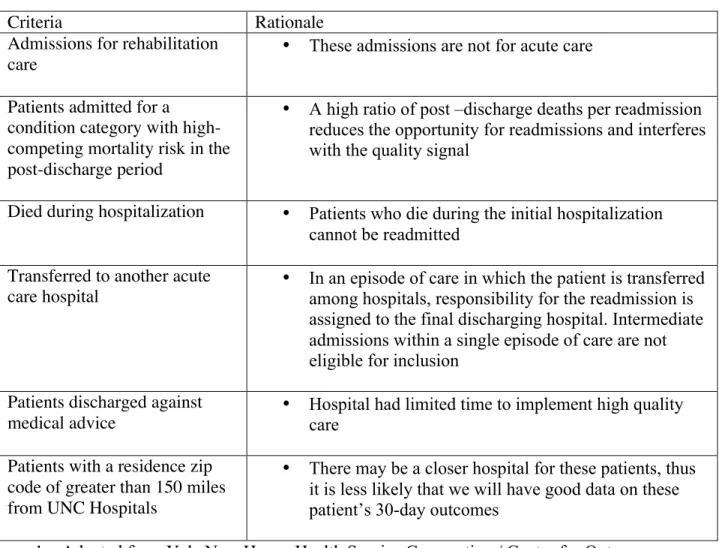
We followed criteria developed by the Yale New Haven Health Service Corporation/ Center for Outcomes Research & Evaluation for the CMS (Yale/CMS) 30 –day all-condition readmission measure to refine our study population. Specifically, discharges were excluded from this study if the patient (1) had an admission for rehabilitation condition, (2) was admitted for a condition category with high-competing mortality risk in the post-discharge period, (3) died during the hospitalization, (4) was transferred to another acute care facility or (5) was discharged against medical advice.20 In addition, we excluded patients who lived > 150 miles from UNC Hospitals as it is less likely we would have good information on their readmission (Table 2.4).
readmission is related to previous hospitalization or whether it could be potentially preventable. Finally, this approach is consistent with existing reported CMS measures.20
We defined readmission as an admission to UNC, REX, or Chatham Hospitals that occurs within 30 days after the discharge date of an eligible index admission. Consistent with the Yale/CMS measure, we excluded planned readmissions, defined as those for maintenance
chemotherapy or for any of 32 procedures that are typically planned (e.g. coronary artery bypass graft) and not coded for an acute diagnoses or complications of care (Appendix 2.1 & 2.2).20,21
Our primary exposure was completion of CTP checklist items. We operationalized CTP exposure differently for aims 2 and 3. For Aim 2 we were interested in the completion of the overall CTP checklist. For each discharge, we calculated the number of components completed.
A priori, we defined CTP exposure as ≥ 4 components complete; however, we conducted sensitivity analyses under all alternative definitions (i.e. ≥ 1 components complete, ≥ 2
components complete, ≥ 3 components complete, and 5 components complete). For Aim 3 we were interested in the role of different provider components of CTP checklist. For each
component, we considered it complete if all the items under it were complete (e.g. the pharmacist indicated they had completed: an admission medication reconciliation, a discharge medication reconciliation, medication counseling with the patient, and a handoff transitions note).
To assess completion of individual items we used the following criteria. If no checklist was initiated for an eligible patient, each item for that patient was coded as incomplete. Among patients with a checklist, most providers electronically signed their name to signify
Otherwise, the item was marked incomplete. Because checklist were integrated into the patients EMR, two or more providers could access the checklist at the same time, and checklists were not necessarily completed in order.
Risk adjustment. Following the Yale/CMS recommendation and consistent with previous CMS risk-standardization strategies, we used the CMS Hierarchical Condition Categories Model (CMS-HCCs) to group ICD-9 codes into risk adjustment variables that are clinically coherent and carry similar risks (e.g. severe infection, diabetes and end stage renal disease). CMS risk variables were constructed using ICD codes related to the final discharge condition of the index admission, our final list include 21 risk variables (Appendix 3). We also included age and whether or not the service line was surgical.
Instrumental variables. Because patients’ severity level and unobservable factors might be correlated with both receipt of CTP and readmission risk, we considered an instrumental variable approach. Valid instruments must: 1) explain variation in the endogenous treatment variable and 2) not predict the dependent variable except through the treatment variable. Based upon qualitative interviews and published literature, we tested the following possible
instruments:
Weekend discharge. We hypothesized that discharges during the weekend would be less
likely to receive CTP than discharges during the week. We knew from interviews that CTP providers (i.e., pharmacists and case managers) are staffed less on the weekend and thus CTP delivery, which typically occurs on the day of discharge, would be less common. A potential concern with this instrument is that it may be related to patient severity; however, we did not find support for this in our data. Weekend has also been used previously for a related set of
Recent unit and service line performance on CTP. We hypothesized that acute care units
and service lines that performed “well” for a previous set of patients on CTP items are likely to perform “well” for the next set of patients, independent of patients’ readmission risk. To develop a measure of recent performance, we created variables representing the rate of CTP services delivered for the last ten patients discharged from the same unit and service line respectively. While some CTP providers (e.g. nurses) are assigned to patients based on their acute care units, others (e.g. discharging physicians) are assigned based on service line. Because there were changes to how patients were attributed to CTP providers during our study time period, this combination of instruments captures the concept of provider behavior, a commonly used instrument.23
Discharge caseload. Given that providers reported that time was sometimes a barrier to
delivering CTP, we hypothesized that discharges that occurred on days with more CTP
discharges than average would be less likely to receive checklists than discharges that occurred on days with less CTP discharges than average. We calculated a mean discharge caseload for each unit by month, and then calculated the difference between that day’s discharge rate and the mean.
determine our preferred model (2SRI or logit). Because the 2SRI approach is similar to a variant of the Hausman Test, we tested for endogeneity using the residuals in the second stage models, where the null hypothesis is that the treatment variables are exogenous. If the treatment variables are exogenous, then the residuals should have no explanatory power and the non -IV logistic model is preferred because the standard errors are more precise.
Figures and Tables
Figure 2.1 Rollout of the Care Transitions Program and study period
Figure 2.2 The Donabedian model to assess 30- day readmission
Table 2.1 CTP roles and responsibilities by provider type Case Manager Checklist Responsibilities:
• Comprehensive assessment completed and post-acute care needs identified • Complete handoff transitions note
Medication Transition Specialist (Pharmacy Technician) Checklist Responsibilities:
• Obtain medication history, contact home pharmacy, and update meds list; review with team pharmacist
Pharmacist Checklist Responsibilities:
• Admission medications list reconciled using medication history; issues discussed with medical team
• Discharge medications list reconciled, medical team notified • Medication counseling/ teach back used with patient/ caregiver(s) • Place notes/ concerns/ monitoring in handoff transitions note Discharging Clinician Checklist Responsibilities:
• Notify service pharmacist when medication list is ready for discharge reconciliation
• Inpatient MD to outpatient MD communication completed (electronic, phone, or in person) Bedside Nurse Checklist Responsibilities:
• Teach back used for red flags
• Discharge instructions reviewed with patient/ caregiver(s)
• Scheduled follow up appointment at bedside with patient / caregiver(s) within 7 -14 days of discharge from hospital
• Purposeful pause huddle to ensure patient readiness for discharge
Table 2.2 Risk strata
Risk Strata Definition Excepted Readmission
Rate High risk • ≥3 inpatient admissions in the past year OR
• ≥3 chronic conditions and 10 or more medications
30%
Moderate risk
Not high risk and had either:
• 2 inpatient admissions in the past year OR • ≥ 2 chronic conditions
Table 2.3 A consolidated framework for implementation research domains and constructs (Source: Damschroderet al., 2009)
Domain Construct
Intervention Characteristics • Intervention Source
• Evidence Strength and Quality • Relative Advantage
• Adaptability • Trialability • Complexity
• Design Quality and Packaging • Cost
Outer Setting • Patient Needs and Resources • Cosmopolitanism
• Peer Pressure
• External Policy and Incentives Inner Setting • Structural Characteristics
• Networks and Communications • Culture
• Implementation Climate • Readiness for Implementation
Characteristics of Individuals • Knowledge and Beliefs About the Intervention • Self-Efficacy
• Individual Stage of Change
• Individual Identification with Organization • Other Personal Attributes
Process • Planning
• Engaging • Executing
Table 2.4 Study sample exclusion criteria and rationale
Criteria Rationale
Admissions for rehabilitation
care •
These admissions are not for acute care
Patients admitted for a condition category with high-competing mortality risk in the post-discharge period
• A high ratio of post –discharge deaths per readmission reduces the opportunity for readmissions and interferes with the quality signal
Died during hospitalization • Patients who die during the initial hospitalization cannot be readmitted
Transferred to another acute
care hospital •
In an episode of care in which the patient is transferred among hospitals, responsibility for the readmission is assigned to the final discharging hospital. Intermediate admissions within a single episode of care are not eligible for inclusion
Patients discharged against
medical advice •
Hospital had limited time to implement high quality care
Patients with a residence zip code of greater than 150 miles from UNC Hospitals
• There may be a closer hospital for these patients, thus it is less likely that we will have good data on these patient’s 30-day outcomes
1. Adapted from Yale New Haven Health Service Corporation / Center for Outcomes Research and Evaluation
CHAPTER 3. FRONTLINE PERSPECTIVE ON THE IMPLEMENTATION AND DELIVERY OR INPATIENT SERVICES TO REDUCE 30-DAY READMISSIONS
Overview
Background: The Affordable Care Act created financial incentives for hospitals to reduce 30-day readmissions. In response, many healthcare systems sought to improve transitional care services. Research to date on transitional care is favorable, but significant gaps persist in our
understanding of what makes program run smoothly when implemented in real world settings.
Objective: We sought to understand the context in which transitional care is delivered. Specifically, how features of the inner setting (e.g., competing demands, commitment and training) and intervention characteristics facilitate or hinder effective implementation and delivery.
Approach: Guided by the Consolidated Framework for Implementation Research, we conducted semi-structured interviews and used template analysis to code and classify fragments of text.
the care transitions program was active. Participants were interviewed between March and July 2015.
Key Results: The implementation and delivery of the program was advanced by a shared belief in the importance of transitional care; however, providers’ ability to work effectively as a team was hindered by gaps in the inner setting including: competing demands, limited training, and challenges with feedback and communication. In addition, providers’ perceived flexibility in program design allowed for unit-specific tailoring; however, insufficient tools and procedures such as specified workflows or guidance regarding key components undermined respondents’ confidence that the program offered something above usual discharge care or would achieve desired outcomes.
Conclusions: Healthcare systems could improve the implementation and delivery of similar transitional care programs by utilizing mid-level managers and champions to: communicate how the program aligns with existing priorities, clarify team roles and interdependencies among them, conduct trainings, and ensure tools are developed to support new workflows.
Introduction
transitional care services, which have been defined as “a broad range of time-limited services designed to ensure health care continuity, avoid preventable poor outcomes among at-risk
populations, and promote the safe and timely transfer of patients from one level of care to
another or from one type of setting to another.”6 Hallmarks of successful transitional care interventions include patient engagement and education by a nurse; referrals for community
services and supports; communication between hospitals and primary care providers; and
post-discharge calls and/or home visits.6,7
Research to date on transitional care from trials and administrative data is favorable,7,8 but significant gaps persist in our understanding of how and why programs succeed or fail when implemented in real world settings. There is a growing recognition that to improve the quality of care, we need to evaluate not only summative, but also formative, outcomes (e.g., organizational factors, complexity of intervention components)16,29 that are critical to understanding the context in which transitional care is delivered. To this end, we elicited perspectives of frontline
personnel about factors affecting implementation of a multidisciplinary program designed to improve transitions from the hospital to the home. Guided by the Consolidated Framework for Implementation Research (CFIR) and its derivative Care Transitions Framework.15,16 we focused on two domains: (a) inner setting, defined as the hospital’s culture and structures that are
Methods
Setting. This study was conducted at University of North Carolina (UNC) Hospitals, an 830-bed public academic medical center. UNC Hospitals admit more than 37,000 patients a year and its 30-day readmission rate is typical for its peers (12.24% in 2014).
Care Transitions Program (CTP). In the fall of 2013, UNC launched the hospital-wide CTP modeled after the Institute for Healthcare Improvement’s strategy to reduce unnecessary readmissions.14 UNC formed a transitions leadership team of providers and administrators from across the hospital. The leadership team developed a checklist of 13 services that were to be completed prior to patient discharge, including: (1) needs assessment by case managers, (2) medication history by medication transition specialists (pharmacy technicians), (3) medication reconciliation and counseling by pharmacists, (4) communication to outpatient provider by physicians, and (5) self-care education using teach-back and scheduling of timely follow up by bedside nurses (Table 3.1). The checklist was originally paper-based. After six months, UNC implemented a new commercial electronic medical record (EMR) system, and two months later, the checklist was fully integrated into the EMR.
Participants. We used purposeful sampling to identify CTP providers (case managers, medication transition specialists, pharmacists, discharging clinicians, bedside nurses) and managers (unit managers and department directors who oversaw frontline providers) across
medical and surgical care units. We sought to define and target high- and low-performing units based on recent checklist completion. This proved unfeasible due to the shifting nature of CTP teams. Most CTP providers (i.e., case managers, medication transition specialist, pharmacists, and physicians) were assigned to patients by service line (e.g. general medicine, cardiology, pulmonology). However, the bedside nurses were assigned based on acute care unit. Teams did not commonly work together for multiple patients. For example, the general medicine service might have patients located on 6 or 7 different units. Some pharmacists alternated services or would “float” to fill in where needed. Finally, residents rotated by service every few months. Given this challenge, we relied on the UNC Quality Improvement department to identify key informants. We then asked interviewees for recommendations so that alternative viewpoints would not considered. Respondents were offered $20 gift cards for participating. The UNC Institutional Review Board approved this study.
Data Analysis. We used template analysis, a procedure for coding and classifying fragments of interview transcripts that combines inductive and deductive approaches.17 First, we developed a template of a priori codes based on CFIR. Second, two coders (RM, MCR)
independently applied the initial coding template to five transcripts. Third, the initial coding template was revised and emergent thematic codes were added. Fourth, the revised template was used to code five new transcripts; consensus about the concepts and definitions in the template was reached to ensure inter-rater agreement. Fifth, the remaining transcripts were each coded in Atlas.ti by two coders. Finally, coded fragments were merged, sorted by construct, and analyzed. The full research team developed summaries by reviewing quotations and identifying main themes and exemplar quotes. Code summaries were discussed, combined, and modified until agreement was reached (Table 3.2).
Results
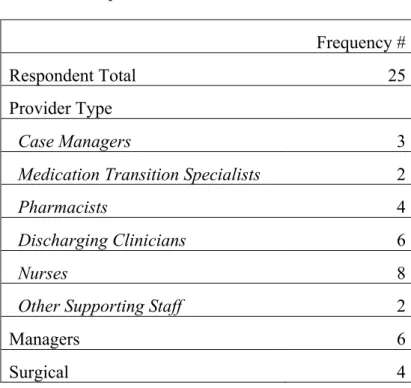
Between March and July 2015, we conducted 25 interviews with providers and managers who implemented CTP on six acute hospital units (Table 3.3). We organized our findings around inner setting and intervention characteristics (Table 3.2). Perspectives varied tremendously as one would expect when more than 200 providers are involved. Provider interviews focused on themes that were relevant to the provider. Given the variety of interview content, we did not provide counts of what percent of interviews agreed or didn't agree with a sentiment, but rather attempted to describe the range of views that were most common.
Inner Setting
sometimes undermined by competing demands, limited training, challenges with feedback, and siloed communication across hospital departments.
Innovation Fit and Competing Demands. Reducing re-admissions was viewed as aligning
with the hospital’s mission. Many respondents spoke about the role of CTP in improving quality of care and reimbursement:
“I think the efforts to reduce readmissions is very important. It's crucial if we're going to maintain our financial viability as an institution” (Pharmacist)
However, competing patient care demands were often viewed as more important:
“Spending a lot of extra time on one patient [to deliver CTP] ... I have to weigh that against the needs of 15 to 20 other patients on the service.” (Physician)
Some respondents perceived a tension between CTP and discharging patients faster. For example, although nurses were supposed to lead a “purposeful pause” to ensure the patient is ready for discharge, physicians were often perceived as pressured to reduce length of stay:
“I had a patient last week that was being readmitted for pancreatitis. They [the doctors] were trying to... rush him out the door again. I kept telling them, "His pain is not under control….” and they really wanted to send him home that evening and I'm like, "He's a transition patient. He's readmitted with the same thing that you're trying to discharge him with and we don't have it resolved yet." (Nurse)
Inadequate staffing frustrated some providers:
“I did my best to compassionately support that this [checklist] is added work without added FTEs.” (Physician)
Across provider types, CTP providers sought organizational cues that CTP was a priority and that sufficient resources were being allocated to its delivery and effective use. Lack of resources to deliver CTP on weekends may have undermined perceptions about its importance:
Commitment. The CTP program was founded on the idea that diverse staff would
collaborate. In some teams a “culture” around the checklist emerged that highlighted its importance; in others, provider roles were carried out in silos and the initiative was viewed as principally paperwork. Many providers looked to their managers to determine CTP’s importance:
“In teams where leaders said, "This is a priority for us" it went really well. In teams where we didn't have that engagement, it just didn't.” (Case Manager)
Administrator commitment was usually perceived as high, though occasionally with skepticism. Some providers described CTP as the “flavor of the month” and wondered how long it would be sustained:
“I think it's the hot topic right now. I've been here long enough to know that there's always a hot topic. That topic frequently changes.” (Case Manager)
As before, providers were looking for organization cues that CTP was valued. Physician
commitment was low; perhaps because they do not believe that what is required for their patients can be reduced to a series of checkboxes. However, many non-physician providers found low physician commitment discouraging:
“A lot of people feel like the nurses are getting a big push to do this and none of the other services are… Especially if the doctors aren't really participating in it and they're the ones making a lot of the big decisions.” (Nurse)
Teamwork disintegrated in units with poor participation from providers:
“Everybody kind of has this [attitude], "Well, nobody else does it, so why am I doing it?" (Nurse)
Training and Rollout. For case managers, medication transition specialists, and
“Nurses, there are thousands of them. My team… went to all these different nurse groups and did these trainings. For weeks it was all they did. There's no way they got all of them… I think we moved too quickly.” (Supervisor)
Many nurses reported little formal training:
“We weren't educated on the entire process, what our role is, what everyone else's roles are, and that's where I think we struggle with that value part of it." (Nurse)
Limited training about CTP led to poor understanding of the new roles of case managers and pharmacists, who reported feeling underappreciated:
“I don't even think they [doctors] read our notes. I've had doctors … go, ‘Wow I didn't realize that when you go in, you're assessing all these different things.’ I don't think they have a clue that we actually work our tails off.” (Case Manager)
Gaps in the initial training were compounded as the program was revised over time: “They kind of changed the process as they went along. So people really just stayed confused about their role, what the expectations were and who was responsible for what.” (Nurse)
Some units opted for a “second roll out” after a bumpy first roll out and found this effective: “We took time at a couple of different staff meetings, created a PowerPoint and went over every single thing in the actual checklist, gave a little bit of background to what transitions was and our purpose in doing so. Since then, we rolled that out a few months ago. Our completion rate for nursing is greater than 90%. Before, it was not very good at all.” (Nurse Manager)
Feedback and Expectations. Respondents indicated that monthly CTP performance
reports promoted staff motivation and helped set goals:
“I feel we're very proud of our transitions work and our checklist completion. I just got our recent data back… and we've made significant improvements.” (Nurse Manager)
Performance was established as a goal in the pharmacy department and was linked to performance reviews of staff; this helped emphasize its importance:
However, performance reports were limited for many providers, who wanted feedback on different outcomes or had concerns about the timeliness of reports:
“The big frustration for me has been not having any data for the last six months. I have no idea how I'm doing and it's been really hard for me to self-reflect.... It's hard to… learn from your mistakes or learn from your successes.” (Pharmacist)
Providers commonly voiced concerns with the accuracy of feedback or believed reports reflected other providers’ poor performance:
“The problem is I'll do… [my part]; but if the case manager doesn't do her part or the pharmacist doesn't do hers or the nurse accidentally signs it before other people do it, then there's all these incompletes.” (Nurse Practitioner)
Others worried they weren’t receiving credit appropriately:
“If you just miss one box then multiple things are counted against you even though you did them correctly” (Pharmacist)
Communication. Increased communication and collaboration were widely viewed as
essential to CTP but communication procedures lacked structure, and thus CTP didn’t
consistently result in a changed discharge process. What made communication better in some teams was a new “culture” around discharge planning:
“Once transitions came onboard, the whole communication process within our services for how we handled discharge planning and just interacted with each other totally changed.” (Case Manager)
Providers participating in touch-base rounds were enthusiastic about them; however, case
managers and pharmacists, with patients on multiple services, often could not attend. As a result, many providers relied on informal communications to learn about patients’ care need:
“As a case manager you have to be able to know what questions to ask of the doctors to pull out the information that you need to get. If you have a newer case manager or someone who has no experience doing that, or someone who's intimidated by their physician team, then they're going to have problems.” (Case Manager)
Some providers appreciated that informal communication allowed for relationships to form, others felt it caused information to fall through the cracks and didn't harness the potential of computer-based checklists. Without clearly specified procedures for communication, the team approach for delivering CTP weakened and many providers reported working alone:
“I do my part, they do their part, and nobody needs to discuss the other parts. You just do your part.” (Nurse Practitioner)
Intervention Characteristics.
Providers appreciated that CTP could be tailored to local settings and target appropriate groups, making the program run smoothly. However, gaps in CTP’s tools and procedures resulted in inconsistent implementation and may have undermined respondent confidence that it offered something above usual discharge care.
Adaptability and Processes Standardization. Many units tailored CTP to match their unit
workflows or to meet the unique needs of their patient population:
“This isn't a house-wide thing. It's just for our patient population…. we’ve been really working hard on creating an education tool … for our heart failure patients since they're a majority of our Transitions patients” (Nurse)
“There's still not a uniform standard process across all the services.” (Physician manager)
While variation in implementation allowed best practices to be shared during team meetings, uncertainty existed around checklist expectations. Some providers felt that checklist items (for example the purposeful pause, or some of the teaching items) did not map to a specific course of action. A nurse manager remarked how this was a barrier to effective implementation. She said:
“People have to have something solid that matches what you're asking them to check off… if the case manager doesn't understand that it's her job to get a wheelchair, or the nurse doesn't understand that it's her job to see that the patient understands what their diagnosis is, what their medications are... If they don't understand or can some way quantify that that work has been done, then checking the box doesn't … make a better transitions process.” (Nurse Manager)
There were many examples where providers made their own calls regarding what the checklist items required, or what patients should receive the service. For example, medication transition specialists and pharmacists reported not completing a full work-up for patients returning within ten days:
“Now, if the patient's been here within a two week period, we don't necessarily go back to interview the patient, we might just call just the pharmacy and see what their antibiotic is that was called in recently.”(Medication Transition Specialist)
Pharmacist often considered a note to an outpatient pharmacist not applicable if no outpatient pharmacist was staffed in the clinic. Some aspects of CTP were supported or changed by other ongoing quality improvement initiatives (e.g. a new pilot program to streamline scheduling follow up appointments). These sometimes further confused providers as to what was and what was not a feature of the CTP initiative:
Eligible Patients. The algorithm to identify patient at moderate and high risk of
readmission (and therefore for CTP) was for the most part sensitive but not specific. According to the hospital administration, this was the intention in order to create a unified standard for high-risk discharges. However, providers sometimes felt the algorithm-included patients for whom readmissions were planned or unavoidable:
“You have your diagnoses like Crohn's and colitis, your transplant patients, your cancer patients, people that will automatically come in for frequent readmits” (Case Manager)
“People are being labeled Transitions inappropriately because they have a disease process… that's going to be frequently hospitalized regardless… Making someone like that Transitions ... There's nothing we can do.” (Nurse)
Managers reported this was a frustration for staff:
“I think doing the comprehensive assessment on patients that they don’t think should meet a trigger, that can feel frustrating.” (Case Manger Supervisor)
There were also categories of patients whom the algorithm missed completely. The most common examples were patients with new diagnoses (because the algorithm relied on past healthcare use), and new patients (who often did not have the historical data to trigger the flag) and patients admitted for observation stays, who if admitted would suddenly become eligible for the program, but would be an inpatient for a very short time making it difficult to deliver the program:
“They'll be here a couple days and then be flipped to inpatient, and then they'll suddenly show up on the list. That's difficult, because if the patient's discharging that afternoon or early the next day, it gives you a very limited time to complete the tasks.” (Pharmacist)
Relative Advantage & Evidence Strength. Providers were split on whether the program
offered something beyond usual discharge care.
“I do know on one of my services… they have collected data and have seen a decrease in readmissions for the patients who attended their follow up appointments…. I think that’s great.” (Case Manager)
However other providers viewed CTP as principally documentation:
“There's more nursing in terms of we fill out the paper but not more nursing in terms the care that we give to the patients.” (Nurse)
This was a barrier to implementation, because providers who could not distinguish between CTP and usual care were less likely to participate:
“I think we already do a lot of those things. We just don't document” (Nurse)
Providers were eager to see evidence that CTP worked. Many had done their own research, with mixed conclusions:
“I've done some research, and it seems like a lot of other institutions have tried Transitions type programs and not had great success.” (Nurse)
Although providers wanted the best for their patients, not everyone shared the belief that the CTP would achieve desired results. Managers felt the more they could prove the relative advantage of CTP over usual discharge care and establish evidence strength, the more providers would
commit time and resources to do it:
“The more we could demonstrate an added value, the more people would accept added work… “It’s hard for us to see a benefit when I just discharged this guy last week and now he's back again.” (Physician)
Discussion
Multicomponent transitional care programs have been widely implemented in healthcare systems to reduce 30-day hospital readmissions;30 however, little is known about what makes them succeed or fail. In interviews with frontline hospital personnel, we found that CTP was advanced by a shared belief in the importance of transitional care; however, respondents
in teams, specifically: limited resources, competing demands, gaps in training about program goals or roles of other providers, and challenges with communication and feedback. In addition, while providers appreciated that flexibility in program design allowed for unit-specific tailoring, the lack of adequate tools and procedures (e.g., specified workflows, guidance regarding key CTP components) may have undermined providers’ confidence that CTP offered more than usual discharge care or would achieve desired outcomes.
There are several limitations to our study. First, we were unable to match provider perspectives to high and low performing teams. In addition, given the variation in interview outcomes we did not feel it was honest to provide counts on the number of respondents who reported a similar sentiment. Our study took place at a single institution and we cannot necessarily generalize findings to other healthcare systems. However, the challenge UNC is facing is nearly universal among its peers. In the third year of the Hospital Readmission Reduction Program (FY 2015), 78% of eligible hospitals, up from 66% the year before, are receiving a penalty for their readmission rate.31 Thus, implications from this implementation case study emerge for future practice.
Increasing organizational readiness for transitional care is important. Organizational readiness can be decomposed into two parts: change commitment and change efficacy.32 We found providers’ commitment to participating in CTP varied tremendously across provider types and units. Because CTP is team-based, problems arose when some felt committed to
bolstered through better alignment of the program with other organizational priorities and structures for which providers already value change (e.g. patient education initiatives and team-based care). Having mid -level managers,33 provider champions,9 and/or transitions team-leads (possibly nurses)13 communicate the rationale and success of CTP could reinforce its value for front-line staff.34
Change efficacy, the other part of organizational readiness, refers to providers’ shared beliefs in their collective capabilities to implement CTP.32 While providers nearly unanimously reported their own role in delivering CTP was straightforward, many thought, “the wheels would come off somewhere.” Collective efficacy might be enhanced through interprofessional training; additional tools to standardize processes, especially those that involve hand-offs between
providers (e.g., documented workflows); and clarification around program adaptability.35 As described in CFIR, interventions are composed of ‘core components’ that are indispensable to the program and an ‘adaptable periphery’ that can be tailored to local settings.16 We found that units often tailored CTP to match their existing workflows with little guidance, which
Figures and Tables
Table 3.1 CTP roles and responsibilities by provider type
Case Manager Checklist Responsibilities:
• Comprehensive assessment completed and post-acute care needs identified • Complete handoff transitions note
Medication Transition Specialist Checklist Responsibilities:
• Obtain medication history, contact home pharmacy, and update meds list; review with team pharmacist
Pharmacist Checklist Responsibilities:
• Admission medications list reconciled using medication history; issues discussed with medical team
• Discharge medications list reconciled, medical team notified • Medication counseling/ teach back used with patient/ caregiver(s) • Place notes/ concerns/ monitoring in handoff transitions note Discharging Clinician Checklist Responsibilities:
• Notify service pharmacist when medication list is ready for discharge reconciliation
• Inpatient MD to outpatient MD communication completed (electronic, phone, or in person) Bedside Nurse Checklist Responsibilities:
• Teach back used for red flags
• Discharge instructions reviewed with patient/ caregiver(s)
• Scheduled follow up appointment at bedside with patient / caregiver(s) within 7 -14 days of discharge from hospital
Table 3.2 Operational definitions of key constructs among included domains Inner Setting
Innovation fit and competing demands
Perceptions of the importance of the intervention within the organization and the level of resources dedicated for intervention activities
Commitment Shared receptivity of involved individuals to intervention Training and rollout Availability and usefulness of training and information about the
intervention, at first and ongoing
Feedback and
expectations Feedback available to providers and managers on intervention performance/outcomes and statements about whether compliance is expected
Communication The nature and quality of formal and informal communications and information exchange across relevant providers
Intervention Characteristics Adaptability and
process
standardization
Degree to which the intervention standardizes tasks and process that are the focus of the intervention and accounts of how intervention has been adapted, tailored or refined to meet local (unit) needs
Eligible patients Perceptions about the appropriateness of targeted patient groups Relative advantage
and evidence strength
Perceptions of the advantage of implementing the intervention versus maintaining the status quo and the quality or strength of existing evidence supporting intervention use
Table 3.3 Respondent characteristics
Frequency #
Respondent Total 25
Provider Type
Case Managers 3
Medication Transition Specialists 2
Pharmacists 4
Discharging Clinicians 6
Nurses 8
Other Supporting Staff 2
Managers 6
CHAPTER 4. CAN COMPUTER-BASED TRANSITIONAL CARE CHECKLISTS REDUCE 30-DAY HOSPITAL READMISSIONS?
Overview
Background: Several provisions in the Affordable Care Act incentivize healthcare systems to move from traditional fee–for-service payments towards global payments rewarding high-quality care. Notably, the Hospital Readmission Reduction Program (HRRP) penalizes hospitals with excess readmissions. Results of the HRRP’s first three years suggest reducing readmissions remains a challenge.
Objectives: We evaluated the effect of a computer-based transitional care checklist on unplanned all-cause 30-day readmissions for at-risk patients.
Research design: A retrospective cohort analysis of patients discharged from University of North Carolina (UNC) Hospitals. The exposure of interest was a multidisciplinary pre-discharge
checklist. Our main model used standard CMS risk adjustment variables. We considered an instrumental variable approach to control for potential selection bias. We found no evidence that unobservable factors predicted our exposure; thus, our preferred model was a logistic regression.
Results: We found a statistically non-significant but modest effect of the computer based transitional care checklist on odds of readmission (odds ratio= 0.92; 95% confidence interval, 0.81-1.04).
Conclusions: The computer based transitional care checklist studied did not reduce hospital readmissions. This may be related to measurement error, but more likely is a limitation of program design or implementation. New implementation procedures, such as making checklists simple and relevant to use and assuring appropriate use of “NA,” may be needed to bolster program effectiveness.
Introduction
Taken together, it comes as no surprise that nearly 90% of hospitals have a written objective of reducing readmissions for at-risk patients.37 Strategies to reduce readmissions vary but often include a dedicated transitions provider, medication reconciliation, patient engagement, and communication with outpatient providers.10,11 Research on the effectiveness of transitional care strategies is mixed. One review concluded that despite some studies with significant findings, “the strategies than an individual hospital can implement to improve transitional care remain largely undefined”,10 another found that only high-intensity interventions that included a home visit within three days of discharge were effective at reducing readmissions,7 and a third stated: “the current evidence base may not be adequate to facilitate change even for highly incentivized hospitals.”8
Hospitals today continue to struggle to respond to the HRRP. For example, more hospitals were penalized through the HRRP in 2015 (78%) than in 2013 (64%); and the total penalty increased from $290 million in 2013 to $428 million in 2015.3 Moreover, major teaching hospitals and safety-net hospitals were more likely to incur financial penalties.3 These results suggest that there is a gap in knowledge and/or implementation of effective strategies to lower readmission rates. Checklists are widely used to encourage key actions that are consistent with high-quality care.38–40 We sought to evaluate the effect of a care transitions program that uses a computer-based checklist on 30-day readmissions for a broad group of at-risk patients at one large academic medical center.
Methods
readmission rate was 12.24% in 2014, which is similar to its peer institutions. REX is a 660-bed not-for-profit private acute care facility located approximately 25 miles from UNC, and Chatham Hospital is a 25-bed community hospital located approximately 30 miles from UNC. All three are part of the UNC Health Care System and share a common electronic medical record (EMR).
Care Transitions Program (CTP). In the fall of 2013, UNC Hospitals launched the CTP in their medicine, heart and vascular, and surgery service units. CTP was modeled after the Institute for Healthcare Improvement’s strategy to reduce unnecessary readmissions.14 A
leadership team developed a checklist of services that were to be completed prior to patient discharge. CTP was organized into five components according to provider roles (1) needs assessment by case managers, (2) medication history by medication transition specialists (pharmacy technicians), (3) medication reconciliation and counseling by pharmacists, (4) communication to outpatient provider by physicians, and (5) self-care education using teach-back and scheduling of timely follow up by bedside nurses (Table 4.1).
CTP targeted all moderate and high-risk patients identified with an algorithm based on the number of admissions in the past year, chronic conditions, and medications; it was estimated that the algorithm would identify 40 discharges a day with a 20-30% readmission risk. CTP was implemented without adding staff, though many staff roles were repurposed from previous quality improvement initiatives.