ORIGINAL ARTICLE
Molecular insights into a dinoflagellate bloom
Weida Gong
1, Jamie Browne
1, Nathan Hall
2, David Schruth
1, Hans Paerl
2and Adrian Marchetti
11Department of Marine Sciences, University of North Carolina at Chapel Hill, Chapel Hill, NC USA
and2Institute of Marine Sciences, University of North Carolina at Chapel Hill, Morehead City, NC USA
In coastal waters worldwide, an increase in frequency and intensity of algal blooms has been attributed to eutrophication, with further increases predicted because of climate change. Yet, the cellular-level changes that occur in blooming algae remain largely unknown. Comparative metatranscriptomics was used to investigate the underlying molecular mechanisms associated with a dinoflagellate bloom in a eutrophied estuary. Here we show that under bloom conditions, there is increased expression of metabolic pathways indicative of rapidly growing cells, including energy production, carbon metabolism, transporters and synthesis of cellular membrane components. In addition, there is a prominence of highly expressed genes involved in the synthesis of membrane-associated molecules, including those for the production of glycosaminoglycans (GAGs), which may serve roles in nutrient acquisition and/or cell surface adhesion. Biotin and thiamine synthesis genes also increased expression along with several cobalamin biosynthesis-associated genes, suggesting
processing of B12 intermediates by dinoflagellates. The patterns in gene expression observed are
consistent with bloom-forming dinoflagellates eliciting a cellular response to elevated nutrient demands and to promote interactions with their surrounding bacterial consortia, possibly in an effort to cultivate for enhancement of vitamin and nutrient exchanges and/or direct consumption. Our findings provide potential molecular targets for bloom characterization and management efforts. The ISME Journal(2017)11,439–452; doi:10.1038/ismej.2016.129; published online 9 December 2016
Introduction
Algal blooms have become a major nuisance in many estuarine and coastal marine systems worldwide
(Hallegraeff, 1992; Anderson et al., 2008). Toxins
produced by some harmful algal bloom species may be detrimental to fish, birds, marine mammals and
even humans (Anderson et al., 2008). Just as
important, blooms of nontoxic microalgae that result in bottom-water hypoxia are detrimental and poten-tially fatal to sessile macrofauna. Efforts made to manage nutrient inputs to estuaries and coastal waterways have achieved a limited degree of success in reducing bloom outbreaks. Most estuaries are under the influence of both nutrient-rich river runoff and climatic perturbations where sources of pollu-tants continue to steadily increase with growth in agriculture, industry and urbanization (Paerl, 2006). In addition to these sources, increased frequency and intensity of storms as a result of climate change have reduced the efficacy of both non-point and point-source nutrient reduction programs (Paerl, 2006).
The abundance and distribution of phytoplankton in shallow estuarine systems are greatly affected by physical, chemical and biological factors (Sellner et al., 2003). Optimal temperature, salinity and light conditions may vary among bloom-forming algal
species (Smayda, 1997; Litaker et al., 2002).
Simi-larly, nutrient supply rates, concentrations and ratios can play significant roles in algal bloom dynamics in
coastal waters (Piehler et al., 2004; Paerl, 2006).
Heterotrophic bacteria may also facilitate the growth of phytoplankton through remineralization of nutri-ents and biosynthesis of essential growth factors such as vitamins (Cole, 1982). Some phytoplankton
produce polysaccharides that render them ‘sticky’,
especially under nutrient-limited conditions. This
promotes bacterial–phytoplankton interactions by
trapping bacteria close to their cell surface (Kiørboe et al., 1990; Myklestad, 1999). Many phytoplankton also have the ability to switch trophic modes of energy acquisition by transitioning from autotrophy to heterotrophy (Smayda, 1997). This phenomenon, known as mixotrophy, is common among certain groups of phytoplankton, especially the dinoflagellates. A complicating factor to deciphering the triggers of algal blooms is our rather limited capacity to predict when and where they will occur, and a lack of knowledge of the underlying mechanisms involved in the promotion and propagation of algal blooms impedes our ability to formulate preventative Correspondence: A Marchetti, Department of Marine Sciences,
University of North Carolina at Chapel Hilll, Campus Box No. 3300, 3202 Venable Hall, Chapel Hill, NC 27599, USA.
E-mail: [email protected]
measures. Also, recent realization of there being a high degree of inter- and intraspecific species interactions during rapidly changing bloom micro-environments contributes to the difficulty in identi-fying the physiological processes involved in bloom
formation and longevity (Cole, 1982; Amin et al.,
2015; Lima-mendezet al., 2015; Zhuanget al., 2015). Primary methods for examining phytoplankton dynamics within water quality monitoring programs typically have used bulk plankton community
analyses (for example, chlorophyll a, primary
pro-ductivity, nutrient uptake rates, etc.). Sequencing of mRNA transcripts from the environment and sub-sequent analysis of gene expression patterns (com-monly referred to as metatranscriptomics) has been shown to be a powerful tool for identifying the
distinct cellular-level processes conducted by
bloom-forming taxa within the background of all metabolic activities performed within a mixed
plankton assemblage (Cooper et al., 2014). Recent
applications of metatranscriptomic approaches have provided new insights into microalgal processes in natural marine environments and include character-ization of the phytoplankton response to iron
enrichment (Marchetti et al., 2012) and resource
partitioning among distinct phytoplankton species in nutrient-rich coastal environments (Alexanderet al., 2015).
Here we present a comparative metatranscrip-tomic analysis of a dinoflagellate bloom that was opportunistically sampled and characterized in the Neuse River Estuary (NRE), North Carolina in the early fall of 2012. Sequences in combination with environmental data collected before, during and following the bloom event are used to examine the conditions that may have triggered the bloom and the organismal responses at the molecular level. Transcripts obtained from eukaryotic plankton within the bloom were compared with those from surrounding non-bloom environments. Normaliza-tion techniques provided us the ability to distinguish between potential shifts in taxonomic cell abun-dance and gene expression patterns. We focus on the changes in genes grouped in metabolic modules that were assigned to dinoflagellates as a means to elucidate the cellular-level shifts occurring during the bloom.
Materials and methods
Study area and sampling collection
Sampling for metatranscriptomic sequencing took place in 2012 in conjunction with the NRE Modeling and Monitoring (ModMon) Program (http://www. unc.edu/ims/neuse/modmon); we sampled on five occasions throughout the year at four Modmon stations: 20, 70, 120 and 180 (Figure 1a), resulting in 20 routine metatranscriptomic samples. On 24 September 2012, the ModMon biweekly sampling survey reported a significant algal bloom near station
30, associated with bottom-water hypoxia and fish kills (Supplementary Figure S1). On 26 September 2012, metatranscriptomic sampling of a dinoflagel-late bloom located near station 50 along with two non-bloom surrounding stations (stations 20 and 70) was conducted between 0930 and noon. In conjunc-tion with metatranscriptomic sampling, physical and chemical parameters obtained from vertical YSI
(Yellow Springs Instrument) profiles and Lugol’s
preserved samples from the surface waters were also collected at each station (see Supplementary File 1). In this study, our primary analysis is focused on samples collected during this bloom event.
Metatranscriptomic sample preparation and sequencing
RNA extraction and polyadenosine tail (poly(A)+)
selection were conducted as described in
Supplementary File 1. Briefly, mRNA samples from multiple filters collected at each station were extracted and then pooled to achieve a minimum mRNA concentration of 80 ng and provided to the UNC-CH High-throughput Sequencing Facility for Illumina sequence library synthesis using the TruSeq mRNA Library Preparation Kit (San Diego, CA, USA). mRNA from each of the stations collected during the bloom period was bar-coded and pooled. The combined sample was then sequenced on one lane using the Illumina HiSeq2000 platform (San Diego, CA, USA), generating between 56 million and 91 million pairs 100 bp paired-end reads per sample.
Differential expression analysis
Reads from each sample were assembled and functionally and taxonomically annotated. Details on assembly and annotation procedures are provided in Supplementary File 1. Differential expression of dinoflagellate-associated genes from the bloom ver-sus the two non-bloom samples was performed on all genes that were annotated as belonging to dinofla-gellates based on sequence similarity. Taxonomic grouping of genes was performed to the class level for expression analysis because of the scarcity of genomic or transcriptomic sequences for the bloom-ing genus and incomplete transcriptomes for other closely related dinoflagellate genera (for example, GyrodiniumandGymnodinium). Genes were exam-ined at the KEGG Orthology (KO) level and reads for each KO were normalized for differences in dinoflagellate-specific transcript abundance among
sequence libraries using the ‘TMM’ normalization
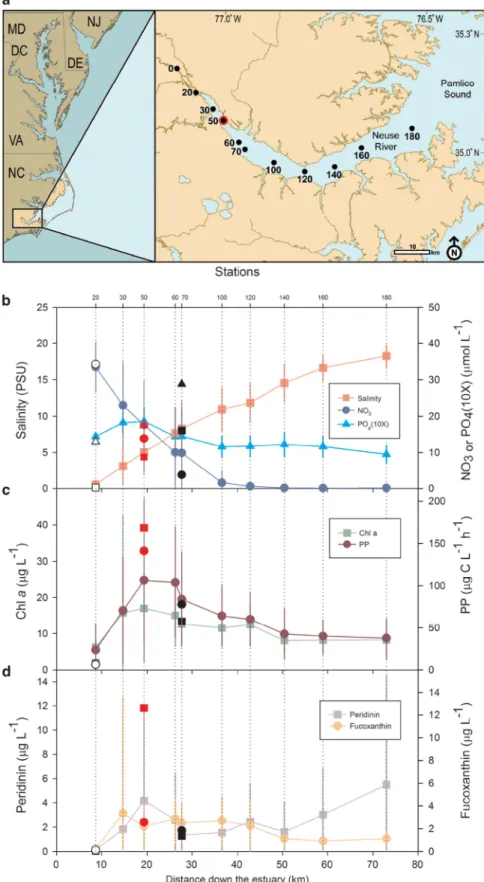
Figure 1 Map of the neuse river estuary and water quality parameters measured in 2012. (a) Location of ModMon stations (20–180) in the
NRE. The bloom station is indicated with a red circle. (b) Salinity, phosphate (PO4) and nitrate (NO3) concentrations, (c) chlorophylla(Chl a) concentrations and primary productivity (PP) and (d) primary photopigment concentrations of dinoflagellates (peridinin) and diatoms (fucoxanthin). Plotted are the annual averages and associated standard deviations of surface samples. Also provided are measurements obtained during the dinoflagellate bloom event in September of 2012 where the bloom station (red symbols) and the non-bloom stations (white and black symbols) are indicated.
non-bloom samples as described in Marchetti et al. (2012), and significance of differentially expressed
KOs were assigned with the ‘exactTest’ program in
edgeR. Normalized reads for each KO were then grouped into modules using their KO-associated
‘Module ID’. To measure whether each module is
significantly enriched with over- or underrepre-sented KOs between the bloom sample and each of
the non-bloom samples, a Mann–WhitneyU-test was
conducted for each module (Nielsen et al., 2005).
Fold change, counts per million (c.p.m.) and
P-values for each module are provided in Data set 2.
Results and discussion
Bloom environmental conditions
The NRE is a tributary of North Carolina’s Albemarle-Pamlico Estuarine System, the USA’s largest lagoonal estuarine system (Figure 1a). The NRE is a partially mixed estuary, with riverine runoff and wind as the primary drivers of circulation. Strong vertical stratifi-cation is especially common in summer when the mild, cross-channel, southwest winds prevail (Luettich et al., 2000). Over the past several decades, increasing agricultural and industrial activities along with coastal urbanization have accelerated nutrient inputs to the NRE (Paerl and Whitall, 1999; Whitall and Paerl, 2001). Combined with a long residence time and strong seasonal stratification, the NRE suffers from eutrophi-cation (Paerl, 2006). Under the influence of both anthropogenic and climatic activities, algal blooms occur frequently (Paerlet al., 1998, 2004).
During 2012, mean annual salinity along the estuary increased gradually from close to 0 at the head of the NRE (station 20) to about 18 at the mouth (station 180; Figure 1b). Phosphate concentrations were relatively consistent throughout the estuary, whereas nitrate concentrations were more variable, but, in general, were high at the head of the estuary and decreased down-estuary from an annual mean of
34μmol l−1 at station 20 to commonly being below
the detection limit by station 120. High variability in nitrate along the transect, particularly at the mid-estuary stations, is primarily due to fluctuations
in river flow (Paerl et al., 2010). Chlorophyll a
concentrations were consistently lower at station 20 and peaked at mid-estuary stations with an annual average of 25μg l−1before steadily declining down-estuary (Figure 1c). The low biomass at the head of the NRE likely results from short residence times in
combination with the ‘geochemical filter’, where
flocculation and aggregation of clay minerals and metal ions increase the turbidity within the water
column (Sharp et al., 1984; Peierls et al., 2012).
Thus, in combination with rapid flushing rates, light as well as nutrient supplies are likely limiting factors for phytoplankton growth in this section of the NRE (Peierlset al., 2012). Down-estuary of station 30, the NRE widens, resulting in reduced flushing rates, a decrease in turbidity and subsequent increase in
primary production and phytoplankton biomass, which results in a rapid depletion of nutrients from
the upper water column (Pinckney et al., 1997).
At station 70 onward, low N supplies in surface waters tend to limit primary productivity, resulting in reduced
phytoplankton biomass (Twomeyet al., 2005).
During the bloom event, there were significant increases in chlorophyll a (Student’s t-test, P-value
o0.001) at the bloom station relative to surrounding
stations and the annual mean values (Figure 1c). Primary productivity was also slightly higher at the bloom station compared with the annual average, although not statistically significant (Student’st-test,
P-value = 0.12). Concentrations of accessory
pig-ments were used to distinguish the presence of
different phytoplankton groups (Pinckney et al.,
2001; Peierls et al., 2003). Among the accessory
pigments measured, peridinin and fucoxanthin were used as proxies of dinoflagellate and diatom relative abundances, respectively. The peridinin concentra-tion was significantly higher at the bloom staconcentra-tion
compared with other accessory pigments (Student’s
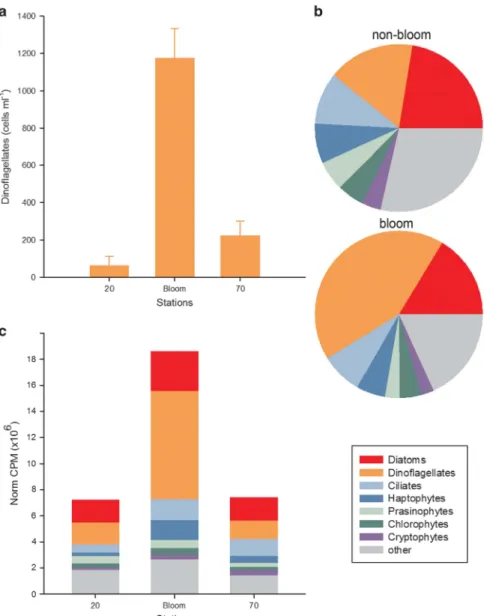
t-test,P-valueo0.001), indicating the blooming algae were primarily that of a single or multiple dinoflagel-late species (Figure 1d). Consistent with the pigment data, cell densities of dinoflagellates at the bloom station were significantly higher compared with the surrounding non-bloom stations (one-way analysis of variance; Figure 2a). Blooming dinoflagellates were
morphologically identified to be predominantly
Levan-derina fissa (formerly known as Gyrodinium instria-tum; Moestrupet al., 2014).
Transcriptome sequencing of the dinoflagellate bloom One hundred and twelve million paired-end raw reads from the bloom station along with 182 million and 122 million paired-end raw reads from the two non-bloom samples located at stations 20 and 70, respectively, were sequenced (Supplementary Table S1). Assembly of reads yielded 1–1.6 million assembled contigs from each sample. For the bloom sample, 53% of contigs had sequence similarity to the reference sequences contained in the taxonomic sequence database, Mar-ineRefII, and 39% of contigs had sequence similarity to genes in the functional KEGG (Kyoto Encyclopedia of Genes and Genomes) database. Of these KEGG matches, 25% had KEGG module annotations and were used for differential expression analysis. From stations 20 and 70, 58% and 59% of contigs were assigned a taxonomic identification, with 44% and 46% of these being assigned a functional annotation, in which 23% and 26% had KEGG module annotations, respectively (Supplementary Table S1).
was an approximate fivefold higher abundance of normalized transcripts assigned to dinoflagellates in the bloom sample relative to the non-bloom samples (Figure 2c), further confirming pigment and micro-scopic determinations of elevated dinoflagellate bio-mass and cell density at the bloom station. According
to the taxonomic assignment of dinoflagellate
sequences from the bloom sample, greatest sequence similarity was to transcriptomes of isolates from the
genus Karenia (Supplementary Figure S2), a genus
formerly part of Gymnodiniumand closely related to
Levanderina based on 18 S rDNA phylogeny (Daugbjerget al., 2000; Heimann, 2012).
Of the total dinoflagellate reads, 20%, 22% and 15% from the bloom, station 20 and 70, respectively, obtained a KEGG module annotation. Sequences in the bloom sample were assigned to six major
functional gene categories. Generally, about three-quarters of annotated reads were assigned to meta-bolic pathways, including synthesis of carbohy-drates, fatty acids, amino acids, proteins, cofactors and vitamins, nucleotides and secondary metabo-lites, carbon fixation and energy-related processes such as ATP synthesis and photosynthesis; about one-fifth were related to genetic information proces-sing, including processes involved in RNA degrada-tion and other genetic informadegrada-tion processing; and
o1% reflected intracellular responses to the
envir-onment, including regulatory systems and transpor-tation of macro/micronutrients, carbohydrates and amino acids.
Dinoflagellate-associated genes were grouped into a total of 399 KEGG modules, of which 352, 378 and 314 modules were expressed in the bloom sample
Figure 2 Comparison of dinoflagellate abundances between the bloom and non-bloom samples. (a) Dinoflagellate mean cell counts in the bloom sample and stations 20 and 70. Error bars represent standard deviations (n= 3). (b) Taxonomic proportions of read counts in the bloom sample and the average of 22 other samples obtained in 2012. (c) Community-wide TMM normalized transcript counts (counts per million reads, c.p.m.) of major taxonomic groups in the bloom sample and stations 20 and 70 (Supplementary File 1).
and stations 20 and 70, respectively. Differential expression analysis was conducted at the module level to investigate the regulation of functional units within different biochemical processes. These mod-ules represent a broad range of processes, including nutrient metabolism and transportation, carbohy-drate production and transportation, and vitamin metabolism and transportation.
Differential expression analysis was performed on
dinoflagellate-associated modules between the
bloom sample versus station 20 and 70 to compare metabolic profiles under bloom conditions to those under non-bloom conditions. Modules were detected
as over- or underrepresented in the bloom sample
according to their transcripts’ fold change and
relative abundance (c.p.m.) compared with the
upstream and downstream non-bloom stations
(Figure 3). Unless noted, the
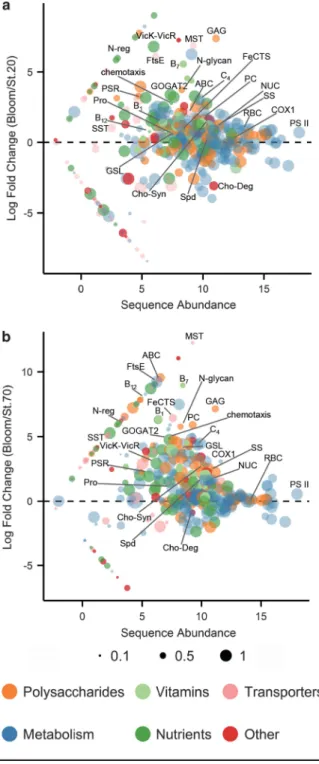
dinoflagellate-associated module expression patterns described herein are those that were differentially expressed between the bloom sample versus both stations 20 and 70.
Growth-related metabolic pathways during the dinoflagellate bloom
An algal bloom is often characterized by rapid growth of cells within a relatively short period of time (Pinckneyet al., 1997), although it is recognized that there are numerous alternative conditions conducive to algal blooms, including a release of grazing pressure (Litakeret al., 2002). The relatively high concentrations of peridinin and abundance of dinoflagellates in the bloom sample is synonymous with high growth rates anticipated during the bloom event (Figure 2). Consistent with these biomass trends, putative genes encoding for a cell division
transport system ATP-binding protein (FtsE; de
Leeuw et al., 1999; Arends et al., 2009) as well as
genes encompassing a two-component regulatory
system for cell wall metabolism (VicK-VicR system;
Bisicchia et al., 2007) were identified in dinoflagel-lates and highly overrepresented in the bloom sample, suggesting high rates of cell division
(Figure 3). AlthoughFtsEandVicK-VicRgenes were
previously only thought to be present in bacteria, our
Figure 3 Metabolic pathway color-coded scatter plot of log fold change in transcript abundance of dinoflagellates between the bloom sample and the non-bloom sample for (a) bloom versus station 20, and (b) bloom versus station 70. Plotted are the log fold-change of module transcripts over average sequence abundance (log c.p.m.). Modules are grouped into different categories based on their metabolic functions. Circle size indicates the percentage of enzymes/proteins in each KEGG module with reads mapping to the underlying KEGG genes in dinoflagellates. The largest circles are 100% complete modules, whereas the smallest have at least a single gene mapped. The circle size legend indicates the proportion of genes with mapped reads for a given module. Both axes are in log scale (base 2). Selected modules are annotated as follows: ABC, putative ABC transport system (M00211); B1,
thiamin biosynthesis (M00127); B7, biotin biosynthesis (M00123);
B12, cobalamin biosynthesis (M00122); C4, C4 carbon fixation
(M00172); Cho-Syn, cholesterol biosynthesis (M00101); Cho-Deg, cholesterol degradation (M00104); COX1, cytochrome coxidase (M00155); FeCTS, iron complex transport system (M00240);FtsE, cell division transport system (M00256); GAG, glycosaminoglycan biosynthesis (M00059); GOGAT2, glutamate synthase(ferrodoxin) (K00284); GSL, glycosphingolipid biosynthesis (M00068); MST, putative multiple sugar transporters (M00207); N-reg, GlnL-GlnG two-component regulatory system (M00497); NUC, nucleotide sugar biosynthesis (M00361); PC, phosphatidylcholine biosynth-esis (M00090); Pro, proline biosynthbiosynth-esis (M00015); PS II, photo-system II (M00161); PSR, phosphate starvation response (M00434); SS, sphingosine biosynthesis (M00099); SST, putative simple sugar transport system (M00221); RBC, RuBisCo (W00008); Spd, spermidine biosynthesis (M00133);VicK-VicR, cell wall metabo-lism (M00459).
taxonomic analyses as well as evidence from other
studies (For example, genomes ofThalassiosira
pseu-donana, Phaeodactylum tricornutum, Grateloupia taiwanensis and Paramecium tetraurelia) demon-strates their common presence in many eukaryotic phytoplankton.
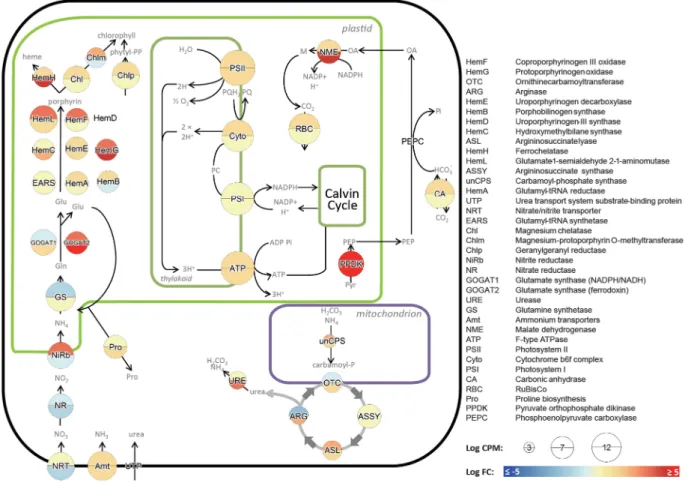
Transcripts for components of C4/CAM carbon
fixation were highly expressed in the bloom sample
(Figures 3 and 4). C4and CAM are CO2concentrating
mechanisms acquired by algae and plants to cope
with the higher atmospheric O2 concentrations
relative to CO2 (Reinfelder et al., 2000; Giordano
et al., 2005). Transcripts for both pyruvate
orthophosphate dikinase, which converts pyruvate to phosphoenolpyruvate, and NADP-malate decar-boxylase, which catalyzes the decarboxylation of
malate to pyruvate, releasing CO2 in the process,
were overrepresented in the bloom sample compared with the non-bloom stations (Figure 4). Interestingly,
transcripts for phosphoenolpyruvate carboxylase,
which has the important role of catalyzing bicarbonate attachment to phosphoenolpyruvate, forming the four-carbon compound oxaloacetate, were underrepresented
in the bloom sample relative to station 20 (Figure 4). Thus, although the high expression of genes encoding pyruvate orthophosphate dikinase and NADP-malate
decarboxylase may be in response to higher O2 and
lower CO2 concentrations and/or increased energy
demands, the lack of corresponding overrepresentation of phosphoenolpyruvate carboxylase transcripts draws into question as to whether dinoflagellates use the full
C4/CO2 concentrating mechanism pathway and how
this pathway is regulated under bloom conditions (Haimovich-Dayanet al., 2013).
Dinoflagellate-associated genes involved in N meta-bolism, including nitrate/ammonium transporters, nitrate/nitrite reductases, urease and glutamine and glutamate synthases were expressed in all sequence libraries, indicating that dinoflagellates are likely using
multiple N sources (Zhuang et al., 2015; Figure 4).
However, expression patterns revealed discrepancies in N metabolism between the bloom and the non-bloom samples. Ammonium transporters, ferredoxin-dependent glutamate synthase (GOGAT2) and several components of the urea cycle were overrepresented relative to both non-bloom stations, whereas nitrite
Figure 4 Schematic plot of select components in photosynthesis and carbon fixation pathways and the predicted flow of nitrogen into select dinoflagellate biosynthetic compounds. Metabolic reactions are illustrated as pie charts. Within each pie chart, the upper half represents log fold change (log FC) of transcripts between the bloom and station 20 samples, and the bottom half represents log FC between the bloom and station 70 samples, with radius indicative of average sequence abundance (log c.p.m.). Pie chart color gradients: cooler colors indicate underrepresented in bloom sequence library versus stations 20 or 70; warmer colors, indicate overrepresented in bloom sequence library versus stations 20 or 70; and gray, no change between samples. C4pathway is incomplete and shown is the predicted
localization of proteins based on Giordanoet al.(2005).
reductase was overrepresented relative to station 20 (Figure 4). GOGAT2 has a significant role in
ammo-nium uptake and assimilation (Okuhara et al., 1999).
Carbamoyl-phosphate synthase, argininosuccinate
synthase and argininosuccinate lyase are three (out of five) key enzymes in the urea cycle and were also overrepresented in the bloom sample. Overrepresenta-tion of genes in urea cycle along with those of genes involved in other nitrogen metabolisms infer high N
compound cycling by blooming dinoflagellates
because of high N demands (Coschigano et al., 1998;
Okuhara et al., 1999; Maheswari et al., 2010; Allen
et al., 2011; Kang et al., 2015). Genes involved in proline (Pro), glutamate (GOGAT) and spermidine (Spd) were also overrepresented (Figures 3 and 4). These N-rich metabolites are critical components for protein biosynthesis and cell wall formation, as well as being influential in regulating cellular N status (Allen et al., 2011). Spermidine synthesis has also been found to increase under rapid growth (Nishibori and Nishio, 1997; Nishibori and Nishijima, 2004) consistent with high growth rates in the bloom sample. In addition, a regulatory system for N (GlnL-GlnG two-component regulatory system), where expression increases under N limitation (Reitzer, 2003), was overrepresented in the bloom sample (Figure 3). Noticeably, porphyrin and chlorophyll metabolism (HemA-HemH, HemL, EARS, Chl, Chlp, Chlm), which are downstream biochemical processes of glutamate biosynthesis, were also primarily overrepresented in the bloom condition (Figure 4). The high production of chlorophyll is indicative of high growth rates and probably higher
photosynthetic activities (Bollivar, 2006). Taken
together, despite the steep gradients in NO3 concentra-tions and variaconcentra-tions in N sources observed during our sampling effort, the biological processes in N-requiring metabolic pathways that are overrepresented in the bloom sample suggest a higher metabolic demand for N likely stemming from rapid cell growth within an increasingly N-deprived environment. Another differ-ential expression analysis was conducted between station 20 and station 70 samples. Station 70 was characterized with module expression profiles consis-tent with low nitrogen availability (Figure 1, Data set 2). Overrepresentation of nitrogen assimilation modules at the bloom station compared with both non-bloom samples suggests that blooming dinoflagellates had higher nitrogen demand/nitrogen stress compared with that at station 70 where a high nitrogen demand was also inferred by changes in expression of nitrogen-associated modules relative to station 20.
Signals of higher metabolic demands for phos-phorous (P) and iron (Fe) were also detected. Transcripts for a phosphate starvation response system and a Fe complex transport system were overrepresented in the bloom sample (Figure 3). Phosphorous is a major component of nucleic acids
and phospholipids (Van Mooyet al., 2006). The high
expression of the phosphate starvation response suggests an increased P demand of dinoflagellates, which was possibly caused by higher growth rates.
Iron serves as an electron carrier in various protein complexes and has a central role in photosynthesis, cellular respiration and N metabolism, as well as
other biological reactions (Marchetti and
Maldonado, 2016). Expression of Fe complex trans-port system has been found to increase under
Fe starvation conditions (Katoh et al., 2001; Yuan
et al., 2005, 2008). Thus, the increased expression of genes involved in this system can also serve as a signal of increased Fe demands in dinoflagellates during the bloom. Thus, our study highlights how cellular nutrient demands associated with rapid growth in specific members of a phytoplankton
community may elicit nutrient limitation-like
responses regardless of the external nutrient
concentrations.
Under the bloom condition, production and transportation of various polysaccharides were over-represented, including metabolism of N-glycans, GAGs, glycosphingolipids, sphingosines and phos-phatidylcholines (PCs), as well as putative single/
multiple sugar transport systems (SST/MST;
Figure 3). The highly represented polysaccharides are structural components within cell membranes and surface-bound proteins, involved in cell inter-actions, nutrient acquisition, growth factors and acquisition of numerous other substances from the
surrounding environment (Sarrazin et al., 2011;
Delbarre-Ladrat et al., 2014). With higher metabolic
rates and growth rates, dinoflagellates would likely need to produce more polysaccharides to meet the increased demand for cell membrane formation and other polysaccharide-involved biological processes.
A putative multiple sugar transporter system and another polysaccharide-associated ABC transporter system (ABC) were overrepresented (Figure 3), both of which have been shown to export polysaccharides outside of cells (Delbarre-Ladratet al., 2014). Secretion of polysaccharides has previously been observed in blooming phytoplankton in response to elevated nutrient demands (Myklestad, 1999; Decho, 2000). Exopolysaccharides are made of a large number of exported polysaccharides that attach to cellular mem-branes or are dispersed into the environment. They may have important roles in relieving environmental stress, mostly through trapping nutrients to alleviate nutrient shortages and enhancing cell membrane
integrity under harsh physical environments
(Delbarre-Ladrat et al., 2014). In particular, genes
involved in the synthesis of GAGs, a major group of mucopolysaccharides present in almost all domains of life, were overrepresented in the bloom sample (Figure 3), suggesting their elevated production under bloom conditions. Although GAGs have multiple suspected roles, they are often involved in cell
adhesion processes. In the planktonic diatom
Bacter-iastrum jadranum, the formation of GAG-like exopo-lysaccharide particles forms a fibrillar network that can extend large distances from the cell surface, facilitating colony formation and other interactions with their surrounding environment (Bosaket al., 2012).
Cholesterol biosynthesis in dinoflagellates was overrepresented, whereas cholesterol degradation was underrepresented in the bloom sample relative to the surrounding non-bloom stations (Figure 3). Dinoflagellate sterols (also referred to as dinosterols) have been shown to increase during resting cyst formation, possibly for use as long-term organic
carbon reserves (Amo et al., 2010). Chemically
reduced carbon allocated to the synthesis of choles-terols would then be used to support later growth when environmental conditions are more favorable to proliferate. Because of the high biomass of dino-flagellates along with an increased nutrient demand within an environment containing a reduced nutri-ent supply, the infered accumulation of dinosterols in dinoflagellates at the peak of the bloom could be a response to the suboptimal environmental condi-tions where both intra- and interspecies competition for limiting growth resources is intense.
Vitamin synthesis
Phytoplankton require multiple B vitamins,
includ-ing vitamin B12 (cobalamin), vitamin B1 (thiamine)
and vitamin B7(biotin), as growth factors that have
been shown to be in varying supply in marine
environments (Sañudo-Wilhelmy et al., 2014).
Combinations of these B vitamins are required
for different phytoplankton (Croft et al., 2006).
B vitamin auxotrophy is present in several unrelated phyla, suggesting that it has arisen independently in the evolution of phytoplankton, and variability in B vitamin requirements is observed at even the
species level (Croft et al., 2006). For auxotrophic
eukaryotic phytoplankton, bacteria have pivotal roles in vitamin supply to support phytoplankton growth (Croftet al., 2006). Expression of biotin and thiamine biosynthesis genes was detected in all of our sequence libraries (Figure 3), indicating the ability of at least some of the dinoflagellates in our samples to biosynthesize both of these vitamins. Although eukaryotic phytoplankton are thought to be
unable to synthesize cobalamin (Croft et al., 2005),
unexpectedly, several dinoflagellate-associated genes encoding enzymes involved in the biosynthesis of cobalamin were detected in our sequence libraries, as discussed below.
Biotin is a cofactor for several fundamental carboxylase enzymes and is involved in central pathways in both prokaryotic and eukaryotic cell metabolisms (Streit and Entcheva, 2003). Four enzymes, BioF, BioA, BioD and BioB are required to convert pimeloyl-CoA, which is the precursor for
biotin biosynthesis, to biotin (Croft et al., 2006).
Expression of BioF, BioA and BioB were detected in both the bloom and non-bloom samples, whereas BioD was not detected in either sample. However, the absence of BioD transcripts does not necessarily
negate dinoflagellates’ ability to synthesize BioD,
as BioD is not present in the genomes of many biotin-producing phytoplankton and plant species
(for example, Thalassiosira pseudonana and
Arabi-dopsis thaliana). The absence of BioD suggests that the function of BioD might be carried out by another
unidentified enzyme (Croft et al., 2006). Under the
bloom condition, genes for biotin biosynthesis were overrepresented, consistent with higher biotin pro-duction corresponding with the high metabolic rates of the blooming dinoflagellates.
Thiamine is another important cofactor for carbo-hydrate and branched-chain amino-acid
metabo-lisms. Biosynthesis of thiamine requires the
coupling of thiazole and pyrimidine to form thia-mine monophosphate, which is then catalyzed by thiamine pyrophosphokinase to form thiamine pyr-ophosphate, the active form of thiamine (Croftet al., 2006). Similar to biotin, genes involved in the biosynthesis of thiamine were also overrepresented in the bloom condition. All enzymes involved in pyrimidine metabolism in dinoflagellates were detected in each sample in addition to genes encoding enzymes for catalyzing the coupling of pyrimidine and thiazole. However, genes involved in thiazole metabolism were not detected in the bloom sample nor was thiamine pyrophosphokinase (Data set 2, M00127). The absence of genes encoding for some of these essential enzymes in thiamine bio-synthesis may be a result of our current incomplete understanding of this pathway in phytoplankton. However, the high expression of most of the thiamine biosynthesis genes in the blooming dino-flagellates suggests an increased production of thiamine.
Cobalamin is a cofactor catalyzing either
rearran-gement–reduction reactions or methyl transfer
reac-tions, and is essential for cobalamin-dependent
enzymes (Croft et al., 2006). Some phytoplankton
require cobalamin for cobalamin-dependent methio-nine synthase (MetH), whereas an alternative form of methionine synthase (MetE) exists in some micro-algae that do not require B12, alleviating them of most
of their B12 requirement (Helliwell et al., 2011;
Bertrand et al., 2012). Eukaryotic phytoplankton
must obtain B12from their environment and/or close
bacterial associations (Croft et al., 2005). Surpris-ingly, two putative genes assigned to dinoflagellates, CobC1 andCobC2, encoding for part of the cobala-min biosynthesis pathway were detected in the
bloom sample (CobC2 only) as well as station 20
(both genes; Supplementary Figure S3). α-Ribazole
phosphatase (CobC2) is an enzyme that transforms
α-ribazole 5'-phosphate toα-ribazole, and
threonine-phosphate decarboxylase (CobC1) catalyzes a step in
the pathway of adenosylcobalamin biosynthesis, both of which are necessary steps in the formation of the final product, cobalamin coenzyme (Scott and
Roessner, 2002). Besides CobC1 and CobC2, other
putative genes involved in B12biosynthesis were also detected in NRE samples collected at different time points (data not shown); however, we did not detect the expression of the entire suite of genes required for B12synthesis in a single sample of our eukaryotic
sequence libraries. The high expression of genes for
putative dinoflagellate-associated CobC2 in the
bloom sample is consistent with dinoflagellates being able to at least partially biosynthesize vitamin
B12 following the acquisition of B12 intermediates.
MetH was highly expressed at station 20 but was not
detected at the bloom station, suggesting low B12
availability during the bloom (Data set 4; Bertrand et al., 2013). Given bacteria are major B12suppliers to dinoflagellates, we thus hypothesize that bacterially
derived B12 intermediates may be acquired by
dinoflagellates and processed to biosynthesize B12.
Similar to our findings, Zhanget al.(2013) detected
the expression of the cobalamin biosynthesis gene,
CobW, in dinoflagellates, before which there was
only limited support for full or partial cobalamin synthesis within any algal lineage.
Implications for dinoflagellate-bacterial interactions Phytoplankton secrete dissolved organic matter,
especially when nutrient stressed (Wear et al.,
2015). Similarly, previous studies have demon-strated that under bloom conditions, phytoplankton can release large amounts of extracellular polysac-charides into their surrounding environment, form-ing large sticky aggregates (Myklestad, 1995). The mucilage material coagulates both phytoplankton and surrounding bacteria cells, possibly serving as protection for phytoplankton against predation and a means to deal with turbulence within the water column (Smayda, 2002). Some of the mucilage secreted by phytoplankton can also be used as an organic carbon source for heterotrophic bacteria
(Decho, 2000; Croft et al., 2005). Production and
transportation of simple sugars (ABC, SST), which are readily assimilated by heterotrophic bacteria,
were also overrepresented during the bloom
(Figure 3, Data set 2). Correspondingly, previous studies have shown that organic carbon uptake increases in bacteria during algal blooms, as well as adhesiveness of bacterial cell surfaces that may also be associated with phytoplankton mucilage
forma-tion (Rinta-Kanto et al., 2012). The inferred
increased production of both simple sugar and polysaccharide exudates suggests that dinoflagel-lates may actively promote the growth and interac-tion with their surrounding heterotrophic bacteria community. Notably, bacterial communities have also been shown to have higher biomass and more efficient remineralization of organic materials when in aggregates, producing more inorganic nutrients that could then be made available to phytoplankton
(Müller-MNiklas et al., 1994; Decho, 2000; Cooper
and Smith, 2015).
Croftet al.(2005) also found that coculturing with phytoplankton significantly increases bacteria’s B12 production. Similarly, increased biosynthesis and secretion of biotin and thiamine by dinoflagellates would support further bacterial growth, as there are numerous bacteria that do not possess the metabolic
pathways for synthesis of these vitamins (Myklestad,
2000; Sañudo-Wilhelmy et al., 2014). In addition to
roles in nutrient trapping and cell adhesion, poly-saccharide exudates can bind chemokines, which are used to facilitate cell-to-cell communications (Sarrazin et al., 2011). Remarkably, a two-component regulatory system for chemotaxis was overrepresented in dino-flagellates under bloom conditions (Figure 3). The expression of chemotaxis was shown to be a response of a marine heterotrophic bacterial assemblages to higher nutrient concentrations (Shiet al., 2012). Taken together, we hypothesize that under bloom conditions, dinoflagellates produce excess polysaccharides and vitamins in efforts to cultivate bacteria so that they may acquire essential macro- and micronutrients
(N, P, B12, etc.) produced by bacteria to prolong
the bloom. Alternatively, if the blooming dinoflagel-lates are mixotrophic, which many of them are (Jeong et al., 2010), bacterial cultivation may provide a source of organic matter when inorganic nutrients are depleted to levels where autotrophy is no longer favored.
Potential molecular indicators for bloom development Characterized by rapid growth, blooming phyto-plankton have high metabolic activity rates. Over-represented transcripts in the nucleotide sugar biosynthesis and other DNA/RNA processing sys-tems are consistent with the blooming phytoplank-ton experiencing high rates of energy-demanding transcription and translation (Figure 3). To meet this increase in energy demands, high proportions of transcripts were devoted to ATP synthesis, carbon fixation and photosynthesis in the bloom sample (Figures 3 and 5). As organic carbon synthesis and energy production are fundamental to phytoplank-ton growth, increased expression of photosynthesis and carbon fixation are crucial for the formation and propagation of an algal bloom. Thus, molecular activities of these processes could be used as markers for assessing bloom potential. However, their increased expression alone does not guarantee a bloom will develop. In addition to these metabolic processes, carbohydrate biosynthesis and transporta-tion may also serve as molecular proxies for bloom formation. Increased production of carbohydrate exudates is common in intense algal blooms, which are consistent with the overrepresentation of tran-scripts for single/polysaccharide transportation and
biosynthesis activities in our bloom sample
(Figure 3). Lastly, as increased sterol synthesis may be associated with resting cysts, the accumulation of dinosterols may be indicative of bloom termination, providing a useful indicator of the bloom entering senescent phase. Although more work is needed, we suggest such genes as potential targets that can be used in conjunction with advancing probe technol-ogies for bloom characterization and management efforts.
Summary
Metatranscriptomic analysis has provided a compre-hensive examination into the molecular underpin-nings of blooming dinoflagellates within a natural setting. When combined with environmental data, our study provides a unique and in-depth approach to coupling the transcriptome-level responses by dinoflagellates to changes in their surrounding
environment under bloom-favorable conditions.
Our findings indicate that dinoflagellates increased many components of their cellular metabolism and growth, including a possible reliance on various
components of CO2-concentrating mechanisms. In
response to increased cellular demands, dinoflagel-lates increased expression levels of genes involved in N, P and Fe acquisition, as well as the biosynthesis of B vitamins. Despite these efforts, a decreasing N supply in combination with gene expression patterns indica-tive of high N demand suggests that the blooming dinoflagellates were possibly experiencing the onset of N limitation. We speculate dinoflagellates were produ-cing and exporting sugars, exopolysaccharides and vitamins to facilitate bacterial interactions, either to increase remineralization of nutrients by bacteria and promote nutrient acquisition or for their direct consumption. Thus, we speculate increased interac-tions between dinoflagellates and bacteria may be a common phenomenon that facilitates the propagation of dinoflagellate blooms. Our study is based on transcriptomes. Dinoflagellates have been shown to undergo widespread trans-splicing, which may com-plicate interpretations based on gene transcripts (Lidie and van Dolah, 2007; Lin et al., 2010). Thus, further research would be beneficial to assess whether changes in the gene module expression we have discussed are reflective of protein expression and activity. In addi-tion, further investigation of our hypothesized phyto-plankton and bacterial interactions under bloom conditions is warranted.
Conflict of Interest
The authors declare no conflict of interest.
Acknowledgements
We thank J Braddy and other members of the ModMon Team who assisted with sample collection and analysis. We are grateful to H Masters for assistance with RNA extractions and C Stackhouse and J Roach for assistance with sequence analysis. UNC Research Computing gener-ously provided cluster time for sequence analysis. Mod-Mon is funded by NC-Department of Environment and Natural Resources, Division of Water Resources, the Lower Neuse Basin Association and Neuse River Compliance Association. This research was supported by NC Sea Grants R/12-HCE-3—NA10OAR4170080 and R/14-HCE-2
—NA14OAR4170073 to AM and HP as well as start-up funds to AM.
Author contributions
AM and HP designed research; WG, AM and JB performed research, WG and DMS contributed new analytical tools; WG, AM and NH analyzed data; and WG and AM wrote the paper.
References
Alexander H, Jenkins BD, Rynearson TA, Dyhrman ST. (2015). Metatranscriptome analyses indicate resource
Figure 5 Heatmap of transcript proportions in KEGG categories (Class 3) of sequenced samples collected from stations 20, bloom and 70. Color gradient indicates the percentage of transcripts mapping to each KEGG category of the total KEGG anno-tated reads.
partitioning between diatoms in the field. Proc Natl Acad Sci USA112: 201421993.
Allen AE, Dupont CL, Oborník M, Horák A, Nunes-Nesi A, McCrow JP et al. (2011). Evolution and metabolic significance of the urea cycle in photosynthetic diatoms.Nature473: 203–207.
Amin SA, Hmelo LR, van Tol HM, Durham BP, Carlson LT, Heal KR et al. (2015). Interaction and signalling between a cosmopolitan phytoplankton and associated bacteria.Nature522: 98–101.
Amo M, Suzuki N, Kawamura H, Yamaguchi A, Takano Y, Horiguchi T. (2010). Sterol composition of dinoflagel-lates: different abundance and composition in heterotrophic species and resting cysts. Geochem J
44: 225–231.
Anderson DM, Burkholder JM, Cochlan WP, Glibert PM, Gobler CJ, Heil CAet al.(2008). Harmful algal blooms and eutrophication: examining linkages from selected coastal regions of the United States.Harmful Algae8: 39–53.
Arends SJR, Kustusch RJ, Weiss DS. (2009). ATP-binding site lesions in FtsE impair cell division.J Bacteriol191: 3772–3784.
Bertrand EM, Allen AE, Dupont CL, Norden-Krichmar TM, Bai J, Valas REet al. (2012). PNAS Plus: influence of cobalamin scarcity on diatom molecular physiology and identification of a cobalamin acquisition protein.
Proc Natl Acad Sci USA109: E1762–E1771.
Bertrand EM, Moran DM, Mcilvin MR, Hoffman JM, Allen AE, Saito MA. (2013). Methionine synthase interreplace-ment in diatom cultures and communities : Implica-tions for the persistence of B 12 use by eukaryotic phytoplankton.Limnol Oceanogr58: 1431–1450. Bisicchia P, Noone D, Lioliou E, Howell A, Quigley S,
Jensen T et al. (2007). The essential YycFG two-component system controls cell wall metabolism in Bacillus subtilis.Mol Microbiol65: 180–200.
Bollivar DW. (2006). Recent advances in chlorophyll biosynthesis.Photosynth Res90: 173–194.
Bosak S, PletikapićG, HozićA, SvetličićV, Sarno D, ViličićD. (2012). A novel type of colony formation in marine planktonic diatoms revealed by atomic force microscopy.
PLoS One7: e44851.
Cole JJ. (1982). Interactions between bacteria and algae in aquatic ecosystems.Annu Rev Ecol Syst13: 291–314. Cooper MB, Smith AG. (2015). Exploring mutualistic
interactions between microalgae and bacteria in the omics age.Curr Opin Plant Biol26: 147–153.
Cooper ED, Bentlage B, Gibbons TR, Bachvaroff TR, Delwiche CF. (2014). Metatranscriptome profiling of a harmful algal bloom.Harmful Algae37: 75–83. Coschigano KT, Melo-Oliveira R, Lim J, Coruzzi GM.
(1998). Arabidopsis gls mutants and distinct Fd-GOGAT genes. Implications for photorespiration and primary nitrogen assimilation.Plant Cell10: 741–752. Croft MT, Lawrence AD, Raux-Deery E, Warren MJ, Smith AG. (2005). Algae acquire vitamin B12 through a symbiotic
relationship with bacteria.Nature438: 90–93.
Croft MT, Warren MJ, Smith AG. (2006). Algae need their vitamins.Eukaryot Cell5: 1175–1183.
Daugbjerg N, Hansen G, Larsen J, Moestrup Ø. (2000). Phylogeny of some of the major genera of dinoflagel-lates based on ultrastructure and partial LSU rDNA sequence data, including the erection of three new genera of unarmoured dinoflagellates.Phycologia 39: 302–317.
Decho AW. (2000). Microbial biofilms in intertidal sys-tems: an overview.Cont Shelf Res20: 1257–1273. Delbarre-Ladrat C, Sinquin C, Lebellenger L, Zykwinska A,
Colliec-Jouault S. (2014). Exopolysaccharides pro-duced by marine bacteria and their applications as glycosaminoglycan-like molecules. Front Chem 2: 1–15.
Giordano M, Beardall J, Raven JA. (2005). CO2
concentrat-ing mechanisms in algae: mechanisms, environmental modulation, and evolution.Annu Rev Plant Biol 56: 99–131.
Haimovich-Dayan M, Garfinkel N, Ewe D, Marcus Y, Gruber A, Wagner H et al. (2013). The role of C4 metabolism in the marine diatom Phaeodactylum tricornutum.New Phytol197: 177–185.
Hallegraeff GM. (1992). Harmful algal blooms in the Australian region.Mar Pollut Bull25: 186–190. Heimann K (2012). Gymnodinium and related
dinoflagel-lates.eLS. Available at: http://www.els.net/WileyCDA/ ElsArticle/refId-a0001967.html (last accessed 28 Sep-tember 2015).
Helliwell KE, Wheeler GL, Leptos KC, Goldstein RE, Smith AG. (2011). Insights into the evolution of vitamin B12auxotrophy from sequenced algal genomes.
Mol Biol Evol28: 2921–2933.
Jeong HJ, Yoo YD, Kim JS, Seong KA, Kang NS, Kim TH (2010). Growth, feeding and ecological roles of the mixotrophic and heterotrophic dinoflagellates in mar-ine planktonic food webs.Ocean Sci J45: 65–91. Kang L-K, Gong G-C, Wu Y-H, Chang J. (2015). The
expression of nitrate transporter genes reveals different nitrogen statuses of dominant diatom groups in the southern East China Sea.Mol Ecol24: 1374–1386. Katoh H, Hagino N, Grossman AR, Ogawa T. (2001). Genes
essential to iron transport in the cyanobacterium
Synechocystis sp. strain PCC 6803. J Bacteriol 183: 2779–2784.
Kiørboe T, Andersen KP, Dam HG. (1990). Coagulation efficiency and aggregate formation in marine phyto-plankton.Mar Biol107: 235–245.
de Leeuw E, Graham B, Phillips GJ, ten Hagen-Jongman CM, Oudega B, Luirink J. (1999). Molecular characterization of Escherichia coli FtsE and FtsX. Mol Microbiol 31: 983–993.
Lidie KB, van Dolah FM. (2007). Spliced leader RNA-mediated trans-splicing in a dinoflagellate, Karenia brevis.J Eukaryot Microbiol54: 427–435.
Lima-mendez G, Faust K, Henry N, Decelle J, Colin S, Carcillo F et al. (2015). Determinants of community structure in the global plankton interactome. Ocean Plankton348: 1–10.
Lin S, Zhang H, Zhuang Y, Tran B, Gill J. (2010). Spliced leader-based metatranscriptomic analyses lead to recognition of hidden genomic features in dinoflagel-lates.Proc Natl Acad Sci USA107: 20033–20038. Litaker RW, Tester PA, Duke CS, Kenney BE, Pinckney JL,
Ramus J. (2002). Seasonal niche strategy of the bloom-forming dinoflagellateHeterocapsa triquetra.Mar Ecol Prog Ser232: 45–62.
Luettich Jr RA, McNinch JE, Paerl HW, Peterson CH, Wells JT, Alperin Met al.(2000). Neuse River Estuary modeling and monitoring project. Water Resources Research Institute of the University of North Carolina. Available at: http:// www.lib.ncsu.edu/resolver/1840.4/1891.
Maheswari U, Jabbari K, Petit J-L, Porcel BM, Allen AE, Cadoret J-Pet al.(2010). Digital expression profiling of
novel diatom transcripts provides insight into their biological functions.Genome Biol11: R85.
Marchetti A, Maldonado MT. (2016). Iron. In: Borowitzka MA, Beardall J, Raven JA (eds), The Physiology of Microalgae. Springer International Publishing: Cham, Switzerland, pp 233–279.
Marchetti A, Schruth DM, Durkin CA, Parker MS, Kodner RB, Berthiaume CTet al.(2012). Comparative metatranscrip-tomics identifies molecular bases for the physiological responses of phytoplankton to varying iron availability.
Proc Natl Acad Sci USA109: E317–E325.
Moestrup Ø, Hakanen P, Hansen G, Daugbjerg N, Ellegaard M. (2014). On Levanderina fissa gen. & comb. nov. (Dino-phyceae) (syn.Gymnodinium fissum,Gyrodinium instria-tum, Gyr. uncatenum), a dinoflagellate with a very unusual sulcus.Phycologia53: 265–292.
Van Mooy BAS, Rocap G, Fredricks HF, Evans CT, Devol AH. (2006). Sulfolipids dramatically decrease phosphorus demand by picocyanobacteria in oligotrophic marine environments.Proc Natl Acad Sci USA103: 8607–8612. Müller-MNiklas G, Stefan S, Kaltenböok E, Herndl GJ.
(1994). Organic content and bacterial metabolism in amorphous aggregations of the northern Adriatic Sea.
Limnol Oceanogr39: 58–68.
Myklestad SM. (1995). Release of extracellular products by phytoplankton with special emphasis on polysacchar-ides.Sci Total Environ165: 155–164.
Myklestad SM (1999). Phytoplankton extracellular produc-tion and leakage with consideraproduc-tions on the polysac-charide accumulation.Ann Super Sanita35: 401–404. Myklestad SM. (2000). Dissolved organic carbon from
phytoplankton.Mar Chem5: 112–144.
Nielsen R, Bustamante C, Clark AG, Glanowski S, Sackton TB, Hubisz MJ et al. (2005). A scan for positively selected genes in the genomes of humans and chimpanzees.PLoS Biol3: e170.
Nishibori N, Nishijima T. (2004). Changes in polyamine levels during growth of a red-tide causing phytoplank-ton Chattonella antiqua (Raphidophyceae). Eur J Phycol39: 51–55.
Nishibori N, Nishio S. (1997). Occurrence of polyamines in the broom forming toxic dinoflagellate Alexandrium tamarense Naoyoshi and Sachio Key words: Alexan-drium late. The peaks corresponding to putrescine and spermidine benzoates in HPLC analysis were subjected to LC/FABMS analysis.Fish Sci63: 319–320.
Okuhara H, Matsumura T, Fujita Y, Hase T. (1999). Cloning and inactivation of genes encoding ferredoxin- and NADH-dependent glutamate synthases in the cyano-bacteriumPlectonema boryanum. Imbalances in nitro-gen and carbon assimilations caused by deficiency of the ferredoxin-dependent enzyme. Plant Physiol120: 33–42.
Paerl HW. (2006). Assessing and managing nutrient-enhanced eutrophication in estuarine and coastal waters: interactive effects of human and climatic perturbations.Ecol Eng26: 40–54.
Paerl HW, Pinckney JL, Fear J, Peierls BL. (1998). Ecosystem responses to internal and watershed organic matter loading: consequences for hypoxia in the eutrophying Neuse River Estuary, North Carolina, USA.Mar Ecol Prog Ser166: 17–25.
Paerl HW, Rossignol KL, Hall NS, Peierls BL, Wetz MS. (2010). Phytoplankton community indicators of short-and long-term ecological change in the anthropogeni-cally and climatianthropogeni-cally impacted neuse river estuary, North Carolina, USA.Estuar Coasts33: 485–497.
Paerl HW, Valdes LM, Joyner AR, Piehler MF, Lebo ME. (2004). Solving problems resulting from solutions: evolution of a dual nutrient management strategy for the eutrophying Neuse River Estuary, North Carolina.
Environ Sci Technol38: 3068–3073.
Paerl HW, Whitall DR. (1999). Anthropogenically-derived atmospheric nitrogen deposition, marine eutrophica-tion and harmful algal bloom expansion. Ambio 28. Available at: http://uncch.pure.elsevier.com/en/publi- cations/anthropogenically-derived-atmospheric-nitro-gen-deposition-marine (last accessed 19 January 2016). Peierls BL, Christian RR, Paerl HW. (2003). Water quality and phytoplankton as indicators of hurricane impacts on a large estuarine ecosystem. Estuaries
26: 1329–1343.
Peierls BL, Hall NS, Paerl HW. (2012). Non-monotonic responses of phytoplankton biomass accumulation to hydrologic variability: a comparison of two coastal plain North Carolina Estuaries. Estuar Coasts 35: 1376–1392.
Piehler MF, Twomey LJ, Hall NS, Paerl HW. (2004). Impacts of inorganic nutrient enrichment on phytoplankton community structure and function in Pamlico Sound, NC, USA.Estuar Coast Shelf Sci61: 197–209.
Pinckney JL, Millie DF, Vinyard BT, Paerl HW. (1997). Environmental controls of phytoplankton bloom dynamics in the Neuse River Estuary, North Carolina, U.S.A.Can J Fish Aquat Sci54: 2491–2501. Pinckney JL, Paerl HW, Tester P, Richardson TL. (2001).
The role of nutrient loading and eutrophication in estuarine ecology. Environ Health Perspect 109: 699–706.
Reinfelder JR, Kraepiel AM, Morel FM. (2000). Unicellular C4 photosynthesis in a marine diatom. Nature 407: 996–999.
Reitzer L. (2003). Nitrogen assimilation and global regulation in Escherichia coli. Annu Rev Microbiol
57: 155–176.
Rinta-Kanto JM, Sun S, Sharma S, Kiene RP, Moran MA. (2012). Bacterial community transcription patterns during a marine phytoplankton bloom.Environ Micro-biol14: 228–239.
Robinson MD, Oshlack A. (2010). A scaling normalization method for differential expression analysis of RNA-seq data.Genome Biol11: R25.
Sañudo-Wilhelmy SA, Gómez-Consarnau L, Suffridge C, Webb EA. (2014). The role of B vitamins in marine biogeochemistry.Ann Rev Mar Sci6: 339–367. Sarrazin S, Lamanna WC, Esko JD. (2011). Heparan sulfate
proteoglycans.Cold Spring Harb Perspect Biol3: 1–33. Scott AI, Roessner CA. (2002). Biosynthesis of cobalamin
(vitamin B12).Biochem Soc Trans30: 613–620.
Sellner KG, Doucette GJ, Kirkpatrick GJ. (2003). Harmful algal blooms: causes, impacts and detection. J Ind Microbiol Biotechnol30: 383–406.
Sharp JH, Pennock JR, Church TM, Tramontano JM, Cifuentes LA. (1984). Estuarine interaction of nutri-ents, organics, and metals: A Case Study in the Delaware Estuary. In: VS Kennedy (ed), Estuary as a Filter. Elsevier: Orlando, FL, USA, pp 241–258. Shi Y, McCarren J, Delong EF. (2012). Transcriptional
responses of surface water marine microbial assem-blages to deep-sea water amendment.Environ Micro-biol14: 191–206.
Smayda TJ. (1997). Harmful algal blooms: their ecophy-siology and general relevance to phytoplankton blooms in the sea.Limnol Oceanogr42: 1137–1153.
Smayda TJ. (2002). Turbulence, watermass stratification and harmful algal blooms: an alternative view and frontal zones as‘pelagic seed banks’.Harmful Algae1: 95–112. Streit WR, Entcheva P. (2003). Biotin in microbes, the genes involved in its biosynthesis, its biochemical role and perspectives for biotechnological production.
Appl Microbiol Biotechnol61: 21–31.
Twomey LJ, Piehler MF, Paerl HW. (2005). Phytoplankton uptake of ammonium, nitrate and urea in the Neuse River Estuary, NC, USA.Hydrobiologia533: 123–134. Wear EK, Carlson CA, Windecker LA, Brzezinski MA. (2015). Roles of diatom nutrient stress and species identity in determining the short- and long-term bioavailability of diatom exudates to bacterioplankton. Mar Chem 177: 335–348.
Whitall DR, Paerl HW. (2001). Spatiotemporal variability of wet atmospheric nitrogen deposition to the Neuse River Estuary, North Carolina.J Environ Qual30: 1508.
Yuan Y, Wu H, Wang N, Li J, Zhao W, Du Jet al.(2008). FIT interacts with AtbHLH38 and AtbHLH39 in regulating iron uptake gene expression for iron homeostasis in
Arabidopsis.Cell Res18: 385–397.
Yuan YX, Zhang J, Wang DW, Ling HQ. (2005). AtbHLH29 of Arabidopsis thaliana is a functional ortholog of tomato FER involved in controlling iron acquisition in strategy I plants.Cell Res15: 613–621.
Zhang H, Zhuang Y, Gill J, Lin S. (2013). Proof that dinoflagellate spliced leader (DinoSL) is a useful hook for fishing dinoflagellate transcripts from mixed microbial samples: Symbiodinium kawagutii as a case study.Protist164: 510–527.
Zhuang Y, Zhang H, Hannick L, Lin S. (2015). Metatran-scriptome profiling reveals versatile N-nutrient utiliza-tion, CO2limitation, oxidative stress, and active toxin
production in an Alexandrium fundyense bloom.
Harmful Algae42: 60–70.