Effective Teachers’ Perceptions of the Impact of the Multiple Dimensions of Teaching on Student Success in the Elementary Classroom
Margaret E. Howard
A dissertation submitted to the faculty of the University of North Carolina at Chapel Hill in partial fulfillment of the requirements for the degree of Doctorate of Education
in the Department of Education.
Chapel Hill 2008
Approved by:
Advisor: Barbara Day
Reader: Xue Lan Rong Reader: Olof Bjorg Steinthorsdottir
Reader: Linda Tillman
iii ABSTRACT
MARGARET E. HOWARD: Effective Teachers’ Perceptions of the Impact of the Multiple Dimensions of Teaching on Student Success in the Elementary Classroom
(Under the direction of Dr. Barbara Day)
The role of an effective teacher has evolved over the last several decades, from someone who transmits information, to someone who utilizes instructional strategies, to someone who facilitates student learning. Presently, in this high-stakes testing era, it is student achievement that is most often associated with teacher effectiveness. By establishing a comprehensive definition of a highly qualified teacher, No Child Left Behind has changed the language used today to discuss teacher qualifications. NCLB highly qualified teacher status does not guarantee a highly effective teacher. An effective teacher must also possess characteristics of a quality teacher. Quality teachers make measurable and substantial
differences in student learning. A review of educational research identified five dimensions of effective teaching. These dimensions include Professional Qualities, Efficiency, Compassion, Passion and Context. This study investigates the perceptions of 10 effective elementary teachers who have demonstrated success on test scores with diverse populations of students in third through fifth grade in order to determine the impact of each dimension on student
iv
ACKNOWLEDGMENTS
This dissertation would not have been possible without the encouragement and support from my husband, Justin Howard. Your pride in my accomplishments has been inspirational. Your confidence in my abilities has been motivational. We have truly been a team throughout the pursuit of our educational goals.
I would also like to thank my parents, Dr. Stanley Douglas and Linda Douglas for instilling the love of learning and the respect for education in me at a young age. You provided opportunities and experiences that made me what I am today.
To my sister Monica, we have always been each other’s biggest fan. Thanks for your positive outlook on life and your words of encouragement.
I also sincerely appreciate the wisdom and support of my advisor, Dr. Barbara Day. Thank you for seeing me through this long journey. It began with my first course and culminated with this dissertation.
I am grateful to my committee members, Dr. Xue Lan Rong, Dr. Olof Bjorg Steinthorsdottir, Dr. Rhonda Wilkerson, and Dr. Linda Tillman for guiding me through this process, sometimes literally, from the other side of the world.
v
TABLE OF CONTENTS
Page
LIST OF TABLES ... ix
LIST OF FIGURES ...x
Chapter I. INTRODUCTION ...1
Statement of the Problem ...3
Purpose of the Study ...4
Major Research Question ...4
Definition of Terms...6
II. LITERATURE REVIEW ...7
History of Effective Teaching ...8
Teaching as Transmission ...8
Teaching as Cognition ... 8
Teaching as Facilitation ...9
No Child Left Behind—Highly Qualified Teachers ... 10
Bachelor’s Degree ...10
Teaching Certification ...11
vi
Professional Qualities ...18
Verbal Ability ...20
Pedagogical Knowledge...21
Understanding of Developmental Theories ...22
Instructional Skills ...22
Teaching Experience ...25
Efficiency... 26
Classroom Management...26
Compassion... 29
Caring... 29
Trust and Respect ...32
Passion... 35
Enthusiasm ...35
Motivation ...36
Context...38
School Culture ...38
Conclusion... 42
Conceptual Framework ...45
III. METHODOLOGY ...49
Introduction... .49
Rationale ...50
Role and Reciprocity...51
vii
Participants ...53
Sample...56
Data Collection ...56
Data Analysis ...57
Limitations ...64
Significance...65
IV. RESULTS... 66
Professional Qualities ...66
Verbal Ability ...66
Pedagogical Knowledge...70
Understanding of Developmental Theories ...72
Instructional Skills ...75
Teaching Experience ...77
Efficiency... 80
Organization ...80
Classroom Management...83
Compassion... 87
Caring...87
Trust and Respect ...89
Passion... 91
Enthusiasm ...91
Motivation ...93
viii
School Culture ...96
Summary of Results ...99
Collective Results ...102
Interactions between the Five Dimensions of Teaching ...106
Professional Qualities ...106
Efficiency ...110
Compassion ...112
Passion ...113
Context ...115
V. DISCUSSION ...118
Summary... 118
Evolution of Effective Teaching ...118
The Dimensions of Effective Teaching ...120
Professional Qualities ...120
Efficiency ...121
Compassion ...123
Passion ...124
Context ...125
Conclusions... 126
Implications...130
Recommendations for Future Research ...131
APPENDICES ...133
ix
LIST OF TABLES Table
1. Teacher Participant Demographics ...55 2. First Coding Schema for the In-depth Interviews. ...59 3. Number of Teachers and Their Perceived Degree of Impact on
Student Learning for Each Dimensional Trait ...68 4. Ranking of Importance of Dimensions on Student
Success by each Teacher ...103 5. Weighted Scores of the Impact of the Dimensions of
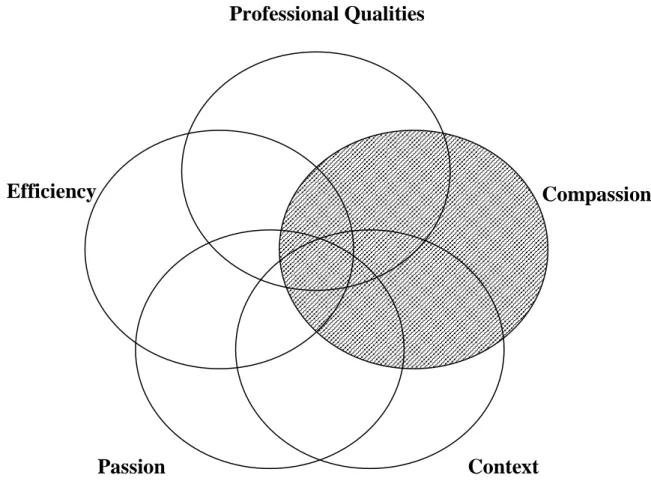
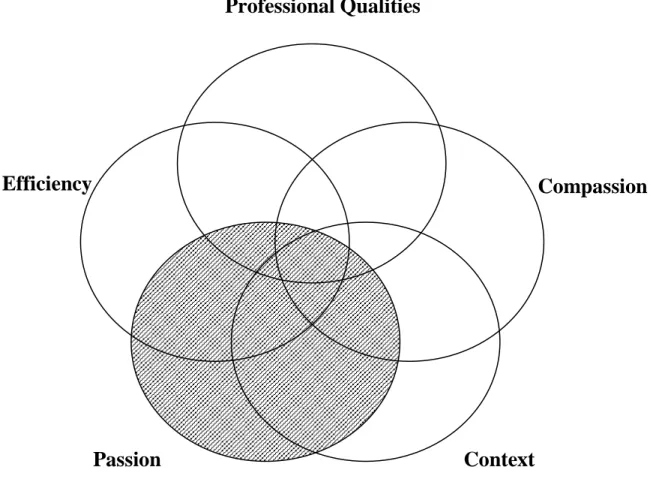
x
LIST OF FIGURES
Figure
1. Relationship between Highly Qualified Teachers
and Highly Effective Teachers...19
2. Conceptual Framework—Dimensions of Teaching...44
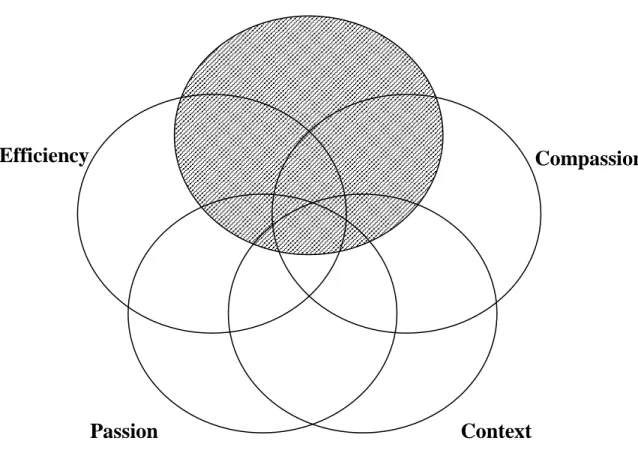
3. Interactions between Dimensions—Professional Qualities ...107
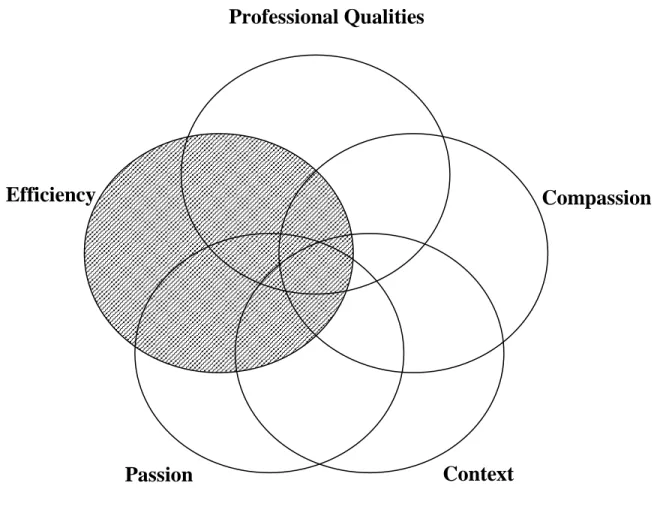
4. Interactions between Dimensions—Efficiency ...111
5. Interactions between Dimensions—Compassion ...113
6. Interactions between Dimensions—Passion ...114
1 CHAPTER I INTRODUCTION
Teaching is an intense activity. What type of person can simultaneously juggle subject matter, the management of time, materials, and the needs of individual students in order to structure learning encounters, manage transitions so as not to lose momentum, attend to health and safety concerns, and understand home and family circumstances to create the appropriate conditions for learning in today’s classrooms? With the exception of parenthood, the role of a teacher is the most vital one on earth. An effective teacher is a revolutionary.
2
The role of an effective teacher has evolved over the last several decades, from someone who transmits information, to someone who utilizes instructional strategies, to someone who facilitates student learning. Presently, in this high-stakes testing era, it is student achievement that is most often associated with teacher effectiveness.
What constitutes an effective teacher? Brookhart and Freeman (1992) reviewed 44 studies that focused on pre-service teachers. Data suggest that novice teachers view the nurturing and interpersonal aspects of a teacher's role as more important than the academic and pedagogical roles, but as they proceed in their programs, they become more focused on discipline issues and maintaining order. Mahlios and Mavson (1995) confirmed this finding by asking 134 entry-level elementary and secondary pre-service teachers to match a list of adjectives to their ideas of a teacher. The words most often cited were caring, understanding, creative, and enthusiastic. Yet, even in superior teacher preparation programs, humanist traits such as caring, kindness, or enthusiasm may be marginalized. Many teachers may graduate from esteemed universities and possess outstanding credentials, yet they are merely equipped to teach math or science—not children. Collectively, research recognizes the importance of a high quality teacher education program coupled with real world experiences in order to produce effective teachers; however, pre-service teachers’ beliefs are difficult to alter by coursework interventions and practicum experiences in teacher education programs. Teachers who do survive the transition between teacher education programs and the classroom often remark that the real learning has just begun.
3
teacher have the potential to influence student outcomes, there is no clear consensus about the relationship between specific teacher credentials and characteristics and teacher effectiveness (Goldhaber, 2002; Goldhaber & Brewer, 1999, 2000; Greenwald, Hedges, & Laine, 1996). Attributes that make teachers successful in the classroom are not strongly related to the teacher attributes that are typically measured in educational studies. Goldhaber and Brewer (1999) investigated the size of the relationship between various quantifiable education factors and student achievement and concluded that only about 3% of the contributions teachers make toward student achievement are associated with teacher degree level, experience and other readily observable characteristics. The remaining 97% consists of teacher qualities or behaviors that could not be separately isolated and identified.
An effective teacher is most often equipped with more than credentials; he or she also possesses high quality instructional skills, efficiency, compassion and passion. One needs only to walk the halls of an elementary school in order to affirm that teachers are provocateurs, entertainers, sentinels, and collaborators on a mission. How is it possible to incorporate these numerous responsibilities into the role of an effective teacher? Curiously, some research tells us that effective teaching may have more to do with innate ability than with learned skills and acquired knowledge (Ehrenberg & Brewer, 1994; Greenwald, Hedges & Laine, 1996).
Statement of the Problem
4
Berliner, 2002; Monk, 1994; Soar, Medley & Coker, 1983; Wenglinsky, 2002) suggest that there are aspects of teaching effectiveness that may be related to teacher education, certification status, and experience, these studies do not reveal much about teachers' perceptions or attitudes that make the difference in how their students perform. To the best of this researcher’s knowledge, most of the research (Adler, 1991; Ehrenberg & Brewer, 1994; Wayne & Youngs, 2003) does not seek to capture interactions among the multiple dimensions of teacher effectiveness; as a result, there are gaps in the research that still need to be explored. Wayne and Youngs (2003) identified only 21 empirical studies that examined the impact of teacher characteristics on student achievement. This is particularly important because some educational goals may not be adequately
measured by standardized achievement tests. Research also does not fully address evidence about teacher effectiveness at the elementary school level.
Purpose of the Study
The purpose of this study is to investigate the perceptions of effective teachers regarding the impact of the multiple dimensions of teaching—professional qualities, efficiency, compassion, passion, and context—on student success in the elementary school classroom.
Major Research Question
5
The following questions guided the process of inquiry:
1. How do professional qualities of the teacher impact student success in the elementary classroom?
2. How does efficiency impact student success in the elementary classroom? 3. How does compassion impact student success in the elementary classroom? 4. How does passion impact student success in the elementary classroom? 5. How does the school context impact student success in the elementary
classroom?
6
Definition of Terms
The following definitions are used for the purposes of this study:
Highly Qualified Teachers- Teachers who possess the minimum credentials of a bachelor’s degree, certification, and demonstrated subject matter knowledge. Highly qualified teachers meet the requirements of the No Child Left Behind Act (NCLB). Effective Teachers- Teachers whose students have demonstrated success based upon standardized test results.
Professional Qualities- Features of an effective teacher which include verbal ability, pedagogical knowledge, an understanding of developmental theories, instructional skills, and acquired years of teaching experience.
Efficiency- The ability to manage a classroom and organize for instruction.
Compassion- Interpersonal relationships that emphasize caring and honor mutual trust and respect.
Passion- Enthusiasm for learning and a motivation to succeed. Context- The school culture and its institutional norms.
CHAPTER II LITERATURE REVIEW
The challenges of today’s classrooms, along with educational research and professional standards have redefined the effective teacher of the twenty-first century (Baggini, 2005; Blackwell, Futrell & Imig, 2003; Cheers, 2001; Gill, 2005; Norris, 2004; Riley, 2003). The recent enactment of No Child Left Behind (NCLB) legislation and the implications of high-stakes testing indicate that teacher effectiveness is a timely topic worthy of research.
8
History of Effective Teaching Teaching as Transmission
In the mid 1970s, classrooms were teacher-centered, and teaching was simply viewed as the transmission of information. The process-product approach to research on teaching was popular (Fenstermacher & Richardson, 2005). The purpose of research was to identify effective generic teaching behaviors that could be used in teacher education and evaluation. Positivist educational research suggested an effective teacher used certain instructional behaviors to transmit knowledge and skills to students. Teachers were evaluated using low-inference behavioral measurement instruments. Researchers identified effective teachers on the basis of student scores on standardized tests. Brophy and Good (1986) compared less effective teachers with effective teachers; as a result, instructional constructs such as direct instruction, time on task, and academic learning time, were identified. Classroom organization and management were crucial in this evaluation model. Student effort was considered the teacher’s responsibility. Student time on task became as important as student achievement, and the construct of student engagement emerged as an attempt to bridge the task and achievement aspects of
teaching. A determination of an effective teacher in the mid 1970s was strongly affected by student achievement.
Teaching as Cognition
By the late 1970s, a new view of teaching began to emerge—teaching as
9
however, the psychological elements of teaching began to evolve. Knowledge about students, tracking individual progress, listening, observing and asking questions all played an important role. Specific subject areas such as reading, math, and science were defined. Effective teaching involved the cognitive ability to transform subject matter for students through pedagogical content knowledge. This required teachers to possess a strong foundational knowledge in subject matter. It became the teacher’s responsibility to adjust his or her teaching to meet the needs of the students. Less emphasis was placed upon student achievement, and an effective teacher was viewed as a professional decision maker with well-established routines (Berliner, 1983).
Teaching as Facilitation
10
No Child Left Behind—Highly Qualified Teachers
The aim of educational research is to provide data to support best practices. One problem with teacher effectiveness research is that it has become a political battleground. NCLB which was signed into law in 2002, has expanded the federal role in education and set requirements in place that affect every public school in America, including those in North Carolina. By establishing a comprehensive definition of a highly qualified teacher, NCLB has changed the language used today to discuss teacher qualifications. Highly qualified teachers, as defined by the federal guidelines of NCLB, are those who possess a bachelor’s degree from a four-year institution, hold full state certification, and
demonstrate competence in their subject area. While at first glance, these qualifications appear to be explicit and specific, it is important to note that college and university
programs are not equitable, teacher certification standards vary, and states have flexibility in developing assessments for teachers in order to demonstrate subject matter
competency. In this review of the literature, NCLB requirements will be discussed separately from the dimensions of teaching. It is assumed that all teachers have passed through this gateway and possess minimum credentials; therefore, degree type,
certification, and subject matter knowledge are discussed in this section of the literature review and are not included in the subsequent sections.
Bachelor’s Degree
11
highly qualified teacher is a bachelor’s degree. Currently, only 37 states require a content-specific bachelor’s degree for at least one of their initial certificates, while 13 states still have no content area bachelor’s degree requirements for any of their initial certificates or licenses. States that do not require a content area bachelor’s degree often require only content assessments. Minimum passing scores on teacher certification and licensing assessments generally are set by states at a level that is lower than the national median scores for these assessments. There has been little movement nationwide to raise the minimum required passing scores for state licenses. These standards of what teachers must know and be able to do and the policies related to certification and licensure vary from state to state.
Darling-Hammond (2000b) examined data from the 1993-94 Schools and Staffing Surveys (SASS) and data on student achievement from the 1990, 1992, 1994, and 1996 assessments in reading and mathematics administered by the National Assessment of Educational Progress (NEAP). She concluded that the education level of teachers shows a positive relationship with student achievement. Despite concerns that education majors may be less well prepared in their subject areas than are academic majors, other
researchers (Goldhaber & Brewer, 1997, Hanushek, 1986, 1989,1992; Murnane, 1983). have found no relationship between degree type and teacher performance. Kanstoroom and Finn (1999) note that college majors vary in rigor and a prospective teacher's college transcript may not confirm teacher knowledge.
Teaching Certification
12
multiple initial certificates and requirements that differ across each certificate. Presently, new teachers may enter the profession through two certification routes: traditional or alternative. Traditional programs are generally offered through a college of education at a four-year college or university. A traditional teacher preparation program curriculum typically combines subject matter instruction, pedagogy classes, and field experience. Even matriculation through a traditional program does not guarantee success. In 2005, 17 teacher education programs located in 11 states were identified as at risk or low performing. Alarmingly, two of which were in North Carolina (U.S. Department of Education, 2006).
The U.S. Secretary of Education’s report (2006) touts the development of alternative certification programs that are designed for individuals who have subject mastery but lack pedagogical and classroom management skills. These programs account for close to 20% of new teacher graduates. Those entering the initial certification process through an alternative route often teach while completing their pedagogy classes. Upon completion of all requirements of the alternative route to teacher certification, which includes sustained, intensive, classroom-focused professional development and
participation in a supervised mentoring program, participants generally are granted full state certification. Department of Education regulations determine when participants in alternative routes to teacher certification may be considered fully certified for the
purposes of highly qualified teacher status. Veteran teachers not deemed highly qualified can obtain certification through their states’ High Objective Uniform State Standard of Evaluation (HOUSSE) Procedures.
13
achievement (Darling-Hammond, 2000b; Darling-Hammond, Berry, & Thoreson, 2001; Darling-Hammond, Holtzman, Gatlin, & Heilig, 2005; Goldhaber & Brewer, 2000; Laczko-Kerr & Berliner, 2002; Monk, 1994; Wenglinsky, 2002). A study conducted by Laczko-Kerr and Berliner (2002) examined the relative effectiveness of uncertified teachers, including “Teach For America” teachers, and concluded that students of
uncertified teachers did less well on academic tests than those of comparably experienced certified teachers on mathematics, reading, and language arts tests. Darling-Hammond, Holtzman, Gatlin, & Heilig (2005) also found no instance where uncertified “Teach for America” teachers performed as well as standard certified teachers of comparable
experience levels teaching in similar settings. After controlling for student characteristics and prior achievement, as well as teacher experience and degrees, uncertified teachers and those in most other non-standard certification categories generally had negative effects on student achievement when compared with certified teachers. Essentially, uncertified teachers showed significant negative effects on student achievement.
On the other hand, opponents of teacher certification have argued that teacher effectiveness may be as much a function of general academic ability or strong subject matter knowledge as it is related to any specialized training in how to teach (Ballou & Podgursky, 2000; Finn & Madigan, 2001; Guyton, Fox, & Sisk, 1991; Hawk & Schmidt, 1989; Kanstoroom & Finn, 1999). Hawk and Schmidt (1989) compared 19 alternatively certified teachers with 53 traditionally certified teachers and found that the two groups were almost equally successful on several dimensions of the National Teaching
14
certified teachers with 26 traditionally certified teachers and concluded that the teachers were similar on almost all measures.
In an effort to raise standards for prospective teachers, some states are moving away from simply awarding a teaching certificate to individuals who take specific courses or meet a minimum number of hours of credit toward performance-based standards. Teacher candidates must demonstrate that they possess the necessary
knowledge, skills, and abilities to teach today’s diverse student population. A number of states have recently adopted national standards that define what teachers should know and should be able to do. Some states call for prospective teachers to compile portfolios or artifacts that demonstrate their mastery of state standards. Ultimately, certification requirements for highly qualified teacher status are determined by each state, resulting in tremendous inconsistency.
15
Overall, the research provides support for the conclusion that there are alternative programs that produce cohorts of teachers who are ultimately as effective as traditionally trained teachers. On the other hand, because of their limited pre-service training,
alternative route participants may experience more difficulties than traditionally prepared graduates at the beginning of their teaching assignments.
Subject Matter Competency
The final requirement of NCLB, subject matter competency, is also a fervently contested requisite of a highly qualified teacher. According to Hurwitz and
Hurwitz, (2005) the NCLB definition of highly qualified teachers focuses almost entirely on content knowledge while ignoring the importance of child development and pedagogy. Content knowledge and measures of it are time-sensitive; some content knowledge has a limited lifespan, suggesting that measuring content knowledge may be more relevant for beginning teachers than for experienced teachers. Some studies (Allen, 2003; Sanders, 2004) do provide moderate support for the importance of solid subject matter knowledge; however, this research generally does not indicate how much subject matter knowledge is important for teaching specific courses and grade levels. The majority of research studies (Druva & Anderson, 1983; Goldhaber & Brewer, 2000; Monk 1994) examine the
16
areas of the elementary school curricula. The Department of Education relies upon research that shows that subject matter mastery is essential for effective teaching (Allen, 2003; Sanders, 2004). This may be true for secondary math and science, as researchers did conclude that high school students’ science and math achievement was positively related to the teacher’s content preparation (Druva & Anderson, 1983; Goldhaber & Brewer, 2000; Monk 1994).
The states have the authority to establish the types of assessments required for certification and the minimum passing scores. Nationally, 44 states rely on the resources of two different testing companies—the National Evaluation Systems (NES) and the Educational Testing Service (ETS)—to provide reliable and valid assessments. A few states have created their own assessments to supplement those provided by the national testing companies. Currently, all but seven states offer testing programs (U.S.
Department of Education, 2006). Despite attempts to ensure subject knowledge mastery, the passing score requirements are generally low. This leads one to question the value of testing to determine how well teachers are prepared for the classroom. Even though there has been increased attention given to the high pass rates and the low passing scores on these assessments, states have not raised their minimum passing scores. According to the North Carolina Public Schools, Institutions of Higher Education Report for 2005-2006, the pass rate for elementary educators in North Carolina was 98%. These assessments utilize a multiple-choice format which may not be very useful for assessing teachers’ ability to analyze and apply knowledge.
17
ambiguity. Essentially, each state is responsible for setting guidelines and establishing criteria that determine who is a highly qualified teacher. Given that NCLB has only been in existence since 2002, there is a lack of research verifying its merit. However, the Education Department is investing considerable resources on research in the areas of teacher quality and teacher preparation programs. Additionally, the Institute of
Education Sciences (IES) within the Department of Education is supporting a number of research and evaluation studies on teacher quality that will provide valuable information for the preparation of effective teachers.
In conclusion, a highly qualified teacher is not necessarily a highly effective teacher. Teacher preparation is one of the most popular aspects of teacher quality among policy makers; as a result, there is considerable debate in the policy arena about the appropriate requirements for teacher preparation programs and the level of degree
18
important prerequisite to effective teaching, critics maintain that it is not a sufficient indication of the range of knowledge and skills needed to instruct and manage groups of children. Although Strauss and Sawyer (1986) found that North Carolina's teachers' average scores on the National Teacher Examinations (NTE) had a strong influence on average school district test performance, other research (Ashton & Crocker, 1987) has found no consistent relationship between subject matter knowledge and teacher performance with the exception of math and science at the secondary level.
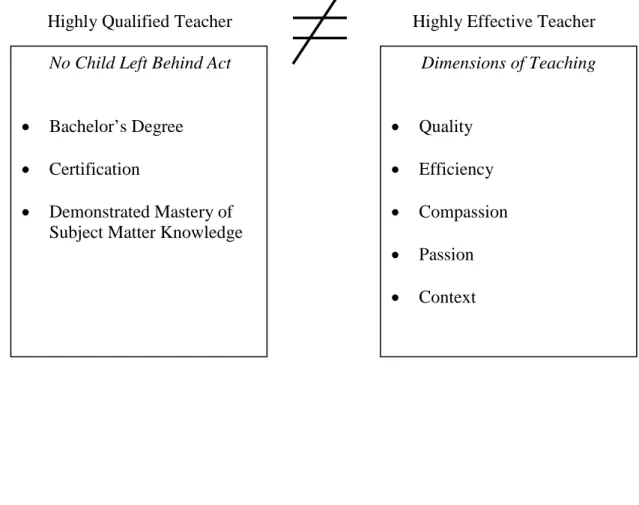
Although it may be obvious that the minimum credentials of a bachelor’s degree, certification, and subject matter knowledge are critical components of an effective teacher, they are not enough. NCLB highly qualified teacher status does not guarantee a highly effective teacher (see Figure 1). An effective teacher must also possess
characteristics of a quality teacher. Quality teachers make measurable and substantial differences in student learning, but most studies do not fully explore what teachers actually do that makes learning happen. Improved student achievement depends on improved classroom teacher and teaching quality. With current concerns about high-stakes testing, research in this area has many implications for educators.
Professional Qualities
19
(1994) observed higher test scores for students whose teachers attended selective
undergraduate colleges. Ferguson and Ladd (1996) found that teacher scores on licensure and aptitude exams were positively correlated with better student outcomes. On the other hand, Soar, Medley, and Coker (1983) reviewed studies and concluded little or no
relationship between student achievement and teacher intelligence. However, some conclusions may be drawn from research findings. A positive relationship does exist between student achievement and teachers who possess high verbal ability, pedagogical knowledge, an understanding of developmental theories, teaching skills and experience.
Figure 1. Relationship between Highly Qualified Teachers and Highly Effective Teachers.
No Child Left Behind Act
• Bachelor’s Degree • Certification
• Demonstrated Mastery of Subject Matter Knowledge
Dimensions of Teaching
• Quality • Efficiency • Compassion • Passion • Context
20 Verbal Ability
Since communication skills are a part of verbal ability, a teacher with higher verbal ability is better able to convey concepts and ideas to students in a clear manner. A compelling and consistent body of research (Coleman, Campbell, Hobson, McPartland, Mood, Weinfeld, & York, 1966; Darling-Hammond, 2000a; Ehrenberg & Brewer, 1994; Greenwald, Hedges, & Laine, 1996; Hanushek, 1992; Murnane 1985) shows that a
teacher’s verbal aptitude correlates with better student achievement results. These studies have found that the verbal ability of the teacher accounts for more variance in student achievement than any other measured characteristic. In a 50-state survey, Darling-Hammond (2000a) confirmed a positive significant relationship between student achievement and teachers' measured verbal ability.
21 Pedagogical Knowledge
Studies of pedagogical knowledge have found a strong positive relationship between student achievement and teacher knowledge (Ashton & Crocker, 1987; Brown, Smith, & Stein, 1995; Darling-Hammond, 2000b; Evertson, Hawley, & Zlotnik, 1985; Greenwald, Hedges, & Laine, 1996; Guyton & Farokhi, 1987; Monk, 1994). Evertson, Hawley, and Zlotnik (1985) report a consistent positive effect of teachers’ formal
education training on student achievement. Similarly, Guyton and Farokhi (1987) found consistent, strong, positive relationships between teacher education coursework and teacher performance in the classroom. Teacher education appears to influence the teacher’s abilities to use teaching strategies that respond to students’ needs and learning styles. Drawing upon data from the Longitudinal Study of American Youth, Monk (1994) concluded that teacher coursework in pedagogy was found to contribute positively to student learning and sometimes had more powerful effects than additional preparation in content areas. The National Assessment of Educational Progress (NAEP, 1994), which documents how specific kinds of teacher learning opportunities correlate with student achievement, concluded that the relationships between specific teaching practices and student achievement were often quite pronounced. Darling-Hammond (2000b) found that teachers who have greater knowledge of teaching and learning are more highly rated and are more effective with students. An analysis that synthesized findings from a group of studies showed that teachers with pedagogical training performed better than those who entered teaching without such training (Greenwald, et. al., 1996).
22
professional development may also account for higher levels of student achievement (Brown, Smith, & Stein, 1995). Pedagogical practices should complement child developmental theories.
Understanding of Developmental Theories
It is imperative for an elementary teacher to possess a fundamental understanding of developmental theories. Children who are educated by teachers with specialized training in child development have been found to be more sociable, exhibit a more developed use of language, and perform at a higher level on cognitive tasks than children who are cared for by less qualified adults (Berk & Winsler, 1995; Lobman, Ryan,
McLaughlin, & Ackerman, 2004). Nearly all contemporary theories of instruction that focus on higher-order thinking skills and the importance of prior knowledge are at least partially constructivist theories. The constructivist perspective of readiness and
development was advanced by theorists such as Piaget, Vygotsky, and Dewey. Although their work varies greatly, each articulates a similar context of learning and development. They are consistent in their belief that learning and development occur when young children interact with the environment and people around them. Researchers (Chung & Walsh, 2000) have come to understand child development and the learning process as articulated by constructivists. However, this view has not been widely translated into practice. A teacher who is unable to put theory into practice will not be an effective teacher.
Instructional Skills
23
(Brophy & Good, 1986; McLaughlin & Talbert, 1993; Pintric, 1995; Wenglinsky, 2000, 2002; Zimmerman, 1990). Elements of the teaching process such as clarity of
explanations and questioning techniques have been linked to effectiveness in teaching. Literature on instruction suggests that effective teachers regularly integrate inquiry-based, hands-on learning activities, critical thinking skills, and assessments into instruction. Wenglinsky (2000) found that students whose teachers integrated hands-on learning and frequent in-class teacher assessments into their lessons tested 72% ahead of their peers in math and 40% ahead in science. Students whose math teachers stressed critical thinking skills such as writing about math scored 39% higher. In a subsequent study, Wenglinsky (2002) investigated the effects of classroom practices on student achievement. He determined that hands-on learning and problem solving were positively related to student achievement. The literature on effective teaching emphasizes the importance of high-order thinking skills. Teaching higher-high-order thinking skills involves not so much conveying information as conveying understanding. Research suggests that this
24
in size to that of background characteristics. Effective teaching skills are closely linked with pedagogical knowledge and classroom experience, and they are difficult to isolate.
Researchers, policymakers, and teachers themselves agree that teacher quality matters. But defining, measuring, and identifying teacher quality is a far more controversial task. In an education environment focused on improving student achievement, the ultimate measure of teacher quality is the impact the teacher has on student learning. Educational research has failed to reach a consensus over which, if any, readily identifiable teacher characteristic is most associated with student achievement. It may be difficult to judge teachers’ effectiveness outside of direct observations of their teaching.
A factor that appears to set effective teachers apart from other teachers is usually their training in teaching methods and in child and adolescent development. The research provides support for the conclusion that preparation in pedagogy can contribute
significantly to effective teaching, particularly subject specific courses and those
designed to develop core skills, such as classroom management, student assessment and curriculum development. Less clear is how such knowledge and skills are best acquired through coursework or field experience. Also unclear is the impact, if any, of other kinds of pedagogical coursework, such as classes in child development or learning theory. Nor does the research provide much insight as to whether certain kinds of coursework might be particularly helpful for teaching racially or ethnically diverse students or students in low-performing schools.
In conclusion, a high quality teacher demonstrates strong verbal skills,
25
experience and teaching ability also contributes to teacher effectiveness. A review of research by Darling-Hammond (2000a) confirms these findings. Additionally, a high quality teacher may possess these characteristics yet still lack effectiveness.
Teaching Experience
An experienced teacher may have an edge over an inexperienced teacher when it comes to effectiveness (Feiman-Nemser, 2001; Greenwald, et.al., 1996; Haycock, 2000; Murnane, 1975; Murnane & Phillips, 1981). Experienced teachers are better able to apply a range of teaching strategies, differentiate instruction, and present material in a more organized manner (Haycock, 2000). Research has been consistent in finding positive correlations between years of teaching experience and higher student
achievement. A comprehensive analysis by Greenwald et. al. examined data from 60 studies and found a positive relationship between years of teacher experience and student test scores. Their findings suggest that teachers with more than five years in the
classroom appeared to be the most effective. Conversely, inexperience was shown to have a strong negative effect on student performance. Ultimately, experienced teachers produced higher student test scores.
26 Efficiency
Another critical dimension of teaching is efficiency. Research on teacher efficiency is, for the most part, theoretical. There is a consensus among theorists that efficiency contributes to effectiveness (Bennacer, 2000; Bohn, Roehrig & Pressley. 2004; Brophy & Good, 1986; Marzano, Pickering, & McTighe, 1993; Stronge, 2002; Wise & Darling-Hammond, 1995; Wong & Wong, 1998). Bohn, Roehrig, and Pressley (2004) examined six elementary school teachers in an attempt to showcase the need for
organizational activities early in the school year. In their study, two teachers who spent more time establishing routines and procedures in the first two days of school were compared to four other teachers. Mid-year observational outcomes for the two teachers were deemed more effective and included greater student achievement, as evidenced by higher-level reading and writing, and elevated student engagement. Efficiency, for the purposes of this study, includes organizational skills and classroom management. Classroom Management
Classroom management should be designed to support instruction; however, classroom management is one of the most perplexing and difficult aspects of teaching. Research on classroom management (Ayers, 2003; Fenwick, 1998; Hoover-Dempsey, Battiato, Walker, Reed, DeJong & Jones, 2001; Jones, 1996; Raider-Roth, 2005; Watts & Erevelles, 2005) suggests that teachers who approach classroom management as a
27
implementation of classroom management. Effective classroom management begins by planning the use of space, time, procedures, instruction, and student behavior.
In managing classroom space, teachers must create an environment in which students feel safe while balancing order with activity. In addition to arranging the physical setting, effective managers establish procedures, monitor students, and most importantly, maintain learning momentum. Effective managers are prepared and keep students actively involved in the teaching and learning process by designing effective instruction (Stronge, 2002). Literature (Patrick, Turner, Meyer & Midgley, 2003) informs us that effective classroom managers are able to orchestrate smooth transitions and strike a balance between variety and challenge. They are able to multi-task, and they possess a heightened awareness of all actions and activities in the classroom. Freiberg, Stein, and Huang (1995) researched the positive effects of a classroom management program on student achievement in inner-city elementary schools. The effects included better student attendance, positive attitudes, and enhanced student achievement.
Effective classroom managers skillfully organize materials, maintain practical procedures, and maximize instructional time. Organized teachers make use of pacing guides and calendars to assist with planning. They follow a consistent schedule and handle administrative tasks efficiently. Most importantly, organized teachers identify clear learning objectives and systematically develop learning activities that reflect higher-level cognition skills (Brophy & Good, 1986; Marzano et al., 1993).
28
anticipating potential discipline problems, and they resolve minor disruptions quickly (Brophy & Good, 1986; Wong & Wong, 1998). However, it is important to keep in mind that the teacher retains the ultimate responsibility in the classroom, and when appropriate, must exert authority and enforce rules (Brophy, 1999).
Most research on classroom management has attempted to identify teacher strategies used to bring about student engagement and limit disruption, not to draw connections between classroom management and student achievement. It stands to reason that students must be engaged in order for learning to occur and that disruptive behavior is likely to interfere with instructional activities. As classrooms become more diverse in nature, the need for effective classroom management becomes more critical. Ultimately, the management style that teachers employ should be congruent to their instructional goals, the activities, and the characteristics of the students (Emmer &
Stough, 2001). Effective classroom managers can best be described as having eyes in the back of their heads. Classroom management and organizational skills complement each other in effective teaching.
29
organizational ability, these characteristics alone do not guarantee student achievement. Thus, an efficient teacher is not necessarily an effective teacher.
Compassion
Some aspects of effective teaching can be cultivated, while an individual’s personality is difficult to alter. A teacher’s personality plays an important role in the students’ experience in the classroom. Studies indicate what kind of people effective teachers are (Brophy & Good, 1986; Evans, 2002; Wong & Wong, 1998). Compassion is repeatedly cited as a trait of an effective teacher. For the purposes of this study,
compassion will be defined as cultivating interpersonal relationships that emphasize caring and honor mutual trust and respect. A compassionate teacher demonstrates sincere interest in his or her students and cares deeply about them.
Caring
The desire to be cared for is almost certainly a universal human characteristic. Caring requires knowledge and skill as well as characteristic attitudes (Noddings, 1992). Noddings suggests that caring is the bedrock of all successful education. A caring teacher communicates high expectations and shows concern for students’ physical and emotional well-being. A caring teacher not only creates a supportive classroom
30
warmth and support were related to student behaviors such as enthusiasm for learning, initiative, and pro-social interactions. In a later study, Battistich et al. (1999) concluded that feeling cared for and supported by others in a community is a positive force that promotes motivation to value learning. Furthermore, the study confirmed that classrooms and schools that functioned as caring communities of learning exhibited warm, stable, supportive relationships. The students were empathetic to others. They respected their teachers and had a sense of pride in their classrooms. Most importantly, they valued the talents and differing perspectives of their classmates. The support and encouragement of a caring school culture is beneficial to all, but may be especially important for students who have traditionally been viewed as least likely to succeed.
We learn from those we love. Children who are cared for at home will respond to teachers spontaneously (Noddings, 1992). Although there are no large quantitative studies describing Noddings’ “ethic of caring” in schools, a focus on caring may be even more vital for students at risk for school failure (Barton, 2003; Delpit, 1995; Ladson-Billings, 1994; Maehr & Anderman, 1993; Patterson & Patterson, 2004; Peart &
31
on standardized tests of reading and mathematics despite high poverty rates and highly mobile student populations. The respondents expressed their belief that teachers and students are most productive when they work in a context of caring and support. This context of caring is especially crucial for African American children (Barton, 2003; Delpit, 1995; Sanacore, 2001, 2004). As educators focus their efforts on eliminating the achievement gap between black and white students, the impact of caring must not be underestimated.
32
intellectual pressures, educators should demonstrate genuine caring as they act in specific ways to enhance achievement. An important aspect of genuine caring is for educators to develop an understanding of and a sensitive response to their students’ culture. Without such understanding and sensitivity, some of the cultural obstacles to advancing minority students’ achievement will not be eliminated.
Educators generally agree that a caring context honors individuals’ needs. Delpit (1995) points out the importance of accommodating students’ needs on two levels. First, African American learners are culturally different and require a culturally sensitive response within their learning environment. Second, educators must recognize that the language a student brings to school is intimately connected with loved ones, community, and personal identity. Black English should be valued as it communicates a sense of love, warmth, and affection from family and friends. These two considerations for caring will go a long way in helping African American students achieve success in school by helping them to maintain their own cultural identity. Thus, they will be less prone to alienation from school culture (Sanacore, 2004). These considerations are not intended as stereotypic generalizations of what minority students need to succeed in school; they are reminders for educators to be open to new ways of thinking about and teaching children different from themselves. Caring stresses the creation of trusting relationships as the foundation for building an effective academic and social climate for schooling. Trust and Respect
33
1983; Rogers & Renard, 1999; Ryan & Patrick, 2001) treating students with trust and respect is the basis for a relationship-centered framework that motivates children to learn. Students are influenced by and model the social interactions displayed by teachers and other adults in their schools. Kratzer (1997) studied a caring community of 1,170 students in an urban elementary school in Los Angeles, California. The ethnic composition of Roscoe Elementary included 93% Hispanic students, 2% African
American students, 2% Filipino students, and 3% White students. Her findings suggested that a climate of mutual trust and respect was central to the cultivation of the school’s caring community. A climate of mutual trust and respect pervaded the entire institution through acts of collaboration and collegiality among teachers. Roscoe administrators consciously modeled attitudes of respect and trust. A climate of tolerance toward differing opinions existed at the school. This dynamic was not limited to adult-adult interaction. After 250 hours of participant observation, Kratzer documented that almost every classroom radiated an atmosphere of warmth and affection, and that there were few interpersonal conflicts between students. The Roscoe staff embraced the belief that a truly caring community would help all its members to become competent. This
competence included, but was not limited to, academic competence. By broadening the definition of effectiveness to include trust and respect, a school will not only examine test scores, but also relationships (Lightfoot 1983).
Children learn ways of relating to people by watching others. Students look at teachers to see if they are treating others with respect. Students want respect for
34
them learn, teachers have the potential to positively influence the learning experiences of their students. Evans (2002) conducted ethnographic interviews of 14 elementary
students. Her participants indicated that effective teachers were helpful, fair, caring, and fostered student independence. The participants were savvy enough to distinguish between effective and popular teachers, citing popular teachers as fun and nice. Children expect to be cared for, respected, and helped to succeed.
All students deserve a compassionate teacher—someone who cares about them and respects them. Students must feel safe in their relations with teachers. It must be acceptable to admit failure, frustration, and confusion. If student success is a determinant of effective teaching, then classrooms must be student-centered. Students must believe that their success is the teacher’s primary concern. A compassionate teacher exerts tremendous influence in the life of a student. A teacher’s personality influences his or her teaching practices. The qualities of care, kindness and respect are desirable traits that contribute to student success. According to Peart and Campbell, (1999) academic
success of at-risk students is enhanced if a personal connection that communicates respect and caring exists between the teacher and the student. Rogers and Freiberg (1994) have identified a caring classroom climate and trusting relationships as
35 Passion
Students expect their teachers to demonstrate passion for teaching and learning. Students spend an enormous amount of time—six hours a day, five days a week, nine months a year, for 13 years—under the direction of a teacher. A teacher’s knowledge, feelings, and attitudes eventually become integrated into his or her teaching, creating the possibility for disaster or success. Should a teacher not like teaching, students may emerge from the classroom with a dislike for education. When a teacher loves his or her profession, students learn to love education. A passionate teacher takes pleasure in teaching. For the purposes of this study, passion will be defined as enthusiasm for learning and motivation to succeed.
Enthusiasm
Students take cues from teachers about how to respond to school activities. An enthusiastic teacher induces students to value the topic or activity. An enthusiastic teacher demonstrates dynamic vigor and a sincere interest in the subject (Good & Brophy, 2000).
36
who are highly intrinsically motivated. In an attempt to ascertain at-risk students’ perceptions of teacher effectiveness, Peart and Campbell (1999) interviewed 47 African American adults about teacher characteristics that facilitated school success. The
respondents indicated the ability to communicate with genuine enthusiasm was essential. Although enthusiasm is considered a desirable teacher characteristic, research on the effects of teacher enthusiasm has produced contradictory findings. A study
conducted by McKinney, Larkins, Kazelskis, Ford, Allen, and Davis (2001) suggested that pupil achievement was unaffected by variation in the manifest enthusiasm of fourth grade teachers. Furthermore, McKinney et al. concluded that teacher enthusiasm
contributed to marked negative effects on classroom discipline. Their findings imply that students behave more appropriately when the teacher conveys a medium level of
enthusiasm.
In the absence of a learning context that supports students’ needs, teacher
enthusiasm is not a substitute for students’ intrinsic motivation to learn; however, teacher enthusiasm may be an effective means for mobilizing student excitement and curiosity Schaufeli, Maslach & Marek, 1993). Passionate teachers exude enthusiasm.
Motivation
Enthusiasm may be the spark that ignites interest, but motivation fuels the fire of learning. A passionate teacher is also a motivated teacher. Motivation is a dynamic force that sustains vitality. According to Sederberg and Clark, (1990) effective teachers
37
Psychologists frequently use motivational concepts to account for the initiation, direction, intensity, and persistence of behavior (Katzenbach, 2006; Schlechty, 2002). Generally, people will not invest effort in tasks that do not lead to valued outcomes even if they know that they can perform the tasks successfully, nor do they invest in highly valued tasks if they believe that they cannot succeed on the tasks (Good & Brophy, 2000; Kinzie,1990). In order to be motivated to learn, one must have both opportunity and encouragement.
Research on motivation (Brophy, 1983; Brophy & Good, 1986; Good & Brophy, 2000; Marzano et al., 1993; McClelland, 1985) has attempted to identify the
characteristics associated with highly motivated personalities. According to McClelland, certain individuals could be characterized by their desire to be successful. Motivated individuals demonstrated specific behaviors that identified them as “achievers.” For a teacher, this attitude can carry over into the classroom and encourage student success. Thus, a motivated teacher creates situations for all students to succeed.
Effective teachers develop goals, beliefs, and attitudes in students that will sustain a long-term involvement and that will contribute to quality involvement in learning. Effective teachers encourage students to value the process of learning and the
improvement of their skills, and to develop a long-term commitment to learning (Brophy, 1983). Motivated teachers routinely model interest in learning through interactions with students (Garcia & Pintrich, 1991; Zimmerman, 1994). This modeling encourages students to value learning as a self-actualizing activity that produces personal satisfaction and enriches one’s life (Good & Brophy, 2000). It is important to recognize that
38 Context
School contexts vary in the opportunities that they provide for differential student-teacher interaction. Classrooms, nested within schools, have climates that are directly or indirectly influenced by wider school contexts. The literature on effective schools suggests that school culture and climate are central to academic success. Research has found a close correlation between positive school culture and academic quality (Cheng, 1993; Fyans, Jr., & Maehr, 1990; Mackenzie, 1983; Purkey & Smith, 1983; Thacker & McInerney, 1992). The literature indicates that a student’s chance for success in learning cognitive skills is heavily influenced by the climate of the school. An academically effective school would likely have clear goals related to student
achievement, teachers who hold high expectations, and a school context designed to maximize opportunities for student learning. The school context comprises the final dimension of teaching and includes the school culture and its institutional norms. School Culture
Many schools today continue to operate under the old factory model that assumes if teachers are provided with the right curriculum, the right textbooks, the right schedule, and the right students, then learning will naturally occur. Obviously, this model has proven to be unsuccessful and unrealistic. Fortunately or unfortunately, teacher effectiveness may be significantly impacted by the school culture. Every organization has a culture—the history and underlying set of unwritten expectations that shape everything about the school. A school’s culture influences what people believe and the way they behave. School culture is the set of norms, values, beliefs, rituals, and
39
communal events to celebrate success, to provide closure during collective transitions, and to recognize people's contributions to the school. School culture encompasses symbols and stories that communicate core values, which in turn are vital for a unifying culture (Leader, 2004). Deal and Peterson (1999) explain culture as the unwritten rules, traditions, and expectations that permeate the way people act, dress, and talk. School culture is not simply an abstract concept, but a public expression. A school’s ambience is a result of its cultural history.
Handy and Aitken (1986) investigated schools and identified four main types of culture: club, role, task, and person. Club culture is similar to a spider’s web with the leader at the center and concentric circles of lessening intimacy radiating outward. A strong personality is crucial for this type of culture. Role culture is more formal and focuses on routine. The roles are pillars that support the school structure. A school with a role culture often struggles with change. The task culture is comprised of a group of talents that function in problem-solving teams. There is minimal bureaucracy, and the school is usually friendly and forward-looking. The person culture clusters the talents of individuals into a well functioning organization. Handy and Aitken suggest that most organizations are actually a mixture of cultures. A school’s culture has the potential to make a positive difference in the lives of students. For years, educators debated the variables influencing student achievement. Early research suggested that school climate has little effect on achievement (Coleman, Campbell, Hobson, McPartland, Mood, Weinfeld, & York, 1966).
Current research has identified the effects of school culture on student
40
Studies suggest that the implementation of a clear mission statement, shared vision, and school-wide goals promotes increased student achievement. Strahan (2003) examined the dynamics of school culture in three elementary schools in North Carolina that have beaten the odds in improving low-income and minority student achievement. Strahan concluded that all three schools connected values, beliefs, and practices in developing a shared stance toward learning. This stance emphasized a shared sense of responsibility. Over the three-year study, participants clearly articulated values and beliefs regarding their mission. Students are not the only beneficiaries of a positive school culture.
School culture also correlates with teachers' attitudes toward their work (Darling-Hammond & Sclan, 1996). In a study that profiled effective and ineffective
organizational cultures, Cheng (1993) found stronger school cultures had more motivated teachers. Teachers also experienced higher job satisfaction and increased productivity in an environment with shared participation, strong organizational ideology, charismatic leadership, and intimacy. Hargreaves (1994) confirmed that teachers who have very positive perceptions of one another, the students, and their community tended not to want to leave their school. It may be assumed that such a culture is a positive thing that will pay dividends in terms of student achievement, morale, and personal growth.
41
ongoing improvement in their professional practice in order to ensure that each student receives the highest quality of education possible (Pugach & Johnson, 2002).
A positive culture reinforces learning, commitment, and motivation, is consistent with the school's vision, and is the key to a school's success. A school with a positive professional culture is characterized by meaningful staff development, successful curricular reform, and the effective use of student performance data. In these cultures, student learning thrives as a high-performance culture exhibits a shared responsibility for the learning of all students. Teachers' connections to the profession and to their schools are strengthened by high-quality interpersonal relationships. Teachers are far more effective in their positions when they feel supported by administrators, have strong bonds of connection to colleagues, and are aggressively pursuing a collective vision for student learning about which they feel a commitment.
School culture communicates important messages for peer group norms, student interaction, and student-teacher interaction. Teachers have traditionally shouldered most of the burden of motivating students toward academic achievement; however, the
influence of school culture as a conduit for motivating students toward academic
42
classroom contexts, however are factors that educators can control. According to Roach and Kratochwill, (2004) a crucial need in most school improvement processes is the investigation of the school culture and its underlying values. Culture is a usable tool in schools, where relationships tend to hold more power than official roles and titles. School context is critical and therefore, must be included in the multiple dimensions of effective teaching.
Conclusion
Teacher effectiveness is an elusive concept. Researchers have spent decades attempting to identify the characteristics and attributes that distinguish highly effective teachers from their peers. The concept of effectiveness has evolved over the last 30 years. Straight rows of desks and chalk wielding teachers have given way to cooperative learning groups and facilitators. The challenges of today’s classrooms demand a
different type of teacher.
43
As a teacher continues on the path toward effective teaching, he or she acquires teaching skills and experience. These two characteristics may be enhanced if the teacher also has strong verbal skills and pedagogical knowledge. At this juncture, the teacher may be described as a high quality teacher. The journey to effectiveness may be abridged if a teacher is also highly efficient. The ability to manage a classroom and organize concepts and materials for effective instruction is no small feat. For some teachers, the path ends here. Only the teachers who are compassionate and passionate are able to complete the journey to effective teaching. Without a personal connection, the journey has been for naught.
The context in which a teacher works has the ability to contribute to or sabotage his or her effectiveness. According to Lightfoot, (1983) “good” schools have a common bond and a clear purpose. “Good” schools inspire devotion and loyalty in teachers and students. “Good” schools also share a theme of nurturance and encourage teacher growth. The way in which a school treats its weakest members is a clear example of care,
concern, and empathy. A caring, collaborative school culture positively impacts student learning and increases the satisfaction level of teachers as well as students.
44
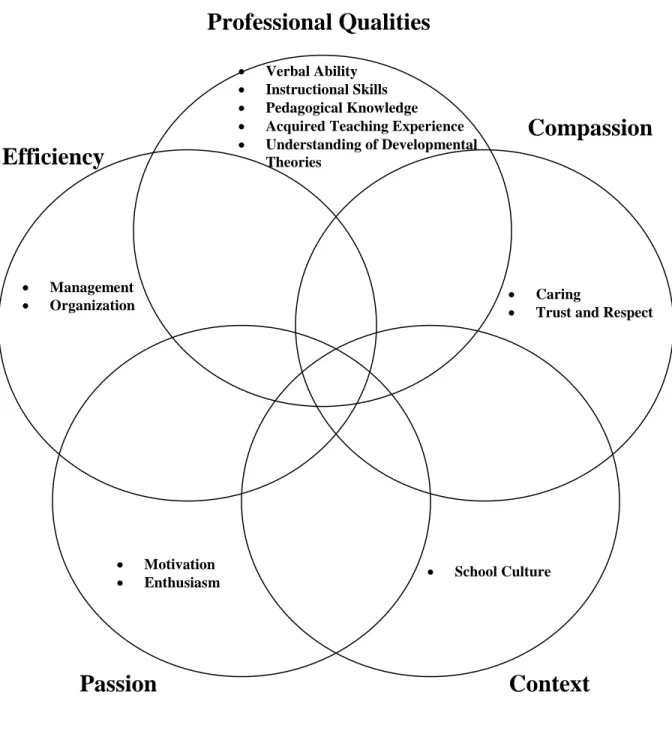
Figure 2. Conceptual Framework—Dimensions of Teaching
• Verbal Ability
• Instructional Skills
• Pedagogical Knowledge
• Acquired Teaching Experience
• Understanding of Developmental Theories
• Caring
• Trust and Respect
• School Culture
• Motivation
• Enthusiasm
• Management
• Organization
Professional Qualities
Compassion
Passion
Context
45
Conceptual Framework
Figure 1 depicts the relationship between the federal government’s highly qualified teacher and a highly effective teacher as determined by student success. Figure 2 represents the conceptual framework used to guide this study. A highly qualified teacher is not necessarily a highly effective teacher. There is considerable debate in the political arena about the appropriate requirements for teacher preparation programs and the level of degree teachers should hold. Yet, research (Darling-Hammond 2000b; Murnane, 1985) has found no consistent relationship between degree type and teacher performance. Certification requirements differ among states, resulting in inconsistency. Additionally, studies (Allen, 2003; Ashton & Crocker, 1987; Druva & Anderson, 1983; Goldhaber & Brewer, 2000; Monk 1994; Sanders, 2004) have found no consistent relationship between subject matter knowledge and teacher performance, with the exception of math and science at the secondary level. Although it may be obvious that the minimum credentials of a bachelor’s degree, certification, and subject matter knowledge are critical components of an effective teacher, they are not enough. NCLB highly qualified teacher status does not guarantee a highly effective teacher. For the purposes of this study, the requirements of NCLB are considered prerequisites of effective teaching and are not included in the five dimensions of teaching.
46
educational studies (Goldhaber, Brewer & Anderson, 1999). In an effort to determine what role each dimension of teaching plays in the elementary classroom, it is critical to examine the perceptions of effective teachers in order to ascertain whether the five dimensions of teaching complement or conflict with each other in the pursuit of the ultimate goal—student achievement.
The first circle labeled “Professional Qualities” includes instructional skills, verbal ability, pedagogical knowledge, and an understanding of developmental theories. In addition, a quality teacher is usually a veteran teacher with some teaching experience. These qualities alone do not ensure an effective teacher.
The circle labeled “Efficiency” includes the observable traits of classroom management skills and organizational skills. There is a consensus among theorists that efficiency contributes to effectiveness (Brophy & Good, 1986; Marzano, Pickering & McTighe, 1993; Wise & Darling-Hammond, 1995; Wong & Wong, 1998; Stronge, 2002). Efficiency is critical to student success, as an orderly, organized classroom environment that is free from discipline problems provides for maximum learning time. However, efficient teachers are not necessarily effective teachers.
47
respect. Although compassion is an admirable quality, it does not guarantee student success.
The fourth circle labeled “Passion,” encompasses the characteristics of enthusiasm and motivation. Enthusiastic teachers seek leadership roles and work collaboratively with colleagues. Enthusiastic teachers also seek professional
development opportunities, while a motivated teacher models initiative and risk-taking. A motivated teacher is resourceful and maintains a high-quality work ethic. Effective teachers are passionate about learning and in turn motivate students. Yet, passion alone does not ensure effectiveness in the classroom.
The last circle, labeled, “Context” represents the culture of the school. Every organization has a culture, that history and underlying set of unwritten expectations that shape everything about the school. A school culture influences the ways people think, feel, and act. School culture is the set of norms, values and beliefs, rituals and
ceremonies, symbols and stories that make up the personality of the school. The
assumption is that when teachers work together to achieve a common vision, instructional practices will be impacted in important ways. In collaborative working environments, teachers have the potential to create the collective capacity for initiating and sustaining ongoing improvement in their professional practice to ensure that each student receives the highest quality of education possible (Pugach & Johnson, 2002).
48
student success in their classroom. Subsequent data analysis utilized cross-case analysis to identify predominant themes and overlapping topics. Results are presented and discussed for the dimensions of teaching, both individually and collectively.
Can effectiveness be mandated? In response to concerns over our nation’s inequitable educational system, the federal government has enacted legislation entitled No Child Left Behind. The law’s intent is to ensure a highly qualified teacher for every classroom. This effort should be commended, as every student deserves a highly qualified teacher. However, minimal standards and basic credentials do not guarantee a highly effective teacher for every classroom. Defining effective teaching is a complex task. It involves more than merely possessing minimal job requirements. It requires the successful integration of the multiple dimensions of teaching.
Researchers have spent decades attempting to identify the characteristics and attributes that distinguish highly effective teachers from their peers. Most studies appear to cite effectiveness of teachers as an essential ingredient of quality schooling. Teacher educational backgrounds, in-service training, teaching experience, verbal ability, teacher preparation time, and instructional strategies are regularly regarded to be indicators of teacher quality. A review of educational research has identified the multiple dimensions of teaching. Still unexplored is the reason why some teachers are able to successfully combine high quality teaching, efficiency, compassion, and passion into effective
classroom practice, while others are not. There is a need to investigate the perceptions of effective elementary teachers in order to ascertain whether the five dimensions of