Effects of Forward Head Rounded Shoulder Posture on Shoulder Girdle Flexibility, Range of Motion, and Strength
Quinton Leroy Sawyer, ATC, LAT
A thesis submitted to the faculty of the University of North Carolina at Chapel Hill in partial fulfillment of the requirements for the degree of Master of Arts in the Department of Exercise and Sport Science (Athletic Training)
Chapel Hill 2005
© 2006
ABSTRACT
Quinton L. Sawyer: The Effect of Forward Head Rounded Shoulder Posture on Shoulder Girdle Flexibility, Range of Motion, and Strength
(Under the direction of William E. Prentice, PhD, ATC)
Acknowledgements
TABLE OF CONTENTS
List of Tables………viii
List of Figures………..ix
List of Abbreviations………...x
Chapter 1: Introduction………...………..1
Statement of Problem………...3
Dependant Variables………3
Independent Variables……….4
Research Question………...4
Null Hypothesis………...5
Research Hypothesis………....5
Definition of Terms……….6
Chapter 2: Review of Literature.……….7
Posture……….9
Forward Head Rounded Shoulder Posture……….12
Anatomy and Biomechanics………..14
Sternoclavicluar Joint……….14
Acromioclavicular Joint……….15
Glenohumeral Joint Dynamic Stabilizers……….….17
Scapulothoracic Articulation……….……20
Range of Motion About the Shoulder Joint……….…………..21
Flexibility Assessment……….…..22
Strength……….…….23
Dynamometer……….…....24
Inclinometer………..…..25
Goniometer……….…....25
Conclusion……….….26
Chapter 3: Methods……….……27
Subjects……….…..27
Instrumentation/Equipment……….……28
Procedures……….…..29
Postural Alignment Assessment………..29
Flexibility Assessment……….30
Range Of Motion Assessment……….30
Strength Assessment………31
Data Analysis………...33
Chapter 4: Results………34
Descriptive Statistics………34
Flexibility……….34
Range of Motion………..35
Chapter 5: Discussion……….36
Strength………...……36
Flexibility and Range of Motion……….37
Limitations………..40
Conclusions……….41
Appendices………..43
Appendix A: Tables……….44
Appendix B: Figures………48
Appendix C: Informed Consent Form……….62
Appendix D: Raw Data………70
LIST OF TABLES
Table Page
1. Means and standard deviations for subject characteristics (age,
height, weight); mean (SD)………45 2. Means and standard deviations for pectoralis major/minor (pec)
and latissmus dorsi (lat) flexibility in degrees (o) ; mean (SD)………...45 3. Means and standard deviations for internal rotation (IR) and
external rotation (ER) in degrees(o) ; mean (SD) ; mean (SD)………...46 4. Means and standard deviations of average strength values (N)
normalized to BMI; mean (SD)……….46 5. Means and standard deviations of peak strength values (N)
LIST OF FIGURES
Figure Page
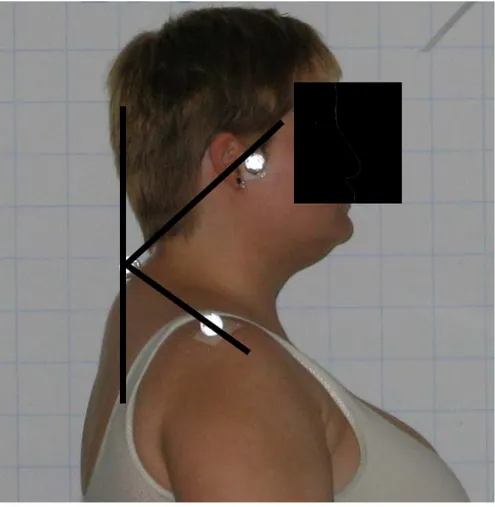
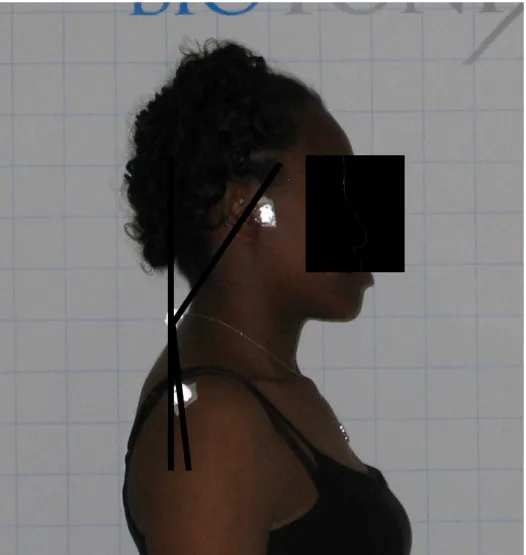
1. Head angle and Shoulder angle measures……….……..49
2. FHRSP individual……….……..50
3. Ideal posture individual……….……..51
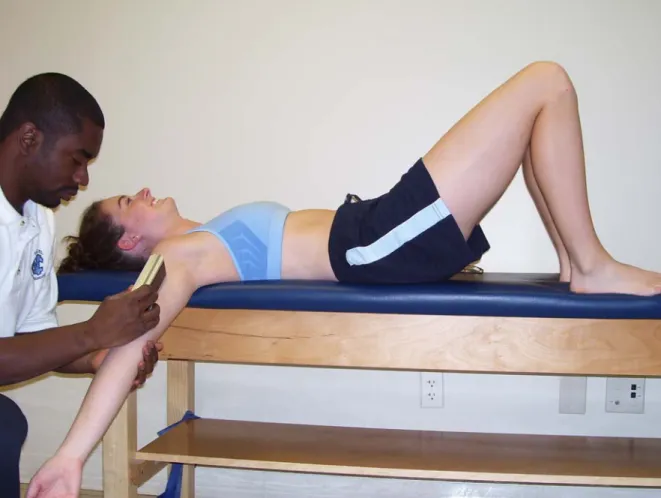
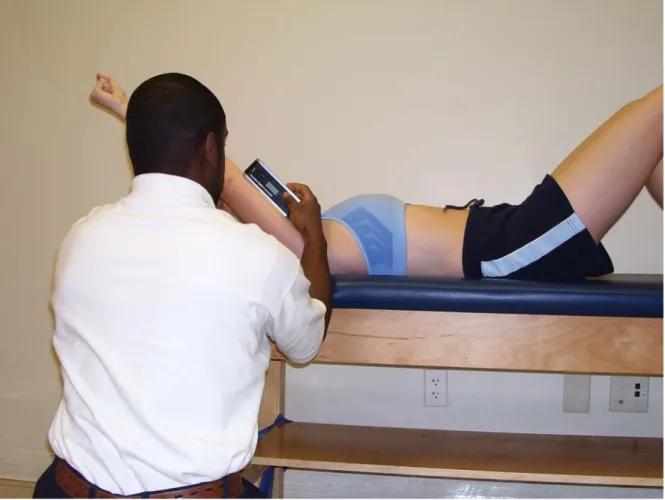
4. Pectoralis major/minor flexibility………...52
5. Latissimus dorsi flexibility……….53
6. Internal Rotation Range of Motion……….54
7. External Rotation Range of Motion………55
8. Serratus Anterior Strength……….…..56
9. Posterior Deltoid Strength……….…..57
10. External Rotators (infraspinatus, teres minor) Strength………58
11. Lower Trapezius Strength……….59
12. External Rotator Strength graph………60
LIST OF ABBREVIATIONS
C7 seventh cervical vertebra ER external rotation
ERs external rotators (infraspinatus/teres minor) FHRSP Forward Head Rounded Shoulder Posture
HA Head Angle
ICC interclass correlation coefficient IR internal rotation
N Newtons ROM Range of Motion
SA Shoulder Angle
Chapter 1
Introduction
Posture is an important and often neglected part of overall health. Ideal posture maintains the structural integrity and optimum alignment of each component of the kinetic chain [1]. The kinetic chain consists of the myofascial system, articular system and the neural system [1]. When one component of this system is out of alignment, then the entire system is placed at a disadvantage. Postural malalignment is thought to create predictable patterns of tissue overload and dysfunction, initiating the cumulative injury cycle [1]. This cumulative injury cycle begins with tissue trauma and inflammation, leading to muscle spasm, adhesions, altered neuromuscular control, and muscle imbalance. This cycle is thought to cause decreased function and eventual injury [1].
Faulty posture is thought to be an identifier of muscle imbalances about the joints in mal-alignment [2]. In a position of faulty posture, the muscles that are in a shortened position are thought to be stronger and overactive, while the muscles that are in an elongated position are thought to be weaker [2]. Vladimir Janda and others have divided muscles into two
functional divisions based on these ideas [3]. These groups are called the movement group and the stabilization group. The movement group is characterized as being prone to
weakness and inhibition, being easily fatigued during dynamic activities, and being less active during functional movements [1].
Forward head and rounded shoulder posture (FHRSP) is a common postural malalignment seen clinically [4, 5]. Forward head posture is defined as existing when the external auditory meatus is positioned anterior to the vertical postural line [2]. Rounded shoulder posture is defined as when the scapulae are abducted and the acromiom process is anterior to the vertical postural line [2]. The movement group of muscles for the shoulder girdle includes the pectoralis major and minor, upper trapezius, levator scapulae, and anterior deltoid. Therefore, these muscles are assumed to be tight and possess decreased flexibility in individuals with FHRSP. The stabilization group includes rhomboids, serratus anterior, lower trapezius, posterior deltoid, infraspinatus and teres minor, and these muscles are assumed to be lengthened and possess decreased strength in individuals with FHRSP. FHRSP is commonly seen in individuals who compete in overhead-sports, such as baseball pitchers, swimmers, gymnasts, and volleyball players [1, 6-8]. FHRSP is also thought to cause numerous injuries in sedentary populations as well. Women with symptoms of cranialfacial pain display these postural malalignments more than do asymptomatic women [9]. FHRSP is also thought to alter scapular kinematics and shoulder function [10], as well as compromise the subacromial space, leading to injuries such as bicep or rotator cuff tendonitis or impingement [10, 11]. These injuries can be detrimental to an athlete’s
Clinically, it is not clear what poor posture actually means. Clinical theory suggest that FHRSP causes a decreased flexibility of the movement group muscles including pectoralis major and minor as well as latissmus dorsi, as well as decreased range of motion at the glenohumeral joint. Additionally, the stabilization group, which includes the serratus anterior, posterior deltoid, infraspinatus/teres minor and lower trapezius, is suggested to be weaker when FHRSP is present.
Statement of Problem
The purpose of this study is to test the clinical assumptions of Forward Head Rounded Shoulder Posture (FHRSP). These assumptions are that musculature of the movement group (pectoralis major and minor, latissmus dorsi) has a decreased flexibility; shoulder range of motion (internal and external rotation) is decreased; and musculature of the stabilization group (serratus anterior, posterior deltoid, teres minor and infraspinatus, and lower trapezius) has decreased strength.
Dependant Variables
1. Flexibility as measured in degrees for the following muscles: a. pectoralis major / minor
b. latissmus dorsi
2. Range of motion as measured in degrees of the following movements: a. internal rotation of the shoulder
3. Strength as measured in Newtons by hand-held dynamometer of the following muscles:
a. serratus anterior b. posterior deltoid
c. infraspinatus / teres minor d. lower trapezius
Independent Variables
1. Group- forward head rounded shoulder posture (FHRSP) vs. ideal posture differentiated by measures of posture:
a. head posture b. shoulder posture
Research Question
Are there significant differences between the FHRSP group and the ideal posture group for the following dependent variables?
1. Flexibility as previously defined for the following muscles: a. pectoralis major / minor
b. latissmus dorsi
2. Range of motion of the following movements: a. internal rotation of the shoulder
b. external rotation of the shoulder
a. serratus anterior b. posterior deltoid
c. infraspinatus / teres minor d. lower trapezius
Null Hypothesis
There will be no significant difference between the FHRSP group and the ideal posture group on the following dependent variables.
1. Flexibility as previously defined for the following muscles: a. pectoralis major
b. latissmus dorsi
2. Range of motion of the following movements: c. internal rotation of the shoulder
d. external rotation of the shoulder
3. Strength as previously defined for the following muscles: a. serratus anterior
b. posterior deltoid
c. infraspinatus / teres minor d. lower trapezius
Research Hypothesis
1. Flexibility as previously defined for the following muscles: a. pectoralis major
b. latissmus dorsi
2. Range of motion of the following movements: a. internal rotation of the shoulder
b. external rotation of the shoulder
3. Strength as previously defined for the following muscles: a. serratus anterior
b. posterior deltoid
Definition of Terms
1. Forward head rounded shoulder posture (FHRSP) group: subjects presenting with forward head posture and rounded shoulder posture on assessment of sagital plane photo with superimposed lines and angles measured with Adobe ® Photoshop 7.0
2. Ideal posture group: subjects presenting with ideal head posture and ideal shoulder posture on assessment of sagital plane photo with superimposed lines and angles measured with Adobe ® Photoshop 7.0
3. Forward head posture: head angle > 46o
4. Rounded shoulder posture: shoulder angle > 52o
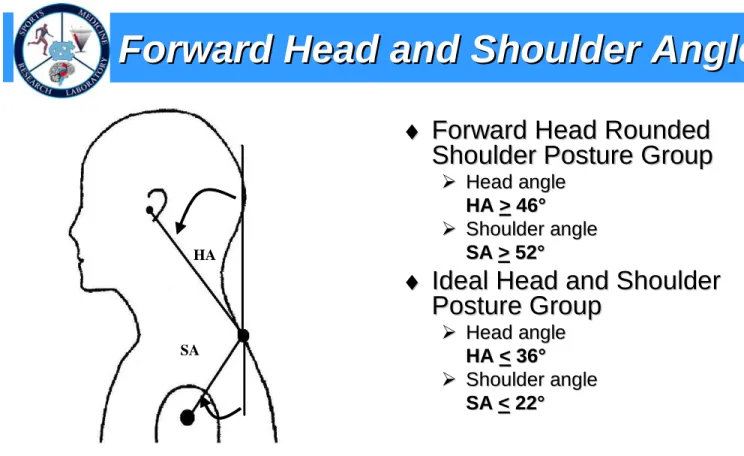
5. Head angle: angle formed by straight line from external auditory meatus to C7 spinous process and vertical plumb line through C7 spinous process as determined from digital photo (Figure1)
6. Ideal head posture: head angle < 36o
7. Ideal shoulder posture: shoulder angle < 22o
Chapter 2
Review of Literature
Posture
maintain optimal length-tension relationships of muscles about a joint, as well as optimal force-couple relationships of those muscles [1]
Faulty posture of the head, neck, and shoulders has been thought to contribute to the onset of cervical pain dysfunction syndrome [5], temporomandibular joint dysfunction (TMJ) [9], as well as shoulder overuse injuries [4], specifically shoulder impingement [11]. Faulty posture is also thought to be indicative of muscle imbalances about the joints in
mal-alignment [2]. This is because muscles in a shortened position are thought to be stronger and overactive, as opposed to those in an elongated position, which are thought to be weaker [2]. Vladimir Janda et. al [1, 3, 14] have divided muscles into two functional divisions based on these ideas. These groups are called the movement and stabilization groups. The movement group is characterized as being prone to tightness, being overactive in movement patterns, and being readily active during most functional movements [1]. The stabilization group is characterized as being prone to weakness and inhibition, being easily fatigued during dynamic activities, and being less active during functional movements [1].
Even though past research has shown the presence of postural malalignment being associated with pain and dysfunction, no studies to date have examined the relationship of strength, range of motion, and flexibility with postural malalignment.
Many authors mention postural abnormalities when talking about muscular imbalances about specific joints. While Janda [3] is generally credited with pioneering the field and identifying the two groups (movement group and stabilization group) and their specific imbalances, Kendall [2] also talked about posture and it’s effect on muscular imbalances. In a position of faulty posture, muscles in slightly shortened positions tend to be stronger, while those shortened muscles tend to be weaker. Either of these two authors is often referenced when talking about the effects of posture on musculoskeletal issues. Garret references Kendall in speaking about how faulty posture, specifically forward head posture, put increasing stress on “specific regions of the musculoskeletal system” [5]. Greenfield sites both Kendall and Janda in speaking about how abnormal posture about the shoulder,
specifically the thoracic cervical spine and thus the positioning of the scapula on the thorax, effect muscle balance and muscle length-tension relationships [4]. Griegel-Morris also mentions Kendall when speaking of proper posture being a state of “musculoskeletal balance” [12]. Kebaetse uses Kendall to explain how it is proposed that increased kyphosis alters the scapulohumeral relationship by leading to muscle weaknesses about the shoulder girdle [15]. Most recently, Sahrmann [16] has published material about movement
impairment syndromes of the body. In this study, alignment or posture is listed as an
In most studies dealing with postural and correct postural alignment, Kendall is sited for the definition of correct posture and what it should entail. The generally accepted definition of ideal posture as per Kendall involves a vertical plumb line from the side view of the patient passing through the following structures [2]:
• Slightly posterior to the apex of the coronal suture • Through the lobe of the ear
• Through the external auditory meatus • Through the odontoid process of the axis • Through the bodies of the cervical vertebrae • Through the shoulder joint
• Approximately midway through the trunk • Through the bodies of the lumbar vertebrae • Through the sacral promontory
• Slightly posterior to the center of the hip joint
• Approximately through the greater trochanter of the femur • Slightly anterior to the center of the knee joint
• Slightly anterior to the midline through the knee • Through the calcaneo-cuboid joint
• Slightly anterior to the lateral malleolus
the vertical plumb line in the case of forward head posture [2], and the shoulder joint being positioned anterior to the vertical plumb line in the case of rounded shoulder posture [2]. Several studies have looked at the relationship between posture and different dysfunctions in the body. Braun contrasted the postural differences between asymptomatic men and women and craniofacial pain patients [9]. It was suggested that asymptomatic men and women did not differ in the three head and shoulder postural characteristics used. However, symptomatic women did display those postural characteristics to a greater extent than asymptomatic women.
Greenfield and colleagues [4] looked at the relationship between posture in patients with shoulder overuse injuries compared to healthy individuals. Again the author had were
significant findings, as forward heat position and humeral elevation were significantly greater in the patient group than the healthy group. Humeral elevation was also greater for involved shoulders in the patient group as compared to uninvolved shoulders.
Griegel-Morris et al. [12] looked at the relationship between postural abnormalities in the cervical, shoulder, and thoracic regions and pain in two groups of healthy subjects. This study showed that subjects with more severe postural abnormalities had a significantly increased incidence of pain. Subjects in this study with kyphosis and rounded shoulders had an increased incidence of interscapular pain, while those with forward head posture had an increased incidence of cervical, interscapular and headache pain.
Forward Head Rounded Shoulder Posture
athletes such as swimmers, baseball pitchers, gymnast, tennis and volleyball players. Others at risk for this condition include weight lifters or heavy laborers, cellist, and hairdressers who all work in uni-dimensional movement patterns [16]. Clark [1] has given the name “Upper Crossed Syndrome” (UCS) to this postural dysfunction. In describing UCS, Clark defines Janda’s two specific muscle groups for this particular dysfunction. Clark [1] lists these groups as follows:
Movement Group (shortened muscles)
Pectoralis major Pectoralis minor
Levator scapulae Teres major
Upper trapezius Anterior deltoid
Subscapularis Latissimus dorsi
Stabilization Group (lengthened muscles)
Rhomboids Lower trapezius
Serratus anterior Teres minor
Infraspinatus Posterior deltoid
Longus coli/capitus Sternocleidomastoid
Rectus capitus Scalenes
compared to an individual without FHRSP. It is also assumed that the muscles of the
stabilization group are lengthened and weaker as compared to an individual without FHRSP. Sahrmann [16] has also discussed specific movement impairment syndromes in the body. This condition of rounded shoulder posture is labeled scapular abduction syndrome. The pectoralis major and minor are again assumed to be shortened and overactive, while trapezius and rhomboid muscles are thought to be elongated and weak [16].
Anatomy and Biomechanics
The shoulder represents a complex dynamic relationship of many muscle forces, ligament constraints, and bony articulations [17]. Because of it’s anatomical makeup, the shoulder complex sacrifices stability to allow for increased mobility [18]. This causes the shoulder to be highly susceptible to injury. The mobility of the shoulder is achieved by three joints, the sternoclavicular joint, the acromioclavicular joint, the glenohumeral joint; and one pseudo-joint the scapulothoraic articulation. These pseudo-joints, along with dynamic and static stabilizers work together to give the shoulder joint the greatest range of motion of any joint in the body [19]. This mobility is important in performing acts of daily living, while a level of stability is needed to prevent injury.
Sternoclavicular Joint
the anterior and posterior sternoclavicular, which both prevent upward displacement of the clavicle, interclavicular, which prevents lateral displacement of the clavicle, and
costoclavicular, which prevents lateral and upward displacement of the clavicle [18]. A fibrocartilaginous disk located between the two articulating surfaces functions as a shock absorber and also helps prevent upward displacement [18].
Acromioclavicular Joint
The acromion process of the scapula and the distal end of the clavicle articulate to form the acromioclavicular joint. This gliding joint gains the majority of its stability from static stabilizers, including joint capsule, ligaments, and intra-articular disk [17]. The
acromioclavicular ligaments consist of anterior, posterior, superior and inferior portions. In addition, the coracoclavicular ligament, divided into the conoid and trapezoid ligaments, joins the coranoid process of the scapula to the clavicle [18]. A fibrocartilaginous disk is also located between the articulating surfaces of the acromion and the clavicle, though it is functionally absent by the fourth decade [17].
Glenohumeral Joint
humeral head [17]. Therefore, the joint relies heavily on static stabilizers as well as dynamic stabilizers for stability and for mobility [17].
Glenohumeral Joint Static Stabilizers
Static stabilizers about the glenohumeral joint include the glenoid labrum and the joint capsule. The glenoid labrum serves to deepen the relatively shallow glenoid cavity of the scapula [20]. This dense, fibrocartilaginous structure is triangular on cross-section, serving as a wedge to keep the humerus on the articulating surface of the glenoid fossa [17]. The labrum also serves as an attachment site for the capsuloligamentous structures of the glenoidlabrum [17].
The surface area of the joint capsule is approximately twice the size of the humeral head, allowing for maximum mobility and range of motion of the glenohumeral joint [17]. The inferior portion of the capsule is the only portion that is not reinforced by a rotator cuff muscle and is the weakest area of the capsule [20]. The ligaments of the glenohumeral joint are intrinsic, meaning they are a part of the joint capsule [20]. These different ligaments become taut when the shoulder reaches certain end ranges of motion to limit translation of the humeral head [17]. These ligaments consist of the coracohumeral ligament and the three glenohumeral ligaments. The coracohumeral ligament strengthens the capsule superiorly as it travels from the base of the lateral coracoid and inserts into the lesser and greater
tuberosities [17].
coracohumeral ligament [17]. The middle glenohumeral ligament originates from the supraglenoid tubercle, superior labrum, or scapular neck and inserts on the medial aspect of the lesser tuberosity. It is the most variable of the three glenohumeral ligaments, being absent in 8-30% of patients [17]. It functions to limit anterior translation of the humeral head and inferior translation in adducted position [17]. The inferior glenohumeral ligament is the thickest and most consistent of the three ligaments. This ligament has three portions, the anterior band, axillary pouch, and posterior band. The anterior band extends from the anteroinferior labrum and glenoid lip to the lesser tuberosity of the humerus and is the primary stabilizer against the throwing position of shoulder abduction and external rotation [17]. The entire complex is a barrier to anterior translation of the humeral head.
Glenohumeral Joint Dynamic Stabilizers
The muscles that cross the glenohumeral joint provide significant dynamic stability and compensate for a bony and ligamentous arrangement that allows for a great deal of mobility [18]. These muscles can be put into two groups: muscles that originate on the scapula and attach to the humerus and muscles that originate on the axial skeleton and attach to the humerus [18].
The first group of muscles includes the rotator cuff muscles as well as the deltoid, teres major and coracobrachialis muscles. The rotator cuff consists of the supraspinatus,
capsule and the infraspinatus tendon below [17]. This muscle, in addition to stabilizing the glenohumeral joint, acts along with the deltoid to elevate the arm, specifically the first fifteen degrees of shoulder abduction [2]. The supraspinatus is innervated by the suprascapular nerve.
The infraspinatus originates from the infraspinous fossa of the scapula and inserts on the middle facet of the greater tuerousity of the humerus. The teres minor originates from the mid to upper axillary border of the scapula and inserts on the inferior facet of the greater tuberosity of the humerus. These two muscles together, in addition to stabilizing the joint, act to externally rotate the humerus. The infraspinatous muscle is innervated by the suprascapular nerve, while the teres minor is innervated by the axillary nerve [17].
The subscapularus muscle is the last of the four rotator cuff muscles. It originates from the subscapular fossa of the scapula and inserts on the lesser tubercle of the humerus. This muscle, in addition to being a shoulder stabilizer, is primarily responsible for internal rotation of the humerus and is innervated by the upper and lower subacapular nerves [2].
In speaking of the rotator cuff muscles and their role in dynamic stability, the long head of the biceps must also be considered. Its tendous attachment to the glenoid rim causes it to have a role in stabilizing the humeral head, and it acts as both a humeral head depressor and as another dynamic stabilizer to prevent anterior translation of the humerus during movement [17].
while all being innervated by the axillary nerve. The anterior and middle portions function in shoulder elevation in the scapular plane and assist in forward elevation.
The teres major muscle originates at the inferior angle of the scapula and rotates 180o toward its insertion on the medial lip of the bicipital groove of the humerus [17]. Its
functions to adduct and internally rotate the shoulder, as well as assist in shoulder extension, and is innervated by the lower subscapular nerve [17].
The coracobrachialis originates from the coracoid process and inserts onto the
anteriomedial humerus [17]. This muscle acts along with the short head of the biceps to flex and adduct the glenohumeral joint, and is innervated by the musculocutaneous nerve [17]. The next group of muscles originates on the axial skeleton and attaches to the humerus. These muscles include the latissimus dorsi, pectoralis major and pectoralis minor. The latissimus dorsi is a large triangular muscle arising from the spines of the lower 6 thoracic vertebrae and thoracolumbar fascia. It attaches to the humerus on the floor of the bicipital groove and functions along with the teres major to adduct, extend, and internally rotate the humerus. In fact, their two tendinous insertions blend with each other. The latissimus dorsi is innervated by the thoracodorsal nerve [17].
The pectoralis major originates from the medial clavicle, sternum, and fifth and sixth ribs. It attaches to the humerus on the lateral lip of the bicipital groove, and functions in adduction and internal rotation of the humerus, as well as horizontal adduction. The pectoralis major is innervated by the lateral and medial pectoral nerves [17].
muscle functions to stabilize the scapula by drawing it inferiorly and against the thoracic wall and is innervated by the medial pectoral nerve [20].
Scapulothoracic Articulation
Another group of muscles exists about the shoulder girdle. These muscles originate on the axial skeleton and serve to anchor the scapula to the thoracic wall. These muscles are the scapular stabilizer muscles and they make up the scapulothoracic articulation. This articulation is critical to shoulder movement, because the movement at this articulating surface allows for optimal glenohumeral movement and helps decrease risk of injury
associated with altered kinematics at the glenohumeral joint. This articulation also provides a base of support, which needs to remain stable. All other movements of the upper limb to move from this base of support [18]. These muscles include the trapezius, rhomboids, serratus anterior, and levator scapulae.
The trapezius is divided into upper, middle and lower sections, which all have different functions [20]. The origin of the entire muscle extends from the base of the skull to the upper lumbar vertebrae and the insertion site includes the lateral aspect of the clavicle, acromion, and scapular spine [17]. The upper trapezius serves to elevate the scapula, while the middle fibers retract the scapula and the lower fibers depress the scapula and lower the shoulder [20].
The serratus anterior originates from the bodies of the first nine ribs and anteriolateral aspect of the thorax and inserts from superior to inferior angle of the scapula [17]. The serratus anterior causes scapular protraction and upward rotation, as well as holds the scapula against the thoracic wall [20]. An injury to its innervating nerve, the long thoracic nerve, would result clinically in the condition known as “winging scapula” [17].
The levator scapulae muscle originates from the transverse processes of the cervical spine and inserts on the superior angle of the scapula [17]. This muscle serves to elevate the superior angle of the scapula, causing downward rotation of the scapula [17]. It also assists in laterally flexing the neck [20], and is innervated by the third and fourth cervical spinal nerves [17].
Range of Motion About the Shoulder Joint
Range of motion about the shoulder joint has been linked for some time to shoulder dysfunction [6, 21]. Several studies have looked at how increased or decreased motion may affect shoulder pain in competitive swimmers. One such study found no significant
correlation between shoulder range of motion and pain [6]. In this study, external and internal rotation range of motion was tested in the supine position using a universal goniometer [6]. However this study only looked at active range of motion of selected movements.
Myers et al. [22] found that glenohumeral internal rotation deficit was increased in individuals with internal or posterior impingement when matched with healthy individuals. This study also found that posterior shoulder tightness was increased in those with internal impingement. This study observed these differences in throwers, who are also considered overhead athletes.
Flexibility Assessment
Flexibility assessment about the shoulder joint is seen in literature less often than range of motion, but may be equally important. Flexibility looks at the length of specific muscle tissue [2], while range of motion observes the amount of movement about a specific joint [18]. In speaking about flexibility of the shoulder girdle, the pectoralis major and minor are major muscles that are commonly observed. There have been several methods of measuring pectoralis major and minor length seen in literature. Active horizontal abduction and
adduction have been measured, with the shoulder flexed to 90o, the forearm in the neutral position and the elbow extended [6]. This study looked at the relationship between shoulder flexibility and pain. Shoulder abduction was also assessed, with the scapula supported on the table, the elbow extended and the palm facing up [6].
Greipp [23] performed a study in which he was able to predict, with 93% accuracy, teamwide incidence of swimmer’s shoulder for the winter season based on a correlation between lack of flexibility and pain. Here, shoulder horizontal abduction tests were performed using a flexibility test that was validated in a preliminary study [21]. The swimmer in this test lay supine on an inclined bench and allowed gravity to pull the
maintained at perpendicular to the torso and when the swimmer reported that their arms could drop no farther, the distances between the two styloid processes of the wrist was measured. This measure was then used in a regression equation to predict the occurrences of shoulder pain in the future season.
Most recently, Borstad [24] examined the relationship between posture, pectoralis minor length and movement alterations. In this study, the subjects were divided into groups based on normalized resting pectoralis minor muscle length. Significant group differences were demonstrated for several postural variables, including thoracic spine kyphosis and scapular rotation between groups [24].
Strength
The effect of upper extremity posture on shoulder strength has also been examined. Kebaetse et al. [15] looked at thoracic position effect on shoulder range of motion, strength, and scapular kinematics. The results showed that isometric scapular plane abduction muscle force was decreased 16.2% in the slouched posture position as compared to an erect posture position.
Smith et al. [25] also looked at the effect of posture and scapular position on isometric shoulder strength. The effects of scapular protraction and retraction on isometric shoulder elevation strength were studied. The authors of this study found that scapular protraction or retraction resulted in a statistically significant reduction in isometric shoulder elevation strength.
minor, supraspinatus, or posterior deltoid muscles. This does not mean that there were no differences in muscle strength, because this study only looked at electrical activity of the selected muscles and not at the actual strength of the muscles.
DiVeta et al. [27] also found that there was very little correlation between scapular abduction in a standing patient and muscular force of the middle trapezius and pectoralis minor muscles. This study used manual muscle testing for middle trapezius as described by Daniels and Worthingham, and manual muscle testing for pectoralis minor as described by Kendall [27].
Dynamometer
The dynamometer is a device used to assess muscle strength. Hand held dynamometers are used because of their increased convince and decreased price as compared to a larger equipment such as isokinetic machines [28]. Hand held dynamometers are also shown to be just as accurate, and therefore a viable alternative to the more costly and less mobile
isokinetic machines, provided the assessor’s strength is greater than the muscle group being tested [28]
Another issue with hand-held dynamometers is that many times clinics may have multiple devices. One study found that while the Nicholas Manual Muscle Tester was valid and highly reliable for testing between trials and days, it had poor interdevice reliability [30]
Inclinometer
The electronic inclinometer is a reliable tool used to assess joint range of motion. In measurements of passive hip rotation, the electronic inclinometer was shown to have less varialibility than using a two-armed goniometer [31]. In measurements of active hip rotation, the inclinometer has been shown to have less variability with prone external rotation and sitting internal rotation [31]. Another study found inclinometers to have good reliability when measuring affected glenohumeral joints for passive glenohumeral external rotation and for abduction of the humerus, having ICCs of .90 and .83 respectively [32].
Goniometer
Conclusion
Chapter 3
Methods
Subjects
informed consent form approved by the University of North Carolina Biomedical IRB
explaining the study and procedures. Flexibility of the pectoralis muscle group and latissmus dorsi was then tested, followed by range of motion for internal and external rotation at the shoulder. Finally, strength of the posterior deltoid, lower trapezius, infraspinatus/teres minor, and serratus anterior was measured. Subjects were not paid for their participation.
Instrumentation/Equipment
The presence of forward head and forward shoulder posture was evaluated using the Adobe® Photoshop and digital picture. Digital photos, with lines superimposed from the seventh cervical vertebrae to the external auditory meatus, and from the seventh cervical vertebrae to the posterior acromion, were used to determine if subjects fell into the FHRSP or ideal posture group. Those subjects that did not fall into either group were excluded from the study. Subjects with a head angle (HA) > 46o and a shoulder angle (SA) > 52o were assigned to the FHRSP group. Subjects with a head angle (HA) < 36 o and a shoulder angle (SA) < 22o were assigned to the ideal posture group. These cutoff measures represent the values that would separate the groups by one standard deviation based on calculating the head and shoulder angles for all of the potential subjects screened.
Flexibility and range of motion were measured using a digital inclinometer (Saunders Digital Inclinometer, The Saunders Group Inc., Chaska, MN). The inclinometer measures joint angles in degrees (o). The inclinometer was zeroed before each testing session.
of force. The dynamometer was calibrated before each testing session. Hand-held dynamometers have been shown to have good reliability when compared to isokinetic
dynamometers such as the Kin-Com, the gold standard in measuring muscle strength [28-30]. Dynamometers have also been shown to have good reliability between trials and between days [34].
A universal goniometer was used to ensure correct body positioning during each muscle test. Body positioning was checked before each trial of each muscle strength test.
Procedures
Postural Alignment Assessment
Flexibility Assessment
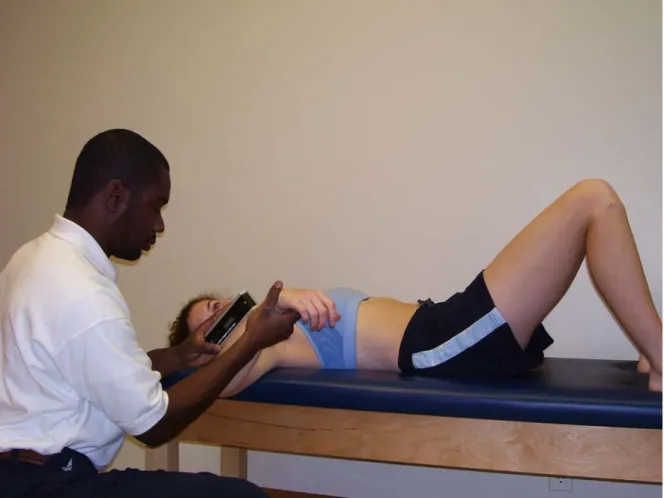
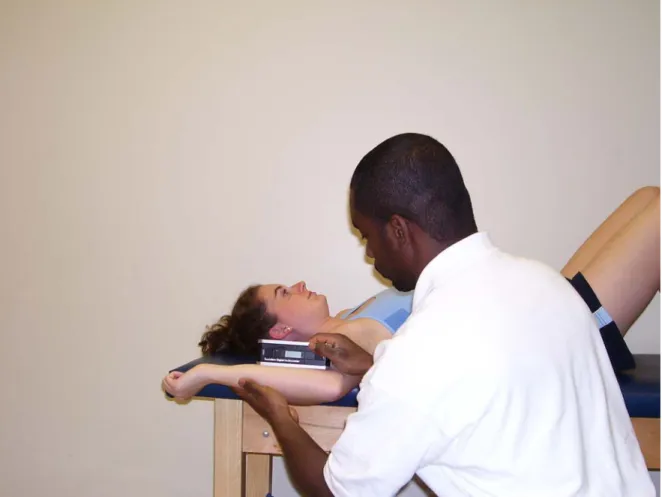
Flexibility of the right pectoralis major and minor muscle group and the latissmus dorsi muscle were measured using a digital inclinometer (Saunders Digital Inclinometer, The Saunders Group Inc., Chaska, MN). The inclinometer was leveled on a stable surface as indicated by a bubble level before each testing session. Kendall [2] describes patient
positioning for measuring flexibility of these muscles as follows. When measuring pectoralis major, the patient was supine with the arm in full horizontal abduction and lateral rotation (Figure 4). For the latissmus dorsi, the patient was supine with the arm in full forward flexion. The patient was positioned and then instructed to relax in this position. Once the subject was relaxed, the angle between their arm and the level horizontal axis was measured with the inclinometer (Figure 5). Three trials were performed for each muscle, and the average of the three trials was used for data analysis. Testing revealed excellent intratester reliability [ICC (2,1) = 0.99 (pectoralis group), 0.99 (latissmus dorsi)]
Range Of Motion Assessment
Range of motion (ROM) was also assessed on the right shoulder using the digital inclinometer. Kendall [2] describes the proper testing positions for internal and external rotation ROM of the shoulder joint as having the patient supine, with the back flat on a table, arms at 90o of abduction, elbow flexed to 90o (Figures 6 and 7) The subject was told to relax as the examiner positioned the arm for measure. Three trials of passive ROM for internal rotation were averaged and used for data analysis. The same was done for external rotation, as three trials of passive ROM were averaged. Testing revealed excellent intratester
Strength Assessment
Isometric strength was assessed on the right shoulder using a hand-held dynamometer (CDS 300 strength dynamometer, Chatillion a registered trademark of Ametek, Largo, FL). This instrument calculates isometric strength in Newtons (N) of force. Body positions described by Kendall [2] were used to test strength. For each test, subjects were instructed on the testing positioning and direction of force output, and performed one or two sub-maximal contractions to familiarize themselves with the test. At the start of each test they were instructed to “Push into my resistance as hard as you can.” During the test, they received verbal cues of “push, push, push, push”, and at the end of the test they were told to “relax.” The order in which the muscles were tested was randomly selected by the subject by picking from numbered slips of paper from a cup, labeled from 1-4. The number 1
corresponded to serratus anterior, 2 with posterior deltoid, 3 with the infraspinatus / teres minor group, and 4 with the lower trapezius. For each trial, the mean output and peak output were both measured and recorded. For each muscle group, three trials were performed, and the average of the three trials was calculated for the mean output of the trial and the peak output of the trial. The averages of the three trials for each person were then standardized to BMI and used for data analysis.
dynamometer stable at the side of the testing table (Figure 8). The examiner applied a downward force while the subject pushed up, causing protraction of the scapula. Testing revealed excellent intratester reliability [ICC (2,1) = 0.99 (mean), 0.99 (peak)]
Posterior deltoid: The subject was positioned prone on a table, with the right arm in 90o horizontal abduction and 35o lateral rotation, and the elbow flexed to 90o. The investigator placed hand-held dynometer against the posterolateral surface of the arm and applied
pressure obliquely downward (between adduction and horizontal adduction) [2]. The subject was instructed to push up against the dynamometer (Figure 9). Testing revealed excellent intratester reliability [ICC (2,1) = 0.98 (mean), 0.98 (peak)]
Infraspinatus/Teres minor (External Rotators): The subject was positioned prone on a table, with the right arm at 90o horizontal abduction, and the elbow at 90o of flexion. The
investigator placed the dynamometer against the posterior surface of forearm, appling pressure to medially rotate arm [2]. The subject was instructed to push against the
dynamometer, attempting to rotate the arm externally (Figure 10). Testing revealed excellent intratester reliability [ICC (2,1) = 0.97 (mean), 0.97 (peak)]
(Figure11). Testing revealed excellent intratester reliability [ICC (2,1) = 0.98 (mean), 0.98 (peak)]
Data analysis
Chapter 4
Results
Descriptive Statistics
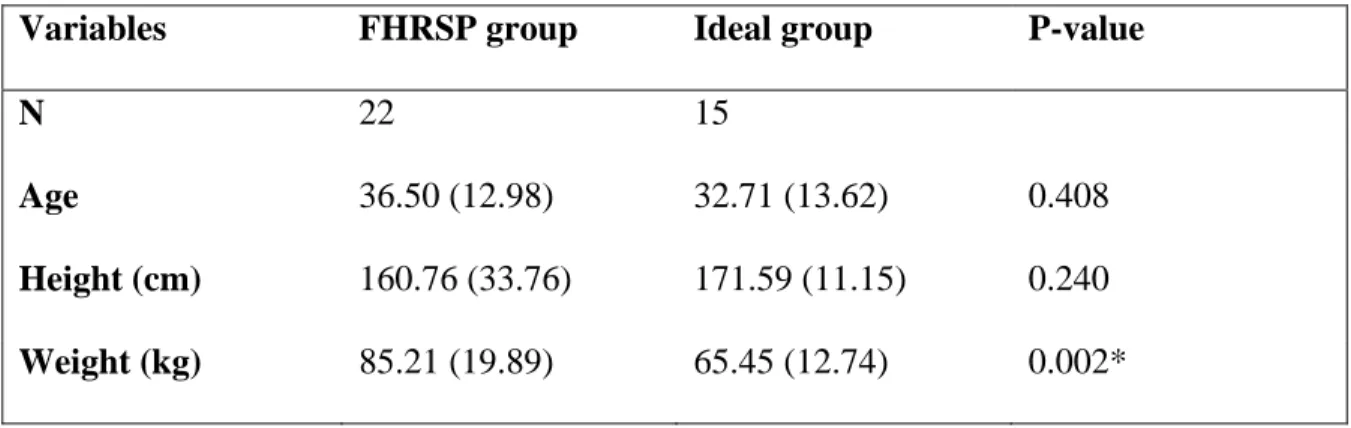
A total of 37 subjects were tested for this study. Twenty-two subjects were determined to have a head angle > 46o and a shoulder angle > 52o and were assigned to the FHRSP group (6 males, 16 females). Fifteen subjects were determined to have a head angle < 36o and a shoulder angle < 22o and were assigned to the ideal posture group (5 males, 10 females). Descriptive statistics for the two groups are presented in Table 1. Statistical analysis revealed that there was a significant difference between groups in body weight and BMI, with the FHRSP being significantly higher in both.
Flexibility
Pectoralis major/minor, Latissmus Dorsi
Range of Motion
Internal Rotation, External Rotation
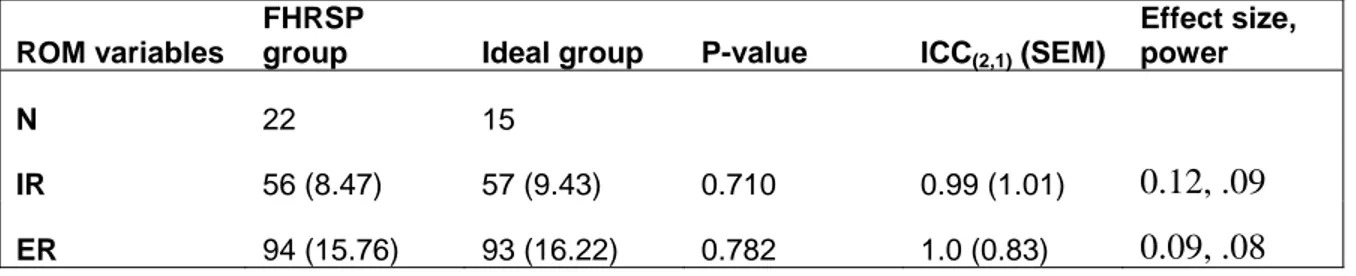
Means and standard deviations for passive internal rotation (IR) and external rotation (ER) ranges of motion are listed in Table 3. Statistical analysis revealed no significant differences (p=0.71, p=0.78 respectively) for range of motion between FHRSP and ideal posture groups.
Strength
Serratus Anterior, Posterior Deltoid, Infraspinatus / Teres Minor, Lower Trapezius
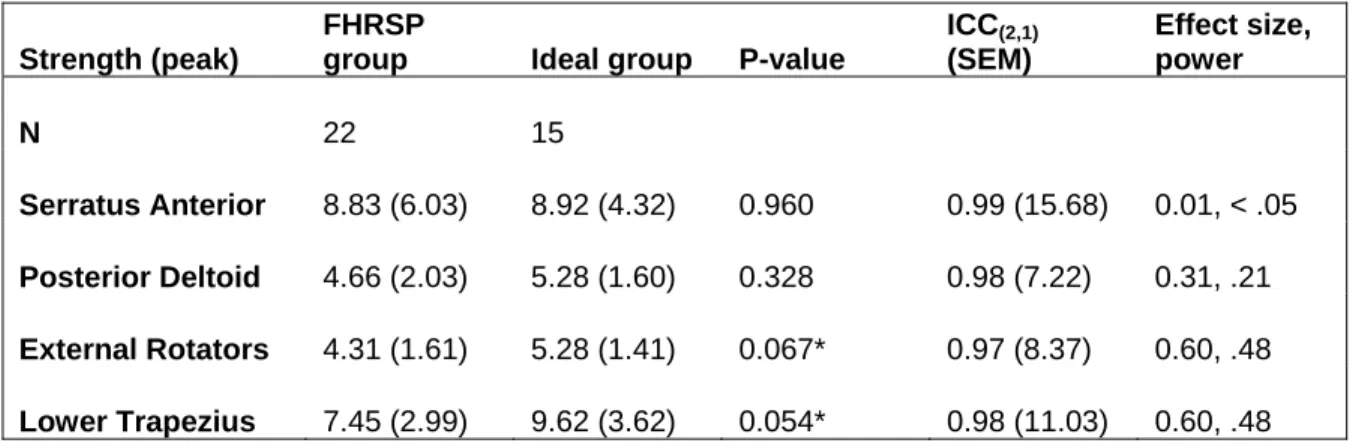
Means and standard deviations as well as ICCs, effect sizes and power for isometric
Chapter 5
Discussion
The purpose of this study was to test the clinical assumptions of forward head rounded shoulder posture (FHRSP). Our results indicate that those individuals presenting with FHRSP do not necessarily have a decreased flexibility of the pectoralis major, minor, and latissmus dorsi, an increased internal rotation and decreased external rotation, and a
decreased strength of serratus anterior, posterior deltoid, external rotators, or lower trapezius.
Strength
One of the clinical assumptions associated with FHRSP is that select muscles are prone to weakness because of their increased passive length [1, 14, 15, 35]. These muscles included but are not limited to the serratus anterior, posterior deltoid, infraspinatus/teres minor complex, and lower trapezius. It is thought that because of altered length tension
people with FHRSP when compared to people with ideal posture [36]. Another study found a decreased strength on upon isometric muscle testing of serratus anterior, external rotators, and lower trapezius in swimmers when compared to non-swimmers [37]. These swimmers were also shown to have FHRSP. Kebaetse et al. [15] looked at thoracic position effect on shoulder strength. The results showed that isometric scapular plane abduction muscle force was decreased 16.2% in the slouched posture position as compared to an erect posture position. Smith et al. [25] also looked at the effect of posture and scapular position on isometric shoulder strength. The effects of scapular protraction and retraction on isometric shoulder elevation strength were studied. The authors of this study found that scapular protraction or retraction resulted in a statistically significant reduction in isometric shoulder elevation strength.
Other studies, however, have looked at strength and seen no differences. Diveta et al [27] examined relaxed standing scapular positioning in healthy individuals. In this study, the results indicated that there was no relationship between scapular positioning and strength of middle trapezius and pectoralis minor muscle strength. The results of our study help
strengthen this indication, as we found that there were no significant differences in strength between individuals with and without FHRSP.
Flexibility and Range of Motion
specific muscle tissue [2], while range of motion observes the amount of movement about a specific joint.
Greipp [23] performed a study in which he was able to predict, with 93% accuracy, teamwide incidence of swimmer’s shoulder for the winter season based on a correlation between lack of flexibility and pain. Here, shoulder horizontal abduction tests were performed using a flexibility test that was validated in a preliminary study [21]. This test involved the individual supine with arm in horizontal abduction.
Our findings, however, do not support this clinical assumption. Although FHRSP does have the clinical appearance of the pectoralis complex and latissmus dorsi muscles being in a shortened resting position, this did not seem to directly indicate any decrease in muscle length on passive muscle testing in our study. This is contrary to previous findings, where forward flexion was significantly increased in swimmers as compared to non-swimmers [37]. In this study, swimmers were shown to have on increased incidence of FHRSP. However, this difference could be attributed to the fact that Division I collegiate swimmers are
overhead athletes. This distinction includes the fact that they train and use their shoulder in positions of extreme flexion and abduction to a greater extent and with greater frequency then normal individuals [11].
Previous studies have examined how alterations in head and shoulder posture can lead to increased incidence of shoulder injury [10, 38]. Such injuries, including subacromial impingement are associated with a decreased range of motion of the affected arm. Studies have also looked at how range of motion at the shoulder joint is linked to shoulder
symptomatic women did display those postural characteristics to a greater extent than asymptomatic women.
Greenfield and colleagues [4] looked at the relationship between posture in patients with shoulder overuse injuries compared to healthy individuals. Again the author had were
significant findings, as forward heat position and humeral elevation were significantly greater in the patient group than the healthy group. Humeral elevation was also greater for involved shoulders in the patient group as compared to uninvolved shoulders.
Griegel-Morris et al. [12] looked at the relationship between postural abnormalities in the cervical, shoulder, and thoracic regions and pain in two groups of healthy subjects. This study showed that subjects with more severe postural abnormalities had a significantly increased incidence of pain. Subjects in this study with kyphosis and rounded shoulders had an increased incidence of interscapular pain, while those with forward head posture had an increased incidence of cervical, interscapular and headache pain.
Our study did present some interesting observations. The mean for weight of the FHRSP group was almost 20 kg higher than the mean for the ideal group (Table 1). This brings forth the question of if there is some correlation between body weight and posture for healthy sedentary individuals with and without FHRSP. Further research is needed to study if there in fact is a relationship.
Limitations
groups that were being measures. This means that those individuals who may actually have differences were able to compensate during tests, specifically the strength tests, with other muscles. This is may also be true during functional movements in individuals with altered posture. Further research is needed to validate the clinical test used to assess muscle strength and flexibility at the shoulder girdle.
Also, we studied healthy individuals. One of the exclusion criteria was the current presence of neck, upper back or shoulder pain. This means that even the individuals with poor posture were pain free. This is important because there may actually be differences in those individuals with pain in the measures that were used in this study. Further research should be done to compare measures of painful people with FHRSP to those without pain. In this study we also looked at measures surrounding the glenohumeral joint. Although we found no differences at this joint, there may be differences at the scapulothoracic articulation in these same individuals. Continued research of this area should look at the relationship between how scapulothoracic movement problems can correlate to glenohumeral movement pattern changes.
Conclusions
Table 1. Means and standard deviations for subject characteristics (age, height, weight); mean (SD)
Variables FHRSP group Ideal group P-value
N 22 15
Age 36.50 (12.98) 32.71 (13.62) 0.408
Height (cm) 160.76 (33.76) 171.59 (11.15) 0.240
Weight (kg) 85.21 (19.89) 65.45 (12.74) 0.002*
* - denotes significant difference
Table 2. Means and standard deviations for pectoralis major/minor (pec) and latissmus dorsi (lat) flexibility in degrees (o); mean (SD)
Flexibility variables
FHRSP
group Ideal group P-value ICC(2,1) (SEM)
Effect size, power
N 22 15
Pec 41 (8.16) 44 (10.24) 0.340 0.99 (1.06) 0.29, .19
Table 3. Means and standard deviations for internal rotation (IR) and external rotation (ER) in degrees(o); mean (SD)
ROM variables
FHRSP
group Ideal group P-value ICC(2,1) (SEM)
Effect size, power
N 22 15
IR 56 (8.47) 57 (9.43) 0.710 0.99 (1.01) 0.12, .09
ER 94 (15.76) 93 (16.22) 0.782 1.0 (0.83) 0.09, .08
Table 4. Means and standard deviations of average strength values (N) normalized to BMI; mean (SD)
Strength (mean)
FHRSP
group Ideal group P-value
ICC(2,1)
(SEM)
Effect size, power
N 22 15
Serratus Anterior 8.11 (5.40) 8.09 (3.60) 0.988 0.99 (13.78) <0.01, <.05
Posterior Deltoid 4.38 (1.91) 4.96 (1.42) 0.326 0.98 (6.83) 0.30, .20
External Rotators 4.06 (1.46) 4.88 (1.19) 0.078* 0.97 (7.39) 0.56, .44
Lower Trapezius 7.08 (2.79) 8.95 (3.23) 0.069* 0.98 (11.61) 0.58, .46
Table 5. Means and standard deviations of peak strength values (N) normalized to BMI; mean (SD)
Strength (peak)
FHRSP
group Ideal group P-value
ICC(2,1)
(SEM)
Effect size, power
N 22 15
Serratus Anterior 8.83 (6.03) 8.92 (4.32) 0.960 0.99 (15.68) 0.01, < .05
Posterior Deltoid 4.66 (2.03) 5.28 (1.60) 0.328 0.98 (7.22) 0.31, .21
External Rotators 4.31 (1.61) 5.28 (1.41) 0.067* 0.97 (8.37) 0.60, .48
Lower Trapezius 7.45 (2.99) 9.62 (3.62) 0.054* 0.98 (11.03) 0.60, .48
Figure 1: Head angle and Shoulder angle measures
SA HA
Forward Head and Shoulder Angle
Forward Head and Shoulder Angle
Head angle:
Head angle:measured from the vertical anteriorly to a line connecting the measured from the vertical anteriorly to a line connecting the external auditory
external auditory meatusmeatusand the Cand the C77marker. marker.
Shoulder angle:
Shoulder angle:measured from the vertical posteriorly to a line connecting themeasured from the vertical posteriorly to a line connecting theCC77
marker and the acromial marker.
marker and the acromial marker.
♦
♦
Forward Head Rounded
Forward Head Rounded
Shoulder Posture Group
Shoulder Posture Group
¾
¾ Head angle Head angle
HA
HA >>4646°°
¾
¾ Shoulder angle Shoulder angle
SA
SA >>5252°°
♦
♦
Ideal Head and Shoulder
Ideal Head and Shoulder
Posture Group
Posture Group
¾
¾ Head angle Head angle
HA
HA <<3636°°
¾
¾ Shoulder angle Shoulder angle
SA
Figure 12: External Rotator Strength graph
Strength External Rotators
100.00% 200.00% 300.00% 400.00% 500.00% 600.00% 700.00%
Mean Peak
Ideal FHRSP
Figure 13: Lower Trapezius strength graph
Strength Lower Trapezius
100.00% 300.00% 500.00% 700.00% 900.00% 1100.00% 1300.00% 1500.00%
Mean Peak
Ideal FHRSP
Subject # Group (1=Good, 2=Poor) Age Gender (1=Male, 2=Female)
1 1 48 2
2 2 51 2
3 2 35 2
4 1 20 2
5 2 52 2
6 1 45 1
7 1 61 2
8 2 52 1
9 2 48 1
10 2 26 1
11 2 47 1
12 2 25 2
13 1 33 2
14 2 22 1
15 2 22 2
16 2 21 2
17 1 53 2
18 2 53 2
19 2 44 2
20 2 26 1
21 1 21 1
22 2 23 2
23 1 25 1
24 1 20 2
25 2 25 2
26 2 24 2
27 2 54 2
28 1 32 2
29 1 1
30 1 27 2
31 2 33 2
32 1 23 2
33 2 24 2
34 2 53 2
35 1 30 2
36 2 43 2
Dominant Hand (1=R, 2=L) Height (cm) ht (m) Weight (kg) BMI
1 167.6 1.676 52.3 18.6
1 157.48 1.5748 70.91 28.6
1 167.6 1.676 109.1 38.8
1 175.26 1.7526 65.91 21.5
1 154.8 1.548 89.55 37.4
1 172.72 1.7272 74.09 24.8
1 160 1.6 50.07 19.6
1 167.64 1.6764 74.55 26.5
1 185.42 1.8542 112.72 32.8
1 177.8 1.778 77.3 24.5
1 177.8 1.778 109 34.5
1 162.56 1.6256 70.91 26.8
1 175.26 1.7526 55.9 18.2
2 170 1.7 75.6 26.2
1 167.64 1.6764 71.82 25.6
1 160.02 1.6002 67.3 26.3
1 157.48 1.5748 57.5 23.2
1 167.64 1.6764 81.82 29.1
1 155 1.55 93 38.7
1 176 1.76 93 30.0
1 185.42 1.8542 75 21.8
1 155 1.55 69.4 28.9
1 170.18 1.7018 93.18 32.2
1 154.94 1.5494 57 23.7
1 151.8 1.518 75 32.5
1 166 1.66 58.8 21.3
1 171 1.71 71 24.3
1 167 1.67 63.2 22.7
193 1.93 76.8 20.6
1 175 1.75 52.2 17.0
1 160 1.6 84.2 32.9
1 172 1.72 80.4 27.2
1 186 1.86 93 26.9
1 166 1.66 80.2 29.1
1 160 1.6 55 21.5
1 172.72 1.7272 146.4 49.1
pec1 pec2 pec3 pec lat1 lat2 lat3 lat
50 48 49 49 127 123 123 124.3333
31 30 30 30.33333 160 158 161 159.6667
38 34 35 35.66667 150 147 148 148.3333
39 39 38 38.66667 164 162 161 162.3333
39 46 47 44 151 152 150 151
25 24 27 25.33333 170 168 170 169.3333
31 33 33 32.33333 143 142 142 142.3333
39 39 40 39.33333 146 147 143 145.3333
28 28 27 27.66667 148 147 149 148
30 28 23 27 145 148 151 148
40 38 38 38.66667 157 152 158 155.6667
35 37 33 35 148 141 143 144
31 32 32 31.66667 158 156 157 157
49 43 50 47.33333 115 118 115 116
43 39 40 40.66667 149 148 150 149
48 48 47 47.66667 158 160 161 159.6667
59 61 62 60.66667 162 161 163 162
42 40 40 40.66667 159 162 158 159.6667
41 37 38 38.66667 169 172 169 170
26 30 29 28.33333 161 161 159 160.3333
45 42 44 43.66667 162 163 161 162
42 42 40 41.33333 174 174 176 174.6667
44 42 43 43 176 175 174 175
41 38 38 39 153 160 161 158
50 53 49 50.66667 145 138 137 140
46 49 48 47.66667 167 164 168 166.3333
49 44 46 46.33333 157 155 154 155.3333
58 60 59 59 163 170 168 167
40 40 41 40.33333 177 171 172 173.3333
52 53 54 53 164 167 165 165.3333
43 43 44 43.33333 165 166 164 165
55 57 54 55.33333 164 167 166 165.6667
57 57 57 57 153 150 151 151.3333
52 52 55 53 156 159 159 158
45 46 48 46.33333 144 143 141 142.6667
39 39 37 38.33333 167 172 172 170.3333
IR1 IR2 IR3 IR ER1 ER2 ER3 ER
54 47 52 51 70 70 72 70.66667
50 50 51 50.33333 86 84 85 85
46 45 44 45 80 81 82 81
50 48 49 49 105 106 105 105.3333
56 57 56 56.33333 107 107 108 107.3333
50 51 48 49.66667 76 79 76 77
49 50 52 50.33333 74 75 73 74
46 45 49 46.66667 75 73 75 74.33333
59 57 55 57 75 78 79 77.33333
57 56 60 57.66667 83 86 86 85
43 43 44 43.33333 90 92 94 92
37 43 41 40.33333 79 79 79 79
54 57 54 55 107 108 107 107.3333
52 54 54 53.33333 91 93 93 92.33333
55 54 52 53.66667 101 100 98 99.66667
54 54 53 53.66667 117 119 117 117.6667
52 52 56 53.33333 100 100 103 101
64 61 61 62 114 117 118 116.3333
57 59 62 59.33333 74 72 72 72.66667
51 55 51 52.33333 72 70 72 71.33333
58 61 59 59.33333 81 81 81 81
72 71 72 71.66667 97 103 105 101.6667
49 48 51 49.33333 110 110 110 110
75 75 76 75.33333 78 80 82 80
66 64 68 66 119 116 116 117
62 64 64 63.33333 82 82 82 82
61 57 57 58.33333 101 103 101 101.6667
63 61 65 63 102 105 106 104.3333
45 47 43 45 105 106 106 105.6667
66 67 68 67 70 71 69 70
62 66 65 64.33333 115 115 116 115.3333
74 75 74 74.33333 108 108 109 108.3333
49 53 51 51 114 117 115 115.3333
52 51 51 51.33333 100 101 101 100.6667
60 62 62 61.33333 115 113 113 113.6667
71 74 71 72 92 90 93 91.66667
SAM1 SAM2 SAM3 SAM SAM nor SAMbmi SAP1 SAP2
150 86 152 129.3333 2.472913 6.946352 162 96
80 104 82 88.66667 1.250411 3.101014 100 108
206 226 216 216 1.979835 5.561309 210 236
210 208 228 215.3333 3.267081 10.03519 218 218
138 154 140 144 1.60804 3.853353 144 164
182 166 140 162.6667 2.195528 6.549743 186 168
146 136 126 136 2.716197 6.953465 160 142
338 390 391 373 5.003353 14.06101 376 432
462 598 578 546 4.843861 16.65347 472 638
620 570 568 586 7.580854 23.96523 674 638
352 320 294 322 2.954128 9.338839 364 338
238 210 218 222 3.130729 8.273188 252 232
172 168 188 176 3.148479 9.670891 172 172
434 400 446 426.6667 5.643739 16.31041 458 442
298 222 240 253.3333 3.527337 9.912935 320 290
210 160 148 172.6667 2.565627 6.569646 224 164
136 146 146 142.6667 2.481159 6.153263 140 148
244 292 296 277.3333 3.389554 9.525722 250 304
170 196 218 194.6667 2.09319 5.028889 182 206
306 274 276 285.3333 3.0681 9.503748 312 286
278 332 314 308 4.106667 14.11896 358 356
134 128 90 117.3333 1.690682 4.061864 154 160
538 546 526 536.6667 5.759462 16.68011 624 620
166 166 166 166 2.912281 6.991339 176 178
166 184 156 168.6667 2.248889 5.182169 176 202
150 136 162 149.3333 2.539683 6.998349 178 148
138 142 122 134 1.887324 5.518724 144 152
114 102 122 112.6667 1.7827 4.971773 120 112
210 202 196 202.6667 2.638889 9.829597 254 214
128 128 122 126 2.413793 7.392241 134 198
134 150 126 136.6667 1.62312 4.155186 146 154
120 126 106 117.3333 1.45937 4.3174 126 128
162 124 154 146.6667 1.577061 5.456 172 160
76 98 118 97.33333 1.213633 3.344286 82 102
46 70 70 62 1.127273 2.885818 52 74
114 96 98 102.6667 0.701275 2.092058 116 102
SAP3 SAP SAP nor SAPbmi PDM1 PDM2 PDM3 PDM
160 139.3333 2.664117 7.483441 92 110 96 99.33333
88 98.66667 1.391435 3.450752 56 62 72 63.33333
222 222.6667 2.040941 5.732954 136 132 130 132.6667
240 225.3333 3.418803 10.50122 110 128 122 120
142 150 1.675042 4.01391 102 112 100 104.6667
148 167.3333 2.258514 6.737645 108 148 156 137.3333
136 146 2.915918 7.464749 72 90 92 84.66667
448 418.6667 5.615918 15.78251 162 154 152 156
610 573.3333 5.08635 17.48716 202 214 222 212.6667
676 662.6667 8.572661 27.10061 158 188 208 184.6667
310 337.3333 3.094801 9.783546 194 224 214 210.6667
240 241.3333 3.403375 8.993675 116 108 100 108
192 178.6667 3.196184 9.817419 92 100 116 102.6667
508 469.3333 6.208113 17.94145 242 250 238 243.3333
280 296.6667 4.130697 11.60857 116 120 106 114
158 182 2.704309 6.924762 142 126 114 127.3333
154 147.3333 2.562319 6.354538 76 92 94 87.33333
310 288 3.519922 9.892096 110 116 106 110.6667
236 208 2.236559 5.373333 104 114 104 107.3333
282 293.3333 3.154122 9.770208 186 210 186 194
354 356 4.746667 16.31931 178 164 170 170.6667
102 138.6667 1.998079 4.800384 108 112 118 112.6667
666 636.6667 6.832654 19.78821 214 256 216 228.6667
182 178.6667 3.134503 7.524814 104 108 88 100
166 181.3333 2.417778 5.571343 104 106 96 102
176 167.3333 2.845805 7.8419 98 104 108 103.3333
134 143.3333 2.018779 5.903113 64 80 66 70
138 123.3333 1.951477 5.442474 82 72 88 80.66667
216 228 2.96875 11.0583 92 124 102 106
136 156 2.988506 9.152299 70 68 70 69.33333
132 144 1.710214 4.378147 104 116 114 111.3333
142 132 1.641791 4.857075 84 86 92 87.33333
168 166.6667 1.792115 6.2 108 118 116 114
122 102 1.27182 3.504628 48 66 58 57.33333
70 65.33333 1.187879 3.04097 60 60 64 61.33333
102 106.6667 0.728597 2.173566 86 112 82 93.33333
PDM nor PDMbmi PDP1 PDP2 PDP3 PDP PDP nor PDPbmi
1.899299 5.335085 98 114 108 106.6667 2.039516 5.72895
0.893151 2.21501 58 62 76 65.33333 0.921356 2.284958
1.21601 3.415742 138 144 132 138 1.264895 3.553059
1.820665 5.592366 118 132 124 124.6667 1.891468 5.809846
1.168807 2.800817 106 116 108 110 1.228364 2.943534
1.853601 5.529701 110 148 158 138.6667 1.871598 5.583387
1.690966 4.328873 72 92 92 85.33333 1.704281 4.362959
2.092555 5.880744 172 162 162 165.3333 2.217751 6.232583
1.886681 6.486518 218 220 248 228.6667 2.028626 6.974531
2.388961 7.552183 170 196 222 196 2.535576 8.015675
1.932722 6.109882 212 238 226 225.3333 2.067278 6.535254
1.523057 4.024794 126 130 128 128 1.805105 4.770126
1.836613 5.641353 94 106 126 108.6667 1.943948 5.971042
3.218695 9.302028 256 262 250 256 3.386243 9.786243
1.587302 4.460821 120 136 116 124 1.726539 4.852121
1.892026 4.844797 142 128 118 129.3333 1.921743 4.920893
1.518841 3.766717 80 96 102 92.66667 1.611594 3.996746
1.352563 3.801129 114 120 110 114.6667 1.40145 3.93852
1.154122 2.772778 118 116 104 112.6667 1.21147 2.910556
2.086022 6.46166 194 214 192 200 2.150538 6.661505
2.275556 7.823491 192 176 186 184.6667 2.462222 8.465262
1.623439 3.900312 110 112 120 114 1.642651 3.94647
2.454032 7.107178 242 292 238 257.3333 2.76168 7.998165
1.754386 4.21165 106 114 102 107.3333 1.883041 4.520504
1.36 3.133881 120 124 122 122 1.626667 3.748367
1.75737 4.842608 108 118 110 112 1.904762 5.248762
0.985915 2.882915 70 84 82 78.66667 1.107981 3.239848
1.276371 3.559672 86 72 92 83.33333 1.318565 3.677347
1.380208 5.141138 110 130 108 116 1.510417 5.626151
1.328225 4.067688 84 76 74 78 1.494253 4.576149
1.322249 3.384956 110 116 114 113.3333 1.346002 3.445764
1.086235 3.213519 90 86 102 92.66667 1.15257 3.409765
1.225806 4.2408 120 124 120 121.3333 1.304659 4.5136
0.714879 1.969922 48 66 60 58 0.723192 1.992828
1.115152 2.854788 60 60 66 62 1.127273 2.885818
0.637523 1.901871 88 112 82 94 0.642077 1.915455
ERM1 ERM2 ERM3 ERM ERM nor ERMbmi ERP1 ERP2
86 88 92 88.66667 1.695347 4.76219 86 88
64 60 54 59.33333 0.836741 2.075115 68 66
118 124 116 119.3333 1.093798 3.072452 120 128
108 94 88 96.66667 1.466646 4.504961 112 102
90 90 90 90 1.005025 2.408346 92 90
126 110 106 114 1.538669 4.590188 128 112
74 66 80 73.33333 1.464616 3.749417 74 66
150 142 140 144 1.93159 5.428379 152 142
186 190 178 184.6667 1.638278 5.632493 202 200
146 154 104 134.6667 1.74213 5.507368 174 162
188 206 208 200.6667 1.840979 5.819856 190 208
92 92 90 91.33333 1.288018 3.403684 108 98
92 92 88 90.66667 1.621944 4.981974 100 92
204 194 192 196.6667 2.601411 7.518078 224 220
100 100 92 97.33333 1.35524 3.808654 102 104
102 84 82 89.33333 1.32739 3.398967 106 86
82 66 68 72 1.252174 3.105385 82 70
112 106 112 110 1.344415 3.778231 118 114
92 92 88 90.66667 0.97491 2.342222 98 100
216 166 182 188 2.021505 6.261815 220 178
172 166 130 156 2.08 7.15116 182 182
96 90 90 92 1.325648 3.18487 96 96
216 174 166 185.3333 1.988982 5.760337 240 196
104 98 92 98 1.719298 4.127417 104 104
108 96 106 103.3333 1.377778 3.174846 116 106
96 90 92 92.66667 1.575964 4.342726 98 96
112 90 88 96.66667 1.361502 3.981169 118 96
92 94 96 94 1.487342 4.148047 96 94
136 130 130 132 1.71875 6.402172 142 154
82 86 84 84 1.609195 4.928161 84 90
114 100 104 106 1.258907 3.222803 116 102
126 106 142 124.6667 1.55058 4.587237 138 126
152 150 116 139.3333 1.498208 5.1832 174 168
88 98 100 95.33333 1.188695 3.275568 94 100
80 74 76 76.66667 1.393939 3.568485 80 80
108 120 130 119.3333 0.815118 2.431677 122 120