DENTAL CARIES RISK VARIES AMONG SUB-GROUPS OF CHILDREN WITH SPECIAL HEALTH CARE NEEDS
Molly Tesch
A thesis submitted to the faculty at the University of North Carolina at Chapel Hill in partial fulfillment of the requirements for the degree of Master of Science in Dentistry in the School of
Dentistry (Pediatric Dentistry).
Chapel Hill 2018
Approved by:
Martha Ann Keels
Rocio B. Quinonez
© 2018 Molly Tesch
ABSTRACT
Molly Tesch: Dental Caries Risk Varies Among Sub-Groups of Children with Special Health Care Needs
(Under the direction of Michael W. Roberts)
Currently, caries risk assessment tools consider all children with special health care needs
(CSHCN) in tandem; we tested this by examining caries risk within four CSHCN groups:
Autism(ASD), Congenital Heart Disease(CHD), Cerebral Palsy(CP); Down Syndrome(DS); and
a control (healthy) group.
We assembled a retrospective longitudinal cohort of 150 patients (30 per group) of a private
pediatric dental practice and extracted information on caries and 21 postulated caries risk factors
from clinical records. We used bivariate tests and multivariable Poisson regression to estimate
caries incidence rates (IR), ratios (IRRs) and 95% confidence intervals (CI).
CSHCN had higher caries burden and caries risk (IR=0.049 per person-year) compared to
controls (IR=0.033). Caries risk was nearly double among CHD [IRR =1.9] compared to DS
[IRR=1.04]. ‘Visible cavities or fillings’ was the only significant caries risk factor.
CSHCN is a heterogeneous group that must be treated in a precise, diagnosis-specific
TABLE OF CONTENTS
LIST OF TABLES………...v
LIST OF FIGURES………vi
LIST OF ABBREVIATIONS………...…vii
CHAPTER 1: INTRODUCTION………...………….1
CHAPTER 2: METHODS………..3
Section 2.1: Study design and population………...3
Section 2.2: Data and procedures………3
Section 2.3: Analytical approach………...….4
CHAPTER 3: RESULTS………7
Section 3.1: Tables………...7
Section 3.2: Figures……….8
CHAPTER 4: DISCUSSION………12
CHAPTER 5: CONCLUSIONS………...17
LIST OF TABLES
Table 1. Dental caries burden (dmfs and DMFS indices) assessed at the first
visit of each of the 150 patients included in the retrospective cohort study………..7
Table 2. Dental caries burden (dmfs and DMFS indices) assesse at the first
visit of each of the 150 patients included in the retrospective cohort study………7
Table 3. Crude and follow-up time adjusted (annual) permanent dentition
caries (DMFS) increments between first and last clinic visit………...7
Table 4. Permanent dentition caries risk (DMFS=0 at the first visit, DMFS>0 at the last visit) among the 108 patients who had DMFS=0 at
baseline (including those in the primary dentition), excluding
LIST OF FIGURES
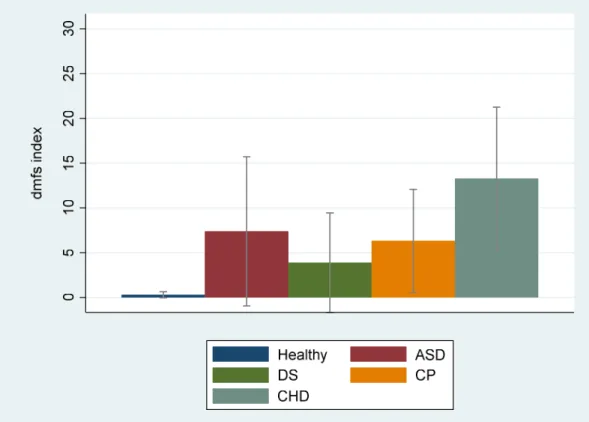
Figure 1. Primary dentition (dmfs) caries experience at the first dental visit
among patients ages 24-71 months old………8
Figure 2. Primary dentition (dmfs) caries experience at the first dental visit
among patients ages 6-71 months old………...9
Figure 3. Permanent dentition (DMFS) caries experience at the first dental
visit among patients age s>71 months old………9
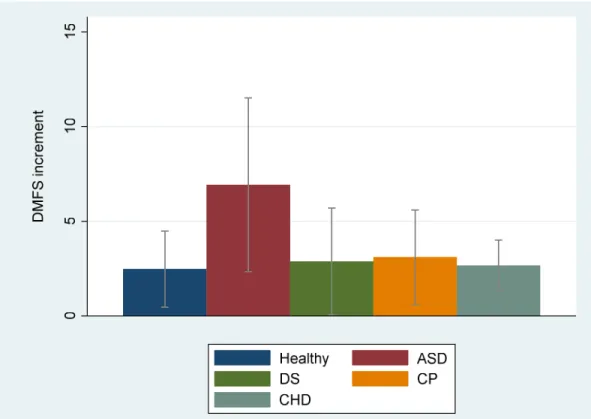
Figure 4. Permanent dentition (DMFS) caries increment between the first
and the last dental visits among patients ages >71 months old at the last dental visit…...10
Figure 5. Follow-up time adjusted (annual) permanent dentition (DMFS) caries increment between the fist and last dental visits among patients ages >71
months old at the last dental visit………10
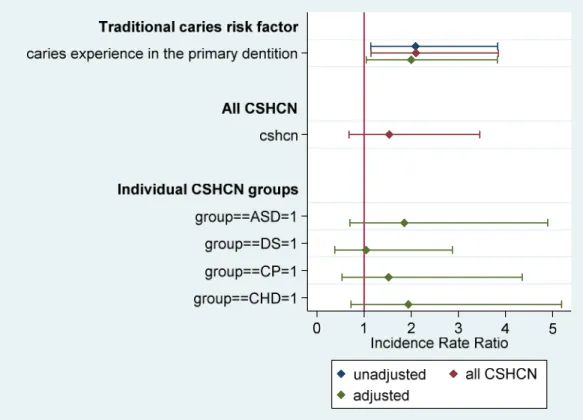
Figure 6. Permanent dentition (DMFS transition from 0 to greater than 0) caries risk (incidence rate ratios associated 95% confidence intervals) associated with the only significant caries risk factor among study participant
(“caries experience in the primary dentition”) overall, adjusted and stratified
LIST OF ABBREVIATIONS AAPD American Academy of Pediatric Dentistry
ADA American Dental Association
ASD Autism Spectrum Disorder
CAMBRA Caries Management by Risk Assessment
CHD Congenital Heart Disease
CI Confidence Interval
CP Cerebral Palsy
CSHCN Children with Special Health Care Needs
DS Down Syndrome
IR Incidence Rate
CHAPTER 1: INTRODUCTION
The American Academy of Pediatric Dentistry (AAPD) calls caries risk assessment tools
an “essential element(s) of contemporary clinical care for infants, children, and adolescents.”1 The
goal of risk assessment is to aid dentists in individualizing preventive strategies, determining recall
intervals, and allocating resources in a way that best addresses patients’ needs. Importantly, caries
risk assessment tools have important pedagogical value and are useful for patient education and
communication purposes, especially in the context of addressing modifiable risk factors.
The emerging new paradigms of precision medicine2,3 and dentistry4 place increased
demands on caries risk assessment approaches. For example, identification of biological sub-types
of previously considered homogeneous disease entities and emphasis on care customization are
two important elements of precision health care. However, the practical utility of current caries
risk assessment tools is arguably limited.5,6 This is due to several reasons including the general
lack of validation studies and thus quantitative estimates of risk (whereas low/moderate/high are
subjective categories), the inclusion of current disease markers as risk factors, an overall lack of
scientific evidence support, and others.
The consideration of all children with special health care needs (CSHCN) as one
homogeneous category for caries risk assessment, is a prime example area where improvements
are warranted. Existing caries risk assessment tools by the AAPD, American Dental Association
(ADA), and Caries Management by Risk Assessment (CAMBRA) consider all CSHCN in tandem,
disregarding their actual diagnoses and their implications.1,7,8,9,10 According to the AAPD tool, all
CSHCN are categorized as moderate risk.1 The ADA tool places all special health care needs
as moderate risk.7,8 CAMBRA classifies children under the age of 5 with “developmental
problems” as high risk, while special health care needs status is not considered for individuals over
the age of six. If, however, a patient is classified as high risk and has reduced salivary flow or
special health care needs, they are then placed into a separate extreme risk category.9,10 Of note, it
remains unclear what moderate, high and extreme risk exactly mean.
CSHCN represent an important population segment: according to a 2009 national survey,
they comprise 15.5% of all children in the US.11 In 2010, Iida and colleagues12 found that CSHCN
had a higher proportion of unmet dental need and greater likelihood to lack preventive dental
services than their counterparts without SHCN. The rationale for this was only speculated, but they
did conclude that a heterogeneity in complexity of CSHCN does in fact lead to a difference in
utilization of dental services. Given the importance of this population segment for the specialty of
pediatric dentistry, as well as the clinical, public health and policy implications revolving around
their care, we suggest that increased attention on their oral health status and specifically caries risk
is in order. The heterogeneity in the diagnoses and comorbidities presented in the CSHCN group
is a likely source of variation in caries risk between subgroups with different diagnoses. In such a
scenario, precision oral health care would entail categorization and treatment according to specific
sub-group or diagnosis.
In this study, we sought to address this knowledge gap by quantifying and comparing caries
risk among and between four common groups of CSHCN: Autism (ASD), Congenital Heart
Disease (CHD), Cerebral Palsy (CP) and Down Syndrome (DS). Moreover, we contrasted these
CSHCN groups with a fifth control (“healthy”) group and evaluated a wide array of postulated risk
CHAPTER 2: METHODS Section 2.1: Study design and population.
This retrospective longitudinal cohort study was approved by the Institutional Review
Board of the University of North Carolina at Chapel Hill (#16-1910). Thirty patients from each
CSHCN group (ASD, CHD, CP, and DS), as well as 30 control patients were selected using
consecutive quota sampling from a private pediatric dentistry clinic in an urban center in North
Carolina. Patient records eligible for chart review, patient selection and data extraction were dated
between May 1992 and December 2016. To be included in the SHCN groups, patients had to have
one, but not multiple of the diagnoses under study: ASD, CHD, CP, or DS. An exception to this
criterion was made for patients with DS who also had CHD; these were not excluded from the DS
group, as heart conditions are a classic comorbidity of DS. Patients were eligible for inclusion in
the control group if they did not have any of the studied SHCNs or other significant medical
histories. Control patients were selected with an effort to age-match subjects in the CSHCN groups
at the date of their last appointment. Patients were not excluded for having seasonal allergies,
eczema, or well-controlled asthma (having never necessitated emergency room care and being
managed with no more than one medication).
Section 2.2: Data and procedures.
Clinical and dental history data were extracted from every appointment throughout the time
each patient was followed in the practice. The retrospective chart review and data abstraction for
all 150 patients was conducted by the first author. Information collected from charts included 21
and clinical findings that are found within the AAPD caries risk assessment tool.1 It also included
six factors which we postulated may be of special relevance to the oral care of CSHCN: patient
taking xerostomia inducing medications; caregiver having difficulty performing oral hygiene;
patient is a mouth breather; patient has calculus present in occlusal grooves of posterior teeth;
patient’s diet is liquid/pureed only or supplemented; and patient is g-tube dependent.
Caries diagnoses were done at the surface-level by five board-certified pediatric dentists
who were employed in the same private practice during the timeframe of the study. A combination
of visual and visual-tactile criteria paired with periodic radiographic examination was used for
caries lesion detection at the non-cavitated level (d1 or D1). The traditional DMFS and dmfs index
scores were estimated for each patient and visit. Primary dentition caries (burden, measured by the
dmfs index; and risk, defined as transition for dmfs=0 to dmfs>0 during the study period) was
considered among patients who were <72 months old at the last clinic visit. Similarly, permanent
dentition caries (burden, measured by the DMFS index; and risk, defined as DMFS=0 to DMFS>0
transition during the study period) was considered among patients who were ≥72 months old.
Summary caries burden and increment indices were computed as the sum of dmfs and DMFS.
Section 2.3: Analytical approach.
We used univariate, bivariate and multivariable methods for data presentation and analysis.
We employed Poisson regression modeling to quantify caries risk; specifically, we estimated
incidence rates (IR; corresponding to ‘caries events’, i.e., non-case to case transitions per
person-year) and 95% confidence intervals (CI) as measure of risk. We computed follow-up time adjusted
(annual) increments to account for differences in follow-up time, and excluded patients who were
followed for less than 6 months. To compare risk between different groups we generated incidence
associated with caries incidence) we used logistic regression with marginal effects estimation and
a backward stepwise variable selection strategy for covariate inclusion (p<0.005 for variable entry
CHAPTER 3: RESULTS
Tables 1 and 2 present the descriptive information of the study sample, stratified by
CSHCN group, as well as inclusion in the primary and permanent dentition analysis. Participants’
median age at baseline was four years and median follow up period was 5.3 years. Caries burden
was highest among children with CHD, followed by ASD and CP diagnoses. Similar patterns were
found whether children ages 24-71 or 6-71 months were considered for primary dentition caries
burden (Figures 1 and 2). In the permanent dentition, ASD and CHD also had the highest caries
burden (Figure 3), although these differences at baseline were smaller and not statistically
significant.
Crude permanent dentition caries increment (Table 3) was highest among children with
ASD diagnosis: 6.9 versus 2.5 among controls (Figure 4). However, controlling for follow-up time
(which varied between study groups), children with CHD diagnoses exhibited the highest adjusted
(annual) DMFS increment (4.9) compared to those with ASD diagnosis (2.5) (Figure 5).
In terms of caries incidence, 30% of at-risk controls and 43% of at-risk children with SHCN
developed the permanent dentition caries during the study period (Table 4), a 43% relative
difference (P=0.3). Examination of all 21 postulated risk factors for caries incidence reveled that
only one, caries experience in the primary dentition (“visible cavities or fillings”), was associated
with caries risk, and a relative effect of (incidence rate ratio) 2.1 (95% CI=1.1-3.8; P=0.02). This
estimate remained virtually unchanged after adjustment for SHCN diagnosis. Caries risk
(incidence rates) varied between SHCN group and controls—risk was more than double among
than controls, these estimates were higher among CHD (IRR=1.9, 95% CI=0.75-5.2) and ASD
(IRR=1.85, 95% CI=0.70, 4.9) versus CP and DS (Figure 6).
Section 3.2: Figures
Figure 1. Primary dentition (dmfs) caries experience at the first dental visit among
Figure 2. Primary dentition (dmfs) caries experience at the first dental visit among patients ages 6-71 months old
Figure 3. Permanent dentition (DMFS) caries experience at the first dental visit among
Figure 4. Permanent dentition (DMFS) caries increment between the first and the last dental visits among patients ages>71 months old at the last dental visit
Figure 5. Follow-up time adjusted (annual) permanent dentition (DMFS) caries increment
CHAPTER 4: DISCUSSION
In this study, we assembled a retrospective longitudinal cohort to evaluate caries
experience and caries risk in four groups of CSHCN compared to age-matched controls. We
found that caries risk was overall higher in CSHCN compared to age-matched ‘healthy’ controls
yet both caries burden and risk were somewhat heterogeneous within the CSHCN group. In
terms of caries risk factors, we found that caries experience in the primary dentition was
uniformly and strongly associated with caries risk, essentially doubling caries risk, for all
children, whether in a SHCN group or not. Our findings add to the knowledge base of caries risk
among special health care needs populations and shed light into previously undetected
heterogeneity among children with different diagnoses. Based on these findings, we support that
a more detailed accounting of medical diagnoses must be operationalized in caries risk
assessment tools—caries risk may differ by a factor of 2 within sub-groups of CSHCN.
Previous reports have evaluated individual SHCN diagnoses in comparison to controls or
considered CSHCN as a whole compared to healthy controls;12 however, few have examined
multiple diagnoses from one setting. This evidence consistently shows that patients with DS are
likely to have a lower caries risk compared to controls13,14,15 and that patients with CP are likely
to have higher caries risk.16,17 However, there is far more debate in the literature surrounding the
caries risk of patients with ASD and CHD. One study found that patients with ASD were more
likely to have overall negative behaviors in the dental chair, more difficulty in finding a dental
home, poorer overall oral hygiene, and an increased proportion of untreated dental caries lesions
routines and diet selection leading to an overall decrease in caries incidence compared to healthy
controls.19 In patients with CHD, while an increase in enamel defects has been noted, this has not
been demonstrably translated to elevated caries risk.20
In the present study, DS patients’ caries risk was nearly identical to controls and
considerably lower than all other groups of CSHCN. This finding is consistent with earlier
findings of similar or decreased caries experience in patients with DS compared to those
without.13,14,15 Moreira and colleagues13 found a comparable caries experience between DS and
non-DS children, and also reported that DS patients with caries had higher salivary S. mutans
levels compared to non-DS patients with caries. Other studies have investigated the salivary
composition of DS patients to determine what biological factors make them inherently less prone
to caries development. Lee et al.14 attributed the decreased caries propensity of DS patients to
higher salivary S. mutans-specific IgA: a caries protective factor. Additionally, Siqueira and
colleagues15 found that while children with DS produced less saliva than controls, the saliva
from children with DS had a marked increased buffering capacity which may also account for
lower caries rates.
Children at increased risk of developing caries require intensified preventive strategies.
Many studies have shown that dental providers are good at recognizing high caries risk and
ramping up preventive efforts once disease is already present.20,21 However, in these patients
caries risk is not applicable, and a disease management approach is warranted. Being able to
identify children at increased risk prior to disease occurrence if fundamental for efforts to
prevent it. Moreover, previous reports generally lack quantitative estimates of caries risk, which
are important elements of precision clinical care, patient education and communication.6 Based
on the results of the present study that was conducted among this specific study population, we
from caries-free to a dental caries case in the permanent dentition, even in the context of a dental
home. This rate was one out of thirty for DS patients and healthy controls.
Based on the findings of this study, those at elevated risk, requiring the greatest caries
preventive strategies would be patients with CHD and ASD patients, in both the primary and the
permanent dentition. Similar to findings of Stecksen-Blicks20 we found that patients with CHD
had the highest primary dentition caries experience (dmfs burden) than all other groups. A
substantial body of research supports the notion that CHD leads to periods of cyanosis and
subsequent abnormal enamel formation in upwards of 50 percent in the developing primary
dentition,22 which can result from transient oxygen deprivation. These enamel defects make the
teeth more caries susceptible23 in addition to the increased number of xerostomia-inducing
medications patients are often taking to treat their CHD.
Of note, CHD patients’ caries risk this study was more than double that of DS
patients. However, it has been reported that significant cardiac defects are present in roughly
44% of the DS population.24 Therefore, physicians routinely screen infants diagnosed with DS
for CHD leading to an early diagnosis and subsequent surgical intervention. We speculate that
with early diagnosis of DS prenatally, congenital heart defects are also being diagnosed at
or before birth leading to earlier surgical intervention and decreased periods of cyanosis that
leads to enamel defects. According to the CDC, only 15% of mothers reported learning of their
child’s CHD diagnoses prenatally and this was more likely when there is already a prenatal
diagnosis of another birth defect.25 We believe that this early intervention in treating cardiac
conditions, combined with the caries protective factors found in patients with DS,14,15 leads to an
overall low caries risk in patients with DS compared to those with CHD alone.
Patients with ASD in this study had high permanent dentition (DMFS, annual) increment,
those who have found patients with ASD to be at greater caries risk have attributed this to
increased negative behavior in the dental chair, more difficulty in finding a dental home, and
poorer overall oral hygiene.18 Considering that patients with ASD have more behavioral issues
than medical differences compared to our healthy controls, we speculate that at a young age
these behavioral differences may not have a great effect on caries risk, as many patients at a
young age are pre-cooperative anyway. With age, however, these differences become more
apparent and add to the challenges of diet preferences, performing oral hygiene and accepting
dental treatment. Anecdotally, it has been observed in our study’ population of ASD that
consuming dry cereal versus cereal with milk is preferred. There was also a tendency for sticky
gummy type candies to be used as rewards by therapists working with this population. Future
studies, should consider dietary differences between these SHCN groups.
Children with CP had similarly elevated primary dentition caries experience (dmfs index)
at baseline, compared to controls. However these patients did not experience a notably elevated
DMFS increment, and they fell between controls and CHD/ASD in terms the magnitude of their
permanent dentition caries risk. This is consistent with published reports showing an overall
increased caries risk in these patients.16,17 While we did not collect data on the severity of each
patient’s CP, there has been shown to be a direct relationship between the severity of the
neurological impairment and caries risk increase. This has been attributed to an increase in biting
reflex, difficulty in performing oral hygiene, decrease in oral motor function,16 and increased
likelihood to have a liquid or pureed diet.17
Caries experience in the primary dentition emerged as the only significant predictor of
permanent dentition caries across all four groups. This is not a novel finding. Past caries
experience is often the major factor dental providers consider when assessing risk in their
caries as a person level disease and awaits the disease to manifest to then “predict it”, it may be
too later for risk assessment and a disease management approach may be best suited.
The heterogeneity within this CSHCN population cannot be overemphasized. With the
notion of precision dentistry and the idea of “training precision-minded healthcare providers”,3
we must consider the individual nuances of each patient as we tailor an individualized prevention
and treatment plan. To combine any group of patients into a single risk category is to ignore the
individual differences that make them unique and shape their disease risk—CSHCN are no
different.
Our study benefits from the longitudinal design and the fact that all patients were seen at
the same, well-established practice, over a long period. This also allowed the inclusion of a
control patient group, from the same practice, to serve as a comparison. In spite of these
strengths, this patient sample may not be reflective of other patient populations with SHCNs, and
the small sample size limited our ability to make robust statistical inferences. However, we
expect that this research question will be examined using similar methodology in other clinics or
CHAPTER 5: CONCLUSIONS
1. CSHCN is a heterogeneous group that should not be considered in tandem for caries risk
assessment but rather by diagnosis.
2. Patients with CHD experienced the highest caries burden in the primary dentition.
3. Patients with CHD had the highest permanent dentition caries increment, followed by those
with ASD.
4. DS patients’ caries risk was the smallest of all CSHCN groups studied and essentially
identical to healthy controls.
5. Caries experience in the primary dentition was the only significant predictor of permanent
REFERENCES
1. American Academy of Pediatric Dentistry. Guideline on caries-risk assessment and management for infants, children, and adolescents. Pediatr Dentistry 2015; 37(6): 132-39.
2. Collins FS, Varmus H. A new initiative on precision medicine. N Engl J Med.2015 Feb 26;372(9):793-5.
3. Divaris K. Fundamentals of Precision Medicine. Compend Contin Educ Dent. 2017 Sep;38(8 Suppl):30-32.
4. Divaris K. Precision Dentistry in Early Childhood: The Central Role of Genomics. Dent Clin North Am. 2017 Jul;61(3):619-625.
5. Gao X, Di Wu I, Lo EC, Chu CH, Hsu CY, Wong MC. Validity of caries risk assessment programmes in preschool children. J Dent. 2013 Sep;41(9):787-95.
6. Divaris K. Predicting Dental Caries Outcomes in Children: A "Risky" Concept. J Dent Res. 2016 Mar;95(3):248-54.
7. American Dental Association. Caries Risk assessment Form (Age0-6). Available
at:“https://www.ada.org/~/media/ADA/Member%20Center/FIles/topics_caries_under6.pdf?l a=en”. Accessed: 2018-02-21. Archived by WebCite® at: “http://www.webcitation.
org/6xP9zvPFw”)
8. American Dental Association. Caries Risk Assessment Form (Age >6). Available at: “http://www.ada.org/~/media/ADA/Science%20and%20Research/
Files/topic_caries_over6.ashx”. Accessed: 2018-02-21. (Archived by WebCite® at:
“http://www.webcitation. org/6xP9axGWT”)
9. Ramos-Gomez FJ, Crall J, Gansky SA, Slayton RL, Featherstone JDB. Caries Risk Assessment Appropriate for the Age 1 Visit (Infants and Toddlers). CDA Journal 2007; 35(10):687-702.
10.Featherstone JDB, DomeJean-Orliaguet S, Jenson L, Wolff M, Young DA. Caries Risk Assessment in Practice for Age 6 Through Adult. CDA Journal 2007; 35(10):703-13.
11.U.S. Department of Health and Human Services, Health Resources and Services
Administration, Maternal and Child Health Bureau. The National Survey of Children with Special Health Care Needs Chartbook 2009-2010. Rockville, Maryland: U.S. Department of Health and Human Services, 2013.
12.Iida H, Lewis C, Zhou C, Novak L, Grembowski D. Dental care needs, use and expenditures among U.S. children with and without special health care needs. JADA 2010; 141: 79-88.
14.Lee SR, Kwon HK, Choi YH. Dental caries and salivary immunoglobulin A in Down syndrome children. J Paediatr Child Health 2004; 40: 530-33.
15.Siqueira WL, Bermejo PR, Mustacchi Z, Nicolau J. Buffer capacity, pH and flow rate in saliva of children aged 2-60 months with Down syndrome. Clin Oral Invest 2005; 9: 26-29.
16.Dos Santos MTBR, Nogueira MLG. Infantile reflexes and their effects on dental caries and oral hygiene in cerebral palsy individuals. J of Oral Rehab 2005; 32: 880-85.
17.Santos MRBR, Guare RO, Celiberti P, Siqueira WL. Caries experience in individuals with cerebral palsy in relation to oromotor dysfunction and dietary consistency. Spec Care Dentist 2009; 29(5): 198-203.
18.El Khatib AA, El Tekeya MM, El Tantawi MA, Omar T. Oral health status and behaviours of children with autism spectrum disorder: a case-control study. Int J Paediatr Dent 2014; 24: 314-23.
19.Namal N, Vehit HE, Koksal S. Do autistic children have higher levels of caries? A cross-sectional study in Turkish children. J of Indian Soc of Pediatr and Prev Dent 2007; 25(2): 97-102.
20.Stecksen-Blicks C, Rydberg A, Nyman L, Asplund S, Svanberg C. Dental caries experience in children with congenital heart disease: a case-control study. Int J Paediatr Dent 2004; 14: 94-100.
21.Tasioula V, Balmer R, Parsons J. Dental health and treatment in a group of children with congenital heart disease. Pediatr Dent 2008; 30(4): 323-28.
22.Hallett KB, Radford DJ, Seow K. Oral health of children with congenital cardiac diseases: a
controlled study. Pediatr Dent 1992; 14(4): 224-30.
23.Caulfield PW, Li Y, Bromage TG. Hypoplasia associated severe early childhood caries- a
proposed definition. J Dent Res 2012;91(6):544-50.
24.Freeman SB, Bean LH, Allen EG, Tinker SW, Locke AE, Drushcel C, et al. Etchnicity, six, and the incidence of congenital heart defects: a report from the national down syndrome project. Genet Med. 2008; 10:173-80.
25.Ailes EC, Gilboa SM, Riehle-Colarusso T, Johnson CY, Hobbs CA, Correa A, Honein MA.