A DEMONSTRATION OF THE ‘TRANSACTIONAL PERSPECTIVE AS METHOD’ INTEGRATING OCCUPATIONAL SCIENCE AND IMPLEMENTATION SCIENCE
Lauren Fowler Holahan
A dissertation submitted to the faculty at the University of North Carolina at Chapel Hill in partial fulfillment of the requirements for the degree of Doctor of Philosophy in the Department
of Allied Health Sciences (Occupational Science).
Chapel Hill 2018
© 2018
ABSTRACT
Lauren Fowler Holahan:A Demonstration of the ‘Transactional Perspective as Method’ Integrating Occupational Science and Implementation Science
(Under the direction of Nancy Bagatell)
As the transactional perspective on occupation continues to evolve (Dickie, Cutchin, & Humphry, 2006; Bailliard, Aldrich, & Dickie, 2012; Cutchin, Dickie & Humphry, 2017), the epistemological advances toward a more communal/less individual-centered understanding of occupation beckon thoughtful methodological shifts, as well. Early research methodology
associated with the transactional perspective on occupation included ethnography and participant observation, both of which continue to be widely employed and extended through new forms of qualitative inquiry and analysis. This study builds on the advancements of research grounded in the transactional perspective on occupation and makes an argument for and demonstrates the use of a methodology developed within implementation science known as a practice profile (Metz, 2016). Practice profiles are increasingly used to support implementation and/or program
improvement efforts, particularly in public service domains like education and health care. In the civic forum, advantages of practice profiles over other innovation and continuous quality
school-based Medicaid claiming, for which a practice profile does not currently exist, and where efforts to support excellence and innovation have mainly targeted the knowledge, skills, and
To the 28 counties in eastern North Carolina declared disaster areas following Hurricane Florence.
We are still for you. Get started. Then get better.
-State Implementation Scaling-up of Evidence-based Practice Center You shouldn’t be anxious when you don’t write.
ACKNOWLEDGEMENTS
The number and variety of contributors to this project are astonishing. The five members of the dissertation committee have been just the right combination of encouraging and slightly dubious. I won’t be able to gather in words or gifts the gratitude I have for Nancy Bagatell who, as this committee chair amid all her other swarming duties as Division Director, was always faster on reply than I was on supply. That committee members Ruth Humphry and Virginia Dickie also served as UNC-Chapel Hill Occupational Science and Occupational Therapy (OS/OT) Division Directors is not lost on me. The heritage of leadership in this program is unmatched and the ways I have grown under, in, and through that bossness can only be honored in practice. Patty Laverdure’s leadership in the world of school-based occupational therapy has for years inspired and reminded me I’m not alone. And, my debt of thanks to Laurie Ray as a colleague, a mentor, a friend, and now a committee member will never be repaid. Working alongside her has been a gift on the order of divine.
To the 35 stakeholders, including Martha Simmons, Meg Harris, Caroline McCarty, and Perry Flynn, who shared their thoughts, wisdom, and emotions that led to these findings, my thanks extends beyond this project. I have some insight into what they do on behalf of students with disabilities; they represent a corps of experts who daily and mostly invisibly will not stop until achievement gaps for vulnerable populations of students are closed. Talk about social justice.
Services section, have been super interested, encouraging, and willing to fill in behind my writing ass. I owe them all, not just for covering for me, but for the model of dedication and unstoppable excellence they bring to educating students with disabilities. Likewise three faculty in the OS/OT Division—Linn Wakeford, Sue Coppola, and Jenny Womack—have, later in their careers than me, completed terminal degrees in the time I have been at this one. Their footsteps in the hall have been proof this could be done.
TABLE OF CONTENTS
LIST OF TABLES ... xi
LIST OF FIGURES ... xii
LIST OF ABBREVIATIONS ... xiii
CHAPTER 1: INTRODUCTION AND BACKGROUND ... 1
1.1. Origins of this Study ... 1
1.2. Overview ... 2
1.3. Methodological Roots of the Transactional Perspective on Occupation ... 3
1.4. Implementation Science ... 3
1.4.1. Practice Profiles ... 4
1.5. School-based Medicaid Programs... 5
1.6. Contributions to Current Research... 6
1.6.1. Occupational Science ... 6
1.6.2. Implementation Science ... 8
1.6.3. School-based Medicaid programs ... 8
1.7. Problem Statement ... 9
1.8. Objective and Aims... 10
1.8.1. Objective 1: Develop a practice profile for school-based Medicaid programs ... 10
1.8.2. Objective 2: Enhance the array of research methodologies suitable for and aligned with the transactional perspective on occupation and enhance the theoretical base in implementation science ... 10
CHAPTER 2: LITERATURE REVIEW ... 16
2.1. Emergence of Occupational Science ... 16
2.1.1. Methodological Paths in Occupational Science ... 18
2.2. Emergence of Implementation Science ... 1
2.2.1. Practice Profiles ... 3
2.3. The Methodological Connection... 4
2.4. School-based Medicaid Programs... 7
2.4.1. History and Overview of Medicaid ... 7
2.4.2. Medicaid in Schools ... 8
2.5. Summary ... 13
CHAPTER 3: METHODS ... 14
3.1. Overview ... 14
3.2. Positionality of Researcher/Considerations of Power... 15
3.3. Recruitment ... 16
3.3.1. Inclusion Criteria ... 16
3.3.2. Exclusion Criteria ... 18
3.3.3. Retention ... 18
3.3.4. Confidentiality ... 18
3.4. Study Participants ... 18
3.4.1. Phase I: Semi-Structured Interviews ... 18
3.4.2. Phase II: Vetting and Consensus-building ... 19
3.4.3. Phase III: Usability Testing School Districts... 19
3.5. Data Collection and Analysis... 19
3.5.1. Phase I: Semi-Structured Interviews ... 19
3.5.3. Phase III: Vetting ... 24
3.5.4. Phase IV: Usability Testing ... 26
CHAPTER 4: RESULTS ... 29
4.1. Outcome of Phase I: Interviews and Literature/Document Review ... 29
4.1.1. Philosophical Principles ... 31
4.1.2. Core Elements 1, 3, 4 and 5 ... 33
4.1.3. Core Element 2, Infrastructure ... 34
4.2. Outcome of Phase II: Vetting ... 36
4.3. Outcome of Phase III: Usability Testing ... 37
CHAPTER 5: DISCUSSION AND CONCLUSION ... 38
5.1. Summary of Findings ... 38
5.1.1. School-based Medicaid Programs Findings and Implications ... 39
5.1.2. Occupational Science Findings and Implications ... 49
5.1.3. Implications for Implementation Science ... 56
5.2. Limitations ... 62
5.3. Opportunities for Future Research ... 62
5.4. Conclusion ... 63
APPENDIX A: IN-PERSON VETTING AGENDA ... 65
APPENDIX B: USABILITY TESTING FEEDBACK RESULTS ... 69
APPENDIX C: SCHOOL-BASED MEDICAID PRACTICE PROFILE ... 92
LIST OF TABLES
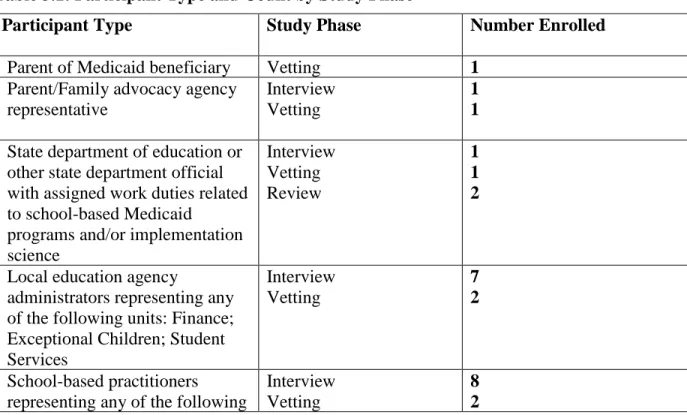
Table 3.1: Participant Type and Count by Study Phase... 16 Table 3.2: Usability Testing Local Education Agency (LEA) Profiles ... 17 Table 4.1: Initial Thematic Analysis Categories from Interview and Literature
LIST OF FIGURES
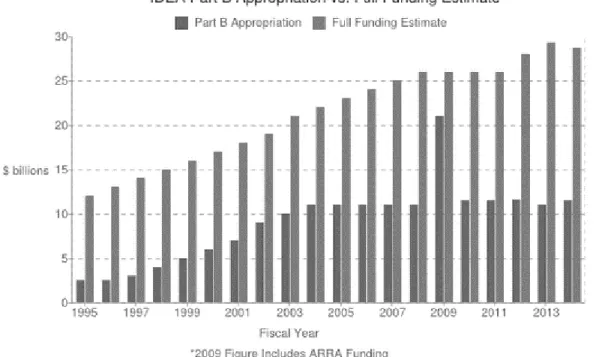
Figure 1.1. Annual IDEA Part B Appropriation Compared to Full Funding
(1995-2014) ... 5
Figure 1.2 School-based Medicaid Practice Profile Theory of Action ... 10
Figure 1.3. Multiplicative Correlation of Functional Coordination (Fixsen, Blase, Metz, & Van Dyke, 2013)... 14
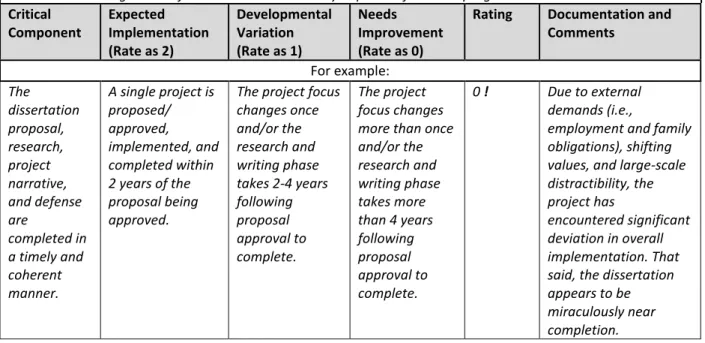
Figure 2.1. Example of a Practice Profile ... 4
Figure 2.2. How Medicaid Supports FAPE ... 9
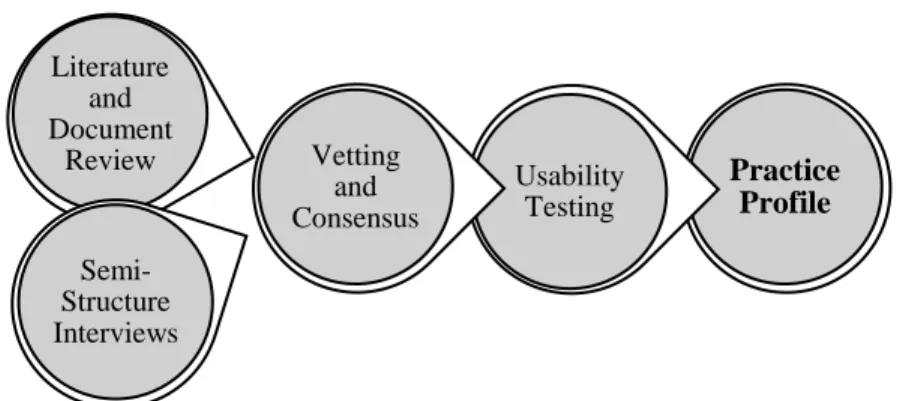
Figure 3.1. Practice Profile Development Sequence (Metz, 2016)... 15
LIST OF ABBREVIATIONS
AOTA American Occupational Therapy Association CHIP Children's Health Insurance Program
CMS Centers for Medicare and Medicaid Services
EPSDT Early and Periodic Screening, Diagnostic and Treatment FERPA Family Educational Rights and Privacy Act
FFS Fee for service
IDEA Individuals with Disabilities Education and Improvement Act (2007) IEP Individualized Education Program
LEA Local Education Agency
MAC Medicaid Administrative Claiming NIH National Institutes of Health
NIRN National Implementation Research Network PTO Processes Transforming Occupations RMTS Random Moment Time Study
CHAPTER 1: INTRODUCTION AND BACKGROUND
1.1. Origins of this Study
For many years, first as a local school-based occupational therapy program administrator and then as a consultant to a state department of education, I have been surprised by how
infrequently policy and/or program development efforts account for potential impact on practitioner habits. Immersion in the occupational science literature over the past eight years, with particular emphasis on Deweyan theories of action and critical theory perspectives, has only served to fuel this consternation. My experience, now encountered through transactional-colored glasses, is that, even on the rare occasion they are evidenced-based (Weiss, 1980), policies and procedures are frequently and thoroughly disconnected from the lived experience of real humans involved in real work in real time. Over the same span of years, as part of increasing
participation in state-wide implementation projects related to results driven accountability (Ruggiero & Kahn, 2015), specially designed instruction (IDEA, 2004), school mental health, and school-based Medicaid, my exposure to and facility with implementation science
demonstrate those linkages and common features, and to argue for future intentional collaborations among scientists in both disciplines.
Also, in conducting this investigation, I have had occasion to reflect on my near-20-year history of work as a school-based Medicaid practitioner, advocate, policy analyst, and consultant. Initially, my selection of school-based Medicaid programs as the laboratory for a blended
occupational science/implementation science demonstration was a practical one: I was familiar with the literature, regulatory landscape, and stakeholders and would be able to navigate the data collection phases of the project with relative fluency. While this held true, what I have come to understand—and own—more thoroughly is that I have not allocated time, energy, wit, and a large part of my career to school-based Medicaid programs incidentally or because I was being paid. I have invested in the work because I care about Medicaid, public education, and students with disabilities and recognize the interdependent success of all three. I also perceive the success of any and all three as a matter of social justice and celebrate how each of the three—Medicaid, public education, and students with disabilities—are rich contributors to the common good. In that light, this project also represents my taking a more articulate and grounded stand for my values and what I believe to be good work. As Shank (2013) said, “Research is value-laden because the researcher discriminately focuses on what to ask, which problematic situation to address and in what way, because of personal experiences, priorities, and the circumstances under which the research is undertaken” (p. 190).
1.2. Overview
problems the study addresses via two main objectives, and close with the conceptual framework on which the project is built.
1.3. Methodological Roots of the Transactional Perspective on Occupation
The originators of the Transactional Perspective on Occupation (Cutchin, Dickie, & Humphry, 2006) come from varied disciplines and research backgrounds. Malcolm Cutchin, a human geographer and philosopher, employs qualitative data collection methods and grounded theory analysis; Virginia Dickie is an anthropologist and occupational scientist versed in ethnographic inquiry, and Ruth Humphry is human development researcher who transitioned to participant observation methods mid-career. Since 2006, research methodologies associated with the TPO have included visual methods (Bailliard, 2015; Hartman, Mandich, Magalhães, & Orchard, 2011; McCloy, White, Lee Bunting & Forwell, 2016), situational analysis (Aldrich & Rudman, 2016), critical thematic analysis (Rudman, 2013; Farias & Rudman, 2016), mapping (Rudman, 2015), and conceptual mapping (Johnson & Bagatell, 2017). While the history and rationale for methodological decisions within the TPO exceed the scope of this work, part of this project’s aim is to articulate more precisely why certain forms of inquiry have historically aligned with a transactional understanding of occupation. I will also explore gaps that have evolved as a result of the methodologies chosen, and how one implementation science tool— practice profiles—may enhance and expand not only research methods within occupational science, but the transactional perspective itself.
1.4. Implementation Science
A specified set of activities designed to put into practice an activity or program of known dimensions. According to this definition, implementation processes are purposeful and are described in sufficient detail such that independent observers can detect the presence and strength of the “specific set of activities” related to implementation. In addition, the activity or program being implemented is described in sufficient detail so that
independent observers can detect its presence and strength (Fixsen, Naoom, Blase, Friedman, & Wallace, 2005, p.5; italics added)
Where dissemination addresses how creators or sponsors of programs impact the decisions of potential adopters, implementation concerns what adopters do. Implementation science investigates what happens after adoption occurs, especially in organizational settings (Dearing & Kee, 2013). Currently, the National Implementation Research Network (NIRN) organizes the implementation science into five frameworks—Usable Innovations,
Implementation Stages, Implementation Drivers, Improvement Cycles, Implementation Teams— to investigate and demonstrate how programs, organizations, and systems address
implementation factors like readiness, buy-in, installation, fidelity, and continuous improvement (NIRN, 2017).
1.4.1. Practice Profiles. One of the NIRN frameworks, implementation stages, includes four phases of effective implementation: exploration; installation; initial implementation; and, full implementation (Bertram, Blaze, & Fixsen, 2015). “Practice profiles are a tool for
operationalizing a conceptually defined strategy through community engagement and research methods so that it is clear what practitioners will do as they carry out the innovation” in any stage of implementation (Metz, 2016, p.1). During installation, practice profiles describe the processes, functions, components, and activities needed to implement a program undergoing development or restructuring. During full implementation, these tools serve as the basis for measuring program health and fidelity of implementation across the program, system, or
this is the connection to occupational science. Practice profiles are an evidence-based affirmation of the claim that the transactional perspective is, itself, a method of social inquiry for studying occupations at the community (or organizational) level (Cutchin, Dickie, & Humphry, 2017).
1.5. School-based Medicaid Programs
The Individuals with Disabilities Education Improvement Act (IDEA; 2004) provides funding for special education and related services, like occupational therapy. Unfortunately, Congress has never allocated the originally promised 40% federal share in the excess cost of educating students with disabilities—historically calculated at about two times greater than the costs of educating general education students. Most recent data indicate the federal investment in educating students with disabilities is 16% (or $1,843 of the $11,534 per student) of the excess cost; the remaining 84% is left to states and local school districts to supply (Dancy, 2016).
In an effort to offset the shortage in federal IDEA funding, in 1988 Congress granted access to Medicaid reimbursement for some health services provided at school with the passage of the Medicare Catastrophic Care Act (PL 100-360). As a result, annual Medicaid
reimbursement to school services now reduces the $17 billion IDEA burden on states by about $4 billion (McCann, 2013). While Medicaid fee-for-service reimbursement of some health services provided by schools does not dispatch the entire IDEA funding deficit, it helps significantly. Further, IDEA (2004) requires Medicaid funding precede the financial
responsibility of the local education agency (LEA) when providing services to Medicaid-enrolled students with Individualized Education Programs [IEP] (Sec. 300.154). As such, school
practitioners and administrators can, with good conscience, participate in compliant school-based Medicaid claiming programs to sustain and strengthen this critical resource. That said, few resources exist to translate federal and state Medicaid policy into local school-based service delivery. Again, practice profiles represent an as-yet untapped mechanism for bridging this gap.
1.6. Contributions to Current Research
The contributions of this study are threefold, such that the results and analysis
demonstrate: 1) an addition to the methodological tools effective for studying the transactional nature of occupation at the community or organizational level; 2) a strengthening of the theoretical base for practice profiles; and 3) the development of a practice profile for school-based Medicaid claiming.
researching specified occupations, giving occupational scientists a framework for collecting and interpreting data not just about the individual ‘occupant,’ but about the whole socio-historical, real-time, live-action situation in which occupation unfolds and endures. This is not to suggest the actor be excluded from the description of the action, but that the action—the occupation— can and should be recognizable, regardless of who is engaged in the occupation. My
dissatisfaction is that, even within the evolving transactional perspective and the recent call for community-oriented inquiry (Cutchin, Dickie, & Humphry, 2017), how to study the complexity of community or organizational occupations in a replicable way remains somewhat unclear. I hope to demonstrate that, not only are occupations adopted/owned/developed by
communities/organizations worthy of the attention of occupational scientists, but that the practice profile methodology goes a long way toward “expanding these efforts more formally in the communities where occupational scientists live and work” (Cutchin, Dickie, & Humphry, 2017, p.9).
This research also adds to Rudman et al.’s (2008) call for expanding interdisciplinarity in occupational science. Occupational scientists have rich potential to teach and research in
planning communities, implementing and evaluating programs, facilitating negotiations, and crafting strategic plans, because, again, without an eye for the occupations at stake in any of these types of work, uptake and sustainability will suffer. This study is one attempt to cross-pollinate occupational science, implementation science, education, public health, healthcare financing, public policy, and organizational behavior.
1.6.2. Implementation Science. In making these contributions to occupational science, this research also has potential to enhance implementation science by bringing the theoretical strengths of occupational science to the inquiry. Obviously, practice profiles were developed within and by other disciplines (Fixsen, Blase, Metz, & Van Dyke, 2013); however, occupational science and the transactional perspective have much to offer the business of describing the facets, actions, and quality indicators inherent in the ongoing flow of an organizational occupation (Smith, 2003). The strong ontological and epistemological foundations of the transactional perspective on occupation can undergird the somewhat tacit assumptions made in the selection of implementation science methodologies. Indeed, the complexity of understanding effective practice under a unifying theoretical framework is currently limited in the
implementation science literature. This study, backed by unifying transactional and occupational perspectives, would contribute directly to that need.
Medicaid-related aspects of position descriptions, employee performance measures, and professional learning.
1.7. Problem Statement
Since 1988, schools have relied on Medicaid reimbursements to sustain programs for students with disabilities and to fund Medicaid outreach activities to all students and families. In 2016, the opportunity opened for Medicaid reimbursement of health services provided at school, regardless of student disability status. While state Medicaid agencies codify the terms of
reimbursement to schools, their policies do not describe how optimized school-based Medicaid programs function. A practice profile for use by state and local education agencies which delineates the features of effective school-based Medicaid programs is needed to ensure the quality and sustainability of this critical funding stream in public education.
Development of this practice profile will also inform and extend the array of research methods used by occupational scientists operating from the transactional perspective, particularly those investigating community or organizational occupations, where current modes of
participatory inquiry may limit application to other communities and contexts. Finally, the theoretical foundation of practice profiles has not been robustly established in the
1.8. Objective and Aims
1.8.1. Objective 1: Develop a practice profile for school-based Medicaid programs.
The central hypothesis is that, with a practice profile for Medicaid programs in hand, school districts will have the capacity to establish and sustain effective, efficient, compliant, and ethical Medicaid claiming practices (which comprise the organizational occupation being investigated). In turn, those practices will yield essential funding for system resources to ensure all students attain adequate academic and functional achievement. This hypothesis is summarized in Figure 1.2 below.
Figure 1.2 School-based Medicaid Practice Profile Theory of Action
The rationale underlying the proposed project is that this research will allow state education and Medicaid agencies, district and school administrators, and practitioners to shape and measure the quality of school-based Medicaid programs. Without a practice profile—the systematic description of the organizational occupation that is school-based Medicaid claiming— school districts may rely on duplicative, incomplete, fragmented and/or ad hoc processes based on local, anecdotal knowledge and interpretation of policies. The expected outcome will be an evidenced-based practice profile, which, when employed, will positively impact the health, well-being, learning, and occupational performance of students with and without disabilities.
1.8.2. Objective 2: Enhance the array of research methodologies suitable for and
aligned with the transactional perspective on occupation and enhance the theoretical base
in implementation science. While Objective 2 may appear to be two separate objectives and in
School-based Medicaid
Practice Profile
Effective, Compliant
Local Medicaid
Program
Funding for Educational Resources
Improved Educational
Systems
need of parsing, the combination is intentional and critical to the second hypothesis driving this research, which is: occupational science and implementation science share many epistemological positions, aims, and outcomes which, when paired, will yield research findings potentially more salient, translational, and well-reasoned than if pursued separately. Although the language used for central—and similar—constructs varies in each discipline, blending strengths from
occupational science (e.g., thoroughly articulated theoretical foundations) and implementation science (e.g., proven methodological frameworks with readily translatable outcomes) holds significant promise for collaborations and enhancements in both fields. This is to say, the alignment of the two disciplines bears analysis and this project initiates that inquiry.
1.9. Conceptual Framework
As a holist with qualitative sensibilities, convinced of the inseparable nature of actor (including researcher), action, and context, the participatory paradigm as set forth by
organizational behavior scholars, John Heron and Peter Reason (1997), is my starting place. This paradigm seeks to “move away from the mechanical abstraction of the Cartesian worldview, and from the relativism that appears first as its counterpoint, to an experience of participatory reality” (p. 275). The participatory worldview holds reality is both subjective and objective and that human knowing is based on active engagement with a given cosmos. This encounter with the cosmos or community is transactional insofar as “our subjectivity feels the participation of what is there and is illuminated by it” (p. 279). Further, what can be known is only knowable in the company of other knowers; to wit, people need to participate with one another in the world as they know it—through shared language, culture, beliefs, values, and experiences—to arrive at anything like communal agreement on what is real.
including reflection on what is deemed worthy of attention—by asking the question “What human states are to be valued simply by virtue of what they are?” (p. 286)—scholars admit and take responsibility for the knowledge they generate. This is not simply a consideration of methodological ethics; this is about starting inquiry with an end-in-view (Dewey 1938/1963), imagination, passion, and involvement. In the participatory paradigm, the practical goal of research is human flourishing, such that humans will better know “how to choose and act— hierarchically, cooperatively, and autonomously—to enhance personal and social fulfillment and that of the eco-networks of which we are a part” (p. 287). The proposed study emerges,
fundamentally, from the desire for:
• Schools to have the resources to meet the health needs of students • Students to be healthy enough to be appropriately educated
• Families to experience collaborative, supportive partnerships in raising and educating healthy children
The other epistemological view driving my work is, as previously stated, the transactional perspective on occupation (Cutchin & Dickie, 2013), which connects my thinking as an
understanding of human performance have changed at a staggering pace, especially in the last twenty years, and traditional job analysis no longer provides durable, competitive, relevant, or flexible enough descriptions of what occupations are required for an organization to be
successful. Practice profiles are transactional, dynamic, context-dependent ways of situating organizational occupations as co-constitutive of organizational performance. They dispatch with the notion of the abstract ‘job’ (Acker, 1992) and rely instead on action-oriented, day-to-day policies, processes, and practices informed by stakeholders’ unique and ever-emerging interpretation of what contributes to the mission of the organization writ large (Sanchez & Levine, 2009). This local, real-time interpretation of practice addresses one of the current realities of most organizational occupations, and particularly those that are complex and extend over time and often across a variety of settings; namely, dealing with ambiguous situations (Epstein & Hundert, 2002; Rubin, et al., 2007). In the practice profile view, practices are conceived of as bundles of resources, affordances, and expectations which, in effective
implementation, are continually re-combined to meet the need of the moment. It is not a stretch to suggest this very closely parallels Dewey’s theory of how habits enable us to functionally coordinate indeterminate situations (Holahan, 2013).
installed and sustained (effective implementation), and what system features and resources are needed to house the practice (enabling contexts). See Figure 1.3 below.
Figure 1.3. Multiplicative Correlation of Functional Coordination (Fixsen, Blase, Metz, & Van Dyke, 2013)
Again, practice profiles differ from classic job analysis in that they directly link to the organization’s mission/language/culture and are designed to distinguish practice at different levels of proficiency (Campion, et al., 2011). This methodology also rests on the premise that the most compelling evidence for understanding how well an occupation is being functionally
coordinated can only be gathered through ongoing development, evaluation, and refinement in practice amid diverse populations and systems. As such, it is only in and through local
application that adjustments to organizational characteristics (e.g., culture, climate, structure) can be made to improve fit between the practice and the setting. Similarly, it is only in harnessing an understanding of context that beneficial adaptation of the practice or organizational occupation can be designed and sustained (Chambers, Glasgow, & Stange 2013).
If graduating healthy, whole, college- and career-ready students is one view of public education’s mission, then practice profiles may well be an apt approach for defining what occupations within a given school program will yield desired results. Given the complex web of law, policy, politics, educational research, school and community culture, and practitioner knowledge, skills, attitudes, and dispositions that inform programs and practices, school
enhance the academic and functional achievement of all students: practice profiles start with student health and achievement in mind and make space for studying, describing, and
CHAPTER 2: LITERATURE REVIEW
In this chapter, I will trace similarities in the emergence of occupational science and implementation science and their respective methodological evolutions. If a life course theory approach (Elder, Johnson, & Crosnoe, 2003) can be applied to an understanding the evolution of disciplines, such is my aim. From there, I will provide a history of the Medicaid program, sketch how public schools came to be Medicaid providers, and describe the regulatory and practical quagmire that resulted from mixing educational and medical models of service delivery. Combined, the literature considered will demonstrate how this research is situated within and may contribute to occupational science, implementation science, and public education.
2.1. Emergence of Occupational Science
Yerxa (2000), a founding occupational science scholar, advanced the notion that
occupational science originated in altruistic response to shrinking government care for increasing numbers of people with chronic impairments who society needed to see as nonetheless healthy and worthy of inclusion. Describing how people with chronic impairments organized time, activities, and roles would demonstrate their ability to achieve occupational competence and, thus, reduce marginalization based on ability level. A science would be needed to generate such descriptions, and from the ranks of occupational therapy professors, such a science was born in 1989.
professions, and businesses; shattered confidence in the stock market and most financial institutions had a far-reaching impact on what the public felt it had a right to know. The
disgruntled American consumer began to demand evidence, ethics, accountability, and proof of effectiveness across service sectors. In the midst of that economic crisis, managed care had failed to improve healthcare quality, patient choice or access, and, as a result, the concept of healthcare “value” emerged (Zinner & Loughlin, 2009). Concurrently, licensure and regulation of
healthcare professions rapidly expanded and the standard of evidence-based care was born (Claridge & Fabian, 2005). My sense is, leaders in occupational therapy were reading the spirit of the times and that Yerxa et al., (1990) introduced occupational science to occupational therapists, researchers, and educators in response to a growing sense that the profession needed its own legitimizing disciplinary knowledge set to remain viable, respected, and funded. As such, in 1989, the University of Southern California admitted the first class into its PhD program in Occupational Science (Pierce, 2014). A parallel professional evolution was also occurring in Australian occupational therapy circles, and, in 1993, Ann Wilcock founded the Journal of Occupational Science: Australia.
related, and those that were research reports tend toward qualitative methods looking at adult occupations; and, about 25% of JOS articles investigated occupations related to disability.
2.1.1. Methodological Paths in Occupational Science. According to Clark, et al. (1991), occupational science is the systematic, multi-dimensional study of humans as agentic, active beings, fired by the drive for efficacy and competency, who pursue and orchestrate
symbolic activity through the life span as a way to create meaning. Early contributors posed that, while occupational science would need to address the substrates, form, function, meaning, symbolic systems, sociocultural-historical contexts of occupation, as well its structures and processes of social organizations, the main focus of inquiry would be the self-determined
individual who chose particular occupational engagements (Clark, et al., 1991). Similarly, Yerxa et al. (1990) promised occupational science would help occupational therapists reckon with client incapacity by building a knowledge base around capacity through detailed descriptions of the rules, habits, skills, organization, and flow of occupational engagement. In short, Yerxa and her colleagues put forth the notion that occupational science would build a researched catalog of 1) the experience of the individual engaged in occupation, 2) the meaning a person attached toand derived from a given occupation, 3) the goals pursued, and 4) the competence felt and
accumulated by a person engaged in occupation. While these early descriptions of the discipline reflected an important interest in what occupational science would be, they did not go very far in explaining how that systematic cataloging would be done (or how the knowledge generated would be disseminated and implemented). Was the assumption, methods used by occupational therapists evaluating a client—interview, observation, and administration of selected
Ten years into the life of the science, Whiteford, Townsend, & Hocking (2000) suggested occupational science arose from a collective desire to return to the roots of the profession— occupation—because a post-modern lens called for inquiry into the occupations of the
marginalized and the ways in which power structures controlled occupational possibilities. Less concerned with this critical perspective, Hocking (2009) suggested a practical “stock take” of occupational science following its first decade by clarifying the discipline’s most prominent lines of inquiry. She identified three categories of investigation that characterized and set occupational science apart from other social science disciplines, namely, studies that described 1) essential elements of occupation (its nature, prerequisites, structure or features, symbolic meaning, and how occupational forms have come to be historically and culturally embedded, 2) dynamic occupational processes (observable behaviors, subjective experience, changing emotional responses, the influence of instructions, changes effected in the environment and how occupational performance shapes identity, and, 3) the relationship of occupation to other
phenomena (health, quality of life, beliefs, a sense of competence, social structures and policies, and how occupation bridges doing, being, and becoming).
Still, the conversation remained on what occupational science was rather than how it is was done. By the mid-2000s, growing unrest with the both individual-as-unit-of-analysis and occupation-as-fixed-describable-noun perspectives launched an era of considerable
determined, and acquired. As such, occupational engagement is not based solely on agentic volition and choice; rather, communities create emergent, learned, negotiated, and dynamic opportunities for participation and performance. Interestingly, Humphry, whose program of research in human development had been rooted in quantitative methods, put forth and further developed the PTO as she began working with more qualitative methods of investigation. Down the hall, Dickie, an anthropologist and occupational therapy scholar, whose facility with
ethnographic methods had taken her into quilting communities in North Carolina, was wrestling with the socially situated layers of occupation and meaning her consultants were expressing (2003). At the same time, Cutchin, a human geographer versed in the use of interview, focus groups, and participatory methods (1997, 2003) in his work investigating place integration of rural physicians and older adults, had begun to question the prevalence of individualism in occupational science scholarship (2004). In 2006, these three UNC-CH colleagues, Cutchin, Dickie, and Humphry, offered an alternative perspective on the nature and study of occupation— transactionalism—borne of Deweyan pragmatism and promoting the continuity of person and environment through functional coordination. Cutchin and Dickie (2012) reminded those interested in occupation that the founding father of occupational therapy, Adolph Meyer (1977 reprint of 1922 article), was deeply influenced by his contemporary, John Dewey.
Transactionalism, then, brought the history and study of occupation full circle, expanding the singular notion of humans as occupational beings to human occupation as a holistic enterprise in which all parts of a situation are co-constituting (Cutchin & Dickie, 2012). In this new/old view, the occupational scientist focuses on the action inherent in the relational negotiation of a
Following this significant development in the theoretical foundation of occupational science, Hocking (2009) argued for a study of occupation distinct from people’s engagement in it, (i.e., a study of the action-in-action) based on the notion that, in order to draw conclusions about occupation in general, non-normative descriptions of particular occupations are needed. These specific analyses of diverse occupations would synthesize data from self-report,
observation, and physiologic methods. Hocking also promoted the consideration of context in the study of occupation, both in terms of its support and influence on occupation and the impact occupation has on the environment (a consideration I call an “occupational footprint”; Holahan, 2013).
2.1.1.1. Methodological Transactions of the Transactional Perspective on Occupation.
TPO have included visual methods (Bailliard, 2015; Hartman, Mandich, Magalhães, & Orchard, 2011; McCloy, White, Lee Bunting & Forwell, 2016), situational analysis (Aldrich & Rudman, 2016), mapping (Rudman, 2015), and conceptual mapping (Johnson & Bagatell, 2017). Finally, in further development of the TPO, Cutchin, Dickie, and Humphry (2017) called for extended forms of inquiry and suggested the TPO is, itself, a method useful for informing research and practice at the community level.
Given the many and varied ways occupational scientists continue to investigate and interpret occupation, some scholars (Kinsella, 2012; Rudman, et al., 2008) have called for increasing epistemic reflexivity as the discipline weighs future theory choice and knowledge commitments. Rudman, et al. (2008) have argued that if occupational science is to survive and flourish, its disciplinary culture has to embrace differing points of view, multiple definitions of occupations, and multifaceted methods of inquiry. This reflexivity would push occupational scientists to consider the values they hold regarding what constitutes knowledge and admit that, given the diversity in perspectives, pluralistic knowledge paradigms and claims are likely the discipline’s best bet (Kinsella, 2012). From this open, reflexive posture, occupational science would engage in lively discussions which expose and problematize assumptions so it could better understand the complexity and contextual features of occupation. Farias and Rudman (2016) push this reflexive argument even further, inviting scholars “to question and re-vision the broader role of occupational science in addressing social issues in practice, research, and scholarship” (p. 42). It is out of this encouragement toward both reflexivity and outward
2.2. Emergence of Implementation Science
While implementation has been a recognizable feature of the diffusion of innovations paradigm since the mid-1950s (Dearing & Kee, 2012), the timing of the emergence of
implementation science is closely and interestingly aligned with the brief history of occupational science outlined above. Many scholars point to the powerful and widespread impact of the 2001 Institute of Medicine report, Crossing the Quality Chasm, as one impetus for a unique science dedicated to investigating how best to translate research findings into routine practices (Proctor et al., 2009). In response, Greenlagh et al., (2004) conducted a large-scale systematic review of diffusion practices in services organizations and found that evidence associated with
implementation was lacking, complicated, and difficult to extract from research on processes like change management and organizational development. Research and practice organizations across health care and education sectors, especially, took up the call for a more focused inquiry into what conditions and mechanisms made for successful and sustainable practice change.
In 2005, the National Institutes of Health (NIH) issued its first set of multi-institute program announcements on dissemination and implementation research. In 2006, the first issue of Implementation Science was published (Proctor et al., 2009). The first NIH Dissemination and Implementation conference was held in 2007, and in 2010 NIH established a standing review
committee for Dissemination and Implementation Research in Health (Glasgow et al., 2012). At the same time, funding for research projects in public education designed to examine how research was being used to inform policy and practice in local schools began to emerge (Tseng, 2012). Fixen, Blase, Metz, and Van Dyke (2013) trace the diffusion of implementation science methods effective in installing and sustaining evidence-based practices in educational settings. Their work has been critical in illuminating how state and local education agencies are
or even “helping it happen, to “making it happen” (p.214). Intriguingly, as scholarship accrued in implementation science and related forms of inquiry (e.g., dissemination science, knowledge translation, and technology transfer), researchers began to recognize:
Knowledge use is transactive. Although one may use the analogy of 'transfer,’ knowledge is never truly marketed, transferred or exchanged. Knowledge is really negotiated
between the parties involved…In other words, the notions of transaction, negotiation, interactions, and synthesis are key to the conceptualization of transfer (and
dissemination/diffusion) of information/knowledge from producers to users…Utilization properly involves both the logics of innovation producers and the experiential expertise of users who are sensitized to issues of context and compatibility. (Dearing & Kee, 2012, p. 17, 20).
The point of this short history of implementation science is to demonstrate both occupational science and implementation science have emerged in the same socio-historical moment in response to similar system pressures to produce, disseminate, install, and sustain evidence-based practices in and across human service outlets. Further, both disciplines have come of age in the midst of massive and rapid shifts in communication technology. Distribution of evidence-based and best practices has accelerated, access to research findings has improved, connection across practitioners has intensified, and feedback loops from practitioners/end-users to innovation creators have become commonplace (Dearing & Kee, 2012).
Currently, the National Implementation Research Network (NIRN) is one of the primary creators, organizers, and disseminators of implementation science knowledge and practice. Since 2013, NIRN has rapidly established an extensive research portfolio and clearinghouse of
2.2.1. Practice Profiles. As previously stated, practice profiles define the essential operational features of a program or practice; they crisply articulate occupation-in-action and occupation-in-context based on stakeholder input gathered and analyzed by researchers. The basic structure of a practice profile begins with the values and philosophy—or the compelling “why” (Sinek, 2009)—community members have identified about a given innovation or program (Metz, 2016). Next, to ensure all program components are “teachable, learnable, and doable,” three strata of program performance and examples of each level are defined (Fixsen, Blase, Metz, & Van Dyke, 2013, p. 219). The performance strata are: expected (the program is achieving intended results); developmental (the program trajectory is promising); and
unacceptable (the program will not meet intended results with this performance/trajectory). From
there, the practice profile organizes a program or innovation into core elements which are broad categories (nouns) of non-negotiable features that must be observable and observed to say the innovation is being used. Generally there are no more than five or six core elements, given the goal is to describe a package of activities that can be taught, apprehended, and enacted (Hall & Hord, 2014). Within each core element are precise operational definitions of the actions
Figure 2.1. Example of a Practice Profile
Practice profiles provide an aspirational picture of a given initiative; even at the full implementation stage, few if any programs meet all expectations when analyzed with the tool. Further, many programs that are new or in transition may not have all the data needed to respond to each critical component. Still, these instruments can be useful in assessing organizational strengths, resources, and areas needing improvement at any stage of implementation. Practice profiles are not intended for program regulatory compliance measurement, but they can be an effective means of building and assessing system and staff capacity for staff implementing a given program.
2.3. The Methodological Connection
From an occupational science perspective, practice profiles can provide a structure for a community or collection of stakeholders to create a consensus definition of an occupation, such that everyone can reliably and agreeably say, “Yes, the thing we are observing is __________
Core Element Title (For example: Doctoral Research & Writing Phase)
Description of what data and processes will be considered in assessing performance of the program element. For example:
For this Core Element, consider how the PhD candidate develops, improves, sustains implementation of, and creates an enabling context for the research and analysis phase of the PhD program.
Critical Component
Expected Implementation (Rate as 2)
Developmental Variation (Rate as 1)
Needs
Improvement (Rate as 0)
Rating Documentation and Comments For example: The dissertation proposal, research, project narrative, and defense are completed in a timely and coherent manner.
A single project is proposed/ approved, implemented, and completed within 2 years of the proposal being approved.
The project focus changes once and/or the research and writing phase takes 2-4 years following proposal approval to complete. The project focus changes more than once and/or the research and writing phase takes more than 4 years following proposal approval to complete.
0 ! Due to external demands (i.e.,
employment and family obligations), shifting values, and large-scale distractibility, the project has
[insert occupation the community cares about here]” when that occupation occurs. Further, the delineation of performance strata enables stakeholders to locate how competently the program is functioning at any point in its implementation. This aligns with what I have argued previously:
Occupation may be seen as what, how, and why things are done and competence may be seen as the quality with which the what, how and why unfold. Even here the distinction may be overstated, because, while competence and occupation are not the same, one might argue that an occupation incompetently performed is, in fact, not that occupation. Occupation needs competence in order to be, by definition, occupation. Competence, then, is the extent to which the coordination of occupation is acceptable, agreeable, and reliable across the organism-in-environment-as-a-whole. It is, in short, a sign of
transactional fit. (Holahan, 2013, p.11)
At the organizational level, development of a practice profile using consensus for
decision-making promotes ownership and uptake of a given practice, or what I am suggesting be recognized as an ‘organizational occupation.’ The term organizational occupation is not
currently found in the occupational science literature; one of the outcomes of this project may be an argument for its inclusion in the discipline’s lexicon. Perhaps the closest documented concept would be complex co-occupation (Pickens & Pizur-Barnekow, 2009); however, this term lacks specific anchoring to an organization, where occupations are often codified to ensure consistency of performance to meet organizational goals. Further, organizational occupations can be engaged in by one person, which is counter to an understanding of co-occupation, where action is shared among two or more people. The idea of organizational occupations aligns with Hocking’s (2009) effort to “conduct research and scholarship dedicated to generating knowledge of occupation itself, rather than people’s engagement in it” (p.140). In this view, the use of a practice profile to classify occupations at the programmatic or organizational level (e.g., school-based Medicaid claiming) may add a new wrinkle to the understanding of an occupational profile (AOTA, 2014), which has traditionally been associated with a particular person, rather than a particular
Once established, a practice profile can facilitate growth toward organizational and practitioner competence in the identified occupation because its components have been operationalized. The practice profile thus provides the building blocks for internal systems, processes, and practices; external partnerships; and, competency-based recruiting, hiring, training, coaching, and performance assessments to support implementation of the occupation (Metz, 2016). And, because they are aspirational in nature—defining not any practice, but competent occupational performance—practice profiles set the stage of improvement planning
by allowing an organization to assess current performance and then mapping a course to the competence standard. Similarly, evaluation of an organizational occupation is enhanced because outcomes can be linked to the well-defined nature of what exactly was implemented. An
example of this can be found in the well-known case of implementing hand-washing in patient care facilities: once this organizational occupation was clearly defined (e.g., use a waterless antiseptic agent, make antiseptic readily available, prohibit artificial fingernails, etc.; Larson, Quiros, & Lin, 2007), health care-associated infection rates before and after implementation of the occupation could be compared.
Finally, and perhaps most interestingly for occupational scientists working from a
infrastructure for the centerpiece of Dewey’s notion of transaction: functional coordination. Chambers, Glasgow, and Stange (2013) suggest this negotiated coordination
will likely change over time, due to changes in the way in which an intervention is delivered, the characteristics of patients, providers and settings, and the broader
ecological system within which healthcare settings reside. Attention to this fit, through ongoing assessment and quality improvement efforts, should improve sustainment and ultimately identify opportunities for intervention improvement (p. 6).
This project is an effort to demonstrate how functional coordination within
organizations—in this case, school districts—can be reliably studied, described, and packaged for replication. Before presenting the details of the study, however, a review of the literature and landscape of school-based Medicaid programs is provided to depict the organizational
occupation profiled in this project.
2.4. School-based Medicaid Programs
2.4.1. History and Overview of Medicaid. Medicaid, a joint federal-state public health insurance program administered by the Centers for Medicare and Medicaid Services (CMS), was established by Congress in 1965 as part the Johnson administration’s Great Society vision. Today, the program serves more than 73 million individuals in low income working families, older adults, and individuals with disabilities (CMS, 2018). Children and youth represent 50% of all Medicaid enrollees, but account for just 19% of total Medicaid spending, which reached $545.1 billion in 2015 (CMS, 2017). Currently, Medicaid spending represents less than one-fifth of the total National Health Expenditure in the United States and costs less per enrollee than employer-based insurance (Coughlin, 2013).
ensure children and youth receive the right care at the right time in the right setting (CMS, 2014). In 1997, the Children's Health Insurance Program (CHIP) was established to make possible coverage for children and youth living in families with incomes exceeding Medicaid thresholds, but who cannot afford private coverage. States have considerable flexibility in how they manage their Medicaid, EPSDT, and CHIP programs and leverage the federal share (57% national average) of funding covered services (Snyder & Rudowitz, 2015). Each state codifies its array of Medicaid services and rules for coverage in a CMS-approved state plan and subsequent
amendments.
In terms of the 37 million children enrolled in the program, the Medicaid investment has improved health outcomes, reduced disparities in access to health care, and Medicaid enrolled children experience enhanced academic achievement and greater future earnings (Brown,
Kowalski, & Lurie, 2015). Children covered by Medicaid during their childhood also experience fewer hospitalizations and emergency room visits, are more likely to graduate from high school and college, have higher wages, and pay more in taxes as adults (Wherry, Miller, Kaestner, & Meyer, 2015). In most states, covered services include pediatric primary and specialty care, care for children and youth who are medically fragile to support living at home rather than in
institutional settings, evidence-based therapy services, and transportation support to/from appointments (Cuello, Reid, & Turner, 2017).
appropriately educated. Medicaid reimbursement for those services reduces special education costs and supports limited education budgets, overall (Schubel, 2017). See Figure 2.2.
Figure 2.2. How Medicaid Supports FAPE
In addition, in 2014, CMS reversed a long-standing position (the “free care” rule), that prohibited reimbursement for school health services provided to any student (e.g., dental, vision, and hearing screenings). As such, schools may now seek reimbursement for health services named under the Medicaid state plan or EPSDT for all Medicaid-enrolled students, regardless of IDEA eligibility. Funding for Medicaid services provided by schools generally takes the form of fee-for-service payments, as well as support for Medicaid administrative outreach expenditures. Combined reimbursements through the various school-based programs tally less than 1% of the overall federal Medicaid allocation (Pudeleski, 2017). These programs are described in detail below.
2.4.2.1. Fee for Service (FFS). Medicaid fee-for-service policies vary from state to state. All state Medicaid agencies that reimburse schools for services provided to Medicaid-enrolled
Free, Appropriate
Public Education
(FAPE)
Special Education
Related Services
Supplementary Aids and Services
Accommodations and Modifications
Technical Assistance
Students with
disabilities meet age
and grade level
standards
students include occupational therapy, physical therapy, and speech-language pathology on their lists of covered services. As such, many administrators, families, and school therapy practitioners will have occasion to interface with the Medicaid program. When a therapy is covered, services are typically defined as evaluation, re-evaluation, and direct intervention. Very few states reimburse consultation activities, like time in IEP meetings and collaborative planning with parents, teachers, and other team members.
Common Medicaid requirements for reimbursement of services provided by schools include:
• The service is a covered Medicaid service, paid at a rate set by an approved methodology; • Service is provided to a Medicaid-enrolled student;
• The LEA and/or the practitioner is a recognized Medicaid provider, meeting all federal and state provider qualifications;
• Service is medically necessary; • Services are not duplicative;
• Providers maintain auditable documentation to support claims;
• The state conducts appropriate financial oversight of provider reimbursement (e.g., audits);
• All other program requirements are met
Additional program requirements specific to school-based fee-for-service clinical
must obtain one-time parental consent prior to releasing student personally identifiable educational information to the Medicaid agency when recovering costs for rendered services. The consent and required annual notification must also ensure the parent understands consent is voluntary and does not expire unless the parent revokes it, which he/she may do at any time. Medicaid-reimbursed services provided at school cannot affect a student’s other Medicaid benefits or result in cost to the family.
2.4.2.2. Medicaid Administrative Claiming (MAC). An estimated 5% of children under age 18 in the US are uninsured; most of these are school-aged students, and almost all are eligible for Medicaid (Clarke, Norris, & Schiller, 2016). Schools are in a unique position to help enroll eligible-but-unenrolled children in Medicaid or CHIP and connect them to other health care services and providers (CMS, 2003). This is both a public health and a public education opportunity: when children are healthy, they perform better on indicators of achievement including academic performance, attendance, grades, cognitive skills, attitudes and in-class behavior (Walker, Kerns, Lyon, Bruns, & Cosgrove, 2010). Having health insurance is a primary determinant in overall health.
To that end, federal matching Medicaid funds are available to schools through the Medicaid Administrative Claiming (MAC) program to support the cost of administrative
activities aimed at identifying and enrolling eligible children and youth into Medicaid. If school resources are used and employees perform administrative activities that are in support of the state Medicaid plan, federal reimbursement may be available (CMS, 2003). Activities in support of Medicaid might include educating parents and students about Medicaid, assistance with
employees (therapy practitioners are commonly selected) are engaged in Medicaid supportive activities. Compliance with MAC program requirements is a prerequisite to accessing service reimbursement in many states, given MAC data are often used to calculate the fee-for-service rates.
2.4.2.3. Cost Settlement. In many states where Medicaid school-based MAC and fee-for-service programs are aligned, an annual cost reporting mechanism exists to ensure LEAs are neither under- or over- paid for their expenditures for Medicaid-enrolled students (NC DMA, 2017). Through the cost settlement process, LEAs determine the actual cost of delivering direct medical services (e.g., salaries, materials/supplies, depreciation) to Medicaid beneficiaries. If the LEA annual expenditures exceed what was received in reimbursement, the state Medicaid agency makes up the difference; if the LEA annual expenditures are lower than what was received in reimbursement, the state Medicaid agency recoups the overage. While the technical aspects of cost settlement exceed the scope of this discussion, it is important stakeholders to understand that, through processes like cost reporting, LEAs do not incur a profit in their Medicaid programs and do not “double dip” in federal funding.
routinely archived. Scheduled internal or self-audits also assist in preparation for a potential Medicaid review. Medicaid agencies may recoup funds if discrepancies and/or errors are found during review, and, in some cases, extrapolation to all claims for a given time period may occur if error rates exceed acceptable standards.
2.5. Summary
To conclude, this chapter sketches one line of methodological roots in occupational science to articulate opportunities for a more muscular commitment to dissemination and application of the discipline’s scholarship. A review of literature specific to the emergence of implementation science is also provided to establish the similarities between the disciplines and to make a case for their pooling of methodological and theoretical tools. Further, a history of school-based Medicaid programming is provided to establish the platform on which a
CHAPTER 3: METHODS
3.1. Overview
This study replicated the prescribed multi-method qualitative design for developing practice profiles put forth by the National Implementation Science Network (NIRN; Metz, 2016). Given schools are pragmatic organizational contexts wherein effective programs and practices are identified directly in relation to student outcomes (Holahan, Burton, Laverdure, &,
Muhlenhaupt, 2013), the selection of modes of inquiry designed to elucidate the complexity of both “effective” and “practice” were most suitable for this study. The practice profile
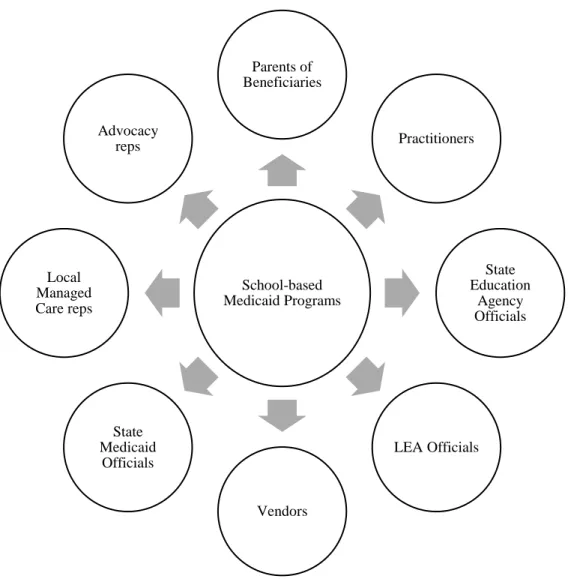
methodology provided an entry point for investigating the many voices and dynamic interplay between stakeholders in public education, public insurance systems, families, schools, and communities. And, it is just this intricate, ever-changing type of situation to which the
transactional perspective beckons inquiry, because the details of occupations are multi-faceted, far-reaching, and difficult to anticipate (Bailliard, Aldrich, & Dickie, 2013). In this view, the practices, or occupations, germane to school-based Medicaid programs called for multiple data collection approaches, responsive and agile data analysis, and the sustained, attentive study of the situation which these methods encompass. As such, per the practice profile development design, this investigation combined semi-structured interviews; a literature, policy, and
school-based Medicaid programs. Each method is described in detail below. Further, using multiple methods also affords opportunities for expansion of the investigation (Green, Caraceli,
& Graham, 1989) and initiation of a research trajectory (i.e., planning for subsequent
studies/longer-term research agenda, based on findings; Hesse-Biber & Leavy, 2011) which is commensurate with this study being a dissertation project and potential launch of a broader research and implementation program.
3.2. Positionality of Researcher/Considerations of Power
Given my role as a state consultant in the area studied, the potential for perceived coercion and/or exploitation of my role to gain access to participants, retain them, and shape their behavior, perspective, and responses was higher than if I did not hold this position. To prevent this possible dynamic, I acknowledged the potential of undue influence directly in preliminary conversations with participants, addressed power relations in analytic notes, and tried to allay the likelihood of an evaluative experience by participants in those parts of the project that seemed most vulnerable (e.g., usability testing). I was also clear about the limits of participation in terms of duration of data collection, behavior during interviews and meetings, and what relationships with participants would entail once the study was complete.
Practice Profile
Usability Testing Vetting
and Consensus Literature
and Document
Review
Semi-Structure Interviews
3.3. Recruitment
The study was conducted in partnership with representatives from public schools, public and private service agencies, and community stakeholders in North Carolina, which is the my home state.Recruitment for all roles within the study (interviewees, vetting experts, reviewers, and usability testers) took place at each study phase via listserv announcements, announcements at relevant meetings, word-of-mouth across school-based Medicaid communities of practice, and direct email, phone, and in-person invitations to participate. Recruitment was ongoing until the desired numbers of participants were enrolled for each phase. Signed consent forms were obtained via the process approved by the UNC Internal Review Board for participants in all phases of the project.
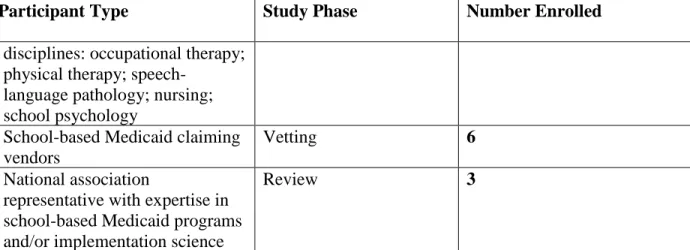
3.3.1. Inclusion Criteria. Representatives from the stakeholder groups in Table 3.1 below were solicited to participate in each phase of the study: the interview, vetting, and review phases. The number of enrolled participants and participation phase are also shown.
Table 3.1: Participant Type and Count by Study Phase
Participant Type Study Phase Number Enrolled
Parent of Medicaid beneficiary Vetting 1
Parent/Family advocacy agency representative
Interview Vetting
1 1
State department of education or other state department official with assigned work duties related to school-based Medicaid
programs and/or implementation science Interview Vetting Review 1 1 2
Local education agency
administrators representing any of the following units: Finance; Exceptional Children; Student Services Interview Vetting 7 2 School-based practitioners representing any of the following
Interview Vetting
Participant Type Study Phase Number Enrolled
disciplines: occupational therapy; physical therapy;
speech-language pathology; nursing; school psychology
School-based Medicaid claiming vendors
Vetting 6
National association
representative with expertise in school-based Medicaid programs and/or implementation science
Review 3
In addition to these categories, purposive sampling was used to ensure stakeholders represented, to the extent practicable: rural and urban communities; each of the eight state education regions; and diversity in school-based experience, ethnicity, and gender.
Inclusion criteria for usability testing school districts included having active Medicaid Administrative Claiming and fee-for-service programs. Diversity in district size, location, and rate of student Medicaid enrollment guided invitations, with the final collection of six districts having the following demographics:
Table 3.2: Usability Testing Local Education Agency (LEA) Profiles LEA District Size
(no. students)
NC Education Region
Percentage of Students with Disabilities
Total Enrolled in Medicaid, age 0-18
A 14662 students Southwest 15.7 12703
B 3694 students Western 14.7 3575
C 54530 students Piedmont Triad 13.4 38782
D 26213 students Southeast 12.6 16141
E 24033 students Western 14.8 21788