SUB-SAHARAN AFRICAN SOCIAL AND HEALTH POLICIES AND THE POOR: THREE ESSAYS EXAMINING IMPACTS OF PUBLIC PROGRAMS ON MATERNAL HEALTH UTILIZATION, CHILDREN’S HEALTH, AND HOUSEHOLD COMPOSITION
Carolyn Huang
A dissertation submitted to the faculty at the University of North Carolina at Chapel Hill in partial fulfillment of the requirements for the degree of Doctor of Philosophy in the Department of Public Policy.
Chapel Hill 2015
Approved by: Sudhanshu Handa Kavita Singh
Suchindran Chirayath John C. Scott
iii ABSTRACT
CAROLYN HUANG: Sub-Saharan African Social and Health Policies and the Poor: Three Essays Examining Impacts of Public Programs on Maternal Health Utilization,
Children’s Health, and Household Composition (Under the direction of Sudhanshu Handa)
iv
changes in welfare or basic household economic strategy. A difference-in-differences OLS model was used to find that the program was associated with a decrease in number of children ages 6-11 years of age and an influx of newcomers due to deaths of caretakers and/or family members of their original
v
To my father, Huang Shun-Yih,
who endured an impoverished childhood, found opportunity through education, but left his own Ph.D. to provide for his family.
vi
ACKNOWLEDGEMENTS
No individual accomplishment is undertaken alone, and for that, I owe a tremendous debt of gratitude to several people in my life. The first two acknowledgements are dedicated to two individuals to whom this work would not exist, if not for their support. First, thank you to my committee member, Kavita Singh Ongechi, who provided unwavering guidance with the conception, formulation, and proofreading of these papers. An advisee could not be luckier to work with Dr. Singh. Second, much gratitude goes to my dissertation chair, Sudhanshu Handa, whose early assistance in my doctoral program provided immense opportunity for growth. My understanding of anti-poverty initiatives will never be the same; it was a privilege to work alongside the Kenya CT-OVC Evaluation team. My gratitude also goes to John Calvin Scott for the mentorship, patience, and academic thoughtfulness he has shown me over the years. Finally, thank you to Suchindran Chirayath, whose methodological expertise has helped me improve the rigor of this work and to Pamela Jagger, whose helpful comments throughout the proposal and final defense improved my thinking tremendously. It is through the generosity of these individuals that I hope to give back to the research community and contribute to the spirit of academic inquiry.
Several faculty and student members of the Department of Public Policy were tremendously helpful in their offering of administrative or moral support. Thank you to Christine Durrance, Lauren Lanahan, Garima Bhalla, Frank Otchere, Jeff Summerlin-Long, Mary Leigh Creedon, and Mary Edwards.
vii
viii
TABLE OF CONTENTS
LIST OF TABLES ... xii
LIST OF FIGURES ... xiv
CHAPTER 1: BEYOND THE HEALTH FACILITY AND INTO THE COMMUNITY: IMPACT OF A GHANAIAN HEALTH QUALITY IMPROVEMENT PROGRAM ON MATERNAL HEALTH SERVICE UTILIZATION AND PREPAREDNESS ... 1
1.1 Introduction ... 1
1.2 Ghana Country Context ... 3
1.3 Project FivesAlive! Program Description ... 5
1.4 PFA! MNHR and the Causal Pathways of Behavioral Change ... 6
1.5 Methodology ... 8
1.5.1 Research Design ... 8
1.5.2 Enumeration area (EA) sample selection ... 9
1.5.3 Respondent sample selection ... 9
1.5.4 Data ... 9
1.5.5 Estimation Strategy ... 12
1.6 Results ... 12
1.6.1 Community characteristics of the sample ... 12
1.6.2 Individual descriptive statistics ... 13
ix
1.7 Discussion ... 15
REFERENCES ... 27
CHAPTER 2: INVESTMENTS IN CHILDREN’S HEALTH AND THE KENYAN CASH TRANSFER FOR ORPHANS AND VULNERABLE CHILDREN: EVIDENCE FROM AN UNCONDITIONAL CASH TRANSFER SCHEME ... 32
2.1 Introduction ... 32
2.1.1 Theory: child survival & cash transfers ... 33
2.1.2 Cash Transfers and Children’s Health Impacts ... 34
2.2 Background ... 36
2.2.1 Study setting ... 36
2.2.2 Description of the Intervention ... 37
2.3 Study Design ... 38
2.4 Methods ... 39
2.4.1 Data ... 39
2.4.2 Randomization ... 41
2.4.3 Characteristics of the analytical sample ... 42
2.5 Empirical Strategy ... 43
2.6 Results ... 44
2.6.1 Incidence of Illness ... 44
2.6.2 Health Seeking ... 44
2.7 Extensions ... 45
2.7.1 Gender differential effects ... 45
x
2.7.3 Differential effects by household size and dependency ratio... 46
2.8 Limitations ... 46
2.9 Discussion ... 47
2.10 Conclusion ... 48
REFERENCES ... 62
CHAPTER 3: HOUSEHOLD COMPOSITION, FAMILY STRUCTURES, AND DEMOGRAPHICAL CHANGES IN KENYA’S UNCONDITIONAL CASH TRANSFER SCHEME ... 66
3.1 Introduction ... 66
3.2 Theory ... 66
3.3 Empirical Literature ... 68
3.4 Methods ... 71
3.4.1 Data ... 71
3.4.2 Empirical Strategy ... 72
3.4.3 Analytical Sample ... 73
3.5 Results ... 74
3.6 Discussion ... 76
REFERENCES ... 92
APPENDIX ... 96
APPENDIX 1: SUMMARY OF CHANGE IDEAS TESTED ... 96
APPENDIX 2 ... 103
xi
Appendix 2.2: Alternative estimation methods depicting treatment effects on
children’s illness: simple and full logistic and cluster-robust OLS models ... 105
Appendix 2.3: Alternative estimation methods depicting treatment effects on health
care seeking: simple and full logistic and cluster-robust OLS models ... 106
xii
LIST OF TABLES
TABLE 1.1: Community characteristics ... 19
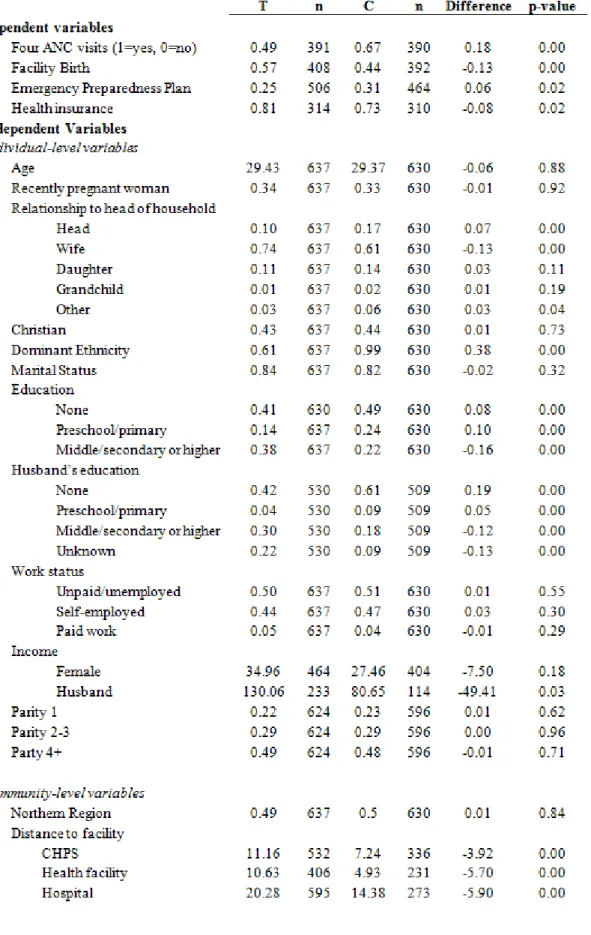
TABLE 1.2.1: Mean values of key baseline variables, by wave and treatment assignment ... 19
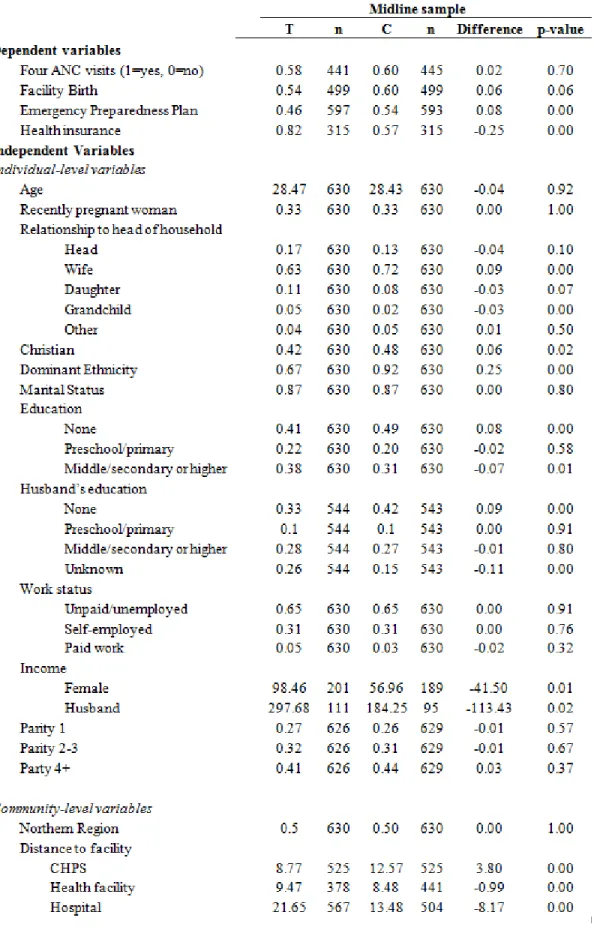
TABLE 1.2.2: Mean values of key midline variables, by wave and treatment assignment... 20
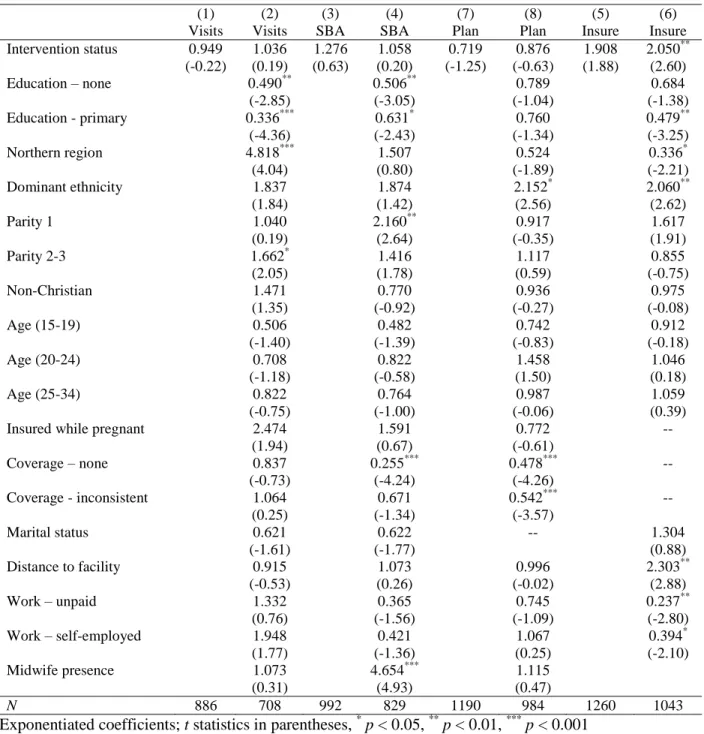
TABLE 1.3: Program Impacts on likelihood of accessing maternal health services and preparations ... 21
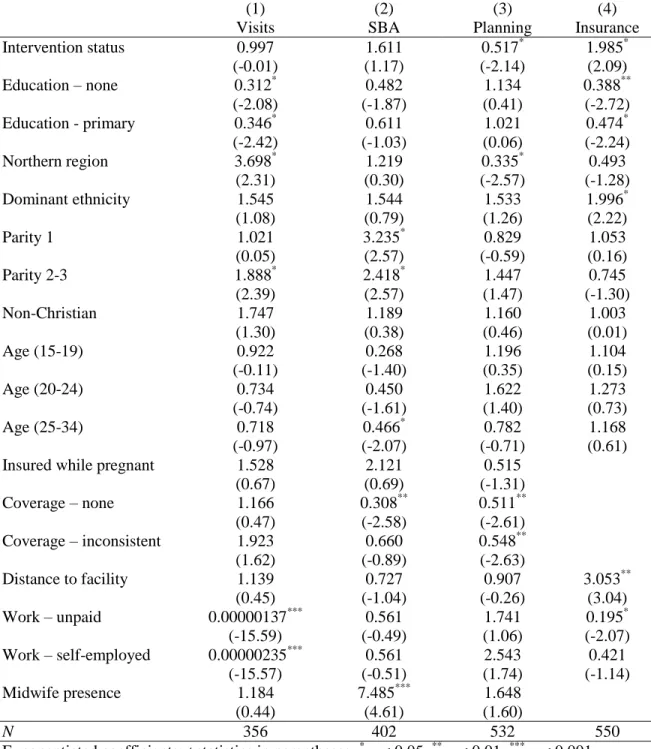
TABLE 1.4.1: Program impacts on women with low health decision-making autonomy ... 22
TABLE 1.4.2: Program impacts among women with low health decision-making autonomy (interaction terms) ... 23
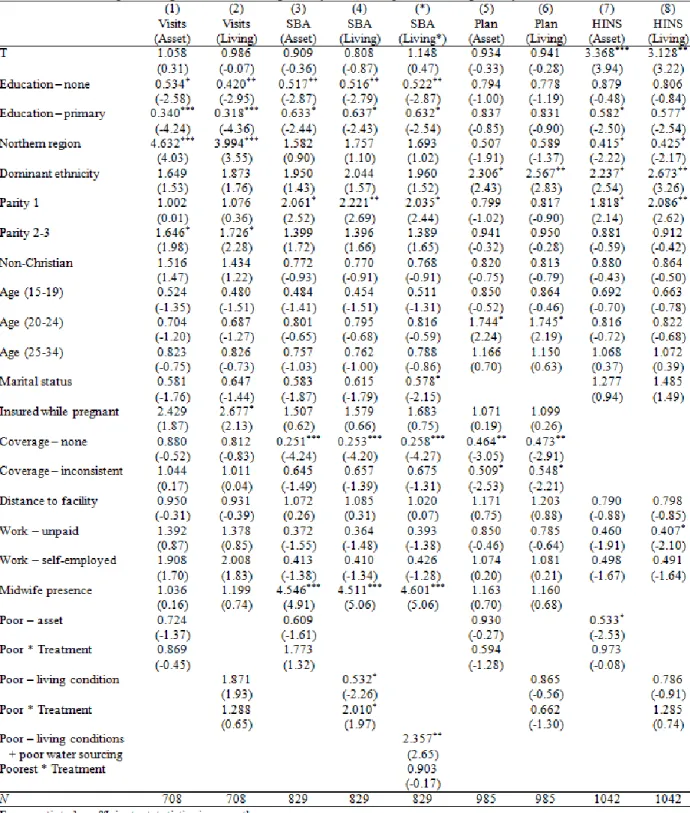
TABLE 1.5.1: Program impacts with asset poverty and living condition poverty controls ... 24
TABLE 1.5.2: Impacts among the poor, samples stratified by type of poverty ... 25
TABLE 2.1: Baseline equivalence of household-level covariates, by treatment arms ... 50
TABLE 2.2: Descriptive statistics for analytical samples, by wave ... 52
TABLE 2.3: Treatment effects on children’s illness: simple and full models ... 54
TABLE 2.4: Treatment effects on health care seeking: simple and full models ... 55
TABLE 2.5.1: Sex & Treatment group interaction Models ... 56
TABLE 2.5.2: Analytical sample stratified by sex ... 57
TABLE 2.6: Orphan & Treatment group interaction Models ... 58
TABLE 2.7.1: Household composition & Treatment interaction Models ... 59
xiii
TABLE 3.1: Household Characteristics, by wave and treatment Arm ... 77
TABLE 3.2: Time invariant household characteristics ... 78
TABLE 3.3: Multinomial logit of changes in household structure in 2011, grouped by structure in 2007 ... 81
TABLE 3.4: Impacts on household demographics between 2007 to 2011 ... 82
TABLE 3.5: Sample proportions of all residents ... 84
TABLE 3.6: Probit of Reasons for Moving In & Household characteristics, Pooled sample ... 85
TABLE 3.7: Probit of Reasons for Moving Out & Household characteristics, Pooled sample ... 87
TABLE 3.8: Characteristics of Arriving Residents in Treatment Households ... 89
TABLE 3.9: Multinomial logits of treatment leaver characteristics ... 90
xiv
LIST OF FIGURES
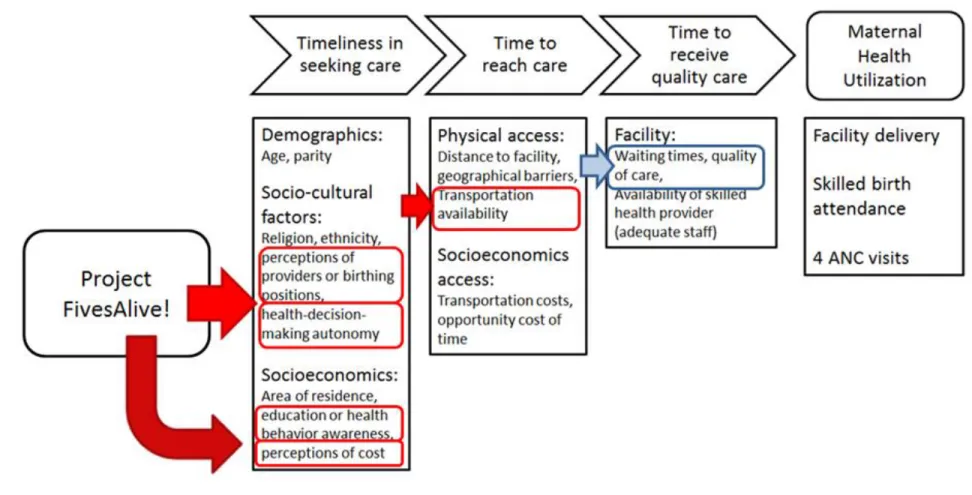
Figure 1: Conceptual Framework ... 18
Figure 2: Locations of Study Communities ... 50
Figure 3: Changes in Household Structure, 2007-2011 ... 80
xv
LIST OF ABBREVIATIONS
AIR American Institutes for Research
ANC Antenatal care
CHPS Community-based Health and Planning Services
CCTs Conditional Cash Transfers
CGP Zambia Child Grant Program
CT-OVC The Kenya Cash Transfer for Orphans and Vulnerable Children
DCS Kenya Department of Children’s Services
DD Difference-in-differences
DFID Department for International Development
DHS Demographic Health Survey
GHS Ghana Health Service
GLLAMM Generalized Linear Latent and Mixed Model
GSS Ghana Statistical Service
HIV/AIDS Human Immunodeficiency Virus/Acquired Immune Deficiency Syndrome
IMR Infant Mortality Rate
ICN Improvement Collaborative Networks
xvi
ISSER Institute of Statistical, Social and Economic Research
KMO Kaiser-Meyer-Olkin
MDG Millennium Development Goals
MCH Maternal and Child Health
MICS Multiple Indicator Cluster Survey
MMR Maternal Mortality Rate
MNHR Maternal and Newborn Health Referral Program
MoH Ministry of Health
NCHS National Catholic Health Services
NHIS (Ghana) National Health Insurance Scheme
OVC Orphans and Vulnerable Children
OPM Oxford Policy Management
PCA Principal Component Analysis
PFA! Project FivesAlive!
PRAF Programa de Asignación Familiar
PROGRESA Programa de Educación, Salud y Alimentación
QI Quality Improvement
xvii SBA Skilled birth attendant
SCTs Social Cash Transfers
SSA Sub-Saharan Africa
U5 Under 5 years of age
U5MR Under-5s Mortality Rate
UNC-SPH University of North Carolina at Chapel Hill- Gillings School of Public Health
UNDP United Nations Development Programme
UNFPA United Nations Population Fund
UNICEF United Nations International Children’s Emergency Fund
1
CHAPTER 1: BEYOND THE HEALTH FACILITY AND INTO THE COMMUNITY: IMPACT OF A GHANAIAN HEALTH QUALITY IMPROVEMENT PROGRAM ON MATERNAL
HEALTH SERVICE UTILIZATION AND PREPAREDNESS
1.1 Introduction
In sub-Saharan Africa, maternal and child survival are among the most pressing public health issues. The continent leads global maternal mortality estimates with 500 maternal deaths per 100,000 (WHO 2012). One in thirty-nine women face a lifetime risk of dying from complications of pregnancy and childbirth. The statistics on child survival in sub-Saharan Africa are equally dire. Global under-5 mortality estimates are 98 under-five deaths per 1,000 live births – compared to 53/1,000 among other developing countries (UN Inter-agency Group for Child Mortality Estimation, 2013).
2
complications during deliveries (Crissman et al. 2013; Campbell et al. 2006). Together, ANC, SBA, and facility delivery are the core of maternal health interventions.
The Millennium Development Goals galvanized global efforts to combat these health inequities and lead to reductions in the aggregate number of maternal and child deaths (UN 2013). However, progress is not equitable. Regional and country-level averages revealed that the poor are more likely to suffer worse social, economic, and health outcomes than the non-poor and gains in averages do not readily benefit the poor (Hobcraft et al. 1984; Castro-Leal et al. 1999; Filmer 2004; World Bank 2004; Gwatkin et al. 2005; Gwatkin et al. 2007; Jehu-Appiah et al. 2011).
Poverty obstructs knowledge of and access to health services that make the leading causes of maternal and child morbidity detectable and treatable. It presents financial or geographical barriers, prevents mothers from obtaining adequate nutrition during pregnancy, and is more likely to lead to delayed and emergency health care seeking – factors which increase the risk of death (Graham 1991; Cham et al. 2005; DHS 2008; Black et al. 2008; Magoma et al. 2010; Asundep 2013). Poverty exposes children to conditions and disease-borne vectors that make them more susceptible to malnutrition and stunting, premature birth, and illnesses associated with increased risks of under-5 mortality.
Poor women are less likely to use maternal health services or deliver in health facilities than non-poor women (Babalola 2009). Programs that seek to improve health conditions of its recipients must consider how poverty impedes and constrains access to program resources. Without addressing equity and access issues, global health policies can neither expect to improve the lives of the most underserved, nor achieve regional goals as were originally outlined by the MDGs.
3
burden, especially in rural areas. I use cluster-randomized quasi-experimental data from the Evaluation of the Maternal and Newborn Health Referral Project (MNHR) to determine whether demand-side
community outreach programs such as these can reach the poor and improve maternal and child health outcomes. I examine whether the program influences maternal health utilization and other health behaviors compared to women from communities that did not receive the program. I also examine whether the program permits equity of access by reaching the poor.
1.2 Ghana Country Context
Given its historically high Under-5 (U5MR), infant (IMR), and maternal mortality rates (MMRs), the Government of Ghana has established maternal and child health survival as a public health priority. According to the latest estimates, Ghana made progress by reducing the U5M rate to 78/1,000 live births (World Bank, 2012) and MMR to 350/100,000 live births (World Bank, 2010), but progress has not been equal throughout the country.
Socioeconomic, demographic, health, and nutritional factors that are related to poverty are drivers of Ghana’s aggregate adverse maternal and child health outcomes (Appoh 2005). Demographic indicators related to poverty such as regional residence are also correlated with illness severity and death. DHS estimates find that from1998 to 2008, more U5 deaths came from poor households, as compared to other wealth quintiles (103 deaths per 1,000 live births, as compared to 60 in richest quintiles). Moser et al. (2005) found that under-5 mortalities diminished by 16.9 percent at an aggregate level from 1993-98, but that these gains increased health inequalities between poor and non-poor.
4
sanitation, indoor air pollution, crowding, or poor housing conditions (Victora et al. 2003; Wagstaff et al. 2004; WHO 2002).
Recognizing that financial costs present a prohibitive barrier to health seeking, the Government of Ghana moved away from a user fee model and towards a universal health insurance scheme from 2003 to 2005. The National Health Insurance Scheme provides health services and approved drugs on the National Health Insurance Authority list. An addendum, the Maternal Health Care Program, extends coverage to pregnant women by providing six antenatal visits, facility delivery, and two postnatal visits (Witter et al. 2007; Mills et al. 2008; Dzakpasu et al. 2012; Singh et al. 2015). It is funded by a mixture of public revenues, civil servant Social Security Funds, and income-adjusted premiums which require a minimum of GH ₵7.20 or $5 per year (Jehu-Appiah et al. 2011). While enrollment is mandatory, in practice, only 69% of the national population had ever registered for NHIS and only 35% of the population is currently enrolled (GSS 2011; ISSER 2013).
Enrollment patterns reveal that coverage rates vary by region of residence, education, and wealth. Socioeconomic status is associated with health insurance enrollment. The poorest wealth quintiles have the lowest enrollment rates - 57.4% of women belonging to the lowest wealth quintile have ever been enrolled compared to 77.8% for the highest wealth quintile (GSS 2009; Sarpong et al. 2010; Jeh-Appiah et al 2011). The Central and Northern regions have the lowest insurance rates, respectively 58% and 68.2% (MICS 2011). Low educational achievement is associated with being uninsured; only 61% of women with no or low educational attainment have ever enrolled under NHIS compared to 78% of women with secondary education or higher (GSS 2011). Jehu-Appiah et al. (2011) also find that older age, higher education levels, female heads of households, and positive perceptions of NHIS increase the odds of enrolling and remaining enrolled in the NHIS.
5
services, give birth in a health facility, and have skilled birth attendants present as compared to uninsured women (Mills 2008; Singh et al. 2013; Dixon et al. 2014). NHIS enrollment is associated with an increase in facility delivery among the poorest and least educated in the Volta and Central regions (Penfold et al. 2007) and Brong Ahafo regions (Dzakpasu et al. 2012). Women who possessed health insurance for three or more years and during pregnancy were significantly more likely to have delivered in a health facility, as compared to women who were uninsured (Singh et al. 2013).
1.3 Project FivesAlive! Program Description
Project FivesAlive! (PFA!) began in 2008 as an effort to address MDG 4 and 5, which called for a two-thirds reduction in under-five mortality and a three-quarters reductions in maternal mortality by 2015. The program is a Bill and Melinda Gates funded collaboration with the Government of Ghana’s Ministry of Health (MoH), Ghana Health Service (GHS), the Institute for Healthcare Improvement (IHI) based in the USA, and the National Catholic Health Services (NCHS) of Ghana. The University of North Carolina Gillings School of Public Health (UNC-SPH) and the Institute for Statistical, Social and
Economic Research (ISSER) at the University of Ghana-Legon are its external evaluation partners.
PFA! utilizes a quality improvement approach which improves health service quality by diagnosing weaknesses and barriers at facilities and encouraging simple, low-cost, and locally-driven reformation. These simple interventions, “change ideas,” are designed to facilitate the delivery or receipt of high impact interventions. Content may include data quality improvement (monitoring, reporting, and storage), or solutions to bottlenecks in service delivery (delays in receiving care). Improvement
6
the QI process entails four learning sessions and multiple site visits depending on the needs of each facility. See Appendix for a list of change ideas which were implemented.
After four years of working exclusively with facilities and health workers, testimony from care providers and PFA! program managers revealed that breakdowns in rural referral systems were an ongoing contributor to high maternal and U5 mortalities. The collaborative was compelled to create an extension program, the Maternal and Newborn Health Referral project, which includes a strong
community-focused component. The comparison group is comprised of facility-only QI team members, whereas the treatment group is comprised of facility and community members such as opinion leaders, elders, assemblymen, chiefs, traditional birth attendants, and spiritual leaders or traditional healers. Human capital training is at the core of the extension program, but a key feature also includes addressing community-level and demand-related barriers that cause women to delay seeking care. Like the main program, QI teams comprised of health professionals and community members gather to identify barriers and develop simple, low cost change ideas.
1.4 PFA! MNHR and the Causal Pathways of Behavioral Change
7
In Ghana, individual factors influence take-up of maternal health services. Women who are younger, more educated, wealthier, and have low parity are more likely to receive any ANC visits. Women most frequently sought care from nurses or midwives rather than doctors, auxiliary midwives, community health officers, or traditional birth attendants. Sociocultural factors play an influential role in timing of care seeking. A female’s empowerment and autonomy within the household has been shown to be correlated with use of skilled delivery in African settings (Singh et al. 2012; Fotso et al. 2009). Religious or traditional households may require wives to seek permission from their husbands (the primary decision-maker) before she is allowed to seek health services (Adamu & Salihu 2002). Socio-culturally-rooted aversion to Westernized medicine and birth positioning preferences may lead women to deliver at home with a midwife or a traditional healer. A qualitative evaluation of the MNHR project found that the practice of declining or delaying referrals during health complications was prevalent among communities in this study due to the need to consult with family members and traditional healers or fears of dying en route to a referral facility (External Evaluation Team, 2015).
PFA! MNHR health workers gather within the communities to communicate with all women and their partners about facility delivery perceptions or anxieties, and address socio-cultural barriers (PFA! 2013). In talks given by community leaders, women are also encouraged to seek ANC and educated about the benefits of timely and regular ANC usage in ways that respect traditional customs. If not already covered under the National Health Insurance Scheme (NHIS), they are informed of its benefits. The provision of information is theorized to influence health service utilization by giving program participants information about treatment options, financial resources, and making them aware of the signs of serious complication (Ensor & Cooper 2004).
8
care until complications progressed to severity. QI teams from both treatment arms established a
reasonably-priced on-call system with local drivers to transport women during emergency complications. To overcome financial barriers, pooled funds created in a few intervention communities were made available to pregnant women.
Both treatment arms received facility-level interventions which included addressing waiting times and quality of care. These factors are associated with the third level of delay.
1.5 Methodology
The following sections detail the research design, sampling, data, and estimation strategy for this study.
1.5.1 Research Design
The evaluation design utilizes a pre-/post- quasi-experimental cluster longitudinal design. Pre-intervention baseline data was collected during May and June of 2012, in 3 districts from the Northern and Central regions. The program began a few months after, in August 2012. Midline data was collected in October/November of the following year. Some communities were introduced to the program later and had less than one year of participation.
9 1.5.2 Enumeration area (EA) sample selection
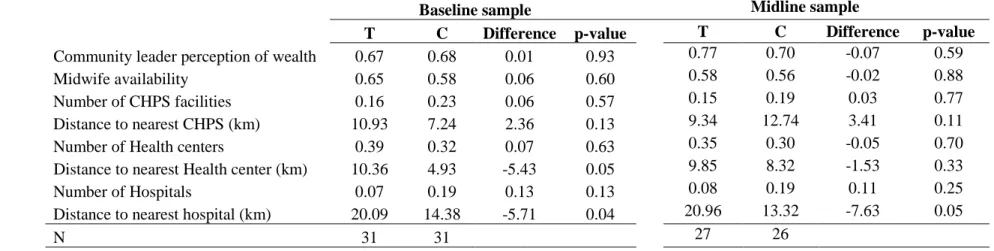
The study follows the same districts over time but clusters (communities or enumeration areas) were re-sampled during the follow up. This was due to concerns that the one year sampling time frame would lead to re-sampling of the same women who had recently had a pregnancy. A 30 by N cluster sample design was used and is a common evaluation design in child survival programs (Singh et al. 2015). 30 (15 treatment, 15 control) communities were sampled during each data collection, for a total of 60 communities. Table 1.1 presents the treatment arm balance of 8 community-level determinants of care utilization. Only the distance to hospital indicator was found to differ between treatment groups, where on average, treatment communities were 5.7 km at baseline and 7.6 km at midline farther than the comparison group.
1.5.3 Respondent sample selection
Individual study participants were selected from a list of women ages 15-49 compiled by community health workers. Each of the women on this list had given birth during the last 12 months. Seven recently pregnant women were randomly selected to be interviewed about their household-level characteristics, assets and wealth, decision-making power, health service usage, perceptions of health facilities, and knowledge of health practices. Two of the woman’s nearest neighbors were also
interviewed to measure community-level perceptions, knowledge, and attitude of health services. In total, the sample comprises 1,267 women from the baseline (424 women who had recently given birth, 843 neighbors) and 1,260 from the midline (420 who had recently given birth, 840 neighbors).
1.5.4 Data
Dependent and independent variables are discussed in greater detail in the following sections.
1.5.4.1 Dependent Variables
10
coded as 1 if a woman had been pregnant in the last 3 years, or was currently pregnant in her ninth month and had received 4 or more ANC visits. Facility delivery was asked of women who had a previous pregnancy within the last 3 years and have delivered their most recent birth in a hospital, health center, or community health post. If they delivered at home, the home of a traditional birthing attendant, or non-facility, facility delivery was coded as 0. Health insurance possession was coded as 1 if the individual had some coverage within the last year. Emergency preparedness plan is defined as having a plan in case of complications.
1.5.4.2 Independent Variables
Demographic indicators capturing age, education, ethnicity, parity (number of previous births), religion, region of residence, and marital status were asked of interviewees. Age was separated into categories of 15-19, 20-24, 25-34, and 35-49. This was done to capture effects that may be experienced at different phases of life, as pregnancy is riskier at younger and older ages. Education was separated into levels – women with no schooling, preschool or primary, and secondary or higher. Ethnicity was binary, indicating whether the individual belonged to the dominant ethnic group of the region. The dominant ethnic groups are Akan in the Central Region and Mole Dagbani in the Northern Region. Parity was separated into categories of number of live births – 1, 2-3, and 4 or more. Religion was coded as 1 if the interviewee practices Muslim, traditional, or spiritualist beliefs, 0 if Christian denomination. Region of residence was coded as 1 for the Northern Region, 0 for Central. Marital status is a binary variable where 1 is if the woman is married or living together and 0 if divorced or separated, widowed, or has never been married or co-habited.
11
latter captures living conditions which are known to be a cause or perpetuating factor of adverse welfare outcomes. These are living conditions to which the poor in Ghana are exposed.
The poverty ranking was constructed using principal component asset analysis of 33 components. The Kaiser-Meyer-Olkin measure (KMO) of sampling adequacy was first applied to determine whether the variables contain sufficient collinearity to warrant use of PCA. The KMO measure was 0.845 and the Bartlet test was significant (p<0.001), confirming the appropriate use of PCA. After individuals were ranked, the bottom quartile rankings were assigned 1 for poverty. All others were assigned 0.
The living conditions index used observable determinants of poverty in Ghana. These include poor toilet, fuel, and kitchen. Poor toilet use includes a bucket or pan, public toilet, another house, or bush or free range. Poor fuel source encompasses wood. Poor kitchen space includes outside or in front of the room or verandah. 1 is assigned to individuals who are exposed to all 3 living conditions, 0 to individuals who are exposed to 2 or fewer.
Health service accessibility indicators included presence of a midwife and travel distance to nearest facility. Midwife availability was coded as 1 if a midwife accessible during the entire year, 0 if available partially over the year or unknown. For models testing the impacts on facility delivery, distance to the closest health center or hospital was included. The ANC visit, emergency preparedness, and health insurance possession models used the distance to the closest health center, hospital, or CHPS.
I include a measure of women’s autonomy, which was asked only of married women.
12 1.5.5 Estimation Strategy
The models were estimated for four binary outcome variables of interest: receiving four ANC visits, skilled birth attendance, having an emergency preparedness plan, and possession of insurance.. The basic model, for instance for ANC visits, is as follows:
logit 𝐸(𝑌𝑖𝑗𝑙) = 𝛼 + 𝛽𝑃(𝑃) + 𝛽𝑖𝑗𝑉𝑖𝑗+ 𝜃𝑙(𝑗)
WhereY is the outcome for an individual i in the j district, l community at midline; P indicates treatment assignment where 1=treatment, 0=comparison; Vij are control and independent variables of interest, including health insurance;
𝜃𝑙(𝑗) accounts for the correlation between individuals in the communities.
Similar models are specified for models 2-4. Model 4 omits the health insurance status control. A logit link is used and exponentiated coefficients are presented as odds ratios.
1.6 Results
Results are separated into discussion on community and individual characteristics and program impacts.
1.6.1 Community characteristics of the sample
Community leaders were asked about health service availability and local perceptions of delivery in hospitals. On average, more leaders perceived their communities to be poorer than other communities in Ghana. The majority of community leaders reported that community members had favorable
13
control communities (p<0.05). Midline treatment communities were 7.6 kilometers farther than control communities (p<0.05). See Table 1.1.
1.6.2 Individual descriptive statistics
The analytical sample is comprised of married women who are on average, 29 years old and belong to the dominant ethnicity. 74% of women in the baseline and 63% in the midline are wives. 10% of the baseline sample were heads of the household, in comparison to 17% of the midline. Daughters comprised 11% of the sample in both waves. Few grandchildren were included in the study. With a third of the sample having recently given birth, the majority of women are married (80%). Nearly half of the sample had a parity of four children or older. Treatment assignment groups were fairly evenly balanced on parity levels (1, 2-3, or 4+).
The sample had varied educational attainment, possessing either little or a high level of schooling. The largest proportion of women in both treatment assignment groups had no primary school education (41-49%). Women who had received middle school education and higher were the second highest proportion. The intervention communities had more women who had received preschool or primary education and middle, secondary, or higher education. The same trends are observed for husband’s education. Similarly, husbands and wives from the intervention group had higher incomes than their counterparts in the control group.
1.6.3 Program Impacts
Program impacts are broken down by significant outcomes of interest in the following sections.
1.6.3.1 Positive results for health insurance possession
14
primary education as compared to secondary, and are unpaid or self-employed were less likely to possess health insurance than those who were employed. Distance travels over 5 km were also associated with greater likelihood of health insurance possession.
1.6.3.2 Autonomy
Results are presented in Table 1.41 and 1.4.2. The program was not found to be a mediating or moderating factor for maternal health service utilization among women with low health decision-making autonomy. The program was positively associated with possession of health insurance, where treatment women were nearly twice as likely to possess it as compared to the comparison group. The comparison group was 1.9 times more likely to have an emergency preparedness plan than the treatment group (Table 1.4.1).
1.6.3.3 Impacts on the poor
Table 1.5.1 depicts the full models with poverty controls and poverty-treatment interaction effects. Odd numbered models include the asset poverty measure, while even numbered models include the living condition poverty measure.
No differential effects were detected on poverty and treatment status. The health insurance results appear to be robust with both types of poverty controls, where the treatment group was approximately 3 times more likely to have health insurance. Factors such as receiving only primary education, residing in the Northern Region, being an unpaid worker, and experiencing asset poverty were found to be negatively associated with possession of health insurance. Attributes such as belonging to the dominant ethnicity and having low parity were found to be positively associated with health insurance.
15 1.7 Discussion
This study used post-program data from a donor-funded health care quality improvement program implemented in six districts in Northern and Central Regions of Ghana. Project FivesAlive! Maternal and Newborn Referrals program had mixed impacts on women participating in the program. Women from treatment communities had received the community and facility-level interventions whereas the control group received the facility-level intervention only. The treatment group was more likely to possess health insurance than control communities after controlling for demographic, socioeconomic, and health service availability. These results were strong and consistent in the entire sample and in samples stratified by low health decision-making autonomy and poverty status, groups which are more likely to be associated with negative health outcomes due to marginalization. The results reveal promising improvements for maternal health outcomes, as health insurance is more likely to lead to delivery in health facilities. However, no impacts were measured on the key health service utilization variables – ANC visits, skilled birth delivery, or emergency preparedness planning. Control-assigned women lacking health decision-making autonomy and those experiencing asset poverty were more likely to have an emergency preparedness plan.
The program has clearly demonstrated equity in achieving health outcomes. The poor are just as likely to have health insurance as the non-poor. Likewise, women with no or low autonomy over health decision-making were just as likely to possess health insurance as women with full autonomy. These results are promising for promoting maternal health service access via outreach methods, indicating that health quality improvement initiatives working alongside the community have the potential to address access barriers arising from socioeconomic disparity.
16
duration of time that some communities participated in the program. Our study examines one year impacts; however, some communities did not receive one full year of the intervention. It is possible that outcomes requiring longer term behavior such as regular ANC usage or facility delivery, which requires a shift in fundamental provider-related attitudes, may require a longer observation window to detect changes.
Additionally, one limitation in the study’s design is worthy of mention. Given the study’s purpose of observing women who had recently given birth, it was implausible to conduct a longitudinal study on an individual or community-level basis. A primary concern with resampling within
communities and the study time frame is that women who had been sampled in the baseline would be resampled, leading us to incorrectly conclude that no changes occurred as a result of the program. However, a single time period treatment-control design needs to establish that differences measured between intervention groups are attributable to the program and not other unobservable characteristics. In our analysis of community characteristics (Table 1.1), I find that the only statistically significant
difference is on the indicator for distance to nearest hospital – the remaining six determinants of health care access are insignificant. I also investigated the efficacy of a constructed proxy baseline control measure that used matched district-level averages for each outcome. However, I abandon this approach after the small number of districts (6 in total) led us to conclude that the control measure was more problematic than helpful.
17
18
19
TABLE 1.1: Community characteristics
Baseline sample Midline sample
T C Difference p-value T C Difference p-value
Community leader perception of wealth 0.67 0.68 0.01 0.93 0.77 0.70 -0.07 0.59
Midwife availability 0.65 0.58 0.06 0.60 0.58 0.56 -0.02 0.88
Number of CHPS facilities 0.16 0.23 0.06 0.57 0.15 0.19 0.03 0.77
Distance to nearest CHPS (km) 10.93 7.24 2.36 0.13 9.34 12.74 3.41 0.11
Number of Health centers 0.39 0.32 0.07 0.63 0.35 0.30 -0.05 0.70
Distance to nearest Health center (km) 10.36 4.93 -5.43 0.05 9.85 8.32 -1.53 0.33
Number of Hospitals 0.07 0.19 0.13 0.13 0.08 0.19 0.11 0.25
Distance to nearest hospital (km) 20.09 14.38 -5.71 0.04 20.96 13.32 -7.63 0.05
20
21
22
TABLE 1.3: Program Impacts on likelihood of accessing maternal health services and preparations
(1) (2) (3) (4) (7) (8) (5) (6)
Visits Visits SBA SBA Plan Plan Insure Insure Intervention status 0.949 1.036 1.276 1.058 0.719 0.876 1.908 2.050** (-0.22) (0.19) (0.63) (0.20) (-1.25) (-0.63) (1.88) (2.60)
Education – none 0.490** 0.506** 0.789 0.684
(-2.85) (-3.05) (-1.04) (-1.38)
Education - primary 0.336*** 0.631* 0.760 0.479**
(-4.36) (-2.43) (-1.34) (-3.25)
Northern region 4.818*** 1.507 0.524 0.336*
(4.04) (0.80) (-1.89) (-2.21)
Dominant ethnicity 1.837 1.874 2.152* 2.060**
(1.84) (1.42) (2.56) (2.62)
Parity 1 1.040 2.160** 0.917 1.617
(0.19) (2.64) (-0.35) (1.91)
Parity 2-3 1.662* 1.416 1.117 0.855
(2.05) (1.78) (0.59) (-0.75)
Non-Christian 1.471 0.770 0.936 0.975
(1.35) (-0.92) (-0.27) (-0.08)
Age (15-19) 0.506 0.482 0.742 0.912
(-1.40) (-1.39) (-0.83) (-0.18)
Age (20-24) 0.708 0.822 1.458 1.046
(-1.18) (-0.58) (1.50) (0.18)
Age (25-34) 0.822 0.764 0.987 1.059
(-0.75) (-1.00) (-0.06) (0.39)
Insured while pregnant 2.474 1.591 0.772 --
(1.94) (0.67) (-0.61)
Coverage – none 0.837 0.255*** 0.478*** --
(-0.73) (-4.24) (-4.26)
Coverage - inconsistent 1.064 0.671 0.542*** --
(0.25) (-1.34) (-3.57)
Marital status 0.621 0.622 -- 1.304
(-1.61) (-1.77) (0.88)
Distance to facility 0.915 1.073 0.996 2.303**
(-0.53) (0.26) (-0.02) (2.88)
Work – unpaid 1.332 0.365 0.745 0.237**
(0.76) (-1.56) (-1.09) (-2.80)
Work – self-employed 1.948 0.421 1.067 0.394*
(1.77) (-1.36) (0.25) (-2.10)
Midwife presence 1.073 4.654*** 1.115
(0.31) (4.93) (0.47)
N 886 708 992 829 1190 984 1260 1043
23
TABLE 1.4.1: Program impacts on women with low health decision-making autonomy
(1) (2) (3) (4)
Visits SBA Planning Insurance
Intervention status 0.997 1.611 0.517* 1.985*
(-0.01) (1.17) (-2.14) (2.09)
Education – none 0.312* 0.482 1.134 0.388**
(-2.08) (-1.87) (0.41) (-2.72)
Education - primary 0.346* 0.611 1.021 0.474*
(-2.42) (-1.03) (0.06) (-2.24)
Northern region 3.698* 1.219 0.335* 0.493
(2.31) (0.30) (-2.57) (-1.28)
Dominant ethnicity 1.545 1.544 1.533 1.996*
(1.08) (0.79) (1.26) (2.22)
Parity 1 1.021 3.235* 0.829 1.053
(0.05) (2.57) (-0.59) (0.16)
Parity 2-3 1.888* 2.418* 1.447 0.745
(2.39) (2.57) (1.47) (-1.30)
Non-Christian 1.747 1.189 1.160 1.003
(1.30) (0.38) (0.46) (0.01)
Age (15-19) 0.922 0.268 1.196 1.104
(-0.11) (-1.40) (0.35) (0.15)
Age (20-24) 0.734 0.450 1.622 1.273
(-0.74) (-1.61) (1.40) (0.73)
Age (25-34) 0.718 0.466* 0.782 1.168
(-0.97) (-2.07) (-0.71) (0.61)
Insured while pregnant 1.528 2.121 0.515
(0.67) (0.69) (-1.31)
Coverage – none 1.166 0.308** 0.511**
(0.47) (-2.58) (-2.61)
Coverage – inconsistent 1.923 0.660 0.548**
(1.62) (-0.89) (-2.63)
Distance to facility 1.139 0.727 0.907 3.053**
(0.45) (-1.04) (-0.26) (3.04)
Work – unpaid 0.00000137*** 0.561 1.741 0.195*
(-15.59) (-0.49) (1.06) (-2.07)
Work – self-employed 0.00000235*** 0.561 2.543 0.421
(-15.57) (-0.51) (1.74) (-1.14)
Midwife presence 1.184 7.485*** 1.648
(0.44) (4.61) (1.60)
N 356 402 532 550
24
TABLE 1.4.2: Program impacts among women with low health decision-making autonomy (interaction terms)
(1) (2) (3) (4)
Visits SBA Plan Insurance
Intervention status 1.054 1.754 0.617 1.931
(0.16) (1.48) (-1.68) (1.94)
Education – none 0.480** 0.490** 0.812 0.673
(-2.78) (-3.12) (-0.94) (-1.44)
Education – primary 0.348*** 0.635* 0.768 0.467***
(-4.34) (-2.32) (-1.29) (-3.38)
Northern region 3.720*** 1.623 0.523 0.342*
(3.46) (0.95) (-1.87) (-2.14)
Dominant ethnicity 1.806 1.995 2.041* 2.050**
(1.83) (1.53) (2.44) (2.66)
Parity 1 1.181 2.397** 0.870 1.539
(0.69) (2.91) (-0.57) (1.66)
Parity 2-3 1.712* 1.433 1.129 0.848
(2.26) (1.75) (0.64) (-0.81)
Non-Christian 1.434 0.812 0.934 0.987
(1.28) (-0.76) (-0.28) (-0.04)
Age (15-19) 0.551 0.478 0.774 0.887
(-1.22) (-1.44) (-0.71) (-0.23)
Age (20-24) 0.743 0.804 1.495 1.031
(-0.98) (-0.65) (1.57) (0.12)
Age (25-34) 0.820 0.770 0.968 1.054
(-0.77) (-0.98) (-0.14) (0.35)
Insured while pregnant 2.396 1.683 0.809
(1.90) (0.76) (-0.52)
Coverage – none 0.845 0.256*** 0.479***
(-0.72) (-4.32) (-4.18)
Coverage – inconsistent 1.082 0.673 0.541***
(0.33) (-1.33) (-3.73)
Distance to facility 0.908 1.027 0.909 2.284**
(-0.51) (0.11) (-0.41) (2.88)
Work – unpaid 1.221 0.349 0.775 0.239**
(0.61) (-1.53) (-0.96) (-2.77)
Work – self-employed 1.736 0.390 1.135 0.404*
(1.65) (-1.41) (0.50) (-2.04)
Midwife presence 1.078 4.313*** 1.171
(0.33) (4.93) (0.69)
Autonomy 0.665 2.109* 0.708 0.895
(-1.30) (2.24) (-1.23) (-0.44)
Autonomy * Treatment 0.953 0.394* 2.010* 1.139
(-0.11) (-2.17) (1.99) (0.35)
N 708 829 984 1043
25
26
27 REFERENCES
Adamu, Y. M., & Salihu, H. M. (2002). Barriers to the use of antenatal and obstetric care services in rural Kano, Nigeria. Journal of Obstetrics & Gynecology, 22(6), 600-603.
Ampofo, D. A. (1988). Maternal–Child Health and Family Planning in Ghana. Population Impact Project, University of Ghana, Legon, Ghana.
Andersen, R., & Newman, J. F. (2005). Societal and individual determinants of medical care utilization in the United States. Milbank Quarterly, 83(4), Accessed at
http://www.milbank.org/uploads/documents/QuarterlyCentennialEdition/Societal%20and%20Ind v.pdf.
Appoh, L. Y., & Krekling, S. (2005). Maternal nutritional knowledge and child nutritional status in the Volta region of Ghana. Maternal & child nutrition, 1(2), 100-110.
Asundep, N. N., Carson, A. P., Turpin, C. A., Tameru, B., Agidi, A. T., Zhang, K., & Jolly, P. E. (2013). Determinants of access to antenatal care and birth outcomes in Kumasi, Ghana. Journal of epidemiology and global health, 3(4), 279-288.
Babalola, S., & Fatusi, A. (2009). Determinants of use of maternal health services in Nigeria-looking beyond individual and household factors. BMC Pregnancy and Childbirth, 9(1), 43.
Black, R. E., Allen, L. H., Bhutta, Z. A., Caulfield, L. E., De Onis, M., Ezzati, M, Mathers, C., & Rivera, J. (2008). Maternal and child undernutrition: global and regional exposures and health
consequences. The Lancet, 371(9608), 243-260.
Campbell, O. et al. (2006). Strategies for reducing maternal mortality: getting on with what works. The Lancet, 368, 1284-1299.
Castro-Leal, F., Dayton, J., Demery, L., & Mehra, K. (1999). Public social spending in Africa: Do the poor benefit? The World Bank Research Observer, 14(1), 49-72.
Cham, M., Sundby, J., & Vangen, S. (2005). Maternal mortality in the rural Gambia, a qualitative study on access to emergency obstetric care. Reproductive health, 2(3), 1-8.
Crissman, H. P., Engmann, C. E., Adanu, R. M., Nimako, D., Crespo, K., & Moyer, C. A. (2013). Shifting norms: pregnant women’s perspectives on skilled birth attendance and facility–based delivery in rural Ghana. African journal of reproductive health, 17(1), 15-26.
De-Brouwere V., Tonglet R. and Van Lerberghe W. (1998). Strategies for reducing maternal mortality in developing countries: what can we learn from the history of the industrialized West? Tropical Medicine and International Health, 3, 771–782.
Dixon, J., Tenkorang, E. Y., Luginaah, I. N., Kuuire, V. Z., & Boateng, G. O. (2014). National health insurance scheme enrolment and antenatal care among women in Ghana: is there any relationship?
28
Dzakpasu S, Soremekun S, Manu A, ten Asbroek G, Tawiah C, et al. (2012). Impact of Free Delivery Care on Health Facility Delivery and Insurance Coverage in Ghana’s Brong Ahafo Region. PLoS ONE. 7(11): e49430.
Ensor, T., & Cooper, S. (2004). Overcoming barriers to health service access: influencing the demand side. Health policy and planning, 19(2), 69-79.
Filmer, D. (2004). The incidence of public expenditures on health and education. Background paper for the WDR.
Fotso, J. C., Ezeh, A. C., & Essendi, H. (2009). Maternal health in resource-poor urban settings: how does women's autonomy influence the utilization of obstetric care services. Reproductive Health, 6(9), 1-8.
Gage, A. J. (2007). Barriers to the utilization of maternal health care in rural Mali. Social Science & Medicine, 65(8), 1666-1682.
Ghana Statistical Service (GSS), Ghana Health Service (GHS), Macro International Inc. (MI). (2009). Ghana Demographic and Health Survey 2008. Calverton, MD.
Ghana Statistical Service, 2011. Ghana Multiple Indicator Cluster Survey with an Enhanced Malaria Module and Biomarker, 2011, Final Report. Accra, Ghana.
Graham, W. (1991), “Maternal mortality level, trends and data deficiencies”, in Feachem, R.G. and Jamison, D.T. (Eds), Disease and Mortality in Sub-Saharan Africa, Oxford University Press, Oxford, 101-16.
Gwatkin, D. R. (2005). How much would poor people gain from faster progress towards the Millennium Development Goals for health? The Lancet, 365(9461), 813-817.
Gwatkin, D. R., Wagstaff, A., & Yazbeck, A. (Eds.). (2005). Reaching the poor with health, nutrition, and population services: what works, what doesn't, and why. Washington, DC: World Bank Publications.
Gwatkin, D. R., Rutstein, S., Johnson, K., Suliman, E., Wagstaff, A., & Amouzou, A. (2007). Socio-Economic Differences in Health, Nutrition, and Population Within Developing Countries. Washington, DC: Health, Nutrition, and Population, The World Bank.
Hobcraft, J. N., McDonald, J. W., & Rutstein, S. O. (1984). Socio-economic factors in infant and child mortality: a cross-national comparison. Population studies, 38(2), 193-223.
ISSER. The State of Ghanaian Economy Report for 2012. (2013). University of Ghana, Legon. Author. Jehu-Appiah, C., Aryeetey, G., Spaan, E., De Hoop, T., Agyepong, I., & Baltussen, R. (2011). Equity
aspects of the National Health Insurance Scheme in Ghana: Who is enrolling, who is not and why?
Social Science & Medicine, 72(2), 157-165.
29
Khan, K. S., Wojdyla, D., Say, L., Gülmezoglu, A. M., & Van Look, P. F. (2006). WHO analysis of causes of maternal death: a systematic review. The Lancet, 367(9516), 1066-1074.
Kishor, S. (1997). Empowerment of women in Egypt and links to the survival and health of their infants. International Union for the Scientific Study of Population.
Kruk, M. E., Mbaruku, G., Rockers, P. C., & Galea, S. (2008). User fee exemptions are not enough: out‐ of‐pocket payments for ‘free’delivery services in rural Tanzania. Tropical medicine &
international health, 13(12), 1442-1451.
Magoma, M., Requejo, J., Campbell, O. M., Cousens, S., & Filippi, V. (2010). High ANC coverage and low skilled attendance in a rural Tanzanian district: a case for implementing a birth plan
intervention. BMC pregnancy and childbirth, 10(1), 13.
Mavalankar, D. V., & Rosenfield, A. (2005). Maternal mortality in resource-poor settings: policy barriers to care. Journal Information, 95(2).
McClure, E. M., Goldenberg, R. L., & Bann, C. M. (2007). Maternal mortality, stillbirth and measures of obstetric care in developing and developed countries. International Journal of Gynecology & Obstetrics, 96(2), 139-146.
Mills S, Williams J, Adjuik M, & Hodgson A. (2008). Use of health professionals for delivery following the availability of free obstetric care in Northern Ghana. Maternal and Child Health Journal, 12,
508-518.
Moser, K. A., Leon, D. A., & Gwatkin, D. R. (2005). How does progress towards the child mortality millennium development goal affect inequalities between the poorest and least poor? Analysis of Demographic and Health Survey data. BMJ, 331(7526), 1180-1182.
National Health Insurance Authority. National Health Insurance Scheme Annual Report. (2010). Accra, Ghana: Author.
Nonvignon, J., Aikins, M. K. S., Chinbuah, M. A., Abbey, M., Gyapong, M., Garshong, B. N., Fia, S. & Gyapong, J. O. (2010). Treatment choices for fevers in children under-five years in a rural Ghanaian district. Malaria Journal, 9, 188.
Overbosch, G. B., Nsowah-Nuamah, N. N. N., Van den Boom, G. J. M., & Damnyag, L. (2004). Determinants of antenatal care use in Ghana. Journal of African Economies, 13(2), 277-301. Project FivesAlive! 2013. MNH Referral Work Technical Report, February 2012 to April 2013. Raghupathy, S. (1996). Education and the use of maternal health care in Thailand. Social Science &
Medicine, 43(4), 459-471.
Sarpong, N., Loag, W., Fobil, J., Meyer, C. G., Adu-Sarkodie, Y., May, J., et al. (2010). National health insurance coverage and socio-economic status in a rural district of Ghana. Tropical Medicine and International Health, 15(2), 191-7.
30
Say, L., Chou, D., Gemmill, A., Tunçalp, Ö., Moller, A. B., Daniels, J., Gulmezoglu, A. M., Temmerman, M., & Alkema, L. (2014). Global causes of maternal death: a WHO systematic analysis. The Lancet Global Health, 2(6), 323-33.
Singh, K., Osei-Akoto, I., Otchere, F., Sodzi-Tettey, S., Barrington, C., Huang, C., Fordham, C., & Speizer, I. (2015). Ghana’s National Health Insurance Scheme and Maternal and Child Health: A Mixed Methods Study. BMC Health Services Research, 15, 108.
Singh, K., Speizer, I., Handa, S., Boadu, R. O., Atinbire, S., Barker, P. M., & Twum-Danso, N. A. (2013). Impact evaluation of a quality improvement intervention on maternal and child health outcomes in Northern Ghana: early assessment of a national scale-up project. International Journal for Quality in Health Care, 25(5), 477-487.
Singh, K., Bloom, S., Haney, E., Olorunsaiye, C., & Brodish, P. (2012). Gender Equality and Childbirth in a Health Facility: Nigeria and MDG5. African journal of reproductive health, 16(3).
Tarekegn, S. M., Lieberman, L. S., & Giedraitis, V. (2014). Determinants of maternal health service utilization in Ethiopia: analysis of the 2011 Ethiopian Demographic and Health Survey. BMC pregnancy and childbirth, 14(1), 161.
Thaddeus, S. & Maine, D. (1994). Too far to walk: Maternal mortality in context. Social Science and Medicine,38(8), 1091-1110.
Thomas, D., Strauss, J., & Henriques, M. H. (1990). Child survival, height for age and household characteristics in Brazil. Journal of Development Economics, 33(2), 197-234.
United Nations. (2013). Millennium Development Goals Report.
United Nations Inter-agency Group for Child Mortality Estimation. (2013). Levels & Trends in Child Mortality.
United Nations Population Fund. Providing Obstetric and Newborn Care to All in Need. Retrieved from http://www.unfpa.org/public/home/mothers/pid/4385. Last accessed 13 Oct 2014.
University of North Carolina at Chapel Hill & The Institute for Statistical, Social, & Economic Research at the University of Ghana. (2015). Qualitative Evaluation of the Maternal and Newborn Referral Project in Ghana: A Qualitative Report Based on Interviews with Quality Improvement Teams, Couples with Recent Pregnancy Experiences, and Mothers-in-law. Report.
Victora, C. G., Adair, L., Fall, C., Hallal, P. C., Martorell, R., Richter, L., & Sachdev, H. S. (2008). Maternal and child undernutrition: consequences for adult health and human capital. Lancet,
371(9609), 340.
Wagstaff, A., Bustreo, F., Bryce, J., & Claeson, M. (2004). Child health: reaching the poor. American journal of public health, 94(5), 726-736.
31
World Bank. (2004). World Development Report 2004: Making services work for poor people. Washington, DC: World Bank.
World Health Organisation. (1994). Antenatal Care, Report of a Technical Working Group, WHO/FRH/MSM/96.8, Geneva: World Health Organization.
World Health Organisation. (1999). Reduction of maternal mortality: a WHO/UNFPA/UNICEF/World Bank statement. Geneva, Switzerland: WHO Press.
World Health Organisation & United Nations IEF. (2010). Countdown to 2015 Decade Report (2000-2010): taking stock of maternal, newborn, and child survival. Geneva, Switzerland: WHO Press. World Health Organization & World Bank Working Group on Child Health and Poverty. (2002). Better
health for poor children: a special report. Geneva, Switzerland: WHO Press.
32
CHAPTER 2: INVESTMENTS IN CHILDREN’S HEALTH AND THE KENYAN CASH TRANSFER FOR ORPHANS AND VULNERABLE CHILDREN: EVIDENCE FROM AN
UNCONDITIONAL CASH TRANSFER SCHEME
2.1 Introduction
Young children (0-4) face the greatest risk of mortality from infectious diseases and under-nutrition. Acute infectious diseases are a pervading global health concern for children, accounting for roughly two-thirds of global child mortalities (Liu et al. 2012). Recent estimates find that malaria led to 627,000 child deaths in 2012, seventy-seven percent of which were in children under 5 years of age (WHO 2013). Pneumonia is also the leading infectious disease killer of children under 5 years old, with 1.1 million under-5s dying each year (WHO 2000; Liu et al. 2012).
Poor children from low resource countries also bear great risk of death from communicable diseases. The poor are more likely to be deprived of basic necessities such as sanitary living conditions, accessible clean water, and adequate nutrition (Pelletier & Frongillo 2003; Herrera et al. 1992; Mosley & Chen 1984). The first two factors increase exposure to vector-borne illnesses, while the latter is estimated to contribute towards 45% of all under-5 deaths (WHO 2013).
33
Simple and inexpensive interventions make death preventable and illness, detectable and treatable. However, poor families experience prohibitive barriers to obtaining health care. Financial and/or far travel distances contribute to delays in care seeking. These delays increase the likelihood of irreparable health deterioration or death. They are estimated to contribute to 70% of all under-5 child deaths (Victora et al. 2003; WHO 2005).
A rigorous, emerging literature finds that cash transfer schemes, both conditional and
unconditional, improve welfare outcomes of the poor. Large-scale successes in Latin America have led to resounding policy adoption across the world and its consideration as a new paradigm for foreign aid. With cash transfer expansion on the rise, it is necessary to understand the program’s potential to prevent and address multidimensional causes and symptoms of poverty for the most vulnerable members of the household.
This study seeks to examine whether cash transfers can address one of sub-Saharan Africa’s most pressing global health issues pertaining to young children’s health capital. I contribute to a small and inconclusive evidence base by using data from a cluster-randomized longitudinal evaluation of Kenya’s largest social protection program, the Cash Transfer for Orphans and Vulnerable Children (CT-OVC). Children’s health outcomes are measured by incidence of malaria or pneumonia and whether health services were sought during the child’s illness. The program is associated with reductions in illness for school-aged children, but I find no significant impacts for young children. Health seeking is not significantly associated with assignment to treatment status.
2.1.1 Theory: child survival & cash transfers
34
greater exposure to air pollution (DHS 2008). Toilet types and water sources, especially if uncovered, are potential disease vectors for malaria (WHO 2013). Poverty affects access to adequate nutrition, where the lack of such is known to aggravate the consequences of illness (Pelletier & Frongillo 2003).
Cash transfers promote health capital investment by offsetting barriers created by poverty. Income fluctuations, persistent poverty, or large economic shocks diminish a household’s ability to maintain adequate consumption, invest in human capital, or accumulate assets. Regular and substantive cash payments increase the household’s capability to prevent, manage, and cope with risk and exogenous shocks (Devereux & Handa 2011). In regards to upper respiratory infections, CT-OVC is theorized to operate by bolstering consumption and investment in any of the following: improved living conditions, purchase of nutritious foods or higher quality assets used on a daily basis (e.g., cook stove or fuel), or by increasing access to health services.
Few studies examine these casual mechanisms, and instead examine the broader question of whether cash transfers impact children’s health. In the following section, I explore two related but distinct literatures on cash transfers and findings pertaining to children’s illness.
2.1.2 Cash Transfers and Children’s Health Impacts
Two types of cash transfer schemes exist, conditional and unconditional. Conditional cash transfers (CCTs) institute requirements for benefits, thus ensuring that desired investment behaviors are made with successful take up of the program. Conditions may include but are not limited to minimum school attendance requirements, receiving children’s preventive health check-ups and vaccinations, or for mothers, receiving prenatal care visits. Several of the largest cash transfer schemes in Latin America are conditional, while social cash transfer schemes (SCTs) being implemented in sub-Saharan Africa are typically unconditional. Any number of reasons may explain the prevalence of unconditional transfer schemes in SSA, including the high financial cost and administrative burdens of monitoring and
35
of conditions (Baird et al. 2014), indicating that the beneficiary population’s demand for human capital investment is quite sensitive to changes in income, thus making conditions unnecessary.
Conditional cash transfers are associated with reductions in illness among children. Newborns (0-35 months) from treatment households in Mexico’s Oportunidades were 25 percentage points less likely to be ill as compared to control newborns (Gertler 2004). Protective effects increased the longer children were exposed. By 20 months, treatment receiving children were 40 percentage points less likely to be ill (p<.05). In Colombia’s Familia en Acción, beneficiary children 48 months and younger living in rural areas were less likely to be afflicted by diarrhea by 10.6 (p<.10) and 10.9 (p<.05) percentage points (Attanasio et al. 2005). Similar reductions were found for incidence of respiratory disease, but were not statistically significant at the conventional confidence interval.
These positive health impacts may reveal more about the successful uptake of the program and the demand for cash than the household’s natural behavior response. It is therefore difficult to extrapolate such findings to a different program and continent context. In sub-Saharan Africa, where cash transfer schemes are primarily unconditional, only a few studies examine children’s health outcomes. The existing evidence discussed below presents inconclusive and mixed results.
After one year in Malawi’s Mchinji Pilot Program, control group children of all ages (6-17) were 1.58 times more likely to experience sickness in the previous month as compared to the intervention group (p<.01) (Luseno et al. 2013). Luseno et al. is the only study that finds a strong protective program effect on children’s health. Other studies from Mchinji and Zambia’s Child Grant Program (CGP) fail to find significant results (Miller et al. 2008; AIR 2013).
Health falls under the broader sub-category of human capital investment, but was not the primary objective of CT-OVC. The program emphasizes continuous investment in children’s schooling;
36
outcomes. Positive externalities at the household-level may also benefit the health of young children. Previous studies have found that beneficiary households engaged in investment behaviors such as
spending more money on or increasing consumption of, children’s education and nutrient-rich foods (The Kenya Evaluation Team 2012a, 2012b). Because food is shared among the household, young children would be likely to benefit from more nutritious foods and changes in other investment behaviors of household decision-makers.
This study also examines whether CT-OVC – by reducing or removing financial barriers – influences health seeking in the event of illness. Fewer studies focus on this question and the existing literature presents conflicting results. Mchinji intervention households were 10.98 times more likely to utilize health services after one year in the program (p<0.01) (Luseno et al. 2013). CGP intervention households were 14.2 percentage points less likely to seek care for acute respiratory illness (p<0.05) (AIR 2013). Researchers did not offer an explanation for why this might be, though it may be due to wording on the questionnaire. Coughing was used to measure acute respiratory illness and caretakers may have responded to symptoms of the common cold, which may not be considered serious enough to warrant care seeking. Results for health seeking with fever were positive, but were not statistically different than zero.
2.2 Background
The following sections provide contextual information about a few of the leading public health concerns in Kenya, as well as the Government of Kenya’s largest social protection initiative.
2.2.1 Study setting
37
It is estimated that 1.6 million individuals are living with HIV and that the prevalence rate for adults 15-49 is 6% (National AIDS Council of Kenya, 2014). Life expectancies have decreased and over half the population is below 15 years of age (UNICEF).
Infectious diseases are also a leading public health issue. Malaria is prevalent, with an estimated 75% of the population at risk of infection (WHO 2013). Though malaria reporting is inconsistent, it is estimated to cause 20% of all U5 deaths (DHS 2008; Kenya MOH 2006). Acute respiratory infections are also a leading cause of child mortality, estimated to cause 16% of all child mortality in the country (DHS 2008; Black et al. 2010).
2.2.2 Description of the Intervention
The Cash Transfer for Orphans and Vulnerable Children (CT-OVC) is the largest social protection program in Kenya. It is designed to prevent the intergenerational transmission of poverty caused by HIV/AIDS by providing financial support to caretaking families of orphans. The program is a collaboration between the Government of Kenya’s Department of Children’s Services (DCS), with financial assistance from UNICEF and DFID. It was introduced as a pre-pilot during 2004 and has steadily expanded, with an estimated coverage to over 240,000 households as of 2014 (Mwasiaji 2015).
Enrollment into the program requires a two-step verification process which begins with community identification of households based on observable and known poverty indicators.
38
are verified at the district-level. Because selection is conducted at the district-level, selection bias arising from heterogeneity of households who might or might not apply into the program is a non-issue. Take-up is near universal due to the unconditional nature of the program,
Beneficiary households receive a cash transfer roughly equivalent to 20% of the household’s total monthly expenditures (Ksh 1500 or USD $21 initially, adjusted to Ksh 2000 during 2011-12 due to inflation and declining values in currency). They are informed that the purpose of the program is to support the care of children through investments in health capital and schooling.
2.3 Study Design
The data comes from an evaluation of The Kenya’s Cash Transfers for Orphans and Vulnerable Children. The evaluation strategy is a longitudinal, cluster randomized design. DCS identified seven districts across the country which would be included in a second wave expansion of the CT-OVC. Their selection process targeted districts with high poverty levels, HIV/AIDS impact, and no pre-existing OVC programs. From each district, four locations (the fourth geographical/administrative sub-units below provincial, district, and divisional levels) were selected. The districts are depicted in Figure 2.
39
The study sample frame comes from a list of all eligible households provided by DCS (OPM 2010). The control sample frame comes from a household list of randomly sampled census enumeration areas. Baseline data from 1,542 treatment and 755 control households were collected from March to August of 2007. The program began in July 2007. The follow up consisted of a resampling of 1,325 treatment and 583 control households, which occurred from March to July of 2009.
2.4 Methods
In the following sections, I provide an overview of the data, outcomes of interest, and measures which were included as controls – including those which were constructed. I examine the balance of mean baseline variables to determine whether the location-level randomization worked. Additional information about the identification strategy is presented, as well as a description of the analytical sample.
2.4.1 Data
The data comes from the evaluation of CT-OVC. A health module was asked of children ages 0-5 years in 2007 and 0-7 years in 2009. Our analysis focuses on children of all ages and 0-4 years of age. Our key outcomes of interest are incidence of illness (malaria and pneumonia) and whether care-seeking occurred during illness. Respondents are caretakers of the household who were asked whether the child had been ill with fever, hot body, or cough at any time in the last month. Measures for malaria and pneumonia were not based on clinical diagnosis, but were symptoms observed by caretakers. If the respondent affirmed that the child was sick within the past month, they were asked whether they sought treatment or advice from a health facility, pharmacy, or shop. If health care was sought from a non-ideal provider such as pharmacist, shop, or other person, care seeking was coded as 0. Both outcomes are coded as dichotomous variables.