Acute and Recent Human Immunodeficiency Virus
in North Carolina
By
Eva Shaw
A Master's Paper submitted to the faculty of
the University of North Carolina at Chapel Hill
In partial fulfillment of the requirements for
the degree of Master of Public Health in
the Public Health Leadership Program.
Chapel Hill
Abstract
Background: The prevalence of HIV continues to increase, even in persons with relatively few sexual partners or risk factors. Acute HIV infection is increasingly recognized as a period of HIV infection during which an individual may be highly contagious. An ever increase proportion of HIV transmissions are attributed to individuals who are in the acute stage of HIV. Still, acute HIV is under-diagnosed, even in people who may be aware of their high risk of infection. Objective: To describe the characteristics of people diagnosed with acute or recent HIV in NC including demographic profile (sex, age, race, sexual orientation, education), sexual and drug use risk behaviors, HIV testing history, symptoms of acute retroviral syndrome, and medical use and access.
Design: Secondary data analysis of a 24-month observational cross-sectional study.
Participants: 32 adults (26 men and 6 women) diagnosed with acute or recent HIV infection through voluntary HIV screening at one of NC's publicly funded tested sites.
Methods: North Carolina screens for acute HIV infection among people who test negative of standard HIV antibody tests. Standardized interviews were conducted with consenting
participants. Descriptive, univariate statistics were calculated to describe the study population. Results: Median numbers of lifetime sexual partners were 9 for straight women, 20 for straight men, 12 for bisexual men, and 50 for gay men. No participants reported intravenous drug use. A very large proportion of the population engaged in sexual activities with men. Most
experienced symptoms indicative of acute retroviral syndrome, most commonly fever and loss of appetite or weight loss, and most sought medical care for these symptoms. Providers suggested acute HIV infection as a possible cause of symptoms in 25% of these cases. Conclusion: While characteristics of people with AHI may vary widely depending on
Introduction
Over 60 million people are living with the human immunodeficiency virus I acquired immunodeficiency syndrome (HIV/AIDS) worldwide.' More than 1 million individuals in the United States (US) are living with HIV/AIDS and, despite widespread HIV education and prevention efforts, the rate of newly acquired HIV infections in the US has remained relatively constant for the last several years at an estimated 40,000 new infections occurring each year in the US.24 In fact, after a period of decline in the US, the incidence rate of sexually transmitted HIV infection has recently increased, and an estimated 25% of people with HIV are unaware of their infections Unfortunately, the increasing prevalence of HIV among women and racial minorities and a resurgence of infections among men who have sex with men (MSM) painfully reveals that our current HIV prevention efforts are insufficient.6 As of 2003, fewer than 1,000 cases of HIV had been diagnosed worldwide during the first month of infection' because, in the recent past, it was difficult to identify persons with acute HIV infection (AHI).
AHI, also known as primary HIV infection (PHI), is the stage of HIV from initial infection until a complete set of antibodies to HIV can be produced by the immune system. HIV
and thus should not be used interchangeably for AHI. During early or recent infections, antibody responses have reduced concentration or avidity but are detectable in the blood by standard antibody tests.1• 17
Importance of Diagnosing HIV during the Acute Stage
During AHI, a peak in HIV viral replication and shedding occurs8 resulting in a very high viral load in both blood and genital secretions.18-22 In the first few weeks after infection, the plasma viral load can quickly escalate to greater than 1,000,000 copies/ml.10· 23 Such a high magnitude of viremia is closely correlated with an increased risk of HIV transmission.3• 24 In fact, the level of the viral load is purported to be the most important factor determining the probability of HIV transmission among untreated serodiscordant couples24 The timely initiation of
antiretroviral therapy (ART) can control genital tract shedding and decrease the level of plasma viremia in primary infection.21• 25 It may therefore be possible to decrease a person's
infectiousness through early diagnosis and therapeutic intervention in AHI.1
°
Furthermore, the HIV-specific antibodies found in genital secretions during latent infection that might neutralize some of the infectious genital viral shedding are not yet present.26concurrent sexually transmitted infections (STis) are 8-10 fold more likely to transmit HIV when engaging in heterosexual coitus than after 2 months of infection.22 Yet another study
investigating heterosexual, serodiscordant partners found that male-to-female transmission by penile-anal sex was 13 times greater for men with early or advanced infection than men with latent HIV. However, no differences transmission by HIV stage were noted for penile-vaginal sex or female-to-male transmission28 One study estimated that AHI may carry a risk of transmission up to 20-fold greater per exposure compared to the latent HIV infection.26 These estimates can vary a great deal based upon individual characteristics, type of intercourse, and use of protection.
While the exact proportion of HIV infections transmitted by those who are in the acute stage of infection is unknown, it is estimated that approximately 17,000 new infections may be transmitted by persons with acute HIV each year in the US, which is 42.5% of all estimated infections each year.3 Data indicate that about 50% of HIV transmission occurs during the first 5 months following seroconversion,6 and 43% of partners are likely to be infected during the first 5 months of HIV infection.3•17 Between 25 to 47% of new HIV infections transmitted by MSM networks are estimated to occur during the first few months of HIV infection.18• 27 During the first 2 months of infection, men without concurrent sexually transmitted infections (STis) with
average viral loads would be expected to infect 7-24% of susceptible female partners depending on the frequency and type of coitus.22
can result in improved passive and active HIV surveillance. This information can be used
to
monitor trends prospectively within testing populations defined by varying demographic or risk factors. 30Historically, it has been difficult not only
to
monitor HIV incidence, but alsoto
identify high-incidence populations accurately orto
access patients early in infection.26 North Carolina (NC) incorporated AHI screening into their public HIV testing algorithm and witnessed a variety of public health benefits in result, including increased HIV case identification, additionalprevention opportunities, and found new local patterns of viral transmission that led to the detection of new risk populations.30 Public health officials can now map transmission networks and thereby investigate HIV-transmission events systematically through early diagnosis of AHI and partner notification strategies.31 Tracing source patients and their exposed partners is of use in helping
to
characterize sexual, social, and injecting drug user (IDU) networks of active HIV transmission with new details that might better facilitate targeted interventions and emergent prevention activities.18· 32• 33 This approach has been useful in identifying epidemiologic trends and hidden populations at risk for HIV infection and providing early detection of ongoing outbreaks.30 Hence, the identification of newly infected individuals and contact tracing should be considered an important public health measure to reduce HIV transmission25Epidemiologists and mathematical modelers often hypothesize that there must be behavioral as well as biologic forces driving AHI
to
play such a large role in the HIV epidemic.27· 28to people with AHI.13·15·18· 22• 27' 34• 35 Therefore, identifying individuals with AHI affords an important opportunity to prevent further HIV transmission.30· 35
Clearly, from a public health perspective, interventions to interrupt ongoing viral transmission are especially needed during the acute stages of infection. The priorities of HIV prevention programs should be placed on identifying persons with AHI as early as possible and counseling them about strategies to reduce transmission such as abstinence and safer sex. Most standard voluntary counseling and testing practices do not identify most HIV-positive patients until they have established infection36 and after most sexual transmission has already occurred3 thus limiting the effectiveness of existing HIV testing strategies as preventative6 Identifying and interviewing individuals with AHI can help in the design of effective prevention interventions as recently infected individuals can more easily pinpoint the risk behaviors in which they were engaging at the time of HIV acquisition.28
Studies have shown that counseling interventions at the time of the receipt of an HIV-positive test result were associated with a significant reduction in risk behavior.34 Even just identifying individuals with HIV and alerting them as to their HIV-positive status has been demonstrated to reduce the prevalence of high-risk sexual behavior substantially. A meta-analysis of 11 studies showed that once a person knows he or she is HIV-positive, he reduces his rate of unprotected intercourse (vaginal or anal) by 53%. After adjusting to account only for partners who are not known to be HIV-positive, the reduction in unprotected intercourse is even greater at 68%.37 Of note, it has not, however, been conclusively proven that counseling
efforts and resources should be directed at implementing identification, counseling, and partner prevention services of persons with AHI to decrease overall HIV incidence.
Identifying and targeting prevention efforts toward acutely infected people may also help to prevent the spread of drug-resistant viral strains.13 Drug-resistant viruses are becoming increasingly common and are being transmitted more often to uninfected individuals. Therefore, acutely infected people are at high risk not only for secondary spread of infection but also for having primary drug resistance.6 Analyzing the patterns of drug-resistance among networks of individuals with AHI can help prospectively identify emerging patterns of disease transmission.6
Clearly, diagnosing those with highly infectious AHI is important in preventing
transmission of HIVand reducing the spread of the epidemic.18•21 Public health programs can
play a more effective role in HIV prevention by detecting cases of AHI.34 Substantial benefits also occur on an individual level when people are notified of their serostatus, and no drawbacks to individuals being informed of their AHI status have yet been found. When people are tested for AHI in addition to latent HIV, they not only receive more accurate test results, but, if positive, will receive access to appropriate clinical management, drug therapy, and partner counseling and referral services within days after testing.30• 31
Identifying People with AHI
Diagnosis of AHI has been problematic for a number of reasons, chief among them being that, until recently such diagnoses were dependent upon the clinical recognition of ARS, which is characterized by nonspecific signs and symptoms also present with common bacterial or viral syndromes, such as infectious mononucleosis, influenza, streptococcal pharyngitis, and cytomegalovirus. 38 Several studies have found that no individual symptom, combination of symptoms, or physical findings can reliably distinguish patients with AHI from those who are HIV negative.12· 39 Also, HIV acquisition can result in sub-clinical infection.16• 4
°
Consequently, ARSroutine surveillance for HIV infectionw The failure of clinicians to assess patients for HIV risks, the lack of knowledge regarding proper diagnostic testing, and the lack of awareness of the potential benefits of early diagnosis exacerbate the under-diagnosis of AHI still further26 The symptoms of AHI may be one of the only prompts for infected individuals to seek diagnosis and medical care during the initial years of HIV infection. If AHI is overlooked by clinicians when people present with ARS, many will not be diagnosed until years later when they develop AIDS42 Also, the lack of diagnosis until recently was due to the lack of affordable, efficient testing during this phase before antibodies are produced.
Routine diagnostic tests for HIV infection are known as enzyme linked immuno-sorbent assays (ELISAs) or just enzyme immuno-assays (EIAs) and are confirmed by a Western blot assay analysis. As ELISAs/EIAs and Western blots depend on the detection of antibodies to HIV to yield a positive result, they are negative during the first weeks to months (usually the first four to five weeks7) of HIV infection, thereby creating a "window period" during which persons with AHI have negative test results on routine HIV tests23 The window period can vary from weeks to months depending on the type and generation of HIV test performed and the rapidity of a person's antibody response to the virus.35 The specificity of the third-generation EIA has been reported as ranging from 97% to over 99%.13 The sensitivity of the currently used standard EIAs are 96.2% (95% Cl, 94.4 to 97.6}30 which is improved35 from the second-generation EIA sensitivity of 94.3% (95% Cl, 86.2 to 97.8).s The cost-effectiveness of broad HIV screening with routine antibody testing has long been justified.43
likely to have a much higher prevalence rate of AHI than a general screening population. One study found that 13% of the people with AHI were not identified when using the p24 antigen assay.12 Another drawback of the p24 antigen assay is the possibility of a period during which immune system activity can make the p24 antigen undetectable before antibody tests are positive.6
Using a more sensitive third-generation antibody test in combination with the p24 antigen assay can eliminate the window period.13 However, the additional infections detected by the sensitive EIA would not be recognized as being recent. This oversight could lead to missed opportunities for contact tracing, secondary prevention, and crucial clinical follow-up.6
HIV RNA assays, also known as nucleic acid amplification tests (NAATs), are the gold standard and the most sensitive test to date for the detection of AHI and so most commonly used when testing or screening for acute HIV.12· 39 Blood banks have routinely used NAATs to protect the blood supply for several years due to their high sensitivity, and it has been long recommended that all high-risk patients who present with symptoms compatible with AHI have a HIV NAAT.10 NAATs that can detect 50 HIV RNA copies per milliliter of blood will positively identify HIV infection approximately 6 to 11 days before an lgM!IgG-sensitive EIA and 26 to 31 days before an lgG-sensitive EIA alone.7 NAATs may even be positive several days before the p24 antigen is detectible 10· 12· 13 and positive when testing peripheral blood only a few days after infection44 Unfortunately, HIV RNA tests can be to expensive to use in routine testing and are vulnerable to false-positive readings from low levels of contamination. 12· 45 One study found a false-positive rate of 2.6% for HIV RNA testing in patients referred for evaluation of possible AHI.12
To ensure the least number of errors possible, HIV RNA levels that are less than 5,000 copies/ml are regarded as potential false-positives.13 While HIV DNA NAAT can serve as an alternative to HIV RNA assays when testing for AHI, DNA testing may be less sensitive as RNA levels are higher than proviral DNA levels in early infection. In addition, RNA testing is more widely available and provides clinically useful information as to disease progression.13
While there is agreement that NAAT is an important tool for public health prevention, surveillance, and management of AHI30 and should be used as a standard tool in clinical settings to identify AHI39• 46"51 even in the absence of ARS symptoms, the use of it in routine screening and testing has not been feasible due to cost. However, systems have recently been developed based on the use of algorithms to incorporate multistage specimen pooling before NAAT. Blood banks were the first to use group testing approaches to decrease the number of samples tested by NAA
T.
Recently, several programs have used algorithms to incorporate multistage specimen pooling and NAAT into routine HIV EIA testing. Blood specimens that have a negative HIV EIA are pooled together before screening for HIV RNA. Then several groups may be pooled together into a larger group. If a large group screen is positive, its smaller group components can be tested and then the specimens from a NAAT positive small group are individually tested. Pooling in this fashion increases throughput, decreases cost, dramatically reduces false-positive results,30• 39 and enhances overall testing accuracy as only very few individual specimens are tested for HIV RNA.1·17 These screening strategies have been found to be a feasible, accurate, and cost-effective method for detecting AHI on a population basisao. 48.51
specificity of NAA T with pooling is greater than 0.999 (95% Cl, 0.999 to >0.999). The PPV and specificity of the combined EIA, Western blot, and a NAAT pooling algorithm is 100%.6
Fortunately, the advancements in laboratory tests to detect HIV infection before seroconversion and the invention of a cost-effective screening protocol have enabled some to begin on the path to routine AHI screening. As the benefits and cost-effectiveness of screening for AHI are more widely recognized, an increasing number of HIV screening programs are adding NAAT to their testing algorithm. However, for screening programs to be successful, laboratories must be sure to use adequate quality controls and interpret very low-level positive test results as potential false-positives.30· 39 The remarkable increases in cost efficiency and predictive value seen with pooling makes this a clinically and economically feasible public health screening program for acute HIV.1
Importance of Knowing Characteristics of Acutely HIV Positive People
People who experience ARS often undergo extensive clinical evaluation including serological tests, blood cultures, imaging studies, and hospitalization before arriving at the correct diagnosis. While awaiting diagnosis, many patients with ARS receive needless antibiotics contributing to the overuse of these vital drugs and the microbial development of antibiotic-resistance. Also importantly, the recognition of AHI allows appropriate clinical management and therapy to be initiated which has been hypothesized could slow the
progression to AIDS.26• 30 Not only are there the costs of inappropriate tests and therapies used to evaluate and treat ARS, but there is also the incalculable expense of treating more advanced HIV/AIDS once it is diagnosed and the immeasurable expense associated with transmission of HIV to others. An early and accurate assessment and diagnosis of AHI could eliminate much of this. 26
diagnosis can be psychologically distressing. Therefore, the clinical suspicion of health care providers when considering testing for AHI in a patient can become particularly important.13 Unfortunately, it is quite difficult to identify people with a substantial probability of having AHI on the evaluation of risk behaviors alone.
The highest HIV risk exposures, unprotected receptive anal intercourse or sharing injection drug equipment with an HIV-infected partner, are estimated to have a risk of HIV transmission that is less than 3% per exposure. Other risk behaviors, such as unprotected vaginal or insertive anal intercourse, carry a lower risk of viral transmission.52 However, even the lowest-risk exposures such as unprotected receptive oral sex with a male partner have been responsible for documented cases of HIV transmission. Although aspects such as high partner viral load and the presence of other STDs can substantially increase the per contact risk of H IV transmission, these factors are frequently unknown to both the patient and physician and so are difficult to assess, much less quantify.13
Substantial variations have been found in the prevalence of AHI among different types of testing sites, categories of risk, and demographic characteristics.30 Still, additional studies investigating characteristics of all people in a population with AHI, such as demographic profiles, risk behaviors, access to health care, and place of presentation, are needed to explore whether such criteria might help identify target populations for AHI screening.30 A cohort with a higher prevalence of AHI might be identifiable on the basis of risk factors, but there are no data on the use of these risk factors in screening for AH1.53· 54 Targeting screening to particular high-risk groups with pooling NM T algorithms would allow for great cost-effectiveness. Determining the behavioral and biological risk factors of people diagnosed with AHI through cross-sectional studies can contribute to our understanding of the transmission and the natural history of AHI55 and may yield more efficient forms of AHI detection.
We will explore relationships between the characteristics such as demographics, risk factors, and health care access of people diagnosed with AHI that we might better target prevention and screening activities. We will attempt to summarize the social and
epidemiological factors leading to the acquisition of HIV to guide the use of supplemental NAAT. The results of this study can be used to help the clinician's working at different locations with comparable source populations to more accurately select patients for laboratory AHI testing by giving data to yield a more accurate estimation of the pre-test probability of AHI when combined with subjects' individual HIV risk exposure. An additional use the study results will be to assess the feasibility of timely intervention in networks of social and sexual contact. This study aims to describe the demographics, risk factors, and health care access among people with AHI in NC to better characterize this group and summarize any social and epidemiological factors that may have lead to the acquisition of HIV. The information obtained from these analyses will be used to better guide the use of supplemental NAA T by enhancing the ability of assessing pretest probability of AHI. First, I will present a systematic review of the literature to conclusively establish what is known about the epidemiology of other populations with AHI. Second, I will describe the methods used to complete the data analysis and present the quantitative results of that analysis which will describe people diagnosed with AHI in NC through voluntary, publicly funded HIV testing. Next, I will discuss the relationship between the results of the systematic review and that of the analysis conducted here. Last, I will discuss the impact these finding could have in the future on the prevention of HIV transmission.
I conducted a systematic review of the literature to identify previous studies that screen broad populations for AHI and described characteristics of populations with AHI being
diagnosed in the US, including age, gender, race, risk behaviors, ARS symptoms, medical site of presentation for AHI diagnosis, medical care needed to receive AHI diagnosis and medical follow-up care, ART use, and the cost-effectiveness of AHI screening.
Selection of Articles
The MedlineiPubmed database was searched for the MeSH term "Acute Disease" combined with either "HIV Infections/diagnosis," "HIV Infections/epidemiology," "HIV
Infections/prevention and control," "HIV Infections/transmission," or "HIV Infections" and "Risk Factors." The Acute HIV Infection and Early Disease Research Program (AIEDRP) literature database was reviewed in entirety. Searches were limited to English language articles with human subjects and published from 1985 to March 2007.
included study that had a more complete reporting of methods and results. Studies that did not· report the age, sex, race, and probable mode of HIV exposure of the participants with AHI were excluded. Eleven articles, summarized in Table 1, were found to be relevant and fit the above criteria.
Appraisal of Literature
Internal Validity Ratings
Table 2 presents quality ratings for each of the articles. The articles identified by the search were assigned quality ratings using a 0 to 3-point scale (O=poor, 1 =fair, 2=good, 3=excellent) for each of the categories in Table 2 including source and study populations, measurement methods and data collection, statistical analysis, and overall reporting of results. Unfortunately, these quality ratings were not able to be validated. I used standardized methods to assess each study with predefined criteria for different categories of quality.
Selection of the Study Population
Selection of the study population was evaluated according to whether the source population was adequately described and whether the study population was representative of the source population. Five studies received excellent ratings on describing the source population,6•13· 30· 39· 56 four of which, as well as one additional study, also received excellent ratings on whether the study population represented the source population.6• 10· 13• 30· 39 An excellent rating for describing the source population was obtained if the description provided enough detail to prove external validity, and the inclusion/exclusion criteria were clearly
reported. An excellent rating for accurate representation of the source population with the study participants was earned for clearly detailing how the participants were selected in text and/or a flow chart. Further, studies garnering an excellent rating elucidated clear and logical
above mentioned studies, the demographics and HIV risk data of the study population were compared to and found to be similar to that of the source population and any differences were clearly described. Two studies had one technician enroll all participants in order to minimize the inclusion of repeat testers into the study population. 6· 39
Two studies received a good quality rating for describing the source population 10 · 35 as the authors reported the number, location, and type of clinics that served as study sites from which to recruit all clinic attendees for AHI screening. However, additional information about the inclusion/exclusion criteria was not provided nor any demographic details of the source
population. Three studies received fair quality ratings and26• 55· 57 one study received a poor quality rating for describing the source population.25 A fair quality rating was given for a brief, non-systematic definition of the source population. These studies provided inclusion/exclusion criteria but failed to report the breadth (such as the number of study sites) or the characteristics (such as the type of clinics serving as study sites) of the source population. These studies also failed to report how people were identified or recruited for study participation. Celum, et al.55 used the participants of a different study as their source population. A poor quality rating was given to the study that did not describe the source population beyond naming the city in which the study sites were located.25
medical access, and volunteer for medical research. It is unknown how people who were identified as eligible but chose not to participate relate to the study participants.
Measurements
Measurements were evaluated based on the description of the tool used for data collection and the identification of the data collectors. No study received an excellent score for either measurement category but six studies received a good quality score for the description of their data collection method.10·13• 26• 30• 39• 55 All of the studies that received a good quality rating utilized interviews or written questionnaires to assess demographics, social history including risk behaviors, and medical history. A good quality score was awarded for an adequate description and definition of the variables in the survey or interview and the data collection process.
However, no study provided a description of methods used to develop the questionnaire or the process of evaluating the instrument for social desirability, reliability, and construct validity. No data collection method was reported as having been tested in another population, so all
methods have uncertain accuracy and precision. Weintrob, et al. verified patient data through a review of clinic and hospital records but did not state how the patient data was obtained.26 Daar, et al. was able to assess the effect of recall bias upon symptom reporting in 70% of participants by comparing the concordance of symptoms reported prospectively during screening and retrospectively upon learning of their positive HIV test results.33 Pincus, et al. had an investigator review clinical data within 1 week of participant enrollment to ensure
comprehensiveness and internal consistency.39 Schacker, et al. corroborated the sexual contact history from a standardized administered questionnaire on subsequent visits and reviewed recent medical records.10
validated in any way. 4· 40 The other study to receive a fair quality rating collected defined information from participants during routine HIV counseling and testing procedures35 but failed to define the exact method of data collection or if the process was validated. A poor quality rating for data collection tools was received by studies that did not define any of the contents of the questionnaire or its validity. Yerly, et al. only reported the method of data collection for a portion of the participants with AHI, allowing potential for unequal measurement bias in addition to the bias of unknown reliability and validity of their data collection tool.38
One study received a good quality rating for the identification of the data collectors as the training and type of clinician that collected the data was reported.30 Two studies received a fair quality rating for identifying the data collectorsn, 25• 30 Yerly, et al. reported that the clinician in charge collected the data but did not define the training, type, or identity of that clinician, 25 and Hecht, et al. identified the investigators who reviewed the data but not who collected it. 21 All remaining eight studies received poor quality ratings for this category as they failed to identify the data collectors or elaborate on the training or position these investigators had.6· 10• 26• 35• 39· 55• 57
The data collectors were not blinded for any of the studies reviewed. While there is a concern for the potential of incorrect or manipulated data, we expect data coding and entry errors to be randomly distributed. Also, most studies consisted of only one cohort and lacked a control group.
Overall, in synthesizing the quality scores for data collection, only one study received a quality rating of good.3
°
Five studies received a quality rating offair,10• 13•26·39·55 and five studies received a quality rating of poor6· 25· 35• 56• 57 because of measurement bias that could weaken the internal validity of the studies. Reliability and validity of instruments was an important factor in measurement quality score assignment which is why none of the studies received an excellent score for measurement ratings.Quality ratings of the analysis were based on the use of appropriate statistical methods and the potential for confounding of results. Two studies received an excellent quality score for the analysis as both thoroughly explained the statistical tests used for each type of data26• 55 One study also reported their construction of variables for bivariate analysis 17 and the other assessed recall bias among symptom reporting using the McNemar test. 55 The analysis conducted in six studies was rated as good because the appropriate statistical tests were used and p values or confidence intervals were reported6·10· 13•30• 39• 57 One study used regression models of the symptoms of AHI to see if any one symptom was independently associated with AHI and so controlled for the symptoms associated with a diagnosis of AHI by a p value <0.2.13
Two studies were ranked as fair because the analysis was not adequately described and therefore could not be fully evaluated, 35· 56 and one did not report p values.35 One study
received a poor quality rating as the statistical analysis conducted was not described at all. 25
Results
Defining Acute HIV Infection
Five studies limited their population to those only with AHI as defined by a negative or indeterminate EIA or Western blot and positive NAA T. 6• 26• 30· 35· 39 The other six studies 10· 13• 25• 55
-57 used recently-infected populations with estimated dates of infection ranging from days to 3 years earlier. All required documentation of a previous HIV-negative test within the last 7
months55 to 3 years 13although most studies required the documentation to be within a year prior to study entry.10· 25• 57 One study had a documented HIV-negative test in the prior 7 months as its only inclusion criteria.55 Two studies included participants with evolving EIAs and/or Western blots,25• 56 and two studies 10· 25 required (some25) participants to have had documented
positive sensitive-EIA.13• 56• 57 These five studies had either an evolving EIA and/or Western blot or a positive NAA T and a negative EIA and/or Western blot and either a negative less-sensitive EIA (LS-EIA) and a positive sensitive-EIA or documented symptoms of ARS within the past 3 months as inclusion criteria. Schacker, et al. compared the demographic characteristics of patients with classic AHI (positive NAA T with negative EIA) with those of patients with recent HIV (HIV negative in the previous year and symptoms of ARS in the prior 3 months) and found no differences between the two groups.10
The average age of study participants ranged from 246 to 3857 years of age, and the range of ages in the studies varied widely from 17 to 71 years.25 Seven studies had participants ranging in age from the early 20's to late 40's.13• 25· 26• 39• 55.57 Three studies did not report the range of ages of participants.10· 30· 35 In a population-based NC study, 70% of people with AHI were over 24 years old30 which is quite similar to a referral-based University of Washington study which found that 72% of participants were over 24 year old.10 One study looked at age by probable mode of HIV transmission and gender and found that MSM (32 years) were
significantly younger than male IDUs (40 years) or women in general (40 years).55
Gender
In all eleven studies,6• 10• 13• 25· 26• 30• 35· 39• 55.57 the majority of participants were men ranging from 65%30 to 100%.35 Pincus, et al. noted that women were more likely to decline enrollment in their study and thereby be tested for AHI.39
Caucasian ranging from 56%55 to g8%56 while in studies in which Caucasians were minorities6· 30
•35·39·57 they ranged from 22%30 to 41%.57 Three studies6·30·57 had African-Americans as the majority of participants ranging from 55%57 to 75%6 while in the other eight studies,10· 13•25•26•35• 55
• 56 African-Americans were in the minority ranging from 3%13 to 40%.39 Some studies also had smaller numbers of minority groups such as Hispanic/Latina 10• 13• 26· 30• 35· 55 (4%30 to 67% 10), Native American (3%26 to 4%30), Haitian (20%39), and Asian (27%35).
Pilcher, et al. observed that at publicly funded testing sites in NC, 45% of the HIV testing population was African-American, but 70% of the people with AHI were African-American. While African-Americans were clearly more likely to have AHI in this testing population, Caucasians and Hispanics were less likely as they made up 32% and 15% of the testing population but 22% and 4% of the AHI population respectively. 30 Patel, et al. found that while non-Hispanic whites, Hispanics, and Asians made up equal proportions of the study participants with AHI (27% each), Asians with HIV were far more likely to be detected in the acute stage (30%) compared to the proportion of Hispanics (9%) and non-Hispanic whites (6%) that were in the acute stage35 Pincus, et al. noted that Haitians were more likely to decline enrollment in their study and thereby not be tested for AHI.39
Probable Mode of HIV Transmission
In every study, the most common HIV risk factor was MSM intercourse. Participants that identified as MSM ranged from 30%30 to 91%10 and in eight studies, MSM made up more than half of the participants6• 10· 13· 26· 35· 39• 55• 56 In the Pilcher, et al. study, 47% of male participants with AHI reported that they had sex with men on a self-administered questionnaire, but during in-depth interviews with disease-intervention specialists 73% reported having male sexual partners. 30
reported unprotected receptive anal intercourse with an HIV-positive or unknown partner and most reported multiple episodes. 55 In the latter study, 14% of MSM reported unprotected receptive oral sex as their greatest risky behavior. 55 Oral sex is a mode of HIV transmission. Among MSM,10 most men who report unprotected receptive oral sex also report protected anal sex. 55 Compared to people with AHI in other risk groups, MSM reported having a higher median number of sexual partners, particularly those of unknown HIV status. 55 This study also found that 5% of MSM shared drug injection equipment and MSM were more likely to be white, have attained higher education, and have private health insurance compared to male IDUs and women in general (p<0.001 ).55
From 5% 13• 30 to 42%25 of participants identified as heterosexual, although in a study with only four participants, 1 man and 1 woman were heterosexually infected.6 Of all the men in the Patel, et al. study. only one male self-identified as heterosexual but this person still reported having oral sex with men as well as oral and vaginal sex with women.35 One study population consisted of 14% women of whom slightly over half reported heterosexual activity as their only risk factor. 55
In population-based California (CA) study, 10% of MSM with HIV were in the acute stage and 17% of heterosexuals with HIV were detected during AHI.35 The population-based NC study found that while only 3% of people who voluntarily HIV tested identified themselves as MSM, 30% of people with AHI were MSM. MSM are clearly at very high risk for AHI while heterosexuals with no other risk factors were at much lower risk as this group made of 33% of the testing population but just 4% of those diagnosed with AHI. Two percent of the testing population identified as heterosexual and reported being an IOU and these people made of 4% of the population diagnosed with AH1.30
average of 2.4 sexual partners in the 2 months before study enrollment; with MSM having an average of 2. 7 sexual partners and heterosexuals having an average of 2 sexual partners in the 2 months before study enrollment. This difference was not statistically significan\.35
Of the MSM with a HIV-positive, steady partner, 25% reported consistent condom use.35 Forty percent of participants with AHI attested that in the 2 months prior to study enrollment, they used a condom most of the time. All of these participants were MSM. The other 60% reported using a condom all of the time prior to diagnosis and study enrollment.35 In the Celum, et a!. study, 16% of those with AHI reported only protected sexual and injection exposures, and just 9% of people with AHI had a single positive partner in the 9 months before testing HIV-positive. A larger proportion of subjects, particularly MSM, had multiple potential exposures.55 In contrast, Schacker, et al. found that most seroconverters had a single positive partner during the transmission period.10 One study found that 9% of people with AHI had a sex partner at risk of having HIV and 9% of people used non-injection drugs and had a sex partner at risk of having HIV. The entire study population for both Schacker, et al. and Pilcher, et al acknowledged having a sexual activity before seroconversion. 10• 30 In the Pilcher, et al. study, nearly half of all participants were monogamous in the month before seroconversion, while 12% had more than 5 partners in the month before.30 Schacker, et al. found that the male patients had had a median of 3 sexual partners with whom they had 51 sexual contacts (average of 2.1 per week) in the 6 months prior to HIV acquisition with a median of 1 sexual partner in the month prior. For men with AHI, unprotected oral-genital contact was the most frequently reported sexual activity with receptive oral sex being more common. Only 3.6% of oral-genital contacts and 42% of genital-rectal contacts were protected. In the Schacker, et al. study, 83% of people who had
unprotected sex that led to the transmission of AHI had had a single sexual encounter with a known HIV-positive partner, and 33% had only unprotected oral-genital contac\.10
seroconverters reported frequent high-risk exposures (~9 weeks with episodes of unprotected vaginal or anal sex or shared injection equipment during the seroconversion period), one-third had occasional high-risk exposures (2-8 weeks with such exposures), and the remaining third of seroconverters reported rare high-risk activities (0 or 1 week with such exposures). 55
The amount of IOUs in all the studies was comparatively low. Self-reported IOU exposure ranged from none26 to 15%.6·55'57 Celum, et al. noted that while 6% of study participants were women IOUs, high-risk sexual activity was more common than IOU (6%) among women.55 Pilcher, et al. noted that 4% of men with AHI were heterosexuals and 10Us.30 while Schacker, et al noted that 75% of IOUs were homosexual or bisexual men.10
One study looked at 23 index cases of AHI in North Carolina and found that possible social factors contributing to the risk of transmission included recent prison release (22% ), sex work (22%), multiple anonymous sexual partnerships (17%), and heavy drug or alcohol use ( 43% ). Seventeen percent were college students, 4% were a victim of sexual assaul\"0 and '3% reported a needlestick injury.13 One study found that 6% (3 of the subjects) had intentionally engaged in high-risk sexual behavior in attempts to become infected with HIVw
participants reported having symptoms related to a STI (35%) than actually had STis (30% ). 30 The amount of participants reported previously having a STI ranged from 035 to 27%,55 most commonly being genital herpes or anogenital sores.55 In the Hecht, et al. study, 5% of people with AHI reported sores on their anus and 2.4% reported sores on their genitals. There was no significant or clinically important difference in the prevalence of anal or genital sores in those with and without AHI. However, genital ulcers did last significantly longer in persons with AHI (27 days) compared to persons without AHI (9.5 days). Thirty-seven percent of people with AHI reported oral ulcers or mouth sores (n=15) which compared to 15% of participants without AHI (n=33); OR 3.1 (95% Cl 1.5-6.6).13
Symptoms
The symptoms associated with the diagnosis of AHI were fever, 10· 13• 26· 55 fatigue, 10• 26· 55 pharyngitis, 10• 26· 39• 55 myalgias, 10· 26· 39· 55 weight loss, 10· 26· 39 headache, 10· 26· 55 nausea, 10· 26 rash,6• 10
· 39 oral ucers, 10• 39 arthralgias,39 loss of appetite,39 night sweats, 10 diarrhea, 10 vomiting, 10 and lymphadenopathy.6· 10• 55 Schacker, et al. found the median reported fever was 38.9°C and the median weight loss was 5 kg.10
In the Schacker, et al. study, 89% of participants had symptoms associated with HIV seroconversion. Of people with AHI at study entry, 94% had signs or symptoms of ARS while 86% of the participants with recent HIV at study entry retrospectively reported ARS symptoms. Eighty-seven percent of people who HIV tested routinely before diagnosis with AHI
Celum, et al. found that participants were significantly more likely to remember experiencing the non-specific viral symptoms of fever, sweats, headache, nausea,
lymphadenopathy, and myalgias after learning of their HIV-positive status rather than report them prospectively during screening. Whether this is due to recall bias or the under-reporting of non-specific symptoms during seroconversion is unknown. Weight loss was significantly under reported by participants compared with clinical records. 55
The most frequently reported ARS symptoms were fatigue (57%) and fever (56%), and the most frequent symptom lasting 7 or more days was fever (23%).55 A rash was reported by 21% of participants with AHI and lasted more than 3 days in 16%.55 Interestingly, in referral-based cohorts the rates of rash are much higher at 30% to 68%.8•10· 38· 58 Of patients who sought medical help for ARS symptoms, 66% had clinical signs of ARS including postural hypotension, exudative pharyngitis, thrush, oral, genital, or rectal ulceration, lymphadenopathy, and neuropathy, and 24% had signs and symptoms of aseptic meningitis including fever, headache, photophobia, and stiff neck.10 The median time from sexual encounter to the development of symptoms was 15 days in participants who could pinpoint the date of HIV acquisition. The median duration of symptoms for both acute and recent HIV was 14 days.10 Providers in the Celum, et al. study were more likely to presumptively diagnose AHI among MSM, particularly those with fever of 7 days or more or a rash of 3 days or more, than among other symptomatic subjects. 55
signs was not significantly different between peop-le with AHI and HIV-negative people (100% vs. 75%; p>.05).39
Site of Patient Presentation
Of people who routinely tested for HIV and sought medical evaluation of ARS symptoms, 48% went to their own primary care provider, 31% went to an emergency department, and 21% went to a walk-in clinic. A diagnosis of AHI was considered at these medical encounters in only 26% of those patients.10 In the Weintrob, et al. study, 45% of patients initially presented to an emergency department, 28% to a primary care provider, and 28% to an urgent care clinic. Interestingly, 41% of Caucasian persons were seen initially by a primary care provider
compared to just 8% of nonwhite persons. However, 83% of the diagnoses of AHI were made by infectious disease specialists. While this is a shocking revelation, we are left to wonder if this is an artifact of this prospective cohort study as the path from source to study population was not well defined. If this finding is in fact not due to selection bias, its implications are unfortunate as very few patients with the relatively nonspecific presentation of AH I are referred to infectious disease physicians.26
Differences in the frequency of AHI were significant (p<0.001) across different types of confidential HIV testing sites. Seventy percent of persons with AHI were identified at STI clinics whereas only 41% of all people presented for testing at these sites. The other 30% of
participants were detected at prenatal-obstetrical clinics (17%), family-planning clinics (16%), freestanding HIV testing sites (11%) or jails (3%).30
Another prospective study demonstrated that 1.0% of patients receiving urgent care in an urban medical center in the northeastern US for a viral syndrome actually had AHI.39
Eighteen percent of MSM and none of the other risk groups who sought medical care reported that their provider suspected AHI.55 In one study, of the people with AHI at study entry and symptoms, 94% sought medical assistance, and 80% of those were eventually tested for HIV infection during their illness.10 Weintrob, et al. noted that 52% of all patients were seen by clinicians at least 3 separate times before AHI was diagnosed. The number of visits until diagnosis did not differ based upon sexual orientation or site of initial presentation but it did differ by race. Seventy-one percent of Caucasian patients had 3 or more visits before diagnosis while 75% of nonwhite persons were diagnosed at the first or second visit.>6
Of all the people with AHI at study entry, 66% sought medical help, 8% were
hospitalized, and 31% were HIV tested during ARS. Of the participants with recent HIV at study entry and a history of ARS symptoms, 88% sought medical care for those symptoms, and 41% of those who sought medical care had HIV testing at the initial medical encounter, and 23% referred themselves for testing shortly after the illness developed. Of all the people with recent HIV at study entry, 94% sought medical help, 29% were hospitalized, and 71% were HIV tested during the ARS period. Frequency of hospitalization was the only significant difference noted in the clinical presentation of patients who entered the study with AHI compared with those with recent HIV.10 While 17% of participants were diagnosed with AHI at the initial presentation for their ARS symptoms, 80% of these people were admitted to the hospital for an unknown febrile illness for a median of 11 days (range 7-14) prior to diagnosis. The other 20% requested HIV testing at the first visit to an infectious disease clinic due to concern over a sexual contact with a person with AHI. Fourteen percent of patients were diagnosed as having AHI within one week of presentation but 17% were not diagnosed until greater than one month later. Overall, the
average time from presentation to diagnosis was 14 days (range 1-60 days).26
persons received a correct diagnosis at the initial medical encounter.10 Patients with AHI are frequently given alternative diagnoses before HIV is detected. In one study, 31% were
diagnosed with nonspecific viral syndrome, 17% with Rocky Mountain Spotted Fever, and 10% with streptococcal pharyngitis26 Pincus, et al. found that of people with ARS symptoms who presented to an urban urgent care center connected to a teaching hospital, 60% were
diagnosed with a viral syndrome, 20% with acute pharyngitis, and 20% with fever and headache before they were diagnosed with AHI.39 Other presumptive diagnoses included upper
respiratory infections, "flu" and viral syndromes, sinusitis, and streptococcal pharyngitis.55 Patients were treated with doxycycline (21%), ceftriaxone (10%), azithromycin (7%), amoxicillin (7% ), and amantadine (3% )26
In one study, 68% of participants· reported that their ARS symptoms were so severe that they had to change their daily activities and 57% missed work. Almost half sought medical care for their symptoms, which was strongly associated with a fever lasting more than 3 days.55
HIV Testing Patterns
In one study, 82% of participants with AHI had a previous HIV-negative test result.35 One study found that 50% of patients were participating in routine surveillance programs for HIV, testing every 6 months.10
Insurance, Education. and Employment
Follow-Up
In the Pincus, et al. study, 4 of the 5 AHI-positive individuals returned to obtain their results39 In the Pilcher, et al. study, 100% of people who tested positive for AHI were notified of their HIV-positive status, and 7 4% were alerted within 3 days after test results were available. Specialty medical care was begun by 91% of participants.3
°
Forty-eight sexual partners of subjects with AHI received counseling for risk reduction, and 10% of these partners were newly diagnosed with HIV. Eleven partners were identified who were the likely source of the infection. Ten of these partners were aware of their HIV infection, but only three had disclosed their status to the study participants. Three of the infected partners had been previously named insurveillance records as a potential source of infection in at least three other cases30
Participants did not report any adverse events (e.g., psychological trauma, violence against or from partners, violation of confidentiality, or inappropriate HIV therapy) from being notification of their acute HIV status during follow-up.30
Medication
Antiretroviral use was reported by 55%57 to 70%55 of participants. In the latter study, HAART was begun a median of 9.4 months after the AHI diagnosis. MSM were significantly more likely than woman to begin therapy and initiate it sooner after seroconversion. None of the male IDUs used antiretroviral medication during the study follow-up period. 55 Pilcher, et al. found that 87% of people with AHI in NC who tested at publicly funded sites, including one pregnant woman, began antiretroviral therapy.30 In the Pincus, et al. study, all participants who returned to receive their AHI diagnosis began antiretroviral therapy a mean of 10 days (range 8-14 days) after enrollment.39
Cost-effectiveness calculations vary widely in their results. In NC, the pooled HIV NMT cost has been calculated as $2 to $3.6330 per specimen for the RNA assay cost in a
low-prevalence AHI setting in addition to the original cost of the EIA and specimen processing.30· 50 Another study calculated that cost of NMT as $2.82 per patient screened.6 However, inCA, the total cost of HIV and pooled NMT screening was $12.78 per specimen35 EIA and Western blot testing cost $11.79 per patient screened.6 The cost of antibody screening alone is $2.14 per specimen. The average cost of the more sensitive lgM/IgG HIV antibody test is approximately $8 per specimen.35
However, EIA and Western blot testing only cost $395 per additional case identified.6 A screening study in an urban hospital calculated the screening costs to be $16,000 per case of AHI diagnosed.39 InCA, the costs ranged from $2,314 to $4,950 per case of HIV identified depending on the protocol used.35 In one NC study, costs were $17,515 per additional index case of HIV infection diagnosed by NMT30 which is dramatically greater than the $1,560 per additional case identified by NM T calculated in another studyB
One study found that the total cost of diagnosing each case of AHI (which includes NMT, ELISA, and Western blot assay) was $16,000 per case of AHI.39 The cost for the
identification of AHI can vary according to the size of the master pool. In populations in which the prevalence of AHI is 1.0%, whether screening for AHI is cost-effective depends not only on the cost of screening but also on the efficacy of therapy for AHI and the probability that the diagnosis and treatment of AHI will decrease subsequent transmission-"0 Given that the lifetime costs of HIV infection exceed $200,000, only 1 case prevented for 40 cases identified would justify the costs for HIV RNA screening.35
Summary of Internal Validity
Authors, Year
Celum, Prospective Participants in HIVNET VPS 103 recent Interviewed about symptoms, 33 yo; 86% male, 14% female; 85 MSM, 4 Buchbinder, cohort cohort in Boston, Chicago, seoconverters STDs, and risk behaviors; Male IDUs, 6 female IDUs, 7 hetersexually Donnell, et al. Denver, New York, Philadelphia, physical exam, routine STD active females; 56% (58) white, 15% (15) 2001 Providence, San Francisco, and testing at enrollment. Flu 1 mo African American, 21% (22) Hispanic, 8%
Seattle and other HIVNET· after enrollment and then every 3 (8) Other; 37% have private insurance, 14% approved cohort studies who mo for .:::_3 years for interviews have Medicare/Medicaid, 6% have other became infected with HIV and about risk behaviors, STDs, insurance, 25% have no insurance; 10% had a documented HIV~negative symptoms, opportunistic have less than high school education, 20% test in the prior 7 mo from a infections, and ART use. are high school graduate/GED, 70% are
HIVNET study or other approved more than high school
cohort study during 4/95-8/98
Hecht, Busch, Prospective ~18 yo (~16 if emancipated 40 pts w/ PHI: 22 w/ pre- Standardized questionnaire- 32 yo; 92% male, 8% female; 3% African Rawal, et al. Cohort minor), no prior ART; pts w/ HIV seroconversion (acute self~administered for first 44% American, 10% Latino, 74% white, 13% 2002 exposure within past 3 mo + sx of HIV); 18 w/ recent (178) pts screened for PHI and other; 90% MSM, 5% heterosexual, 3%
ARS or unprotected receptive seroconversion (early interviewer-administered for other IOU, 3% occupational anal sex or shared IOU with a HIV); excluded if prev hx 56%.
partner known to be HIV + in past of known HIV + or 3 mo or neg ELISA in past yr and equivocal LS~EIA on recent + ELISA or hx of neg screen
ELISA and HIV exposure within past 6 mo presenting to UCSF between 6/1/96-12/31/99
Pao, Fisher, Prospective 1235 HIV+ pts at a genitourinary 103 pts w/ acute HIV or Collected from clinic case notes 36 yo; 96% male, 101 caucasian; 91% Hue, et al cohort clinic in UK from 1999~2003; 86% recent HIV MSM, 6% IDU; Of MSM, 68% had
2005 Caucasian, 89% men, 79% MSM unprotected anal intercourse; Of 89 with
information available, 38.2% had concurrent STis
Patel, Observational/ People seeking voluntary HIV SFCC: 3041 screened, HIV antibody EIA, pooled HIV SFCC: Acute HIV +were mean age 34; all Klausner, cross-sectional testing at San Francisco City 97% HIV·neg, 105 HIV- RNA, age, race/ethnicity, male; 27% white, 27% Hispanic, 27%·asian, Bacon, et al. Clinic (SFCC) from Oct 2003 to pes, 11 HIV-RNA pes occupation, income, zip code, 18% black; 91% were MSM, 9%
2006 July 2004 or at 3 STD clinics in LA: 2170 screened, syphilis history, HIV testing heterosexual, 82% HIV tested prev, 67% >5 LA or the MSM unit of the LA 99% HIV·neg, 22 HIV- history, other STD diagnoses at partners in past yr, none had STDs in-past county Men's Central Jail from pes, 1 HIV-RNA pes time of testing, STD history, years, none had syphilis at presentation Feb to April 2004 reasons for testing, behavioral
risk factors, HIV status of partners, use of condoms, types of intercourse, and substance use
Pilcher, Observational/ People receiving HIV testing at 23 cases of acute HIV HIV ELISA, HIV RNA NAAT 15 men, 8 women; 16 >24 yo, 7 ~24 yo; 5 Fiscus, prospective one of 110 state-funded sites in Testing forms with characteristics white, 16 black, 1 Hispanic, 1 Native Nguyen, et al. cohort NC between 11/1/02·1 0/31/03 of testing sites, demographics, American; 1 heterosexual, 7 have STD, 2
2005 reasons for testing, HIV~testing have sex partner at risk, 2 had sex partner
Adequately representative of Measurement identified, analysis? reported Quality
Described? source population? tool? blinded? adequately? Score
Celum, Buchbinder, Donnell, et 1 1 2 0 3 3 10
al. 2001
Hecht, Busch, Rawal, et al. 3 3 2 1 2 1 12
2002
Pao, Fisher, Hue, et al. 2005 3 0 1 0 1 1 6
Patel, Klausner, Bacon, et al. 2 1 1 0 1 3 8
2006
Pilcher, Fiscus, Nguyen, et al. 3 3 2 2 2 3 15
2005
Pincus, Crosby, Losina, et al. 3 3 2 0 2 3 13
2003
Priddy, Pilcher, Moore, et al. 3 3 1 0 2 1 10
2007
Sabundayo, McArthur, Langan, 1 0 0 0 2 1 5
et al. 2006
Schacker, Collier, Hughes, et 2 3 2 0 2 3 12
al. 1996
Weintrob, Giner,Menezes, et al. 1 0 2 0 3 3 9
2003
Yerly, Vora, Rizzardi, et al. 0 0 0 1 0 1 2
second problem was the potential for measurement bias. Lack of blinding of data collectors and lack of description and validity of the measurement tools used were common problems. Finally, all studies had high potential for confounding as a result of study design (cross-sectional, descriptive cohorts).
External Validity of Findings from the Systematic Review
Quality ratings for external validity were not assigned. The majority of the articles appraised in this systematic review concern characteristics of people and populations with AH I or recent HIV. The relevance of some of these studies to undiagnosed patients with acute HIV is uncertain, since the risk habits of people can vary widely depending upon local customs, expectations, and peer groups. For instance, a population with AHI in San Francisco13•35 is likely to have a very different risk profile and behaviors than a population with AHI in Uganda or Switzerland.25 A higher incidence of AHI at sites serving a primarily MSM may be expected partly due to more frequent testing in the MSM population. Studies in the developing world may not be fully applicable in the developed world, as the frequency of risk exposures and cultural difference may differ. The characteristics of the population will also vary markedly upon whether the source population was based upon a geographical population or a referral population. While this population is not likely to be biologically different from others, it is very possible that the risk factors, demographics, and health care access, all the main areas of interest, differ dramatically between source populations.
Methods
Study Design
Board of the University Of North Carolina School Of Medicine. This study presented here is a secondary analysis of the data collected. The objectives of this analysis is to describe new details about the demographics, sexual HIV risk factors, HIV testing history, and health care access among the populations that were acquiring and transmitting HIV in NC.
Study Subjects
The NC Department of Health and Human Services (DHHS) HIV/STD Prevention and Care Branch's current Screening and Tracing for Active HIV Transmission (STAT) Program screens all consenting individuals who present for HIV counseling and testing at 110 publicly funded testing sites in NC for HIV first by EIA. All specimens with a negative or intermediate EIA are screened by NAAT using a group algorithm which pools specimens into groups of 9 and then pools 10 of the groups of 9 so that 90 specimens are screened by one NAA T. If a positive NAA T occurred, each of the 10 groups of 9 was tested by NAA T. Then, the specimens from any positive group of 9 were tested by NAAT individually.
participate in the study, and 17 people could not be located. All remaining 32 study participants were confirmed to have HIV upon seroconversion and were interviewed (Figure).
Study Procedures
All participants were interviewed for approximately 60 minutes face-to-face by trained study technicians (the principle investigator, a research assistant, and several investigators from the Centers for Disease Control and Prevention (CDC)), all who used a standardized
questionnaire developed in collaboration between researchers from the University of North Carolina and the CDC. The questionnaire used in this study was based upon a questionnaire developed by the CDC to investigate an outbreak of syphilis among MSM in New York. Other components of the questionnaire used in this study were drawn from other validated surveys. The questionnaire was piloted on co-investigators and support staff in "mock-fashion" prior to use. Demographics, reasons for testing, HIV-testing history, and lifetime HIV risk factors, as well as detailed information about health care access, use of health services, health care delivery, and any acute illness consistent with ARS, were the primary constructs about which data were gathered at the interview. HIV/STD transmission risk factors, such as types of sexual partners, sexual activity, and drug use, were assessed in the year prior to AHI diagnosis by informing the participant of the time period of interest prior to each group of questions.
Verbal consent to be contacted by a study coordinator was obtained at time of delivery of HIV test results, and verbal consent was also obtained over the phone by the study
coordinator prior to study participation. Written informed consent for participation and for the use of personal but non-identifiable information in research was obtained at the study interview. Unfortunately, the precise amount of time between AHI diagnosis and study interview is not known but all took place within less than 1 year from the time of diagnosis.
Unlinked data from the 32 interviews were entered into a secure database for analysis. Accurate data entry was confirmed by a quality control investigator for reliability. Descriptive, univariate statistics, as well as comparative analyses assessing differences in age and number of sexual partners by gender and self-reported sexual orientation, were generated using
Figure: Selection of the Study Population
79 Acute Infections Identified
26 Men
4 Did not meet inclusion criteria (5.1%)
26 Refused participation (32.9%)
17 Could not be located
(21.5°/o)
32 Interviewed
(40.5%)
Results
Demographic Characteristics of the Study Sample
In this study, 81% of participants were men and 19% were women. The sample was diverse in terms of race/ethnicity with 59% of participants being African-American (n=19) and 28% Caucasian (n=9). Most people were single and had never been married (63%). The highest level of education obtained for most was some college or trade school (34%) closely followed by those a high school degree (31%). Seventy-two percent of participants were currently employed, and, of the 69% that had health insurance in the year prior to their HIV diagnosis, 59% obtained in from their employer. These characteristics are further described in Table 3.
Fifteen participants ( 46.9%) were over 24 years of age. The men were slightly older than the women; the mean age of the men was 29.6 years (range, 19 to 63) and the mean age of the women was 27.3 years (range, 21 to 28) but this different is not statistically significant. The mean age of the men who self-identified as straight (n=6) was 38.3 years old (range, 19 to 63), but the actual distribution was bimodal with 50% being 19 to 22 years of age and 50% 50 to 63 years of age. The men who identified as bisexual were a mean of 22 years of age (range, 19 to 25), and the men who identified as gay were a mean of 29.8 years of age (range, 19 to 51). None of the differences in average age by gender of sexual orientation were statistically significant.
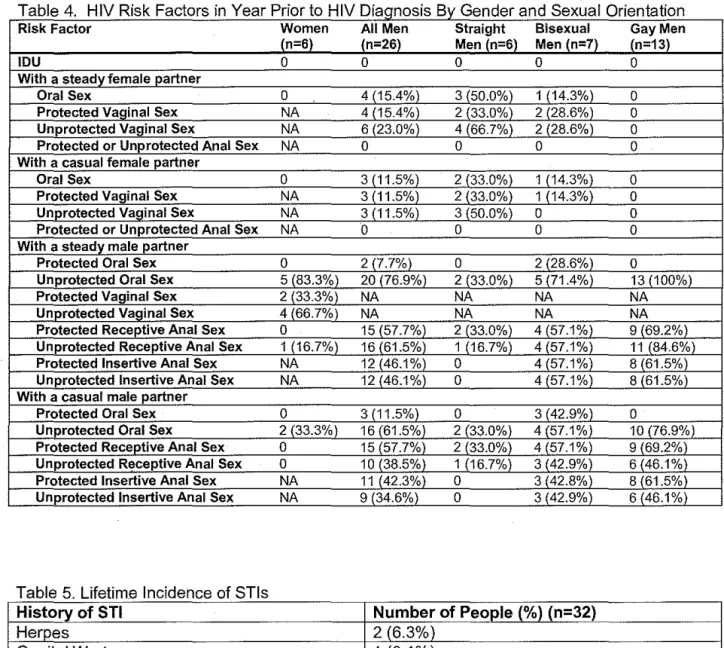
All women (n=6) identified as straight and only reported male sexual partners. Twenty-two men (84.6%) reported having male sexual partners, and 42.3% of men reported having female sexual partners. Of the 6 men who identified as straight, 100% had female sexual partners, and 2 (33.0%) also had male sexual partners. Of the 7 men who identified as
the 13 men who identified as gay, none had female partners and all had male partners. Neither males nor females reported having transgender sexual partners.
HIV Transmission Risk Behaviors of the Study Sample
The mean number of lifetime sexual partners of participants was 67 but the median number was 20 (range, 1 to 1 ,000). Men and women who identified as straight had a mean of 17 and a median of 11 lifetime sexual partners (range, 1 to 72); straight identified men had a mean of 26 and a median of 20 partners (range, 1 to 72), and straight identified women had a mean and median of 9 partners (range, 1 to 19). Bisexual men had a mean of 22 and a median of 12 partners (range, 1 to 54), and gay identified men had a mean of 137 and a median of 50 partners (range, 2 to 1000). The difference between the means of lifetime sexual partners based upon gender or sexual orientation is not statistically significant.
Sexually Transmitted Infections
Eight participants (25%) reported that at some point in their life, a doctor or health department official informed that that they had gonorrhea. Five participants (16%) had been told that they had chlamydia at some point and another 5 people had been informed that they had hepatitis. Four people (13%) reported that they had syphilis at one time. The incidence of these and other STis are reported in Table 5.
History of HIV Testing
Of the 32 participants, 4 (12.5%) had only ever tested once for HIV and at that test was diagnosed with HIV and 5 people (15.63%) had tested twice. Eleven people (34.4%) had tested 3 to 4 times, and 8 people (25%) had tested 5 to 10 times. Four people (12.5%) had tested more than 10 times for HIV (range 12 to 25). One person (3.13%) said that they voluntarily tested for HIVyearly, twelve people tested for HIV every 6 months (37.5%) and 2 people (6.25%) tested every 3 months.
These reasons people reported for HIV testing, which are not mutually exclusive, are reported in Table 6. Seventy-five percent of the participants reported their own personal reasons for being tested for HIV. Fifty-six percent of participants tested because they had had unprotected anal sex with a man and 56% tested because they wanted the reassurance that they were HIV negative. Ten people (31%) report having a HIVtested because they were having ARS symptoms. Other reasons frequently reported include that the HIV test was part of a routine medical exam (25%), symptoms of another STI were present and so decided to be evaluated for all STis (16%), and their sex partner is HIV-positive (16%).
ARS and Medical Evaluation