Alexandre V. Borovik
Mathematics
under
the Microscope
Notes on Cognitive Aspects
of Mathematical Practice
August 20, 2008
ALEXANDREV. BOROVIK
MATHEMATICS UNDER THEMICROSCOPE
The book can be downloaded for free from
http://www.maths.manchester.ac.uk/∼avb/micromathematics/downloads
Unless otherwise expressly stated, all original content of this book is created and copyrighted c°2006 by Alexandre V. Borovik and is licensed for non-commercial use under a
CREATIVE COMMONS ATTRIBUTION-NONCOMMERCIAL-NODERIVS 2.0 LICENSE.
You are free:
• to copy, distribute, display, and perform the work
Under the following conditions:
• Attribution.You must give the original author credit.
• Non-Commercial. You may not use this work for commercial purposes.
• No Derivative Works.You may not alter, transform, or build upon this work.
– For any reuse or distribution, you must make clear to others the licence terms of this work.
– Any of these conditions can be waived if you get permission from the copyright holder.
Your fair use and other rights are in no way affected by the above.
Preface
Skvoz~ volxebny$i pribor Levenguka . . . Nikola$i Zabolocki$i
The portrayal of human thought has rarely been more powerful and convincing than in Vermeer’sAstronomer. The painting creates the illusion that you see the movement of thought itself—as an embodied action, as a physical process taking place in real space and time.
I use Astronomer as a visual metaphor for the principal aim of the present book. I attempt to write about mathematical think-ing as an objective, real-world process, someththink-ing which is actually moving and happening in our brains when we do mathematics. Of course, it is a challenging task; inevitably, I have to concentrate on the simplest, atomic activities involved in mathematical practice— hence “the microscope” of the title.
Among other things,
• I look at simple, minute activities, like placing brackets in the sum
a+b+c+d+e.
• I analyze everyday observations so routine and self-evident that their mathematical nature usually remains unnoticed: for ex-ample, when you fold a sheet of paper, the crease for some rea-son happens to be a perfect straight line.
• I use palindromes, like MADAM, I’M ADAM, to illustrate how
mathematics deals with words composed of symbols—and how it relates the word symmetry of palindromes to the geometric symmetry of solid bodies.
We cannot seriously discuss mathemati-cal thinking without taking into account the limitations of our brain.
In this book, I argue that we can-not seriously discuss mathematical thinking without taking into account the limitations of the information-processing capacity of our brain. In our conscious and totally controlled reasoning we can process about 16 bits per second. In activities related to mathematics this miser-able bit rate is further reduced to 12 bits per second in addition of decimal numbers and to 3 bits in counting individual objects. Meanwhile the visual processing module of our brain easily dles 10,000,000 bits per second! [207, pp. 138 and 143] We can han-dle complex mathematical constructions only because we repeat-edlycompressthem until we reduce a whole theory to a few sym-bols which we can then treat as something simple; also because we encapsulatepotentially infinite mathematical processes, turn-ing them into finite objects, which we then manipulate on a par with other much simpler objects. On the other hand, we are lucky to have some mathematical capacities directly wired in the pow-erful subconscious modules of our brain responsible for visual and speech processing andpoweredby these enormous machines.
As you will see, I pay special attention toorder, symmetryand parsing (that is, bracketing of a string of symbols) as prominent examples ofatomicmathematical concepts or processes. I put such “atomic particles” of mathematics at the focus of the study. My po-sition is diametrically opposite to that of Martin Krieger who said in his recent bookDoing Mathematics[59] that he aimed at
a description of some of the the work that mathematicians do, employingmodern and sophisticatedexamples.
Unlike Krieger, I write about “simple things”. However, I freely use examples from modern mathematical research, and my un-derstanding of “simple” is not confined to the elementary-school classroom. I hope that a professional mathematician will find in the book sufficient non-trivial mathematical material.
work-Preface VII
ing of the brain is no more than a preliminary sketch; it is likely to be overwritten in the future by deeper works.
Instead, I attempt something much more speculative and risky. I take, as a working hypothesis, the assumption that mathematics is produced by our brains and therefore bears imprints of some of the intrinsic structural patterns of our mind. If this is true, then a close look at mathematics might reveal some of these imprints— not unlike the microscope revealing the cellular structure of living tissue.
I am trying to bridge the gap between mathematics and mathe-matical cognition by pointing to structures and processes of math-ematics which are sufficiently non-trivial to be interesting to a mathematician, while being deeply integrated into certain basic structures of our mind and which may lie within reach of cogni-tive science. For example, I pay special attention toCoxeter Theory. This theory lies in the very heart of modern mathematics and could be informally described as an algebraic expression of the concept of symmetry; it is named after H. S. M. Coxeter who laid its founda-tions in his seminal works [331, 332]. Coxeter Theory provides an example of a mathematical theory where we occasionally have a glimpse of the inner working of our mind. I suggest that Coxeter Theory is so natural and intuitive because its underlying cogni-tive mechanisms are deeply rooted in both the visual and verbal processing modules of our mind. Moreover, Coxeter Theory itself has clearly defined geometric (visual) and algebraic (verbal) com-ponents which perfectly match the great visual / verbal divide of mathematical cognition.
Mathematics is the study of mental ob-jects with reproducible properties. However, in paying attention to
the “microcosm” of mathematics, I try not to lose the large-scale view of mathematics. One of the principal points of the book is the essential ver-ticalunity of mathematics, the natu-ral integration of its simplest objects and concepts into the complex hierar-chy of mathematics as a whole.
One of the principal points of the book is the essentialverticalunity of mathemat-ics.
The Astronomer is, again, a use-ful metaphor. The celestial globe, the focal point of the painting, boldly places it into a cosmological perspec-tive. The Astronomer is reaching out to the Universe—but, according to the widely held attribution of the painting, he is Vermeer’s neighbor
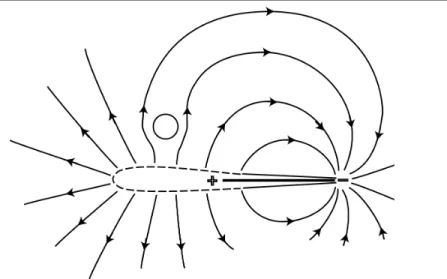
Microstructure of nerve fibers: a drawing by Antonij van Leeuwen-hoek, circa 1718. Public domain.
The next principal feature of the book is that I center my dis-cussion of mathematics as a whole—in all its astonishing unity— around the thesis, due to Davis and Hersh [21], that mathematics is
the study of mental objects with reproducible properties. In the book, the Davis–Hersh thesis works at three levels. Firstly, it allows us to place mathematics in the wider context of the evolution of human culture. Chapter 11 of the book is a brief diversion intomemetics, an emerging interdisciplinary area of re-search concerned with the mechanisms of evolution of human cul-ture. The termmeme, an analogue of “gene”, was made popular by Richard Dawkins [163] and was introduced into mainstream phi-losophy and cultural studies by Daniel Dennett [25]. It refers to el-ementary units of cultural transmission. I discuss the nature and role of “mathematical” memes in detail sufficient, I hope, for mak-ing the claim that mathematical memes play a crucial role in many meme complexes of human culture: they increase the precision of reproduction of the complex, thus giving it an evolutionary advan-tage. Remarkably, the memes may remain invisible, unnoticed for centuries and not recognized as rightly belonging to mathematics. In this book, I argue that this is a characteristic property of “math-ematical” memes:
If a meme has the intrinsic property that it increases the precision of reproduction and error correction of the meme complexes it belongs to, and if it does that without resorting to external social or cultural restraints, then it is likely to be an object or construction of mathematics.
Preface IX
first-hand account of the study of number sense and numerosity). Important as they are, these activities occupy a very low level in the hierarchy of mathematics. Not surprisingly, the remark-able achievements of cognitive scientists and neurophysiologists are mostly ignored by the mathematical community. This situation may change fairly soon, since conclusions drawn from neurophysi-ological research could be very attractive to policymakers in math-ematics education, especially since neurophysiologists themselves do not shy away from making direct recommendations. I believe that hi-tech, “brain scan” cognitive psychology and neurophysiology will more and more influence policies in mathematics education. If mathematicians do not pay attention now, it may very soon be too late; we need a dialogue with the neurophysiological community.
Cognitive psychology and neurophysi-ology will more and more influence poli-cies in mathematics education. If math-ematicians do not pay attention now, it may very soon be too late; we need a dialogue with the neurophysiological community.
The development of neurophysiol-ogy and cognitive psycholneurophysiol-ogy has reached the point where mathemati-cians should start some initial dis-cussion of the issues involved. Fur-thermore, the already impressive body of literature on mathematical cognition might benefit from a criti-cal assessment by mathematicians.
Secondly, the Davis–Hersh thesis puts the underlying cognitive mecha-nisms of mathematics into the focus of the study.
Finally, the Davis–Hersh thesis is useful for understanding the mechanisms of learning and teaching mathematics: it forces us to analyze the underlying processes of interiorization and reproduc-tion of the mental objects of mathematics.
In my book, I am trying to respond to a sudden surge of interest in mathematics education which can be seen in the mathematical research community. It appears that it has finally dawned on us that we are a dying breed, that the very reproduction of mathemat-ics as a social institution and a professional community is under threat. I approach the problems of mathematical education from this viewpoint which should not be easily set aside: what kind of mathematics teaching allows the production of future professional mathematicians? What is it that makes a mathematician? What are the specific traits which need to be encouraged in a student if we want him or her to be capable of a rewarding career in math-ematics? I hope that my observations and questions might be in-teresting to all practitioners and theorists of general mathematical education. But I refrain from any critique of, or recommendations for, school mathematics teaching.
non-technical as possible. I hope that the book will find readers among school teachers as well as students.
In a few instances, the mathematics used appears to be more technical. This usually happens when I have to resort to meta-mathematics, a mathematical description of the structure and role of mathematical theories. But even in such cases, mathematical concepts are no more than a presentation tool for a very informal description of my observations.
Occasionally I could not resist the temptation to include some comments on matters of my own professional interest; however, such comments are indicated in the text by smaller print.
Photographs in this book
I come from childhood as from a homeland. Antoine de Saint-Exup´ery,Pilot de guerre
I tried to place on the margins of the book a photograph of ev-ery living mathematician / computer scientist / historian of mathe-matics /philosopher of mathemathe-matics / scholar of mathemathe-matics men-tioned or quoted in the book. The catch is, I am using childhood photographs. In my book, I write a lot about children and early mathematical education, and I wish my book to bear a powerful re-minder that we all were children once. I hope that the reader agrees that the photographs make a fascinating gallery—and my warmest thanks go to everyone who contributed his or her photograph.
I tried to place a photograph of a particular person in those sec-tion of the book where his/her views had some impact on my writ-ing. The responsibility for my writings is my own, and a photograph a person should not be construed as his or her tacit endorsement of my views.
Alexandre Borovik aged 11
Apologies
This book may need more than one preface, and in the end there would still remain room for doubt whether anyone who had never lived through similar experiences could be brought closer to the experience of this book by means of prefaces. Friedrich Nietzsche
Preface XI
Man’s life is full of mystery, and everyone tries to compare it to something simple and easier to grasp. I knew a carpenter, and he used to say: “A man he is like a carpenter. Look at the carpenter; the carpenter lives, lives and then dies. And so does a man.”
And to ward off another sort of criticism, I should state clearly that I understand that, by writing about mathematics instead of doing mathematics, I am breaking a kind of taboo. As G. H. Hardy famously put it in his bookA Mathematician’s Apology[43, p. 61],
The function of a mathematician is to do something, to prove new theorems, to add to mathematics, and not to talk about what he or other mathematicians have done. Statesmen despise publicists, painters despise art-critics, and physiologists, physicists, mathematicians have similar feelings; there is no scorn more profound, or on the whole justifiable, than that of the men who make for the men who explain. Exposition, criticism, appreciation, is work for second-rate minds.
Having broken a formidable taboo of my own tribe, I can only apologize in advance if I have disregarded, inadvertently or through ignorance, any sacred beliefs of other disciplines and professions. To reduce the level of offence, I ask the discerning reader to treat my book not so much as a statement of my beliefs but as a list of questions which have puzzled me throughout my professional ca-reer in mathematics and which continue to puzzle me.
Perhaps, my questions are naive. However, I worked on the book for several years, and it is several months now as I keep the text on the Web, occasionally returning to it to put some extra polish or correct the errors. So far, the changes in the book were lim-ited to expanding and refining the list of questions, not inserting answers—I cannot find any in the existing literature. This is one the reasons why I believe that perhaps at least some of my ques-tions deserve a thorough discussion in the mathematical, educa-tional and cognitive-science communities.
My last apology concerns the use of terminology. Some terms and expressions which attained a specialized meaning in certain mathematics-related disciplines are used in this book in their (orig-inal) wider and vaguer sense and therefore are more reader-friendly. To fend off a potential criticism from nit-picking specialists, I quote a fable which I heard from one of the great mathematicians of our time, Israel Gelfand:
A student corrected an old professor in his lecture by pointing out that a formula on the blackboard should con-tain cotangent instead of tangent. The professor thanked the student, corrected the formula and then added:
Indeed, when mathematicians informally discuss their work, they tend to use a very flexible language—exactly because the prin-cipal technical language of their profession is exceptionally precise. I follow this practice in my book; I hope, it allows me to be friendly towards all my readers and not only my fellow mathematicians.
Acknowledgements: Inspiration and Help
The gods have imposed upon my writing the yoke of a foreign tongue that was not sung at my cradle. Hermann Weyl
I thank my children Sergey and Maria, who read a much ear-lier version of the book and corrected my English (further errors introduced by me are not their responsibility), and who introduced me to the philosophical writings of Terry Pratchett. I am grateful to my wife Anna, the harshest critic of my book; this book would never have appeared without her. She also provided a number of illustrations.
As the reader may notice, Israel Gelfand is the person who most influenced my outlook on mathematics. I am most grateful to him for generously sharing with me his ideas and incisive observations. I am indebted to Gregory Cherlin, Reuben Hersh and to my old friend Owl for most stimulating conversations and many comments on the book; some of the topics in the book were included on their advice.
Almost everyday chats with Hovik Khudaverdyan about math-ematics and teaching of mathmath-ematics seriously contributed to my desire to proceed with this project.
During our conversation in Paris, the late Paul Moszkowski put forcefully the case for the development of the theory of Coxeter groups without reference to geometry and pointed me toward his remarkable paper [384].
Jeff Burdges, Gregory Cherlin, David Corfield, Chandler Davis, Ed Dubinsky, Eric Ellers, Tony Gardiner, Ray Hill, Chris Hobbs, David Pierce, John Stillwell, Robert Thomas, Ijon Tichy and Neil White carefully read and corrected the whole or parts of the book.
Preface XIII
Thomas Hull —on history of Origami, to Gordon Royle—on Su-doku, to Alexander Kuzminykh and Igor Pak—on convex geome-try, to Dennis Lomas-on visual thinking; to Semen Kutateldaze— on philosophy and convex geometry and, finally, to Paul Ernest and Inna Korchagina for general encouraging comments.
Jody Azzouni, Barbara Sarnecka and Robert Thomas sent me the texts of their papers [5, 6], [159, 221], [89].
David Petty provided diagrammatic instructions for the Origami Chinese Junk (Figures 11.6 and 11.7). Dougald Dunham allowed me to use his studies of hyperbolic tesselations in M. C. Escher’s engravings (Figures 5.4, 5.5). Bruno Berenguer allowed me to use one of his chess diagrams (Figure 7.6). Ali Nesin made illustrations for Chapter 10. John Baez provided photograph of Figure 2.3. Si-mon Thomas provided me with diagrams used in Section 12.8.
I am lucky that my university colleagues David Broomhead, Paul Glendinning, Bill Lionheart and Mark Muldoon are involved in research into mathematical imaging and/or mathematical mod-els of neural activity and perception; their advice has been invalu-able. Paul Glendinning gave me a permission to quote large frag-ments of his papers [179, 181].
My work on genetic algorithms shaped my understanding of the evolution of algorithms; I am grateful to my collaborator Rick Booth who shared with me the burden of the project. Also, the very first seed which grew into this book can be found in our joint paper [105].
Anonymous age unknown Finally, my thanks go to the blogging community—I have picked
in the blogosphere some ideas and quite a number of references— and especially to numerous anonymous commentators on my blog.
Acknowledgements: Hospitality
I developed some of the ideas of Section 7.1 in a conversation with Maria do Ros ´ario Pinto; I thank her and Maria Leonor Moreira for their hospitality in Porto.
Parts of the book were written during my visits to University Paris VI in January 2004 and June 2005 on invitation from Michel Las Vergnas, and I use this opportunity to tell Janette and Michel Las Vergnas how enchanted I was by their hospitality.
Section 10.5 of the book is a direct result of a mathematical tour of Cappadocia in January 2006, organized by my Turkish col-leagues Ays¸e Berkman, David Pierce and S¸ ¨ukr ¨u Yalc¸ınkaya—my warmest thanks to them for their hospitality in Turkey on that and many other occasions.
Acknowledgements: Institutional
influ-ence on my work on this book, and I am most grateful to its orga-nizers.
My work on genetic algorithms was funded by EPSRC (grant GR/R29451).
While working on the book, I used, on several occasions, fa-cilities of Mathematisches Forschungsinstitut Oberwolfach, The Fields Institute for Research in Mathematical Sciences, and the Isaac Newton Institute for Mathematical Sciences.
Chapter 7 of this book was much influenced by the Discussion MeetingWhere will the next generation of UK mathematicians come from? held in March 2005 in Manchester. The meeting was sup-ported by the Manchester Institute for Mathematical Sciences, by the London Mathematical Society, by the Institute of Mathematics and Applications and by the UK Mathematics Foundation.
It was during the MODNET Conference on Model Theory in An-talya, 2–11 November 2006, that I had made the final decision to distribute the book under a Creative Commons License and placed the fist chapter of the book on the Internet. MODNET (Marie Curie Research Training Network in Model Theory and Applications) is funded by the European Commission under contract no. MRTN-CT-2004-512234.
In July 2007 I enjoyed the hospitality of Mathematical Village in S¸irince, Turkey, built and run by Ali Nesin.
I started writing this book inCaf´e de Flore, Paris—an extreme case of vanity publishing! Since then, I continued my work in many fine establishments, among themAirbr ¨au, das Brauhaus im Flughafenin Munich,Cafe del Turcoin Antalya,L’authre Bistroon rue des Ecoles and Caf´e des Artson place de la Contrescarpe in Paris—I thank them all.
Contents
Part I Simple Things:
How Structures of Human Cognition Reveal Themselves in Mathematics
1 A Taste of Things to Come. . . . 3
1.1 Simplest possible example . . . 3
1.2 Switches and flows: some questions for cognitive psychologists . . . 5
1.3 Choiceless computation . . . 7
1.3.1 Polynomial time complexity . . . 7
1.3.2 Choiceless algorithms . . . 8
1.4 Analytic functions and the inevitability of choice . . . . 9
1.5 You name it—we have it . . . 11
1.6 Why are certain repetitive activities more pleasurable than others? . . . 14
1.7 What lies ahead? . . . 17
2 What You See is What You Get. . . . 21
2.1 The starting point: mirrors and reflections . . . 21
2.2 Image processing in humans . . . 23
2.3 A small triumph of visualisation: Coxeter’s proof of Euler’s Theorem . . . 26
2.4 Mathematics: interiorization and reproduction . . . 29
2.5 How to draw an icosahedron on a blackboard . . . 31
2.6 Self-explanatory diagrams . . . 36
3 The Wing of the Hummingbird. . . . 43
3.1 Parsing . . . 43
3.2 Number sense and grammar . . . 46
3.3 What about music? . . . 47
3.4 Palindromes and mirrors . . . 49
3.5 Parsing, continued: do brackets matter? . . . 52
4 Simple Things. . . . 61
4.1 Parables and fables . . . 61
4.2 Cryptomorphism . . . 66
4.2.1 Israel Gelfand on languages and translation . . 67
4.2.2 Isadore Singer on the compression of language 68 4.2.3 Cognitive nature of cryptomorphism . . . 68
4.3 Some mathlets: order, numerals, symmetry . . . 69
4.3.1 Order and numerals . . . 69
4.3.2 Ordered / unordered pairs . . . 71
4.3.3 Processes, sequences, time . . . 73
4.3.4 Symmetry . . . 73
4.4 The line of sight and convexity . . . 74
4.5 Convexity and the sensorimotor intuition . . . 76
4.6 Mental arithmetic and the method of Radzivilovsky . 79 4.7 Not-so-simple arithmetic: “named” numbers . . . 80
5 Infinity and Beyond. . . . 87
5.1 Some visual images of infinity . . . 87
5.2 From here to infinity . . . 91
5.3 The Sand Reckonerand potential infinity . . . 95
5.4 Achilles and Tortoise . . . 98
5.5 The vanishing point . . . .101
5.6 How humans manage to lose to insects in mind games105 5.7 The nightmare of infinitely many (or just many) dimensions . . . .107
6 Encapsulation of Actual Infinity . . . .115
6.1 Reification and encapsulation . . . .115
6.2 From potential to actual infinity . . . .117
6.2.1 Balls, bins and the Axiom of Extensionality . . .118
6.2.2 Following Cantor’s footsteps . . . .120
6.2.3 The art of encapsulation . . . .121
6.2.4 Can one live without actual infinity? . . . .122
6.2.5 Finite differences and asymptotic at zero . . . . .122
6.3 Proofs by handwaving . . . .123
6.4 Logical generator of infinity . . . .128
Part II Mathematical Reasoning 7 What Is It That Makes a Mathematician?. . . .133
7.1 Flies and elephants . . . .133
7.2 The inner dog . . . .136
7.3 Reification on purpose . . . .138
7.4 Plato vs Sfard . . . .140
7.5 Multiple representation and de-encapsulation . . . .141
7.5.1 Rearrangement of brackets . . . .145
7.6 The Economy Principle . . . .145
Contents XVII
7.8 The game without rules . . . .150
7.9 Winning ways . . . .152
7.10 A dozen problems . . . .157
7.10.1 Caveats . . . .158
7.10.2 Problems . . . .158
7.10.3 Comments . . . .160
8 “Kolmogorov’s Logic” and Heuristic Reasoning. . . . .165
8.1 Hedy Lamarr: a legend from the golden era of moving pictures . . . .165
8.2 Mathematics of frequency hopping . . . .167
8.3 “Kolmogorov’s Logic” and heuristic reasoning . . . .168
8.4 The triumph of the heuristic approach: Kolmogorov’s “5/3” Law . . . .174
8.5 Morals drawn from the three stories . . . .177
8.6 Women in mathematics . . . .177
9 Recovery vs. Discovery . . . .183
9.1 Memorize or re-derive? . . . .183
9.2 Heron’s Formula . . . .185
9.3 Limitations of recovery procedures . . . .186
9.4 Metatheory . . . .188
10 The Line of Sight. . . .191
10.1 The Post Office Conjecture . . . .191
10.2 Solutions . . . .197
10.3 Some philosophy . . . .200
10.4 But is the Post Office Conjecture true? . . . .202
10.5 Keystones, arches and cupola . . . .203
10.6 Military applications . . . .205
Part III History and Philosophy 11 The Ultimate Replicating Machines. . . .211
11.1 Mathematics: reproduction, transmission, error correction . . . .212
11.2 The Babel of mathematics . . . .213
11.3 The nature and role of mathematical memes . . . .216
11.4 Mathematics and Origami . . . .219
11.5 Copying by squares . . . .222
11.6 Some stumbling blocks . . . .225
11.6.1 Natural language and music . . . .225
11.6.2 Mathematics and natural sciences . . . .226
11.6.3 Genotype and phenotype . . . .226
11.6.4 Algorithms of the brain . . . .227
11.6.5 Evolution of mathematics . . . .227
11.7 Mathematics as a proselytizing cult . . . .228
11.8 Fancy being Euclid? . . . .230
12 The Vivisection of the Cheshire Cat . . . .239
12.1 A few words on philosophy . . . .239
12.2 The little green men from Mars . . . .242
12.3Better Than Life. . . .243
12.4 The vivisection of the Cheshire Cat . . . .245
12.5 A million dollar question . . . .248
12.6 The boring, boring theory of snooks . . . .251
12.6.1 Why are some mathematical objects more important than others? . . . .252
12.6.2 Are there many finite snooks around? . . . .254
12.6.3 Finite snooks, snowflakes, Kepler and P ´alfy . . .255
12.6.4 Hopf algebras . . . .258
12.6.5 Back to ontological commitment . . . .260
12.7 Zilber’s Field . . . .262
12.8 Explication of (in)explicitness . . . .264
12.9 Testing times . . . .266
References. . . .271
List of Figures
1.1 A cubic curve in tropical geometry. . . 13
2.1 A closed system of mirrors . . . 22
2.2 Kiss . . . 23
2.3 Coxeter’s piano . . . 24
2.4 Grinding a flat mirror. . . 28
2.5 What different nations eat and drink. . . 32
2.6 Vision vs. “inverse vision”. . . 33
2.7 Horses by Nadia, at age of 3 years 5 months. . . 34
2.8 Horses from Chauvet Cave (Ardeche) . . . 35
2.9 A symbolic human and a naturalistic bull. . . 36
2.10 The icosahedron inscribed into the cube. . . 37
2.11 The root systemD3. . . 38
2.12 From Kepler’sMysterium Cosmographicum. . . 38
2.13 The root systemsD2andA1⊕A1. . . 39
3.1 Symmetry in music: contrapunct . . . 48
3.2 The Palindrome Representation Theorem. . . 50
3.3 Stashef’s associahedron. . . 56
4.1 Electrolocation in fish. . . 74
4.2 Convex and non-convex sets. . . 75
4.3 An impossible object. . . 77
4.4 The Magpie on the Gallows. . . 77
4.5 Spherical stone vase, Ancient Egypt . . . 79
5.1 A tessellation of the sphere. . . 88
5.2 A hyperbolic tessellation. . . 89
5.3 Euclidean tessellations . . . 90
5.4 A pattern of angels and devils based on M. C. Escher’sCircle Limit IV and the tessellation {4,5}. . . 91
5.5 The underlying tesselation of M. C. Escher’sCircle Limit IV. . . 92
5.6 Andrei Rublev,Trinity . . . .102
5.8 Paradisio, by Gustave Dor´e . . . .104
5.9 Dragonfly . . . .105
6.1 The graph ofy= sin (etanx). . . .121
7.1 Anglers and fish in MICROSOFT EXCEL . . . .143
7.2 Anglers and fish, represented by cherry stones. . . .144
7.3 Pons Asinorum. . . .149
7.4 The Bedbug Problem. . . .151
7.5 The Bedbug Problem: a solution. . . .152
7.6 A chess problem. . . .153
7.7 White mates in 262 moves. . . .157
7.8 For Problem 8(b). . . .159
7.9 For Problem 9.. . . .160
7.10 A problem on two overlapping squares. . . .162
8.1 Patent 2,292,387. . . .167
8.2 A frequency-time pattern for sonars. . . .168
8.3 A reflected signal. . . .169
8.4 Another reflected signal. . . .169
8.5 How to distinguish between the reflected signals? . . . .170
8.6 A more sophisticated pattern: a Welch-Costas array. .170
8.7 The Great Wave off Kanagawaby Katsushika Hokusai174 10.1 Valenki . . . .192
10.2 Ali Nesin . . . .192
10.3 For the Post Office Conjecture. . . .193
10.4 For the Post Office Conjecture. . . .193
10.5 For the Coins Problem. . . .194
10.6 The Coins Problem: a solution. . . .195
10.7 British Coins. . . .195
10.8 A solution of the Soap Bubbles Problem. . . .196
10.9 Another solution of the Round Coins Problems. . . .197
10.10The City ofN-sk Problem: a solution. . . .198
10.11For the Holes in the Cheese Problem. . . .198
10.12The Post Office Conjecture: a counterexample. . . .202
10.13Columns of Ramses III at Medinat Habu . . . .204
10.14True and false arches. . . .205
10.15Meskit in Agˇzıkarahan . . . .206
10.16Agˇzıkarahan, Main Gate . . . .207
10.17Interlocked octahedra. . . .207
11.1 The Tower of Babel . . . .214
11.2 Folding. . . .219
11.3 Regular hexagon. . . .220
11.4 Unfinished mural, Ancient Egypt . . . .223
11.5 An installation by Bernard Venet . . . .229
11.6 Making the Chinese Junk, I . . . .236
List of Figures XXI
Roger Alperin 220
Anonymous XIII
Ays¸e Berkman 180
Richard Booth 228
Alexandre Borovik X
Anna Borovik 22, 94
David Broomhead 26
Jeff Burdges 225
Peter Cameron 107
Gregory Cherlin 156
Alexander Chorin 176
David Corfield 18
Satyan Devadoss 32
Eric Ellers 23, 27
Hans Freudenthal 62
Tony Gardiner 133
Paul Glendinning 105
Yuri Gurevich 9
David Henderson 76
Ray Hill 222
Chris Hobbs 11, 13
Wilfrid Hodges 68
Celia Hoyles 161
Serguei Karakozov 191
Hovik Khudaverdyan 61
Eugene Khukhro 193, 194
Sergei Konyagin 197
Inna Korchagina 103,179
Michel Las Vergnas 49
Bill Lionheart 75
Franc¸ois Loeser 146
Dennis Lomas 137
Victor Mazurov 15
Vladimir Mazurov 15
G ´abor Megyesi 107
Maria Leonor Moreira 178
Ali Nesin 194, 198
Owl 228
Igor Pak 203
Peter P ´alfy 256
David Pierce 44, 62
Maria do Ros ´ario Pinto 136
List of Figures XXIII
Barbara Sarnecka 47
Anna Sfard 115, 139
John Stillwell 36, 188
Peter Symonds 145
Daina Taimina 75
Robert Thomas 61
Simon Thomas 264
Sergey Utyuzhnikov 174
Neil White 201
S¸ ¨ukr ¨u Yalc¸ınkaya 204
Part I
1
A Taste of Things to Come
This is the opening chapter of the book, and I use it to set the tone of my narrative: I start with some simple mathematical observations and briefly discuss what they possibly say about the inner working of our mind. Surprisingly, this discussion very naturally involves some non-trivial ideas and results from the frontier of mathemati-cal research. But better see it for yourselves.
1.1 Simplest possible example
Simplicity, simplicity, simplicity! I say, let your affairs be as two or three, and not a hundred or a thousand; instead of a million count half a dozen, and keep your accounts on your thumb-nail. Henry David Thoreau,Walden
In my account, I am not afraid to be very personal, almost sen-timental, and have decided to start the discussion of the “simple things” of mathematics by turning to my memories from my school years.
Always test a mathematical theory on the simplest possible example—and ex-plore the example to its utmost limits. I had my most formative
mathe-matical experiences at the tender age of thirteen, when I still lived in my home village on the shores of Lake Baikal in Siberia. I learned elemen-tary calculus from two thin booklets sent to me from a mathematics corre-spondence school:The Method of
general principle of always looking at the simplest possible exam-ple”. “Yes!” exclaimed Gelfand in his usual manner, “yes, this is my most important discovery in mathematics teaching!” He proceeded by saying how proud was he, that, in his famous seminars, he al-ways pressed the speakers to provide simple examples, but, as a rule, he himself was able to suggest a simpler one.1
So, let us look at the principle in more detail:
Always test a mathematical theory on the simplest possible example. . .
This is a banality, of course; everyone knows it, therefore almost no-one follows it. So let me continue:
. . . and explore the example to its utmost limits.
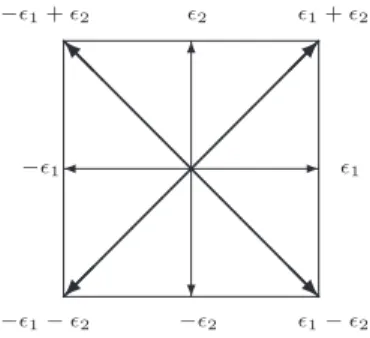
This book contains a number of examples pushed to their in-trinsic limits. See, in particular, Section 2.6 and the discussion of Figure 2.13 on page 39 for some examples from the theory of Cox-eter groups and mirror systems. What could be simpler?
But it is even more instructive to look at an example from Func-tions and Graphs.
What is the simplest graph of a function? Of course, that of a linear function,
y=ax+b.
But what are the simplest non-linear elementary functions? Quadratic polynomials? Well,Functions and Graphssuggests something dif-ferent. The simplest non-linear function is themagnitude, or abso-lute value,y=|x|.
-6
¡¡
¡
@ @ @
x
0
y y=|x|
Indeed, it allows
• easy plotting and interpolation;
• standard manipulations with graphs like shifting, stretching, etc.:
f(x) +c, f(x+c), cf(x), f(cx).
• composition; for example, the composition ofy=|t−1|andt=
|x|is
1.2 Switches and flows: some questions for cognitive psychologists 5
-6
¡¡
@ @ @ @
¡¡ x
0
−1 1
y
y=||x| −1|
• iterations:
f(x) =||x| −1|
f(f(x)) =|||x| −1| −1|
f(f(f(x))) =||||x| −1| −1| −1|
.. .
Compare the previous graph, of f(x) = ||x| −1|, and the one below, off(f(x)):
-6
¡
@ @¡¡
@ @
¡ x
0
−2 2
y
y=|||x| −1| −1|
Sketching the 100-th iteration off becomes an accessible exer-cise. Can one do the same with polynomials?
And, last but not least, the functiony=|x|is not differentiable (and not analytic!), thus providing a simple, natural and powerful example of a non-analytic function. We shall soon see remarkable implications of this simple observation.
1.2 Switches and flows: some questions for
cognitive psychologists
I could not fail to disagree with you less. Anonym (wrongly attributed to Boris Johnson MP)
However, computations withy=|x|require use of two different formulae fory <0andy>0; if you think a few seconds about how you manipulate functions like
y=||||x| −1| −1| −1|
you will see that this is not a symbolic manipulation of the kind we do with analytic expressions, but something quite the opposite, very discrete and consisting almost entirely of flipping, as in bipolar switchesLEFT—RIGHT,UP—DOWN.
The difference between the “switch” and “flow” modes of computation is felt and recognized by almost every mathemati-cian.
We humans are apparently quite good at flipping mental switches (when the number of switches is rea-sonably small; the limitations are possibly of the same nature as in the subitizing / counting threshold; see Section 4.1). Graphic manipulation with compound functions built from y=|x|is so efficient because they ap-pear to engage some small but efficient switchboards in our brains. In contrast, most procedures of formula-based undergraduate cal-culus obviously follow some smooth, “choiceless” pattern. I would make a wild guess that the choiceless, rearrangement-of-formulae routines of elementary calculus and algebra invoke a type of brain activity which is ruled by rhythm and flow, as in music or reciting of chants. I am more confident in suggesting that, in any case, it is very different from the switch-flipping of discrete mathematics. I base this milder conjecture on the anecdotal evidence that prob-lems which require one to combine the two activities (for example, where the calculations should follow different routes depending on whether the discriminant ∆ = b2 −4ac of a quadratic equation ax2+bx+c= 0is positive or negative) cause substantial trouble to beginning learners of mathematics, especially if they have not been warned in advance about the hard choices they will face.
I claim that the difference between the “switch” and “flow” modes of computation is felt and recognized by almost every math-ematician. Most undergraduate students of mathematics in their second or third year of study can judge—and with a surprising degree of certainty and immediacy in their answers—what kind of mathematics is more suitable for them, discrete or continuous. They just know, even if they have never before given any thought to the issue. Perhaps, we should tell them that there is a difference. 3
con-1.3 Choiceless computation 7
siderable depth. In the next section I briefly describe the findings of mathematicians.
1.3 Choiceless computation
We choose our joys and sorrows long before we experience them. Kahlil Gibran
So, we started with the absolute value function y = |x| as an example of “the simplest possible example” and are now moving to a mathematical description of the difference between the “switch” and “flow” modes of computation.
As I will frequently do in this book, I use a concept from com-puter science as a pointer to possible structures of human cognition responsible for particular ways of manipulating mathematical ob-jects. In this case, a possible indicator is the concept ofchoiceless polynomial time computation[308].
Some terminology ought to be explained.
1.3.1 Polynomial time complexity
An algorithm is said to havepolynomial timecomplexity (of degree d) if, when working with inputs of sizel, it requiresO(ld) elemen-tary operations (see the endnote4for explanation ofO()-notation). Let us look, for example, at addition of two integers. The input size here is the number of digits required to write the integers down; if both summands are smaller than n, then each needs at most l = [log10(n)] + 1 digits (here, [log10(n)] denotes log10(n) rounded down to the nearest integer). To add the integers, we need, in each position, to add two digits, compute the carry, if necessary, and add it to the next position. All that requires at most3operations, mak-ing it3([log10(n)] + 1)in total. It is convenient to say succinctly that the time complexity of addition isO(log10(n)). Notice further that the change of the basis of the logarithm amounts to multiplication by a constant, hence we can use any basis (actually, computer sci-entists prefer base2, since everything is done in binary numbers) and just writeO(logn).
Similarly, multiplication of two integers has time complexity at mostO(log2n), or quadratic timecomplexity, while multiplication of two n×n matrices with integer entries, each smaller than m, requires at most O(n3log2m) operations. I do not consider here various interesting and useful ways tospeed upthe standard pro-cedures; see Knuth [367] for a very comprehensive survey of the huge body of knowledge on fast practical algorithms.
involved, may be too big for the computation to be completed in any feasible time.
As frequently happens in mathematics,P is being studied be-cause it is robust. The actual degree d in the bound O(nd) for complexity depends on data structures and other computer science tricks used; but if an algorithm can be implemented as polynomial time one way, it remains polynomial time in all reasonable imple-mentations, and this allows us to work at the theoretical level and ignore the details.
Also, there is a school of thought holding that the existence of a polynomial time algorithm should normally suggest the existence of a good and practically feasible polynomial time algorithm. This is how Neal Koblitz (one of the founders of algebraic cryptography) put it in [368, p. 37]:
The experience has been that if a problem of practical inter-est is inP, then there is an algorithm for it whose running time is bounded by asmallpower of the input length.
Hence we have a metamathematical thesis describing a big class of especially nice algorithms.5 Next, I’ll try to describe even nicer algorithms—but, unfortunately, these are less versatile and less applicable than polynomial time algorithms.
1.3.2 Choiceless algorithms
For our discussion of the “switch” and “flow” modes of computa-tion, we have to move to some firm mathematical ground. Luckily, the necessary formal concept of “choiceless” computation is already well-known in computer science.
Choiceless computing imposes the black-and-white vision of mathematics. But maybe the same is true in life—if one tries to avoid choices, one sees the world in just two colors.
In naive terms, a choiceless algo-rithm is a routine which works in a single uninterrupted flow, never en-countering a choice between two (or more) distinct ways to continue the computation.6
So, what does mathematics say about choiceless algorithms and their limitations?
A benchmark problem in the the-ory of choiceless computation is that of evaluation of the determi-nant of an n×n matrix. The standard algebraic formula for the determinant
detA=X σ
(−1)signσa1,σ(1)· · ·an,σ(n)
1.4 Analytic functions and the inevitability of choice 9
choices; the first choice is needed at the very first step, when we have to decide whether to swap rows of the matrix(aij)according asa11= 0or not.
A remarkable result of Blass, Gurevich and Shelah [309, Theo-rem 29] asserts that the determinant of a matrix over the field of 2elementscannotbe found in choiceless polynomial time. In ordi-nary language, their result says that, if the determinant is to be calculated efficiently, then choices are essential and unavoidable.
Yuri Gurevich aged 2 Probably the most advanced result in the theory of choiceless
algorithms is Shelah’s zero-one law [310, 398] which says that if a property of a class of objects is recognizable in choiceless polyno-mial time (that is, given an object, we can decide choicelessly and in polynomial time whether the object has the property in question or not) then the property holds with probability 0 or1. Paradoxi-cally, choiceless computing imposes the black-and-white vision of mathematics. But maybe the same is true in life—if one tries to avoid choices, one sees the world in just two colors, and one color is always preferred.
When using computer science as a source of metaphors for de-scribing the workings of our brain, it is worth remembering that, despite the immense complexity and power of the brain, the men-tal processes of mathematics appear to be surprisingly resource-limited. Therefore I have a feeling that branches of logic developed for the needs of complexity theory might provide better metaphors than the general theory of computation.
1.4 Analytic functions and the inevitability of
choice
AEROFLOTflight attendant: “Would you like a dinner?”
Passenger: “And what’s the choice?” Flight attendant: “Yes—or no.”
We have mentioned at the beginning of our discussion that|x|
is a non-analytic function. It can be written by a single algebraic formula
|x|=√x2,
with the only glitch that of the two values of the square root±√x2 we haveto choosethe positive one, namely,√x2.
Yuri Gurevich aged 9 One may argue that in the case of the absolute value function
the choice is artificial and is forced on us by the function’s awkward definition. But let us turn to solutions of algebraic equations, which give more natural examples of the inevitability of choice.
The classical formula
x1,2= −b±
√
for the roots of the quadratic equation is the limit of what we can do with analytic functions without choosing branches of multival-ued analytic functions—but even here, beware of complications and read an interesting comment from Chris Hobbs.7 Recall that the inverse of the square function x = y2 is a two-valued function y=±√xwhose graph has two branches, positivey=√xand neg-ative,y=−√x. Similarly, the cube root functiony=√3xhas three distinct branches, but they become visible only in the complex do-main, since only one cube root of a real number is real, the other two are obtained from it by multiplying it by complex factors
−1
2 ±
√
3 2 i.
The classical formula—which can be traced back to Gerolamo Car-dano (1501–1576) and Niccol`o Tartaglia (1499–1557)—for the roots of the cubic equation
x3+ax2+bx+c= 0 gives its three roots as
−a
3+
3
s
−2a3+ 9ab−27c+p(2a3−9ab+ 27c)2+ 4(a2+ 3b)3
54
+ 3 s
−2a3+ 9ab−27c−p(2a3−9ab+ 27c)2+ 4(a2+ 3b)3
54 ,
−a
3+
−1−i√3 2
3
s
−2a3+ 9ab−27c+p(2a3−9ab+ 27c)2+ 4(a2+ 3b)3
54
+−1 +i
√
3 2
3
s
−2a3+ 9ab−27c−p(2a3−9ab+ 27c)2+ 4(a2+ 3b)3
54 ,
−a
3+
−1 +i√3 2
3
s
−2a3+ 9ab−27c+p(2a3−9ab+ 27c)2+ 4(a2+ 3b)3
54
+−1−i
√
3 2
3
s
−2a3+ 9ab−27c−p(2a3−9ab+ 27c)2+ 4(a2+ 3b)3
54 .
Please notice the carefully choreographed choice of the branches of the square root √ and the cube root function √3, the rhythmic dance of pluses and minuses. Without that choice, Cardano’s for-mula produces too many values, only three of which are true roots. Indeed, if we work with multivalued functions without making any distinction between their branches, we have to accept that the su-perposition of anm-valued function and ann-valued function has mn values. We cannot collect like terms: an innocent looking
ex-pression like √
1.5 You name it—we have it 11
defines, if we interpret “√x” as two-valued, a function with four branches
±√x±√9x={ −4√x,−2√x,2√x,4√x}.
It is a rigorous mathematical fact [302] that solutions of
equa-Chris Hobbs aged 6 tions of degree higher than two cannot be analytically expressed
by choiceless multivalued formulae (even if we allow for more so-phisticated analytic functions than radicals); see a discussion of the topological nature of this fact by Vladimir Arnold [3, p. 38].
This last observation is especially interesting in the historic context. At the early period of development of symbolic algebra, mathematicians were tempted to introduce functions more general than roots. The following extract from Pierpaolo Muscharello’s Al-gorismusfrom 1478 is taken from Jens Høyrup [52]:
Pronic root is as you say,9times9makes81. And now take the root of9, which is3, and this3is added above81, so that the pronic root of84is said to ne3.
In effect, Muscharello wanted to introduce the inverse of the func-tion
z7→z4+z.
Arnold’s theorem explains why such tricks could not lead to an easy solution of cubic and quadric equations and had been abandoned.
1.5 You name it—we have it
This section is more technical and can be skipped.
As I have already said on several occasions, this book is about simple atomic objects and processes of mathematics. However, mathematics is huge and immensely rich; even the simplest ob-servations about its simplest objects may already have been de-veloped into sophisticated and highly specialized theories. Mathe-matics’ astonishing cornucopian richness and its bizarre diversity are not frequently mentioned in works on philosophy and method-ology of mathematics—but this point has to be emphasized, since its makes the question aboutunityof mathematics much more in-teresting.
In this section, I will briefly describe a “mini-mathematics”, a mathematical theory concerned with a close relative of the abso-lute value function, themaximumfunction of two variables
z= max(x, y).
Of course, the absolute value function|x|can be expressed as
|x|= max(x,−x).
Similarly, the maximum max(x, y) can be expressed in terms of the absolute value|x|and arithmetic operations—I leave it to the
The theory is known under the name oftropical mathemat-ics. The strange name has no deep meaning: the adjective “trop-ical” was coined by French mathematicians in the honor of their Brazilian colleague Imre Simon, one of the pioneers of the new discipline. Tropical mathematics works with usual real numbers but uses only two operations: addition, x+y, and taking the maximum,max(x, y)—therefore it is one of the extreme cases of “switch-flipping”, choice-based mathematics. Notice that addition is distributive with respect to taking maximum:
a+ max(b, c) = max(a+b, a+c).
This crucial observation is emphasized by renaming the two basic operations into new “multiplication” and “addition”:
a¯b=a+b, a⊕b= max(a, b).
The previous identity takes the more familiar shape of the dis-tributive law:
a¯(b⊕c) =a¯b⊕a¯c.
Of course, operations ¯and ⊕are commutative and associative. After recycling the traditional shorthand
xn=x¯ · · · ¯x (ntimes),
we can introduce polynomials as well as matrix multiplication, determinants, etc. For example, the tropical determinant of the matrixA = (aij)is defined by evaluating the expansion formula (see page 8) tropically and ignoring the signs of permutations σ involved in the classical formula for determinant [392, 404]:8
dettrA=
M
σ∈Symn
(a1,σ(1)¯ · · · ¯an,σ(n))
= max
σ∈Symn(a1,σ(1)+· · ·+an,σ(n))
Here the “sum” is taken over the setSymnof all permutations of indices1, . . . , n; for example,
dettr
¯ ¯ ¯ ¯a bc d
¯ ¯ ¯
¯= max(a+d, b+c).
Therefore the “sum” involves n!“monomials”—exactly as in the case of ordinary determinants. Let us return for a second to our discussion of the complexity of evaluation of determinants in choice-based and choiceless models of computation. It is not obvious at all that a tropical determinant can be evaluated usingO(n3)
ele-mentary operations—but it is true. The evaluation of the tropical determinant is the classicalassignment problem in discrete opti-mization and the bounds for its complexity are well-known [396, Corollary 17.4b]. Indeed, finding the value of the tropical determi-nant amounts to finding a permutationi7→σ(i)which maximizes the sum
a1,σ(1)+· · ·+an,σ(n).
1.5 You name it—we have it 13
nfactoriesF1, . . . , Fn; the expected profit from assigning machine Mito factoryFjisaij; find the assignment
Mi7→Fσ(i)
which maximizes the expected profit
a1,σ(1)+· · ·+an,σ(n).
Chris Hobbs aged 16
Fig. 1.1.A cubic curve in the tropical projective plane (adapted from Mikhalkin [381]).
We also have a full-blown tropical algebraic geometry, where curves in the plane are made from pieces of straight lines (Fig-ure 1.1)—quite like the graph of the absolute value functiony =
|x|, the starting point of our discussion.
Tropical mathematics is amusing, but is it relevant? Yes, and very much so. Moreover, it currently is experiencing an explo-sive growth. There are intrinsic mathematical reasons for tropical mathematics to exist, but its present flourishing is largely moti-vated by applications.
One application is mathematical genomics: tropical geometry captures the essential properties of “distance” between species in the phylogenic tree.
Another is theoretical physics: tropical mathematics can be treated as a result of the so-called Maslov dequantization of tradi-tional mathematics over numerical fields as the Planck constant~ tends to zero taking imaginary values [375].
process ends earlier. Therefore tropical mathematics is mathemat-ics oftime—which also explains its applications to genomics: phy-logenic trees grow in time, and the geometry of phyphy-logenic trees reflects the geometry of time.
1.6 Why are certain repetitive activities more
pleasurable than others?
Ivan crossed it all out and decided to begin right off with something very strong, in order to attract the reader’s attention at once, so he wrote that a cat had got on a tram-car, and then went back to the episode with the severed head. Michael Bulgakov,The Master and Margarita
Let us our turn our attention to the emotional side of mathematics, more specifically, to the personal psychological experience of people working with mathematical algorithms and routines.
I wish to formulate here some of my observations and conjec-tures which may appear to be bizarre and out of tune from the usual discourse on mathematics. However, I tested some of them in a warm-up talk that I gave at a forum discussionWhere do math-ematicians come from? [452], part of a very peculiar conference, that of the World Federation of National Mathematics Competi-tions (WFNCM). It was held in July 2006 in Cambridge, England. On my way from Manchester to Cambridge, four hours by train, I had seen three people solving Sudoku. In one case, a lady of middle age shared a table with me and I had a chance to watch, in all detail and with a growing fascination, how she was solving an elementary level Sudoku puzzle. Her actions followed a certain rhythm: first she inspected the puzzle row by row and column by column until she located a critical cell (whose value had been already uniquely determined by the already known values in other cells), then, with obvious agitation, checked that was indeed the case, happily wrote the digit in, smiled with a childish satisfaction, relaxed for a few seconds, and, after a short pause, started the search again.
Next day, in my talk at the conference, I pointed out that, from a mathematical point of view, solving an elementary level Sudoku puzzle is nothing more than solving a triangle system of Boolean equations by back substitution, something very similar to what we do after a Gauss–Jordan elimination in a system of simultaneous linear equations. But has anyone ever seen people on a train solv-ing systems of linear equations from a newspaper?9
1.6 Why are certain repetitive activities more pleasurable than others? 15
We will not understand the psychologi-cal and neurophysiologipsychologi-cal roots of an important aspect of mathematical prac-tice until we figure out why bubble wrap popping is such an addictive and pleas-ant activity.
Still, why is Sudoku popular? I be-lieve the answer is in a rhythm of repeated cycles of operations each of which engages our brains just up to a right and most pleasurable level of intensity. As a student, I experienced a soothing, relaxing effect of carrying out a recursive algorithm, like long division, or Euclid’s algorithm. Later, in my research work, I felt a similar
emotional impact of inductive arguments in finite group theory: you start with a minimal counterexample to the theorem, and then sim-plify it step by step, like removing layers from an onion, until you pin-point the core contradiction and destroy the counterexample. My teacher, Victor Danilovich Mazurov, expressed the principle of a “minimal counterexample” using a line from a Russian fairy tale:
The oldest brother hid behind the back of the younger one, the younger one hid behind the youngest one, and the youngest brother fell on his knees, raised his hands and pleaded for mercy.
Vladimir and Victor Mazurov ages 9 and 6 In mathematical education, especially at its earlier stages, one
of the teacher’s tasks is to give his/her students the opportunity to feel this soothing, comforting effect of a rhythmic repetitive activity. And here I come to the crucial point:
why do people love to pop bubble wrap?
I would not write this now if the audience of my talk at the WFNMC conference had not immediately agreed with, and ap-proved of, my comparison of execution of certain types of recur-sive algorithms with the bubble wrap popping. I should perhaps ex-plain that the audience included some of the best experts on math-ematical education in the world, especially on advanced and non-standard aspects of mathematics teaching. They definitely knew everything about “recreational mathematics”, puzzles, brainteasers and conundrums of every possible kind. Their support allows me to be quite confident in my comparison of Sudoku with bubble wrap popping. In any case, the lady on the train was doing her Sudoku in an immediately recognizable bubble wrap popping rhythm.
So, with the authority of the conference on my side, I dare to formulate my thesis:
We shall not understand the psychological and neurophysi-ological roots of an important aspect of mathematical prac-tice until we figure out why bubble wrap popping is such an addictive and pleasant activity. Why does it comfort and help to relax? Why is it soothing?
genet-ically determined. Bubble wrap triggers in humans archaic in-stincts linked to an ape-like behavior: grooming (and even more importantly, mutual grooming) and destruction of lice. In apes and monkeys, mutual grooming is an important part of social bonding, which explains its soothing, comforting, relaxing effect.
In my search on the web for a confirmation of my conjecture I have not managed to get further than numerous websites devoted to virtual bubble wrap popping. A search for the words “bubble wrap” is not the best way to find anything meaningful on the web: almost everything sold on the Internet is mailed in bubble wrap packaging. As the result, GOOGLEproduces 9,090,000 hits for “bub-ble wrap”. I offered the pro“bub-blem to my colleague Gregory Cherlin, who was more Internet savvy and carried out a successful search. Here are his principal findings:
• Gene HOXB8 controls normal grooming behavior. Disruption in mice leads to obsessive grooming behavior. Here is a summary of information from the National Institutes of Health website [443]:
This gene belongs to the homeobox family of genes. The homeobox genes encode a highly conserved family of tran-scription factors that play an important role in morpho-genesis in all multicellular organisms. Mammals pos-sess four similar homeobox gene clusters, HOXA, HOXB, HOXC and HOXD, which are located on different chromo-somes and consist of 9 to 11 genes arranged in tandem. This gene is one of several homeobox HOXB genes located in a cluster on chromosome 17. HOXB8 knockout mice ex-hibit an excessive pathologic grooming behavior, leading to hair removal and self-inflicted wounds at overgroomed sites. This behavior is similar to the behavior of humans suffering from the obsessive-compulsive spectrum disor-der trichotillomania.
• There is quite a range of grooming-related disorders in humans [449].
• Primates indeed do love to pop bubble wrap [440, p. 8].
Meanwhile, my own search for bubble wrap popping on Google Scholar led me to the book under the telling title Teens Together Grief Support Group Curriculum[425]. I have not seen the whole book, but, apparently, page 57 contains sufficiently revealing words:
Bubble Wrap: Give the teens a square of bubble wrap to pop for one of their breaks. They really get into the sound and action of popping the bubbles.
1.7 What lies ahead? 17
Should we be surprised if it were con-firmed indeed that the most comfort-able pace of execution of a recursive algorithm is set by a gene responsible for grooming behavior?
I would suggest that HOXB8 is indeed the Bubble Wrap Gene and is responsible for Sudoku being at-tractive to humans. I would rather hear more on that from geneticists and neurophysiologists.
At last I am in a position to for-mulate the moral of this story. I be-lieve that a real understanding of one
of the key issues of mathematical practice (and especially of math-ematics teaching). Namely,
• why are some objects, concepts and processes of mathematics more intuitive, “natural”, or just more convenient and accept-able than others?
cannot be achieved without taking a hard and close look at the very deep and sometimes archaic levels of the human mind and the human neural system. Indeed, Stanislas Dehaene said in his bookThe Number Sense[167] that
We have to do mathematics using the brain which evolved 30 000 years ago for survival in the African savanna.
In particular, should we be surprised if it were confirmed in-deed that the most comfortable pace of execution of a recursive al-gorithm is set by a gene responsible for grooming behavior?
1.7 What lies ahead?
We have seen how the deceptively simple functiony=|x|launched us on a roller coaster ride through several branches of mathemat-ics. More adventures still lie ahead. They all will follow a similar plot:
• Usually I start by describing a very simple—sometimes ridicu-lously simple—mathematical problem, object or procedure. • Then I discuss possible neurophysiological mechanisms which
might underpin the way we think and work with this object. Sometimes my conjectures are purely speculative, sometimes (for example, in the next chapter) they are based on established neurophysiological research.
• I usually include a brief description of mathematical results which deal withmathematicalanalogues of the conjectural neu-rophysiological mechanisms.
• In the later parts of the book, I will more and more frequently venture into the discussion of possible implications of our find-ings for our understanding of mathematics and its philosophy. • My conjectures are frequently outrageous and sketchy. I have