EXPLORING THE RELATIONSHIP BETWEEN STUDENT ENGAGEMENT FACTORS AND ENTRY TO
POSTSECONDARY PROGRAMS: A SECONDARY ANALYSIS
by
SUSAN F. INMAN
A DISSERTATION
Presented to the Department of Educational Leadership and the Graduate School of the University of Oregon
in partial fulfillment of the requirements for the degree of
Doctor of Education September 2008
University of Oregon Graduate School
Confirmation of Approval and Acceptance of Dissertation prepared by: Susan Inman
Title:
"EXPLORING THE RELATIONSHIP BETWEEN STUDENT ENGAGEMENT FACTORS AND ENTRY TO POSTSECONDARY PROGRAMS: A SECONDARY ANALYSIS" This dissertation has been accepted and approved in partial fulfillment of the requirements for the Doctor of Education degree in the Department of Educational Leadership by:
David Conley, Chairperson, Educational Leadership Paul Yovanoff, Member, Educational Leadership Kathleen Scalise, Member, Educational Leadership
Edward Weeks, Outside Member, Planning Public Policy & Mgmt
and Richard Linton, Vice President for Research and Graduate Studies/Dean of the Graduate School for the University of Oregon.
September 6, 2008
Original approval signatures are on file with the Graduate School and the University of Oregon Libraries.
An Abstract ofthe Dissertation of
Susan F. Inman for the degree of Doctor of Education
in the Department of Educational Leadership to be taken September 2008 Title: EXPLORING THE RELATIONSHIP BETWEEN STUDENT ENGAGEMENT
FACTORS AND ENTRY TO POSTSECONDARY PROGRAMS: A SECONDARY ANALYSIS
Approved: _
Dr. David Conley
This study used the existing database of 1,052 schools contained in the National
Education Longitudinal Study of 1988 to examine the predictors that were related to high school students' enrollment in postsecondary education (PSE).In order to determine which school-related experiences had an impact on the students' enrollment in PSE, a multiple regression analysis was conducted.
The results indicate that student attendance rates and "being held back" are significant predictors for predicting postsecondary enrollment across all analyses and for subpopulations disaggregated by race, SES, and gender. Recommendations to encourage student enrollment in postsecondary programs include providing grade level interventions to avoid the detrimental effects of a student repeating a grade, as well as developing programs to increase student engagement levels in the high school setting.
Limitations to the study include control strategies for confounding factors. The inclusion of additional control variables, such as parents' level of education, would increase the validity of the findings.
CURRICULUM VITAE NAME OF THE AUTHOR:
PLACE OF BIRTH: DATE OF BIRTH
Susan F. Inman
Klamath Falls, Oregon June 7, 1963
GRADUATE AND UNDERGRADUATE SCHOOL ATTENDED: University of Oregon, Eugene
Northern Arizona University, Flagstaff Southern Oregon University, Ashland DEGREES AWARDED
Doctor of Education, Educational Leadership, 2008, University of Oregon Master of Arts, Educational Administration, 1993, Northern Arizona University Bachelor of Science, Business Administration, 1985, Southern Oregon
University PROFESSIONAL EXPERIENCE 2008 -present 1998-2008 1996-1998 1993-2008 1990-1995
Oregon Department of Military Medford School District-Principal
Medford School District-Teacher, North Medford High School
Adjunct Faculty Member; SOU; Ottawa University Crane School District-Staff Development Specialist, Classroom Teacher 2007 1998-present 1998-present 2002 1992 1987 1985 1985 1985 1985 1986-present 1994-present GRANTS, AWARDS & HONORS
Beacon School Award-Oregon Department of Education National Association of Elementary School Principals Confederation of Oregon School Administrators Pioneer Award-COSA
Climate Creator Award-CSD Merchandise Manager of the Year Phi Kappa Phi Honor Society
Who's Who Among American Colleges and Universities Marketing Student of the Year-SOU
Summa Cum Laude, Southern Oregon University Southern Oregon University Alumni Association Northern Arizona University Alumni Association
International Reading Association/Oregon Reading Association
ACKNOWLEDGMENTS
Living slightly more than 150 miles away from the University setting, I have depended heavily on technology to achieve the requirements for this program. My dissertation committee has certainly earned my acknowledgment for their long-distance dedication to assisting in the completion of this dissertation.
Additionally, the expertise of Carla Bowers, Terri Ward and Mary Tucker in the roles of advisors and editor are rightfully recognized for their important contributions to the finished product.
Thanks to my parents who have advocated for advanced education since I can remember. To my family, friends and colleagues who have provided moral support, the time and opportunity to work on this project, along with the encouragement to
persevere. You all have my deepest thanks and appreciation. I certainly could not have accomplished this without you.
DEDICATION
To my husband, Mark, whose gracious support& unfailing patience have sustained me through this
project-0000000000
-And to my daughters, Brittany and Mikaela, who have consistently encouraged me to reach as high as possible.
TABLE OF CONTENTS
Chapter Page
I. INTRODUCTION 1
School Engagement... 1
Student Engagement Related to Postsecondary Education... 3
Purpose Statement... 4
Research Questions... 4
Summary... 6
II. REVIEW OF THE LITERATURE 8 The Historical Development of Postsecondary Education in the U.S. 8 Postsecondary Equity& Access 10 Conceptual Framework 11 Theoretical Framework 14 Factors in Postsecondary Enrollment... 15
Effective Schools... 16
School Practices... 17
School Climate... 17
School Effectiveness... 18
Student Engagement as a Predictor of Postsecondary Enrollment 19 Attendance... 20
Social Promotion... 23
Homework 29 Affecting the Predisposition to Enroll in Postsecondary Education 30 Risk Factors 32 Overcoming Barriers to Postsecondary Enrollment... 34
Additional Impetus for the Study... 35
Summary 38
III. NIETHODOLOGY 41
47 49 50 50 51 52 54 Procedure . Independent Measures . Dependent Measures .
Generalizability and Validity .
Limitations of the Study .
Implications .
Chapter Page
Study Design 42
Population '" 42
Data Management and Analysis 43
Data Collection 43
Non-Response Issues 44
Data Preparation 46
Assumptions of Regression... 46
NELS: 88 Survey Design and Content ..
IV. RESULTS... 56
Introduction 56
Aggregation of Data and Descriptive Statistics 59
Multiple Regression Analysis... 61
Findings 65
V. DISCUSSION & CONCLUSIONS... 71 Introduction... 71 Discussion of Research Questions... 72
Significance of this Study.... 73
Recommendations for Further Research 77
APPENDICES 79
A. PSE VS NOT HELD BACK.. 79
B. PSE VS NO TIME ON HOMEWORK... 80 C. PSE VS ACHIEVED 80% ATTENDANCE... 81
LIST OF TABLES
Table Page
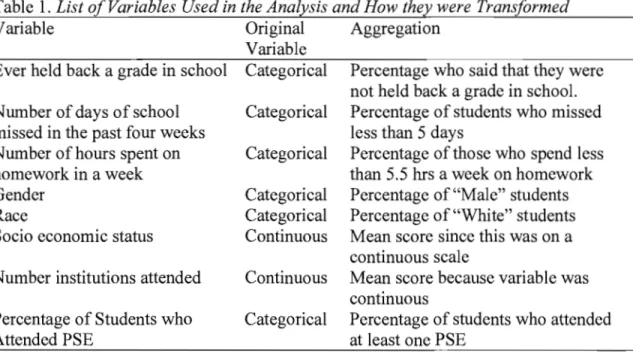
1. List of Variables Used in the Analysis and How they were Transformed 60 2. Summary Statistics for Variables in Regression Analysis 62 3. Correlation Analysis between Dependent, Independent and Control
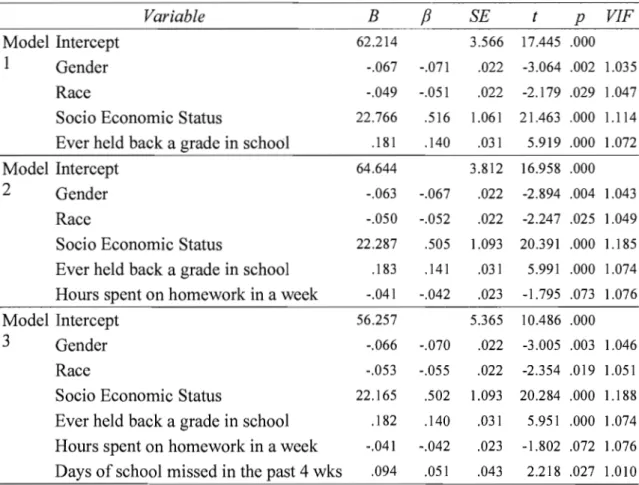
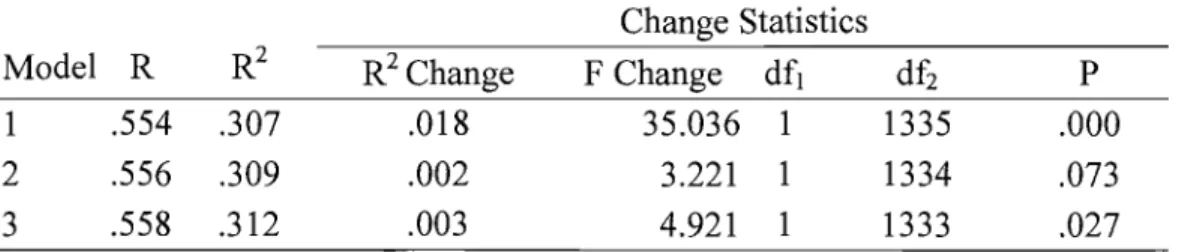
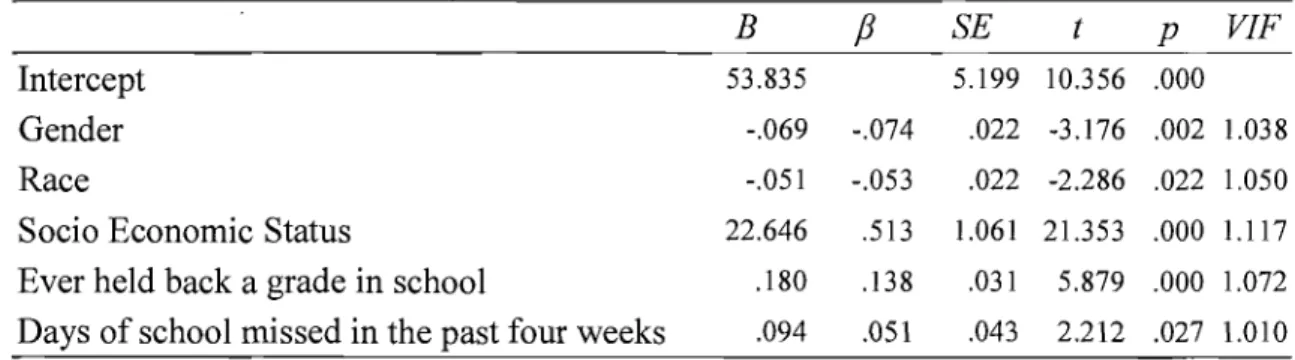
Variables... 63 4. Parameter Estimates for Forward Selection Regression Analysis 66 5. Change in R Squared and Significance of the Change in R Squared Value.. 67 6. Parameter Estimates for Forward Selection Regression Analysis 68
LIST OF FIGURES
Figure Page
1.Factors in Postsecondary Emollment 31
2. Predicted Variable Value versus Regression Standardized ResiduaL... 58 3. Percentage of students entering postsecondary vs. percentage of students
in the school who were not held back... 79 4. Percentage of students who attended a PSE at the school level vs. the
percentage of students did not spend any time on their homework during
the week... 80 5. Percentage of students entering postsecondary education vs. students
CHAPTER I INTRODUCTION
"Only38%of current high school freshmen in the United States will earn a high school degree and make the transition to postsecondary education directly after graduation. Eight million additional students would walk onto college campusesifall states had participation rates in higher education that mirrored the highest performing states" (Committee for Economic Development, 2006).
School Engagement
Educational researchers have used the term engagement to refer to the "extent to which students identify with and value schooling outcomes, and participate in academic school activities" (Organisation for Economic Co-Operation and Development [OECD], 2003). The degree to which students are actively engaged in education is demonstrated by student academic preparedness (The Condition of Education, 2007). Willms (2002) projects that "students' attitudes towards school and participation strongly affect their decision whether or not to pursue postsecondary studies." Determining measurement standards for the subjective attributes of student preparedness and attitude has
somewhat hampered ongoing research.
Relating student characteristics to academic achievement scores and high school dropout rates has been documented. How practices related to student engagement are associated with enrollment in postsecondary education has yet to be clearly determined (National Center for Education Statistics [NCES], 2004). Part of the delay can be attributed to a lack of consensus defining student engagement as a topic of investigation. (Furlong, Whipple, St. Jean, Simental, Soliz,& Punthuna, 2003).
2 To quote Furlong, et al.(l984), "enough progress has been made to describe these efforts ... based on the school context in which learning occurs."
School context is a critical element in the research base in the field of Education. Context-the circumstances under which a particular event occurs, varies from school to school. "Contextual factors" is a broad term that encompasses the concept of
interrelatedness and interdependence in facets ofthe school. Family background, personal characteristics, school policies, and the social behavior of students combine to create conditions known as context (Krueger& Parish, 1982).
Determining which contextual policy factors are positively associated with student decisions to enroll in postsecondary education has been a subject of educational debate for decades. School level educators have fallen victim to this debate, with little clear evidence supporting particular policy implementations and how everyday
procedures may be associated with improving students' predisposition to value education.
The existing research on policy associated with student engagement factors is not easily accessible to current practitioners at the school level due to its complexity. School-level practitioners seeking information on the relationships ofthe context of student engagement and postsecondary enrollment find conflicting "expert" opinions with little empirical evidence supporting claims. Tradition can take over when school level policy decisions are considered, with the personal experience of the parties involved having more impact than research.
Student Engagement Related to Postsecondary Education
A disposition toward learning, working with others, and the ability to function successfully in a social institution are associated with engagement in school. According to Willms (2002), "it has yet to be examined whether disengagement from school during the adolescent years will have longer term effects."Itis clear that students with a higher sense of self-efficacy are more likely to be engaged, to persist in completing difficult tasks, and to seek higher education enrollment (Bandura, 1994).
A few recent studies have treated engagement as not only a process, but also an outcome variable and have attempted to explain why schools vary in their levels of engagement (Finn& Voelkl, 1993; Johnson et al., 1993). Additional studies, such as this one, will serve to guide policy recommendations leading to policy practices encouraging student engagement and creating a predisposition to enter postsecondary education.
Considering school engagement as an outcome, as well as a process suggest there is room for influence in the area of school practices, however "further research is necessary to examine the complex interplay between the individual, the school context and the environment" (Furlong et al., 2003).
Viewing engagement as a fundamental schooling outcome is an important perspective for teachers, school administrators, and policymakers to recognize in
promoting student success (GECD, 2003). Emphasis on good educational practice helps focus faculty, staff, and students on the tasks and activities associated with higher rates of desired student outcomes (Kuh, 2002).
Stafford, Lundstedt, & Lynn (1984) claim inadequate attention has been paid to important variables such as motivation and attitudes, as well as social and psychological elements that affect enrollment in postsecondary education. Student engagement and its influence on decisions relating to postsecondary enrollment can be measured by student experiences and outcomes. Current and traditional practices at various levels of
educational programming may negatively affect students' ability to access and perform successfully in postsecondary educational settings (OECD, 2003).
The relationship between student engagement and achievement has been established (Alexander, Entwisle& Horsey, 1997). School practices relating to student engagement decisions associated with postsecondary enrollment have not been well documented in the research.Itcan certainly be expected that students' attitudes towards school and their participation strongly affect their decision whether or not to pursue postsecondary studies (OECD, 2003).
Purpose Statement
Determining how specific school policies and practices may be associated with student engagement and related to postsecondary enrollment is the overarching goal of this dissertation. Presenting the results for the benefit of school level practitioners charged with implementation of the policies is designed to begin the process of connecting research with everyday practice in education.
Research Questions
Recently, researchers have begun to establish that school experiences do have an influence on student achievement. Rarely do these studies extend to the postsecondary level, and infrequently is the school the level of analysis. The complex statistical
analysis associated with the presentation of the results can be daunting to the school level practitioner. School context, considering the implementation of policies in the unique environment of the school, does affect the attitudes of students toward school.
There are a number of experiences that relate to success in school and the development of the skills, knowledge and attitudes to enroll in postsecondary programming. Among them are student engagement and effort in the school setting (U.S. Department of Education, 2007).
Answers to the following research questions are designed to serve as a guide to the practice of school site decision-makers implementing policies related to student engagement. These questions represent issues associated with school context potentially serving to either encourage or discourage the predisposition of students within their schools to enroll in postsecondary education programs.
The specific questions relating to this study, measured at the school level are as follows: 1) Is meeting or exceeding 80% attendance standard measured at the school level
related to increased rates of postsecondary enrollment?
2) Is the amount of time spent on homework positively associated with student enrollment in postsecondary programs?
3) Is delayed promotion an effective remediation practice, or does it serve to increase risk factors associated with non-enrollment in postsecondary programs?
4) Which variables are statistically significant predictors of enrollment in postsecondary education?
Summary
Few studies focus the lens of inquiry on policy issues and school practices that can be adapted to student needs and adjusted based on student risk factors (Fine& Davis, 2003). There are many complex decision points-factors ultimately affecting enrollment in postsecondary programming-with student engagement serving as a construct combining attention, interest, investment, and effort students and the community expend in working toward educational goals (Marks, 2000).
Student learning and the motivation to succeed depend on the interaction between a school's climate as demonstrated through specific school policy and the sense of belonging and motivation a student gains from their educational experiences. The lack of specific research relating to the entire schooling process, encapsulating early school experiences, extending to include postsecondary educational enrollment is problematic to appropriate school level policy design and implementation.
Chapter two of this dissertation represents a thorough investigation of related literature including the chronological development of postsecondary education policy in the United States. Public concerns and policy responses to equity and access throughout the years are addressed in the context of postsecondary enrollment. Presentation of this background information is designed to view the progression of social and economic issues leading to the current educational policy framework, particularly as is relates to student engagement in schools throughout the United States today.
The trends relating to the varied paths to postsecondary education, as well as the conceptual and theoretical frameworks contained within the literature review are
provided to impart the reader with the broad lens of inquiry providing the orientation for this study. Predictors in postsecondary enrollment, including information of potential risk factors, formulate the panoramic perspective created in regard to policies and procedures relating to student engagement. Determining what constitutes best practice in encouraging the path toward postsecondary entry is a key strategy in policy formulation and implementation.
The intended audience for this study includes currently practicing and aspiring educators responsible for the daily decisions regarding attendance, homework and remediation practices potentially associated with students' disposition to enter postsecondary education.
8
CHAPTER II
REVIEW OF THE LITERATURE
The Historical Development ofPostsecondary Education in the Us. New England settlers in the late 18th century, created many institutions of higher education to establish religious denominational colleges. These colleges reflected the priority early Americans attached to creating a learned society. Colonial colleges rarely enrolled more than 100 students, and received support from both English royalty and colonial governments. Despite the small size and limited academic
programs offered in these first institutes for higher learning, these colleges educated a literate and articulate American elite, many of whom eventually became military and political leaders.
Local control was an important concept even in the first American colleges, with legislated protections from state intervention. Between 1800 and 1850, the number of colleges in the United States expanded by more than 200 degree granting institutions. Until government subsidies began to close the gap between operating costs and student tuition supplemented by local donors, these colleges had a high rate of closure,
struggling financially from year to year.
In the mid 19th century, federal government policy legislation allowed proceeds generated from the sale of federal lands to provide equal access to higher education. The Morrill Act of 1862 granted funds to endow universities and colleges specializing in agriculture. The Second Morrill Act of 1890 allowed proceeds to provide equal
access to higher education to today's historically African-American colleges and universities (Goldin and Katz, 1999). Many of the first collegiate institutions have been recognized as playing an equalizing role and hailed as critical milestones in the early colonial government (The Institute for Higher Education Policy, 1998).
In 1916, John Dewey, in his landmark book,Democracy and Education, highlighted the central moral role that education plays in furthering the democratic purposes of education (Wilshire, 1990). This view was expanded to include economic development and national security as fundamental to the advancement of the public good (The Institute for Higher Education Policy, 1998). Public expenditure policies of the day had the central purpose of extending higher education to a larger proportion of the population (Stafford, et aI, 1984).
Following World War II, the passage of the Servicemen's Readjustment Act of 1944 (GI Bill) created hope for the possibility of a college education for returning veterans. In the peak year of 1947, veterans accounted for 49% of college admissions. By the time the original GI Bill ended on July 25, 1956, 7.8 million of the 16 million World War II veterans had participated in an education or training program. This policy implementation was intended to avert the potential large-scale unemployment for returning WW II veterans (The Institute for Higher Education Policy, 1998). Some believe that a second, more serious economic Depression in the United States was averted by this landmark postsecondary policy legislation (United States Department of Veteran's Affairs, 2008).
The National Defense Act of 1958 established the first student federal study loan program, ostensibly in response to the launching of the Soviet space satellite,Sputnik, in
10 1957. The economic "threat" created by the launch related to the competition in the science and engineering fields (The Institute for Higher Education Policy, 1998). This legislation was also associated with beginning the era related to another economic impact associated with increased access to students attending college- the burden of debt created by the increasing costs of attending college.
The aforementioned legislative acts were among the first designed to reallocate the costs for higher education programs from private to public resources (The Institute for Higher Education Policy, 1998). There were many governmental programs to follow in the next 50 years, leading up to the 21 st century. Most monetary policies relating to postsecondary were implemented to assist in financing higher education in the United States. (Goldin and Katz, 1999).
Postsecondary Equity & Access
Following the Morrill Act of 1890, funding for Negro colleges brought with it government endorsed segregation policies. These practices were maintained long after policies of segregation were changed, leading to federal legislation during the civil rights movement in the 1960s. Access to education has traditionally be viewed as an equalizing force in United States society.
The Elementary and Secondary Education Act of 1965 was a prominent element of President Johnson's "War on Poverty." Increasing emphasis on postsecondary access for minority and low-income students led to policy changes at the federal level
including federal grants to individual students. In 1966, a report titled "Equality in
student were the determining factors related to student success and that schools did little to lessen the gap between more and less able students (Coleman et aI., 1966).
As the dawning of the new century approached, Boesel (1999) posed the question, "is there too much emphasis on getting a 4-year college degree?" This voiced doubt as to the value of higher education in general and college in particular. Itposes direct opposition to the societal expectation for democratic access and the seemingly entitlement for the right to a public education to extend to college attendance as well.
Critics of the equality policies that encouraged virtually anyone to attend postsecondary programs have charged that too many unqualified students are attending college, thereby lowering the average ability of college students, and flooding the already scarce job market (Boesel, 1999).
Conceptual Framework
The Economic and Social Benefits of Postsecondary Education
Historically, funding for higher education has been related to the number of students in attendance. Low participation rates in postsecondary programs affect resource availability, both within the college setting and in society at large (Stafford, et aI, 1984). In fact, Goldin and Katz (1999) state that "automobile registrations per capita is a stronger predictor of state spending on higher education than either per capita property wealth or income per capita."
The substantial influx of revenues designated for advanced training following World War II resulted in the facilitation of greater access to postsecondary opportunities through application of the simple formula of supply and demand. Veterans could easily establish the expected social and economic benefits at a time when jobs were scarce and
12 government subsidies, in effect, compensated them for attending and completing
postsecondary programs (Stafford et aI., 1984).
Societal expectations for the economic benefits associated with postsecondary education were propelled to the forefront of public policy near the midpoint of the century. Deputy Secretary of Education Raymond Simon points to the launch of the Soviet satelliteSputnik in 1957 as creating a seemingly undeniable reason to raise the societal expectations in regard to the number of students attending postsecondary programs, as well as the educational rigor of education in general. Sputnik became the incentive for advanced study, especially in the areas of math and science (Moore, 2007).
Stafford et al. (1984) identify an array of higher education benefits, both public and private, relating to the economic and social advantages of attending higher
education. These include: increased tax revenue, greater productivity, reduced crime rates, and improved health and life expectancy. Increasing evidence indicates that our nation's economic well-being is linked directly to an educated and skilled pool of workers, with the knowledge to operate in an increasingly complex work environment (Judy& D'Amico, 1997; Katz, 1992).
In the early 1980s, when federal and state funding began to slow, public policy discussions began increasingly to be focused around the private economic role of college attendance, with less emphasis on the potential social benefits (The Institute for Higher Education Policy, 1998). Today the American public associates college with getting "a good job" and enhancing income potential (The Institute for Higher Education Policy, 1998). According to the American Council on Education, job
attainment is the most important benefit Americans associate with attending postsecondary education.
The matrix of higher education benefits includes public and private effects relating to social and economic considerations. Individuals participating in higher education tend to increase public tax revenues while decreasing reliance on government financial support. Social benefits can include reduced crime rates, increased charitable giving, and higher rates of community service.
The percentage of students who emoll in postsecondary programming in the fall immediately following their graduation from high school reflects the perceived
availability and value of higher education (The Condition of Education, 2007). Between 1850 and 1950, every fifteen years saw the emollment rate in higher education double (Stafford et aI., 1984). The emollment rate for students aged 16-24 who attended college within 10 years after completing high school increased from 49% to 67% between 1972 and 1997. This percentage declined to 62% in 2001, but rose to an all time high in 2005 of 69% (The Condition of Education, 2007).
From a conceptual standpoint, the path to postsecondary can be considered a series of successive transitions that are sequential in nature. Students cannot skip over a step in this process, and once the forward motion has been abandoned, it typically marks the end of the transitions (Ewell, et ai. 2007). The first two steps in the journey are identified as graduation from high school and entry into postsecondary education. The underlying assumption is that there exists a series of decision points confronting students as they travel from kindergarten through postsecondary education. These
decisions are cumulative in nature and are made based on students' background and school experiences
Theoretical Framework
There are a number of theoretical models relating to the choice to attend college including similar versions of "predisposition" theories. Perhaps the most prominent of these theoretical models is the three-stage college choice model propounded by Hossler and Gallagher (1987). The three stages identified by this representation include:
predisposition, search and choice. Predisposition to attend college is defined as "the developmental phase in which students determine whether or not they would like to continue their formal education beyond high school" (Hossler & Gallagher, 1987). How does student engagement relate to a predisposition to attend postsecondary? Elaborating on the theory, Hom (1997) discusses the "pipeline" of education, relating educational success to a series of obstacles for each student that must be overcome in order to achieve the level of choice, in most cases a high school diploma, necessary to consider postsecondary program enrollment.
Students and staff members who are engaged exhibit behaviors that support achievement and advanced educational goals. These behaviors include task persistence and regular attendance. Students who act like school is important to them, by
completing homework, by attending class and by succeeding in academic challenges are more likely to have aspirations for further education (Rhodes, 2007).
In the majority of the theoretical literature relating to the process leading up to postsecondary enrollment, the important factors in deciding to attend college can be categorized by the following three categories: socioeconomic background, academic
ability and contextual factors (Paulsen, 1990). The first two categories are familiar fixtures in educational research. Context, referring to the interwoven culture, practices, climate and overall effectiveness of a particular school, would appear to be the defining variable as to why comparison schools could display a markedly different result when measuring the percentage of students choosing to enter postsecondary education.
Factors in Postsecondary Enrollment
Student engagement is a process that combines the attention, interest, investment, and effort students expend in work towards learning (Marks, 2000). In
1985, Mosher and McGowan noted that while compulsory attendance in high school can be mandated, engagement can't be legislated. Engaged students tend to earn higher grades, perform better on tests and drop out at lower rates (Appleton, Christenson& Furlong, 2008).
For the purposes of this secondary analysis, the definition of postsecondary institution is "the provision of a formal instructional program whose curriculum is designed primarily for students beyond the compulsory age for high school" (Knapp et aI., 2007). Excluded are adult basic education programs primarily designed to only provide remediation and basic language skills.
A number of researchers have addressed the path students travel as they make their way through the education system, using a series of variables to predict high school completion and/or academic achievement (Horn, 1997). The consistent
component of each prediction model is that all students make a decision regarding their intention to continue in school. When that decision is made, and what specifically impacts the decisions are still under debate.
Attaining a high school diploma is a necessary, but not necessarily sufficient condition of entry into postsecondary programs for the vast majority of students. Certain family and student characteristics have been empirically proven to put students at risk of not finishing high school. (Rumberger, 1983; Coie et aI., 1993; Horn, 1997). The term "educational pipeline" was coined to embody the series of experiences that may either encourage or discourage postsecondary enrollment. Generally speaking, low socio-economic status, growing up in a single parent household, having a sibling not complete high school, and being the first generation to attend postsecondary
programming contribute to leaving high school before graduating (Horn, 1997).
Effective Schools
Effective schools research has been concerned with the processes of effective schooling, initially evolving from case studies of schools performing outside the expected student performance range to contemporary studies merging qualitative and quantitative methods for the study of schools (Teddlie& Reynolds, 2000). Kuh (2003) summarizes the research from the postsecondary education perspective that the single best predictor of students' learning and personal development is the time and energy they devote to "educationally purposeful activities" inThe National Survey ofStudent Engagement: Conceptual Framework and Overview ofPsychometric Properties.
There is a widespread assumption among educational researchers
internationally that schools affect children's development, and there are observable regularities in effective and ineffective schools that make defining the policies
School Practices
The policies and practices implemented at the school level, as reported by the school level administrator, allow the consideration of how positively or negatively the particular practice affects a student's decision to enter postsecondary programs. The OECD reported in 2003 that it had not yet been determined whether or not
disengagement of students during the adolescent years would have longer-term effects on their future decisions regarding postsecondary training.
Time available for learning tasks can vary depending on the implementation of state and local policies at the school and district level. Policy implementation of social promotion decisions, homework requirements, and enforcement of mandatory
attendance laws directly affects the opportunity time available for student learning. If students require more time to master a concept, do structured opportunities for
additional academic pursuits result in increased student engagement? Organizational practices have been well documented at the elementary level, but have failed to be equalized at the middle school and secondary levels (McPartland& Slavin, 1990).
School Climate
Researchers define school climate as " ... the quality of person-to-person relationships, the way in which and degree to which respect and consideration are woven into the daily fabric of school life, and the overall level of structure, meaningful order, and supportiveness of the school" O\Tational School Climate Center [NSCC], 2004). The 1950s is when the systematic study of school climate began. School climate generally refers to the character of school life and the quality of school experiences.It includes norms, values, and expectations creating a climate for learning. The literature
suggests that there are climate-related risk factors for both school disaffection and poor achievement (Coie & Jacobs, 1993). Student background characteristics, such as low socio-economic status and race, can have an effect on student engagement.
Itcannot be inferred, however, that low student engagement is simply a consequence of family-related risk factors. There is ample evidence that the school environment has a strong effect on student participation and sense of belonging (OECD, 2003). Researchers note that students with positive school linkages demonstrate
increased academic achievement (Furrer and Skinner, 2003). With respect to student engagement, school climate has been singled out as a critical factor affecting student's feelings of belonging to school. (Furlong, Whipple, St. Jean, Simental, Soliz, &
Punthuna, 2003).
School Effectiveness
Intervention policies regarding low academic performance of elementary age students have been primarily related to the organizational approaches of holding students back, ability grouping and tracking, and classifying them in special education programs (McPartland& Slavin 1990). These authors further indicate that there can be far-reaching ramifications to implementing these strategies, and although certainly these strategies can offer more opportunities for students to master basic concepts, there is evidence that they significantly increase the probability that these students will continue to display at-risk characteristics resulting in disengagement from school. The term disengagement/rom school is used by the OECD (2003) to characterize students who describe, "not feeling a sense of belonging at school" and identifies those who have withdrawn from school activities in a significant way.
The absolute effects of school can be theoretically measured as the overall result of attending school versus not attending school. Inthese comparison studies, initiated where education is not compulsory, students have dropped out or there is an event that leads to "no schooling" for specific students for a period of time. An example of the shut down of schooling includes defiance of the Brown ruling between 1959 and
1963. Officials in Prince Edward County, Virginia, shut down the school system in order to avoid desegregation of public schools. Comparing these students to students in the adjacent county, the effect was "devastating" on student performance according to Miller (1983). Measured achievement scores plummeted by 2.5-4.0 grade levels in the group of students receiving no formal education (Teddlie & Reynolds, 2000).
The most common way student engagement is measured is through student self-reporting. The National Center for Educational Statistics (NCES) offered some new perspectives and measurement tools for measuring student engagement. Comparing transcripts and parent reports to student self-reports provided an additional layer of validity to overt measure of student engagement such as attendance rates, homework completion rates and the amount of time dedicated to homework, both inside and outside school settings.
Student Engagement as a Predictor ofPostsecondary Enrollment
Student engagement as a predictor of academic success has been the primary focus of researchers Willms (2002), Goodenow (1993), and Voelkl (1995). These findings assert that the correlation between academic achievement and engagement is moderate-generally between .25 and .30. This suggests that there are high achieving
20 students who are disengaged from school, as well as lower achieving students who are highly engaged in school.
For enrollees, the type of postsecondary activity chosen seems to have little to do with their ability and more to do with factors such as early resources available during the earliest grades and even before school entry (Anderson, Bowman, & Tinto, 1972). School-level policy implementation based on findings may result in increased
encouragement on the part of parents and school personnel for enrollment in postsecondary programs.
Meeting the needs of students who are not engaged in the school process is perhaps the biggest challenge currently facing teachers and school administrators (Finn,
1989; Jenkins, 1995; Willms, 2002). Determining how school policies and practices may be positively associated with student engagement and related to postsecondary enrollment, as well as providing reliable information to school-level practitioners is the overarching goal of this study.
Attendance
Student absenteeism is a major problem faced by schools across the United States, which has far reaching effects on the individual, the school, and society in general (Goldstein, Little, and Akin-Little, 2003). Kearney (2003) describes the problem as having reached "crisis proportion" with researchers not giving the topic of student attendance "the attention it deserves."
Expressing student engagement as a disposition toward learning, working with others, and functioning in a social institution (OEeD, 2003) uses two measures of student engagement. One is a student's sense of belonging; the other, student
attendance. According to Willms (2003), most consider attendance to be a primary indicator of participation in the school community, and therefore a key factor in measuring student engagement.
The basic level of participation by students in school is demonstrated by
attendance. Regular attendance is essential throughout the schooling process in order for successful school outcomes to be achieved (Finn& Voelkl, 1993).
Attendance can be characterized as being low, moderate, or high, depending on the number of days late, classes skipped, and days missed. Categories can be assigned based on the percentage of student attendance, which directly relates to the value students assign to their educational experiences.
The concept of compulsory attendance is deeply ingrained in history and American social values (Katz, 1976). Richardson (1980) indicates that enactment of compulsory education laws requires the involvement of both favorable structural
conditions and active social political forces. To what degree should the state take part in child rearing? This question, posed by Katz (1976) in regards to compulsory attendance laws relates to the local control and individual rights on which our society was founded.
The enactment of compulsory attendance laws formally established the relationship of individual communities to state authority. Economically, the mandate reinforced the primary responsibility for financial support of public schools to the state, thus establishing a social institution (Richardson, 1980). Enactment of compulsory schooling can be interpreted by the amount of resources committed to governments to sustain public education for all (Richardson, 1980).
22 There are no guarantees that navigating the path to postsecondary will ensure employment. Due to the institutionalization of the standard that adolescents belong in school rather than working, policy leaders now face increasing numbers of students who have successfully navigated through high school and even postsecondary experiences but do not meet the standards for employment (Katz, 1976).
Court challenges have come from the basis of the constitutionality of mandatory attendance laws. In a critical ruling in 1972, Wisconsin v. Yoder, the Supreme Court ruled against mandatory attendance, exempting Amish parents from laws compelling school attendance past the eighth grade (Katz, 1976). The historical record indicating the mandate of attendance was not without conflicts over who should control the socialization of children and the family's right to the child's labor (Richardson, 1980).
A number of different avenues have been identified by researchers as potential solutions including community-based interventions (McPartland& Nettles, 1991) and school-based interventions (Gottfredson, Jones,& Gore, 2002) as plans of attack to assist in remedying what Goldstein et al (2003) identify as one of the top ten major problems in American schools. In a 1979 survey of more than 1,400 school
administrators, concerns were voiced that chronic school absenteeism could "lead to permanent intellectual damage to students." Additionally, absenteeism was seen as contributing to "the overall lowering of academic standards of a school" (Goldstein et aI.,2003).
Educational demand theory reflects the decision to enroll in an institution as an investment decision. The present value of the expected benefits resulting from the education, such as the social and intellectual rewards a person would likely receive,
must outweigh the present cost of the education prior to enrollment (Stafford et al., 1984). The question for schools and districts to consider is how they prioritize scarce resources for the leading to encouraging student engagement that positively affects the predisposition of students to enroll in postsecondary education.
Despite mandatory attendance laws in every state, there is not consistent
enforcement of these regulations. Should schools be the social agency to be responsible for this element of American culture? These questions are critical in the case of entry to postsecondary, if in fact, attendance is to be considered as a predictor of postsecondary enrollment.
Attendance has been noted as being related to educational outcomes, as well as being impacted by educational practices, including social promotion. Potential
relationships between attendance and social promotion are supported by the statistic that absences in the first grade show that always promoted students miss 11 days of school on average, while students with a history of delayed promotion average nearly 16 absences per year (Alexander et al., 1997).
Social Promotion
The term social promotion refers to the practice of promoting students based on their chronological age, instead of considering factors including proven maturity and academic ability, and stands in opposition to re-enrolling students in order to repeat the same grade.
The practice of the social promotion of students to the next grade level has been a controversial topic in public education for a number of years. Factors included in the research literature include academic performance and cognitive ability, the decision
24 makers, behavior issues, demographic factors, and family characteristics (Jimerson, Carlson, Rotert, Egeland, & Sroufe, 1997). Being promoted with same-age peers, termed in educational jargon as "passing" a grade level in school, avoids the stigma often associated with "failing" or "being held back," which has been shown to have a negative impact on student engagement in early grades (Alexander, Entwisle& Horsey, 1997).
McPartland and Slavin (1990) report that social promotion decisions can result in high school students who have not learned basic academic skills. According to Natriello, McDill, and Palls (1990), there is "strong evidence" that the school
experience of being held back significantly increases the chances that a student will not complete the requirements for a high school degree.
In the interest of clarification, the term retention will be used sparingly
throughout this analysis because, although in this context it refers to being held back to repeat a grade, it can also refer to a student staying in school until the completion of a degree (Tinto, 2004). The more explicit and unique concept of social promotion or student non-promotion will be used for the sake of clarity. Additionally, the term delayed promotion will be utilized, describing the practice of repeating the same grade level for more than the traditional single school year.
An estimated 2.4 million students were not promoted with their same-age peers in the United States in 1990. Shepard and Smith (1991) provide further estimates on the rate of non-promotion in United States public schools as being between one quarter and one third of American students not advancing in grade level with their same-age peers at some point during their schooling. Gottfredson (1988) relates that the "routine"
15-20% of urban students combine to result in a startling 60% of students in urban schools being retained at least once by the beginning of their tenth grade year.
Approximately 9% of students were entered into kindergarten or first grade programs at an age older than their peers-that is, those students whose were emolled after the eligible age to start school according to the guidelines of their school district (NCES, 2000). In 1995, pupils diagnosed as being developmentally delayed were twice as likely as other students to delay entry into kindergarten and were non-promoted at a rate four times higher than other children (NCES, 2000). In 1993, first and second grade students who spent two years in kindergarten were more likely to get negative feedback from teachers (NCES, 2000).
Students may be non-promoted in a grade for a variety of reasons including social and academic delays. Judging student readiness for the next grade can be a subjective process (Jimerson et aI., 1997). Individuals making the decisions typically only have access to the immediate outcomes of increased performance in the year following non-promotion. The attitudes of teachers and administrators and the practice of social promotion would likely be affected if, in fact, the long-term effects of non-promotion, using comparison groups of similarly low-performing students who are not retained, showed an association with poor long-term outcomes.
At a cost of roughly $14 billion per year in added costs for students to spend an additional year in the public school setting, as estimated by Dawson in 1998, the cost of the intervention demands accountability as to its effectiveness. Economic factors
associated with societal investment through government expenditures preclude unproven strategies carrying such a high price economically, as well as socially.
Academic failure is the driving force behind a "frustration self-esteem downward spiral that often culminates in dropout" (Finn, 1989). Finn further relates that failing early in school "ought to cast a long shadow on a child's life" referring to the potential long-term effects of perceived failures affecting the self-esteem of students.
Adding potential support for non-promotion, President Clinton (1999) called for an end to social promotion in his State of the Union Address. With the continuation of policy implementation such as the No Child Left Behind Act of 2002, it would seem that fewer students are likely to be socially promoted to meet the expected
accountability standards while avoiding the consequences of not meeting adequate yearly progress standards.
Conversely, recent statistics from the United States Census Department report the percentage of youth non-promoted in kindergarten through grade 5 declined from
11 % in 1995 to 5% in 2004. Percentages of students held back in grades 6-12 varied little, with 7% retained in 1995 and 5% retained in 2004. Projected estimates show little agreement over the likelihood of increased or stable social promotion rates at the
elementary, middle, and high school levels. Required graduation exams and ever-increasing standards designed and implemented as a result of the accountability movement will likely have an impact on the rate of student non-promotion, as well as the rate of high school completion.
An additional component of the social promotion issue may be related to increased enrollment in kindergarten. Reportedly hovering at a rate of close to 60% in 1965, rates of kindergarten attendance had increased to nearly 90% by 2000. While increasing percentages of students beginning their school careers in kindergarten seem
to have an inverse relationship with being held back in first grade, there are other considerations that affect the rates of social promotion (Haney, Madaus, Abrams, Wheelock, Miao & Gruia, 2004).
In apparent response to the minimum competency testing movement beginning the late 1970s, the percentage of "overage" students began to increase. The relationship of social promotion and high school completion has been verified by several sources. In
2004, for example, 21 % of youth who failed to complete high school requirements had ever been retained, compared to 12% of those still emolled and 4% of high school completers. Furthermore, those students retained in grades K-5 represented 10% of student dropouts, while those retained in grade 6-12 accounted for 17% of those students failing to finish high school(D. S. Department of Education, 2007).
Previous studies regarding the timing of non-promotion have focused on the dropout rates of students not socially promoted with their peer group. A few have focused attention on the longer term outcomes for students who have been held back (Jimerson, 1999), but no studies were found relating the timing of repeating a grade and its potential relationship to emollment in postsecondary education (Fine& Davis, 2003). Information regarding the non-promotion of students in elementary, middle, and high school programs is well researched, if not closely followed by policymakers and school-level practitioners. The effects of repeating a grade are typically only seen through the practitioner's eyes in the year (or few years) following the retention. Although it is logical that a student completing identical or similar curricula a second time would result in a high performance rate, the other latent factors that could
decision makers. According to Fine and Davis (2003), delayed promotion of students may be related to negative educational outcomes not realized for many years.
Jimerson (1999) further reports that students not promoted with same-age peers between kindergarten and third grade are 20-25% more likely to drop out of high school compared to similarly low-achieving but promoted students. Ferguson et al. (2001) describe students who successfully complete high school despite repeating one or more grades as having "beaten the odds."
Follow-up studies conducted by the National Education Longitudinal Study would seem to indicate that non-promoted students who complete high school do so at a lower rate than for socially promoted students. Long-term outcomes for non-promoted students have not been widely studied (Jimerson, 2001). Although a child's fate is not necessarily sealed by non-promotion, "prospects for reengagement later are not good when children are plagued by self-doubt .... and are overage for their grades" (Alexander, Entwisle, & Dauber, 1997).
Identifying the long-term effects of repeating a grade, and informing those responsible for making the promotion decisions regarding these effects is a worthwhile endeavor. How the practice of early grade-delayed promotion is associated with enrollment in postsecondary education, however, has yet to be clearly determined (NCES, 2004). Itwould seem logical that students not in school to benefit from the educational experience would necessarily find themselves at a disadvantage regarding issues of academic readiness as compared to students regularly attending class.
Homework
State and local education agencies have raised homework requirements based on the increasing demand for proof of academic achievement publications such asA Nation at Risk, which questioned the qualifications and results of public education, have
created. The extensive public financial resources devoted to schools have raised the level of accountability. Restrictions on access to monetary resources such as No Child Left Behind focus the decision-making authority for student requirements to the Federal level.
Public financial support for education in the United States has grown exponentially since the early 1960s with expenditures growing from $29 billion in 1961-62 to $57 billion in 1967-68. Only six years later, in 1973-74, expenditures for public schooling topped $98 billion (Katz, 1976). Along with the increasing financial interests in postsecondary programs have come increasing interest and accountability in programs.
With the aforementioned conditions taken into consideration, the rate of
homework completion between the different groups of sophomores showed an increase in the percentage of students reporting they spent more than 10 hours per week on homework. Between 1980 and 2002, the reported figures were 7% and 37%
respectively. Those students reporting spending more than 3 hours per week in 1980 grew to 77% in 2002. Consistency in gender groups was evident, with females reporting spending more hours than males in both the 1980 and 2002 studies (Cahalan, Ingels, Planty,& Daniel, 2006).
30 There are many experiences that may relate to success in school and the
development of the skills and knowledge to emoll in postsecondary programming. Among them are student engagement and effort in the school setting(D. S. Department of Education, 2007). The policies and practices regarding social promotion, student attendance, and time spent on homework are the focus of this analysis.
Affecting the Predisposition to Enroll in Postsecondary Education There have been a number of interacting factors that are found to either encourage or discourage students to consider postsecondary emollment, with student engagement issues being one of the primary variables that can apparently be affected, at least marginally, by school procedures and policy implementation (Furlong et aI., 2003). According to Choy, Horn, Nunez, and Chen, (2000) the same characteristics that are associated with non-emollment in postsecondary are related to the risk factors of not finishing high school.
How to effectively implement practices is important for school decision-makers to be aware of. Once they are aware of which practices tend to encourage postsecondary entry, they can provide support for policies and procedures to be implemented in
American schools today.
A conceptual representation of these interactions with the tendency to either encourage or discourage postsecondary emollment is summarized in Figure 1.
Figure 1. Factors in Postsecondary Emollment (Adapted from Interacting Factors Affecting Participation in Higher Education, Stafford et aI., 1984).
Logistical Factors
Complete Application Process Academically and Financially Eligible
'---_T_e_n_d_t_o_D_l_·
s_co_u_r_a_ge_E_n_ro_l_lm_e_n_t_~]
[... T_en_d_t_o_E_n_c_o_u_ra_g_e_E_n_r_o_ll_m_e_n_t_ _---'Risk Factors:
SES in lowest quartile. (Hom, 1998) First generation to attend. (Hom, 1998) Sibling did not complete high school.
(Horn, 1998)
Low achievement levels.
Societal Factors:
Lack of enforcement of attendance laws. (Finn and Voelkl, 1993)
Negative peer influences.
(The Condition of Education, 2007)
Family and Student Characteristics:
Low language proficiency. (Rumberger and Larson, 1998) Low academic performance. High mobility.
(Alexander, Entwisle, and Horsey, 1997)
School Characteristics:
Small school size. (OECD, 2003) Suburban location. (Israel et aI., 2001) Highly qualified teaching staff.
Student Disengagement:
Lack of aspiration to attend postsecondary.
(Willms, 2003)
*Weak attendance patterns. *Little time spent on homework.
(Natriello and McDill, 1986)
*Remain in same grade level for more than one year. (Jimerson, 1999)
Economic Incentives:
Scholarships. (Stafford et aI., 1984) Community support. (Stafford et aI., 1984) Earning potential (Stafford et a!., 1984).
Societal Factors:
Laws and policies, e.g., mandatory attendance. (Finn and Voelkl, 1993)
Community expectations. (Stafford et al.. 1984)
Family andStudent Characteristics:
Language proficiency.
(Rumberger and Larson, 1998) Parents attended postsecondary.
(Hom, 1998)
Low mobility. (Alexander et aI., 1997)
School Characteristics:
Large school size. (OECD, 2003)
Urban or rural location. (Israel et a!., 2001) Highly qualified teaching staff.
Systems in place for college access.
Student Engagement
Participation in extra-curricular activities.
*Strong attendance patterns. *Time spent on homework.
(Natriello and McDill, 1986)
*Progress to grade level with same-age peers. (Jimerson, 1999)
32
Risk Factors
The literature suggests that there are risk factors that contribute to engagement. These risk factors are evident when children enter school and are "cumulative and predictive" oflong-term educational outcomes (OECD, 2003). Theoretical literature argues that it is low achievement that causes students to withdraw from school (Coie& Jacobs, 1993; Rumberger, 1983; Yoshikawa, 1994). Although persistent students can overcome potential risk factors, the trajectory of such students, beginning with their elementary school experiences, can be difficult to surmount (Hom, 1997).
Much of the school engagement literature provides a focus on subgroups of students, particularly for those groups already identified as "at-risk" for displaying such factors as alcohol or substance abuse (Furlong et aI., 2003). School-wide contexts such as school size, climate, physical setting, discipline practices, and diversity of the student body have also been examined.
The average level of socio-economic status is associated with school
achievement (OECD, 2001). In nearly every country studied, the effect of SES was large and statistically significant, consistently demonstrating that a student with average family background characteristics tended to demonstrate higher achievement when attending a school with high socio-economic level peers (OECD, 2003). "There is no single factor, however that explains why some schools or countries have better results than others"(OECD, 2001). Rather, school policies and practices contributed to students' success in a myriad of ways. The factors characterizing these school-level issues are class attendance, being prepared for class, completing homework, and attending lessons (OECD, 2003).
Although extensive research has been conducted regarding access to and
retention in postsecondary education, considering such factors as race, gender, learning disabilities, English language learners, low socio-economic groups, and other sub-populations (NCES 1995, 1998,2000,2007; Alexander et aI., 1997; Israel, Beaulieu, and Hartless, 2001; Adelman, 2004, 2006), there are additional factors relating to these topics about which data have been collected, but for which few associations relating to long-term outcomes associated to student success have been linked on a longitudinal basis.
Enga gement behaviors related to school experiences include academic failure, which, according to Finn (1989), is the main factor in developing a "frustration-self-esteem" that, when experienced early in a child's academic career, can lead to the "cast of a long shadow on a child's life" (Alexander et aI., 1997). In The Role of
Nonacademic Factors in College Readiness and Success, published by ACT (2007), monitoring relevant, but nonacademic student behaviors based on such criteria as absenteeism and missed homework assignments can assist in the identification of students who may be experiencing academic trouble, leading to disengagement unless action is taken.
School policies relating to student engagement can be associated with increased positive effects of the school versus the individual characteristics of the students within the school environment. These positive effects, including the time and opportunity to learn and that encourage postsecondary enrollment, can be improved at the school level, based on prioritization of resources and acquisition of the knowledge regarding which school context factors should maintain the focus of school personnel and policies.
34 Overcoming Barriers to Postsecondary Enrollment
Researchers have begun to establish that what happens in schools does affect student achievement. In 2003, Robert Marzano presented research to indicate that school characteristics and experiences have a significant impact on student learning and can "almost entirely overcome the effects of student backgrounds."
Skills in time management, efficient work habits, and commitment to improvement are also elements of success in academic environments, although standards and measurement of each element can be difficult to define. Early college high school programs have increasingly become available, allowing students to create momentum in earning college-level credits. Students able to access the "pipeline" to college enrollment-including aspirations for a bachelor's degree, academic preparation for college, completing entrance exams, applying to college, and enrolling in college-included both low- and high-risk students (Horn, 1997).
Mortimer (1993) found that the school attended is responsible for 24% of the variation of reading progress, making the school attended four times more important than the family background factors. Policy-oriented research aimed at the school level, where school improvement efforts are targeted, identifies that "from a policy
perspective, schools are the unit that can be best evaluated and manipulated"(Witte& Walsh, 1990).
One element lacking in the current body of research is the isolation of specific, measurable educational experiences associated with enrollment in postsecondary programs. According to the Organization for Economic Co-operation and Development (2003), students' attitudes toward school and their participation strongly affect their
decision whether or not to pursue postsecondary studies. By the ninth grade most students have already developed occupational and educational aspirations (Eckstrom, 1985; Stage& Hossler, 1989; Cabrera& LaNasa, 2000).
Plans to go to college are based on the value students place on the occupation they have chosen. These preliminary career aspirations seem to playa catalyst role in planning for college track curriculum and in encouraging students to maintain a good academic performance (Cabrera& LaNasa, 2000).
Additional Impetus for the Study
In the 21st century, most students need at least some level of postsecondary education to earn a living wage. Currently, an estimated 90% ofthe fastest growing and best paying jobs require some postsecondary education (US Department of Labor). Options for those who do not attend college have slowly diminished over the past three decades (The Condition of Education, 2007). "Itis clear that postsecondary education is more important than ever, both to the individual and society" Gladieux and Swail (2000).
As the price of not attending postsecondary programs becomes more
economically and socially costly to potential students in terms of lifetime earnings and quality of life-along with economic social contributions-the more pressing the need to investigate and utilize the information gained in reforming the education system in the United States (Institute for Higher Education Policy, 1998; OECD, 2003; NCES, 2006).
Postsecondary emollment patterns have become increasingly complex, and the need to examine the association between student engagement and emollment in
36 postsecondary more acute. Defining the engagement variables that will increase the odds of students completing high school and going on to postsecondary educational opportunities will serve practitioners and policymakers alike.
School engagement issues have attracted scientific attention due to their
contribution to the understanding student motivation and achievement. Thus, the factors relating to student engagement, as controlled by school context and student
characteristics, provide a robust framework for the analysis of students' commitment and investment in the classroom.
Defining the student engagement characteristics positively and negatively associated with postsecondary entry can inform school and district level policies to ensure not only the academic rigor is added to the practice, but also the tools for students and teachers to succeed within the systems of increased accountability in today's educational system.
Specifically, student attendance rates, homework completion patterns, and repeating a grade during elementary, middle, or high school would appear to have some effect on the educational decision of emollment in postsecondary programming, based on the existing body of literature. The many confounding variables that go into choices made by students emolling in postsecondary education can be compared to the criteria they likely used in choosing courses during their high school emollment.
Finn& Voelkl (1993) concluded that engagement, particularly in regard to minority and low-income students, is a critical outcome construct that affects long-term identification with the schooling processes. Which elements have the most influence on student engagement are important to define, so that policy, procedures and practices at
the school level serve to increase each student's likelihood of making decisions to remain in school and seek higher education opportunities.
Student engagement in the educational process and ultimately in the decision to enrollment in postsecondary vocational programs has not been thoroughly researched likely due to the complexity of the factors (Voelkl, 1995). Indicators of engagement that emerge consistently throughout the literature include participation in school-related activities, amount of time spent on homework, and the rate of homework completion (Jimerson, Campos, & Grief, 2003). Additionally, school records indicating levels of absenteeism are often used to measure student engagement (Jimerson et aI., 2003).
In the United States in 2008, a high school diploma is helpful in the job market, but certainly imposes a "glass ceiling" serving as a limiting factor to the types of careers young adults can reasonably pursue. Secondary schools can do little to mediate the personal factors with which students arrive at their door. Concentrating resource on elements that can be affected by school practices may serve to raise the proportion of students who are inclined to continue their educational careers into the postsecondary level.
What then, are the defining variables that secondary schools can reasonably address with adopted policies and everyday procedures that will assist students in succeeding in what has become the basic minimum standard in the job market to achieve the goal of earning a living wage: entry into a system of postsecondary education?
Although there is a large body of research relating to social and psychological factors that influence individual decisions to participate in higher education, it is not