1
A framework for Collaborative Planning, Forecasting and Replenishment
(CPFR): State of the Art
Panahifar, F., Heavey, C., Byrne, PJ. and Fazlollahtabar, H.. 2015. A framework for Collaborative Planning, Forecasting and Replenishment (CPFR): State of the Art. JOURNAL OF ENTERPRISE INFORMATION MANAGEMENT, 28, 6
Abstract
Purpose– Although many papers purport the significant value attributable to supply chain
performance from the use of Collaborative Planning, Forecasting and Replenishment (CPFR), the question of ‘what are the main constructs and efficient framework for successful implementation of CPFR?’ remains largely unanswered. This question will be addressed by identifying and analysing the main constructs for successful implementation of CPFR. This paper attempts first to seek answers to this question. Second, to review the scope and value of CPFR using a devised state-of-the-art taxonomy for the classification of selected bibliographical references and third, to develop a conceptual framework by identifying areas which need more research.
Design/methodology/approach– The method underlying this paper followed the steps of a
systematic literature review process outlined by Soni and Kodali (2011). The review is based on a total of 93 papers published from 1998 to 2013 on CPFR.
Findings– Four main constructs for successful implementation of CPFR have been identified:
CPFR enablers, CPFR barriers, trading partner selection and incentive alignment. The findings indicate that there is a need for better understanding of the amount and level of information sharing as an important function of CPFR implementation. The paper also illustrates a number of shortcomings in the current literature and provides suggestions to guide future research on implementing CPFR in different industries.
Practical implications– This paper is of interest to both academicians and practitioners as it helps
to better understand the concept and role of CPFR in supply chain integration and its implementation results, enablers and inhibitors. The proposed framework in this paper can be used to give insight for future research and practice.
Originality/value– The paper offers a framework for the review of previous research on CPFR and
identifies the most important shortcomings that need to be addressed in future research. In addition, this review is both greater in scope than previous reviews and is broader in its subject focus. Keywords Collaboration, Collaborative Planning, Forecasting and Replenishment (CPFR), Supply Chain Management, CPFR implementation, Information sharing, CPFR barriers
Paper type Literature review
1. Introduction
By focusing only on competitive relationships with others, companies are increasingly realizing that this isolated focus is making it difficult to maintain and/or grow market share. Modern companies face a myriad of different challenges such as globalization, supply chain risk management, rapid development in technology, increasing costs, problems concerning demand uncertainty, enhancing the delivery of products or services, and the need to improve customer service and quality on an ongoing basis (Fisher 1997;
2
Stevenson 2002; Brindley and Ritchie 2004; Hsu and Wang 2004; Briscoe et al., 2004; Colicchia and Strozzi, 2012; Irani and Kamal 2014). As pointed out by Branska and Lostakova (2001), one very powerful way to overcome some of these challenges is the integration of business logistics systems with logistics systems of suppliers and customers using collaboration approaches such as Collaborative Planning, Forecasting and Replenishment (CPFR). Collaboration and integration in the context of supply chains has been widely discussed in recent years (Chandra and Kumar 2000; Byrne and Heavey 2006; Holmström et al., 2006; Jiao et al., 2008; Liston et al., 2008; Jain et al., 2009; Wang et al., 2010; Derrouiche et al., 2010; Sundram et al., 2011;Kamal and Irani. 2014).
CPFR is a technological innovation tool that was first registered as a trademark by the Voluntary Inter-industry Commerce Standards (VICS) in 1998 and is defined by VICS as a collection of new business practices that leverage the Internet and EDI in order to achieve two goals: radically reduce inventories and expenses while improving customer service. A number of subsequent definitions and explanations of CPFR have been presented in the literature and under analysis can be seen to have derived from the VICS definition. For example, Fliedner (2003) defines CPFR as a web-based approach which can coordinate the diverse process of supply chain management including production and purchasing planning, demand forecasting and inventory replenishment. Skjoett-Larsen et al. (2003) define CPFR as “collaboration where two or more parties in the supply chain jointly plan a number of promotional activities and work out synchronised forecasts, on the basis of which the production and replenishment processes are determined”. CPFR as a practice based technique originates from the launch of a comprehensive cooperative plan, then termed Collaboration Forecasting and Replenishment between Wal-Mart and Warner-Lambert in 1995 (Cooke, 1998). This two-year project was supported by IT companies SAP and Manugistics, as well as the consulting firm Benchmarking Partners. As part of this cooperation, Wal-Mart and Warner-Lambert independently calculated their demand six months in advance and collectively compared forecasts and resolved contradictions on a weekly basis. The project was monitored by VICS in order to develop an appropriate model to solve the collaborative forecasting problems, which was subsequently converted into CPFR (Seifert, 2003).
Also in 1998 the first CPFR guidelines were published by VICS and two entities: the Europe Efficient Consumer Response (ECR) and ECR organization of each country. This document included a nine-step process model as a guideline for CPFR implementation (VICS, 1998). One year later VICS organized the collaborative model for CPFR partners, absorbing distribution planning, exceptional treatment, multi-level collaboration, synchronization and other business conceptions. By the beginning of 2000, the CPFR approach was considered ‘best practice’. In 2003, using feedback from a number of different companies that had launched a CPFR pilot, VICS published a new CPFR guide which improved upon the previous model (Stoll, 2010).
From a perusal of the literature, it is evident that a comprehensive review on CPFR is lacking. Only two published papers have been found which review the CPFR literature (Kubde and Bansod, 2010; Min and Yu, 2008), but both have limitations. Kubde and
3
Bansod (2010) focus on the activities of collaborative planning (CP) and then introduce CPFR as a technique which can cover all the functional areas of firms. The main focus of Min and Yu (2008) is the provision of an overview of CPFR for the purpose of comparison with other alternative forecasting techniques such as agent-based forecasting and focused forecasting. Although not being a comprehensive literature review, this paper includes a partial review of previous CPFR papers.
Although many papers purport the significant value attributable to supply chain performance from the use of CPFR (Sherman, 1998; de Paula et al., 2004; Smith, 2006), its implementation rate has been much lower than what was expected (Frantz, 1999; Andraski and Haedicke, 2003; Småros, 2003; Büyüközkan and Vardaloglu, 2012). Based on this identified deficiency, this paper sets out to identify, through the implementation of a systematic literature review and the use of an efficient framework, the required elements for successful implementation of CPFR. The main contribution of this paper is therefore to classify and categorize recent CPFR literature in terms of concepts and factors in the form of a framework for successful CPFR implementation. The purpose of this paper is then threefold. The first objective is to develop a framework for conducting a comprehensive CPFR literature review. The second objective is to use this framework to review the current positioning of CPFR from a scope and value perspective. The third objective is to identify areas of concern for CPFR in the future and to propose directions for future research and practice.
This paper is organized as follows: In Section 2, the research methodology is explained. This is followed by Section 3 which consists of the review taxonomy with the remainder of the paper describing different facets of CPFR using this taxonomy. Therefore, Sections 4, 5 and 6 review collaborative planning, collaborative forecasting and collaborative replenishment, respectively. Finally, practical implementation enablers, inhibitors, partner selection and incentive alignment are reviewed in Section 7 with a comparison drawn between CPFR and other techniques in Section 8. In Section 9, the findings, implications and suggestions for future research are discussed. Finally, conclusions and limitations are drawn.
2. Research methodology
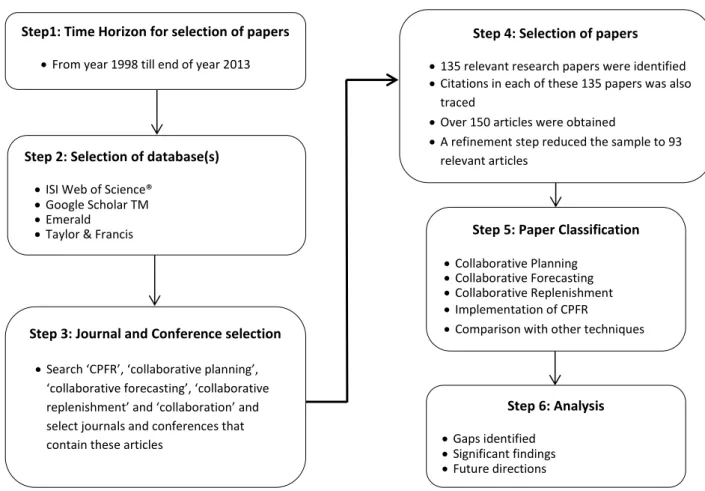
In addressing the gap identified, a systematic literature review was undertaken in collaborative planning, forecasting and replenishment. The review included both empirical and non-empirical studies using a literature review methodology (Figure 1) proposed by Soni and Kodali (2011).The steps of the applied methodology are outlined as follows:
Step 1. Selection of assessment time period. The first CPFR pilot project, which took
place in 1995, involved the retailer (Wal-Mart) and one of its manufacturers (Warner-Lambert) (Cooke, 1998). This is widely accepted as the starting point of CPFR and its publication year, 1998, has thus been selected as the starting point for this study. Therefore the assessment period was defined in this study as 16-years inclusive of the years 1998 to 2013 and the analysis of papers published on the topic in this timeframe.
4
Step 2. The papers were collected from four main online databases consisting of ISI
Web of Science®, Taylor & Francis, Google Scholar TM and Emerald as well as an additional search of Ph.D. dissertations, projects and other relevant publications through a broader web search. These databases are widely accessible in academic institutions and have been used in many previous studies.
Step 3. The key words ‘CPFR’, ‘collaborative planning’, ‘collaborative forecasting’,
‘collaborative replenishment’ and ‘collaboration’ were searched for in the article title of each database. In this step, papers which were available online but not formally published (e.g. ‘In Press’) in any volume up until the end of 2013 were also considered.
Step 4. Based on this described criteria, 135 relevant research papers were identified
for the 16 year time period. To increase the reliability of the research, citations in each of these 135 papers was also traced, as a secondary source. This reverse literature search identified 15 additional papers. This process was repeated on all newly selected papers. In addition, an online search was also conducted on the website of journals which were identified in the citation analysis and which were not represented in one of the four original databases. As a result, a total of just over 150 articles were obtained. Each of these papers were then reviewed in order to eliminate those articles which were not specifically related to CPFR. In other words, articles which very briefly mentioned CPFR but were not relevant to the general topic and to this study were eliminated from the sample. This refinement step reduced the sample to 93 relevant articles.
Step 5. Each of these 93 articles was then comprehensively assessed using descriptive analysis by examining: 1) which dimensions of CPFR were addressed and 2) which methodology had been applied in the article. Forthe classification, each article was assigned to one of five possible dimensions consisting of: 1-Collaborative Planning; 2-Collaborative Forecasting; 3-2-Collaborative Replenishment; 4-Implementation of CPFR; 5-Comparison of CPFR with other collaborative techniques. The selection of these five dimensions and subsequent analysis is described in later sections. A discussion on this classification will be presented in the following section where the taxonomy of the research is presented.
Step 6. The classified papers are then critically analysed to identify research gaps in
the area of CPFR and to present important findings of existing research, thus enabling readers to better understand the concept and role of CPFR in modern supply chain management.
[Figure 1 will be placed here]
Application of statistical methodologies tends not to be appropriate for papers that are dominantly descriptive (Soni and Kodali, 2011). As the objective of this paper is descriptive in nature, statistical methodologies were not used for deducing or for any inferential purpose using hypothesis testing. A categorisation of the bibliographical references in this study shows that (82.8%) were obtained from journals, (9.7%) conferences, (3.2%) web portals, (2.1%) published Ph.D. dissertations and (2.1%) books.
5
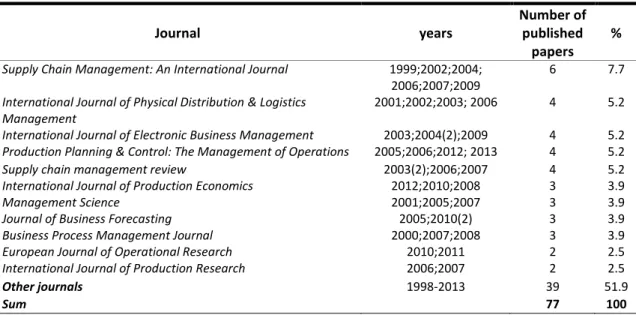
Table 1 presents the most prevalent journals for CPFR paper publication. When the distribution of published CPFR research papers has been considered, it is found that 50 different journals had published CPFR papers from 1998 to 2013 – which equals 1.5 papers on average in each publishing journal over the time span. Approximately 50.6 percent of the papers had been published in 11 journals, and five journals, Supply Chain
Management: An International Journal,International Journal of Physical Distribution &
Logistics Management, and International Journal of Electronic Business Management,
Production Planning & Control: The Management of Operations and International
Journal of Electronic Business Management had each published four to six papers: in
totalling 22 papers.
[Table 1 will be placed here]
3. Taxonomy
In order to be able to perform a classification analysis, a taxonomy according to which the papers will be classified is required. The content of this taxonomy depends on the research question to be addressed during the literature review. The taxonomy developed for this study is loosely based on what was proposed by Min and Yu (2008). In their taxonomy they identified three dimensions for classification: (a) the problem scope (b) the methodology and (c) the implementation status. This paper uses the implementation status (“implementation of CPFR”) as one of its classifications but adds four more dimensions, three of which are based on the VICS’s guideline of “collaborative
planning”, “collaborative forecasting”, and “collaborative replenishment”. Table 2
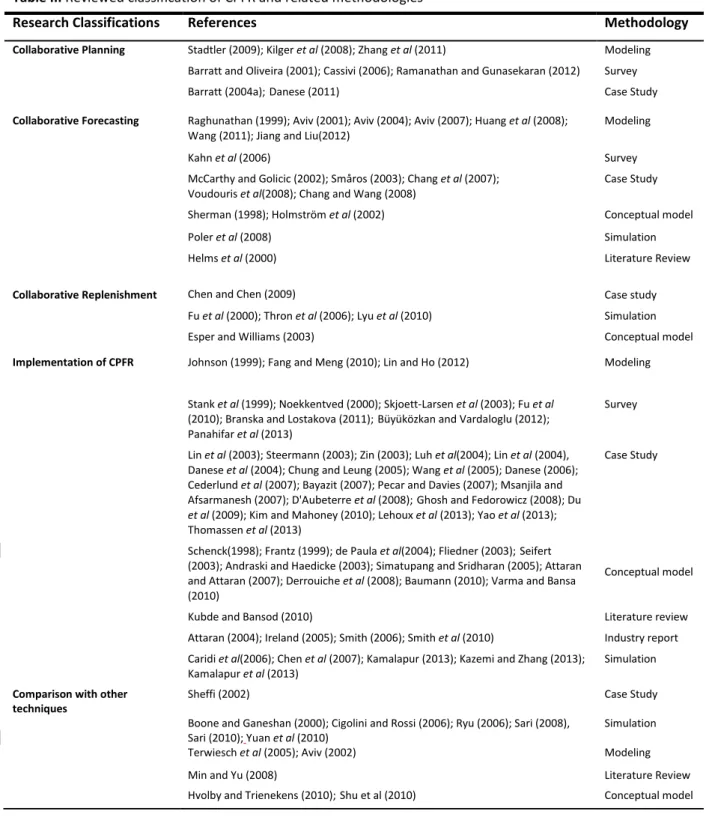
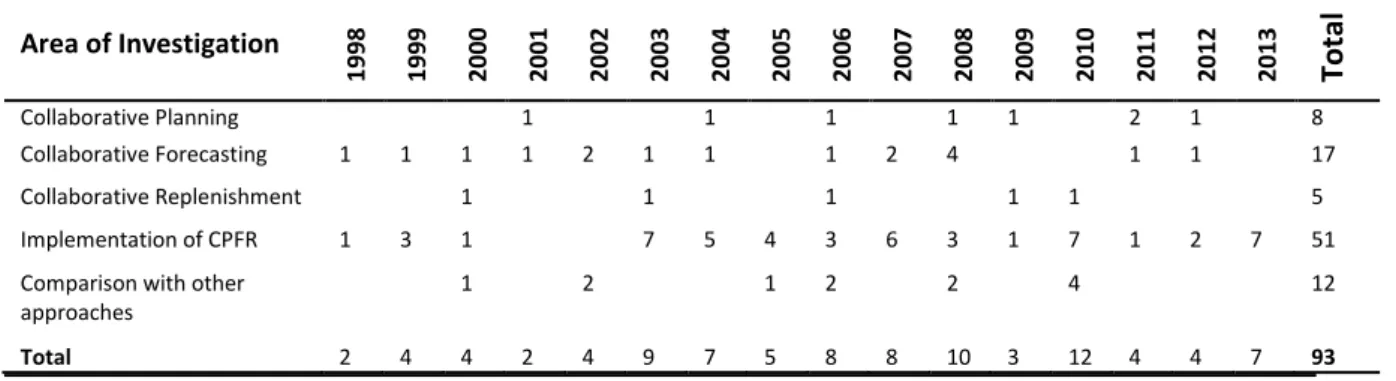
presents these three major components and the nine main steps of CPFR according to the VICS guidelines. The fifth and final classification is a comparison of CPFR with alternative collaborative programs and techniques “comparison with other techniques”. Table 3 presents this classification, the articles that fall within these classifications and the methodologies used in these publications. The number of publications both annually and in total is specified in relation to each of the five dimensions of the taxonomy (Table 4). As illustrated there is a reasonable spread of papers over the time horizon, albeit at low publication rates in general ranging from 2 – 12 papers in any given year. From a general trend perspective it can be seen that there are more publications on the topic in more recent times when analysing the peak publication years (>8 publications) which include 2003, 2006, 2007, 2008. It can also be seen that the “implementation of CPFR” has dominated the research landscape over this time horizon with 50 of the reviewed papers focusing on this dimension.
6
[Table 3 will be placed here]
[Table 4 will be placed here]
4. Collaborative Planning
Research evidence indicates that collaborative planning is a fundamental part of supply chain management. As summarised by Cassivi (2006), collaborative planning is the first step of CPFR with two fundamental stages: front-end agreement and joint business plans (See Table 2). This phase is critical as partners develop collaboration initiatives and terms. On the counter, according to the research of Attaran (2004), a lack of collaborative planning leads to significant negative impacts on supply chain performance. Barratt (2003) investigated the role of collaborative planning in the grocery and consumer packaged goods industries. Although the research explains the concepts and benefits of collaborative planning, it does not address how they can implement collaborative planning in order to have an integrated supply chain.
Stadtler (2009) presents a new framework of collaborative planning with a specific emphasis on model-based decision support at the operational planning level of the supply chain. This framework allows for the contrasting and clustering of various contributions in collaborative planning. A study undertaken by Petersen et al. (2005), surveyed purchasing managers of firms involved in collaborative planning to investigate different factors that reinforce effective collaborative planning and its effects on the buying firm’s performance. The results clearly illustrate that trust as a behavioural element and the quality of information shared between companies has a significant impact on effective collaborative planning and the performance of a supply chain. Similar to research reported by Wang et al. (2005), this study emphasises the importance of IT infrastructure for effective collaborative planning with suppliers, however with the caveat that “technology cannot be the complete solution”, a finding which has recently been echoed by Panahifar et al. (2014).
In confirming the importance of behavioural elements, Kilger et al. (2008) report that management of individuals is an important step in collaborative planning schemes. They have presented a different approach to collaborative planning in their study with collaborative planning embedded in the CPFR approach. They believe that “CPFR addresses collaborations among manufacturers and retailers in general, while our focus is on collaborative planning issues among arbitrary business partners” (Kilger et al, 2008, p.271). In order to find the main enablers to launch effective collaborative planning with trading partners, Kilger et al. (2008) emphasized the need to have a collaborative relationship with them. The impact of collaborative planning on successful collaboration has been analysed by Ramanathan and Gunasekaran (2012). They argue that there is a
7
strong connection between collaborative planning with decision making and execution planning and, thus successful supply chains need to adopt planning, decision making and execution as key elements of collaboration.
5. Collaborative Forecasting
In contrast with the other dimensions of CPFR, most of the articles related to collaborative forecasting (CF) have been approached from a variety of different aspects. In the area of collaborative forecasting, research has mainly focused on the collaborative forecasting process, the importance of information sharing and developing forecasts in a collaborative fashion, concept of collaboration between different internal parts of a company, especially in the area of forecasting, as well as the important organisational issues related to collaborative forecasting (Raghunathan, 1999; Fosnaught, 1999; Helms et al., 2000; Wilson 2001; Kahn et al., 2006; Aviv 2007). The extant papers show the importance of collaborative forecasting in relation to complex communications with different abilities such as reducing bullwhip effects and improving supply chain performance (Eksoz and Mansouri, 2012).
There are several studies as to the objectives and benefits of collaborative forecasting. However, it appears that little academic research exists on how companies can implement forecasting collaboration in a supply chain. Raghunathan (1999) used the modelling approach to formulate the basic inventory management problem of CPFR and investigates the benefit of CPFR in the supply chain consisting of one manufacturer and two independent identical retailers. He also examined the impact of non-participants in CPFR on the performance of CPFR under two different scenarios of shortage allocation policies. The study found that collaborative forecasting enables the trading partners to improve accuracy of forecast and increase the quality of forecast information based on predictable order cycles.
According to Voudouris et al. (2008, p. 231), the overall objective of collaborative forecasting is “to synchronize service demand forecasts between all customers and suppliers”. The authors believe that in this case, collaborative forecasting will be a solid foundation to collective planning processes which is a different understanding of CPFR, because in the term ‘CPFR’, planning comes before forecasting. Increasing the accuracy of forecasts is the main objective of firms in collaborative forecasting implementation plans. Småros (2003) presents a case study to enhance the retailer’s forecasting accuracy for new product introductions.
Aviv (2004) studied the potential benefits of collaborative forecasting and developed a descriptive dynamic model of a simple supply chain consisting of a single manufacturer and a retailer. His model evaluates the performance of a retailer in terms of inventory and shortage costs and the performance of supplier in terms of long-run average of composition of four scorecard components consisting of: (a) inventory holding cost (b) shortage cost (c) actual use of production capacity, and (d) adherence to production plans.
8
Wang (2011) created a combination-forecasting model to improve forecasting accuracy. He used knowledge owned by manufacturers’ data and market information sourced from retailers to create this model. The author believes that “the accuracy of collaborative forecasting can be determined by establishment of discrepancies standards and discrepancies handling”.
What should companies do for successful implementation of a CF plan? Helms et al. (2000) in their studies have tried to answer this question. Their solution is to choose an appropriate team to implement the plan. Collaborative forecasting needs a variety of personalities with different backgrounds to work together to create a forecast that can be used by the entire supply chain. According to a survey by McCarthy and Golicic (2002), on successful implementation of collaborative forecasting, firms must fulfil their systematic, compatible and specific internal forecasting model. This system can improve the customer service and increase sales and decrease inventory of a company. However, there is a need for participatory decision making in this area. The importance of a relational approach in maximizing the benefits of collaborative demand forecasting has been stressed in Kahn et al. (2006). They argue that the relational dimension of collaboration appears to be more important than technology in facilitating supply chain performance, thus firms willing to adopt a collaboration approach like CPFR need to establish a relationship among key managers from both collaborating firms.
Collaborative forecasting makes it possible to overcome inherent problems with traditional forecasting but achieving its benefits is not without challenges. Due to the complex nature of collaborative forecasting schemes, there are several challenges which are categorized by Voudouris et al. (2008) and Helms et al. (2000):
Challenges related to human interactions and biases;
Challenges due to traditional behaviours;
Challenges in communication and defining accountability.
The importance of information technology to launch collaborative forecasting by partners has been addressed by many scholars (Sherman, 1998; Aviv, 2001, Aviv, 2007; Småros, 2003; Vlachos and Bourlakis, 2006; Zhou and Benton, 2007). Sherman (1998) emphasised the role of information technology in implementing collaborative forecasting in CPFR. Aviv (2001) developed a sophisticated model to address CPFR based on different policies consisting of: (a) baseline setting, (b) local forecasting setting, and (c) collaborative forecasting setting. This study was conducted based on a two-echelon supply chain with a single product. The results show that the marginal benefits of collaborative forecasting over local forecasting are more significant when forecasting capabilities are diversified.
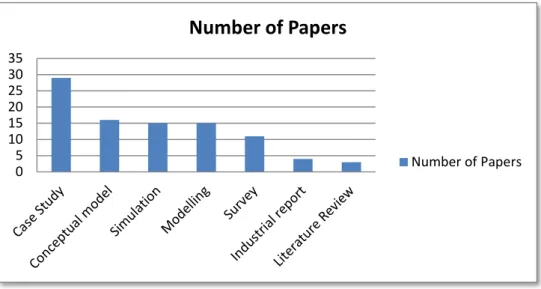
The findings of the current research show (Figure 2) that most studies on the implementation of collaborative forecasting schemes have been carried out in retailing, high-tech industries, automotive industry, consumer goods, chemicals and apparel manufacturing sectors using case study and multiple-case study methods (See Figure 3). As already outlined, most of the research in the collaborative forecasting domain is
9
conducted on two-echelon supply chain structures. In order to advance this field, future studies in collaborative forecasting should address this deficit and research plans that work well for more than two tiers, thus modelling more realistic supply chain structures in different industries.
[Figure 2 will be placed here]
6. Collaborative Replenishment
As illustrated in Table 2, the third stage of CPFR is collaborative replenishment, which includes making and fulfilling orders. Liu and Sun (2012, P. 351) stated that “in the replenishment stage, it is necessary to generate orders according to sales forecast”, thus connecting collaborative replenishment directly to a forecasting activity. Collaborative replenishment spreads replenishment activities across the supply chain and facilitates collaborative inventory management in operations. The benefits reported by researchers include improved customer service levels, increased order accuracy and decreased inventory. As discussed by Lyu et al. (2010) in a study of the textile industry, it is important that the collaborative replenishment plan is examined collectively by the supplier and the retailer. Prior to the advent of CPFR, Vender–Managed Inventory (VMI), quick response (QR) and Continuous Replenishment (CR) were the techniques used for collaborative replenishment. VICS identified that transportation is also a key element in collaborative replenishment schemes. This was further analysed by Esper and Williams (2003) who reviewed collaborative transportation and its relationship to CPFR. They found that collaborative transportation management (CTM) requires a conversion of order forecasts developed via CPFR into shipment forecasts, and collaboratively insuring their accurate fulfilment. Chen and Chen (2009) examined how companies can combine CTM and CPFR to deeply integrate customer procurement forecast processes and logistics demands.
There is a tight relationship between collaborative forecasting and collaborative replenishment in the CPFR implementation process. In other words, better visibility of the retailers’ sales and orders forecast helps suppliers to better plan their replenishment (Sheffi, 2002). Before collaborative replenishment can be enacted, general stock replenishment needs to be considered. Continuous replenishment is the most common solution in practice. This technique is based upon a business process announced by Procter and Gamble (P&G), and involves the continuous sharing of information through IT software. This business process produces several benefits for retailers and consumers such as improved service levels and reduced inventory. Today, this process and related software is a standard for the retail industry (Pfeifer et al., 2008).
Thron et al. (2006) conducted a study to identify the critical factors affecting the successful adoption of collaborative replenishment between a manufacturer and its customers. They presented a delivery framework of two medium-sized
food-10
manufacturers and their four major grocery retailers using discrete event simulation. The results aim to help company managers to identify possible opportunities and threats within an expanding collaborative supply chain replenishment system. In a separate study also using simulation, Lyu et al. (2010) using a case study of a grocery company demonstrated how different replenishment scenarios can affect the supply chain performance.
7. Implementation of CPFR – different levels and context
Johnson (1999) believes that collaborative data modelling is a critical phase in the implementation stage of CPFR. He suggested that in order to succeed in implementing a collaborative process, firms need to design a data model based on the relationship between the trading partners rather than analysing the structure of both firms individually. According to Danese (2007), previous CPFR implementation cases confirmed that CPFR can take a number of different forms across supply chains. Also, Seifert (2003) claimed that different forms of CPFR collaboration exist among several partners such as customers and suppliers. However, advanced CPFR implementation is a challenging task and the rate of its adoption has been slower than expected (Frantz, 1999; Andraski and Haedicke, 2003; Småros, 2003). Skjoett-Larsen et al. (2003) classified CPFR into three levels – basic, developed and advanced – depending on the depth of collaboration. They argued that the basic CPFR is frequently the starting point for other collaborative initiatives.
In a study into “what factors lead firms to choose a precise collaborative planning initiative like CPFR?” Danese (2011) found that specific contextual conditions – i.e. goals of the collaboration, demand elasticity, product diversity and supply network spatial complexity, can affect the level of the collaboration in collaborative planning initiatives.
Lin et al. (2003) reported the successful implementation of a pilot CPFR initiative
between an optical disc and optical recording producer in Taiwan. The results identified the importance of collaborate demand forecasting in addition to the design of a data process for calculating on time delivery. Lin et al. (2004) proposed a methodology for the implementation of CPFR in the mechanical wood carving industry. In this study, a plan was adopted based on CSF (Critical Success Factor) which included well-defined CPFR processes, trust between partners, investment in IT and commitment to practice. To evaluate the effects of various collaboration types in CPFR implementation, Danese (2006) using a multiple-case study method identified and analysed six types of collaboration. Such relationships can be defined based on the depth of the collaboration and the number of interacting units. Smith (2006) reported a very successful implementation of CPFR in West Marine, USA with significant results such as improved forecasting accuracy, reduced inventory and a notable improvement in the relationship with suppliers.
A number of studies have attempted to improve the process and outcomes of the traditional CPFR model by developing new models and frameworks. Caridi et al. (2006) proposed a new CPFR model with autonomous agents with different levels of “intelligence” and compared these with traditional CPFR models. This study shows better
11
results when integrating CPFR with intelligent agents. Chen et al. (2007) used simulation to investigate four CPFR alternatives that are used in the adoption of collaboration strategies in industry. This study concluded that shifting the retailer (buyer-driven) collaboration to a manufacturer (supplier-driven) approach was a more viable option. D'Aubeterre et al. (2008) proposed an IT artefact to benefit organizations that are planning to adopt CPFR. They show how the security of CPFR business processes can be enhanced by incorporating roles and permissions needed in coordinating and executing secure business processes. Derrouiche et al. (2008) proposed a framework which helps to better characterize a CPFR strategy. The proposed framework shows how the nine steps of CPFR can be evaluated through examining the interactions between them.
In the area of CPFR implementation in a manufacturing environment, research has been conducted by Chung and Leung (2005). They have applied the CPFR process in the Hong Kong electronics sector. The process of implementation in the mentioned case study was initiated with one small supplier with increased benefits coming from the additional new partners and customers in implementing CPFR along the electronics supply chain. Wang et al. (2005) applied the CPFR concept in a Chinese retailer industry and analysed CPFR implementations in the Shanghai Maya Audio-Video Franchise Corporation. The successful adoption of CPFR in this firm was a facilitator for other Chinese companies. Benefits consisted of reduced costs, improved relationships with suppliers, and increased efficiency and revenue. Appling CPFR in Motorola was reported by Cederlund et al. (2007). According to this study, successful achievement of CPFR implementation in Motorola related to coordinated changes to the Motorola organizational structure and the business processes of its customers.
In the area of integrating CPFR with companies’ current process, Baumann (2010) and Smith et al. (2010) developed new frameworks to link CPFR with Sales and Operation Planning (S&OP). These studies emphasised the importance of technology in synchronizing this process. Research conducted by Thomassen et al. (2013) showed similar results in which information and communications technology (ICT) affects CPFR by enhancing information flows and enabling process transformation.
In recent years, various efforts have been made to provide solutions for CPFR implementation in several industries. Two such studies, Du et al. (2009) and Meng (2010) modified CPFR process models and suggested frameworks for CPFR in the agricultural industry. Results from Meng (2010) indicate that the proposed model helps both buyers and sellers to minimise waste; reduce costs and risk; increase income; decrease inventory; improve return to assets; and improves the performance of the distribution system. Branska and Lostakova (2011) specified how to use CPFR methods in chains with continuous production, with a particular focus on the chemical-technological and metallurgy industries.
The current research shows that although most definitions of CPFR emphasize the possibility of collaboration between two or more parties in a supply chain, most of the cases study CPFR implementations between only one manufacturer and one or two retailers. Thus, it can be noted that CPFR is generally thought about as a technique for
12
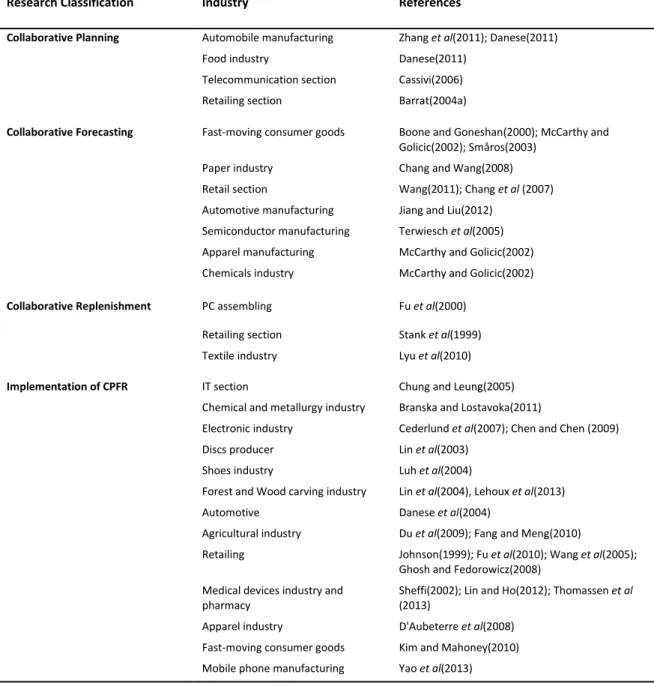
retailers in managing big promotions where these retailers directly communicate with manufacturers. In addition, this perception can also be traced back to the initial success stories of CPFR, which also fit this inference – e.g. cases like Wal-Mart (a retailer) and Warner-Lambert (a manufacturer). Table 5 presents detailed information on previous studies based on different industries. In the following subsections a brief explanation of the main areas of CPFR implementation consisting of: 1- Enablers; 2- Inhibitors; 3- Partner selection; 4- Incentive alignment and 4-Results of implementing CPFR, are presented.
[Figure 3 will be placed here]
[Table 5 will be placed here]
7.1. Implementation Enablers
Successful collaboration schemes need many key enablers. These enablers for CPFR implementation vary due to the differences of industries and characteristics of the supply chain (Panahifar et al., 2013). It is vital that managers of firms know these enablers before starting to launch CPFR with trading partners. There are some enablers that have been addressed by several studies which highlights their importance. The creation of a high level of trust (Humphreys et al., 2001; Barratt and Oliveira, 2001; Fliedner, 2003; Petersen et al., 2005; Monczka et al., 1998; Ghosh and Fedorowicz, 2008; Fu et al., 2010; Büyüközkan and Vardaloglu, 2012; Panahifar et al., 2013) and the importance of information (Petersen et al., 2005; Whipple et al., 2002; de Paula et al., 2004) are two of the most documented enables. In addition reduced information distortion in the supply chain is considered to be an important objective for approaches like CPFR (Nishat Faisal et al. 2007). Information as a key factor in the successful adoption of CPFR has been widely investigated in several different aspects such as: visibility– Petersen et al., (2005); accuracy –Whipple et al., (2002); timeliness and readiness– Zhu et al., (2003) and Panahifar et al., (2013); compatibility and availability across to users– Jain et al., (2009) and Whipple and Russell, (2007); security– Attaran, (2004). Also, as has been emphasized by some scholars, senior management support and commitment and a clear communication/business plan are two key prerequisites for successful collaboration (Humphreys et al., 2001; McCarthy & Golicic, 2002; Ghosh and Fedorowicz, 2008; Panahifar et al., 2013). Table 6 provides an overview of the major potential enablers for implementing CPFR.
13
7.2. Implementation Inhibitors
Significant inhibitors to the successful implementation of CPFR were identified by reviewing the selected papers. A comprehensive study on CPFR implementation barriers was reported by Barratt and Oliveira (2001). They presented several difficulties and obstacles in implementation such as, no shared targets; lack of demand variability; lack of budget for software; lack of partner trust; difficulties to calculate benefits; executive support obstacles; lack of real time coordination of information exchange; no adequate information technology and expertise. Undoubtedly, lack of partner trust is the most vital inhibitor and, if absent, remains the most obstructive obstacle to the adoption of CPFR. Difficulties with real time coordination of information exchange is one of the main obstacles emphasized by Min and Yu (2008), McCarthy and Golicic (2002) and Barratt and Oliveira (2001). Despite the fact that the majority of companies claim that they are ready to collaborate, their trading partners doubt the willingness of these firms to exchange on time information which is considered an artefact of lack of trust.
In a separate study, Chung and Leung (2005) stated that a lack of adequate collaborative software is one of the barriers to collaborative schemes. On the other hand, the fear of losing competitive information (financial reports, manufacturing schedules, inventory values, intellectual property issues and information sharing by adversaries), lack of technical expertise, the availability and cost of technology have been cited as some of the main obstacles to CPFR implementation (Schenck, 1998; Frantz, 1999; Cassivi, 2006). Attaran and Attaran (2007) divided CPFR challenges into fundamental and technical levels consisting of lack of trust, lack of mutual incentives and the need for security protocols in order to safeguard both buyers and sellers from leaks of proprietary information.
Various inhibitors associated with cultural and behavioural problems have been identified in this study. These have been classified into intra/inter-company dimensions and consisting of: 1. Personal comfort zones – Seifert (2003); 2. Human resistance to change and training issues – Cassivi (2006); 3. Tunnel vision – Seifert (2003). 4. Lack of partners’ trust – Barratt and Oloveira (2001) and Moberg et al., 2003; 5. Poor communication – Cassivi (2006) and 6. Lack of commitment to share information – Seifert (2003); Table 7 presents a full classification of CPFR implementation barriers. Technology is also no longer seen as a major inhibitor to successful implementation of CPFR and is now only considered a small part of the implementation challenge (Småros and Främling, 2001; Panahifar et al., 2014). If companies can overcome these obstacles, CPFR offers significant benefits for the entire supply chain.
7.3. Partner selection
The importance of partner selection in successful collaboration has been widely expressed in the literature (Geringer, 1991; Nielsen, 2003; Todeva and Knoke, 2005; Emden et al., 2006; Graddy and Chen, 2009). Partner selection is also introduced as a critical, complex and time consuming task in CPFR (Sheffi, 2002; Fu et al., 2010). A
14
review of the importance of partner selection in successful collaboration practices suggests that there is a strong correlation between partner selection and other main barriers to a successful collaborative approach which include: lack of trust– Min et al., 2005; lack of compatibility of partners’ abilities– Fliedner, 2003; cultural conflicts– Kelly
et al., 2002). For example, to successfully implement CPFR, there must be a certain
degree of compatibly in the abilities of the supply chain trading partners (Fliedner, 2003). In general, improper partner selection is recognized as the main reason for bad performance of trading partners (Ireland et al., 2002).
Chung and Leung (2005) present research on effective partner selection in CPFR implementation. They explored supplier selection criteria to implement CPFR in the copper clad laminate industry such as quality measures, costs, logistics, management skills and compatibility and design capability. As the importance of partner selection in collaboration is highlighted, there remains a substantive need to study the factors examined by trading partners in different industries before starting a CPFR project.
[Table 7 will be placed here]
7.4. Incentive alignment
Incentive alignment has been defined as the process of sharing costs, risks, and benefits among supply chain partners (Simatupang and Sridharan, 2005). Incentive misalignment problems may arise in implementing CPFR resulting in losing partners’ commitment when partners decisions are made corresponding to each partners individually, maximizing his/her own performance metrics. To avoid such an issue, companies first need to identify their own and familiarize themselves with their partners’ important incentives allowing them to align in mutual manner. An “incentive alignment” of partners can keep partners loyalty to the implementation of CPFR. Incentive alignment is also used to ensure that trading partners make decisions that are appropriate and useful for the entire supply chain.
The importance of incentive alignment and compatibility as one of the main dimensions of collaboration is reflected in the literature (Simatupang and Sridharan, 2004; Cao et al., 2010, Büyüközkan et al., 2012, Lehoux et al., 2013). According to Simatupang and Sridharan (2004), collaborative systems require the three dimensions of Information Sharing (IS), Decision Synchronisation (DS) and Incentive Alignment (IA), in order to facilitate the process of performance improvement within the supply chain.
Cao et al. (2010) introduced incentive alignment as an interconnecting element in supply
chain collaboration. Lehoux et al. (2013) report a case study of collaboration in the forest industry that shows the benefits of implementing coordination mechanisms such as CPFR as well as the necessity of using incentives to better share these benefits. The results of this study show how the use of an incentive based on CPFR savings can help to create a win-win collaboration and better share the collaboration benefits. The results revealed
15
that if the incentives were correctly defined, they could increase the profit of all partners which results in a sustainable collaboration.
7.5. CPFR implementation benefits
Companies that have been involved in CPFR schemes have generally reported varying results in recent years (Andraski and Haedicke, 2003; Steermann, 2003; Smith, 2006; Cederlund et al., 2007). Stank et al. (1999) believe that high levels of CPFR implementation are related to process changes and capability of information systems. There is a consensus concerning the long term benefits expected by CPFR adoption such as increasing responsiveness– McCarthy and Golicic (2002); increasing shareholder wealth– Boone and Ganeshan (2000); enhanced customer service quality– Lin and Ho (2012) and Du et al., (2009); increasing EVA (Economic Value Added)– Boone and Ganeshan (2000); stronger relationship between partners– Smith (2006).
A categorization of CPFR implementation results is presented in Table 8. This categorization consists of three main dimensions, Information, Service and Finance. The information dimension encompasses improvement of forecasting accuracy, reducing the amount of exchanged information and reducing the bullwhip effect. The second dimension involves more criteria including increased responsiveness, enhanced customer service quality, improved inventory management, improved product offering, operational efficiency, product availability assurance, improving design process, stronger relationship between partners, decreased supply chain cycle time, increased customization capability, reduced replenishment cycle time. The financial dimension is the most important objective for firms implementing CPFR. This covers several criteria reported in the previous studies such as increased revenues and earnings, increased margins, increasing EVA (Economic Value Added), increasing shareholder wealth, decreasing cost of production, planning and deployment, maximum efficiency of members, a reduction of inventory in the supply chain, decreasing working capital, reduction in production and inventory costs, reduced overall costs, increasing the sales of products and reduction in stock-outs (Andraski and Haedicke, 2003; Småros, 2003; Attaran, 2004; Chang et al., 2007; Jiang and Liu, 2012; Du et al., 2009; Poler et al., 2008; Kim and Mahoney, 2010; Varma and Bansa, 2010).
Other benefits have been reported in various industries in addition to those mentioned above (Voudouris et al., 2008, Wang, 2011, Lyu et al., 2010). For instance, many cases in the retailing and grocery section reported that CPFR could improve operational efficiency, reduce inventory variance, improve forecasting accuracy, enhance responsiveness, reduce running costs, and develop new partnerships with customers or suppliers. Steermann (2003) considered a collaborative relationship based on CPFR between one manufacturer and one retailer which resulted in a 25% reduction of inventories for both companies. In separate studies, Jiang and Liu (2012) and Zhang et al. (2011) investigated the benefits of collaborative schemes using a case from the automotive manufacturing industry. Improvement in the precision of demand prediction, a decrease in inventory of the supply chain and enhanced efficiency, a reduction in the production and inventory costs are their reported results. In separate studies conducted by
16
McCarthy and Golicic (2002); Fu et al., (2010); and de Paula et al., (2004), increased responsiveness of partners, increased revenues and earnings, a reduction of replenishment frequency, increased customization capability have been reported. Although the benefits of CPFR implementation have been widely documented in the literature, there is a need for studies which empirically examine how some of the acclaimed benefits of CPFR were subjected to some of the key enablers/barriers common in its implementation. Table 8 shows several potential benefits and the results of CPFR implementations that have been reported in the literature.
[Table 8 will be placed here]
8. Comparison of CPFR with other techniques
In this section, a comparison of CPFR with other techniques such as VMI, EDI and ROP will be discussed.Aviv (2002) compared traditional VMI and CPFR programs in settings with different levels of inter temporal correlation in the demand process. The key differences are the consideration of the production environment of the manufacturer, and the explicit modelling and discussion of the internal service performance. The relationship between Agile Virtual Enterprise (AVE) and CPFR has been explored by
Shu et al. (2010). They suggested an AVE-Based CPFR Mechanism and model. This
model is composed of three stages: planning, forecasting, and replenishment. This model defines relationship management in allied leaders of suppliers, manufacturers, distributors and retailers. A study undertaken by Sari (2008) aimed to help supply chain managers to specify a proper level of collaboration according to their particular business conditions. To achieve this goal, a comprehensive simulation model representing two popular supply chain initiatives, including CPFR and VMI, was constructed. In addition, a traditionally managed supply chain is also included in the model as a benchmark. The results show that CPFR is more beneficial compared with VMI. The results of this research show that the value of CPFR is substantially greater under the market conditions where uncertainty in demand is high and replenishment lead times are longer. The result of this research helps firms’ managers of supply chains to invest in CPFR instead of VMI. It is apparent that as a limitation for this study, the results of this research should be examined for more than one member at each echelon. Comparing the results of two studies by using more cases can identify different dimensions of the CPFR. Sari (2010) also examined the effects of RFID technology on different supply chains when they are working based on a traditionally managed supply chain, VMI and CPFR. The results from a simulation model showed that integrating RFID technology within a supply chain provides significantly greater benefits when the level of collaboration is high. In other words, the performance of supply chain improves when it applies CPFR.
According to Terwiesch et al. (2005) in comparison with earlier EDI-based supply chain practices, CPFR is characterized as a much broader cooperative arrangement where
17
trading partners jointly develop forecasts by sharing their strategic information like point-of-sale (POS), inventory, promotions, and production information. As described by Sheffi (2002), there are several differences between CPFR and other collaborative mechanisms; one major distinction is that under CPFR, both trading partners are aware of the probable exceptions which contribute to aim the collaborative activities for resolving these exceptions. Another difference is the capability of CPFR to indicate contradictions or exception handling (i.e. the management of specific cases that may arise in demand and order forecasts). In other words, when operating at scale or a large number of stores and many stock keeping units, CPFR can display and solve the discrepancies. The approach used to solve exceptions is an algorithm that minimizes a function cost (sum of transportation, set-up, inventory-holding costs, etc.), maximum capacity, minimum stock-in and stock-inventory.
Along similar lines, Boone and Ganeshan (2000) carried out research on the forecasting aspect of CPFR and examined the impact of CPFR on business processes and system performance. Using simulation, they compared CPFR with the traditional ROP, on four performance metrics: fill rates, supply chain cycle time, supply chain inventory, and shareholder value method. Although this research was done based on data from one product in one company in one industry, the results clearly illustrate that when compared to ROP, CPFR increases fill rates and shareholder wealth while decreasing supply chain inventory and cycle time. The applicability of these results should be analysed in other products and other industries. Like many other studies that emphasized the benefits of information sharing, this research has not considered the amount and level of information sharing.
Ryu (2006) compared CPFR with Consignment, VMI I and VMI II to assess their impacts on supply chain performance from the perspective of both academia and practice. According to this simulation based analyses, CPFR achieves the most supply chain profit in comparison with others. The author claims that under CPFR, the buyer achieves higher profit than the traditional system, but less profit than VMI I, VMI II, and Consignment. Also, CPFR significantly increases supplier’s profit compared with any other systems. Overall, CPFR exhibits the best performance in terms of overall supply chain profit. Yuan et al. (2010) applied the simulation methodology to compare the performance of CPFR with VMI and jointly managed inventory (JMI) to manage the demand gap of high tech industries when they are introducing a new product. The results of this study illustrate that the performance of CPFR is better than other strategies, but results were very similar to JMI. Hvolby and Trienekens (2010, p. 809) compared four main frameworks for intercompany relationships namely Supply Chain Operations Reference-model (SCOR), CPFR, standards for enterprise and manufacturing integration (ISA95) and Integration Specifications developed by Open Applications Group (OAG) and concluded that “SCOR focuses on the main company, integrating demand and supply; CPFR focuses on collaboration between buyer and supplier; whilst ISA and OAG focus on integration (standards) between in-company management and manufacturing layers”. Kazemi and Zhang (2013) compared CPFR with VMI using simulation and argued that by increasing two parameters, production cost and manufacturer’s holding cost, CPFR
18
still maintains higher overall profit, and lower retail price than those of VMI. A study conducted byKamalapur et al. (2013) compared CPFR and VMI with a traditional supply chain (TSC) and concluded that trading partners will achieve higher cost benefits by CPFR compared to VMI, when demand variability and backorder penalty cost are high, production capacity is low and delivery lead time is long.
9. Implications and future research recommendations
This paper offers new insights into the CPFR area. The findings of the paper and the gaps identified lead to a number of significant implications for theory and practice, which lead to important avenues for future research.
9.1. Implications for theory and practice
It is proposed that successful implementation and appropriate performance from a CPFR plan profoundly depends on four major factors consisting of: 1- CPFR implementation enablers 2- CPFR implementation barriers and 3- Partner selection, the various sub-factors and 4- Incentive alignment. The importance of sub-sub-factors varies from industry to industry. Thus, companies who wish to run a successful CPFR scheme need to take these factors into account when addressing collaboration.
The focus of research in CPFR appears to be limited to the importance of information and data sharing and the role of organizational behaviour, internal and external communication and cultural aspects of firms are mostly omitted in designing CPFR schemes. There is a real need to examine how companies can design a CPFR model with their partners while also including elements such as cultural aspects. These issues tend not to be included in the reported instances in the literature.
The results of this study highlights a lack of detailed information concerning enablers/barriers and their possible contribution to the reportedly slow progress for CPFR adaptation. As most companies suffer from scarce resources, the identification of the most dominant enablers/barriers allows them the ability to focus those scarce resources on the most important factors. Although, the enablers/barriers vary due to the differences between industries and supply chains, it is essential that companies be aware of these factors before starting to adopt CPFR with trading partners.
The results of this paper illustrate that a number of main barriers to CPFR implementation such as compatibility of partners’ abilities, lack of trust and cultural conflicts occur through the wrong selection of partners. It is also recognized as one of the most prevalent reasons for failure in collaboration. Thus, the selection of appropriate partners is introduced as the third construct for the successful implementation of CPFR. For retailers, partner selection is a harder decision. They may have many thousands of suppliers and cannot adopt CPFR with all of them. They need to be selective and so the criteria may be quite rigorous. However, the criteria that a supplier adopts appear to vary by industry and the relative power of the players and the structure of the various markets. For instance, in Fast-Moving Consumer Goods (FMCG) sector, there are many suppliers and few retailers and it is therefore largely the retailers who choose their CPFR partners.
19
The situation is different in the high-tech sector where there are few suppliers and many retailers are looking for new products.
The literature review on CPFR shows that there is a large gap in previous research identifying and classifying significant incentives and motives for partners in implementing CPFR. While CPFR is a method by which manufacturers and retailers mostly collaborate, it is important to identify and classify their individual and mutual incentives in collaboration.
9.2. Identified gaps and future research directions
This paper found that most implementations have occurred in the retailing and grocery sectors. CPFR as a technique has wider applicability and this research would encourage its use beyond this traditional domain. There is a need for a comprehensive and a streamlined set of guidelines based on the features of various industries which provide a strong insight into the context of CPFR.
Although most of the papers have addressed the advantages of CPFR implementation phases in varying industries, it is not well documented in the literature how other companies from similar or even the same industries can follow the reported approaches in a structured manner. For instance, although enablers and barriers to successful CPFR implementation vary from industry to industry, previous studies that have identified and ranked CPFR enablers and barriers have not taken the context into consideration.
Most CPFR efforts have concentrated on relationships between two partners (e.g. one supplier and one buyer). There are few examples reported of multi-tier implementation efforts, however its value lies in its collaborative ability thus opening opportunities for extending future research of CPFR in a multi-tier environment.
This review of the literature illustrates the fact that the importance of cultural problems has been emphasized repeatedly by research on CPFR implementation inhibitors. However, the influence of its significant sub-elements such as trust and partners’ behaviour and habits on different types of collaborative schemes has not been investigated. As Table 7 shows, CPFR can fail at both inter-company and intra-company level. Developing a framework for the identification of potential failures and mitigation strategies needs further research. This has the potential of enhancing the rate of successful implementations of CPFR.
A major difficulty for implementing CPFR is the management of exception items in the fulfilment process. It is argued that a small number of studies have made attempts to resolve this issue based on a negation based approach. Further research is required to develop such solutions and their integration within the boundaries of CPFR.
Research on the comparison of CPFR with other techniques is still in its infancy. Further studies incorporating the relationships and the differences between CPFR and other techniques can help to identify further capabilities of CPFR. The integration of CPFR with continuous improvement techniques also presents future opportunities.
20
Seven research methodologies have been applied in CPFR studies: (1) case study; (2) modelling; (3) survey; (4) simulation; (5) conceptual model; (6) literature review and (7) industrial report. The results of this study clearly show that a significant body of research has been conducted using the case study method (See Figure 2). This would suggest a need for a broader approach in the analysis of CPFR in the future. One such technique which could add value in this domain is simulation modelling, as this is a technique which could be used to design, develop and test CPFR implementations prior to full implementation.
From this study it can be seen that, the majority of reviewed papers concentrated on CPFR implementation and collaborative forecasting with little attention on collaborative replenishment. As the three dimensions are critically important for CPFR, it is proposed that more research is needed to consider models which also effectively conduct collaborative replenishment within CPFR. Additional research, determining the appropriate level of information sharing between partners based on the size of the companies would be worthwhile.
Although the literature on the results of CPFR implementation has focused more on presenting potential benefits, more research is needed to examine the relationship between contextual variables such as organizational size or employee involvement, and the magnitude of the expected and perceived benefits of CPFR.
10.Concluding Remarks
It is generally accepted that the starting point of what we know today as CPFR began with a Collaboration Forecasting and Replenishment initiative between Wal-Mart and Warner-Lambert in 1995 (Cooke, 1998). Using 1998 as an appropriate starting point, a systematic literature study was carried out to explore the scope of CPFR and provides a framework and an overview on the state-of-the-art in the domain up until 2013. In carrying out this review a five dimension taxonomy was devised, which included the three primary dimensions of CPFR as defined by VICS, Collaborative Planning;
Collaborative Forecasting and Collaborative Replenishment and in addition to this
Implementation of CPFR and a Comparison with other approaches. From a general
perusal of the findings (Tables 3 and 4) it can be seen that there has been a general increase in the number of papers addressing CPFR in the second half of the study period (e.g. 2006 – 2013) however it can also be noted that the majority of these studies have focused in on the dimension of Implementation of CPFR (51 of 93 papers), with much less attention on the other four. This would suggest that researchers have tended to focus on the practical side of implementation, but have not paid sufficient attention to the constituent elements that are required for its successful implementation. As a testament to this Table 4 shows that 8, 17 and 5 papers respectively focused on Collaborative
Planning; Collaborative Forecasting and Collaborative Replenishment in this 16 year
time frame. It can also be seen (Figure 3) that the vast majority of studies were completed using the case study methodology, which again is a strong indicator as to the practical
21
nature of CPFR research and in many instances entailing a research analysis of a post CPFR implementation project.
From an analysis of the literature four main constructs for successful implementation of CPFR have been identified: (1) identifying and strengthening CPFR enablers, (2) identifying and managing CPFR barriers, (3) selection of appropriate trading partners and (4) incentive alignment of trading partners. In terms of CPFR enablers as presented in Table 6, it is evident from a basic understanding of CPFR that it is a practice that requires collaboration between at least two distinct parties. Based on this understanding, the literature can be seen to analyse enablers from both an intra-company perspective (e.g. getting your own organisation prepared) and an inter-company perspective (e.g. the relationship), with both consisting of a technical and non-technical dimension. Inhibitors were also found to have an intra and inter-company perspective (Table 7), with both
process and cultural criteria being present in both perspectives. In addition the criteria of
managerial in intra-company and technological in inter-company were also found to be
present.
It is clear from this research that there are many documented CPFR successes in the literature and that as a technique CPFR still has a significant part to play in modern organizational management (Table 8). However, what is also notable is the documented potential promise and the identified “failing” to meet this promise in the literature. To build on this promise there is a need for researchers to move away from simply analysing the implementation of CPFR to concentrate more on the individual and collective components of CPFR. As is indicated in Table 4, almost no research attention has been given to Collaborative Planning and Collaborative Replenishment in the time horizon analysed. In addition more attention is required on the analysis of CPFR implementation enablers and also conversely inhibitors. To date little research has focused on these and this paper calls for increased activity in these domains.
A number of limitations to this study are presented. The divided nature of the CPFR technique into discrete elements – e.g. collaborative planning, collaborative forecasting and collaborative replenishment makes sourcing a comprehensive set of literature on the entire schema complex. This limitation could lead to some missed works in the study. Moreover, another limitation is that although the identified institutions for CPFR implementation is proposed based on the empirical analysis of the literature, no primary research was conducted to test the proposed instructions including the importance of enablers and inhibitors. This area may require attention from academics and researchers in the future.
22
References:
Andraski, J. C., Haedicke, J. (2003), “CPFR: time for the breakthrough?”, Supply chain management review, Vol. 7 No. 3, pp. 54-60.
Attaran, M. (2004), “Nurturing the supply chain”, Industrial Management, Vol.46 No. 5, pp.16 20.
Attaran, M., and Attaran, S. (2007), “Collaborative supply chain management: the most promising practice for building efficient and sustainable supply chains”, Business Process Management Journal, Vo. 13 No. 3, pp. 390-404.
Aviv, Y. (2001), “The effect of collaborative forecasting on supply chain performance”, Management Science, Vol. 47 No. 10, pp. 1326-1343.
Aviv, Y. (2002), “Gaining benefits from joint forecasting and replenishment process: The case of auto-correlated demand”, Manufacturing and Service Operations Management, Vol. 4, pp. 55-74.