Louisiana State University
LSU Digital Commons
LSU Doctoral Dissertations Graduate School
2015
A Technology-Enhanced German Language
Course: Effects of Technology Implementation and
Cross-Cultural Exchange on Students’ Language
Skills, Perceptions and Cultural Awareness
Michael B. Dettinger
Louisiana State University and Agricultural and Mechanical College, [email protected]
Follow this and additional works at:https://digitalcommons.lsu.edu/gradschool_dissertations
Part of theEducation Commons
This Dissertation is brought to you for free and open access by the Graduate School at LSU Digital Commons. It has been accepted for inclusion in LSU Doctoral Dissertations by an authorized graduate school editor of LSU Digital Commons. For more information, please [email protected].
Recommended Citation
Dettinger, Michael B., "A Technology-Enhanced German Language Course: Effects of Technology Implementation and Cross-Cultural Exchange on Students’ Language Skills, Perceptions and Cultural Awareness" (2015).LSU Doctoral Dissertations. 3898.
A TECHNOLOGY-ENHANCED GERMAN LANGUAGE COURSE:
EFFECTS OF TECHNOLOGY IMPLEMENTATION AND
CROSS-CULTURAL EXCHANGE ON STUDENTS’ LANGUAGE SKILLS,
PERCEPTIONS AND CULTURAL AWARENESS
A Dissertation
Submitted to the Graduate Faculty of the Louisiana State University and Agricultural and Mechanical College
in partial fulfillment of the requirements for the degree of
Doctor of Philosophy in
The School of Education
by
Michael B. Dettinger B.A., Xavier University, 2001 M.A., University of Cincinnati, 2006, Ed. S., Louisiana State University, 2013
ii
I would like to dedicate this dissertation to my loving wife and son, my entire family, and friends for their continued display of love and support as I have worked on completing this milestone. Your patience, help and understanding have allowed me to make this possible. Thank you, and I love you all.
iii
Acknowledgements
I would like to acknowledge the support from my doctoral committee, colleagues, and students. Many long hours and evenings have been put into this project. Your continued expertise, guidance, and understanding along the way has made this dissertation possible. Thank you.
iv
Table of Contents
Acknowledgements ... iii
List of Tables ... vi
List of Figures ... vii
List of Commonly Used Terms and Definitions ... viii
List of Frequently Used Acronyms ...x
Abstract ... xi
Chapter 1.Introduction ...1
Introduction and Background ...1
Problem Statement ...3
Purpose of Study ...7
Research Questions ...8
Study Procedures and Objectives ...8
Significance of Study ...9
Reflexivity Statement...10
Chapter 2. Literature Review ...12
Introduction ...12
Historical Background of Instructional Media ...12
Historical Background of Technology in Foreign Language Learning ...18
Technology Use in Foreign Language Learning Environments ...20
Recent Trends of Technology ...30
Technologies used in Distance Learning ...31
Cross-Cultural Exchanges ...33
Constructivism and Social Constructivism ...35
Summary ...37 Chapter 3. Methodology ...39 Purpose ...39 Theoretical Framework ...39 Research Questions ...40 Context ...41 Participants ...42 Research Design...42 Data Collection ...43 Procedures ...46 Data Analysis ...58
v
Chapter 4. Results ...62
Impact of the TSGLE and Cross-Cultural Exchange ...63
Impact of the TSGLE and Cross-Cultural Exchange: Writing ...64
Impact of the TSGLE and Cross-Cultural Exchange: Speaking ...69
Impact of the TSGLE and Cross-Cultural Exchange: Reading ...74
Impact of the TSGLE and Cross-Cultural Exchange: Listening ...76
Impact of the TSGLE and Cross-Cultural Exchange: Cultural Awareness ...78
Impact of the TSGLE and Cross-Cultural Exchange: Students’ Perceptions ...80
Chapter 5. Discussion ...88
Implications of Findings ...104
Strengths and Limitations ...106
Recommendations for Future Research ...107
References ...110
Appendix A: Figures and Sample Lessons of TSGLE ...119
B: General Education Course Explanation ...127
C: Intermediate German Syllabus ...129
D: ACTFL Proficiency Guidelines 2012 ...140
E: Oral Final Examination Instrument ...143
F: Technology Implementation Survey (TIS) Instrument ...146
G: Focus Group Interview Protocols ...151
H: Concurrent Research Design Diagram ...154
I: Consent Form ...155
J: IRB Approval Documents ...157
vi
List of Tables
Table 3.1. Summary of Course Material and TSGLE Implementation ...47
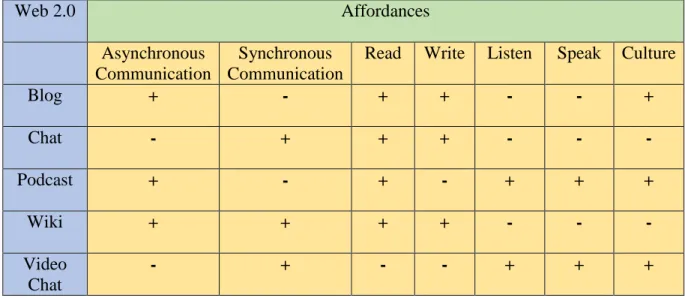
Table 3.2. Affordances of TSGLE ...49
Table 4.1. Content Analysis of Blog Entries: Grammar Production ...65
Table 4.2. Repeated Measures of Blog Entries: Total Score ...66
Table 4.3. Language Acquisition Assessment: Speaking ...71
Table 4.4. Language Acquisition Assessment: Students’ Perceptions ...81
vii
List of Figures
Figure 3.1. Screen Shot of Moodle Forum/blog room. ...51
Figure 3.2. Screen Shot of Adobe Connect chat room page. ...52
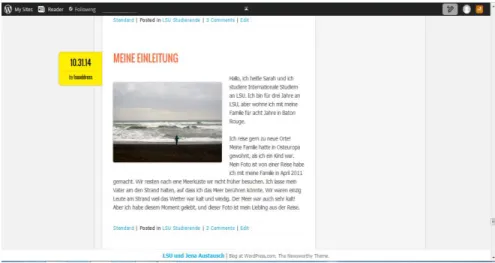
Figure 3.3. Screen Shot of a Student’s First Blog Post and Image Upload. ...55
Figure 3.4. Screen Shot of Student’s Second Blog Post and Image Upload. ...56
Figure 3.5. Screen Shot of Group Video Conference via Adobe Connect. ...57
Figure A1. Screen shot of Station overview text. ...119
Figure A2. Screen shot of cultural text. ...119
Figure A3. Screen shot of Grammar Explanation. ...120
Figure A4. Screen shot of Vocabulary List. ...120
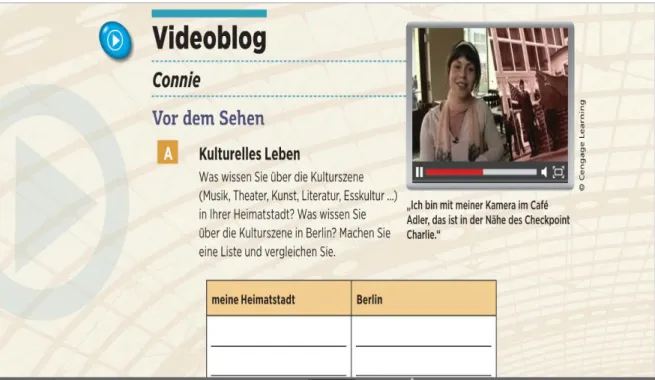
Figure A5. Screen shot of Videoblog. ...121
Figure A6. Screen Shot of SAM exercise. ...121
Figure A7. Screen Shot of Moodle CMS. ...122
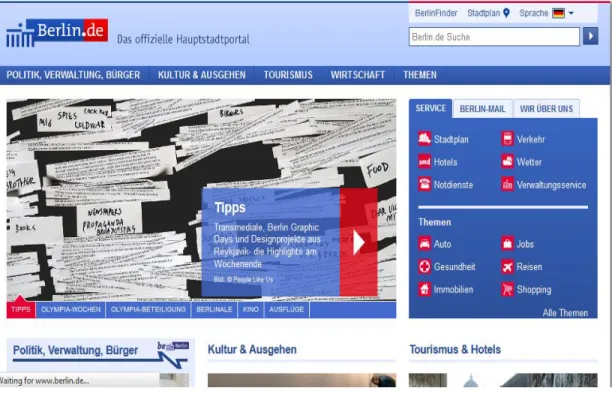
Figure A8. Screen Shot of www.berlin.de. ...123
Figure A9. Screen Shot of Podcast Assignment 3. ...125
viii
List of Commonly used Terms and Definitions
1. Asynchronous communication – Communication that does not take place in real time (Dempsey and Van Eck, 2007).
2. Blog – A web log displaying entries that are presented in reverse chronological order, and are interlinked with other media (Castaneda, Ahern, and Díaz, 2011).
3. Chat – Synchronous online communication via text message transmission from sender to receiver (Wikipedia).
4. Computer Assisted Instruction – Use of a computer as an instructional tool (Reiser, 2007) 5. Computer Assisted Language Learning – An approach to language teaching in which the
computer plays a key role as an instructional tool.
6. Computer Mediated Communication – Electronic tools that allow users to communicate across time and space (Kennedy and Miceli, 2013).
7. Constructivism – A knowledge building process that occurs with individuals or groups by interacting with one another and the world by which they are surrounded (Driscoll, 2007).
8. Course Management System (Blackboard, Moodle, etc.,) – A set of tools that allows users, for example, instructors, to create (online) course content and post it on the Internet without requiring the use of computer programming (Techopedia).
9. Instructional Media – The physical means via which instruction is presented to learners (Reiser and Gagné, 1983).
10.Moodle – Modular Object-Oriented Dynamic Learning Environment (Brandl, 2005). 11.Podcast - An audio file that can be created by using a computer, microphone, and a
ix
12.Socio-Constructivism – Focuses on an individual’s learning within a group setting (Whyte, 2011)
13.Second Language Acquisition – Learning a second language after a native language is already established (American Speech-Language-Hearing Association)
14.Synchronous communication – Communication that takes place in real time (Dempsey and Van Eck, 2007).
15.Skype - A telecommunication application that allows for synchronous video chat (Wikipedia).
16.Wiki – Hawaiian for “quick”, wikis are designed for online group collaboration and function as shared repositories of information among users (Castaneda et al., 2011). 17.Web 2.0 – Online tools that assist in collaboration among users, including blogs, wikis,
x
List of Frequently Used Acronyms
1. ACMC – Asynchronous Computer Mediated Communication
2. ACTFL – American Council on the Teaching of Foreign Languages 3. CAI – Computer Assisted Instruction
4. CALL – Computer Assisted Language Learning
5. CMC – Computer Mediated Communication
6. EFL – English as a Foreign Language 7. ESL – English as a Second Language
8. SCMC – Synchronous Computer Mediated Communication
9. SLA - Second Language Acquisition
xi
Abstract
This study employed a within-group case study design using a mixed methods approach. In doing so, the researcher used a concurrent triangulation process during a one semester
intermediate German language course. In addition to the textbook, the researcher implemented a Technology to Support German Language Enhancement (TSGLE) intervention. The TSGLE included use of the following Web 2.0 technologies: blogs, podcasts, online chat, and wiki, to create an environment of increased asynchronous and synchronous interaction. Additionally, students embarked on a cross-cultural, virtual exchange with university students from Germany by interacting through a blog, a collaborative video conference session, a German film screening, email, and individual video conference sessions. Although certain challenges arise with adapting to technology use and communicating with native speakers, quantitative and qualitative data indicate regular use of Web 2.0 technologies and participating in a cross-cultural exchange can enhance language acquisition and cultural awareness.
1
Chapter 1 Introduction Introduction and Background
Recent research (Wang and Vásquez, 2012) has shown there has been a clear shift and increase in the implementation of interactive, Web 2.0 technologies in foreign language learning environments. While this trend has become more common, transformations continue to occur in how these technologies are integrated (Yang, Gamble, and Tang, 2012). Previous research highlights a paradigm shift from audio-lingual methods utilizing audio cassette tapes common in the 1970s (Warschauer and Meskill, 2000), to drill-and-practice types of computer-assisted language learning (hereinafter CALL) common in the 1980s, to more interactive types of CALL technologies developed and integrated in the 1990s and early 2000s (Liu, Moore, Graham, and Lee, 2003; Zhao, 2003).
In the 1970s, the development of the audio cassette tape was the primary medium used to practice the audio-lingual method, which is learning through oral repetition. Language
laboratories were typical settings where university students practiced repetitive drills via audio prompts. In the late 1970s researchers recognized that this method was leading to poor results. The focus of instruction was purely on language form, namely pronunciation, and the teaching of communicative meaning and interpreting of the target language was ignored. Conversely, the 1980s and 1990s experienced a shift from this drill and practice method toward a communicative teaching approach (Warschauer and Meskill, 2000). Liu et al. (2003) and Zhao’s (2003) reviews of literature portray uses of technology in language learning environments during the 1990s. Much of the technology focused on interactive tools such as email, as well as the use of specific software such as grammar checkers. Zhao’s (2003) meta-analysis of previous literature shows there were consistent, positive results with the effectiveness of technology on student learning.
2
However, it should be noted that only nine studies were included in this review, making it difficult to deduce the impact of technology in language education. With that said, Zhao
calculated the effect size for each study, then an overall effect mean of the nine studies combined which was “quite large, indicating an overwhelmingly positive effect of technology applications on language learning” (Zhao, 2003, p. 19).
Current research indicates that tens of thousands of educators, including those in second language education, have experimented with Web 2.0 technologies (Wang and Vásquez, 2012). The concept of Web 2.0 technologies was born in 2004 (O’Reilly, 2005), and is described as online tools, such as blogs, wikis, and chat that assist in collaboration among users, not merely with a computer (Kennedy and Miceli, 2013). Wang and Vásquez (2012) believe the attributes of these technologies, such as collaboration, ease of sharing, communication and participation, are primary reasons for the aforementioned paradigm shift for using them in second language acquisition (SLA). Moreover, when utilized effectively, technology may enhance the acquisition of a second language by exposing students to authentic materials, such as listening to native speakers through podcasts (Schmidt, 2008) as well as linking students with native speakers (Ware, 2005), resulting in higher learner achievement (Zhao, 2003). Yet, properly integrating technology in the foreign language classroom has been problematic in certain instances
indicating there are challenges in finding the appropriate balance of technology use for teachers as well as for students. A common challenge reported was the lack of faculty training on how to incorporate technology (Wiebe and Kabata, 2010).
Improvements in the interactive abilities of technology (Toyoda and Harrison, 2002), including that of computer-mediated communication (hereinafter CMC), have given educators (and students) the opportunity to create and enhance foreign language learning environments
3
with increased asynchronous and synchronous interaction both in and out of the classroom (Chenoweth and Murday, 2003). As such, the literature suggests these technologies allow students to take advantage of informal learning scenarios which foster constructive learning (Comas-Quinn, Mardomingo, and Valentine, 2009; Elola and Oskoz, 2012; Pasfield-Neofitou, 2007), enhance student motivation (Morton and Jack, 2010), promote student accountability (Ducate, Lomicka, and Moreno, 2011), improve student performance and achievement (Perez, 2003; Shang, 2005; Volle, 2005), increase student collaboration (Oskoz, 2009; Shekary and Tahririan, 2006), and promote social interaction with native speakers from a distance (Helm, Guth, and Farrah, 2012; Kötter, 2003; Ware, 2005; Yang et al., 2012).
Despite the ever-increasing use of technology to enhance language learning in the past decade, “research on the application of Web 2.0 technologies to second language (L2) learning is still quite limited” (Wang & Vásquez, 2012, p. 416). Therefore this study developed from my own interest of using Web 2.0 technologies to enhance classroom instruction and student learning in a German language course, more specifically in the areas of: 1) reading, writing, listening, and speaking comprehension, 2) cultural awareness, 3) linking students with native speakers, and 4) understanding student perceptions of using these tools and experiences to learn a foreign language.
Problem Statement
The American Council on the Teaching of Foreign Languages (ACTFL) “acknowledges and encourages using the potential of technology as a tool to support and enhance classroom-based language instruction” (ACTFL, 2014). Furthermore, ACTFL’s 21st
Century Skills Map (2014) declares that students should be “using digital technology, communication tools, and/or networks appropriately to access, manage, integrate, evaluate, and create information in order to
4
function in a knowledge economy” (p. 14). There is a growing body of research providing data about the impact of technology on student learning, as well as the status of research on the use of technology in foreign language instruction. For example, a recent study (Jahner, 2012) surveyed 4,500 high school students enrolled in foreign language courses. Results revealed that a large amount of funding was spent to enhance technology resources in the schools, including language laboratories. Students surveyed found the labs to be helpful, websites focusing on skills practice to be useful, and websites that provide authentic, cultural materials in the target language to be beneficial. Notwithstanding these positive findings, a significant number of students indicated that several technologies were not utilized, including social networking sites, podcasts, blogs, wikis, smart phones, and interactive boards. This strongly suggests there is room for
improvement regarding a more comprehensive integration of technology. “In order to provide effective and individualized language instruction, students need to encounter the language on a daily basis, which is certainly possible based on today’s applications and interconnectivity” (Jahner, 2012, p. 4).
The improvements in interactive technologies open the door for researchers to find the best possible means of integrating technology into language instruction. For instance, Lord (2008) found the use of podcasts revealed that students became more conscious of their
pronunciation with the aid of said technology, and the majority stated the project was useful and should be continued in future semesters. Nonetheless, Oliver (2010) concluded that Web 2.0 tools, including blogs and wikis, are “just the tip of an integration iceberg” (p. 50), further indicating a critical need to explore the depths of what these technologies have to offer educators, particularly in foreign language education.
5
A number of technologies have been utilized in foreign language learning environments. These include but are not limited to the following: (a) blogs; (b) wikis; (c) podcasts; (d) online chat; and (e) video conferencing. A blog is a web log which displays entries that are presented in reverse chronological order, and are then interlinked with other media (Castaneda, Ahern, and Díaz, 2011). Wikis are designed for online group collaboration and function as shared
repositories of information among users (Castaneda et al., 2011). A podcast is an audio file that is created by using a computer, microphone, and a software program (Ducate and Lomicka, 2009). Chat is synchronous online communication via text message transmission from sender to receiver (Wikipedia). Skype is a telecommunication application that allows for synchronous video chat (Wikipedia). These technologies have been found to promote collaboration (Comas-Quinn, Mardomingo, and Valentine, 2009; Ducate, Lomicka, and Moreno, 2011), enhance writing (Armstrong and Retterer, 2008; Kessler, Bikowski, and Boggs, 2012; Sun, 2010), improve listening comprehension (Schmidt, 2008), create environments conducive to constructivist learning among students (Comas-Quinn et al., 2009) and provide authentic language learning experiences with native speakers (Chen and Yang, 2014). These studies illustrate how the use of specific technologies can be used to enhance the teaching and learning of a foreign language.
In a review of literature between 2004 and 2009, Wang and Vásquez (2012) highlighted the latest trends of Web 2.0 technologies used in language learning scenarios. Their examination of 43 empirical studies found that 35% utilized blogs, 23% focused on the use of wikis, 12% examined the use of podcasts, while 5% detailed the use of multiple technologies. They suggest that these technologies “exploit the participatory potential of the Web” (p. 412). Yet, their results suggest that the use of Web 2.0 technologies is still limited and in its beginning stages.
6
Of the 43 empirical studies highlighted in their review, 10 address technologies which enhance writing, eight explore students’ attitudes and perceptions regarding the use of Web 2.0
technologies in learning a foreign language, four examine student pronunciation and proficiency, three focus on culture, and one tackles reading comprehension. Additionally, only four (9%) of the studies specifically pertained to the German language, two (5%) utilized a mixed methods approach, while none of the studies from their review indicated the use of technology to communicate with native speakers via distance exchanges. These findings are instrumental to this study, and are therefore further detailed in the following section. Wang and Vásquez (2012) also found that the majority of the studies analyze how these Web 2.0 technologies assist
educators in creating a favorable learning environment for students. Conversely, very few studies illustrate students’ progress and learning outcomes using these tools. Moreover, their review found that these studies lack in-depth analyses of the investigated phenomena, suggesting more qualitative research techniques should be implemented because they “enable researchers to offer rich descriptions of observed phenomena, and to address issues related to participants’ individual perspectives as well as to their personal, lived experiences” (Wang & Vásquez, 2012, p. 422).
Therefore, a need still exists to provide empirical research – both quantitative and qualitative – which analyzes the uses of Web 2.0 technologies in foreign language learning environments, especially German, with particular focus on technology’s effects on: (a) language skills; (b) cultural awareness; (c) ease of linking students with native speakers in cross-cultural studies; and (d) analyzing students’ perceptions on the use of these technologies to learn German. Echoing Wang and Vásquez’s (2012) sentiment regarding the need for more research on students’ progress and learning outcomes, Li (2012) recommends future studies center more
7
on quantitative data to analyze the impacts technologies have on students’ language skills. Authors such as Pellettieri (2010) suggest that future research should include qualitative data to help understand students’ perspectives on the phenomena of Web 2.0 technologies in learning foreign languages, as well as offer insight into the instructors’ perspectives when employing such a study. In response to Wang and Vásquez’s (2012) findings that 56% of reviewed studies utilize no identifiable theoretical framework, other researchers (Elola and Oskoz, 2012; Perez, 2003) call for more studies which are designed through specific theoretical lenses. This is another aspect that was pivotal for this study, as the researcher utilized technology that fostered a social constructivist learning environment among the participants.
Purpose of Study
The purpose of this study was to analyze the effects of Web 2.0 technology tools, including blogs, online chat, podcasts, wikis, Internet searches, video tutorials and video conferencing, and cross-cultural exchange on students’ acquisition of German language skills and their cultural awareness of the German-speaking countries. Additionally this study analyzed students’ perceptions of these technologies as a tool to enhance their language learning and cultural awareness. The researcher gauged whether students believe their German language skills were enhanced by having additional exposure to the language in authentic contexts using these technologies, and whether this method may be used in future teaching scenarios. To accomplish this, the researcher employed the aforementioned technologies, in addition to the regular use of the course textbook, to increase communication on an individual basis, with classmates, and by linking students with native German speakers at the university level in a cross-cultural communication project.
8
Research Questions
In order to provide an understanding of students’ achievement in learning the German language and culture in a course that is enhanced by technology, as well as to gain deeper insights into students’ perceptions of learning a foreign language which is enhanced by technology, this study was guided by the following questions:
1. What effect will the TSGLE intervention (blog, chat, podcast, wiki, and video
conferencing) and cross-cultural exchange have on the dependent variables: students’ language skills (reading, writing, listening, and speaking)?
2. What effect will the TSGLE intervention (blog, chat, podcast, wiki, and video conferencing) and cross-cultural exchange have on the students’ cultural awareness? 3. How do students perceive the use of the TSGLE intervention and cross-cultural exchange
in their process of learning German?
Study Procedures and Objectives
In addressing the identified research questions, this mixed methods study employed a concurrent triangulation process (Creswell and Plano-Clark, 2011). Quantitative data
(Technology Implementation Survey results), and mixed methods data (blog entry and podcast recording results) were collected and analyzed to determine the effect of technology on students’ learning of German by examining their reading, writing, listening, speaking skills, and cultural awareness. Qualitative data were collected and analyzed to determine student perceptions on the use of technology in the learning of German. More specifically, this included two focus group interviews, students’ post-chapter reflections, the researcher’s observations, and open-ended student responses to questions focusing on the virtual, cross-cultural exchange. The findings
9
developed from both quantitative and qualitative datasets were synthesized to answer the research questions.
Significance of Study
Wang and Vásquez (2012) highlighted several underrepresented areas in their review of literature from 2004 to 2009. These included, but were not limited to the following: studies focusing on the German language, lack of mixed methods studies, scarcity of research depicting multiple technology implementation, small percentage of literature incorporating a theoretical lens, limited research of less-used Web 2.0 tools (Skype), and no mention of virtual, cross-cultural studies. Therefore this study contributes to the literature as it provides insight into the aforementioned gaps, which has the potential to benefit educators and students of foreign languages, especially educators interested in learning how to implement technology in the classroom. As a mixed method study, it provides mixed method, qualitative, and quantitative data with the goal of better understanding the effects technology has on the learning of a foreign language, namely, German, as well as gaining a deeper understanding of students’ perceptions on how effective technology can be in their pursuit of enhancing their learning of a foreign
language. To contribute to the lack of theory implemented in previous research, the researcher of this study used a social-constructivist theoretical lens to evaluate the implementation of the aforementioned technologies. Finally, by embarking on a cross-cultural, distance project via blog, email, and video conferencing, this study linked students in the United States with
university-level students in Germany; providing a unique venue of how technology can be used to connect students with authentic materials and real-life learning scenarios.
Previous research (Baker, 2006; Crozet and Liddicoat, 1997; Crozet, Liddicoat and Lo Bianco, 1997) has shown that learning a foreign language, which is inextricably linked to the
10
target culture, can provide students with a better understanding of their own cultural traditions. The study of a foreign language gives students the access required to engage with the target culture, which allows them to explore and identify the values and boundaries of their own cultural perspective. Therefore, studying German allows students to identify their own culture, as well as provide an understanding of the German culture, its language and literature as a discipline. This process requires students to speak and read in German, exposes students to linguistic structures different from English, and requires analysis of the German language, preparing them to be global citizens. This aligns with the German course from this study, as it qualifies as general education course (See Appendix B), the goals of which echo the
aforementioned research (Baker, 2006; Crozet and Liddicoat, 1997; Crozet et al., 1997). Furthermore, the researcher of this study will have the potential to provide a model of German language instruction of how to incorporate technology in future curricula, including the
possibility of linking students with native speakers.
Reflexivity Statement
My interest in learning the German language began at an early age when my family spent our summer vacations in Vermont visiting our German cousins from Stuttgart, who immigrated to the United States in the 1950s. While I was not speaking fluently as a youth and teenager, these visits allowed me to learn letters, numbers, simple phrases, and even some prayers that we recited at the dinner table. This interest in learning how to communicate with my cousins led me to study German in high school and college. My interest was particularly sparked when I had the chance to live and study in Salzburg, Austria during my junior year of undergraduate studies. This eventually led me to spend a summer in Heidelberg, Germany at an intensive German language school before embarking on a Master of German Studies at the University of
11
Cincinnati. The latter institution is where I also learned some essentials of technology, for example, how to organize classroom materials with tools such as Blackboard, the university’s
Course Management System (CMS). My methodology professor also demonstrated how to include video, web searches, and recordings of our lectures as graduate assistant student teachers, which were made available to our students.
After spending a year as a Fulbright Commission English Teaching Assistant in the small town of Bruck an der Mur in Styria, Austria, I honed my teaching skills and improved my
German to where I felt confident communicating with natives in their local dialect Steirisch
(Styrian). In order to stay in touch with my family and my now wife, I utilized the synchronous video conferencing tool Skype as well as the instant chat option available through the online-gaming website Pogo. At LSU I worked and trained with fellow faculty on the use of Moodle, as well as how to efficiently integrate technology into language teaching. This dissertation study illustrates the skills I learned and developed, and was enhanced by the multiple opportunities I have experienced and described above.
12
Chapter 2 Literature Review Introduction
This literature review provides an overview of the following: an examination of the
historical background of technology (instructional media) in education, the historical background of technology use in foreign language learning environments, and recent trends in use of
technology to teach and learn foreign languages. This is followed by a section providing an overview of constructivism and social constructivism, including previous examples of this approach when using technology in foreign language teaching and learning.
Historical Background of Instructional Media
Reiser and Dempsey (2007) developed a definition of instructional media in their text
Trends and Issues in Instructional Design and Technology. This was based on a number of previous definitions offered by the Association for Educational Communications and Technology (AECT) and is as follows:
The field of instructional design and technology (also known as instructional technology) encompasses the analysis of learning and performance problems, and the design, development, implementation, evaluation, and management of the instructional and noninstructional processes and resources intended to improve learning and performance in a variety of settings, particularly educational institutions and the workplace. Professionals in the field of instructional design and technology often use systematic instructional design procedures and employ instructional media to accomplish their goals. Moreover, in recent years, they have paid increasing attention to noninstructional solutions to some performance problems. Research and theory related to each of the aforementioned areas is also an important part of the field.
While the inclusion of technology in education is not a new phenomenon, it is important to include this definition in order to provide a basis for how educators and researchers have refined their use of technology in educational settings over the years in the field of
13
foreign language education. However, before describing the current trends of
instructional media in foreign language learning environments, the following depicts the earliest uses and subsequent developments.
According to Saettler (1990), use of media as an instructional tool in the United States traces back to the beginning of the twentieth century when school museums were first
introduced. The museum exhibits included mostly visual media such as stereographs (three dimensional photographs), slides, films, study prints, and charts. The interest of visual media was the impetus for the visual education movement which was established by the Keystone View Company, who in 1908 published Visual Education, a publication providing educators an
informative guide to lantern slides and stereographs (Reiser, 2007). This movement led to the use of the motion picture projector as the first media device to be used in schools such as the public school system of Rochester, New York, who adopted this form of media in 1910. Over the following decade and several years after World War I, the visual education movement had developed into a professionally-recognized entity. This included the establishment of five national professional organizations for visual instruction, five journals focusing on visual instruction, more than 20 teacher-training institutions that offered courses in visual instruction, and numerous school systems having developed bureaus of visual education (Saettler, 1990).
The 1920s and 1930s became an era marking the beginning of another movement of instructional media, audiovisual instruction and instructional radio. “Technological advances in such areas as radio broadcasting, sound recordings, and sound motion pictures led to increased interest in instructional media” (Reiser, 2007, p. 19). This movement continued its expansion, particularly due to a major merger of three professional organizations for visual instruction into one organization, the Department of Visual Instruction (DVI). The DVI was a unit within the
14
National Education Association, which over the years eventually became called the Association for Educational Communications and Technology (AECT) (Saettler, 1990). With the
establishment of the DVI, the audiovisual movement gained momentum in the field of education, particularly due to the value educators were witnessing in the use of audiovisual materials used in presenting content. One medium that became particularly recognized was radio. Many advocates strongly believed this technology would become revolutionary in the field of education. However, it was found that radio, as well as the audiovisual movement, lost its momentum in school environments. Much of this was caused by World War II, a time which saw a shift in the use of audiovisual materials from the school setting to that of the United States military. “For example, during the war the United States Army Air Force produced more than 400 training films and 600 filmstrips, and during a two-year period, from mid-1943 to mid-1945, it was estimated that there were over four million showings of training films to United States military personnel” (Reiser, 2007, p. 19). Training films were not only used by military personnel but also by citizens, particularly in training for employment, which led to more effective training programs that reduced training times as well as absenteeism by employees (Saettler, 1990).
According to Saettler (1990), additional audiovisual materials were also developed and implemented to train military forces during World War II. These included overhead projectors and slide projectors, which were used to teach aircraft and ship recognition, audio equipment, which was used to teach foreign languages, and simulators for flight training. The use of these materials, as well as the aforementioned instructional film, was perceived as a success, especially in areas of training. This led to a revived interest in the use of audiovisual materials in schools in the years following the war, with an additional effort to establish intensive research studies.
15
These studies were “designed to identify how various features, or attributes, of audiovisual materials affected learning; the goal being to identify those attributes that would facilitate learning in given situations” (Reiser, 2007, p. 20). The majority of studies conducted in the years following World War II focused on comparing uses of specific mediums, such as film, versus use of traditional, live instruction with no technological medium. According to Clark (1983), such studies typically resulted in students having learned equally regardless of the medium.
Due to these repeated results, critics suggested that research should shift its focus to other areas, such as how the media affects learning or how instructional methods in the use of
technology, versus simply the technology, affect learning outcomes (Reiser, 2007). In the 1950s, different theories of communication began to steer research in another direction that focused on communication processes, which helped expand the focus of the audiovisual movement. However, while this new direction in research helped increase its presence, “perhaps the most important factor to affect the audiovisual movement in the 1950s was the increased interest in television as a medium for delivering instruction” (Reiser, 2007, p. 20).
The growth in use of television as a medium in education was due to two primary factors. The first was the Federal Communications Commission’s decision in 1952 to designate 242 television channels for educational purposes, which led to the increased development in public television stations, whose primary mission was to present instructional content. The second significant factor in the expansion of the use of television as an educational tool was the stimulus in funding provided by the Ford Foundation. This led to the adoption of closed-circuit television into various school systems, for example, in Maryland and Chicago. Unfortunately, poor
16
resistance, were all factors why educational television did not experience a larger expansion (Reiser, 2007).
The 1970s witnessed a major development in instructional media1. The term audiovisual instruction was now recognized as educational technology and instructional technology. Two journals published by the AECT had also experienced a name change; Audiovisual
Communication Review changed to Educational Communications and Technology Review, and
Audiovisual Instruction became Instructional Innovator (Reiser, 2007). Not only were changes happening in the naming of key organizations and publications, but other changes and
advancements in technology, namely the computer, were also happening during the 1970s, 1980s and beyond. The development of the microcomputer in the early 1980s led to an increased interest in instructional environments. “Many educators were attracted to microcomputers because they were relatively inexpensive, were compact enough for desktop use, and could perform many of the functions performed by the large computers that had preceded them” (Reiser, 2007, p. 22).
By the mid-1990s, although the schools in the United Stated averaged one computer for every nine students, the impact of their use was minimal, and a number of teachers even
indicated that there was little to no use of computers for educational purposes. Research studies revealed that the majority of uses of computers and technology were primarily for drill and practice exercises, and for teaching computer-related skills; they showed minimal signs of having any impact on teaching methods. Despite these revelations, there is evidence that indicates positive uses of technology (Reiser, 2007).
1The 1970s also marked a period in which technology played a more significant role in foreign language education.
While use of audio equipment was used to instruct military personnel during World War II, technology during the 1970s was being implemented more in language laboratories (Warschauer & Meskill, 2000). This will be further discussed in the following section that highlights the historical uses of technology in foreign language instruction.
17
Throughout the 1990s and beginning of the twenty-first century, developments and improvements in access to the Internet increased the use of technology for instructional purposes, especially in training and business. There was also an increased use in technology in higher education settings, particularly in distance learning and online course delivery. In 2004/2005 nearly two-thirds of all colleges and universities offered accredited online degrees. In 2002, 83% of colleges and universities used course management systems such as Blackboard and WebCT
(Market Data Retrieval, 2005). The United States military, including the United States Navy, United States Army, and United States Marine Corps all offer online course delivery or provided digital training facilities (Chisholm, 2003a; Chisholm, 2003b; Fuhr, 2004).
Moore (1989) recognized new developments such as the interactive capacities of technology, in particular three modes of interaction supported by media: learner with instructional content; learner with instructor; and learner with learner. The types of media described by Moore include: email, chat rooms, and bulletin boards. While there is a learning curve becoming accustomed to new technologies, these types of media, along with new capabilities in technology enhancements, allowed for types of information to be more easily presented. This includes print, video, audio, and feedback capabilities. “Moreover, the ability of computers to present information in a variety of forms, as well as to allow learners to easily link to various content, has attracted the interest of instructional designers having a constructivist perspective” (Reiser, 2007, p. 23).
This section has offered a concise historical overview on some of the earlier traces of technology in education, with particular focus on the twentieth century. While it is important to gauge the implementations and developments in educational technology over time, the primary focus of this project, aside from analyzing the uses of technology in a German language course,
18
is also to provide insight into the uses of educational technology in foreign language instruction. The following section therefore provides a historical preview of this which will then lead to an overview of current trends in the use of technology in foreign language instruction.
Historical Background of Technology in Foreign Language Learning
As was previously mentioned, technology use in foreign language instruction dates back to World War II, when United States military forces trained by using audio equipment during the audiovisual instructional and instructional radio movement (Saettler, 1990). Warschauer and Meskill (2000) have provided a brief summary on the history of educational technology in foreign language instruction, with particular focus on higher education. This provides some insight into the shift of approaches that occurred starting in the 1970s to today’s uses.
In the 1970s, the development of the audio cassette tape was the primary medium used to practice the audio-lingual method, which is learning through extensive memorization and oral repetition (Taylor, 2003). This method was typically used in language laboratories where university students would practice repetitive drills following audio prompts. However, in the late 1970s researchers began to recognize that this method was leading to poor results. The focus of instruction was purely on language form, namely pronunciation, and the teaching of communicative meaning and interpreting the target language was ignored. Resultantly, the 1980s and 1990s experienced a shift from this drill and practice method toward a communicative teaching approach (Warschauer and Meskill, 2000).
The focus of the communicative teaching approach was to foster student engagement in authentic and meaningful interactions. Educators utilizing this trend focused on two perspectives in order to provide the best learning scenario for students via technology, namely cognitive and socio-cognitive approaches, not simply based on habit formation (Chomsky, 1986, as cited in
19
Warschauer and Meskill, 2000). Chomsky (1957) (as cited in Slife and Williams, 1995), discusses the language learning process as not based on simply stimulus and response. “Rather, it seems that human beings have an innate capacity to learn and use language, a capacity that unfolds naturally rather than being shaped. Learning and using a language is more like following rules than being shaped by reinforcement” (p. 39).
Warschauer and Meskill (2000) highlighted several technologies supporting cognitive approaches allowing for exposure to language in meaningful contexts where learners construct their own individual knowledge. Examples of these technologies include text reconstruction software, concordancing software, and simulation software. An example of text reconstruction software is NewReader, designed by Hyperbole, which allows instructors to alter a text by deleting or scrambling words for students to then complete it by filling in the blanks or re-scrambling the words. Monoconc, designed by Athelstan, is an example of concordancing software, which allows instructors and students to search through texts to find instances of the actual uses of particular words. Not only does the program provide a dictionary definition of a particular word, it also provides additional examples and particular uses of that word in a variety of ways. An example of a multimedia simulation is the French program A le reecontre de Philippe, produced by the Massachusetts Institute of Technology (MIT). This program allows learners to enter into computerized microworlds with exposure to the target language and culture. Students “walk around” in a virtual world and explore simulated environments, which allow for control and interactivity. While these examples of software products can be used in foreign language teaching and learning contexts, they are limited to individual or partner exercises, working solely with the computer, and do not require student to student interaction (Warschauer
20
and Meskill, 2000). The following section briefly discusses socio-cognitive approaches, and provides examples of technologies that foster student to student interaction.
According to Schieffeln and Ochs (1986) (as cited in Warschauer & Meskill, 2000), language learning is a process of socialization and participation in a variety of discourse
communities. Students need exposure to authentic interaction, and this can be accomplished by engaging in student collaboration or authentic tasks which prepare them for the communication they will encounter outside of the classroom, for example, in the Internet. Examples of the computer-mediated communication (CMC) tools can be implemented to support this type of environment including email, blog, online chat, podcasts, wikis, and course management systems. Several other categories including social media sites, online video games, interactive television programs, and individual tools such as iPads have also been utilized to enhance the teaching/learning of a foreign language. Additionally, these technologies have also been used in foreign language distance learning (FLDL) and in long distance exchanges between students. The following section will highlight these trends in the use of technology to enhance language learning and instruction.
Technology Use in Foreign Language Learning Environments
This section primarily includes studies in higher education, but also highlights several at the K-12 level simply to illustrate the use of specific technologies that were effectively
implemented. This review also includes several studies in English as a Foreign Language (hereinafter EFL) as they also illustrate effective uses of technologies. Studies in FLDL environments and for long distance exchanges are also included. It should be noted that throughout this review key terminologies related to technology, including the following: asynchronous computer-mediated communication (hereinafter ACMC), computer-mediated
21
communication (hereinafter CMC), synchronous computer-mediated communication (hereinafter SCMC), blog, online chat, podcasts, and wikis, will be described, defined, and used
interchangeably and often.
Several studies found that the use of email exchange, an asynchronous form of communication, helped assist students’ reading skills (Shang, 2005), writing skills (Shang, 2007), and pronunciation skills (Volle, 2005). Shang (2005) explored students’ attitudes when exchanging emails with one another demonstrating that “incorporating email into a reading class may positively influence student reading achievement” (p. 208). For this study, students
exchanged emails for peer feedback and corrections. Results indicated that negative attitudes did exist among participants in that there was either not enough time to complete the task, or that some students prefer communicating face-to-face (F2F). While this may have been the case for some, the majority of students who participated in the intervention maintained a positive attitude, indicating email helped improve their reading skills; they also found the technology to be a useful exercise to practice their L2 learning, (Shang, 2005).
In a similar study, Shang (2007) again employed the use of email exchange among students, however, with a focus on improving writing. Results showed that “most students believe that it [email] is a positive strategy that helps improve their foreign language learning and attitudes toward English, as reflected by the positive responses to the survey” (Shang, 2007, p. 92). To gauge student achievement using the email as a medium of communication, the researcher, (Shang, 2007), analyzed total words, use of subordinate and coordinate clauses, sentence complexity and vocabulary complexity. The results revealed that students thought they had more practice in the target language, engaged in more social interaction and self-monitoring
22
of their work, and claimed their language skills and attitude toward English improved, (Shang, 2007). Volle (2005) also used email exchange but with a slightly different approach. In her Spanish courses students exchanged two types of voiced audio emails that took place on a weekly basis; read-aloud passages and grammar-drill completions. In addition, students participated in two oral conversations via MSN messaging, an instant chat tool for oral
communication. The researcher analyzed students’ articulation, accuracy, and proficiency and found that although improvement in articulation was not significant, improvement in
conversation proficiency was significant. The researcher observed that “synchronous online oral tasks and online oral interviews are valuable experiences to the students and provide permanent records of oral development” (Volle, 2005, p. 156). Another valuable aspect of requiring students to complete oral communication tasks asynchronously and synchronously, when compared to F2F classes, is that “each student has a true voice and cannot hide online” (Volle, 2005, p. 156). The use of email exchanges, as seen in these studies, shows how students can practice their L2 learning in interactive contexts outside of the classroom, in some cases
analyzing and critiquing fellow classmates and constructing new knowledge. In the next section, the review depicts studies that utilized synchronous communication technology through the use of online chat.
Online Chat
Chat is synchronous online communication via text message transmission from sender to receiver (Wikipedia). Studies that analyzed the use of online chatting found that this technology can enhance learner to learner interaction (Oskoz, 2009), promote negotiation of meaning between learners (Pellettieri, 2010; Shekary and Tahririan, 2006; Toyoda and Harrison, 2002; Tudini, 2003), and increase vocabulary (Perez, 2003). Perez (2003) compared productivity of
23
asynchronous (email) versus synchronous (chat) communication in a first semester Spanish course. The use of online chatting “allow[s] students more opportunities to negotiate meaning and to converse in spontaneous, everyday language away from textbooks” (Perez, 2003, p.90). Moreover, this technology has the ability to promote equivalent or higher production of the target language versus traditional, F2F courses (Perez, 2003; Abrams, 2003). Although students in Perez’s (2003) study showed equal preference to email and online chat use on a weekly basis, the analysis indicated that on average, chat produced more new words. Students also indicated that chat room sessions allowed them to practice more words and learn sentence structure faster.
Sykes (2005) analyzed the quantity of supportive moves in partner-assigned dialogues. These are apologies or explanations used when practicing how to decline an invitation. In this study, students in a Spanish course observed a modeled dialogue by native speakers before being designated to one of three groups, online chat, oral chat, or F2F. Results found that F2F groups produced more supporting moves when conducting partner-assigned dialogues as compared to synchronous oral chat and synchronous written chat. Although the F2F group produced more, Sykes (2005) found that the written chat “group was the only discussion group that allowed for consistent practice of the strategies in two modes of communication: written and oral” (p. 420).
Sanders (2006) compared chat room production in a lab setting with the presence of a teacher (control) to use of chat out-of-class without the presence of a teacher (experiment). Students chatted about their experiences with Spanish, their favorite places, and a typical day. Production in the experimental group was greater than that of the control in minutes spent chatting, turns taken, use of Spanish, and correctly spelled Spanish words. Students in the experiment group needed to prioritize their schedules outside of class time which may have resulted in being more productive with their work (Sanders, 2006). Ene, Görtler and McBride
24
(2005) also observed student chat room production in a German class and found that students took more turns while the teacher was absent versus when the teacher was present.
Shekary and Tahririan’s (2006) study of online chat for an EFL course “focused on the naturally occurring negotiation of meaning” (p. 561). The researchers found that this form of SCMC promotes negotiation of meaning and noticing which they describe as mini-dialogues or language-related episodes (LREs), where students notice errors or raise questions during their chat exchanges (Shekary and Tahririan, 2006). After analyzing multiple identified LREs from over 125 hours of recorded chat sessions from eight dyads, the researchers found that the majority of them were correct and concluded that a blended learning environment using
technologies such as online chat “enhances the process of noticing and subsequent L2 learning” (Shekary & Tahririan, 2006, p. 570).
Although these studies show how online chat can enhance student learning by promoting students’ negotiation of meaning (Shekary and Tahririan, 2006), and by helping increase the use of the target language (Perez, 2003), the increased use in the language does not always translate into more effective language use. Böhlke (2003) found that while student use of chat in a German course yielded higher productivity compared to F2F student interaction, the F2F students produced more syntactic changes including the use of subordinate clauses, inverted word order, and verb separation. It is important to consider some of the learning curves involved when implementing these technologies, and to know that some students may produce better results in one environment versus another. In order to create an ideal learning scenario, researchers should keep in mind the importance of training students, and the design involved when using these technologies
25
Oskoz (2009) observed student behavior in the use of four online chats by exploring “ways in which learners assist each other” (p. 49) by pairing expert with novice learners. In this Spanish course, the researcher also hoped to find whether learners’ feedback helped assist in student learning. Results revealed that “learners engage in a collaborative dialogue and that they provide one another with both direct (explicit) and indirect (implicit) feedback” (Oskoz, 2009, p.64). While this study does show that use of online chat can promote student collaboration, it was recommended to incorporate posttests to check language items used in the student
exchanges (Oskoz, 2009).
Pellettieri (2010) compared SCMC students using online chat to a F2F group and focused on structural interaction. Similar to Shekary and Tahririan (2006), this study also hoped to use online chat as a tool to promote negotiation of meaning where students resolve a problem they do not fully comprehend while using SCMC (Pellettieri, 2010). Students in both groups completed informational-gap exercises where the partners would describe an image to each other to then be drawn by the partner. The F2F groups did produce more turns in their exchanges, however, the SCMC groups produced more words (Pellettieri, 2010). Hirotani (2009) investigated the effects of SCMC and ACMC on the development of linguistic features of learners’ speech in a Japanese language course. Discussions from two SCMC groups, one utilizing synchronous chat via MSN messenger, and one ACMC group utilizing online discussions via a virtual bulletin board were compared to the discussions of a F2F group. The researcher concluded that while CMC is a good tool to prepare students for oral discussion, it may not be the most effective way to help students develop oral skills in terms of quantity of output (Hirotani, 2009). Despite this
assertion, the findings indicated “that, overall, the participants significantly improved their oral proficiency skills over the course of a semester” (Hirotani, 2009, p. 423).
26
Blogs
A blog is a web log which displays entries that are presented in reverse chronological order, and are then interlinked with other media (Castaneda et al, 2011). Some examples on the uses of blogs include but are not limited to the following: use as a digital repository for
uploading documents from mobile devices (Comas-Quinn, Mardomingo, and Valentine, 2009), use as an extensive writing task (Armstrong and Retterer, 2008; Sun, 2010), and use for
producing collaborative, creative writing projects (Armstrong and Retterer, 2008). Given the nature by which blogs can promote collaboration, they may also play a pivotal role in creating constructivist learning environments (Comas-Quinn et al., 2009).
Comas-Quinn et al. (2009) conducted a study to gauge the impact mobile blogging has on student learning during a week-long study abroad course in Spain. Students developed a blog which was a repository for digital file uploads and comments. Due to ease of use and cost effectiveness, students used their own phones, digital cameras, and MP3 recorders to collect content. Students participated in a content gathering phase by documenting their travels to a town center and uploading that content to the blog. By the end of the study abroad excursion multiple images and audio recordings had been uploaded to the blog, which sparked additional commentaries by the student participants (Comas-Quinn et al., 2009). Armstrong and Retterer (2008) analyzed student participation using blogs in an intermediate Spanish course to observe the effect of blog writing on students’ language acquisition skills. The authors observed that student writing improved in the areas of verb tense and an increased ability in writing complex sentences including T-units (sentences including main and secondary clauses). It was evident that this experience was positive for the students. The majority indicated that they enjoyed
27
writing blogs, and felt this tool was easy to use. All participants indicated they felt more comfortable and confident writing in Spanish, (Armstrong and Retterer, 2008).
Ducate and Lomicka (2008) used blogs to help improve French and German students’ reading and writing skills. Results from their study revealed that students felt a sense of ownership and enhanced creativity when writing their blogs. Students also felt the blog was a more relaxed learning environment that allowed them to experiment with the language. Additionally, the blogs provided students a window into the target culture that normally would not have been experienced by the textbook alone. Sun and Chang (2012) found that students who used blogs to develop dialogue exchanges in an EFL course improved their strategies to cope with difficult language situations. Results from this study also revealed that participants engaged in knowledge sharing and creation which enhanced their sense of autonomy and ownership when writing. Similarly, Sun (2010) found that blog use improved students’ writing performance in that the medium promoted autonomy, improved attitude, and enhanced
motivation among participants. Lastly, Castaneda et al., (2011) found that the use of blogging in a Spanish language course provides students with the potential for learning problematic grammar structures. Results from their study indicate that students found the blogs easy to use and that they were satisfied with their regular contributions and exchanges with other participants.
Podcasts
The use of podcasts in language learning environments was also evident in multiple studies, ranging from student-created recordings to practice pronunciation (Ducate and Lomicka, 2009), to searching for downloaded podcasts used to enhance listening skills (Schmidt, 2008). Ducate and Lomicka (2009) define a podcast as “an audio file that anyone can create using a computer, microphone, and a software program” (p. 68). Not only can podcasts be
student-28
created, but students can also search, subscribe, and listen to a number of podcasts created by others. Academic scholars propose a four-part definition of a podcast as a digital audio or video file that is: 1) episodic; 2) downloadable; 3) program-driven, mainly with a host and/or theme; and 4) convenient, usually via an automated feed with computer software (Gil de Zúñiga, 2010).
Schmidt (2008) required students in his German language classes to find podcasts through the internet, as well as create their own. Students were trained during the first few weeks of a semester on how to find podcasts, as well as how to create their own. Schmidt helped facilitate, offered support, and provided feedback to students having difficulty finding podcasts, as well as understanding the faster-paced tempo of the language. Students were required to listen to podcasts two to three times a week and reflect on them in written form, group collaboration, or oral presentation, all in the target language. Even though students faced challenges adapting to listening to authentic German, they eventually became accustomed to the material, even when it was more advanced material. “The main advantage of the long term podcast assignments is that students will hear authentic German on a regular basis” (Schmidt, 2008, p. 189).
Ducate and Lomicka (2009) utilized podcasts to analyze student pronunciation in German and French courses. Students were required to create five scripted recordings and post them to a blog from which students would listen to each other’s podcasts and provide commentaries. After taking a pre-/post-test pronunciation attitude survey, no significant difference was found in student pronunciation. Despite these results, the French students’ accents did improve between their first and second podcasts, and half of the German students’ accents improved between the pre-test and post-test.
Abdous, Camarena, and Facer (2009) analyzed student responses from surveys and interviews from two groups; podcasts as supplemental material (PSM), and podcasts integrated
29
into curriculum (PIC). The PSM group indicated they were helpful, but would have found them to benefit their language skills more had they been made compulsory to access and use. The PIC group indicated the podcasts had a positive impact on their study habits, helped improve their listening skills, and increased their vocabulary. Results revealed that when compared to the PSM students, more PIC students indicated the podcasts helped make learning the material easier. In a similar study, Abdous, Facer, and Yen (2012) analyzed student achievement by comparing final grades between PIC and PSM groups. This study yielded different results compared to their 2009 study suggesting “a relationship between podcasting use and final grade that is inconsistent with the theoretical expectation” (Abdous et al., 2012, p. 50). In this study more than half of the PSM students achieved an A/A-, whereas less than half of the PIC students achieved an A/A-.
Lord’s (2008) study of podcast use found a significant improvement in students’ pronunciation. Participants were required to record texts read aloud, tongue twisters, and phonetic exercises. Students’ perceptions indicated that the integration of podcasts was useful and beneficial to their Spanish speaking skills (Lord, 2008).
Wiki
Another popular Web 2.0 tool used in a variety of foreign language learning
environments is a wiki, which is a website that can be edited by anyone asynchronously allowing for collaboration among its users (Ducate, Lomicka, and Moreno, 2011). Wikis are designed for online group collaboration and function as shared repositories of information among users (Castaneda, Ahern, and Díaz, 2011). Their use in educational settings have included student-created pre-reading tasks, collaborative stories (Ducate et al., 2011), and peer-reviewed writing projects (Kessler, Bikowski, and Boggs, 2012).
30
Ducate, Lomicka, and Moreno (2011), analyzed the use of wikis in three language courses, French, German, and Spanish. The French, German, and Spanish courses created three individual wikis, a micropedia, pre-reading project, and branching story, respectively. The micropedia required students to compile text, images, and sound files. The pre-reading wiki required students to add cultural and historical aspects of a text for fellow students to consult as a resource. The branching story required students to create their own version of a story to be added to the wiki from which other students could choose to read. It was found that the wiki promoted responsibility and accountability on the students. Results from quantitative and qualitative data also “suggest that students viewed the wiki as a valid learning tool and found the wiki environment to be enjoyable” (Ducate et al., 2011, p. 515).
Kennedy and Miceli (2013) also used a wiki in an introductory Italian course. Despite some challenges of integrating this technology, and some signs that showed a lack of interest by the students, the participants did create some creative pages within the wiki. The researchers also found that even though the wiki did not reach its full potential in establishing a sense of community, student perception of this technology was favorable (Kennedy and Miceli, 2013).
Recent Trends of Technology
Social media websites including Facebook have also been integrated into language learning environments. Leier (2011), for instance, used Facebook in a German course for a film project. Students were required to create mini-films and upload them to the class-created Facebook page. Students viewed each other’s films and judged their contents in a discussion forum. Post-survey results showed that students enjoyed this type of interaction. Rama, Black, Van Es, and Warschauer (2012) observed student behavior, interviews and game logs for two individual students after playing a Spanish-language version of the massively multi-player online
31
game (MMOG) World of Warcraft (WoW). Results show that playing this type of game provides authentic L2 social interaction and an engaging and low anxiety setting to explore the Spanish language (Rama et al., 2012).
Pardo-Ballester (2012) used the online television program LoMásTV, created by Yabla Inc., to allow students to practice their listening and speaking skills by reviewing authentic video clips. The program also includes a chat tool allowing students to communicate with one another while viewing the clips. Results show that students’ listening skills improved, their recall of vocabulary improved, they learned more about the culture, and found the videos useful and enjoyable. Comparing pre- and posttest results showed that students’ listening and speaking skills improved.
Lys (2013) used iPads in an advanced German conversation class to enhance oral proficiency. In this study, participants were required to conduct weekly recordings, and participate in weekly video conversations using iPad’s Facetime application, a video
conferencing tool. Most students found use of the iPad to be helpful in learning the language. The average time of the weekly recordings increased between the first and the last recording. Although not much change in length of weekly Facetime conversations was evident, the researcher noticed that it can be beneficial to improving oral proficiency (Lys, 2013).
Technologies used in Distance Learning
This review also included studies of foreign language distance learning (FLDL) programs as they integrated interactive technologies that can also be used in F2F settings. Hannan (2009) discussed how successes in an online learning environment depend on the need for interactivity, and that e-learning environments are ideal in fostering interaction between students because of the “myriad forms of communication available and the rich exchange of ideas that build over