Research Article
Background Subtraction via Robust Dictionary Learning
Cong Zhao,
1Xiaogang Wang,
1, 2and Wai-Kuen Cham
11Department of Electrical Engineering, The Chinese University of Hong Kong, Hong Kong
2Shenzhen Institutes of Advanced Technology, Chinese Academy of Sciences, Shenzhen 518055, China
Correspondence should be addressed to Cong Zhao,[email protected]
Received 14 May 2010; Revised 29 September 2010; Accepted 18 January 2011
Academic Editor: Luigi Di Stefano
Copyright © 2011 Cong Zhao et al. This is an open access article distributed under the Creative Commons Attribution License, which permits unrestricted use, distribution, and reproduction in any medium, provided the original work is properly cited.
We propose a learning-based background subtraction approach based on the theory of sparse representation and dictionary learning. Our method makes the following two important assumptions: (1) the background of a scene has a sparse linear representation over a learned dictionary; (2) the foreground is “sparse” in the sense that majority pixels of the frame belong to the background. These two assumptions enable our method to handle both sudden and gradual background changes better than existing methods. As discussed in the paper, the way of learning the dictionary is critical to the success of background modeling in our method. To build a correct background model when training samples are not foreground-free, we propose a novel robust dictionary learning algorithm. It automatically prunes foreground pixels out as outliers at the learning stage. Experiments in both qualitative and quantitative comparisons with competing methods demonstrate the obtained robustness against background changes and better performance in foreground segmentation.
1. Introduction
Segmenting foreground objects from a video sequence is a fundamental and critical step in video surveillance, traffic monitoring, video conferencing, video editing, and many other applications. Background Subtraction (BGS) is used in many of these applications, where each video frame is compared against a background model, and those pixels significantly deviating from the model are considered to belong to the foreground. These “foreground” pixels are further postprocessed for object localization and tracking.
The general framework of BGS usually comprises of four steps: preprocessing, background modeling, foreground detection, and postprocessing. The preprocessing step col-lects training samples and removes imaging noises; The background modeling step builds a background model which is in general robust to certain background changes; the foreground detection step generates foreground can-didates through calculating the deviation of a pixel from the background model; finally, the postprocessing step thresholds those candidates to form foreground masks. Among the four steps, background modeling is the most critical and challenging one to the success of a BGS method.
The difficulties in building a good background model mainly lie in the following two facts.
(a) Background Changes. In practice, the background may undergo complex changes. These changes can be at low-frequency, for example, intensity variation caused by global illumination; they can be at high-frequency, like irregular movements of the rain, tree shaking, and water waves; they can also be repetitive and sudden changes caused by background switching among different configurations, such as traffic light switching among several statuses as illustrated in Figure 2. The background pixels undergoing these complex changes are prone to be misclassified as foreground objects.
modeling and poor foreground detection perform-ance.
In this paper, we propose a novel BGS method, which better handles background configuration changes. It exploits two sparsity assumptions for background modeling as well as foreground object detection: (1) the background has sparse linear representation with respect to a learned dictionary, each atom of which characterizes one of the background configurations. (2) The foreground is group sparse in the sense that the majority pixels in a frame belong to the background and these foreground pixels are spatially cor-related. Based on these two assumptions, we formulate the background modeling step as a dictionary learning problem, and the foreground detection step as a modified sparse coding problem. Furthermore, in order for the background model to work with foreground-present training samples, we propose a robust learning approach. It simultaneously detects foreground pixels as outliers and builds a correct background model at the learning stage.
The remainder of this paper is organized as follows. Section 2surveys the literature of background subtraction, andSection 3gives the mathematical formulation of the pro-posed method. InSection 4, we show experimental results in comparison with existing methods, and inSection 5, we draw the conclusion.
2. Related Works
Existing BGS methods can be approximately classified into two categories, based on how the background and the foreground are formulated: pixel-level models and frame-level models.
Pixel-level methods typically model the distribution of each pixel in a frame locally and independently. One of the most representative examples is the frame differencing, which is fast but not able to capture interior pixels of a uniformly colored moving object. Along this direction, a more advanced method, known as Mixture of Gaussian (MoG), was proposed in [1]. It states that a static scene can be modeled reasonably well with a mixture of Gaussian distributions. Friedman used a mixture of three Gaussians (corresponding to the road, shadow, and vehicles, resp.) to model the background and foreground in traffic surveillance applications. Stauffer and Grimson [2] extended this idea using multiple Gaussians with multiple hypotheses and found it useful in modeling dynamic scenes such as waving trees, beaches, rain, and snow. The MoG method is popular and usually regarded as the basis for a large number of related techniques. When the assumptions imposed by the selected hypotheses fail, nonparametric approaches are more suitable. A popular nonparametric approach is to use kernels. In this method, a kernel is created around each of the previous samples and the density is estimated using an average over the kernels. While different kernels can be considered, the Normal kernel was proposed by Elgammal et al. [3]. The advantage of such approach is its ability in handling an arbitrary shape of the density function. Last but not the least, Kalman-filter was applied in [4, 5] to
model backgrounds with dynamic textures. Kalman filters that exploit more complex state vectors often include higher-order motion characteristics such as velocity and acceleration and are be able to capture more complex dynamic behavior. These methods directly model the distribution of each pixel in the background, and for a new pixel, they calculate its probability of being a foreground or a background one. However, pixel-level BGS methods suffer from deficiencies when facing the two challenges mentioned in Section 1, because these methods often ignore the cue of spatial correlation in background changes. The innocence leads to information insufficiency in both background modeling and foreground segmentation. For example, pixel-intensity changes caused by global illumination variation are highly spatially correlated, and when considered independently they are in nature no different than those caused by the presence of foreground objects, and thus are prone to be misclassified.
Different from pixel-level methods, frame-level methods treat the background pixels of a frame as a whole image and discover the inner structure of the background variation. Owing to the introduction of higher-level information, they can better model global background changes. A represen-tative of this line of works involves employing Principle Component Analysis and its variant versions. The basic assumption is that background changes due to illumination variation are low dimensional, and a background image can be represented by a linear combination of a set of learned basis vectors known as eigen-backgrounds [6]. Later in [7], the authors proposed an incremental PCA method to predict model states, which can be used to capture motion characteristics of backgrounds. In practical applications, there are cases like traffic monitoring that foreground-free training samples are not available. To enable the algorithm to work under these circumstances, the author in [8, 9] proposed a Robust PCA model, which was further developed in [10] to be much faster, more effective and thus more practical. The main advantage of these models is that background changes like illumination variation are treated globally and better modeled in comparison to pixel-level methods.
(1) Preprocessing (2) Background modeling
(3) Foreground detection
(4) Thresholding Input video
for training
Training samplesxm Background model
BackgroundxB
Any framex of same scene
Candidate foregroundxf ForegroundxF
Training step
Segmentation stepAny
Figure1: Framework of background subtraction.
(a) (b) (c)
Figure2: Background switches among several configurations controlled by the status of traffic lights.
In this paper, we propose a novel BGS approach. It is related to the eigen-background methods in the sense that a representative set of basis vectors are learned and retained for background modeling. The difference is that our method provides an automatic mechanism for the background to switch among a set of atoms for its representation without involving all of them at the same time. Our approach is also related to Compressive Sensing methods in its assumption that the pixels in the foreground are group sparse as similar as [13,14]. However, the difference is that we also assume the background to have a sparse representation and learn a dic-tionary to characterize the background changes. This enables our background model to handle different configurations caused by, for example, traffic light switching among differ-ent statuses. Furthermore, the learning of the dictionary is different from conventional dictionary learning techniques such as [15, 16] in its robustness against outliers. The proposed learning method does not require foreground-free
training samples, and it can build a correct background model with outlying foreground pixels automatically pruned out. This is practically important and convenient when foreground-free training samples are difficult to obtain in scenarios like traffic monitoring.
In summary, the main contributions made in this paper and the advantages obtained are the following.
(a) We use dictionary learning to model a background, so that it better handles background changes caused by switching among different configurations.
(a) Original framex (b) Candidate foregroundxF
(c) Distribution of score (d) Foreground objects
Figure3: Discovery of foreground objects.
=
Samples Dictionary
Coefficients
Errors +
Figure4: Robust dictionary learning.
(c) We model the foreground detection problem as an L1-measured and L1-regularized optimization, the
global optimal solution of which can be efficiently found. Furthermore, we use the feature of group effect to segment foreground objects.
3. Methodology
The common framework of existing methods formulates the background subtraction as a linear decomposition problem: to find a background component xB and a foreground
componentxFtogether constituting a given framex:
x = xB + xF, (1)
where xB,xF, andx are column vectors of the size as the
number of pixels. To achieve the decomposition, we rely on prior assumptions about both xB and xF. The key to the
success is the modeling of the backgroundxB, which varies
among different methods. For example, in [1,2], the pixels in xB are assumed to follow a distribution as a mixture of
Gaussians. And xF is in general regarded as the deviation
ofxfromxB in the sense that whenever a foreground pixel
appears it occludes the collocated background pixel, and xF reflects the confidence of a pixel in x from being a
background one.
The work [6] observes that the background of a scene under varying illumination condition is a low-dimensional structure. To identify the structure, they build a set of basis vectors by performing PCA on a set of training back-ground frames. This observation is reasonable because the dimension of illumination variation should be significantly lower than that of the image. However, this assumption is often violated in practical scenarios by (1) local and sudden changes that the background of a scene undergoes and (2) foreground objects that are present in the collected training samples used for background modeling. These scenarios may introduce inaccuracy in the background modeling step and performance degradation in the foreground detection step.
In this section, we address how to model those sudden and local changes caused by the background switching among a number of configurations. Taking Figure 2 for example, the configurations of the background are different when the traffic lights are at different statuses. In Section3.2, we model the background as a sparse linear combination of atoms from a dictionaryD, each atom of which characterizes one of the configurations. We then formulate inSection 3.3 the foreground detection as a sparse coding problem, to simultaneously recover a sparse foreground and a sparse code for the background. InSection 3.4, we address how to build a dictionaryDfor background modeling so that a new frame can smartly choose only a few atoms for its background representation.
3.1. Sparsity Assumptions. Suppose a scene hasC configura-tions, we assume that each configuration of the background is low dimensional and can be characterized by a set of basis vectors. By stacking these vectors as columns of a matrixDi,
we say that the backgroundxB of theith configuration has
linear representationxB = Diαi, whereαiis the coefficient
vector. We define a new matrixDas the concatenation of all theC matricesD = [D1,D2,...,DC], and thus rewritexB in
terms ofDas
xB=Dα, (2)
whereα=[0,..., 0,αT i, 0,..., 0]
T
is a sparse coefficient vector whose entries are ideally zeros except at those positions asso-ciated withDi. This leads to our first sparsity assumption:
Assumption 1. BackgroundxBof a specific framexhas sparse
representation over a dictionaryD.
Furthermore, based on the observation that foreground objects usually occupy minority pixels in a frame, we make another sparsity assumption on the foreground.
Assumption 2. The candidate foreground xF of a frame is
sparse after background subtraction.
(a) (b) (c) (d)
(e) (f) (g) (h)
Figure5: Robust dictionary update step. (a)–(c) A few of samples for update of an atom. (d) Updated atom by K-SVD [15]. (e)–(g) Outliers pruned out by our method. (h) Updated atom by our method.
coded backgroundxB = Dαand a sparse foregroundxF = x−Dα:
α=arg min
α x−Dα0+λα0. (3)
Hereα0is theL0-norm counting the number of nonzero
elements,Dis the dictionary capturing all the background configurations of a scene as mentioned inSection 3.1, andλ is the weighting parameter balancing between the two terms. To find the optimal solution for (3) is NP-hard due to the nonconvexity of L0-norm. Recent development on the
theory of compressive sensing [11] advocates that a sparse signal can be recovered by either employing a greedy pursuit algorithm or replacingL0-norm with its tightest convexation
versionL1-norm. However, the problem (3) is different from
the CS literature since it involves two sparse terms rather than only one: the sparse foregroundx−Dαas well as the sparse coded backgroundα. The authors in [17] addressed this type of problem and rewrote (3) as
β=arg min
β
β
0 s.t. x=Dβ, (4)
whereβis the concatenation ofαand x−Dα, that is,β = [α;x−Dα], andDis the concatenation ofDand the identity matrix, that is, D = [DI]. Since (4) becomes a standard sparse coding problem, it can be solved without difficulty within a general CS framework.
In this paper, we make a different modification by expanding the dictionary in a different manner: we first replaceL0-norm withL1-norm and obtain anL1-measured
andL1-regularized convex optimization problem:
α=arg min
α x−Dα1
+λα1, (5)
where α1 =
i|α(i)|. We then rewrite (5) into an
equivalentL1-approximation problem:
α=arg min
α
⎛ ⎝x
0 ⎞ ⎠−
⎛ ⎝D
λI ⎞ ⎠α
1
. (6)
The advantage of this reformulation over [17] is that, since the number of dictionary atoms in a BGS problem is usually far less than the number of pixels leading to a tall matrix D, the dictionary of size (K +N)×K in problem (6) is dramatically smaller than that in problem (4) which is as large asN×(K+N). Therefore, the computational cost of solving (6) is lower than solving (4) in essence.
And since the set of linear equations ⎡
⎣x 0 ⎤ ⎦=
⎡ ⎣D
λI ⎤
⎦α (7)
is highly overdetermined (with the number of known elements inαis far less than the number of equations), (6) gracefully satisfies the conditions posed in [18] and thus has a guaranteed global optimal solution. Thus we can reliably segment the candidate foregroundxFfrom the background xBgiven a framex.
It is worth mentioning that the reason we useL1-norm
instead of L0-norm is twofold: (a) it enjoys the theoretic
advantage that the global optimal solution is guaranteed. (b) It practically accommodates small errors much better than L0-norm does. This is important sincex−Dαis usually not
perfectly sparse but contain minor model errors or noises even at the locations of inliers.
3.3. Foreground Segmentation. As mentioned in Section 1, the value of a pixel in xF is the deviation of the pixel
(a) Original (b)xBby MoG [2] (c)xBby DGS [14] (d)xBby K-SVD [15] (e)xBby ours
(f) Truth (g)xFby MoG [2] (h)xFby DGS [14] (i)xFby K-SVD [15] (j)xFby ours
Figure6: Qualitative comparison of background subtraction results.
caused by the presence of foreground objects, high-frequency background changes, and model errors. In this section, we postprocess the candidate foreground xF to separate
foreground objects from the other two possibilities. The key idea is based on an important observation that foreground objects not only are sparse but also have grouped pixels, that is, pixels on foreground objects are spatially correlated. On the other hand, pixels of high-frequency changes or model errors are comparatively more scattered and less structured.
The authors in [13, 14] made use of this fact, and, respectively, proposed to use MRF and DGS for discovering grouped elements of a sparse signal in the framework of compressive sensing. Inspired by their work, we propose to segment foreground objects which have grouped pixels by calculating a confidence score. It measures the likelihood of a pixel inxF belonging to a foreground object by not only
taking the intensity of the pixel but also its neighborhoods’:
score(i)=x2F(i) +
j∈Neighbor(i)
xF2
j. (8)
Figure 3shows an example of its distribution. As can be observed, measured by this metric, foreground objects are much more emphasized than other unstructured and high-frequency changes and model errors. The spirit is the same with [14] in the sense that grouped elements are much easier to be segmented out than other isolated elements. However, the difference is that we do not need to try different sparsity levels to determine the proper number of nonzero elements, leading to more efficient optimization.
3.4. Background Modeling via Dictionary Learning. It is obvious from previous discussion that, the key to the success of applying the approach is how to design an appropriate dictionaryD, each atom of which characterizes one of the background configurations. Since the background of a scene in general occupies only a tiny part of the whole image space, those analytical dictionaries such as Over-complete DCT or Wavelets are of no interest. Furthermore, these dictionaries do not characterize background configurations, thus they cannot serve a choice.
A straightforward alternative is to manually collect a number of training samples, and then learn a basis Di
for each background configuration, and finally concatenate them into the dictionary D. This method theoretically works; however, it involves laborious manual classification of training samples, and most importantly, our concern is only the dictionary D, rather than each of its subpart Di.
The above two facts motivate us to directly learn such a dictionary D from training samples. The idea of dictionary learning technique [15,16,19] is to collect a few representative background frames as training samples, and then find an optimal dictionaryDsatisfying the following: it tries its best at representing all the training samples with minimal error and meanwhile producing the sparsest representations.
D=arg min
D,{αm}
M
m=1
xm−Dαm22+λ· αm1, (9)
wherexm is themth sample within a training set of sizeM
andαmis a sparse coefficient vector for each sample. Notice
that we chooseL1-norm instead ofL0-norm for the reason
mentioned in Section3.1.
Existing dictionary learning makes a good method for building a background model if a collection of clean background frames can be provided. However, in certain practical scenarios such as traffic monitoring, foreground-free samples are difficult or laborious to collect. When working with the above objective function, those fore-ground pixels may violate model assumptions (e.g., linear representation of xB and iid-Guassin error), and the local
Figure7: Comparison of a few representative atoms from the dictionary learned by: (top) K-SVD [15] and (bottom) our RDL method.
4. Robust Dictionary Learning
To make the learning algorithm robust against outliers, we develop in this section a Robust Dictionary Learning (RDL) approach which simultaneously segments the outly-ing foreground pixels out and builds a correct dictionary (seeAlgorithm 1). This is achieved by optimizing a modified objective function (10): to find the optimal dictionary D which approximates the training data with minimum amount of outlying foreground pixels and produces the sparsest representations of the backgrounds.
D=arg min
D,{αm}
M
m=1
xm−Dαm1+λαm1. (10)
The difference from conventional dictionary learning meth-ods [15,16,19] lies in the measure of the reconstruction error: they employ L2-norm while we employ L1-norm.
However, the modification is not trivial, since outlying foreground objects make the iid-Gaussian error assumption violated, and we instead assume a heavy-tailed iid-Laplacian distribution, which is known to handle outliers better.
To find an optimal solutionDfor (10) is not easy, since it involves the product of unknown termsDandαm. We rewrite
it into a matrix form and obtain an equivalent problem:
D=arg min
D,A
X−DA1+λA1, (11)
where X is the matrix of training data each stacked as a column,A is the matrix of coefficient vectors stacked in a similar way, andA1=
i,j|A(i,j)| is the “1-norm” of the
matrixAdefined in this paper as the sum of absolute values of its entries.
Figure 4illustrates the objective in a matrix-factorization perspective X = DY +E, where E is a sparse matrix of outliers.
In this factorization problem, the known variable is only X. Previous discussions shed some lights on the unknowns D,A, and E: the dictionary D is of fixed size, coefficients Aand errorsEare sparse, leading to the objective function (11). Since it is not jointly convex forDand A, we use the same spirit with [15,16,19] which iteratively and alternately optimizesDandAwith each other frozen. We name the two steps as robust sparse coding and robust dictionary update, respectively.
4.1. Robust Sparse Coding. The robust sparse coding step optimizes coefficient matrix A with dictionary D being constant:
A=arg min
A
X−DA1+λA1. (12)
Since the training samples (columns ofX) are assumed to be independent from each other, we break (12) intoM independent subproblems in a columnwise fashion:
αm=arg min αm
xm−Dαm1+λαm1 form=1,. . .,M.
(13)
Each subproblem in (13) is an L1-measured and L1
(a) Original (b) Ground truth (c) MoG [2]
(d) KDE [3] (e) DGS [14] (f) Ours
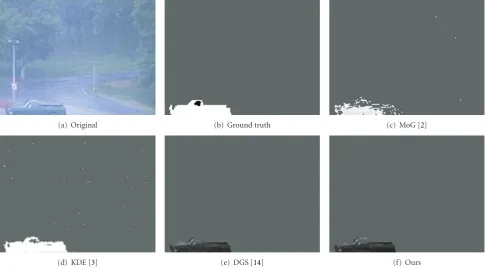
Figure8: Results on the sequence “Rain”.
4.2. Robust Dictionary Update. With the coefficient matrix Abeing updated and considered constant, we disregard the second term in (11) and updateD:
D=arg min
D
X−DA1. (14)
We assume that the atoms inDare independent from each other and thus update them each separately.
dk=arg min dk
X−dkαk1 fork=1,. . .,K, (15)
dik=arg min
di k
xi−di
kαk1 fori=1,. . .,N, k=1,. . .,K,
(16)
αk
j =arg min αk
j
xj−dkαkj1 for j=1,. . .,M, k=1,. . .,K,
(17)
where dk is kth atom ofD and αk is kth row (coefficients
corresponding todk) ofA. It is worth to mention that in (15),
we only extract the columns ofXwhose coefficients inαkare
above a small threshold. This is because the elements inαk
may not be exactly zero but close to, and the thresholding step retains those “related” samples rather than involves all of them. It significantly speeds up updating dk and avoids
from overfitting. Besides, we normalize the atomsdkso that
they have unit Euclidean norms, otherwise (15) may run into trivial solutions with arbitrary small values.
By further breaking each of (15) into a set of L1
-regression problems (16), we obtain a closed-form solution for each of them by employing the Iterative-Reweighted Least Square method [20, 21]. While this strategy works well, we find that the convergence of solving (15) requires fewer iterations if we involve (17) at the same time, which updates the coefficientsαk. In summary, we iterate between (16) and
(17) until the convergence ondkis reached.
Figure 5(h)illustrates an updated dictionary atom, with some of the involved samples shown in Figures5(a)–5(c)and detected outliers inFigure 5(e)–5(g). For comparison with conventional learning techniques, we show the updated atom using K-SVD [15] in Figure 5(d). As can be observed, K-SVD produces inaccurate dictionary atom (ghosting effect) at regions where outliers (foreground vehicles) are present, while our method generates a correct update completely free from outliers.
5. Experimentation
To test the performance of the proposed method in handling above-mentioned background changes, in this section, we conduct two experiments: one is on the background config-uration changes which are local and sudden, the other is on the nonstructured and high frequency changes.
(a) Original (b) Ground truth (c) MoG [2]
(d) Monnet’s [4] (e) DGS [14] (f) Ours
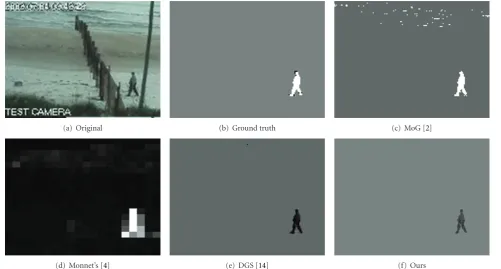
Figure9: Results on the sequence “Ocean”.
of change has not been addressed in existing works, we do not have a public dataset to experiment on. Therefore, we collect some video clips on Youtube [22] to make the data. The video of size 120×160 is shot by a surveillance camera set at a railway crossing. The traffic lights take on three different statuses: on-off, off-on, and off-off.
To model the background, we extract totally 38 frames (containing foreground vehicles) at a constant interval to form the training set. These frames cover all the three traffic light statuses. We randomly select K = 15 of them to initialize a dictionary, and then update the dictionary by dictionary learning techniques, such as K-SVD as well as ours. The parameters are set to be iteration numberJ = 5 and λ = 3. Notice that, while still using the name K-SVD throughout this paper, we replace theL0-norm byL1-norm
for fair comparison. For foreground object detection, we implement both methods on the remaining part of the video. In addition, we implement the method of Dynamic Group Sparsity (DGS) [14] and Mixture of Gaussians (MOG) [2] with provided source codes.
To measure the segmentation results quantitatively, we manually labeled the ground-truth masks on 10 representa-tive frames of each sequence. As shown inFigure 6(f), white pixels indicate foreground objects, and gray ones indicate the background. Since there are ambiguous pixels, for example, on shadows or blurred edges, we label them as black and disregard them in the calculation of segmentation error. The qualitative and quantitative comparisons are given in Figure 6 and Table 1, respectively. The numbers in Table 1 indicate the permillage of misclassified pixels over the total number pixels of the frames.
Table1: Quantitative comparisons on data collected from [22].
MOG [2] DGS [14] K-SVD [15] Ours
False negative 1.45‰ 0.0‰ 2.45‰ 0.46‰
False positive 8.23‰ 21.3‰ 38.49‰ 2.14‰
Total error 9.67‰ 21.3‰ 40.94‰ 2.60‰
As can be observed, our method performs consistently better than existing BGS methods MOG [2] and DGS [14] when the traffic light switches in the background. For both MOG and DGS methods, the pixels are misclassified as foreground objects. It is worth to mention that, although the method DGS also assumes sparse representation of the back-ground and group sparse of the foreback-ground, it still fails to model the traffic lights because it does not successfully build a dictionary to describe these background configurations. And since a frame mostly resembles its immediate previous neighbors, their online dictionary update boils down to an extended frame-differencing approach in a certain sense. Thus the pixel changes caused by background switching are persistently regarded as foreground objects in their method. Besides, its exhaustive searching strategy for the proper amount of foreground pixels is computationally inefficient especially for large-sized foreground objects.
(a) Original (b) Ground truth (c) MoG[2]
(d) Robust Kalman[5] (e) DGS [14] (f) Ours
Figure10: Results on the sequence “Water”.
Algorithm:Robust Dictionary Learning
Parameters:J(no. of iterations),K(number of dictionary atoms),λ(Lagrange multiplier)
Initialization:InitializeDbyKrandomly selected samples
Loop:RepeatJtimes (i)Robust Sparse Coding:
FixD, and compute coefficient vectorαmfor each samplexmby solving(11)
(ii)Robust Dictionary Update:
Fix allαm, and for each dictionary atomdk .,k∈1, 2,. . .,K,
(a) Select the set of samples relevant to the atom via thresholdingαk
(b) Updatedkby iterating between (16) and (17) until convergence:
Output:
Optimized dictionaryD
Algorithm1: Description of proposed robust dictionary learning algorithm.
the dictionary atoms learned by K-SVD is corrupted at the places where outliers (foreground vehicles) are present. In comparison, our method can reliably detect and prune out the outliers as long as they are not dominant, that is, they do not persistently appear at the colocation of all the training frames.
5.2. Nonstructured High-frequency Changes. In practice, besides local and sudden background changes, there can be high-frequency changes caused by rain, tree shaking, or water waves especially for outdoor surveillance. These changes are different in nature from those caused by appearance of foreground objects, since they are much less structured. In this experiment, we perform foreground segmentation on the dataset [5] and compare its performance with [2–5,14]. The parameters for our method are exactly the same with those used in Section 5.1. The results produced by other
Table2: Quantitative comparisons on dataset [5].
Ocean Rain Water
FN FP Total FN FP Total FN FP Total
Ours 0.73 0.21 0.94 2.91 2.13 5.04 5.88 0.16 6.04 DGS 0.10 1.61 1.71 1.93 2.86 4.79 5.31 0.10 5.41
MOG 0.26 4.32 4.58 12.7 2.39 15.09 2.92 15.9 18.82
KDE 0.10 8.85 8.95
KAL 15.1 0.05 15.15
methods are directly drawn fromhttp://paul.rutgers.edu/∼
jzhuang/. The comparison is shown in Figures8,9, and10 andTable 2.
high-frequency background changes. It performs compar-atively well as DGS [14], since the background has only one configuration for each sequence, and both DGS and our method can correctly model it. The main difference is that DGS is based on L0-norm, while ours on L1-norm.
As mentioned in Section 5.1, our method does not involve either manually setting or exhaustively searching the proper size of foreground objects, which is practically convenient.
5.3. Discussions. While the proposed algorithm works well in background subtraction, there is a need hereby to review the key assumptions and some requirements for its successful application.
(a) The Background can be Represented as a Linear Combi-nation of Basis Vectors (Dictionary Atoms). This constraint applies to scenarios that, as discussed in Section 3, the background undergoes global illumination variation or local sudden changes which have a limited number of configura-tions. It cannot work if the background changes cannot be modeled likewise. For example, when the video is captured by a moving hand-held camera, the movement of the scene makes the linear representation assumption violated.
(b) The Foreground should Cover Minority Pixels of a Frame.
Our algorithm requires the foreground to be sparse so as to perfectly recover it. This constraint guarantees theoretic equivalence between L0-norm and L1-norm. However, we
find it can be relaxed in practice. In both the background modeling step and the foreground detection step, we find the algorithm successfully detects foreground pixels and builds a correct dictionary as long as the outliers are not dominant. It seems that foreground pixels can be segmented even if it covers almost the whole frame. The empirical evidence is as similar as that reported in [17]. Notice that, even when the constraint is not perfectly satisfied,L1-norm still enjoys the
benefits mentioned inSection 3.2.
(c) Background Changes, Except those which can be Modeled as Linear Combination of Dictionary Atoms, should be at High-Frequency and Less Structured than Foreground Objects.
When this constraint is met, we can employ 4-connected, 8-connected, or more sophisticated model to successfully discover the foreground objects from a sparse candidate frame.
6. Conclusion
In this paper, we proposed a learning-based method for BGS. The method exploits a novel robust dictionary learning approach for background modeling, and segments fore-ground objects by optimizing an L1-measured and L1
-regularized problem. We tested the performance of the method in qualitative and quantitative comparison with existing methods. It outperforms these methods in ground modeling and foreground detection when the back-ground exhibits sudden and local changes as well as high-frequency changes.
The proposed robust dictionary learning method can also be applied to solving other problems, for example, motion segmentation [23,24] where outliers are essentially problematic. It removes the outliers during the learning stage and generates a clean dictionary for sparse representation.
Acknowledgments
This work is supported by the General Research Fund spon-sored by the Research Grants Council of Hong Kong (Ref. no. CUHK417110), National Natural Science Foundation of China (61005057), and Shenzhen Basic Research Program for Distinguished Young Scholar (JC201005270350A).
References
[1] N. Friedman and S. Russell, “Image segmentation in video sequences: a probabilistic approach,” inProceedings of the 13th Conference on Uncertainty in Artificial Intelligence (UAI ’97), August 1997.
[2] C. Stauffer and W. E. L. Grimson, “Adaptive background mixture models for real-time tracking,” inProceedings of the IEEE Computer Society Conference on Computer Vision and Pattern Recognition (CVPR’99), pp. 246–252, June 1999. [3] A. M. Elgammal, D. Harwood, and L. S. Davis,
“Non-parametric model for background subtraction,” inProceedings of the 6th European Conference on Computer Vision (ECCV ’00), pp. 751–767, 2000.
[4] A. Monnet, A. Mittal, N. Paragios, and V. Ramesh, “Back-ground modeling and subtraction of dynamic scenes,” in Pro-ceedings of the 9th IEEE International Conference on Computer Vision (ICCV ’03), pp. 1305–1312, October 2003.
[5] J. Zhong and S. Sclaroff, “Segmenting foreground objects from a dynamic textured background via a robust Kalman filter,” in Proceedings of the 9th IEEE International Conference on Computer Vision (ICCV ’03), pp. 44–50, October 2003. [6] N. M. Oliver, B. Rosario, and A. P. Pentland, “A Bayesian
computer vision system for modeling human interactions,”
IEEE Transactions on Pattern Analysis and Machine Intelligence, vol. 22, no. 8, pp. 831–843, 2000.
[7] A. Mittal, A. Monnet, and N. Paragios, “Scene modeling and change detection in dynamic scenes: a subspace approach,”
Computer Vision and Image Understanding, vol. 113, no. 1, pp. 63–79, 2009.
[8] F. de la Torre and M. J. Black, “A framework for robust subspace learning,”International Journal of Computer Vision, vol. 54, no. 1-3, pp. 117–142, 2003.
[9] Q. Ke and T. Kanade, “Robust L1 Norm factorization in the presence of outliers and missing data by alternative convex programming,” in Proceedings of IEEE Computer Society Conference on Computer Vision and Patter Recognition (CVPR), vol. 1, pp. 739–746, 2005.
[10] J. Wright, A. Ganesh, S. Rao, and Y. Ma, “Robust principal component analysis?” in Proceedings of the Conference on Neural Information Processing Systems (NIPS ’09), Whistler, Canada, December 2009.
[11] E. J. Cand`es and M. B. Wakin, “An introduction to compressive sampling,”IEEE Signal Processing Magazine, vol. 25, no. 2, pp. 21–30, 2008.
Conference on Computer Vision (ECCV ’08), vol. 5303 of
Lecture Notes in Computer Science, pp. 155–168, 2008. [13] V. Cevher, M. F. Duarte, C. Hegde, and R. G. Baraniuk, “Sparse
signal recovery using Markov random fields,” inProceedings of the 22nd Annual Conference on Neural Information Processing Systems (NIPS ’08), pp. 257–264, Vancouver, Canada, Decem-ber 2008.
[14] J. Huang, X. Huang, and D. Metaxas, “Learning with dynamic group sparsity,” inProceedings of the 12th International Confer-ence on Computer Vision (ICCV ’09), pp. 64–71, October 2009. [15] M. Aharon, M. Elad, and A. Bruckstein, “K-SVD: an algorithm for designing overcomplete dictionaries for sparse representa-tion,”IEEE Transactions on Signal Processing, vol. 54, no. 11, pp. 4311–4322, 2006.
[16] J. Mairal, F. Bach, J. Ponce, and G. Sapiro, “Online learning for matrix factorization and sparse coding,”Journal of Machine Learning Reseach, vol. 11, pp. 19–60, 2010.
[17] J. Wright, A. Y. Yang, A. Ganesh, S. S. Sastry, and Y. Ma, “Robust face recognition via sparse representation,” IEEE Transactions on Pattern Analysis and Machine Intelligence, vol. 31, no. 2, pp. 210–227, 2009.
[18] E. J. Candes and T. Tao, “Decoding by linear programming,”
IEEE Transactions on Information Theory, vol. 51, no. 12, pp. 4203–4215, 2005.
[19] R. Rubinstein, A. M. Bruckstein, and M. Elad, “Dictionaries for sparse representation modeling,”Proceedings of the IEEE, vol. 98, no. 6, pp. 1045–1057, 2010.
[20] K. R. Gabriel and S. Zamir, “Lower rank approximation of matrices by least squares with any choice of weights,”
Technometrics, vol. 21, no. 4, pp. 489–498, 1979.
[21] G. James, Matrix Algebra, 6.8.1 Solutions That Minimize Other Norms of the Residuals, Springer, New York, NY, USA, 2007.
[22] http://www.youtube.com/.
[23] S. Rao, R. Tron, R. Vidal, and Y. Ma, “Motion segmentation in the presence of outlying, incomplete, or corrupted trajec-tories,” IEEE Transactions on Pattern Analysis and Machine Intelligence, vol. 32, no. 10, pp. 1832–1845, 2010.

![Figure 7: Comparison of a few representative atoms from the dictionary learned by: (top) K-SVD [15] and (bottom) our RDL method.](https://thumb-us.123doks.com/thumbv2/123dok_us/901752.1587785/7.600.59.543.72.308/figure-comparison-representative-atoms-dictionary-learned-svd-method.webp)