Original Research Article.
376 |P a g e Int J Med Res Prof.2018 Jan; 4(1); 376-82. www.ijmrp.com
Awareness of the Benefits, Hazards and Protection from Different Types of
Medical Radiation among Population in Riyadh, Saudi Arabia 2017
Bashayer Ali Mureh
1*, Asma Mushabab Alahmari
1, Musaab Saad Alsaad
2, Muneera Fahad Albuthi
3,
Mereehan Faisal Alqurashi
4, Faisal Khaled Almugrin
2, Raghad Waheed Mallesho
5, Abdulaziz Eyad
Alqudaimi
5, Maha Hamed Rabea Altowairqi
6, Saleh Abdullah H Alhazmy
71Medical Intern, Almaarefa Collages, Riyadh, Kingdom of Saudi Arabia. 2Medical Students (6th year), Prince Sattam University, Al Kharj Saudi Arabia.
3Medical Intern, King Saud for health and Sciences University, Riyadh, Kingdom of Saudi Arabia. 4Medical Intern, Taif Unversity, Taif, Saudi Arabia.
5Medical Student (5th year), Dar Al Uloom University, Al Falah, Saudi Arabia. 6Medical Intern, Taibah University, Tayba, Medina, Saudi Arabia.
7Medical Intern, Najran University, Najran Saudi Arabia.
ABSTRACT
Objectives: To assess the knowledge and awareness among Saudi radiology personnel regarding radiation protection and radiological examination doses.
Methods: The study consisted of a questionnaire survey. The questionnaire consisted of three sections. The first section regarding personal characteristics, while the second section included the questions regarding assessing knowledge and awareness towards radiation protection, and potential damage due to radiation exposure, and third section included questions regarding the assessing knowledge and awareness towards radiological examination doses. The study group included a total of 103 radiology personnel of several health facilities in the Kingdom of Saudi Arabia.
Results: (71.8%) attended the radiation protection course. 84.5 % responders thought that it is necessary to use film-badge for radiographers during practice. 62% thought that X-ray radiation doses used for diagnostic imaging examinations might increase the risk of patients developing cancer in future. Only 27.2% knew that younger children are more susceptible to radiation risk. 80.6% knew that breast is more susceptible to ionizing radiation damage.
Conclusion: There was a good level of knowledge and awareness about radiation impacts and protection among Saudi radiology personnel. But there was inadequate knowledge and awareness about radiation doses required for various radiological procedures. There is a requisite need for radiographers to improve their knowledge of radiological examination doses.
Keywords: Diagnostic, Radiation, Knowledge.
*Correspondence to:
Bashayer Ali Mureh,
Medical Intern, Almaarefa Collages, Riyadh, Kingdom of Saudi Arabia.
Article History:
Received: 17-12-2017, Revised: 03-01-2018, Accepted: 28-01-2018
Access this article online Website:
www.ijmrp.com
Quick Response code
DOI:
10.21276/ijmrp.2018.4.1.079
INTRODUCTION
In medical practice nowadays, Diagnostic radiology plays a great and important role by using both ionizing and non-ionizing radiation.1 Non- ionizing radiations are both known to be safe and
not accompanied with health risks or side effects. On the other hand, Ionizing radiations are harmful and have many health risks. Exposure to ionizing radiation may have deterministic and debatable health effects, which include skin changes, chromosomal aberrations, cataracts and carcinomas.2 Usually the
mean period is five years between radiation exposure and diagnosing cancer, in most cases it could extend to one or two decades. International commission on radiological protection (RP) recommends for radiation protection standards to be applied for
both public and radiation workers. Radiation protection stresses the safe and desirable use of ionizing radiation and its use for diagnostic procedures to be in low doses yet achievable.1 The patient’s brief clinical history can help a lot in the decision of the
appropriateness and dose of ionizing radiation in the procedure which is referred to as justification. The risk of triggering biological changes depends on the dose of radiation the patient's exposed to and increases as the dose increases, raising up the lifetime risk of cancer.1 Adequate understanding of the effects of occupational
radiation exposure and safety practices among intervention radiologists are essential.4 Moreover, it is obligatory that health
informed about the hazards associated with using this modality and trained on it, so they can protect themselves better.2
According to a study conducted by Suliman Salih et al in the year 2014, there was inadequate knowledge and awareness on radiation, 98% had low scores on all items regarding all aspects of radiation hazards.
Weak evidence was found between awareness on radiation hazards and gender in all aspects of radiation hazards with higher
mean rank among females (p ≤0.05)5 As per Hamarsheh A et al
(2012), only one third physicians had received radiation protection course during graduation.6 As per a study conducted by Lee CI in
the year 2004, Seven percent of patients reported that they were told about risks and benefits of their CT scan, while 22% of ED physicians reported that they had provided such information.7
Potential health benefits should always outweigh the risks for the radiological procedures to be ordered.2 Many patients are
convinced that imaging is a definitive diagnostic and therapeutic tool.3 However, radiological imaging procedures do not provide
any relief and are not considered a treatment. Our aim in this study is to establish the level of awareness among the population about benefits, risks and hazards of exposure to radiations in Riyadh.
Table: Metaanalysis of various studies Conclusion
Year Authors
98% of the participants had low knowledge about radiation hazards. Weak evidence was found between awareness on radiation hazards and gender in all aspects of radiation hazards with higher
mean rank among females (p ≤0.05)
2014 Suliman Salih et al 1
Only one-third of physicians had received a radiation protection course during their graduation. There were only few physicians who were able to answer correctly many scientific, knowledge-based questions.
2012 Hamarsheh A et al 2
They found significant lack of knowledge and awareness and this could lead to suboptimal risk estimation of radiation hazards.
2015 Ramanathan S wt al
3
Most of the patients and most ED physicians and radiologists were not able to accurately estimate the dose for one CT scan compared with that for one chest radiograph
2010 CL lee et al
4
Participant’s level of knowledge about ionizing radiation and doses in radiological examinations were
found to be very weak. The number of correct answers of physicians, nurses, medical technicians and other personnel groups were 15.7±3.7, 13.0±4.0, 10.1±2.9 and 11.8±4.0, respectively.
2004 A Yurt et al
5
There was lack of knowledge about ionising radiation amongst basic surgical trainees. It should be provided on local and national level.
2010 FR Khan et al
6
The knowledge about radiation hazards improved with advancing years amongst medical graduates. 2010
J O’Sullivan
7
There were more than 70% of participants underestimated the radiation dose of CT relative to chest radiography, and cancer risk comprehension was poor.
2011 BM Baumann et al 8
They found that neither length nor type of occupation showed significant impact on dose estimations. There were 14% of paediatricians stated that MRI causes radiation, whereas 4% correctly estimated the potential of paediatric CT-protocols. 15% were familiar with the ALARA principle and 26% were aware of a publication concerning radiation and malignancy
2010 CM Heyer et al
9
There was poor knowledge amongst medical doctors, including radiologists, towards radiation exposure of imaging and could lead to a tendency of radiation misuse and under-utilization of alternative radiation-free methods.
2010 CS Wong et al
10
Eighty-nine of the polled physicians wrongly estimated the contribution of nuclear and radiological tests in overall radiation exposure of average. Ninety-five physicians wrongly estimated the risk of fatal cancer associated with a stress myocardial perfusion scintigraphy.
2015 MJ Correia et al
11
Education significantly affected the radiation knowledge (P = 0.013). 60.7% and 32.7% were not aware of the radiation-free nature of MRI and USG, respectively. There were 45.4% and 43.5% of them in conception that Barium enema and Barium swallow studies do not involve radiation.
2013 HK Sin et al
12
The majority of the sample (97.1%) had been exposed to lectures or teaching in diagnostic radiology. On the other hand, about half of the sample, 53.3% considered that they had never been exposed to lectures or teaching focused on radiation protection.
2017 Abdulmoneam
Ahmad et al 13
Most subjects underwent X-rays (80%), MRI (30%), US (26%), CT (22%) and others (1%). Seventy-one% and 30% were aware of the radiation exposure involved in plain X-ray and CT scans, respectively. Furthermore, 32% and 17% were not aware of the free nature of MRI and US from radiation, respectively.
2016 Nizar Almaghrabi
14
To assess the knowledge of fourth-year medical students in ionizing radiation, and to study the effect of a 3-hour lecture in correcting their misconceptions. The average student score improved from 47-78% representing a gain of 31% in knowledge (p=0.01).
2011 SK Hagi et al
15
The findings of the study showed that there is a variation in the concept of radiation and its effects in the population that was surveyed. It was mostly 80% with the conviction that the concept of radiation is related directly to the medical diagnosis only.
2015 B. Z. Shakhreet et al
MATERIALS AND METHODS
The present questionnaire based survey was conducted in the department, Institute during a period of X years. The study consisted of 194 subjects who were the residents of Riyadh city.
The study was approved by the institute’s ethical board and all the
subjects were informed about the study and a written consent was obtained from all in their vernacular language. The questionnaire was prepared by the researcher with the help of specialists and experts in this field, and the questionnaire includes a part of questions on socio-demographic data as age, gender, educational
level, and work place. While the second section consisted of (14) questions related to measure the awareness of the benefits, hazards and protection from different types of medical radiation among population in Riyadh, Saudi Arabia. The statistical analysis program (SPSS v.22) was used in the study for data entry and analysis, with the use of necessary statistical methods to achieve the objectives of the study. Information was expressed in the form of frequencies and percentages. Chi square test was used for the analysis of data. Probability value of less than 0.05 was considered significant.
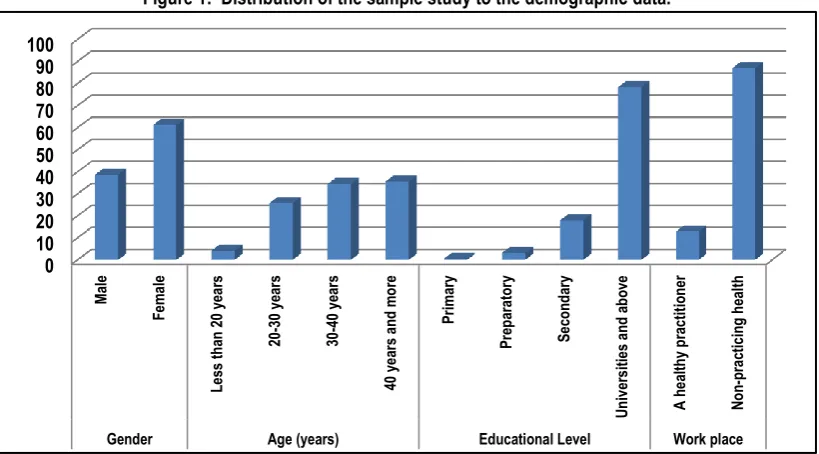
Figure 1: Distribution of the sample study to the demographic data.
Table 1: Participants’ distribution according to view on the uses of medical radiology
The answer N %
To diagnose diseases 69 35.6
To treat diseases 7 3.6
All of them 118 60.8
Used previously 174 89.7
Not used previously 20 10.3
Total 194 100.0
Figure 2: Participants’ knowledgeable with the devices and techniques used in radiography. 0
10 20 30 40 50 60 70 80 90 100
Ma
le
Fe
m
al
e
Le
ss
th
an
2
0
ye
ar
s
20
-3
0
ye
ar
s
30
-4
0
ye
ar
s
40
y
ea
rs
a
nd
m
or
e
Pr
ima
ry
Pr
ep
ar
at
or
y
Se
co
nd
ar
y
U
ni
ve
rs
iti
es
a
nd
a
bo
ve
A
h
ea
lth
y
pr
ac
tit
io
ne
r
N
on
-p
ra
ct
ic
in
g
he
al
th
Gender Age (years) Educational Level Work place
19% 17%
19% 17% 14%
15%
RESULTS
Figure 1 shows the distribution of subjects according to demographics. There were 61% of the participants females, while almost 39% of them were males. and their distribution according to their ages almost 36% of them were (40) years and more, almost 35% of them were between (30-40) years old, almost 26% of them were between (20-30) years old, and almost 4% of them were less than (20) years. And their distribution according to educational level, almost 78% of them were universities and above, almost 18% of them were secondary, almost 3% of them were preparatory, and almost 1% of them were primary. And their distribution according to work place, almost 87% of them were Non-practicing health, while almost 13% of them were a healthy practitioner.
Table 1 shows the distribution according to their point of view on the uses of medical radiology and whether they have used of not.
The following table shows the participants’ distribution according
to their point of view on the uses of medical radiology, where we note that almost 36% of them believe that medical rays are used to diagnose diseases, while almost 4% believe they are used to treat diseases, and almost 61% of them believe that medical rays is used to diagnose and treat diseases. The vast majority of them, about 90% have already used radiation imaging techniques, while only 10% didn't use radiation imaging techniques.
Figure 2 shows the participants’ knowledgeable with the devices
and techniques used in radiography. The most important techniques of radiographic imaging are magnetic resonance imaging, x-ray, ultrasound, Radiation therapy, Mammography. Radiation therapy was known by 15% of the subjects. Mammography and Ultrasound were known by 14% and 17% of the subjects. There were 19% subjects who had knowledge about X ray and MRI.
Table 2 shows the participants’ distribution according to hearing
about the damage of medical radiation, where we note that the vast majority of whom almost 91% have heard about the damage of medical radiation (42% of them heard about through health workers; 18 % through social media, 15 % through TV /
newspapers and magazines, 10% from parents and relatives; and 15% by other means), while only 9% had never heard of radiation damage.
Table 3 shows the participants’ distribution according to their
belief that the risk and radiation effect are equal regardless of the source and the device used. Almost 54% of them do not believe this, while almost 9% believe that and almost 37% of the
participants’ don't know it. There were almost 53% of them believe
that medical radiation causes cancer, while almost 24% of them believe that medical radiation causes mutation and birth defects, almost 8% believe they cause infertility, almost 2% believe they cause hair loss, and almost 13% believe other risks.
Table 4 shows the participants’ distribution according to their
belief the risk of medical radiation on pregnancy, where we note that almost 92% of them believe that medical radiation risk to pregnancy, while only 1% do not believe that medical radiation risk to the pregnancy, and almost 8% have no knowledge of it. There were almost 29% of them hold that MRI may prevent the use of patients with a metal heart valve, while almost 25% believe that MRI may prevent the use of patients with pacemakers, and almost 31% don't know.
Figure 3 shows the view of the participants on the type of radiation that affects the pregnancy, where we note that the most important medical rays affect the pregnancy: X-rays, MRI, and CT. There were 17% and 10% participants who were aware about mammography and Ultrasound and its effects on pregnancy. There were 28% and 21% participants who were aware about the radiation induced damage of X ray and CT scan respectively.
Table 5 shows the participants’ distribution according to their
consent to work (or any of their relatives) in the field of radiology and distribution according to their knowledge of the techniques or methods of protection from medical radiation, where we note that almost 55% of them will not agree to work (or any relatives) in the field of radiation, while almost 45% will agree to work in Radiology. There were 51% of them have knowledge of techniques and methods of protection from medical radiation, while 49% of them don't know it.
Table 2: Shows the participants’ distribution according to hearing about the damage of medical radiation.
The answer N % N %
Yes 176 90.7 Parents and relatives 18 10.2
Health worker: Doctor, nurse ... 74 42.0
Social media: Twitter, Snape, Instagram. 31 17.6
TV / newspapers and magazines 27 15.3
Other 26 14.8
No 18 9.3
Total 194 100.0
Table 3: Participants’ distribution according to their belief that the risk and radiation effect are equal regardless of the source and the device used and their view on the risk of exposure to medical radiation.
The answer N %
Yes 18 9.3
No 105 54.1
Don't know 71 36.6
Cancer caused 103 53.1
Infertility caused 16 8.2
Cause mutation and birth defects 47 24.2
Hair loss 3 1.5
Table 4: Participants’ distribution according to their belief the risk of medical radiation on pregnancy and cases where MRI should not be used.
The answer N %
Pregnancy risk
Yes 178 91.8
No 1 .5
Don't know 15 7.7
MRI contraindication cases
A patient has a pacemaker 49 25.3
A patient has a metal heart valve 57 29.4
A patient has implanted a cochlea 10 5.2
Who has a severe phobia of indoor 9 4.6
Gunshot wound 8 4.1
Don't know 61 31.4
Figure 3: View of the participants on the type of radiation that affects the pregnancy.
Table 5: Participants’ distribution according to their consent to work (or any of their relatives) in the field of radiology and distribution according to their knowledge
of the techniques or methods of protection from medical radiation.
THE ANSWER N %
CONSENT TO WORK
Yes 88 45.4
No 106 54.6
KNOWLEDGE ABOUT RADIATION PROTECTION
Yes 99 51.0
Figure 4: Most important methods known by participants’ to protect against medical radiation. 28% 21%
24% 10%
17%
X-ray CT MRI Ultrasound / Sonar Mammography
16.20% 2%
3%
62.60% 13.10%
3%
Figure 4 shows the most important methods known by
participants’ to protect against medical radiation, where we note
that the most important methods are to cover the sensitive parts of the body by lead, and not enter the examination room, and wear a thick cloth. There were 62.60% subjects who covered the sensitive parts of the body. There were 2% subjects who preferred
Xrays in small doses. Approximately 16.20% subjects didn’t enter
the examination room. There were 13.10% subjects who wore thick clothes.
DISCUSSION
Radiology plays a prominent role in modern medicine. Many of the diagnostic and interventional radiology procedures involve exposure to ionising radiation. Although overall the benefits of imaging outweigh the associated risks of radiation, there is growing concern over the adverse biological effects of ionising radiation on living organisms.8 Most of the literature about
radiation awareness level was conducted among radiologists or medical staff, whereas information from population is scarce. Therefore this study conducted to identify the awareness of the benefits, hazards and protection from different types of medical radiation among population in Riyadh, Saudi Arabia.
The present stud included 194 participants, their demographic results showed that the majority of them aged between 20 and 40 years old, also majority of the participants were females, 78.4% had university level of education or higher. Our participants showed moderate level of awareness towards the benefits, hazards of different types of medical radiation. While, Almaghrabi found poor awareness about Radiation is among the general population of Makkah, Saudi Arabia.9And Almataredet al.found
low awareness among patients about the risks associated with Ionizing Radiation.10 Also, A study conducted in Jordanian
hospitals found low general knowledge of radiation risks.11 The
difference in findings between our study and these studies could be because the most of our participants had university education level or higher.
Medical radiation used increasingly during the past decades for treating and diagnosing various medical conditions.12The vast
majority of participants at the current study, about 90% have already used radiation imaging techniques before. And 60.8% knew that medical radiation is using for both of treating and diagnosing diseases. While, Shakhreet et al. found at their study in population in the Middle East that 80% thought that radiation is directly related to the medical diagnosis only.13 Medical radiation
for diagnostic purposes is divided into two types: ionizing radiation through various techniques such as X-ray, Mammography and CT Scan7; and non-ionizing radiation through
various techniques such as magnetic resonance imaging (MRI) and Ultrasound.14 Among these techniques X-ray and MRI were
the most common techniques that participants have already heard by 19%, followed by CT and Ultrasound by 17%, and then Radiation therapy, Mammography by 15% and 14% respectively. Regarding the damage resulting from medical radiation, a large proportion of participants of this study have heard about this type of damage. Almost half of them heard about it through health workers, this is a good thing that shows the interest of health workers in educating citizens about various health issues. But our finding here unlike Ricketts et al. whose found that radiation risk was not explained to 91% of patients.15It was suggested that
educate patients and informed consent could be a useful aid to decrease patient anxiety towards imaging.16 However, the benefits
of imaging outweigh the associated risks of radiation generally.9
More than half of our participants 53.1% reported that exposure to medical radiation could cause cancer. While, Almataredrt al.10
reported that more than half of their participants did not know that radiological tests can cause cancer as compared to the quarter that believes they can Also, (77.2%) were unaware that diagnostic imaging tests increase their likelihood of cancer.17 Almost 0·6% of
the accumulative risk of cancer to age 75 years could be resulting from diagnostic X-rays in UK. This proportion is equivalent to about 700 cases of cancer yearly while in in Japan 3% of the accumulative risk of cancer could be resulting from diagnostic X-rays.1
Almost 92% of our participants believe that medical radiation risk to pregnancy. In most diagnostic procedures, prenatal radiation doses that are performed correctly do not pose a risk of prenatal death, deformity or impairment of mental growing over the background incidence of these entities. But high doses like those involved in therapeutic procedures, can lead to significant fetal harm.18 Most of participants in this study believe that use of MRI
may prevent for some patients. But about a third of the participants did not know which types of patients were forbidden of using MRI. Radiologists are well trained about MRI appropriateness criteria but they require support from referring physicians to estimate the risks and benefits of MR imaging procedures . This is particularly important in high-risk patients and in patients with new implants that have not yet been tested for MRI compatibility.19 With regard to medical radiation protection,
the participants showed a low level of knowledge on this aspect. Whereas about half of them reported that they don’t know the
techniques or methods of protection from medical radiation. These results confirm the need for public education on ways to prevent the risk of medical radiation to increase the patient's satisfaction to conduct such an examination and to reduce the risks that the patients could face. There is a need to conduct more studies on the same issue, covering larger parts of the kingdom and involving more participants to be more representative. Conducting workshops and awareness campaigns on the dangers of medical radiation and how to avoid them is the need of the hour. Raising awareness about ways of medical radiation protection among patients in medical centres should be promoted.
CONCLUSION
This study demonstrated that there was a moderate level of awareness towards the benefits, hazards of different types of medical radiation among Saudi society. But, there was low level of knowledge about medical radiation protection among Saudi society.
REFERENCES
1. Adel Al-Mallah, Asokan G. Vaithinathan, Mahdi Al-Sehlawi,and Mariam Al-Mannai. Awareness and Knowledge of Ionizing Radiation Risks Between Prescribed and Self-Presenting Patients for Common Diagnostic Radiological Procedures in Bahrain.Oman Med J. 2017 Sep; 32(5): 371–377
3. Fartum AR, Gjertsen J-E, Larsen JL. [Patients' knowledge of the effects of X-rays].Tidsskrift for den Norskelaegeforening: tidsskrift for praktiskmedicin, nyraekke. 2000;120(28):3427-3428. 4. Zhou G, Wong D, Nguyen L, Mendelson R. Student and intern awareness of ionising radiation exposure from common diagnostic imaging procedures. Journal of medical imaging and radiation oncology.2010;54(1):17-23.
5. Salih S, Alzalabani A, Yousef M, Albadrani MS, Zeidan ZA. Awareness and knowledge towards ionizing radiation hazard among medical students, interns and residents in Madinah Al-Munawarah, KSA.
6. Hamarsheh A, Ahmead M. Assessment of physicians' knowledge and awareness about the hazards of radiological examinations on the health of their patients.
7. Lee CI, Haims AH, Monico EP, Brink JA, Forman HP. Diagnostic CT scans: assessment of patient, physician, and radiologist awareness of radiation dose and possible risks. Radiology. 2004 May;231(2):393-8.
8.Ramanathan, Subramaniyan, and John Ryan. "Radiation awareness among radiology residents, technologists, fellows and staff: where do we stand?." Insights into imaging6.1(2015):133-39. 9.Almaghrabi, Nizar. "A cross-sectional study of knowledge and awareness of radiation exposure risk in Makkah, Saudi Arabia." American Journal of Research Communication 4.10 (2016):67-75. 10.Almatared, ManaGoblan, et al. "Knowledge and Attitude towards Ionizing Radiation among Patients Attending the King Khalid Hospital Najran, Saudi Arabia." Journal of Biosciences and Medicines 5.10 (2017): 75.
11.Alhasan, Mustafa, et al. "Medical Radiation Knowledge among Patients in Local Hospitals." Journal of Medical Imaging and Radiation Sciences 46.1 (2015): 45-49.
12.Elnari, Meftah Ali, J. A. Noor, and YuyunYueniwati. "Assessment the Awareness and Knowledge Level about Radiation Protection: An Empirical Study on the Radiology Professionals of the Radiology Departments, East Java Indonesia." Assessment5.9 (2016): 34-40.
13.Shakhreet, B. Z., et al. "An Evaluation for a Population in the Middle East for General Awareness of the Benefits and Hazards of Different Types of Radiation."
14.Al-Mallah, Adel, et al. "Awareness and Knowledge of Ionizing Radiation Risks Between Prescribed and Self-Presenting Patients for Common Diagnostic Radiological Procedures in Bahrain." Oman medical journal 32.5 (2017): 371.
15.Ricketts, Michelle L., et al. "Perception of radiation exposure and risk among patients, medical students, and referring physicians at a tertiary care community hospital." Canadian Association of Radiologists Journal 64.3 (2013): 208-212. 16. Goske, Marilyn J., and Dorothy Bulas. "Improving health literacy: informed decision-making rather than informed consent for CT scans in children." Pediatric radiology 39.9 (2009): 901-03. 17. de Gonzalez, Amy Berrington, and Sarah Darby. "Risk of cancer from diagnostic X-rays: estimates for the UK and 14 other countries." The lancet 363.9406 (2004): 345-351.
18. Valentin, Jack. Pregnancy and medical radiation. Elsevier, 2000.
19. Sammet, Steffen. "Magnetic resonance safety." Abdominal Radiology 41.3 (2016): 444-451.
[
Source of Support: Nil. Conflict of Interest: None Declared.
Copyright: © the author(s) and publisher. IJMRP is an official publication of Ibn Sina Academy of Medieval Medicine & Sciences, registered in 2001 under Indian Trusts Act, 1882. This is an open access article distributed under the terms of the Creative Commons Attribution Non-commercial License, which permits unrestricted non-commercial use, distribution, and reproduction in any medium, provided the original work is properly cited.
Cite this article as: Bashayer Ali Mureh, Asma Mushabab Alahmari, Musaab Saad Alsaad, Muneera Fahad Albuthi, Mereehan Faisal Alqurashi, Faisal Khaled Almugrin, Raghad Waheed Mallesho, Abdulaziz Eyad Alqudaimi, Maha Hamed Rabea Altowairqi, Saleh Abdullah H Alhazmy. Awareness of the Benefits, Hazards and Protection from Different Types of Medical Radiation among Population in Riyadh, Saudi Arabia 2017. Int J Med Res Prof. 2018 Jan; 4(1):376-82.