PRIVACY PRESERVING ACCESS CONTROL FOR
RELATIONAL DATA WITH
ACCURACY-CONSTRAINED
Poonam B. Bhoite
1, B. D. Jitkar
2, Ms.Punashri M.Patil
3 1P.G Student, D.Y. Patil College of Engg and Technology, Kolhapur, Maharashtra,(India)
2
Asso. Prof . D.Y. Patil College of Engg and Technology, Kolhapur, Maharashtra, (India)
3
Asst. Prof. DMGI, Kolhapur
, Maharashtra, (India)
ABSTRACT
Each record with information on an individual unit like a patient or an organization called microdata. An Access control mechanism (ACM) protects the sensitive information from unauthorized users. However, when
sensitive information is shared and a Privacy Protection Mechanism (PPM) is not there, an authorized user can
still compromise the privacy of a person leading to identity and attribute disclosure. A PPM uses suppression
and generalization techniques to anonymize and satisfy privacy requirements, e.g., k-anonymity, l-diversity and
v-diversity against identity and attribute disclosure. The access control policies define selection predicates
available to roles while the privacy requirement is to satisfy the k-anonymity or l-diversity or v-diversity.
Imprecision bound constraint is assigned for each selection predicate.The privacy preserving accuracy
constrained access control framework addresses the problem of satisfying the accuracy constraints for multiple
roles.
Keywords: Access control, Privacy, k-anonymity, l-diversity, v-diversity, Imprecision Bound.
I. INTRODUCTION
Various organizations (e.g., Hospital, industries and government organizations etc) releasing person specific data, which is called as microdata. It includes medical, voter registration, census, and customer data. Microdata are a valuable source of information for various purposes like scientific research, medical data, trend analysis and marketing purposes. For example Patient data are often shared for research and disease control purposes. Privacy is one of the biggest concerns in sharing patient data because without appropriate protection, personal information is open to misuse. It is very important to preserve the privacy of individual users while releasing a data set.
Access Control Mechanisms (ACM) are used to ensure that only authorized information is available to users. However, sensitive information
can still be misused by authorized users to compromise the privacy of consumers.
Though the released table gives useful information to researchers, it presents disclosure risk to the individuals whose data are in the table. Therefore, objective is to limit the disclosure risk to an acceptable level while maximizing the benefit. This is achieved by anonymizing the data before release.
In anonymization, uniquely identifying information like names and social security numbers are encrypted in the table. The sensitive information, even after set of attributes (like gender, date of birth, and zip code) that can be linked with external data to uniquely identify an individual. To avoid Re-identification by linking attack, the system has implemented privacy requirements techniques e.g. k-anonymity, l-diversity, v-diversity etc. which are collectively known as Privacy Protection Mechanism (PPM).
Anonymization algorithms use suppression and generalization of records to satisfy privacy requirements with minimal distortion of micro data. The anonymity techniques can be used with an access control mechanism to ensure both security and privacy of the sensitive information. The privacy is achieved at the cost of accuracy and imprecision.
Proposed system will use Privacy Protection Mechanisms and Access Control Mechanisms to prevent sensitive data against disclosure. It will protect the privacy of data.
II. RELATED WORK
Access control mechanisms for databases allow queries only on the authorized part of the database [8]. Predicate-based fine-grained access control has further been proposed, where user authorization is limited to pre-defined predicates. Enforcement of access control and privacy policies have been studied. However, the interaction between the access control mechanisms and the privacy protection mechanisms has not studied. Recently, Chaudhuri et al. have studied access control with privacy mechanisms. They use the definition of differential privacy [9] whereby random noise is added to original query results to satisfy privacy constraints. However, they have not considered the accuracy constraints for permissions. We define the privacy requirement in terms of k-anonymity, l-diversity and v-diversity.
The proposed privacy-preserving accuracy constrained access control framework allows the access control administrator to specify imprecision constraints that the privacy protection mechanism is required to meet along with the privacy requirements.
The challenges of privacy-aware access control are similar to the problem of workload-aware anonymization. The Workload-aware anonymization is first studied by LeFevre et al. [6]. They have proposed the Selection Mondrian algorithm, which is a modification to the greedy multidimensional partitioning algorithm Mondrian. In their algorithm, based on the given query-workload, the greedy splitting heuristic minimizes the sum of imprecision for all queries.
III. PROPOSED METHOD
In the proposed work, various organizations want to make public information about individuals. But it also wants to protect sensitive data such as disease, salary. Hence to protect this information following steps are necessary:-
3.1 Access control policy 3.2 Anonymity
3.3 Anonymization with imprecision Bounds
3.4 Privacy preserving Accuracy-Constrained access control 3.5 Heuristic for partitioning
3.1 Access Control Policy
The department of health in a state collects the emergency department data (age, gender, location, time of arrival, symptoms, etc.) from county hospitals daily. Generally, each daily update consists of a static instance that is classified into syndrome categories by the department of health. Then, the collected data is anonymized and shared with departments of health at each county.
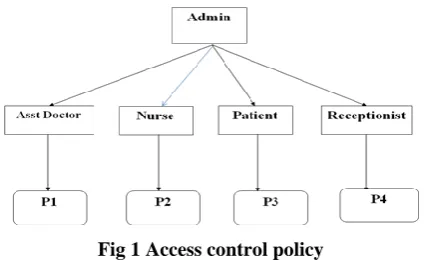
Fig 1 Access control policy
A Row level access control policy is given in Fig. 1 that allows the roles to access the tuples under the authorized predicate, e.g., Role Asst Doctor can access tuples under Permission P1.
Another access control policy is Cell Level Access Control, users are given attributes, and the data has attached access policy. Only users with valid set of attributes, satisfying the access policy, can access the data. For instance, certain records might be accessible by nurse or only non sensitive data by patient. A user has a set of attributes in addition to its unique ID. Admin has authority to allow attributes.
Background
Given a relation T = {A1,A2, . . . , An}, where Ai
is an attribute, T* is the anonymized version of the relation T. The attributes can be of the following types:
•Explicit Identifier. Attributes, e.g., name and social security numberthat can uniquely identify an individual.These attributes are encrypted by using Rijndael symmetric encryption algorithm from the anonymized relation.
• Quasi-Identifier (QI). Attributes, e.g., gender,
• Sensitive Attribute. Attributes, e.g., disease or salary, that if associated to a unique individual
will cause a privacy break.
3.1.1 Access Control For Relational Data
Access Control Mechanism protects the sensitive information from unauthorized users. The access control policies define selection predicates available to roles. In Cell level access control for relational data, only users with valid set of attributes, satisfying the access policy, can access the data. Admin has authority to allow attributes. [8]. Role-based Access Control (RBAC) allows defining permissions on objects based on roles in an organization.
3.2. Anonymity
Definition 1 (Equivalence Class (EC)). An equivalence class is a set of tuples having the same QI attribute values.
Definition 2 (k-anonymity Property). A table T* satisfies the k-anonymity property if each equivalence class has k or more tuples [2].
k-Anonymity is suffered by homogeneity attacks when the sensitive value for all the tuples in an equivalence class is the same. The l-diversity has been proposed to overcome the disadvantage of k-anonymity. It requires that each equivalence class of T* contain at least l distinct values of the sensitive attribute. For sensitive numeric attributes, an l-diverse equivalence class can still leak information if the numeric values are close to each other. For such cases, variance diversity has been proposed that requires the variance of each equivalence class to be greater than a given variance diversity parameter.
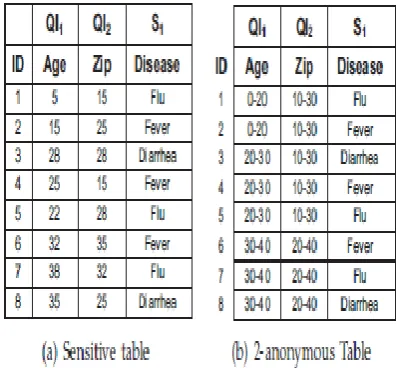
Fig 2. Generalization for k-anonymity and l-diversity
3.2.1. Predicate Evaluation and Imprecision
For query predicate evaluation over a table, say T, a tuple is included in the result if all the attribute values satisfy the query predicate. Here, we only consider conjunctive queries, where each query can be expressed as a d-dimensional hyper-rectangle. The semantics for query evaluation on an anonymized table T* needs to be defined. When the equivalence class partition is fully enclosed inside the query region, all tuples in the equivalence class are part of the query result. Uncertainty in query evaluation arises when a partition overlaps the query region but is not fully enclosed. In this case, there can be many possible semantics.
The following three choices:
Uniform. Assuming the uniform distribution of tuples in the overlapping partitions, include tuples
from all partitions according to the ratio of overlap between the query and the partition. Query evaluation under this option might undercount or over-count the query result depending upon the original distribution of tuples in the partition region. Most of the literature uses this uniform distribution semantics to compare anonymity techniques over selection tasks [17]. However, the choice of the sensitive attribute value for the selected tuples from an overlapping partition is not defined under uniform semantics. For access control, a tuple’s QI attribute
values along with the sensitive attribute value need to be returned.
Overlap. Include all tuples in all partitions that
overlap the query region. This option will add false positives to the original query result.
Enclosed. Discard all tuples in all partitions that
partially overlap the query region. This option will have false negatives with respect to the original query result. The imprecision under any query evaluation scheme is reduced if the number of tuples in the partitions that overlap the query region can be minimized.
Definition 3 (Query Imprecision). Query Imprecision is defined as the difference between the number of tuples returned by a query evaluated on an anonymized relation T* and the number of tuples for the same query on the original relation T. The imprecision for query Qi is denoted by impQi ,
.
3.3 Anonymization With Imprecision Bounds
Definition 4 (Query Imprecision Bound). The query imprecision bound, denoted by BQi , is the total imprecision
acceptable for a query predicate Qi and is preset by the access control administrator.
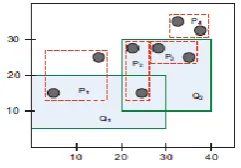
Fig 3. Anonymization satisfying imprecision bounds
Queries Q1 and Q2 are preset to 2 and 0. However, the partitioning given in Figure 3 satisfies the bounds for Queries Q1 and Q2 as the imprecision for Q1 and Q2 is 2 and 0, respectively.
3.4 Privacy preserving Accuracy-Constrained access control
An accuracy-constrained privacy-preserving access control mechanism, illustrated in Figure 4 (arrows represent the direction of information flow), is proposed.
The privacy protection mechanism ensures that the privacy and accuracy goals are met before the sensitive data is available to the access control mechanism.
Fig4. Privacy preserving Accuracy-Constrained access control
The permissions in the access control policy are based on selection predicates on the QI attributes. The policy administrator defines the permissions along with the imprecision bound for each permission/query, user-to-role assignments, and role to- permission assignments. The specification of the imprecision bound ensures that the authorized data has the desired level of accuracy. The imprecision bound information is not shared with the users because knowing the imprecision bound can result in violating the privacy requirement. The privacy protection mechanism is required to meet the privacy requirement along with the imprecision bound for each permission.
E.Heuristics For Partitioning
In TDSM, the partitions are split along the median. Consider a partition that overlaps a query. If the median also falls inside the query then even after splitting the partition, the imprecision for that query will not change as both
Permission
Authorized Access
P1 Sensitive and non sensitive objects
P2 Only non sensitive objects
P3 Only non sensitive objects
the new partitions still overlap the query as illustrated. In this heuristic, we propose to split the partition along the query cut and then choose the dimension along which the imprecision is minimum for all queries. If multiple queries overlap a partition, then the query to be used for the cut needs to be selected. The queries having imprecision greater than zero for the partition are sorted based on the imprecision bound and the query with minimum imprecision bound is selected. The intuition behind this decision is that the queries with smaller bounds have lower tolerance for error and such a partition split ensures the decrease in imprecision for the query with the smallest imprecision bound. If no feasible cut satisfying the privacy requirement is found, then the next query in the sorted list is used to check for partition split.
If none of the queries allow partition split, then that partition is split along the median and the resulting partitions are added to the output after compaction.
VI. CONCLUSION
REFERENCES
[1] ZahidPervaiz, Walid G.Aref, Arif Ghafoor, and Nagabhushana Prabhu “Accuracy-Constrained Privacy Preserving Access Control Mechanism for Relational Data” IEEE Trans. On Knowledge and Data
Engineering, Vol. 26, No. 4, April 2014.
[2] P. Samarati, “Protecting Respondents’ Identities in Microdata Release,” IEEE Trans. Knowledge and
Data Eng., vol. 13, no. 6,pp. 1010-1027, Nov. 2001.
[3] A. Machanavajjhala, D. Kifer, J. Gehrke, and M. Venkitasubramaniam, “L-Diversity: Privacy Beyond
kanonymity,” ACM Trans. Knowledge Discovery from Data, vol. 1, no. 1, article 3, 2007.
[4] S. Chaudhuri, R. Kaushik, and R. Ramamurthy, “Database Access Control & Privacy: Is There a
Common Ground?” Proc. Fifth Biennial Conf. Innovative Data Systems Research (CIDR), pp. 96-103,
2011.
[5] D. Ferraiolo, R. Sandhu, S. Gavrila, D. Kuhn, and R. Chandramouli, “Proposed NIST Standard for
Role-Based Access Control,” ACM Trans. Information and System Security, vol. 4, no. 3, pp. 224- 274, 2001.
[6] K. LeFevre, D. DeWitt, and R. Ramakrishnan,“Workload-Aware Anonymization Techniques for
Large-Scale Datasets,” ACM Trans. Database Systems, vol. 33, no. 3, pp. 1-47, 2008.
[7] Li, N., Li. T. and Venkatasubramanian, S.: t-closeness: privacy beyond k-anonymity and l-diversity. In 23rd International Conference on Data Engineering. pp. 106-115. IEEE Computer Society.(2007)
[8] A. Rask, D. Rubin, and B. Neumann, “Implementing row and cell-level security in classified databases
using sql server 2005,” MS SQL Server Technical Center, 2005.
[9] C.Dwork, “Differential privacy, “Automata, languages and programming, pp. 1–12, 2006.
[10] Lalanthika Vasudevan , S.E. Deepa Sukanya, N. Aarthi*,“Privacy Preserving Data Mining Using
Cryptographic Role Based Access Control Approach.” Proceedings of the International MultiConference
of Engineers and Computer Scientists 2008 Vol I IMECS 2008, 19-21 March, 2008.
[11] L. Sweeney. K-anonymity: a model for protecting privacy. International Journal on Uncertainty, Fuzziness and Knowledge-based Systems, 10(5):557–570, 2002.
[12] A. Frank and A. Asuncion, “UCI Machine Learning Repository,” 2010.
[13] B. Steven, A. Trent, G. Katie, G. Ronald, B. S. Matthew, and M. S., “Integrated Public Use Microdata
Series: Version 5.0 [machine-readable database],” 2010.
[14] T. Iwuchukwu and J. Naughton, “K-anonymization as spatial indexing: Toward scalable and incremental
anonymization,” in Proceedings of the 33rd international conference on Very large databases, pp. 746– 757, VLDB Endowment, 2007.
[15] R. Sandhu and Q. Munawer, “The arbac99 model for administration of roles,” in Proceedings of the 15th
Annual Computer Security Applications Conference, pp. 229–238, IEEE, 1999.
[16] S. Chaudhuri, T. Dutta, and S. Sudarshan, “Fine grained authorization through predicated grants,” in
IEEE 23rd International Conference on Data Engineering, pp. 1174–1183, IEEE, 2007.