R E S E A R C H
Open Access
Effectiveness of an intervention in
increasing the provision of preventive care
by community mental health services: a
non-randomized, multiple baseline
implementation trial
Kate M. Bartlem
1,2,3*, Jenny Bowman
1,3, Megan Freund
3,4, Paula M. Wye
1,2,3,4, Daniel Barker
4,
Kathleen M. McElwaine
3,4, Luke Wolfenden
2,3,4, Elizabeth M. Campbell
2,3,4, Patrick McElduff
4, Karen Gillham
2,3and John Wiggers
2,3,4Abstract
Background:
Relative to the general population, people with a mental illness are more likely to have modifiable
chronic disease health risk behaviours. Care to reduce such risks is not routinely provided by community mental
health clinicians. This study aimed to determine the effectiveness of an intervention in increasing the provision of
preventive care by such clinicians addressing four chronic disease risk behaviours.
Methods:
A multiple baseline trial was undertaken in two groups of community mental health services in New
South Wales, Australia (2011
–
2014). A 12-month practice change intervention was sequentially implemented in
each group. Outcome data were collected continuously via telephone interviews with a random sample of clients
over a 3-year period, from 6 months pre-intervention in the first group, to 6 months post intervention in the
second group. Outcomes were client-reported receipt of assessment, advice and referral for tobacco smoking,
harmful alcohol consumption, inadequate fruit and/or vegetable consumption and inadequate physical activity and
for the four behaviours combined. Logistic regression analyses examined change in client-reported receipt of care.
Results:
There was an increase in assessment for all risks combined following the intervention (18 to 29 %; OR 3.55
,
p
= 0.002:
n
= 805 at baseline, 982 at follow-up). No significant change in assessment, advice or referral for each
individual risk was found.
Conclusions:
The intervention had a limited effect on increasing the provision of preventive care. Further research
is required to determine how to increase the provision of preventive care in community mental health services.
Trial registration:
Australian and New Zealand Clinical Trials Registry ACTRN12613000693729
* Correspondence:[email protected]
1School of Psychology, Faculty of Science and Information Technology, The
University of Newcastle, University Drive, Callaghan, NSW 2308, Australia
2Population Health, Hunter New England Local Health District, Booth
Building, Wallsend Health Services, Longworth Avenue, Wallsend, NSW 2287, Australia
Full list of author information is available at the end of the article
Background
People with a mental illness experience a
disproportion-ately higher chronic disease burden when compared to
the general population and a substantially reduced life
expectancy as a consequence [1
–
7]. Such poor health
outcomes are contributed to by a higher prevalence of
modifiable chronic disease health risk behaviours,
in-cluding smoking [8
–
13], inadequate nutrition [13
–
16],
harmful alcohol consumption [8, 13, 14, 17, 18] and
in-adequate physical activity [9, 13, 17, 19, 20].
Routine care delivery by clinicians to address chronic
disease risk behaviours (preventive care) is
recom-mended for all health services [21
–
27], including mental
health services [28
–
39]. Such care is recommended to
involve, at a minimum, clinician assessment of client risk
status and, for clients identified as being at risk,
provision of advice and referral to specialist preventive
care services [40, 41]. Although community mental
health services represent a key setting for the provision
of preventive care [42], the provision of such care in this
setting is both variable and sub-optimal [42
–
47].
Cochrane systematic review evidence supports the
effi-cacy of a range of strategies in improving the provision
of recommended elements of clinical care, with such
strategies including leadership and consensus [48],
en-ablement of systems and procedures [49
–
51], training
and education [52], monitoring and feedback [53, 54],
provision of practice change resources such as
educa-tional materials and clinical practice guidelines [55] and
practice change support such as educational outreach or
academic detailing [56]. In intervention trials in general
health services, implementation of such strategies has
been associated with increases in care delivery for
smok-ing [57
–
62], at-risk alcohol consumption [63] and
mul-tiple health risk behaviours [64].
Only one study could be identified that assessed the
ef-fectiveness of a practice change intervention in increasing
the provision of preventive care for multiple health risks
in a community mental health setting [65]. A single group
pre-post study was undertaken in two USA services of a
6-month intervention to increase the provision of risk
as-sessment regarding a number of cardiovascular disease
risks (tobacco smoking and non-behavioural risks e.g.
blood pressure and cholesterol) and the sending of a letter
to clients
’
primary care providers. The intervention
prac-tice change strategies included staff education, an
elec-tronic screening tool and a template for a standard
communication letter. A random sample of clients
’
medical records was audited before (
n
= 129) and after
(
n
= 117) the intervention. The proportion of clients
screened for smoking by psychiatrists, mental health
nurses and case managers increased from 76 to 89 %, while
the proportion of clients for whom a letter was sent to
their primary care provider increased from 19 to 32 % [65].
Further research is needed to examine whether a
prac-tice change intervention can improve the provision of a
broader range of preventive care elements for the most
common chronic disease risk behaviours. To address
this need, a study was undertaken to determine the
effectiveness of a multi-strategic practice change
in-tervention in increasing the provision of three elements
of preventive care (risk assessment, brief advice and
referral) by community mental health clinicians for four
health risk behaviours (smoking, inadequate fruit and
vegetable consumption, harmful alcohol consumption
and inadequate physical activity).
Methods
Study design and setting
A multiple baseline trial [66] was undertaken involving a
12-month intervention delivered sequentially in two
groups of community-based mental health services.
Out-come data were collected for both groups from 6 months
prior to the implementation of the intervention in the first
group of services, and continued until 6 months after the
completion of the intervention in the second group of
ser-vices (36-month study period). Further details of the study
design and methods have been reported previously [67].
The study was undertaken in a single regional health
dis-trict in New South Wales, Australia. Ethics approval was
obtained from the Hunter New England Human Research
Ethics Committee (approval no. 09/06/17/4.03) and the
University of Newcastle Human Research Ethics Committee
(approval no. H-2010-1116). The trial was registered with
the Australian and New Zealand Clinical Trials Registry
(ACTRN12613000693729).
Participants
Community mental health services
All community mental health services (
n
= 19) in the
health district that provided ambulatory care to clients
18 years of age or greater, and were not involved in a
pilot of this study, were included and allocated to two
service groups (
n
= 7;
n
= 12) based on their geographic
location and associated administrative boundaries. The
services provided general adult community mental
health care, and care for specific client populations,
in-cluding older persons, psychiatric rehabilitation, early
diagnosis, comorbid substance use, eating disorders and
borderline personality disorder.
Clinicians
nurses (40 %), psychiatrists (15 %) and psychologists
(15 %).
Clients
All clients who attended a face-to-face individual clinical
appointment were eligible to receive preventive care.
Clients were eligible to be selected for data collection
if they were 18 years or older, had attended at least one
face-to-face individual appointment with an eligible
ser-vice within the previous 2 weeks, had not previously
been selected to participate in the study and had not
been identified by their clinician as too unwell to
partici-pate. Of such clients, additional eligibility criteria were
as follows: English speaking, not living in aged care
facil-ities or gaol and being physically and mentally capable of
responding to the survey items.
Intervention
Preventive care
Clinicians were asked to routinely provide preventive
care based on the recommended
‘
2As and R
’
model, a
model that includes three elements of care [40, 68, 69]:
Assessment
Assessment of client risk status for each of
the four health risk behaviours based on levels of risk
defined in Australian national guidelines [70
–
73]
Brief advice
Provision of advice to clients assessed as
being at-risk to modify their risk to comply with the
Australian national guidelines [70
–
73] and the benefits
of doing so
Referral
Offer of a referral for clients with risks to
evidence-based state-wide telephone support services for
smoking (New South Wales [NSW] Quitline) and for
physical inactivity and inadequate nutrition (NSW Get
Healthy Service). For all risk behaviours, referral could
additionally be provided to the client
’
s primary care
pro-vider (general practitioner or Aboriginal medical service)
or local referral options (e.g. dietitians, exercise groups
and drug and alcohol services)
Practice change intervention
The following multi-strategic clinical practice change
intervention, informed by research and reviews of the
clinical practice change literature [48, 52, 53, 55, 74],
was implemented:
1. Leadership and consensus
A district-wide policy and key performance
indicators regarding the provision of preventive
care were implemented based on consultation
with health district executives, senior clinicians
and managers.
2. Enabling systems and procedures
A tool was incorporated into the electronic medical
record used by all clinicians to enable standardized
assessment and recording of risk status and
subsequent provision of preventive care; the
automated production of a tailored client risk
reduction information sheet and referral letter to the
clients
’
primary care provider; and prompts to
deliver brief advice and referral where clients were
identified as at-risk.
3. Clinician and manager training
Clinicians and managers were provided online
educational competency-based training of
approximately 2-h duration, addressing the following:
the provision of preventive care, including the
‘
2As
and R
’
model; policy guidelines and performance
indicators; and the recording of such care in the
standardized electronic tool. Managers were
additionally provided with a 2-h, face-to-face training
session regarding care delivery performance monitoring
and feedback and leadership in preventive care.
4. Monitoring and feedback
Modifications were made to the electronic medical
record to allow automated production of monthly
performance reports regarding the provision of
preventive care at the service level. Reports were
provided to and discussed with managers monthly.
5. Provision of practice change resources
An e-mail helpline and internet resource site were
established, and monthly newsletters and tip-sheets and
a resource pack including a process flowchart, a guide,
information on each risk behaviour, fax-based referral
forms for telephone referral services, and a paper-based
preventive care assessment tool for use during home
visits were distributed to clinicians and managers.
6. Practice change support
Project personnel (approximately one full time
equivalent per group) were allocated to support
intervention delivery, including monthly face-to-face
visits with managers and clinicians, and fortnightly
support phone calls and/or e-mails to managers.
The project personnel discussed the feedback
reports and provided both proactive and reactive
support to managers and clinicians.
Data collection procedures
Recruitment
Eligible clients were asked to participate in a telephone
interview regarding their health behaviour risk status,
the preventive care they had received for such risks and
a number of demographic and clinical characteristics.
The interview was approximately 20 min in length.
Measures
Client characteristics
Clients reported their Aboriginal
and/or Torres Strait Islander status, highest education
level attained, employment status, marital status and
physical or psychiatric conditions for which they had
re-ceived health care within the previous 2 months. Client
age, gender, postcode, and the number of community
mental health appointments within the last 12 months
were obtained from the electronic medical record.
Client health behaviour risk status
Clients reported
their health behaviour risk status for the month prior to
seeing their community mental health clinician.
Sur-vey items were based on recommended assessment tools
[75
–
78] and previous community surveys [13, 46, 47, 79].
In line with national guidelines, clients were defined as
be-ing at-risk if they reported smokbe-ing any tobacco products
[70], consuming less than two serves of fruit or five serves
of vegetables per day [72], consuming more than two
standard drinks on average per day or four or more
stand-ard drinks on any one occasion [71] or engaging in less
than 30 min of physical activity on at least 5 days of the
week [73].
Client-reported provision of preventive care
Assessment
. Clients were asked to report whether,
during a community mental health appointment, a
clin-ician had asked about their smoking status, fruit and
vegetable intake, alcohol consumption and physical
ac-tivity (yes, no, don
’
t know for each).
Brief advice
. Clients classified as being at-risk for a
health risk behaviour(s) based on their self-report were
asked whether their community mental health clinician
had advised them to modify their behaviour(s) (yes, no,
don
’
t know for each).
Referral
. Clients classified as having at least one risk
were asked whether their community mental health
clin-ician had offered to send their primary care provider a
letter summarizing their health behaviour risks and the
preventive care provided. Clients classified as at risk for
a health risk behaviour(s) were also asked whether their
clinician had provided each of the following forms of
re-ferral (
‘
yes, no, or don
’
t know
’
):
(a) Spoke about the NSW Quitline telephone support
service (for smoking); or the NSW Get Healthy
Service (for clients with inadequate fruit and
vegetable intake or inadequate physical activity);
(b)Offered to arrange for a telephone support service
(NSW Quitline or NSW Get Healthy Service) to call
them;
(c) Recommended speaking to their primary care
provider about their health risk behaviour(s); and
(d)Advised to use any other supports to make changes
to their health behaviour(s) (e.g. dietitian, physical
activity classes, website).
Intervention delivery
Project personnel recorded the
implementation of each practice change strategy for
each service on a monthly basis.
Statistical analysis
Analyses were undertaken using SAS V9.4. Residential
postcode was used to classify client residential
geo-graphic location [80] and socio-economic status [81].
Chi square tests were used to compare consenters and
non-consenters regarding age group, gender, remoteness,
disadvantage and number of appointments
.
Descriptive
statistics were used to describe participating client
char-acteristics, health behaviour risk status and receipt of
preventive care. For care receipt items, clients who
responded
‘
don
’
t know
’
were classified as not having
re-ceived care. For each of the four behaviours, referral
items were combined to create a single variable
reflect-ing receipt of any form of referral.
A variable was created to reflect client receipt of
as-sessment for all four risk behaviours. Separate variables
were also created to reflect client receipt of brief advice
for all behaviours for which they were at risk and receipt
of any referral for all behaviours for which they were at
risk (
‘
all risks combined
’
).
Intervention effectiveness
periods. While all models were also analysed
incorporat-ing the intervention period data, as the results did not
differ, the simpler method is presented. A significance
level of
α
= 0.01 was used to adjust for multiple testing
[82]. As simple random sampling of community mental
health clients was used (see
“
Recruitment
”
section),
there was no need to adjust for clinician, community
mental health service or any other natural clustering that
occurs within the community. An unadjusted analysis
provides an unbiased estimate of the statistics of
interest.
Results
Sample characteristics
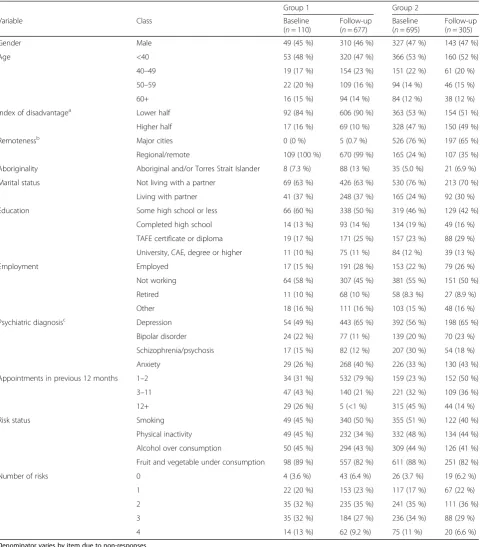
Of the 3764 clients selected to participate, 2817 were
able to be contacted by telephone (75 %), and 375 were
identified as ineligible upon contact. Of the 2442 eligible
potential participants, 1787 (73 %) consented to
partici-pate and completed the survey (
n
= 805 at baseline,
n
=
982 at follow-up). There were no significant differences
in the characteristics between consenting and
non-consenting clients. Characteristics of the sample are
pre-sented in Table 1.
Intervention effectiveness
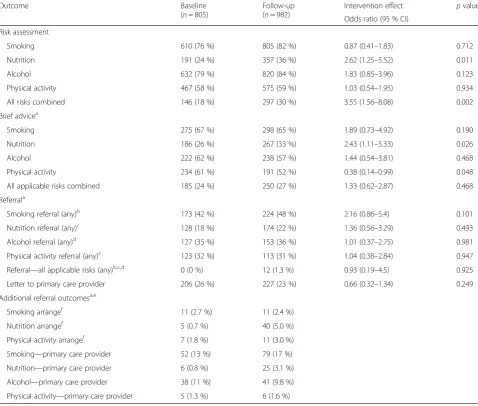
For both groups combined, there was a significant
in-crease in the prevalence of one of the 16 outcome
mea-sures. From baseline to follow-up, there was an increase
in assessment for all risks combined (18 to 29 %; OR
3.55
, p
= 0.002) (Table 2).
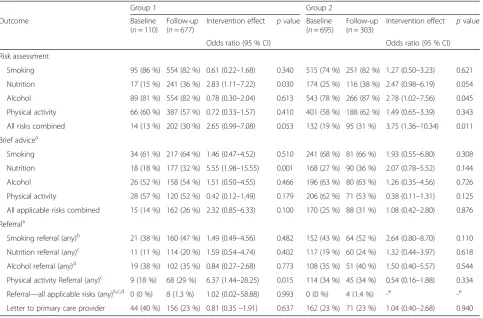
When examined separately for each of the two service
groups, there was an increase in the prevalence of one
outcome for group 1. From baseline to follow-up, there
was an increase in the assessment of nutrition (18 to
32 %; OR 5.55,
p
= 0.001). No increases in care were
identified for group 2 individually (Table 3).
Intervention implementation
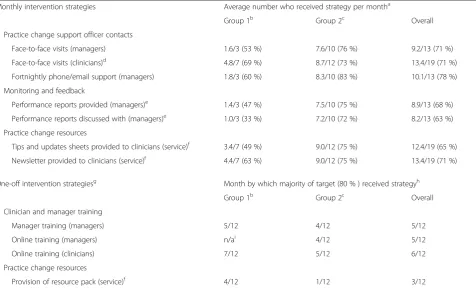
The implementation of intervention strategies is shown in
Table 4. Overall, the intervention strategies were not
delivered as intended. On average per month for the two
service groups combined, the proportion of services,
man-agers or clinicians that received each strategy ranged from
63 % (performance reported discussed with managers) to
78 % (fortnightly phone/email support). Group 1 received
fewer monthly intervention strategies on average. The
proportion of services, managers or clinicians that
received each strategy in group 1 ranged from 33 %
(performance reports discussed with managers) to 69 %
(face-to-face visits with clinicians), compared to 72 %
(per-formance reports discussed with managers) to 83 %
(fort-nightly phone or email support for managers) in group 2
(Table 4).
Group 2 generally received one-off strategies (training
and practice change resources) at an earlier stage during
the intervention. For instance, the majority (80 % or
more) of services in group 2 had received the resource
pack by the end of month 1, compared to the end of
month 4 in group 1 (Table 4).
Discussion
This is the first study to examine the effectiveness of a
multi-strategy practice change intervention in increasing
the provision of multiple elements of preventive care for
multiple chronic disease health risk behaviours within a
community mental health care setting. Overall, the study
had a limited effect in increasing the provision of
ele-ments of care, with an effect observed only for the
as-sessment of risk status for all behaviours combined.
Further research is required to identify strategies for
im-proving the delivery of chronic disease preventive care
in these settings.
One previous study has examined the effectiveness of
similar practice change strategies in increasing the
delivery of cardiovascular disease risk screening in
com-munity mental health services [65]. The single group
pre-post study conducted in the USA reported an
increase in assessment of smoking status (13 %), and for
providing a letter to the clients
’
primary care provider
(13 %). In comparison, in our controlled trial, we found
an effect for assessment across risks, but not smoking,
and not for providing a letter to the primary care
pro-vider. The absence of a control group in the previous
study precludes a direct comparison of effect between
the two studies.
The intervention in the current study involved the use
of practice change strategies previously found to be
ef-fective in general health care services but not trialled in
mental health services [57
–
64]. Importantly, the same
intervention strategies were implemented in a
contem-poraneous study conducted in general community health
services (addressing physical health care) within the
same health district in which the current study was
con-ducted [64]. That study found, using the same outcome
measures and intervention approach, increases in care
provision for six out of ten assessment and advice
mea-sures of preventive care (assessment of fruit and
vege-table consumption, physical activity and for all risks; and
brief advice for inadequate fruit and vegetable
consump-tion, harmful alcohol consumption and for all risks
[64]). However, consistent with this trial, no effect was
found for provision of any element of smoking care or
of referral.
contributed to the contrasting findings. The findings
suggest that a greater understanding of the context and
barriers to the provision of preventive care in community
mental health services is required. Similarly, tailoring of
recommendations
regarding
the
provision
of
care
addressing chronic disease risk behaviours that can be
Table 1
Sample characteristics by group and time
Group 1 Group 2
Variable Class Baseline
(n= 110)
Follow-up (n= 677)
Baseline (n= 695)
Follow-up (n= 305)
Gender Male 49 (45 %) 310 (46 %) 327 (47 %) 143 (47 %)
Age <40 53 (48 %) 320 (47 %) 366 (53 %) 160 (52 %)
40–49 19 (17 %) 154 (23 %) 151 (22 %) 61 (20 %)
50–59 22 (20 %) 109 (16 %) 94 (14 %) 46 (15 %)
60+ 16 (15 %) 94 (14 %) 84 (12 %) 38 (12 %)
Index of disadvantagea Lower half 92 (84 %) 606 (90 %) 363 (53 %) 154 (51 %)
Higher half 17 (16 %) 69 (10 %) 328 (47 %) 150 (49 %)
Remotenessb Major cities 0 (0 %) 5 (0.7 %) 526 (76 %) 197 (65 %)
Regional/remote 109 (100 %) 670 (99 %) 165 (24 %) 107 (35 %)
Aboriginality Aboriginal and/or Torres Strait Islander 8 (7.3 %) 88 (13 %) 35 (5.0 %) 21 (6.9 %)
Marital status Not living with a partner 69 (63 %) 426 (63 %) 530 (76 %) 213 (70 %)
Living with partner 41 (37 %) 248 (37 %) 165 (24 %) 92 (30 %)
Education Some high school or less 66 (60 %) 338 (50 %) 319 (46 %) 129 (42 %)
Completed high school 14 (13 %) 93 (14 %) 134 (19 %) 49 (16 %)
TAFE certificate or diploma 19 (17 %) 171 (25 %) 157 (23 %) 88 (29 %)
University, CAE, degree or higher 11 (10 %) 75 (11 %) 84 (12 %) 39 (13 %)
Employment Employed 17 (15 %) 191 (28 %) 153 (22 %) 79 (26 %)
Not working 64 (58 %) 307 (45 %) 381 (55 %) 151 (50 %)
Retired 11 (10 %) 68 (10 %) 58 (8.3 %) 27 (8.9 %)
Other 18 (16 %) 111 (16 %) 103 (15 %) 48 (16 %)
Psychiatric diagnosisc Depression 54 (49 %) 443 (65 %) 392 (56 %) 198 (65 %)
Bipolar disorder 24 (22 %) 77 (11 %) 139 (20 %) 70 (23 %)
Schizophrenia/psychosis 17 (15 %) 82 (12 %) 207 (30 %) 54 (18 %)
Anxiety 29 (26 %) 268 (40 %) 226 (33 %) 130 (43 %)
Appointments in previous 12 months 1–2 34 (31 %) 532 (79 %) 159 (23 %) 152 (50 %)
3–11 47 (43 %) 140 (21 %) 221 (32 %) 109 (36 %)
12+ 29 (26 %) 5 (<1 %) 315 (45 %) 44 (14 %)
Risk status Smoking 49 (45 %) 340 (50 %) 355 (51 %) 122 (40 %)
Physical inactivity 49 (45 %) 232 (34 %) 332 (48 %) 134 (44 %)
Alcohol over consumption 50 (45 %) 294 (43 %) 309 (44 %) 126 (41 %)
Fruit and vegetable under consumption 98 (89 %) 557 (82 %) 611 (88 %) 251 (82 %)
Number of risks 0 4 (3.6 %) 43 (6.4 %) 26 (3.7 %) 19 (6.2 %)
1 22 (20 %) 153 (23 %) 117 (17 %) 67 (22 %)
2 35 (32 %) 235 (35 %) 241 (35 %) 111 (36 %)
3 35 (32 %) 184 (27 %) 236 (34 %) 88 (29 %)
4 14 (13 %) 62 (9.2 %) 75 (11 %) 20 (6.6 %)
Denominator varies by item due to non-responses a
SEIFA index of disadvantage: lower NSW half (≤991); higher NSW half (>991) b
Accessibility/Remoteness Index of Australia (ARIA) c
operationalized in the context and circumstances of
com-munity mental health services also appears warranted, as
does tailoring of the practice change strategies to support
the delivery of such care. The use of systematic and
theory-based methods for identifying barriers and
design-ing interventions, such as the Theoretical Domains
Framework [86], may provide a useful approach to
achiev-ing this.
No increases in either brief advice or referral were
identified for any of the four health risk behaviours.
Such findings are of significance as any benefit in terms
of reduction in risk of chronic disease is dependent upon
either or both of these elements of care [40, 41, 87].
Both elements of care have been shown to be effective in
reducing the prevalence of health risks for clients of
general health services [88
–
96]. Previous research has
identified a number of barriers to mental health clinician
provision of risk advice, including clinician attitudes
re-garding their role in providing preventive care [97
–
99]
and a lack of training in how to provide preventive care
Table 2
Levels of preventive care at baseline and follow-up, and estimates of the intervention effect, for both groups combined
Outcome Baseline
(n= 805)
Follow-up (n= 982)
Intervention effect pvalue Odds ratio (95 % CI)
Risk assessment
Smoking 610 (76 %) 805 (82 %) 0.87 (0.41–1.83) 0.712
Nutrition 191 (24 %) 357 (36 %) 2.62 (1.25–5.52) 0.011
Alcohol 632 (79 %) 820 (84 %) 1.83 (0.85–3.96) 0.123
Physical activity 467 (58 %) 575 (59 %) 1.03 (0.54–1.95) 0.934
All risks combined 146 (18 %) 297 (30 %) 3.55 (1.56–8.08) 0.002
Brief advicea
Smoking 275 (67 %) 298 (65 %) 1.89 (0.73–4.92) 0.190
Nutrition 186 (26 %) 267 (33 %) 2.43 (1.11–5.33) 0.026
Alcohol 222 (62 %) 238 (57 %) 1.44 (0.54–3.81) 0.468
Physical activity 234 (61 %) 191 (52 %) 0.38 (0.14–0.99) 0.048
All applicable risks combined 185 (24 %) 250 (27 %) 1.33 (0.62–2.87) 0.468
Referrala
Smoking referral (any)b 173 (42 %) 224 (48 %) 2.16 (0.86–5.4) 0.101
Nutrition referral (any)c 128 (18 %) 174 (22 %) 1.36 (0.56–3.29) 0.493
Alcohol referral (any)d 127 (35 %) 153 (36 %) 1.01 (0.37–2.75) 0.981
Physical activity referral (any)c 123 (32 %) 113 (31 %) 1.04 (0.38–2.84) 0.947
Referral—all applicable risks (any)b,c,d 0 (0 %) 12 (1.3 %) 0.93 (0.19–4.5) 0.925
Letter to primary care provider 206 (26 %) 227 (23 %) 0.66 (0.32–1.34) 0.249
Additional referral outcomesa,e
Smoking arrangef 11 (2.7 %) 11 (2.4 %)
Nutrition arrangef 5 (0.7 %) 40 (5.0 %)
Physical activity arrangef 7 (1.8 %) 11 (3.0 %)
Smoking—primary care provider 52 (13 %) 79 (17 %)
Nutrition—primary care provider 6 (0.8 %) 25 (3.1 %)
Alcohol—primary care provider 38 (11 %) 41 (9.8 %)
Physical activity—primary care provider 5 (1.3 %) 6 (1.6 %)
a
Of participants who reported being at-risk for each relevant behaviour b
Includes the following: clinician spoke about NSW Quitline, offered to arrange for NSW Quitline to call them, recommended they speak to their primary care provider or advised them to use any other support
c
Includes the following: clinician spoke about NSW Get Healthy Service, offered to arrange for NSW Get Healthy Service to call them, recommended they speak to their primary care provider or advised them to use any other support
d
Includes the following: recommended they speak to their primary care provider or advised them to use any other support e
Intervention effect could not be modelled meaningfully due to small sample size f
[42, 97]. Previous research has also identified a lack of
referral options as a barrier to mental health clinicians
providing referrals [47, 100]. The current study sought
to address barriers to both elements of preventive care
through a comprehensive suite of practice change
strat-egies including a policy, electronic prompts, fax referral
forms to free public evidence-based specialist risk
reduc-tion services, automated producreduc-tion of referral letters to
primary care providers, clinician training and education,
monthly performance monitoring feedback reports
and allocated practice change support personnel for
12 months. Notwithstanding the comprehensiveness
of these strategies, they may not have been of a
suffi-cient dose (e.g. frequency of contact with allocated
practice change support) or of sufficient length.
Additional factors also may have impeded the
clini-cians
’
ability to refer clients. In USA primary care
services, additional strategies have been found to be
ef-fective in increasing referrals to tobacco quitlines and
community behavioural counselling services including
the use of financial incentives [101], and automatic,
elec-tronic referral processes [102]. However, the
effective-ness of these strategies in increasing referrals regarding
chronic disease risk behaviours is yet to be examined in
community mental health services.
The study outcomes should be interpreted in light of a
number of its methodological characteristics. First,
al-though the study was conducted across a number of
com-munity mental health services in urban, regional and rural
locations, all the services were located within one health
district, potentially limiting the generalizability of findings
to other jurisdictions. Second, the main outcome measure
was based on client-reported receipt of preventive care.
The extent to which the receipt of such care in this study
is either an over- or under-estimate of the care received,
particularly amongst people with a mental illness is
unknown [103, 104]. Direct comparison between client
report outcomes and the monthly performance reports
was not possible; however, the authors can confirm that
the performance reports were consistent with the pattern
Table 3
Levels of preventive care at baseline and follow-up, and estimates of the intervention effect, for each group
Group 1 Group 2
Outcome Baseline
(n= 110)
Follow-up (n= 677)
Intervention effect pvalue Baseline (n= 695)
Follow-up (n= 303)
Intervention effect pvalue
Odds ratio (95 % CI) Odds ratio (95 % CI)
Risk assessment
Smoking 95 (86 %) 554 (82 %) 0.61 (0.22–1.68) 0.340 515 (74 %) 251 (82 %) 1.27 (0.50–3.23) 0.621
Nutrition 17 (15 %) 241 (36 %) 2.83 (1.11–7.22) 0.030 174 (25 %) 116 (38 %) 2.47 (0.98–6.19) 0.054
Alcohol 89 (81 %) 554 (82 %) 0.78 (0.30–2.04) 0.613 543 (78 %) 266 (87 %) 2.78 (1.02–7.56) 0.045
Physical activity 66 (60 %) 387 (57 %) 0.72 (0.33–1.57) 0.410 401 (58 %) 188 (62 %) 1.49 (0.65–3.39) 0.343
All risks combined 14 (13 %) 202 (30 %) 2.65 (0.99–7.08) 0.053 132 (19 %) 95 (31 %) 3.75 (1.36–10.34) 0.011
Brief advicea
Smoking 34 (61 %) 217 (64 %) 1.46 (0.47–4.52) 0.510 241 (68 %) 81 (66 %) 1.93 (0.55–6.80) 0.308
Nutrition 18 (18 %) 177 (32 %) 5.55 (1.98–15.55) 0.001 168 (27 %) 90 (36 %) 2.07 (0.78–5.52) 0.144
Alcohol 26 (52 %) 158 (54 %) 1.51 (0.50–4.55) 0.466 196 (63 %) 80 (63 %) 1.26 (0.35–4.56) 0.726
Physical activity 28 (57 %) 120 (52 %) 0.42 (0.12–1.49) 0.179 206 (62 %) 71 (53 %) 0.38 (0.11–1.31) 0.125
All applicable risks combined 15 (14 %) 162 (26 %) 2.32 (0.85–6.33) 0.100 170 (25 %) 88 (31 %) 1.08 (0.42–2.80) 0.876
Referrala
Smoking referral (any)b 21 (38 %) 160 (47 %) 1.49 (0.49
–4.56) 0.482 152 (43 %) 64 (52 %) 2.64 (0.80–8.70) 0.110 Nutrition referral (any)c 11 (11 %) 114 (20 %) 1.59 (0.54
–4.74) 0.402 117 (19 %) 60 (24 %) 1.32 (0.44–3.97) 0.618 Alcohol referral (any)d 19 (38 %) 102 (35 %) 0.84 (0.27–2.68) 0.773 108 (35 %) 51 (40 %) 1.50 (0.40–5.57) 0.544 Physical activity Referral (any)c 9 (18 %) 68 (29 %) 6.37 (1.44–28.25) 0.015 114 (34 %) 45 (34 %) 0.54 (0.16–1.88) 0.334 Referral—all applicable risks (any)b,c,d 0 (0 %) 8 (1.3 %) 1.02 (0.02–58.88) 0.993 0 (0 %) 4 (1.4 %) -e -e Letter to primary care provider 44 (40 %) 156 (23 %) 0.81 (0.35–1.91) 0.637 162 (23 %) 71 (23 %) 1.04 (0.40–2.68) 0.940
a
Of participants who reported being at-risk for each relevant behaviour b
Includes the following: clinician spoke about NSW Quitline, offered to arrange for NSW Quitline to call them, recommended they speak to their primary care provider or advised them to use any other support
c
Includes the following: clinician spoke about NSW Get Healthy Service, offered to arrange for NSW Get Healthy Service to call them, recommended they speak to their primary care provider or advised them to use any other support
d
Includes the following: recommended they speak to their primary care provider or advised them to use any other support e
of results reported. Third, systematic review evidence has
suggested that inadequate implementation fidelity and
in-tegrity may be explanatory factors in trials that fail to
show an effect [105]. In the current trial, not all
interven-tion strategies were implemented as planned (Table 4),
and there was inconsistent implementation of the
inter-vention between the two groups. It is unknown what
impact this may have had on the trial outcomes.
Conclusions
The observed lack of an increase in preventive care
provision for almost all outcome measures suggests that
an intervention better tailored to the circumstances of
community mental health services may be required, or
one that is more intensive or includes a longer
interven-tion period, or that an alternative model of delivering
preventive care to clients of community mental health
services may be required. Regardless of the specific
ap-proach, the need for a greater understanding of the
bar-riers and facilitators to the provision of preventive care
in community mental health services is indicated.
Competing interests
The authors declare that they have no competing interests.
Authors’contributions
All authors provided substantial contribution to the conception and design of the study and interpretation of the data. All authors provided substantial contribution to drafting and revising of the manuscript and gave final approval of the version to be published. Authors DB, PM and KB contributed to the analysis of the data. All authors read and approved the final manuscript.
Acknowledgements
The authors would like to thank all members of the Preventive Care team, the CHIME team, the CATI interviewers and the community mental health service staff and clients for their contribution to the project. We would like to thank Christophe Lecathelinais for his statistical assistance throughout the project.
Table 4
Summary of intervention strategy implementation
Monthly intervention strategies Average number who received strategy per montha
Group 1b Group 2c Overall
Practice change support officer contacts
Face-to-face visits (managers) 1.6/3 (53 %) 7.6/10 (76 %) 9.2/13 (71 %)
Face-to-face visits (clinicians)d 4.8/7 (69 %) 8.7/12 (73 %) 13.4/19 (71 %)
Fortnightly phone/email support (managers) 1.8/3 (60 %) 8.3/10 (83 %) 10.1/13 (78 %)
Monitoring and feedback
Performance reports provided (managers)e 1.4/3 (47 %) 7.5/10 (75 %) 8.9/13 (68 %) Performance reports discussed with (managers)e 1.0/3 (33 %) 7.2/10 (72 %) 8.2/13 (63 %) Practice change resources
Tips and updates sheets provided to clinicians (service)f 3.4/7 (49 %) 9.0/12 (75 %) 12.4/19 (65 %) Newsletter provided to clinicians (service)f 4.4/7 (63 %) 9.0/12 (75 %) 13.4/19 (71 %)
One-off intervention strategiesg Month by which majority of target (80 % ) received strategyh
Group 1b Group 2c Overall
Clinician and manager training
Manager training (managers) 5/12 4/12 5/12
Online training (managers) n/ai 4/12 5/12
Online training (clinicians) 7/12 5/12 6/12
Practice change resources
Provision of resource pack (service)f 4/12 1/12 3/12
a
Average number of targets of the intervention strategy (services or managers) who received each strategy per month b
Includes 7 services with a total of 3 managers and 52 clinicians c
Includes 12 services, with a total of 10 managers and 165 clinicians d
Recorded at service level as support officer made available to all clinicians at relevant service e
Due to complications with the software used for performance monitoring and feedback, this strategy was not available for 6/12 months of the intervention period in group 1 and 3/12 months in group 2
f
Recorded at service level as resource provided to the service to distribute to individual clinicians g
The following strategies were implemented across the health district prior to intervention implementation: district wide preventive care policy, key performance indicators (based on consultation with health district executives, senior clinicians and managers), tool incorporated into the electronic medical record, e-mail helpline and an internet resource site
h
Intervention month in which the majority of services, managers or clinicians (80 %) had received each‘one-off’intervention strategy i
Funding
The study is funded with infrastructure support from the Hunter Medical Research Institute and Hunter New England Local Health District Population Health.
Author details
1School of Psychology, Faculty of Science and Information Technology, The
University of Newcastle, University Drive, Callaghan, NSW 2308, Australia.
2Population Health, Hunter New England Local Health District, Booth
Building, Wallsend Health Services, Longworth Avenue, Wallsend, NSW 2287, Australia.3Hunter Medical Research Institute, Clinical Research Centre, Level 3
John Hunter Hospital, Lookout Road, New Lambton Heights, NSW 2305, Australia.4School of Medicine and Public Health, Faculty of Health, The
University of Newcastle, University Drive, Callaghan, NSW 2308, Australia.
Received: 18 September 2015 Accepted: 9 March 2016
References
1. Chang C, Hayes R, Perera G, Broadbent M, Fernandes A, Lee W, et al. Life expectancy at birth for people with serious mental illness and other major disorders from a secondary mental health care case register in London. PLoS One. 2011;6(5):e19590.
2. Wahlbeck K, Westman J, Nordentoft M, Gissler M, Laursen TM. Outcomes of Nordic mental health systems: life expectancy of patients with mental disorders. Br J Psychiatry. 2011;199(6):453–8. doi:10.1192/bjp.bp.110.085100. 3. Laursen TM. Life expectancy among persons with schizophrenia or bipolar affective disorder. Schizophr Res. 2011;131(1–3):101–4. doi:10.1016/j.schres. 2011.06.008.
4. Lawrence D, Hancock K, Kisely S. The gap in life expectancy from preventable physical illness in psychiatric patients in Western Australia: retrospective analysis of population based registers. Br Med J (Clin Res Ed). 2013;346:f2539.
5. Amaddeo F, Barbui C, Perini G, Biggeri A, Tansella M. Avoidable mortality of psychiatric patients in an area with a community-based system of mental health care. Acta Psychiatr Scand. 2007;115:320–5.
6. Laursen TM, Wahlbeck K, Hallgren J, Westman J, Osby U, Alinaghizadeh H, et al. Life expectancy and death by diseases of the circulatory system in patients with bipolar disorder or schizophrenia in the Nordic countries. PLoS One. 2013;8(6):e67133. doi:10.1371/journal.pone.0067133.
7. Callaghan RC, Veldhuizen S, Jeysingh T, Orlan C, Graham C, Kakouris G, et al. Patterns of tobacco-related mortality among individuals diagnosed with schizophrenia, bipolar disorder, or depression. J Psychiatr Res. 2014;48(1):102–10. doi:10.1016/j.jpsychires.2013.09.014.
8. Reichler H, Baker A, Lewin T, Carr V. Smoking among in-patients with drug-related problems in an Australian psychiatric hospital. Drug Alcohol Rev. 2001;20(2):231–7.
9. Ussher M, Doshi R, Sampuran A, West R. Cardiovascular risk factors in patients with schizophrenia receiving continuous medical care. Community Ment Health J. 2011;47(6):688–93. doi:10.1007/s10597-011-9376-y. 10. Lawrence D, Mitrou F, Zubrick SR. Smoking and mental illness: results from
population surveys in Australia and the United States. BioMed Central Public Health. 2009;9(1):285. doi:10.1186/1471-2458-9-285.
11. Lasser K, Boyd JW, Woolhandler S, Himmelstein DU, McCormick D, Bor DH. Smoking and mental illness: a population-based prevalence study. JAMA. 2000;284(20):2606–10.
12. Lineberry TW, Allen JD, Nash J, Galardy CW. Population-based prevalence of smoking in psychiatric inpatients: a focus on acute suicide risk and major diagnostic groups. Compr Psychiatry. 2009;50(6):526–32. doi:10.1016/j.comppsych.2009.01.004.
13. Bartlem K, Bowman J, Bailey J, Freund M, Wye P, Lecathelinais C, et al. Chronic disease health risk behaviours amongst people with a mental illness. Aust NZ J Psychiatry. 2015;49(8):731–41.
14. Kilian R, Becker T, Kruger K, Schmid S, Frasch K. Health behavior in psychiatric in-patients compared with a German general population sample. Acta Psychiatr Scand. 2006;114(4):242–8.
15. McCreadie R. Diet, smoking and cardiovascular risk in people with schizophrenia: descriptive study. Br J Psychiatry. 2003;183:534–9. 16. Godfrey KM, Lindamer LA, Mostoufi S, Afari N. Posttraumatic stress disorder
and health: a preliminary study of group differences in health and health behaviors. Ann Gen Psychiatry. 2013;12(1):30. doi:10.1186/1744-859x-12-30.
17. Davidson S, Judd F, Jolley D, Hocking B, Thompson M, Hyland B. Cardiovascular risk factors for people with mental illness. Aust NZ J Psychiatry. 2001;35(2):196–202.
18. Gratzer D, Levitan R, Sheldon T, Toneatto T, Rector N, Goering P. Lifetime rates of alcoholism in adults with anxiety, depression, or co-morbid depression/anxiety: a community survey of Ontario. J Affect Disord. 2004;79(1–3):209–15.
19. Ussher M, Stanbury L, Cheeseman V, Faulkner G. Physical activity preferences and perceived barriers to activity among persons with severe mental illness in the United Kingdom. Psychiatr Serv. 2007;58(3):405–8. 20. Janney CA, Fagiolini A, Swartz HA, Jakicic JM, Holleman RG, Richardson CR.
Are adults with bipolar disorder active? Objectively measured physical activity and sedentary behavior using accelerometry. J Affect Disord. 2014;152–154:498–504. doi:10.1016/j.jad.2013.09.009.
21. World Health Organisation. 2008–2013 Action plan for the global strategy for the prevention and control of noncommunicable diseases. Geneva: World Health Organisation; 2008.
22. United States Preventive Services Task Force. The guide to clinical preventive services 2014: recommendations of the US Preventive Services Taskforce. Report No.: 14–05158. Rockville: Agency for Healthcare Research and Quality; 2014.
23. National Preventive Health Taskforce. Australia: the healthiest country by 2020—National Preventative Health Strategy—the roadmap for action. Canberra, 2010.
24. Royal Australian College of General Practitioners. Guidelines for preventive activities in general practice (The Red Book). Melbourne: Royal Australian College of General Practitioners; 2009.
25. Hunter New England Local Health District. Preventive care area policy statement, HNEH Pol 10_01. Hunter New England Health; 2010 26. Department of Health Victoria. Victorian public health and wellbeing plan
2011–2015. Melbourne: Prevention and Population Health Branch, Victorian Government, Department of Health; 2011.
27. Queensland Health. The health of Queenslanders 2008: prevention of chronic disease. Second report of the chief health officer Queensland. Brisbane: Queensland Health; 2008.
28. Stanley S, Laugharne J. Clinical guidelines for the physical care of mental health consumers. Perth: Culture and Mental Health Unit, School of Psychiatry and Clinical Neurosciences, University of Western Australia; 2010. 29. Department of Health Victoria. Improving the physical health of people
with severe mental illness: no mental health without physical health. Ministerial Advisory Committee on Mental Health Report. Melbourne: Victorian Government; 2011.
30. Queensland Health. Queensland MIND essentials: mental illness nursing documents. Brisbane: Queensland Health; 2010.
31. New South Wales Health. Physical health care of mental health consumers: guideline. Sydney: New South Wales Department of Health; 2009. 32. New South Wales Health. Physical health care within mental health services.
Sydney: New South Wales Department of Health; 2009.
33. The Scottish Government. Mental health strategy for Scotland: 2012–2015. Edinburgh: The Scottish Government; 2012.
34. Welsh Assembly Government. The role of community mental health teams in delivering community mental health services: interim policy implementation guidance and standards. Welsh Assembly Government; 2010.
35. Royal College of Psychiatrists. Improving physical health for people with a mental illness: what can be done? Faculty Report FR/GAP/01. London: Royal College of Psychiatrists; 2013.
36. Canadian Mental Health Association. Recommendations for preventing and managing co-existing chronic physical conditions and mental illnesses. 2008. Available from http://ontario.cmha.ca/public_policy/recommendations- for-preventing-and-managing-co-existing-chronic-physical-conditions-and-mental-illnesses/#.VYsXXcYxHUI. Accessed 30 March 2016.
37. National Institute for Health and Care Excellence. Psychosis and
schizophrenia in adults: treatment and management. NICE clinical guideline 178. London: National Institute for Health and Care Excellence; 2014. 38. National Institute for Health and Care Excellence. Bipolar disorder: the
assessment and management of bipolar disorder in adults, children and young people in primary and secondary care. NICE clinical guideline 185. London: National Institute for Health and Care Excellence; 2015. 39. Lewin Group Inc. and Institute for Healthcare Improvement. Approaches to
guide to resources, promising practices and tools. Available from http:// www.integration.samhsa.gov/Approaches_to_Integrating_Physical_Health_ Services_into_BH_Organizations_RIC.pdf. 2012. Accessed 30 March 2016. 40. Schroeder S. What to do with a patient who smokes. J Am Med Assoc.
2005;294(4):482–7.
41. Schroeder S, Morris C. Confronting a neglected epidemic: tobacco cessation for persons with mental illnesses and substance abuse problems. Annu Rev Public Health. 2010;31:297–314.
42. Chwastiak L, Cruza-Guet MC, Carroll-Scott A, Sernyak M, Ickovics J. Preventive counseling for chronic disease: missed opportunities in a community mental health center. Psychosomatics. 2013;54(4):328–35. doi:10.1016/j.psym.2012.10.003.
43. Greening J. Physical health of patients in rehabilitation and recovery: a survey of case note records. Psychiatric Bulletin. 2005;29(6):210–2. 44. Himelhoch S, Leith J, Goldberg R, Kreyenbuhl J, Medoff D, Dixon L. Care and
management of cardiovascular risk factors among individuals with schizophrenia and type 2 diabetes who smoke. Gen Hosp Psychiatry. 2009;31(1):30–2. 45. Anderson A, Bowman J, Knight J, Wye P, Terry M, Grimshaw S, et al.
Smoking-related care provision within community mental health settings: a cross-sectional survey of Australian service managers. Psychiatr Serv. 2013;64(7):707–10. 46. Bartlem K, Bowman J, Freund M, Wye P, Lecathelinais C, McElwaine K, et al.
Acceptability and receipt of preventive care for chronic-disease health risk behaviours reported by clients of community mental health services. Psychiatr Serv. 2015;66(8):857–64.
47. Bartlem K, Bowman J, Freund M, Wye P, McElwaine K, Wolfenden L, et al. Care provision to prevent chronic disease by community based mental health clinicians. Am J Prevent Med. 2014;47(6):762–70.
48. Flodgren G, Parmelli E, Doumit G, Gattellari M, O'Brien M, Grimshaw J, et al. Local opinion leaders: effects on professional practice and health care outcomes. Cochrane Database Syst Rev. 2011;8:CD000125. doi:10.1002/ 14651858.CD000125.pub4.
49. Shojania K, Jennings A, Mayhew A, Ramsay C, Eccles M, Grimshaw J. The effects of on-screen, point of care computer reminders on processes and outcomes of care. Cochrane Database Syst Rev. 2009;3:CD001096. 50. Arditi C, Rege-Walther M, Wyatt JC, Durieux P, Burnand B.
Computer-generated reminders delivered on paper to healthcare professionals; effects on professional practice and health care outcomes. Cochrane Database Syst Rev. 2012;12:CD001175. doi:10.1002/14651858.CD001175.pub3.
51. Grimshaw J, Thomas R, MacLennan G, Fraser C, Ramsay C, Vale L, et al. Effectiveness and efficiency of guideline dissemination and implementation strategies. Health Technol Assess. 2004;8(6):1–72.
52. Forsetlund L, Bjorndal A, Rashidian A, Jamtvedt G, O'Brien M, Wolf F, et al. Continuing education meetings and workshops: effects on professional practice and health care outcomes. Cochrane Database Syst Rev. 2009;2:CD003030. 53. Jamtvedt G, Young J, Kristofferson D, O'Brien M, Oxman A. Audit and
feedback: effects on professional practice and health care outcomes. Cochrane Database Syst Rev. 2006;2:CD000259.
54. Ivers N, Jamtvedt G, Flottorp S, Young JM, Odgaard-Jensen J, French SD, et al. Audit and feedback: effects on professional practice and healthcare outcomes. Cochrane Database Syst Rev. 2012;6:CD000259.
doi:10.1002/14651858.CD000259.pub3.
55. Giguere A, Legare F, Grimshaw J, Turcotte S, Fiander M, Grudniewicz A, et al. Printed educational materials: effects on professional practice and healthcare outcomes. Cochrane Database Syst Rev. 2012;10:CD004398. doi:10.1002/14651858.CD004398.pub3.
56. O'Brien MA, Rogers S, Jamtvedt G, Oxman AD, Odgaard-Jensen J, Kristoffersen DT, et al. Educational outreach visits: effects on professional practice and health care outcomes. Cochrane Database Syst Rev. 2007;4:CD000409.
doi:10.1002/14651858.CD000409.pub2.
57. Bakker M, Mullen P, de Vries H, van Breukelen G. Feasibility of implementation of a Dutch smoking cessation and relapse prevention protocol for pregnant women. Patient Educ Couns. 2003;49:35–43.
58. Moher M, Yudkin P, Wright L, Turner R, Fuller A, Schofield T, et al. Cluster randomised controlled trial to compare three methods of promoting secondary prevention of coronary heart disease in primary care. Br Med J. 2001;322:1–7. 59. Katz D, Brown R, Muehlenbruch D, Fiore M, Baker T. Implementing
guidelines for smoking cessation: comparing the efforts of nurses and medical assistants. Am J Prev Med. 2004;27(5):411–6.
60. Papadakis S, McDonald P, Mullen K, Reid R, Skulsky K, Pipe A. Strategies to increase the delivery of smoking cessation treatments in primary care settings: a systematic review and meta-analysis. Prev Med. 2010;51:199–213.
61. Wolfenden L, Wiggers J, Knight J, Campbell E, Spigelman A, Kerridge R, et al. Increasing smoking cessation care in a preoperative clinic: a randomized controlled trial. Prev Med. 2005;41(1):284–90.
62. Freund M, Campbell E, Paul C, Sakrouge R, Lecathelinais C, Knight J, et al. Increasing hospital-wide delivery of smoking cessation care for nicotine-dependent inpatients: a multi-strategic intervention trial. Addiction. 2009;104(5):839–49.
63. Kaner E, Lock C, Heather N, McNamee P, Bond S. Promoting brief alcohol intervention by nurses in primary care: a cluster randomised controlled trial. Patient Educ Couns. 2003;51:277–84.
64. McElwaine K, Freund M, Campbell E, Knight J, Bowman J, Wolfenden L, et al. Increasing preventive care by primary care nursing and allied health clinicians: a non-randomized, controlled trial. Am J Prev Med. 2014;47(4):424–34. 65. Maki M, Bjorklund P. Improving cardiovascular disease screening in community
mental health centers. Perspect Psychiatr Care. 2013;49(3):179–86. doi:10.1111/j.1744-6163.2012.00348.x.
66. Hawkins N, Sanson-Fisher R, Shakeshaft A, D'Este C, Green L. The multiple baseline design for evaluating population-based research. Am J Prev Med. 2007;33(2):162–8.
67. Bartlem K, Bowman J, Freund M, Wye P, McElwaine K, Knight J, et al. Evaluating the effectiveness of a clinical practice change intervention in increasing clinician provision of preventive care in a network of community based mental health services: a study protocol of a non-randomised, multiple baseline trial. Implement Sci. 2013;8:85. doi:10.1186/1748-5908-8-85. 68. Revell C, Schroeder S. Simplicity matters: using system-level changes to
encourage clinician intervention in helping tobacco users quit. Nicotine Tob Res. 2005;7(S1):S67–9.
69. Ministry of Health. New Zealand Smoking Cessation Guidelines. Wellington: Ministry of Health; 2007.
70. Ministerial Council on Drug Strategy. National Tobacco Strategy, 2004–2009: the strategy. Canberra: Commonwealth of Australia; 2004.
71. National Health and Medical Research Council. Australian guidelines to reduce health risks from drinking alcohol. Canberra: Commonwealth of Australia; 2009.
72. National Health and Medical Research Council. Dietary guidelines for Australian adults. Canberra: Commonwealth Department of Health and Ageing; 2003. 73. Department of Health and Aged Care. An active way to better health.
Canberra: Australian Government; 1999.
74. Grimshaw J, Eccles M, Lavis J, Hill S, Squires J. Knowledge translation of research findings. Implement Sci. 2012;7(50):7–50.
75. Heatherton TF, Kozlowski LT, Frecker RC, Fagerstrom KO. The Fagerstrom test for nicotine dependence: a revision of the Fagerstrom Tolerance Questionnaire. Br J Addict. 1991;86(9):1119–27.
76. Australian Bureau of Statistics. National Nutrition Survey selected highlights Australia 1995. Canberra: Australian Bureau of Statistics; 1997.
77. Babor T, Higgins-Biddle J, Saunders J, Monteiro M. AUDIT. The alcohol use disorders identification test: guidelines for use in primary care. Geneva: World Health Organisation; 2001.
78. Marshall AL, Hunt J, Jenkins D. Knowledge of and preferred sources of assistance for physical activity in a sample of urban Indigenous Australians. Int J Behav Nutr Phys Activ. 2008;5:22. doi:10.1186/1479-5868-5-22. 79. McElwaine K, Freund M, Campbell E, Knight J, Bowman J, Doherty E, et al.
The delivery of preventive care to clients of community health services. BioMed Central Health Serv Res. 2013;13:167.
80. Department of Health and Aged Care. Measuring remoteness: Accessibility/ Remoteness Index of Australia (ARIA), Occasional Papers: New Series Number 14. Canberra: Commonwealth of Australia; 2001.
81. Australian Bureau of Statistics. SEIFA: socio-economic indexes for areas. Canberra: Australian Bureau of Statistics; 2008.
82. Pagano M, Gauvreau K. Multiple comparisons procedures. Principles of biostatistics. Belmount: Duxbury; 2000.
83. Grol R, Wensing M, Eccles M. Improving patient care: the implementation of change in clinical practice. London: Elsevier; 2005.
84. Organ B, Nicholson E, Castle D. Implementing a physical health strategy in a mental health service. Australas Psychiatry. 2010;18(5):456–9.
85. Ehrlich C, Kendall E, Frey N, Denton M, Kisely S. Consensus building to improve the physical health of people with severe mental illness: a qualitative outcome mapping study. BioMed Central Health Serv Res. 2015;15:83. doi:10.1186/s12913-015-0744-0.
consensus approach. Qual Saf Health Care. 2005;14(1):26–33. doi:10.1136/qshc.2004.011155.
87. Vidrine J, Shete S, Cao Y, Greisinger A, Harmonson P, Sharp B, et al. Ask advise connect: a new approach to smoking treatment delivery in healthcare settings. JAMA. 2013;173(6):458–64.
88. Stead LF, Buitrago D, Preciado N, Sanchez G, Hartmann-Boyce J, Lancaster T. Physician advice for smoking cessation. Cochrane Database Syst Rev. 2013;5:CD000165. doi:10.1002/14651858.CD000165.pub4.
89. Aveyard P, Begh R, Parsons A, West R. Brief opportunistic smoking cessation interventions: a systematic review and meta-analysis to compare advice to quit and offer of assistance. Addiction. 2012;107(6):1066–73. doi:10.1111/j.1360-0443.2011.03770.x.
90. Rose SA, Poynter PS, Anderson JW, Noar SM, Conigliaro J. Physician weight loss advice and patient weight loss behavior change: a literature review and meta-analysis of survey data. Int J Obes (Lond). 2013;37(1):118–28. doi:10.1038/ijo.2012.24.
91. Harris SK, Louis-Jacques J, Knight JR. Screening and brief intervention for alcohol and other abuse. Adolesc Med. 2014;25(1):126–56.
92. Stead L, Perera R, Lancaster T. Telephone counselling for smoking cessation. Cochrane Database Syst Rev. 2006;3:CD002850.
93. Eakin E, Lawler S, Vandelanotte C, Owen N. Telephone interventions for physical activity and dietary behavior change: a systematic review. Am J Prev Med. 2007;32(5):419–34.
94. Stead L, Perera R, Lancaster T. A systematic review of interventions for smokers who contact quitlines. Tob Control. 2007;16(S1):i3–8.
95. Ossip-Klein D, McIntosh S. Quitlines in North America: evidence base and applications. Am J Med Sci. 2003;326(4):201–5.
96. Newman V, Flatt S, Pierce J. Telephone counseling promotes dietary change in healthy adults: results of a pilot trial. J Am Diet Assoc. 2008;108(8):1350–4. 97. Robson D, Hadded M, Gray R, Gournay K. Mental health nursing and
physical health care: a cross sectional study of nurses’attitudes, practice and perceived training needs for the physical health care of people with severe mental illness. Int J Ment Health Nurs. 2013;22(5):409–17.
98. Johnson J, Malchy L, Ratner P, Hossain S, Procyshyn R, Bottorff J, et al. Community mental healthcare providers’attitudes and practices related to smoking cessation interventions for people living with severe mental illness. Patient Educ Couns. 2009;77(2):289–95.
99. Happell B, Platania-Phung C, Scott D. What determines whether nurses provide physical health care to consumers with serious mental illness? Arch Psychiatr Nurs. 2014;28(2):87–93. doi:10.1016/j.apnu.2013.11.001. 100. Bartlem K, Bowman J, Ross K, Freund M, Wye P, McElwaine K et al. Mental
health clinician attitudes to the provision of preventive care for chronic disease risk behaviours and association with care provision. BMC Psychiatry. Accepted for publication.
101. Lawrence C, Bluhm J, Foldes S, Alesci N, Klatt C, Center B, et al. A randomized trial of a pay-for-performance program targeting clinician referral to a state tobacco quitline. Arch Intern Med. 2008;168(18):1993–9. 102. Krist A, Woolf S, Frazier C, Johnson R, Rothemich S, Wilson D, et al. An
electronic linkage system for health behavior counseling: Effect on delivery of the 5A’s. Am J Prev Med. 2008;35(5S):S350–8.
103. Ward J, Sanson-Fisher R. Accuracy of patient recall of opportunistic smoking cessation advice in general practice. Tob Control. 1996;5(2):110–3. 104. Conroy M, Majchrzak N, Silverman C, Chang Y, Regan S, Schneider L, et al.
Measuring provider adherence to tobacco treatment guidelines: a comparison of electronic medical record review, patient survey, and provider survey. Nicotine Tob Res. 2005;7(Supp1):S35–43.
105. Durlak JA, DuPre EP. Implementation matters: a review of research on the influence of implementation on program outcomes and the factors affecting implementation. Am J Community Psychol. 2008;41(3–4):327–50.
doi:10.1007/s10464-008-9165-0. • We accept pre-submission inquiries
• Our selector tool helps you to find the most relevant journal
• We provide round the clock customer support
• Convenient online submission
• Thorough peer review
• Inclusion in PubMed and all major indexing services • Maximum visibility for your research
Submit your manuscript at www.biomedcentral.com/submit