i
Birmingham City University
Topic
The Impact of Microfinance on Microenterprise Development
in Ghana.
By
SAMUEL Salia
i Contents
ABSTRACT ... ix
DEDICATION ... x
ACKNOWLEDGEMENT ... xi
CHAPTER 1 ... 1
1.0 INTRODUCTION ... 1
1.1 Statement of the Problem ... 2
1.2 Aim (s) and Objectives of the Study ... 3
1.2.1 Aim of the Investigation... 3
1.2.2 Objectives ... 3
3.0 Key Research Questions ... 4
CHAPTER 2 ... 7
2.0 CONTEXT OF THE STUDY ... 7
2.1 Background of Microfinance in Ghana ... 10
2.2 Challenges of Microfinance in Ghana ... 16
CHAPTER 3 ... 19
A LITERATURE REVIEW OF MICROFINANCE IMPACT ON MICROENTERPRISE DEVELOPMENT. ... 19
3.0 Theoretical Perspectives ... 19
3.1 Introduction ... 19
3.2 History and Evolution of Microfinance ... 19
3.2.1 Microfinance as Direct Credit ... 19
3.2.2 Microfinance as Agricultural Credit ... 23
3.2.3 Grameen-Credit ... 25
3.3 How Grameen Credit Work ... 27
ii
3.5. Microcredit to Linkage Banking ... 33
3.6. Microfinance Models ... 34
3.7. Measuring Microfinance Success ... 38
3.7.1 Measuring Success Based on Poverty Alleviation ... 40
3.7.2 Measuring Success Based on Sustainability ... 43
3.7.3 Measuring Success Based on Female Empowerment ... 46
3.8. Microfinance Impact Studies ... 48
3.9. Contribution of Microenterprises to Economic Development ... 52
3.10. What Drives the Micro-entrepreneur to Set-up a Business ... 54
3.11 Financial Intermediation for Economic Growth in Ghana ... 57
3.12 Nature of MFI`s Services in Ghana ... 58
3.13 Framework for Analysing and Fostering Microfinance Impact on Microenterprise Development ... 63
3.14 Conclusion ... 67
CHAPTER 4 ... 78
4.0 RESEARCH METHODOLOGY ... 78
4.1 Introduction ... 78
4.2 Section One ... 78
4.2.1 Research Philosophy ... 78
4.2.2 Positivism ... 80
4.2.3 Interpretivism ... 80
4.2.4 Microfinance Research Process ... 81
4.3 Section Two ... 83
4.3.1 General Approaches to Microfinance Research ... 83
4.4 Section Three ... 84
Types ofResearch Methods ... 84
iii
4.4.2 Qualitative Method ... 85
4.5 Section Four ... 87
Mixed Methods ... 87
4.5.1 Choice and Justification ... 87
4.5.2 Advantages and Disadvantages of Mixed Methods ... 89
4.6 Section Five ... 89
4.6.1 Research Design ... 89
4.6.2. Justification for the Area of Study and Target Population ... 90
4.6.3 Pilot Study ... 91
4.7 Section Six: Statistical Design ... 92
3. 7.1. Types and Sources of Data ... 92
4.7.2 Sampling Strategy ... 92
4.8Section Seven: Operational Design ... 95
4.8.1. Study Variables ... 95
4.8.2 Framework for Measuring Microfinance Impact on Microenterprise Development... 96
4.8.3. Operationalisation and Measurement of the Impact Variables... 96
4.8.4 Methods of Data Collection ... 98
4.8.5 Data Analysis ... 100
4.9 Section Eight ... 106
4.9.1 Concerns for Validity and Reliability ... 106
4.10 Section Nine ... 108
4.10 Conclusions ... 108
CHAPTER 5 ... 109
5.0. ANALYSIS AND DISCUSSION ... 109
5.1 Profile of Micro-entrepreneur ... 109
iv
5.1.2: Marital Status ... 112
5.1.3: Level of Education ... 113
5.1.4: Bread Winner ... 113
5.1.5: Other Sources of Income ... 114
5.1.6: Previous Occupation ... 114
5.2 Profile of Microenterprise ... 117
5.2.1 Microenterprise Size ... 117
5.2.2 Years of Operation ... 118
5.2.3 Nature of Business ... 118
5.3 Analysis of Relationships between Provision of Microfinance and Microenterprises Development in Ghana ... 121
5.3.1 Empirical Model and Summary Statistics ... 121
5.3.2 Credit ... 124
5.3.3 Training ... 130
5.3.4 Savings ... 131
5.3.5 Social Capital ... 133
5.3.6 Opportunity ... 137
5.3.7 Attitude to Risk ... 139
5.3.8 Discussions ... 149
5.4 Analysis of Characteristic Factors that Constrains the Capacity of Microfinance for Microenterprise Development ... 153
5.4.1 Impact of Micro-entrepreneur’s Age on Access and use of Credit ... 156
5.4.2 Impact of Micro-entrepreneur’s Gender on Access and use of Credit .... 159
5.4.3 Impact of Micro-entrepreneur’s Level of Education on Access and use of Credit ... ..160
5.4.4 Impact of Microenterprise location on Access and use of Credit ... 161
v
5.5 Analysis of Existing Models used by Microfinance Institutions in Ghana to
Deliver Finance to Microenterprises ... 168
5.5.1 Discussions ... 169
5.6 Design of Conceptual Model for Delivery of Microfinance for Microenterprise Development in Ghana ... 172
5.6.1 Pattern Matching ... 175
5.6.2 Discussions ... 176
5.7 Future, Growth and Obstacles to Microfinance and Microenterprise Performance in Ghana ... 182
5.7.1 Discussions ... 184
5.8 Conclusion ... 185
CHAPTER 6 ... 187
6.0 FINDINGS, IMPLICATIONS, CONTRIBUTIONS AND LIMITATIONS ... 187
6.1 Summary ... 187
6.2 Conclusion ... 187
6.2.1 Analysis of Relationships between Provision of Microfinance and Microenterprises Development in Ghana ... 188
6.2.2 Analysis of Characteristic Factors that Constrains the Capacity of Microfinance for Microenterprise Development... 190
6.2.3 Analysis of existing Models used by Microfinance Institutions in Ghana to Deliver Finance to Microenterprises ... 191
6.2.4 Design of Conceptual Model for delivery of Microfinance for Microenterprise Development in Ghana ... 192
6.2.5 Future, Growth and obstacles to Microfinance and Microenterprise Performance in Ghana ... 193
6.3 Contribution of Study ... 194
6.4 Policy Implication ... 195
6.5 Implications for Further Research ... 197
vi
APPENDICES ... 240
Appendix A: Output of SPSS Analysis ... 240
Appendix B: Questionnaire and Interview Guides ... 250
List of Tables Chapter 2 Table 2. 1: Undesirable Practices in Ghana`s Microfinance Sector ... 18
Chapter 3 Table 3. 1: Financial and Social Performance of Microfinance ... 32
Table 3. 2: A summary of Models ... 36
Table 3. 3:MFI`s Structure and Corresponding Microfinance Models ... 37
Table 3. 4: Structure of MFI`s Credits in Ghana ... 61
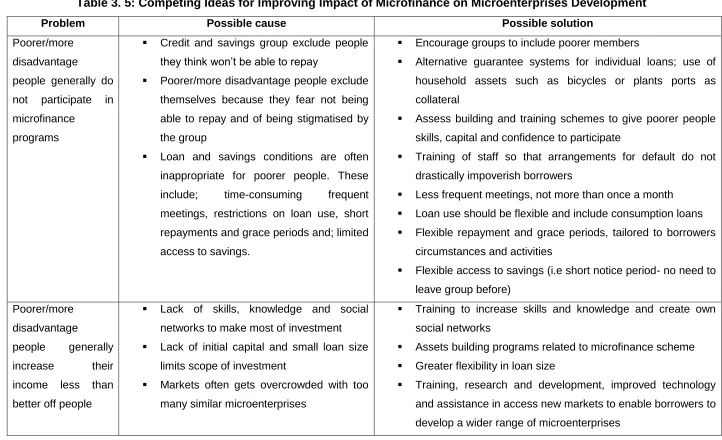
Table 3. 5: Competing Ideas for Improving Impact of Microfinance on Microenterprises Development ... 69
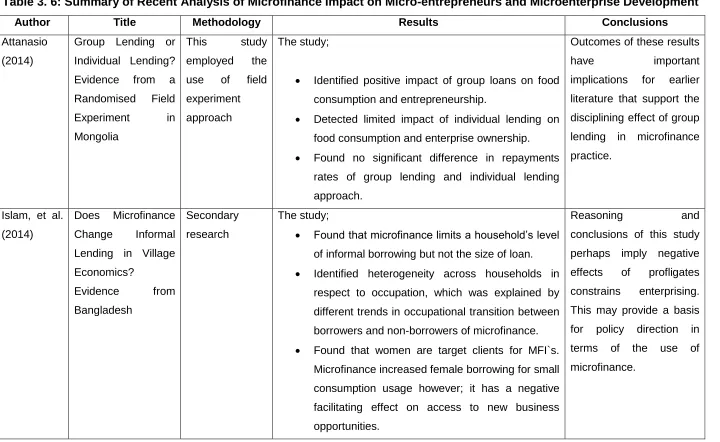
Table 3. 6: Summary of Recent Analysis of Microfinance Impact on Micro-entrepreneurs and Microenterprise Development ... 72
Chapter 4 Table 4. 1: General Approaches of Research Methods... 83
Table 4. 2: Guidelines for Selecting Sample Areas ... 95
Table 4. 3: Operational Framework for Variable Measurement ... 97
Table 4. 4: Chi Square Distribution: Probability level ... 103
Chapter 5 Table 5. 1: Profile of Micro-entrepreneur ... 111
Table 5. 2: Reasons for Starting a Microenterprise……….. 116
Table 5. 3: Microenterprise Profile ... 120
Table 5. 4: Statistical Analysis of Change Factors controlled by MFI ... 126
vii
Table 5. 6: Cross Tabulation and Frequency Analysis of Savings Attitudes ... 132
Table 5. 7: Microenterprise Attitude Towards Risk……….. 140
Table 5. 8: Profile of Loan Officers ... 143
Table 5. 9: ANOVA Analysis ... 158
Table 5. 10: Coefficients ... 162
Table 5. 11: Descriptive Analysis of Credit Recipients Performance ... 176
List of figures Chapter 1 Figure 1. 1: Research Outline and Structure ... 6
Chapter 2 Figure 2. 1: Administrative Map of Ghana ... 10
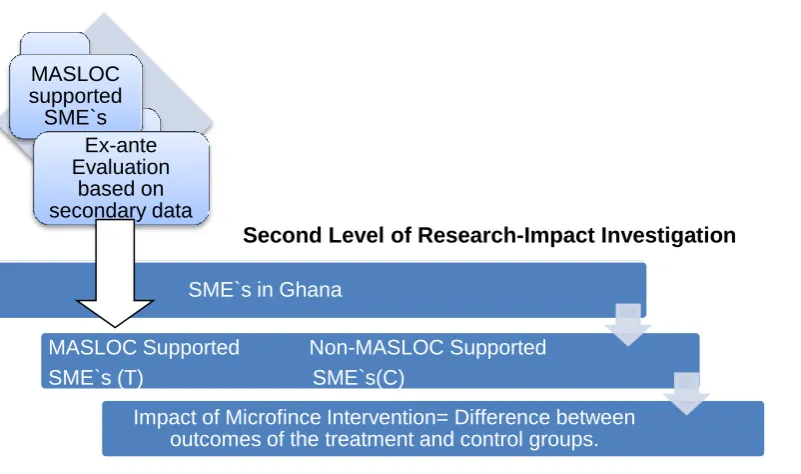
Chapter 3 Figure 3. 1: Control Group Design-First Level of Research-Establishing the Counterfactual Condition ... 51
Figure 3. 2: A Cycle of under Economic Performance... 53
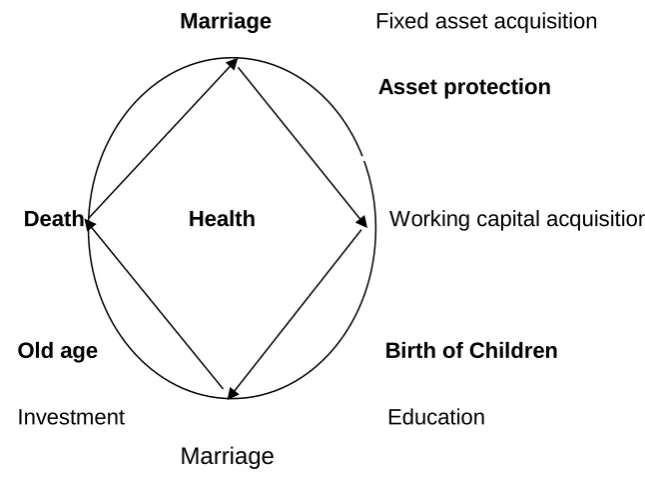
Figure 3. 3: Life Cycle of a Typical Microfinance Client in Ghana ... 62
Figure 3. 4: Research Conceptual Framework ... 66
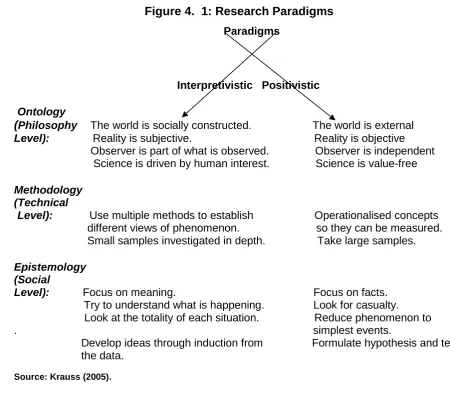
Chapter 4 Figure 4. 1: Research Paradigms ... 82
Figure 4. 2: Quantitative Data Coding Process ... 102
Figure 4. 3: Interactive process ... 104
Figure 4. 4: Qualitative Data Coding Process ... 105
Chapter 5 Figure 5. 1: Statistical Triangulation of Microfinance Impact ... 123
Figure 5. 2: Schematic Analysis of Constraining and Facilitating Factors of Microfinance Capacity for Microenterprise Development ... 155
viii
Figure 5. 4: Gender Constraint ... 159
Figure 5. 5: Education Constraint ... 160
Figure 5. 6: Microenterprise Location Constraint ... 162
Figure 5. 7: Creating Ecosystem to Exit Poverty ... 179
ix ABSTRACT
Poverty has adverse impact on economic growth, human dignity and wellbeing. Therefore, experiments with microloans to tackle financial exclusion and underinvestment have positive implications for development economic theory and practice. However, drawing on microfinance analysis, often, the three dimensions of microfinance impact-poverty, empowerment and microenterprise development are evaluated together (Hermes and Lensink, 2011; Duvendack and Palmer-Jones, 2012; and Banerjee, et al., 2013). Ledgerwoods (1999) have argued that this recurring theme in impact studies in Ghana shows the existing evaluations and outcomes have lumped microfinance impact (Annim et al., 2008 and; Adjei and Arun, 2009). Moreover, Karlan and Goldberg (2007) suggested that investigating the
impact of microfinance on each of the above elements independently is desirable as it enables policy makers to develop more targeted policy tools.
x
DEDICATION
xi
ACKNOWLEDGEMENT
I am grateful to my supervisors; Prof. Javed Hussain and Prof. Harry Matlay. I wish to thank you all for encouraging me and for the support to complete my research. Discussions with you about both my research and career have so far proved to be positive. In particular, Cath Eden has provided all the administrative support that proved to be extremely helpful throughout my PhD studies.
I am particularly grateful to my family. Words cannot explain my gratitude to my father, Aunty and the entire family for all of the sacrifices they have made on my behalf. I would especially like to thank Bernard Anbataayela Mornah; I have received generous support from you, for which I am eternally grateful. At the end I wish to extend my appreciation to all my friends especially, the Nang-Bayi`s who supported me at my difficult moments.
1 CHAPTER 1
1.0 INTRODUCTION
Experiments with microfinance in Bangladesh and similar context aimed at promoting credit availability for microenterprises has yield various evidence of positive outcomes (Hulme and Moore, 2006; Pitt, et al., 2006; Fernando, 2008; Ahmed, et al., 2009 and; Rahman and Nie, 2011). Moreover, the presence of microfinance services in developed nations like; the United Kingdom, France, Finland and America have helped improve isolated cases of credit inequality (Forster, et al., 2006; Kneiding and Tracey,
2009 and European Banking Federation, 2010). Against this background,Claessens, et
al. (2009) have argued that microfinance is viable as a long term strategy for providing finance to microenterprises that are overlooked by banks. According to Mwenda and Muuka (2004) often, micro-entrepreneurs are poor and faced with credit barriers such as absence of collateral and information asymmetry. Presence of credit access barriers crowds out finance and savings avenues which weakens microenterprises growth process. Thus, microfinance aims to create a sustainable source of financial services that will promote economic activities for the poor to improve their quality of life (Schreiner, 2003). According to Armendáriz (2009) MFI`s that exist in developed countries are often in the form of Cooperative and Trust schemes such as; the Princes Trust in the UK and Opportunity International Savings and Loans in the US. In poor countries however, structure of microfinance vary tremendously; ranging from
unsupervised small to medium size lenders as well as established savings and loans schemes.
2
a broader term than microcredit-whereas, microfinance represents provision of several finance products including credit, microcredit is used to describe the provision of only credit (Qudrat-I Elahi and Lutfor Rahman, 2006).
1.1 Statement of the Problem
Microfinance became a popular strategy for developing microenterprises in Ghana after several success stories were reported on the positive impact of Grameen Bank activities on the poor in Bangladesh (Schreiner, 2003). Especially, as a means of credit that support women entrepreneurs reduce poverty and overcome major challenges to borrowing such as; repayment modalities, collateral and male
co-signer for females (Pitt, et al., 2006). According to Karnani (2007) financing
microenterprises improves income generation opportunities for the poor, which subsequently, promotes livelihood, female empowerment, increase household income and school going rate for children. Furthermore, Roy (2010) suggests MFI`s have made it easy for microenterprises without collateral to borrow as low as $100 and pay weekly, monthly and bimonthly instalment over a long period of time. Often, little instalments arrangements attracts microenterprises in Ghana to microfinance and perhaps, explains the positive usage and repayments rates reported by MFI`s in places
such as Ghana; between 90 to 100 percent repayment performance (Ahlin, et al., 2011).
3
impact (poverty, empowerment and microenterprise development) separately improves design of strategies that are targeted at specific developmental projects. Therefore, this research study is focused on investigating the existing relationships between provision of microfinance and microenterprise development in Ghana. This analysis will help determine whether use of microfinance gives rise to positive outcomes for microenterprise projects. To this end, the results and findings of this investigation are expected to conceptualise that microfinance impacts positively on beneficiaries. Also, the conceptual model this research intends to achieve is expected to offer a unique ecosystem of interconnected market actors that provide multiple financial services to microenterprises.
1.2 Aim (s) and Objectives of the Study
1.2.1 Aim of the Investigation
The aim of this research study is to investigate the impact of microfinance on microenterprise development in Ghana.
1.2.2 Objectives
1. To investigate, using the growth profiles of microenterprises, the relationship between the provision of microfinance and microenterprise development in Ghana.
2. To analyse characteristic factors that constrain the capacity of microfinance for microenterprise development in Ghana.
3. To critically evaluate the appropriateness and efficiency of existing models used by microfinance institutions to deliver finance to microenterprises in Ghana.
4 1.3 Key Research Question
1.3.1: Is there a relationship between the provision of microfinance and growth in microenterprise development in Ghana?
The first research question that emerged from the literature review is concerned with the role of MFI`s services in promoting economic activities for micro-entrepreneurs. In the context of this study MFI`s services are described as; credit, savings, business training and social networking. Thus, to identify relationships of these services with microenterprise activities, how they impact microenterprise rate of employment, revenue, capital stock, savings ability and social networks are reviewed and
analysed.
1.3.2: What characteristic factors constrain the capacity of microfinance for microenterprise development in Ghana?
The second research question relates to unique characteristic factors of micro-entrepreneurs and microenterprises that impede or facilitate their access and use of
microfinance. Analysis of literature shows that in some cases unique characteristics such as; micro-entrepreneur gender, age of micro-entrepreneur, micro-entrepreneur
level of education and location of business constrains microenterprises access and use of microfinance. However, in other cases too these unique variables have supported microenterprises access and use of microfinance. These characteristic factors are considered to enable the study examine variables that may constrain or facilitate microenterprise development. In this context, factors identified as constraining will be avoided and those that are seen as facilitating microenterprise growth will be further developed.
1.3.3: How appropriate and efficient are the existing models used by
microfinance institutions in Ghana to deliver finance to microenterprises?
5
microfinance have led to the design of other MFI`s lending models that are unique and relevant to the geographical context of microenterprises. In some situations, innovations and experiments with microfinance models have strengthened microenterprise access to finance, but in other situations they have weakened the rate of microenterprise access to credit. Thus, this research aims to identify the strengths and weakness associated with these existing lending models to improve their use for providing finance to microenterprises.
1.3.4: How can microfinance be best modeled and delivered to promote microenterprise development in Ghana?
The fourth research question is concern with identifying an appropriate lending approach that has potential for delivering microfinance to microenterprises more effectively. On the one hand, evaluations and outcomes of analysis show high interest and short repayment periods that are negative for microenterprises performance are associated with use of particular lending models. On the other hand, high transaction and administrative cost that impact negatively on MFI`s ability to deliver finance at low cost may also be due to lending approaches adopted. Against this background, this study will analyse existing models to enable it design or propose a lending approach for the effective delivery of finance for microenterprise development.
In other to find answers that fill gaps in the literature and practice of microfinance, using results from analysing existing microfinance literature and field data, this study have constructed a conceptual model that addresses impact of microfinance practice
on economic activities of micro-entrepreneurs. The aim is to text this model in Ghana with a view to propose it for use by MFI`s. This will also have significant implications
6
Study Outline: Figure 1.1: Research Outline and Structure
Step 1: Research problem discovery and definition (chapter 1-3)
Research aim(s) and objectives
Background of microfinance in Ghana
Identification of microfinance structures and impact model and generating of study variables
Theoretical background of the impact study
Conclusions
Step 2: Research methodology (Chapter 4)
Philosophy of research methodology
Selection and justification of the research method
Research design
Statistical design
Operational design
Validity and reliability of Research
Conclusions of the reviewed literature
Step 3: Data analysis (Chapter 5)
Quantitative analysis (Stage.1)
Descriptive statistical test,
ANOVA and cross tabulation
analysis
Quantitative analysis (Stage 2)
Regression analysis and
Pearson r statistical test
Qualitative analysis (Stage 3)
Direct content analysis
Design of the conceptual framework
Step 4: Conclusions and recommendations (Chapter 6)
Summary of significant research results
Research contribution to microfinance knowledge
Recommendations and limitations of research study
7 CHAPTER 2
2.0 CONTEXT OF THE STUDY
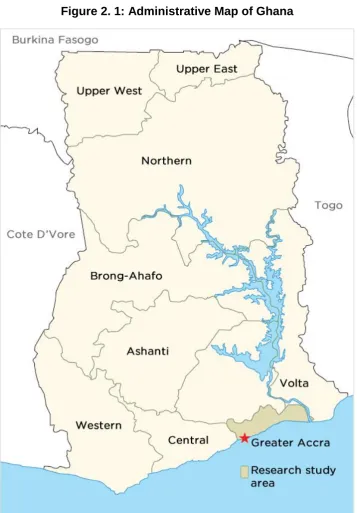
Ghana is an independent state and is situated on the Atlantic Ocean towards the west of Africa and with a land size of 227,540 sq. km. Ghana is divided into ten administrative regions. The regions are; Upper East, Ashanti, Greater Accra, Upper West, Central, Volta, Eastern, Western, Northern and Brong Ahafo (Figure 2.1). Accra is Ghana`s capital city and the seat of Government is located here. Ghana operates a presidential system of Government with a parliamentary democracy. Although, Ghana is an English speaking country, she shares borders with three Francophone countries. The west of Ghana is bordered by Ivory Coast; to the north is Burkina Faso, to the east lies Togo whiles the south border is delineated by the Atlantic and Gulf of Guinea. Ghana has a tropical climate with two seasons; cold or the wet season and the dry or hot season. Being a predominantly agricultural and extractive resource country, most of the farming is carried out during the wet or cold season often, by the poor in rural areas. Whiles the rich natural resources such as gold, diamond, manganese, bauxite and ore are extracted throughout the year.
Due to her rich natural resources Ghana was named the Gold Coast by the British when it became officially a colony under the rule of the crown Queen-Victoria in 1884 (Knoll and Hiery, 2010). However, Apter (2008) suggests that in 1957 Ghana gained independence from British rule and subsequently, attained a full republic status in 1960. Therefore, the name Ghana was adopted after the country gained independence from British rule and it is interpreted to mean “warrior King”. According
8
explains why the rest of Sub-Saharan Africa about the 1950s, implemented welfare programs with a view to provide basic needs for the poor. However, analysis of dependency theories suggests that although welfare practice supports the poor, it constrains private sector development (Smallbone and Welter, 2008; and Jenkins, 2013). Often, relief-giving weakens the economic behaviour of poor people by fulfilling conditions whose absence are necessary to trigger entrepreneurial behaviour (Piven and Cloward, 2012). The question thus is; has welfare practice, following Ghana`s independence constrained potential for the poor to start their own business?
According to Rothchild (1980) military coup de tats in the 1970s antagonised government led initiatives that promoted welfare and economic growth of the poor in Ghana. Military interference and suspension of civilian governments projects constrained resource and impeded the poor`s access to welfare and ability to
participate in enterprise activities (Oquaye, 2004). Affordable housing initiatives such as the “Low Cost” projects, power supply, roads construction and government
funded development banks became weak thus, the enabling business environment that was beginning to improve started to deteriorate again. According to Altenburg Von Drachenfels (2007) business enabling factors such as access to credit, physical and institutional infrastructure is needed to attract increase participation in economic activities in poor areas. Thus, it may be argued as Akosah (2013) did, that Ghana was characterised by a weak economy and became prone to high inflation, high
interest rates and deficient entrepreneurial practices or what is known as “kalabule”
in the Ghanaian parlance. However, since 1992 Ghana has maintained successive democratically elected governments. According to Whitfield (2009) this experience denotes Ghana as peaceful and a significantly progressive nation in Africa. Moreover, Gyimah-Boadi (2009) argued that Ghana has provided support to good governance initiatives promoted by the African Union, the Commonwealth of Nations and the United Nations.
9
Services Department. According to the Ghana Statistical Service (2012) Ghana`s population is estimated to be 24, 263,000 compared to 6.7 million at the time of attaining her republic status. This thus, represents a total 181.47 percent change in Ghana`s population from 1960 to the time of conducting the last population census. Almost half of Ghana`s population live in deteriorating conditions today with basic needs such as healthcare and water still lacking. The use of outdated farming tools coupled with absence of improved seeds and finance to cultivate affects ability of small-holder farmers in Ghana to improve crop yield. Perhaps, the development support strategies designed after 1957 are weak to sustain the demand of a rising population of 2.2 percent rate per annum. Also, it is probable the case that, military governments that ruled Ghana in the 1960s and 1970s provided little attention to development projects that promoted economic and social inclusions of the poor. Recent evidence from Zambia (2010) suggests history of coups, food shortages and corruption means Ghana remains indebted and the population is poor. Therefore, it
10
Figure 2. 1: Administrative Map of Ghana
Source: Reconstructed by Author, 2014 (From: The Ghana High Commission, London, UK)
2.1 Background of Microfinance in Ghana
According to Kotir and Obeng-Odoom (2009) the increasing use of microfinance to support small enterprises in Ghana shows microfinance maybe effective for Microenterprise Development (MED). Moreover, Fsfchamps, et al. (2011) have argued that microfinance and microenterprise development strategies are geared towards economic improvement for low-income households in Ghana. Furthermore, Dupas and Robinson (2009) view microfinance and microenterprise development as
U U
N
B
T
11
all aiming to develop businesses and offer financial products in the context of strengthening market capacity to fulfil the basic needs of the poor. In this regard therefore, both microfinance and microenterprise development provides a small scale, subsidised and highly targeted strategy for poverty reduction in Ghana (Whitfield, 2005). At the same time, a major area of difference that exist between microfinance and microenterprise development strategies especially in Ghana, are in the manner the strategies contribute to poverty alleviation. That is whereas, microfinance approach is generally a financial system strategy used to address lack of access to financial services in Ghana (Weber, 2006; Terberger, 2013 and Banerjee, et al., 2013); microenterprise development approach provides a market strategy that has potential to boost economic growth for the poor in Ghana (Servon, 2006; Midgley, 2008 and Choudhury, et al., 2008).
Meanwhile, the primary stakeholders of microfinance in Ghana have always being
informal business men and women who come together to save and take microloans from groups and individuals to pursue microenterprise development. According to the Bank of Ghana (2007) these small loans support recipients to start their own microenterprises or farming ventures. However, Alabi, et al. (2007) has argued that in spite of the common use microfinance is often put into by recipients, its nature and spread in Ghana appears to have experienced significant changes in the last century. Kotir and Obeng-Odoom (2009) who later analysed microfinance in Ghana reached similar conclusions, arguing that microfinance changes in Ghana started before colonialism and persisted throughout the socialist orientation periods that followed her independence.
12
experiences of credit inequalities perpetuated by absence of competitive banking practices impacted negatively on microenterprise growth in Ghana. However, according to Aryeetey (1998) in the 1990s government responded to these finance constrains through the use of poverty intervention projects (in the form of microfinance) that lowered credit access barriers for peasant farmers and micro-entrepreneurs to borrow. In particular, Addae-Korankye (2012) argued that PNDC law 328 was promulgated to allow the creation of non-banking financial institutions like credit unions, savings and loans companies to provide finance to microenterprises. On the flip side however, a careful evaluation by Asamoah (2011) indicates these interventions failed to meet their objectives, and above all, failed to improve the livelihood of micro-entrepreneurs and their microenterprises (Addae-Korankye, 2012). Describing the initial results of the financial reforms as generally
negative, Abor and Biekpe (2007) identified four weakness that impeded banks’
ability to meet the financing needs of the informal sector in Ghana at the time about,
the early 1990s. Firstly, they argued that not much was done in terms of assessing the impact of macroeconomic policies on microenterprise development in Ghana. Secondly, in their view due to the lack of a free financial market, credit was supplied to people with influence and power rather than “economic active” individuals;
resulting in failed investments and non-performing loans. Thirdly, they argued that the arrival of cheap credit from government sources weakened the performance of informal sources of credit; which are traditional access points of credit for microenterprises. Finally, they concluded that failure of these poverty projects to develop savings and deposit-taking facilities denied microenterprises important services that they require to be economically inclined. Perhaps, the inherent weakness in these reforms explains why bank services for small enterprises further stagnated about the later 1990s. According to Owusu-Antwi (2011) in the late 1990s, Ghana`s financial market was characterised with experiences of raising interest rates; surpassing 50 percent per annum. This implies that adverse term of loans from money lenders worsened therefore, Quartey (2005) concluded that there was no way the systematic deteriorating conditions of the financial sector could be immediately reversed. Given these conflicting reports, it is important to analyse and understand whether earlier studies conducted on the impact of financial sector
13
However, in about the early 2000s, new financial strategies coupled with new credit market reforms were implemented to increase sources of credit and reduce cost of finance for businesses (Bawumia, et al., 2008 and Bawumia, 2010). For example, Adu, et al. (2013) argued that new reforms to Ghana`s financial sector in the early 2000s may have resulted in increased number of public MFI`s that provided credit; which impacted positively on cost of credit in the mid-2000s. Consequently, interest rates plummeted to 11.45 percent. Ultimately, provision of credit to businesses at interest rates of 11 to 12 percent has potential to spur economic growth for a poor country that has experienced several coups and lack infrastructure to constitute a good business environment (Ahiawodzi, 2013). Unfortunately, microenterprises in Ghana within this period, about the early 2000s remained constrained by access and unfavourable cost of finance due to information asymmetry challenges (Adusei and Appiah, 2012). Banks had no information on small businesses credit worthiness and the administrative cost of providing credit to them was also high. Therefore, more
work needed to be done by way of introducing credit bureaus and new microfinance actors in the private sector to promote financial inclusion of microenterprises. In this regard, Asiama and Osei (2007a) argued that Government controlled microfinance institutions were opened up for private sector participation; this measure yielded a positive development in the microfinance sector. About the late 2000s, presence of new entrants, products and new practices were experimented every day on microfinance. Analysis of Egyir and Akudugu (2010a) shows that by 2007 MFI`s in Ghana had more outlets than the commercial banking system. Today, MFI`s in Ghana are probably reaching fifteen percent of the country`s population.
Moreover, in 2007 the government of Ghana committed to attain a middle income status by 2020 (Adjei, et al., 2009). Thus, the government identified microenterprise development as an engine of growth and microfinance as a strategy to drive this growth (Alabi, et al., 2007). Due to this the microfinance industry in Ghana received government support and started to experience a significant positive growth. Unfortunately, majority of microfinance providers within this period were still informal rotating credit schemes that are often excluded from banking supervision. Therefore, the objective to boost economic growth without a re-regulation of the microfinance sector was going to be difficult. After some analysis and evaluations of microfinance
14
were advocated for in this regard. In particularly, Asiama and Osei (2007b) suggested that by 2010, the regulatory analysis and outcomes had provided measures to mitigate failures that gave informal credit providers absolute market control thereby, giving way to dynamic efficiency.
Over the years therefore, the Ghanaian government has undertaken rigorous financial sector reforms that have influenced the context for development of microfinance institutions and microenterprises in Ghana (Mucalov, 2008). Government and private sector interventions have been particularly devised to implement the Microfinance Concept-which promotes the delivery of efficient credit to microenterprises. For example, The Rural Financial Services Project ((RFSP) was formulated in 2002 to aid the creation and development of an Apex Bank. The Apex Bank concept in the view of Gallardo (2002) supports three expected outcomes. The first expectation is that the reforms will enhance the capacity of Rural Credit Banks.
The second outcome is expected to strengthen Rural Microfinance Institutions operation capacity, thereby reducing the imbalance in access to financial service in Ghana. The final outcome is expected to provide expert support for Banking Supervision at the Bank of Ghana and the Rural Finance Inspection Department. Other progressive policies implemented includes; formulation of the Financial Sector Strategic Plan (2003); the Community Based Rural Development Programme (CBRDP); the Micro, Small and Medium Enterprise Project; the Social Investment Fund (SIF); the Rural Enterprise Project (REP) and; the Microfinance and Small Loans Centre (MASLOC).
The above policies and interventions eventually lead to;
A liberalisation of the microfinance sector: The sector opened up and
suddenly attracted public and private microfinance institutions with a competitive agenda to provide financial products and service (Ahmed, et al., 2009).
15
The establishment of a workable agenda and subsequent improvement in the
regulatory framework of microfinance policy and practise. For example, the formulation of the Ghana Microfinance Policy in 2002.
The efforts to develop a financial market that lend to microenterprises created on the one hand, three broad categories of microfinance sectors in Ghana;
The Formal Sector: Community and rural banks, development and
commercial banks and, savings and loan companies.
The Semi-Formal Sector: Cooperatives, credit unions and financial
non-governmental organisations.
The Informal Sector: Traders, moneylenders, Susu collectors and; rotating
and savings unions.
The reform programs also created on the other hand, five strands of microfinance stakeholders in Ghana. These include;
Microfinance institutions: Savings and Loans Companies, Financial NGOs,
primary societies of Credit Union Associations, Rural and Community Banks, Susu Collectors Associations, Savings and Loans Companies and, Development and Commercial banks with an interest in microfinance.
Microfinance umbrella bodies namely; Association of Financial NGOs
(ASSFIN), Association of Rural Banks (ARB), ARB Apex Bank, Ghana Cooperative Credit Unions Association (CUA) and Ghana Cooperative Susu Collectors Association (GCSCA).
Technical Service Providers; they support microfinance institutions with expert
advice.
End Users; they constitute the client base for microfinance institutions.
Supporting Institutions including; the Ghana Microfinance Institutions Network
(GHAMFIN), International Non-governmental Organisations, Universities, Research Institutions and the Ghana Government Microfinance and Small Loans Centre (MASLOC).
16
significant income-employment generating opportunities, and encouraging
indigenous investments (Ntifo-Siaw and Bosompem, 2008). Hence, it is very important to strengthen the links between microenterprise development and microfinance.
2.2 Challenges of Microfinance in Ghana
A lack of funding that improve MFI`s ability to lend to microenterprises many constitute a major threat to the microfinance sector in Ghana. This problem is even exacerbated by the global financial crisis that has persisted since 2008, and has reduced flow of funds from international donors to MFI`s (Kasekende et al. 2009;Caudill et al. 2009;Ndikumana et al. 2010). Even worse is the fact that the total assets of all formal non-bank financial institutions in Ghana are about 5% of total banking assets (Bawumia et al. 2008). This may mean that the penetration rate of the “formal microfinance institutions” is too low to make a real impact on the vast informal
sector of Ghana.
Other weaknesses of the microfinance sector in Ghana according to Bawumia, et al. (2008) are:
1. Market failure: Credit markets will operate effectively if supply and demand interacts freely. If market externalities are absent, and credit markets operate freely and competitively, supply and demand tends to meet at equilibrium (Garson, 2001). Often however, in Ghana problems of information asymmetry exist, which results in moral hazard and adverse selection problems. This classic principal-agent problem constrains the efficient interaction of market demand and supply mechanisms (Yaron, 2005).
2. Absence of a comprehensive regulatory legal framework for the microfinance industry. Though the formal financial sector in Ghana has a formal and strong legal framework to regulate its activities, the informal sector operates on a less developed and weak regulatory system.
17
lending is still limited despite the huge excess funds circulating in the conventional banking system in Ghana. For example banks still demand immovable property as collateral from microfinance institutions. Besides, funding for MFI`s from typical donors like the government come with strict conditions that perpetuate market imperfections.
4. There seem to be more attention on maximising profit to the neglect of other social returns. For instance, value added services of the Grameen model like; training and awareness on healthcare and child education are almost non-existent in the services of MFI`s in Ghana.
5. Lack of clear corporate governance structures. Boards of directors of most MFIs are not functioning properly. In many instances they are just mere group of friends of the owners or owner of the MFI appointed to rubber stamp decisions of the MFI without subjecting the running of the MFI to good corporate governance.
6. Lack of staff with knowledge in microfinance to manage the affairs of most MFIs. Most MFIs lack appropriate professionalism and capital for outreach programme.
7. Lack of proper linkages between formal and informal financial markets.
8. Lack of public trust for microfinance institutions due to activities and behaviour of some unscrupulous persons or group of persons in the past. With all these challenges there is perhaps, inadequate evidence to suggest that presence of
mass credit will automatically lead to viable business start-ups.
Some undesirable practices that also challenge the microfinance sector in Ghana
18
Table 2. 1: Undesirable Practices in Ghana`s Microfinance Sector
During Transaction Pre-Transaction Post-Transaction
Approval or denial of clients without clear basis or criteria
Clients are not given copies of contracts or other documents on their transactions.
Inappropriate or deceitful contract wording. Often, written
documents do not reflect agreed upon terms and conditions before transaction are made.
Forced terms of conditions (e.g., client’s ability to repay or to amortize is not considered).
Products cost higher than disclosed because of hidden charges.
Withholding of funds or imposition of penalties on cancelled loans, deposits or insurance plans within a few days of transaction without proper disclosure to the client.
Giving high or false expectations on interest on loans and deposits and; benefits from insurance.
Hard selling through home visitation, door-to-door solicitations, limited-time offers & intimidation.
Inadequate orientation seminars or consultations.
Unclear policies & lack of written or oral information on the true costs and benefits of the products /services being offered.
Promises of hidden rewards.
Inaccurate recording of client’s transaction.
Illegal and abusive behaviour on the part of loan officers such as; harassment to force clients to pay, imposition of unnecessary fees or surcharges and consolidation of debts at a higher rate.
Releasing borrower information to interested entities in violation of certain legal provisions (credit history can be shared but not personal information such as those related to deposits and other assets (Law on Secrecy of Bank Deposits) unless with consent of the client or as required under the Anti-Money Laundering Act).
Withholding of capital build-up or savings and insurance claims or benefits without valid reason or appropriate explanation or consent of the client.
Misuse or diversion of funds by recipients.
19 CHAPTER 3
A LITERATURE REVIEW OF MICROFINANCE IMPACT ON MICROENTERPRISE DEVELOPMENT.
3.0 Theoretical Perspectives 3.1 Introduction
To establish the impact of microfinance on microenterprise development, this chapter provides the history of the two key concepts-microfinance and microenterprise development, linkages and their underlying theoretical perspectives. To contextualise the role of microfinance a brief overview of the historical development in both microfinance and microenterprise development from the eighteenth century to the present day is provided. The impacts of the different microfinance models on microenterprise are reviewed, examined and analysed. Finally, conclusions are inferred and from the analysis of the literature reviewed the gaps in the research are identified and the proposed testable questions formulated.
3.2 History and Evolution of Microfinance
3.2.1 Microfinance as direct credit
Forms of informal credit similar to microfinance have existed in rural and urban markets for hundreds of years, perhaps predating 1800AD (Brau and Woller 2004; Seibel, 2005 and Envision, 2013). Informal credit providers at the time targeted micro-entrepreneurs and the methods used to provide the credit are consistent with today`s “susu” in Ghana, “chit funds” in India, “tandas” in Mexico and “arisan” in
Indonesia (Blavy, et al., 2004a). Micro-entrepreneurs within the 1800AD used cowries as tender for goods and services. This value of exchange dominated the most part of trade throughout the many centuries that followed 1800AD and eventually become the basis for the use of money for trade. Analysis and evaluations
of informal credit practice in India in about the 17th century, suggest money-lenders
capitalised on the monetisation of trade to start individual lending to promote economic activities. In this regard, Mehta (1991) argued that merchants such as artisans, goldsmith, fishmongers and cattle traders in India depended on loans from
20
to the informal nature of money-lending (Welsch, 2004). Small loan lending is not a prestigious job for literates and is often, practiced by people who lack formal skills and knowledge. According to Soares, et al. (2009) both providers and recipients of small loans in Africa, Latin America and Asia in the 17th and 18th century preferred informal credit arrangements. Studies from Adebayo (1994) and Rena (2007) are consistent with this view, they too suggest that evidence of credit was informally arranged and recorded on slabs and walls in the 18th century Africa. Repayment periods were determined based on traditional calendar dates such as; market dates or dry and wet seasons. Loans contracted from money-lenders were either repaid with farm produce or proceeds realised from the sale of goods and services. This may explain the widespread of this credit in Asia and Africa but with limited experience of use in Europe. Meanwhile, Birchall (1997) argue that for a long time micro-entrepreneurs have lacked collateral to access loans and laws that protect credit recipients have often been weak. Therefore, as time went by experiences of
increasing usurious money-lending practices constrained credit provision to microenterprises (Gregory, 1994).
Critical analysis of usurious money-lending experiences in about the 18th century showed negative impact of small loans on microenterprise development (Bateman and Chang, 2009). However, reviews of informal borrowing suggest micro-entrepreneurs formed local associations to improve impact of small loans on microenterprise development (Stephen, 2008). These local associations later became the major source of credit for micro-entrepreneurs who are mainly poor people, to borrow from. Access to credit is important to support the poor to develop a business and to exit poverty (Korth, et al., 2012). It will be interesting therefore, to determine if these isolated cases of positive informal credit are sufficient to described relationships between informal credits and microenterprise participation as strong.
Negative experiences of pass-on effects of informal credit focused attention on restructuring money-lending in the 19th century. Surprisingly, the restructuring process began in Europe. According to Birchall (1997) analysis, increasing absence of credit for micro-entrepreneurs in Europe prompted the use of small loan lending to address existing credit access gaps. For example, most countries in Western Europe in the 1830s considered small loans as viable for self-employment and financial
21
into co-operatives funds and their operations were aligned to existing formal bank activities such as; banking and record administration. In this context, evaluation of performance and outreach of the Irish Loan Fund that was founded in the 1830s indicates positive credit impact on microenterprises development (Bateman and Chang, 2009). Hollis and Sweetman (2004) suggested that similar credit funds were later experimented in Britain, Germany and Sweden about the same time, the 19th century. Therefore, positive outcomes of credit co-operative unions, presented what was known as a major political topicality for microcredit in Europe (Matlay and Westhead, 2005).
The most obvious contrast however, in the microfinance debate is between Western and Eastern Europe. Unlike Western Europe, the centrally planned economies of Eastern Europe in the 19th century generated little or no growth impetus for small loan schemes and by extension microenterprise development (Pelkmans, 2006).
Loan schemes were sometimes subsidised for political reasons and, in any event, bore no relationship to competitive performance of credit and co-operative unions.
Intra-industry trade hardly developed as a basis for quality competition and factors that facilitates performance of microenterprise finance were non-existent (Pelkmans, 2006). Indeed, the subsidised interest rate policy impacted negatively on relationships between microcredit and microenterprise development in Eastern Europe in the 19th century (Forster, et al., 2003).
22
accessing microenterprise finance. Thus, it is possible the co-operative credit
schemes that existed in the 19th and 20th century to provide credit to
microbusinesses targeted male micro-entrepreneurs. According to Mosley, et al. (2004) male owned microenterprises in some parts of Europe especially, in about 1910 experienced positive growth. Maybe, this growth has a relationship with the increased access to credit for male micro-entrepreneurs at the time. This is because Seibel (2005) who later examined microcredit development within the European context reached similar conclusions, arguing that co-operative union’s credit targeted
male owned microenterprises. Therefore, it is important to raise the question; whether previous analyses of recipient characteristics failed to facilitate equitable treatment for microcredit beneficiaries?
However, appreciation of the existing microcredit literature shows presence of credit and co-operative unions in North America and Asian countries further improved in
the 19th century. In particular, implementation of microfinance in America and Canada within the 1800s further deepened microcredit impact on economic development. As a result of the deteriorating labour conditions in Canada and America`s economy in 1850, the Perkins (2008) suggests that microcredit schemes were used to finance self-employment activities. Micro-entrepreneurs received microcredit from these unions and re-paid over several months. Most of the programs did not require borrowers to put up collateral. This enabled poorly paid labourers or farmers with few assets to access loans that helped them start a business (Morduch, 1999). Also, in some parts of rural Asia microfinance was used to promote microenterprises. For example, Bank Perkreditan Rakyat was started in Indonesia in1895 to provide credit to micro-entrepreneurs (Srnec and Svobodová, 2009). Similarly, about the 1880s, the Madras state in India, then under the British rule, started to draw the microfinance experience to develop microenterprises; over 9million entrepreneurs achieved access to loans (Michael, 1998). Also, micro-entrepreneurs in Bengal state in the 1800s, which became Eastern Pakistan at independence in 1947, have documented experiences of small loans use (Tenenbuam, 1993). The cooperatives in Pakistan later became inefficient, but the idea of group lending had already been established. Perhaps, after a significant period of modification, the group lending approach that began in Eastern Pakistan
23
(Nawaz, 2010). According to Mago (2013) Yunus did not start microfinance from zero. Quite uniquely, he improved upon understanding of savings and credit behaviours of the poor based on a blue print with an old history (Mago, 2013). Therefore, it will be interesting to find out if previous analyses and conclusions of the origin of the microfinance concept is adequately established.
According to Hannam and Cheng (2012) historical discourse aimed at improving money-lending analysis sets a strong background for a contemporary study of microfinance. In this context, the evaluations above and others (Armendáriz de Aghion and Morduch, 2000; Maldonado and González-Vega, 2008 and Stewart, et al., 2010) further provide learning outcomes on the impact and contribution of microfinance to development of the poor. Indeed, one significant learning outcome have come from Amanor (2012) who argued that high interest rates charged by credit unions often weakens access to microenterprise finance and impacts
negatively on contribution of bank credit to economic development. According to Sengupta and Aubuchon (2008) many experiences of high interest rates practices are reported in Asia around the 1800s. Analysis of cooperative credit schemes in Germany in 1846 further showed contribution of formal credit scheme approach to financial inclusion is weak (Seibel, 2005). Results from Underwood, et al. (2006) are consistent with conclusions made earlier; they too identified presence of credit malpractice with formal credit schemes in Sweden in the same period. Also, various triangulations (Mahmoud, et al., 2009 and Mago, 2013) of micro-lending activities in Africa about the same time, the 1800s, show information asymmetry problems may have also discouraged microfinance linear development. According to Rozycki (2006) without complete information about creditors, lending decisions are not optimised and the performances of credit providers are negatively affected. Perhaps, one interesting question that could be raised in this context is; do these negative situations generally weaken the average intended effect of microfinance?
3.2.2 Microfinance as Agricultural Credit
24
Evaluations and outcomes from (Amao, 2013) suggest that presence of adequate credit helps farmers to concentrate on productive farm investments. Kudi, et al. (2009); Badiru (2010) and Islam, et al. (2011) agree with this view, they argued that provision of microcredit promotes agricultural mechanisation among poor farmers. Often however, lack of collateral and information asymmetry problems hinders agro-enterprise access to credit (Egyir and Akudugu, 2010b). Perhaps it is in this regard, Islam, et al. (2011) argued that a provision of non-collateralised and low cost credit to farmers may help improve food crop production. According to Girabi and Mwakaje (2013) poor farmers prefer the proximity, non-collateralised low cost credit and appropriate repayment intervals rural development banks present them. Moreover, analysis from Ayegba and Ikani (2013) show rural development banks supplied subsidised loans that match the way farmers live and conduct business. There are other accounts that support that rural development banks provided direct credit that addressed the food production gaps in the 1970s (Schreiner and Woller, 2011).
Thus, examination of lending data collected from Ghana, Nigeria and Ethiopia suggests that a community-based provider approach presented well-performing and cost-effective non-collateralised finance to farmers (Essien, et al., 2013).
However, understanding of the rural development bank concept and practice indicates it is difficult for a development banking to thrive under unstable socioeconomic environments that may have existed in Sub-Saharan Africa around the 1980s (Aliou and Zeller, 2001). Especially that, Nair and Fissha (2010) have argued that the overly dependence on unstable governments for funding, coupled with poor investment decisions, led to depletion of loanable funds that caused rural banks at the time, about 1985 to be abandoned. In particular, the practice of government funded rural development banks in Ghana, to off-set overdue loans owed by farm businesses belonging to their compatriots later weakened the Agricultural and rural Development Banks (Harper, 2007). It is possible this practice contributed to the limited presence of enterprise finance at the time. This experience accords with observations in the 1800s, which showed the failure of markets to support the “unbankable” poor. That apart, the generalizability of research work on
microfinance products is quite problematic. The positive outcomes reported on the food security concerns can be at variance with other studies. For example, according
25
comparatively, realises a lower net crop income due to repayment of high interest on loans than their counterparts who do not. Another major study in Zambia showed that borrowers who were not able to qualify for a second loan became worse of due to negative impact of MFI`s loan collection mechanisms (Duvendack, et al., 2011). Examples such as; Fielden, et al. (2010) also abound where increased access to credit did not corroborate with development of economic activities. Therefore, it will be interesting to investigate whether variations in study outcomes limit the general inference of positive microfinance impact.
3.2.3 Grameen-Credit
One stream of development research is focused on “Grameen Credit”-a model
developed in 1975 by Muhammad Yunus in Bangladesh (Rahman, 2011). Grameen Credit is a method of giving loans in a group setting, commonly called microcredit (Karlan and Goldberg, 2007). Grameen Credit is the symbol of Microfinance in the world today and Grameen Bank, is the institutionalised version of this credit (Shil, 2011). Yunus derived the name “Grameen” from the word “Gram”- which means village or rural in Bangladesh. However, he used the term “Grameen Credit” in a
context that encompasses a provision of subsidised credit, economic training and business networking to microenterprises.
26
the poor. Maybe the positive stories of microfinance impact in Bangladesh denote provision of microenterprise finance overshadowed existing charity programs that
supported group projects in Bangladesh at the time (Gehlich-Shillabeer, 2008).
According to Zaman (2004) analysis of factors that led to the scaling-up of microcredit in Bangladesh, it was these emergent inclusive finance mechanisms that later converge into a standardised credit system known as “Gameen Credit”.
However, for some time now, the Grameen model has being going through various modifications to meet the needs of new market niches. According to Yunus (2011) Grameen bank has created relationship networks and provided business training in addition to the existing credit facilities available to microenterprises. Zaman (2007) discussed cases of Grameen practice in Bangladesh and concluded that the model have improved the productive capacity of microenterprises through training and relationship building. Yunnus concept is by this, grounded in the view that microenterprises are not constrained by only access to credit. For which, Armendariz
de Aghion and Morduch (2000) later argued that microenterprise desire a comprehensive set of financial services to improve their performance.
Mix Market (2010) have demonstrated that big businesses that have access to a variety of financial services experience positive outcomes thus, in her view microenterprises also require formal financial services to improve their performance. Accordingly, Mersland and Øystein Strøm (2009) argued that MFI`s need to be more client-focused and offer a mix of financial services that will provide microenterprises access to bank accounts and business networks. Similarly, Cook et al. (2003) analysed business training models from MFI`s and found p,ositive relationships between training and microenterprise success. Karlan and Valdivia (2011) reached the same conclusions that business training and social capital facilitates microenterprises growth. Al-Hassan, et al. (2011) regression results equally suggested that microfinance beneficiaries’ ability to affect increase incomes is
significantly determined by their level of training and market access. Thus, is it possible that, where credit is not link to training, it may not impact positively on the increase incomes of microenterprises?
27
development. This is consistent with some studies that attribute widespread practice of savings and loans schemes to the success of Grameen Credit in Bangladesh (Sengupta and Aubuchon, 2008 and Westover, 2008). Furthermore, Morduch (1999) found that the Grameen model had been experimented in places such as; China, Mali, Ethiopia, Bolivia, Tanzania, Sri Lanka, Vietnam, Honduras, The Philippines, India, Malaysia, Chile and Thailand. Similarly, Shil (2009) found that the Grameen model is used in the Unites States, Canada and Australia to scale up existing programs that supports the poor. Therefore, there is considerable information in support of the Bangladesh experience. However, Grameen Credit is sometimes considered similar to the failed numerous informal credit systems that earlier on provided collateral-free loans to microenterprises (United Nations, 2006). Especially that, a critical evaluation of grameen credit operation revealed major weakness such as; inability to reach the poorest of the poor, high cost of credit, insufficient credit and early repayment of instalment before establishment of business (Ali, 2008).
Furthermore, Al-hassan and Abdul-Malik (2011) analysed a cross-sectional data obtained from 414 women, and reported that the Grameen-Ghana program did not produce a significant improvement in the income of women processors. Such
evidence shows associations between grameen credit and increased
microenterprise activity are unclear, prompting a question whether microfinance can truly make the poor productive entrepreneurs?
3.3 How does Grameen Credit Work?
According to Pitamber (2003) Grameen Credit is not unique and, that the Grameen bank has improved upon the older forms of microfinance lending. However, major studies that explored barriers of borrowing including repayment modalities, collateral and male co-signer for females disagrees with this view (Dowla, 2006; Sarkar 2008 and Muhammad, et al., 2012). Indeed, evidence from Perkins (2008) and Envision (2013) studies suggested that the first serious analysis of microfinance emerged during the 1970s. In the view of Schreiner (2003) it was at this time an original form of finance known as “grameen credit” was being offered to the poor in Bangladesh.
Moreover, Nuhu, et al. (2014) evaluations of Grameen Credit provide conclusions that suggest it’s an innovative financial strategy that support agro-entrepreneurs to
28
produced some of the most comprehensive accounts on grameen credit, they are conflicting accounts. Maybe, it will be interesting to further analyse to identify and understand innovative functions of microfinance.
According to Yunus (2003) micro-entrepreneurs have the capacity to be productive however, access to financial services is held back from them due to a lack of collateral. Against this background, he suggested certain methods of solidarity that could replace the material guarantees required by banks to issue credit (Karlan, et al., 2009). In the view of Dusuki (2008a) this was how the use of solidarity as collateral became prominent and widespread among Microfinance Institutions (MFI`s). Perhaps it is based on this account, Karim (2008) and; Kuhinur and Rokonuzzaman (2009) conclude that increasing awareness of microfinance is largely due to the principles and practice of Grameen Credit.
In comparison to conventional banking, it appears some banking practice identified in the modern development finance literature are unique to MFI`s. For instance, in order to get a loan people go to the conventional bank. Contrary, Grameen bank takes the loans to the doorsteps of their landless clients (Rahman, 2011). Moreover conventional banks are generally profit motivated, whilst Grameen seeks to provide financial services that will give the poor “ownership of assets”. Yunus (2003) remarked that the “Less you have, the more attractive you are, if you have nothing you will get the highest priority”. Thus, Grameen Credit is designed to give priority to
the landless and vulnerable. Approximately, 97% of Grameen borrowers are female. According to Roy (2010) grameen bank`s 23,144 credit officers work across 84,691 villages with the aim to deliver financial services to microenterprises to use for growth purposes. Furthermore, the Grameen system of financing provides an opportunity for MFI`s to implement programmes that will yield improved education, healthcare and social network formation. Often, this will close existing inequality gaps for women and children from low-income households (Armendáriz and Szafarz, 2011).
According Michael (1998) in Bangladesh, people who do not honor their debts turn
29
loans based on a principle of joint liability (Schreiner and Woller, 2011). A peer selection mechanism is employed by Grameen clients to recruit members into their lending groups. According to Wenner, et al. (2007) the group members then undertakes to enforce loan contracts and are therefore, responsible for each other’s
loans. Anytime a group member defaults in repayments the group is obliged to pay the loan with their own resources. If they do not, the group risk losing access to future loans (Al Mamun, 2012). The analysed literature shows that group guarantee is similar to the concept of group insurance. This is because the MFI uses a compilation of people to reduce risk; it is in every member’s interest to ensure that
the other members pay for their loans. This recipient interest deepens assurance and make MFI`s feel more secured about issuing non-collateralised loans. Okura and Zhang (2012) has published several articles on the social impact of group financing and has concluded that, for the most part, group financing is a better option than individual financing. Similarly, Mann (2003) have suggested that group credit is
profitable for MFI`s and hopefully, beneficial to microenterprises. This is because group lending lowers credit risk for MFI`s and provides the poor with access to credit (Abbink, et al., 2006). Against this background, Islam, et al. (2011) concluded that group guarantee peer selection and monitoring reduce MFI`s transactional cost and subsequently, yields interest rates lower than conventional lenders.
Development finance practice now prefers solidarity ahead of material collateral for poor people who want to borrow from banks. Yunus (2003) belief that “the more you have, the more you can get”. That’s why more than half the world`s population which
is poor needs loans to improve their ability to earn more (Rahman, 2011). Chowdhury (2007) shared this view and argued that micro-entrepreneurs will repay loans offered to them because credit enables them to accumulate assets that support loan repayments. Discussing the conceptual basis for solidarity collateral, Zeller and Johannsen (2006) argued that the Grameen experience induces faith in the poor to tap potentially profitable investment. This is because it is a strategy of poverty reduction that centers on self-help rather than direct income redistribution (Cull, et al., 2010). However, Al-hassan and Abdul-Malik (2011) has argued that microfinance impact alone maybe insufficient to justify that small business are