Canadian Chiropractors are not alone:
external advocacy in Ontario, 1902-2012
Douglas M. Brown, DC*
This article focuses primarily on Ontario, identifying a number of the profession’s allies and their advocacy effectiveness, under two main headings: The Ontario Chiropractic Association; and the Canadian Memorial Chiropractic College during the period of 1902 to 2012. While part of our success in gaining recognition has been attributed to intense lobbying by the profession, here the public support of several labour unions is reviewed. The part played by various politicians, educators, entrepreneurs, legal counsel, academic administrators and historians is also discussed.
k e y w o r d s : chiropractic, advocacy, Ontario,
historical
*President, Canadian Chiropractic Historical Association 281 Ridgewood Road,
Toronto, Ontario, Canada M1C 2X3 Tel.: 416-284-1168
Email: [email protected] ©JCCA 2013
Cet article cible principalement l’Ontario et distingue un certain nombre d’alliés de la profession et illustre leur efficacité de promotion pendant la période de 1902 à 2012, sous deux rubriques principales : l’Ontario Chiropractic Association et le Canadian Memorial Chiropractic College. Bien qu’une partie de notre succès à accroître une notoriété ait été attribuée à la pression considérable exercée par notre profession, on examine ici le soutien public de plusieurs syndicats. Le rôle joué par divers responsables politiques, enseignants, entrepreneurs, avocats, administrateurs universitaires et historiens est également examiné.
m o t s c l é s : chiropratique, promotion, Ontario,
historique
Introduction
There is an old joke that resonates with the chiropractic profession: “Just because I’m paranoid, you don’t have to pick on me.” Paranoia has been defined as “delusions of persecution.” Since the obscure birth of chiropractic in 1895, its persecution has been real, not imaginary and includes: internecine squabbling, occupational isolation, roadblocks to higher education, marginalization,
The Ontario Chiropractic Association (OCA)
Labour Unions
In 1902 the first chiropractor landed in Ontario1 and in 1925 they were included in legislation under the Drug-less Practitioner Act. While part of our success in winning legal recognition has been attributed to intense lobbying by the profession, we also received public support from labour unions and the United Farmers of Ontario (UFO).2 All but forgotten today, the UFO was founded in 1914 by the union of various farmers’ organizations. The UFO en-tered politics in 1918 and in 1919 surprised everyone by winning 45 seats and forming a minority government in Ontario, with Ernest Drury as Premier. Following its de-feat in 1923, the UFO declined steadily and disappeared in 1944, when it became part of the Ontario Federation of Agriculture.3 In 1937, organized labour played a key role in another significant source of legitimacy for chiroprac-tic; acceptance under the Ontario Workmen’s Compensa-tion Act. “However, by the early 1950s that connecCompensa-tion had all but disappeared. In 1952 Harry Yates, DC, then President of the Ontario Chiropractic Association (OCA), met with A.F. MacArthur, President of the Ontario
Fed-eration of Labour (OFL) to discuss the inclusion of
chiro-practic services in union contracts.” Yates learned that labour had little knowledge of chiropractic or what it had to offer and was advised by MacArthur to undertake a na-tional public relations program to raise our profile within the unions. The OCA accepted MacArthur’s advice and initiated a national campaign which proved successful. “By the early 1960’s chiropractic services were covered by a number of health and accident insurance companies, mostly via union contracts.”
The OCA and Canadian Chiropractic Association (CCA) realized they could directly influence roughly four million Canadians via the trade unions. In briefs to Royal Commissions on Workmen’s Compensation, in 1950 and 1970, organized labour consistently supported the pro-vision of chiropractic services and the right of workers to choose their own practitioners. Both Royal Commis-sions took the demands of labour seriously, rejecting at-tempts by the College of Physicians and Surgeons, On-tario (CPSO) and OnOn-tario Medical Association (OMA) to remove the services of drugless practitioners from the Workmen’s Compensation Act and recommending “that the freedom to choose a practitioner was a right and not
simply a privilege, and that this right should be enshrined in legislation.”4
The federal Liberal Party put a health care plank in its 1919 election platform but nothing came of it. During the Great Depression, the push for government assistance with health care costs gained momentum. By 1956, 50 percent of Canadians were covered by voluntary private or non-profit prepayment plans and there was increasing demand for a universal program to protect the public from catas-trophic expense.5 Back in 1945, Percy Bengough,
Presi-dent of the Trades and Labour Congress, appeared before
the Committee on Social Security urging the inclusion of chiropractic services under any planned public health in-surance schemes. “Similar resolutions were made by the
Civil Service Federation of Canada (1962), the Profes-sional Institute of the Public service of Canada (1964),
the Canadian Union of Public Employees, the Oshawa
and District Labour Council (1965) and the Ontario Fed-eration of Labour (1970).”6 Other pleas were made to the Royal Commission on Health Services by the British
Col-umbia and Nova Scotia Federations of Labour.7 Politicians
Established in 1929, the OCA soon discovered it was necessary to lobby members of the legislature. This in-volved getting to know them professionally and person-ally by submitting briefs, keeping Members of the Prov-incial Parties (MPPs) up to date on a variety of issues, seeking their advice on others, inviting members to speak at OCA conventions, frequenting Parliament and hosting collegial dinners. As well, a number of members and/or their families were receiving chiropractic care.
The OCA’s efforts bore fruit. One of their converts was
Murray Gaunt, a popular Liberal MPP from Huron
Coun-ty. Raised on a beef cattle farm near Lucknow, Gaunt was precocious and competitive. A member of the local beef club since age 12, he won the prestigious Queen’s Guin-eas, at the Toronto Royal Winter Fair in 1955, and gradu-ated from the Ontario Agricultural College at the Univer-sity of Guelph, in 1956.
that year and remained in politics until his so-called “re-tirement” in 1981.8
In 1964, Gaunt boldly charged the Minister of Health with discrimination and pressed for inclusion of chiro-practic services under Medicare, raising the issue again in 1965 and 1966. Then, in 1968 and 1969 he introduced an amendment to the Ontario Medical Services Insurance Plan (OMSIP) asking the government to immediately add paramedical groups, including chiropractic. Both amend-ments, also supported by the New Democratic Party (NDP), were defeated.
While the majority of pro chiropractic members be-longed to the Liberal party (the official opposition), there were exceptions. Alex Carruthers, was the Progressive Conservative (PC) member for Durham and served in the legislature from 1959 through 1975. In 1969, he spoke forcibly on behalf of Gaunt’s resolution, particularly as it related to chiropractic services.9 Carruther’s support was fortified by personal conviction. He and his family had benefited from chiropractic care for many years.10
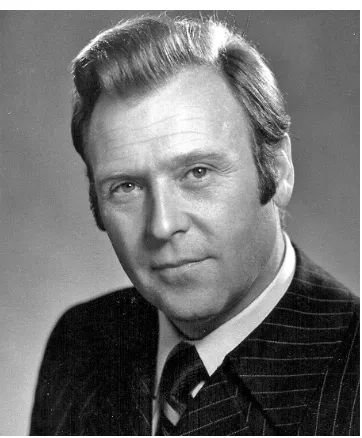
The medical profession was vehemently opposed to chiropractic joining Medicare and its position was but-tressed by the 1964 Report of the Royal Commission on Health Services and the 1963 Report of the Ontario Med-ical Services Commission, both of which advised against including chiropractic services within universal health pro-grams. It was traditional in Ontario for Ministers of Health to be medical doctors and Matthew Dymond, who served in this position from 1959 to 1969, was no exception. Dr. Dymond had practiced in Port Perry, Ontario in 1942, before leaving to serve in the Canadian Army Medical Corps, for the duration of World War II.11 Ironically, Port Perry was the childhood home of Daniel David Palmer, the founder of chiropractic and Dymond was destined to become “the greatest stumbling block to the inclusion of chiropractic services in Ontario’s Medicare program.”12 Fortunately, in 1969 the Ontario government amended its legislation, enabling it to meet federal laws, and the Ontario Health Services Insurance Plan (OHSIP) was passed. This rendered Dymond’s position politically untenable, causing his resignation and replacement by Thomas Wells, the first non-medical practitioner to hold that position (Figure 1). Tom Wells was born in Toronto and educated at the University of Toronto, joining the campus PC association and playing football with William Davis. Wells was first elected to the Ontario legislature in 1963. His 1969
ap-pointment as Minister of Health, was welcomed by the profession since he “did not need to be ‘sold’ on the merits of chiropractic care or on the fact that chiropractors should be included in OHSIP… he and his department were more concerned about the costs of chiropractic care… ”13 July 1, 1970, chiropractic services were included in what would become the Ontario Hospital Insurance Plan (OHIP). Rob-ert Wingfield, DC, then President of the OCA, “was struck by Tom Wells’ concept that there should be no discrimina-tion in the applicadiscrimina-tion of coverage under universal health care.” Wells felt patients deserved freedom of choice and wanted all prime contact health practitioners to become portals of entrance, unlike the British system where family medical doctors were the only point of entry. [Wingfield, interview by Brown, July 10, 2008]
In 1970 chiropractic coverage was $5 a visit up to $100 per fiscal year, plus $25 for x-rays. By 1989 we had reached maximum OHIP payments of $9.65 a visit up to $220 a year, including $40 for x-rays. October 1, 1990, Robert (Bob) Rae became the first New Democratic (NDP) premier of Ontario. In 1991 Rae passed “Social Contract” austerity legislation, imposing wage freezes, cutbacks and “Ray Days” (mandatory unpaid days off) on most professionals.
June 26, 1995, Rae and the NDP lost the provincial elec-tion and were replaced by Mike Harris and the PCs.
while, by 1992 Tom Wells had retired from politics and was appointed Chair of a bipartite Chiropractic Review Com-mittee (CRC) comprising representatives of the Ontario Ministry of Health and the OCA. Important recommenda-tions in the CRC’s 1994 Final Report were: removing bar-riers to chiropractic services; accessing relative diagnostic procedures; and funding chiropractic education in universi-ties, in the same manner as other health professions.14 In 1995 the PC government began negotiating certain CRC proposals with the OCA and in September 1997, Jim Wilson, Minister of Health under Harris, was sched-uled to appear at the OCA convention to announce the improved benefits. At the last minute, Wilson cancelled his appearance. In October that year he was replaced by Elizabeth Witmer and December 1998, chiropractic servi-ces were cut by one third, to $150. There were no changes to chiropractic coverage from 1998 until 2003. October 23 that year Dalton McGuinty, leader of the Liberal party, was elected Premier of Ontario. December 1, 2004, “de-spite heroic efforts of the OCA and other organizations, the government… brought to an end more than 30 years of public funding for chiropractic services in Ontario.”15 Medicare was born in Saskatchewan July 1944, when its father, Tommy Douglas (as leader of what would be-come the NDP), was elected Premier. By 1946, everyone in his province had comprehensive hospital coverage and
July 1962, thanks to federal funding under PC Prime Min-ister John Diefenbaker, NDP Premier Woodrow Lloyd was able to install full Medicare in Saskatchewan. December 1966, the Canadian Parliament, under Liberal Prime Min-ister Lester Pearson, passed federal Medicare legislation that had been completely implemented in all provinces by 1972.
When chiropractic was delisted by OHIP in 2004, it rocked the foundations of universal health care in On-tario, causing tremors that would affect our patients coast to coast.
The Canadian Memorial Chiropractic College
Educators
Since 1945, the Canadian Memorial Chiropractic College (CMCC) has relied on “outsiders” to fulfill the College’s academic faculty requirements, particularly in the realm of basic sciences. In October, 1946, Acting Dean, Rudy Muller, DC, reported that “At the present time, we have enrolled a total of 227 students,”16 and by 1948 there were 346.
That year CMCC’s faculty consisted of five full-time “Chiropractic Professors” and four full-time “Basic Sub-jects Professors,” who had university degrees but no chiropractic credentials. Two of these, LH Colbeck and
HB Stevens, held the rank of Major in the Canadian Armed
Forces during World War II. Five part-time Chiropractic Professors and seven part-time students completed the basic sciences roster. The Clinic Director was a chiroprac-tor and one of his Supervisors a student. A chiropracchiroprac-tor was in charge of the Clinic x-ray staff, assisted by two students and the Laboratory was operated by a biologist, aided by two students. Muller declared this to be a far cry from “Ninety per cent of the Colleges in the United States (that) have anywhere from fifty to seventy-five per cent of their instruction given by under-graduates.”
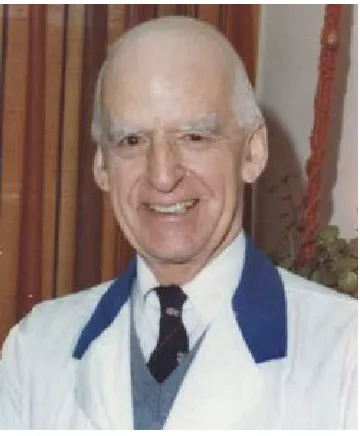
Toronto (U of T) faculty to teach basic sciences.” [Inter-view, Alan Adams by Joseph Keating, July 14, 1995]. Dr. Duckworth began teaching at CMCC in 1979, hav-ing served as a “storied” Professor and subsequent Head of the Anatomy Department at the U of T, 1952- 58. A Queen’s Physician and renowned anatomist, Duckworth “was instrumental in setting up relationships with the Chief Coroner’s Office to develop a viable body donation program.” The curriculum he established transformed “the anatomy department into a modern, fully enabled teaching entity with the tools essential to delivering first-rate anatomical instruction.”17 Dr. Duckworth has been described as a classically trained anatomist who believed the best way to learn the subject was by performing dis-sections. He died November 8, 1994, at age 82, still teach-ing at CMCC. In 1995, the College fulfilled one of John’s dreams; dedicating the JWA Duckworth Memorial Mu-seum of Anatomy, “As a tribute to his life and service.” The Entrepreneur
From 1959 to 1968 CMCC was embroiled in a horrendous fight with the City of Toronto over the expropriation and destruction of a major portion of the buildings on our first, one acre campus, at 252 Bloor Street West, during con-struction of the Bloor Street subway. The College sued the City for $1.5 million but after a nine year struggle, the case was settled for a paltry $143,000 plus interest but with no costs. By then CMCC was half a million dollars in debt. With title to the expropriated property not yet returned and a prohibition on building permits as the subway ran dir-ectly beneath the College, several parties were interested in buying the land but no one was willing to risk making a firm offer – except Gerhard Moog. Mr. Moog was a prom-inent land developer and a satisfied chiropractic patient, with financial and political clout (Figure 3).
In April 1968, we traded our Bloor Street campus to Moog for two acres of land and two buildings, to be erect-ed at 1900 Bayview Avenue. December 18, 1968, classes commenced at the new facilities totalling 54,000 square feet of space compared to 30,000 on Bloor Street. Whereas the old College had been evaluated at about $1.5 million, the new College was appraised at close to $2.5 million, but our original debt of $500,000 was now close to $1 mil-lion.18 June 5, 1971, Gerhard W. Moog received an hon-ourary Doctor of Humanities degree, at CMCC’s convoca-tion, in recognition of “his contributions to the College.”
Legal Counsel
John Burton was called to the Bar in 1927, and was practicing law in Vancouver, BC, when he married the daughter of Walter Sturdy in 1932. Dr. Sturdy is credited with being a driving force behind the creation of what would become the CCA, in 1943 and CMCC in 1945. Burton laboured tirelessly beside his father-in-law whom he joined as a founding director of both the CCA and CMCC. In 1943 Burton was appointed General Secretary and Solicitor for the CCA. That year he travelled 22,000 miles, and penned over 1,000 letters, organizing chiro-practors across the country. In 1953 Burton helped obtain a federal charter for the CCA and succeeded in obtaining chiropractic legislation in British Columbia, Saskatch-ewan and Manitoba.
“Although John’s first profession was law, his second was most certainly chiropractic. He was undoubtedly the most knowledgeable layman in matters pertaining to our profession.”19. In May 1975, two years before his retire-ment, John S. Burton was the second person to receive an honourary Doctor of Humanities degree, “In appreciation for many years of service to the CCA as Legal Counsel and General Secretary,” during CMCC’s convocation. Allan Freedman is an avid academic and distinguished lawyer, who has shared his talents, energy and substance with Canadian chiropractors for 36 years (Figure 4). In
September 1976, Freedman started his love affair with CMCC, teaching “risk management for chiropractors” to the 4th year class. Rising through the ranks from Lecturer to Full Professor, he expanded and refined his courses into what became, “Health Care Jurisprudence and Practice Development.” Prof. Freedman’s innovations included a “virtual reality” project, requiring his students to formu-late a detailed business plan they could implement upon graduation. His classes became standards of excellence in chiropractic education and the envy of other colleges. Freedman believes in lifetime learning. Since 1978 he has assisted with CMCC’s Department of Continuing Edu-cation, been a keynote speaker at many College events, appearing dozens of times before provincial and national Canadian chiropractic associations, societies, regulatory boards, medical, legal and university bodies. His resumé lists more than 40 peer-reviewed documents and he has written several substantial papers not yet published. By 1979-80, Freedman was acting as legal counsel to the College and its Board of Governors, where he remains devoted to solving the myriad judicial problems that beset CMCC on a daily basis, wise during negotiations with a variety of professional, political and government bodies and vigilant in protecting the College from harm, while enabling it to move ever forward. Freedman’s virtuosity and conflict resolution skills have benefitted other
organ-izations with ties to CMCC such as the OCA, the CCA and its Journal, the College of Chiropractors of Ontario, the Canadian Chiropractic Protective Association and the Canadian Chiropractic Examining Board.20
Dr. Allan Gotlib, Freedman’s boyhood friend, long ago “realized that Allan was filled with and fulfilled by, ideal-istic ambition. Over the years he has demonstrated extra-ordinary determination in the face of serious challenges. For his many traits but particularly for this, Allan has held my steadfast respect for over 46 years.” [Email, Gotlib to Brown, May 25, 2007]
David Chapman-Smith was introduced to chiropractic as counsel for the New Zealand Chiropractors’ Associa-tion, before the New Zealand Commission of inquiry into chiropractic, 1978-79 (Figure 5). In 1982 Chapman-Smith took a two year leave from his law partnership, moving to Toronto as a legal consultant, to assist the OCA during the development of new legislation to regulate the prac-tice of chiropractic in Ontario.21 Convoluted negotiations were protracted and the Regulated Health Professions Act, containing the new Chiropractic Act, did not receive Royal Assent until 1991. “A two year process took nearly 10, however it produced a new approach to regulating the health professions that was widely admired and subse-quently followed in other provinces and then internation-ally.”
Shortly after arriving in Toronto Chapman-Smith began acting as a CCA consultant, “working increasingly with CCA provincial associations on legislative issues.” Two memorable meetings were in Newfoundland, in preparation of their Chiropractic Act, which was passed in 1991. “Finally all Canadian provinces had law to regu-late chiropractic practice.”
In 1987-88 Chapman-Smith began publishing his newsletter, The Chiropractic Report (TCR) every two months. These unique research summaries quickly gained popularity. CMCC’s library and faculty were a major re-source for Chapman-Smith. In gratitude, he made annual donations to the library in the 1990s and still supplies copies of TRC for faculty and students. David Chapman-Smith was instrumental in the formation of the World Federation of Chiropractic (WFC) in 1988 and has served as its Secretary-General since its first Executive Meeting in Toronto, in 1989. The WFC’s first Congress was held at the Royal York Hotel, Toronto, in May 1991. “These years brought the beginning of a long and close partner-ship between the WFC and CMCC, which continues to this day. In terms of quality and quantity, no chiroprac-tic educational institution has provided more original re-search for WFC Congresses and educational sessions.” [DCS interview by Brown, March 24, 2012]
Administration
Ian Coulter arrived at CMCC in 1981, as President Sutherland’s Executive Vice-President (Figure 6). Al-though Dr. Coulter’s PhD was in sociology, he had ac-quired intimate knowledge of the Canadian profession and the College from his two year stint as project director of a major federally funded study of chiropractic, con-ducted at the U of T.22 In 1983 Sutherland retired and was replaced by Coulter, our first non-chiropractic President. Coulter had already identified and corrected serious dif-ficulties with CMCC’s central administration, financial office and clinics and initiated profound alterations to the College’s various divisions and its Board of Governors. These changes facilitated our achievement of accredited status with the Council on Chiropractic Education (Can-ada), in 1986.23 Most of the faculty and students admired Coulter. “He was protective of academic integrity… his writings remain valuable … he firmly believed in the Col-lege… he trusted his personnel and promoted leadership,” were among their comments. Dedicated to research and
scholarship, Coulter’s mission was to make our profes-sion more influential within the health care system, by preparing CMCC for university affiliation.24
In 1984 Coulter reactivated our University Affairs Committee and started contacting institutions in On-tario. Getting no response, in 1988 he accepted an invi-tation to approach the University of Victoria (UVic), BC. “Ian poured his heart and soul into this process, even moving his family to Victoria for one summer.” Ultim-ately the push to unite with UVic, which began with high hopes, fizzled out, through circumstances beyond Ian’s control.
In 1991 Coulter left Canada, accepting positions with the Southern California University of Health Sciences, the RAND Corporation, the University of California and the Samueli Foundation, where he was awarded the RAND/ Samueli Chair in Integrative Medicine, in 2008.25 Dr. Coulter’s successor, Dr. Jean Moss, writes that at the time of his presidency, “He was one of my first and best role models… CMCC needed someone to establish guidelines for the operation of the institution and its relations to sur-rounding organizations… Ian made us proud, instilling a drive to succeed… and a desire to accept nothing but ex-cellence. Much of CMCC’s subsequent development had its roots during Ian’s presidency.” [Unpublished article by Jean Moss, June 1, 2005]
CMCC Public Board Members
Oswald Hall had been widely recognized as Canada’s senior, pioneer sociologist long before he became a propon-ent of chiropractic (Figure 7).26 Dr. Hall’s office at the U of T was directly across the road from our Bloor Street campus in 1956 but it wasn’t until 1973 that his influence emerged as Chair of the “Task Force on Education and Practice of Chiropractors” for the Ontario Council of Health. Hall was instrumental in guiding the Committee to make positive recommendations regarding our education and practice. In outlining a scope of practice, the committee assumed chiro-practic was a prime contact health profession. Its objectives included maintaining CMCC as a distinctive, identifiable institution, funded as part of the public educational system and, if possible, joined to a university.27 “These proposals flew in the face of a 1970 report by the Ontario Commit-tee on the Healing Arts28… which… if carried out… would have reduced us to the level of technicians, under direct supervision of the medical profession.”29
From 1976 to 1978 Hall collaborated with Drs. Coulter and Merrijoy Kelner in the previously mentioned investi-gative study of chiropractic and author the book, “Chiro-practors, Do they Help?” Coulter found working with Hall “stimulating and educational” He was curious about people and able “to use sociological concepts to illumin-ate the findings… I recall how gentle and patient Oswald
was with me when I was learning to write.” [Email Coul-ter to Brown, June 4, 2003]
Dr. Hall’s most arduous initiative began when he be-came a Public Member of the CMCC Board (1982-1998). “His stamina and affability were tested during his 16 year tenure on the University Committee as the College en-dured protracted, failed attempts to unite with the Uni-versity of Victoria, BC (1988-92) and York UniUni-versity, Toronto, ON (1995-2001).”30
In March 2001, after seven years of harmonious ne-gotiations, York University abruptly changed its mind and cancelled all future deliberations regarding affiliation with CMCC. The Faculty Council of Atkinson College voted against the affiliation proposal and that left no other open avenues. Following that shock, we discovered that the CNIB had severed 12 acres of its land and was pre-paring to restructure its remaining property. This included razing the I.V. Weir Building we were renting to house our library and administrative offices. The College was rapidly running out of space and time and would have to move quickly. But where and how?
(Figure 8). Mr. Goodman is an accomplished business-man and the Chief Executive Officer of the First Financial Group of Companies. Contrary to what he had been told, shortly after joining the Board Goodman found himself attending more than two meetings a week, as a member of its Executive Committee, Chair of the Development and Planned Giving Committee, the Corporate Division of the Capital Campaign, and the Construction and Finance Committee.
Easter weekend of April 2001, Goodman’s broad in-fluence in the corporate world made the College serious contenders to acquire property at 6100 Leslie Street, To-ronto. From then on, Len Goodman, Allan Freedman and Jean Moss worked in concert for three strenuous years, to bring the concept of a substantially improved and en-larged facility for CMCC, from inception to fruition. Of course there were many players involved in the purchase and development of our new campus but without Len, it simply would not have happened. Len had the vision to see the potential for this real estate, the contacts to allow us to become the buyers and the expertise, energy and zeal to carry this complicated project through to comple-tion.
Construction included renovation of 115,000 square feet of existing facilities plus the addition of another 35,000 square feet to the front of the building. Despite
myriad problems and 500 change orders, the project was finished on time and within budget. An undertaking which normally takes 18 to 24 months, reached substantial completion in less than one tumultuous year. With three perfectionists, Len, Allan and Jean Moss at the helm, the “Miracle on Leslie Street” became an institution of which every chiropractor can be proud.
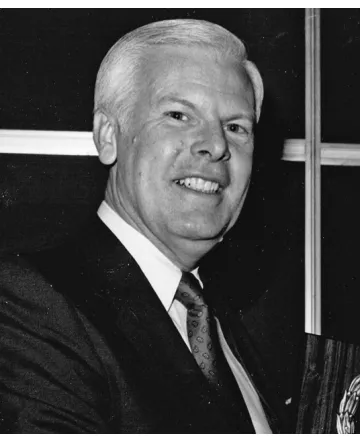
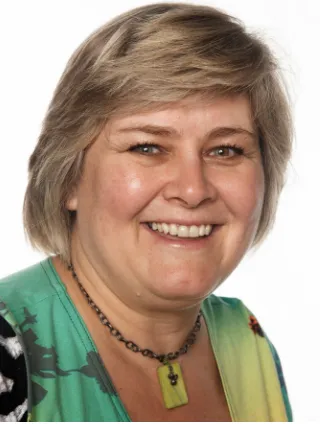
As though the efforts of Mr. Goodman in the establish-ment of the new campus were not enough, his business acumen became integral to the disposition of the property on Bayview Avenue. CMCC owned two acres of land but the parking lot belonged to the original developer. For the purposes of marketing its portion, CMCC had received an indication of its value. By the end of negotiations, Good-man had obtained a sale price which far exceeded what was anticipated. Freedman is convinced that, “Without Mr. Goodman’s involvement, CMCC would never have concluded the acquisition and sale of these properties at the price which was ultimately achieved.” The College has paid tribute to Leonard Goodman, making him an Honourary Member of CMCC and installing a plaque on the wall as you enter the building, acknowledging Len Goodman as Chair of the Development Committee, along with his committee members, Jean Moss, Brenda Smith (Figure 9), Ron Robinson (Figure 10), Henry Graupner and Allan Freedman. Robinson, Smith and Graupner are
three more non-chiropractors who willingly gave their all, to the development of a chiropractic edifice which is the envy of other educational institutions.
In addition to spending huge amounts of time super-vising the development and construction of the Leslie Street campus and the disposition of the Bayview cam-pus, Len is responsible for the success of the Corporate Division of the Capital Campaign, which added substan-tially to the College coffers. Len Goodman and his wife Alma lead by example, demonstrating their devotion to CMCC through generous personal donations to the Cam-paign and maintaining their production of innovative and entertaining fund raising events.31
Historians
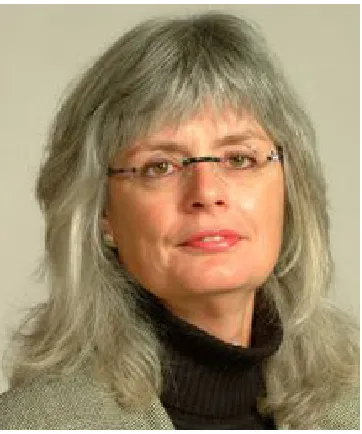
Lesley Biggs states, that “the survival and ultimate ac-ceptance of chiropractic into the health care system can only be explained by the balance of class forces; i.e. chiropractic has received strong support from working-class organizations (Figure 11).”32 Dr. Biggs’ thesis has provided this treatise with ample evidence to bolster her claim. She chose chiropractic for her PhD dissertation at the U of T because Kelner, Hall and Coulter were in her department “and had just finished the first major study of chiropractic in Canada, so there was a lot of interest in the subject.” In 1982, when Coulter was Acting President of
CMCC, he gave Biggs “unlimited access to the College and its resources.” [Email, Biggs to Brown, Feb 2, 2012] Biggs is now (2012) an Associate Professor in the Department of History and Acting Head, Women’s and Gender Studies, at the University of Saskatchewan (U of S). Her main areas of interest lie in the history and sociology of the professions with a particular focus on complementary and alternative healers such as midwives and chiropractors. In 2009 Dr. Biggs received the U of S “Master Teacher Award” and is described on their website as, “An award-winning researcher in alternative medi-cine, and a skilled and generous administrator… Always looking for creative ways to communicate complex ideas, Biggs revises her curricula and teaching methods as she learns more from classroom experiences… Her enthusi-asm for the communication of knowledge, makes her the kind of teacher students remember gratefully, long after they have left the university.”
His documentation of chiropractic history is legendary. In Canada, he unearthed our origins in Saskatchewan and Ontario and wrote definitive biographical studies of prominent chiropractors. And he had related interests: The development of practice standards; scientific sub-stantiation of clinical procedures; improving the intellec-tual environment within the profession; and clarification of our philosophy.
Keating had a strong affinity for CMCC which he praised as “one of the two or three most important chiro-practic schools, of its long-term commitment to schol-arship and high academic standards… Schools such as CMCC are reaching a level of sophistication in science and scholarship that was just unimaginable two decades ago.”
Despite a hectic schedule, Keating always made time for the College. In February 1995, our Centennial Year, Keating spent nine days at CMCC: scouring the Library and Archives; presenting a seminar on “DD Palmer’s For-gotten Theories;” participating in a technique workshop; lecturing the students in all four years; and travelling to Port Perry to play the part of DD Palmer in the College’s 50th anniversary video. President Jean Moss recalls Dr. Keating “as someone from outside chiropractic who ap-proached the subject from research and historical per-spectives, providing important insights and meaningful input… He will be missed for his encyclopaedic know-ledge and sense of humour.”33
CMCC Update
September 18, 2004, our magnificent new College on Leslie Street opened on time, thanks to the tireless efforts of dozens of people who were inspired by the brilliant leadership of Jean Moss, Len Goodman and Allan Freed-man. That glorious day, throngs of enthusiastic people from all walks of life were captivated by this remarkable expression of architectural and engineering ingenuity. One of the visiting dignitaries was Dr. Paul Carey, found-ing President of the Canadian Chiropractic Protective As-sociation (CCPA) and a Council Member of the World Federation of Chiropractic. In 1996 the CCPA had pledged $3 million to CMCC’s capital campaign, which was one of the largest single grants ever made to a chiropractic college. On that occasion Dr. Carey declared: “With this grant, chiropractors are investing in themselves and tak-ing leadership for their own future.” At the grand opentak-ing
in 2004 Paul was asked if he was proud of the CCPA’s contribution. “There is no question. Yes, I was doubly surprised and pleased with CMCC’s new facilities. They are worthy of an institution teaching at the university level and certainly rival anything I’ve seen in my travels to chiropractic colleges around the world. The Library in particular is outstanding. It was money well invested.”34 Since the auspicious opening, CMCC has enjoyed numerous other firsts. Some are listed below:
2005 – CMCC became the first private health sciences institution to be awarded degree granting privileges by the Ontario Ministry of Training, Colleges and Universi-ties; the College launched a pilot project with the Depart-ment of Family and Community Medicine, at Toronto’s St. Michael’s Hospital; and Dr. Moss completed her two year term as President of the Association of Chiropractic Colleges (ACC).
2006 – CMCC completed the process, started in 1999, of implementing an integrated curriculum with a modular approach, allowing students to focus on specific regions of the body and providing an in-depth exploration of bio-logical systems to ensure a comprehensive understanding of how chiropractic care benefits patients. The program combines lectures and labs with team-based learning and practice-based case studies, enhancing problem-solving and clinical skills. This year, 98% of CMCC graduates passed the written and 96% passed the clinical skills CCEB exams on the first attempt.
2007 – In June, 150 Doctors of Chiropractic, from every Canadian province and several European countries, crossed the stage at Convocation. Seventy-seven percent of these graduates entered year one with undergraduate degrees and half of them chose CMCC because of a chiro-practor’s influence. During their internship, these students assumed patient care under the direct supervision of 20 highly trained clinicians, delivering 61,000 patient visits at eight community based clinics. CMCC is increasingly recognized as a valued government partner, participating in the public policy debate surrounding health care and education. In 2007 the College made a presentation to the provincial Standing Committee on Finance during their pre-budget consultations.
rati-fied. In 2008 CMCC hosted its first Research Symposium, inviting speakers from Harvard University, the Mayo Clinic and the University of Vermont to discuss the latest developments in their areas of expertise. At Convocation the College conferred its first degrees under the authority of the Ministry of Training, Colleges and Universities and the second annual Student Satisfaction Survey revealed a 13 percent increase in overall student satisfaction.
2009 – The College began implementing an integrated software system; and received two Canadian Government capital funding grants, under the Knowledge and Infra-structure Program (KIP). CMCC initiated a Research Chair in Mechanobiology, to study spinal instability, de-generation and subluxation; the Library formed the first archival database devoted solely to the history of chiro-practic; and Dr. Moss received the inaugural Award for Excellence in Women’s Leadership, from the WFC. 2010 – In February, CMCC faculty and alumni were among the first chiropractors to become part of the Olym-pic Host Medical Services team within the polyclinics at the Vancouver Olympics. During the year, simulation labs were created containing: A computerized force-sensing table to measure the depth, direction and speed of an ad-justment; a new Clinical Diagnostic Simulation Lab util-izing four Gaumard manikins; a new Treatment Develop-ment Lab, and a Biomechanics Lab with a GAITRite sys-tem for studying gait patterns.
2011 – In March, CMCC was the first privately funded school to receive continued permission to grant Doctor of Chiropractic degrees for an unprecedented 10 years, by the Ontario Ministry of Training, Colleges and Univer-sities. In April, CMCC research efforts earned accolades at the ACC-RAC (Research Agenda Conference) in Las Vegas, and again at the WFC Congress, in Rio de Janiero, in April. The same month, CMCC’s Library became the first private institute to win membership in the Health Sci-ence Information Consortium of Toronto, increasing our voice within the academic and scientific communities. 2012 – January 11, St. Michael’s Hospital (SMH), opened its new clinical facilities and CMCC’s role (in-augurated in 2004), was expanded within the SMH’s Academic Family Health Team. February 1, CMCC’s President, Dr. Jean Moss, and Dr. Tim McTiernan, Presi-dent of the University of Ontario Institute of Technology (UOIT) signed an articulation agreement between the two organizations, enabling qualified students to complete an
Honours Bachelor of Science degree in Kinesiology and a Doctor of Science degree in seven years instead of eight. In March 2004, Dr. Gerry Clum, then President of Life Chiropractic College West, visited our Leslie Street site, while it was in the transformative stage and predicted that, “CMCC’s new campus is the most exciting thing that has occurred in the Canadian chiropractic profession since the first college opened in 1945. It will establish CMCC as the preeminent chiropractic college in the world for years to come.” So far, Dr. Clum’s prophesies have been on the mark.
Acknowledgement
The author is grateful for Allan Freedman’s assistance with the preparation of this historical paper.
References
1 Biggs CL. No bones about chiropractic? The quest for legitimacy by the Ontario chiropractic profession. 1895 to 1985. Toronto: University of Toronto, 1989; 130.
2 Ibid. 160-61.
3 Washington P. The United Farmers of Ontario. Master’s thesis. University of Toronto, 1980.
4 Biggs CL. No bones about chiropractic? Toronto: 1989; 335-37.
5 The Canadian Encyclopedia. Health policy. www. thecanadianencyclopedia.com.
6 Biggs CL. No bones about chiropractic? Toronto: 1989; 338.
7 Labour unions request chiropractic. JCCA. 1963; 7(1):9. 8 Murray Gaunt ponders his next career: retirement. Ontario
Corn Magazine, April 1999.
9 Ontario Liberals demand chiropractic inclusion in OMSIP. JCCA. 1969; 7(1): 9.
10 Canadian Statesman, Bowmanville, ON, March 5, 1969. Durham MPP urges government to include chiropractic services under OMSIP.
11 Wikipedia. Mathew Dymond.
12 Sutherland DC. Executive memorandum to CCA National Board, Political Divisions and secretaries, August 13, 1969. CMCC Archives. Personal files of Donald C. Sutherland.
13 MacDougall LE. Letter from OCA Executive Secretary to members of OCA, Oct. 30, 1969. Subject: Oct. 21, 1969, meeting with the Minister of Health. CMCC Archives. Personal files of Donald C. Sutherland.
14 Chiropractic services review, final report, Nov. 1994. Executive summary; ii. CMCC Library: WB 905.7 C532 10013520
16 Muller RO. Acting Dean’s report, Oct. 30, 1946. CMCC Archives.
17 Zoltai S. The body in question, Part 2. Canadian Chiropractor, July/August 2010.
18 Brown DM. CMCC’s hazardous journey, 1945 to 1968. JCCA. Sept. 1988; 32(3): 147-50.
19 Morgan WO. John S. Burton Obituary. JCCA. March 1993; 27(1): 31.
20 Brown DM. Allan M. Freedman, LLB: A lawyer’s gift to Canadian chiropractors. JCCA. 2007; 51(4): 217-34. 21 www.wfc.org
22 Kelner M, Hall O, Coulter I. Chiropractors, do they help? Toronto, Fitzhenry and Whitesides, 1980.
23 Resolution by the Commission on Accreditation of CCE (Canada), March 26, 1982: 1.
24 Brown DM. Ian Douglass Coulter, PhD: CMCC’s adventurous president. JCCA. 2004; 48(1): 36-55.
25 Brown DM. Ian D. Coulter wins the RAND/Samueli chair in integrative medicine. JCCA. 2009; 53(1): 14-16.
26 Brown DM. Oswald Hall, PhD: Pioneer Canadian Sociologist; 1924-1976. JCCA. 2006; 50(4): 271. 27 A report of the Ontario Council of Health: Scope of
practice and educational requirements for chiropractors in Ontario. Toronto: Ontario Council of Health, 1973: 18-23. 28 Report of the Committee on the Healing Arts, IR Dowie.
Queen’s Printer, Ontario Ministry of Government Services, 1970: 46.
29 Brown DM. Oswald Hall, PhD: Chiropractic Advocate; 1971 to 1998. JCCA. 2005; 49(4) 309.
30 Ibid. 301.
31 Brown DM. Allan M. Freedman, LLB. JCCA 2007; 51(4): 228-30.
32 Biggs CL. No bones about chiropractic. Toronto: 1989; Abstract p.3.
33 Brown DM. Dr. Joseph C. Keating Jr. Obituary. Primary Contact 2008; 45(3): 22.