to Canadian Chiropractic Examining
Board measures
Douglas M. Lawson,
DC, MSc, PhD (c)*
The purpose of this research project was to determine if structural equation modeling (SEM) can be successfully applied to the Canadian Chiropractic Examining Board (CCEB) measures to explore the inferential nature of the “causal” relationship between academic ability and success on the CCEB examinations; specifically the ability to make correct clinical decisions. As this was a time-series study (pre-chiropractic grade-point-average to licensure examination data), a latent variable path analysis was the SEM method of choice. The Comparative Fit Index for the model to data fit was 0.98. Inferences include: 1) the need to recruit students with strong academic abilities, 2) the need to hold back students who have not achieved a high level of understanding of the first two-years of work at chiropractic college, and 3) that the CCEB extended-matching, long-format questions are a better estimate of clinical reasoning ability than 5-option short-format questions or the OSCE.
(JCCA 2006; 50(2):134–139)
k e y wo r d s: examination, structural equation, CCEB.
L’objectif de ce projet de recherche visait à déterminer si la modélisation par équation structurelles (MES) pouvait s’appliquer avec succès aux mesures du Conseil des examens chiropratiques canadien (CECC) afin d’explorer la nature interne de la relation de cause à effet entre les capacités sur le plan académique et la réussite aux examens du CECC: en termes plus précis, la capacité de prendre des décisions cliniques adéquates. En tant que séries Hudy (moyenne pondérée cumulative pré chiropratique permettant d’avaliser les données d’examen), une analyse causale avec variable latente a été la méthode choisie par la MES. L’index repère comparatif pour le modèle de données était de 0.98. les conclusions incluent notamment I) le besoin de recruter des personnes ayant de fortes capacités académiques 2) le besoin de retenir les étudiants qui n’ont pas intégré correctement les notions d’enseignement acquises durant les deux premières années de travail au collège de chiropratique et 3) que les questions longues à développement du CECC sont un meilleur moyen d’évaluer les capacités de raisonnement clinique que les questions courtes à choix multiples (5) ou le OSCE.
(JCCA 2006; 50(2):134–139)
m o t s c l é s : examen, équation structurelle, CECC.
* University of Calgary, Faculty of Medicine, Medical Education Research Centre, c/o 4832 26 Ave NE, Calgary, Alberta, Canada T1Y 1C9 E-mail: [email protected] Phone/Fax: 403-285-1291 Mobile: 403-512-8729
Support was received from the Canadian Chiropractic Examining Board. Ethics review was provided by the Canadian Chiropractic Examining Board, there are no identifiable subjects in the research data.
© JCCA 2006. Introduction
The Canadian Chiropractic Examining Board (CCEB) has been evaluating chiropractors wishing to be licensed/ registered in Canada since 1962.1 There have been many
types of examinations offered by the CCEB since that time - from essay to Objective Structured Clinical Exam-inations (OSCEs).2 The examinations currently provided
clini-cal skills examination, and a practitioner assessment examination. The written examinations consist of Com-ponent A, generally a 5-option, best-answer multiple choice examination covering basic and applied sciences; and Component B, an extended-matching long-format as-sessment of Clinical Decision Making skills (up to 26 op-tions) along with a five-option, best answer, multiple choice examination of diagnostic imaging skills. Candi-date measures collected and assessed by the CCEB in-clude: 1) pre-chiropractic grade-point-average (UGPA), 2) chiropractic grade-point-average while at chiropractic college (χρGPA), 3) standardized candidate measure on the basic science part of Component A, 4) standardized candidate measure on the applied science part of Compo-nent A, 5) standardized candidate measure on the clinical decision making part of Component B, 6) standardized candidate measure on the Diagnostic Imaging part of component B, and 7) standardized candidate measure on the Clinical Skills Examination OSCE.
Structural equation modeling (SEM), although only re-cently reported in the medical education literature, has a long history. Factor analysis was invented almost 100 years ago, path analysis about 75 years ago, and simulta-neous equation models about 50 years ago. SEM first ap-peared about 25 years ago, combining models and methods from econometrics, psychometrics, sociomet-rics, and multivariate statistics.3 As the mathematical
computations are somewhat complex, SEM has become increasingly popular as statistical packages have been modified to run on personal computers rather than main-frames. In contrast to correlational studies and factor analytic studies, SEM is a theory rich approach to mul-tivariate analysis. SEM focuses on hypothesis testing of a structural theory as it applies to some phenomenon. The theory being evaluated generally represents a causal mechanism that generates observations on multiple varia-bles.4 SEM uses pictures (the model) to clarify the
under-lying theory (the equations) that is being studied. Another advantage of SEM is that it can incorporate observed measurements and latent variables in its procedures. A la-tent variable is simply a construct that cannot be directly measured. As an example, we cannot directly measure clinical competency, thus clinical competency is latent. We do however have evaluations that measure some of the characteristics of clinical competency. SEM allows the researcher to, not only measure correlations between
observed measures, but relationships between variables that cannot be directly measured – the latent variables. Kline summarizes the shared characteristics of SEM methods as: 1) SEM is a priori and requires researchers to think in terms of models, 2) SEM allows explicit repre-sentation of a distinction between observed and latent variables, 3) The basic statistic in SEM is the covariance, 4) SEM can be applied to correlational data (nonexperi-mental) and to data from experiments, 5) Many standard statistical procedures like multiple regression, canonical correlation, factor analysis, and ANOVA can be viewed as special cases of SEM, 6) SEM is a large-sample tech-nique, 7) It is possible to test many different types of ef-fects for statistical significance in SEM.5
The purpose of this research project was to determine if SEM can be successfully applied to the CCEB meas-ures to explore the inferential nature of the relationship between academic ability and success on the CCEB ex-aminations, specifically the ability to make correct clini-cal decisions (diagnosis and management). If SEM can be successfully applied, then the analysis should provide some new evidence of relationships between the vari-ables. The primary objective was to determine if a theo-retical model would “fit” the observable data. The secondary objective was to review the size of the “causal” effect of the observable and latent variables on the latent variable Clinical Reasoning Ability.
Methods
Subjects
Test format
There were six data variables available provided by the CCEB: standardized scores for the Basic Science (BS), Applied Science (AS), Clinical Decision Making (CDM), and Clinical Skills Examinations (an OSCE). The last two variables were UGPA and χρGPA. The UGPAs for all candidates were converted to a University of Calgary 4.0 grade-point-average and consisted of the average of all courses taken at post-secondary institutions in Cana-da. If candidates retook a course to improve their grade, both grades were included in the average. The χρGPA were not converted as no generally accepted method ex-ists and consisted of the cumulative grade-point-average as reported by the candidate’s college of graduation. The BS and AS examinations consisted of single, best answer 5-option multiple-choice questions (MCQs). The AS ex-amination was clinically based and consisted of clinical vignette questions in short-format. For the AS examina-tion, the clinical vignettes consisted of statements that would lead the candidate to the correct diagnosis. The BS and AS examinations were taken by candidates after they had completed two-years of their chiropractic education. The CDM examination consisted of 26-option extended-matching long-format questions. Long-format questions consist of questions with an equal number of statements that lead candidates to the correct answer, and statements that typically would be received while taking a case history or performing a physical examination, but do not direct the candidate to the right answer. The CDM examination could be taken by candidates who were within 6-months of graduation. The OSCE consisted of ten stations through which all candidates rotated. The sta-tions were administered twice a over multiple tracks, and multiple sites. Candidates could not contaminate other candidates as the morning candidates were not able to leave until the afternoon cycle started. Additional days of testing or new administrations consisted of new cases. Each station had a checklist for computer scoring of the data. Each checklist consisted of a series of 3-point rating scales (0 = not performed, 1 = performed but not correct-ly, 2 = performed correctly), one 5-point rating scale for professionalism, and one 10-point rating scale for overall technique. Both the professionalism scale and overall technique scale were anchored at the borderline pass and borderline fail levels. Stations 1 and 7 were case history stations, 2 and 8 were physical examination stations, and
5 and 6 were combined history and physical examination stations. At the end of each of these stations, candidates were required to communicate a diagnosis or differential, and a plan of management. Stations 3 and 9 were differ-ential physical examination stations with multiple cases. Station 4 was an informed consent station, and station 10 was a chiropractic treatment station. The OSCE was tak-en by candidates who had completed all the requiremtak-ents for graduation.
Statistics
As this was a time-series study (UGPA to licensure ex-amination data), a latent variable path analysis was SEM method of choice. A correlational matrix of all variables was calculated for the development of a theoretical mod-el. The theoretical model proposed that a latent trait called Academic Ability had a causal relationship to an-other latent trait called Professional Knowledge. Further the model proposed that the latent trait Professional Knowledge had a causal relationship to a third and final latent trait called Clinical Reasoning Ability. The model proposed that students arrive at chiropractic college with their Academic Ability already formed and thus the ob-servable variable UGPA loaded onto Academic Ability. The latent trait Professional Knowledge was theorized to be established by the end of year two. Thus χρGPA, and the two CCEB examinations BS and AS were presumed to load onto the Professional Knowledge latent trait. The latent trait Clinical Reasoning Ability was theorized to be most complete at the end of clinical rounds. The CDM examination and the OSCE loaded onto the latent trait Clinical Reasoning Ability. As the AS also consisted of clinical vignettes, it also loaded onto Clinical Reasoning Ability. The model to data fit was analyzed with EQS version 6.1 (B83), a structural equation program by Mul-tivariate Software Inc. and copyrighted by P.M. Bentler.
For the data to satisfactorily fit the model, comparative fit indices of greater than 0.97 are required.6–8 Further,
the analysis should complete in a small number of itera-tions (less than 15), and the percentage of residuals be-tween 0.1 and -0.1 should be high.3 For a path coefficient
to be meaningful, it should be greater than 0.40.5
Results
The mean values for UGPA and χρGPA were 2.95 and 3.16 respectively. Table 1 reveals that both UGPA and
χρGPA correlated highest with the BS examination (0.47 and 0.40 respectively) and lowest with the OSCE (0.36 and 0.11 respectively). UGPA correlated higher then
χρGPA on all observable measures. BS correlated highest with AS (0.73) and AS correlated highest with CDM (0.67) than with the OSCE (0.43). As the correlations sup-ported the theoretical model, an SEM model was created and the analysis performed. The grade-point-averages are all on a 4.0 scale. The examination scores are standard-ized to a theoretical population mean of 500 and a stand-ard deviation of 100. Mean scores and standstand-ard deviations are not exactly these values as the two exam represent a sample of the candidates over the 5-year period.
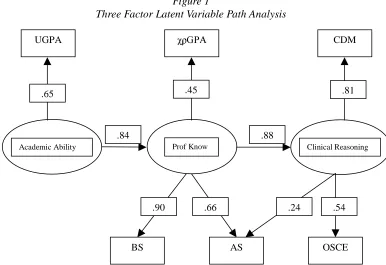
Figure 1 provides the pictorial representation of the model and the path coefficients between the variables and the traits for the SEM analysis.
The Comparative Fit Index (CFI) for the model to data
Footnote: UGPA = undergraduate grade point average, χρGPA = chiropractic college cumulative grade point average, BS = Basic Science, AS = Applied Science, CDM = Clinical Decision Making, OSCE = Objective structured clinical examination, Std. Dev = standard deviation, Mean = average.
Figure 1
Three Factor Latent Variable Path Analysis
Footnote: UGPA = undergraduate grade point average, χρGPA = chiropractic college cumulative grade point average, BS = Basic Science, AS = Applied Science, CDM = Clinical Decision Making, OSCE = Objective structured clinical examination, Std. Dev = standard deviation, Mean = average, Prof Know = professional knowledge (prior to clinical courses)
Table 1
Bivariate Correlations, Standard Deviations, Means
UGPA χρGPA BS AS CDM OSCE
UGPA 1.00
χρGPA 0.34 1.00
BS 0.47 0.40 1.00
AS 0.46 0.38 0.78 1.00
CDM 0.38 0.31 0.63 0.67 1.00
OSCE 0.36 0.11 0.44 0.43 0.44 1.00
Std Dev 0.51 0.41 85.01 82.45 82.86 113.91
Mean 2.95 3.16 520.62 521.38 518.93 474.97
Academic Ability Prof Know Clinical Reasoning
UGPA *3$ CDM
BS AS OSCE
.45 .65
.90 .66 .24 .54
.81
Discussion
The stronger correlation of UGPA to the licensure exami-nation measures reflects the lack of a consistent GPA from the 18 chiropractic colleges represented in the data. A CFI of 0.98; convergence in 5 iterations, and large number of residuals between 0.1 and -0.1 indicates that there is an adequate fit of the data to the theoretical mod-el. The path coefficients between the latent variables are all strong. From Academic Ability to Professional Knowledge, the path coefficient is 0.84. From Profes-sional Knowledge to Clinical Reasoning Ability, the path coefficient is 0.88. The strong path coefficients infer that: if chiropractors with strong Clinical Reasoning Ability are desired, then students should not move beyond the second year of their education unless they have demon-strated a substantial grasp of underlying concepts (the la-tent trait Professional Knowledge). Further, in order for students to be able to achieve a large measure of the la-tent trait Professional Knowledge, they should enter the chiropractic education process with a large measure of the latent trait Academic Ability. Although this may not be much of a surprise, it does conflict with anecdotal re-ports from previous CCEB administrators that unsuccess-ful CCEB candidates, their families, their spouses and their legal counsel, communicate that they would be excellent chiropractors; they just aren’t academically strong. When chiropractic programs are not fully sub-scribed (programs where there are more classroom seats than qualified applicants), the model further infers that should someone enter a program with less Academic Ability, they should not move through the system (past second year and the establishment of their level of the la-tent trait Professional Knowledge) unless they have dem-onstrated a suitable mastery level of their first two years work. Such demonstration could be measured by class-room evaluations or external measures.
The path coefficients from the observed variables re-veal that the weakest path coefficient is between AS and Clinical Reasoning Ability (0.24). The CDM variable has a much stronger path coefficient (0.81). This infers that the 5-option short-format clinical vignette questions on
long-format clinical vignettes from the CDM examina-tion. The path coefficient between the OSCE variable and the latent trait Clinical Reasoning Ability is moderate (0.54), but much less than the path coefficient to the CDM examination. This makes sense, as the OSCE is truly not a measure of clinical reasoning, but a measure of the skills of taking a case history, performing a physi-cal examination, and communicating with patients. These path coefficients infer that the Practitioner Assessment Examination (for chiropractors who have ceased to prac-tice in Canada for a period of time) should emphasize questions from the CDM examination and not simply uti-lize the OSCE.
Conclusions
The latent variable path analysis revealed good model to data fit, and revealed that inferences can be made from the data. These inferences include: the need to recruit stu-dents with strong academic abilities, the need to hold back students who have not achieved a high level of un-derstanding of the first two-years of work at chiropractic college, and that lapsed practitioners should not be solely assessed with an OSCE. The relationship between aca-demic ability and clinical reasoning skills was not previ-ously available, and the stronger relationship between clinical reasoning and long-format clinical vignettes was not available. Structural Equation Modeling, in the form of a latent variable path analysis, was therefore success-fully applied to data from the Canadian Chiropractic Ex-amining Board.
This study is limited and not generalizable to medicine due to the heterogeneous nature of chiropractic under-graduate grade-point-averages. Students at medical col-leges have a much more homogeneous entry level grade-point-average, and the results of this study may not be ap-plicable.9 This study may also not be generalizable to
sin-gle institutions. The heterogeneity of the data was enhanced by combining graduates of Canadian and US institutions with a 60% to 40% split. Students within a single institution may be more homogeneous. In addition, this study is at the lower bound of reasonable sample size. As a general rule, for each observable variable there should be 10 observations (lines of data), and 50 observa-tions for each latent trait. Although this study exceeds this general rule (292 vs 210), the sample size is still small.
Acknowledgements
This research project was supported in part by the Cana-dian Chiropractic Examining Board, but does not neces-sarily reflect its policies or opinions.
References
1 Brown D. Canadian Chiropractic Examining Board, 1954 to 1985. J Can Chiropr Assoc 1998; 42(4):243–51.
2 Lawson DM. Canadian Chiropractic Examining Board: report to the profession. J Can Chiropr Assoc 2002; 46(3):201–5.
3 Byrne BM. Structural Equation Modeling with EQS and EQS/Windows: Basic Concepts, Applications, and Programming. First ed. Thousand Oaks: Sage Publications Inc; 1994. (Diane S.Foster).
4 Bentler PM. Causal modeling via structural equation systems. Handbook of multivariate experimental
psychology. 2nd ed. New York: Plenum; 1988. pp. 317–35. 5 Kline RB. Structural Equation Modeling. New York:
Guilford Press; 1998.
6 Nachtigall C, Kroehne U, Funke F, Steyer R. (Why) should we use SEM? pros and cons of structural equation modeling. Methods of Psychological Research Online 2003; 8(2):1–22. 7 Schermelleh-Engel KS, Moosbrugger H. Evaluating the fit
of structural equation models: tests of significance and descriptive goodness-of-fit measures. Methods of Psychological Research Online 2003; 8(2):23–74. 8 de Bruin AB, Schmidt HG, Riker RM. The role of basic
science knowledge and clinical knowledge in diagnostic reasoning: a structural equation modeling approach. Academic Medicine 2005; 80(8):765–73.