Original Research Article
Knowledge, attitude and practices regarding pulmonary tuberculosis in
a rural area of Tamil Nadu, India: a cross sectional study
Angeline Grace G., Gopalakrishnan S.*, Umadevi R.
INTRODUCTION
Tuberculosis (TB) is an infectious disease caused by Mycobacterium tuberculosis and is one of the major causes of morbidity and mortality worldwide. Pulmonary tuberculosis (PTB) is the most common form of presentation but TB can also affect other sites and organs like lymph nodes, abdomen and meninges etc.1 Some of the predisposing factors known to be associated with the TB disease are malnutrition, lack of awareness about TB,
co-morbid illnesses like diabetes mellitus, HIV infection, increased susceptibility at extremes of age, smoking, overcrowding and poverty.2-4 Apart from these, lack of financial sources, poor accessibility to health facilities and lack of knowledge about the symptoms, mode of spread and available treatment among the population affects the health seeking behaviour of patients and might promote delay in diagnosis, improper treatment, poor compliance to medications and development of drug resistance.5,6
ABSTRACT
Background: Tuberculosis is still a major public health problem in India. Lack of knowledge about the cause, risk factors, treatment and prevention of pulmonary TB is a major challenge to be addressed to reduce disease transmission. This study was planned with the objective of determining the Knowledge, Attitude and Practices regarding pulmonary tuberculosis in a rural population of Kancheepuram district, Tamilnadu, India.
Methods: This community based cross sectional study was carried out between January and March 2018. Sample size of 400 was calculated by using formula 4pq/d2 and respondents were selected from sampled households using systematic random sampling. Data were collected using a pre-tested, structured questionnaire, which were analyzed using SPSS version 16.0 and presented using descriptive and analytical statistics.
Results: Among 400 participants studied, only 45.5% had adequate knowledge on PTB, 14.7% had positive attitude and 26.5% had good practices towards PTB. About 91.5% had heard about TB and 79% knew that TB could be transmitted from a patient to others. The cause for TB was correctly mentioned by only 19.5% of the subjects. About 35% knew that transmission of TB is preventable. Positive attitude had a statistically significant association with higher socioeconomic class and with adequate knowledge. Good practices on TB were more noted among participants with adequate knowledge and with age ≤45 years.
Conclusions: Study respondents had basic awareness about pulmonary TB but knowledge on cause and prevention was inadequate. Their attitude and practices towards TB also need to be improved. Health education activities need to be intensified for the rural population to bring about significant change in their level of awareness on TB.
Keywords: KAP, TB, Awareness, Villagers
Department ofCommunity Medicine, Sree Balaji Medical College and Hospital, Chennai, Tamil Nadu, India
Received: 14 June 2018
Revised: 21 July 2018
Accepted: 23 July 2018
*Correspondence:
Dr. Gopalakrishnan S., E-mail: [email protected]
Copyright: © the author(s), publisher and licensee Medip Academy. This is an open-access article distributed under the terms of the Creative Commons Attribution Non-Commercial License, which permits unrestricted non-commercial use, distribution, and reproduction in any medium, provided the original work is properly cited.
According to the World Health Organisation (WHO), TB is the leading infectious cause of death worldwide and there were 10.4 million TB cases and 1.7 million deaths in the year 2016.7 Access to TB care has improved worldwide and TB mortality rate has shown 37% decline since 2000. Between 2000 and 2016, 53 million lives were saved through effective diagnosis and treatment of TB. On the other hand, the number of people diagnosed with multi-drug resistant TB (MDR-TB) is on the rise globally. An estimated 0.49 million people developed MDR-TB and 0.11 million were diagnosed with Rifampicin Resistant TB (RR-TB) in 2016. The incidence of MDR-TB/RR-TB was about 4.1% in new cases and 19% in previously treated cases.7
India contributed to 25% of the global incident TB cases and about 26% of global TB-related deaths in 2016. In Tamilnadu, around 93327 TB cases were notified in the year 2017 among which 3889 cases were from the district of Kancheepuram, Tamilnadu.8 The Revised National TB Control Programme (RNTCP) has been progressive in addressing issues related to TB control in the country. The National Strategic Plan (NSP) 2017-2025 for TB elimination has proposed various innovative steps to rapidly bring down the TB incidence and mortality in India. Despite the availability of services for TB diagnosis and treatment across the country, the burden of TB is still high.8
In May 2014, the World Health Assembly passed a resolution approving with the new post-2015 „End TB Strategy‟ with its ambitious targets. End TB strategy interventions fall under three pillars:
Integrated, patient-centred care and prevention
Bold policies and supportive systems
Intensified research and innovation.
Bold policies and supportive systems require intense participation by the government, private stake holders and communities.9 To improve the treatment outcomes and to bring down the incidence of TB, community participation plays a pivotal role.10,11 In order to improve the health seeking behaviour, the population should have the correct knowledge about the disease, should be aware on the facilities available for free diagnosis and treatment in the public healthcare centres.12
Based on the above background, this study was carried out with the objective to determine the knowledge, attitude and practices regarding pulmonary tuberculosis in a rural area of Kancheepuram district in Tamilnadu, India, in order to ascertain the gaps existing in the study area and to plan possible corrective measures.
METHODS
Study design
This is a community based cross sectional descriptive study.
Study area and population
The Study was conducted in Serappanachery, the rural field practice area attached to a Medical College in Kancheepuram district, Tamil Nadu. The annual case notification rate of TB for Kancheepuram district was 106/lakh/year for 2017 which is relatively less than the State case notification rate (119/lakh/year) and National rate (138.3/lakh/year).8 There are a total of twenty villages in the study area, the total population is 21187 (males- 10817, females- 10370) and the total number of households are 4489. The Study population included individuals residing in the study area and aged 18 years and above. The study was done for a period of three months, from January 2018 to March 2018.
Sample size and Sampling technique
The Sample size was calculated based on the prevalence of TB knowledge identified in a study done by Easwaran et al in the year 2015 in a rural area of Tamilnadu which showed that 34.4% of the population knew atleast one symptom of TB.13 Using the formula 4pq/d2, with the allowable error of 5%, the sample size was calculated to be 361. Adding 10% non-response rate, the sample size was calculated to be 397, which was rounded off to 400.
Systematic random sampling was used to identify the study participants. Sampling interval was calculated as follows: Total number of households in Serappanachery (N)= 4489, Sample size (n)= 400, Sampling interval is N/n= 4489/400= 11.2. Thus every 12th household from the first randomly visited household in the centre of the study area was selected for identifying an eligible study subject. If there was no eligible respondent in the selected household, the next house with the eligible study subject was selected. From that house, the next 12th household was selected. This procedure was followed till the desired sample size was reached.
Inclusion and exclusion criteria
Resident individuals aged 18 years and above and willing to participate were included in the study. Individuals who stayed as guests in the selected households, those who were <18 years of age and who had chronic illnesses were excluded from the study.
Data collection
Data was collected from eligible and willing participants using a pre-tested, structured questionnaire, adapted from the sample questionnaire in the guide to developing knowledge, attitude and practice surveys developed by
the World Health Organization and Stop TB
and preventive measures, attitude and practices regarding TB disease were also collected.
Statistical analysis
Data collected were entered in Microsoft Excel and analysis was done in SPSS software version 16.0. Data were presented using descriptive and analytical statistics. Chi-square test was used to compare the differences in proportions with the significance level set at p ≤ 0.05. Binary logistic regression model, which included variables with statistical significance on the Chi-square test, were used to examine factors associated with knowledge, attitude and practices of TB among the participants. Odds ratio (OR) with 95% confidence intervals was used to report the association between the exposure variables and outcome variables.
Outcome variables
The three main outcome variables in this study were knowledge, attitude and practices towards pulmonary TB among the study participants. These variables are composite scores and each outcome was measured using answers given by study respondents to several set of questions. The content of the questions for each outcome and how these outcomes were scored are summarized below.
Knowledge of community on TB
The Knowledge of the study participants on TB was assessed using the following components- awareness about the cause of TB (bacteria), able to identify PTB as a communicable disease, knowledge on the mode of transmission (airborne spread), knowledge on the common symptoms (cough >2 weeks, weight loss, fever, loss of appetite), aware that PTB is a treatable disease, knowing that PTB can be treated with drugs given at health facility, and aware that PTB is preventable. Each component was given a score of 1 for correct response and 0 for incorrect response/answer not known. The scores to these questions were added together to generate the total score (out of the maximum score of 10). If the total knowledge score exceeds 5 (>50%), the individual is categorized as having “adequate knowledge”, otherwise the individual is categorized as having “inadequate knowledge”.
Attitude of the community on TB
Participants‟ attitude towards PTB including stigma was assessed using the following components- acknowledge that anyone can be affected with TB disease, consider TB as a serious disease, positive attitude if they were diagnosed with TB and having a desire to help the affected individuals. Each response consistent with the positive attitude towards the disease was given a score of
1 and if otherwise, a score of 0. The total score (out of the maximum score of 4) was calculated by adding the scores to individual questions. If the total score exceeds 50%, the participant is classified as having “positive attitude” and if not, the participant is classified as having “negative attitude”.
Practices towards TB
Practices towards TB was assessed using the following components- consulting a healthcare professional about their illness, preferring the treatment available in the health facility, seeking health facility if they had symptoms suggestive of PTB or if symptoms last >2 weeks and the positive support from the community for patients suffering from TB. Each response consistent with good practice was given a score of 1, and if otherwise, a score of 0. The total score (out of the maximum score of 4) was calculated by adding the scores to individual questions. The composite score for each individual was categorized using the cut off of 50% with scores above the cut off as “good practice” and if otherwise as “poor practice”.
Ethical approval and informed consent: Ethical
approval was obtained from Institutional Ethics Committee of Sree Balaji Medical College and Hospital. Written Informed consent was obtained from the study participants before data collection, after explaining about the objectives of the study.
RESULTS
Socio-demographic characteristics of the study
population
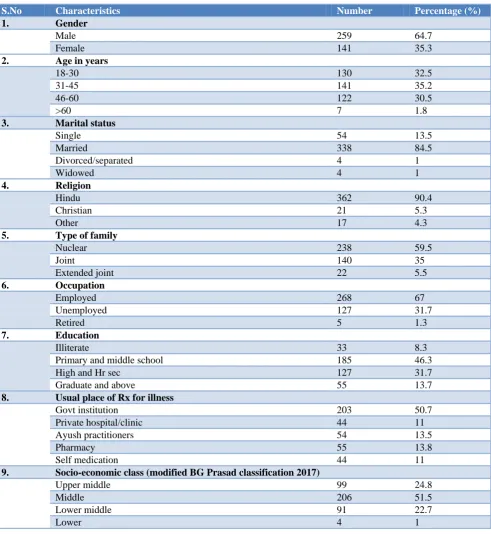
A total of 400 subjects participated in the study. The
socio-demographic characteristics of the study
participants are summarised in Table 1. Participants involved in this study were in the age group of 19-64 years. The mean age (standard deviation) of the participants was 38 (±11.5) years. About 35% of the respondents belonged to the age group 31-45 years and around 32% belonged to 18-30 years. Male participants were predominantly higher (64.7%) compared to females (35.3%).
Table 1: Socio demographic characteristics of the respondents (n=400).
S.No Characteristics Number Percentage (%)
1. Gender
Male 259 64.7
Female 141 35.3
2. Age in years
18-30 130 32.5
31-45 141 35.2
46-60 122 30.5
>60 7 1.8
3. Marital status
Single 54 13.5
Married 338 84.5
Divorced/separated 4 1
Widowed 4 1
4. Religion
Hindu 362 90.4
Christian 21 5.3
Other 17 4.3
5. Type of family
Nuclear 238 59.5
Joint 140 35
Extended joint 22 5.5
6. Occupation
Employed 268 67
Unemployed 127 31.7
Retired 5 1.3
7. Education
Illiterate 33 8.3
Primary and middle school 185 46.3
High and Hr sec 127 31.7
Graduate and above 55 13.7
8. Usual place of Rx for illness
Govt institution 203 50.7
Private hospital/clinic 44 11
Ayush practitioners 54 13.5
Pharmacy 55 13.8
Self medication 44 11
9. Socio-economic class (modified BG Prasad classification 2017)
Upper middle 99 24.8
Middle 206 51.5
Lower middle 91 22.7
Lower 4 1
Knowledge of the participants about the cause, symptoms, transmission, prevention and treatment of
PTB
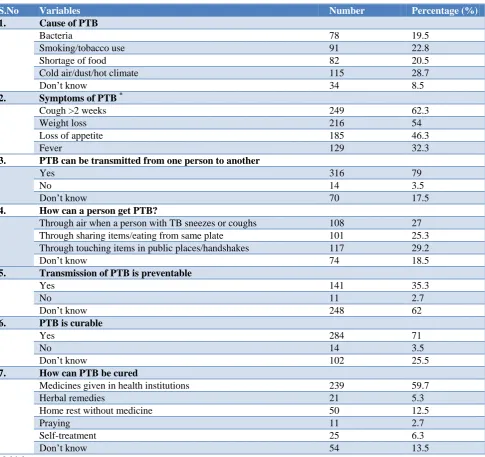
About 45.5% of the study subjects had adequate knowledge on PTB (Figure 1) and 54.5% had inadequate knowledge. Most of the study participants (91.5%) had heard about tuberculosis. Table 2 summarises the different components of participants‟ knowledge towards TB. The main sources of information were newspaper and magazines (66.2%), family/friends/neighbours
(60.7%) and media/internet (44.3%). Cough was the most commonly mentioned symptom of PTB and other symptoms reported were weight loss (54%), fever (32.3%) and loss of appetite (46.3%).
eating from the same plate (16.5%), through touching items in public places (21.7%) and through handshakes (7.5%).
A bacterium as the cause for PTB was mentioned by 19.5% of the subjects. The other causes of TB reported by them were cold air (14.5%), dust (2.8%), hot climate (11.5%), tobacco use (22.8%) and poor food intake (20.5%). Nearly 35% of the participants knew that TB
transmission is preventable and 62% mentioned that they didn‟t know whether the disease transmission could be prevented. TB was considered as a curable condition by 71% of the participants. About 25.5% didn‟t know whether TB could be cured. Nearly 59% said that TB can be treated with medicines given in health institutions and 12.5% mentioned that resting at home is sufficient for cure.
Table 2: Knowledge of the participants on cause, symptoms, transmission, treatment and prevention of PTB.
S.No Variables Number Percentage (%)
1. Cause of PTB
Bacteria 78 19.5
Smoking/tobacco use 91 22.8
Shortage of food 82 20.5
Cold air/dust/hot climate 115 28.7
Don‟t know 34 8.5
2. Symptoms of PTB *
Cough >2 weeks 249 62.3
Weight loss 216 54
Loss of appetite 185 46.3
Fever 129 32.3
3. PTB can be transmitted from one person to another
Yes 316 79
No 14 3.5
Don‟t know 70 17.5
4. How can a person get PTB?
Through air when a person with TB sneezes or coughs 108 27
Through sharing items/eating from same plate 101 25.3
Through touching items in public places/handshakes 117 29.2
Don‟t know 74 18.5
5. Transmission of PTB is preventable
Yes 141 35.3
No 11 2.7
Don‟t know 248 62
6. PTB is curable
Yes 284 71
No 14 3.5
Don‟t know 102 25.5
7. How can PTB be cured
Medicines given in health institutions 239 59.7
Herbal remedies 21 5.3
Home rest without medicine 50 12.5
Praying 11 2.7
Self-treatment 25 6.3
Don‟t know 54 13.5
*
Multiple responses
Attitude of the participants towards PTB
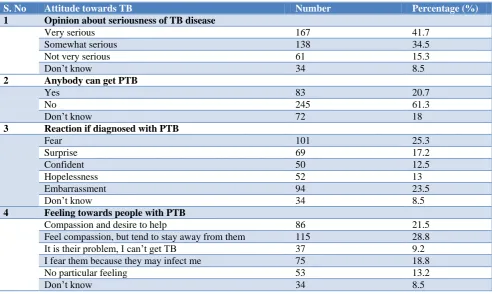
Study participants‟ attitude towards PTB is summarised in Table 3. Overall 14.7% of the participants had positive attitude (Figure 1) and 85.3% had negative attitude towards PTB.
surprised, and 12.5% said they will face the situation confidently. When enquired about their feeling towards people with PTB, 28.8% said they would feel compassionate but tend to stay away from the infected
people. Desire to help the patients was expressed by 21.5% of the subjects. Nearly 19% expressed fear as the patients might infect them and 13.2% denied having any particular feeling towards PTB patients.
Table 3: Participants’ attitude towards PTB.
S. No Attitude towards TB Number Percentage (%)
1 Opinion about seriousness of TB disease
Very serious 167 41.7
Somewhat serious 138 34.5
Not very serious 61 15.3
Don‟t know 34 8.5
2 Anybody can get PTB
Yes 83 20.7
No 245 61.3
Don‟t know 72 18
3 Reaction if diagnosed with PTB
Fear 101 25.3
Surprise 69 17.2
Confident 50 12.5
Hopelessness 52 13
Embarrassment 94 23.5
Don‟t know 34 8.5
4 Feeling towards people with PTB
Compassion and desire to help 86 21.5
Feel compassion, but tend to stay away from them 115 28.8
It is their problem, I can‟t get TB 37 9.2
I fear them because they may infect me 75 18.8
No particular feeling 53 13.2
Don‟t know 34 8.5
Table 4: Practices of the participants towards PTB.
S. No Practice Number of participants Percentage (%)
1 Who would you talk to if you had PTB?
Doctor or other medical worker 156 39
Spouse 40 10
Parent 54 13.5
Close friend 49 12.2
Children 37 9.3
Other family members 30 7.5
Don‟t know 34 8.5
2 What would you do if you thought you had symptoms of PTB?
Self-treatment options 57 14.3
Go to health facility 196 49
Go to pharmacy 65 16.2
Go to traditional healers 37 9.3
Don‟t know 45 11.2
3 If you had symptoms of PTB, at what point would you seek medical help?
When treatment on my own doesn‟t work 143 35.8
When symptoms that look like PTB last for >2 weeks 10 2.5
As soon as I realise my symptoms might be related to TB 159 39.7
Don‟t know 88 22
4 Behaviour of the Community towards people with PTB
People in the village reject him/her 53 13.3
People are friendly but they try to avoid him/her generally 189 47.2
People mostly support and help him/her 102 25.5
Figure 1: Graph showing the overall level of knowledge, attitude and practices related to pulmonary TB (in percentage) among the study
participants (n=400).
Practices of the participants towards PTB
The participants‟ practices towards TB are presented in Table 4. Overall, 26.5% had good practices (Figure 1) and 73.5% had poor practices related to PTB. Doctor or other medical workers would be the point of contact for 39% of the participants if they had TB. Nearly half of the participants said they would approach a health facility if they had suspicion of suffering from TB. About 16.2% mentioned that they would get medicines from pharmacy for the symptoms, 14.3% preferred self-treatment, and 9.3% said they would take treatment from traditional healers. Nearly 40% said they would seek medical help as soon as they realize their symptoms might be due to PTB. Work commitment was the major reason given by the participants (45.5%) for not going to a health facility for treatment.
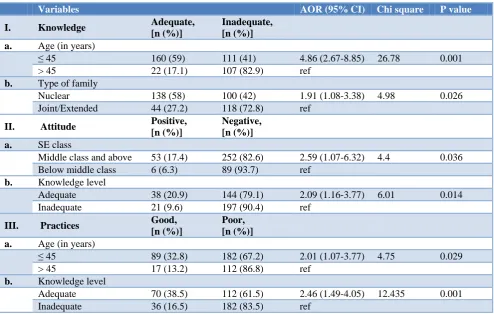
Table 5: Factors associated with participants’ overall knowledge, attitude and practices on PTB.
Variables AOR (95% CI) Chi square P value
I. Knowledge Adequate,
[n (%)]
Inadequate, [n (%)]
a. Age (in years)
≤ 45 160 (59) 111 (41) 4.86 (2.67-8.85) 26.78 0.001
> 45 22 (17.1) 107 (82.9) ref
b. Type of family
Nuclear 138 (58) 100 (42) 1.91 (1.08-3.38) 4.98 0.026
Joint/Extended 44 (27.2) 118 (72.8) ref
II. Attitude Positive,
[n (%)]
Negative, [n (%)]
a. SE class
Middle class and above 53 (17.4) 252 (82.6) 2.59 (1.07-6.32) 4.4 0.036
Below middle class 6 (6.3) 89 (93.7) ref
b. Knowledge level
Adequate 38 (20.9) 144 (79.1) 2.09 (1.16-3.77) 6.01 0.014
Inadequate 21 (9.6) 197 (90.4) ref
III. Practices Good,
[n (%)]
Poor, [n (%)]
a. Age (in years)
≤ 45 89 (32.8) 182 (67.2) 2.01 (1.07-3.77) 4.75 0.029
> 45 17 (13.2) 112 (86.8) ref
b. Knowledge level
Adequate 70 (38.5) 112 (61.5) 2.46 (1.49-4.05) 12.435 0.001
Inadequate 36 (16.5) 182 (83.5) ref
AOR: adjusted odds ratio; CI: confidence interval; ref: reference
When enquired about the cost of TB treatment, 30.7% said it would be reasonably expensive, 27.5% said it would be moderately expensive and 13% felt that it would be very expensive. Only 20.3% of the subjects mentioned the availability of TB drugs free of cost in government health centres. When asked about the community‟s approach to people with PTB, 47.2% of the participants said the community would be friendly but tend to avoid the patients. About 13% said the village people will reject them and 25.5% mentioned that community will support and help the patients.
Factors associated with participants’ overall knowledge on PTB
Factors that were found to be statistically associated with adequate knowledge on TB were age ≤45 years compared to age >45 years (COR-7.01, 95% CI: 4.17-11.78, p-0.0001), females compared to males (COR-1.54, 95% CI: 1.02-2.33, p-0.04), nuclear family compared to other types of family (COR-3.7, 95% CI: 2.4-5.7, p-0.0001), education of high school and above (COR-2.6, 95% CI:
45.5%
14.7%
26.5%
0 20 40 60 80 100
Adequate knowledge
1.74-3.91, p-0.0001), and socio-economic class of middle class and above (COR-2.44, 95% CI: 1.49-4.0, p-0.0003). On logistic regression analysis, the factors that were associated with adequate knowledge were age ≤45 years (AOR: 4.86, 95% CI: 2.67-8.85, p-0.001) and nuclear type of family (AOR: 1.91, 95% CI: 1.08-3.38, p-0.026) (Table 5).
Factors associated with attitude towards PTB
Education of high school level and above (COR: 1.77, 95% CI: 1.01-3.10, p 0.04), middle socio-economic class and above (COR: 3.12, 95% CI: 1.3-7.5, p 0.007) and having adequate knowledge on TB (COR: 2.48, 95% CI: 1.39-4.4, p 0.0016) were found to be associated with positive attitude on PTB. Logistic regression analysis showed that higher socioeconomic class (AOR: 2.59, 95% CI: 1.07-6.32, p 0.036) and having adequate knowledge on TB (AOR: 2.09, 95% CI: 1.16-3.77, p 0.014) had a statistically significant association with positive attitude towards PTB (Table 5).
Factors associated with practices towards PTB
On univariate analysis, age ≤45 years (COR: 3.22, 95% CI: 1.82-5.7, p 0.0001), female gender (COR: 1.79, 95% CI: 1.14-2.82, p 0.012), adequate knowledge on TB (COR: 3.16, 95% CI: 1.98-5.03, p 0.0001) were the factors found to be statistically associated with good practices on PTB. On Logistic regression analysis, age ≤45 years (AOR: 2.01, 95% CI: 1.07-3.77, p 0.029) and having adequate TB knowledge (AOR: 2.46, 95% CI: 1.49-4.05, p 0.001) had a statistically significant association with good practices regarding PTB (Table 5).
DISCUSSION
This study conducted among 400 adults in a rural area of Tamilnadu shows the present status of knowledge, attitude and practices related to TB in the study population with varied and interesting outcomes, which are discussed below.
Knowledge regarding PTB
Our study showed that the Community is familiar about tuberculosis as a disease as around 92% of the participants have heard about TB. This is similar to a study done in Ethiopia by Tolossa et al where 94.9% were aware of the disease and a study in Tamilnadu by Chinnakali et al where 94% have heard about the disease.15,16 However, the knowledge on the bacteria as the cause of TB was limited, as many of them suggested other causes like cold air, hot climate, tobacco smoke and food shortage. This low awareness on the cause was also reported in a Sudanese study in which only 2% respondents and in the Ethiopian study in which 22.9% respondents had knowledge on the cause of TB.15,17 A similar study among sandstone quarry workers in Rajasthan reported very low awareness (1.6%) on the
cause of TB.18 On the other hand, Koay TK et al in their study in Malaysia and Malhotra et al in their study in Delhi stated that nearly half of the participants were aware of the cause of TB.19,20 Easwaran et al in his study in a similar rural setting, reported a much lower percentage of awareness (10.6%) on the causation.13 Awareness on the causal factor of disease is very essential as it influences the patients‟ health seeking behaviour.
Regarding the awareness on PTB symptoms, 62.3% reported cough as the main symptom. In a study done by Konda SG in an urban township in Mumbai, 48.4% of the subjects, and in the study by Chinnakali et al in Puducherry, 82% of the subjects, and in the study by Tolossa et al in Ethiopia, 72.4% of the subjects mentioned persistent cough as the most common symptom.15,16,21 The awareness on the symptoms varies widely with different study settings. Knowledge on the symptoms of PTB is very vital as it guides the patients in seeking medical care without delay. The fact that PTB is a transmissible disease was stated by 79% of the respondents. In the study by Konda, the knowledge on transmission was higher (87%) compared to our study.21 This could be due to the difference in the study setting as their study was done in an urban township whereas our study was done in a rural area. Similarly, Tolossa et al reported 80% of awareness regarding PTB transmission in their study.15
In our study, less number of participants (35.3%) was aware that PTB transmission is preventable. Whereas in the study by Chinnakali et al, 75% of the subjects and in the study by Elbur et al, 58.6% mentioned that PTB can be prevented.16,17 Knowledge that PTB is preventable was found to be very high (98.2%) in a study by Sharma et al among the general population of Delhi.22 About 71% of the subjects mentioned TB as a curable disease. Sharma et al, Chinnakali et al and Elbur et al, in their study in Delhi, Puducherry and Sudan respectively reported that 94.4%, 87% and 80.3% of the participants were aware that PTB is curable.16,17,22
In this study, being part of a nuclear family and age ≤45 years were significantly associated with adequate PTB knowledge. Tolossa et al reported that people with high education level had increased odds of having good knowledge towards PTB.15 Konda in their study found that low knowledge was associated with less education and low income.21
Attitude towards PTB
study by Tolossa et al, about 69.3% mentioned fear as their predominant feeling if they were found to have PTB.15 Koay in his study reported embarrassment as the feeling of 41% of the study subjects if they were found to have PTB.19 Compassion and desire to help the patients infected with TB was noted in only 21.5% of the subjects. The fear of getting infected by patients was mentioned by 18.8% of the participants. Having adequate knowledge on PTB and higher levels of socioeconomic status were found to be associated with a positive attitude. More awareness has to be created among the population to bring a positive attitude towards TB patients.
Practices related to PTB
With regard to the practices, in our study, about half of the participants said they would go to a health facility if they had symptoms of PTB. This proportion was high in the study by Tolossa et al, where 71% mentioned they would go to health facility in case of any symptoms suggestive of TB.15 Whereas around 40% preferred pharmacy, self-treatment or traditional healers. Nearly 36% of the subjects said that they approach medical care only if their self-treatment options don‟t work. Work commitment, difficulties with travel to clinic, negative attitude of the health workers were the major reasons given by the subjects for not going to the health facility for care.
Regarding the cost of PTB treatment, only 20% knew that TB treatment is available free of cost in government health centres, whereas this was found to be 84% in a study by Chinnakali et al, 34% in a study by Kar et al, and 48.8% in a study by Mushtaq et al.16,23,24 This emphasizes the need to strengthen the health education activities, as nearly 80% of the subjects didn‟t know about the free anti-TB drugs provided by the government. Community support to the PTB patients was also found to be less as nearly half of the respondents said the villagers generally tries to avoid the PTB patients. Practices also varied with age and knowledge level of participants on PTB. The importance of social support to the patients affected with PTB needs to be inculcated in the minds of the population.
Limitations of the study
This study done in the rural field practice area of our Institution with a sample of 400 adults from a population of 21187 could have been planned on a larger scale,
covering larger populations to have a better
understanding on knowledge, attitude and practices related to PTB, so that the outcomes could be generalized to a larger study area.
CONCLUSION
The study showed that the overall level of knowledge (45.5%) was low and the overall attitude (14.7%) and practices (26.5%) related to PTB was highly inadequate.
These findings highlight the need to improve the awareness about TB, by giving greater emphasis on the causation, symptoms, early diagnosis and treatment for preventing and curing the disease. A positive attitude needs to be inculcated with the rural masses so that it leads to good practices in the management of TB patients in the Community, which would in turn help in achieving the goals and targets of the RNTCP. Hence the recognized gaps in the knowledge should be kept in mind while planning for TB awareness campaigns and information, education and communication (IEC) activities need to be intensified for the rural population to bring a meaningful change in their knowledge, attitude and practices towards PTB in the primary healthcare setting.
ACKNOWLEDGEMENTS
We would like to thank the College Management and the Faculty of Department of Community Medicine for their logistic support and guidance throughout the study. We sincerely thank all the participants, for their valuable time in carrying out this study and to co-postgraduates for helping in completing this study. We also thank the field staff of RHTC, Padappai for helping to carry out this study by organizing the house visits.
Funding: No funding sources Conflict of interest: None declared
Ethical approval: The study was approved by the Institutional Ethics Committee of Sree Balaji Medical College and Hospital
REFERENCES
1. Tuberculosis (TB). World Health Organization. Available from: http://www.who.int/news-room/ fact-sheets/detail/tuberculosis. Accessed 31 May 2018.
2. Lienhardt C. From exposure to disease: the role of environmental factors in susceptibility to and development of tuberculosis. Epidemiol Rev. 2001;23(2):288–301.
3. Hassmiller KM. The association between smoking
and tuberculosis. Salud Pública México.
2006;48:s201–16.
4. Cegielski JP, McMurray DN. The relationship between malnutrition and tuberculosis: evidence from studies in humans and experimental animals. Int J Tuberc Lung Dis Off J Int Union Tuberc Lung Dis. 2004;8(3):286–98.
5. Kaona FA, Tuba M, Siziya S, Sikaona L. An assessment of factors contributing to treatment adherence and knowledge of TB transmission among patients on TB treatment. BMC Public Health. 2004;4:68.
301 cases in the Gambia. Int J Tuberc Lung Dis Off J Int Union Tuberc Lung Dis. 2005;9(12):1349–54.
7. WHO. Global tuberculosis report 2017. WHO.
Available from: http://www.who.int/tb/
publications/ global_report/en. Accessed 31 May 2018.
8. TB India Report 2018: Ministry of Health and
Family Welfare. Available from:
https://tbcindia.gov.in/showfile.php?lid=3314. Accessed 31 May 2018.
9. WHO. The End TB Strategy [Internet]. WHO.
Available from: http://www.who.int/tb/strategy/end-tb/en. Accessed 31 May 2018.
10. Bhuyan KK. Health promotion through self-care and community participation: Elements of a proposed programme in the developing countries. BMC Public Health. 2004;4:11.
11. Demissie M, Getahun H, Lindtjørn B. Community tuberculosis care through “TB clubs” in rural North Ethiopia. Soc Sci Med 1982. 2003;56(10):2009–18.
12. Implementing the WHO Stop TB Strategy: A
Handbook for National Tuberculosis Control Programmes. Geneva: World Health Organization; 2008. Involvement of communities and patients in tuberculosis care and prevention. Available from: https://www.ncbi.nlm.nih.gov/books/NBK310754/. Accessed 31 May 2018.
13. Easwaran M, Ramachandran D, Ramasamy R,
George N, Mathew M, Bazroy J, et al. Knowledge, attitude, and practice regarding tuberculosis among rural population in Tamil Nadu. Int J Med Sci Public Health. 2015;(4):1681–4.
14. World Health Organization, Stop TB Partnership. Advocacy, communication and social mobilization for TB control: a guide to developing knowledge, attitude and practice surveys. Available from: http://apps.who.int/iris/bitstream/10665/
43790/1/9789241596176_eng.pdf Accessed 31 May 2018.
15. Tolossa D, Medhin G, Legesse M. Community knowledge, attitude, and practices towards tuberculosis in Shinile town, Somali regional state, eastern Ethiopia: a cross-sectional study. BMC Public Health. 2014;14.
16. Chinnakali P, Ramakrishnan J, Vasudevan K, Gurumurthy J, Upadhyay RP, Panigrahi KC. Level
of awareness about tuberculosis in urban slums: Implications for advocacy and communication strategy planning in the National program. Lung India Off Organ Indian Chest Soc. 2013;30(2):139– 42.
17. Elbur A, Yousif M, Ottoa P, Bayoumi A.
Knowledge of Tuberculosis: A Survey among Tuberculosis Patients in Omdurman, Sudan. Sudan J Public Health. 2007;2:21–8.
18. Yadav SP, Mathur ML, Dixit AK. Knowledge and Attitude towards Tuberculosis among Sandstone Quarry Workers in Desert Parts of Rajasthan. Indian J Tuberc. 2006;53:187–95.
19. Koay TK. Knowledge and attitudes towards
tuberculosis among the people living in Kudat District, Sabah. Med J Malaysia. 2004;59(4):502– 11.
20. Malhotra R, Taneja OK, Dhingra VK, Rajpal S, Mehra M. Awareness Regarding Tuberculosis in A Rural Population of Delhi. Indian J Community Med. 2002;27(2):62.
21. Konda SG, Melo CA, Giri PA. Knowledge, attitude and practices regarding tuberculosis among new pulmonary tuberculosis patients in a new urban township in India. Int J Med Sci Public Health. 2016;5:563–9.
22. Sharma N, Malhotra R, Taneja DK, Saha R, Ingle GK. Awareness and perception about tuberculosis in the general population of Delhi. Asia Pac J Public Health. 2007;19(2):10–5.
23. Kar M, Logaraj M. Awareness, attitude and treatment seeking behaviour regarding tuberculosis in a rural area of Tamil Nadu. Indian J Tuberc. 2010;57(4):226–9.
24. Mushtaq MU, Majrooh MA, Ahmad W, Rizwan M,
Luqman MQ, Aslam MJ, et al. Knowledge, attitudes and practices regarding tuberculosis in two districts of Punjab, Pakistan. Int J Tuberc Lung Dis Off J Int Union Tuberc Lung Dis. 2010;14(3):303–10.