Available online on 30.08.2019 at http://jddtonline.info
Journal of Drug Delivery and Therapeutics
Open Access to Pharmaceutical and Medical Research© 2011-18, publisher and licensee JDDT, This is an Open Access article which permits unrestricted non-commercial use, provided the original work is properly cited
Open Access
Review Article
A Review on Multi Approaches for Impurity Isolation and its Characterization
Pintu B. Prajapati
1, Navneet Wankhed
2,
Dr. Priti J. Mehta
1*1 Department of Pharmaceutical Analysis, Institute of Pharmacy, Nirma University, Sarkhej-Gandhinagar Highway, Ahmedabad 382481, Gujarat,
India
2 Torrent Research Centre, Near. Indira Bridge, Bhat, Gandhinagar, 382428, Gujarat, India
ABSTRACT
International Conference on Harmonization (ICH) has formulated different guideline regarding the control of impurities. In this review, the impurity sources, classification, isolation, detection and characterization methods are described. The some impurities are unavoidable and will be present in trace amounts hence ICH guidelines frame the different policies and establish the specification limits, isolation and characterization is necessary for evaluation and control of impurities. The other regulatory bodies and drug development authorities look up to these guidelines for launching a quality drug into the market. Validation of analytical process for impurity identification i s performed to establish the impurity profile of any drug substance. Hence the major focus of this review article is on isolation and characterization of impurities using various technics, sources and classifications, establishment of impurity profile and analytical approaches to establish its profile. We also could apply the QbD to providing statistical documentary evidences.
Keywords: Impurity profile, Impurities isolation methods, chromatographic separation, Impurity Characterization, ICH, QbD.
Article Info:Received 02 July 2019; Review Completed 11 Aug 2019; Accepted 22 Aug 2019; Available online 30 Aug 2019
Cite this article as:
Prajapati PB, Wankhed N,Mehta PJ,A Review on Multi Approaches for Impurity Isolation and its Characterization, Journal
of Drug Delivery and Therapeutics. 2019; 9(4-A):793-802 http://dx.doi.org/10.22270/jddt.v9i4-A.3627
*Address for Correspondence:
Dr. Priti J. Mehta, Department of Pharmaceutical Analysis, Institute of Pharmacy, Nirma University, Sarkhej-Gandhinagar Highway, Ahmedabad 382481, Gujarat, India.
Introduction:
The active pharmaceutical ingredients (APIs) manufacturing industries are the base of all kind of pharmaceutical manufacturing industries to provide the sufficient or specified quality of APIs. The major challenge for bulk drug industries is to produce the final drug of required quality and purity, economically. That’s almost impossible to obtain absolutely pure materials, as impurities get incorporated into them either during manufacture, purification or during storage. So, to identify the nature of all the related substances or impurities we have to develop method for Isolation, Separation, characterization and quantification of impurities in drug compounds (Gabhe, et al., 2011). It is a very critical task in pharmaceutical product development for quality and safety. Chromatographic isolation and separation of impurities can be a challenging process for the analytical laboratory. Generally ssuitable analytical instrumentation and multiple chromatographic methods are required (Prafulla Kumar Sahu, et al. 2015). Conventional preparative HPLC approaches result in large (often aqueous) fraction volumes, instability of the collected fractions. Supercritical Fluid Chromatography (SFC) helpfull to eliminate these problems. In comparison with
possible to achieve efficacy and safety of drug. Two main factors determining the safety of drug therapy are:
1. Pharmacological and toxicological profile of drug substances: the relationship of beneficial and adverse effects of the drug.
2. The impact of impurity present in drug substance: Analytical chemist play important role in monitoring and controlling impurities in drug substances.
In pharma industry the rapid isolation separation, detection, identification, elucidation, and characterization of synthetic or process impurities or degradants is an intense and comprehensive undertaking. Regulatory agencies including the USFDA and ICH mandate dose dependent thresholds for Reporting, Identification, and Qualification of impurities. For example, in the development of a formulated drug substance, the FDA requires that all impurities introduced in the proposed process above 0.1 by area percent need to be isolated and structurally characterized (the requirement can be even lower for drugs with larger doses). Impurities from synthesis, manufacture, or storage are all of interest. Furthermore, in order to develop a robust drug product, degradation products must be characterized with the intent of minimizing their presence. Thus preserving the shelf life of the formulated drug product (Agency, 2006; ICH, 2006a, 2006b; Gabhe, Desai and Patel, 2011).
Glossary
Intermediate: The compounds formed in the process of
synthesis for the desired product are called intermediates or reaction intermediates. They are defined as products that have undergone a partial processing and are used as raw material in a successive productive step.
Penultimate intermediate: As the name suggests, this is
the compound found in the synthesis chain before the production of the desired compound. Sometimes confusion arises when the desired material is a salt of a free base or acid. In our opinion, it is inappropriate to label the free base or acid as the penultimate intermediate if the drug substance is a salt.
By-product: The unintentional compounds that arise during
the reaction are commonly called products. Not all by-products can be quantified easily; hence, they present a thorny problem to the analytical chemist. A by-product can be useful and marketable or it can be considered waste.
Transformation product: This relates to an expected and
non-expected product that may be formed in the reaction. Transformation products are very similar to by-products, except the term tends to connote that more is known about the reaction products than transformation products.
Interaction product: This term is slightly more
comprehensive and more difficult to evaluate than by-products and transformation by-products in that it considers interactions occurring among various chemicals involved in reaction.
Related product: As mentioned, impurity is a word that is
not well liked. So a related product actually is similar to an impurity, but active pharmaceuticals use the term related products instead, thus playing down the negativity frequently attached to the term impurity. These products can have similar chemical structure and might have standardized biological activity; however, this by itself does not provide any guarantee of effect.
Degradation product: The compounds produced due to
decomposition of the material of interest or active
ingredients often are referred to as degradation products (Singh. et. al,. 2017).
Foreign substance: This is the material that may be present
due to contamination or adulteration, not as outcomes of synthesis.
Toxic impurity: Toxic impurities might affect the biological
activity, even at very low concentrations. They require identification by qualitative or quantitative means.
Concomitant component: Bulk pharmaceutical chemicals
may contain concomitant components, which are geometric and optical isomers and antibiotics that are mixtures.
Ordinary impurity: An impurity having enough potency to
have biological activity even at trace level is called an ordinary impurity.
Organic volatile impurity: A solvent that may remain in the
drug substance should be considered as an organic volatile impurity (OVI).
Threshold: A boundary beyond which radically different
state of affaire exists.
Identified Impurity: An impurity for which a structural
characterisation has been achieved.
Unidentified Degradation Product: A degradation product
for which a structural characterisation has not been achieved and that is defined solely by qualitative analytical properties (e.g., chromatographic retention time).
Unspecified Degradation Product: A degradation product
that is limited by a general acceptance criterion, but not individually listed with its own specific acceptance criterion, in the new drug product specification.
Penultimate Intermediate: It is the last compound in the
synthesis chain prior to the production of the final desired (Venkatesan and Valliappan, et. al 2014).
Process impurity: An impurity generated during drug
substance manufacturing. Process related impurities may include starting materials, byproducts, intermediates, reagents, ligands, and catalyst.
Identification Threshold: A limit above (>) which an
impurity should be identified.
Qualification: The process of acquiring and evaluating data
that establishes the biological safety of an individual impurity or a given impurity profile at the level(s) specified.
Qualification Threshold: A limit above (>) which an
impurity should be qualified.
Reporting Threshold: A limit above (>) which an impurity
should be reported. Reporting threshold is the same as reporting level in Q2B (ICH Agency, 2006).
Regulatory guidelines on impurity:
The United States Food and Drug Administration (FDA) inscribe International Conference on Harmonization guidance of Technical Requirements for Registration of Pharmaceuticals for Human Use. The food and drug administration assigned responsibility to ensure the safety and efficacy of drugs. The various regulatory agencies frame the guidelines regarding impurities are as follows:
1. ICH guidelines “Stability Testing of New Drug Substances and Products”- Q1A.
3. ICH Guidelines “Impurities in New Drug Products”- Q3B. 4. ICH Guidelines “Impurities: Guidelines for Residual Solvents”- Q3C.
5. US-FDA Guidelines “NDAs- Impurities in New Drug Substances”.
6. US-FDA Guidelines “ANDAs- Impurities in New Drug Substances”.
7. Australian Regulatory Guideline for Prescription of Medicines, Therapeutic Governance
Authority (TGA), Australia (Venkatesan and Valliappan, 2014).
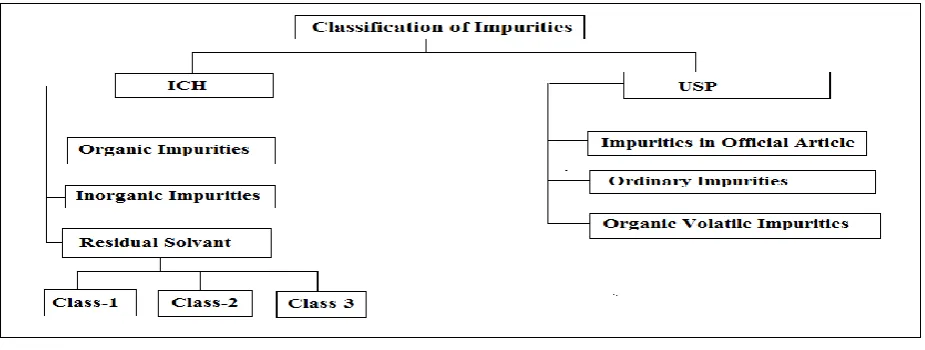
Figure 1: Classification of Impurities:
According ICH guidelines Q3A, Q3B and Q3C and USP Impurities classification
A. According ICH guidelines Q3A, Q3B and Q3C
Organic impuritiesThese can be formed during the manufacturing process or during storage of new drug substances. They can be identified/unidentified, volatile/non-volatile. This includes starting materials, intermediates, by-products, DPs, reagents, ligands and catalysts.
Inorganic impurities
These can arise during manufacturing process; normally they are known and identified. This includes: reagents, ligands, catalysts, heavy metals, other residual metals, inorganic salts and other materials like filter aids, charcoal. Examples, Cadmium, manganese, sodium etc.
Residual solvents
These are generally inorganic/organic liquids that are used during synthesis of drug substances as a vehicle for preparation of solution or suspension. Appropriate control of residual solvent is necessary since they have known toxicity. ICH Q3C guideline provides the limits of residual solvent based on existing safety and toxicity data. These were classified in three categories:
Class 1 (The most toxic and/or environmentally
hazardous):
These are highly toxic in nature and are limited to 28 ppm, for environmentally hazardous chemical like trichloroethane the limit of 1500 ppm is applied. During manufacturing of pharmaceuticals Class 1 solvents should be avoided. But if their presence is unavoidable, the definite concentration limit is applied, regardless of the actual patient intake dose. Examples, Benzene, carbon tetrachloride, 1, 1, dichloromethane,
Class 2 (Considered a lesser risk):
These should be limited in their usage. Two different 1approaches were described in guideline for setting limits of class 2 solvents. The first approach is used when PDE (permitted daily dose) cannot be estimated; concentration limits are calculated on the basis of daily intake of theoretical product mass of 10g. The second approach is used when dose is known; the PDE and/or dose value can be used to determine the permissible concentration. Examples, Acetonitrile, Chloroform, 1, 2,-Dioxane, Pyridine, Toluene.
Class 3(The lowest risk category):
These have low toxic potential and are limited to 5000 ppm (0.5% w/w). Examples, Acetic acid, acetone, ethanol, butanol, isopropyl alcohol.
Sources of Impurities (Venkata et.al., 2016).
Others-Enantiomeric impurities:
In optically active drug there could be an isomer with enantiomeric impurities. Many drugs are chiral and are often supplied as mixtures of enantiomers rather than single enantiomers (Prafulla Kumar Sahu, 2015).
B. According USP Impurities classified as
a. Ordinary impurities: Ordinary impurities are found in
bulk pharmaceutical chemicals that are innocuous by virtue of having no significance on the biological activity of the drug substance. These impurities may arise out of the synthesis, preparation or degradation of the chemical.
b. Organic volatile impurities: Organic volatile chemicals
Sources of impurities:
Synthesis Related Impurities: During synthetic process,
impurities in new drug substance or new chemical entity (NCE) mainly originate from raw materials, intermediates, by products and solvents. Generally in pharmaceutical synthesis, the purity of final intermediate is controlled by performing regulatory purity/impurity testing. Example, p-Chlorophenyl glutaric acid is a synthesis impurity of Baclofen.
Formulation Related Impurities: The excipients used to
formulate drug products, can generate potential impurities. In addition during the process of formulation the drug is subjected to variety of conditions like heat, shear etc, that can contribute undesirable reactions and forms Degradation products. Hydrolysis or solvolysis generally takes place in solutions and suspensions that leads to degradation. Vortex mixing are sometimes used during process of formulation that is considered high risk operations which can cause impurity formation. Example, 1-(2, 6-Dichlorophenyl) Indoline is formulation impurity of Diclofenac.
Degradation Related Impurities: Number of impurities can
be generated due to degradation of API and/or other interactions on storage. Therefore, it is important to conduct stability studies in order to predict, evaluate and ensure drug product self-life. Stability studies include evaluation of API stability, pre-formulation studies in order to evaluate compatibility of API with the excipients to evaluate its stability in the formulation matrix, accelerated stability testing of the drug product, kinetic studies and determination of expiration date, stability studies of drug products in market. The stability studies were conducted under various exaggerated conditions of humidity, light and temperature that helps to determine which type of impurities can be generated by degradation reactions. Example, Disulfonamide is a degradation Impurity of Hydrochlorothiazide.
Stereochemistry-related impurities: Stereochemistry
related compounds are those compounds that have similar
chemical structure but different spatial orientation, these compounds can be considered as impurities in the API’s. Chiral molecules are frequently called enantiomers. The single enantiomeric form of chiral drug is now considered as an improved chemical entity that may offer a better pharmacological profile and an increased therapeutic index. Example, R- omeprazole is an impurity of esomeprazole.
Reagent, Ligands and Catalysts: These impurities are
pretty rare. Proper care during the manufacturing process avoids the chance of these kinds of impurities.
Heavy Metals: Water is essential during manufacturing
process and it is the main source of heavy metals, like Ar, Cd, Cr, Na, Mg, Mn, etc. These can be avoided by the use of demineralization plant, reverse osmosis technique that produces mineral free water (Ayre et al., 2011).
Other Materials (Filter Aids, Charcoal): The filters or
filtering aids are routinely used in the bulk drugs manufacturing plants and sometimes activated carbon is also used which acts as a source of impurity. For that reason regular monitoring of fibres and black particles are needed to avoid the contamination (Venkata Pavan Kumar G. Prameela Rani, Pooja and Anil Kumar, 2016).
Crystallization-Related Impurities: Polymorphism is the
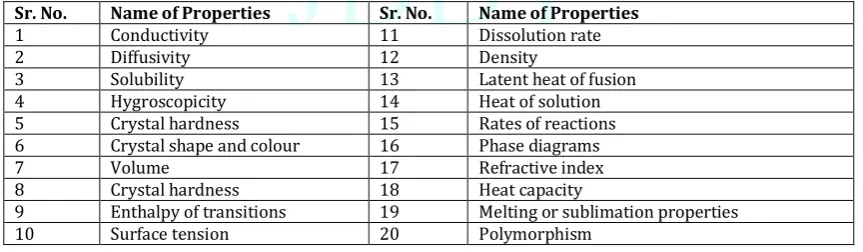
term used to denote crystal systems where a substance can exist in different crystal packing arrangements, all of which have the same elemental composition. It is also possible to have crystal systems where the substance exists in different crystal packing arrangements, each of which has a different elemental composition; this phenomenon is known as solvatomorphism. Based on the realization that the nature of the structure adopted by a given compound upon crystallization could exert a profound effect on the solid-state properties of that system, the pharmaceutical industry is required by regulatory authorities to take a strong interest in polymorphism and solvatomorphism. The nature of the crystal structure of a given material can influence the following properties given in Table No.1. (Bari et al., 2007)
Table 1: List of properties that influences the crystal structure of a impurities(Bari et al., 2015).
Sr. No. Name of Properties Sr. No. Name of Properties
1 Conductivity 11 Dissolution rate
2 Diffusivity 12 Density
3 Solubility 13 Latent heat of fusion
4 Hygroscopicity 14 Heat of solution
5 Crystal hardness 15 Rates of reactions
6 Crystal shape and colour 16 Phase diagrams
7 Volume 17 Refractive index
8 Crystal hardness 18 Heat capacity
9 Enthalpy of transitions 19 Melting or sublimation properties
10 Surface tension 20 Polymorphism
Factors
affecting
on
formulation
related
impurities:
A. Environment related:
a.Exposed to adverse temperature: Substance which are
labile to heat or in tropical temperature lead to degradation of active constitute and formation of impurity occurs. E.g. Vitamins are heat sensitive and its degradation lead to loss in potency.
b.Exposed to light: Photosensitive material when exposed
to light / UV light undergo degradation which forms impurity.
c. Humidity: It can be detrimental to bulk powder and
formulation containing solid dosage form. B. Formation of impurities on ageing:
a. Mutual interaction: Interaction between ingredients
C. Functional Group Related Impurities
a. Ester hydrolysis: Drugs like aspirin, benzocaine,
cefoxime, cocaine, ethyl paraben undergo ester hydrolysis.
b. Hydrolysis: Commonly drugs like benzyl penicillin,
barbital, chloramphenicol undergo hydrolysis.
c. Oxidative degradation: Drugs like hydrocortisone,
methotrexate, heterocyclic aromatic ring, nitroso/nitrile derivative.
d. Photolytic cleavage: Product exposed to light while
manufacturing or storage in hospital pending use or by consumer pending use.
e. Decarboxylation: some dissolved carboxylic acid such as
P-Amino salicylic acid Loose CO2 when it heated(Pawale, et. al., 2012).
D. Packaging material Related Impurities: Impurities
formed from packaging material like closures and containers. For most drugs, water, metals, peroxides derived from the packaging material can lead to formation or introduction of impurities. Various impurities such as polypropylene, zinc stearate (stabilizer in PVC), styrene, and diethylhexylpthalate (DEHP) etc. can leach in from rubber stopper and plastic material; whereas oxides like NO2, SiO2, CaO and MgO can be released from glassy surfaces (Singh. et. al,. 2017).
Isolation:
Isolation and characterization of impurity is depends upon the nature of the impurity that means structure of impurity, its physicochemical properties and availability. It is often necessary to isolate impurities because the instrumental methods that were mentioned earlier for directly characterizing impurities without isolating them are not available or when the authentic material is needed for further confirmation of the structure or its toxicity. Isolation and removal of the compound of interest from the other compounds present in a mixture. Further purification is achieved based on the compounds intended use. The first two sections, solid-phase extraction and liquid-liquid extraction deal with liquid samples. The sections on supercritical fluid extraction and accelerated solvent extraction focus mainly on solid samples while the centrifugation and filtration sections handle suspensions. Isolation methods include both chromatographic and non-chromatographic methods. Simple methods should be tried first, as they can lead to considerable savings in time and can produce a larger quantity of materials with greater ease (Singh et al., 2017). For isolation of a given compound from a complex mixture, the chromatographic methods utilized for separation of impurities in analytical determinations are the methods of first choice that are suitably modified for the purpose of isolation of impurities where an appropriate fraction is collected. For isolation of impurity Following methods are commonly used for the isolation as below (figure no.2).
Figure 2: Isolation of impurities (Alsante et al., 2001)
Solid-phase extraction methods: The conventional process
of solid-phase extraction involves passing a liquid sample over a solid surface in order to separate target analytes from the sample matrix. The attractive interactions of the analyte with the solid surface must be greater than the attractive interactions of the analyte with the sample matrix in order for retention and extraction to occur. The technique is based on the same principles as chromatographic separations (partitioning, adsorption, or ion exchange).
Liquid-liquid extraction methods (LLE): This simply
entails extraction of one liquid with another generally one of those liquid is aqueous and other is organic. The primary requirement is that these liquids to be immiscible. This procedure is very useful when the liquid into which the material of interest is being extracted is easy to volatilize, thus permitting concentration of the material. Hence the choice of solvents must be made with that consideration in
mind. Liquid–liquid extraction is a very good sample clean up technique for nonpolar or moderately polar analytes that can be deionized in aqueous solution by simple pH adjustment. From a practical perspective, the best recoveries are obtained when an excess of organic solvent (3- to 10-fold excess) or multiple-step extractions are used. Multiple step extractions have recently fallen into disfavour for routine use because they are time-consuming and labour-intensive. In this type of extraction process, a solute is distributed between two immiscible solvents. The extraction is controlled by distribution or partition co-efficient which defines the ratio of concentration of the solute in two solvents a and b.
Kd = Ca / Cb
Kd is the distribution co-efficient or partition coefficient.
Liquid-solid extraction
To simplest form, a solvent is selected that would dissolve the impurity of interest but not the solid matrix. If compound contains more than one impurity means, in that case desirable to use an organic solvent for extraction because of its unique properties. It is generally easier to volatilize the organic solvent at low temperatures in order to concentrate the impurity.
Table 2: List of solvents for Liquid-Solid extraction.
Solvents Boiling Point Dielectric constant
n-Hexane 190 1.9
Cyclohexane 81 2
Methanol 65 32.7
Dimethyl formamide 153 36.7
Acetonitrile 82 37.5
Water 100 80
Supercritical fluid extraction: It can be argued that the
first supercritical fluid extractions (SFE) were performed in 1879 when Hannay and Hogarth investigated the solvating capabilities of ethanol. However, it took roughly 100 years ago supercritical fluids made any significant impact on industrial processes. The removal of caffeine from coffee beans was reported in the 1970s and led to a large increase in the number of published articles focusing on large-scale extractions using supercritical carbon dioxide. Supercritical fluid extraction (SFE), with Aid of carbon dioxide as the solvent, was tested for its ability to remove common reactive impurities from several pharmaceutical such as extraction of the small molecule impurities, formic acid and formaldehyde etc. The development of commercial supercritical fluid chromatographs and extraction systems escorted a slew of publications about analytical scale work in the 1980s (Deshpande et al., 2012). In general, the use of supercritical fluids for extraction was touted as having several advantages over traditional extraction techniques such as LLE. These included lower solvent cost, better selectivity through pressure and temperature modification, and better solvating power because of fluid properties. A complete understanding of SFE and its relation to other extraction methods cannot be made without some knowledge of the basic properties of supercritical fluids and the basic principles of analytical SFE instrumentation. The purpose of this section is to give an introduction to the use of supercritical fluids in analytical-scale extractions while focusing on the application of SFE to pharmaceutical analysis (Ashraf-Khorassani et al., 2005).
Table 3: List of solvents for SFE
Solvent Pressure(ATM) Temperature
n-Pentane 33.3 196.6
Carbondioxide 72.9
Ammonia 111.3 132.3
Column Chromatography: This technique is commonly
used for the separation of pharmaceutical compounds in preparative chemistry. The separation of quantities ranging from micrograms to kilograms, which depends on the size of the column. Detection of the eluent is generally performed by UV- spectrophotometry, either continuously by using a flow cell or periodically by monitoring the collected fractions from a given sample that alerts the emergence of UV- active components. Commonly silica gel
or alumina is used in classic adsorption chromatography. Ion exchange resins to chemically modified polydextran gels used primarily for the analysis of biological samples. For liquid-liquid partition chromatography columns, inert carrier such as celite or kieselguhr is impregnated with an aqueous buffer or another polar solvent such as dimethyl formamide or dimethyl sulfoxide and elution is carried out with non-polar solvents.
Thin Layer Chromatography: It is a valuable technique for
isolation and purification of compounds. All the modes of chromatography including adsorption, partition, ion exchange and gel filtration can be utilized. In addition choosing a sorbent and an eluent for performing TLC it is necessary to select a suitable method for applying a sample to the plate. Silica gel plates with or without fluorescent indicator are frequently used for most application. Detection is frequently performed by UV eg. 366nm or Iodine vapours can help to detect most of the organic substance. To elute the material from the plates, the simplest method is scraping the sorbent containing the material of interest and it is extracted with a suitable solvent, followed by filtration or centrifugation. The solvent is removed to collect the desired substance. If aluminium plates are used means cut the sample and eluted (Singh. et. al,. 2017).
Gas Chromatography: It is very useful for isolation and
characterization of volatile components or those components that can be made volatile by derivatization technique and the detector used should be non-destructive. Now GC is more appropriate to be used in combination with mass spectrometry (GC/MS) for characterization of impurities (Singh. et. al,. 2017). [14]
Process Chemistry
Process Chemists are responsible for developing the synthetic route for development candidates. They are expected to collaborate with the other groups below to facilitate the identification and characterization of impurities or to refine their synthetic route design to eliminate or minimize the presence of these impurities. Critical factors affecting the quality of bulk drugs are;
1. Crystallization 2. Washing the wet cake 3. Drying
4. Appropriate packaging
1. Crystallization: The size of crystals sometimes
determines the quality, especially the stability, of bulk drugs. Large-size crystals can entrap a minute amount of chemicals from the mother liquor, which ultimately causes the degradation of the drug. Thus, the manufacturers of bulk drugs should take care to produce finer crystals while isolating the products.
2. Washing the wet cake Washing the wet cake or powder
in the centrifuge should be thorough to re-move unwanted chemicals including residual sol-vents.
3. Drying- Use of a vacuum dryer or a fluid-bed dryer is
4. Appropriate packaging Light- sensitive pharmaceutical products need light protective packaging. An accelerated stability testing conducted using marketed ampoules of ergometrine wrapped with either black carbon paper or aluminium foil produced negligible degradation against direct sunlight. Similar use of opaque containers for ciprofloxacin eye drop preparation can protect the active ingredient from photo degradation to some extent compared with transparent containers (Saibaba et.al., 2016).
Strategy for Method Development
A. Method development strategy should have the following details.
1. Physico chemical data 2. Ionization constant 3. Solubility
4. Water absorption 5. Distribution co-efficient 6. Optical rotation
7. Crystal form (Venkata et.al., 2016)
B. Impurities can be analyzed by the following instruments: 1. Ultra Violet Spectroscopy
2. IR Spectroscopy 3. NMR Spectroscopy 4. Mass Spectrometry 5. Gas Chromatography
6. HPLC (Prafulla Kumar Sahu, 2015).
Need to Identify Impurities: Impurities are generally
assumed to be inferior to API because they might not have the same level of pharmacologic activity. However, they are not necessarily always inferior. From the standpoint of its usage, the drug substance is compromised in terms of purity even if it contains another material with superior pharmacologic or toxicologic properties.
The control of low- level impurities is of great importance when a drug is taken in large quantities; for example, the use of methotrexate (10–20 g) to treat neoplasia. Penicillin and
cephalosporin have been known to sustain facile cleavage of the β-lactam bond in aqueous solution. This is particularly interesting since some studies on penicillin have shown that their lack of stability may influence possible reactions involved in penicillin allergy. Special attention should be paid to the detection of DNA in all finished biotechnology products because DNA can be incorporated in the human genome and become a potential oncogene.
Analytical Research and Development: Pharmaceutical
Development groups are ultimately responsible for the Chemistry, Manufacturing, and Controls sections of Investigational New Drug (IND) applications and New Drug Application (NDA) submissions. In general the various groups involved in this process from a synthetic chemistry and data collection and analysis. This group is basically responsible for the development of Drug Substance, Drug Product and specifications. This group will work combined with the process chemistry and structure characterization groups in concert to enable impurity profiling and chemical stability evaluation with degradant identification. The impurity profile method is developed by Analytical R&D and this method is used to help identify all impurities through each stage of the synthetic route and to help the characterization group decide which impurities require structure elucidation and characterization. In this group, a significant amount of time, technology, and knowledge is also invested in method development, tests of robustness, and validation (Vijayalakshmi R, 2012).
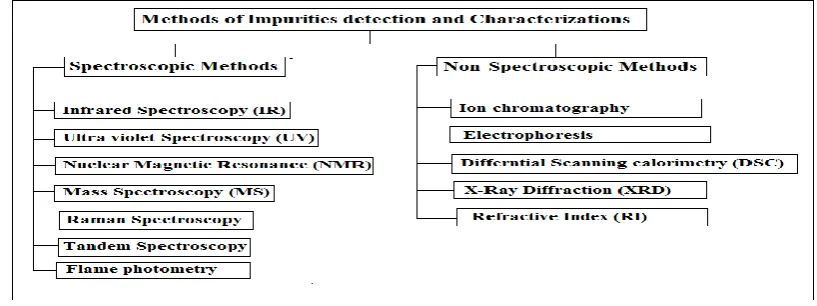
Method for impurity detection and characterization After the impurity isolation and identification, it must be characterised following technics are generally utilised as shown figure-3.
Highly sophisticated instrumentation, such as Ion Chromatography, Capillary Electrophoresis, HPLC, TLC and HPTLC, are inevitable tools in the detection of minor components (drugs, impurities, degradation products, metabolites) in various matrices.
Figure 3: Methods of Impurities detection and Characterizations
1. Infrared Spectroscopy (IR): IR-Spectroscopy Provides
the information in the form of wave numbers which is indicate the presence of particular functional groups. Routinely used identification assay for various intermediates and final drug substances and also as quantitative technique for solution phase study. The IR traditional technique are used for characterization including identification and
structural elucidation of molecules, solid state
characterization such as polymorphism (Devid E.B. et. al., 2002).
2. Nuclear Magnetic Resonance (NMR): NMR provides
3. Mass Spectroscopy (MS): Mass spectroscopy is a most relevant and sophisticated method for determining the molecular mass of the compound and its elemental composition. Mass spectroscopy is used to prove identity of two compound, establish the structure of new compound, give exact molecular mass, give molecular formula and most important for structure elucidation. Now a days mass spectroscopy connected with various hyphenated techniques like GC-MS, LC-MS,LCMS-MS HPLC- DAD-MS, HPLCDAD-NMR-MS, Tandem Mass spectroscopy and capillary electrophoresis-Mass spectroscopy (Saibaba et.al., 2016).
4. GC-MS: To identify different substances within a test
sample gas chromatography-mass spectrometry (GC- MS) method used, that combines the features of gas- liquid chromatography and mass spectroscopy. In this method gas chromatography separate volatile and semi- volatile compounds with great resolution. Mass spectroscopy can provide detailed structural information on most compounds such that they can be exactly identified, but it cannot readily separate them. Sample vaporized by injection into a heated system, eluted through a column by inert gaseous mobile phase and detected. The sample is transported through the column by the flow of an inert, gaseous mobile phase, the carrier gas. Flow is regulated by the pressure regulators and gas metering valves. GC operates at atmospheric pressure and the MS ion source at 10-5 Torr.108 fold pressure difference. The carrier gas must be removed and GC peak components transferred to the MS ion source (Kulkarni, 2018).
5. LC-MS: LC/MS is a hyphenated technique, combining
the separation power of HPLC, with the detection power of mass spectrometry. LC/MS became really popular with the introduction of the thermospray interface and the particle beam interface. This is same as GC-MS but removal of liquid carrier from an HPLC eluent before samples are passed in to the MS source. For handle normal eluent flow rate 0.5-2.0ml min-1 which is not handled by MS pumping system moving belt inlet systems, jet separators and vacuum nebulizers are used (Saibaba, Kumar and Ramu, 2016). HPLC-DAD-MS (HPLC coupled with a diode array UV detector and a mass spectrometer, and such other techniques are almost
routinely used. In GC-MS of methamphetamine and in LC-MS of risperidone, and cetrizine tablets a number of other chromatographic and spectroscopic configurations are found to be perfectly suitable for initial characterization of the impurities.
The single method most of time fails to provide the necessary selectivity then the coupling of chromatographic techniques such as HPLC-TLC and HPLC-CE, or coupling of chromatographic separations with information rich spectroscopic methods such as HPLC-MS or HPLC-NMR may need to be contemplated, but hopefully only as a development tool rather than a tool for routine QC use. Also the some Hyphenated techniques are crucially plays an important role in the segment of Impurity characterization. Within a short time these methods provides most relevant data to the chemist(Ingale et al., 2011; Saibaba, Kumar and Ramu, 2016).
Hyphenated Methods:
LC-MS-MS: The popularity of LC-MS-MS systems for complex
mixture analysis of thermally labile and biologically relevant molecules viz. mosapride, is largely attributed to the soft nature of atmospheric pressure chemical ionization (APCI), and atmospheric pressure ionization (APPI).
HPLC-DAD-MS: HPLC-DAD-MS (HPLC coupled with a
diode array UV detector and a mass spectrometer, and such other techniques are almost routinely used.
HPLC-DAD-NMR-MS: NMR has now been added to this
combination to provide HPLC-DAD-NMR-MS capabilities in a commercial instrument (Ingale et al., 2011; Venkatesan and Valliappan, 2014).
Control of organic impurities: Control of the organic
impurities in new drug substances is based on the maximum daily dose and total daily intake (TDI) of the impurities. Tableprovides the ICH threshold for control of the organic impurities in new drug substances and new drug products (figure 4).
Figure 4: Organic impurity threshold in new drug substances and drug products based on ICH.
Depending on whether the maximum daily dose is higher or lower than 2g, organic impurities in a new drug substance at (or greater than) 0.05% or 0.1% requires identification. Based on the maximum daily dose, the identification
any impurities at 0.2% or greater would have to be identified (Agency, 2006; ICH, 2006b, 2006a).
Implementation of quality by design approach
Quality by Design (QbD) is “a systematic approach to development that begins with predefined objectives and emphasizes product and process understanding and processcontrol, based on sound science and quality risk management” and has the aim of improving product quality and of increasing regulatory flexibility. Impurity level is a critical quality attribute for a drug substance or a drug product because levels higher than the toxicologically qualified amount could affect the safety and efficacy of the product (Savkare A. D, 2016).
Figure 5: Schematic representation of Strategies for applying QbD for Impurity profiling (Palve R. et. al., 2018)
Applications: (Venkata et.al., 2016).
Drug Impurity Method
Amphotericin B Tetraenes HPLC with UV
Atopine sulphate Apo atopine HPLC with UV
Cloxacilin N,N, dimethylaniline HPLC with GC
Doxirubicine hydrochloride Acetone &Ethanol HPLC with GC
Dextrose 5-hydroxy methyl fulfural HPLC with UV
Ethambytal Hydrochloride 2 amino butanol TLC
Flurescene sodium Dimethyl formaamide HPLC with GC
Farmyctin Sulphate Neamine TLC
Marcptopurine Hypoxinthine HPLC with UV
Metformin Cynoguanidine HPLC with UV
Topiramate Topiramate RC-A HPLC with RI
Topiramate Sulpha mate HPLC with IC
Artemether Artemisinin TLC
Hyoscine butyl bromide Impurity G HPTLC
Conclusion
A high quality of drug substances and products helps to provide a consumer protection, hence the manufacturing companies focussed on isolation, separation, identification and characterization of impurities during the developmental stages. Identification of impurities establishes an overall profile of a drug and drug product which includes its toxicity and safety limits, limits of quantization and detection. Identification and isolation of impurities should start right from using API till the finished dosage form of a drug. There should be well established and standard specifications in the guidelines for overall control and isolation of impurities which should serve as a guiding specification to all the regulatory agencies pharmaceutical drugs substances and drugs products manufacturers. Validation of methods to identify and characterize impurities is a good approach and is currently being in practice for evaluation of impurities. The isolation, identification of impurities and impurity profiling is carried out using various techniques such as chromatographic separation techniques generally used in combination with sophisticated instruments like HPLC, UPLC, GC, and SFC. Also some hyphenated techniques like LC-MS-MS, HPLC-DAD-MS, and HPLC-DAD-NMR-MS. These are very helpful and advantageous techniques for characterization of impurity profiling. To providing documentary evidence the quality by design approach is very effective and promising tool for reducing the trials. QbD provides or generate statistical data which is help full for further reference purpose.
Acknowledgement:
The author wish thanks to Dr. Priti J Mehta for editing and proof reading and all authors for their supports, guidance and co-operation in searching various article journals to completion of this review article. Also I would like to thanks department of pharmaceutical analysis, institute of pharmacy, Nirma University, Sarkhej-Gandhinagar Highway, Ahmedabad and Torrent Research Centre, near Indira Bridge, Bhat, Gandhinagar, 382428, Gujarat, India.
References:
1. Agency, E. M. (2006) “ICH Topic Q 3 B (R2) Impurities in New Drug Products,” EMEA European Medicines Agency, (August 2003).
2. Alsante, K. M. et al. (2001) “Isolation and Identification of Process Related Impurities and Degradation Products from Pharmaceutical Drug Candidates, Part I,” American Pharmaceutical Review, 4(1), pp. 70–78.
3. Ashraf-Khorassani, M. et al. (2005) “Purification of
pharmaceutical excipients with supercritical fluid extraction,” Pharmaceutical Development and Technology, 10(4), pp. 507– 516. doi: 10.1080/10837450500299958.
4. Ayre, A. et al. (2011) “Impurity profiling of pharmaceuticals,” Advance research in pharmaceuticals and biologicals, 1(2), pp. 76–90.
5. Bari, S. et al. (2007) “Impurity profile: Significance in Active Pharmaceutical Ingredient,” Eurasian Journal of Analytical Chemistry, 2(1), pp. 32–53. doi: 10.12973/ejac/78054. 6. Bari, S. et al. (2015) “Impurities in pharmaceuticals: A
review,” World Journal of Pharmaceutical Research, 4(10), pp. 2932–2947.
7. Deshpande, P. B. et al. (2012) “Supercritical Fluid Technology: Concepts and Pharmaceutical Applications,” PDA Journal of Pharmaceutical Science and Technology, 65(3), pp. 333–344. doi: 10.5731/pdajpst.2011.00717.
8. Findlay, W. P. (no date) “Vibrational Spectroscopy,” (5). 9. Gabhe, S., Desai, S. and Patel, A. (2011) “Isolation and
characterization of impurities present in
8-chlorotheophylline,” Indian Journal of Pharmaceutical Sciences, 73(1), p. 79. doi: 10.4103/0250-474x.89762. 10. ICH, A. (2006a) “Impurities in New Drug Products Q3B(R2),”
in International Conference On Harmonisation Of Technical Requirements For Registration Of Pharmaceuticals For Human Use, pp. 1–30. doi: 10.1017/CBO9781107415324.004. 11. ICH, A. (2006b) “Impurities in New Drug Substances
Q3A(R2),” in International Conference On Harmonisation Of Technical Requirements For Registration Of Pharmaceuticals For Human Use, p. 15.
12. Ingale, S. J. et al. (2011) “Advance approaches for the impurity profiling of pharmaceutical drugs : A review,” International Journal of Pharmacy & Life Sciences, 2(7), pp. 955–962. 13. Kulkarni, A. (2018) “Impurity: Pharma Market and
Importance,” MOJ Bioorganic & Organic Chemistry, 1(4), pp. 128–129. doi: 10.15406/mojboc.2017.01.00023.
14. Palve R. et. al. (2018) “A Review on Impurity Profile in Pharmaceutical Substances,” Research and Reviews Journal of Pharmacy and Pharmaceutical Sciences, 13(1).
15. Pawale, S. S., Saley, S. P. and Tilloo, S. K. (2012) “Impurity Profile in Bulk Drugs and Pharmaceutical,” 1(4), pp. 1227– 1237.
16. Prafulla Kumar Sahu, S. S. (2015) “An Overview of Pharmaceutical Impurities and Degradation Products,” Pharmaceutical Regulatory Affairs: Open Access, 04(01), p. 7689. doi: 10.4172/2167-7689.1000e148.
17. Saibaba, S. V, Kumar, M. S. and Ramu, B. (2016)
“Pharmaceutical Impurities and Their Characterization : a Review,” European Journal of Pharmaceutical and Medical Research, 3(5), pp. 190–196.
18. Savkare A. D, B. N. R. (2016) “Comprehensive approach of QbD for impurities in drug substances and drug products,” Indo American Journal of Pharmaceutical Sciences, 3(2), pp. 81–85.
19. Singh, A. et al. (2017) “A review on Pharmaceutical Impurities and Their,” World Journal of Pharmacy and Pharmaceutical Sciences, 6(10), pp. 1337–1354. doi: 10.20959/wjpps201710-10280.
20. Venkata Pavan Kumar G. Prameela Rani, A., Pooja, B. and Anil Kumar, Y. (2016) “Phytochemical Screening, Spectroscpic Characterisation and Cardiotonic Activity of Aqueous Extract from Arieal Parts of Carmona Retusa (Vahl) Masam on Isolated Frogs Heart,” International Journal of Pharmaceutical Chemistry, 3. doi: 10.7439/ijpc.
21. Venkatesan, P. and Valliappan, K. (2014) “Impurity profiling: Theory and practice,” Journal of Pharmaceutical Sciences and Research, 6(7), pp. 254–259.
22. Vijayalakshmi R, K. S. and S. A. (2012) “Scientific Approaches for Impurity Profiling in New Pharmaceutical substances and its products- An overview,” International Journal of