World Maritime University World Maritime University
The Maritime Commons: Digital Repository of the World Maritime
The Maritime Commons: Digital Repository of the World Maritime
University
University
World Maritime University Dissertations Dissertations
2012
Virtual MET Institution : assessing the potentials and challenges
Virtual MET Institution : assessing the potentials and challenges
of applying multi-user virtual environment in maritime education
of applying multi-user virtual environment in maritime education
and training
and training
Trong Hieu Pham World Maritime University
Follow this and additional works at: https://commons.wmu.se/all_dissertations Part of the Educational Methods Commons
Recommended Citation Recommended Citation
Pham, Trong Hieu, "Virtual MET Institution : assessing the potentials and challenges of applying multi-user virtual environment in maritime education and training" (2012). World Maritime University Dissertations. 20.
https://commons.wmu.se/all_dissertations/20
WORLD MARITIME UNIVERSITY
Malmö, Sweden
Dissertation
Virtual MET Institution: Assessing the potentials and
Challenges of Applying Multi-User Virtual Environment in
Maritime Education and Training
By
PHAM TRONG HIEU
VietnamA dissertation submitted to the World Maritime University in partial Fulfillment of the requirements for the award of the degree of
MASTER OF SCIENCE In
MARITIME AFFAIRS
MARITIME EDUCATION AND TRAINING
2012
Declaration
I certify that all the material in this dissertation that is not my own work has been identified, and that no material is included for which a degree has previously been conferred on me.
The contents in this dissertation reflect my own personal views, and are not necessarily endorsed by the university
(Signature): ...
(Date): ...
Supervised by:
Takeshi Nakazawa
World Maritime University
Johan Bolmsten
World Maritime University
Yvonne Dittrich
IT University of Copenhagen
Assessor: Daniel Moon
Institution organization: World Maritime University
Co-assessor: Harro Kucharzewski
Acknowledgements
I wish to express my deepest appreciation to Professor Takeshi Nakazawa, Professor Yvonne Dittrich, and Lecturer Johan Bolmsten, whose tremendous support, insight and guidance help me to walk through the difficulties. Without their persistent help this dissertation would not have been possible.
My special thanks to Mr. Johan Bolmsten for all the guidance, feedback and advice that he has given to me. He had spent enormous time and effort to give me the greatest detail of valuable feedback and recommendations.
It gives me great pleasure in acknowledging the support from Ms. Inger Sund Battista for her language supervision feedback and corrections.
I would like to thank my family, dear friends and all the members of MET class 2012 for all the support and encouragement they have given me during my studies and this dissertation.
Malmö, Sweden, October 2012
Abstract
Title of Dissertation: Virtual MET Institution: Assessing the potentials and Challenges of Applying Multi-User Virtual Environment in Maritime Education and Training
Degree: MSc
The dissertation is a study to assess the potentials and challenges in the use of Multi-User Virtual Environment (MUVE) in Maritime Education and Training (MET) context. Virtual technology is growing at fast pace. The applications of MUVE are being utilized by numerous institutions across many educational professions. However, the area of utilizing MUVE in MET is still very limited.
At the time being, it is indicated that there is possibility to take advantages of MUVE to create: (1) an enhance learning environment, (2) collaboration tools to support the distributed knowledge community, and (3) new modes of distance learning.
METs are facing with several contemporary issues. There are necessities to foster the learning experience of future seafarers, to promote expertise exchange, and to continuously support its community of practice from distance. The investigation of MUVE’s characteristics and its applications suggests chances to tackle the such issues. Obviously, assessing the potentials and challenges of applying MUVE in MET become critical.
The assessment tasks are conducted by examining the potentials that an institution can benefit as well as challenges that it would face. Then it is repositioned into MET contexts by taking into account the reality of MET’s culture and practices.
The outcomes of the assessments indicate the affordance of MUVE for educational activities in MET institutions. Being aware of the limitations of the research itself, a number of recommendations are made concerning the need for further investigation in the subject.
KEYWORDS:Virtual world, MUVE, Community of practice, Second life, virtual classroom,
• “…enhance learning environment…” • “…assessing the use of MUVE in MET…”
Table of contents
Declaration ... ii
Acknowledgements ...iii
Abstract ... iv
Table of contents ... v
Glossary ... vii
1 Introduction ... 1
1.1 Background ... 2
1.2 Research focus, overall aim and individual objectives ... 4
1.3 Structure of the paper ... 6
1.4 Research Methodology and design ... 7
2. What is virtual world? ... 13
2.1 Today Definition of virtual world ... 14
2.2 Revolution history of virtual world ... 17
2.3 What is Game , Simulation and Simulation game? ... 19
2.4 The use of Second life in this research (SL) ... 22
3 MUVE and its educational usage... 27
3.1 Theoretical Framework ... 28
3.1.1 Epistemic frame ... 28
3.1.2 Learning theory ... 29
3.1.3 Community of Inquiry (COI) Model ... 31
3.2 Using multiuser virtual environment (MUVE) as Educational Tools ... 34
3.2.1 MUVE as Game/Simulation platform ... 35
3.2.2 MUVE as Social collaboration platform ... 38
3.2.3 MUVE as Virtual delivering method ... 41
3.3 Case study data and virtual world interview data ... 42
4 Assessing the use of MUVE in MET ... 55
4.1 Survey data analysis – Situation of utilizing MUVE in MET ... 56
5 Discussion: Potentials and challenges of utilizing MUVE in MET ... 66
6 Conclusion and suggestion ... 77
6.1 Conclusion ... 78
6.2 Limitation of the research ... 82
6.3 Recommendation ... 82
References ... 84
Appendices ... 94
Appendix A - Survey questionnaire template ... 95
Appendix B - Virtual world interview question template ... 97
Glossary
Flickr A photo sharing service: In-world Inside the virtual world
Massive Multiplayer Online Game
Persistent online game environment in which hundreds to millions of players can create their own avatars, interact and engage in game play within a shared game plot or quest structure.
MOODLE
Moodle is an Open Source Course Management System (CMS), also known as a Learning Management System (LMS) or a Virtual
Learning Environment (VLE). More information:
Resident A user of a virtual world
Scripting Programming inside virtual world. This is to defined or assign functionalities to an object Second Life A virtual world hosted by Linden Research Inc.©
SLOODLE
SLOODLE (Simulation Linked Object Oriented Dynamic Learning Environment) is an Open Source project which integrates the multi-user virtual environment of Second Life® with the Moodle®
learning-management system.
SLURL Second Life Uniform Resource Locator. A web link that leads to a particular Second Life location Teleport Instantly changing the locations of an avatar
Chapter 1
Introduction
1.1
Background
1.2
Overall research aim, focus and individual objectives
1.3
Structure of the paper
1.4
Research methodology and design
This chapter is to provide basic information about this dissertation paper. The background section helps the readers to understand the need to conduct this research.
In section 1.2, the research question and its guided objectives are defined. it also describes briefly approaches that the research will use to achieve these objectives .
Section 1.3 provides readers a complete snapshot of the structure of this paper and the coverage of each subsection.
1.1 Background
New Information Communication Technologies (ICT) open up more and more choices for new modes of learning in Maritime Education and Training (MET). The potential to deliver learning at a distance has led to a global revolution in education. Many educational institutions now provide a range of courses and programs to students outside the local campus. As Muirhead (2003) recognizes, in MET, ICT is opening up new opportunities to extend the learning and training environment to onboard the ship. The contemporary youth generation is showing a great potential in negotiating the use of new media. With the increasing of interactive and communication networks that connect peoples, organizations and data sources has completely changed the way people work, socialize, communicate, live and learn. Obviously, these changes are also reflected in both MET and its workplaces in general where new practices are introduced, so the knowledge and skills one has today, may be obsolete tomorrow. The fast rate of change in the development of ICT puts students vulnerable to the increasingly complexity and uncertainty in reality of work.
Within the Maritime Education and training (MET) context, such changes are bringing-in challenges as well as opportunities for the industry to better support their workforces, so as for MET to provide innovative teaching and learning tools, to create an enhanced learning environment that can go beyond the limitation of traditional system. It also provides opportunities for the MET communities to collaborate and to facilitate the utilization of the intellectual resources. This also helps to promote two ways knowledge contribution between the industry and the educational process.
online learning that promote independent learning and reduce the class seat time (Granham & Keletta, 2002).
There are also other challenges that the effect of globalization makes the maritime industry becoming a very much multicultural working environment and increases its workforce mobility. Such changes in the working environment also impact the educational sector. Horck (2004) predicted that one day MET institutions might be faced with a student body of cultural mix that they are not trained to handle.
Not only that, being influenced by many factors such as technology innovation, the dynamic change in international laws and regulations, and the changing in industry culture, the future seafarers need to be equipped with interdisciplinary skills and knowledge to handle the dynamic and uncertainty of working reality. That means the faculty member of MET institutions should also find ways to upgrade, and exchange the knowledge and expertise with their students and their peers. Actually, the calling for the utilization of collaboration tools to address the immediate needs of the campus has been strongly emphasized. In expertise exchange, whether it is a maritime expert or a faculty who is from other professional, there are always challenges of understanding and embracing the pedagogical and scholarly demands associated with a dynamic balance of theoretical and experiential education (Zingale, 2007). That can be a maritime vocational instructor moving from shipboard operations to an academy simulation laboratory, or a linguistic teacher moving from other university setting to the maritime campus setting. Depending on the individual institutions, such needs are probably ranging from introducing newer educators to the basics of contemporary pedagogy and scholarship, strengthening the maritime resources network and comprehensive university campuses.
Obviously, in the current era of constant technology innovation , many educational assisted tools like simulation, video conferencing, online learning tool, so as with teaching and learning concept such as e-learning, blended learning and ideas like open educational resources are constantly developing and gaining more and more attention.
large number of simultaneous users to interact and communicate synchronously (Salt, Atkins & Balckall 2008).
The implementation of the “Virtual Institution” concept, which is a utilization of progressive development of MUVE platforms, have been introduced and is under experimental process by the industries and by many highly reputable universities. The examples are Harvard, MIT, Yale, Princeton, Lund University, IBM, Microsoft, and a long list of many more. Additionally, there is a considerable amount of research that has focused on evaluating and reporting about experiences of using the virtual worlds in education.
Under the concept of virtual institution", all the actors (i.e. teachers, students, and other experts) can create the graphical representation of themselves as ‘avatars’. These avatars move around the campus as a person would do, interact and socialize with each other by voice, instant text message, and other nonverbal communication tools. Within such immersive environment, the learners are able to experience the sense of presence – the sense of being there – as well as a higher level of interaction between actors than the current E-learning (Bailenson & Yee, 2008). The social interaction in itself can also support the learners by allowing rich-interactive collaboration which is absence in traditional e-learning tools.
However, in MET, less attention has been paid to the area of applying MUVE in educational activities. Having realized the challenges and the foreseen of future development in MET as well as taking into account the potential and capabilities of MUVE, it is possible for MET institutions to tackle such challenges by developing a learning environment that could provide and facilitate:
a) an enhanced learning environment,
b) lifelong learning opportunities for the maritime society and
c) a mechanism that effectively enables a contribution to knowledge expansion, production, and collaboration back from the maritime society
Although, many advocacy works and research from other professions have reported the educational possibilities of MUVE, these claims need to be verified particularly in the Maritime Education and Training context.
This research is to explore the educational potential of Muti-User Virtual environment in the Maritime Education and Training (MET) context. The research aims are to find the possibilities, challenges, barriers of whether the concept of virtual institution (VI) can be applied. The pedagogical, technological and practical aspects of how such virtual platform can potentially benefit MET and its communities are examined. Thereby, the research is guided by the following overall research question
“Would it be possible to apply the concept of virtual institution into Maritime Education and
Training context ?”
The research objectives pursued in order to answer the research question are to:
R01: Investigate the potentials and challenges of applying MUVE into education,
focusing on the use of virtual world in Second Life.
R02: Examine how the virtual institution concept which is an embodiment of MUVE
can contribute to the educational activities of a MET institution.
R03: Assess the challenges that a MET institution might encounter during the
implementation process
To accomplish the research objectives, the virtual institution concept of MUVE will be investigated from pedagogical, technical and practical viewpoints.
The research objective R01 is archived by investigating the MUVE from pedagogical perspective.The research will look at how virtual environments can help educators to provide a learning environment that engages students in more meaningful ways than those that are typically seen in the classroom (Lesser, 2005), or an environment in which engagement and higher-order thinking skills combine in a challenging, learner-centered instructional setting (Shaffer, Squire, Halverson & Gee, 2004). In addition, pedagogical theories that lie underneath the educational applications of MUVE will be examined.
analyzed. Such examinations provide this research with information about the advantages, promises, and limitations of a new learning environment, as well as the lesson learned from difficulties and challenges in the implementation process.
In order to accomplish the research objective R03, the practicality aspects of applying MUVE in the MET will be considered. In this sense, various opinions, insights from authors of articles and journals in the area of the virtual learning environment, and from MET’s experts will be discussed. To support the assessment tasks, the empirical data is gathered through the interview of MET experts – conducting at the International Maritime Lecturer Association Conference 20th in the Netherlands. The insights and opinions from the MET professionals are used to identify the potentials, challenges, and barriers that MET may encounter in applying MUVE.
1.3 Structure of the paper
This paper consists of five chapters. In chapter 1, the first section is the introduction which is trying to highlight the need to carry out the research work. The research objectives are defined, the research methodology and the research design are clearly described.
In chapter 2, the concept of virtual world and its revolution history are introduced. At the same time, some related definitions are defined. The section 2.2 of “Revolution history of virtual world” help readers to understand virtual world’s originality, its transformation throughout decades of technological innovation, and its relationship with the gaming area.
However, to avoid misinterpretation while this paper is using terms such as game, simulation, and simulation game, the section 2.3 of “what is game, simulation, and simulation game” is expected to add more comprehensiveness. It is also to inform the uniformity in the usage of such terms throughout this entire research paper.
Additionally, the section 2.4 of “the use of Second Life in this research” will acknowledge the readers that although there are many MUVE platforms that are available in the market, most of the reflection and studied literature are mostly related with the Second Life virtual world platform. This is because Second Life is currently the dominated platform for many educational experimentations.
modeled into a comprehensive model so called an application components model of MUVE. After that, the case studies data and the virtual world interview data will be analyzed. The representation of the findings helps the readers to understand the reality of implementing and conducting educational activities inside the virtual worlds. Chapter 3 also helps the readers to realize the situation of applying MUVE into education, and to identify its possibilities, and challenges in other field of profession.
Chapter 4 will assess the use of MUVE in MET. The section 4.1 of “Survey data analysis – Situation of applying MUVE in MET” describes the empirical findings about the use of MUVE in MET as well as extracting the insights and foreseen from the MET’s experts regarding the applications of MUVE. In section 4.2, the analysis of the MET interview data with opinions, insights from MET experts about the implementation of MUVE into MET practices will be presented. It serves the purpose to realize the reality of using MUVE in the educational activities from other fields of professions, as well as taking into account the reality of MET practices.
Chapter 5 provides the discussion about the potentials and challenges of utilizing MUVE in MET, which helps the research to answer the research question.
Finally, chapter 6 will come up with the conclusions, while mentioning the limitations of this research itself, the recommendations and suggestions for the future research will be provided.
1.4 Research methodology and design
1.4.1 Research methodology
This research was conducted using a flexible design approach, which involve the combination of quantitative data and also qualitative data during the process of data collection and analysis (Robson, 2002, p.164).
When the subject matter needs to be more clearly understood or defined, the flexible approach design based on qualitative research is justified. In this sense, as Ritchie and Lewis (2003) indicate, qualitative research is sometime used as prelude to statistical enquiry and measurements. They state that there can also be other circumstances where qualitative research is needed to provide greater understanding of the nature of an issue or phenomena, but the statistical measurements of its extents is not of interest.
Within a qualitative flexible research approach, a mixture of methods can also be used. In this research, the combination of documentary analysis and individual interviews are used. More than one qualitative method can be used in the investigation since it brings a particular kind of insight to a study (Ritchie, Lewis, 2003, p. 38). In this case, such combination is helpful in a sense that the individual interviews provide opportunities for detail investigation of people’s personal perspectives, concerns and their insights within the research contexts located, which shows MET experts’ perspectives on the use of MUVE in the MET. It is also helpful to illuminate the deeper meanings of subject matters, situations or events that cannot be investigated by direct observation or questioning, which is the exploration from literatures that help to understand how and in what way the learning occur under the virtual setting (Hammersley and Atkinson, 1995).
Although, there is still debate in social research about whether qualitative and quantitative approaches should, or even can, be combined. Some argues that the two approaches are so different in their philosophical and methodological origins that they cannot be effectively blended. However, others suggest that there can be value in bringing the two together (Ritchie, Lewis, 2003, p. 38). With multiple methods, the researcher has to confront the tensions between different theoretical perspectives while at the same time considering the relationship between the data sets produced by the different methods (Brannen, 1992, p.33).
Bryman (1988, 2001), Hammersley (1996), Morgan (1998) and Ritchie and Lewis (2003) have provided useful framework for reference and suggest that “there can be benefit in harnessing qualitative and statistically enquiry, provided that the two methods and the data they generate can be clearly delineated. It is because each of them could provide a distinctive kind of evidence and if they are used together, they can offer a powerful resource to inform and illuminate meaningful understanding of the phenomena.
This research is conducted using flexible qualitative approach. The empirical work has five parts: (1) Raw data collection through the Second Life educational directory, (2) the quantitative survey within MET community, (3) the interviews of MET’s experts, (4) literature case study of the two educational projects that had conducted in virtual world of SL, and (5) the interviews of educator and student in virtual world of SL.
In addition, the literature syntheses are used in combination with the empirical work. The literature review helps the research to realize that there are considerable amount of studies in the area of applying MUVE as educational tools.
The literature review helps the research to recognize the preliminary contents that are critical for this study including the need to systematically define the concept of virtual world, the revolution history of the virtual world and the need to remind readers about the use of terms like game, simulation and simulation-game. Most importantly, it helps to identify range of factors that affect the teaching and learning in MUVE such as educational purpose of game and the community of inquiry model. The synthesis of the related work help the research to formulate and create the application components model of MUVE presented in section 3.2.
During the literature searching process, it was apparent that the application of the concept of virtual world in educational and training activities is still very limited within the MET area. Such tendency highlights the need to perform a survey targeted at the MET community. The survey was conducted at the 20th International Maritime Lecturer Association conference. It will examine:
• The situation of applying MUVE in teaching and learning activities
• The future trend of distance education which is possibly one of the applications of MUVE
In addition, open-ended individual interviews of MET experts were carried out. These interviews helped the research to understand the pedagogical aspect and criteria concerning teaching and learning activities in the MET environment.
• Register the Second Life service, create an avatar.
• Manipulating the navigation of the avatar inside the virtual world, interacting with the various basic object. For example, moving the avatar, flying, teleporting to desired destination, sitting down on a chair and change the sitting gestures.
• Handling 3D grammar, visual proximity and physical proximity such as adjusting the POV camera, using the mini-map and regional map.
• Managing communication features: getting to know how to use voice chat in public channel and private channel, instant messages, group message, IM to email, and managing groups, contacts.
Next, details about conducting the empirical work are described.
• Research Materials
These include:
• Articles, and journals needed for literature review work,
• Raw data from Second Life educational directory,
• survey questionnaire template,
• question packs for open-ended MET’s expert interview
• Question template of semi-structure interviews for conducting in virtual world using the SL, which had different versions for lecturers and students,
• reports for the literature case study: (1) final report from DELVE project about Design of Learning Spaces in 3D Multi-user Virtual Environments, conducted by the Open University (OU) and Nottingham University (NU). (2) Report from research exercise which investigate foreign language learning in Second Life, conducted by Arcadia Fellowship Programe at Cambridge University Library.
• Data collection techniques
The research was conducted using five data collection and data analysis techniques:
a) Raw data from Second Life education directory: The data consist of a list
data contains basic information about the institutions such as name, country origin, types of institution. The analysis of this data set provide the research the overview about the situation of utilizing MUVE around the world.
b) MET lecturers survey - survey data: The survey was conducted after the
primarily literature review at the early stage of the research using face to face interviewing survey technique. The survey contains five-point scale Likert items, open-ended items and yes/no alike items (the full template is available in Appendix A). The survey results were summarized as descriptive statistics. This data set helps the research to realize the situation of using the virtual world concept in teaching within MET lecturer community. It also provides information about the willingness, and the attitude of the MET community toward the utilizing of MUVE as educational tools. The survey helps the research to determine the future trend in distance education which is considered as one of the application of MUVE. There have been 12 valid applications responded.
c) MET experts interview – MET interview data: The open-ended interviews
with MET experts were carried out during the International Maritime Lecturer Association Conference 20th conference in the Netherlands (IMLA). The majority of participants are MET educators, professionals and experts in the MET field who have been attended the IMLA and visiting professors at World Maritime University. Eight interview sessions had been conducted. The analysis of the interview help the research to assess the potential and challenges of MUVE and its applications in MET. This also helps to understand how the virtual institution concept can contribute to the educational activities of MET. In that sense, this empirical work contribute the accomplishment of the research objectives R02 and R03.
d) Content analysis, literature case study from the two empirical projects –
case study data: In this part, the research used the two reports from:
i. Design of Learning Spaces in 3D Multi-user Virtual Environments, conducted by the Open University and Nottingham University (Minocha & Mount, 2009), and
The data analysis is to help the research to understand the reality of conducting educational activities in the virtual worlds. Therefore it supports the research to assess the potentials and challenges of applying MUVE into education that has been described in research objectives R02 and R03
e) In-world interviews of participant of virtual classes – virtual world
interview data: The participants are lecturers and students that have
experience themselves with the teaching and learning practices in the virtual environment. These participants are contacted via Second Life educators networks and the interviews are conducted entirely within the virtual world through avatars. These are semi-structured interviews which follow the questionnaire templates. There are different templates for student and teacher (the questionnaire templates is available in Appendix B). The interviews were performed entirely in a virtual world using avatars. One teacher and one student were interviewed. This empirical work offers opportunities for understanding difference aspect of actual teaching/learning practices in the virtual environment. this piece of empirical work contribute to the accomplishment of objectives R02 and R03.
Regarding the applicability of carrying out a social qualitative research methodology that is conducted entirely in a virtual world, there has been a great deal of research to study whether the virtual world behavior maps onto “true” human behavior, and it is still an open debate. However, Ross, Castronova and Wagner (2012) concluded that the virtual worlds are a valid location for empirical research and many methods from the “real” world are suitable for deployment.
Chapter 2
What is virtual world?
2.1 Today Definition of virtual world
2.2 Revolution history of virtual world
2.3 What is Game, Simulation and Simulation game?
2.4 The use of Second Life in this research
Chapter 2 serves an important purpose of providing readers essential information to understand the subjects presented in the next chapter 3 and 4.
Section 2.1 describes in detail of what it meant by the term “virtual world”. It is essential in a sense that it presents key elements for an environment to be called a virtual world, a concept that the research objectives are targeting at. Relevant key terms are also defined.
Section 2.2 describes the revolution history of virtual worlds under the development of ICT.
It shows that the virtual worlds have their roots in the gaming world from the early days of Multi-user Dungeons to the Massive Multiplayer Online Games of today
Section 2.3 explains the use of terms and scope of its interpretation in this paper, these terms are Game, Simulation and Simulation-games. The term “simulation” should be interpreted generally in wider scales and contexts. It does not specifically mean the strictly requirement Marine Simulation as in the MET field.
2.1
Today’s definition of Virtual World?
In the pass, many scholars have been trying to sketch out a definition of what virtual world is, but it seems there was hardly have a completed one. According to Bell (2011), from the 1970s and 1980s when Richard Bartle, a creator of text-based virtual world, defined the “world” part of “virtual world” as “a world is an environment that its inhabitants regard as being self contained”. This does not necessarily mean an entire planet: It can be used as “the Roman world” or “the world of finance”. This definition did define the notion of world but did not address what make the world “virtual” (Bell, 2008). Raph Koster, an experienced developer of virtual world in 1990s, argues that “ a virtual world is a spatially based depiction of a persistent virtual environment, which can be experienced by numerous participants at once, who are represented within the space by avatars” (Koster, 2004). Via this, Koster has sketched out some of the basic elements of a virtual world (e.g. persistence, numerous participants). What is still missing is the link with the technology that brings these environments into existence. Another virtual-world researcher, Edward Castronova defined it as: “crafted place inside computers that are designed to accommodate large numbers of people” (Castronova, 2004). Such definition did bring the technology elements into the stage, but is still missing the “persistence”, “synchronous communication” and “social” elements. These definitions refer to a shared space; they do not explicitly identify the people and their social network which might be an essential element. Without users, a virtual world would be an empty data warehouse (Bell, 2008).
Virtual world has a long history of revolution and its definitions are also revolutionized along the way – which is further discussed in the next section 2.2. Virtual world exists in many forms, where the scope of this research focuses merely on the modern computer based era. The term “Virtual World” used throughout this paper refer to a world where it has the following characteristics: synchronous communication, persistent network of people, represented by avatars, and facilitated by network computers (Bell, 2008).
a. Synchronous communication
webpage such as Facebook, Google +, where users hardly have the feeling of the space, near or far even if it is shared, they do not constitute a navigable landscape, but rather a walled finite space.
b. Persistence
A virtual world cannot be paused. It continues to exist and function after a participant has left. A persistence characteristic does separate virtual worlds from simulation exercises and 3D video games such as Pac-Man or Galaga. A single member or small group of participants cannot be the center part of the world but the whole dynamic community and evolving economy of participants are. A participant has a sense the systems in the space (environment, ecology, economy) exist with or without a participant’s presence.
c. Network of people
People are the central of virtual worlds. Participants communicate and interact with each other and with the environment. Participants can form short term or long term social groups (Williams, Ducheneaut, Xiong, Zhang, Yee, & Nickell, 2006), but it is not needed to still be an active part of the ecosystem. For instance, a user can go into the virtual world and not speak to anyone but still interact with the environment. Therefore these solitary actions affect the world for every other participant.
d. Represented by avatars:
e. Facilitation by networked computers:
This allows the data management of all the objects, environments, interactions and transactions which are only made possible through the network computers. People can instantly communicate across national and geographical boundaries and computers help to keep track of all the conversations, social connections and networks of people.
Such definitions differentiate the virtual world of Multi-User Virtual Environment (MUVE) with other video games and social network sites. There are some 3D virtual environments that are not virtual worlds. For example, there are some online 3D games that a huge amount of peoples can join, but the environment of the game is reset after every new session or when the game objectives have been accomplished. In these types of virtual environment, there can be synchronous communication or synchronous actions, there can be the representation of avatars, and it is facilitated by networks of computers or people, but the environment is not persistent. Additionally, social network, such as Facebook, Google plus are not virtual worlds. These networks do have persistence, but do not provide senses of synchronous communication, environment and sense of space. There are no avatar characters to represent the human agent, only description of agents.
Therefore, the concept of “Virtual Institution” that follows would refer to the organizational environment which is facilitated within and inherits all the characteristics of virtual world. Next, this paper will go through several important terms that is related to the virtual world concept.
Multi – Users Virtual Environment (MUVE): In this paper, the term MUVE is used to
describe a higher level of generalization which includes but is not limited to the definition of the virtual world. Multi-users is the key. Standalone video game – a game that can only be installed and played on a single PC, is not included in this definition. MUVE does include the LAN connected multiplayer game, Massive Multiplayer Online Games (whether these games are a virtual world or not).
Virtual Environment: in this paper, the use of this term is to describe the highest level of
Computer games, Video games and Games: These terms are used interchangeably to cover
the array of educational electronic sound games. Otherwise, the specific detail for identification will be given to or the term “traditional game” will be used in case of no electronic game.
Simulation: this term should be interpreted generally in wider scales and contexts. It does not particularly mean strictly requirement Marine Simulation as in the MET field. For more explanation, see the section 2.3 of “what is Game, Simulation and simulation game?”.
2.2
Revolution history of Virtual World?
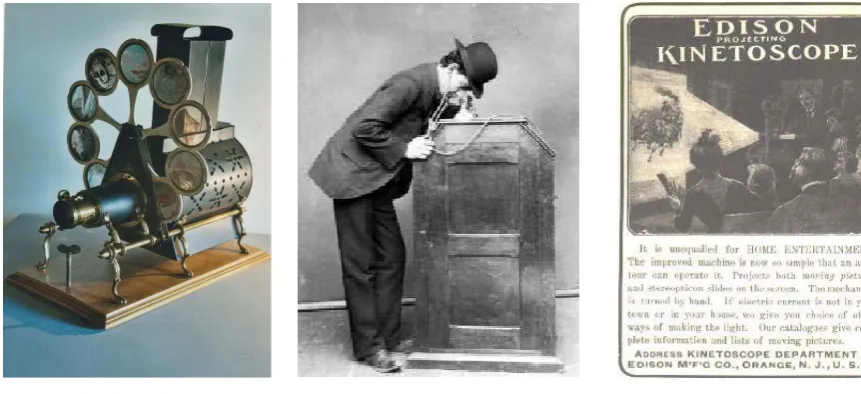
Surprisingly, the concept of virtual world was established early in history. Early in 1671, there has been imagination world generated devices, though these devices are in different forms that can be imagined today. “It was simply a place described by words or projected through pictures which create a space in the imagination real enough that you can feel you are inside of it” (Damer, 2007).
1671 – Lanterna Magika 1894 - Edison Kinetoscope Projection, Lumiere, Edison - 1895 Figure 1: Early imagination space
paper. Instead, only key points will be provided where the release or the introduction of products or concepts that had major impact on the development of virtual world.
1978: Early text-based online world MUD (Multi-User Dungeons). This game can still be
played online at http://www.british-legends.com/. Also, the use of such virtual world in education was noted when Alan Klietz, wrote a game called Milieu on CDC Cyber, which was used by high school students for educational purposes.
1987-1990: The release of HABITAT, TinyMUD, players could see, speak, interact with
each other in avatar form. The environment in these games were completely open. the only limitation was the underlying software. Players eventually self-governed their world. However, they were basically Multi-player games hooked up via telephone-line dial-up connection
1993: The release of DOOM proves that real-time 3D could achieve high performance on
consumer PCs. This period of time was an internet-bloom era. The WWW changed it all. People were suddenly excited by the concept of "online." (Bartle, 2004)
1994-1996: Along with the explosion of the web, there was an explosion of social virtual
world platforms. For example, in 1995, AlphaWorld was the first Active-World run from an internet browser. Fujitsu “WorldsAway Dreamscape” also went online the same year with additional feature such as virtual currencies, prices, and the concept of private stuffs. (Damer, 2007)
During this period, most of the virtual world went graphical. With the massive expansion of internet, the advancement in graphical processing technology, the upcoming year had experienced the invasion of Massive Multi-player Online Game.
1997: Origin Systems (OS) released “Ultima Online”, a popular Massive Multi-Player Online
Role Playing Game. It lays foundation for the development of such game genre. The success of “Ultima Online” pioneer the road for the development of many new massive multiplayer
games to follow. (from
1999: Sony Online Entertainment released EVERQUEST, the first truly 3D Massive
was launched with the current generation of Massive Multiplayer Online Games(MMOs) platform and including the virtual world platform (Damer, 2007).
Virtual Worlds differ from MMO’s because they are open platforms, often allowing the players to shape the world content. There are no quests, no specific goals or story line, but they provide various degrees of user control over the environment. These worlds are usually built around social interactions, commerce, and collaborative activities (Damer, 2007). What marks a significant difference between Multiuser Virtual Environment (virtual world, or MUVE) and MMOs is the lack of predetermined narrative or plot-driven storyline (Warburton, 2009).
2003: Linden Research, Inc (commonly referred to as Linden Lab) released Second Life. Its
entire virtual world is created created by “residents” who are the players of the game. Rich feature 3D tools were built into the client software to create in-world objects. In addition, full scripting language is made available to support intelligent behavior and animation, multimedia, video, and audio.
As it can be seen, the virtual worlds have its root in the gaming world from the early days of multi-user dungeons to the massively multiplayer online games of today. In accordance to the definition of virtual world, there are some Massive Multiplayer Online Games that can be considered as virtual world, for example MUD-1, NeverWinter Nights, Second-life, World of Warcraft, Hello Kitty Online. Presently, there are many other virtual independent platforms on the market offering from both open source projects and proprietary vendors; these include KANEVA Beta (2007), 3B Villages (2007). OpenSim (2008), Croquet Consortium, ActiveWorld, Project Wonderland, THERE, Olive, to name but a few.
There are number of ways to categorize the virtual world of Multiuser Virtual Environment (MUVE). The categorization depends on type of platforms, targeted audience, purpose, profit model. The boundaries between these categories are soft and reflect the flexibility of some virtual worlds that can provide more than one form of use (Warburton, 2009; Bartle, 2004). For example, second life is often defined as a 3-D virtual social networking space, but it also supports role-playing game and cooperative workflow by using some of the in-world tools and objects that have been created by its residents (users).
The terms “Game”, “Simulation”, Simulation-Game” have been used and will be mentioned more and more throughout this research. In addition, it is easy to observe that such terms are used interchangeably all over academic papers, or even in the gaming industry. There are many games that are labeled “simulation”. For example, Microsoft ™ Flight Simulator, VSTEP™ Ship Simulator 2008, EA SimCity™ to name but a few. These games cost from several up to around 100 US dollar. On the Electronic Arts website alone, if searching for the genre “simulation”, at least 122 games will be listed (EA game, 2012).
In contrast, in the MET field, the term “simulation” refers to a serious platform that has a strong integration between hardware and software, with strictly requirement in realism and interaction aspects. Such system normally costs hundred thousands or millions of dollars to purchase and implement,
The purpose of this section is not to redefine or to compare between game/simulation-game in general and MET Simulation, but rather to make the reader aware of the domain to avoid misinterpretation. Across profession field of study, there are some terms that their individualized usage or symbols and words that are clearly recognizable only to members of the affinity group of that field, which may lead to mismatch in mental image formation and thereby misinterpretation.
Clark Abt (1968), an early pioneer of simulations and games had defined game as “any contest among adversaries (players) operating under constraints (rules) for an objective (winning, victory or pay-off)”. However, according to Laughlin and Marchuk (2005), it does not distinguish between contests for fun and contests of a more serious nature, so they have constructively modified the definition to add a clause noting that both educational games and recreation games are low-stake contests.
daily life activities where the players has a chance to control an in-game character to sleep, go to work, build a house, making friends and participate in parties. The rule of this game is to maintain the balance between work, leisure, career and social activities to keep lifetime– happiness point so called of their character as highest as possible.
In addition, related to MET, Reeve (1984) comments that a cruel aspect of effective simulation is that it represents task demands rather than reproducing exactly the real situation. In the maritime simulation respect, in the paper of Det Norske Veritas (DNV) – Standard for Certification No.2.14, October 2007 said:
“Marine simulator: A creation of certain condition by means of a model, to simulate situations within maritime operation” which associated strictly requirements such as
“Physical realism: to what degree the simulator looks and feels like real equipment.
The realism shall include capabilities, limitation and possible errors of such equipment” or
“Behavioural realism: to what degree the simulator resembles real equipment in
order to allow a learner to exhibit the appropriate skill…”, and much more.
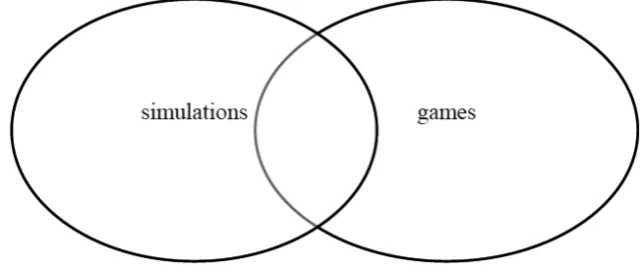
Obviously, the term simulation itself can be interpreted in various ways depending on the requirements of different expertise or field of studies. Throughout the review of definitions of game and simulation, “each can stand alone but in some cases, there is a sizeable field of games that are simulations, or perhaps some simulations that are games. It is easy to interchange the terms ‘game’ and ‘simulation’ when discussing educational uses of computers, because so often the two terms overlap” (Ellington, 1981; Laughlin & Marchuk, 2005). The figure below illustrates the relationship between games and simulations.
There has been much discussion about games, and the realization of game as an educational tool, but what is meant by games?
According to Laughlin and Marchuk (2005),
the term computer games is being used to cover the entire realm of computer and video games as if there were some convenient way to make all computer games equivalent to allow a simple black and white assessment. Lumping all computer and video games together in one category is a simple assumption. It is similar to lumping carryout restaurant menus, textbooks and the collected works of Shakespeare into the category of “printed text” and asking the research question, “what is the impact of printed text on education?”
Therefore, in this paper, the term “computer games”, “video games”, and “game” are used interchangeably to cover the array of educational electronic sound games. Otherwise the specific detail will be given to identify game platform (E.g. Nintendo, consol, mobile, PC, etc.) or the term “traditional game” will be used in case of no electronic game.
The term “simulation” should be interpreted generally in wider scales and contexts. It does not specifically mean the strictly requirement Marine Simulation as in the MET field.
2.4 The use of Second life in this research (SL)?
There are a variety of virtual platform options available in the market. However, the Second Life (SL) from Linden Research Inc. will be used to investigate the case due to the following reasons.
a) Many educational purpose experimental activities are associated with this platform. Based on the SL education directory, Over 150 educational institutions registered themselves as participating in SL. (Data retrieved on September 03 2012, from
What is Second Life? This is a virtual world owned and managed by the company Linden
Research, Inc. To enter the virtual world, users need to download a free program provided by SL called “Second Life Viewer” (SL-Viewer). With a free account registered from the SL homepage, one can then get access to the virtual world via a computer with internet connection. While a player is in-world, there are variety of ways to communicate with others. Verbally, the user can use text, voice chat or an embedded email program, which can help the user to send an email to other directly through the SL-viewer. The program also support certain non-verbal communications such as body gestures, animation, and visual appearance. The virtual world of SL is so large that walking from place to place is impossible. However, the virtual world of SL offers some functions that support the travelling purposes. Moving from place to place in SL is easy with instant teleport function, to participate in event such as discussions, conferences, classes, user just select the grid-address and the avatar will teleport to the destination. The user can locate the other online people in the vicinity area through a mini-map. Instantly, user can also search for the on-going events via search filtering option, which provide detail information about upcoming events and activities inside the virtual world. For example, in the research of this dissertation, the author could search for the educational events organized by UK Open University with detail of information like who can participate, time in GMT or in Linden-time/Virtual World time, what the topic is about, and the grid-address of the place.
Activities in SL:
The virtual world of SL supports many activities ranging from business, virtual social network, collaboration, leisure, simulation, education and marketing. Gartner, Inc. (2007), a technology-related research and consulting firm, who estimates that by 2012, 80% of active Internet users, including the Fortune 500 enterprises, will have an ‘‘other life” in some form of 3-D virtual world environment. Even though there are many kind of activities that one can perform in SL, this research just introduces the two of which can be considered as target areas – third parties Business activities and Educational activities.
Business activities - Today, in the 2012, in the SL platform alone, many highly reputable
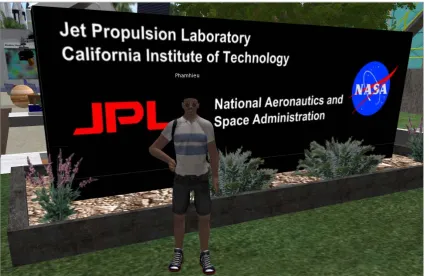
industry. Some examples are CNET, Sun Microsystems, Reuters, Microsoft, IBM, Cisco, Nissan, Toyota, Coca-Cola, Dell, NASA, Intel, and Adidas to name but a few.
Figure 3 – Firms participating in SL,
Source: New Business Horizons Ltd., Retrieve from
Figure 4 – NASA’s virtual facility with its Jet Propulsion Laboratory
Educational Activities – The educational purpose of MUVE has been long recognized
Educational organizations such as the New Media Consortium (NMC) and the International Society for Technology in Education (ISTE) have constructed infrastructure inside Second Life (Inman, Wright & Hartman, 2010).
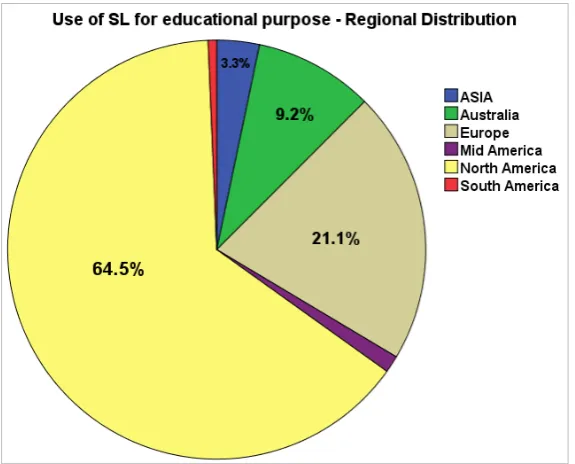
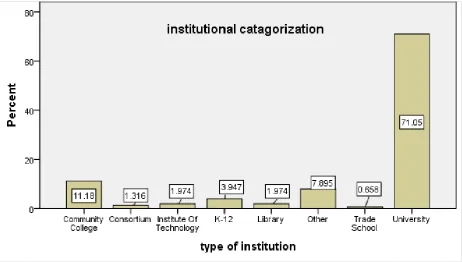
The Figure 5 and 6 present the descriptive analysis of the raw data that is collected from the SL education directory, which is available online on Linden Lab’s Website. The raw data is a list of institutions that have registered themselves as participating in educational activities with the SL platform. In figure 5, within 152 institutions represent for 21 country, North America with Canada and America dominant the case with 64% of all the region, whereas Europe and Australia come after with 21.1% and 9.2% respectively. The Figure 6 shows that most of these institutions are universities with 71.05% and community college with 11.18%. Surprisingly some K-12 level schools has been already taken initiative in the area of using MUVE into education activities.
Figure 5 – Utilizing Second Life in education, Regional distribution
Figure 6 – Types of institutions that are involving in educational activities in Second Life
Chapter 3
MUVE and its educational usage
3.1 Theoretical framework
3.2 Using MUVE as educational tools
3.3
Case study data and virtual world interview data
Chapter 3 supports the research argumentation by providing the theoretical underpinning of the educational possibilities of MUVE. It also lay the foundation for assessing the educational potential of MUVE in education and therefore the possible use of MUVE in MET.
Section 3.1, theoretically, supports the research to realize the educational potentials of MUVE by presenting three theories of (1) epistemic frame, (2) learning theory and (3) community of inquiry. These theories are used to assist the three application components of MUVE, which will be presented in the section 3.2. After reading this part, the reader will understand why the three components are applicable in educational activities.
In section 3.2, the usage of MUVE is modeled as a comprehensive application model, which focuses on three core components. These three components together or separately can contribute to the learning process, and they are: (1) MUVE as a game-simulation platform, (2) MUVE as a social collaboration platform and (3) MUVE as a virtual delivering method. The boundaries between the three components are flexible in the sense that they can enable educators to mix them in a number of ways to foster educational activities locally or from a distance.
3.1
Theoretical Framework
3.1.1 Epistemic Frame
The premise of learning by doing is widely recognized, especially in specialized education and training. In this sense, the learning activities should reflect the reality of work. Dewey argues that knowing and doing are tightly coupled (Dewey 1915, 1958). Learning happens in the context of an activity where a person is trying to accomplish some meaningful goals and has to overcome obstacles along the way.
In addition, Wenger (2001, p.1) defines community of practice as “a group of people who share an interest in a domain of human endeavor and engage in a process of collective learning that creates bonds between them”. Within a community of practice, the members interact and learn together by engaging in joint activities and discussions, helping each other, and sharing information. Through these interactions, they build relationships and form a community around the domain (Gray, 2004).
In other words, by doing something as part of a large community of people, one can learn to develop and replicate the ways of knowing, acting, being, and caring of that community of practice. Such ways of doing/being/caring/knowing is organized around a way of thinking. In this way, the actual practice, identity, interest, understanding, and epistemology are bound together into an epistemic frame (Shaffer, 2006). Different professions have different epistemic frames or different ideologies – ways of seeing, valuing, being in the world (Gee, 2005). For example, lawyers act like lawyers, identify themselves as lawyers, they are interested in legal issues, and know about the law. Such skills, habits, and understanding enable them to look at the world in a particular way – by thinking like a lawyer. It is the same for doctors and seafarers but with a different epistemic frame – a different way of thinking. Then reproducing the practices of the community are the means by which the new members develop such epistemic frame. In another words, by simulating the real practices, it is possible to provide an alternative educational model that help practitioners to develop their epistemic frames.
that rather than constructing a curriculum based on the traditional sense of vocational education, educators can develop a replicated system in which students can learn to work and thus to think as doctors, lawyer, architecture and other valued reflective practitioners. By using new technology in education, it is possible to develop epistemic frames that provide student with opportunities to see the world in a variety of ways that are fundamentally grounded in meaningful activities and well align with the core skills, habit, and understanding of a post industrial society.
In reference to Shaffer’s suggestion, the virtual world of MUVE with its powerful recreation and collaboration capabilities can complement the educational activities of different professions, resulting in the ability to simulate or create the real world attributes. For example lighting, gravity, interaction with objects and with the environment, communication with other people, visual and auditory experience. This set of attributes can enable the learners or trainees to immerse themselves in a virtual learning environment that represent the reproductive practices that are valued by its community. By participating and acting in such replication worlds, it is possible for the learners to develop the situated understandings, effective social practices, identities, and to recognize the shared values, and ways of thinking within the community of practice. (Shaffer, Squire, Halverson & Gee, 2005; Laughlin, Marchuk, 2005). Furthermore, Jarmon, Traphagan, Mayrath, and Trivedi (2009) state that
Therapists, soldiers, pilots, lawyers, business doctors, nurses and teachers all engage in real life role play while learning the contexts and conditions particular to their professions during their days at the university or in training. Then Multi-User Virtual Environments (MUVEs) like Second Life are uniquely suited media for developing role playing scenarios to engage learning, if we provide the right mix of opportunity and structure. Indeed, role-playing in Second Life and other MUVEs may represent perhaps one of the single most compelling educational opportunities for adults in the 21st Century. (SL transcript, Special Speaker Series in Second Life, International Society for Technology and Education, March 27, 2007).
As with most educational and training specializations, there is an increasing focus on competency based learning activities. The learners are expected to use their knowledge, and understanding of subject matters, to perform some kinds of hand-on practices in order to demonstrate their competencies for the job. Then, the shifting in their performance from novice to professional can be seen as the outcome of the learning process. In order words, the learning process has affected the learners to change their behaviors both mentally and physically such as the ways of thinking, the cognitive processes, skills, performances. As a result, there is a shift from an incompetence or novice learner to a competence, or a professional. Such approach to learning highlight the “learning as products” view point, and emphasize on a crucial aspect of learning is to change.
However, according to Merriam and Caffarella (1991, p124), doing actual hands-on practices is not the only way that one could make learning happen. If the learning is perceived as the product of some process and resulting in changing behaviors, then there are other mechanisms that could make the learners to change their behaviors. In other words, there are other ways of learning that could improve the learner’s skills and knowledge.
• Does a person need to perform in order for learning to have happened?
• Are there any other factors that may cause behavior to change (or cause the learning to happen)?
Smith (2003) mentions in his paper that Säljö (1979) has carried out a useful piece of research that suggests five main conceptions of learning – five ways that learning can happen which can cause the learners to change their behaviors:
[a].Learning as a quantitative increase in knowledge. Learning is acquiring information or ‘knowing a lot’.
[b].Learning as memorizing. Learning is storing information that can be reproduced. [c].Learning as acquiring facts, skills, and methods that can be retained and used as
necessary.
[d].Learning as making sense or abstracting meaning. Learning involves relating parts of the subject matter to each other and to the real world.
The conceptions [d] and [e] are qualitatively different from the first threes. Conceptions [a], [b], and [c] imply a less complex view of learning (Ramsden, 1992) and consider learning is something external to the learners. Conception [a] is likely to happen in the teacher centered paradigm where learning just happened or is done to students by the teacher, whereas the conception [b] sees learning as something upgradable, the more you get the more you possess and likely to happen in a sense of extensive reading. As with the conception [c], there is a growing emphasis on “knowing that” to “knowing how” where actual hands-on practices and reflections of learning context are the keys. The last two conceptions [d] and [e] look into the internal or personal aspect of learning and refer to learning that may happen by conceptualizing and synthesizing the knowledge gained to comprehend the world.
Based on this, it can be argued that in order for a learner to learn something – or to change their behaviors, they can also engage in other ways of learning. So a simulated world of an immersive 3D environment can support the learner to conceptualize the reality of work via its virtual setting so that the learning can happen at higher order thinking skills.
However, such arguments does not mean to diminish the importance of hands-on practices but rather to demonstrate that an immersive virtual world can support the learners to acquire soft-skills rather than physical skills.
3.1.3 COI Framework
Dewey argues that education and learning are social and interactive processes, and thus the school itself is a social institution, where all students should have the opportunity to take part in their own learning (Dewey, 1902, 1916). His insight highlights the need for social interaction – the interaction between students, students with teachers and the need for the involvement of students in the teaching-learning material – the cognitive matters.
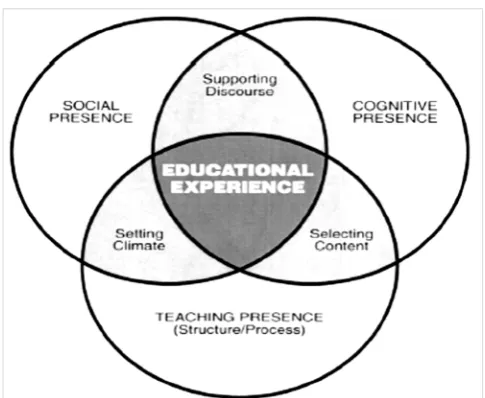
Figure 7 - Community of Inquiry Model (Garrison, Anderson & Archer, 2003)
According to the COI model, learning occurs within the community through the interaction of three core elements: the cognitive presence, social presence, and teaching presence (Garrison, Anderson & Archer, 2003). In the academic environment setting (a small scale community taking place in a classroom) the following is applied:
(1) The cognitive presence is the extent to which learners are able to construct and confirm meaning through sustained reflection and discourse.
(2) The teaching presence is likely to be the responsibilities of the teacher that supposes to facilitate the function of designing the educational experience which include the selection, organization, presentation of the course content as well as the design and development of learning activities and assessments. The second function is to support and enhance social and cognitive presence for the purpose of realizing educational outcome.
(3) The social presence can be seen as the abilities of learners or teachers to participate themselves in the socio-emotional interaction within the classroom environment.
The roles of these three elements depend on the level of education such as k-12, or higher education. Particularly, the social presence elements, the social interactions, are especially important and sometime essential in realizing worthwhile educational outcome under the collaborative learning regime. Social presence can also play a supportive role for other elements to be amplified. For example, the element of cognitive presence is considered to be easier to sustain when a significant degree of social presence has been established (Garison, 1997; Gunawardena, 1995).
However, is the situation going to be the same when repositioning the virtual classroom concept under the COI framework? So in order to obtain the meaningful educational purpose, the virtual classroom should present qualities that are equivalent or, at least, considerable to the three elements of the COI model.
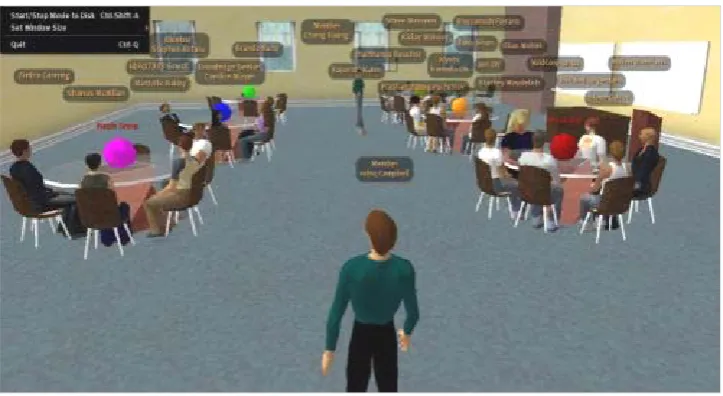
First, the virtual world with its powerful modeling, recreation functionalities could be very much helpful for the teacher to design meaningful ways of content presentations and creative learning activities. Additionally, the various communication channels and tools of the in-world could help the teachers and learners to perform certain kinds of social communication which in turn can support the cognitive presence of the framework. In a virtual classroom setting, the social interactions are very much concerned as there is an additional intermediate layer in between the participant and the virtual world layer, where teachers and the learners communicate and interact via their avatar. Therefore, the viability of social behaviors and norms inside the virtual environments in comparison with the physical world become critical to ensure the meaningful educational experience.
Fortunately, there are related research studies on this matter. Yee, Bailenson, Urbanek, Chang and Merget (2007) in an observation study of SL, an embodiment of MUVE, have collected data from avatars to explore whether the social norms of genders, interpersonal distance, and eye gaze transfer into virtual environment even though the modality of movement is entirely difference (i.e., via keyboard, mouse as opposed to eyes and legs). Their findings support the hypothesis that the social interactions in online virtual environment, such as Second Life, are governed by the same social norms as social interaction in the physical world.
However, it should be noted that in the virtual setting, there are limitations with non-verbal communications. The avatars can show some facial expressions, but these expressions are not mapped on the user expression and do not provide sound evidence of students’ attentiveness or boredom (Graves, 2008). In comparison, the traditional classroom setting provides a broader range of non-verbal communication Dickey (2005a).
Despite such limitations, the outcome from the research of Yee, Bailenson, Urbanek, Chang and Merget (2007) suggests that classroom activities can be authentically carried out inside the virtual world environment.
3.2
Using Multi-user Virtual Environment (MUVE) as educational
tools
The use of MUVE as educational tools is getting more and more attention of educators. There are a variety of ways of utilizing MUVE across educational activities. Educators are looking to virtual worlds for their potential to foster experiential and constructivist learning (Inman, Wright, Hartman, 2010). Dede (1995) states that 3D virtual environments could potentially provide safe environments whereby students can learn by doing. Dickey (2003) found that although there are constraints, 3D virtual worlds do support constructivist learning because it enables the users to interact with each other and with the environment.
This part will look into application components of MUVE in education . They are: (1) MUVE as an game and simulation platform, (2) MUVE as the social collaboration platform where it can be used to facilitate the distributed knowledge communities, and (3) MUVE as an new way of educational delivering method and e-learning
Figure 8 - Application components model of MUVE
Multiplayer Online Games (MMOGs). Even if the main objective of this thesis does not focus on the application of game in education, it would be a big loss if omitting the role of video game in education as it has a strong relationship with the concept of virtual world.
To this end, before moving forward with the main part of the research, it is essential to look at how games have been involved in educational activities. And then how educators have started to adopt them as additional educational tools, which help to lay foundation to realize the potential of MUVE in education. Next, MUVE as a social collaboration tool is examined, and the relationships between social collaboration with the learning activities are discussed. Finally, the virtual delivering method, a new way of e-learning that can be use under such concept of MUVE will be described.
3.2.1 MUVE as Game and Simulation platform
Already from the early days of gaming history, when multiplayer or massively multiplayer games were not yet as popular as today, the virtual environment inside a video game has been utilized by educators to engage their learners into what is called an enhanced learning environment. In fact, pairing digital technologies with game theory in teaching is not a new idea (McLester, 2005). Games and simulations are accepted as legitimate educational tools by businesses, military, and by a growing number of academics and educators to help to promote greater knowledge retention than traditional forms of instruction (Shaffer, Squire, Halverson & Gee, 2005).
In the 1970s, it was theorized that superior retention is the result of more complex understanding of material (Laughlin, 2005). Furthermore, Dickerson (1975) studied to see if games induced higher levels of retention over traditional classroom activities. To this end, games were found to lead to greater retention than traditional instruction. According to Laughlin (2005), every one of the studies that examine retention found that students using simulation games had a statistically higher level of retention than students who covered the same material with traditional teaching methods. In several cases, students who had used simulations or games scored significantly higher in retention tests than in original post-tests (Karlin, 1971; Cohen, & Bradley, 1978; Lucas, Postma & Thompson, 1975).