Co-teaching to Improve Control Variable Experiment Instruction in Physical Sciences Education
Kenneth W. Thompson
Emporia State University, United States
Mirah J. Dow
Emporia State University, United States
Abstract
National Research Council polices (NRC, 2012a, 2012b) and the Every Student Succeeds Act (ESSA) of 2015 (Pub. L. No. 114-145) call for educators to have active roles in teaching to achieve new goals and purposes for education. A high priority is teaching content knowledge and information fluency skills that will result in deep learning, higher order thinking, and college and career readiness. Information fluency involves abilitiesto find, evaluate and use print and digital information effectively, efficiently and ethically to create knowledge useful in solving real-world problems. This action research (Blaxter, Hughes, and Tight, 2010) investigates co-teaching in a college, undergraduate physical sciences course. Information and technology literacy skills (ACRL, 2016) were taught in the context of a 12-week unit about the design of control variable experiments. Co-teaching was done by a professor of physical sciences and a professor of library and information science. Assignment learning objectives provided a framework for analysis of 24 students’ scores that tells a story of the process of co-teaching through articulation of two professors’ engagement in instructional interactions, creation of materials and strategies to increase information fluency as well as descriptions of students’ completion of assignments. It was concluded that co-teaching effectiveness involves intensity of effort in shared planning, organization, delivery and assessment of instruction; shared physical and/or virtual space of instruction; and in the combining two areas of academic expertise in delivery of cross-curricular instruction.
Key word: science education, information and technology literacy, co-teaching, information fluency skills, collaboration
Please direct all correspondence to: Kenneth Thompson, 1 Kellogg Circle, Box 4030, Emporia, KS 66801-5415, [email protected]
Introduction
Electronic Journal of Science Education ejse.southwestern.edu economic competitiveness, create a better workforce, and find solutions for solving problems related to the environment, energy, and health. In addition, the NRC (2012b) in Education for Life and Work: Developing Transferable Knowledge and Skills in the 21st Century asserts a strong argument that a key set of information fluency skills is required to foster the necessary deep learning, higher order thinking, and college and career readiness if students are to reach their full potential. Information fluency skills are the abilities to find, evaluate, and use print and digital information effectively, efficiently and ethically. Information fluency skills include having abilities to use specialized tools such as a library’s data hub to search electronic databases and the ability to evaluate the quality of a source based on reliability (authority, bias, accuracy), and validation of references. Information fluency includes the ability to use information to create useful knowledge that will solve real-world problems. Developing information fluency skills is as fundamental to information science education as teaching the periodic table is fundamental in chemistry education.
More recently, the Every Student Succeeds Act (ESSA) of 2015 (Pub. L. No. 114-145), articulates new roles and purposes for education including a mandate for states to have flexibility in developing accountability systems, deciding how tests should be weighted, determining measures of student and school performance, and evaluating teachers. ESSA includes new provisions that authorize states and districts to use grant funds to support instructional services provided by school library programs. It addresses access to effective school library programs as part of professional development and describe how effective school library programs will provide students an opportunity to develop digital literacy skills and improve academic achievement. This change in the law ensures that school libraries and school librarians are included in state and local education plans. It is up to educators with weekly, direct contact with students to determine how to best teach to achieve improvements articulated in new education policy and law. Co-teaching by physical science teachers and professional librarians may prove to be an innovation that leads to new forms of engagement among teachers as well as new forms of engagement among future professionals.
and librarians in academic institutions, library, information, and technology literacy instruction should ideally be embedded in content area learning. This research-based evidence about co-teaching is consistent in indicating that students who engage with teachers who team to teach across content areas and to share instructional responsibilities experience an array of educational benefits. This study adds to the co-teaching research literature by investigating co-teaching by two university professors from two different academic areas. In particular, the purpose of this study was to learn more about the impact of direct co-teaching of undergraduates as they prepare to become elementary teachers of physical sciences. We asked three questions:
1) What are relationships and convergences between elements of solo instruction and elements of co-teaching instruction?
2) What was the intensity of effort required by both professors when co-teaching?
3) What impact did co-teaching by a physical sciences professor and a librarian have on student scores?
Methods
Action research design (Blaxter, Hughes, & Tight, 2010), frequently used in professional areas such as education and healthcare, was used in this study because of its goal to explore and improve performance and because it offers “a systematic approach to the definition, solution, and evaluation of problems and concerns” (p. 69), as well as providing “direct involvement and collaboration of those whom it is designed to benefit” (p. 69). Assignment score data were gathered from a series of assignments ranging from introductory level concepts through practice of advanced skills. Formative and summative analysis were done.
Participants and Setting
This exploration of co-teaching took place in a Midwestern university in one introductory level course, Our Physical World, a physical science content course covering concepts in chemistry, earth science, and physics. Participants in the study were a total of 24 undergraduate college students majoring in elementary education (referred to in this study as pre-service teachers) who completed all assignments and represented a cross-section of performance levels.
The course was delivered in face-to-face instruction during class sessions that met two times each week for an hour and two times each week for two hours, a total of six hours/week during a 16 week semester. The studied topics (Thompson, 2013) were covered in 12 weeks of the semester and addressed the overarching goal of learning in the physical sciences to help students see that there are mechanisms of cause and effect in natural systems that can be understood through a common set of physical and biological principles.
Electronic Journal of Science Education ejse.southwestern.edu Co-teaching procedure in this setting. As two teachers working together with groups of students, co-teaching began with the professor of physical sciences (PPS) informing the professor of library and information science (PLIS) about the course content and the target control variable experiment unit of instruction. Planning and organization was accomplished through a series of meetings lasting 60-90 minutes each; shared readings; and numerous email exchanges. Once the PLIS was thoroughly aware of the PPS’s course content and related assignments and had been introduced to the PPS’s knowledge of enrolled students’ academic abilities and participatory styles, the PLIS developed a library guide based on the PPS’s specific content and assignments. The guide, used throughout the unit, explained primary sources as those publications by the scientist, or scientists, who performed the experiment that include original research data. Primary sources were also artifacts available in archives and special collections. The guide identified names of databases appropriate for accessing and retrieving primary and secondary sources.
In addition, the PLIS developed a face-to-face instructional session focused on the PPS’s assignment and merging standards: performance objectives for pre-service teachers; physical science learning objectives; and information and technology learning objectives. The library guide provided examples of problem statements organized by subject areas (life science; biology; chemistry/physics; and zoology) written at fourth grade through high school grade levels; example keywords to use as search language; and a list of examples of worthwhile resources related to the topic to be used in addition to the textbook. Delivery of the unit of instruction was done primarily by the PPS with the PLIS providing: 1) direct instruction in the physical sciences classroom, and 2) a resources handout in paper format that was also made available electronically on the library’s website for use throughout the semester. Evaluation of students’ assignments was completed by the PPS and analyzed by both the PPS and the PLIS. Elements of this special amalgamation of science content and pedagogy combining content knowledge and pedagogical knowledge are described in terms of Merrill’s (2007) four phases of instruction: activation, demonstration, application, and integration followed by the scale for assessment of student learning.
Activation. To effectively get pre-service elementary education teachers to start with
authentic learning, the PPS and PLIS began the learning process by enabling their students to build on prior knowledge relevant to their lives. For example, to relate to the unit content and assignment, the pre-service teacher was encouraged to begin with her/his own experiential knowledge—awareness, imagination, interest, creativity, and logic—based on, for example, a summer job, a current topic in the news, and/or prior learning of content knowledge in general studies areas. To relate to the co-teaching process, the pre-service teacher was encouraged to think of a time when she/he was taught in elementary or high school by more than one teacher. The pre-service teacher was taught a two-phase process model of research involving a literature context (preparation) and a data context (experimental).
determining the design of the study including the data collection strategies and instruments; determining procedures for data analysis; and planning informal and formal means for communication of findings including use of in-text and end-of-text citation rules and avoiding plagiarism.
Demonstration. To effectively demonstrate what to do, the PPS and the PLIS provided
examples of topics and problem statements, and good examples of completed science reports and project publications. Pre-service teachers observed what professors expected in completed work through definition of concepts with examples, discussion of observation of a sequence of actions and decisions, providing visual models of how something works, and/or example statements of cause and effect.
Application. The pre-service teacher was given opportunities to apply and practice
designing control variable experiments based on research-based evidence including writing hypothesis statement(s) and research questions. Feedback was provided to enable her/him to move forward with what was going well in terms of identifying evidence to support or refute the hypothesis. Constructive feedback was given that pointed out what must be improved in all areas of the unit of study including the need to be immersed in reading about the topic to become better able to articulate appropriate general statements about the topic, using appropriate sources and correctly citing them, and following a required writing style.
Integration. To effectively integrate new knowledge and skills with plans for future
teaching, the pre-service teacher was given opportunities to follow through a completed project by creating or inventing new ways to acquire and apply scientific findings or to model and scale a solution to a problem. In most instances, carrying out control variable experiments extended beyond regular course meeting times.
Assessment of student learning. On the basis of content instruction including the choices researchers make when designing research using the experimental method, assignments were created with learning objectives including that the pre-service teacher would: 1) identify and articulate a topic and/or problem statement based on an authentic situations in concise and clear details that inform determination of central questions, hypothesis statements, study variables, and specific research questions; and 2) identify and articulate independent, dependent, and control variables. Evaluation of the assignment was based on quality and accuracy and used a rating scale (satisfactory; developing; not indicated).
Procedures
To answer our research questions, assignment score data were gathered from a series of assignments ranging from introductory level concepts through practice of advanced skills.
Electronic Journal of Science Education ejse.southwestern.edu Data Analysis
Ordinal level data were analyzed, coded and compared to determine changes in student learning. In Tables 1, 2, 4, 5, and 6, student response data were coded as a rating of zero (not indicated; student fails to properly or accurately use scientific concepts); a rating of 1 (student demonstrates some understanding of scientific concepts but must be revised for accuracy); and a rating of 2 (satisfactory, student properly and accurately uses scientific concepts). In Table 3, student response data were coded as unacceptable, common, or unique. In Table 7 frequencies of changes in student achievement on test item rating scores from week six to week 16 were totaled.
Data analysis included review of frequencies of ratings. In Tables 1 and 3 based on student response data ratings, the numbers of students achieving at each level were totaled and compared. In Tables 2, 4, 5, and 6, frequencies of student achievement on the assignment rating scale were determined and weighted averages of the ratings were calculated and compared. In Table 7, frequencies of changes in student achievement on test item rating scores from week six to week 16 were analyzed to determine student growth.
Ethical Considerations
We acknowledge that in addition to course materials and instruction, there could have been an effect on student performance due to chance and other factors outside the space where instruction occurred.
Results
These results are organized in the order that each assignment was given. The learning objectives are stated in this section as they were given to students. Sub-headings indicate progression through the seven assignments.
Physical Sciences Learning Objective (week 4 of 16): 1. Students will accurately identify variables from examples provided by the professor.
Identification. Assignment one was comprised of multiple steps resulting in one total
Table 1 Control Variable Experiment Practice 1
Determining Suitability of Problem Statements and Identifying Independent, Dependent, and Control Variables
Rating Number of Students
Scale Receiving Each Rating (n=24)
___________________
2 2
1 19
0 3
Average Rating 1.0
Note. 2 = satisfactory, student properly and accurately uses scientific concepts. 1 = developing, student demonstrates some understanding of scientific concept but scientific concepts must be revised for accuracy. 0 = not indicated, student submits assignment but fails to properly or accurately use scientific concepts.
Physical Sciences Learning Objective (week 5 of 16): 2. Students will accurately write a problem statement and identify variables.
Write problem statement and variables. In class, students were instructed to write a
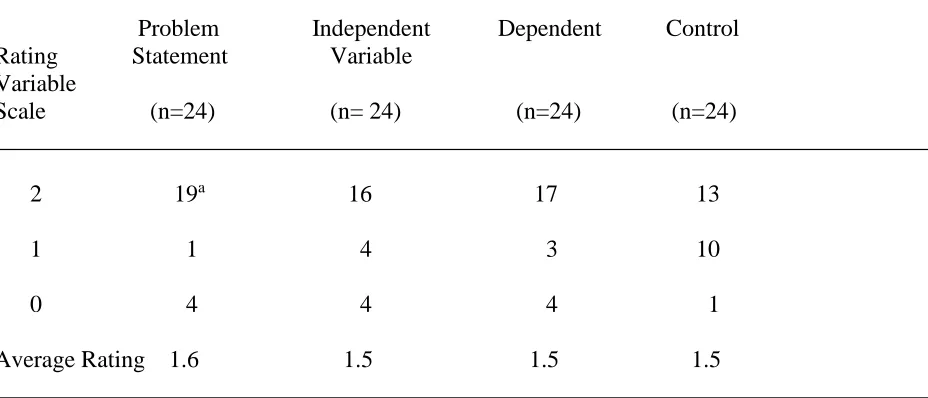
Electronic Journal of Science Education ejse.southwestern.edu Table 2 Control Variable Experiment Practice 2
Instructor Ratings of Student Written Problem Statements and Identifying Independent, Dependent, and Control Variables
Problem Independent Dependent Control Rating Statement Variable
Variable
Scale (n=24) (n= 24) (n=24) (n=24)
2 19a 16 17 13
1 1 4 3 10
0 4 4 4 1
Average Rating 1.6 1.5 1.5 1.5
Note. 2 = satisfactory, student properly and accurately uses scientific concepts. 1 = developing, student demonstrates some understanding of scientific concept but scientific concepts must be revised for accuracy. 0 = not indicated, student submits assignment but fails to properly or accurately use scientific concepts.
aFive students used problem statements presented as examples in class.
Control Variable Experiment Practice 2 Physical Sciences Learning Objective (weeks 6 of 16; 9 of 16; and, 14 of 16): 3. Students will accurately write a problem statement and conduct a control variable experiment.
Problem statement using library guide. Building on previous exercises, but this time also focused on conducting an experiment, students were asked to continue to use the library guide and to develop their own scientific problem statements and encouraged to be creative in developing statements that address authentic situations in today’s society (Table 3). Across instruction in weeks six, nine, and 14, three to five students identified and wrote unique, socially relevant problem statements. Problem statements were considered unique if they, in the experience of the PPS, addressed a familiar problem in a novel way or if they addressed a new or uncommon problem not addressed by prior students in the PPS’s 35 years of teaching experience. Most of the students wrote common problem statements, e.g., how does light affect plant growth; or how does water temperature affect how much salt dissolves. As stated, these examples represent questions where the answers are known. In addition, they did not address scientific problems in today’s society such as those that may seem obvious in areas such as energy; illness and disease; clean food and water; and global environmental change. Students’ difficulties identified through our formative assessment were noted and addressed throughout remaining weeks of instruction.
websites or those they have independently encountered. It points out the necessity of professors to exercise intense efforts to encourage use of the library guide and to require reading of primary and secondary sources of authority that have the potential to challenge students to develop interests in current, observable problems.
Table 3 Control Variable Experiment Design and Implementation
Instructor Rating of Student Written Problem Statements While Conducting Control Variable Experiments (CVE) During the Semester
Week 6 Week 9 Week 14
Rating First CVE Second CVE Third CVE
Scale (n=24) (n=24) (n=24)
Unique 3 3 5
Common 20 16 17
Unacceptable 1 5 2
Note. Ratings are based on the physical sciences professor’s combined 35 years of teaching experience at the middle/high school (12 years) and university (23) levels.
Independent variable. Table 4 shows that the average scores increased from week five to week nine and then decreased from week nine to week fourteen. While over half the students on each assignment correctly identified the independent variable, the inconsistent results point to lack of understanding. This suggests that some students have a high need to be continuously guided by their professors in design and use of experimental methods.
Table 4 Control Variable Experiment Design and Implementation
Instructor Rating of Student Identification of Independent Variable (IV) While Conducting Control Variable Experiments (CVE) During the Semester
Week 6 Week 9 Week 14
Rating First CVE Second CVE Third CVEa
Scale (n=24) (n=24) (n=22)
2 15 19 13
1 6 2 3
0 3 3 6
Electronic Journal of Science Education ejse.southwestern.edu Note. 2 = satisfactory, student properly and accurately uses scientific concepts. 1 = developing, student demonstrates some understanding of scientific concept but scientific concepts must be revised for accuracy. 0 = not indicated, student submits assignment but fails to properly or accurately use scientific concepts.
aTwo students did not identify the independent variable.
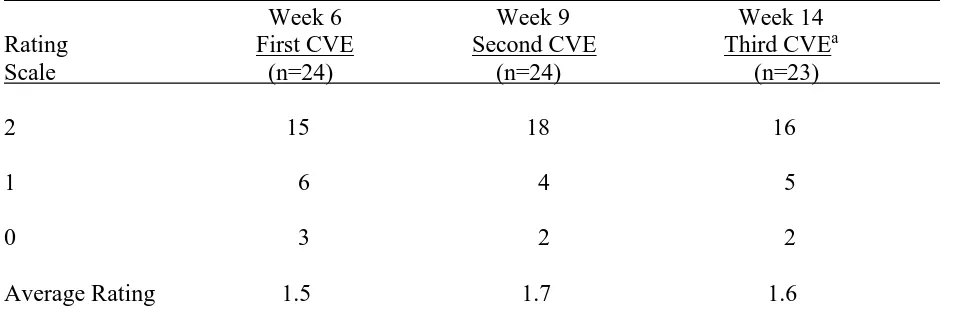
Dependent variable. Table 5 shows that across all three CVEs conducted, student scores stayed about the same. Most students who earned a satisfactory score were, with the guidance of the science teacher, able to maintain their abilities to identify and understand the function of the dependent variable. However, near the end of the study, some students (7/24, 29%) scored in the developing, or not indicated, range. As with the independent variable data, these data indicate the challenge it is for some students to differentiate between variables and understand the roles of independent and dependent variables.
Table 5 Control Variable Experiment Design and Implementation
Instructor Rating of Student Identification of Dependent Variable (DV) While Conducting Control Variable Experiments (CVE) During the Semester
Week 6 Week 9 Week 14
Rating First CVE Second CVE Third CVEa
Scale (n=24) (n=24) (n=23)
2 15 18 16
1 6 4 5
0 3 2 2
Average Rating 1.5 1.7 1.6
Note. 2 = satisfactory, student properly and accurately uses scientific concepts. 1 = developing, student demonstrates some understanding of scientific concept but scientific concepts must be revised for accuracy. 0 = not indicated, student submits assignment but fails to properly or accurately use scientific concepts.
aOne student did not identify the dependent variable.
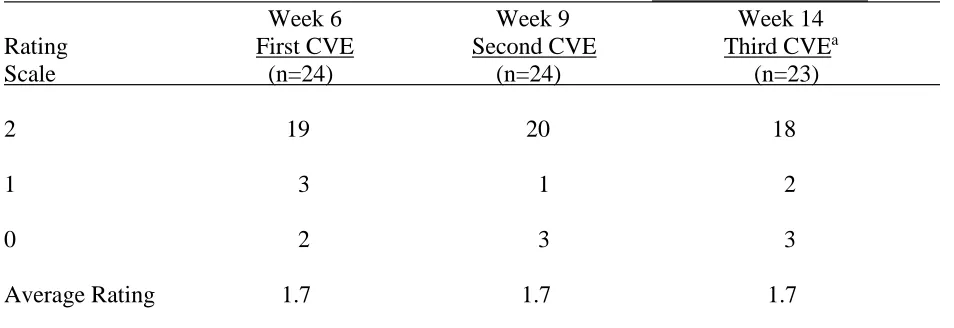
Table 6 Control Variable Experiment Design and Implementation
Instructor Rating of Student Identification of Control Variables (CV) While Conducting Control Variable Experiments (CVE) During the Semester
__________________ Week 6 Week 9 Week 14
Rating First CVE Second CVE Third CVEa
Scale (n=24) (n=24) (n=23)
2 19 20 18
1 3 1 2
0 2 3 3
Average Rating 1.7 1.7 1.7
Note. 2 = satisfactory, student properly and accurately uses scientific concepts. 1 = developing, student demonstrates some understanding of scientific concept but scientific concepts must be revised for accuracy. 0 = not indicated, student submits assignment but fails to properly or accurately use scientific concepts.
aOne student did not identify the control variables.
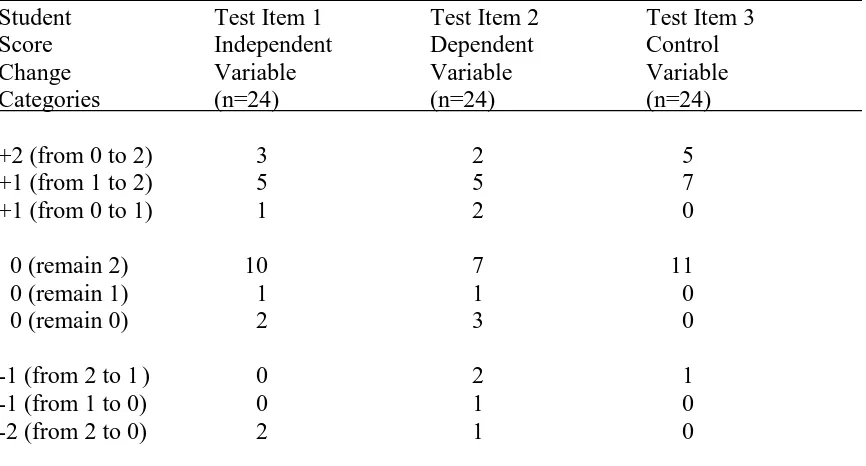
Physical Sciences Learning Objective (week 6 of 16; week 16 of 16): 4. When given a scientific problem statement under test conditions, students will accurately identify independent, dependent, and control variables.
Electronic Journal of Science Education ejse.southwestern.edu Table 7 Changes in Students’ Test Item Scores from Week 6 to Week 16
Student Identification of Independent, Dependent, and Control Variables
Student Test Item 1 Test Item 2 Test Item 3
Score Independent Dependent Control
Change Variable Variable Variable
Categories (n=24) (n=24) (n=24)
+2 (from 0 to 2) 3 2 5
+1 (from 1 to 2) 5 5 7
+1 (from 0 to 1) 1 2 0
0 (remain 2) 10 7 11
0 (remain 1) 1 1 0
0 (remain 0) 2 3 0
-1 (from 2 to 1 ) 0 2 1
-1 (from 1 to 0) 0 1 0
-2 (from 2 to 0) 2 1 0
Note. 2 = satisfactory, student properly and accurately uses scientific concepts. 1 = developing, student demonstrates some understanding of scientific concept but scientific concepts must be revised for accuracy. 0 = not indicated, student submits assignment but fails to properly or accurately use scientific concepts.
Research Questions Answered
We realized both obvious and subtle advantages of functioning as a co-teaching team over two consecutive semesters as we taught together and used student scores, and our observations and reflections to modify instruction in the second semester. Perhaps the most obvious and important advantage was that we (two veteran professors) brainstormed and discussed content and current trends with each other and other interested professionals; become familiar with our shared views leading to the development of our two-phase model for scientific research (Dow & Thompson, 2017); made time to plan and implement shared instruction that took place in the same physical environment; and, experienced occasions to observe and discuss students’ reactions and accomplishments in light of combining science content and information and technology literacy instruction. Our two-phase model for scientific research, which includes a preparation phase (literature context) and an experimental phase (data context), served to improve the quality of our students’ written research questions. Perhaps as important, yet somewhat subtle, is that we modeled co-teaching in the presence of the enrolled students in this study. This made it possible for our students (pre-service teachers) to observe the responsibilities and combined expertise that we shared and to recognize that effective co-teaching can be accomplished through teacher engagement across multiple disciplinary areas.
professors’ expectations for using the learning of physical sciences to focus on real problems in their lives and/or in the news. Based on our students’ reactions, it was jointly determined that some of them seemed surprised, and perhaps anxious, with the prospects of searching, accessing, reading, and evaluating material beyond typical reading from the required textbook. We discovered that we should in the future make more assignment time for students to undertake this aspect of our two phase research process with the goal to reduce student anxiety when directed to read primary and/or secondary sources of authority that go beyond the content required in the course textbook.
The second semester of co-teaching offered opportunities for us to take stock in existing substantive content-based instruction; our analysis of formative and summative assessments; revising and improving first semester materials; improving the structure of assignments; further clarifying learning objectives and activities; and, overall incorporation of improved opportunities for student learning. Our observed reactions of our students during class sessions together with our analysis of student scores revealed 1) some descriptive indications of the intensity of effort required by both professors; 2) less obvious elements of content and instruction involved in bringing together physical science and literacy instruction; and, 3) notable advantages of co-teaching. These observations are useful in answering this study’s research questions that are focused on our students’ assignment scores; intensity of effort when co-teaching; content and instruction by two professors; and, contrasts between solo instruction and co-teaching.
RQ1: Relationship and convergences between elements of solo instruction and co-teach instruction
After reviewing student performance on developing problem statements, we discovered there are more elements to teaching than are typically reported when explaining what co-teaching is in terms of keys to success and barriers to effective co-co-teaching. For example, an element of co-teaching that we add to the literature on co-teaching is the combining of expertise of two teachers from different areas of academic preparation. Through application of our combined academic and professional expertise, we observed benefits to our students as they addressed STEM-related challenges (Bybee, 2013) such as environmental quality, energy resource use, health and diseases, and natural hazards.
Electronic Journal of Science Education ejse.southwestern.edu Analysis of our initial co-teaching resulted in instructional changes that have since benefited our students in subsequent classes. Recent students are making better use of primary and secondary sources and are coming up with more socially relevant topics and problems that can be answered using scientific methods. For example, a common investigation mentioned by students in this study was the solubility of sugar or salt in water of different temperatures. More current students have focused to a much greater extent on socially relevant problems such as types of plants and the amount of carbon dioxide as related to global climate change, and the impact of using gray water (as related to sufficiency of clean water). We believe this represents an improvement in our student’s knowledge, attitudes, and skills to identify questions and problems in life situations.
RQ2: Intensity of effort required by both professors when co-teaching
As co-teachers, we both lifted significant weight of instruction. We found that co-teaching involved our shared planning, organization, delivery and assessment of instruction; shared physical and/or virtual space of instruction; and combining two areas of academic expertise in cross-curricular instruction. We discovered that most students had not experienced co-teaching modeled by two university faculty, nor had they experienced high level instruction in use of published research-based evidence for making scientific claims or engaging in argument and counter-argument. In addition to being unfamiliar with two professors in the same course, most students were learning new content and practicing the scientific process at higher levels than they had previously done. Our efforts were made intense as we jointly moved from traditional solo practices to innovative changes and higher expectations for student learning. We discovered that the building of pedagogical strength of co-teaching occurs when substantive content and a key set of information fluency skills are combined through intense efforts and the expertise of two professors. Using our pedagogical strength, our instruction moved to a platform for deeper learning, higher order thinking, and active inquiry-based problem solving using scientific methods.
RQ3: Impact of co-teaching on student scores
Based on this analysis, our co-teaching experiences had a greater impact on the two professors and their instructional practices than on our student scores. We became aware of the need for changes. What has our analysis caused us to change?
New structure for scenario writing. Through this analysis, we can now point to tangible evidence of our resulting instructional modifications. For example, we developed, and have successfully used in later courses, a four-part model (observe, know, question, claim) for writing topic/problem scenarios (Dow & Thompson, 2017). This model enables students to identify socially relevant topics, recognize central research questions, make claims and state hypotheses, and design control variable experiments. This model is an example framework for enabling students to understand “crosscutting concept of pattern” (NGSS, 2013, p. 3) across science, mathematics, engineering, technology and information science. We believe this model holds promise for improving learning experiences of students at all levels of learning.
More instruction for locating and reading multiple sources of authority. Through using
our four-part model (observe, know, question, claim) and examples of well-articulated scenarios, we have offered our students more specific guidance for exercising curiosity and increasing what they know from observation and from reading multiple sources of authority. We now articulate specific ways for our students to become immersed in reading appropriate publications and becoming more aware of real problems in the world. We also emphasize keyword searching and use of appropriate databases when conducting advanced searching, which improves retrieval and use of quality sources.
Provided topic/problem scenarios. Further, we have provided later students more time to examine and discuss good scenario examples. When students were given time to listen and then study our example scenarios, they learned more quickly to use the four-part model we recommend for writing problem statements. With more time, students became more knowledgeable of a selected topic by going beyond the textbook to other current publications with the guidance of the science teacher and the librarian.
Conclusion
Through combining our areas of expertise, we discovered that co-teaching at the University level can assist in developing future elementary education teachers’ abilities to identify and articulate authentic research topics and new research questions. Our combined expertise seemed particularly important toward achievement of the goal to produce teachers capable of educating P-12 students to become adults who are intellectually and technologically capable of navigating complex information terrains that requires sophisticated search, location, evaluation, and communication skills. The ability to engage in inquiry, and identify and articulate authentic problems is also important if today’s P-12 students are to become better prepared to pursue careers in STEM and address major global issues such as those related to current social issues in areas of sufficient energy, prevention and treatment of illness and disease, maintaining clean food and water, and global environmental change.
Electronic Journal of Science Education ejse.southwestern.edu student and school performance. We articulated beneficial elements of co-teaching that can be used in future research and in evaluation of co-teacher effectiveness: shared planning, organization, delivery and assessment of instruction; shared physical and/or virtual space of instruction; and combining two or more areas of academic expertise articulated in curricular learning outcomes and assignment activities. Our findings in this study reveals the need to develop a new taxonomy for teacher engagement. Co-teaching across curricular areas may also suggest a range of new possibilities for how future professionals, such as physicians working with informatics specialists, work together to address complex social issues that require solutions resulting from use of research-based evidence and scientific methods.
Based on the work articulated in this article, we proposed a university-level project focused on co-teaching that led to national grant funding for a three-year, co-teaching project. Grant funding has and is providing scholarships for fifty practicing science, mathematics, and engineering, and technology teachers and school librarians who are now enrolled in our information, technology, and scientific literacy certificate program that is comprised of four, three-credit hour courses. These teachers and librarians are together in the same classrooms. They work together as co-teachers while they are learning to ask questions and define problems; conduct investigations, analyze, and interpret data; engage in argument from evidence; and obtain, evaluate, and communicate information. Our continued research examines co-teacher engagement and intensity of effort of two experts when co-teaching.
References
Association of College and Research Libraries (ACRL, 2016). Framework for Information Literacy in Higher Education. Retrieved from
http://www.ala.org/acrl/standards/ilframework#introduction
Bacharach, N., Heck, T., & Dahlberg, K. (2013). Researching the use of co-teaching in the student teaching experience. In Colette Murphy & Kathryn Scantlebury (Eds). Moving Forward and Broadening Perspectives: Coteaching in International contexts. New York, NY: Springer Publishing.
Blaxter, L., Hughes, C., & Tight, M. (2010). How to research: How to open up study skills. 4th ed. New York, NY: Open University Press.
Brinkman, J., & Twiford, T. (2012). Voices from the field: Skill sets needed for effective collaboration and co-teaching. International Journal of Educational Leadership
Preparation, 7(3), 1-13.
Bybee, R. W. (2013). The case for STEM education: Challenges and opportunities. Arlington, VA: NSTA Press.
Dow, M. J., McMahon-Lakin, J. M., & Court, S. C., (2012). School librarian staffing levels and student achievement as represented in 2006-2009 Kansas annual yearly progress data, School Library Research, 15, 1-15.
Dow, M. J., & Thompson, K W. (2017). Coteaching across STEM disciplines in the ESSA era of school librarians as teachers. Teacher Librarian, 44(4), 16-20.
Every Student Succeeds Act (ESSA) of 2015 (20 USC 6301), Pub. L. No. 114–95.
Friend, M., Cook, L., Hurley-Chamberlain, D., & Shamberger, C. (2010). Co-teaching: An illustration of the complexity of collaboration in special education. Journal of Educational and Psychological Consultation, 20, 9-27.
Lee, M. (2007). Spark up the American Revolution with math, science, and more: An example of an integrative curriculum unit. The Social Studies, 98(4), 159-164.
Merrill, M. D. (2007). First principles of instruction: A synthesis. In R. A. Reiser and J. V. Dempsey, Trends and Issues in Instructional Design and Technology (2nd ed.) (pp.
62-71). Upper Saddle River, NJ: Pearson Education, Inc.
National Research Council (NRC, 2012a). A framework for k-12 science education: Practices, Crosscutting concepts, and core ideas. Washington, D. C.: The National Academies Press.
National Research Council. (NRC, 2012b). Education for life and work: Developing transferable Knowledge and skills in the 21st century. Washington, DC: The National Academies Press.
Next Generation Science Standards (2013). Appendix D – “All Standards, All Students”: Making the Next Generation Science Standards Accessible to All Students. Retrieved from
http://www.nextgenscience.org/sites/default/files/Appendix%20D%20Diversity%20and %20Equity%206-14-13.pdf
Simmons, K. D., Carpenter, L. B., Dyal, A., Austin, S., Shumak, K. (2012). Preparing secondary special educators: Four collaborative initiatives. Education, 132(4), 754-763.
Thompson, K.W. (2013). Activity-based physical science. Dubuque, IA: Kendell Hunt Publishing.
Witcher, M., & Feng, J. (2010). Co-teaching and solo-teaching: Comparative effects on fifth graders’ math achievement. Presented at the Mid-South Educational Research Association Annual Conference. Retrieved from