Available online on 30.08.2019 at http://jddtonline.info
Journal of Drug Delivery and Therapeutics
Open Access to Pharmaceutical and Medical Research© 2011-18, publisher and licensee JDDT, This is an Open Access article which permits unrestricted non-commercial use, provided the original work is properly cited
Open Access
Research Article
Phytochemical Screening, GC-MS Analysis and Antibacterial Evaluation of
Ethanolic Leaves Extract of
Avicennia marina
Vasanthakumar K*, Dineshkumar G, Jayaseelan K
P.G. and Research Department of Zoology and Biotechnology, A.V.V.M. Sri Pushpam College, Poondi-613 503, Thanjavur District, Tamil Nadu, India.
ABSTRACT
Medicinal plants were used to treat diseases traditionally since ancient times. The present work aims to investigate the bioactive constituents through GC MS analysis of ethanolic leaf extracts of A.marina. Phytochemical screening confirmed the presence of Alkaloids, Flavonoids, Phenols, Reducing sugars, Saponins, Tannin, Glycoside, Triterpenoids and Carbohydrate in A.marina. The characterization of the compounds by Gas Chromatography – Mass Spectrometry (GC-MS) technique has reported the presence of thirty compounds in A.marina leaves. These compounds possess different pharmacological properties like anti-microbial, antioxidant, anti-inflammatory and hepatoprotective properties. Keywords: Avicennia marina, GC-MS, Bioactive compounds, Antibacterial activity.
Article Info: Received 09 July 2019; Review Completed 17 August 2019; Accepted 23 August 2019; Available online 30 Aug 2019 Cite this article as:
Vasanthakumar K, Dineshkumar G, Jayaseelan K, Phytochemical Screening, GC-MS Analysis and Antibacterial Evaluation of Ethanolic Leaves Extract of Avicennia marina, Journal of Drug Delivery and Therapeutics. 2019; 9(4-A):145-150 http://dx.doi.org/10.22270/jddt.v9i4-A.3431
*Address for Correspondence:
Vasanthakumar K, P.G. and Research Department of Zoology and Biotechnology, A.V.V.M. Sri Pushpam College, Poondi-613 503, Thanjavur District, Tamil Nadu, India.
INTRODUCTION
Plants play a significant role in the prevention and treatment of diseases and can even prevent and reduce the adverse effects of conventional treatments [1]. They can be a source of chemical compounds of biological and pharmacological importance. History revealed that plants are vital sources of many successful drugs, and they are important for screening of new lead compounds [2]. Mangrove plants are used in many traditional medicine for the treatment of severe diseases. The mangrove plants have also been proved for antiviral, antibacterial and antiulcer properties [3-4]. Mangroves have been a source of several bioactive compounds and they have been used in folklore medicines and extracts have proven activity against human, animal and plant pathogens. Secondary metabolites like alkaloids, flavonoids, steroids, phenolics and terpenoids have been characterized from mangrove plants and possess toxicological, pharmacological and ecological importance [5-6].
and fruits of A. marina have reported as antibacterial, antifungal, antiviral agents and also possess anticancer, antiplasmodial, antitumor, and antiulcer properties [7-12]. The determination of phytocompounds is largely performed by relatively cost and frequent laborious techniques such as gas (GC) and liquid (LC) chromatography united with specific detection schemes [13]. Analysis of chemicals in small amount has become easier and much more cost-effective due to the development of hyphenated chromatographic techniques such as GC or LC-MS. GC-MS analysis can identify pure compounds present at less than 1gm [14]. However, simple and cost-effective tests are necessary to detect the phytocomponents.
aimed to identify the phytoconstituents present in Avicennia marina.
METHODS
Collection and extraction of mangrove plant leaves Fresh and Healthy leaves of Avicennia marina were collected from their natural habitat of Muthupet mangrove in Thiruvarur district, Tamil Nadu, India and authenticated by professionals in the Department of Botany, St. Joseph’s College, Tiruchirappalli, Tamil Nadu, India. The herbarium number of the plant is KVK003. After washing with distilled water, the leaves were shade dried, powdered and extracted separately in ethanol. Plant powder (20 gm) was taken and soaked in 100 ml of solvent and kept in shaker for 24 hrs. After centrifugation at 5000 rpm, the solvent phase was separated and evaporated. The crude was stored at 40º C and used for further studies.
Phytochemical Qualitative Analysis
The ethanolic leaves extracts were assessed for the existence of the phytochemical analysis by using the standard methods [16-19].
Gas Chromatography-Mass spectrometry (GC-MS) analysis
Clarus 500 Perkin- Elmer (Auto System XL) Gas Chromatograph equipped and coupled to a mass detector Turbo mass gold – Perking Elmer Turbomas 5.2 spectrometer with an Elite-1 (100% Dimethyl ply siloxane), 300 m x 0.25 mm x 1 μm df capillary column was used for GCMS analysis. Initially, the instrument was set to temperature of 110°C, and then maintained at the same temperature for 2 min. At the end of this period, the oven temperature was raised upto 280°C, at the rate of an
increase of 5°C per minute and maintained for 9 min. The temperature of injection port was ensured as 250°C and the flow rate of Helium as 1 ml/min. The ionization voltage was 70 eV. The samples were injected gradually in split mode as 10:1. The range of mass spectrum was set at 45-450 (mhz). The chemical constituents were identified by GC-MS. The fragmentation patterns of mass spectra were compared with those stored in the spectrometer database using National Institute of Standards and Technology Mass Spectral database (NIST-MS). The percentage of each component was calculated from relative peak area of each component in the chromatogram.
Identification of Compounds
Interpretation of mass spectrum of GC-MS was conducted using the database of National Institute Standard and Technology (NIST) having more than 62,000 patterns. The unknown component's spectrum was compared with the spectrum of the known components stored in the NIST library. The structure, name and molecular weight of the components of the test materials was ascertained.
Evaluation of extract's antibacterial activity
The antibacterial activity of the mangrove leaf extract was evaluated using disc diffusion method. One loop of each bacterial stock culture was sub-cultured on Mueller-Hinton agar, then the paper discs (Whatman filter paper, 6mm diameter), which were dipped in different extract concentrations, were laid on the surface of the medium. The extract concentrations (5, 10, 15, 20, 25, 30, 35, 40 mg/ml) were prepared using sterile distilled water. All the culture mediums were incubated for 24 h at 37 °C, then the diameter of the growth inhibition zone was carefully measured using a ruler [20]. All experiments were performed in triplicate.
RESULTS
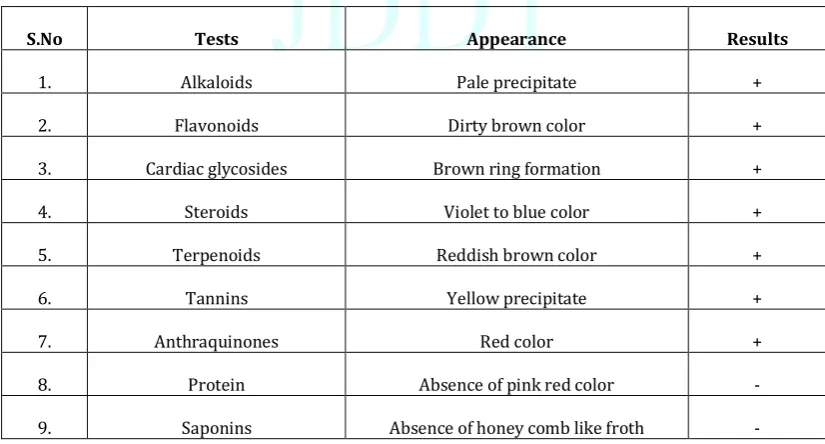
Table 1: Qualitative phytochemical analysis of Avicennia marina
S.No Tests Appearance Results
1. Alkaloids Pale precipitate +
2. Flavonoids Dirty brown color +
3. Cardiac glycosides Brown ring formation +
4. Steroids Violet to blue color +
5. Terpenoids Reddish brown color +
6. Tannins Yellow precipitate +
7. Anthraquinones Red color +
8. Protein Absence of pink red color -
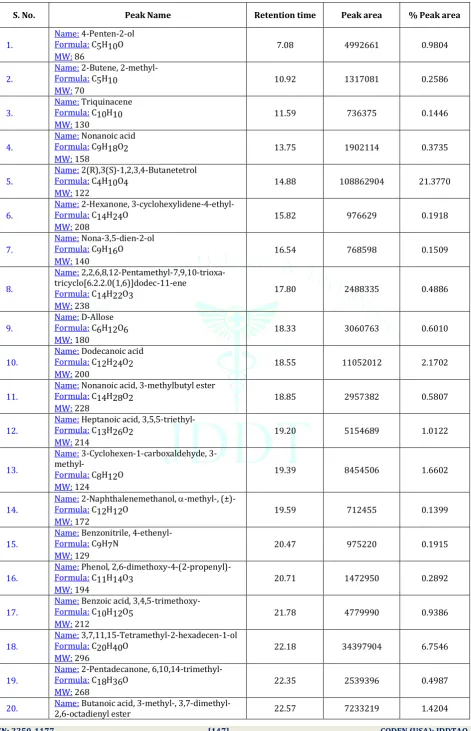
Table 2: GC-MS analysis of ethanolic extract of Avicennia marina leaves
S. No. Peak Name Retention time Peak area % Peak area
1.
Name: 4-Penten-2-ol
Formula: C5H10O
MW: 86
7.08 4992661 0.9804
2.
Name: 2-Butene, 2-methyl-
Formula: C5H10
MW: 70
10.92 1317081 0.2586
3.
Name: Triquinacene
Formula: C10H10
MW: 130
11.59 736375 0.1446
4.
Name: Nonanoic acid
Formula: C9H18O2
MW: 158
13.75 1902114 0.3735
5.
Name: 2(R),3(S)-1,2,3,4-Butanetetrol
Formula: C4H10O4
MW: 122
14.88 108862904 21.3770
6.
Name: 2-Hexanone, 3-cyclohexylidene-4-ethyl-
Formula: C14H24O
MW: 208
15.82 976629 0.1918
7.
Name: Nona-3,5-dien-2-ol
Formula: C9H16O
MW: 140
16.54 768598 0.1509
8.
Name:
2,2,6,8,12-Pentamethyl-7,9,10-trioxa-tricyclo[6.2.2.0(1,6)]dodec-11-ene
Formula: C14H22O3
MW: 238
17.80 2488335 0.4886
9.
Name: D-Allose
Formula: C6H12O6
MW: 180
18.33 3060763 0.6010
10.
Name: Dodecanoic acid
Formula: C12H24O2
MW: 200
18.55 11052012 2.1702
11.
Name: Nonanoic acid, 3-methylbutyl ester
Formula: C14H28O2
MW: 228
18.85 2957382 0.5807
12.
Name: Heptanoic acid, 3,5,5-triethyl-
Formula: C13H26O2
MW: 214
19.20 5154689 1.0122
13.
Name: Cyclohexen-1-carboxaldehyde,
3-methyl-
Formula: C8H12O
MW: 124
19.39 8454506 1.6602
14.
Name: 2-Naphthalenemethanol, -methyl-, (±)-
Formula: C12H12O
MW: 172
19.59 712455 0.1399
15.
Name: Benzonitrile, 4-ethenyl-
Formula: C9H7N
MW: 129
20.47 975220 0.1915
16.
Name: Phenol, 2,6-dimethoxy-4-(2-propenyl)-
Formula: C11H14O3
MW: 194
20.71 1472950 0.2892
17.
Name: Benzoic acid, 3,4,5-trimethoxy-
Formula: C10H12O5
MW: 212
21.78 4779990 0.9386
18.
Name: 3,7,11,15-Tetramethyl-2-hexadecen-1-ol
Formula: C20H40O
MW: 296
Formula: C15H26O2
MW: 238
21.
Name: n-Hexadecanoic acid
Formula: C16H32O2
MW: 256
24.88 56945332 11.1822
22.
Name: Hexadecanoic acid, ethyl ester
Formula: C18H36O2
MW: 284
25.06 44265320 8.6922
23.
Name: 4-(3,5-Di-tert-butyl-4-hydroxyphenyl)
butyl acrylate
Formula: C21H32O3
MW: 332
25.41 4549989 0.8935
24.
Name: 4-Oxazolecarboxylic acid,
4,5-dihydro-2-phenyl-, 1-methylethyl ester
Formula: C13H15NO3
MW: 233
27.28 2513853 0.4936
25.
Name: Phytol
Formula: C20H40O
MW: 296
28.03 21068804 4.1372
26.
Name: (E)-9-Octadecenoic acid ethyl ester
Formula: C20H38O2
MW: 310
29.04 23578426 4.6300
27.
Name: Octadecanoic acid, 2-methyl-, methyl
ester
Formula: C20H40O2
MW: 312
29.50 9422720 1.8503
28.
Name: cis-9-Hexadecenal
Formula: C16H30O
MW: 238
32.96 7569641 1.4864
29.
Name: Hydroxy-methyl-but-3-enyl
2-methyl-2(Z)-butenoate
Formula: C10H16O3
MW: 184
32.43 7045837 1.3836
30.
Name: Squalene
Formula: C30H50
MW: 410
41.30 127456712 25.0282
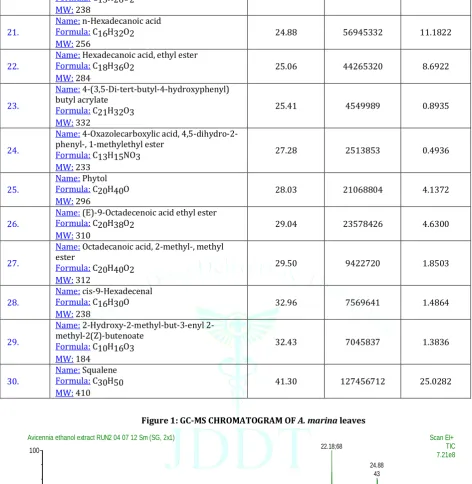
Figure 1: GC-MS CHROMATOGRAM OF A. marina leaves
, 4-JUL-2012 + 12:40:33
6.79 8.79 10.79 12.79 14.79 16.79 18.79 20.79 22.79 24.79 26.79
Time 0
100
%
Avicennia ethanol extract RUN2 04 07 12 Sm (SG, 2x1) Scan EI+
TIC 7.21e8 22.18;68
21.53 55 14.87
44
13.41 117 8.15
58
12.21 77
19.39 43 18.55
43 17.80
43
20.58 43
24.88 43
22.89 149
24.68 149
25.07 88
28.03 71
25.41 57
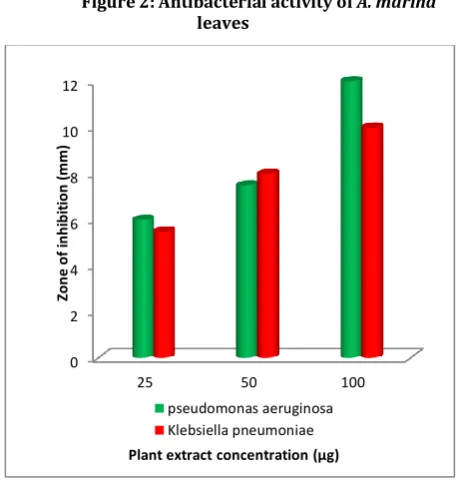
Figure 2: Antibacterial activity of A. marina leaves
DISCUSSION
Phytochemicals are responsible for medicinal activities of the plants. Based on this fundamental knowledge several pharmaceutical industries are established. The phytochemical constituents that are playing a significant role in medicines can be identified using crude extracts/drugs of the plants [21]. Nowadays the organic compounds from plants have been studied and their activity has increased. The combination of GC and MS, which are best separation technique and best identification technique respectively made GC-MS as an ideal technique for volatile and semi-volatile bioactive compound's qualitative analysis [22]. The ethanolic extract of A.marina was analyzed by GCMS to detect various compounds with the help of NIST library. The GC-MS analysis revealed 30 chemical compounds. Squalene (41.30 RT) is the highest retention time chemical compound and 4-Penten-2-ol (7.08) is the lowest retention time chemical compound. The compound Nonanoic acid is a
C9 straight-chain saturated fatty acidwhich occurs naturally
as esters of the oil of pelargonium which has antifungal properties, and is also used as a herbicide. It is also used in
the preparation of plasticisers and lacquers [23]. The
compound n-Hexadecanoic acid, Hexadecanoic acid, methyl ester, Benzoic acid, D-Allose showed pharmacological activity as reported in the plant Evolvulus alsinoides [24].
Phytol is an acyclic diterpenealcohol that can be used as a
precursor for the manufacture of synthetic forms of vitamin
Eand vitamin K1 [25-26]. Phytol have been reported in previous studies, including its activity against Mycobacteria, anticonvulsant, antispasmodic and anticancer activities.[27-30]. Squalene is a natural compound, a linear triterpene synthesized in plants [31]. It is a natural antioxidant molecule that protects cells from oxidative damage by exposure to ultraviolet light and other external sources. This molecule participates as a defense mechanism for the internal and external tissues of the skin in the human body [32].
Anti-bacterial activity showed that the inhibition zones were found increased considerably when the concentration rate
were described by Tambekar, who reported that the antibacterial potential of Dashmula churna against S. aureus, S. epidermidis, P. vulgaris, S. typhi, B. subtilis, E. coli, K. pneumoniae, E. aerogenes and P. aeruginosa and its usefulness in treatment of the bacterial infections [33]. The compounds identified by the initial qualitative analysis and GCMS analysis have many uses in medical field. Each compounds that are identified in the extract have their unique character to treat a variety of diseases. Further studies are required to reveal its significance in specific field to treat the diseases properly.
CONCLUSION
The presence of various bioactive compounds in the A.marina justifies the use of whole plant for various ailments by traditional practitioners. However the isolation of individual phytochemical compound and analyzing their biological activity will definitely yield productive results. The results of this study offer a base of using A.marina as herbal alternative for the synthesis of antimicrobial agents. From the results, it could be concluded that A.marina contains various bioactive compounds. Hence, it can be recommended as a plant having phytopharmaceutical importance.
CONFLICT OF INTEREST STATEMENT
We declare that we have no conflict of interest.REFERENCES
1. Bachrach ZY. Contribution of selected medicinal plants for cancer prevention and therapy. Acta Fac Medicae Naissensis 2012; 29(3): 117-23.
2. Atanasov AG, Waltenberger B, Pferschy-Wenzig EM, Linder T, Wawrosch C, Uhrin P, et al. Discovery and resupply of pharmacologically active plant-derived natural products: a review. Biotechnol Adv 2015; 3(8): 1582-614.
3. Uzer A., Ercag E. and Apak R., Selective spectrophotometric determination of TNT in soil and water with dicyclohexylamine extraction, Anal.Chim.Acta, 2005; 534:307-317.
4. Shahbudin Saad, Muhammad Taher, Deny Susanti, Haitham Qaralleh, Anis Fadhlina Izyani Bt Awang. In vitro antimicrobial activity of mangrove plant Sonneratia alba, Asian Pacific J Tropical Biomed 2012; 427-429.
5. Chandrashekar Naidu K, Varahalarao Vadlapudi. In vitro bioactivity against important phytopathogens of Rhizophora mucronata (Lam.) and Acanthus ilicifolius Linn, Der Pharmacia Lettre 2010; 2(2): 107-110.
6. Midadul Haq, Wirakarnain Sani, Hossain ABMS, Rosna Mat Taha, Monneruzzaman KM. Total phenolic contents, antioxidant and antimicrobial activities of Bruguiera gymnorrhiza, J Med Plants Res 2011; 5(17): 4112-4118. 7. Dhayanithi NB, Ajith Kumar TT, Ganesha Murthy R,
Kathiresan K. Isolation of antibacterials from the mangrove, Avicennia marina and their activity against multi drug resistant Staphylococcus aureus. Asian Pac J Trop Biomed 2012: S1892-5.
8. Packia Lincy M, Paulpriya K, Mohan VR. In vitro antioxidant activity of Avicennia marina (Forssk) Vierh pneumatophore (Avicenniaceae). Sci Res Report 2013;3:106-14.
9. Itigowa M, Ito C, Tan HT, Okuda, Tokuda H, Nishino H, et al. Cancer chemopreventive activity of naphthoquinones and their analogs from Avicennia plants. Cancer Lett 2002;174:135-9.
10. Abeysinghe PD. Antibacterial activity of some medicinal mangroves against antibiotic resistant pathogenic bacteria. Indian J Pharm Sci 2010;72:167-72.
11. Khafagi I, Alla AG, Salama S, Fouda M. Biological activities and
0 2 4 6 8 10 12
25 50 100
Zo
n
e
o
f
in
h
ib
it
io
n
(
m
m
)
13. Liebler D.C., Burr J.A., Philips L. and Ham A.J.L., Gas chromatography-mass spectrometry analysis of vitamin E and its oxidation products, Anal.Biochem., 1996; 236:27-34. 14. Muthulakshmi A, Margret J and Mohan VR. GC-MS analysis of
bioactive components of Feroniaele phantumcorrea (Rutaceae). App. pharmac. Sci. 2012; (2):69-74.
15. G.Dineshkumar and R.Rajakumar. Gas Chromatography-Mass Spectrometry Analysis of Bioactive Components From The Ethanol Extract Of Avicennia Marina Leaves. Innovare Journal of Science, 2016, 4 (4): 9-12.
16. O. O. Debiyi and F. A. Sofowora, “Pytochemical screening of medical plants,” Iloyidia, vol. 3, pp. 234–246, 1978.
17. T. S. Roopashree, R. Dang, R. H. S. Rani, and C. Narendra, “Antibacterial activity of antipsoriatic herbs: Cassia tora, Momordica charantia and Calendula officinalis,” International Journal Applied Research in Natural Products, vol. 1, no. 3, pp. 20–28, 2008.
18. A. Sofowora, Phytochemical Screening of Medicinal Plants and Traditional Medicine in Africa, Spectrum Books Ltd, Ibadan, Nigeria, 1993.
19. G. E. Trease and W. C. Evans, “Phenols and phenolic glycosides,” in Textbook of Pharmacognosy, vol. 12, pp. 343– 383, Balliese, Tindall and Co Publishers, London, UK, 1989. 20. Alizadeh Behbahani A, Tabatabei Yazdi F, Shahidi F, Mortazavi
SA, Mohebbi M. Principle component analysis (PCA) for investigation of relationship between population 443 dynamics of microbial pathogenesis, chemical and sensory characteristics in beef slices 444 containing Tarragon essential oil. Microbial Pathogenesis. 2017; 105:37-50. 21. Savithramma N, Venkateswarlu P, Suhrulatha D, Basha SKM
and Venkataramanadevi CH. Studies of Boswellia ovalifoliolata Bal. and Herny – An endemic and endangered medicinal plant. The Biosc. 2011; (5): 359-362.
22. Grover N, Patni V. Phytochemical characterization using various solvent extracts and GC-MS analysis of methanolic extract of Woodfordia fruticosa (L) Kurz. Leaves. Int J Pharm Pharm Sci 2013;5:291-5.
23. Nurettin Y, Canan G, Osman U, Ahmet Y, Serdar U, Kamil C, Salih T (2006). Chemical and antimicrobial activities of
volatile components of Minuartia meyeri. Turk. J. Chem. 30: 71-76
24. Sujayil TK, Dhanaraj TS. Determination of bioactive compounds in Evolvulus alsinoides leaf extract using GC-MS technique, Research Journal of Life Science, Bioinformatics, Pharmaceutical and Chemical Sciences. 2016; 2(3):31-38.
25. Netscher, Thomas (2007). "Synthesis of Vitamin E". In
Litwack, Gerald (ed.). Vitamin E. Vitamins and Hormones.
Vitamins & Hormones. 76. pp. 155–20.
26. Daines, Alison; Payne, Richard; Humphries, Mark; Abell,
Andrew (2003). "The Synthesis of Naturally Occurring
Vitamin K and Vitamin K Analogues". Current Organic
Chemistry. 7 (16): 1625–34.
27. Saikia D., Parihar S., Chanda D. et al. Antitubercular potential of some semisynthetic analogues of phytol. Bioorg. Med. Chem. Lett. (2010) 20 508–512. 13.
28. Costa J.P., Ferreira P.B., Sousa D.P., Jordan J., Freitas R.M. Anticonvulsant effect of phytol in a pilocarpine model in mice. Neurosci. Lett. (2012) 523 115–118.
29. Pongprayoon U., Baeckstr€om P., Jacobsson U., Lindstr€om M., Bohlin L. Antispasmodic activity of beta-damascenone and e-phytol isolated from Ipomoea pes-caprae. Planta Med. (1992) 58 19–21.
30. Lee K.L., Lee S.H., Park K.Y. Anticancer activity of phytol and eicosatrienoic acid identified from Perilla leaves. J. Korean Soc. Food Sci. Nutr. (1999) 28 1107– 1112.
31. G. P. Ghimire, H. T. Nguyen, N. Koirala, and J. K. Sohng, “Advances in biochemistry and microbial production of squalene and its derivatives,” Journal of Microbiology and Biotechnology, vol. 26, no. 3, pp. 441–451, 2016.
32. Y. Kohno, Y. Egawa, S. Itoh, S.-i Nagaoka, M. Takahashi, and K. Mukai, “Kinetic study of quenching reaction of singlet oxygen and scavenging reaction of free radical by squalene in n-butanol,” Biochimica et Biophysica Acta (BBA)/Lipids and Lipid Metabolism, vol. 1256, no. 1, pp. 52–56, 1995.